US Data Center Construction Boom by the Numbers: $700 Billion in AI Infrastructure Spending Explained

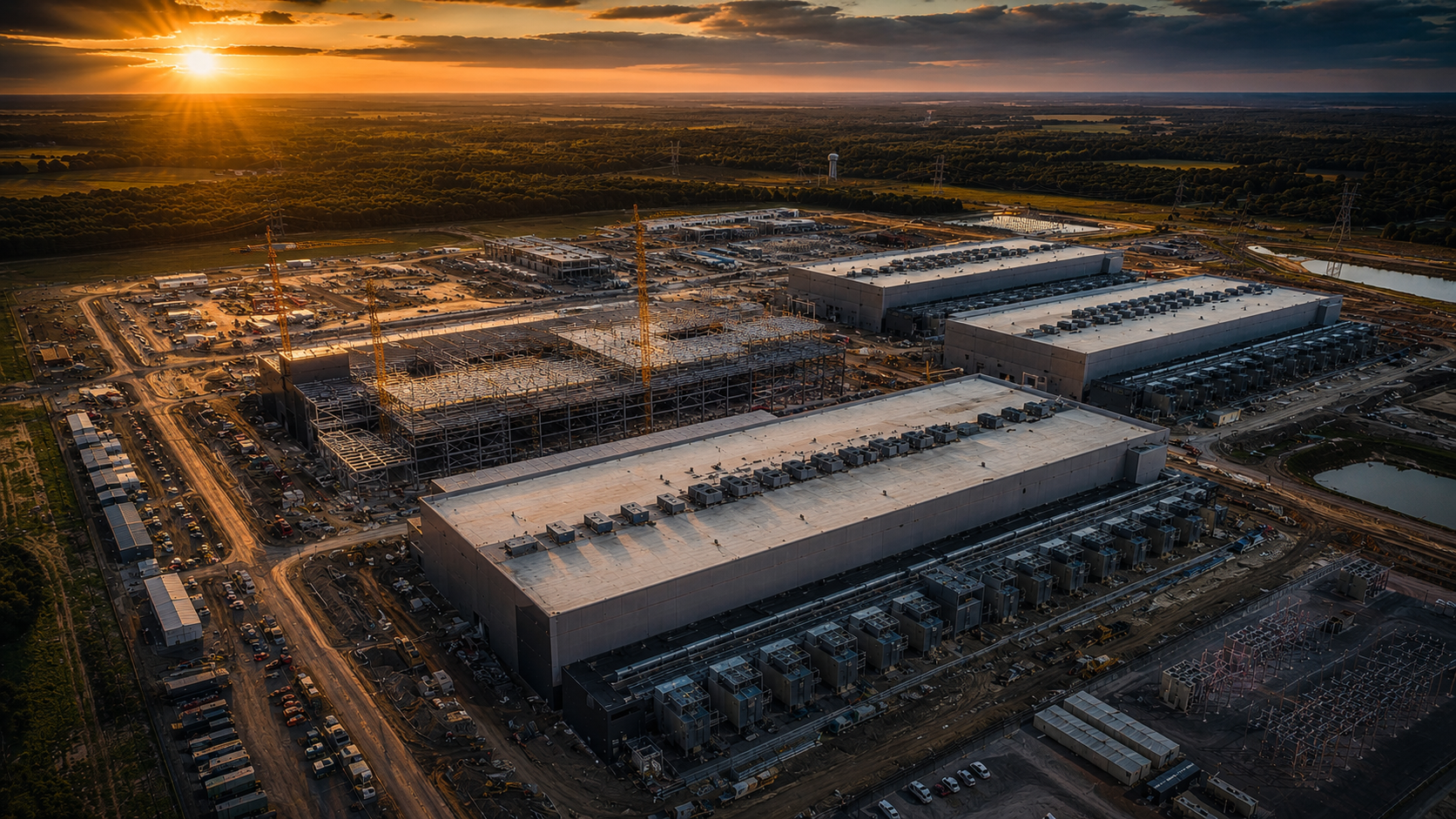
Data center construction and AI infrastructure spending in the United States are on pace to hit approximately $700 billion in 2026, an 81% increase over 2025, making this the largest single-category construction boom in the country. Data center construction starts totaled just $14.9 billion in 2023. By 2025, that figure had exploded to $77.7 billion, a 190% year-over-year increase. To put the scale of 2026 spending in perspective, the entire US Interstate Highway System cost roughly $530 billion in today’s dollars and took decades to build. The data center industry is now spending more than that in a single year.

How Fast Is Data Center Construction Growing in 2026?

The pace of growth in 2026 has genuinely surprised even industry veterans. Year-to-date spending through April reached $49.5 billion, compared to just $13.6 billion over the same period the prior year, nearly four times the pace. Q1 2026 alone saw $44.7 billion in data center investment, up 28% year over year. January 2026 brought a record $25.2 billion in new groundbreakings in a single month. A rolling $9.8 billion monthly moving average through April 2026, more than 300% above year-ago levels, suggests this is a sustained structural shift in how capital is being allocated across the American construction industry, not a short-term spike tied to one or two megaprojects.

The scale of individual commitments underscores the point. Hyperscale technology companies including Microsoft, Amazon, Google, and Meta have collectively committed over $500 billion to AI infrastructure this year. That figure builds directly on what we covered in Amazon’s recent earnings report, where AWS alone raised its own capital expenditure guidance to approximately $220 billion for the year. Vantage committed $25 billion to a single Texas campus, and Meta broke ground on a 900 megawatt facility in Wisconsin specifically to leverage nearby hydropower access, a facility that will also require exactly the kind of specialized bond financing we detailed in our recent coverage of BlackRock’s data center bond offering for Meta.

Which States Are Leading the Data Center Construction Boom?

The geography of this boom has shifted quickly. Virginia led all states with $15.3 billion in data center construction starts in 2025, followed closely by Louisiana at $15.0 billion, Mississippi at $13.9 billion, and Texas at $13.4 billion. States that once competed aggressively over auto manufacturing plants are now competing over server farms, offering tax incentives, expedited permitting, and utility rate structures designed specifically to attract hyperscale campuses.

Why Data Center Demand Shows No Sign of Slowing

Global data center occupancy has reached a record 97%, a figure that reflects genuine capacity scarcity rather than speculative overbuilding. Nearly 100 gigawatts of new data center capacity is anticipated to come online globally between 2026 and 2030, effectively doubling total global capacity in five years. Roughly $7 trillion in global capital expenditures on data center infrastructure is projected by 2030, with more than 40% of that spending expected to occur in the United States specifically.

Construction costs have climbed alongside demand. Standard data center builds now cost between $10 million and $12 million per megawatt of capacity, while AI-ready facilities designed for the density and cooling requirements of advanced chip clusters run $20 million or more per megawatt. That capital intensity is precisely the dynamic we explored in our coverage of Oracle’s debt-funded AI buildout, where the gap between committed spending and near-term returns became a genuine investor concern.

Small Cap Data Center Stocks: Where the Opportunity Lies in the Supply Chain

For investors tracking small and microcap companies, this buildout represents far more than a story about a handful of hyperscale technology giants. Roughly 60% of total data center investment flows into the technology and hardware required to run these facilities, but the remaining 40% is split between land and building construction and, critically, power generation and cooling infrastructure, which alone accounts for approximately 25% of total spend.

That power and cooling category is where the opportunity for smaller companies becomes most direct. Electrical contractors, specialized cooling system providers, power management component manufacturers, backup generation equipment makers, and grid infrastructure companies are all seeing sustained demand growth from a construction category that contractors themselves rank as the single strongest growth segment in the industry, with 65% of contractors surveyed expecting increased data center spending in 2026, the highest expectation across every category of construction tracked.

With 76 individual data center projects totaling more than $88 billion scheduled to begin construction in just the next six months, and roughly 2,788 additional facilities already announced or under construction across the country, the supply chain feeding this buildout is likely to remain one of the more durable growth stories in the American economy well into the next decade.

BlackRock Is Selling $12.3 Billion in Bonds to Fund a Meta Data Center. Wall Street Is Watching to See Who Buys

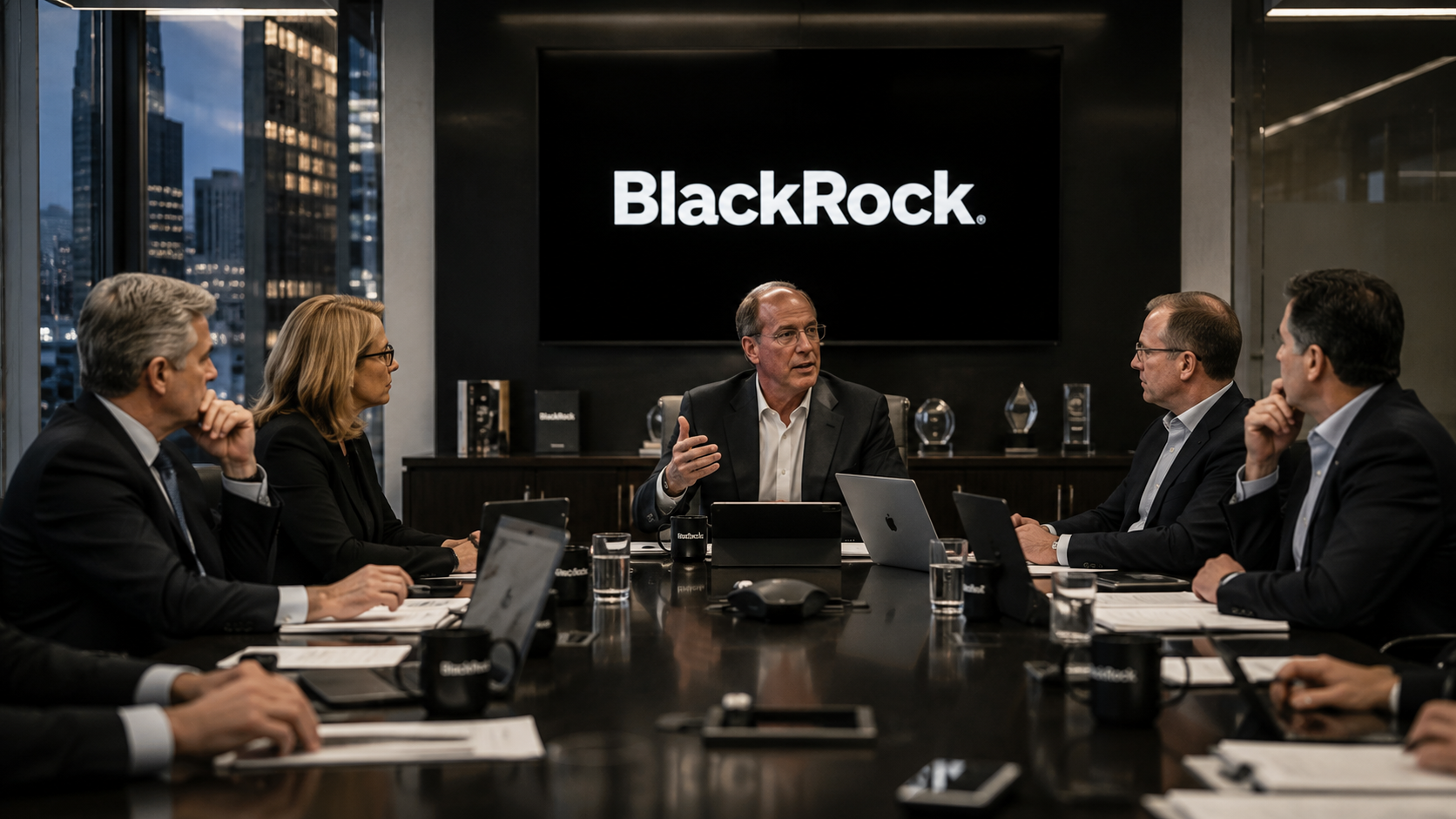
The debt-financed AI buildout just got its next major test. BlackRock began marketing $12.3 billion in high-grade bonds Friday to fund a massive data center campus in El Paso, Texas, built to power Meta Platforms’ artificial intelligence workloads. The offering is being sold through a single tranche of notes due in 2048, with price talk at approximately 2.875 percentage points over Treasuries. JPMorgan Chase and Morgan Stanley are running the offering.

The financing structure is worth understanding. The project is owned through a holding company tied to BlackRock, with BlackRock subsidiaries Global Infrastructure Management and HPS Investment Partners holding an 80% stake and Meta owning the remaining 20%. Once complete, the facility is expected to provide as much as 1 gigawatt of computing capacity dedicated to AI workloads, enough to power hundreds of thousands of homes if it were serving the grid instead of server racks.

Why This Deal Matters Beyond Its Size

At $12.3 billion, this is one of the largest single data center bond offerings to reach the market this year, and the timing makes it a genuine test of investor appetite. The offering arrives just days after Oracle’s stock fell more than 50% from its June high on concerns about debt-funded AI infrastructure spending and customer concentration risk tied to its own data center buildout. It also follows Alphabet shares falling after the company disclosed a $205 billion spending plan that fueled fresh investor anxiety about the pace and sustainability of AI capital expenditure across the industry.

Against that backdrop, BlackRock’s bond sale is effectively asking bond investors a direct question: is the market still willing to underwrite massive, long-duration AI infrastructure debt at reasonable spreads, or has sentiment shifted enough that these deals now require a real risk premium to get done. A note due in 2048 is a 22-year commitment, and how tightly or loosely it prices will say a great deal about whether fixed income investors share the equity market’s growing skepticism about AI capex, or whether they view infrastructure-backed debt with a hyperscaler tenant as a fundamentally different risk than a company’s own balance sheet leverage.

The Structural Shift Toward Off-Balance-Sheet AI Financing

This deal also reflects a broader trend worth watching. Rather than funding data centers directly on their own balance sheets the way Oracle largely has, companies like Meta are increasingly structuring these projects through joint ventures with infrastructure investors like BlackRock, keeping the debt at arm’s length while still securing the compute capacity they need. That structure spreads the financial risk of the AI buildout across a wider pool of infrastructure capital rather than concentrating it entirely on the tech company’s own credit.

What It Means for Smaller Companies

For investors tracking the broader AI infrastructure ecosystem, this offering is a useful barometer independent of Meta or BlackRock specifically. If a $12.3 billion, investment-grade-rated data center bond prices well, it signals that credit markets still have confidence in the underlying demand for AI compute, which supports continued capital flowing to the smaller companies supplying power infrastructure, cooling systems, and specialized components into projects exactly like this one. If it prices poorly or gets downsized, it would be an early signal that the capital markets are beginning to price AI infrastructure risk more conservatively across the board, a dynamic that would eventually reach every tier of the supply chain, including the smallest companies in it.

The Real AI Trade Nobody’s Talking About: Why Data Center Cooling Just Became a Billion-Dollar Business

Ecolab just paid $4.75 billion in cash for a Calgary-based company most investors have never heard of, and that single transaction tells you more about where AI infrastructure spending is headed than almost anything happening in chips right now.

The March 2026 acquisition of CoolIT Systems came at a price of 29 times next-twelve-months adjusted EBITDA. That is not the kind of multiple a serious industrial buyer pays on a whim. It’s a signal that liquid cooling has moved from a nice-to-have into a required piece of the AI data center stack, and Ecolab is not the only one who has figured that out.

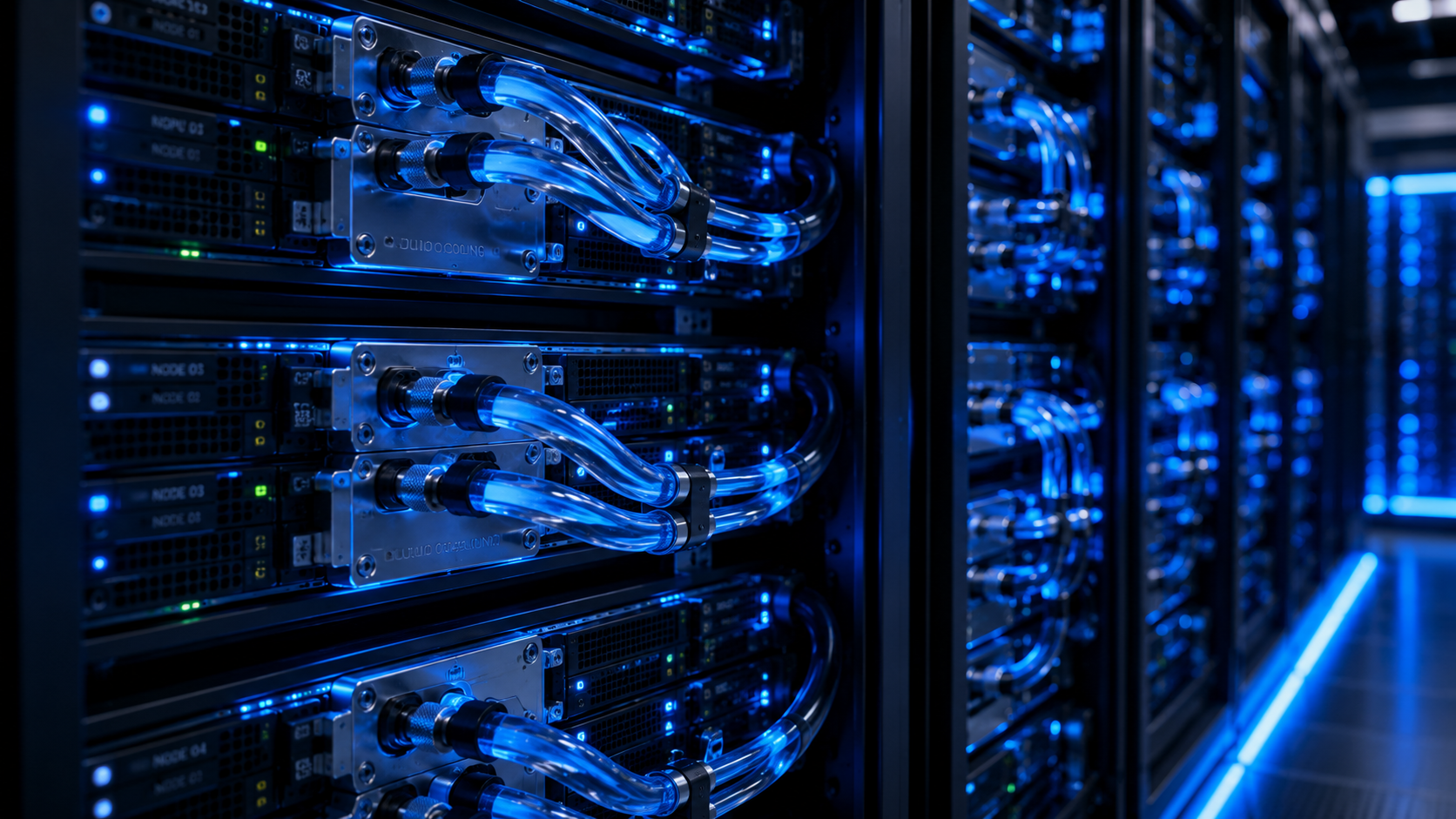
The math behind the move is simple physics more than anything else. Modern AI training runs on GPU servers packed with far more processing density than traditional data centers were ever built to handle, and that density generates heat that conventional air cooling simply cannot dissipate fast enough. Nvidia’s newest Blackwell racks push thermal loads that force operators into direct-to-chip cooling, rear-door heat exchangers, or full immersion systems just to keep the hardware running. ASHRAE’s 2026 AI Data Center Energy Performance Framework now names these approaches explicitly as requirements, not options, for high-density AI deployments. MarketsandMarkets pegs the global liquid cooling market at $4.07 billion this year, growing to $27.65 billion by 2033, a 31.5% annual growth rate that would make most industries jealous.

Ecolab’s purchase of CoolIT is just the most recent entry in a run of consolidation that has been building for over a year. Trane Technologies has announced plans to acquire LiquidStack. Schneider Electric bought Motivair in 2025 specifically to build out its liquid cooling capabilities. Vertiv closed its acquisition of ThermoKey on June 12 and opened a new manufacturing facility in Malaysia on July 1 just to keep up with AI infrastructure orders. Every major player in industrial thermal management has either bought a specialist in this space or announced plans to. When that many strategic acquirers are willing to pay near 30 times forward earnings for private cooling companies, the public small and micro-cap names sitting in the same value chain tend to get repriced whether or not they’re involved in a deal themselves.

A handful of small-cap names sit right in the middle of this shift. Modine Manufacturing has spent the last three years transforming itself from a legacy automotive parts supplier into a company focused on data center thermal management, divesting older auto businesses along the way to sharpen that story. Limbach Holdings has leaned into the build-out from a different angle, highlighting its modular construction and prefabrication platform for data centers in a June announcement that positions the company squarely inside the high-density projects hyperscalers are commissioning right now. And nVent Electric, which has spent more than a decade building liquid cooling distribution and high-density power systems, saw organic orders jump roughly 65% in a recent quarter driven almost entirely by large cooling orders tied to hyperscaler programs. The company has already deployed more than a gigawatt of cooling capacity across its installed base.

The AI investment story so far has mostly been about chips, and understandably so. But chips are useless if you can’t keep them cool enough to run at full capacity, and that second half of the equation is where the next wave of investment dollars appears to be heading. Power, water, and industrial thermal management are becoming just as important to the AI buildout as the silicon itself, and the M&A activity happening right now is the clearest evidence yet that the biggest names in industrial equipment already see it that way. Modine, Limbach, and nVent aren’t household names, and that’s exactly the point. When a $77 billion company pays nearly $5 billion for a private cooling specialist, the small-cap names doing similar work for the same customers are the ones worth watching next.

NN (NNBR) – Expanding Data Center Business


Tuesday, June 30, 2026

Joe Gomes, CFA, Managing Director, Equity Research Analyst, Generalist , Noble Capital Markets, Inc.

Refer to the full report for the price target, fundamental analysis, and rating.

New Awards. NN has secured a significant amount of additional 2026 immediate-supply awards for liquid cooling products that go into NVIDIA AI data center racks. The new awards are additive to prior communicated awards and greatly increase the size of NN’s liquid cooling product portfolio for AI data center racks. NN’s combined Data Center and Electric Grid business is already its 2nd-largest business, with a goal to grow it into the Company’s largest business by sales. The Data Center & Electric Grid end markets are the top targeted growth markets for the Company.

Successful Launch. In 1Q26, NN announced the launch of a custom-designed stainless-steel product line for the liquid-cooled data center market. Since then, the Company has secured multiple AI data center awards, invested in an initial complement of 17 next-generation, high-speed, high-precision CNC machines at its Wuxi, China, plant, and begun production.


Get the Full Report

Equity Research is available at no cost to Registered users of Channelchek. Not a Member? Click ‘Join’ to join the Channelchek Community. There is no cost to register, and we never collect credit card information.

This Company Sponsored Research is provided by Noble Capital Markets, Inc., a FINRA and S.E.C. registered broker-dealer (B/D).

*Analyst certification and important disclosures included in the full report. NOTE: investment decisions should not be based upon the content of this research summary. Proper due diligence is required before making any investment decision. 

The World’s Largest Utility Is Being Built to Power the AI Boom

The artificial intelligence boom just claimed its biggest infrastructure deal yet — and it has nothing to do with chips or software. NextEra Energy announced Monday it will acquire Virginia-based Dominion Energy in an all-stock transaction valued at approximately $66.8 billion, creating the world’s largest regulated electric utility by market capitalization and marking one of the most significant utility mergers in a generation.

The deal values Dominion at $75.97 per share — a roughly 23% premium to its last close — structured as an exchange of 0.8138 NextEra shares for each outstanding Dominion share. Dominion stock jumped nearly 15% on the announcement. NextEra shares slipped about 2% as investors digested the scale of the acquisition. The combined entity will carry a market cap of approximately $249 billion and an enterprise value of $420 billion, making it the third-largest company in the US energy sector behind only ExxonMobil and Chevron. The transaction is expected to close within 12 to 18 months.

Why This Deal Happened Now

The answer is straightforward: AI is consuming electricity at a pace the existing power grid was never built to handle. Dominion is the utility responsible for powering Northern Virginia’s “Data Center Alley” — the world’s largest concentration of data centers — with roughly 51 gigawatts of contracted data center capacity already on the books. Its customer list reads like a who’s who of hyperscale computing: Alphabet, Amazon, Microsoft, Meta, Equinix, CoreWeave, and CyrusOne all depend on Dominion’s grid.

Across both companies’ service territories, data centers proposing to connect to the combined grid represent approximately 130 gigawatts of future electricity demand. To put that in perspective, one gigawatt powers roughly 750,000 homes. NextEra’s CEO framed the acquisition plainly: electricity demand is rising faster now than it has in decades, and scale is the only way to meet it. The company plans to build more than 30 dedicated data center hubs across the US as part of its post-merger strategy.

Power prices nationally have already climbed roughly 40% over the past five years, with the sharpest increases concentrated in AI-heavy states including Virginia, Maryland, and Pennsylvania — the exact markets this merger is designed to dominate.

What It Means for Smaller Energy Players

A merger of this magnitude reshapes competitive dynamics across the entire energy infrastructure ecosystem, and the ripple effects reach well into the small and microcap space. The buildout required to serve 130 gigawatts of incremental data center demand cannot be executed solely through internal resources — it requires a network of suppliers, contractors, and technology providers operating at every layer of the grid.

Companies involved in grid modernization, high-voltage transformer manufacturing, power management systems, substation equipment, and renewable energy development are all positioned to benefit from the infrastructure spending surge that a combined NextEra-Dominion will need to execute. Many of the companies operating in these niches sit well below the $2 billion market cap threshold.

Independent power producers and smaller regional renewable developers face a more complex picture — a utility giant with NextEra’s capital base and Dominion’s existing relationships creates a formidable competitor for new generation contracts. But for those on the supply side of the infrastructure buildout, the pipeline just got significantly larger.

The AI energy trade is no longer a theme. It is the defining structural force reshaping American power markets — and Monday’s deal is the clearest evidence yet of just how seriously the biggest players are taking it.

The Real AI Arms Race: Why Power and Data Centers Are Becoming the Next Big Investment Theme

The artificial intelligence boom is no longer just about software models and chips—it’s increasingly about power, land, and infrastructure. That reality came into sharp focus this week as OpenAI and SoftBank jointly committed $1 billion to SB Energy, a fast-growing energy and data center infrastructure company positioned at the center of America’s AI buildout.

Under the deal, OpenAI and SoftBank will each invest $500 million to support SB Energy’s expansion as a large-scale developer and operator of data centers. As part of the partnership, SB Energy has been selected to build and operate OpenAI’s 1.2-gigawatt data center in Milam County, Texas, a facility large enough to power hundreds of thousands of homes. The investment highlights a critical shift: for AI leaders, securing reliable energy has become as strategic as securing advanced chips.

AI workloads are extraordinarily power-hungry. Training and running large language models requires enormous computing capacity, which in turn drives unprecedented electricity demand. As a result, hyperscalers and AI developers are now racing to lock down long-term energy sources and infrastructure partners to avoid future bottlenecks. In this environment, companies that can deliver power at scale are emerging as essential enablers of the AI economy.

SB Energy represents a hybrid model well-suited for this moment. Originally founded as a renewable energy and storage developer and long backed by SoftBank, the company has expanded aggressively into data center development, ownership, and operations. This dual exposure to both energy production and digital infrastructure positions SB Energy as a critical middle layer between power generation and AI compute demand.

The investment also ties directly into OpenAI’s Stargate initiative, a massive joint effort with partners including SoftBank and Oracle to invest up to $500 billion in U.S. AI infrastructure over the next four years. Stargate’s ambition underscores how central physical infrastructure has become to sustaining AI growth—and why capital is flowing into companies that can execute at scale.

From an investor’s perspective, this trend carries important implications. While mega-cap tech companies dominate AI headlines, much of the real opportunity may lie one layer below, in infrastructure providers, energy developers, and specialized operators that enable AI expansion. These businesses often generate long-term contracted revenue and may benefit from structural demand regardless of short-term swings in AI sentiment.

However, the rapid interconnection between AI firms, financiers, and infrastructure developers also introduces risk. Heavy capital commitments assume that AI demand will continue to rise at an aggressive pace. If adoption slows or efficiency gains reduce power needs, some projects could face pressure. Investors should therefore favor companies with diversified customers, strong balance sheets, and assets that retain value beyond AI-specific use cases.

Ultimately, the OpenAI–SoftBank investment in SB Energy signals a broader shift: AI is becoming an infrastructure-driven industry. For investors willing to look beyond the obvious names, the companies powering the AI revolution—literally—may offer some of the most compelling opportunities in the years ahead.

Anthropic to Invest $50 Billion in U.S. AI Infrastructure, Beginning with Texas and New York Data Centers

Anthropic, one of the fastest-growing artificial intelligence firms in the world, has announced an ambitious $50 billion plan to expand its U.S. infrastructure footprint through a series of advanced data centers starting in Texas and New York. The project, developed in partnership with AI cloud platform Fluidstack, positions the company as a major force in the domestic AI buildout race.

The initiative will fund the creation of custom-designed facilities built specifically to handle Anthropic’s rapidly scaling AI models and enterprise workloads. The company said the first sites will go live in 2026 and are expected to generate 800 permanent jobs and more than 2,000 construction roles across both states.

By building its own network of high-performance data centers, Anthropic aims to ensure greater control over compute availability, energy efficiency, and long-term scalability — key components in the race to dominate AI infrastructure. The decision also aligns with growing policy pressure from Washington to keep cutting-edge AI capacity within U.S. borders, protecting national interests and technological sovereignty.

This investment underscores Anthropic’s aggressive growth trajectory and signals that the company is willing to match, if not challenge, industry leader OpenAI’s spending spree. OpenAI has already committed more than $1.4 trillion in long-term infrastructure investments through partnerships with Nvidia, Oracle, Broadcom, Microsoft, and Google.

Anthropic’s partnership with Fluidstack — known for supplying GPU clusters to major AI players like Meta, Midjourney, and Mistral — reflects a strategic effort to move fast. Fluidstack’s expertise in scaling GPU infrastructure at record speed and efficiency gives Anthropic a distinct operational advantage as competition for compute power intensifies.

The company’s enterprise business has surged dramatically over the past year, serving more than 300,000 organizations. The number of enterprise accounts generating over $100,000 annually has nearly increased sevenfold, with projections showing Anthropic could reach profitability by 2028. By comparison, OpenAI is still expected to report multi-billion-dollar operating losses through that same period.

Beyond Texas and New York, Anthropic’s infrastructure expansion already includes a massive $11 billion data center campus in Indiana, developed with Amazon. The facility is operational, providing Anthropic with one of the largest AI-focused compute environments in the U.S. The company has also expanded its long-term compute partnership with Google, with additional commitments valued in the tens of billions.

Industry observers say Anthropic’s move could reshape the competitive landscape of AI infrastructure, helping to diversify the market beyond the dominance of hyperscale cloud providers. However, the scale of AI-related construction and energy use is prompting questions about sustainability and grid capacity — particularly as multiple firms rush to deploy gigawatt-scale facilities across the country.

With a $50 billion budget and an expanding nationwide footprint, Anthropic is betting big on the idea that the next wave of AI breakthroughs will depend not just on smarter algorithms, but on physical infrastructure capable of powering them at scale.

Meta’s Massive Bond Sale Could Fuel a Ripple Effect for Small-Cap Tech Stocks

Meta Platforms’ latest move to raise at least $25 billion in investment-grade bonds is more than just another mega-cap financing headline — it’s a signal that the next wave of growth in artificial intelligence and data infrastructure could trickle down to smaller tech players.

The offering — one of the largest U.S. corporate bond sales of 2025 — comes on the heels of Meta’s plan to ramp up spending on AI-driven products and infrastructure. With borrowing costs dropping as the Federal Reserve continues to cut rates, major tech firms are taking advantage of lower yields to finance a new round of capital expansion.

For small-cap technology companies, this could open the door to opportunity. The enormous amount of capital being deployed by hyperscalers like Meta, Microsoft, and Alphabet is creating a massive demand chain that extends far beyond Silicon Valley’s biggest names. Startups and smaller public firms involved in semiconductors, networking, data management, cooling systems, and cloud security are all potential beneficiaries as AI infrastructure scales up.

Meta’s $25 billion raise isn’t just about internal growth — it underscores a larger credit market trend that smaller firms can ride. With liquidity returning to corporate debt markets and investor appetite for yield still strong, smaller companies may find more favorable conditions to raise their own capital or secure partnerships with the giants driving AI expansion.

The implications are especially important for small-cap investors who have been cautious during a year of volatility. As large companies expand their data centers and AI capacity, many subcontractors and niche solution providers that feed into those ecosystems could see accelerated revenue growth. This includes firms building energy-efficient chips, AI integration tools, and hardware required to sustain hyperscale computing.

However, it’s not all upside. The aggressive pace of AI investment also raises the bar for innovation and speed. Smaller companies that fail to keep up with the capital intensity or technological demands of the space could struggle to compete. In addition, the market’s current enthusiasm for AI spending could make it harder for smaller firms to attract attention unless they’re directly tied to the sector’s most critical supply chains.

Still, Meta’s massive bond sale highlights how the AI arms race is influencing not just the tech giants but the broader investment landscape. For investors looking at small-cap stocks, the key is to identify which companies are poised to plug into the infrastructure boom — and which could be left behind as the giants keep scaling up.

As AI investment accelerates into 2026, this wave of corporate spending could prove to be a lifeline for small-cap tech companies, offering them both funding momentum and the potential for strategic partnerships with industry leaders.

OpenAI’s Record $500 Billion Valuation: What Small Cap Investors Should Watch

OpenAI has become the world’s most valuable startup, eclipsing SpaceX after a secondary share sale valued the ChatGPT developer at $500 billion. The deal allowed current and former employees to sell $6.6 billion worth of stock to a group of major investors—a milestone that signals not just enthusiasm for artificial intelligence, but also fast-rising competition in global tech.

Why This Matters for Small Cap Investors

While OpenAI itself is not a small cap, surging valuations and investor demand for AI companies can create ripple effects across the market. The AI boom is leading to massive investment in data centers, cloud infrastructure, and semiconductor supply chains. Small cap companies—especially those in tech, chip manufacturing, data management, or specialized software—may find new opportunities and challenges, as larger firms race to build out AI capabilities.

OpenAI’s multibillion-dollar partnerships with Oracle and SK Hynix, among others, illustrate how the AI sector’s expansion could push demand down the supply chain. Small caps that supply hardware, data services, or niche AI solutions could see increased interest and valuations. Investors might want to look for companies linked to these large infrastructure projects or those with potential for strategic collaborations.

What the Secondary Sale Reveals

The secondary share sale let employees cash out stock without a public offering, a sign of strong investor appetite in the sector. OpenAI capped the sale at $10 billion, but only $6.6 billion changed hands—possibly reflecting employee belief in the company’s long-term prospects despite generous offers from competitors like Meta. For small cap investors, this speaks to the broader narrative: in a high-growth sector, early stakeholders may choose patience over liquidity, betting on future gains.

Strategic Shifts: Implications for Rivals and Partners

OpenAI’s rumoured shift toward a public benefit corporation and its ongoing governance debates with board members and investors suggest a business model evolution typical of high-growth, high-stakes tech startups. Smaller players often emulate these changes, or become attractive acquisition targets as legacy giants update their strategies. As the AI sector matures, small cap investors can benefit by tracking governance shifts—these often precede market-wide impacts.

Trends and Sectors to Monitor

  • AI infrastructure and hardware
  • Data management and analytics
  • Specialized software companies
  • Semiconductor manufacturers
  • Small tech firms entering strategic partnerships

The unprecedented capital flow into generative AI signals that more companies—big and small—will compete for a share of this rapidly expanding market. Tracking small caps that play a critical supporting role in AI’s supply chain could provide early exposure to growth as the sector matures.

Bottom Line

OpenAI’s $500 billion valuation is more than headline news: it’s a signal that the AI sector is entering a new phase, with opportunities extending beyond the headline giants. For small cap investors, paying attention to the companies beneath the surface—those building, supplying, and adapting to the needs of AI leaders—could be the key to capturing upside in this evolving landscape.

Meta Secures Apollo-Led $35 Billion for Massive AI Data Center Expansion

Key Points:
– Apollo Global Management in talks to lead $35 billion financing package for Meta’s US data centers
– Funding will support Meta’s planned $65 billion AI investment strategy announced by Zuckerberg
– Deal represents growing private credit market for AI infrastructure as tech giants race to build capacity

Meta Platforms is pursuing a groundbreaking $35 billion financing package led by Apollo Global Management to accelerate the development of artificial intelligence data centers across the United States, according to sources familiar with the negotiations.

The Facebook parent company is engaging with the alternative asset manager to secure this substantial funding as part of its previously announced $65 billion investment in AI infrastructure planned for 2025. While discussions remain in early stages with no guarantee of completion, the deal represents one of the largest private financing arrangements for technology infrastructure to date.

“The race to build AI infrastructure is creating unprecedented investment opportunities,” said a market analyst who requested anonymity due to the sensitive nature of the ongoing negotiations. “Tech giants are competing for computing power, and Meta is positioning itself to avoid falling behind competitors like Microsoft.”

Meta CEO Mark Zuckerberg outlined the company’s aggressive AI strategy last month, emphasizing plans to construct massive new data centers and expand AI-focused teams. A key component of this vision includes bringing approximately one gigawatt of computing power online in 2025 – enough electricity to power roughly 750,000 homes.

The company has already announced a $10 billion data center in Louisiana and has been actively purchasing advanced computer chips to power its growing suite of AI products and services. This financing arrangement would provide Meta with the capital flexibility to accelerate these initiatives without compromising its balance sheet strength.

For Apollo, the deal aligns with its recent strategy of providing large-scale financing to investment-grade corporations while typically retaining a portion of the funding and syndicating the remainder to other investors. The firm has been expanding its capacity to write substantial checks as it pushes deeper into what it considers the next frontier of private credit markets.

The AI infrastructure boom is creating enormous demand for capital across the technology sector. Industry experts estimate hundreds of billions of dollars will be required to build the necessary data centers, power facilities, and networking infrastructure to support the computing demands of advanced AI systems.

Microsoft, one of Meta’s primary competitors in the AI space, recently announced plans to spend $80 billion on data centers in the current fiscal year. CEO Satya Nadella emphasized that sustaining this level of investment is essential to meet “exponentially more demand” for AI services.

Bankers and investors have been eager to participate in AI-related financing deals after witnessing stock markets heavily reward companies central to the AI ecosystem throughout the past year. Private credit providers like Apollo are increasingly stepping in to fill funding gaps as traditional banks face regulatory constraints on large-scale lending.

Neither Meta nor Apollo provided official comments regarding the potential financing arrangement, maintaining standard practice for deals at this preliminary stage. However, industry observers note that securing this funding would represent a significant strategic advantage for Meta as it competes for AI dominance against tech rivals including Microsoft, Google, and Amazon.

Release – Bit Digital, Inc. Announces Strategic Rebranding of its HPC Business to WhiteFiber

Research News and Market Data on BTBT

NEW YORK, February 6, 2025 /PRNewswire/ — Bit Digital, Inc. (Nasdaq: BTBT) (“Bit Digital” or the “Company”) announced today that it has officially rebranded its HPC business as WhiteFiber, Inc. (“WhiteFiber”). WhiteFiber encompasses the Company’s GPU Cloud business and its HPC data center business, Enovum Data Centers (“Enovum”). The new WhiteFiber website can be found at www.whitefiber.com.

Sam Tabar, CEO of Bit Digital, commented: “Rebranding our HPC business to WhiteFiber is an important step in establishing a distinct identity for this transformative venture. WhiteFiber represents the convergence of cutting-edge technology and seamless connectivity, underscoring our commitment to delivering vertically integrated HPC solutions. By combining data center colocation with GPU cloud services, we provide the high-performance infrastructure required for the most demanding AI workloads. With this rebrand, we signal to our customers, partners, and investors that we are focused on building a platform of unmatched reliability, efficiency, and innovation. Our WhiteFiber business is currently servicing more than 20 customers compared to just 1 at the start of 2024. We look forward to expanding both our customer base and existing partnerships through industry-leading performance and reliability.”

This rebranding underscores Bit Digital’s commitment to addressing the surging demand for data centers and sustainable, cutting-edge HPC and AI cloud infrastructure. WhiteFiber’s platform is engineered to support the most demanding workloads with unparalleled performance, reliability, and efficiency, empowering industries to meet the challenges of tomorrow. The Company’s bitcoin mining and ETH staking businesses will continue to operate under the Bit Digital brand.

About Bit Digital

Bit Digital, Inc. is a global platform for high-performance computing (“HPC”) infrastructure and digital asset production headquartered in New York City. Our operations are located in the US, Canada, and Iceland. For additional information, please contact [email protected] or visit our website at www.bit-digital.com.

Investor Notice 

Investing in our securities involves a high degree of risk. Before making an investment decision, you should carefully consider the risks, uncertainties and forward-looking statements described under “Risk Factors” in Item 3.D of our Annual Report on Form 20-F for the fiscal year ended December 31, 2023 (“Annual Report”). Notwithstanding the fact that Bit Digital Inc. has not conducted operations in the PRC since September 30, 2021 we have previously disclosed under Risk Factors in our Annual Report: “We may be subject to fines and penalties for any noncompliance with or any liabilities in our former business in China in a certain period from now on.” Although the statute of limitations for non-compliance by our former business in the PRC is generally two years and the Company has been out of the PRC, for more than two years, the Authority may still find its prior bitcoin mining operations involved a threat to financial security. In such event, the two-year period would be extended to five years. If any material risk was to occur, our business, financial condition or results of operations would likely suffer. In that event, the value of our securities could decline and you could lose part or all of your investment. The risks and uncertainties we describe are not the only ones facing us. Additional risks not presently known to us or that we currently deem immaterial may also impair our business operations. In addition, our past financial performance may not be a reliable indicator of future performance, and historical trends should not be used to anticipate results in the future. Future changes in the network-wide mining difficulty rate or bitcoin hash rate may also materially affect the future performance of Bit Digital’s production of bitcoin. Actual operating results will vary depending on many factors including network difficulty rate, total hash rate of the network, the operations of our facilities, the status of our miners, and other factors. See “Safe Harbor Statement” below.

Safe Harbor Statement 

This press release may contain certain “forward-looking statements” relating to the business of Bit Digital, Inc., and its subsidiary companies. All statements, other than statements of historical fact included herein are “forward-looking statements.” These forward-looking statements are often identified by the use of forward-looking terminology such as “believes,” “expects,” or similar expressions, involving known and unknown risks and uncertainties. Although the Company believes that the expectations reflected in these forward-looking statements are reasonable, they do involve assumptions, risks and uncertainties, and these expectations may prove to be incorrect. Investors should not place undue reliance on these forward-looking statements, which speak only as of the date of this press release. The Company’s actual results could differ materially from those anticipated in these forward-looking statements as a result of a variety of factors, including those discussed in the Company’s periodic reports that are filed with the Securities and Exchange Commission and available on its website at http://www.sec.gov. All forward-looking statements attributable to the Company or persons acting on its behalf are expressly qualified in their entirety by these factors. Other than as required under the securities laws, the Company does not assume a duty to update these forward-looking statements.

Amazon to Invest Over $500 Million in Small Modular Nuclear Reactors for Clean Energy

Key Points:
– Amazon Web Services (AWS) partners with Dominion Energy to explore small modular nuclear reactors (SMRs) in Virginia, investing over $500 million.
– The SMRs aim to provide essential clean energy to AWS data centers, supporting its expansion into generative AI.
– Amazon joins other tech giants like Google and Microsoft in utilizing nuclear power to meet rising energy demands while pursuing net-zero carbon goals.

Amazon Web Services (AWS) has announced a groundbreaking investment of more than $500 million to develop small modular nuclear reactors (SMRs), a move that signifies a robust commitment to clean energy and sustainable operations. The deal, made in partnership with Dominion Energy, will focus on constructing an SMR facility near Dominion’s existing North Anna nuclear power station in Virginia. This strategic investment aligns with Amazon’s broader goals to achieve net-zero carbon emissions while meeting the increasing energy demands of its expanding cloud computing services.

The SMR technology represents an advanced approach to nuclear energy, characterized by its smaller footprint, which allows for construction closer to energy demand centers like data centers. SMRs offer faster construction timelines compared to traditional nuclear reactors, enabling them to come online more quickly. With the surge in demand for data processing driven by generative AI, AWS anticipates significant increases in its power needs. According to Matthew Garman, CEO of AWS, “We see the need for gigawatts of power in the coming years, and there’s not going to be enough wind and solar projects to be able to meet the needs, and so nuclear is a great opportunity.”

Virginia, known as a hub for data centers, hosts nearly half of the nation’s facilities. The growing demand for electricity in the region has put immense pressure on local utilities. Dominion Energy serves approximately 3,500 megawatts from 452 data centers across its service territory, with projections indicating an 85% increase in power demand over the next 15 years. The new SMR facility is expected to provide at least 300 megawatts of power to help alleviate this demand.

Amazon’s investment is part of a larger trend among major tech companies to integrate nuclear power into their energy strategies. Other industry leaders, such as Google and Microsoft, have similarly announced plans to utilize SMR technology to fuel their operations. Google’s recent deal with Kairos Power and Microsoft’s revival of the Three Mile Island site for energy highlight the growing recognition of nuclear energy as a viable solution to meet escalating power needs while adhering to sustainability commitments.

In addition to its partnership with Dominion Energy, AWS is also collaborating with Energy Northwest in Washington state to develop four SMRs, with the option for more. These reactors will directly supply energy to the grid, benefiting both Amazon’s operations and the broader electricity market. The development is crucial for reinforcing the grid’s capacity and reliability, especially as more data centers come online.

The U.S. government has shown strong support for the development of nuclear energy, with Secretary of Energy Jennifer Granholm announcing $900 million in new funding for projects aimed at deploying more SMRs. This backing underscores the Biden administration’s commitment to transitioning to cleaner energy sources while enhancing energy security.

As the global energy landscape evolves, Amazon’s substantial investment in small modular nuclear reactors positions the company at the forefront of the clean energy movement, setting a precedent for how tech giants can leverage innovative solutions to meet their growing energy demands sustainably. The successful implementation of these SMRs could pave the way for a new era of energy production that not only supports corporate growth but also aligns with the urgent need for a transition to a low-carbon economy.