Oil prices extended a six-session decline Wednesday, with Brent crude falling to $98.16 a barrel and West Texas Intermediate dropping to $89.01, both settling at roughly two-week lows. Brent closed below $100 a barrel Tuesday for the first time since September 8, a notable reversal after weeks of escalation-driven price spikes that we’ve tracked closely throughout this conflict.
Two forces are driving the decline, and both matter for understanding where oil heads next. The first is diplomatic. President Trump warned Tuesday that the US could take severe action against Iran, while simultaneously saying his envoys had held productive talks with Iranian mediators in New York and describing real momentum toward reaching a deal to end the nearly seven-month war. Markets appear to be choosing to price in the possibility of talks succeeding, even amid continued tough rhetoric on both sides.
The second, more concrete factor is supply, and it’s arguably the more important development. Saudi Arabia restarted its East-West Pipeline to the Red Sea on Tuesday, a route that reroutes roughly 4 million barrels per day, about 4% of global oil supply, around the Strait of Hormuz entirely. The pipeline had been shut since September 11 following drone attacks Saudi Arabia has blamed on Iraqi militia forces. Saudi Arabia is also now offering additional barrels to Asian refiners for pickup outside the strait altogether. Iraq is following a similar playbook, with its oil minister confirming exports have climbed above 3 million barrels per day and stating the country expects to boost shipments routed through Turkey to more than 600,000 barrels per day. Shiptracking data shows Iraqi exports climbing in August from July’s levels, though they still remain below the roughly 3.4 to 3.7 million barrel per day pace seen before the war began.
Adding further downward pressure, industry data released Tuesday showed US crude inventories rose by 1.8 million barrels last week, catching analysts off guard, who had broadly expected a decline.
For investors tracking the small and microcap space, this shift is worth watching closely, and it cuts in the opposite direction from what we detailed when covering diesel’s all-time high and the broader oil surge earlier this month. Consumer-facing companies in transportation, logistics, and hospitality, squeezed hard by the run-up in fuel costs, stand to benefit if this decline holds and extends toward the pump, a group that includes companies like Commercial Vehicle Group, a supplier to the trucking industry, and The ONE Group Hospitality, a restaurant operator directly exposed to consumer discretionary spending. Domestic energy producers, conversely, face renewed margin pressure as prices retreat from the highs that supported their economics all summer, a dynamic worth watching for companies like InPlay Oil and Alliance Resource Partners. Whether this reversal proves durable likely depends on whether the diplomatic momentum Trump described translates into an actual agreement, or whether these alternative supply routes simply prove temporary workarounds to a conflict still very much unresolved.
Shares of several US-listed companies with exposure to Greenland exploded higher Monday after the United States, Denmark, and Greenland reached an agreement on expanded American security arrangements on the Arctic territory. Greenland Energy surged more than 165% in premarket trading, Greenland Mines climbed over 110%, and Critical Metals Corp rose nearly 30%. The moves reflect genuine excitement about what this agreement could eventually unlock, though the timeline and feasibility of actually extracting Greenland’s mineral wealth remain far less certain than the stock charts suggest.
The framework, announced September 18 and expected to be formally signed this week during the United Nations General Assembly, expands US defense construction rights on the island, granting Washington unilateral authority to build and expand military infrastructure without case-by-case approval from Copenhagen or Nuuk. It also guarantees permanent basing, transit, and overflight rights, while formally restricting adversary nations, specifically China and Russia, from establishing military positions or making what the agreement calls sensitive investments, a provision that appears squarely aimed at critical minerals and mining. Importantly, Greenland’s sovereignty remains fully with the Kingdom of Denmark under the deal, and the agreement still requires parliamentary approval before taking effect, meaning this is a framework, not yet a finalized, binding arrangement.
The strategic logic is straightforward on paper. Greenland sits on substantial untapped reserves of rare earth elements, the materials essential to defense systems, electric vehicles, and advanced electronics, and a security agreement that locks out Chinese and Russian involvement positions the island as a potential Western alternative to China’s current dominance of the global rare earth supply chain, a theme we detailed closely when covering Energy Fuels’ recent mine-to-magnet acquisition earlier this year.
The three companies driving today’s rally each have a distinct claim to that opportunity. Critical Metals Corp is developing the Tanbreez rare earths mine in southern Greenland and already holds a 15-year offtake partnership with magnet manufacturer REalloys covering up to 15% of the project’s future production. Greenland Mines is advancing the Skaergaard project, one of the world’s largest undeveloped palladium, gold, and platinum deposits, alongside a separate neodymium-praseodymium rare earths project. Greenland Energy is pursuing oil and gas exploration rather than rare earths specifically, though it recently delayed its own drilling plans after Greenland’s government issued a formal warning to its joint venture partner over bringing equipment ashore without proper authorization, a reminder that operating in Greenland carries real regulatory friction even with Washington’s backing.
Independent industry analysts have raised serious and specific concerns about how quickly, or whether, any of this translates into actual production. Multiple recent assessments from mining and metals consultancies note that Greenland’s rare earth deposits face unresolved processing economics, significant Arctic infrastructure deficits, no existing non-Chinese separation capacity anywhere on the island, and in some cases genuine radioactive waste concerns tied to the specific mineralogy of these deposits. Outside the capital city of Nuuk, much of Greenland depends on ships, aircraft, and dog sleds for basic transport, and its harsh climate and remoteness substantially raise the cost of any extraction effort. As several analysts have put it, security guarantees may attract Western capital, but they cannot substitute for proven metallurgy, functioning ports, reliable power, skilled labor, and an actual mine-to-magnet supply chain, all of which still need to be built essentially from scratch.
Greenland is not the only place this strategic push is playing out, and investors don’t need direct exposure to the island itself to participate in the broader theme. A wider push toward allied, non-Chinese critical mineral development has been building across North America for the past several years, with junior mining companies in the United States and Canada working to establish domestic and allied supply chains for materials the world currently sources overwhelmingly from China. Companies like Century Lithium Corp and Tectonic Metals Inc, both developing projects in North American jurisdictions, are not connected to today’s Greenland agreement in any way, but they operate in the same strategic category, positioning allied-nation mineral resources as an alternative to Chinese dominance, that is fueling investor enthusiasm for Greenland right now.
For investors, today’s moves are a clear example of a security and geopolitical catalyst driving share prices far ahead of underlying commercial reality. That doesn’t mean the opportunity isn’t real, both the Trump administration’s strategic interest and the individual companies’ project economics could genuinely develop over time. But the gap between a triple-digit percentage stock move today and a functioning rare earth supply chain years from now is substantial, and investors should weigh the extraction and infrastructure challenges just as carefully as the geopolitical tailwind.
Oil prices moved back toward the psychologically important $100-per-barrel level Tuesday as escalating conflict across the Middle East raised fresh concerns about the security of global energy supplies. Brent crude briefly traded near $98 after Iran-aligned Houthi militants in Yemen attacked several energy facilities in Saudi Arabia, forcing temporary operational shutdowns at some sites.
The latest move extends a sharp rise in crude prices this month. Oil is now up more than 8% in September as markets respond to renewed U.S.-Iran hostilities, continued disruption around the Strait of Hormuz, and the growing possibility that additional energy infrastructure across the region could come under pressure.
The Saudi attacks matter not only because of the facilities involved, but because they broaden the geography of the conflict. Saudi Arabia has relied heavily on infrastructure outside the Persian Gulf to move oil while shipping through Hormuz remains constrained. Any sustained threat to facilities or transportation routes on the kingdom’s western side could weaken one of the principal alternatives available to keep crude flowing.
Two Critical Energy Routes Are Under Pressure
The Strait of Hormuz remains the central concern. Historically, roughly one-fifth of global petroleum liquids consumption has passed through the waterway, making it the world’s most important oil transit chokepoint. With traffic through Hormuz sharply reduced during the current conflict, producers have increasingly relied on pipelines and alternative export routes to move crude.
That has elevated the importance of the Red Sea and the Bab el-Mandeb Strait, the narrow passage connecting the Red Sea with the Gulf of Aden. Saudi Arabia’s East-West pipeline allows crude produced in the eastern part of the country to reach the Red Sea port of Yanbu without entering Hormuz, while other regional producers have also increased use of alternate routes.
The risk now is that pressure is building around both systems at once. Hormuz remains constrained, while Houthi attacks and renewed fighting in Yemen raise concerns around Saudi energy infrastructure and Red Sea shipping. The result is a narrower margin for error across one of the world’s most important energy-producing regions.
Why Prices Can Move Quickly
Oil markets do not wait for confirmed supply losses before reacting. Prices often move on the possibility that future supply could be disrupted, particularly when spare export capacity is limited and transportation alternatives are already being stretched.
That is especially true in the Middle East. Pipelines operated by Saudi Arabia and the United Arab Emirates can bypass Hormuz, but their combined capacity represents only a fraction of the oil that normally moves through the strait. Other barrels can be rerouted through the Red Sea or around Africa, but those alternatives typically add cost, distance and shipping time.
As a result, even attacks that do not immediately remove large volumes from the market can create a meaningful geopolitical risk premium. Traders are not only evaluating what has already been lost; they are pricing the possibility that additional production, refining capacity or shipping routes could be affected next.
Could Brent Break Above $100?
With Brent already approaching $100, that threshold is increasingly within reach. Goldman Sachs has suggested that prices could rise materially further if Persian Gulf supply remains below pre-conflict levels or if attacks on shipping and energy infrastructure intensify.
There is precedent for rapid price moves when key transit routes come under pressure. Brent climbed sharply earlier this summer as attacks on vessels and restrictions around Hormuz tightened available supply. Whether crude returns to those levels — or moves beyond them — will depend heavily on the duration of the conflict and whether the latest attacks lead to sustained production or export disruptions.
If Saudi operations normalize quickly and regional tensions ease, some of the geopolitical premium currently embedded in crude prices could reverse. If the conflict broadens, however, the supply outlook becomes considerably more difficult.
The Impact Extends Beyond Energy Markets
A sustained move toward or above $100 oil would have consequences well beyond producers and refiners. Higher crude prices filter through transportation, manufacturing, agriculture and consumer goods, making energy costs an important part of the inflation outlook.
That creates a more complicated backdrop for financial markets. Higher oil prices can benefit producers, drilling companies and other energy-linked businesses, but they can also raise operating costs for transportation-heavy industries and put additional pressure on consumers through gasoline, diesel and freight expenses.
For policymakers and investors, the concern is that an extended energy shock could reinforce inflation at a time when markets remain highly sensitive to interest-rate expectations.
What Investors Should Watch Next
The immediate focus will be on whether the Saudi facilities affected by Tuesday’s attacks return to full operation, but the larger issue is whether the geographic scope of the conflict continues to expand.
The global oil system has so far adapted to reduced traffic through Hormuz by shifting barrels through pipelines and alternative routes. That flexibility has helped prevent a much larger supply shock. But if those backup routes themselves become less reliable, the market’s ability to absorb disruption would weaken.
For investors, the key indicators now are tanker traffic through Hormuz and the Red Sea, the extent of damage to Saudi infrastructure, the pace of operational recovery, and whether attacks move closer to additional production, refining or export assets.
Crude remains available, but the cushion protecting global supply is getting thinner. That is why the move toward $100 oil may matter less as a round-number milestone than as a signal that markets are beginning to price in a broader regional energy-security problem.
US retail diesel prices climbed to $5.85 per gallon Friday, according to AAA data, surpassing the previous all-time high of $5.816 set in June 2022 in the aftermath of Russia’s invasion of Ukraine. Diesel is often called the workhorse fuel of the global economy, powering the trucking fleets and cargo vessels that move goods across the country and around the world, which makes a record this significant a genuine economic pressure point rather than just another data point at the pump.
What makes this move particularly notable is what’s actually driving it. Crude oil prices have eased somewhat off their wartime highs from earlier this year and are up only about 5% since their July 18 low. Diesel, by contrast, has surged roughly 40% over that same stretch. This is not primarily a crude oil story, it is a refined product story, and the distinction matters for understanding just how structurally tight this market has become.
Two separate conflicts are compounding the pressure simultaneously. The ongoing war in Iran has cut off refined product flows from the Persian Gulf, a region we’ve tracked closely throughout this conflict, while Ukrainian strikes on Russian oil refineries have taken capacity offline from one of the world’s other major diesel exporters. Together, the Middle East and Russia accounted for roughly a third of global diesel exports in 2025, and losing meaningful capacity from both simultaneously has left the market with essentially no cushion. US distillate stockpiles are now at their lowest levels on record for this time of year, and East Coast inventories, the region most dependent on diesel and heating oil for winter demand, are at all-time lows just as the heating season approaches.
The obvious question is why domestic refiners can’t simply ramp up production to meet the shortfall. President Trump pressed refining executives on this directly at the White House this week, with midterm elections approaching and fuel affordability an increasingly visible political issue. The honest answer is capacity. Major refiners including Marathon Petroleum and Shell have both indicated in recent earnings reports that their systems are already running near full capacity, leaving little room to meaningfully increase throughput even under direct pressure to do so.
For investors tracking the small and microcap space, this dynamic cuts in two directions that mirror exactly what we’ve seen play out with gasoline prices throughout this conflict. Consumer-facing companies dependent on trucking and freight, along with any business reliant on diesel-powered logistics, face real and mounting cost pressure heading into the fall. Domestic energy producers and refiners with available capacity, meanwhile, continue benefiting from a pricing environment that shows no near-term sign of easing. With winter heating demand still ahead and refined product inventories already at record lows, this is a story likely to remain relevant well beyond the current news cycle.
Enbridge announced Wednesday it has agreed to acquire Salt Creek Midstream’s crude oil gathering business for $600 million in cash, extending its footprint deeper into the Permian Basin’s Delaware sub-basin, one of the most productive and competitive crude-producing regions in North America. The deal gives Enbridge full ownership of the Orla and Wink North gathering systems, along with a 50% interest in the Delaware Crossing system, a joint venture it will now share with Chevron. Together, the acquired infrastructure spans roughly 500 miles of crude gathering pipeline, serving more than 20 producers across approximately 320,000 net dedicated acres under long-term agreements averaging about 10 years remaining. The transaction is expected to close later in 2026 and Enbridge says it will be immediately accretive to both distributable cash flow and earnings per share, with the company’s full-year 2026 guidance left unchanged.
While $600 million is a relatively modest transaction for a company with more than $7 billion in annual growth capital capacity, the strategic logic behind it is worth understanding, because it reflects a broader pattern reshaping the entire energy value chain right now, not just Enbridge’s balance sheet. These gathering systems connect directly into several major Permian takeaway pipelines, including Enbridge’s own majority-owned Gray Oak Pipeline, and ultimately feed into the company’s Ingleside Energy Center, the largest crude export terminal in North America. In other words, Enbridge isn’t just buying pipe in the ground, it’s buying the wellhead connections that feed its existing export infrastructure, capturing more of the value chain from the point oil is produced all the way to the point it leaves the country.
That wellhead-to-water strategy matters for a specific reason tied to where Permian production is heading. Output from the Delaware Basin has continued climbing even as producers maintain tighter capital discipline elsewhere, and long-haul export capacity out of the region has been tightening as a result. Owning the gathering systems that feed into export terminals, rather than just the long-haul pipelines themselves, positions Enbridge to capture additional volumes if and when the next wave of Permian takeaway constraints materializes, a bet on the structural trajectory of US shale production rather than a short-term volume play.
For investors tracking the small and microcap energy space, this deal is a useful signal of where consolidation pressure continues to build. Midstream infrastructure, the pipelines, storage, and gathering systems that move crude and natural gas from wellhead to market, has become one of the more actively contested corners of the energy sector this year, as both large integrated players and smaller specialized operators compete for scarce, strategically located assets. Companies like Summit Midstream Corporation, which operates gathering and processing infrastructure across multiple US shale basins, sit in exactly this part of the value chain, and deals of this size and structure offer a useful read on the kind of asset characteristics, long-term contracts, direct export connectivity, and diversified producer bases, that strategic buyers are willing to pay a premium for right now. On the upstream side, smaller independent producers such as InPlay Oil continue benefiting from the same underlying dynamic driving this transaction, sustained demand for Permian and broader shale production that keeps pressure on the infrastructure required to move it to market.
The Enbridge-Salt Creek deal is not a headline-grabbing transaction on its own. But it is a clean, concrete example of the consolidation logic playing out across the entire energy infrastructure landscape, one that smaller midstream and upstream companies operating in the same basins are positioned to benefit from as that trend continues.
CALGARY, AB, Sept. 1, 2026 /CNW/ — InPlay Oil Corp. (TSX: IPO) (OTCQX: IPOOF) (“InPlay” or the “Company”) is pleased to confirm that its Board of Directors has declared a monthly cash dividend of $0.09 per common share payable on September 29, 2026, to shareholders of record at the close of business on September 15, 2026. The monthly cash dividend is expected to be designated as an “eligible dividend” for Canadian federal and provincial income tax purposes.
About InPlay Oil Corp.
InPlay is a junior oil and gas exploration and production company with operations in Alberta focused on light oil production. The company operates long-lived, low-decline properties with drilling development and enhanced oil recovery potential as well as undeveloped lands with exploration possibilities. The common shares of InPlay trade on the Toronto Stock Exchange under the symbol IPO and the OTCQX Exchange under the symbol IPOOF.
For further information please contact: Doug Bartole, President and Chief Executive Officer, InPlay Oil Corp., Telephone: (587) 955-0632; Darren Dittmer, Chief Financial Officer, InPlay Oil Corp., Telephone: (587) 955-0634
HOUSTON, Aug. 31, 2026 /PRNewswire/ — Summit Midstream Corporation (NYSE: SMC) (“Summit”, “SMC” or the “Company”) announced today that Double E Pipeline, LLC (“Double E”) has concluded a successful open season and reached a final investment decision on its previously announced mainline compression expansion project, supported by a new long-term firm transportation agreement with an investment-grade shipper.
Highlights
Reached a final investment decision on the mainline compression expansion, with an expected in-service date in the fourth quarter of 2028
Executed a new long-term take-or-pay firm transportation agreement with an investment-grade shipper for 200 MMcf/d, bringing total contracted firm capacity on Double E to approximately 2.2 Bcf/d
Converted the $50 million uncommitted accordion at Summit Permian Transmission to committed, bringing total committed financing capacity to $100 million and fully funding Summit’s expected Double E capital contributions
Robust future growth opportunities associated with data center developments in Texas and New Mexico and connectivity with additional egress pipelines
Management Commentary
Heath Deneke, President, Chief Executive Officer and Chairman, commented, “Today’s announcement is a significant milestone for Summit and Double E and further demonstrates the importance of the pipeline to producers and processors in the Delaware Basin. Double E provides reliable gas transmission service with access to multiple downstream markets, and we continue to expand that connectivity as the basin grows. The strong shipper interest we have seen through the open season reinforces the value of that position and our confidence in the long-term growth opportunity for Double E.
“The open season resulted in 550 MMcf/d of new long-term take-or-pay commitments which underpinned the final investment decision to move forward with the compression expansion and we continue to advance discussions with multiple shippers to subscribe the remaining 450 MMcf/d of incremental forward haul capacity. With these newly signed contracts, we expect to invest approximately $100 million, net to Summit’s 70% interest, to install the mainline compression station, incremental plant connections and related infrastructure, all of which will be funded entirely with the previously announced term loan at Summit Permian Transmission and the now-committed $50 million accordion. We continue to see tremendous production growth surrounding our Delaware Basin operating footprint and fully expect to enter into long-term contracts for the remaining expansion capacity in the coming months. When the project is fully subscribed, we expect our Permian Segment Adjusted EBITDA to grow from approximately $37 million in 2026 to over $100 million by 2030.”
“As we look into the future for the Double E Pipeline beyond filling the mainline compression expansion capacity to Waha, we are very excited about a new phase of demand-pull growth opportunities that are emerging from data center development in Texas and New Mexico as well as additional egress pipelines that are hungry for enhanced access to Permian gas supply. With our connectivity to numerous gas processing facilities in the basin and the Waha Hub, we are incredibly well positioned to attract those markets to the Double E Pipeline and leverage the bi-directional capability of the system to nearly double the outlook for the business in the years ahead.”
Double E Mainline Compression Expansion
The expansion project consists of the installation of a bi-directional mainline compressor station on the Double E system, which will increase the pipeline’s forward haul capacity to Waha by approximately 900 MMcf/d. The compression project along with new plant connections and related infrastructure is expected to cost approximately $100 million net to Summit’s 70% interest and is expected to be placed in service by the fourth quarter of 2028.
The Double E joint venture has already placed a purchase order for the long-lead gas turbine compression units required for the project, securing manufacturing slots necessary to support the targeted in-service date. The project remains subject to FERC and other customary regulatory approvals.
With the new 200 MMcf/d agreement, Double E has secured approximately 550 MMcf/d of binding long-term take-or-pay commitments through the compression expansion open season. Total contracted firm capacity on the pipeline is now approximately 2.2 Bcf/d, held by a diversified group of primarily investment-grade shippers. Double E continues to advance discussions with additional prospective shippers regarding remaining capacity on the expansion.
Summit Permian Transmission Financing
In connection with the final investment decision, Summit Permian Transmission converted the previously uncommitted $50 million accordion under its existing $440 million senior secured term facility maturing in March 2031 into a committed facility. Combined with the $50 million committed delayed draw term facility established at closing in March 2026, Summit expects to have sufficient commitments to fund all of its expected capital contributions to Double E over the next several years. The Summit Permian Transmission term facility remains non-recourse to SMC.
About Double E Pipeline, LLC
Double E is a 135-mile FERC-regulated interstate natural gas transmission pipeline that commenced operations in November 2021 and provides transportation service from receipt points in the Delaware Basin to various delivery points in and around the Waha Hub in Texas.
Double E is owned by subsidiaries of Summit Midstream Corporation (NYSE: SMC) and ExxonMobil (NYSE: XOM) with an ownership interest of 70% and 30%, respectively. Summit Midstream Permian II, LLC is the operator of Double E.
About Summit Midstream Corporation
SMC is a value-driven corporation focused on developing, owning and operating midstream energy infrastructure assets that are strategically located in the core producing areas of unconventional resource basins, primarily shale formations, in the continental United States. SMC provides natural gas, crude oil and produced water gathering, processing and transportation services pursuant to primarily long-term, fee-based agreements with customers and counterparties in five unconventional resource basins: (i) the Williston Basin, which includes the Bakken and Three Forks shale formations in North Dakota; (ii) the Denver-Julesburg Basin, which includes the Niobrara and Codell shale formations in Colorado and Wyoming; (iii) the Fort Worth Basin, which includes the Barnett Shale formation in Texas; (iv) the Arkoma Basin, which includes the Woodford and Caney shale formations in Oklahoma; and (v) the Piceance Basin, which includes the Mesaverde formation as well as the Mancos and Niobrara shale formations in Colorado. SMC has an equity method investment in Double E Pipeline, LLC, which provides interstate natural gas transportation service from multiple receipt points in the Delaware Basin to various delivery points in and around the Waha Hub in Texas. SMC is headquartered in Houston, Texas.
Forward-Looking Statements
This press release includes certain statements concerning expectations for the future that are forward-looking within the meaning of the federal securities laws. Forward-looking statements include, without limitation, any statement that may project, indicate or imply future results, events, performance or achievements and may contain the words “expect,” “intend,” “plan,” “anticipate,” “estimate,” “believe,” “will be,” “will continue,” “will likely result,” and similar expressions, or future conditional verbs such as “may,” “will,” “should,” “would” and “could.” In addition, any statement concerning future financial performance (including future revenues, earnings or growth rates), payment of dividends on any series of stock, ongoing business strategies and possible actions taken by SMC or its subsidiaries are also forward-looking statements. Forward-looking statements also contain known and unknown risks and uncertainties (many of which are difficult to predict and beyond management’s control) that may cause SMC’s actual results in future periods to differ materially from anticipated or projected results. An extensive list of specific material risks and uncertainties affecting SMC is contained in its 2025 Annual Report on Form 10-K filed with the Securities and Exchange Commission (the “SEC”) on March 16, 2026, as amended and updated from time to time. Any forward-looking statements in this press release are made as of the date of this press release and SMC undertakes no obligation to update or revise any forward-looking statements to reflect new information or events.
CALGARY, AB, Aug. 21, 2026 /CNW/ — InPlay Oil Corp. (TSX: IPO) (TASE: IPO) (OTCQX: IPOOF) (“InPlay” or the “Company“) is pleased to announce the closing of its previously announced acquisition of a private oil and gas producer for cash consideration of $54.25 million, prior to closing adjustments (the “Acquisition“). Further details regarding the Acquisition can be found in InPlay’s press release dated August 5, 2026.
The Acquisition adds approximately 1,400 boe/d(1) (85% light oil and NGLs), bringing InPlay’s total Belly River production to approximately 2,000 boe/d and total corporate production to approximately 20,100 boe/d(1) (63% light oil and NGLs). InPlay has identified 50 drilling locations on the acquired assets including over 10 years of Tier 1 drilling inventory(2). The Acquisition was completed at 2.0x net operating income(3)(4) and delivered annualized per-share accretion of 18% to both Adjusted Funds Flow(5) and Free Adjusted Funds Flow (“FAFF”)(3), 12% to oil production per share, and 9% to funds flow per barrel netback.
ADVISORS
ATB Capital Markets acted as financial advisors to InPlay with respect to the Acquisition. Burnet, Duckworth & Palmer LLP acted as legal counsel to InPlay with respect to the Acquisition.
About InPlay Oil Corp.
InPlay Oil Corp. is a growth-oriented, sustainable oil and gas producer focused on long-term value creation for its shareholders. The Company’s operations are centered in the Western Canadian Sedimentary Basin, where InPlay holds a diverse portfolio of oil and natural gas assets. InPlay is committed to delivering strong per-share growth, maintaining a disciplined approach to capital investment, and providing consistent returns to shareholders.
For further information please contact:
Doug Bartole President and Chief Executive Officer InPlay Oil Corp. Telephone: (587) 955-0632
Kevin Leonard Vice President, Business & Corporate Development InPlay Oil Corp. Telephone: (587) 955-0635
Notes:
1.
See “Reader Advisories – Production Breakdown by Product Type” contained within this press release.
2.
See “Reader Advisories – Drilling Locations” for additional details.
3.
Non-GAAP financial measure or ratio. See “Reader Advisories – Non-GAAP and Other Financial Measures” for additional details.
4.
The acquired assets’ sustaining net operating income of $28 million multiplies 1,500 boe/d of sustaining production by the operating netback of $51.75/boe. Operating Netback estimate of $51.75/boe assumes current guidance commodity price assumptions of US$80.50 WTI, US$1.15 MSW differential, $1.75 AECO, 0.73 FX, in addition to $18.50/boe operating and transportation costs, and $16.90/boe royalties.
5.
Capital management measure. See “Non-GAAP and Other Financial Measures” for additional details.
Reader Advisories
Non-GAAP and Other Financial Measures
Throughout this document and other materials disclosed by the Company, InPlay uses certain measures to analyze financial performance, financial position and cash flow. These non-GAAP and other financial measures do not have any standardized meaning prescribed under GAAP and therefore may not be comparable to similar measures presented by other entities. The non-GAAP and other financial measures should not be considered alternatives to, or more meaningful than, financial measures that are determined in accordance with GAAP as indicators of the Company’s performance. Management believes that the presentation of these non-GAAP and other financial measures provides useful information to shareholders and investors in understanding and evaluating the Company’s ongoing operating performance, and the measures provide increased transparency and the ability to better analyze InPlay’s business performance against prior periods on a comparable basis.
Non-GAAP Financial Measures and Ratios
Included in this document are references to the terms “free adjusted funds flow”, “operating income” and “operating netback per boe”. Management believes these measures and ratios are helpful supplementary measures of financial and operating performance and provide users with similar, but potentially not comparable, information that is commonly used by other oil and natural gas companies. These terms do not have any standardized meaning prescribed by GAAP and should not be considered an alternative to, or more meaningful than “profit before taxes”, “profit and comprehensive income”, “adjusted funds flow”, “capital expenditures”, “net debt” or assets and liabilities as determined in accordance with GAAP as a measure of the Company’s performance and financial position.
Free Adjusted Funds Flow
Management considers FAFF an important measure to identify the Company’s ability to improve its financial condition through debt repayment and its ability to provide returns to shareholders. FAFF should not be considered as an alternative to or more meaningful than AFF as determined in accordance with GAAP as an indicator of the Company’s performance. FAFF is calculated by the Company as AFF less exploration and development capital expenditures and property dispositions (acquisitions) and is a measure of the cashflow remaining after capital expenditures before corporate acquisitions that can be used for additional capital activity, corporate acquisitions, repayment of debt or decommissioning expenditures or potentially return of capital to shareholders.
Operating Income/Operating Netback per boe/Operating Income Multiple
InPlay uses “operating income”, “operating netback per boe” and “operating income profit margin” as key performance indicators. Operating income is calculated by the Company as oil and natural gas sales less royalties, operating expenses and transportation expenses and is a measure of the profitability of operations before administrative, share-based compensation, financing and other non-cash items. Management considers operating income an important measure to evaluate its operational performance as it demonstrates its field level profitability. Operating income should not be considered as an alternative to or more meaningful than net income as determined in accordance with GAAP as an indicator of the Company’s performance. Operating netback per boe is calculated by the Company as operating income divided by average production for the respective period. Management considers operating netback per boe an important measure to evaluate its operational performance as it demonstrates its field level profitability per unit of production. Operating income multiple is calculated by the Company as the Acquisition consideration divided by operating income for the acquired assets for the relevant period. Management considers operating income multiple a key performance indicator as it is a key metric used to evaluate the Acquisition in comparison to other transactions. Refer below for a calculation of the operating income multiple in relation to the Acquisition.
2026E
Net Consideration (before adjustments)
$ millions
$54.25
Operating Income
$ millions
$26.5
Operating Income Multiple
2.0x
Capital Management Measures
Adjusted Funds Flow
Management considers adjusted funds flow to be an important measure of InPlay’s ability to generate the funds necessary to finance capital expenditures. Adjusted funds flow is a GAAP measure and is disclosed in the notes to the Company’s financial statements for the three and six months ended June 30, 2026. All references to adjusted funds flow throughout this document are calculated as funds flow adjusting for foreign exchange loss, transaction and integration costs and decommissioning expenditures. Foreign exchange loss is primarily an unrealized movement on the Company’s NIS denominated Bonds due to movements in the CAD/NIS exchange rate. In addition, InPlay has effectively mitigated its exposure to fluctuations in the CAD to NIS exchange rate on the NIS denominated Bond by entering into NIS/CAD foreign exchange hedges with notional amounts and terms that align with the future cash outflow requirements of the Bonds. Therefore, at the end of the life of the Bonds, the FX impact on the Company will be insignificant. Transaction and integration costs are non-recurring costs for the purposes of an acquisition, making the exclusion of these items relevant in Management’s view to the reader in the evaluation of InPlay’s operating performance. Decommissioning expenditures are adjusted from funds flow as they are incurred on a discretionary and irregular basis and are primarily incurred on previous operating assets. The Company also presents adjusted funds flow per share whereby per share amounts are calculated using weighted average shares outstanding consistent with the calculation of profit per common share.
Production Breakdown by Product Type:
Disclosure of production on a per boe basis in this press release consists of the constituent product types as defined in National Instrument 51-101, Standards of Disclosure for Oil and Gas Activities (“NI 51-101“) and their respective quantities disclosed in the table below:
Light and Medium Crude oil(bbls/d)
NGLs(boe/d)
Conventional Natural gas(Mcf/d)
Total(boe/d)
2025 Average Production
8,143
2,180
40,323
17,043
2026 Annual Guidance
9,605
2,290
43,530
19,150(1)
Acquired Assets
1,125
92
1,100
1,400
Post-Acquisition
10,500
2,200
44,400
20,100
Notes:
1.
This reflects the mid-point of the Company’s 2026 production guidance range of 18,900 to 19,400 boe/d.
2.
With respect to forward‑looking production guidance, product type breakdown is based upon management’s expectations based on reasonable assumptions but are subject to variability based on actual well results.
BOE Equivalent
Barrel of oil equivalents or BOEs may be misleading, particularly if used in isolation. A BOE conversion ratio of 6 mcf: 1 bbl is based on an energy equivalency conversion method primarily applicable at the burner tip and does not represent a value equivalency at the wellhead. Given that the value ratio based on the current price of crude oil as compared to natural gas is significantly different than the energy equivalency of 6:1, utilizing a 6:1 conversion basis may be misleading as an indication of value.
Drilling Locations
This press release discloses drilling inventory in two categories: (a) proved locations; and (b) probable locations. Proved locations and probable locations are derived from the independent reserves evaluation effective December 31, 2025 for the acquired assets and account for drilling locations that have associated proved and/or probable reserves, as applicable. Of the 50 net drilling locations identified herein, 25.5 are proved locations and 1.8 are probable locations. The drilling locations considered for future development will ultimately depend upon the availability of capital, regulatory approvals, seasonal restrictions, oil and natural gas prices, costs, actual drilling results, additional reservoir information that is obtained and other factors.
Booked locations are proved locations and probable locations derived from the independent reserves evaluation effective December 31, 2025 for the acquired assets, respectively, and account for drilling locations that have associated proved and/or probable reserves, as applicable. We have not risked potential drilling locations, and actual locations drilled and quantities that may be ultimately recovered may differ substantially from estimates. We make no commitment to drill all of the drilling locations that have been identified. Factors affecting ultimate recovery include the scope of our on‐going drilling program, which will be directly affected by the availability of capital, drilling, and production costs, availability of drilling and completion services and equipment, drilling results, lease expirations, regulatory approvals, and geological and mechanical factors. Estimates of reserves, type/decline curves, EURs, per‐well economics, and resource potential may change significantly as development of our oil and gas assets provides additional data. Additionally, initial production rates are subject to decline over time and should not be reflective of sustained production levels.
Abbreviations
2026E
Estimate for the year ending December 31, 2026
AECO
Alberta Energy Company “C” Meter Station of the NOVA Pipeline System
Michael Kupinski, Director of Research, Equity Research Analyst, Digital, Media & Technology , Noble Capital Markets, Inc.
George Proost, Research Associate, Noble Capital Markets, Inc.
Refer to the full report for the price target, fundamental analysis, and rating.
Shareholder debt fully retired, materially improving credit quality. On August 3, 2026, VivoPower eliminated 100% of its $28.8m shareholder debt principal owed to AWN Holdings. $16.5 million was converted under PIPE 2 and $12.3 million was repaid in cash. The move removes the associated interest expense and materially improves credit quality ahead of the Nordic AI buildout, leaving no principal obligation to AWN.
PIPE secured to fund the AI conversion. A $50 million PIPE priced at US$7.50 per share on July 29, 2026, was led by Blue Sky Capital, alongside Nordic, EU, and GCC institutional and family-office investors. Proceeds are directed at the Mo i Rana AI data center conversion in Norway and further debt reduction.
Equity Research is available at no cost to Registered users of Channelchek. Not a Member? Click ‘Join’ to join the Channelchek Community. There is no cost to register, and we never collect credit card information.
This Research is provided by Noble Capital Markets, Inc., a FINRA and S.E.C. registered broker-dealer (B/D).
*Analyst certification and important disclosures included in the full report. NOTE: investment decisions should not be based upon the content of this research summary. Proper due diligence is required before making any investment decision.
Mobix Labs (Nasdaq: MOBX), a semiconductor and defense electronics company, announced Wednesday it has signed a definitive all-stock agreement to acquire Special Project Delivery, a pre-revenue infrastructure development platform pursuing rare earth elements, critical minerals, energy storage, and Western US water resources. The deal is structured with consideration capped at 4.8 million Mobix shares, with closing targeted before the end of 2026, subject to shareholder approval.
Shares of Mobix climbed 5% in premarket trading following the announcement, recovering from a nearly 6% decline the prior session.
This is not a typical semiconductor company acquisition. Mobix currently supplies advanced wireless components and RF technology used in aerospace, defense, and homeland security systems, work that includes existing relationships with Boeing on 737 aircraft programs. The SPD deal adds an entirely different layer to that business: upstream control over the raw materials, energy infrastructure, and water resources that defense manufacturing and critical mineral processing actually depend on.
Mobix Chairman Jim Peterson framed the deal as central to the company’s broader National Security Matters initiative, describing control of strategic domestic mineral rights as fundamental to America’s long-term industrial strength. That initiative, launched earlier this year, has already included a separate acquisition of drone maker Vision Aerial, positioning Mobix as a company trying to assemble components, autonomous systems, and now raw materials under a single national security platform, rather than remaining a narrow RF and semiconductor supplier.
Investors need to understand what this transaction is and is not. SPD is explicitly described as pre-revenue, meaning it currently generates no sales. The company’s positioning across rare earth elements, critical minerals, energy storage, and water infrastructure remains largely conceptual at this stage, with no specific mineral deposits, resource grades, separation technology, capital expenditure estimates, permitting status, or customer commitments disclosed publicly as part of this announcement. Mobix itself is a microcap company that has carried substantial losses and limited liquidity in its own recent financial history.
This combination of a loss-making microcap acquirer and a pre-revenue target operating in a capital-intensive, multi-year development category, rare earth and critical mineral processing, is a materially higher-risk profile than a typical revenue-generating acquisition. The strategic thesis, positioning around America’s push to reduce dependence on foreign rare earth supply chains, is genuinely timely and aligned with a broader theme playing out across defense and industrial policy in 2026. But thematic alignment and executable, funded infrastructure are two very different things at this stage of the deal.
Why the Theme Itself Is Worth Watching Regardless
Independent of this specific transaction’s execution risk, the broader push toward domestic rare earth and critical mineral supply chains remains one of the more significant structural themes in the small cap space this year. Government-backed investment in quantum computing, semiconductor manufacturing, and critical minerals has accelerated sharply, and smaller companies positioning early in that supply chain, whether through actual production assets or, as in this case, an earlier-stage development platform, are drawing real investor attention as a result.
For investors tracking this space, the Mobix-SPD deal is a useful case study in distinguishing between a company aligning itself with a compelling macro theme and a company that has actually built or acquired producing assets within that theme. The rare earth and critical minerals buildout in the United States is real and accelerating. Whether any single microcap deal successfully executes on that opportunity is a separate question entirely, one that depends on capital access, permitting, technical validation, and years of infrastructure development still ahead.
Mark Reichman, Managing Director, Equity Research Analyst, Natural Resources, Noble Capital Markets, Inc.
Refer to the full report for the price target, fundamental analysis, and rating.
Second Quarter FY 2026 Financial Results. Summit Midstream generated $155.0 million of revenue, up 10.6% from the prior year quarter, and reported net income attributable to Summit Midstream Corp. of $1.6 million, or $0.11 per share, compared with a net loss of $8.0 million, or $(0.66) per share, during the prior year period. Adj. EBITDA amounted to $60.7 million compared to $61.1 million during the prior year period, as stronger Rockies and Permian performance was offset by weaker Mid-Con and Piceance segment results. We had forecast revenue of $144.4 million and adj. EBITDA of $59.7 million. Distributable cash flow increased to $36.8 million from $32.4 million, and free cash flow increased modestly to $9.4 million compared to $9.2 million during the second quarter of 2025. Sequentially, SMC’s second quarter results demonstrated meaningful improvement, supported by stronger producer activity and higher throughput across much of the portfolio.
Guidance Narrowed. Management narrowed its FY 2026 guidance range for adj. EBITDA to $235 million to $255 million from $225 million to $265 million, and increased capital expenditure guidance to $100 million to $120 million from $85 million to $105 million. The increased capital budget is primarily tied to approximately 30 additional Williston Basin well connections and incremental investment in the Double E pipeline, while accelerating producer activity, additional firm transportation agreements, and a potential Double E compression expansion support the longer-term growth outlook.
Equity Research is available at no cost to Registered users of Channelchek. Not a Member? Click ‘Join’ to join the Channelchek Community. There is no cost to register, and we never collect credit card information.
This Research is provided by Noble Capital Markets, Inc., a FINRA and S.E.C. registered broker-dealer (B/D).
*Analyst certification and important disclosures included in the full report. NOTE: investment decisions should not be based upon the content of this research summary. Proper due diligence is required before making any investment decision.
Mark Reichman, Managing Director, Equity Research Analyst, Natural Resources, Noble Capital Markets, Inc.
Refer to the full report for the price target, fundamental analysis, and rating.
Accretive Strategic Acquisition. InPlay Oil announced the acquisition of a private oil and gas producer for C$54.25 million, adding approximately 1,400 boe/d of oil-weighted production and increasing company-wide production to more than 20,100 boe/d. The acquired assets are contiguous with InPlay’s existing operations, enabling approximately C$2.5 million of annual cost synergies, while adding 50 drilling locations and immediately enhancing adjusted funds flow and free adjusted funds flow on a per-share basis. The transaction is expected to close by the end of August, subject to customary closing conditions. Post-close, InPlay expects to have more than 450 total drilling locations, including approximately 230 Tier-1 locations.
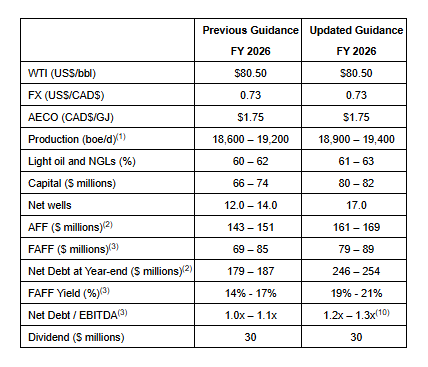
Corporate Guidance. InPlay continues to execute strongly, with recent Cardium wells materially outperforming expectations and being drilled ahead of schedule, allowing InPlay to expand its 2026 drilling program to 17 net wells on a pro forma basis. Reflecting stronger operational performance and the acquisition, management increased 2026 guidance, including adjusted funds flow (AFF) to C$161 million to C$169 million, free adjusted funds flow (FAFF) to C$79 million to C$89 million, and FAFF yield to 19% to 21%, despite higher capital spending of C$80 million to C$82 million.
Equity Research is available at no cost to Registered users of Channelchek. Not a Member? Click ‘Join’ to join the Channelchek Community. There is no cost to register, and we never collect credit card information.
This Company Sponsored Research is provided by Noble Capital Markets, Inc., a FINRA and S.E.C. registered broker-dealer (B/D).
*Analyst certification and important disclosures included in the full report. NOTE: investment decisions should not be based upon the content of this research summary. Proper due diligence is required before making any investment decision.
CALGARY, AB, Aug. 5, 2026 /CNW/ — InPlay Oil Corp. (TSX: IPO) (TASE: IPO) (OTCQX: IPOOF) (“InPlay” or the “Company“) is pleased to announce that it has entered into a definitive agreement today to acquire a private oil and gas producer for cash consideration of $54.25 million, prior to closing adjustments (the “Acquisition“).
The Acquisition supports InPlay’s long-term strategy of building a disciplined and sustainable light oil focused growth company. The Acquisition builds on InPlay’s proven track record of executing highly accretive acquisitions, having successfully completed five strategic acquisitions over the past decade that have helped increase production 10x and grow total proved plus probable reserves 13.5x. The acquired assets are currently producing approximately 1,400 boe/d(1) (85% light oil and NGLs) which will increase InPlay’s production to over 20,100 boe/d(1) (62 – 63% light oil and NGLs), with light oil production expected to increase to over 10,500 bbl/d. The high oil weighting of the acquired assets further enhances InPlay’s strong netbacks, providing meaningful accretion to Adjusted Funds Flow (“AFF“)(2) and Free Adjusted Funds Flow (“FAFF“)(3) on a per share basis. The acquired assets generate strong cash flow and free cash flow which will enhance InPlay’s shareholder return strategy. InPlay is forecasted to generate FAFF of approximately $79 – $89 million for 2026 on a pro forma basis, including only four months for the acquired assets, which equates to a FAFF yield(3) of 20%. InPlay pays a dividend of $0.09 per month ($1.08 per year), which equates to a dividend yield of 7.2%. In addition, InPlay recently implemented a Normal Course Issuer Bid, pursuant to which the Company repurchased 0.5% of basic shares outstanding for cancellation during the month of June.
ACQUISITION HIGHLIGHTS
Highly Accretive Acquisition Metrics: Purchase price represents 2.0x net operating income(3) and 27% FAFF yield; per-share accretion of 18% to both AFF and FAFF on an annualized basis; 12% accretion to oil production per share, and 9% accretion to funds flow per barrel netback.
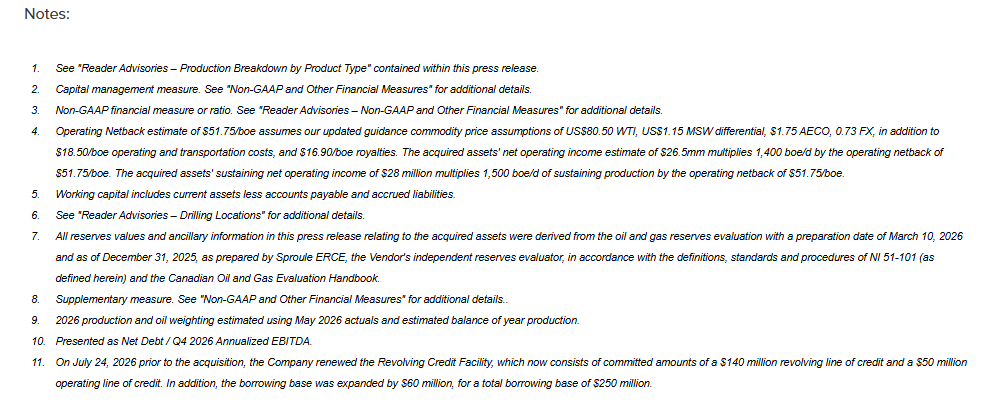
Enhanced Free Adjusted Funds Flow with Growth Potential: InPlay forecasts the acquired assets require sustaining capital of approximately $12 million to reach and maintain production of approximately 1,500 boe/d. Based on an operating netback(3) of approximately $51.75/boe(4), the acquired assets generate sustaining net operating income(3) of $28 million and FAFF of $16 million prior to accounting for synergies.
Acquired Assets are Contiguous with InPlay Assets Providing Significant Synergies: The acquired assets directly offset the Company’s existing operations and are supported by Company owned and operated facilities and infrastructure, creating meaningful operational synergies and enhancing the efficiency of future development. The Company expects to integrate the acquired assets without adding corporate office personnel. As a result of these synergies, the Acquisition is expected to generate approximately $2.5 million in annual cost savings, with the majority captured immediately post closing.
Expands InPlay’s Belly River Position: Pro forma the Acquisition, InPlay will be producing approximately 2,000 boe/d(1) from the Belly River, which at approximately 85% liquids weighting offers strong netbacks and high rate of return development opportunities.
Sustainability and Drilling Inventory: The acquired assets include 50 identified drilling locations, 75% of which are Tier 1 inventory(6) with expected payouts of less than 1.5 years at US $70/bbl WTI pricing.
“This Acquisition represents another important step in advancing InPlay’s strategy of building a disciplined, sustainable light oil company which includes strategic acquisitions” commented Doug Bartole, President and Chief Executive Officer of InPlay. “While modest in size, the Acquisition is a smart and highly accretive transaction that is expected to generate meaningful value relative to the capital invested. The acquired assets are highly complementary to our existing operations, provide meaningful operating and infrastructure synergies, and add a deep inventory of high-return drilling opportunities within our core area. The Acquisition is expected to be immediately accretive to adjusted funds flow and free adjusted funds flow per share, while maintaining conservative leverage and further enhancing our ability to generate sustainable returns for shareholders.”
ACQUISITION DETAILS
InPlay has entered into an arrangement agreement (the “Arrangement Agreement“) with a privately held arm’s length oil and gas producer (the “Vendor“), to acquire all of the issued and outstanding shares of the Vendor for cash consideration of $54.25 million, prior to closing adjustments. Concurrent with the execution of the Arrangement Agreement, certain shareholders of the Vendor, representing in excess of 72% of the Vendor shares outstanding, have entered into irrevocable written resolutions in support of the Acquisition. The Acquisition is expected to close by the end of August 2026, subject to the satisfaction or waiver of customary closing conditions.
The Acquisition will be funded by a draw on InPlay’s $190 million credit facility, with an expanded borrowing base totalling $250 million(11). Based on pro forma guidance as outlined below, InPlay anticipates Q4-2026 net debt to EBITDA(3) of 1.2x – 1.3x. The Company retains strong financial flexibility including an estimated working capital(5) surplus at June 30, 2026 of approximately $19.4 million and maintains unique access to the Israeli bond and equity markets. InPlay’s series A senior unsecured bonds (which are listed on the Tel Aviv Stock Exchange) are currently trading at a yield to maturity of approximately 6.1% and include a tap feature of approximately $115 million.
The acquired assets are currently producing approximately 1,400 boe/d with the latest well coming on stream in Q1 2026. InPlay plans to drill 2.0 net Belly River wells on the acquired assets post-closing and forecasts the acquired assets will require sustaining capital of approximately $12 million to reach and maintain annual average production of approximately 1,500 boe/d. Based on an operating netback of approximately $51.75/boe, the acquired assets generate sustaining net operating income of $28 million, resulting in sustaining FAFF of $16 million. The acquired assets contain 50 net drilling locations, and subject to supportive commodity prices, the acquired assets are expected to offer strong growth potential in excess of the target sustaining production.
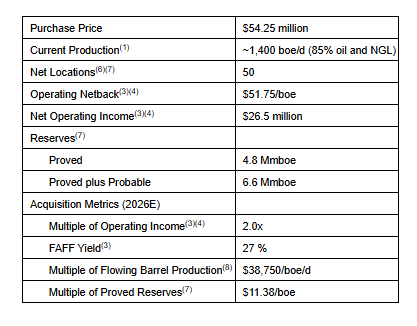
The Acquisition’s purchase price represents approximately 2.0x operating income and is highly accretive to InPlay on both AFF and FAFF per share metrics while maintaining conservative corporate leverage ratios. A summary of the relevant metrics of the Acquisition is as follows:
OPERATIONS UPDATE
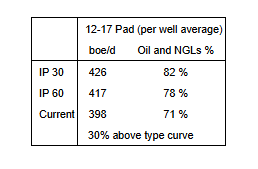
InPlay’s capital program for the second quarter of 2026 consisted of completing and bringing online three gross (3.0 net) Cardium wells in Pembina drilled in the first quarter of 2026, and the drilling and completion of three gross (3.0 net) additional Cardium wells also in Pembina. The most recent three wells were drilled approximately 40 days ahead of schedule, as the Company was able to access the field earlier than is normally anticipated during spring break-up. These wells were brought on production in late May and have materially exceeded internal expectations. Initial production (“IP“) rates for these three wells are as follows:
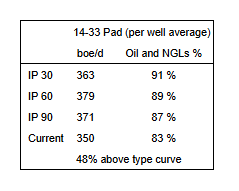
The three wells drilled in the first quarter continue to deliver strong results ahead of internal expectations. The IP rates for these wells are as follows:
InPlay’s year to date capital program has been completed below budget, resulting in strong capital efficiencies and continuing the “more with less” performance achieved in 2025. Supported by enhanced efficiencies and strong commodity prices, InPlay now plans to drill a total of 15.0 net Cardium wells in 2026, including 7.0 net Cardium wells during the second half of the year, for total capital expenditures of approximately $73 – $74 million, prior to incorporating the expanded pro forma capital program. This compares with InPlay’s original 2026 capital program of $66 million to $74 million, which contemplated the drilling of 12.0 to 14.0 net wells.
Additionally, InPlay plans to drill 2.0 net Belly River wells on the newly acquired assets, bringing the pro forma 2026 drilling program to a total of 17.0 net wells and combined capital expenditures of approximately $80 – $82 million.
In addition, InPlay plans to accelerate its asset retirement closure spend to reduce its decommissioning liability. This increase in asset retirement spending is supported by enhanced FAFF resulting from a more efficient 2026 capital program, stronger commodity prices and an expanded asset base associated with the Acquisition.
UPDATED 2026 PRO FORMA GUIDANCE
InPlay is also updating its previously announced 2026 guidance as follows:
ADVISORS
Burnet, Duckworth & Palmer LLP is acting as legal counsel to InPlay with respect to the Acquisition.
National Bank Financial Inc. (“NBF”) is acting as Exclusive Financial Advisor to the Vendor with respect to the Acquisition. NBF has provided the Vendor with a fairness opinion that the consideration to be received by the shareholders of the Vendor is fair, from a financial point of view, to the shareholders of the Vendor.
An updated corporate presentation will be available on our website in due course. For further information please contact:
Doug Bartole President and Chief Executive Officer InPlay Oil Corp. Telephone: (587) 955-0632
Kevin Leonard Vice President Corporate & Business Development InPlay Oil Corp. Telephone: (587) 955-0635









 View original content to download multimedia: