Alliance Resource Partners (ARLP) – Second Quarter 2026 Review and Outlook


Tuesday, July 28, 2026

Mark Reichman, Managing Director, Equity Research Analyst, Natural Resources, Noble Capital Markets, Inc.

Refer to the full report for the price target, fundamental analysis, and rating.

Second Quarter Financial Results. Compared to the prior year period, second-quarter 2026 revenue increased to $551.6 million from $547.5 million due to strong oil & gas royalty revenues, increased coal sales volumes, and higher other revenues, partially offset by a lower average realized coal sales price per ton. Adjusted EBITDA increased 14.7% to $185.7 million compared to $161.9 million in the second quarter of last year. Adjusted net income attributable to ARLP increased to $79.6 million, or $0.61 per unit, compared to $59.4 million, or $0.46 per unit, during the prior year period. Second quarter financial results were largely in line with our estimates. We had projected total revenue of $553.5 million, adj. EBITDA of $181.2 million, and EPU of $0.62.

Oil & Gas Royalties Remain a Key Growth Driver. The oil & gas royalties segment delivered record quarterly revenue and segment adjusted EBITDA, driven by increased volumes and higher commodity prices. On July 1, ARLP closed the $206.2 million AllDale III and IV acquisition. Crude oil volumes are now expected to be in the range of 1.95 million to 2.05 million barrels, natural gas volumes are expected to be in the range of 10.0 million to 10.5 million MCF, and liquids volumes are expected to be in the range of 1.1 million to 1.2 million barrels.


Get the Full Report

Equity Research is available at no cost to Registered users of Channelchek. Not a Member? Click ‘Join’ to join the Channelchek Community. There is no cost to register, and we never collect credit card information.

This Company Sponsored Research is provided by Noble Capital Markets, Inc., a FINRA and S.E.C. registered broker-dealer (B/D).

*Analyst certification and important disclosures included in the full report. NOTE: investment decisions should not be based upon the content of this research summary. Proper due diligence is required before making any investment decision. 

The Smartest Part of Magnolia’s $4 Billion Deal Is Not the Oil, It Is the Supply Chain

Magnolia Oil and Gas (NYSE: MGY) announced Monday it has entered into a definitive purchase agreement to acquire WildFire Energy for approximately $4.06 billion, marking the largest acquisition in the company’s history and one of the most significant domestic upstream deals of 2026. WildFire, backed by private equity firms Warburg Pincus and Kayne Anderson, operates in the same South Texas basin where Magnolia has built its entire business, making this a pure concentration play rather than a diversification move.

Under the terms of the agreement, WildFire owners will receive 32.2 million shares of Magnolia’s Class A common stock, and Magnolia will assume $600 million in outstanding notes due in 2029. The transaction is expected to close in late Q3 2026. Committed financing has been arranged through JPMorgan Chase and Citigroup.

What Magnolia Is Actually Getting

The deal goes well beyond additional drilling locations. WildFire’s assets are concentrated in the Eagle Ford Shale and Austin Chalk formations in the Giddings area of South Texas, directly adjacent to and overlapping with Magnolia’s existing operations. That geographic overlap is central to the deal thesis because it allows Magnolia to integrate the acquired production into its existing infrastructure with minimal incremental investment.

Two components of the transaction stand out from a typical upstream acquisition. First, the deal includes a sand mine that supplies approximately 80% of Magnolia’s current annual sand consumption, including 100% of WildFire’s sand requirements, with additional third-party sales on top. Controlling your own frac sand supply in a market where sand costs represent a meaningful share of well completion expenses is a structural cost advantage that compounds over every well drilled.

Second, the transaction includes more than 500 miles of gas gathering pipelines in the Giddings area. Owning midstream infrastructure rather than paying third-party gathering and processing fees directly improves operating margins on every barrel produced. For investors who follow midstream economics, companies like Summit Midstream Partners understand exactly how valuable that kind of infrastructure control can be at scale.

The Shareholder Return Story

Magnolia is framing this as a free cash flow accretion story above all else. The confidence in the acquired asset quality translated into an immediate 9% increase in the quarterly dividend to $0.18 per share, payable in Q3 2026. The company also reaffirmed its ongoing commitment to repurchasing at least 1% of outstanding shares per quarter.

On the production side, Magnolia reported Q2 total production averaging 106,100 barrels of oil equivalent per day, with D&C capital of $125 million and $296 million of cash on the balance sheet at quarter end. The company raised its full-year 2026 standalone production growth guidance from 5% to 6% alongside the deal announcement.

The Broader E&P Consolidation Signal

For investors tracking domestic energy producers in the small and microcap space, the Magnolia-WildFire combination reinforces a consolidation pattern that has been accelerating throughout 2026. Private equity-backed E&P companies that built significant acreage positions during the downturn are now exiting to public company buyers at scale. The acquirers with the strongest balance sheets, the lowest cost structures, and the most disciplined capital allocation frameworks are the ones winning the assets.

That dynamic creates a dual opportunity for smaller energy names. Companies like InPlay Oil and Gas and Alliance Resource Partners that operate with similar discipline in their respective basins represent the kind of focused, well-run operators that either benefit from the same elevated pricing environment driving Magnolia’s economics or become attractive consolidation targets themselves as the deal cycle continues.

The Strait of Hormuz Recovery Just Collapsed. Oil Flows Are Back Near Wartime Lows

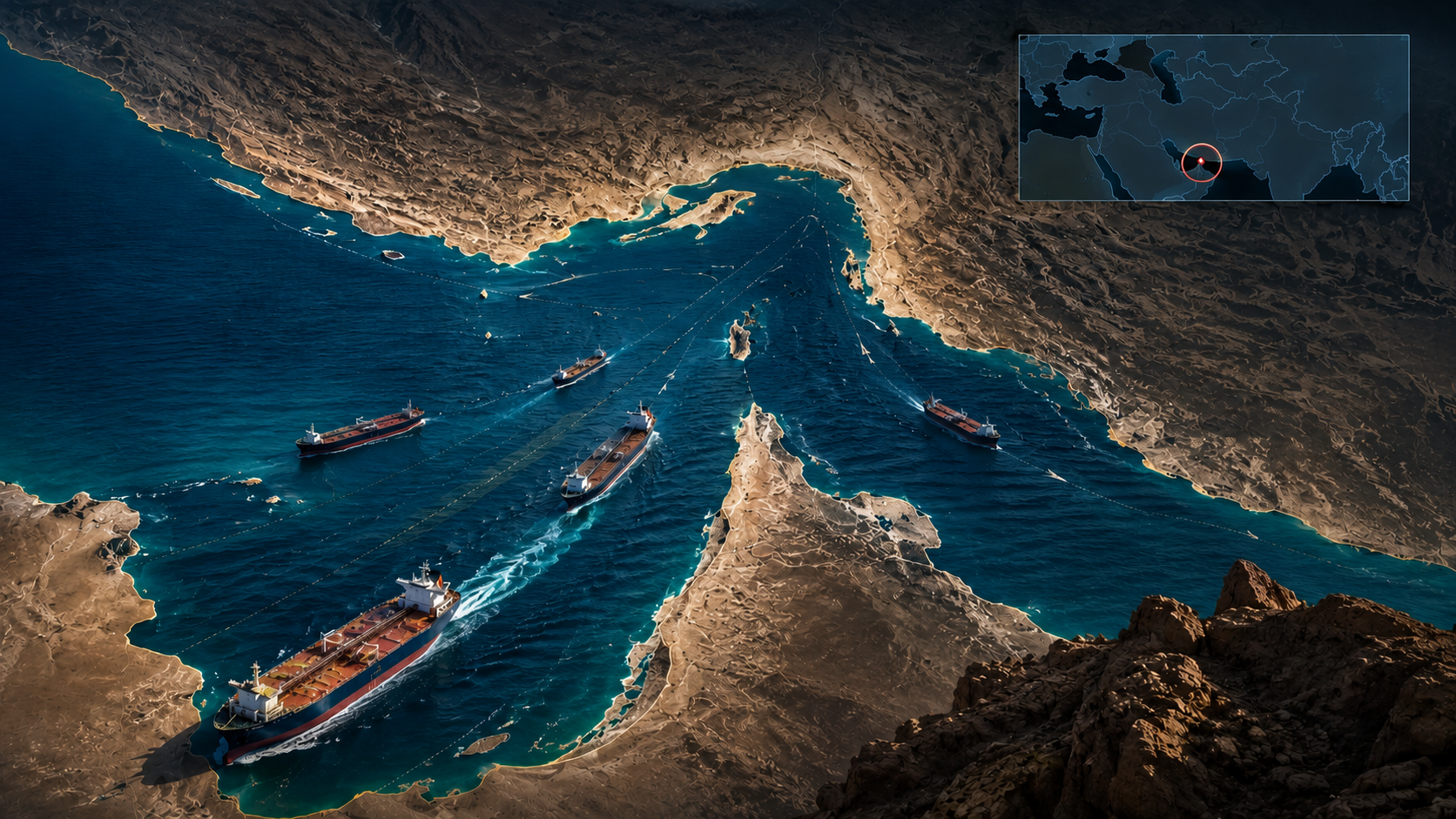
The brief window of optimism that followed the US-Iran ceasefire is closing fast. Oil shipments through the Strait of Hormuz, which had recovered to roughly 50% of pre-war levels under the June 17 memorandum of understanding, have fallen sharply over the past week as the ceasefire arrangement fell apart and active fighting resumed between US and Iranian military forces. According to Goldman Sachs, flows through the strait have dropped back to an estimated 3 to 5 million barrels per day, down from approximately 10 million barrels per day in early July.

The reversal leaves the global oil market short roughly 13.4 million barrels per day of Gulf supply, a deficit that is already showing up at the pump and in the price of crude. Brent crude has jumped more than 8% over the past five trading sessions to trade back above $84 per barrel. WTI has climbed more than 8% to above $79. Both benchmarks are moving in the wrong direction for an economy that had only just begun pricing in a post-war energy recovery.

What Went Wrong

The MOU signed June 17 was supposed to reopen the strait to pre-war commercial traffic within 30 days and establish a framework for broader negotiations. For roughly four weeks, that framework held. Tanker crossings increased, oil prices declined sharply, and the global economy began adjusting to a lower energy cost environment. Gas prices fell below $4 nationally for the first time in months.

That progress has now reversed. US Central Command announced a new wave of strikes against Iranian military targets Wednesday, the fifth consecutive day of US military action in the region. Iran has continued retaliating with attacks against US installations throughout the Gulf. A second US naval blockade of the strait, which began Tuesday evening, has already redirected commercial vessels attempting to transit the waterway. Energy market analysts at Rystad Energy have stated that expectations for near-term flow normalization have failed to materialize, and the latest escalation has further reduced the probability of a recovery in the weeks ahead.

The Small Cap Squeeze Returns

For investors in the sub-$2 billion market cap space, this reversal hits on two fronts simultaneously. The consumer-facing small caps that had only just begun to benefit from lower fuel costs are now watching that relief evaporate. Companies in transportation, logistics, food service, and retail, including names like ONE Group Hospitality and Travelzoo, are right back in the margin compression environment that characterized the spring. Diesel prices, which had been trending lower, are poised to reverse alongside crude if the strait remains effectively closed.

On the other side of the trade, domestic energy producers are seeing the price environment strengthen again. Independent oil and gas operators, including names like InPlay Oil and Alliance Resource Partners, along with midstream players like Summit Midstream Partners, benefit directly from sustained crude prices above $80. The economics for US producers improve at every dollar WTI moves higher, and the re-escalation removes the near-term risk that a permanent peace deal would collapse prices back toward pre-war levels.

Goldman Sachs strategists have cautioned that recovery this time could be slower than the initial post-ceasefire rebound, given depleted global inventories and continued shipper reluctance to route through the region even via Omani waters. China, the world’s largest crude importer, had reduced its intake by 5 million barrels per day during the first phase of the conflict, but that restraint could shift as Gulf producers adjust pricing and Beijing reassesses its long-term stockpile strategy.

The ceasefire was supposed to be the beginning of the end. Instead, the strait is closing again, and the energy cost pressure that defined the first half of 2026 is threatening to define the second half as well.

Pump Prices Fall Under $4 Just in Time for Summer Travel Season

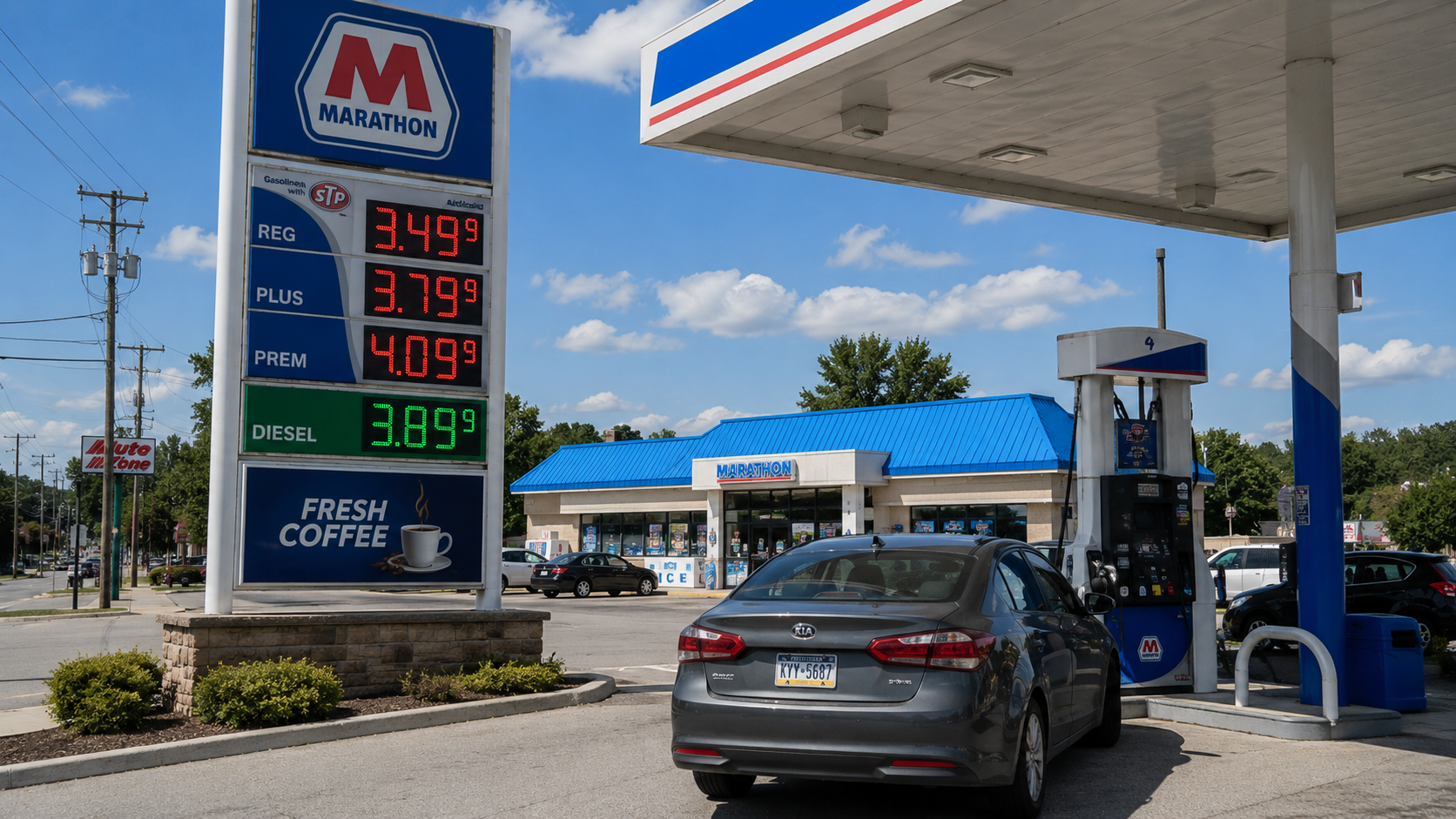
The energy shock that defined the spring of 2026 is unwinding, and American consumers are feeling it at the pump just in time for summer. The national average price of regular gasoline fell to $3.99 per gallon Thursday, dropping below the $4 threshold for the first time in months and delivering meaningful relief to households that watched prices climb above $4.50 per gallon only a month ago at the height of the US-Iran conflict.

For the small and microcap companies that spent the spring absorbing elevated fuel costs with limited ability to pass them through, the decline is more than a consumer story. It is the early stage of a margin recovery that could reshape the second half of the year.

What’s Driving the Decline

The catalyst is diplomatic. Following President Trump’s announcement Sunday that Washington and Tehran had agreed to terms on a 60-day memorandum of understanding aimed at ending the three-month conflict and reopening the Strait of Hormuz to commercial traffic, crude oil prices have fallen sharply. Brent crude, the international benchmark, has dropped roughly 13% over the past five trading sessions to trade firmly below $80 per barrel for the first time since the early days of the war. US benchmark WTI crude has fallen even harder, shedding approximately 15% to trade below $75.

The scale of the recovery reflects the scale of the disruption. The shuttering of the Strait of Hormuz removed more than one billion barrels of oil from the global market over three months, creating one of the most severe supply squeezes in years. Gasoline and other crude derivatives, which carry embedded refining costs and are stored in smaller quantities, experienced even more dramatic price swings than crude itself — which is precisely why they are now falling quickly as the supply picture normalizes.

Industry analysts project the national average could head toward $3.70 per gallon in the near term as the Iran agreement takes hold and movement through the strait resumes, with diesel prices expected to fall below $5 per gallon shortly after.

The Small Cap Margin Story

For consumer-facing companies in the sub-$2 billion market cap range, the decline in fuel costs is a direct and measurable tailwind. Throughout the spring, regional trucking companies, last-mile delivery operators, food service businesses, and logistics providers absorbed surging diesel and gasoline costs that compressed already thin operating margins. Unlike large cap peers with hedging programs and pricing power, smaller operators had few options beyond eating the costs or risking demand destruction by raising prices.

That pressure is now reversing. Lower fuel costs flow almost immediately through to the operating expenses of transportation and logistics-dependent companies. Credit card data throughout the spring showed consumers spending an increasing share of their budgets on gasoline while cutting back elsewhere — a dynamic that squeezed discretionary small cap retailers and restaurant operators. As pump prices fall, that discretionary spending capacity returns, potentially benefiting the consumer-facing companies that had been most pressured.

The Caveats Worth Watching

The recovery is not without risk. Gasoline prices remain elevated above prewar levels, and a well-documented market phenomenon often described as “rockets and feathers” means pump prices tend to rise quickly when crude climbs but fall more slowly on the way back down. The timing of the Strait of Hormuz fully reopening remains uncertain, which means oil prices are unlikely to collapse dramatically as summer driving demand builds.

A more immediate threat comes from the weather. Tropical Storm Arthur is expected to impact the US Gulf Coast, home to the nation’s largest refinery complex. With US refineries already running at 97% of capacity according to federal data, any disruption from flooding could squeeze a system operating at its limit and temporarily reverse some of the relief now reaching consumers.

Barring significant storm damage or other disruptions, analysts project national average gasoline prices could fall below $3 per gallon by year-end, with diesel below $4. For the small cap companies that endured the spring squeeze, that would represent a full-circle recovery — and a meaningful tailwind heading into 2027.

InPlay Oil (IPOOF) – Higher Oil Prices Drive Strong 1Q 2026 Results; Increasing 2026 Estimates


Tuesday, May 12, 2026

Mark Reichman, Managing Director, Equity Research Analyst, Natural Resources, Noble Capital Markets, Inc.

Refer to the full report for the price target, fundamental analysis, and rating.

1Q 2026 financial results. InPlay Oil generated first-quarter 2026 adjusted funds flow (AFF) of C$30.1 million, or C$1.08 per share, above our estimate of C$27.4 million, or C$0.98 per share. Oil and natural gas sales revenue totaled C$88.4 million, ahead of our C$79.9 million forecast, due to stronger commodity prices. First quarter production averaged 18,337 barrels of oil equivalent per day (boe/d), modestly below our estimate. Compared to the prior year period, production, oil and natural gas sales revenue, operating income, and AFF increased 127.1%, 102.0%, 116.9%, and 79.6%, respectively. Average production more than doubled due to the successful integration of the company’s 2025 acquisition and strong results from its Pembina drilling program. Liquids production increased significantly, improving the overall production mix and supporting stronger corporate netbacks.

Outlook for the remainder of 2026. Supported by stronger oil prices, the Company increased its adjusted funds flow and free adjusted funds flow guidance to a range of C$143.0 to C$151.0 million, compared to previous expectations of C$122.0 million to C$129.0 million, while maintaining a disciplined production target of 18,600 to 19,200 boe/d and capital spending in the range of C$66.0 to C$74.0 million.


Get the Full Report

Equity Research is available at no cost to Registered users of Channelchek. Not a Member? Click ‘Join’ to join the Channelchek Community. There is no cost to register, and we never collect credit card information.

This Company Sponsored Research is provided by Noble Capital Markets, Inc., a FINRA and S.E.C. registered broker-dealer (B/D).

*Analyst certification and important disclosures included in the full report. NOTE: investment decisions should not be based upon the content of this research summary. Proper due diligence is required before making any investment decision. 

Release – InPlay Oil Corp. Confirms Monthly Dividend for May 2026

InPlay Oil logo (CNW Group/InPlay Oil Corp.)

Research News and Market Data on IPOOF

InPlay Oil Corp. 

May 01, 2026, 07:30 ET

CALGARY, AB, April 30, 2026 /CNW/ – InPlay Oil Corp. (TSX: IPO) (OTCQX: IPOOF) (“InPlay” or the “Company”) is pleased to confirm that its Board of Directors has declared a monthly cash dividend of $0.09 per common share payable on May 29, 2026, to shareholders of record at the close of business on May 15, 2026. The monthly cash dividend is expected to be designated as an “eligible dividend” for Canadian federal and provincial income tax purposes.

About InPlay Oil Corp.
InPlay is a junior oil and gas exploration and production company with operations in Alberta focused on light oil production. The company operates long-lived, low-decline properties with drilling development and enhanced oil recovery potential as well as undeveloped lands with exploration possibilities. The common shares of InPlay trade on the Toronto Stock Exchange under the symbol IPO and the OTCQX Exchange under the symbol IPOOF.

SOURCE InPlay Oil Corp.

For further information please contact: Doug Bartole, President and Chief Executive Officer, InPlay Oil Corp., Telephone: (587) 955-0632, www.inplayoil.com; Darren Dittmer, Chief Financial Officer, InPlay Oil Corp., Telephone: (587) 955-0634

Oil Prices Crater 10% as Iran Opens Strait of Hormuz — But Don’t Call It a Done Deal

Oil markets were thrown into a volatile session Friday morning after Iran’s foreign minister declared the Strait of Hormuz fully open to commercial traffic for the duration of a fragile 10-day ceasefire between Israel and Lebanon — sending crude prices into a sharp, double-digit freefall.

Brent crude dropped 10%, falling below $90 per barrel, while West Texas Intermediate slid more than 10.5%, pulling below $82. Both benchmarks had opened the week above $100, meaning the week’s loss alone represents one of the most dramatic oil price collapses in recent memory.

The swift selloff reflects just how much of the oil market’s recent premium was baked in around fears of a sustained Strait of Hormuz closure. The strait is the world’s most critical chokepoint for global energy flows, with roughly 20% of all seaborne oil passing through its narrow passage daily. Even a partial disruption sends shockwaves through energy markets — and traders had been pricing in exactly that risk.

The announcement comes as a direct byproduct of the Israel-Lebanon ceasefire that took effect Thursday evening. With that front temporarily cooling, Tehran signaled it could ease its stranglehold on one of the most strategically sensitive waterways on the planet. On the surface, that’s a significant de-escalation.

But energy markets shouldn’t pop the champagne just yet.

Iranian state media clarified Friday that any vessel seeking passage must coordinate directly with the Revolutionary Guard Corps — a requirement that carries its own practical and geopolitical complications for commercial shipowners. It also remained unclear which specific route Iran expects vessels to use, a sticking point that emerged after Iran previously insisted ships pass close to the Iranian coast rather than through more neutral Omani waters.

Adding to the confusion, President Trump posted shortly after the Iranian announcement that while the strait is open, the U.S. naval blockade targeting Iran specifically will remain in full force until a broader deal is finalized. That dual reality — technically open waters but an active American naval presence — leaves shipowners navigating a legal and logistical gray area.

The bigger picture here is a potential U.S.-Iran deal that’s reportedly taking shape. According to reports Friday, Washington is considering a framework that would release roughly $20 billion in frozen Iranian assets in exchange for Iran surrendering its stockpile of enriched uranium. Trump told reporters a deal was looking favorable and that a second round of negotiations could begin as early as this weekend.

For energy investors and small-cap companies with exposure to oil services, exploration, or transportation, Friday’s move is a reminder of how quickly geopolitical sentiment can reprice an entire sector. The energy trade that dominated the first quarter — long crude on Middle East risk — just took a serious gut punch.

Watch the second round of talks carefully. If a deal materializes, energy markets could reprice even further. If talks collapse, expect crude to snap back hard.

The strait may be open. The deal isn’t.

The Domestic Small-Cap Energy Story the Market Is Just Starting to Price In

West Texas Intermediate crossed $104 per barrel Monday morning as the U.S. formally blockaded the Strait of Hormuz, putting an official military stamp on a crisis that has already cut the waterway’s commercial traffic by more than 90% since late February. Oil has surged more than 55% since the U.S.-Israel air campaign against Iran began. The large-cap conversation around this move centers on inflation, rate policy, and Big Oil earnings. The small-cap opportunity underneath it is considerably more specific — and considerably less crowded.

Domestic energy producers don’t carry the insurance exposure, rerouting costs, or geopolitical risk that’s hammering international supply chains. When global energy flows are disrupted at the source — and the Strait of Hormuz handles roughly 25% of the world’s seaborne oil and 20% of global LNG exports — the demand vacuum gets filled by producers operating entirely outside the conflict zone. U.S. domestic natural gas producers, onshore oil operators, and domestic refiners are each collecting a demand premium that didn’t exist eight weeks ago.

The LNG dynamic is particularly important for small-cap energy investors. Qatar and the UAE supply a substantial share of LNG to Asian buyers. With Qatari LNG facilities struck by Iranian drones and Gulf shipping lanes effectively closed, Asian markets are competing aggressively for alternative supply — pulling from U.S. export terminals at a pace that is tightening the domestic natural gas market. That demand surge is landing at exactly the moment AI infrastructure is driving electricity consumption higher. Data centers require massive volumes of consistent baseload power, and natural gas remains the backbone of that grid in the United States. The theoretical “AI-Energy Nexus” that analysts have been discussing is no longer theoretical — it is being forced into reality by a geopolitical event that knocked out the world’s primary LNG export corridor.

Domestic refiners are in a comparably favorable position. With crude prices elevated and refining margins widening as global capacity strains, mid-size operators processing domestic crude are capturing spread that simply wasn’t available in a $70-per-barrel world. Large-cap refining names have already moved. Many small and microcap upstream producers with pure domestic production profiles have lagged the repricing — a pattern that historically corrects as the supply story matures and investors rotate down the market cap spectrum.

The broader implications extend beyond hydrocarbons. The Hormuz crisis is accelerating a policy conversation with real capital allocation consequences: the shift from “green energy” to “secure energy.” Nuclear, domestic grid hardening, and U.S.-based energy infrastructure are being reconsidered as national security imperatives rather than purely climate investments. That reframing is attracting new institutional attention to sectors that were previously viewed as transitional.

The primary risk is speed. A diplomatic breakthrough or a durable ceasefire could reverse oil toward the $80 range and compress margins that have only recently expanded. Energy executives are warning, however, that even if the Strait reopens, infrastructure damage and the global shipping backlog could take months to fully unwind — putting a floor under the repricing that has already occurred.

For investors focused on the small and microcap space, the Hormuz crisis is not just an oil price story. It is a structural demand signal for domestic producers operating in a global market that suddenly cannot source enough of what they have.

$110 Oil and a Blocked Strait: The Iran Shock Is Now Splitting Small-Cap Stocks in Two

The Iran war didn’t just push Brent crude past $100 a barrel — it drew a sharp line through the small-cap market, separating companies that are printing cash from those quietly bleeding out. One month in, that divide just got wider.

Brent crude surged 2.82% to $111.06 per barrel on Friday after two ultra-large container vessels owned by China Ocean Shipping Company — COSCO, the world’s fourth-largest shipping line by capacity — attempted to transit the Strait of Hormuz and were turned back. The incident carries significant weight: China is an ally of Iran, and Tehran had previously signaled that friendly nations’ ships could pass freely. The fact that even Chinese vessels are being blocked signals that Iran’s chokehold on the waterway remains firmly in place, despite diplomatic noise suggesting otherwise.

Iran controls access to a strait that handles roughly 20% of the world’s daily oil supply. Since the U.S.-Israeli strikes began on February 28, close to 500 million barrels of total liquids have been lost, with approximately 17.8 million barrels per day of oil and fuel flows disrupted, according to Rystad Energy. WTI, meanwhile, climbed to $97.01 on Friday — up from roughly $65 in February. The buffer that kept prices from going completely vertical is now gone. Rystad’s chief oil analyst described the global supply system as having shifted from “buffered to fragile,” with inventories drawn down to a point where there is little room left to absorb further shocks.

President Trump announced a 10-day pause on strikes targeting Iran’s energy infrastructure through April 6, and said talks were progressing — but markets barely reacted. The COSCO incident hit the same day, effectively negating any diplomatic optimism. Iran also reportedly allowed 10 oil tankers to pass through the strait this week as a goodwill gesture, but analysts were quick to caution that isolated shipments do not signal a reopening.

The Winners: Domestic Producers and LNG Players

The clearest beneficiaries are U.S.-based exploration and production companies with no Middle East operational exposure. They’re capturing elevated prices without the liability of stranded tankers, damaged facilities, or rerouting costs eating into the margins of globally integrated operators.

Small- and mid-cap names like Antero Resources (AR), Solaris Energy Infrastructure (SEI), and SM Energy (SM) have all been flagged by analysts as well-positioned to benefit from both higher prices and the scramble among European and Asian buyers to replace Persian Gulf supply. Antero in particular benefits from the LNG export surge — Asian LNG prices have skyrocketed more than 140% since the war began as Qatar halted exports, and U.S. natural gas producers with export exposure are capturing that spread directly. The SPDR S&P Oil & Gas Exploration & Production ETF (XOP) is up roughly 10% since the conflict started, significantly outpacing the broader market.

The Losers: Everyone Paying the Energy Tax

For small-cap companies outside the energy sector, $110 oil is a cost, not a catalyst. Airlines, regional manufacturers, consumer discretionary companies, and logistics-heavy businesses are absorbing higher input costs with limited pricing power and thin margins. Unlike large-caps with robust balance sheets, smaller companies can’t easily hedge energy exposure or wait out a prolonged commodity spike.

The macro backdrop makes it worse. The Russell 2000 entered correction territory this month and the timing is brutal. Approximately 32% of the debt held by Russell 2000 companies is floating-rate, meaning every basis point that rate-cut expectations get pushed back translates directly into higher interest expenses. With the Fed holding rates steady at its March 18 meeting and revising its inflation outlook higher, the one rate cut markets were pricing in for late 2026 is increasingly in doubt. Small-cap firms are facing approximately $368 billion in debt maturing in 2026 alone, much of it originally issued at near-zero rates — now needing to be refinanced at 6.5% to 8%.

Bank of America has noted that small caps with oil exposure but limited refinancing risk may be best positioned in the current environment. That framing is the right lens heading into Q1 earnings. The question isn’t whether oil stays at $110. It’s whether your small-cap holdings are collecting the windfall or paying the price for it — and with the Strait of Hormuz turning away even Chinese vessels, there’s no telling when this resolves.

Oil Breaks $100 as Middle East Conflict Disrupts Global Supply

Global oil markets have entered a new period of volatility as geopolitical tensions in the Middle East push crude prices sharply higher. Brent crude surged past $100 per barrel on Monday, briefly nearing $120 before easing, as disruptions to tanker traffic through the Strait of Hormuz threaten one of the world’s most critical energy supply routes.

The price spike follows escalating military conflict involving Iran, the United States, and Israel. The Strait of Hormuz — a narrow maritime corridor that typically carries about one-fifth of global oil shipments — has effectively halted most tanker traffic amid security threats and heightened military activity. With oil unable to move freely from the region, supply constraints are rapidly tightening global markets.

Producers across the Middle East are already responding to the bottleneck. Saudi Arabia has begun cutting production as storage facilities fill up due to limited export capacity. Neighboring producers including the United Arab Emirates, Kuwait, and Iraq have taken similar steps, reducing output as crude inventories accumulate while export routes remain restricted.

Analysts warn the supply impact could intensify if the disruption continues. JPMorgan estimates Middle Eastern production shut-ins could exceed four million barrels per day within weeks if the closure persists. The region accounts for roughly one-third of global oil output, making any sustained disruption highly significant for energy markets.

While producers attempt to redirect shipments through alternative routes, options remain limited. Saudi Arabia has increased shipments through pipelines to its Red Sea port of Yanbu, but the infrastructure cannot fully replace volumes normally transported through Hormuz.

The resulting supply uncertainty has sent shockwaves across energy markets. Diesel prices have surged alongside crude, with European gasoil futures climbing above $170 per barrel. Several governments are already weighing intervention measures. China has reportedly instructed major refiners to suspend gasoline and diesel exports, while South Korea is reviewing whether to implement an oil price cap for the first time in three decades.

Consumers are beginning to feel the impact. In the United States, gasoline prices have climbed nearly $0.50 per gallon in just one week, reaching a national average of roughly $3.47 per gallon, according to AAA. Analysts estimate prices could approach $4 per gallon within the next month if crude oil remains elevated.

The relationship between crude and retail fuel costs is direct. Industry estimates suggest every $10 increase in oil prices typically adds about $0.25 per gallon at the pump. With crude rising more than $20 in recent days, the upward pressure on gasoline prices is already visible.

Diesel costs are climbing even faster, with national averages approaching $4.66 per gallon. Because diesel powers the majority of freight transportation in the U.S., higher fuel prices could ripple through the broader economy by increasing the cost of moving goods. That dynamic often translates into higher prices for groceries, clothing, and construction materials.

Economists are also warning that the surge in energy prices could complicate the broader economic outlook. Rising fuel costs combined with slowing growth indicators have revived concerns about stagflation — a scenario where inflation accelerates even as economic activity weakens.

For now, markets remain focused on the duration of the Strait of Hormuz disruption. The longer shipping remains constrained, the more global inventories may tighten, potentially forcing prices higher until demand adjusts or supply routes reopen.

InPlay Oil (IPOOF) – Pembina Assets Shine, Disciplined Outlook


Friday, March 06, 2026

InPlay Oil is a junior oil and gas exploration and production company with operations in Alberta focused on light oil production. The company operates long-lived, low-decline properties with drilling development and enhanced oil recovery potential as well as undeveloped lands with exploration possibilities. The common shares of InPlay trade on the Toronto Stock Exchange under the symbol IPO and the OTCQX Exchange under the symbol IPOOF.

Mark Reichman, Managing Director, Equity Research Analyst, Natural Resources, Noble Capital Markets, Inc.

Hans Baldau, Associate Analyst, Noble Capital Markets, Inc.

Refer to the full report for the price target, fundamental analysis, and rating.

2025 financial results. InPlay Oil reported full-year 2025 adjusted funds flow (AFF) of C$114.4 million, or C$4.68 per share, above our estimate of C$112.9 million, or C$4.58 per share. Revenue for the year totaled C$291.4 million, ahead of our C$290.6 million forecast, as stronger Q4 production of 19,589 boe/d exceeded our estimate of 19,419 boe/d, in addition to stronger than expected AECO pricing. Full-year production averaged 17,043 boe/d, slightly above our 17,000 boe/d estimate.

Updated 2026 estimates. In the first quarter of 2026, we expect now revenues of C$79.9 million, AFF of C$27.4 million, and AFF per share of C$0.98, compared to prior estimates of C$79.0 million, C$26.6 million, and C$0.95, respectively. For the full-year 2026, we now estimate revenues of C$340.1 million, AFF of C$126.7 million, and AFF per share of C$4.53, up from C$340.1 million, C$125.2 million, and C$4.45. We are maintaining our production estimate of 18,605 boe/d in the first quarter and 18,900 boe/d for the year. These estimates are reflective of slightly higher commodity pricing.


Get the Full Report

Equity Research is available at no cost to Registered users of Channelchek. Not a Member? Click ‘Join’ to join the Channelchek Community. There is no cost to register, and we never collect credit card information.

This Company Sponsored Research is provided by Noble Capital Markets, Inc., a FINRA and S.E.C. registered broker-dealer (B/D).

*Analyst certification and important disclosures included in the full report. NOTE: investment decisions should not be based upon the content of this research summary. Proper due diligence is required before making any investment decision. 

Strait of Hormuz in Focus as U.S.-Iran War Sends Oil Markets Soaring

Oil markets have swung sharply higher since the outbreak of war between the United States and Iran, with traders rapidly repricing geopolitical risk into crude benchmarks. U.S. crude rose more than 5% Monday after surging as much as 12% intraday, while Brent climbed above $77 per barrel before easing from session highs. The moves reflect mounting concern that the conflict could trigger sustained supply disruptions in one of the world’s most strategically vital energy corridors.

At the center of the market’s anxiety is the Strait of Hormuz, the narrow waterway linking the Persian Gulf to global markets. Shipping analysts report that tanker traffic through the Strait has effectively stalled as operators reassess security risks. In 2025, more than 14 million barrels per day—roughly one-third of the world’s seaborne crude exports—passed through this chokepoint. A prolonged disruption would have immediate consequences for refiners and importers across Asia, Europe, and North America.

Iran itself produces approximately 3.3 million barrels per day, ranking as OPEC’s fourth-largest oil producer. Beyond its own output, however, its geographic position gives it indirect leverage over exports from Saudi Arabia, Iraq, Kuwait, and the United Arab Emirates. The conflict introduces overlapping supply risks: potential declines in Iranian production due to instability or infrastructure damage, and constraints on maritime transit that could temporarily restrict exports from multiple Gulf producers. Even the perception of restricted flows has been enough to trigger aggressive buying in crude futures and energy-linked equities.

Major banks have begun outlining upside price scenarios if the disruption persists. Some analysts suggest Brent could approach $100 per barrel under an extended supply squeeze, while more severe regional escalation could drive prices materially higher. For now, markets are oscillating between risk premium expansion and cautious optimism that diplomatic channels could reopen. President Donald Trump stated that U.S. combat operations will continue until objectives are met, while also indicating openness to talks. Iranian officials have publicly rejected negotiations, adding to uncertainty over the conflict’s trajectory.

The implications extend well beyond the energy sector. A sustained rally in crude would complicate global inflation dynamics at a time when central banks have been attempting to stabilize price pressures. Higher oil prices feed directly into transportation, manufacturing, and consumer goods costs, potentially delaying interest rate normalization. Equity markets, particularly rate-sensitive and consumer-facing sectors, could experience renewed volatility if energy-driven inflation reaccelerates.

For small- and mid-cap companies, the effects are uneven. Domestic exploration and production firms may benefit from improved pricing and stronger cash flow if elevated crude levels persist. Oilfield services providers could also see renewed capital spending from producers seeking to capitalize on higher margins. Conversely, airlines, logistics operators, chemicals manufacturers, and other fuel-intensive businesses face margin compression if input costs rise faster than pricing power allows. Emerging market equities in energy-importing nations may also encounter currency and trade balance pressures.

The broader theme resurfacing in 2026 is the fragility embedded in global supply chains. While U.S. shale growth and diversified sourcing have added resilience over the past decade, the Strait of Hormuz remains irreplaceable in the near term. Even with strategic petroleum reserves and spare capacity assumptions, a chokepoint freeze underscores how quickly geopolitical flashpoints can ripple through commodity markets and financial assets.

Oil is once again functioning as a real-time geopolitical barometer. Until tanker traffic resumes at scale or a clearer diplomatic path emerges, volatility is likely to remain elevated. Investors across asset classes will be watching crude not only as an energy benchmark, but as a signal of broader macroeconomic risk.

Release – InPlay Oil Corp. Confirms Monthly Dividend for March 2026

InPlay Oil logo (CNW Group/InPlay Oil Corp.)

Research News and Market Data on IPOOF

Mar 02, 2026, 07:30 ET

CALGARY, AB, Feb. 26, 2026 /CNW/ – InPlay Oil Corp. (TSX: IPO) (OTCQX: IPOOF) (“InPlay” or the “Company”) is pleased to confirm that its Board of Directors has declared a monthly cash dividend of $0.09 per common share payable on March 31, 2026, to shareholders of record at the close of business on March 16, 2026. The monthly cash dividend is expected to be designated as an “eligible dividend” for Canadian federal and provincial income tax purposes.

About InPlay Oil Corp.
InPlay is a junior oil and gas exploration and production company with operations in Alberta focused on light oil production. The company operates long-lived, low-decline properties with drilling development and enhanced oil recovery potential as well as undeveloped lands with exploration possibilities. The common shares of InPlay trade on the Toronto Stock Exchange under the symbol IPO and the OTCQX Exchange under the symbol IPOOF.

SOURCE InPlay Oil Corp.

For further information please contact: 

Doug Bartole, President and Chief Executive Officer, InPlay Oil Corp.

Telephone: (587) 955-0632

| www.inplayoil.com|

|Darren Dittmer, Chief Financial Officer, InPlay Oil Corp.

Telephone: (587) 955-0634