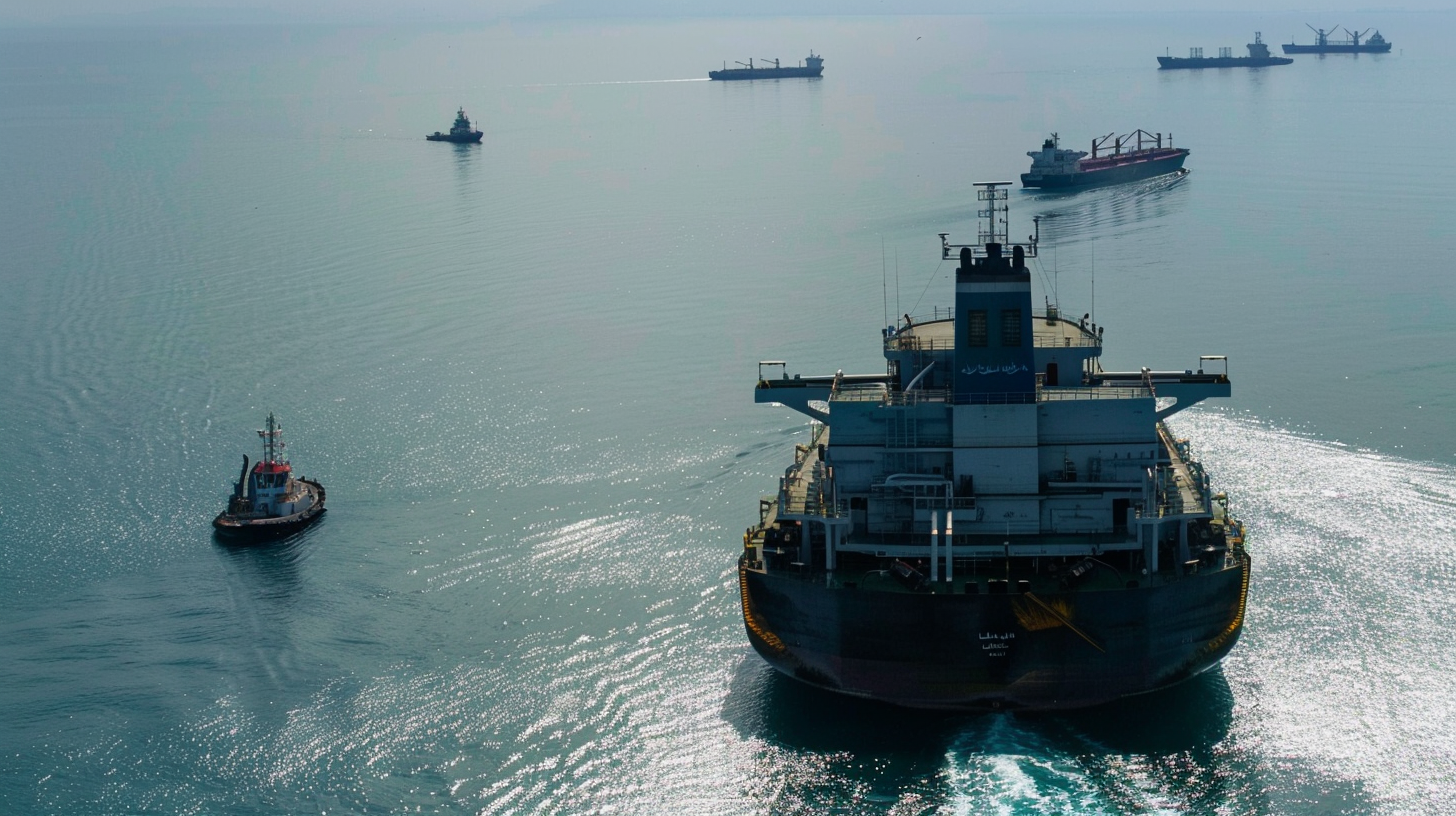
Oil Prices Crater 10% as Iran Opens Strait of Hormuz — But Don’t Call It a Done Deal

Oil markets were thrown into a volatile session Friday morning after Iran’s foreign minister declared the Strait of Hormuz fully open to commercial traffic for the duration of a fragile 10-day ceasefire between Israel and Lebanon — sending crude prices into a sharp, double-digit freefall.

Brent crude dropped 10%, falling below $90 per barrel, while West Texas Intermediate slid more than 10.5%, pulling below $82. Both benchmarks had opened the week above $100, meaning the week’s loss alone represents one of the most dramatic oil price collapses in recent memory.

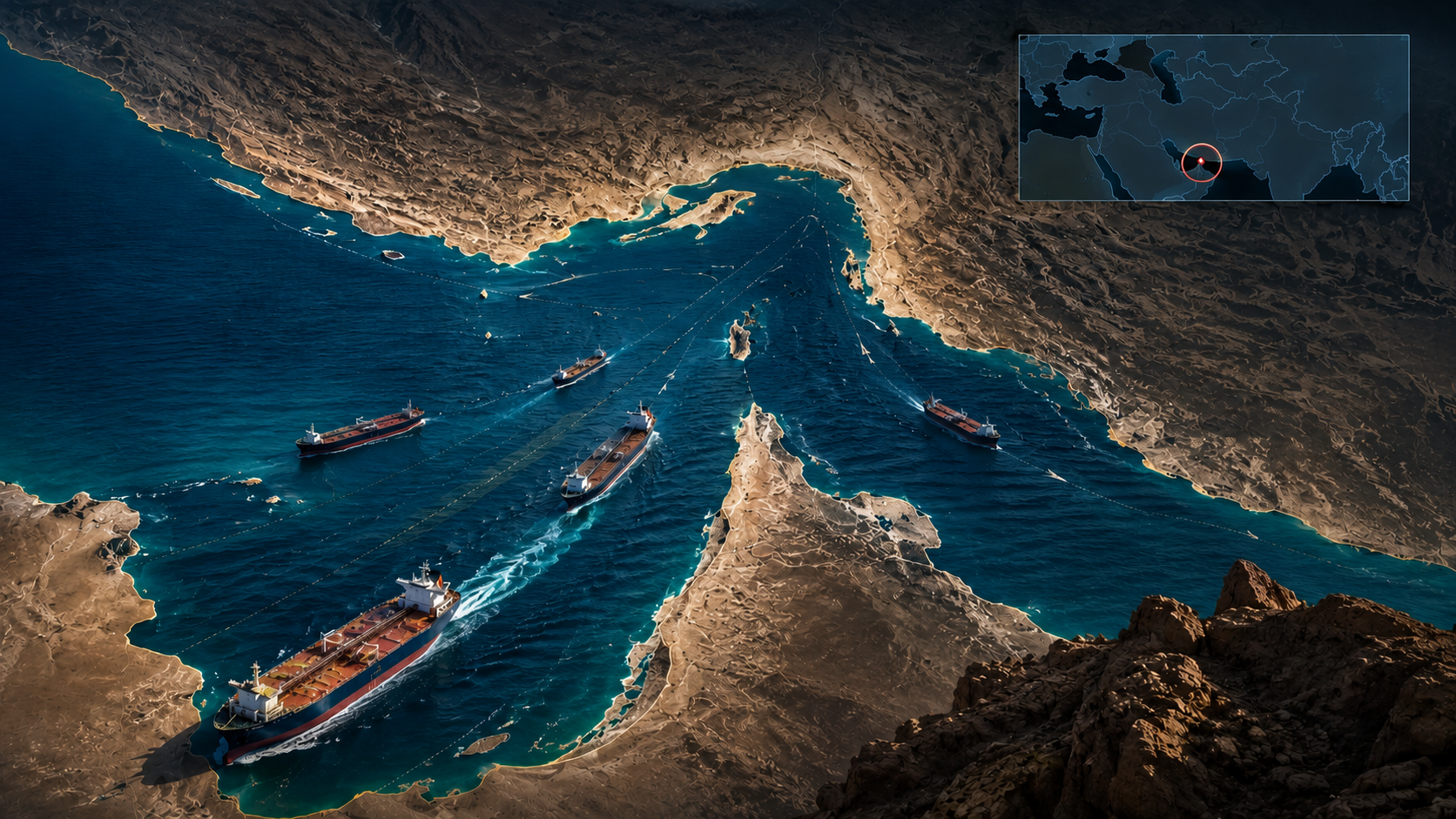
The swift selloff reflects just how much of the oil market’s recent premium was baked in around fears of a sustained Strait of Hormuz closure. The strait is the world’s most critical chokepoint for global energy flows, with roughly 20% of all seaborne oil passing through its narrow passage daily. Even a partial disruption sends shockwaves through energy markets — and traders had been pricing in exactly that risk.

The announcement comes as a direct byproduct of the Israel-Lebanon ceasefire that took effect Thursday evening. With that front temporarily cooling, Tehran signaled it could ease its stranglehold on one of the most strategically sensitive waterways on the planet. On the surface, that’s a significant de-escalation.

But energy markets shouldn’t pop the champagne just yet.

Iranian state media clarified Friday that any vessel seeking passage must coordinate directly with the Revolutionary Guard Corps — a requirement that carries its own practical and geopolitical complications for commercial shipowners. It also remained unclear which specific route Iran expects vessels to use, a sticking point that emerged after Iran previously insisted ships pass close to the Iranian coast rather than through more neutral Omani waters.

Adding to the confusion, President Trump posted shortly after the Iranian announcement that while the strait is open, the U.S. naval blockade targeting Iran specifically will remain in full force until a broader deal is finalized. That dual reality — technically open waters but an active American naval presence — leaves shipowners navigating a legal and logistical gray area.

The bigger picture here is a potential U.S.-Iran deal that’s reportedly taking shape. According to reports Friday, Washington is considering a framework that would release roughly $20 billion in frozen Iranian assets in exchange for Iran surrendering its stockpile of enriched uranium. Trump told reporters a deal was looking favorable and that a second round of negotiations could begin as early as this weekend.

For energy investors and small-cap companies with exposure to oil services, exploration, or transportation, Friday’s move is a reminder of how quickly geopolitical sentiment can reprice an entire sector. The energy trade that dominated the first quarter — long crude on Middle East risk — just took a serious gut punch.

Watch the second round of talks carefully. If a deal materializes, energy markets could reprice even further. If talks collapse, expect crude to snap back hard.

The strait may be open. The deal isn’t.

The Domestic Small-Cap Energy Story the Market Is Just Starting to Price In

West Texas Intermediate crossed $104 per barrel Monday morning as the U.S. formally blockaded the Strait of Hormuz, putting an official military stamp on a crisis that has already cut the waterway’s commercial traffic by more than 90% since late February. Oil has surged more than 55% since the U.S.-Israel air campaign against Iran began. The large-cap conversation around this move centers on inflation, rate policy, and Big Oil earnings. The small-cap opportunity underneath it is considerably more specific — and considerably less crowded.

Domestic energy producers don’t carry the insurance exposure, rerouting costs, or geopolitical risk that’s hammering international supply chains. When global energy flows are disrupted at the source — and the Strait of Hormuz handles roughly 25% of the world’s seaborne oil and 20% of global LNG exports — the demand vacuum gets filled by producers operating entirely outside the conflict zone. U.S. domestic natural gas producers, onshore oil operators, and domestic refiners are each collecting a demand premium that didn’t exist eight weeks ago.

The LNG dynamic is particularly important for small-cap energy investors. Qatar and the UAE supply a substantial share of LNG to Asian buyers. With Qatari LNG facilities struck by Iranian drones and Gulf shipping lanes effectively closed, Asian markets are competing aggressively for alternative supply — pulling from U.S. export terminals at a pace that is tightening the domestic natural gas market. That demand surge is landing at exactly the moment AI infrastructure is driving electricity consumption higher. Data centers require massive volumes of consistent baseload power, and natural gas remains the backbone of that grid in the United States. The theoretical “AI-Energy Nexus” that analysts have been discussing is no longer theoretical — it is being forced into reality by a geopolitical event that knocked out the world’s primary LNG export corridor.

Domestic refiners are in a comparably favorable position. With crude prices elevated and refining margins widening as global capacity strains, mid-size operators processing domestic crude are capturing spread that simply wasn’t available in a $70-per-barrel world. Large-cap refining names have already moved. Many small and microcap upstream producers with pure domestic production profiles have lagged the repricing — a pattern that historically corrects as the supply story matures and investors rotate down the market cap spectrum.

The broader implications extend beyond hydrocarbons. The Hormuz crisis is accelerating a policy conversation with real capital allocation consequences: the shift from “green energy” to “secure energy.” Nuclear, domestic grid hardening, and U.S.-based energy infrastructure are being reconsidered as national security imperatives rather than purely climate investments. That reframing is attracting new institutional attention to sectors that were previously viewed as transitional.

The primary risk is speed. A diplomatic breakthrough or a durable ceasefire could reverse oil toward the $80 range and compress margins that have only recently expanded. Energy executives are warning, however, that even if the Strait reopens, infrastructure damage and the global shipping backlog could take months to fully unwind — putting a floor under the repricing that has already occurred.

For investors focused on the small and microcap space, the Hormuz crisis is not just an oil price story. It is a structural demand signal for domestic producers operating in a global market that suddenly cannot source enough of what they have.

Iran’s Crypto Toll Play on the Strait of Hormuz Just Sent Bitcoin Above $71K

A geopolitical flashpoint became a crypto catalyst on Wednesday morning when reports emerged that Iran is moving to charge oil tankers a $1-per-barrel toll for Strait of Hormuz passage — with payment demanded exclusively in cryptocurrency.

The news hit markets fast. Bitcoin surged past $72,700 before settling above $71,700, a gain of roughly 5% on the session. Solana jumped 7% and Ethereum climbed 8% before both pared their steepest gains. No specific cryptocurrency was designated for payment, which may have contributed to the broad-based rally across the majors.

The Strait of Hormuz is the world’s most consequential oil chokepoint. An estimated 20% of global petroleum supply transits through it daily. Tankers crossing the strait typically carry between 500,000 and 2 million barrels of crude, meaning a single passage could generate a toll ranging from $500,000 to $2 million — paid in digital assets.

Under the proposed framework, shipowners would be required to email Iranian authorities with a full cargo manifest. Iran would then determine the fee for safe passage. Vessels traveling empty would be permitted to cross at no charge. The approach essentially creates a state-sanctioned crypto revenue stream tied directly to one of the world’s most critical energy corridors.

The timing is significant. This development surfaces just a day after President Trump announced a conditional ceasefire with Iran, one that specifically required the immediate and safe reopening of the strait. Iran has been using attacks on vessels in and around the Persian Gulf as leverage in negotiations, and has repeatedly asserted sovereignty over the waterway as a core condition for any peace agreement.

Despite the ceasefire announcement, transit through the strait as of Wednesday morning remained minimal. Maritime intelligence data indicates no meaningful resumption of shipping traffic, and sources in the region expressed skepticism about the near-term stability of the situation. The sentiment shift may be moving faster than actual shipping behavior or insurance underwriting.

The crypto angle here is more than a headline grab. If Iran formalizes a system where sovereign passage fees are collected in digital assets, it represents one of the most significant real-world use cases for cryptocurrency in geopolitical history. It would also signal that sanctioned regimes are increasingly viewing crypto not just as a workaround for dollar-denominated financial systems, but as a legitimate transactional layer for international commerce — even state-enforced commerce.

For crypto investors, this cuts two ways. On one hand, institutional demand signals a meaningful maturation of the asset class. On the other, the association with a sanctioned government conducting what amounts to maritime extortion is the kind of regulatory ammunition that tends to accelerate oversight conversations in Washington.

Oil markets told the other side of the story Wednesday. Crude futures dropped more than 15%, reflecting the prospect of a reopened strait and normalized supply flows — a sharp divergence from crypto’s upward trajectory.

The Strait of Hormuz has long been the pressure valve of global energy markets. What’s new is that it may now be generating pressure on crypto markets too.

Will This Be TACO All Over?

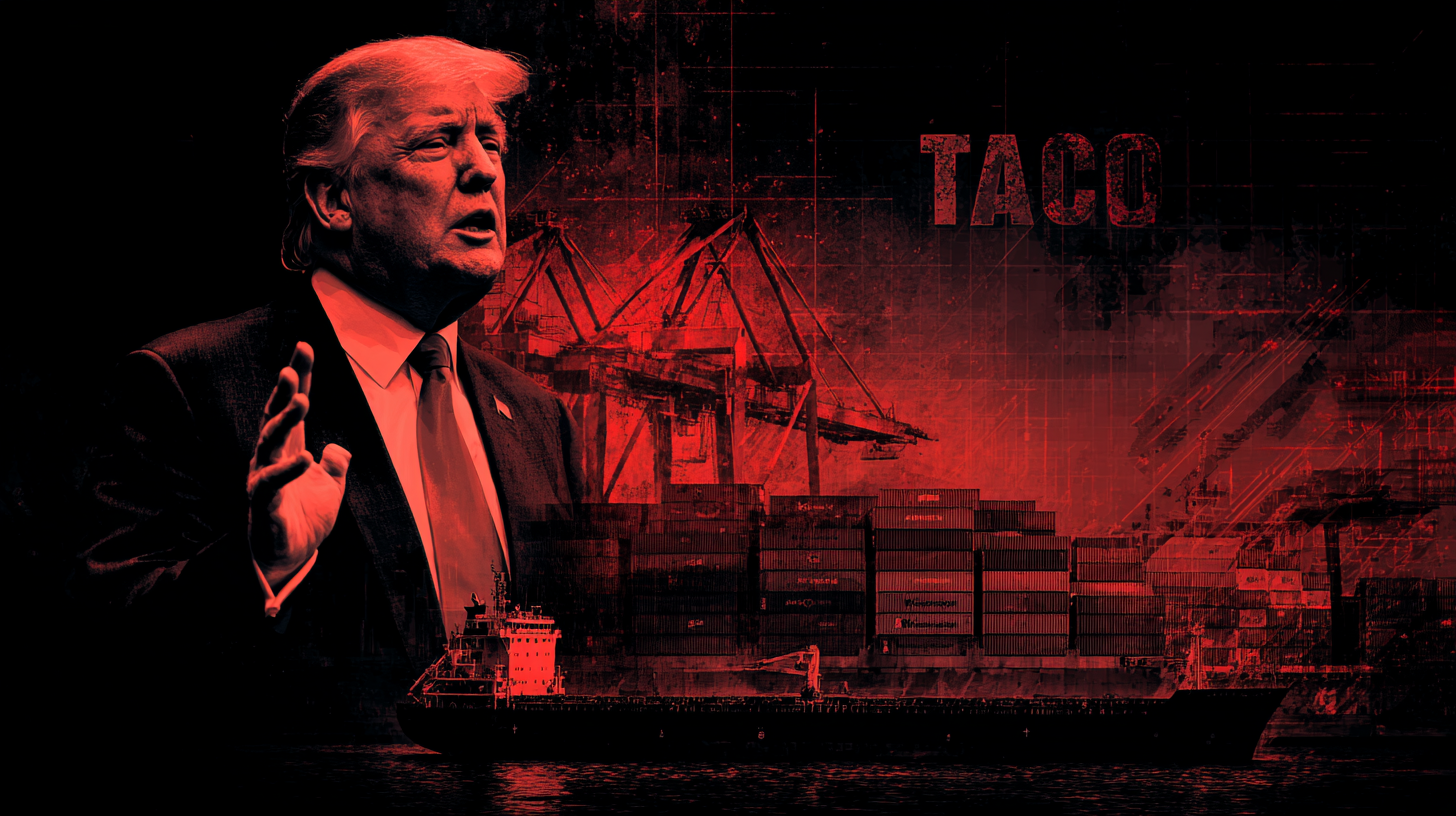
Markets have seen this movie before. President Trump draws a line, the rhetoric peaks, and then — nothing. Or at least, not the nothing anyone expected. But with an 8 p.m. Tuesday deadline for Iran to reopen the Strait of Hormuz or face the destruction of every bridge and power plant in the country, investors are asking the same uncomfortable question: is this another TACO moment — Trump Always Chickens Out — or is this time fundamentally different?

For those unfamiliar, TACO became market shorthand during the tariff wars, describing the pattern where Trump’s most extreme threats would eventually soften into a negotiated pause. Buy the dip, ignore the headline, collect the bounce. It worked repeatedly. But the Iran conflict is not a tariff dispute, and the Strait of Hormuz is not a trade negotiation table.

The stakes are materially different this time. The closure of the Strait has triggered sharp rises in global energy prices, with hikes as high as 20% to 30% at the pumps across the United States and Europe. U.S. benchmark West Texas Intermediate climbed to $115.48 per barrel on Monday, with Brent crude close behind at nearly $112. That is not rhetorical damage — that is real economic pain being absorbed by businesses and consumers right now.

Trump has issued similar ultimatums on several occasions in recent weeks, delaying the deadline each time. That track record feeds the TACO narrative. But there is a critical distinction: U.S. forces have already conducted new strikes on military targets on Iran’s Kharg Island — the country’s primary oil export hub — signaling this administration is not simply posturing.

For small and microcap investors, the practical implications are already being felt across the supply chain. Supplier delivery times hit a four-year high in March according to the ISM manufacturing survey. Companies like EuroDry (NASDAQ: EDRY) and Euroseas (NASDAQ: ESEA), which move bulk commodities through ocean routes increasingly disrupted by the conflict, are navigating a market where route uncertainty and elevated fuel costs are compressing margins and complicating charter rate forecasting. Both companies entered 2026 with momentum — but a prolonged Hormuz closure rewrites the calculus entirely.

On the rail side, FreightCar America (NASDAQ: RAIL) built its 2026 growth case on a stable industrial demand environment. If energy price spikes force manufacturers to pause capital equipment orders — which February data already hints at for March and beyond — railcar demand tied to that manufacturing activity faces real downside risk in the back half of the year.

Iran has responded with defiance, calling Trump’s threats baseless and warning that any retaliation will be far more forceful and on a much wider scale. Talks are ongoing through intermediaries including Pakistan, Egypt, and Turkey, and a negotiated off-ramp is still possible.

The TACO trade assumes that off-ramp always materializes. It may. But the window for dismissing this as noise is closed. Whether Trump blinks or follows through tonight, the Strait of Hormuz crisis is already doing damage — and for small-cap companies tied to global shipping and industrial demand, every hour of uncertainty has a price.

$110 Oil and a Blocked Strait: The Iran Shock Is Now Splitting Small-Cap Stocks in Two

The Iran war didn’t just push Brent crude past $100 a barrel — it drew a sharp line through the small-cap market, separating companies that are printing cash from those quietly bleeding out. One month in, that divide just got wider.

Brent crude surged 2.82% to $111.06 per barrel on Friday after two ultra-large container vessels owned by China Ocean Shipping Company — COSCO, the world’s fourth-largest shipping line by capacity — attempted to transit the Strait of Hormuz and were turned back. The incident carries significant weight: China is an ally of Iran, and Tehran had previously signaled that friendly nations’ ships could pass freely. The fact that even Chinese vessels are being blocked signals that Iran’s chokehold on the waterway remains firmly in place, despite diplomatic noise suggesting otherwise.

Iran controls access to a strait that handles roughly 20% of the world’s daily oil supply. Since the U.S.-Israeli strikes began on February 28, close to 500 million barrels of total liquids have been lost, with approximately 17.8 million barrels per day of oil and fuel flows disrupted, according to Rystad Energy. WTI, meanwhile, climbed to $97.01 on Friday — up from roughly $65 in February. The buffer that kept prices from going completely vertical is now gone. Rystad’s chief oil analyst described the global supply system as having shifted from “buffered to fragile,” with inventories drawn down to a point where there is little room left to absorb further shocks.

President Trump announced a 10-day pause on strikes targeting Iran’s energy infrastructure through April 6, and said talks were progressing — but markets barely reacted. The COSCO incident hit the same day, effectively negating any diplomatic optimism. Iran also reportedly allowed 10 oil tankers to pass through the strait this week as a goodwill gesture, but analysts were quick to caution that isolated shipments do not signal a reopening.

The Winners: Domestic Producers and LNG Players

The clearest beneficiaries are U.S.-based exploration and production companies with no Middle East operational exposure. They’re capturing elevated prices without the liability of stranded tankers, damaged facilities, or rerouting costs eating into the margins of globally integrated operators.

Small- and mid-cap names like Antero Resources (AR), Solaris Energy Infrastructure (SEI), and SM Energy (SM) have all been flagged by analysts as well-positioned to benefit from both higher prices and the scramble among European and Asian buyers to replace Persian Gulf supply. Antero in particular benefits from the LNG export surge — Asian LNG prices have skyrocketed more than 140% since the war began as Qatar halted exports, and U.S. natural gas producers with export exposure are capturing that spread directly. The SPDR S&P Oil & Gas Exploration & Production ETF (XOP) is up roughly 10% since the conflict started, significantly outpacing the broader market.

The Losers: Everyone Paying the Energy Tax

For small-cap companies outside the energy sector, $110 oil is a cost, not a catalyst. Airlines, regional manufacturers, consumer discretionary companies, and logistics-heavy businesses are absorbing higher input costs with limited pricing power and thin margins. Unlike large-caps with robust balance sheets, smaller companies can’t easily hedge energy exposure or wait out a prolonged commodity spike.

The macro backdrop makes it worse. The Russell 2000 entered correction territory this month and the timing is brutal. Approximately 32% of the debt held by Russell 2000 companies is floating-rate, meaning every basis point that rate-cut expectations get pushed back translates directly into higher interest expenses. With the Fed holding rates steady at its March 18 meeting and revising its inflation outlook higher, the one rate cut markets were pricing in for late 2026 is increasingly in doubt. Small-cap firms are facing approximately $368 billion in debt maturing in 2026 alone, much of it originally issued at near-zero rates — now needing to be refinanced at 6.5% to 8%.

Bank of America has noted that small caps with oil exposure but limited refinancing risk may be best positioned in the current environment. That framing is the right lens heading into Q1 earnings. The question isn’t whether oil stays at $110. It’s whether your small-cap holdings are collecting the windfall or paying the price for it — and with the Strait of Hormuz turning away even Chinese vessels, there’s no telling when this resolves.

400 Million Barrels Couldn’t Stop Oil’s Surge — Now What?

In the most significant emergency energy intervention since the IEA was founded in 1974, the world’s wealthiest nations just deployed their biggest weapon against soaring oil prices — and crude kept climbing anyway. For investors tracking energy markets and small cap stocks in 2026, the implications are impossible to ignore.

On Wednesday, the International Energy Agency announced that all 32 of its member countries unanimously agreed to release 400 million barrels of oil from emergency reserves, the largest coordinated strategic petroleum reserve release in history. The move more than doubles the 182 million barrels deployed in 2022 following Russia’s invasion of Ukraine. The United States committed 172 million barrels from its Strategic Petroleum Reserve alone. Oil prices briefly dipped — then climbed straight back above $90 a barrel before the day was out.

Why the IEA’s Record Oil Reserve Release Failed to Move Markets

The math exposes the problem quickly. Macquarie analysts estimated the 400 million barrel release equates to roughly four days of global oil production and about 16 days of the volume that normally transits through the Strait of Hormuz. As the analysts noted — if that doesn’t sound like much, it isn’t.

Export volumes through the Strait of Hormuz are currently at less than 10% of pre-conflict levels, as shippers continue to avoid the waterway amid active threats and confirmed vessel attacks. The reserve release addresses the symptom. The Strait of Hormuz closure is the disease — and no amount of barrels from emergency stockpiles fixes a shipping lane that remains effectively shut.

There is also a delivery gap that markets priced in immediately. Once a presidential order is issued to deploy oil from the U.S. Strategic Petroleum Reserve, deliveries typically don’t begin for about 13 days, with additional shipping time before volumes reach end consumers. The supply disruption is happening in real time. The relief is weeks away at best. JPMorgan Chase analysts noted that policy measures may have limited impact on oil prices unless safe passage through the Strait of Hormuz is assured.

How the Iran War Oil Price Surge Is Reshaping the Fed’s Path in 2026

This morning’s February CPI report came in at 2.4% year-over-year, with core inflation cooling to 0.2% month-over-month — the softest monthly reading since last summer. Under normal conditions, that data would be a clear runway for continued Federal Reserve rate cuts in 2026. The Iran war has changed those conditions entirely.

February CPI captures none of the oil shock that began when the conflict escalated on February 28. The real inflation print — the one that reflects $87-plus crude flowing into gasoline, airfares, and freight costs — hasn’t landed yet. Futures markets now imply only one full rate cut in 2026 and roughly a 50% probability of a second, a dramatic collapse from the three or four cuts investors were pricing in just weeks ago. The Iran war oil price surge is doing what no economic data had managed to do — it is freezing the Fed.

What Rising Oil Prices Mean for Small Cap and Microcap Stocks

Energy is the only sector trading higher today, and that creates a direct opportunity set in the small and microcap universe. Domestic energy producers, oilfield services companies, and energy infrastructure plays are clear beneficiaries of sustained high crude prices and the global push to source supply outside the Middle East. These are precisely the kinds of under-the-radar names that populate the small cap space and rarely attract attention until a macro event forces investors to find them.

The rate picture is the countervailing risk. The small cap rotation thesis that pushed the Russell 2000 to nearly 9% year-to-date gains was built on continued Fed easing. A prolonged Iran war, sustained crude oil prices above $90, and a Fed on pause separates quality small cap companies from the leveraged names that were simply riding the rate-cut trade.

The IEA’s record oil reserve release in 2026 is not evidence that the crisis is under control. It is evidence of how severe the disruption actually is. When the largest emergency intervention in energy market history fails to bring prices down, the market is sending a signal — and the investors who act on it early are the ones who tend to come out ahead.

Why the Iran Conflict Hasn’t Derailed the Small Cap Rally — And May Actually Fuel It

For years, the market’s story was simple — go big or go home. Mega-cap tech dominated headlines, attracted institutional capital, and left small and microcap stocks largely in the dust. That story has been changing fast in 2026. The question now is whether a war in the Middle East derails it before it fully plays out— and for investors focused on small cap investing in 2026, the answer may be more encouraging than the headlines suggest..

As of this week, the Russell 2000 is up nearly 9% year-to-date, outpacing both the S&P 500 and Nasdaq 100, which have delivered near-flat performance over the same period. The drivers behind that move are real and structural. But so is the new risk sitting squarely on top of them.

Why the Russell 2000 Is Outperforming in 2026

Small and microcap companies carry a disproportionately high share of floating-rate debt — roughly 40% of Russell 2000 company debt is floating-rate, compared to under 10% for S&P 500 constituents. When the Federal Reserve delivered three rate cuts in late 2025, bringing the target rate to 3.50%–3.75%, the impact on smaller companies was immediate. Borrowing costs dropped, profit margins expanded, and balance sheets that had been under pressure for two years began to breathe again.

Layered on top of that was the One Big Beautiful Bill Act, which brought its most consequential provisions — 100% bonus depreciation and immediate domestic R&D expensing — online on January 1, 2026. These provisions disproportionately benefit the capital-intensive businesses that populate the small and microcap universe. Add a valuation gap that had stretched to near-historic levels, with the Russell 2000 trading below 19 times forward earnings against the S&P 500’s 24 times, and institutional money had every reason to rotate into small caps in 2026.

How Oil Prices Are Affecting Small Cap Stocks Right Now

The U.S.-Israeli strikes on Iran that began February 28 changed the calculus. Oil prices have surged past $100 per barrel for the first time since 2022, with Brent crude briefly trading near $120 before pulling back. Shipping through the Strait of Hormuz dropped 95% in the first week of March, effectively cutting off roughly one-fifth of global oil supply. U.S. gasoline prices have risen more than 17% since the strikes began, and stagflation fears — an economy slowing while prices rise — are back in the conversation.

For small cap investing in 2026, this is not a peripheral concern. The rotation thesis rests on the Fed continuing to ease. If an energy-driven inflation spike freezes the Fed in its tracks, the highly leveraged firms within the Russell 2000 face a double hit of higher borrowing costs and slowing consumer demand. That dynamic already showed up on March 5, when the Russell 2000 dropped 1.9% in a single session — its sharpest single-day decline of the year — as the conflict escalated.

Why the Small Cap Rotation Thesis in 2026 Still Has Legs

There is a meaningful counterargument, and it lives inside the small-cap universe itself. Domestic energy producers, onshoring plays, and infrastructure-adjacent companies are direct beneficiaries of elevated oil prices and supply chain disruption. The small cap industrials and energy names that helped fuel the early-year rotation are not going away — they may actually accelerate as capital seeks shelter in domestic, tangible-earnings businesses over global tech exposure.

The U.S. is a net exporter of energy, which positions it to weather the supply disruption better than Europe and Asia — a dynamic that benefits domestically focused small-cap energy producers more than it hurts them.

What This Means for Small Cap Investing in 2026

The structural case for small cap stocks in 2026 has not fundamentally changed. Lower rates, favorable tax treatment, and compressed valuations relative to large caps all remain intact. What has changed is the risk profile of getting there. A prolonged conflict, sustained triple-digit oil prices, and a Fed forced to pause its easing cycle could extend the timeline — but not reverse the direction.

The companies best positioned in this environment are those with domestic revenue exposure, manageable fixed-rate debt, and real earnings — not the leveraged, speculative names that hitched a ride on the rotation. In microcap investing, that distinction between quality and speculation has rarely mattered more than it does right now.

The great rotation into small cap stocks is still in play. Investors who understand what is driving it — and what the real risks are — are the ones best positioned to capitalize on it in 2026.

Strait of Hormuz Partially Closed as Iran Holds Nuclear Talks with U.S.

Iran on Tuesday announced a partial and temporary closure of the Strait of Hormuz, one of the world’s most strategically important oil chokepoints, as the country conducts military drills in the waterway. The move comes as Tehran and the United States hold renewed nuclear negotiations in Geneva, raising tensions across global energy markets.

According to Iranian state media, the closure is tied to a Revolutionary Guard exercise described as a “Smart Control” drill aimed at strengthening operational readiness and reinforcing deterrence capabilities. Officials characterized the move as precautionary and temporary, designed to ensure shipping safety during live-fire activities in designated areas of the strait.

The Strait of Hormuz is a narrow but critical passage linking oil producers in the Middle East with key markets in Asia, Europe, and beyond. Roughly 13 million barrels per day of crude oil passed through the waterway in 2025, accounting for approximately 31% of global seaborne crude flows, according to market intelligence firm Kpler. Any disruption — even a short-term one — carries significant implications for global energy security and oil price stability.

Markets reacted swiftly to the news, though the response was measured. Oil prices initially climbed on fears of supply interruptions but later pared gains as reports indicated that shipping delays would likely be minimal and temporary. Brent crude futures fell 1.8% to $67.48 per barrel, while U.S. West Texas Intermediate slipped 0.4% to $62.65.

Shipping industry representatives suggested the impact would likely be limited. The live-fire exercise overlaps with part of the inbound traffic lane of the strait’s Traffic Separation Scheme, prompting vessels to avoid the area for several hours. Given heightened geopolitical tensions in the region, commercial shipping operators are expected to comply fully with Iranian guidance to minimize risk.

The timing of the maneuver is particularly significant. It marks the first partial shutdown of the strait since January, when U.S. President Donald Trump threatened potential military action against Tehran. The renewed nuclear discussions in Geneva are aimed at resolving long-standing disputes over Iran’s nuclear program. Iranian officials indicated that both sides reached an understanding on certain guiding principles during the talks, though substantial work remains before any formal agreement is achieved.

Energy markets remain sensitive to developments in the region. The combination of diplomatic negotiations and visible military positioning has heightened uncertainty, even as oil supply continues to flow. While Tuesday’s closure appears temporary and controlled, it serves as a reminder of how quickly geopolitical risks can ripple through commodity markets.

For investors and policymakers, the episode reinforces a broader truth: chokepoints like the Strait of Hormuz represent both physical and psychological pressure points in the global energy system. Even limited disruptions can trigger volatility, particularly when layered on top of fragile diplomatic dynamics.

As negotiations continue, traders will closely monitor shipping flows, military activity, and official statements from both Tehran and Washington. In a world where energy markets remain tightly interconnected, stability in the Strait of Hormuz is not just a regional concern — it is a global one.