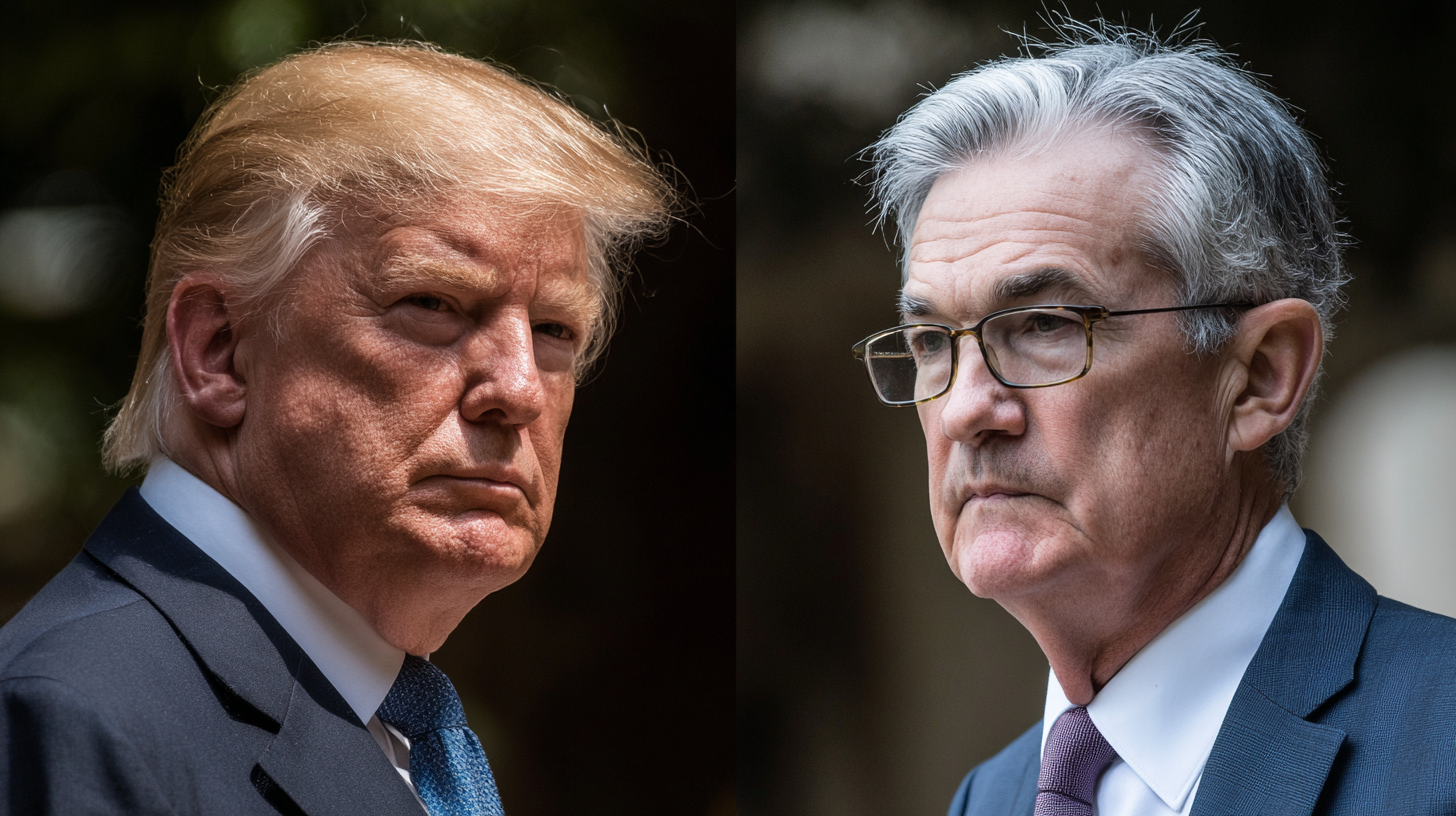
Trump Threatens to Fire Powell, Raising Questions About Fed Independence

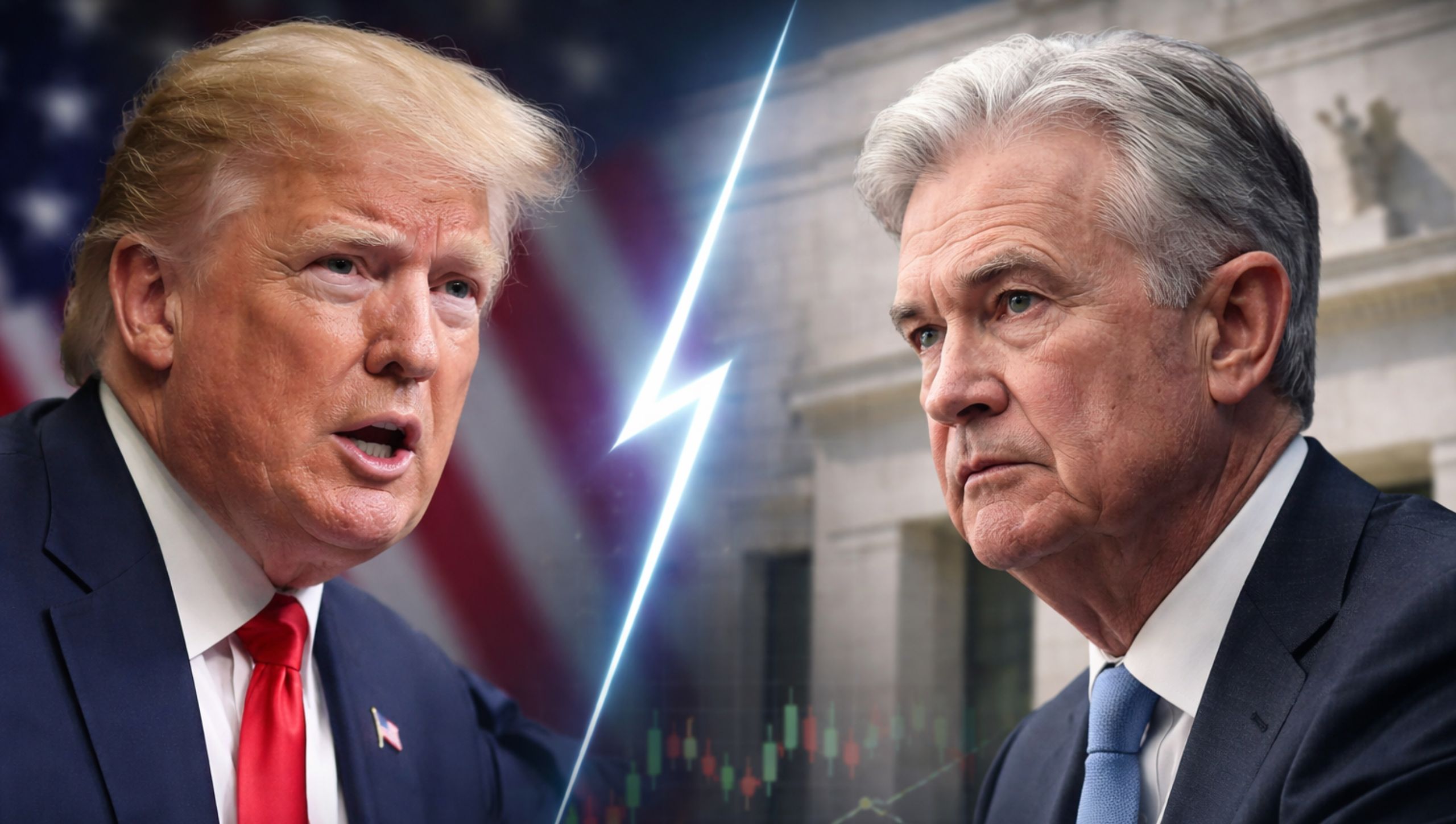
President Donald Trump escalated his criticism of Federal Reserve Chair Jerome Powell on Wednesday, stating he would “have to fire” Powell if he does not step down when his term as Fed Chair expires on May 15.

The remarks intensify tensions between the White House and the Federal Reserve and introduce new uncertainty around the Fed leadership transition, a key issue for investors closely watching interest rates, inflation policy, and central bank independence.

Fed Leadership Transition Faces Uncertainty

While Powell’s term as Chair ends next month, his position as a member of the Federal Reserve Board extends through 2028. If a successor is not confirmed in time, Powell has said he would remain as interim chair (chair pro tem)—a move consistent with historical precedent.

However, Trump’s comments suggest he may attempt to remove Powell outright, potentially setting up a legal and political battle over control of the central bank.

Trump’s preferred nominee, former Fed governor Kevin Warsh, is scheduled to appear before the Senate Banking Committee next week. But his confirmation faces obstacles. Senator Thom Tillis has indicated he will block Warsh’s nomination unless a Justice Department investigation into Powell is dropped, leaving the nomination short of the votes needed to advance.

This raises the risk of a delayed or contested Fed leadership transition, a scenario that could unsettle financial markets.

Can a President Fire the Fed Chair?

The situation highlights a key legal question: Can a president remove a Federal Reserve Chair?

Under the Federal Reserve Act, board members can be removed “for cause,” generally defined as inefficiency, neglect of duty, or malfeasance. However, the law does not clearly address whether policy disagreements—such as disputes over interest rate decisions—qualify as sufficient cause.

Any attempt to remove Powell without clear legal justification would likely face court challenges and could have significant implications for Federal Reserve independence, a cornerstone of U.S. monetary policy.

DOJ Investigation Adds Another Layer

The Trump administration has pointed to a Justice Department investigation into cost overruns tied to the Federal Reserve’s headquarters renovation as justification for increased scrutiny.

Although a federal judge recently invalidated key subpoenas—weakening the probe—the case is expected to continue through appeals. Powell has stated he intends to remain on the Board until the investigation is fully resolved, signaling he is unlikely to step aside voluntarily.

Market Impact: Why Investors Should Pay Attention

For investors, the situation introduces several risks:

  • Monetary policy uncertainty: Leadership instability at the Fed could cloud the outlook for interest rate decisions
  • Market volatility: Treasury yields and equities may react to perceived political pressure on the Fed
  • Credibility risk: Any erosion of Fed independence could impact inflation expectations and increase risk premiums

Markets are particularly sensitive to signals from the Federal Reserve, and any disruption in leadership could amplify volatility across asset classes.

What to Watch

In the coming weeks, investors should monitor:

  • Kevin Warsh’s Senate confirmation process
  • Legal developments surrounding Powell’s status
  • Updates on the DOJ investigation
  • Movements in Treasury yields and rate expectations

Bottom Line

Trump’s threat to fire Powell underscores rising political pressure on the Federal Reserve at a critical moment for monetary policy.

Whether the situation leads to a legal battle or a smooth transition, the outcome will play a key role in shaping interest rate policy, market stability, and investor confidence in the months ahead.

Will This Be TACO All Over?

Markets have seen this movie before. President Trump draws a line, the rhetoric peaks, and then — nothing. Or at least, not the nothing anyone expected. But with an 8 p.m. Tuesday deadline for Iran to reopen the Strait of Hormuz or face the destruction of every bridge and power plant in the country, investors are asking the same uncomfortable question: is this another TACO moment — Trump Always Chickens Out — or is this time fundamentally different?

For those unfamiliar, TACO became market shorthand during the tariff wars, describing the pattern where Trump’s most extreme threats would eventually soften into a negotiated pause. Buy the dip, ignore the headline, collect the bounce. It worked repeatedly. But the Iran conflict is not a tariff dispute, and the Strait of Hormuz is not a trade negotiation table.

The stakes are materially different this time. The closure of the Strait has triggered sharp rises in global energy prices, with hikes as high as 20% to 30% at the pumps across the United States and Europe. U.S. benchmark West Texas Intermediate climbed to $115.48 per barrel on Monday, with Brent crude close behind at nearly $112. That is not rhetorical damage — that is real economic pain being absorbed by businesses and consumers right now.

Trump has issued similar ultimatums on several occasions in recent weeks, delaying the deadline each time. That track record feeds the TACO narrative. But there is a critical distinction: U.S. forces have already conducted new strikes on military targets on Iran’s Kharg Island — the country’s primary oil export hub — signaling this administration is not simply posturing.

For small and microcap investors, the practical implications are already being felt across the supply chain. Supplier delivery times hit a four-year high in March according to the ISM manufacturing survey. Companies like EuroDry (NASDAQ: EDRY) and Euroseas (NASDAQ: ESEA), which move bulk commodities through ocean routes increasingly disrupted by the conflict, are navigating a market where route uncertainty and elevated fuel costs are compressing margins and complicating charter rate forecasting. Both companies entered 2026 with momentum — but a prolonged Hormuz closure rewrites the calculus entirely.

On the rail side, FreightCar America (NASDAQ: RAIL) built its 2026 growth case on a stable industrial demand environment. If energy price spikes force manufacturers to pause capital equipment orders — which February data already hints at for March and beyond — railcar demand tied to that manufacturing activity faces real downside risk in the back half of the year.

Iran has responded with defiance, calling Trump’s threats baseless and warning that any retaliation will be far more forceful and on a much wider scale. Talks are ongoing through intermediaries including Pakistan, Egypt, and Turkey, and a negotiated off-ramp is still possible.

The TACO trade assumes that off-ramp always materializes. It may. But the window for dismissing this as noise is closed. Whether Trump blinks or follows through tonight, the Strait of Hormuz crisis is already doing damage — and for small-cap companies tied to global shipping and industrial demand, every hour of uncertainty has a price.

No Cuts, No Ceasefire, No Clarity: The Macro Wall Investors Are Staring Down

The macro environment got more complicated overnight. President Trump’s prime-time address Wednesday signaling fresh US military strikes on Iran within the next two to three weeks sent oil prices surging past $110 a barrel and triggered a broad selloff in US Treasuries — a combination that has real consequences for the small and microcap companies ChannelChek covers every day.

US two-year yields climbed as much as six basis points to 3.86%, while 10-year yields rose as high as 4.38% before trimming some of the move. The dollar strengthened against all its Group-of-10 peers. Global bond markets followed suit, with Australian and New Zealand 10-year yields rising more than 10 basis points and European traders pricing in three quarter-point ECB rate hikes this year.

The Fed Is Now Boxed In

Before the Iran conflict escalated in late February, markets had priced in more than two Federal Reserve rate cuts in 2026. Those expectations have been completely erased. Overnight index swaps now reflect a Fed that stays on hold for the remainder of the year — a meaningful pivot that ripples directly into how investors value growth-oriented, capital-dependent smaller companies.

The inflation data is not helping. The ISM’s gauge of prices paid for manufacturing inputs climbed to 78.3 in March, remaining at its highest level since mid-2022. That number landed just as oil was spiking, reinforcing the concern that energy-driven inflation isn’t transitory — it’s structural for as long as the Strait of Hormuz remains closed or threatened.

Fed Chair Jerome Powell said earlier this week that longer-term inflation expectations appear to be in check, but acknowledged officials are closely monitoring the situation. The market isn’t waiting for clarity. The arm wrestle between inflation fear and growth concern — as Westpac’s Martin Whetton put it — is now the defining tension in fixed income, and it’s not resolving anytime soon.

Why This Matters for Small and Microcap

Small and microcap companies feel rate environment shifts more acutely than large caps for a straightforward reason: they depend more heavily on external financing. When rate cut expectations evaporate and credit conditions tighten, the cost of capital rises and the timeline for profitability gets scrutinized harder. Biotech companies burning cash toward clinical readouts, small industrials refinancing debt, and emerging growth companies looking to raise equity — all of them operate in a tougher environment when the Fed is frozen and bond yields are climbing.

The growth risk is equally significant. Higher oil prices function as a tax on consumers and businesses alike. Money managers at PIMCO and JPMorgan Asset Management have already signaled they’re positioning for an economic slowdown that will eventually drive a bond market rebound — which would suggest yields come back down, but only after a growth scare first. That sequence — inflation now, slowdown later — is historically difficult for smaller companies to navigate.

The Geopolitical Wildcard

What makes this environment particularly hard to trade is the binary nature of the catalyst. A ceasefire announcement could reverse oil prices and Treasury yields in a session. But as M&G Investments’ Andrew Chorlton noted, even a ceasefire is likely to be fragile, and markets may be underestimating the inflationary consequences of a conflict that could continue to flare up unpredictably. The risk premium, he argued, should be higher than where markets are currently pricing it.

For investors focused on small and microcap names, the near-term playbook is one of selectivity — companies with strong balance sheets, near-term catalysts, and limited macro exposure are better positioned to weather the volatility than those dependent on a benign rate environment to execute their growth strategy.

The macro has reasserted itself. Navigate accordingly.

Small Caps Surge 3% as Iran Talks Spark One of the Market’s Best Single-Day Reversals

The small-cap market opened Monday in the crosshairs of a global selloff, only to stage one of its most dramatic single-session recoveries in recent memory — all within the span of a few hours. The whipsaw move underscores just how vulnerable smaller, domestic-focused companies have become to the escalating conflict in the Middle East, and how quickly sentiment can shift on a presidential comment.

Going into this week, the Russell 2000 — the primary benchmark for small-cap equities — had already shed more than 7% in March alone, entering official correction territory last Friday with a decline exceeding 10% from its recent peak. The index, which had started the year as a market leader riding optimism around rate cuts and a rotation away from mega-cap tech, has now given back virtually all of those gains. As of last Thursday, the index’s year-to-date return had collapsed to less than 1%.

The catalyst for the unraveling has been the ongoing U.S.-Israel conflict with Iran. Since military operations began, Brent crude futures surged more than 40%, briefly touching $119 per barrel before pulling back. The ripple effects have been severe for small caps specifically. Unlike large-cap multinationals with diversified revenue streams and investment-grade credit, smaller companies are more exposed to rising input costs, tighter credit markets, and slowing consumer demand — the exact cocktail that an oil shock delivers.

The pain goes deeper than sentiment. Analysts now estimate that between 41% and 46% of Russell 2000 companies are unable to cover their interest expenses with operating income. These so-called zombie companies face a $368 billion debt maturity wall in 2026, and with the 10-year Treasury yield spiking to 4.38% by Friday — up sharply from the mid-3% range at the start of the year — refinancing that debt is significantly more expensive. The Federal Reserve’s decision to hold rates steady at 3.50%–3.75% at its March 18th meeting, while revising its inflation outlook upward, effectively removed any near-term cushion the market was counting on.

Then came Monday’s reversal.

Overnight, global markets were in freefall. South Korea’s KOSPI dropped over 6%, Japan’s Nikkei fell more than 3%, and European equities opened deep in the red. U.S. futures pointed to a fifth consecutive down week for American stocks. But within the first hour of trading, the picture changed completely. President Trump signaled he was postponing threatened strikes on Iranian power infrastructure, citing productive negotiations. Brent crude fell more than 10% on the news. U.S. equities surged, with the Russell 2000 climbing more than 3% intraday — one of the index’s strongest single-day moves of the year — reclaiming the 2,500 level.

For small-cap investors, this session captures exactly what makes the asset class both compelling and treacherous. Bank of America has noted that while the Russell 2000 tends to sell off more sharply than large caps in risk-off environments, it also tends to recover faster — historically outpacing large caps by more than a percentage point within three months of a geopolitical shock.

The Iran situation is far from resolved. But today’s action is a reminder that in small caps, the most dangerous moments often precede the most significant opportunities.

Supreme Court Strikes Down Trump’s Tariffs, Markets Rally as Trade Policy Shifts Again

The US trade landscape shifted abruptly Friday after the Supreme Court struck down the centerpiece of President Trump’s second-term tariff program, ruling 6–3 that the International Emergency Economic Powers Act (IEEPA) does not authorize the president to impose sweeping blanket tariffs. The decision immediately halts a massive portion of the tariffs announced last year on “Liberation Day,” dealing a significant blow to the administration’s trade strategy and sending stocks higher as investors recalibrated expectations for costs, inflation, and corporate margins.

“IEEPA does not authorize the President to impose tariffs,” Chief Justice John Roberts wrote in the majority opinion, rejecting the administration’s claim that the 1977 law granted broad authority to impose tariffs under a declared economic emergency. Roberts added that had Congress intended to grant such extraordinary tariff powers, it would have done so explicitly. The ruling upholds prior lower court decisions, including from the US Court of International Trade, that found the tariffs unlawful under that statute.

Markets responded swiftly. According to analysis from the Yale Budget Lab, the effective US tariff rate could now fall to 9.1%, down from 16.9% before the ruling. Investors interpreted the decision as reducing near-term cost pressures for companies that rely on imported goods and components. President Trump, however, quickly pushed back, calling the ruling “deeply disappointing” and criticizing members of the Court. Within hours, he announced plans to impose a 10% “global tariff” under Section 122 of the Trade Act of 1974, a provision that allows temporary tariffs of up to 15% for 150 days to address trade deficits. That authority has never previously been used to implement tariffs of this scale, and the administration signaled additional trade investigations under Section 301 may follow.

Notably, tariffs enacted under other legal authorities remain in place. Section 232 national security tariffs on steel, aluminum, semiconductors, and automobiles are unaffected, meaning a range of sector-specific import duties will continue. This layered approach underscores that while the Court invalidated one mechanism, trade tensions and tariff policy remain firmly in play.

An unresolved issue now looms over potential refunds. More than $100 billion — and possibly as much as $175 billion — in tariff revenue has been collected under IEEPA. The Court did not directly address refund eligibility, opening the door to further litigation and administrative action. Business groups, including the US Chamber of Commerce, are calling for swift refunds, arguing that repayment would meaningfully support small businesses and importers. Others caution that returning such sums could carry serious fiscal implications.

For small- and micro-cap investors, the ruling introduces both relief and renewed uncertainty. Smaller companies often operate with thinner margins and less pricing power than large multinational peers, making them particularly sensitive to import costs. A lower effective tariff rate could ease pressure on retailers, specialty manufacturers, and niche industrial firms that rely heavily on overseas inputs. At the same time, policy volatility remains elevated as the administration pivots to alternative tariff authorities, suggesting the trade environment may remain fluid.

The broader macro implications are equally significant. Reduced tariff pressure could temper inflation expectations, potentially influencing Federal Reserve policy — a key driver for small-cap performance given their sensitivity to financing conditions and domestic economic momentum.

Friday’s decision marks a major legal setback for the administration’s trade framework, but it does not signal an end to tariff-driven policy shifts. For small-cap investors, the near-term narrative may improve on cost relief, yet the longer-term trade outlook remains unsettled as Washington prepares its next move.

Trump Nominates Kevin Warsh as Next Federal Reserve Chair, Setting Stage for Policy Shift

President Trump’s nomination of former Federal Reserve governor Kevin Warsh to lead the US central bank marks a pivotal moment for monetary policy, with markets immediately turning their focus to what his leadership could mean for interest rates in 2026 and beyond. While Warsh is viewed as a conventional and credible pick, his appointment could subtly — and eventually materially — shift the Federal Reserve’s policy direction.

If confirmed by the Senate, Warsh would step into a deeply divided Federal Open Market Committee (FOMC). The 19-member body has recently signaled openness to a prolonged pause after delivering three rate cuts last fall, with many policymakers believing those moves sufficiently addressed slowing job growth. Convincing the committee to resume cutting rates will be one of Warsh’s earliest and most consequential challenges.

Economists broadly agree that Warsh is inclined to argue for lower rates, but that persuasion — not authority — will determine outcomes. “Special deference to the chair only goes so far,” said JPMorgan chief economist Michael Feroli, noting that past chairs often succeeded by positioning themselves near the committee’s center rather than pushing an ideological edge. Deutsche Bank’s Matt Luzzetti echoed that view, arguing that further rate cuts are unlikely unless inflation eases materially or the labor market weakens again.

Warsh’s case for lower rates rests on a structural argument: that artificial intelligence will meaningfully boost productivity, suppress inflation, and allow the economy to grow faster without overheating. Like Trump, Warsh rejects the idea that inflation is primarily driven by strong wage growth. Instead, he has consistently blamed excessive government spending and monetary expansion. He also believes tariffs represent one-off price shocks rather than persistent inflationary forces — a view increasingly shared within the Fed.

Still, Warsh’s recent dovish tone contrasts with his long-standing hawkish reputation. Historically, he opposed extended bond-buying programs outside crisis conditions and warned that balance sheet expansion risked distorting markets and fueling inflation. Notably, he did not support a rate cut as recently as September 2024. In more recent remarks, however, Warsh has suggested that shrinking the Fed’s balance sheet could help bring inflation down, creating room for lower policy rates.

That reputation for independence may actually work in Warsh’s favor. Evercore ISI’s Krishna Guha argues that because Warsh is seen as hawkish and credible, he may be better positioned than other contenders to bring the FOMC along for at least two — and possibly three — rate cuts this year if conditions allow. In other words, Warsh may have more room to pivot without undermining the Fed’s inflation-fighting credibility.

President Trump has been careful to publicly respect the Fed’s independence, saying he did not seek a commitment from Warsh to cut rates, even though he believes Warsh favors doing so. That balance — political alignment without overt pressure — will be closely scrutinized by lawmakers during Warsh’s confirmation process, which could face hurdles amid broader tensions surrounding the Fed and ongoing investigations tied to Powell’s tenure.

Looking further ahead, questions remain about how Warsh would respond if productivity gains disappoint or inflation reaccelerates, particularly under loose fiscal policy. Some economists believe his current dovish posture could prove flexible — or temporary — especially after midterm elections and deeper into a second Trump term.

For now, Warsh’s nomination signals continuity with a twist: a Fed chair with crisis experience, institutional credibility, and a growing belief that the economy can sustain lower rates without reigniting inflation. Whether he can translate that belief into consensus may define both his chairmanship and the next phase of US monetary policy.

Fed Holds Rates Steady in Split Decision as Pressure Mounts

The Federal Reserve paused its rate-cutting campaign Wednesday, holding its benchmark interest rate at 3.5% to 3.75% after three consecutive cuts. But the decision was far from unanimous, with two officials breaking ranks in a rare display of division that underscores the difficult position facing the central bank.

Fed Governors Chris Waller and Stephen Miran dissented from the majority, voting instead for an additional quarter-point rate cut. The split is particularly significant given Waller’s status as one of President Trump’s finalists to replace current Fed Chair Jerome Powell, whose term expires in May. Waller has expressed ongoing concerns about weakness in the labor market, suggesting the Fed risks waiting too long to provide additional support.

The disagreement comes as the Fed navigates conflicting economic signals. Officials upgraded their economic assessment to “solid” from “moderate,” pointing to strong GDP growth in recent quarters. They also softened their language on employment risks, removing previous warnings that “downside risks to employment rose in recent months.” The committee now simply states it remains “attentive to the risks to both sides of its dual mandate.”

Yet the underlying data tells a more complicated story. December payroll growth remained weak, though the unemployment rate did improve to 4.4% after ticking up in November. The Fed had cut rates three times last year specifically to cushion soft job numbers, making the current pause a bet that those cuts have already done enough.

Inflation remains the stickier problem. Core Consumer Price Index inflation held at 2.6% in December, unchanged since September. The Fed’s preferred inflation gauge—core Personal Consumption Expenditures—registered 2.8% in November, well above the central bank’s 2% target. That reading was delayed due to lingering effects from last fall’s government shutdown.

These persistent inflation readings complicate any argument for additional rate cuts, even as some officials worry about labor market deterioration. The Fed’s statement emphasized that future decisions will depend on “incoming data, the evolving outlook, and the balance of risks,” keeping all options on the table without providing clear forward guidance.

The rate hold also comes amid unprecedented tensions between the White House and the Fed. Trump has repeatedly called for lower interest rates, and the relationship between the administration and the central bank has deteriorated sharply. Powell revealed earlier this month that the White House has opened a criminal investigation into testimony he gave last summer regarding the Fed’s headquarters renovation—an extraordinary move that raises serious questions about central bank independence.

Trump is expected to name Powell’s replacement soon, adding another layer of uncertainty to an already murky policy outlook. The criminal probe appears designed to undermine Powell’s credibility as his term winds down, representing a level of political interference rarely seen in the Fed’s modern history.

For markets, the split vote and political pressure signal continued uncertainty ahead. The Fed faces no easy path forward: cut rates too aggressively and inflation could accelerate, but wait too long and employment could weaken further. With leadership changes looming and political tensions escalating, investors should prepare for a bumpy road as the central bank tries to navigate these crosscurrents while maintaining its independence.

Trump’s NATO Deal Opens Greenland to US Missiles and Mining

President Donald Trump’s abrupt de-escalation of tariff threats against Europe came with a significant strategic tradeoff: a NATO-centered framework that would dramatically expand the United States’ military and economic footprint in Greenland. While the agreement stops short of addressing sovereignty, it lays the groundwork for US missile deployments, expanded NATO activity in the Arctic, and American access to critical mineral resources—moves aimed squarely at countering Russian and Chinese influence in the region.

The outlines of the deal emerged after Trump met NATO Secretary General Mark Rutte at the World Economic Forum in Davos. According to European officials briefed on the talks, the framework focuses on Arctic security cooperation, including stationing US missile systems in or around Greenland and granting the US preferential mining rights to prevent Chinese firms from gaining a foothold. In exchange, Trump agreed to suspend planned tariffs on European nations that had threatened to fracture transatlantic relations.

For NATO, the agreement reflects growing urgency around the Arctic. Melting ice is opening new sea lanes that could provide strategic access between the Pacific and Atlantic, raising alarms about potential military and commercial exploitation by rival powers. Rutte has emphasized that Greenland sits at the center of this shift, making it critical to alliance defense planning. Strengthening NATO’s presence there would help monitor emerging routes, protect undersea infrastructure, and deter hostile activity.

Crucially, the framework avoids any discussion of transferring sovereignty over Greenland, a semi-autonomous territory of Denmark. That omission marks a notable shift from Trump’s earlier rhetoric, which repeatedly suggested US acquisition of the island. Danish Prime Minister Mette Frederiksen has been firm that Greenland is not for sale, stressing that any arrangement must respect international law and Danish sovereignty. NATO officials have echoed that position, framing the deal as a security partnership rather than a territorial negotiation.

Still, Trump has portrayed the outcome as a decisive win. In interviews following the Davos meeting, he claimed the US would gain “total access” to Greenland for security purposes, with no clear time limits. While the details remain vague, officials say the framework could involve updating a 1951 defense agreement that already grants the US broad latitude to operate militarily in Greenland under NATO auspices.

Beyond missiles and bases, mining rights represent a key economic dimension. Greenland holds significant deposits of rare earths and other critical minerals essential to advanced manufacturing, clean energy, and defense systems. By securing access for US or allied companies, the deal would aim to keep Chinese interests—currently dominant in global rare-earth supply chains—out of the Arctic resource race.

The agreement, however, is far from finalized. Danish leaders have cautioned that NATO’s secretary general has no mandate to negotiate on Denmark’s behalf, and Greenland’s own government remains wary. Trump’s earlier threats and aggressive language have fueled anxiety among Greenlanders, with local leaders warning residents to remain vigilant even if the likelihood of conflict is low.

For investors and policymakers alike, the emerging framework underscores how geopolitics, critical minerals, and defense strategy are converging in the Arctic. Whether the deal evolves into a durable alliance agreement or stalls amid political backlash will shape not only NATO’s northern posture, but also the balance of power in one of the world’s fastest-changing strategic frontiers.

Trump Walks Back Europe Tariffs After Greenland Talks Yield Deal Framework

President Donald Trump abruptly reversed course on proposed tariffs against European nations on Wednesday, announcing he would suspend the planned measures after reaching what he described as a “framework of a future deal” related to Greenland and broader Arctic cooperation.

In a post on Truth Social, Trump said the agreement-in-principle followed discussions with NATO Secretary General Mark Rutte and would benefit both the United States and its allies. As a result, the tariffs that were scheduled to take effect on February 1 will no longer move forward, easing market tensions that had flared over the past several days.

“This solution, if consummated, will be a great one for the United States of America, and all NATO Nations,” Trump wrote, adding that further details would be released as negotiations progress.

The announcement marked a sharp shift from Trump’s weekend threat to impose 10% tariffs on eight European countries that he claimed were obstructing U.S. efforts to pursue a deal involving Greenland, with rates set to rise to 25% by June if no agreement was reached. The proposed tariffs would have applied broadly to all goods imported from the affected nations, sparking fears of renewed transatlantic trade conflict.

Those concerns quickly reverberated through financial markets, contributing to volatility as investors weighed the prospect of escalating tariffs between long-standing allies. European leaders responded forcefully, with the European Parliament freezing a ratification vote on a U.S.–EU trade agreement and EU officials reportedly exploring retaliatory tariffs on up to $108 billion worth of American exports.

Trump’s reversal helped stabilize sentiment, at least temporarily, by removing the immediate threat of trade disruption.

The tariff dispute stemmed from Trump’s renewed push for negotiations over Greenland, a Danish territory with growing strategic importance due to its location and natural resources. Speaking earlier Wednesday at the World Economic Forum in Davos, Trump called for “immediate negotiations” while signaling he was ruling out the use of military force.

His comments walked a careful line—pressing European partners for cooperation while stopping short of overt escalation. “You can say yes, and we will be very appreciative, or you can say no, and we will remember,” Trump said, underscoring the pressure campaign that preceded the tariff threats.

While details of the Greenland framework remain scarce, Trump indicated the discussions would extend beyond Greenland itself to include broader Arctic coordination, an area of increasing geopolitical competition.

The episode unfolded against ongoing legal uncertainty surrounding Trump’s global tariff authority. The U.S. Supreme Court has so far declined to issue rulings this year on challenges to the legality and scope of his trade duties, leaving unresolved questions about executive power in trade policy.

Trump said Vice President JD Vance, Secretary of State Marco Rubio, and Special Envoy Steve Witkoff will lead negotiations going forward. He also praised NATO allies for increasing defense spending, a recurring theme in his foreign policy messaging.

For now, the suspension of tariffs offers breathing room for markets and diplomats alike. But with negotiations still incomplete, investors and U.S. allies will be watching closely to see whether the “framework” evolves into a durable agreement—or another flashpoint in an increasingly unpredictable trade landscape.

Trump Suggests Using Trade Penalties to Pressure Support for Greenland Plan

President Donald Trump said Friday that he may impose new tariffs on foreign countries as part of an aggressive effort to pressure allies into supporting U.S. acquisition of Greenland, once again turning to trade penalties as a geopolitical bargaining tool.

Speaking at the White House during a health care–related event, Trump framed Greenland as a national security imperative and suggested tariffs could be used against countries that resist his ambitions. “We need Greenland for national security,” Trump said. “So I may do that. I may put a tariff on countries if they don’t go along with Greenland.”

The comments mark a significant escalation in Trump’s long-running interest in acquiring the Arctic territory, which is an autonomous region of Denmark. While the U.S. already maintains a military base on the island, Trump has increasingly argued that outright ownership is necessary to counter growing influence from China and Russia in the Arctic.

The White House did not immediately clarify which countries could be targeted by the proposed tariffs or what form they might take. However, Trump’s remarks signal that trade policy may once again be deployed as leverage in diplomatic disputes, even those involving close U.S. allies.

Trump’s tariff threat comes amid mounting legal uncertainty surrounding his broader trade agenda. The president has dramatically expanded the use of tariffs since returning to office, pushing the average U.S. tariff rate to an estimated 17%. Many of these levies were imposed under the International Emergency Economic Powers Act (IEEPA), a move that has been repeatedly challenged in court.

Multiple lower courts have ruled that Trump exceeded his authority under IEEPA, and the issue is now before the Supreme Court. A ruling from the high court could come soon and may determine whether the administration can continue imposing wide-ranging tariffs without congressional approval. Trump has warned that his economic agenda would be severely undermined if the court rules against him.

The Greenland comments also follow Trump’s recent use of tariff threats to pressure foreign governments on pharmaceutical pricing. The president has argued that U.S. drug prices should be aligned with lower prices paid overseas and said he warned foreign leaders to raise their prices or face steep tariffs on all exports to the United States.

“I’ve done it on drugs,” Trump said Friday. “I may do it for Greenland too.”

Despite Trump’s rhetoric, both Greenland and Denmark have repeatedly rejected the idea of a sale or transfer of sovereignty. Following meetings in Washington this week with Vice President JD Vance and Secretary of State Marco Rubio, a delegation from Greenland and Denmark said they maintain a “fundamental disagreement” with the president’s position.

Trump has also previously suggested that the U.S. is weighing multiple options to secure Greenland, including economic pressure and, in extreme rhetoric, military considerations. Those statements have alarmed European allies and raised concerns about the long-term implications for NATO unity.

As the Supreme Court weighs the legality of Trump’s tariff powers and global trade partners respond to mounting uncertainty, the president’s Greenland push underscores how central tariffs have become to his foreign policy strategy. Whether the tactic yields concessions—or further strains alliances—may soon be tested.

DOJ Opens Case Against Fed Chair Powell

Federal Reserve Chair Jerome Powell revealed Sunday that the U.S. Department of Justice has issued grand jury subpoenas to the Federal Reserve, opening a case that could potentially lead to a criminal indictment against him. The development marks a dramatic escalation in tensions between the central bank and the Trump administration, with Powell characterizing the move as part of an ongoing pressure campaign over interest rate policy.

According to Powell, the subpoenas are tied to his testimony before the U.S. Senate Banking Committee in June, where he addressed scrutiny surrounding cost overruns in the Federal Reserve’s headquarters renovation project. Powell has consistently disputed claims that the renovation involved luxury features or legal violations, stating that public reports and political accusations have been inaccurate and misleading.

In a recorded statement released Sunday night, Powell suggested the DOJ’s action goes beyond a factual dispute over his testimony. Instead, he framed the case as a response to the Federal Reserve’s refusal to align interest rate decisions with political demands.

“The threat of criminal charges is a consequence of the Federal Reserve setting interest rates based on our best assessment of what will serve the public,” Powell said, “rather than following the preferences of the President.”

Powell emphasized that the issue at stake is whether monetary policy will continue to be guided by economic data and evidence, or whether it will be shaped by political pressure and intimidation. He defended his tenure at the Fed, noting that he has served under both Democratic and Republican administrations and has consistently followed the Fed’s congressional mandate to promote maximum employment and stable prices.

The DOJ subpoenas come after months of increasingly public conflict between Powell and President Trump. The president has repeatedly criticized the Fed for not cutting interest rates aggressively enough, despite the central bank beginning to ease policy in late 2025. After holding rates steady for much of the year, the Fed implemented three quarter-point rate cuts in September, October, and December, bringing the benchmark rate to a range of 3.5% to 3.75%.

The dispute has also centered on the Federal Reserve’s headquarters renovation in Washington, D.C. Trump has accused Powell of mismanagement and suggested the project’s cost ballooned to more than $3 billion — a figure Powell disputes. In July, Trump made a rare visit to the Fed’s headquarters, publicly clashing with Powell over the scope and cost of the renovations.

Powell testified to lawmakers that there were no luxury additions such as special elevators, rooftop gardens, or water features, countering allegations from administration officials that the project was “ostentatious” or unlawful.

President Trump told NBC News Sunday night that he was unaware of the DOJ probe. However, he reiterated criticism of Powell’s leadership, arguing that interest rates remain too high. When asked whether the investigation was intended to pressure the Fed, Trump denied the suggestion.

Market analysts warn that the case could have broader implications. Krishna Guha of Evercore ISI described the situation as an unprecedented confrontation, noting that how policymakers, investors, and Congress respond could determine whether Federal Reserve independence remains firmly protected.

The Justice Department has not publicly commented on the subpoenas. For now, Powell says he intends to continue leading the central bank as confirmed by the Senate, warning that the use of criminal investigations in monetary policy disputes could undermine institutional credibility.

“Public service sometimes requires standing firm in the face of threats,” Powell said, as the case places the Fed at the center of a historic legal and political clash.

Trump Signs Funding Bill, Ending Record 43-Day U.S. Government Shutdown

President Donald Trump has officially signed a bipartisan funding bill that ends the longest government shutdown in United States history. The measure, passed late Wednesday night, restores full federal operations after 43 days of disruption that affected millions of Americans and brought key government services to a halt.

The funding package, approved by both the House and the Senate earlier in the week, will keep the government running through the end of January 2026. It represents the culmination of weeks of political stalemate, public frustration, and mounting economic pressure that forced lawmakers to compromise after nearly a month and a half of gridlock.

The shutdown began on October 1 following a breakdown in negotiations over the continuation of expanded Affordable Care Act (ACA) subsidies. Senate Democrats had refused to pass a short-term spending bill that did not include an extension of the health care tax credits, while Republicans resisted expanding what they viewed as unsustainable federal spending. The resulting impasse left more than one million federal workers without pay and led to widespread delays in public services, from airport operations to food assistance programs.

The newly signed legislation not only reopens government agencies but also ensures that all federal employees will receive full back pay for the period they were furloughed. The measure reverses shutdown-related layoffs and provides emergency funding to several programs, including the Supplemental Nutrition Assistance Program (SNAP), which supports 42 million Americans. Additionally, the Department of Transportation announced that the restrictions on flight operations imposed during the shutdown due to air traffic controller shortages would be lifted, bringing relief to travelers and airlines alike.

Politically, the bill underscores the deep divisions within Congress but also demonstrates the necessity of bipartisan cooperation. The House passed the measure with a narrow 222–209 vote, highlighting the sharp partisan split that defined the shutdown from the beginning. In the Senate, the funding measure narrowly reached the 60-vote threshold required to overcome a filibuster after a small group of Democrats and one independent senator joined Republicans in support.

The temporary funding measure also includes a provision allowing Senate Democrats a future vote on extending ACA subsidies in December, setting the stage for another round of intense debate later this year. The agreement offers only short-term stability, and lawmakers now face the challenge of negotiating a longer-term budget plan before funding expires in early 2026.

The shutdown’s economic and social consequences were far-reaching. Delays in federal benefits strained households living paycheck to paycheck, while disruptions in government contracting and transportation operations weighed on business productivity. The incident also reignited discussions about reforming the federal budget process to prevent recurring shutdowns caused by partisan gridlock.

Federal workers are expected to return to their jobs immediately, with agencies beginning the process of restoring full operations and processing delayed payments. While the passage of the bill provides immediate relief to millions, it also serves as a reminder of the fragility of the nation’s political landscape and the consequences when compromise is delayed.

As Washington returns to normal operations, the focus now shifts toward preventing another crisis when the temporary funding expires early next year.

Consumer Sentiment Falls to Three-Year Low as Shutdown Weighs on U.S. Economy

Consumer confidence in the United States has dropped to its lowest level in three years as the ongoing government shutdown weighs heavily on Americans’ views of the economy and their own financial situations. The University of Michigan’s preliminary consumer sentiment index for November fell to 50.3, marking a six percent decline from October and nearly a 30 percent decrease compared to the same month last year.

The latest reading reflects widespread unease among households. Many are increasingly worried about the effects of the prolonged government shutdown, which has now stretched past a month and become the longest in U.S. history. The shutdown has disrupted access to key government data on inflation, employment, and growth, leaving businesses and consumers uncertain about the true state of the economy.

Without fresh official data, Americans are relying on private reports that paint a concerning picture. Job cuts have surged, and labor market conditions appear to be softening. A report from Challenger, Gray & Christmas indicated that October saw the highest number of announced layoffs in more than two decades. Job openings have slowed, and many unemployed workers are finding it harder to secure new positions. Together, these trends suggest that confidence in the labor market is fading.

The decline in sentiment is not evenly spread across the population. Wealthier households, particularly those with large stock portfolios, remain more optimistic thanks to record highs in the equity markets. This contrast highlights the widening gap between those benefiting from strong financial markets and those struggling with everyday costs. The result is a divided economic landscape where prosperity is unevenly distributed, reinforcing the perception of a two-speed economy.

For most Americans, persistent inflation, higher interest rates, and the uncertainty caused by the shutdown are combining to erode financial stability. Even though inflation has eased from last year’s highs, the prices of essential goods and services remain well above pre-pandemic levels. Meanwhile, delays in government services such as Social Security payments and student loan processing are adding frustration and stress to households already under pressure.

The timing of this drop in confidence is particularly concerning as the country heads into the holiday shopping season. Consumer spending drives much of the U.S. economy, and a downturn in sentiment could translate into weaker retail sales. Businesses that rely on end-of-year spending may face slower demand if consumers choose to save rather than spend amid the growing uncertainty.

Economists warn that if the shutdown continues and confidence remains weak, growth could slow in the early months of 2026. The longer the political stalemate drags on, the greater the risk of long-term damage to household finances and business activity.

Overall, the latest sentiment data suggests that Americans are growing increasingly uneasy about both their personal finances and the broader economy. Until the government resolves the shutdown and restores a sense of stability, confidence is likely to remain depressed and the economic recovery may continue to lose momentum.