The Fed Has a New Chair — and He Is Walking Into One of the Hardest Jobs in Finance

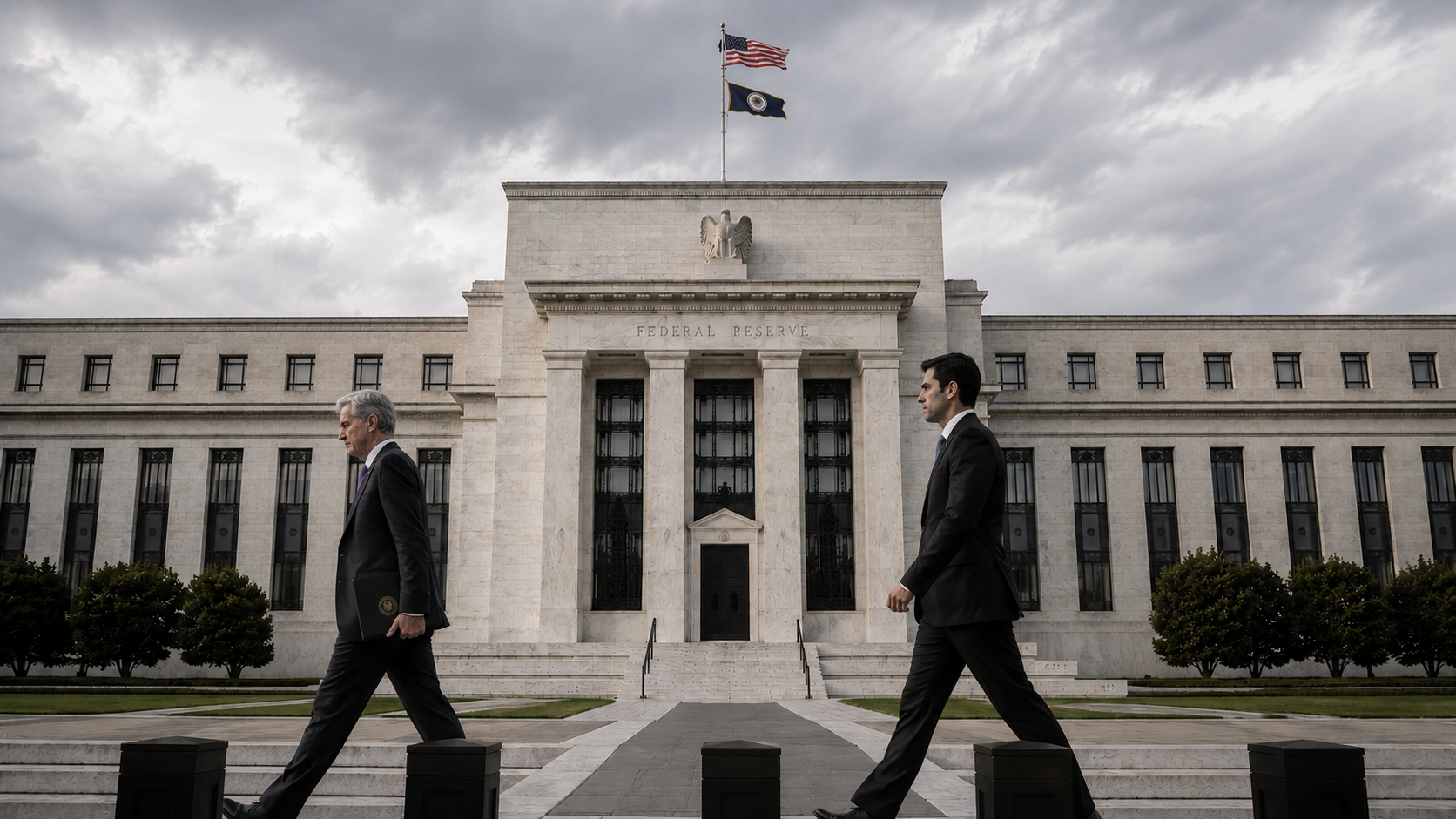
Jerome Powell’s tenure as Federal Reserve Chair officially ended Friday after more than seven years leading the central bank through a pandemic, the steepest rate hiking cycle in four decades, and a prolonged battle with post-pandemic inflation. His successor, Kevin Warsh, stepped into the role this week inheriting what may be the most complicated monetary policy environment since Paul Volcker confronted double-digit inflation in the early 1980s.

For small and microcap investors, the transition is not a ceremonial changing of the guard. It is a material shift in the direction of monetary policy at precisely the moment when the cost of capital is becoming the defining variable for smaller company valuations and earnings growth.

Who Warsh Is and Why It Matters

Kevin Warsh previously served as a Federal Reserve Governor from 2006 to 2011, a tenure that included navigating the 2008 financial crisis. He is widely characterized as a hawk — a policymaker with a structural preference for price stability over growth accommodation and a historically low tolerance for above-target inflation. His academic and professional profile suggests he is less likely than Powell to hold rates steady while inflation remains elevated and more willing to tighten further if price pressures persist.

He is stepping in at a moment when that disposition will be tested immediately.

The Macro Backdrop Warsh Inherits

The numbers Warsh walks into are unambiguous. The 30-year Treasury yield closed last week at 5.12% — its highest level since June 2007. The 10-year benchmark yield has breached 4.57%. The Consumer Price Index showed consumer inflation running at 3.8% year over year in April, driven heavily by energy costs tied to the ongoing US-Iran conflict. The Producer Price Index came in at 6% annually — a number that signals upstream cost pressures have not peaked. CME’s FedWatch tool currently prices in a near-certainty of a rate hold at June’s meeting, with traders assigning close to a 50% probability of at least one rate hike before year end.

That is the environment Warsh now owns. Federal Reserve Governor Stephen Miran submitted his resignation last week, effective upon Warsh’s swearing in, creating additional uncertainty around the composition and internal dynamics of the board at a critical juncture.

The Direct Small Cap Implication

The cost of capital story is where this transition becomes acutely relevant for investors in the sub-$2 billion market cap space. Small and microcap companies carry disproportionately more variable-rate debt relative to their large cap counterparts. When benchmark rates rise — or even when the probability of rate hikes increases — the interest expense on that debt rises in real time, compressing earnings directly and immediately.

Beyond debt service costs, a hawkish Fed posture extends the timeline for rate relief that many smaller companies had been counting on to refinance obligations at more favorable terms. The Russell 2000 has already declined more than 1% today while the S&P 500 trades modestly higher — a divergence that reflects exactly this dynamic playing out in real time.

A Warsh-led Fed that prioritizes inflation control over growth accommodation will likely sustain higher rates longer than markets had previously anticipated. For companies with strong balance sheets and pricing power, that is manageable. For smaller companies operating on thin margins with floating rate exposure, it is a structural headwind that belongs in every portfolio risk assessment right now.

The Powell era is over. The Warsh era begins with inflation still elevated, yields near 20-year highs, and the smallest companies in the market most exposed to whatever comes next.

Trump Nominates Kevin Warsh as Next Federal Reserve Chair, Setting Stage for Policy Shift

President Trump’s nomination of former Federal Reserve governor Kevin Warsh to lead the US central bank marks a pivotal moment for monetary policy, with markets immediately turning their focus to what his leadership could mean for interest rates in 2026 and beyond. While Warsh is viewed as a conventional and credible pick, his appointment could subtly — and eventually materially — shift the Federal Reserve’s policy direction.

If confirmed by the Senate, Warsh would step into a deeply divided Federal Open Market Committee (FOMC). The 19-member body has recently signaled openness to a prolonged pause after delivering three rate cuts last fall, with many policymakers believing those moves sufficiently addressed slowing job growth. Convincing the committee to resume cutting rates will be one of Warsh’s earliest and most consequential challenges.

Economists broadly agree that Warsh is inclined to argue for lower rates, but that persuasion — not authority — will determine outcomes. “Special deference to the chair only goes so far,” said JPMorgan chief economist Michael Feroli, noting that past chairs often succeeded by positioning themselves near the committee’s center rather than pushing an ideological edge. Deutsche Bank’s Matt Luzzetti echoed that view, arguing that further rate cuts are unlikely unless inflation eases materially or the labor market weakens again.

Warsh’s case for lower rates rests on a structural argument: that artificial intelligence will meaningfully boost productivity, suppress inflation, and allow the economy to grow faster without overheating. Like Trump, Warsh rejects the idea that inflation is primarily driven by strong wage growth. Instead, he has consistently blamed excessive government spending and monetary expansion. He also believes tariffs represent one-off price shocks rather than persistent inflationary forces — a view increasingly shared within the Fed.

Still, Warsh’s recent dovish tone contrasts with his long-standing hawkish reputation. Historically, he opposed extended bond-buying programs outside crisis conditions and warned that balance sheet expansion risked distorting markets and fueling inflation. Notably, he did not support a rate cut as recently as September 2024. In more recent remarks, however, Warsh has suggested that shrinking the Fed’s balance sheet could help bring inflation down, creating room for lower policy rates.

That reputation for independence may actually work in Warsh’s favor. Evercore ISI’s Krishna Guha argues that because Warsh is seen as hawkish and credible, he may be better positioned than other contenders to bring the FOMC along for at least two — and possibly three — rate cuts this year if conditions allow. In other words, Warsh may have more room to pivot without undermining the Fed’s inflation-fighting credibility.

President Trump has been careful to publicly respect the Fed’s independence, saying he did not seek a commitment from Warsh to cut rates, even though he believes Warsh favors doing so. That balance — political alignment without overt pressure — will be closely scrutinized by lawmakers during Warsh’s confirmation process, which could face hurdles amid broader tensions surrounding the Fed and ongoing investigations tied to Powell’s tenure.

Looking further ahead, questions remain about how Warsh would respond if productivity gains disappoint or inflation reaccelerates, particularly under loose fiscal policy. Some economists believe his current dovish posture could prove flexible — or temporary — especially after midterm elections and deeper into a second Trump term.

For now, Warsh’s nomination signals continuity with a twist: a Fed chair with crisis experience, institutional credibility, and a growing belief that the economy can sustain lower rates without reigniting inflation. Whether he can translate that belief into consensus may define both his chairmanship and the next phase of US monetary policy.