The Domestic Small-Cap Energy Story the Market Is Just Starting to Price In

West Texas Intermediate crossed $104 per barrel Monday morning as the U.S. formally blockaded the Strait of Hormuz, putting an official military stamp on a crisis that has already cut the waterway’s commercial traffic by more than 90% since late February. Oil has surged more than 55% since the U.S.-Israel air campaign against Iran began. The large-cap conversation around this move centers on inflation, rate policy, and Big Oil earnings. The small-cap opportunity underneath it is considerably more specific — and considerably less crowded.

Domestic energy producers don’t carry the insurance exposure, rerouting costs, or geopolitical risk that’s hammering international supply chains. When global energy flows are disrupted at the source — and the Strait of Hormuz handles roughly 25% of the world’s seaborne oil and 20% of global LNG exports — the demand vacuum gets filled by producers operating entirely outside the conflict zone. U.S. domestic natural gas producers, onshore oil operators, and domestic refiners are each collecting a demand premium that didn’t exist eight weeks ago.

The LNG dynamic is particularly important for small-cap energy investors. Qatar and the UAE supply a substantial share of LNG to Asian buyers. With Qatari LNG facilities struck by Iranian drones and Gulf shipping lanes effectively closed, Asian markets are competing aggressively for alternative supply — pulling from U.S. export terminals at a pace that is tightening the domestic natural gas market. That demand surge is landing at exactly the moment AI infrastructure is driving electricity consumption higher. Data centers require massive volumes of consistent baseload power, and natural gas remains the backbone of that grid in the United States. The theoretical “AI-Energy Nexus” that analysts have been discussing is no longer theoretical — it is being forced into reality by a geopolitical event that knocked out the world’s primary LNG export corridor.

Domestic refiners are in a comparably favorable position. With crude prices elevated and refining margins widening as global capacity strains, mid-size operators processing domestic crude are capturing spread that simply wasn’t available in a $70-per-barrel world. Large-cap refining names have already moved. Many small and microcap upstream producers with pure domestic production profiles have lagged the repricing — a pattern that historically corrects as the supply story matures and investors rotate down the market cap spectrum.

The broader implications extend beyond hydrocarbons. The Hormuz crisis is accelerating a policy conversation with real capital allocation consequences: the shift from “green energy” to “secure energy.” Nuclear, domestic grid hardening, and U.S.-based energy infrastructure are being reconsidered as national security imperatives rather than purely climate investments. That reframing is attracting new institutional attention to sectors that were previously viewed as transitional.

The primary risk is speed. A diplomatic breakthrough or a durable ceasefire could reverse oil toward the $80 range and compress margins that have only recently expanded. Energy executives are warning, however, that even if the Strait reopens, infrastructure damage and the global shipping backlog could take months to fully unwind — putting a floor under the repricing that has already occurred.

For investors focused on the small and microcap space, the Hormuz crisis is not just an oil price story. It is a structural demand signal for domestic producers operating in a global market that suddenly cannot source enough of what they have.

Janet Yellen Signals Potential Tariffs on Chinese Green Energy Exports

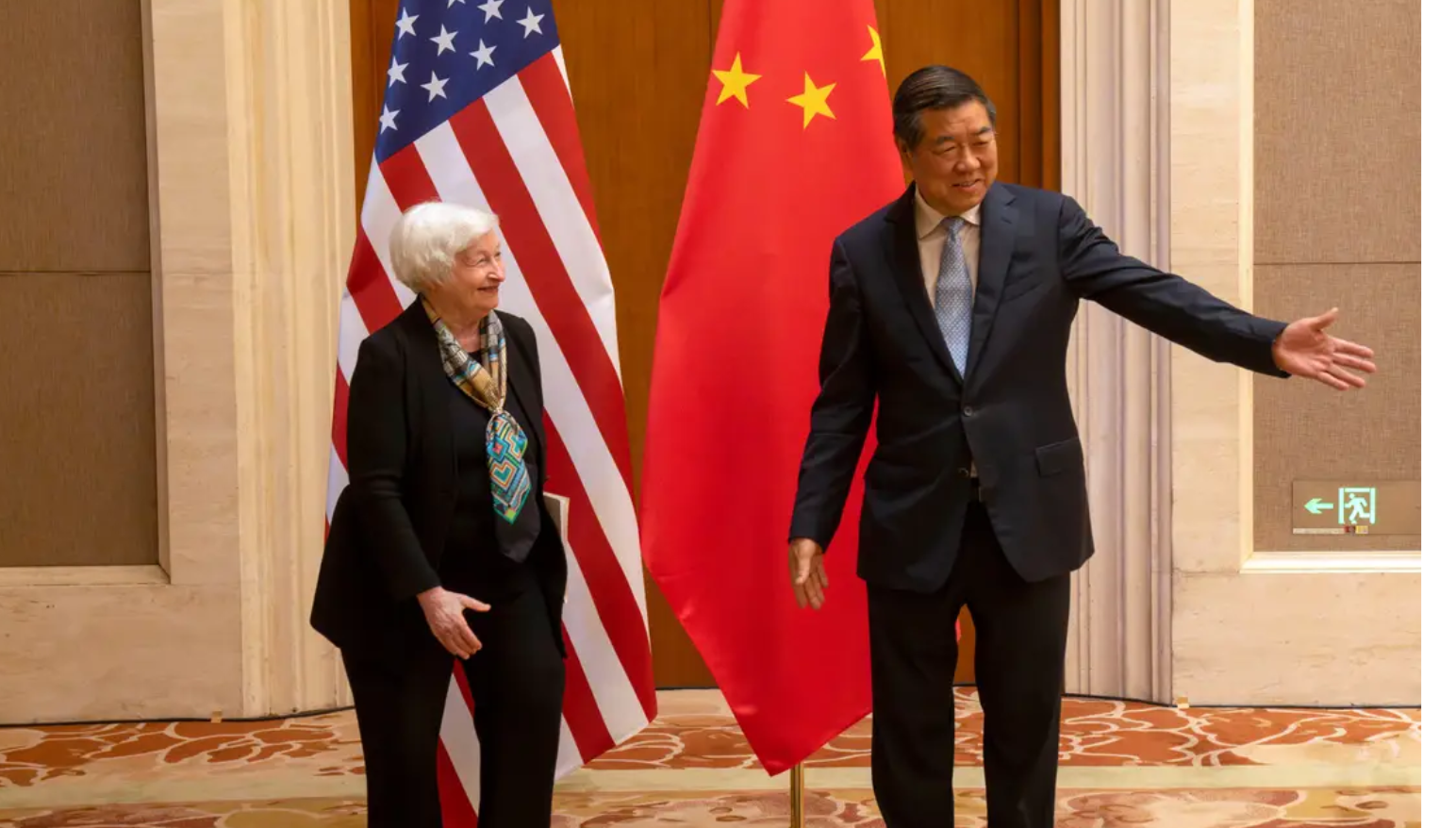
U.S. Treasury Secretary Janet Yellen escalated trade tensions with China over its massive subsidies for green industries like electric vehicles, solar panels and batteries. During her recent four-day visit to Beijing, Yellen bluntly warned that the Biden administration “will not accept” American industries being decimated by a flood of cheap Chinese exports – a repeat of the “China shock” that hollowed out U.S. manufacturing in the early 2000s.

At the heart of the dispute are allegations that China has massively overinvested in renewable energy supply chains, building factory capacity far exceeding domestic demand. This excess output is then exported at artificially low prices due to Beijing’s subsidies, undercutting firms in the U.S., Europe and elsewhere.

“Over a decade ago, massive Chinese government support led to below-cost Chinese steel that flooded the global market and decimated industries across the world and in the United States,” Yellen said. “I’ve made it clear that President Biden and I will not accept that reality again.”

While not threatening immediate tariffs or trade actions, the stark warning shows Washington is seriously considering punitive measures if Beijing does not rein in subsidies and overcapacity. Yellen said U.S. concerns are shared by allies like Europe and Japan fearing a glut of unfairly cheap Chinese green tech imports.

For its part, China is pushing back hard. Officials argue the U.S. is unfairly portraying its renewable energy firms as subsidized, understating their innovation. They claim restricting Chinese electric vehicle imports would violate WTO rules and deprive global markets of key climate solutions.

Escalating tensions over green tech subsidies could disrupt trade flows and supply chains for renewable energy developers, electric automakers, battery manufacturers and more across multiple continents. Some key impacts for investors:

Rising Costs: Potential tariffs on Chinese solar panels, wind turbines, EV batteries and other components could increase costs for green energy projects in the U.S. and allied countries, slowing roll-out.

Shifting Competitive Landscape: Non-Chinese exporters of renewable hardware like solar from countries like South Korea, Vietnam or India may benefit from U.S. trade actions against China, increasing overall competition.

Consumer Prices: Green tech price inflation could be passed through to consumers for products like rooftop solar systems, home batteries and EVs if tariffs increase costs.

Strategic Decoupling: If tensions escalate towards a full “decoupling”, it could accelerate efforts by the U.S., Europe and others to secure their supply chains by bringing more critical green industries in-house through domestic investments and subsidies.

Stock Impacts: Depending on how tensions unfold, stocks of firms exposed to U.S.-China green tech trade flows could face volatility and disruptions in both directions. Tariffs would likely create clear winners and losers.

For now, Yellen says new forums for discussions have been created to potentially resolve overcapacity concerns. However, her blunt warnings suggest the U.S. will not hesitate to take tougher actions to protect America’s fledgling renewable energy and electric vehicle industries from alleged unfair Chinese trade practices.

Defense Metals Corp. (DFMTF) – 2022 Drilling Program Outcomes Bode Well for a Robust Preliminary Feasibility Study


Thursday, October 27, 2022

Defense Metals Corp. is a mineral exploration and development company focused on the acquisition, exploration and development of mineral deposits containing metals and elements commonly used in the electric power market, defense industry, national security sector and in the production of green energy technologies, such as, rare earths magnets used in wind turbines and in permanent magnet motors for electric vehicles. Defense Metals owns 100% of the Wicheeda Rare Earth Element Property located near Prince George, British Columbia, Canada. Defense Metals Corp. trades in Canada under the symbol “DEFN” on the TSX Venture Exchange, in the United States, under “DFMTF” on the OTCQB and in Germany on the Frankfurt Exchange under “35D”.

Mark Reichman, Senior Research Analyst, Natural Resources, Noble Capital Markets, Inc.

Refer to the full report for the price target, fundamental analysis, and rating.

Resource and geotechnical drilling completed. Defense Metals completed resource delineation and pit geotechnical diamond drilling for the 2022 exploration season. A total of 5,500 meters of diamond drilling was completed in 18 holes. The drilling program included five pit slope geotechnical and hydrogeologic holes totaling 1,150 meters. Geotechnical drilling will aid optimizing the open pit slope design. Results from the program will support the Preliminary Feasibility Study (PFS) expected to commence this quarter with completion expected in the first half of 2023.

Recent assay results. Defense Metals released assay results from one additional core hole, totaling 383 meters, collared within the northern area of Defense Metals’ Wicheeda Deposit. Infill hole WI22-70 was drilled southwest within the northern area of the deposit and intersected a broad zone of mineralized dolomite carbonatite averaging 2.50% total rare earth oxide (TREO) over 113 meters.


Get the Full Report

This Company Sponsored Research is provided by Noble Capital Markets, Inc., a FINRA and S.E.C. registered broker-dealer (B/D).

*Analyst certification and important disclosures included in the full report. NOTE: investment decisions should not be based upon the content of this research summary. Proper due diligence is required before making any investment decision. 

The Case for Hydrogen Fuel Cell Vehicles

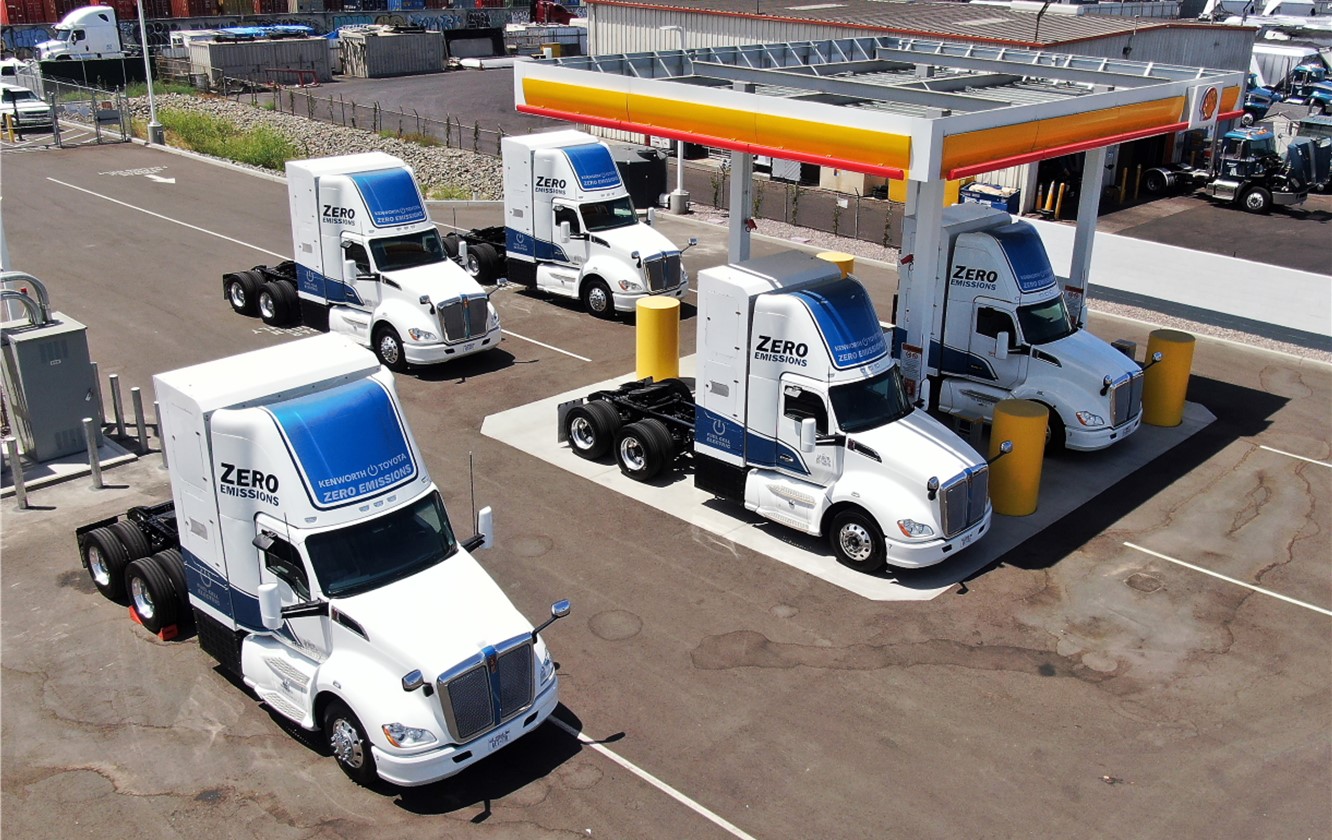
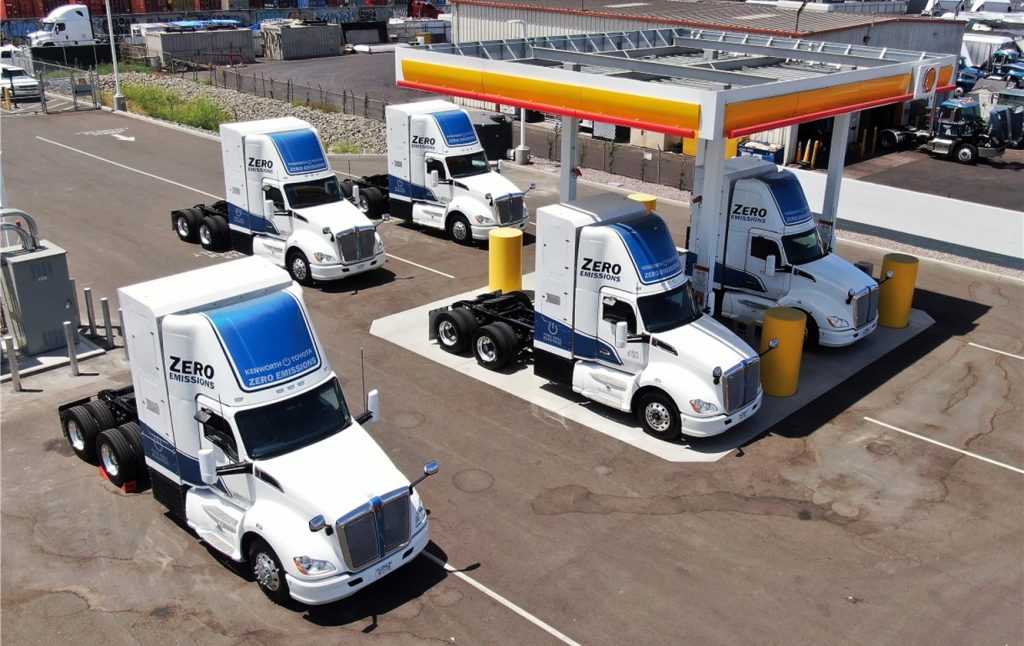
Image Credit: TruckPR (Flickr)

Is Hydrogen, Not Lithium-ion, the Automotive World’s Real Future?

Lithium-ion (Li-ion) batteries provide incredibly functional and versatile storage of electric power for cell phones, laptops, leaf blowers, Bluetooth speakers, and a myriad of other portable electric tools and appliances. But is it the best way to store power to drive the big motors found in a car or tractor-trailer? Hydrogen could provide a lighter, more potent, less environmentally harmful way to store power. And with greater range. Are car companies being steered down an inferior or potentially impossible path?

China plans to have a million hydrogen-powered vehicles on roads by 2035, and Japan, which has a much smaller population, is shooting for 800,000 units by 2030. Perhaps the world’s most abundant element is worth a deeper look before billions are spent on infrastructure to support the Li-ion model.

What’s a Fuel Cell

According to ThoughtCo.com, the most abundant element in the universe is hydrogen, making up about three-quarters of all things. Helium, then oxygen, makes up most of the rest of all matter. By comparison, all of the other elements are rare.

There are combustion engines that run on hydrogen, but it’s fuel cell electric vehicles (FCEVs) that are driven by motors, similar to those now going into Fords, Teslas and Volvos. The FCEV uses a hydrogen fuel cell.

These electric power storing fuel cells consist of a positive (cathode) and a negative electrode (anode), separated by an electrolyte membrane to chemically release electricity. This happens when oxygen from the surrounding air is exposed to the cathode. As liquid hydrogen, which fills the fuel cell in similar quantities that may be required of gas or diesel in a fossil fuel-powered vehicle, accumulates on the anode, they break apart into protons and electrons from the reaction with the electrolyte.

As protons travel through the membrane to the cathode, electrons are forced through a circuit. The circuit includes the electric motor, which releases the power to drive the vehicle down the road,  powering an electric motor in the process. The electrons complete the path and reach the protons on the cathode; here, they react with oxygen to create H20 vapor.

Benefits to Cars and Trucks

The emissions of an FCEV, if you can call it that, is pure water. This is the very definition of clean and sustainable for the planet. In fact, the water vapor released is completely recyclable. But with it being composed of two of the most abundant elements, the need to recycle it as a way to store energy doesn’t exist.

Cars and large trucks have a far longer range than battery electric vehicles (BEVs). The fuel cells can convert far more stored hydrogen into electricity than current EV batteries, making their range more in line with what drivers of cars and trucks expect from their vehicles.

The speed of powering up the fuel cell is also similar to refueling a vehicle with petrol. Refilling the fuel cell takes minutes. The combination of longer range and speed to get back on the road makes it a functionally attractive option for drivers.

Downside

Similar to recharging a lithium-ion battery, a power source is needed. Currently, this power source isn’t often wind, solar, or tidal, it’s fossil fuels. Hydrogen produced by coal or oil is seen as having dirty electrons; hydrogen produced by natural gas is called blue hydrogen. Using wind or sun to turn water into its atomic components is possible and does not need to be done in a large refinery in some remote place, but the outlets for this still need to be built.

The main reason is the lack of infrastructure. In order for hydrogen cars to become a viable option, there needs to be a network of refueling stations in place. This is a chicken-and-egg situation as car manufacturers are reluctant to mass-produce FCEVs without the existing infrastructure, and investors are unwilling to build hydrogen refueling stations without strong demand for them. Sales of fuel cell-powered vehicles in the U.S. in 2021 totaled 3,341. There aren’t entrepreneurs or even energy companies racing out to build a hydrogen refilling station when they’re not likely to experience any business.

Take Away

Although hydrogen still isn’t becoming a mainstream option, it is an alternative fuel source that is certainly worth keeping an eye on. With the right infrastructure in place, hydrogen cars could become a viable option for those looking for a clean and sustainable way to power their vehicles — if not now, definitely in the future.

Paul Hoffman

Managing Editor, Channelchek

Sources

https://insideevs.com/news/565185/us-hydrogen-car-sales-2021/

https://www.thoughtco.com/most-abundant-element-in-the-universe-602186

https://www.marketwatch.com/story/battery-electric-cars-are-the-future-not-so-fast-hydrogen-powered-cars