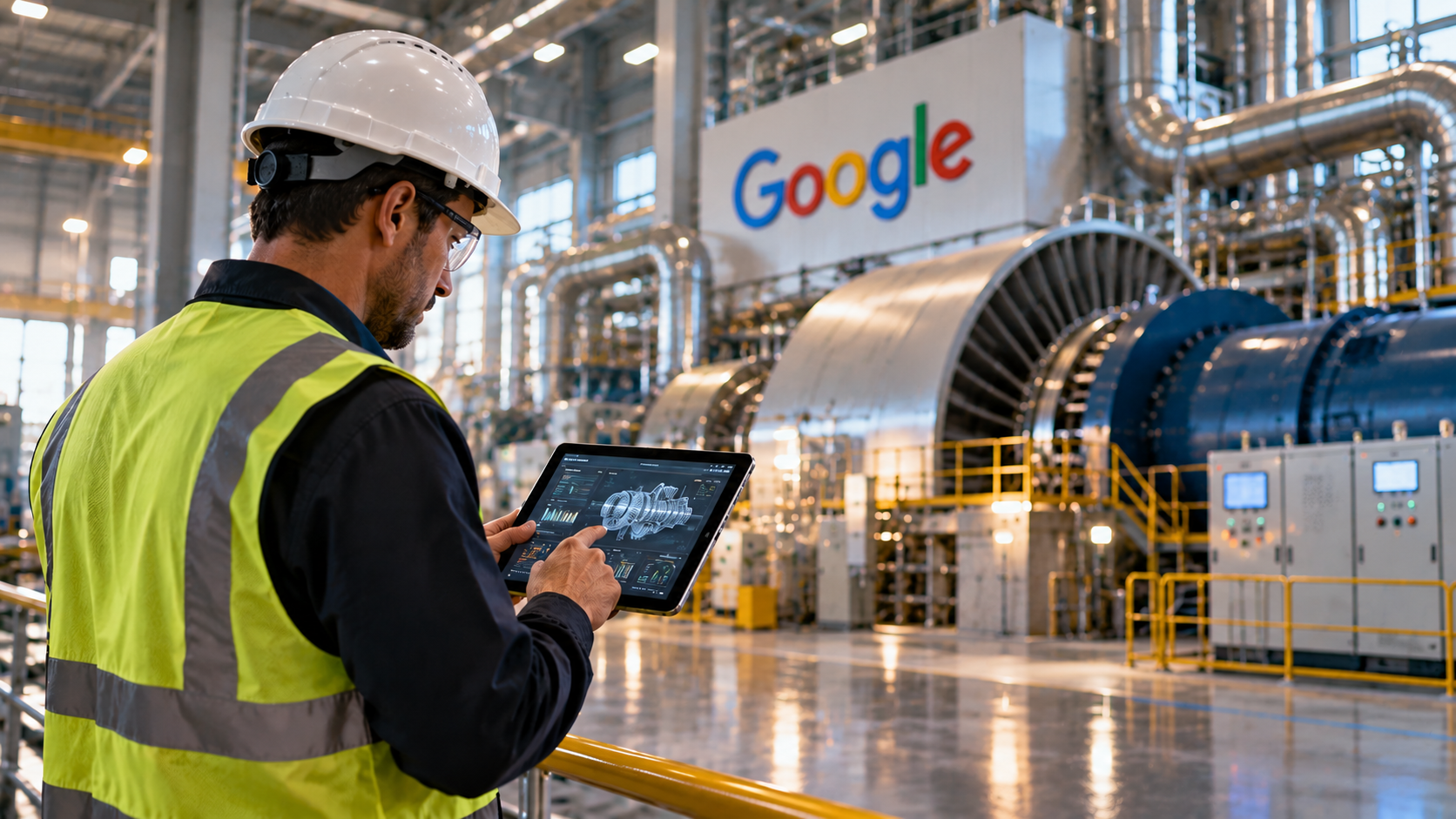
Google Signs $4.3 Billion, 20-Year Nuclear Power Deal With Constellation Energy

Google (Nasdaq: GOOG, GOOGL) announced Tuesday a $4.3 billion agreement with Constellation Energy (Nasdaq: CEG) to bring 890 megawatts of nuclear power online through a 20-year power purchase agreement, the latest step in the technology industry’s race to secure electricity for the AI buildout. Constellation shares were up more than 12% in Tuesday trading, while Google was slightly lower.

The new capacity will not come from new reactors. It will come from upgrades at six existing nuclear plants across Illinois, New Jersey, and Pennsylvania, including modernized turbines, steam generators, and digital control systems. Upgrading existing plants is generally a faster route to new capacity than building reactors from scratch, which can take years to permit and construct. By the usual rule of thumb that a gigawatt powers nearly 800,000 homes, 890 megawatts is enough for roughly 700,000.

The structure matters for both sides. Google says the contract gives Constellation the revenue certainty it needs to invest in updates to 11 of its reactors, and that it is designed so utility customers do not absorb added costs from the AI boom. Constellation will also use Google’s Gemini Enterprise software for site selection, outage management, and infrastructure protection, which makes this a technology partnership as well as a power contract.

Google is not alone in locking up nuclear supply. Microsoft signed a 20-year agreement with Constellation in 2024 to source power from a previously shuttered reactor at Three Mile Island by 2028. Amazon has signed its own nuclear power deal with Constellation, and Meta has agreed to a 20-year purchase of power from Vistra’s plants and also has a 20-year agreement for the output of Constellation’s Clinton plant in Illinois. That gives Constellation long-term agreements with four of the largest technology companies. Google has also invested in nuclear projects in Georgia, Iowa, and Tennessee, and companies across the industry are exploring small modular reactors designed to deliver megawatts rather than a full gigawatt.

The pattern points to where the AI buildout is actually constrained. Chips and data center shells can be ordered, but reliable around-the-clock power cannot be added quickly. That is why the largest buyers are signing two-decade contracts years before the electricity arrives, a dynamic that runs through the US data center construction boom. It also helps explain why a single contract can move a power generator’s stock by double digits, since it converts uncertain future demand into contracted revenue. Nuclear carries a lingering public stigma, but it offers clean, steady output compared with carbon-based options.

For small and microcap investors, the read-through is about the supply chain around power rather than the contracts themselves. Upgrading six plants and eleven reactors means demand for turbine and steam generator components, digital controls, engineering services, and grid equipment, areas where smaller specialized companies operate. The caution is that Constellation’s jump shows how quickly the market prices in announced deals. Whether smaller names benefit depends on whether orders actually reach them and whether the hyperscalers keep spending at the current pace while borrowing costs stay elevated.
Meta Commits to Nuclear Energy with Landmark 20-Year Deal

Key Points:
– Meta signs 20-year deal for 1.1 GW of nuclear power from Clinton Clean Energy Center.
– Supports grid stability and emissions goals, keeping the Illinois plant from closing.
– Part of broader tech shift toward nuclear as AI and data center power demands grow.

Meta has taken a major step toward securing its clean energy future with the announcement of a 20-year agreement to purchase nuclear power from Constellation Energy. Beginning in 2027, the tech giant will buy approximately 1.1 gigawatts of electricity annually from the Clinton Clean Energy Center in Illinois—effectively the full output of the plant’s sole nuclear reactor.

This long-term deal highlights the increasing role of nuclear power in the digital economy, as energy-intensive data centers drive up electricity demand. For Meta, which has pledged to power its operations with 100% clean energy, the agreement is a crucial move to ensure long-term, zero-emission power availability.

The Clinton Clean Energy Center has faced financial uncertainty in recent years. It has operated with the support of zero-emissions credits since 2017, which recently expired. Without a new revenue source, the facility was at risk of early retirement. Meta’s commitment not only guarantees the plant’s continued operation but also supports its potential relicensing and even a modest expansion of its output by 30 megawatts.

While the electricity generated at Clinton will not directly power Meta’s data centers, the deal helps ensure a consistent flow of clean energy to the regional grid. In turn, this strengthens the broader power infrastructure that supports Meta’s energy goals.

This marks Meta’s first official investment in nuclear energy and comes amid a broader trend of tech companies aligning with the nuclear sector. In recent months, Microsoft agreed to buy power from a restarted reactor at Three Mile Island, and Amazon has poured over $500 million into the development of small modular reactors (SMRs). Google is also investing in new nuclear projects and advanced reactor developers.

All three tech giants—Meta, Google, and Amazon—signed a pledge earlier this year calling for a global tripling of nuclear energy production by 2050. The pledge reflects growing consensus in the tech world that nuclear power is essential for achieving deep decarbonization while meeting soaring energy demand.

This partnership also comes as the U.S. government accelerates support for nuclear expansion. President Trump recently signed a series of executive orders aimed at reducing regulatory barriers and developing a domestic supply chain for nuclear fuel. These actions are intended to pave the way for faster deployment of advanced reactors, especially SMRs, which are seen as more scalable and cost-effective than traditional nuclear facilities.

Although Meta’s current agreement focuses on a legacy reactor, the company has signaled strong interest in the next generation of nuclear technology. In December, it issued a request for proposals from developers of advanced nuclear projects, seeking to add between one and four gigawatts of new capacity in the U.S. That process is still underway and represents Meta’s broader ambition to shape the future of clean, reliable power.

Constellation, meanwhile, has hinted that it may pursue a new permit to build an SMR at the Clinton site, signaling long-term potential for growth and innovation at the facility.