
Microsoft and OpenAI Rewrite the Rules: What the Amended Partnership Means for the AI Landscape

The relationship between Microsoft (NASDAQ: MSFT) and OpenAI just got a lot more complicated — and for investors watching the enterprise software and AI space, the implications stretch well beyond two companies renegotiating a contract.

On Monday, Microsoft announced a sweeping revision to its long-term partnership with OpenAI, officially ending its exclusive access to the AI startup’s intellectual property and models. Under the original agreement, Microsoft held exclusive rights to OpenAI’s IP and technology until the company achieved artificial general intelligence (AGI) — a milestone defined as AI that matches or surpasses human intelligence. That clause is now gone.

The revised deal allows OpenAI to distribute its models through any cloud provider, including direct competitors like Amazon Web Services. Microsoft’s Azure platform retains its designation as OpenAI’s primary cloud infrastructure and will continue to receive first access to new OpenAI products — but the competitive moat that defined the original partnership has been significantly narrowed. In exchange, Microsoft will no longer make revenue-sharing payments to OpenAI, though OpenAI is still obligated to continue paying revenue share back to Microsoft through 2030.

MSFT shares dipped roughly 1% on the announcement.

The timing is notable. The renegotiation comes just two days before Microsoft reports quarterly earnings on Wednesday — an earnings report already under a microscope after a rough six months for the stock. MSFT has lost approximately 20% over that period, while cloud rivals Amazon (NASDAQ: AMZN) and Google parent Alphabet (NASDAQ: GOOG) have surged 17% and 30%, respectively.

A key metric investors will be watching Wednesday is Azure’s growth rate. In its last reported quarter, Microsoft disclosed that Azure revenue growth was constrained by data center capacity — the business grew 38%, but management indicated it would have hit 40% with sufficient infrastructure in place. Any update on capacity buildout and AI-driven cloud demand will likely move the stock.

But the bigger story here may not be Microsoft at all — it’s what this deal signals for the broader enterprise software market. The so-called “SaaS-pocalypse” — the fear that AI labs like OpenAI and Anthropic will build their own enterprise tools and disintermediate traditional software providers — has been quietly hammering the sector for months. With OpenAI now free to go directly to any cloud customer through any platform, that risk just became more tangible.

The damage is already showing up in valuations. Salesforce (NYSE: CRM) and ServiceNow (NYSE: NOW) are each down roughly 31% year-to-date. Thomson Reuters (NYSE: TRI) has shed more than 40%. These are not small-cap companies, but the ripple effects are being felt across the entire software ecosystem — including the mid-market and smaller players who compete for enterprise IT budgets.

For the small and microcap space, the takeaway is straightforward: the enterprise software stack is being repriced in real time. Companies that built their value proposition around integrating with or complementing legacy SaaS platforms need to be asking hard questions about their positioning as AI-native competitors gain distribution.

The Microsoft-OpenAI relationship has always been one of the most consequential partnerships in tech. Monday’s announcement makes it clear that even that relationship isn’t immune to the disruption reshaping the entire industry.
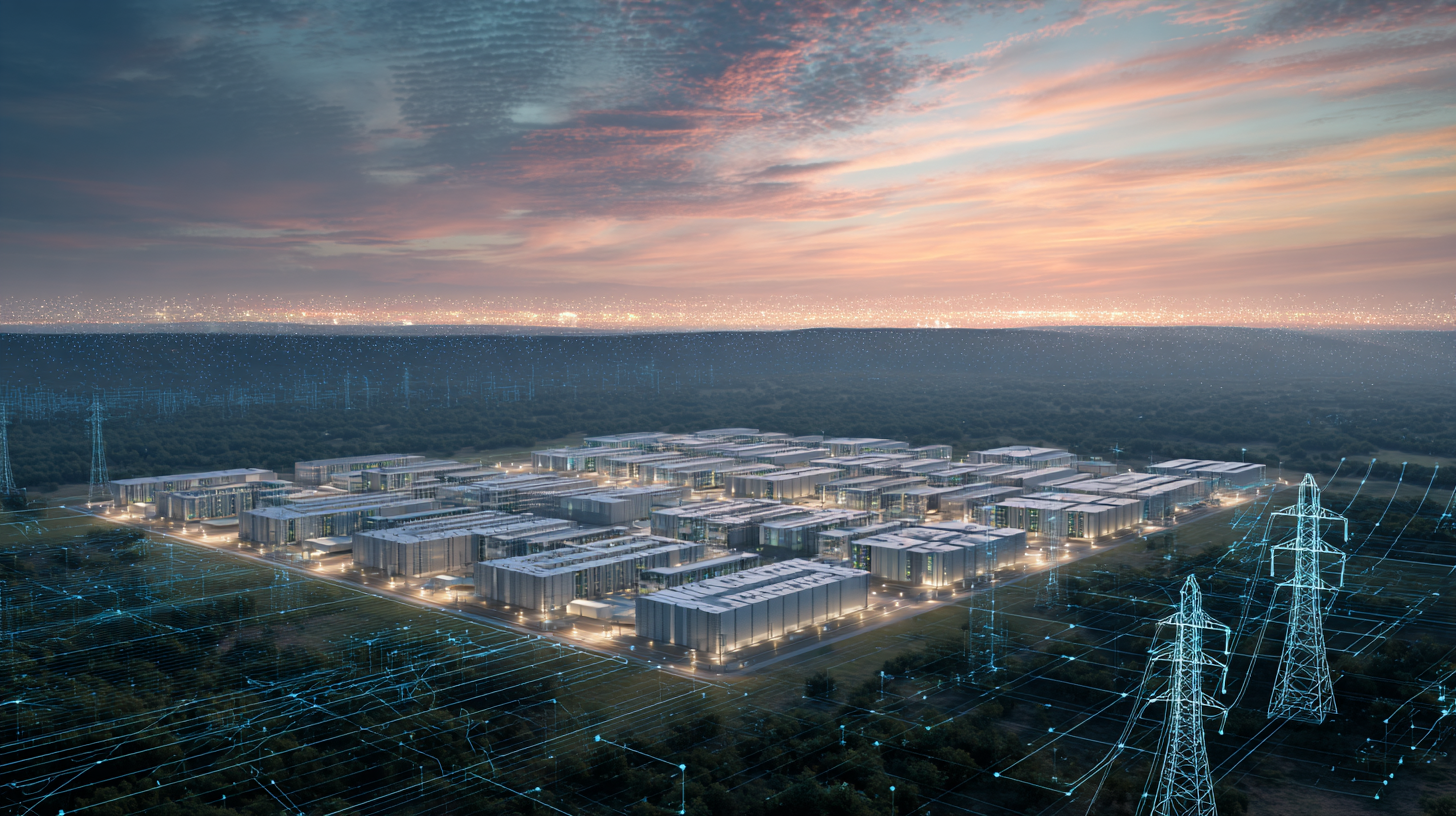
The Real AI Arms Race: Why Power and Data Centers Are Becoming the Next Big Investment Theme

The artificial intelligence boom is no longer just about software models and chips—it’s increasingly about power, land, and infrastructure. That reality came into sharp focus this week as OpenAI and SoftBank jointly committed $1 billion to SB Energy, a fast-growing energy and data center infrastructure company positioned at the center of America’s AI buildout.

Under the deal, OpenAI and SoftBank will each invest $500 million to support SB Energy’s expansion as a large-scale developer and operator of data centers. As part of the partnership, SB Energy has been selected to build and operate OpenAI’s 1.2-gigawatt data center in Milam County, Texas, a facility large enough to power hundreds of thousands of homes. The investment highlights a critical shift: for AI leaders, securing reliable energy has become as strategic as securing advanced chips.

AI workloads are extraordinarily power-hungry. Training and running large language models requires enormous computing capacity, which in turn drives unprecedented electricity demand. As a result, hyperscalers and AI developers are now racing to lock down long-term energy sources and infrastructure partners to avoid future bottlenecks. In this environment, companies that can deliver power at scale are emerging as essential enablers of the AI economy.

SB Energy represents a hybrid model well-suited for this moment. Originally founded as a renewable energy and storage developer and long backed by SoftBank, the company has expanded aggressively into data center development, ownership, and operations. This dual exposure to both energy production and digital infrastructure positions SB Energy as a critical middle layer between power generation and AI compute demand.

The investment also ties directly into OpenAI’s Stargate initiative, a massive joint effort with partners including SoftBank and Oracle to invest up to $500 billion in U.S. AI infrastructure over the next four years. Stargate’s ambition underscores how central physical infrastructure has become to sustaining AI growth—and why capital is flowing into companies that can execute at scale.

From an investor’s perspective, this trend carries important implications. While mega-cap tech companies dominate AI headlines, much of the real opportunity may lie one layer below, in infrastructure providers, energy developers, and specialized operators that enable AI expansion. These businesses often generate long-term contracted revenue and may benefit from structural demand regardless of short-term swings in AI sentiment.

However, the rapid interconnection between AI firms, financiers, and infrastructure developers also introduces risk. Heavy capital commitments assume that AI demand will continue to rise at an aggressive pace. If adoption slows or efficiency gains reduce power needs, some projects could face pressure. Investors should therefore favor companies with diversified customers, strong balance sheets, and assets that retain value beyond AI-specific use cases.

Ultimately, the OpenAI–SoftBank investment in SB Energy signals a broader shift: AI is becoming an infrastructure-driven industry. For investors willing to look beyond the obvious names, the companies powering the AI revolution—literally—may offer some of the most compelling opportunities in the years ahead.