Micron Surges 12% as the Market Begins to Reprice What AI Means for Memory Chips

Micron Technology (Nasdaq: MU) surged more than 12% Tuesday to trade near $850, extending what has already been one of the most remarkable runs in the semiconductor sector over the past twelve months. The catalyst was a Wall Street price target revision that set a new high-water mark for analyst expectations on the stock — but the move reflects something larger than a single upgrade. It reflects a growing conviction that artificial intelligence has fundamentally and permanently changed how memory markets work.

The numbers behind that conviction are not abstract. Micron’s most recent quarter posted revenue of $13.64 billion, up 57% year over year, with non-GAAP earnings per share of $4.78 and well above the $3.94 consensus estimate. Its Cloud Memory Business Unit nearly doubled to $5.28 billion in a single quarter at 66% gross margins. Forward guidance calls for $18.7 billion in revenue next quarter with non-GAAP EPS of $8.42. These are numbers that reflect the hyperscaler AI buildout running directly through Micron’s high-bandwidth memory franchise at full speed.

Why This Cycle Feels Different

Memory semiconductors have historically been among the most volatile in the chip sector — prone to sharp boom-bust swings driven by oversupply, inventory corrections, and demand unpredictability. Those cycles made memory stocks notoriously difficult to value and kept multiples compressed even during periods of strong earnings. What’s changing now is the nature of demand itself.

AI data centers consume high-bandwidth memory at a scale and consistency that prior computing architectures never required. Unlike consumer electronics demand which is seasonal, discretionary, and cyclical, hyperscaler AI infrastructure spending is driven by multi-year capital commitments from companies like Amazon, Microsoft, Google, and Meta that are building capacity they believe they will need for decades. That shift is beginning to generate long-term supply agreements that lock in pricing and demand visibility, smoothing the earnings volatility that historically made memory stocks difficult to hold through a full cycle.

If that structural change holds, the entire framework for valuing memory companies changes with it, and Micron, as the dominant US-based producer, is the most direct expression of that thesis.

The Domestic Manufacturing Milestone

Layered underneath Tuesday’s move is a separate development that adds industrial and political weight to the story. On Friday, Micron’s Manassas, Virginia facility began producing 1-alpha DRAM, the most advanced memory chip ever manufactured on US soil. The milestone arrives as Washington continues to prioritize domestic semiconductor production under the CHIPS Act framework, and as AI supply chains face increasing scrutiny around geographic concentration. Micron now holds onshore capacity, active government support, and an accelerating demand environment simultaneously, a combination that rarely aligns this cleanly.

MU stock has now run approximately eightfold over the past year, outperforming the S&P 500, the VanEck Semiconductor ETF, and the iShares Semiconductor ETF by a wide margin.

The Broader Semiconductor Read

For investors tracking smaller names in the semiconductor space, the Micron move carries a direct implication. If AI has structurally improved the durability and predictability of memory market earnings, the same logic begins to apply to smaller companies serving adjacent segments, specialty DRAM providers, DDR5 component manufacturers, advanced packaging companies, and AI-optimized storage technology players. AMD climbed more than 5% Tuesday on the same AI semiconductor sentiment wave, confirming this is a sector rerating rather than a single-stock event.

The memory supercycle has a new price tag. The market is just beginning to figure out what that means for everything downstream.

AI Trade Reignites, Dow Reclaims 50,000 — What the Market Reset Means for Small and Microcap Investors

US equity markets surged Thursday as a convergence of catalysts — a thawing US-China trade relationship, renewed AI momentum, and better-than-expected corporate earnings — pushed major indices to milestone levels not seen in months.

The Dow Jones Industrial Average climbed back above 50,000 for the first time since February, rising roughly 450 points on the session. The S&P 500 crossed 5,700 and the Nasdaq Composite advanced approximately 1%, fueled largely by a sharp rally in Nvidia shares after the US government approved sales of its H200 chips to select Chinese firms.

The AI Trade Is Back — and It Has Teeth

Nvidia’s stock jumped more than 4% on the chip sales approval news, but the broader implication for investors is more significant than a single-day move. The H20 and H200 chip sales to China had been a major overhang for AI-exposed names across the market cap spectrum. Their approval signals a shift in Washington’s posture — at least selectively — toward allowing AI hardware exports to flow into one of the world’s largest technology markets.

For small and microcap investors, this matters. AI infrastructure spending at the enterprise and hyperscaler level creates downstream demand that flows through the supply chain — from specialty semiconductor materials and PCB manufacturers to data center cooling solutions and edge computing plays. Many of those companies sit well below the $2 billion market cap threshold. When the AI trade re-accelerates at the large-cap level, it has historically pulled forward activity in the smaller names that feed that ecosystem.

US-China Summit Adds Macro Tailwind

President Trump and Chinese President Xi Jinping opened a two-day summit Thursday, with both sides calling for improved ties. The meeting — attended by top US CEOs including Nvidia’s Jensen Huang, Tesla’s Elon Musk, and Apple’s Tim Cook — carries real implications for trade policy across sectors. Any meaningful reduction in tariff friction or expansion of technology trade frameworks could disproportionately benefit smaller US exporters and manufacturers who have faced margin pressure from supply chain disruptions and retaliatory tariff exposure.

The summit is still ongoing and outcomes remain fluid, but the market is clearly pricing in a more constructive tone.

Cisco’s Restructuring Has a Broader Message

Cisco shares soared Thursday after the company posted an earnings beat and announced an AI-focused restructuring that will eliminate roughly 4,000 positions. The move isn’t just a cost story — it’s a signal that legacy networking infrastructure is being repositioned around AI workloads. When large incumbents restructure toward AI, they typically shed non-core business lines and reduce focus on smaller verticals. That creates opportunity gaps that agile smaller companies can move into.

Retail Sales and Oil: The Inflation Watch Continues

April retail sales came in higher, boosted partly by elevated fuel prices tied to the ongoing Middle East conflict. The inflationary undertow remains a risk variable, particularly for consumer-facing small caps operating on thin margins. Investors should continue monitoring energy price movements as a potential headwind heading into Q2 earnings season.

Thursday’s rally is a reset, not a resolution. But for small and microcap investors, the underlying signals — AI demand returning, trade tensions easing, and large-cap restructuring creating white space — are worth watching closely.

Google’s Memory Efficiency Breakthrough Sends Chip Stocks Tumbling — But Is the Market Overreacting?

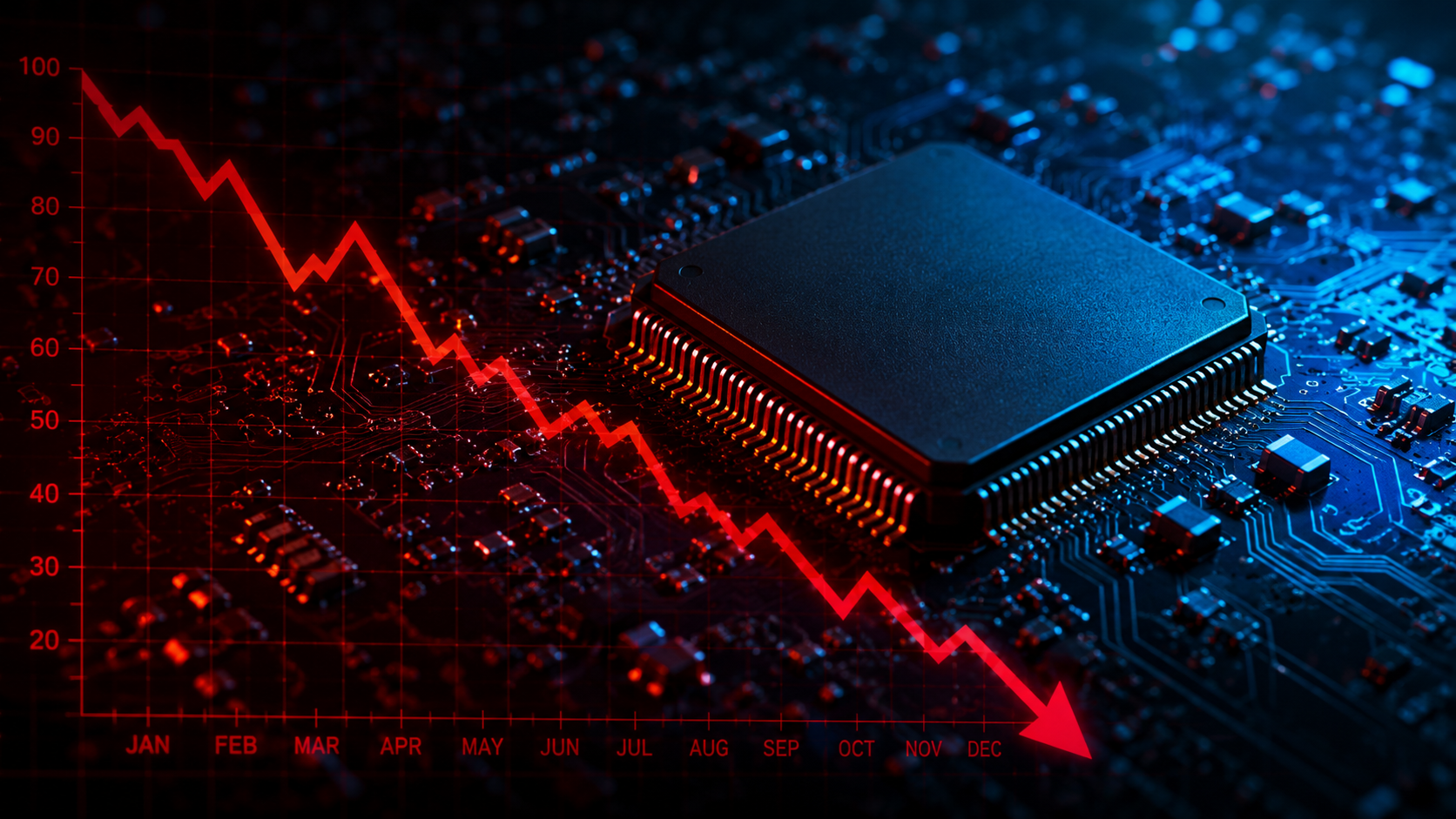
Memory chip stocks took a beating Thursday after Google went public with research on a new algorithm that could dramatically reduce the amount of memory needed to run large language models — rattling a sector that had been riding an AI-fueled supply crunch straight up.

Samsung Electronics and SK Hynix, the South Korean heavyweights that dominate the high-bandwidth memory market, both fell at least 6% in Seoul trading. In the U.S., Micron Technology (MU) slid more than 7%, while Western Digital and Sandisk each dropped at least 5%. Nvidia (NVDA) was not spared either, shedding nearly 4% as broader AI infrastructure sentiment soured.

What Google Actually Did

Google’s TurboQuant algorithm, which the company publicized on X this week — though the underlying research originally surfaced last year — claims to cut the memory required to run large language models by at least a factor of six. The efficiency gain targets what’s known as the key value cache, a critical bottleneck in AI inference, or the process of running AI models to generate outputs.

If widely adopted, TurboQuant could reduce the memory footprint of AI workloads significantly, theoretically easing the supply crunch that has sent chip prices and margins soaring across the sector.

The Bull Case Didn’t Disappear Overnight

Context matters here. Memory chip stocks had been on an extraordinary run. SK Hynix and Samsung shares had each surged more than 50% year-to-date through Wednesday, fueled by insatiable demand from hyperscalers building out AI infrastructure at historic scale. SK Group Chairman Chey Tae-won as recently as this week said the memory chip shortage would persist through 2030.

Morgan Stanley analyst Shawn Kim pushed back on the panic in a note, arguing the impact of Google’s research should ultimately be net positive for the industry. His logic: if AI models can run with materially lower memory requirements without sacrificing performance, the cost per query drops, making AI deployment more profitable and accelerating adoption — which in turn drives more demand for memory, not less.

Kim and analysts at JPMorgan and Citigroup all invoked the Jevons Paradox — a 19th century economic concept holding that greater efficiency in resource use tends to increase total consumption rather than reduce it. The same argument made the rounds when DeepSeek’s low-cost AI model rattled markets last year.

The Bigger Picture for Investors

The four largest hyperscalers — led by Amazon and Google — are collectively on track to spend roughly $650 billion this year on data center infrastructure. That spending appetite doesn’t evaporate because of one efficiency algorithm, and Ortus Advisors analyst Andrew Jackson noted the Google development may make little practical difference to near-term demand given how constrained supply remains.

For small and microcap investors with exposure to the memory supply chain — component manufacturers, equipment makers, or specialty materials companies — Thursday’s selloff may be more noise than signal. The structural demand drivers behind AI infrastructure spending remain firmly intact.

The more pressing question isn’t whether TurboQuant reduces memory demand. It’s whether the market had already priced in perfection for a sector where any efficiency headline is now treated as an existential threat.

Nvidia and Meta Deepen AI Alliance With Millions of Next-Gen Chips

AI infrastructure is getting another massive upgrade. Nvidia and Meta have announced an expanded multiyear, multigenerational partnership that will deliver millions of Nvidia’s latest GPUs, CPUs, and networking products into Meta’s data centers. The move underscores just how aggressively the world’s largest tech platforms are investing in artificial intelligence — even as investors question the sustainability of that spending.

Under the agreement, Meta will deploy Nvidia’s Blackwell and next-generation Rubin GPUs to train and run AI models across its family of apps, including Facebook, Instagram, and WhatsApp. The chips will power everything from recommendation systems to advanced generative AI tools designed for billions of users worldwide.

Nvidia CEO Jensen Huang described the partnership as a deep integration across computing layers, from GPUs and CPUs to networking and software. The goal is to bring Nvidia’s full-stack AI platform into Meta’s infrastructure, allowing the company’s researchers and engineers to push the boundaries of large-scale AI deployment.

Importantly, Meta will use the chips both in its own data centers and through Nvidia’s Cloud Partner ecosystem, which includes providers like CoreWeave. That hybrid strategy gives Meta additional flexibility to scale workloads quickly without waiting for new facilities to come online.

Beyond GPUs, Meta is also rolling out Nvidia’s Grace CPU-only servers, with plans to adopt the next-generation Vera CPU systems in 2027. These CPU deployments are notable because they signal Nvidia’s growing ambition to compete more directly in the traditional server market long dominated by Intel and AMD. If Nvidia can establish a foothold in CPU-heavy environments alongside its GPU dominance, it could reshape the balance of power in enterprise data centers.

Meta also plans to integrate Nvidia’s Confidential Computing technology into WhatsApp, enhancing privacy protections by enabling secure data processing on GPUs. As AI systems increasingly rely on sensitive personal data, secure processing capabilities are becoming a competitive differentiator.

The announcement comes at a time when AI-related stocks have faced renewed scrutiny. Shares of Nvidia and Meta have cooled in early 2026 amid concerns that hyperscalers may be overspending on AI hardware. Companies such as Microsoft, Amazon, and Google have introduced their own custom AI chips, raising questions about whether Nvidia’s GPUs will remain indispensable.

There are also broader concerns about whether all AI workloads truly require high-performance GPUs, or whether specialized processors could handle certain tasks more efficiently. Yet analysts argue that Nvidia’s advantage lies in versatility. GPUs can support a wide range of AI applications, from training large language models to running inference at scale, while custom chips tend to be optimized for narrower use cases.

For Meta, the decision is clear: scale matters. Running AI at the level required to serve billions of users demands proven hardware, deep software integration, and reliable supply chains. By doubling down on Nvidia, Meta is signaling that it views AI not as an experimental feature, but as core infrastructure for its future.

The partnership reinforces Nvidia’s central role in the AI ecosystem — and shows that, despite market jitters, the largest tech companies are still betting big on next-generation computing power.

Amazon Unveils New Trainium3 AI Chip as Big Tech Ramps Up Efforts to Challenge Nvidia’s Dominance

Amazon has introduced its newest AI semiconductor, Trainium3, signaling another major push by tech giants to loosen Nvidia’s grip on the rapidly growing artificial intelligence hardware market. Announced Tuesday during Amazon Web Services’ annual re:Invent conference, the chip represents a significant leap in the company’s strategy to build affordable, high-performance computing infrastructure tailored for AI training and inference.

According to AWS, servers outfitted with Trainium3 deliver four times the speed and energy efficiency of the previous generation. For enterprises racing to scale large language models and multimodal systems, this improvement translates to faster development cycles and noticeably lower operational costs—an increasingly critical advantage as AI workloads explode.

“Trainium already represents a multibillion-dollar business today and continues to grow really rapidly,” said AWS CEO Matt Garman, underscoring Amazon’s deepening investment in custom silicon. Once primarily dependent on Nvidia for its cloud AI capacity, AWS now sees homegrown hardware as essential both for performance control and long-term cost stability.

Amazon is far from alone. The industry has entered a new era in which Nvidia’s largest customers—Google, Microsoft, Meta, and Amazon itself—are designing their own AI chips to reduce reliance on the GPU leader. In early November, Google debuted its Ironwood TPU v7, and reports suggest the company is negotiating a multibillion-dollar deal to supply TPUs to Meta. Meanwhile, Microsoft continues to develop its in-house silicon despite encountering delays.

AWS executives view this diversification as healthy for the broader ecosystem. “Diversity of chips in the AI market is a good thing,” said Dave Brown, AWS vice president of compute and machine learning, in an interview with Yahoo Finance. Brown emphasized that the rising demand for AI infrastructure is creating room for multiple architectures to coexist, each optimized for different workloads.

Cost remains one of Amazon’s sharpest competitive angles. Brown noted that developers using Trainium-based instances typically see 30% to 40% savings compared to Nvidia GPU clusters. At a time when AI model training can reach hundreds of millions—or even billions—of dollars, these savings could shift market dynamics.

Amazon is also expanding its AI infrastructure at massive scale. The company recently completed Project Rainier, a colossal data center initiative built specifically for AI workloads. OpenAI competitor Anthropic is expected to use one million of Amazon’s custom chips across Rainier and other AWS data centers by the end of 2025. Anthropic has reportedly played a hands-on role in guiding the chip’s design.

Still, Nvidia remains unmatched in both raw performance and software ecosystem maturity. CEO Jensen Huang has argued that developers would choose Nvidia chips “even if alternatives were free,” citing CUDA and the extensive tools built around Nvidia hardware. Amazon itself remains one of Nvidia’s biggest customers, accounting for 7.5% of Nvidia’s revenue, and OpenAI recently signed a $38 billion agreement to access Nvidia GPUs through AWS.

Yet Amazon is preparing for a future where its chips coexist seamlessly with Nvidia’s. The company revealed that its upcoming Trainium4 processors will support NVLink Fusion, Nvidia’s advanced networking technology that links chips across server racks. That compatibility signals a hybrid future—one where Amazon tightens control over its hardware roadmap while still acknowledging Nvidia as the industry’s gold standard.

Nvidia Becomes World’s First $5 Trillion Company, Fueling Broader AI Sector Momentum

Nvidia has officially become the first company in history to surpass a $5 trillion market capitalization, cementing its dominance in the artificial intelligence (AI) revolution and signaling a powerful shift in the global technology landscape. The company’s rise — powered by record demand for AI hardware and deep partnerships across industries — is sending ripple effects through the broader tech market, particularly among smaller players looking to capture their share of AI-driven growth.

The milestone, achieved after a 3.4% surge in Nvidia’s stock on Wednesday, underscores investor conviction in AI as a defining megatrend of the decade. Nvidia’s flagship GTC event amplified that momentum, featuring new collaborations across supercomputing, robotics, self-driving technology, pharmaceuticals, and 6G telecom infrastructure. These partnerships — spanning names like Uber, Palantir, Eli Lilly, and Oracle — showcase how deeply Nvidia’s technology is embedded in nearly every major industry.

But beyond the headline number, Nvidia’s success story holds significant implications for small-cap investors. As Nvidia scales its AI infrastructure globally, it creates massive downstream demand for smaller companies involved in the supply chain — from semiconductor component suppliers and circuit board manufacturers to cooling system specialists, data center builders, and power management innovators. Many of these firms trade in the small-cap space, where growth potential often accelerates once industry giants expand their spending.

For example, Nvidia’s partnership with the U.S. Department of Energy to build seven new supercomputers — including one powered by 10,000 Blackwell GPUs — will require a vast ecosystem of supporting technologies. Companies producing advanced materials, thermal management solutions, or even power delivery systems are poised to benefit as AI hardware capacity scales. This trickle-down effect is giving smaller, often under-the-radar players new relevance as key enablers of the AI revolution.

Recent comments from President Trump ahead of his meeting with Nvidia CEO Jensen Huang added further fuel to the rally, hinting at possible approval for new chip exports to China. While Nvidia itself stands to gain directly from a reopened Chinese market, many smaller semiconductor and logistics firms could see indirect benefits through increased trade volume and component demand.

At the same time, Nvidia’s rise to a $5 trillion valuation also highlights the widening gap between mega-cap leaders and emerging competitors. This dynamic often drives investors to seek opportunities among smaller, more agile firms that can innovate faster or serve niche markets overlooked by giants. Small-cap semiconductor developers, specialized software providers, and manufacturing partners could all capture new contracts as AI adoption accelerates across industries.

For small-cap investors, Nvidia’s historic milestone isn’t just a headline — it’s a signal. The company’s continued dominance validates AI’s long-term growth story, but it also points to a new wave of opportunity in the ecosystem surrounding it. Companies supplying energy-efficient chips, precision cooling systems, or automation technologies could become the next big winners as global demand for AI infrastructure scales beyond what even Nvidia can deliver alone.

As AI reshapes industries from finance to manufacturing, the small-cap space may once again become the breeding ground for the next generation of tech leaders — powered, in part, by the unprecedented rise of Nvidia.

OpenAI’s Record $500 Billion Valuation: What Small Cap Investors Should Watch

OpenAI has become the world’s most valuable startup, eclipsing SpaceX after a secondary share sale valued the ChatGPT developer at $500 billion. The deal allowed current and former employees to sell $6.6 billion worth of stock to a group of major investors—a milestone that signals not just enthusiasm for artificial intelligence, but also fast-rising competition in global tech.

Why This Matters for Small Cap Investors

While OpenAI itself is not a small cap, surging valuations and investor demand for AI companies can create ripple effects across the market. The AI boom is leading to massive investment in data centers, cloud infrastructure, and semiconductor supply chains. Small cap companies—especially those in tech, chip manufacturing, data management, or specialized software—may find new opportunities and challenges, as larger firms race to build out AI capabilities.

OpenAI’s multibillion-dollar partnerships with Oracle and SK Hynix, among others, illustrate how the AI sector’s expansion could push demand down the supply chain. Small caps that supply hardware, data services, or niche AI solutions could see increased interest and valuations. Investors might want to look for companies linked to these large infrastructure projects or those with potential for strategic collaborations.

What the Secondary Sale Reveals

The secondary share sale let employees cash out stock without a public offering, a sign of strong investor appetite in the sector. OpenAI capped the sale at $10 billion, but only $6.6 billion changed hands—possibly reflecting employee belief in the company’s long-term prospects despite generous offers from competitors like Meta. For small cap investors, this speaks to the broader narrative: in a high-growth sector, early stakeholders may choose patience over liquidity, betting on future gains.

Strategic Shifts: Implications for Rivals and Partners

OpenAI’s rumoured shift toward a public benefit corporation and its ongoing governance debates with board members and investors suggest a business model evolution typical of high-growth, high-stakes tech startups. Smaller players often emulate these changes, or become attractive acquisition targets as legacy giants update their strategies. As the AI sector matures, small cap investors can benefit by tracking governance shifts—these often precede market-wide impacts.

Trends and Sectors to Monitor

  • AI infrastructure and hardware
  • Data management and analytics
  • Specialized software companies
  • Semiconductor manufacturers
  • Small tech firms entering strategic partnerships

The unprecedented capital flow into generative AI signals that more companies—big and small—will compete for a share of this rapidly expanding market. Tracking small caps that play a critical supporting role in AI’s supply chain could provide early exposure to growth as the sector matures.

Bottom Line

OpenAI’s $500 billion valuation is more than headline news: it’s a signal that the AI sector is entering a new phase, with opportunities extending beyond the headline giants. For small cap investors, paying attention to the companies beneath the surface—those building, supplying, and adapting to the needs of AI leaders—could be the key to capturing upside in this evolving landscape.

Nvidia Braces for $8 Billion Hit as China Ban and Tariffs Weigh on Earnings

Nvidia is preparing to release its second quarter earnings report, marking the final results of Big Tech’s earnings season. The announcement carries high stakes as the chipmaker navigates new challenges tied to U.S. policy shifts and strained relations with China.

The company previously warned investors that it expects an $8 billion hit to its bottom line for the quarter, primarily due to restrictions on chip sales to China. In April, former President Donald Trump imposed a ban on shipments of Nvidia’s advanced chips into China, citing national security concerns. While the ban was lifted in July, a new requirement mandates that Nvidia pay the U.S. government a 15% fee on sales to the Chinese market. This move has significantly impacted Nvidia’s projected revenue.

Adding further pressure, Trump announced plans to impose a 100% tariff on semiconductor shipments entering the United States unless companies commit to expanding domestic manufacturing. Nvidia, however, is expected to be exempt from this tariff given its existing U.S. operations and ongoing investments.

Despite these hurdles, Nvidia’s stock has continued to perform strongly throughout the year. Shares were up 35% year to date and more than 40% over the past 12 months leading into Wednesday’s report. In July, the company became the first in history to reach a $4 trillion market capitalization, a milestone that underscores its dominance in the artificial intelligence sector.

For the second quarter, Wall Street analysts expect Nvidia to post adjusted earnings per share of $1.01 on revenue of $46.2 billion, according to Bloomberg estimates. This compares with $0.68 in EPS and $30 billion in revenue during the same quarter last year, representing year-over-year growth of nearly 50%. While this growth rate is lower than the triple-digit surges Nvidia reported last year during the height of the AI boom, analysts believe the slowdown could be temporary.

Evercore ISI analyst Mark Lipacis suggested that a leveling out around 50% growth may attract new momentum investors and lead to further valuation expansion. Meanwhile, Nvidia’s data center business, the backbone of its AI strategy, is projected to generate $41.2 billion in sales this quarter, up sharply from $26.2 billion a year ago. Gaming, its second largest division, is expected to contribute $3.8 billion.

Investors will be listening closely to management’s commentary on shipments of Nvidia’s GB200 super chip, the rollout of its Blackwell Ultra processors, and the company’s position in China. Some analysts caution that third quarter guidance could come in below expectations if Nvidia excludes direct revenue from China sales.

At the same time, Nvidia faces political headwinds abroad. The Chinese government has warned local companies to avoid using Nvidia’s products, citing alleged security risks, a claim the company denies. Nvidia has signaled its willingness to cooperate with regulators and is reportedly preparing a new chip design tailored for the Chinese market, though it will need U.S. government approval before any shipments can begin.

As Nvidia heads into its earnings release, the company sits at the center of the global debate over technology, trade, and national security. The results will not only reflect Nvidia’s financial strength but also provide clues about how it intends to balance growth with the mounting pressures of geopolitics.

Trump Moves to Take 10% Stake in Intel as U.S. Seeks Semiconductor Edge

The Biden-era CHIPS Act was designed to revive America’s semiconductor sector, but under the Trump administration, that funding is taking a new form: direct equity ownership. On Friday, President Trump announced that the U.S. government will acquire a 10% stake in Intel, a move aimed at stabilizing the struggling chipmaker and cementing its role in America’s technology future.

The announcement sparked immediate investor reaction, sending Intel shares up more than 7% in midday trading. The move represents one of the most aggressive interventions in U.S. industrial policy in recent years, underscoring Washington’s belief that semiconductors are not only an economic priority but also a national security imperative.

Intel has endured a turbulent few years. Once the undisputed leader in computer processors, the company has seen its dominance erode as rivals Advanced Micro Devices and Qualcomm gained ground in the PC market. Meanwhile, Nvidia has surged ahead in artificial intelligence chips, leaving Intel far behind in one of the fastest-growing and most strategically critical corners of the tech world.

Financially, the company has struggled to contain mounting losses. Its manufacturing division continues to bleed cash, while its market capitalization of roughly $111 billion is less than half of what it was in 2021. Under current CEO Lip-Bu Tan, Intel has been forced to make difficult cuts, laying off 15% of its workforce and shelving ambitious international expansion plans, including new facilities in Europe.

Still, Intel holds unique strategic importance. It remains the only U.S.-based company capable of producing advanced semiconductors at scale, a capability that has become increasingly vital as the global chip supply chain faces geopolitical risks. With tensions between the U.S. and China intensifying, reshoring semiconductor manufacturing has become a bipartisan priority in Washington.

Trump’s announcement also comes just days after Japan’s SoftBank Group revealed a $2 billion investment in Intel, signaling international confidence that the company may yet succeed in its turnaround. Even so, the road ahead remains challenging. Intel’s $20 billion Ohio chip complex—once heralded as the centerpiece of America’s semiconductor revival—has been delayed again, reflecting the company’s struggle to balance ambition with financial discipline.

At the same time, Intel is trying to reinvent itself as a contract chip manufacturer, or foundry, capable of producing semiconductors for other firms. Microsoft and Amazon have already signed agreements to use Intel’s newest 18A chip technology, but Intel itself remains its largest foundry customer, raising questions about whether it can truly scale the business to rival Taiwan Semiconductor Manufacturing Company (TSMC).

The U.S. government’s decision to become a shareholder in Intel adds a new layer of complexity. Supporters argue it provides Intel with the financial stability and political backing it needs to remain competitive in a cutthroat industry. Critics, however, caution that government ownership could distort market dynamics and discourage private-sector innovation.

For now, markets appear optimistic. Intel’s rally suggests investors see Washington’s stake as a sign of long-term commitment to keeping the company afloat. With global demand for chips set to surge alongside artificial intelligence, electric vehicles, and cloud computing, Intel’s future may hinge on whether government backing can help it reclaim its leadership position in one of the world’s most consequential industries.

Trump Signals Massive Semiconductor Tariffs as U.S. Expands Trade Duties

President Trump is preparing to roll out a new round of tariffs on semiconductor imports, signaling a sharp escalation in the United States’ trade strategy. The upcoming duties could reach levels as high as 300%, representing a major shift in the administration’s approach to key technology sectors. These tariffs are expected to be announced over the next couple of weeks and will likely have wide-ranging implications for the semiconductor industry and the broader economy.

This move continues a broader trend of imposing trade barriers across multiple sectors. Pharmaceutical imports are also expected to face similar duties in the near future, marking a significant expansion of tariffs beyond metals, machinery, and consumer goods. Economists anticipate that as these duties take hold, their effects will become more visible in economic indicators such as inflation and producer costs.

Early signs of tariff impact are already appearing in economic data. The wholesale price index showed a sharp rise in July, the fastest in roughly three years, suggesting that costs are increasingly being passed through to businesses. While the broader consumer inflation data has not yet reflected the full impact of previous tariffs, analysts expect that upcoming reports will more clearly show the consequences of higher import duties.

Despite concerns over inflation and trade disruptions, U.S. stock markets have so far remained resilient. Major indexes reached record highs recently, reflecting investor confidence and adaptation to the ongoing tariff environment. Revenue generated from existing tariffs has been substantial, though a portion of this revenue is indirectly borne by consumers through higher prices. The effect on corporate margins and consumer purchasing power is expected to intensify if new semiconductor and pharmaceutical duties are implemented at the highest proposed rates.

On the international front, trade negotiations continue to play a key role. An extension of the tariff truce with China has delayed further talks until November, temporarily easing tensions between the two largest economies. Current U.S. tariffs on Chinese imports average over 50%, creating a backdrop for the upcoming discussions with Canada, Mexico, and other trade partners. Reciprocal tariffs imposed on a range of countries earlier this month signal that Washington is aiming for a broader realignment of trade terms across multiple fronts.

Legal challenges to the tariffs remain unresolved. Multiple cases are currently pending in U.S. federal courts, including one high-profile appeal that could determine the legality of the administration’s tariff authority. A court ruling in either direction could significantly influence the trajectory of trade policy and investor sentiment.

As the U.S. government prepares to expand tariffs on semiconductors and pharmaceuticals, businesses and consumers alike are watching closely. The scale of the proposed duties represents one of the most aggressive trade actions in recent years, with potential ripple effects on global supply chains, technology production, and pricing. Economists, market analysts, and policymakers will be monitoring upcoming economic reports and legal developments to gauge how these tariffs will reshape the U.S. economy.

Microsoft Enters Quantum Hardware Race

Key Points:
– Microsoft’s entry into quantum hardware could reshape competitive dynamics in the quantum computing market
– Integration potential with AI suggests broader implications for tech sector valuations
– Early-stage quantum companies may face increased pressure as tech giants advance their capabilities

The tech investment landscape is witnessing a seismic shift as Microsoft unveils its Majorana 1 quantum chip, marking a crucial moment that could reshape investment strategies across both quantum-specific and broader technology portfolios. This development signals a potential acceleration in the commercialization timeline for quantum computing, challenging current market valuations and investment theses.

While quantum computing stocks like IonQ (+237% in 2024) and Rigetti (+1,500%) have seen spectacular gains, Microsoft’s entry into quantum hardware manufacturing raises important questions about the sustainability of pure-play quantum investments. The tech giant’s decision to manufacture its quantum chips in-house, rather than relying on traditional semiconductor fabrication partners, suggests a potential restructuring of the quantum supply chain that investors need to consider.

The market implications of this development extend far beyond the quantum computing sector. Microsoft’s strategic positioning of quantum computing as an AI enhancement tool points to a broader technology ecosystem play. This convergence could significantly impact valuations across the tech sector, particularly for companies involved in AI infrastructure and development.

Traditional tech investors should pay particular attention to Microsoft’s timeline projection. The company’s assertion that practical quantum applications are “years, not decades” away could accelerate investment in quantum-ready infrastructure and security solutions. This shift could benefit companies developing quantum-resistant cryptography and quantum software development tools.

The ripple effects are already visible in the venture capital space, with increased investment flowing into quantum-adjacent technologies. Startups working on quantum software, error correction, and control systems are attracting significant attention, even as the hardware segment becomes more competitive with major tech players entering the field.

For institutional investors, Microsoft’s advancement suggests a potential restructuring of quantum investment strategies. Rather than focusing solely on pure-play quantum companies, a more nuanced approach considering the entire quantum value chain – from basic research to commercial applications – may be prudent.

The development also raises questions about the future of quantum cloud services. While Microsoft plans to keep Majorana 1 focused on research partnerships, the company’s hints at future cloud integration through Azure could pressure current quantum-as-a-service providers. This dynamic might force investors to reassess the valuation metrics for companies whose business models rely heavily on quantum cloud service revenue.

Looking ahead, investors should monitor several key indicators: the pace of quantum patent filings, quantum-ready cybersecurity adoption rates, and strategic partnerships between quantum hardware providers and traditional tech companies. These metrics could provide early signals of quantum technology’s transition from research to commercial applications.

Intel Shares Surge 12% on Potential Breakup by Broadcom and Taiwan Semiconductor

Key Points:
– Broadcom and Taiwan Semiconductor Manufacturing Co. (TSMC) are reportedly considering independent deals that could split Intel.
– Intel has lost billions in market value after falling behind in the AI-driven semiconductor boom.
– Despite a 60% slump in 2024, Intel shares have climbed 29% this year, with a 12% rally on Tuesday.

Intel shares surged 12% on Tuesday following a report from The Wall Street Journal that Broadcom and Taiwan Semiconductor Manufacturing Co. (TSMC) are contemplating bids that could potentially split the struggling chip giant. This marked Intel’s best single-day performance since March 2020, fueling renewed investor interest in the company’s future.

According to sources cited by The Wall Street Journal, Broadcom is evaluating a deal to acquire Intel’s chip design and marketing unit, while TSMC is considering a stake or full control of Intel’s manufacturing facilities. These discussions are still in their early stages, with no official bids filed and negotiations remaining largely informal.

Intel, once a dominant force in the semiconductor industry, has faced significant challenges in recent years. As the artificial intelligence boom propelled competitors such as Nvidia and AMD to new heights, Intel struggled to keep pace. The company has shed billions in market value, unable to capitalize on the AI-driven demand that has reshaped the sector.

In August 2024, Intel suffered its worst stock market day in five decades, with shares plummeting to their lowest level since 2013 following disappointing quarterly results. The company’s struggles prompted major cost-cutting measures, including a 15% reduction in its workforce. Amid these difficulties, Intel’s board ousted CEO Pat Gelsinger in December, citing waning investor confidence in his ability to steer the company back to profitability.

The prospect of Broadcom and TSMC acquiring different segments of Intel signals a possible strategic shift for the embattled chipmaker. Broadcom, known for its aggressive acquisition strategy, could benefit from Intel’s chip design expertise and established market presence. Meanwhile, TSMC, the world’s largest contract chipmaker, would strengthen its global semiconductor manufacturing footprint by securing Intel’s production facilities.

Investors responded positively to the news, with Intel shares soaring 12% on Tuesday. The rally extended the stock’s year-to-date gains to 29%, offering some relief after a brutal 2024 that saw a 60% decline in share value. Meanwhile, Broadcom shares fell 2%, while TSMC experienced a modest dip of less than 1%.

The potential breakup of Intel comes amid broader geopolitical concerns surrounding semiconductor production. The U.S. government has intensified efforts to safeguard domestic chip manufacturing, with Vice President JD Vance recently affirming that AI chip production will be protected from foreign adversaries. This sentiment boosted Intel’s stock last week, as the company remains a key player in the U.S. semiconductor supply chain.

As Intel navigates its uncertain future, the reported interest from Broadcom and TSMC could present an opportunity for the company to restructure and regain competitiveness in the rapidly evolving semiconductor industry.

China’s Antimony Export Ban Sends Global Prices Soaring: Critical Mineral Markets Face New Reality

Key Points:
– Antimony prices surge 250% in 2024, reaching $40,000 per metric ton
– China’s export ban disrupts global supply chains, controlling 50% of production
– US scrambles to diversify sources amid critical minerals trade

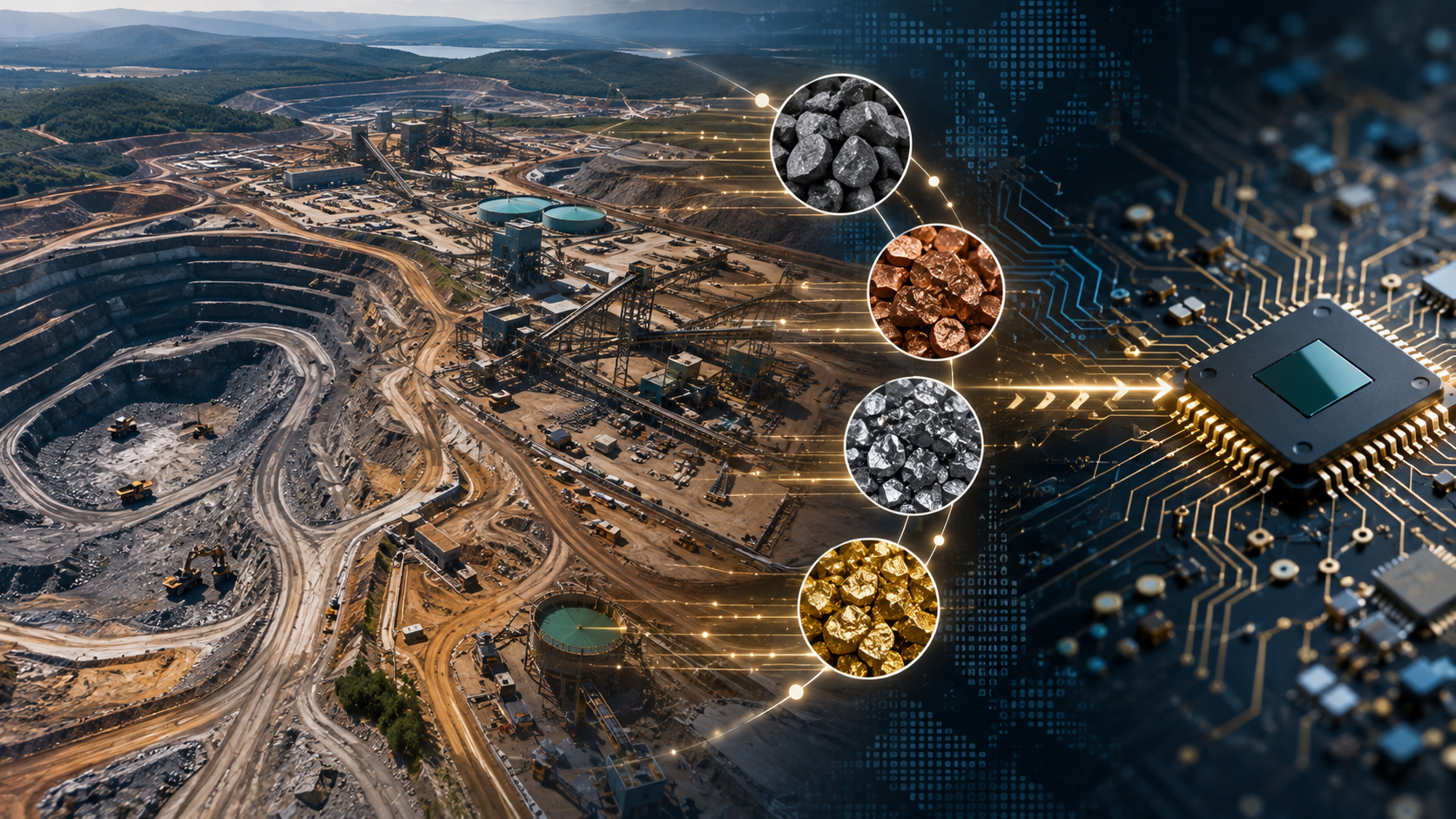
The global antimony market faces unprecedented pressure as China’s recent export ban threatens to push prices to record highs. The critical mineral, essential for semiconductors and military applications, has already seen a dramatic 250% price increase in 2024, with traders anticipating further surges beyond $40,000 per metric ton.

China’s December announcement banning antimony exports to the United States marks a significant shift in the critical minerals landscape. As the world’s dominant producer, accounting for nearly 50% of global supplies estimated at 83,000 tons annually, China’s move has created immediate market disruption and supply uncertainty.

European traders report transactions reaching $40,000 per metric ton in Rotterdam, with non-Chinese sellers positioned to capitalize on the supply squeeze. This price surge reflects both immediate market reactions and deeper concerns about long-term supply chain resilience.

The impact of China’s export restrictions extends beyond immediate price effects, signaling a broader strategic shift in global mineral markets. Industry experts suggest this move aligns with China’s long-term strategy to consolidate control over critical mineral production and processing. This development has significant implications for global technology and defense sectors, where antimony plays a crucial role in semiconductor manufacturing and military applications.

The U.S. faces particular challenges in responding to the ban. While efforts to diversify supply chains away from China were already underway, with increased sourcing from Southeast Asia, filling the immediate supply gap presents significant challenges. Industry experts, including Ellie Saklatvala from Argus, question the feasibility of finding adequate alternative sources in the near term.

The situation has sparked urgent discussions about supply chain resilience and national security implications. U.S. policymakers and industry leaders are accelerating efforts to develop domestic production capabilities and secure alternative supply sources. However, establishing new supply chains and processing facilities requires significant time and investment, leaving the market vulnerable to short-term price volatility.

China’s export restrictions, which also include gallium and germanium, though these have less immediate impact due to previously reduced U.S. purchasing, signal a potentially broader strategy of using critical minerals as leverage in international trade relations. Market analysts are closely monitoring other critical minerals, with some suggesting bismuth and manganese could be targets for future export controls.

The broader strategy suggests China’s intent to consolidate mineral production internally, raising concerns about potential future restrictions on other critical minerals. As Theo D. Ruas of Indium Corporation notes, “Being self-sufficient must be a short term goal for the U.S. government.” This emphasis on self-sufficiency reflects growing recognition of the vulnerabilities inherent in concentrated supply chains for critical minerals.

Looking ahead, market participants expect continued price volatility as supply chains adjust to the new reality. The combination of actual supply constraints and market psychology suggests sustained upward pressure on prices throughout 2025, with potential ripple effects across technology and defense supply chains globally.