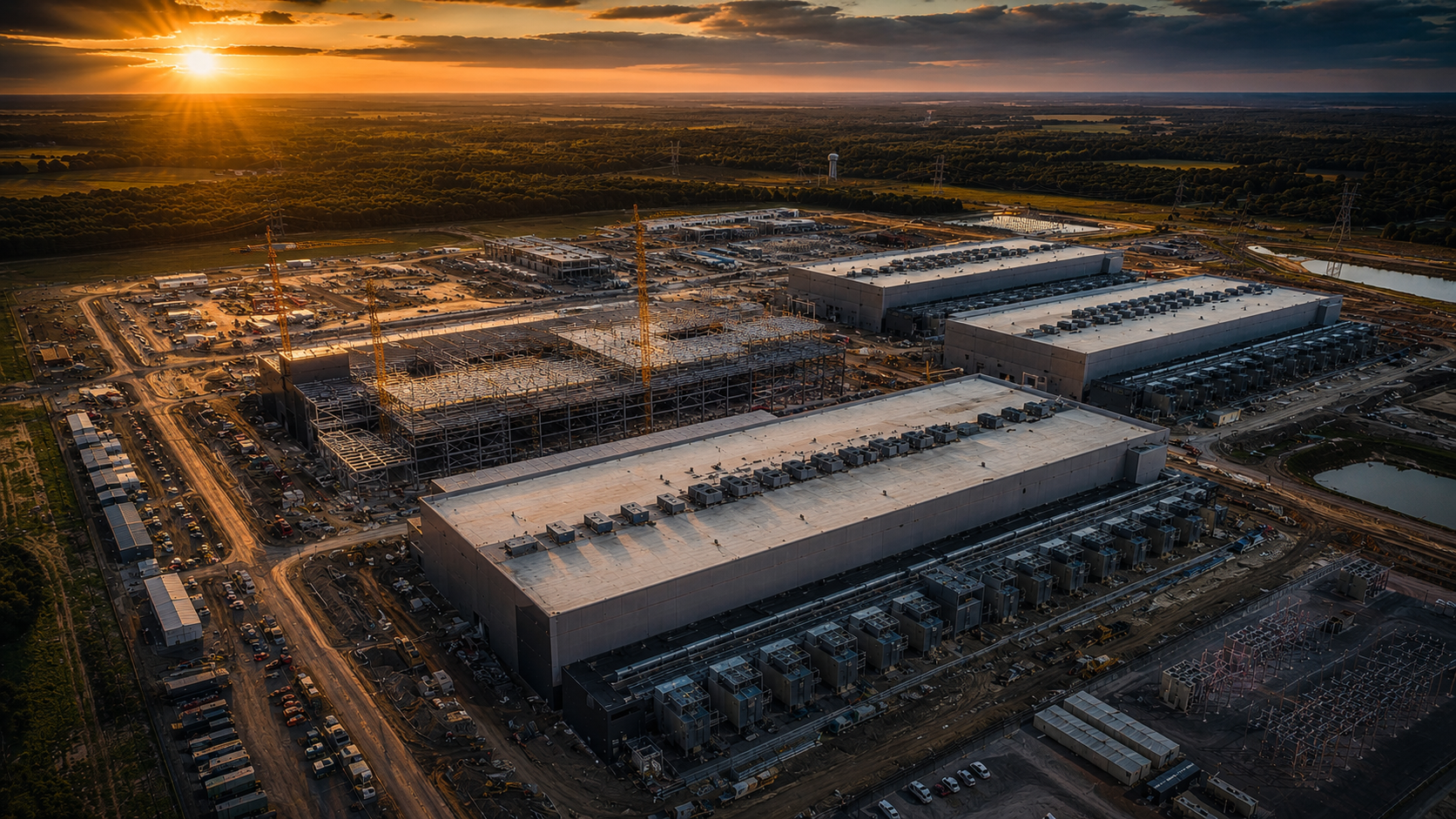
Data center construction and AI infrastructure spending in the United States are on pace to hit approximately $700 billion in 2026, an 81% increase over 2025, making this the largest single-category construction boom in the country. Data center construction starts totaled just $14.9 billion in 2023. By 2025, that figure had exploded to $77.7 billion, a 190% year-over-year increase. To put the scale of 2026 spending in perspective, the entire US Interstate Highway System cost roughly $530 billion in today’s dollars and took decades to build. The data center industry is now spending more than that in a single year.
How Fast Is Data Center Construction Growing in 2026?
The pace of growth in 2026 has genuinely surprised even industry veterans. Year-to-date spending through April reached $49.5 billion, compared to just $13.6 billion over the same period the prior year, nearly four times the pace. Q1 2026 alone saw $44.7 billion in data center investment, up 28% year over year. January 2026 brought a record $25.2 billion in new groundbreakings in a single month. A rolling $9.8 billion monthly moving average through April 2026, more than 300% above year-ago levels, suggests this is a sustained structural shift in how capital is being allocated across the American construction industry, not a short-term spike tied to one or two megaprojects.
The scale of individual commitments underscores the point. Hyperscale technology companies including Microsoft, Amazon, Google, and Meta have collectively committed over $500 billion to AI infrastructure this year. That figure builds directly on what we covered in Amazon’s recent earnings report, where AWS alone raised its own capital expenditure guidance to approximately $220 billion for the year. Vantage committed $25 billion to a single Texas campus, and Meta broke ground on a 900 megawatt facility in Wisconsin specifically to leverage nearby hydropower access, a facility that will also require exactly the kind of specialized bond financing we detailed in our recent coverage of BlackRock’s data center bond offering for Meta.
Which States Are Leading the Data Center Construction Boom?
The geography of this boom has shifted quickly. Virginia led all states with $15.3 billion in data center construction starts in 2025, followed closely by Louisiana at $15.0 billion, Mississippi at $13.9 billion, and Texas at $13.4 billion. States that once competed aggressively over auto manufacturing plants are now competing over server farms, offering tax incentives, expedited permitting, and utility rate structures designed specifically to attract hyperscale campuses.
Why Data Center Demand Shows No Sign of Slowing
Global data center occupancy has reached a record 97%, a figure that reflects genuine capacity scarcity rather than speculative overbuilding. Nearly 100 gigawatts of new data center capacity is anticipated to come online globally between 2026 and 2030, effectively doubling total global capacity in five years. Roughly $7 trillion in global capital expenditures on data center infrastructure is projected by 2030, with more than 40% of that spending expected to occur in the United States specifically.
Construction costs have climbed alongside demand. Standard data center builds now cost between $10 million and $12 million per megawatt of capacity, while AI-ready facilities designed for the density and cooling requirements of advanced chip clusters run $20 million or more per megawatt. That capital intensity is precisely the dynamic we explored in our coverage of Oracle’s debt-funded AI buildout, where the gap between committed spending and near-term returns became a genuine investor concern.
Small Cap Data Center Stocks: Where the Opportunity Lies in the Supply Chain
For investors tracking small and microcap companies, this buildout represents far more than a story about a handful of hyperscale technology giants. Roughly 60% of total data center investment flows into the technology and hardware required to run these facilities, but the remaining 40% is split between land and building construction and, critically, power generation and cooling infrastructure, which alone accounts for approximately 25% of total spend.
That power and cooling category is where the opportunity for smaller companies becomes most direct. Electrical contractors, specialized cooling system providers, power management component manufacturers, backup generation equipment makers, and grid infrastructure companies are all seeing sustained demand growth from a construction category that contractors themselves rank as the single strongest growth segment in the industry, with 65% of contractors surveyed expecting increased data center spending in 2026, the highest expectation across every category of construction tracked.
With 76 individual data center projects totaling more than $88 billion scheduled to begin construction in just the next six months, and roughly 2,788 additional facilities already announced or under construction across the country, the supply chain feeding this buildout is likely to remain one of the more durable growth stories in the American economy well into the next decade.