
Apollo Takes Emerald Holding Private at a 42% Premium to Build a B2B Events Empire — and the Timing Is No Accident

Apollo Global Management (NYSE: APO) announced Monday it has entered into separate definitive agreements to acquire Emerald Holding, Inc. (NYSE: EEX) and privately held Questex, LLC, with the explicit intention of combining the two businesses into a scaled North American B2B events and media platform. The Emerald deal is structured as an all-cash transaction at $5.03 per share, implying an estimated closing enterprise value of approximately $1.5 billion and representing a 42.1% premium to Emerald’s unaffected share price prior to deal speculation. Questex’s acquisition terms were not disclosed. Both transactions are expected to close in the second half of 2026, subject to customary regulatory approvals.

For Emerald shareholders — the vast majority of whom are represented by Onex, which controls more than 90% of the company’s outstanding shares and has already signed a support agreement — the premium is the headline. For investors trying to understand why Apollo, with over $1 trillion in assets under management, is paying up for a B2B trade show company, the more interesting question is the strategic logic.

Together, Emerald and Questex bring approximately 160 events across complementary industry verticals. Emerald has built one of the more recognized portfolios of category-leading trade exhibitions in the U.S., spanning industries from retail and licensing to safety and design. Questex operates a differentiated model built around a 365-day digital engagement layer that wraps its live events — providing year-round community access rather than the once-a-year interaction that defines most traditional trade show businesses. The combination is designed to produce a platform that generates recurring revenue and customer engagement well beyond the event floor.

The timing of this deal reflects something broader happening in the live events and B2B media space. The thesis that in-person events would be permanently diminished by digital alternatives never fully materialized post-pandemic. Instead, what has emerged is a more nuanced reality: the proliferation of digital tools and AI-driven communication has, paradoxically, elevated the perceived value of high-trust, face-to-face business interactions — particularly in industries where relationships, deals, and partnerships are made in person. Apollo’s bet is essentially that the B2B events market is structurally undervalued relative to the role these gatherings play in driving commerce, and that a consolidated, well-capitalized platform with a year-round digital backbone is worth considerably more than the sum of its parts.

Emerald had been running a strategic review process since last year, so this outcome isn’t a surprise — but the buyer and the structure are notable. Apollo is not a passive financial sponsor looking for a quick exit. The firm’s track record in media and experiential assets suggests this is a longer-horizon platform build, with Questex serving as a strategic complement that brings both digital infrastructure and a different set of industry relationships to the table.

For small-cap investors, EEX was exactly the kind of company that tends to be overlooked in public markets — a cash-generative events business with strong customer retention and a dominant position in its niches, trading at a discount to intrinsic value. The 42% premium Apollo paid is a reminder of how wide that gap can be, and why platform-building strategies in fragmented B2B markets continue to attract private equity capital.

Goldman Sachs advised Emerald. RBC Capital Markets, RAN Advisory, and PJT Partners advised Apollo.
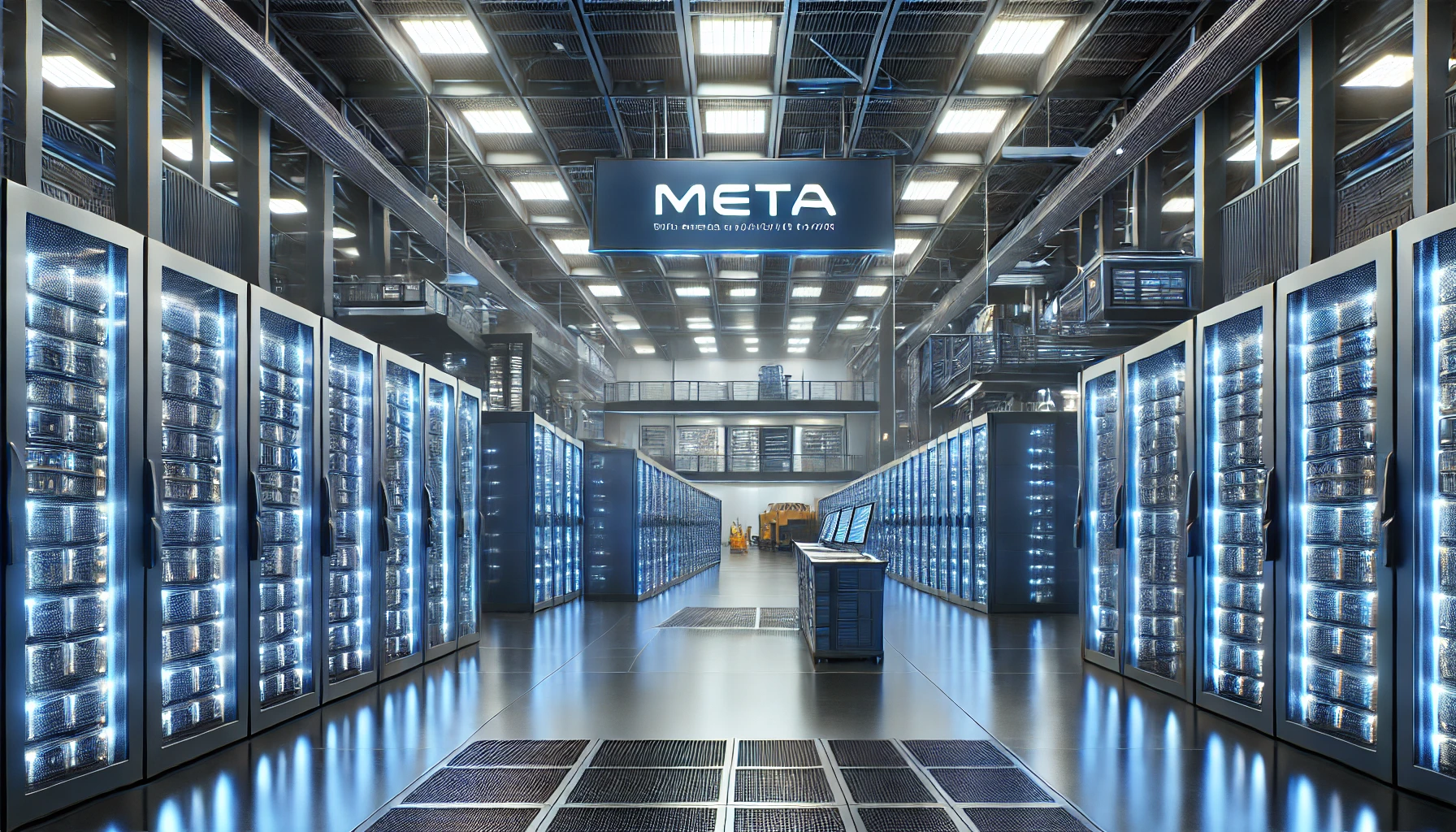
Meta Secures Apollo-Led $35 Billion for Massive AI Data Center Expansion

Key Points:
– Apollo Global Management in talks to lead $35 billion financing package for Meta’s US data centers
– Funding will support Meta’s planned $65 billion AI investment strategy announced by Zuckerberg
– Deal represents growing private credit market for AI infrastructure as tech giants race to build capacity

Meta Platforms is pursuing a groundbreaking $35 billion financing package led by Apollo Global Management to accelerate the development of artificial intelligence data centers across the United States, according to sources familiar with the negotiations.

The Facebook parent company is engaging with the alternative asset manager to secure this substantial funding as part of its previously announced $65 billion investment in AI infrastructure planned for 2025. While discussions remain in early stages with no guarantee of completion, the deal represents one of the largest private financing arrangements for technology infrastructure to date.

“The race to build AI infrastructure is creating unprecedented investment opportunities,” said a market analyst who requested anonymity due to the sensitive nature of the ongoing negotiations. “Tech giants are competing for computing power, and Meta is positioning itself to avoid falling behind competitors like Microsoft.”

Meta CEO Mark Zuckerberg outlined the company’s aggressive AI strategy last month, emphasizing plans to construct massive new data centers and expand AI-focused teams. A key component of this vision includes bringing approximately one gigawatt of computing power online in 2025 – enough electricity to power roughly 750,000 homes.

The company has already announced a $10 billion data center in Louisiana and has been actively purchasing advanced computer chips to power its growing suite of AI products and services. This financing arrangement would provide Meta with the capital flexibility to accelerate these initiatives without compromising its balance sheet strength.

For Apollo, the deal aligns with its recent strategy of providing large-scale financing to investment-grade corporations while typically retaining a portion of the funding and syndicating the remainder to other investors. The firm has been expanding its capacity to write substantial checks as it pushes deeper into what it considers the next frontier of private credit markets.

The AI infrastructure boom is creating enormous demand for capital across the technology sector. Industry experts estimate hundreds of billions of dollars will be required to build the necessary data centers, power facilities, and networking infrastructure to support the computing demands of advanced AI systems.

Microsoft, one of Meta’s primary competitors in the AI space, recently announced plans to spend $80 billion on data centers in the current fiscal year. CEO Satya Nadella emphasized that sustaining this level of investment is essential to meet “exponentially more demand” for AI services.

Bankers and investors have been eager to participate in AI-related financing deals after witnessing stock markets heavily reward companies central to the AI ecosystem throughout the past year. Private credit providers like Apollo are increasingly stepping in to fill funding gaps as traditional banks face regulatory constraints on large-scale lending.

Neither Meta nor Apollo provided official comments regarding the potential financing arrangement, maintaining standard practice for deals at this preliminary stage. However, industry observers note that securing this funding would represent a significant strategic advantage for Meta as it competes for AI dominance against tech rivals including Microsoft, Google, and Amazon.