Aurania Resources (AUIAF) – Drilling Completed at Thor’s Valley; Assays Expected in November


Wednesday, October 14, 2026

Mark Reichman, Managing Director, Equity Research Analyst, Natural Resources, Noble Capital Markets, Inc.

Refer to the full report for the price target, fundamental analysis, and rating.

2026 drilling program completed. Aurania completed eight diamond drill holes totaling 780.7 meters at its Thor’s Valley gold-silver project in Iceland, compared with six holes originally planned. The program included six holes twinning historical drilling, one drilled in the same direction as a historical hole but at a different inclination, and a step-out hole 50 meters northwest of the historic area. The program was intended to confirm historical results and assess the continuity and extent of mineralization. Assay results are expected in November 2026.

Core recovery improves geological confidence. Aurania achieved nearly 100% core recovery in most holes, compared with approximately 50% or less historically. Using HQ3 diamond drilling, the company recovered fragmented, clay rich vein material frequently lost during earlier programs. More representative samples should improve the assessment of historical gold grades and mineralized widths.


Get the Full Report

Equity Research is available at no cost to Registered users of Channelchek. Not a Member? Click ‘Join’ to join the Channelchek Community. There is no cost to register, and we never collect credit card information.

This Company Sponsored Research is provided by Noble Capital Markets, Inc., a FINRA and S.E.C. registered broker-dealer (B/D).

*Analyst certification and important disclosures included in the full report. NOTE: investment decisions should not be based upon the content of this research summary. Proper due diligence is required before making any investment decision. 

Critical Minerals Race Fuels Mining Deals as Companies Move to Secure Copper and Rare Earth Supplies

The global race to secure critical minerals is driving renewed merger and acquisition activity across the mining industry, as companies seek greater control over copper, rare earth elements, and other strategically important resources. Growing demand from electrification, artificial intelligence infrastructure, and defense manufacturing is encouraging producers to pursue acquisitions, strategic partnerships, and long-term supply agreements.

For small-cap and microcap mining companies, these developments could create opportunities to attract investment, advance exploration projects, and establish relationships with larger industry participants.

Recent transactions involving copper exploration assets and rare earth supply agreements highlight the increasing importance of securing access to future mineral production.

Copper remains central to global electrification, with applications spanning electric vehicles, renewable energy systems, power transmission networks, and data centers.

As electricity demand increases, mining companies are looking to expand their resource portfolios. However, developing new copper mines can require substantial investment and years of exploration, permitting, and construction.

Acquiring existing exploration assets or partnering with junior miners can offer established producers an alternative route to securing future supplies.

Kodiak Copper (KDKCF) provides an example of activity within the junior copper sector. The company is advancing its MPD copper-gold project in British Columbia, where its 2026 exploration program includes drilling intended to expand existing mineral resources and evaluate additional targets.

Kodiak has also pursued a proposed transaction involving its Mohave copper project in Arizona and assets contributed by Teck Resources, illustrating how junior miners can participate in broader asset consolidation strategies.

Another company operating in the sector is Power Metallic Mines (PNPNF), which is advancing polymetallic exploration projects in Quebec with exposure to copper and other metals important to industrial supply chains.

Beyond copper, rare earth elements have become increasingly important because of their use in electric motors, wind turbines, and advanced defense technologies.

Recent activity involving Arafura Rare Earths and commodity trader Traxys underscores the importance of long-term offtake agreements in securing future supplies.

These arrangements can provide mining developers with commercial visibility while helping industrial customers reduce exposure to concentrated global supply chains.

The broader critical minerals landscape also includes materials used in batteries and energy storage.

First Phosphate (PHOS) is focused on phosphate resources in Quebec, a material relevant to lithium iron phosphate battery chemistry. Meanwhile, Century Lithium (CYDVF) is developing its Angel Island lithium project in Nevada, positioning it within the North American battery materials supply chain.

Although these companies operate in different commodity markets, their projects illustrate the range of resources attracting strategic interest as governments and manufacturers prioritize domestic and diversified supply networks.

For junior mining investors, increasing acquisition activity could provide additional opportunities for companies with attractive deposits, favorable jurisdictions, and credible development plans.

However, stronger demand for critical minerals does not automatically translate into profitable projects.

Investors should evaluate resource quality, project economics, financing requirements, permitting risks, and potential shareholder dilution.

Strategic equity investments, joint ventures, government funding commitments, and binding offtake agreements may offer important indications of commercial interest.

As competition for critical minerals intensifies, securing reliable access to future production is becoming an increasingly important priority.

For small-cap mining companies, this environment could support additional partnerships and consolidation activity, making critical minerals a sector worth watching through the remainder of 2026 and beyond.

Big Pharma’s Patent Cliff Could Spark a New Wave of Small-Cap Biotech Acquisitions

Major pharmaceutical companies are approaching a significant patent cliff that could accelerate mergers and acquisitions across the biotechnology sector. With an estimated $300 billion to $400 billion in pharmaceutical revenue facing patent-related pressure beginning in 2028, large drugmakers are looking for ways to replenish their pipelines and offset potential losses from expiring blockbuster drug patents.

For small-cap biotechnology companies, this shift could create new opportunities through acquisitions, licensing agreements, and strategic partnerships. Companies developing innovative treatments in oncology, gene therapy, and immunology may benefit from increased industry interest as major pharmaceutical manufacturers search for their next generation of revenue-producing therapies.

What Is the Big Pharma Patent Cliff?

The pharmaceutical patent cliff refers to the expiration of patent protection or market exclusivity on major branded medications. Once these protections expire, generic drugs and biosimilars can enter the market, potentially reducing sales of previously protected products.

For pharmaceutical companies that rely heavily on blockbuster medications, the resulting revenue pressure can be substantial. Replacing that revenue often requires years of research, clinical development, and regulatory approvals.

As a result, major drugmakers may increasingly look beyond their internal research programs to acquire or partner with smaller biotechnology companies developing promising treatments.

Why Patent Expirations Could Drive Biotech Mergers and Acquisitions

Acquiring smaller biotechnology companies can provide large pharmaceutical manufacturers with access to innovative drug candidates, specialized technologies, and established clinical development programs.

Rather than developing every new treatment internally, pharmaceutical companies can pursue acquisitions, licensing agreements, or strategic partnerships to expand their pipelines.

Oncology, immunology, rare diseases, and other specialized therapeutic areas remain important areas of strategic interest.

For small-cap biotech companies, these relationships can provide access to capital and development resources. However, the potential for acquisition interest depends on factors such as clinical results, intellectual property protection, regulatory progress, and the strategic priorities of prospective partners.

Small-Cap Biotech Companies Advancing New Treatments

Several emerging biotechnology companies are developing treatments in therapeutic areas relevant to the pharmaceutical industry’s long-term growth strategies.

Cardiff Oncology (CRDF): Advancing Onvansertib for Colorectal Cancer

Cardiff Oncology (NASDAQ: CRDF) is developing onvansertib, a PLK1 inhibitor being studied in combination with standard therapies for metastatic colorectal cancer.

The company has reported encouraging Phase 2 clinical results and outlined plans for a registrational trial, subject to additional financing.

Cardiff Oncology’s development program illustrates the type of clinical-stage innovation occurring within the small-cap biotechnology sector, particularly in oncology, where companies continue to investigate new approaches to treating difficult cancers.

Ocugen (OCGN): Gene Therapy and Strategic Licensing Opportunities

Ocugen (NASDAQ: OCGN) is developing gene therapies targeting inherited retinal diseases.

The company has pursued regional licensing opportunities as part of its broader development strategy, demonstrating how smaller biotechnology firms can seek additional resources while retaining certain commercial rights.

Licensing agreements can provide an alternative to outright acquisitions, allowing pharmaceutical partners to access emerging technologies without assuming the full cost of developing or purchasing a company.

Eledon Pharmaceuticals (ELDN): Immunology and Kidney Transplant Research

Eledon Pharmaceuticals (NASDAQ: ELDN) is advancing treatments involving immune modulation, including tegoprubart, an investigational therapy being studied in kidney transplantation.

Its development program reflects ongoing innovation in immunology and transplantation, therapeutic areas where unmet medical needs continue to drive research.

Cardiff Oncology, Ocugen, and Eledon represent different approaches to drug development. Their inclusion illustrates the diversity of clinical-stage innovation within the small-cap biotechnology sector and does not imply that acquisition discussions involving these companies are underway.

What Should Small-Cap Biotech Investors Watch?

Although the pharmaceutical patent cliff may encourage additional dealmaking, acquisition potential alone should not determine how investors evaluate biotechnology companies.

Clinical progress remains a critical consideration, particularly for companies that have not yet generated meaningful commercial revenue.

Investors following the sector should pay attention to several developments:

  • Clinical trial results: Positive data can strengthen a company’s development outlook, while disappointing results can create significant setbacks.
  • Regulatory milestones: Progress toward pivotal trials and potential approvals can influence a company’s prospects.
  • Cash reserves and financing: Many clinical-stage biotechnology companies depend on external capital to fund research and development.
  • Intellectual property: Patent protection and other exclusivity rights can influence the commercial value of emerging therapies.
  • Licensing and partnership announcements: Strategic agreements may provide financing, development support, or commercial opportunities.

Investors should also distinguish between acquisitions and licensing arrangements. Pharmaceutical companies may choose partnerships that provide access to promising treatments without taking on the full financial and operational responsibilities of an acquisition.

Could the Patent Cliff Accelerate Biotech M&A Activity?

Following a slowdown in biotechnology dealmaking over the summer, industry observers anticipate renewed acquisition interest as pharmaceutical companies prepare for upcoming patent expirations.

For the small-cap biotechnology sector, increased dealmaking could have implications beyond individual takeover transactions.

Strategic acquisitions and partnerships may establish valuation benchmarks for emerging therapeutic platforms, create financing opportunities, and influence investor sentiment across the industry.

However, these potential benefits remain dependent on clinical success, market conditions, and the willingness of larger pharmaceutical companies to pursue transactions.

As major drugmakers prepare for substantial patent-related revenue pressure, smaller biotechnology companies developing innovative treatments could play an increasingly important role in the industry’s long-term growth strategy.

Release – NeuroSense Secures Nasdaq Hearing Date as PrimeC Approaches Key Regulatory and Funding Milestones

Research News and Market Data on NRSN

Shares continue to trade on Nasdaq pending the Panel’s decision; minimum bid price compliance already regained

Near-term catalysts include a New Drug Submission to Health Canada targeted for December 2026 and a decision on non-dilutive funding for the Phase 3 PARAGON trial expected in Q1 2027

CAMBRIDGE, Mass., Oct. 13, 2026 /PRNewswire/ — NeuroSense Therapeutics Ltd. (NASDAQ: NRSN) (“NeuroSense” or the “Company”), a late-stage clinical biotechnology company focused on developing disease-modifying treatments for neurodegenerative diseases, today announced that its hearing before the Nasdaq Hearings Panel (the “Panel”) is scheduled for November 10, 2026, following its timely appeal of the October 1, 2026 Staff Delisting Determination.

The appeal stays the suspension and delisting action, and NeuroSense’s ordinary shares and warrants are expected to continue trading on The Nasdaq Capital Market under “NRSN” and “NRSNW,” respectively, pending the Panel’s decision.

Management Commentary

“With bid-price compliance regained, we look forward to presenting the Panel with our plan to achieve full compliance, while advancing PrimeC toward several important near-term milestones,” said Alon Ben-Noon, Chief Executive Officer of NeuroSense.

“PrimeC’s Phase 2b results, published in JAMA Neurology, and FDA clearance to initiate PARAGON provide a strong foundation for the next stage of development. Over the coming months, we expect to file our New Drug Submission with Health Canada and receive a decision on non-dilutive grant funding that, if awarded, could support Phase 3 development while reducing our reliance on equity financing. We are also pursuing strategic business development opportunities.”

Plan to Regain Nasdaq Compliance

NeuroSense has regained compliance with Nasdaq’s $1.00 minimum bid price requirement. The only remaining deficiency identified in the October 1 Staff Determination is the $35 million minimum market value of listed securities requirement under Rule 5550(b)(2).

At the hearing, the Company intends to present its plan to meet that requirement or the alternative $2.5 million stockholders’ equity standard under Rule 5550(b)(1), including proposed measures to strengthen its balance sheet and stockholders’ equity, together with implementation timelines.

NeuroSense intends to request an exception period to execute its plan. The Panel may grant an exception of up to 180 days from the October 1 Staff Determination, but there is no assurance that an exception will be granted or that the Company will regain and maintain compliance.

Upcoming PrimeC Milestones

  • Health Canada New Drug Submission for PrimeC in ALS: targeted for December 2026.
  • Decision on non-dilutive grant funding for Phase 3 PARAGON: expected in Q1 2027, subject to completion of the ongoing grant review.

About NeuroSense

NeuroSense Therapeutics is a late-clinical stage biotechnology company developing novel treatments for severe neurodegenerative diseases, including amyotrophic lateral sclerosis (ALS) and Alzheimer’s disease. The Company’s lead product candidate, PrimeC, is a novel oral therapy designed to target multiple key biological pathways underlying disease progression, including neuroinflammation, oxidative stress and dysregulated iron metabolism.

NeuroSense has recently completed analysis of long-term follow-up data from its Phase 2b PARADIGM study in ALS, with results published in JAMA Neurology showing slower functional decline in participants who received PrimeC from study start than in those who initially received placebo. The Company also reported changes across multiple biomarkers associated with ALS, including microRNAs, consistent with PrimeC’s multi-target mechanism of action.

NeuroSense has received clearance from the U.S. Food and Drug Administration (FDA) to initiate its pivotal Phase 3 clinical trial (PARAGON) in ALS, to be conducted primarily in the United States. The Company is working with FDA on an optimized design for the study.

For additional information, we invite you to visit our website and follow us on LinkedIn, YouTube and X. Information that may be important to investors may be routinely posted on our website and these social media channels.

About PrimeC

PrimeC, NeuroSense’s lead drug candidate, is a novel extended-release oral formulation composed of a unique fixed-dose combination of two FDA-approved drugs: ciprofloxacin and celecoxib. PrimeC is designed to target several key mechanisms that contribute to neuron degeneration, inflammation, iron accumulation and impaired ribonucleic acid (“RNA”) regulation, with the potential to inhibit disease progression.

About ALS

Amyotrophic lateral sclerosis (“ALS”) is an incurable neurodegenerative disease that causes progressive paralysis and, typically, death within 3 years of symptoms onset. Every year, more than 5,000 people are diagnosed with ALS in the U.S. alone, with an annual disease burden of $1 billion. The number of people living with ALS is expected to grow by 24% by 2040 in the U.S. and EU.

Forward-Looking Statements

This press release contains “forward-looking statements” that are subject to substantial risks and uncertainties. All statements, other than statements of historical fact, contained in this press release are forward-looking statements. Forward-looking statements contained in this press release may be identified by the use of words such as “anticipate,” “believe,” “contemplate,” “could,” “estimate,” “expect,” “intend,” “seek,” “may,” “might,” “plan,” “potential,” “predict,” “project,” “target,” “aim,” “should,” “will,” “would,” or the negative of these words or other similar expressions, although not all forward-looking statements contain these words. Forward-looking statements are based on NeuroSense Therapeutics’ current expectations and are subject to inherent uncertainties, risks and assumptions that are difficult to predict and include statements regarding the Nasdaq hearing process, the continued listing and trading of the Company’s securities pending the Panel’s decision, the Company’s request for an exception period, the Company’s plan to regain compliance with Nasdaq’s continued listing requirements, including through compliance with the minimum market value of listed securities requirement or the alternative stockholders’ equity standard, the Company’s proposed measures to strengthen its balance sheet and stockholders’ equity and the timing and effectiveness of such measures, the anticipated milestones described in this press release and their timing, including the anticipated timing of the Company’s New Drug Submission to Health Canada and a decision regarding potential non-dilutive grant funding for the Phase 3 PARAGON trial, the potential receipt, timing and amount of such funding and its potential ability to support Phase 3 development and reduce the Company’s reliance on equity financing, the Company’s pursuit of strategic business development opportunities and the potential benefits thereof, and the potential of PrimeC. Further, certain forward-looking statements, including statements regarding the potential regulatory pathways for PrimeC, are based on assumptions as to future events that may not prove to be accurate. The future events and trends may not occur and actual results could differ materially and adversely from those anticipated or implied in the forward-looking statements. These risks include the potential for delay in the timing of the Phase 3 clinical trial (PARAGON) in ALS; potential delay in the Canadian New Drug Submission; the risk that the Company will not be able to obtain financing on acceptable terms, or at all; the risk that the Company will not regain and maintain compliance with the Nasdaq listing requirements; the risk that the Panel will not grant the Company’s request for an exception period; the risk that non-dilutive grant funding for the PARAGON trial will not be awarded or will be delayed; the risk that the strategic opportunities described will not materialize or result in the anticipated benefits to the Company; uncertainty regarding outcomes and the timing of current and future clinical trials; the risk that PrimeC will not advance towards later-stage development; timing for reporting data, including from the study of PrimeC in Alzheimer’s disease; that the study will not be successful; and other risks and uncertainties set forth in NeuroSense’s filings with the Securities and Exchange Commission (SEC). You should not rely on these statements as representing our views in the future. More information about the risks and uncertainties affecting NeuroSense is contained under the heading “Risk Factors” in the Annual Report on Form 20-F filed with the Securities and Exchange Commission on March 31, 2026 and NeuroSense’s subsequent filings with the SEC. Forward-looking statements contained in this announcement are made as of this date, and NeuroSense undertakes no duty to update such information except as required under applicable law.

SOURCE NeuroSense

For further information: For further information: [email protected], Tel: +972 (0)9 799 6183; Investor Relations: Or Eisenberg, [email protected], Tel: +1315517554134

Release – Phase II Clinical Trial of NV-387 Oral Gummies as Treatment of Ebola Progressing Well, Says NanoViricides

Phase II Clinical Trial of NV-387 Oral Gummies as Treatment of Ebola Progressing Well, Says NanoViricides

Research News and Market Data on NNVC

Tuesday, 13 October 2026 08:45 AM

SHELTON, CT / ACCESS Newswire / October 13, 2026 / NanoViricides, Inc. (NYSE American:NNVC) (the “Company”), a clinical stage leader developing antiviral drugs that viruses cannot escape, said today that its Phase IIA Ebola Treatment Clinical Trial of NV-387 Oral Gummies is progressing well.

The Phase IIA part of the clinical trial is designed to evaluate different dosage regimens of the oral gummies for the treatment of different severity levels of the Ebola Bundibugyo virus infection and disease in the current Ebola Outbreak in the Democratic Republic of Congo (“DRC”).

The trial is enrolling and is expected to continue enrolling persons exhibiting different disease severity levels, in the “Dry Stage” and “Wet Stage”. The clinical symptoms of the Ebola BDBV disease are complex, and possibly different from prior Ebola virus outbreaks, as explained in the footnote i.

Patients are known to come to the Ebola Treatment Centers only when they feel severely ill. Therefore, we are anticipating mostly “Wet Stage” patients, with severe vomiting and diarrhea, to be the primarily enrolled population. Some patients may not be able to take the oral gummies due to vomiting bouts and may be withdrawn; such subjects would not be considered as evaluable if enrolled.

The Phase IIA part of the trial is designed to examine the safety and tolerability of NV-387 oral gummies dosing in the Ebola patients, and the number of days that the drug is tolerated within the context of the disease, starting at 6 days of dosing, and extending by 3 day increments to a maximum of 12 days of treatment. The NV-387 treatment will be stopped when the patient’s viral load has become undetectable based on qRT-PCR. Efficacy is not expected to be evaluated in a scientific, statistically significant, manner in such an adaptive treatment scenario. Therefore, and with due ethical consideration, a parallel group of no NV-387 treatment is excluded in this exploratory Phase IIA part.

Nevertheless, an efficacy signal can be seen even in this small clinical trial with up to 20 subjects, if NV-387 is highly effective. This can happen if the data of 20 subjects treated with NV-387 is found to be sufficient to statistically discriminate the NV-387 treated group from the general observations of treatment of Ebola patients in the Ebola Treatment Centers in the same area. Ebola Patients in this area have generally experienced an infection-to-fatality rate (IFR) of 67% to 75%. The IFR corrects the data for the fact that the infected person dies on an average about three weeks later, and therefore is a more accurate representation of reality than the crude Case Fatality Rate (CFR) ii.

The Company will be able to make an announcement regarding (i) whether NV-387 is found to be sufficiently safe and well tolerated to continue into Phase IIB, and, (ii) if NV-387 group is well discriminated from the general expectation of 67-75% IFR, then whether NV-387 oral gummies treatment demonstrated signs of efficacy against the Ebola Bundibugyo virus; after the Phase IIA clinical trial is completed and a report is prepared by the Principal Investigator’s team for formal communication.

After an appropriate NV-387 Oral Gummies dosage regimen is identified, it will be used in an expanded, randomized, controlled clinical trial, Part IIB, to evaluate effectiveness of the Oral treatment drug NV-387 Oral Gummies.

NV-387 is designed to attack the virus and reduce the viral load in the body.

Reducing viral load correlates with improvement in physiological function. Reduction in viral load to undetected level means complete recovery from the viral disease. However, the bodily functions, may take longer time even after reaching undetectable viral load, as the virus-attacked organs rejuvenate. It is also possible that some permanent damage, e.g. kidney damage, may persist even after virological recovery.

The current BDBV outbreak has continued to expand, with 9,000 confirmed cases and 4,339 deaths as of October 10, 2026, according to the WHO iii, with all but a few cases in DRC. An Ebola patient was able to travel from DRC via Uganda to Kenya, and died at home there recently, despite travel restrictions. Fortunately after a week, no secondary infections from this patient have been detected (yet). This emphasizes the potential risk to the world, although the possibility of an Ebola outbreak in the USA or globally remains negligible, because of various global travel restrictions.

Within DRC, while the initial outbreak sites including Ituri have possibly stabilized, the outbreak has started gaining strength in Nord Kivu province with 40% of national confirmed cases now coming from Nord Kivu, which does not have sufficient ebola treatment centers capacity, with only 29 beds in treatment center, and only about 20 “transit facility” beds for holding suspected cases until diagnosis results come in, according to Doctors Without Borders iv. Recently, thousands of refugees fled from a refugee camp where more than 30 people had died from Ebola BDBV, to escape from security forces that were investigating weapons stored in the camp. Their fleeing has increased the risk of spread v. Additionally, 6 new Ebola cases were recorded in an Eastern part of DRC controlled by rebel groups, further complicating efforts to control the outbreak vi.

The USA has been, laudably, and proudly, the largest provider of humanitarian and relief assistance in this outbreak, with almost $1.4 Billion in contributions. The USA has already provided $887 Million, and has pledged another $500 Million, of which $267 million has been released, according to the US Department of State vii.

There is no current threat of Ebola in the USA. The US Government is active in ensuring that suspected or confirmed ebolavirus cases do not enter the general population in the USA. To this end, travel from DRC has been restricted, with pre-travel quarantine requirements imposed, and suspect travelers are directed to screening at specific airports and may be further quarantined.

Travelers going to and from Central Africa need to constantly check travel restrictions as well as travel limitations in light of these changing outbreak conditions. It is apparent that travel restrictions have been able to control the outbreak periphery to DRC alone (with few early cases in Uganda) minimizing risk to the rest of the world.

There is no approved Treatment or Vaccine for the new variant of the Bundibugyo Ebolavirus (BDBV) that is causing the current rapidly expanding outbreak of the Ebolavirus Disease (EVD) in DRC. The rare Bundibugyo strain of Ebola virus causing the current outbreak appears to be its new variant, likely freshly introduced from some animal source viii, such as fruit bats.

NV-387 is a broad-spectrum antiviral that mimics the host-side features that the virus requires, and is likely to be effective against Ebola viruses because they use the same host-side feature mimicked by NV-387.

NV-387 Oral Gummies is a drug product readily delivered orally. It does not even require swallowing effort or water, because it dissolves in the mouth by itself, simplifying delivery for even sick individuals with swallowing difficulties.

This oral delivery is an important feature that puts NV-387, a broad-spectrum antiviral, as being superior to the other approaches.

“Only safe and effective broad-spectrum antiviral drugs like NV-387 that can effectively tackle most viral infections will enable the world to combat viruses and defend the global population in the war against known and unknown nanoscopic enemies that are viruses,” commented Dr. Diwan, adding, “Today, NV-387 is the only drug in clinical development with such broad-spectrum potential that promises to combat diverse epidemics like Mpox and Ebola, and even Measles, to the best of our knowledge.”

The outbreak which was declared a Public Health Emergency of International Concern (“PHEIC”) by the WHO on May 17, 2026, continues to rapidly expand, outpacing containment efforts. The outbreak arose in a high traffic region bordering the Democratic Republic of Congo (DRC), with travel contacts to Uganda, and South Sudan and with 11 more nations in Africa at risk ix.

NV-387 is a broad-spectrum antiviral that mimics the host-side feature called heparan sulfate proteoglycan (HSPG) that over 90-95% of human pathogenic viruses require for infecting cells. No matter how much the virus changes in the field, it continues to use HSPG, and therefore it cannot escape the drug NV-387. In contrast, Remdesivir is a small molecule inhibitor of the viral RDRP enzyme needed for making copies of the viral genome, and the virus can possibly escape by small number of mutations.

All Ebola viruses utilize HSPG as the attachment receptor prior to gaining entry into the cell. Thereafter, followed by entry into the cell inside endosomes, the ebolavirus surface glycoprotein is substantially degraded, opening up its site for binding to its cognate receptor called NPC1, thereby entering into the cytoplasm where the next steps in its replication begin.

Thus there is a strong rationale that NV-387 could be highly effective against Ebola virus infections, not just Bundibugyo, but also the Sudan and other viruses for which there are no treatments.

All previous anti-Ebola efforts have been focused on vaccines and antibodies x. This has led to approval of therapies that are specific to the Ebolavirus Zaire strain only, albeit with limited effectiveness. This leaves out all other filoviruses of consequence: Sudan, Marburg, and the more rare Bundibugyo with no treatment or vaccine.

In contrast, if NV-387, as a broad-spectrum antiviral, is found to be effective against the Bundibugyo virus, it will likely be effective against all ebolaviruses and possibly all filoviruses; that would be a game changer for pandemic preparedness.

At present, BDBV has been consistently demonstrating high crude CFR of 48% and IFR of 67% in DRC. Therefore, BDBV is of great concern as a potential pandemic disease. However, it is believed that ebolaviruses do not transmit via respiratory droplets or aerosols and rather require extensive contact with bodily fluids of an infected person. In addition, within DRC and internationally, certain protective quarantine measures for travel from the outbreak areas have been implemented.

Therefore, currently there is no apparent threat of a global pandemic.

With ever-increasing global travel, local outbreaks such as ebola can quickly travel far and wide potentially causing global pandemics, as was the case with COVID-19, if not caught in time. It is not feasible to produce a new vaccine and a new set of antibody drugs to combat every possible virus. Even if vaccines and antibodies are produced, the virus would escape by generating variants, as the world has witnessed during the COVID-19 pandemic.

ABOUT NANOVIRICIDES

NanoViricides, Inc. (the “Company”) (www.nanoviricides.com) is a clinical stage company that is creating special purpose nanomaterials for antiviral therapy. The Company’s novel nanoviricide™ class of drug candidates and the nanoviricide™ technology are based on intellectual property, technology and proprietary know-how of TheraCour Pharma, Inc. The Company has a Memorandum of Understanding with TheraCour for the development of drugs based on these technologies for all antiviral infections. The MoU does not include cancer and similar diseases that may have viral origin but require different kinds of treatments.

The Company has obtained broad, exclusive, sub-licensable, field licenses to drugs developed in several licensed fields from TheraCour Pharma, Inc. The Company’s business model is based on licensing technology from TheraCour Pharma Inc. for specific application verticals of specific viruses, as established at its foundation in 2005.

Our lead drug candidate is NV-387, a broad-spectrum antiviral drug that we plan to develop as a treatment of RSV, COVID, Long COVID, Influenza, and other respiratory viral infections, as well as MPOX/Smallpox infections. Our other advanced drug candidate is NV-HHV-1 for the treatment of Shingles. The Company cannot project an exact date for filing an IND for any of its drugs because of dependence on a number of external collaborators and consultants. The Company is currently focused on advancing NV-387 into Phase II human clinical trials.

NV-CoV-2 (API NV-387) is our nanoviricide drug candidate for COVID-19 that does not encapsulate remdesivir. NV-CoV-2-R is our other drug candidate for COVID-19 that is made up of NV-387 with remdesivir encapsulated within its polymeric micelles. The Company believes that since remdesivir is already US FDA approved, our drug candidate encapsulating remdesivir is likely to be an approvable drug, if safety is comparable. Remdesivir is developed by Gilead. The Company has developed both of its own drug candidates NV-CoV-2 and NV-CoV-2-R independently.

The Company is also developing drugs against a number of viral diseases including oral and genital Herpes, viral diseases of the eye including EKC and herpes keratitis, H1N1 swine flu, H5N1 bird flu, seasonal Influenza, HIV, Hepatitis C, Rabies, Dengue fever, and Ebola virus, among others. NanoViricides’ platform technology and programs are based on the TheraCour® nanomedicine technology of TheraCour, which TheraCour licenses from AllExcel. NanoViricides holds a worldwide exclusive perpetual license to this technology for several drugs with specific targeting mechanisms in perpetuity for the treatment of the following human viral diseases: Human Immunodeficiency Virus (HIV/AIDS), Hepatitis B Virus (HBV), Hepatitis C Virus (HCV), Rabies, Herpes Simplex Virus (HSV-1 and HSV-2), Varicella-Zoster Virus (VZV), Influenza and Asian Bird Flu Virus, Dengue viruses, Japanese Encephalitis virus, West Nile Virus, Ebola/Marburg viruses, and certain Coronaviruses. The Company intends to obtain a license for RSV, Poxviruses, and/or Enteroviruses if the initial research is successful. As is customary, the Company must state the risk factor that the path to typical drug development of any pharmaceutical product is extremely lengthy and requires substantial capital. As with any drug development efforts by any company, there can be no assurance at this time that any of the Company’s pharmaceutical candidates would show sufficient effectiveness and safety for human clinical development. Further, there can be no assurance at this time that successful results against coronavirus in our lab will lead to successful clinical trials or a successful pharmaceutical product.

This press release contains forward-looking statements that reflect the Company’s current expectation regarding future events. Actual events could differ materially and substantially from those projected herein and depend on a number of factors. Certain statements in this release, and other written or oral statements made by NanoViricides, Inc. are “forward-looking statements” within the meaning of Section 27A of the Securities Act of 1933 and Section 21E of the Securities Exchange Act of 1934. You should not place undue reliance on forward-looking statements since they involve known and unknown risks, uncertainties and other factors which are, in some cases, beyond the Company’s control and which could, and likely will, materially affect actual results, levels of activity, performance or achievements. The Company assumes no obligation to publicly update or revise these forward-looking statements for any reason, or to update the reasons actual results could differ materially from those anticipated in these forward-looking statements, even if new information becomes available in the future. Important factors that could cause actual results to differ materially from the company’s expectations include, but are not limited to, those factors that are disclosed under the heading “Risk Factors” and elsewhere in documents filed by the company from time to time with the United States Securities and Exchange Commission and other regulatory authorities. Although it is not possible to predict or identify all such factors, they may include the following: demonstration and proof of principle in preclinical trials that a nanoviricide is safe and effective; successful development of our product candidates; our ability to seek and obtain regulatory approvals, including with respect to the indications we are seeking; the successful commercialization of our product candidates; and market acceptance of our products.

The phrases “safety”, “effectiveness” and equivalent phrases as used in this press release refer to research findings including clinical trials as the customary research usage and do not indicate evaluation of safety or effectiveness by the US FDA.

FDA refers to US Food and Drug Administration. IND application refers to “Investigational New Drug” application. cGMP refers to current Good Manufacturing Practices. CMC refers to “Chemistry, Manufacture, and Controls”. CHMP refers to the Committee for Medicinal Products for Human Use, which is the European Medicines Agency’s (EMA) committee responsible for human medicines. API stands for “Active Pharmaceutical Ingredient”. WHO is the World Health Organization. R&D refers to Research and Development.

Contact:
NanoViricides, Inc.
[email protected]

Public Relations Contact:
[email protected]

i Clinical Symptoms of Ebola BDBV

It is thought that it may take several days after contact with a patient’s bodily fluids for the infected person to develop initial symptoms. These symptoms involve fever, headache, muscle aches and pains, and fatigue, called the “Dry Stage” symptoms. They are similar to other prevalent diseases including malaria and typhoid fever. These symptoms may last from a few days to about a week. Thereafter, the disease progresses to the “Wet Stage”, which is characterized by explosive vomiting and severe diarrhea. Anyone who comes in contact with the bodily fluids including caretakers, family members, friends, and healthcare workers, can get infected.

In the Wet Stage, the viral load keeps increasing and multi-organ failure begins progressively, and later, all of a sudden, extensive failure occurs and the patient becomes critical. There is very little possibility that a critical stage patient can survive despite all possible clinical efforts.

Some patients can respond to aggressive treatment during the Wet Phase and enter a recovery phase. Even after the viral load becomes undetectable, and the patient is discharged, overall systemic recovery takes a long time as the bodily systems need to rejuvenate. Some permanent damage such as partial or total kidney failure can occur.

BDBV primarily and severely affects the liver function, kidney function, and the blood system function, in addition to the gastrointestinal system. Its effects on the coagulation system can lead to hemorrhages in some but not all patients.

ii Crude CFR is easy to calculate but IFR is a more accurate measure of probability of death.

The Crude CFR is calculated simply by dividing the confirmed deaths by the confirmed number of cases on the same reporting date. It ignores the fact that the deaths are actually occurring in patients that were confirmed infected several days earlier; i.e. the time lag of sickness is not accounted for in the crude CFR. If it is accounted for, the actual fatality rate per confirmed infection (Infected Fatality Rate or IFR) would be much higher than the crude CFR. For example, if one assumes an average time lag of 21 days (Aug 14 to Sept 5), then the IFR on September 5 would be (3,175/4,945 = ) 64%. Not all infections are reported or confirmed by lab tests; however, it is likely that most deaths are counted. This produces a large uncertainty in such CFR and IFR estimates. Another way to estimate IFR would be to simply take a ratio of confirmed deaths to that of confirmed deaths plus confirmed recoveries. This metric, probability of death, is more robust and insensitive to the lag times, except it ignores patients that are still in hospital. The p(death) based on this metric is (using Sept. 10 numbers,(3,398)/(3,398 +1,671) = 67% . That said, a number of cases as well as deaths remain unconfirmed or unreported because of the regional issues.

iii https://www.who.int/emergencies/alert-and-response . Retrieved October 13, 2026: 0205 am EDT.

iv https://www.doctorswithoutborders.org/latest/ebola-outbreak-spreading-wildfire-across-north-kivu October 2, 2026. The Ebola Treatment Centers (ETC) are specially designed, temporarily erected wards with extreme patient isolation and personal-protective-equipment (PPE) protocols, outside hospitals, where the Ebola confirmed cases are admitted and treated. A person with symptoms is first taken into an Ebola Transit Facility, with less isolation. A blood sample is taken and sent for testing. If the RT-PCR result is positive for Ebola virus, then the person is admitted into the nearby ETC.

v https://www.newsmax.com/world/globaltalk/ebola-united-nations-congo/2026/10/02/id/1271553/ .

vi https://www.reuters.com/business/healthcare-pharmaceuticals/rebel-held-eastern-congo-records-six-new-ebola-cases-2026-10-02/ .

vii https://www.state.gov/releases/office-of-the-spokesman/2026/09/united-states-pledges-additional-life-saving-health-assistance-in-response-to-ebola-outbreak/ . September 23, 2026.

viii https://virological.org/t/initial-genomes-from-may-2026-bundibugyo-virus-disease-outbreak-in-the-democratic-republic-of-the-congo-and-uganda/1032

ix https://www.forbes.com/sites/maryroeloffs/2026/05/25/african-health-officials-on-ebola-this-is-too-much-live-updates/

x Substantial work was also performed to develop small chemical potentially broad-spectrum agents. Remdesivir was the only small chemical that entered the PALM clinical trials ca. 2018-2019 but failed to show effectiveness. Small chemicals are readily escaped by viruses often with just single mutations.

SOURCE: NanoViricides
Release – Xcel Brands Announces Expansion of Mesa Mia by Jenny Martinez Into Consumer Food Products for Grocery Retail

Primary Logo

Research News and Market Data on XELB

October 13, 2026 at 8:00 AM EDT

PDF Version

NEW YORK, Oct. 13, 2026 (GLOBE NEWSWIRE) — Xcel Brands, Inc a media and consumer products company with expertise in livestream shopping and social commerce, today announced plans to expand Mesa Mia by Jenny Martinez into the consumer-packaged goods (CPG) food category, bringing the brand’s authentic Mexican culinary heritage to supermarkets and grocery retailers nationwide.

The expansion represents a natural evolution for Mesa Mia, which was created in partnership with Mexican-American chef, content creator and entrepreneur Jenny Martinez. Known for sharing the traditional recipes and cooking techniques passed down through her family from Jalisco, Mexico, Martinez has built a community of more than 5.3 million followers who turn to her for approachable and authentic Mexican cooking.

“My love of cooking started with my mom and the recipes she brought with her from Chapala, Mexico.” Said chef Jenny Martinez. “Those authentic flavors and ingredients have always been at the heart of my kitchen, and now I’m so excited to share them with families everywhere.”

The Hispanic food aisle represents an approximately $25 billion product category and is growing at twice the rate of current grocery product, the category remains largely dominated by legacy commodity brands and private-label offerings. Xcel Brands believes Mesa Mia has an opportunity to fill a significant void in the market by creating a national food brand rooted in authentic family recipes and led by a recognizable culinary personality with a deeply engaged audience.

“Jenny Martinez cooks for 5.3 million people every week using recipes that came directly from her family in Jalisco,” said Robert W. D’Loren, Chairman and Chief Executive Officer of Xcel Brands. “Despite the size and growth of the Hispanic food category, there is no national brand built around authentic heritage recipes with a trusted author behind them. We believe Mesa Mia can be that brand. Jenny brings authenticity, storytelling and a powerful connection with consumers that gives Mesa Mia the potential to stand apart in the grocery aisle.”

The planned expansion will bring the flavors and recipes at the heart of Mesa Mia into a broad portfolio of consumer food products designed for supermarket and grocery distribution. Initial product categories are expected to include salsas, cremas, queso, refrigerated and frozen meals, also sweet & savory desserts. Each product will draw inspiration from Martinez’s family recipes and culinary heritage, with the goal of making authentic Mexican flavors more accessible to consumers while maintaining the quality, authenticity and sense of tradition that define the Mesa Mia brand.

About Xcel Brands

Xcel Brands, Inc. (NASDAQ: XELB) is a media and consumer products company engaged in the design, licensing, marketing, live streaming, and social commerce sales of branded apparel, footwear, accessories, fine jewelry, home goods, pet products and other consumer products, and the acquisition of dynamic consumer lifestyle brands. Xcel was founded in 2011 with a vision to reimagine shopping, entertainment, and social media as social commerce. Xcel is an industry leader in developing influencer led brands and owns the Halston and C. Wonder brands, as well as the co-branded influencer led brands Tower Hill by Christie Brinkley, Trust. Respect. Love by Cesar Millan, GemmaMade by Gemma Stafford and OFF/DUTY by Coco Rocha brand and holds a long-term license agreement in Mesa Mia by Jenny Martinez. Xcel also owns and manages the Longaberger by Shannon Doherty brand through its controlling interest in Longaberger Licensing, LLC. Xcel is pioneering a modern consumer products sales strategy which includes the promotion and sale of products under its brands through interactive television, digital live-stream shopping, social commerce, brick-and-mortar retailers, and e-commerce channels to be everywhere its customers’ shop. The company’s previously owned and current brands have generated more than $5 billion in retail sales via livestreaming in interactive television and digital channels alone and has over 20,000 hours of content production time in live-stream and social commerce. The brand portfolio reaches more than 46 million social media followers with broadcast reaching 200 million households. Headquartered in New York City, Xcel Brands is led by an executive team with significant live streaming, production, merchandising, design, marketing, retailing, and licensing experience, and a proven track record of success in elevating branded consumer products companies. For more information, visit www.xcelbrands.com.

For further information please contact:

Xcel Brands
[email protected]

About Jenny Martinez 

Jenny Martinez is well-known across social media platforms for sharing her authentic Mexican family recipes to the delight of millions of fans on TikTok and Instagram. Jenny was born in Mexico and moved to Los Angeles at age four, yet she has never lost touch with her Mexican heritage. The traditional recipes she shares with her followers have been passed down for generations in her family. Although she later mastered her culinary arts on her own, Jenny started by learning most of her mother’s recipes at the age of thirteen. Jenny considers a well-fed family the key to a happy family and believes that dinner should be celebrated every day. Food brings people together, and Jenny’s videos and recipes convey the spirit of family and community. She lives with her family in Los Angeles, California. Jenny’s first cookbook My Mexican Mesa, Y Listo! (Simon & Schuster) debuted in Spring 2024 featuring 100 recipes ranging from breakfast, appetizers & entrees to desserts, and even cocktails! Providing family-style recipes for every occasion & beautifully photographed to capture the authentic spirit of the cuisine, the cookbook is a must-have for home cooks looking for their next delicious meal. In 2024, Jenny launched her own line of cookware and dinnerware/tabletop at over 600 department stores nationally, as well as a spice line sold in grocery stores and online.

Jenny is represented by John Frierson at The Bureau New York City. Her attorney is Phil Daniels at Ginsburg Daniels Kallis LLP.

Primary Logo

Release – Aurania Completes Drilling at Thormodsdalur Gold Project in Iceland

Aurania Resources Ltd.

Research News and Market Data on AUIAF

October 13, 2026 7:00 AM EDT | Source: Aurania Resources Ltd.

Toronto, Ontario–(Newsfile Corp. – October 13, 2026) – Aurania Resources Ltd. (TSXV: ARU) (OTCQB: AUIAF) (FSE: 20Q) (“Aurania” or the “Company”) announces the completion of its 2026 drill program on the Thormódsdalur epithermal gold-silver project in Iceland (the “Project”). Eight holes were diamond drilled for a total of 780.70 metres, with mineralized textures consistent with epithermal gold-silver mineralization observed in every hole. Core recovery was at or close to 100% in most cases, addressing key limitations of previous drilling. Assay results are anticipated in November 2026, subject to laboratory processing times.

Highlights

  • Eight diamond drill holes completed, totalling 780.70 metres.
  • Core recovery at or close to 100% in most cases, compared with approximately 50% or less reported in previous programs.
  • Most holes twinned historical holes to re-test vein zones affected by earlier core loss.
  • Quartz veins and hydrothermal breccias display textures consistent with an epithermal gold-silver system present in every drillhole; grades await laboratory assays.
  • Samples submitted to ALS; assay results expected in November 2026.

Aurania’s President & CEO, Dr. Keith Barron, commented, “Iceland has a successful history of drilling for geothermal hot water and steam for the generation of electric power, and there are many contractors on the island nation. However, the objective in geothermal drilling is to drill an open hole into the ground for maybe hundreds of metres, not to secure a complete sample of the rock the drill has passed through. Recovering the broken, clay-rich vein material was a key objective of this program. Previous drilling programs reported core recoveries of approximately 50% or less, with fine material lost during drilling, particularly in the mineralized zones. We engaged Finland-based Arctic Drilling Company Oy Ltd to use HQ3 diamond drilling to recover a more continuous core sample. We are pleased that core recovery was at or close to 100% in most cases.”

The core contains both quartz veins and hydrothermal breccias, consistent with the epithermal gold-silver system. Observed textures in mineralized zones include crustiform-colloform chalcedonic quartz with plumose and moss textures, dark bands, and cockade-breccia textures. Aurania interprets these features as evidence of the upper boiling zone in a fossilized geyser system. The veins are known to be gold-bearing from previous drill campaigns, and boiling of fluids is considered the mechanism for precious-metal precipitation in the veins. In addition to the upper boiling zone model, fluid mixing is another probable gold-deposition mechanism given the association of mineralization with banded quartz, adularia, clays and silica. To gain a general understanding of quartz textures, please consider watching the following video interpretation by Dr. Gregg Morrison: Textural Zoning In Epithermal Quartz Veins with Gregg Morrison.

Dr. Keith Barron further commented, “Gregg tried unsuccessfully to convince me to do a PhD at the Pajingo gold mine in Queensland in 1988, and again I met with him in 2009 when he was at Fruta del Norte (FDN) in Ecuador. He is certainly one of the world’s experts on epithermal deposits and taught me a great deal. During the COVID shutdown in 2020, I recorded a series of “modules” on epithermal gold-silver deposits, and I consider it a Master Class for the layperson who wants a better understanding. Of course, in 2020, I had no inkling that Aurania would one day be exploring epithermals in Iceland! Straight Talk On Mining – Insights on mining from economic geologist Dr. Keith Barron.

These modules can be individually watched or binged together. Most are about 3.5 to 5 minutes long, but a few are longer. I have mentioned geologist Peter Grieve in one of them. Peter managed our drill program and logged the core for us at the Project, ably assisted by Icelandic geologist Miss Svava Ósk Árnadóttir. I worked with Peter previously in Ecuador, and it was great to interact with him again on the Project in Iceland.”

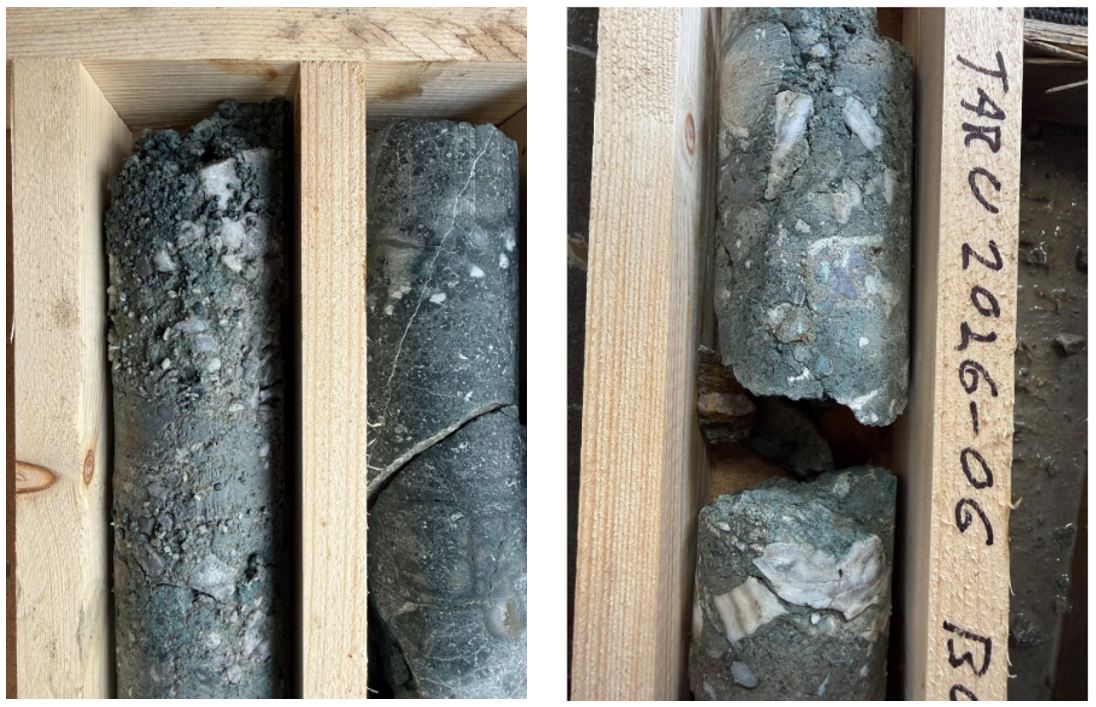
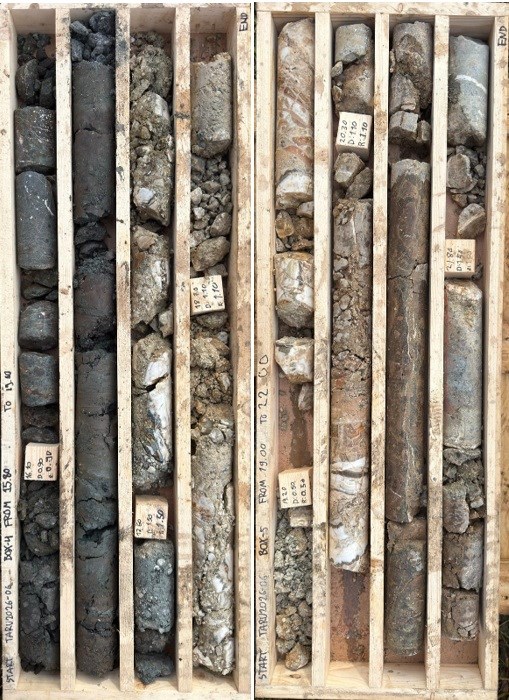
The core shows strong evidence of fault movement after mineralization. The mineralized zones, being the zone of weakness, have been sheared and granulated. The movement sheared and broke the quartz veins, commonly reducing them to fragments a centimetre or less in diameter within a clay-rich matrix. Diagnostic epithermal textures, however, remain clearly visible in the fragments, including intervals of classic epithermal colloform bandings. Figures 1 through 6 below illustrate both disrupted epithermal vein material and intact epithermal quartz veins.

Cannot view this image? Visit: https://images.newsfilecorp.com/files/2477/318641_auriania1_550.jpg

Figures 1 (left) and 2 (right): Epithermal quartz veins disrupted and brecciated by post-mineral fault movement. The epithermal character is clearly visible in the fragments. The clay gouge can contain fine-grained pyrite. Core diameter is 68 mm.

To view an enhanced version of this graphic, please visit:
https://images.newsfilecorp.com/files/2477/318641_auriania1.jpg

Cannot view this image? Visit: https://images.newsfilecorp.com/files/2477/318641_bf08cacaf4e47b0a_003full.jpg

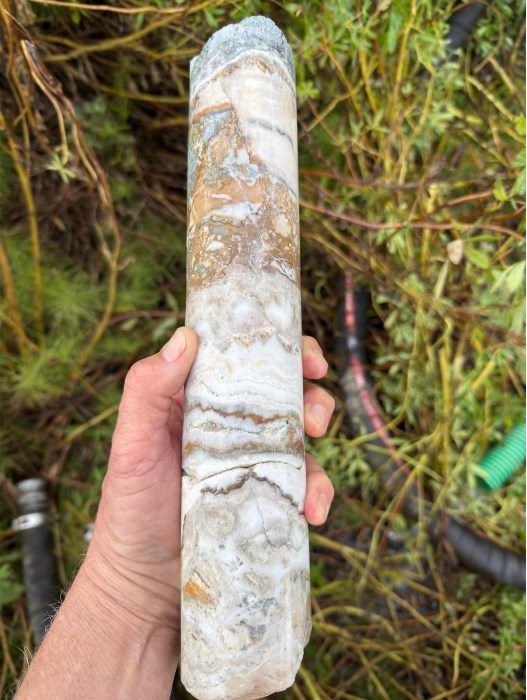
Figure 3: “Classic” intact epithermal quartz vein showing rhythmic colloform banding and multiple zones of hydrothermal brecciation. Core diameter is 68 mm.

To view an enhanced version of this graphic, please visit:
https://images.newsfilecorp.com/files/2477/318641_bf08cacaf4e47b0a_003full.jpg

Cannot view this image? Visit: https://images.newsfilecorp.com/files/2477/318641_bf08cacaf4e47b0a_004.jpg

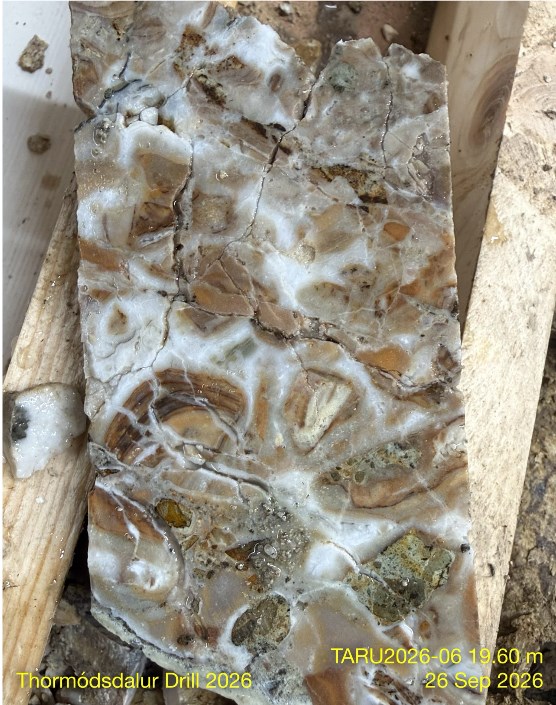
Figure 4: Brecciated quartz-adularia vein clasts in a hydrothermal breccia cemented by later chalcedonic and fine crystalline quartz. Core diameter is 68 mm.

To view an enhanced version of this graphic, please visit:
https://images.newsfilecorp.com/files/2477/318641_bf08cacaf4e47b0a_004full.jpg

Cannot view this image? Visit: https://images.newsfilecorp.com/files/2477/318641_aurania5_550.jpg

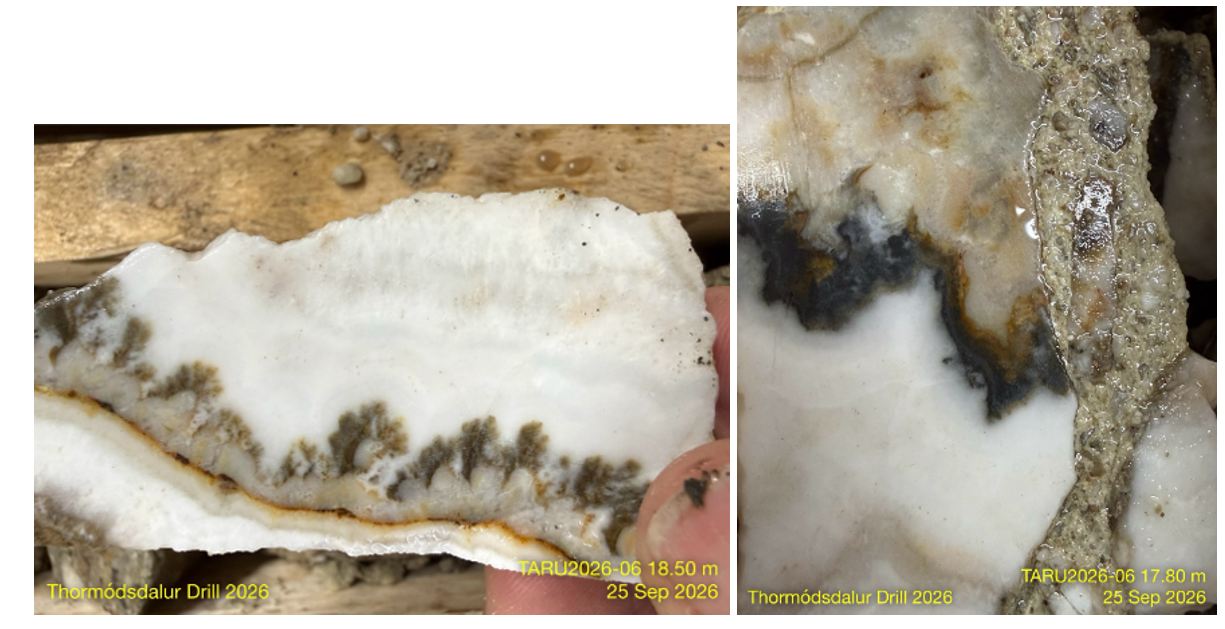
Figure 5 (left): Dark banding in quartz. Figure 6 (right): Moss texture in fine grained silica.

To view an enhanced version of this graphic, please visit:
https://images.newsfilecorp.com/files/2477/318641_aurania5.jpg

Cannot view this image? Visit: https://images.newsfilecorp.com/files/2477/318641_bf08cacaf4e47b0a_007full.jpg

Figure 7: Core photographs of the Thor vein zone intersection in hole TARU2026-06. The vein zone (interval 17.50 m to 19.90 m, not true width) is comprised of epithermal veins, vein fragments and hydrothermal breccias, together with clay-rich material produced by later fault movements, also containing vein clasts.

To view an enhanced version of this graphic, please visit:
https://images.newsfilecorp.com/files/2477/318641_bf08cacaf4e47b0a_007full.jpg

About Thormódsdalur
The Thormódsdalur project is located approximately 20 kilometres east of Reykjavík, Iceland, and is held by Iceland Resources ehf (“IR”), a wholly owned subsidiary of St-Georges Eco-Mining Corp. (CSE: SX) (“St-Georges”). In April 2026, Aurania entered into an option agreement with St-Georges and IR to collaboratively define and execute a phased exploration program to advance the Project toward an initial modern resource definition. The key terms of the option agreement are described in the Company’s news release dated April 28, 2026.

Qualified Person
The scientific and technical information contained in this news release has been reviewed and approved by Aurania’s VP Exploration, Mr. Jean-Paul Pallier, MSc, who is not independent of the Company. Mr. Pallier is a designated EurGeol by the European Federation of Geologists and a Qualified Person as defined by National Instrument 43-101, Standards of Disclosure for Mineral Projects of the Canadian Securities Administrators.

About Aurania
Aurania is a mineral exploration company engaged in the identification, evaluation, acquisition, and exploration of mineral property interests, with a focus on precious metals and critical energy in Europe and abroad.

Information on Aurania and technical reports are available at www.aurania.com and www.sedarplus.ca, as well as on Facebook at https://www.facebook.com/auranialtd/, X (formerly Twitter) at https://x.com/AuraniaLtd, and LinkedIn at https://www.linkedin.com/company/aurania-resources-ltd-.

For further information, please contact:

Carolyn Muir
VP Corporate Development & Investor Relations
Aurania Resources Ltd.
(416) 367-3200
[email protected]
 

Neither the TSX Venture Exchange nor its Regulation Services Provider (as that term is defined in the policies of the TSX Venture Exchange) accepts responsibility for the adequacy or accuracy of this release.

Forward-Looking Statements

This news release contains forward-looking information as such term is defined in applicable securities laws, which relate to future events or future performance and reflect management’s current expectations and assumptions. The forward-looking information includes: statements regarding the Project, and that the drill core samples have been sent for assaying and are expected in November, statements regarding the option agreement with St-Georges and IR and the goals, plans and objectives set out thereunder, anticipated exploration programs, timing of activities, the potential to advance the Project, Aurania’s objectives, goals or future plans, statements, exploration results, potential mineralization, the tonnage and grade of mineralization which has the potential for economic extraction and processing, the merits and effectiveness of known process and recovery methods, the corporation’s portfolio, treasury, management team and enhanced capital markets profile, the estimation of mineral resources, exploration, timing of the commencement of operations, the commencement of any drill program and estimates of market conditions. Such forward-looking statements reflect management’s current beliefs and are based on assumptions made by and information currently available to Aurania, including the assumption that there will be no material adverse change in metal prices, all necessary consents, licenses, permits and approvals will be obtained, including various local government licenses, and that market conditions will be favourable. Investors are cautioned that these forward-looking statements are neither promises nor guarantees and are subject to risks and uncertainties that may cause future results to differ materially from those expected. Risk factors that could cause actual results to differ materially from the results expressed or implied by the forward-looking information include, among other things: failure to achieve the anticipated results, incorrect assumptions made in the initial evaluation of the Project, failure to identify mineral resources; failure to convert estimated mineral resources to reserves; the inability to complete a feasibility study which recommends a production decision; the preliminary nature of metallurgical test results; the inability to recover and process mineralization using known mining methods; the presence of deleterious mineralization or the inability to process mineralization in an environmentally acceptable manner; commodity prices, supply chain disruptions, restrictions on labour and workplace attendance and local and international travel; a failure to obtain or delays in obtaining the required regulatory licenses, permits, approvals and consents; an inability to access financing as needed; a general economic downturn, a volatile stock price, labour strikes, political unrest, changes in the mining regulatory regime governing Aurania; a failure to comply with environmental regulations; a weakening of market and industry reliance on precious metals and base metals; risks associated with conducting operations in a foreign jurisdiction, including currency fluctuations, foreign regulatory requirements, and cross-border logistical challenges; and those risks set out in the Company’s public documents filed on SEDAR+. Aurania cautions the reader that the above list of risk factors is not exhaustive. Although the Company believes that the assumptions and factors used in preparing the forward-looking information in this news release are reasonable, undue reliance should not be placed on such information, which only applies as of the date of this news release, and no assurance can be given that such events will occur in the disclosed time frames or at all. The Company disclaims any intention or obligation to update or revise any forward-looking information, whether as a result of new information, future events or otherwise, other than as required by law.

info

Source: Aurania Resources Ltd.

The $4 Gallon Is No Longer a Shock. It’s the New Baseline.

By Wednesday, American drivers are expected to log more days above $4 a gallon in a single year than in any year on record, surpassing a mark set in 2022. That is the forecast of Patrick De Haan, head of petroleum analysis at GasBuddy, and the numbers support it.

AAA puts the national average for regular gasoline at $4.35 a gallon, about $1.27 higher than a year ago and still shy of the May peak above $4.50. Diesel sits at $6.25. Prices have drifted down a few cents over the past month, which is hardly comfort when the starting point is this high.

What stands out is not the peak but the persistence. A price spike is a shock; a price that stays elevated for months becomes a baseline. Households stop treating $4 gas as an emergency and start budgeting around it, which means cutting somewhere else. That quiet adjustment is how fuel costs feed into broader economic weakness, and it helps explain why consumers have grown so frustrated with the cost of living. The University of Michigan’s October sentiment survey fell to a five-month low, and gas prices that have held above $4 since mid-summer are part of that story.

The supply picture offers little relief. Crude rose Monday after deadly attacks in the Middle East and fresh doubts about a proposed Russia-Ukraine energy ceasefire, with Brent near $106 a barrel and West Texas Intermediate around $93. At home, Hurricane Isaias knocked two major Gulf Coast refineries offline, and the full extent of the damage is still being assessed. Refiners make diesel and heating oil from the same crude supply, so a disruption in one product can pull the others higher, just as winter demand arrives. Gasoline futures are up more than 86% this year and heating oil futures more than 124%.

Diesel deserves more attention than it gets. It moves the farm equipment, trucks, and delivery vans that carry nearly everything people buy, so higher diesel costs eventually show up on shelves and invoices. Drivers see the gasoline price on a sign; they don’t see the diesel surcharge folded into their groceries.

The pain is not evenly shared. Producers are positioned to benefit. InPlay Oil Corp. (IPOOF), an Alberta light oil producer covered by Noble Capital Markets research, reported record quarterly adjusted funds flow of $44.7 million in the second quarter, citing high oil prices, and raised its 2026 guidance. The company also reported production of 18,663 barrels of oil equivalent per day, about 62% light oil and natural gas liquids, and agreed to a $54.25 million acquisition after quarter end. Those figures are company-reported. Transportation and logistics businesses, along with lower-income households that spend a larger share of their budgets on fuel, face the opposite side of the trade.

Three things will decide how long this lasts: how quickly the damaged refineries come back, whether Middle East tensions and the Russia-Ukraine ceasefire push crude higher, and how tight distillate supply gets as temperatures fall. If those break the wrong way, the $4 gallon will remain a feature of the economy rather than a talking point, and the consumer will keep feeling it.

IonQ to Acquire Zero Trust Security Firm Elisity in Deal Valued at Up to $1.3 Billion

IonQ (NYSE: IONQ) announced on Oct. 12 that it has agreed to acquire Elisity, a Zero Trust cybersecurity company, in an all-stock transaction valued at up to $1.3 billion. The deal pairs IonQ’s post-quantum cryptography (PQC) and quantum key distribution (QKD) technology with Elisity’s enterprise network security platform, and it extends IonQ’s push beyond quantum computing into security.

Founded in 2019, Elisity helps organizations apply Zero Trust principles to users, devices, workloads, AI agents, and other non-human identities. Its IdentityGraph product pulls together identity, asset, and risk data to set least-privilege access policies, letting teams simulate a policy before enforcing it and restrict each identity to only the communications it needs. IonQ says Elisity has more than 100 customer deployments, including a growing number of Fortune 500 companies, and has roughly doubled both revenue and customers year over year with no churn among deployed customers. IonQ also points to the microsegmentation market, which it sizes at more than $10 billion with double-digit annual growth.

IonQ is pitching a single security stack for two problems: attacks happening now, including those involving AI agents, and the longer-term risk that quantum computers eventually break today’s encryption. The companies plan to extend IdentityGraph with cryptographic inventory and risk information. IonQ CEO Niccolo de Masi said “Q-Day” is arriving faster than predicted, and compared the deal to IonQ’s earlier SkyWater Technology acquisition, which added chip design and fabrication capabilities. The announcement also cites a June 22, 2026 White House executive order and other federal directives pushing agencies toward PQC migration.

IonQ says its quantum-safe communications networks are already deployed in Switzerland, Poland, Romania, and Slovakia, and that multiproduct revenue grew 40% year over year in the second quarter of 2026. Elisity’s customer base and CISO relationships would give IonQ new channels to sell PQC, QKD, and quantum computing to enterprise and government buyers.

The transaction includes up to $150 million in earnout payments tied to Elisity’s performance. The number of IonQ shares issued will be set at closing using the 20-day volume-weighted average price before closing, with the price floored at $33.07 and capped at $49.61 per share. The deal is expected to close in the fourth quarter of 2026, subject to customary conditions including regulatory approval. Elisity will continue operating under its current leadership, including CEO James Winebrenner.

Closing risk, customer and employee retention, and integration are the main variables, all flagged in IonQ’s own forward-looking statements. Investors should also watch whether IonQ can turn the cross-sell story into reported revenue, and how the share issuance affects dilution given the price collar.

Release – VivoPower Mobilizes Construction of 40MW AI Data Center Conversion in Mo i Rana, Norway

Research News and Market Data on VIVO

October 12, 2026 08:15 ET  | Source: VivoPower PLC

     VivoPower has selected a global AI industry leader as its preferred AI tenant for the Mo i Rana facility

     Experienced Mo i Rana-based contractor Øijord & Aanes Entreprenørforretning AS engaged to deliver conversion site works in accordance with relevant permits and licenses

     Enabling works and main building superstructure to be delivered by Mo i Rana-based contractors, ahead of full mechanical and electrical fit-out by a specialist data center EPC firm

     VivoPower committed to engaging as many local suppliers and contractors as possible at Mo i Rana and plans to do the same at other future AI data center facilities globally

     VivoPower is also working to reuse waste heat from the AI data center for productive purposes in line with its Power-to-X strategy

LONDON, UK / MO I RANA, NORWAY, Oct. 12, 2026 (GLOBE NEWSWIRE) — VivoPower PLC (Nasdaq: VIVO) (“VivoPower” or the “Company”), a leading B Corp-certified global developer and owner of powered land and data center infrastructure for AI compute applications, today announced the mobilization of construction for the conversion of a 40MW first phase AI data center at its Mo i Rana facility in northern Norway. The Company also confirmed that the site works package will be delivered by experienced Mo i Rana-based contractors, Øijord & Aanes Entreprenørforretning AS, who have been operating in the region for more than 60 years.

Demolition, enabling works and the main building superstructure, amongst other elements, will be delivered by local Mo i Rana contractors, in accordance with applicable Norwegian planning and building regulations. These work packages will be completed in advance of the full mechanical and electrical fit-out of the facility, for which VivoPower has conducted a tender review process with leading international data center supply chain partners. The Company expects to award and announce this contract shortly and will update accordingly.

The design and delivery of the AI data center conversion will be in accordance with the AI tenant’s requirements. In addition, VivoPower is engaged with local industry on Power-to-X use cases, including the use of waste heat to support and promote local industry and community growth. Further details will be shared at the appropriate time.

Commitment to the Mo i Rana Supply Chain

VivoPower is committed to using as many local Mo i Rana suppliers and contractors as possible throughout the delivery of the project.

In addition to Øijord & Aanes Entreprenørforretning AS, the Company has already engaged with other local contractors, including:

  • IMTAS – a Mo i Rana-based provider of engineering, fabrication, installation and maintenance services across industry, construction and energy, operating from Mo Industripark; and
  • TH Blikk AS – a Mo i Rana-based building, façade and roofing contractor with more than 15 years of experience and a team of 64 employees.

By prioritizing local contractors, VivoPower aims to support employment, skills development and economic activity in the Rana region. It will also draw on the industrial expertise built up in the Mo i Rana industrial precinct over many decades.

VivoPower completed the acquisition of the operational Mo i Rana data center on April 21, 2026, and amongst other things has enrolled 30MW of the existing facility in grid balancing services, which provide support to the stability of the regional power grid.

Commitment to Power-to-X Use Cases

VivoPower’s Power-to-X strategy is focused on securing the highest and best use of every megawatt of its power infrastructure. At Mo i Rana, that extends beyond AI compute to the heat the facility generates and the flexibility it can offer the Norwegian power system.

The 40MW AI data center conversion is being designed with the aim of capturing waste heat from its cooling systems for productive reuse, subject to technical and commercial feasibility. VivoPower is working with a local district heating provider and European specialist firms to evaluate how that heat could be used. This includes supplying district heating to homes, businesses and community organizations in Mo i Rana and supporting the growth of heat-intensive local industries, including but not limited to land-based aquaculture and greenhouse food production.

Mo i Rana is well placed for this and reusing heat from the AI data center would build on that established model of industrial symbiosis. No definitive agreements have been entered into as yet in relation to heat reuse or other Power-to-X use cases, but VivoPower will provide further details as arrangements are finalized.

Shane Whelan, Chief Real Estate Officer of VivoPower, said: “We have deliberately engaged with the local construction supply chain, and we are delighted to be working with Mo i Rana firms such as Øijord & Aanes, IMTAS and TH Blikk. Their skills and local knowledge will be invaluable as we move from site works towards the mechanical and electrical fit-out phase. We remain committed to delivering on a ready-for-service (RFS) date as expeditiously as possible but without compromising quality and safety given the long-duration nature of the infrastructure asset being built.”

Stein Rune Øijord, Chief Executive Officer of Øijord & Aanes, said: “Øijord & Aanes looks forward to a strong and close collaboration with VivoPower. We are proud to contribute to an exciting project that creates new opportunities for Mo i Rana.”

Tommy Høgås, Chief Executive Officer of TH Blikk AS, said: “Blikk looks forward to the opportunity for a strong and exciting collaboration with VivoPower in the years ahead. New development is positive for the local community, and we recognize the wider benefits it will bring to other local businesses. We are grateful for the opportunity to be involved in this project and strongly believe in its potential – both for the stakeholders involved and for the city as a whole. We look forward to contributing and achieving great results together.”

About VivoPower

Originally founded in 2014 and listed on Nasdaq since 2016, VivoPower is an award-winning B Corporation with data center and powered land infrastructure across Norway, Finland, and the United Arab Emirates. The Company’s mission is to be the independent, trusted partner for sovereign nations that develop and operate sustainable data center infrastructure, ensuring sovereign control over power, data, and national intelligence. In doing so, VivoPower helps sovereign nations bridge the gap between their energy assets and their AI ambitions by providing the Power-to-X infrastructure necessary to build and control their own domestic intelligence hubs.

Forward-Looking Statements

This communication includes certain statements that may constitute “forward-looking statements” for purposes of the U.S. federal securities laws. Forward-looking statements include, but are not limited to, statements that refer to projections, forecasts, or other characterizations of future events or circumstances, including any underlying assumptions. The words “anticipate,” “believe,” “continue,” “could,” “estimate,” “expect,” “intends,” “may,” “might,” “plan,” “possible,” “potential,” “predict,” “project,” “should,” “would” and similar expressions may identify forward-looking statements, but the absence of these words does not mean that a statement is not forward-looking. Forward-looking statements in this communication include, for example, statements about the mobilization, timing, sequencing and completion of demolition, enabling and superstructure works; the expected timing of the award and announcement of the mechanical and electrical fit-out contract; the design, delivery, cost and ready-for-service date of the 40MW AI data center conversion; the engagement of local and international contractors and suppliers; the finalization of tenant agreements; the potential reuse of waste heat and other Power-to-X use cases; participation in grid-balancing services; and the anticipated economic benefits to the Mo i Rana region.

These statements are based on VivoPower’s management’s current expectations or beliefs and are subject to risk, uncertainty, and changes in circumstances. There is no certainty that the 40MW AI data center conversion will be completed on the timeline currently anticipated, within the currently estimated budget, or at all. Actual results may vary materially from those expressed or implied by the statements herein due to risks, uncertainties and contingencies including: (i) delays in obtaining, or failure to obtain, the demolition license, the Rana kommune building permit, grid connection and energization approvals or other regulatory approvals, or the grant of such approvals on different terms or conditions; (ii) construction, contractor and supply chain risks, including contractor performance, labor availability, weather and site conditions; (iii) cost overruns and fluctuations in the prices of materials, equipment, labor and energy; (iv) the risk that the mechanical and electrical fit-out contract is not awarded on the expected timing or terms, or at all; (v) delays in AI hardware procurement; (vi) the risk that the tenant breaches or defaults on its definitive lease agreements; (vii) the risk that waste heat reuse and other Power-to-X use cases do not prove technically or commercially feasible, and that no definitive agreements are entered into in relation to them; (viii) changes in economic, business, competitive and/or regulatory factors, geopolitical events and general market volatility; and (ix) other factors set forth in VivoPower’s filings with the United States Securities and Exchange Commission. The information set forth herein should be read in light of such risks. VivoPower is under no obligation to, and expressly disclaims any obligation to, update or alter its forward-looking statements, whether as a result of new information, future events, changes in assumptions or otherwise.

Contact

Shareholder Enquiries
[email protected]

Release – Kratos Highlights Recent Successful Flight Tests of the J85 Engine Across Multiple Configurations, Including Lugged Launch, Palletized, and Surface-to-Surface Applications

Primary Logo

Research News and Market Data on KTOS

October 12, 2026

PDF VersionThe J85 is Production Ready, Including Kratos Recent 3,000-Engine Component Order for 2027 and a Path to 10,000+ Engines Annually by 2029

SAN DIEGO, Oct. 12, 2026 (GLOBE NEWSWIRE) — Kratos Defense & Security Solutions, Inc. (NASDAQ: KTOS), a technology company in defense, national security, and global markets, today announced major advancements in its turbojet technology. Highlighting these achievements are the recent successful flight tests of the TDI-J85 (J85) engine across multiple configurations, including Lugged Launch, Palletized, and Surface-to-Surface applications.

J85

Kratos J85 Spartan Engine

A photo accompanying this announcement is available at https://www.globenewswire.com/NewsRoom/AttachmentNg/f8f9961a-cd9f-4c0d-a1f5-21a2c00d5ce8

“Our successful flight tests across diverse deployment methods prove the versatility and reliability of the TDI-J85 engine,” said Joseph Kovasity, Senior Vice President of Kratos TDI. “By pairing this operational success with a fully functional, high-rate manufacturing capability, we are transforming how the industry approaches affordable propulsion. Kratos’ recent 3,000-engine component order for 2027 production and our path to 10,000+ engines annually by 2029 demonstrate our commitment to delivering mass and capability to the warfighter at an unprecedented scale.”

The J85 engine is engineered for maximum flexibility and the highest performance in the class with respect to high altitude start, reliability, and most importantly, efficiency which translates directly to more mission time/range and probability of success for low-cost cruise missiles, decoys, and unmanned aerial systems (UAS). The recent flight test successes validate its capability across three distinct operational concepts:

  • Lugged Launch: Demonstrating seamless integration and reliable ignition from standard rail or zero-length launchers.
  • Palletized Launch: Validating compatibility with cargo-aircraft-deployed rapid-launch systems.
  • Surface-to-Surface: Proving rapid-start performance and high-acceleration capabilities required for containerized munition applications.

Simultaneously, the Kratos Spartan engine family is taking a central role in supporting multiple next-generation defense development programs. Designed for affordability and high-volume manufacturability, the Spartan engine provides a crucial solution for flexible deployment.

Kratos recently announced significant scale-up operations for its Kratos Spartan engine line to support a surge in development and production programs, placing long-lead orders for components to build 3,000+ engines in 2027 to meet rising demand. Kratos’ Spartan engine manufacturing facility is fully operational, positioning the company to produce up to 10,000+ engines per year by 2029. This rapid scaling addresses the urgent Department of War (DoW) demand for high-performance, low-cost, mass-producible propulsion systems.

Eric DeMarco, Kratos President and CEO, said, “Kratos’ Spartan Family of small turbojet engines for low-cost jet drones and cruise missiles is a recent example of the success of our strategy to make the internally funded investments necessary to deliver technology rich national security systems, products, hardware, and software at the right time, with the key performance, and in the high quantities demanded to rebuild the U.S. defense inventory. Kratos is focused on working with customers that want production-ready products now, as we work with the Department of War for the rebuild and reindustrialization of United States National Security capabilities.”

About Kratos Defense & Security Solutions
Kratos Defense & Security Solutions, Inc. (Nasdaq: KTOS) is a technology, products, system and software company addressing the defense, national security, and global markets. Kratos makes true internally funded research, development, capital and other investments, to rapidly develop, produce and field solutions that address our customers’ mission critical needs and requirements. At Kratos, affordability is a technology, and we seek to utilize proven, leading-edge approaches and technology, not unproven bleeding-edge approaches, with Kratos’ approach designed to reduce cost, schedule and risk, enabling us to be first to market with cost effective solutions. We believe that Kratos is known as an innovative disruptive change agent in the industry, a company that is an expert in designing products and systems up front for successful rapid, large quantity, low-cost future manufacturing which is a value-add competitive differentiator for our large traditional prime system integrator partners and also to our government and commercial customers. Kratos’ primary business areas include virtualized ground systems for satellites and space vehicles; jet-powered unmanned aerial drone systems; advanced vehicles and rocket systems; propulsion systems for drones, missiles, loitering munitions, supersonic systems, spacecraft, and launch systems; C5ISR and microwave electronic products for missile, radar, missile defense, space, satellite, counter-UAS, directed energy, communication, and other systems; and virtual and augmented reality training systems for the warfighter. For more information, visit www.KratosDefense.com and follow Kratos on LinkedIn and X.

Notice Regarding Forward-Looking Statements
Certain statements in this press release may constitute “forward-looking statements” within the meaning of the Private Securities Litigation Reform Act of 1995. These forward-looking statements are made on the basis of the current beliefs, expectations and assumptions of the management of Kratos and are subject to significant risks and uncertainty. Investors are cautioned not to place undue reliance on any such forward-looking statements. All such forward-looking statements speak only as of the date they are made, and Kratos undertakes no obligation to update or revise these statements, whether as a result of new information, future events or otherwise. Although Kratos believes that the expectations reflected in these forward-looking statements are reasonable, these statements involve many risks and uncertainties that may cause actual results to differ materially from what may be expressed or implied in these forward-looking statements. For a further discussion of risks and uncertainties that could cause actual results to differ from those expressed in these forward-looking statements, as well as risks relating to the business of Kratos in general, see the risk disclosures in the Annual Report on Form 10-K of Kratos for the year ended December 29, 2025, and in subsequent reports on Forms 10-Q and 8-K and other filings made with the SEC by Kratos.

Press Contact: 
Claire Cantrell
[email protected]

Investor Relations: 
877-934-4687
[email protected]

Release – Alliance Resource Partners, L.P. Schedules Third Quarter 2026 Earnings Conference Call

Research News and Market Data on ARLP

October 12, 2026

TULSA, Okla.–(BUSINESS WIRE)– Alliance Resource Partners, L.P. (NASDAQ: ARLP) will report its third quarter 2026 financial results before the market opens on Monday, October 26, 2026. Alliance management will discuss these results during a conference call beginning at 10:00 a.m. Eastern that same day.

To participate in the conference call, dial U.S. Toll Free (877) 407-0784 and request to be connected to the Alliance Resource Partners, L.P. earnings conference call. International callers should dial (201) 689-8560 and request to be connected to the same call. Investors may also listen to the call via the “Investors” section of ARLP’s website at www.arlp.com.

An audio replay of the conference call will be available for approximately one week. To access the audio replay, dial U.S. Toll Free (844) 512-2921; International Toll (412) 317-6671 and request to be connected to replay using access code 13762993.

About Alliance Resource Partners, L.P.

ARLP is a diversified natural resource company that is currently the second largest coal producer in the eastern United States, supplying reliable, affordable energy domestically and internationally to major utilities, metallurgical and industrial users. ARLP also generates operating and royalty income from mineral interests it owns in strategic coal and oil & gas producing regions in the United States. In addition, ARLP is positioning itself as a reliable energy partner for the future by pursuing opportunities that support the growth and development of energy-related technologies and infrastructure.

News, unit prices and additional information about ARLP, including filings with the Securities and Exchange Commission, are available at www.arlp.com. For more information, contact the investor relations department of ARLP at (918) 295-7673 or via email at [email protected].

Investor Relations Contact
Cary P. Marshall
Senior Vice President and Chief Financial Officer
918-295-7673
[email protected]

Source: Alliance Resource Partners, L.P.er 12, 2026

TULSA, Okla.–(BUSINESS WIRE)– Alliance Resource Partners, L.P. (NASDAQ: ARLP) will report its third quarter 2026 financial results before the market opens on Monday, October 26, 2026. Alliance management will discuss these results during a conference call beginning at 10:00 a.m. Eastern that same day.

To participate in the conference call, dial U.S. Toll Free (877) 407-0784 and request to be connected to the Alliance Resource Partners, L.P. earnings conference call. International callers should dial (201) 689-8560 and request to be connected to the same call. Investors may also listen to the call via the “Investors” section of ARLP’s website at www.arlp.com.

An audio replay of the conference call will be available for approximately one week. To access the audio replay, dial U.S. Toll Free (844) 512-2921; International Toll (412) 317-6671 and request to be connected to replay using access code 13762993.

About Alliance Resource Partners, L.P.

ARLP is a diversified natural resource company that is currently the second largest coal producer in the eastern United States, supplying reliable, affordable energy domestically and internationally to major utilities, metallurgical and industrial users. ARLP also generates operating and royalty income from mineral interests it owns in strategic coal and oil & gas producing regions in the United States. In addition, ARLP is positioning itself as a reliable energy partner for the future by pursuing opportunities that support the growth and development of energy-related technologies and infrastructure.

News, unit prices and additional information about ARLP, including filings with the Securities and Exchange Commission, are available at www.arlp.com. For more information, contact the investor relations department of ARLP at (918) 295-7673 or via email at [email protected].

Investor Relations Contact
Cary P. Marshall
Senior Vice President and Chief Financial Officer
918-295-7673
[email protected]

Source: Alliance Resource Partners, L.P.

Release – Airbus U740 Valkyrie Uncrewed Combat Aircraft Takes off for First European Test Flight

Primary Logo

Research News and Market Data on KTOS

October 12, 2026

PDF Version

SAN DIEGO, Oct. 12, 2026 (GLOBE NEWSWIRE) — Kratos Defense & Security Solutions, Inc., (NASDAQ: KTOS) a technology company in the defense, national security and global markets, and Airbus announced the successful completion of the first flight of the “U740-Valkyrie” in Europe. This key milestone confirms that Airbus and Kratos are on track to deliver a combat-ready uncrewed Collaborative Combat Aircraft (CCA) by 2029, addressing the operational requirements of the German and other European Armed Forces.

Conducted at a test facility in Northern Europe, the flight achieved all objectives, including a runway-independent rocket-assisted take-off, maneuvers at various altitudes and speeds up to Mach 0.8, and in-flight mission adjustments. This debut paves the way for subsequent, more sophisticated flight tests with Airbus’ Multi-platform Autonomous Reconfigurable and Secure (MARS) mission system. Serving as the aircraft’s “European brain” and ensuring full control over software as well as mission applications, data and system hardware, MARS enables national German or European sovereignty from operational usage of the Valkyrie. MARS utilizes AI-enhanced software to conduct missions autonomously and coordinate entire mission groups. A strict control hierarchy ensures a human remains on the loop, guaranteeing all critical decisions comply with established rules of engagement, as well as ethical and legal standards.

“In an increasingly complex and contested threat environment, air forces require affordable combat mass today,” said Mike Schoellhorn, CEO of Airbus Defence and Space. “By pairing Kratos’ proven airframe as a ‘program of record’ with Airbus’ sovereign European mission system, we are able to offer a robust, sovereign, affordable, and combat-ready CCA system by the end of the decade. The Valkyrie will also play a critical role in enhancing crewed combat aircraft such as the Eurofighter with extended range, firepower, and survivability. The aircraft design enables operational resilience through its rail launch capability, while offering conventional, runway based, take-off and landing as an option.”

“First flights typically include plenty of learning opportunities, but with the maturity of the Valkyrie system and the well-integrated Airbus and Kratos team, this flight was an amazing success,” said Eric DeMarco, President and CEO of Kratos. “We’re proud to be partnering with Airbus on the CCA opportunities in Germany and other parts of the world. Combining the strengths of Kratos and Airbus enables the affordable Valkyrie system and Kratos’ CCA and drone manufacturing legacy to evolve with MARS and Airbus’ other high-capability subsystems, experience, and extensive knowledge across the full aerospace spectrum.”

U740.jpgThe Airbus U740 takes off for its first flight in Europe – Airbus Defence and Space GmbH 2026

A photo accompanying this announcement is available at
https://www.globenewswire.com/NewsRoom/AttachmentNg/87613527-0c46-44e0-8dbb-3edf3c324dec

About the U740 Valkyrie

With a length of 30 feet and a wingspan of 27 feet, the Valkyrie features an internal weapons bay for air-to-air and air-to-ground munitions. It has a maximum take-off weight of over 6,000 lbs, a range exceeding 3,000 miles, and a service ceiling of 45,000 feet. The U740 Valkyrie is engineered to operate autonomously or under the command of crewed fighters, such as the Eurofighter, to execute high-risk missions and protect crewed assets.

About Kratos Defense & Security Solutions
Kratos Defense & Security Solutions, Inc. (NASDAQ: KTOS) is a technology, products, system and software company addressing the defense, national security, and commercial markets. Kratos makes true internally funded research, development, capital and other investments, to rapidly develop, produce and field solutions that address our customers’ mission critical needs and requirements. At Kratos, affordability is a technology, and we seek to utilize proven, leading-edge approaches and technology, not unproven bleeding edge approaches or technology, with Kratos’ approach designed to reduce cost, schedule and risk, enabling us to be first to market with cost effective solutions. We believe that Kratos is known as an innovative disruptive change agent in the industry, a company that is an expert in designing products and systems up front for successful rapid, large quantity, low-cost future manufacturing which is a value-add competitive differentiator for our large traditional prime system integrator partners and also to our government and commercial customers. Kratos intends to pursue program and contract opportunities as the prime or lead contractor when we believe that our probability of win (PWin) is high and any investment required by Kratos is within our capital resource comfort level. We intend to partner and team with a large, traditional system integrator when our assessment of PWin is greater or required investment is beyond Kratos’ comfort level. Kratos’ primary business areas include virtualized ground systems for satellites and space vehicles including software for command & control (C2) and telemetry, tracking and control (TT&C), jet powered unmanned aerial drone systems, hypersonic vehicles and rocket systems, propulsion systems for drones, missiles, loitering munitions, supersonic systems, space craft and launch systems, C5ISR and microwave electronic products for missile, radar, missile defense, space, satellite, counter UAS, directed energy, communication and other systems, and virtual & augmented reality training systems for the warfighter. For more information, visit www.KratosDefense.com and follow Kratos on LinkedIn and X.

Notice Regarding Forward-Looking Statements
Certain statements in this press release may constitute “forward-looking statements” within the meaning of the Private Securities Litigation Reform Act of 1995. These forward-looking statements are made on the basis of the current beliefs, expectations and assumptions of the management of Kratos and are subject to significant risks and uncertainty. Investors are cautioned not to place undue reliance on any such forward-looking statements. All such forward-looking statements speak only as of the date they are made, and Kratos undertakes no obligation to update or revise these statements, whether as a result of new information, future events or otherwise. Although Kratos believes that the expectations reflected in these forward-looking statements are reasonable, these statements involve many risks and uncertainties that may cause actual results to differ materially from what may be expressed or implied in these forward-looking statements. For a further discussion of risks and uncertainties that could cause actual results to differ from those expressed in these forward-looking statements, as well as risks relating to the business of Kratos in general, see the risk disclosures in the Annual Report on Form 10-K of Kratos for the year ended December 28, 2025, and in subsequent reports on Forms 10-Q and 8-K and other filings made with the SEC by Kratos.

Press Contact:
Claire Cantrell
[email protected]

Investor Information:
877-934-4687
[email protected]