The Mineral Powering America’s Military That Almost Nobody Is Talking About

While Wall Street fixates on gold, lithium, and rare earth elements, a lesser-known critical mineral is quietly becoming one of the most strategically important materials in the world — and a growing opportunity in the small and microcap space. The mineral is antimony, and the race to secure domestic supply is accelerating fast.

Antimony sits at the intersection of defense, energy, and advanced technology. It hardens ammunition and military alloys, serves as a key component in flame-retardant materials protecting electronics and aircraft wiring, and plays a critical role in semiconductors, infrared sensors, and night-vision systems. The U.S. Department of Defense has identified it as one of the most critical minerals in its supply chain — and for good reason. Without antimony, a significant portion of America’s weapons systems simply don’t function.

The problem is stark. The United States has not mined antimony domestically since the early 1990s. China controls roughly 60% of global production and has enacted increasingly aggressive export restrictions, including an outright ban on shipments to the U.S. in late 2024. A Govini supply chain analysis found that more than 80,000 individual weapons parts across nearly 1,900 DoD weapon systems incorporate antimony or related critical minerals. That is not a supply chain vulnerability — that is a national security exposure.

Washington has responded with urgency. The Department of Defense has deployed nearly $400 million in investments and stockpile contracts around domestic antimony production, the most concentrated federal mobilization around a single critical mineral in recent memory. Earlier this year, the DoD disbursed $27 million under the Defense Production Act directly to United States Antimony Corporation (NYSE American: UAMY) — the only domestic processor and finished antimony product manufacturer in the country — to modernize and expand its refining facility in Thompson Falls, Montana, with capacity expected to double to 320 tons per month by year-end.

The other name drawing serious institutional attention is Perpetua Resources (NASDAQ: PPTA). The company broke ground on its Stibnite Gold Project in Idaho in October 2025 after years of permitting work. The project holds 148 million pounds of antimony and is positioned to become the only domestically mined source of the mineral, potentially supplying 35% of annual U.S. antimony demand in its first six years of production. Perpetua has already secured over $70 million in DoD awards and a preliminary $2 billion financing term sheet from the Export-Import Bank of the United States.

From a market standpoint, the global antimony market is currently valued at roughly $2.4 to $2.5 billion. Analysts project it could reach $4.1 to $4.4 billion by the mid-2030s, representing steady annual growth of 5% to 6% over the next decade. Prices have moderated from a record high of nearly $60,000 per tonne reached in mid-2025 following China’s export ban, settling around $25,000 per tonne — still nearly double where they sat two years ago.

The broader context matters here. With the Iran conflict still rattling global supply chains and reshoring emerging as a defining economic policy, the U.S. government’s push to develop domestic critical mineral production is not a trend — it is a structural shift backed by federal dollars and bipartisan political will. For small and microcap investors, that combination of government demand, supply scarcity, and growing commercial applications across defense and advanced technology creates a genuinely compelling long-term setup in a sector that most of the market is still sleeping on.

Antimony may not be a household name yet. It probably will be.

Century Lithium Corp. (CYDVF) – Moving to the Next Phase of Development


Tuesday, April 07, 2026

Mark Reichman, Managing Director, Equity Research Analyst, Natural Resources, Noble Capital Markets, Inc.

Refer to the full report for the price target, fundamental analysis, and rating.

Updated feasibility study. Century recently filed its updated 2026 NI 43-101 feasibility study for its 100%-owned Angel Island Lithium Project in Nevada. The updated study reflects engineering optimization and improvements that materially strengthen the project’s economic profile and highlight Angel Island as one of the most significant and economically robust sedimentary lithium developments in the United States.

Next steps. With the completion and filing of the 2026 Feasibility Study and the recent C$7 million financing, the company is well positioned to advance the Angel Island project to its next development stages. Planned activities include submitting a Plan of Operations to the Bureau of Land Management to initiate the National Environmental Policy Act (NEPA) review process, advancing Nevada state permitting, progressing detailed engineering, and continuing engagement with strategic and downstream partners. Century also intends to further evaluate the rate of earth element recovery at Angel Island and continue discussions with potential offtake and project finance partners.


Get the Full Report

Equity Research is available at no cost to Registered users of Channelchek. Not a Member? Click ‘Join’ to join the Channelchek Community. There is no cost to register, and we never collect credit card information.

This Company Sponsored Research is provided by Noble Capital Markets, Inc., a FINRA and S.E.C. registered broker-dealer (B/D).

*Analyst certification and important disclosures included in the full report. NOTE: investment decisions should not be based upon the content of this research summary. Proper due diligence is required before making any investment decision. 
Gold Just Had Its Worst Week Since 1980 — Here’s the Uncomfortable Reason Why

For decades, the playbook has been simple: when war breaks out, buy gold. But the ongoing U.S.-Israeli conflict with Iran is rewriting that script in real time, and investors are scrambling to make sense of a metal that is behaving more like a speculative trade than the world’s oldest store of value.

Gold has dropped nearly 10% this week, putting it on track for its worst weekly performance in 43 years, with the metal’s total decline since the war began now sitting at approximately 13%. On Friday, gold was trading around $4,570 per troy ounce — erasing two months of gains in a matter of days.

The Rate Problem Nobody Saw Coming

The paradox at the heart of gold’s collapse is this: the same war that should theoretically be sending investors rushing into safe-haven assets is also the reason central banks are slamming the door on interest rate cuts.

The Federal Reserve held rates steady and cited uncertain impacts from the conflict, while the Bank of Japan kept rates unchanged, noting that inflation risks are now tilted to the upside. Central banks across Europe — including the U.K. and the eurozone — followed suit. Market expectations for Fed rate cuts have shifted dramatically, with traders now pricing in no cuts until as late as June 2027 — a full twelve months later than pre-war projections. That matters enormously for gold, which pays no yield. When bonds and other interest-bearing assets become more attractive, gold loses its competitive edge almost immediately.

The Dollar Is Doing Gold No Favors Either

The U.S. dollar has rebounded approximately 2.2% since the Iran war began, halting a months-long slide. Because gold is priced in dollars, a stronger greenback makes the metal relatively more expensive for international buyers, dampening global demand.

Oil prices have remained above $100 per barrel following attacks on major energy infrastructure, including one of the world’s largest natural gas fields shared by Iran and Qatar, with the conflict showing no signs of resolution. Energy-driven inflation is now feeding directly into the rate calculus that is punishing gold.

From Safe Haven to Meme Trade — and Back?

Part of what’s happening is a hangover from an extraordinary run. Gold surged 66% in 2025, its best annual performance since 1979, before hitting $5,000 per troy ounce for the first time in January 2026. Retail investors piled in chasing momentum, and when that momentum began to reverse, the selling accelerated. Some analysts have raised the possibility that central banks, which were previously aggressive buyers, may now be turning into net sellers — an additional headwind few had anticipated.

The longer-term bull case hasn’t disappeared. J.P. Morgan maintains a 2026 year-end target of $6,300 per ounce, while Deutsche Bank holds firm at $6,000 — though both forecasts were set before the Iran escalation.

For long-term holders, the fundamental case remains intact. Real interest rates, global monetary policy, and persistent geopolitical uncertainty have historically been the primary drivers of sustained gold bull markets, and none of those underlying forces have been resolved.

The question isn’t whether gold’s story is over. The question is whether the market has finally priced in a world where geopolitical chaos and monetary tightening can coexist — and where gold, at least temporarily, is caught in the crossfire.

Rare Earth Stocks Surge as U.S. Government Takes Equity Stake in Strategic Miner

Rare earth stocks rallied sharply on Monday after the Trump administration announced a major equity investment in USA Rare Earth (NASDAQ: USAR), underscoring Washington’s escalating push to secure critical mineral supply chains and reduce reliance on China.

Shares of USA Rare Earth jumped as much as 12% following news that the company will receive $1.6 billion from the U.S. Department of Commerce in exchange for an equity stake. The deal also includes collaboration with the Department of Energy on a $1.3 billion loan package and an additional $277 million in federal funding. Industry peers such as MP Materials, Energy Fuels, and Trilogy Metals also saw early gains, reflecting renewed investor enthusiasm across the sector.

Under the agreement, USA Rare Earth will issue 16.1 million shares of common stock and approximately 17.6 million warrants to the Department of Commerce. The company simultaneously announced a $1.5 billion capital raise, significantly strengthening its balance sheet and accelerating development timelines.

The funding is expected to fast-track USA Rare Earth’s vertically integrated strategy, spanning mining, processing, and magnet manufacturing. Key assets include the company’s magnet plant in Stillwater, Oklahoma, and its Round Top rare earth deposit in West Texas, which is slated to begin commercial production in 2028. Once operational, these facilities could play a crucial role in supplying domestic demand for permanent magnets used in defense systems, electric vehicles, data centers, and advanced manufacturing.

This move fits squarely within a broader government strategy to onshore critical mineral production. China currently dominates global rare earth mining and processing, a strategic vulnerability the U.S. has been actively working to address. In 2025, the Pentagon became MP Materials’ largest shareholder after purchasing $400 million worth of stock. Similar government-backed deals were announced last year with Lithium Americas and Trilogy Metals.

Rare earth elements sit at the center of some of the fastest-growing and most strategically important industries, including artificial intelligence, defense technology, renewable energy, and advanced electronics. As AI data centers proliferate and defense spending increases, demand for these materials is expected to rise sharply over the coming decade.

Strategists argue that direct public-sector involvement materially changes the risk profile for rare earth miners. According to Sprott Asset Management, government participation enhances revenue visibility, mitigates project execution risk, and increases the likelihood that new capacity actually comes online. For investors, this reduces dependence on speculative capital markets and supports higher long-term valuations.

The geopolitical dimension is also intensifying. President Trump recently indicated that a future framework deal with NATO over Greenland could include access to rare earth mineral rights, signaling that resource security is becoming a core component of U.S. foreign and defense policy.

While rare earth stocks remain volatile and capital intensive, the growing alignment between government priorities and private miners provides a powerful tailwind. For small-cap investors, the sector is increasingly less about speculation and more about strategic relevance. As Washington continues to write checks—and take equity stakes—the message is clear: rare earths are now a national priority.

Gold Near Record Highs as Analysts Lift Year-End Price Targets to $5,400

Gold prices continue to hover near record territory as bullish momentum in the precious metals market shows little sign of slowing. Spot gold recently traded above $4,870 per ounce, extending a powerful rally that has already delivered gains of roughly 11% year to date and follows a nearly 65% surge in 2025. The sustained strength has prompted analysts to raise year-end 2026 price targets to as high as $5,400 per ounce, reflecting growing confidence in gold’s long-term demand outlook.

Market analysts point to a notable shift in demand dynamics as a key driver behind the higher forecasts. While central bank buying fueled much of gold’s advance in 2023 and 2024, private-sector investors are now emerging as a dominant force. This influx of capital has intensified competition for limited physical supply, reinforcing upward price pressure and reducing the likelihood of meaningful pullbacks in the near term.

Analysts also note that many of these private buyers — including institutional investors, high-net-worth families, and asset managers — are positioning gold as a strategic allocation rather than a short-term trade. As a result, selling pressure remains muted, even as prices approach historic highs.

Why Gold Is Rallying

Several structural and cyclical factors continue to support gold’s ascent:

  • Central bank accumulation: Global central banks remain steady buyers of gold as they diversify reserves away from traditional fiat currencies and hedge against geopolitical risk.
  • Private-sector diversification: Investors are increasing exposure through ETFs and physical bullion as portfolio diversification becomes a priority amid market uncertainty.
  • Monetary policy tailwinds: Federal Reserve rate cuts and expectations of looser financial conditions have lowered real yields, making non-yielding assets like gold more attractive.
  • Currency debasement concerns: Persistent fiscal deficits and long-term inflation risks have renewed interest in gold as a store of value, particularly among wealthy investors.
  • Geopolitical uncertainty: From trade disputes to shifting global alliances, gold has consistently rallied during periods of heightened geopolitical tension, reinforcing its safe-haven appeal.

Although gold futures briefly dipped overnight following recent political developments, prices quickly rebounded toward record levels as buyers returned. Analysts say this pattern of shallow pullbacks followed by rapid recoveries reflects strong underlying demand and limited downside risk.

Gold has now gained roughly 11% year to date, building on its nearly 65% advance in 2025. The metal has responded positively to nearly every major geopolitical headline this year, underscoring its role as a hedge against both financial and political instability.

Looking ahead, analysts see risks to their updated forecasts as skewed to the upside, particularly if global policy uncertainty persists or investor diversification accelerates further. While volatility remains possible, gold’s structural support appears firmly in place.

For investors, gold’s performance highlights its evolving role beyond crisis protection. Increasingly, it is being treated as a core portfolio component — valued not only for downside protection, but also for its ability to preserve purchasing power and deliver long-term resilience in an uncertain global environment.

Kuya Silver (KUYAF) – Vertically Integrating its Operation


Wednesday, January 07, 2026

Mark Reichman, Managing Director, Equity Research Analyst, Natural Resources, Noble Capital Markets, Inc.

Hans Baldau, Associate Analyst, Noble Capital Markets, Inc.

Refer to the full report for the price target, fundamental analysis, and rating.

Private Placement Financing. Kuya Silver Corporation (OTCQB: KUYAF, CSE: KUYA) announced a brokered private placement pursuant to the listed issuer financing exemption of up to 15.0 million units of the company at a price of C$1.00 per unit for aggregate gross proceeds of up to C$15.0 million. Each unit will consist of one common share and one half of one common share purchase warrant. Each warrant entitles the holder to purchase one common share at an exercise price of C$1.30 per common share for a period of 36 months from the date of issuance.

Use of Proceeds. Kuya intends to use the net proceeds of the offering to advance the company’s Bethania project with the acquisition of and/or development of concentrate processing capacity. Kuya is evaluating several options, each of which is fully permitted and will allow the company to vertically integrate its production capabilities. Funds may also be used to explore the Silver Kings Project in Ontario, discretionary growth capital, and for general corporate purposes.


Get the Full Report

Equity Research is available at no cost to Registered users of Channelchek. Not a Member? Click ‘Join’ to join the Channelchek Community. There is no cost to register, and we never collect credit card information.

This Company Sponsored Research is provided by Noble Capital Markets, Inc., a FINRA and S.E.C. registered broker-dealer (B/D).

*Analyst certification and important disclosures included in the full report. NOTE: investment decisions should not be based upon the content of this research summary. Proper due diligence is required before making any investment decision. 
Gold and Silver Shatter Records as Investors Flock to Hard Assets Amid Global Uncertainty

Precious metals are closing out the year with extraordinary momentum, underscoring a broader shift in global investment sentiment toward safety, scarcity, and real assets. Gold, silver, and platinum all surged to fresh all-time highs this week, extending one of the strongest rallies in modern market history and signaling growing unease beneath the surface of global financial markets.

Spot gold climbed above $4,530 an ounce, capping a year in which the metal has gained roughly 70%. Silver has been even more explosive, soaring more than 150% year-to-date and briefly crossing the $75 mark. Platinum, often overshadowed by its peers, has joined the rally with force, jumping more than 40% in December alone as supply deficits tighten and industrial demand rebounds.

At its core, the rally reflects a powerful shift in investor psychology. Heightened geopolitical tensions—from US actions in Venezuela to military operations in Africa—have revived gold’s traditional role as a safe-haven asset. At the same time, a weakening US dollar has amplified gains, making dollar-priced commodities more attractive to global investors. The Bloomberg Dollar Spot Index’s sharp weekly decline has provided fresh fuel for metals already in motion.

Monetary policy has played an equally important role. Three interest rate cuts by the US Federal Reserve this year have reduced the opportunity cost of holding non-yielding assets like gold and silver. With markets increasingly pricing in further easing in 2026, investors are positioning ahead of a prolonged low-rate environment. The result has been strong inflows into exchange-traded funds, particularly gold-backed vehicles, signaling institutional conviction rather than short-term speculation.

Beyond macro policy, deeper structural concerns are driving what many analysts describe as the “debasement trade.” Rising government debt levels, persistent fiscal deficits, and political pressure on central bank independence have eroded confidence in fiat currencies and sovereign bonds. In response, investors are reallocating toward tangible assets perceived as stores of value in an era of monetary experimentation.

Silver’s rally highlights another critical theme: supply constraints meeting financial leverage. Following a historic short squeeze earlier in the year, physical silver availability remains tight across key global hubs. While speculative positions continue to grow on paper, the limited supply of deliverable metal has intensified price pressures. Potential US trade restrictions on critical mineral imports have only added to the uncertainty, reinforcing silver’s dual appeal as both a monetary and industrial asset.

Platinum’s surge reflects similar dynamics. Persistent supply disruptions in South Africa, combined with strong demand from automotive and jewelry sectors, have pushed the market into its third consecutive annual deficit. As investors broaden their exposure beyond gold, platinum is increasingly viewed as an undervalued hedge with asymmetric upside.

Taken together, the record-breaking rally in precious metals is not an isolated phenomenon—it is a mirror of today’s investment landscape. While equity markets remain resilient, the surge in hard assets suggests investors are quietly hedging against volatility, policy risk, and currency erosion. As the year draws to a close, gold and silver’s ascent sends a clear message: confidence may be high on the surface, but caution is deeply embedded in global portfolios.

U.S. Supports $7.4 Billion Korea Zinc Plant to Secure Critical Minerals Supply

The United States is throwing its support behind a major new critical minerals investment as Korea Zinc moves forward with plans to build a $7.4 billion smelting facility on U.S. soil. The project underscores Washington’s growing urgency to secure domestic and allied supply chains for materials vital to semiconductors, defense systems, aerospace applications, and advanced manufacturing.

Korea Zinc, the world’s largest zinc smelter, has approved the creation of a U.S.-based joint venture, Crucible JV LLC, to develop what it describes as a state-of-the-art, fully integrated large-scale smelting complex. The venture will be backed by a mix of U.S. government funding, strategic investors, and Korea Zinc itself, with roughly $1.94 billion of the total project cost coming from this public-private partnership.

The planned facility will be built on the site of the existing Clarksville, Tennessee smelter currently operated by Nyrstar USA, a subsidiary of commodities trader Trafigura. Korea Zinc plans to acquire the plant and significantly expand its capabilities, transforming it into a multi-metal processing hub. Once completed, the site is expected to refine zinc, lead, copper, gold, and silver, along with strategically sensitive minerals such as antimony, germanium, and gallium.

Those three minerals have taken on heightened geopolitical importance following China’s recent export restrictions, which were widely viewed as retaliation for U.S. technology curbs. Antimony, germanium, and gallium are essential inputs for products ranging from semiconductors and satellite systems to night-vision equipment and advanced defense electronics. By developing domestic refining capacity, the U.S. aims to reduce reliance on Chinese-controlled supply chains and strengthen its industrial resilience.

The deal highlights how critical minerals policy has become a bipartisan priority in Washington. Even as incentives for electric vehicles face political headwinds, securing non-China sources of strategic materials has gained momentum. For Korea Zinc, the U.S. investment represents a shift in positioning — from a company tied closely to the electric vehicle and clean energy cycle to one that plays a broader role in national security and defense supply chains.

JPMorgan Chase advised Korea Zinc on the structure of the public-private partnership and helped finance the transaction through its Security and Resiliency Initiative, a program designed to channel capital into industries that reinforce economic security. The involvement of major financial institutions further signals confidence in the long-term demand for domestically refined critical minerals.

Still, the announcement comes amid internal corporate tensions. Korea Zinc is navigating an ongoing ownership dispute after its largest shareholder, Young Poong, alongside MBK Partners, launched an unsolicited takeover bid. Critics argue the U.S. smelter plan could be as much about consolidating management control as it is about long-term strategy. Supporters counter that the project positions Korea Zinc at the center of a global realignment in industrial supply chains.

Market reaction suggests investors see strategic value in the move. Korea Zinc shares surged following the announcement, reflecting optimism that geopolitical tailwinds and government backing could translate into durable growth. As global competition for critical minerals intensifies, the U.S.-Korea Zinc partnership marks a significant step in reshaping how and where essential materials are produced.

Nicola Mining Inc. (HUSIF) – Sustaining Momentum


Wednesday, December 10, 2025

Mark Reichman, Managing Director, Equity Research Analyst, Natural Resources, Noble Capital Markets, Inc.

Hans Baldau, Associate Analyst, Noble Capital Markets, Inc.

Refer to the full report for the price target, fundamental analysis, and rating.

2025 Milestones. At New Craigmont, Nicola recently completed a drilling program with assay results pending. At the Merritt Mill, Nicola transitioned from toll milling to long-term precious metals production supported by multiple sources of feed. A multi-year exploration permit and a 10-year mine lease extension further support renewed exploration and the potential reopening of the Treasure Mountain Silver Project. Nicola also secured two key permits for its wholly owned gravel pit and completed construction of its ready-mix cement plant, positioning the company to generate additional revenues to support operations. Finally, Nicola completed the mine development required for a 10,000-tonne bulk sample at the Dominion Creek Gold Project, with a restart planned for July 2026. 

What’s Next? 2026 value drivers include: (1) operating the Merritt Mill at full capacity, (2) continued drilling at New Craigmont to vector toward the core of a copper porphyry system, (3) initiating exploration and drilling at the Treasure Mountain Silver Project, and (4) processing high-grade ore from the Dominion Creek bulk sample. 


Get the Full Report

Equity Research is available at no cost to Registered users of Channelchek. Not a Member? Click ‘Join’ to join the Channelchek Community. There is no cost to register, and we never collect credit card information.

This Company Sponsored Research is provided by Noble Capital Markets, Inc., a FINRA and S.E.C. registered broker-dealer (B/D).

*Analyst certification and important disclosures included in the full report. NOTE: investment decisions should not be based upon the content of this research summary. Proper due diligence is required before making any investment decision. 

Kuya Silver (KUYAF) – Laying the Foundation for Growth


Monday, November 24, 2025

Mark Reichman, Managing Director, Equity Research Analyst, Natural Resources, Noble Capital Markets, Inc.

Hans Baldau, Associate Analyst, Noble Capital Markets, Inc.

Refer to the full report for the price target, fundamental analysis, and rating.

Third quarter operational and financial results. During the third quarter, Kuya Silver processed 1,841 tonnes at a toll milling facility, resulting in the sale of 16,983 ounces of silver. The company generated revenue of $771,084 from Bethania concentrate sales, compared to no revenue in the prior-year quarter. Production costs totaled $1,165,790 as the company continued to develop multiple mining faces while executing infrastructure upgrades. The company generated a net loss of $1,523,898, or $(0.01) per share compared to a loss of $1,550,267, or $(0.01) per share during the third quarter of 2024. We had projected a loss of $1,241,457, or $(0.01) per share. 

On track to achieve consistent production of 100 tonnes per day. In early November, Kuya achieved a single-day mining record of approximately 102.5 tonnes of mineralized material from the underground mine and is currently running at a consistent average throughput of approximately 90 tonnes per day. Recent underground development on the 640 level of the Espanola vein system advanced, with sufficient working faces completed to support output above 100 tonnes per day.


Get the Full Report

Equity Research is available at no cost to Registered users of Channelchek. Not a Member? Click ‘Join’ to join the Channelchek Community. There is no cost to register, and we never collect credit card information.

This Company Sponsored Research is provided by Noble Capital Markets, Inc., a FINRA and S.E.C. registered broker-dealer (B/D).

*Analyst certification and important disclosures included in the full report. NOTE: investment decisions should not be based upon the content of this research summary. Proper due diligence is required before making any investment decision. 
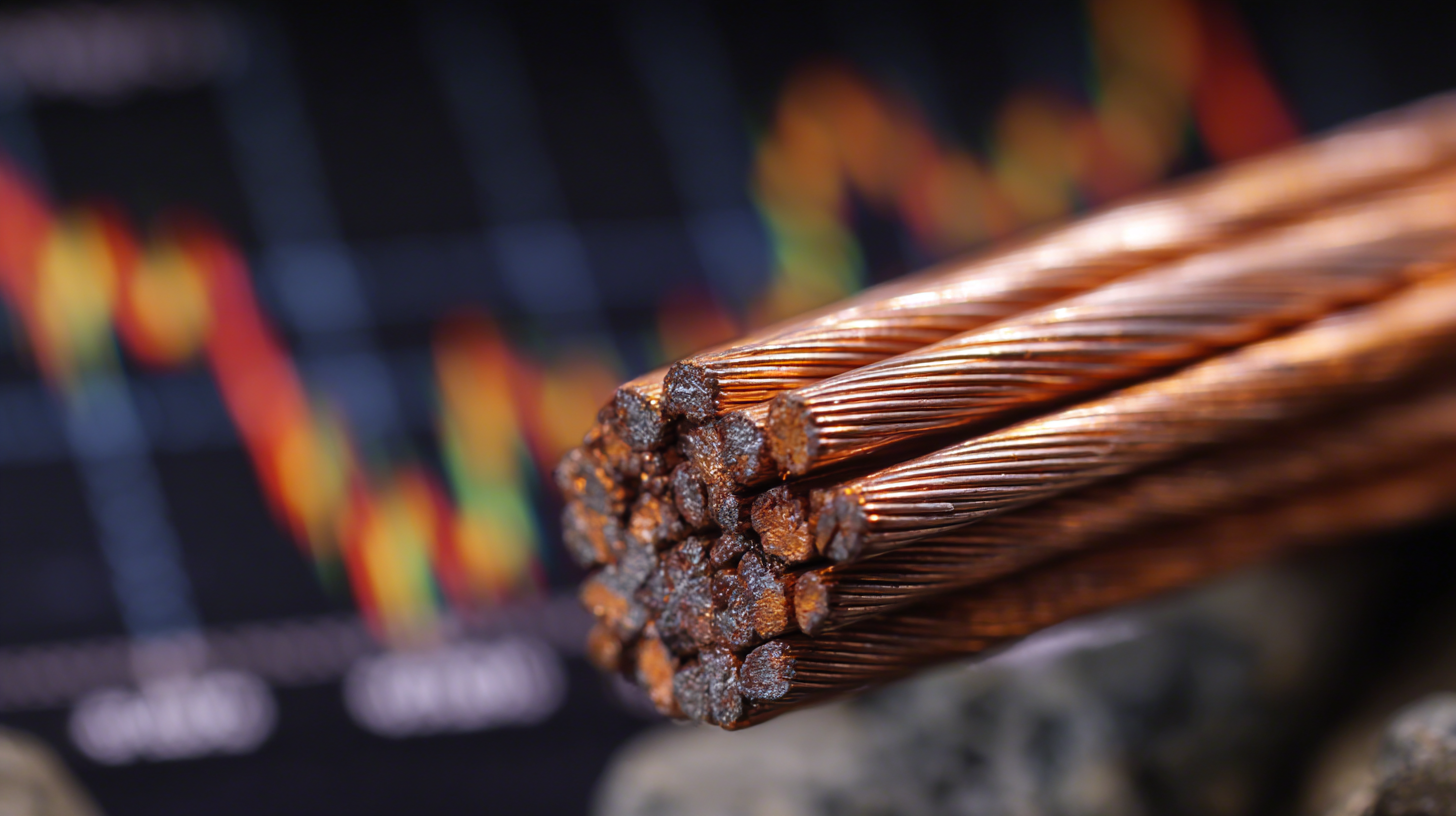
Aluminum Hits Three-Year High as US-China Truce Boosts Market Confidence

Aluminum prices surged to their highest level since May 2022, driven by supply constraints in China and renewed optimism for global demand following a tentative trade truce between the United States and China. In October alone, aluminum climbed more than 7%, marking its strongest monthly performance in over a year. The rally highlights the market’s sensitivity to geopolitical developments, production policies, and shifts in industrial demand.

China, the world’s largest aluminum producer, has implemented state-imposed production limits that are gradually tightening supply. At the same time, demand is rebounding across major sectors such as construction, automotive, and consumer goods. This combination of constrained supply and recovering demand is putting upward pressure on aluminum prices, as buyers compete for a limited quantity of the metal both domestically and internationally.

The recent easing of US-China trade tensions has further strengthened market sentiment. The two countries reached a broad agreement, with many points of contention scheduled to be revisited in a year. For now, the truce reduces uncertainty in global trade, allowing companies to plan production and investments with greater confidence. The temporary stability in trade relations has provided support for metals markets, contributing to optimism over future aluminum demand.

However, there are still risks to consider. Economic activity in China has shown signs of slowing. A private manufacturing survey indicated a sharper-than-expected contraction in October, while the country’s official factory gauge recorded its longest streak of declines in more than nine years. Slowing industrial activity could moderate aluminum demand growth, introducing a measure of caution to the current rally. Investors are carefully weighing the benefits of tighter supply and improved trade conditions against the potential impact of a softening Chinese economy.

On the London Metal Exchange, aluminum futures rose 0.6% to settle at $2,902 per metric ton, while other metals experienced mixed results, with copper down 0.3% and zinc up 1.5%. These movements demonstrate the nuanced responses of commodity markets to global trade developments, policy changes, and economic indicators.

For small-cap companies in the aluminum and broader metals sector, the price rally could have both opportunities and challenges. On the positive side, higher aluminum prices can lead to improved revenue and margins for producers, particularly for smaller companies that are more agile and able to respond quickly to market conditions. Small-cap aluminum suppliers and processors could see increased demand from industrial buyers looking to secure supply before prices climb further. Additionally, renewed investor confidence in metals markets could lead to greater access to capital for smaller firms seeking expansion or modernization projects.

However, there are also risks. Smaller companies often operate with thinner cash reserves and less diversified customer bases, which can make them more vulnerable to price volatility. Rapid increases in aluminum costs may also raise input expenses for downstream small businesses, such as fabricators or specialty alloy producers, potentially squeezing margins if they cannot pass costs onto customers. Moreover, any renewed trade tensions or a slowdown in China’s industrial sector could disproportionately impact smaller firms, as they may have less capacity to absorb shocks compared to large multinational producers.

Overall, aluminum’s rise reflects broader trends in the metals market, where production policies, geopolitical developments, and economic forecasts converge to shape pricing and investor behavior. As China’s production limits take effect and global demand outlooks improve under calmer trade relations, aluminum could maintain upward momentum in the near term. For small-cap companies, navigating this environment successfully will require strategic management of supply contracts, pricing, and operational efficiency. The current three-year high underscores aluminum’s central role in global industry and the market’s responsiveness to policy and economic signals.

Coeur Mining’s $7B Acquisition Turning Small Caps Into Big League Players

On November 3, 2025, Coeur Mining announced its acquisition of New Gold Inc., marking a significant shift in the landscape of North American precious metals producers. This all-stock transaction will unite two major players, resulting in a combined entity with a projected $20 billion market capitalization and operations concentrated entirely in North America.

The basis of the deal centers on Coeur’s wholly-owned subsidiary acquiring all outstanding shares of New Gold, with shareholders of each New Gold share set to receive 0.4959 Coeur shares. This exchange implies a valuation of $8.51 per New Gold share, representing a meaningful premium to recent market prices. Post-transaction, current Coeur shareholders will hold approximately 62% of the new company, with New Gold investors owning the remaining 38%.

For investors tracking small and mid-cap mining stocks, this acquisition stands out for several reasons. First, the combination brings together seven North American mining operations, including New Gold’s two flagship Canadian mines and Coeur’s five productive sites spanning the U.S., Mexico, and Canada. By 2026, the combined firm is expected to deliver around 1.25 million gold equivalent ounces annually, including notable outputs of 20 million ounces of silver, 900,000 ounces of gold, and 100 million pounds of copper. Importantly, over 80% of future revenues are anticipated to be generated from U.S. and Canadian sales, consolidating risk and operational focus within stable jurisdictions.

Financially, Coeur’s previously forecast 2025 EBITDA of about $1 billion and $550 million in free cash flow sees a major uplift. The addition of New Gold’s assets is projected to nearly triple EBITDA to approximately $3 billion and boost free cash flow to $2 billion in 2026. These figures highlight the strategic rationale underpinning the deal: lowering costs per ounce, boosting margins, and achieving scale advantages, all while enhancing the combined company’s ability to access investment-grade credit ratings and return capital to shareholders.

The newly formed company’s robust financial stance enables accelerated investment in key growth projects. New Gold’s mines—especially development at the K-Zone at New Afton and ongoing exploration at Rainy River—will benefit from additional capital and management resources. These investments are expected to unlock organic growth, longer mine life, and further enhance net asset values per share, driving potential share price appreciation and sector re-rating.

Another facet crucial to investors is the promise of improved capital market positioning. The merged firm will stride into the global top 10 for precious metals producers and land within the leading five for silver production, with silver accounting for 30% of total reserves. Greater scale brings enhanced trading liquidity—forecasted at over $380 million daily—and upcoming dual U.S. and Canadian listings, raising visibility among generalist investors, ETFs, and potential index inclusions.

From a governance perspective, the transaction will see members of New Gold’s team onboard with Coeur, including their current CEO and another director joining the expanded board. This blending of management brings together operational experience and expertise across diverse sites and regulatory regimes, positioning the company for long-term resiliency and adaptability.

For Canada and local mine communities, planned commitments include sustained investment, employment, Indigenous partnerships, and maintained regional offices, underscoring the deal’s local benefits alongside broader industry consolidation.

With customary deal protections and reciprocal break fees in place, the transaction is set to close in the first half of 2026, pending regulatory and shareholder approvals. Upon closing, New Gold shares will be delisted and the company’s legacy will contribute to building an all-North American miner poised for sector leadership, robust cash flow, and strategic advantage.

Gold Keeps Breaking Records as Global Demand Surges

Gold prices have shattered records yet again, surging past $4,000 per ounce for the first time in history as investors continue to flock to the safe-haven asset amid global uncertainty and expectations of deeper Federal Reserve rate cuts. The yellow metal’s meteoric rise marks one of the strongest rallies in decades, gaining more than 50% year-to-date — its best annual performance since 1979.

According to data from the World Gold Council, global gold-backed exchange-traded funds (ETFs) saw their largest quarterly inflows on record, with investors pouring in more than $26 billion during the third quarter of 2025. North American funds led the surge, followed by European and Asian markets, as geopolitical tensions, volatile currencies, and concerns over central bank policy fueled the rush into gold.

Analysts noted that a combination of economic uncertainty, political instability, and weakening confidence in traditional currencies has been fueling record levels of investment in gold. They suggested that even modest shifts of capital away from the bond market toward gold could be enough to push prices significantly higher.

Gold’s recent rally has been closely tied to growing speculation that the Federal Reserve will continue cutting interest rates to support the slowing economy. Lower rates reduce the opportunity cost of holding non-yielding assets like gold, making it more attractive to both institutional and retail investors.

Meanwhile, the US dollar has weakened, further boosting gold’s appeal. As the greenback loses strength, international buyers gain more purchasing power, often resulting in increased gold demand.

The gold market’s explosive momentum has also led to a surge in trading activity. Average daily trading volumes climbed 34% month over month, hitting all-time highs as prices broke new records 13 times in September alone.

Wall Street remains bullish. Goldman Sachs has reaffirmed gold as its “highest-conviction long recommendation,” forecasting that continued monetary easing and persistent global tensions could keep driving the metal upward.

Analysts predicts that gold could reach $4,500 by mid-2026, with a potential breakout toward $5,000 per ounce if capital continues to rotate out of government bonds and into precious metals.

As global markets navigate uncertainty — from geopolitical flashpoints to currency instability — gold’s appeal as a safe, tangible store of value remains as strong as ever. For now, the metal’s relentless climb shows no signs of slowing.