The global race to secure critical minerals is driving renewed merger and acquisition activity across the mining industry, as companies seek greater control over copper, rare earth elements, and other strategically important resources. Growing demand from electrification, artificial intelligence infrastructure, and defense manufacturing is encouraging producers to pursue acquisitions, strategic partnerships, and long-term supply agreements.
For small-cap and microcap mining companies, these developments could create opportunities to attract investment, advance exploration projects, and establish relationships with larger industry participants.
Recent transactions involving copper exploration assets and rare earth supply agreements highlight the increasing importance of securing access to future mineral production.
Copper remains central to global electrification, with applications spanning electric vehicles, renewable energy systems, power transmission networks, and data centers.
As electricity demand increases, mining companies are looking to expand their resource portfolios. However, developing new copper mines can require substantial investment and years of exploration, permitting, and construction.
Acquiring existing exploration assets or partnering with junior miners can offer established producers an alternative route to securing future supplies.
Kodiak Copper (KDKCF) provides an example of activity within the junior copper sector. The company is advancing its MPD copper-gold project in British Columbia, where its 2026 exploration program includes drilling intended to expand existing mineral resources and evaluate additional targets.
Kodiak has also pursued a proposed transaction involving its Mohave copper project in Arizona and assets contributed by Teck Resources, illustrating how junior miners can participate in broader asset consolidation strategies.
Another company operating in the sector is Power Metallic Mines (PNPNF), which is advancing polymetallic exploration projects in Quebec with exposure to copper and other metals important to industrial supply chains.
Beyond copper, rare earth elements have become increasingly important because of their use in electric motors, wind turbines, and advanced defense technologies.
Recent activity involving Arafura Rare Earths and commodity trader Traxys underscores the importance of long-term offtake agreements in securing future supplies.
These arrangements can provide mining developers with commercial visibility while helping industrial customers reduce exposure to concentrated global supply chains.
The broader critical minerals landscape also includes materials used in batteries and energy storage.
First Phosphate (PHOS) is focused on phosphate resources in Quebec, a material relevant to lithium iron phosphate battery chemistry. Meanwhile, Century Lithium (CYDVF) is developing its Angel Island lithium project in Nevada, positioning it within the North American battery materials supply chain.
Although these companies operate in different commodity markets, their projects illustrate the range of resources attracting strategic interest as governments and manufacturers prioritize domestic and diversified supply networks.
For junior mining investors, increasing acquisition activity could provide additional opportunities for companies with attractive deposits, favorable jurisdictions, and credible development plans.
However, stronger demand for critical minerals does not automatically translate into profitable projects.
Investors should evaluate resource quality, project economics, financing requirements, permitting risks, and potential shareholder dilution.
Strategic equity investments, joint ventures, government funding commitments, and binding offtake agreements may offer important indications of commercial interest.
As competition for critical minerals intensifies, securing reliable access to future production is becoming an increasingly important priority.
For small-cap mining companies, this environment could support additional partnerships and consolidation activity, making critical minerals a sector worth watching through the remainder of 2026 and beyond.
Saguenay, Québec–(Newsfile Corp. – May 4, 2026) – First Phosphate Corp. (CSE: PHOS) (OTCQX: FRSPF) (OTCQX ADR: FPHOY) (FSE: KD0) (“First Phosphate” or the “Company“) is pleased to announce the receipt of $3,070,549 in gross proceeds upon the exercise of 2,456,439 warrants prior to their expiry on April 24, 2026 and April 30, 2026, at an exercise price of $1.25 per share.
The Company now has 179,947,950 common shares, 2,625,000 warrants, 7,650,000 options and 1,975,000 restricted share units outstanding. All warrants, options and restricted share units outstanding are held by current Company staff, management and board members.
The Company remains debt-free and is on an accelerated development timeline thanks to a recent non-repayable, non-dilutive contribution of $16.7 million received from the Federal Government of Canada.
Since June 2022, the Company has raised approximately $62.5 million in 10 management-led non-brokered private-placement financings and from funds received from option and warrant exercise.
About First Phosphate Corp.
First Phosphate (CSE: PHOS) (OTCQX: FRSPF) (OTCQX ADR: FPHOY) (FSE: KD0) is a mineral exploration and development and clean technology company dedicated to building and reshoring a vertically integrated mine-to-market supply chain for the production of LFP batteries in North America. Target markets include energy storage, data centers, robotics, mobility, and national security.
First Phosphate’s flagship Bégin-Lamarche property, located in Saguenay–Lac-Saint-Jean, Québec, Canada, represents a rare North American igneous phosphate resource producing high-purity phosphate characterized by very low levels of impurities.
Forward-Looking Information and Cautionary Statement
This release includes certain statements that may be deemed “forward-looking information”. Any statement that discusses predictions, expectations, beliefs, plans, projections, objectives, assumptions, future events or performance (often but not always using phrases such as “expects”, or “does not expect”, “is expected”, “anticipates” or “does not anticipate”, “plans”, “budget”, “scheduled”, “forecasts”, “estimates”, “believes” or “intends” or variations of such words and phrases or stating that certain actions, events or results “may” or “could”, “would”, “might” or “will” be taken to occur or be achieved) are not statements of historical fact and may be forward-looking information. In particular, this press release contains forward-looking information relating to, among other things: the timeframe for the development of the Company’s planned exploration and production activities; and the Company’s plans for vertical integration into North American supply chains. Although the Company believes the expectations expressed in such forward-looking statements are based on reasonable assumptions, such statements are not guarantees of future performance and actual results or developments may differ materially from those forward-looking statements. Factors that could cause actual results to differ materially from those in forward-looking statements include development and exploration successes, continued availability of capital and financing, and general economic, market or business conditions. These statements are based on a number of assumptions including, among other things: that engineering and construction timetables and capital costs for the Company’s, exploration, development and expansion projects are correctly estimated and not affected by unforeseen circumstances; the ability to obtain financing for its proposed operations on acceptable terms; no material deterioration in general business and economic conditions; no material delays in obtaining permits and other approvals; no significant disruptions affecting the activities of the Company or its ability to access required project equipment and services, and operating supplies in sufficient quantities and on a timely basis; inflation and prices for Company project inputs being approximately consistent with anticipated levels; the ability to complete the exploration and development programs consistent with the Company’s expectations; commodity price expectations including assumptions for P205; the Company’s relationship with local municipalities and First Nations remaining consistent with the Company’s expectations; the Company’s relationship with other third party partners and suppliers remaining consistent with the Company’s expectations; and government relations and actions being consistent with Company expectations. Investors are cautioned that any such statements are not guarantees of future performance and actual results or developments may differ materially from those projected in the forward-looking statements. Accordingly, readers should not place undue reliance on the forward-looking information contained in this press release. The Company does not assume any obligation to update or revise its forward-looking statements, whether because of new information, future events or otherwise, except as required by applicable law. All forward-looking information contained in this release is qualified by these cautionary statements.
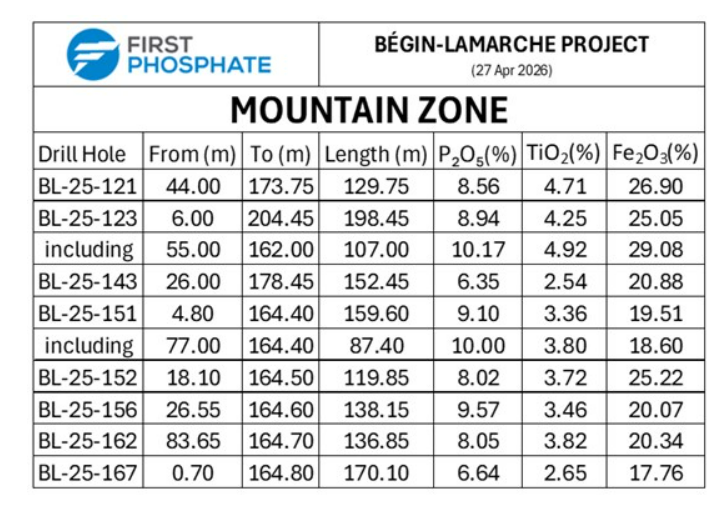
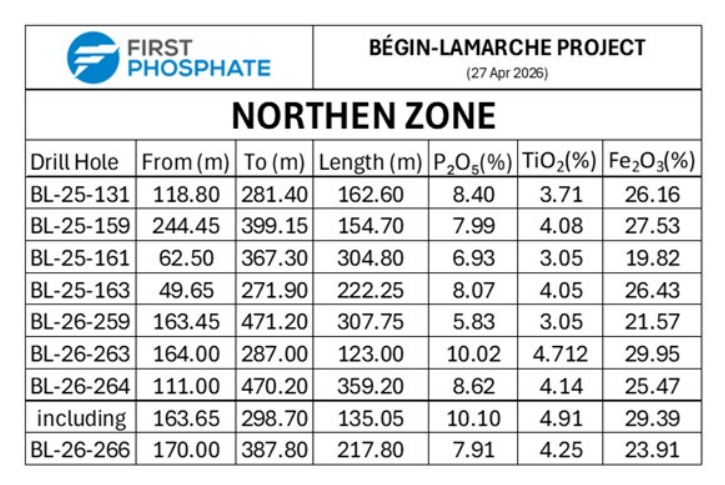
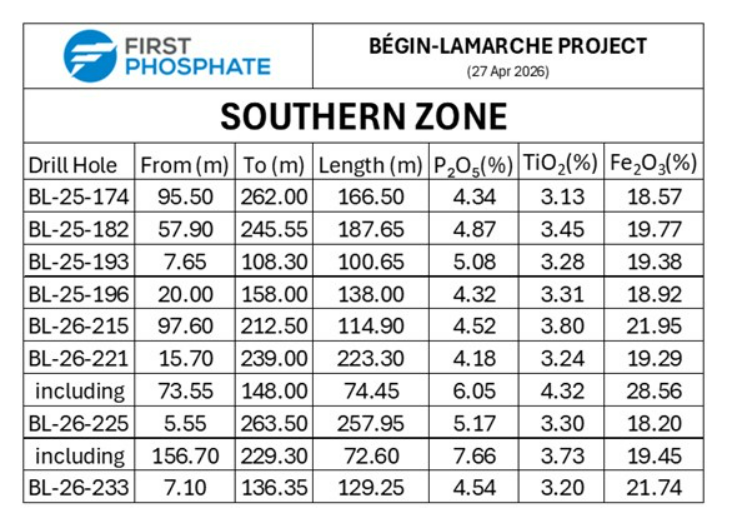
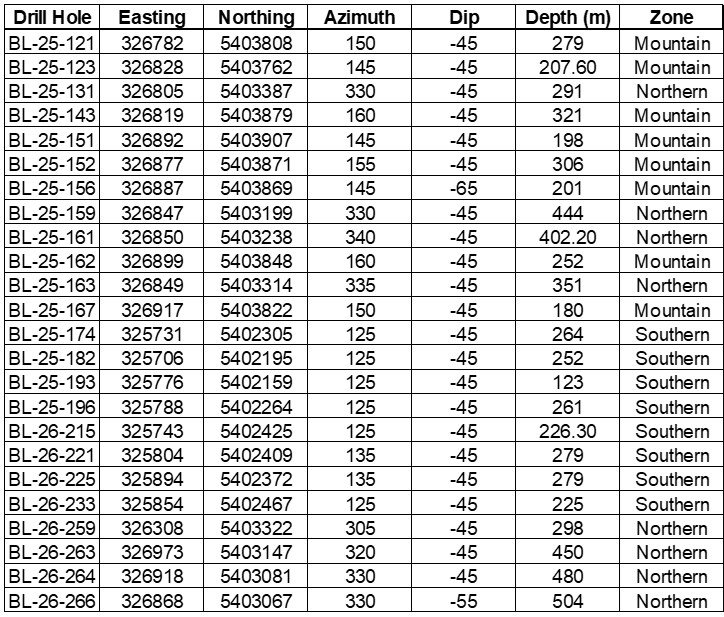
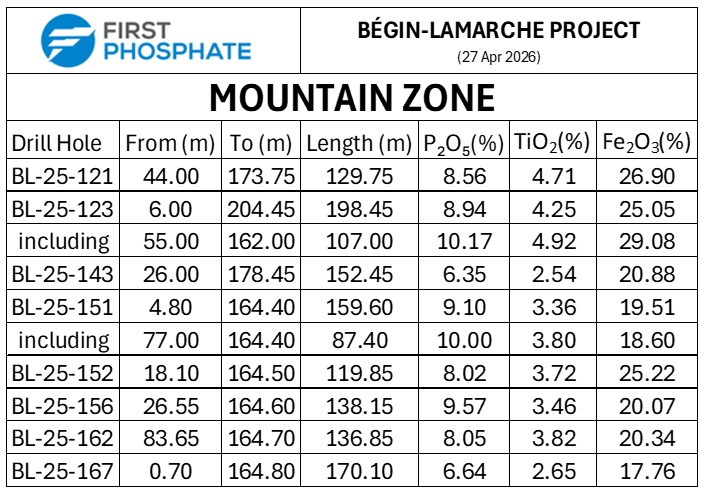
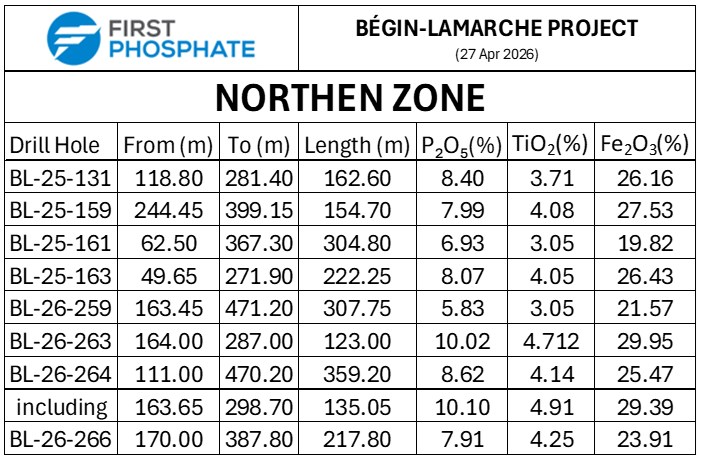
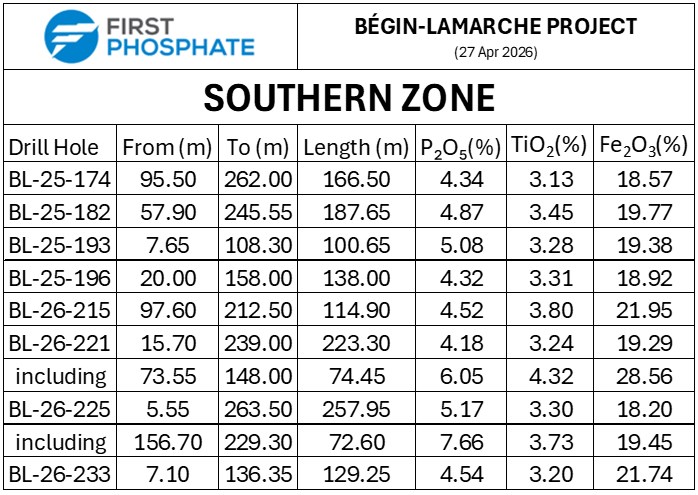
Saguenay-Lac-Saint-Jean, Québec–(Newsfile Corp. – April 27, 2026) – First Phosphate Corp. (CSE: PHOS) (OTCQX: FRSPF) (OTCQX ADR: FPHOY) (FSE: KD0) (“First Phosphate” or the “Company“) is pleased to announce analytical results for its infill drill program, completed on March 31, 2026, at its Bégin-Lamarche property in Saguenay-Lac-Saint-Jean, Québec, Canada.
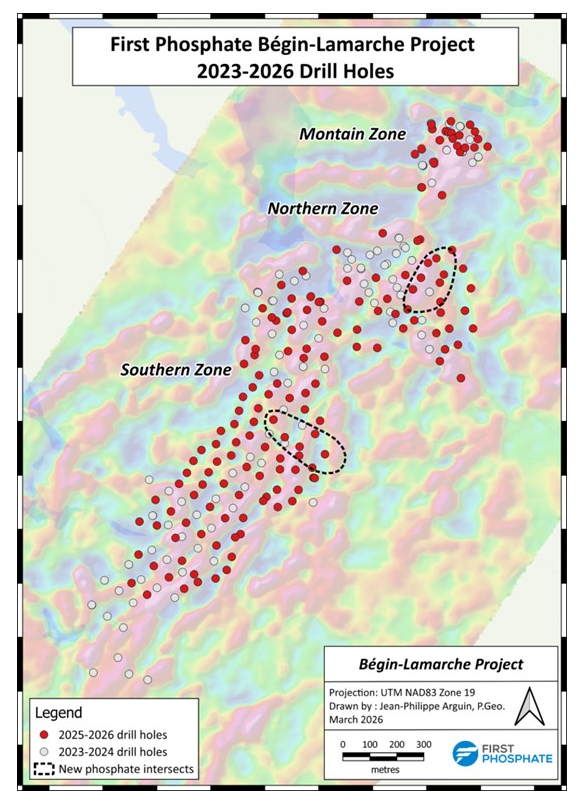
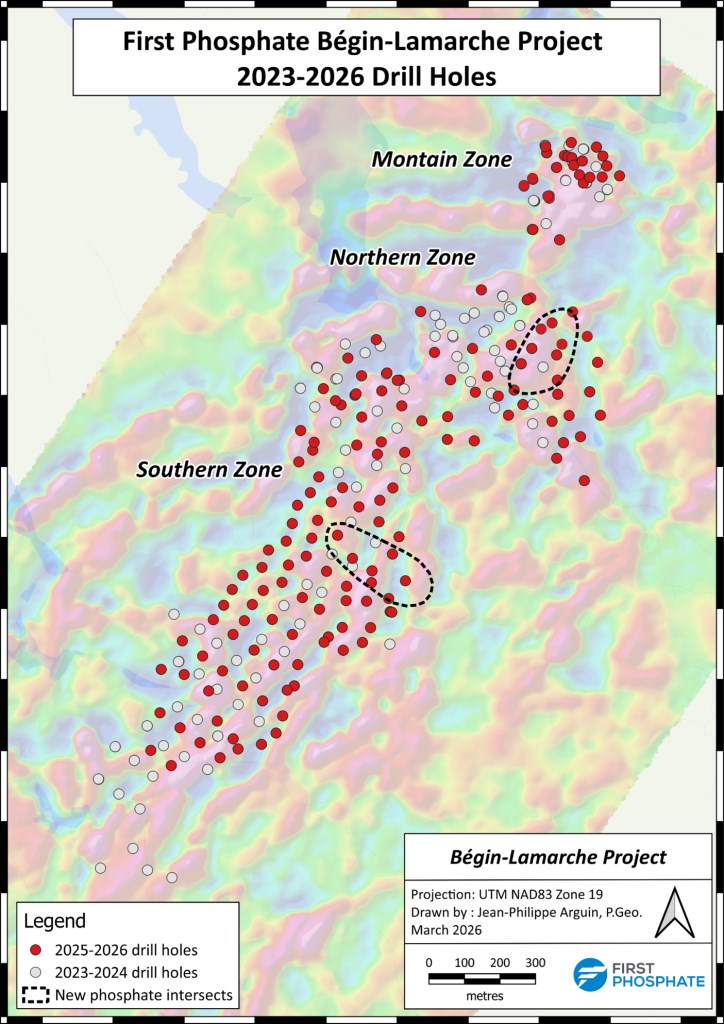
As previously announced, the Company’s recent infill drilling campaign across the three major zones (Mountain, North and South) has confirmed extensive, continuous mineralization throughout the existing horizon of the initial Mineral Resource Estimate (“MRE”) as well as two new phosphate intersects.
Existing mineralized areas, as well as the two newly discovered intersects, have now been defined in all directions and at depth. Based on the current assay results, the Mineral Resources identified in the Company’s initial MRE, dated September 9, 2024, are now being updated into a current geological model which will be produced next month.
In the Mountain Zone, several intervals exceeding 50 m with grades above 10% P₂O₅ were intersected within the broader composite intervals. Several massive apatite veins reaching up to 2 m in thickness were also encountered.
The Northern Zone highlights the discovery of high-grade phosphate occurring in down-dip continuity. These high grades share mineralogical and visual characteristics (particularly the presence of massive apatite veins) similar to those observed in the Mountain Zone. Several intervals exceeding 50 m with grades above 10% P₂O₅ were intersected within the broader composite intervals.
The Southern Zone highlights high-grade phosphate occurring in down-dip continuity, displaying mineralogical and visual characteristics comparable to those recognized in the Mountain Zone. Several intervals exceeding 50 m with grades above 6% P₂O₅ were intersected within the broader composite intervals.
Please note that the intersections reported in this news release represent drilled core lengths. True widths are estimated to be greater than 70%.
Sampling, QA/QC and Analytical Methodology
All drill holes were completed using NQ-size diamond drilling. Drill core was logged, photographed, and sampled according to geological boundaries defined by the Laurentia Exploration technical team. Samples were shipped to Activation Laboratories in Ancaster, Ontario, an independent accredited laboratory, for preparation and analysis using methods appropriate for phosphate. The quality assurance and quality control program includes the regular insertion of in-house reference materials, blanks, and duplicates, in accordance with industry best practices.
Qualified Person
The scientific and technical information relating to First Phosphate contained in this press release has been reviewed and approved by Steeve Lavoie, P.Geo., Chief Geologist of First Phosphate, who is Qualified Person within the meaning of National Instrument 43-101 – Standards of Disclosure for Mineral Projects (“NI 43-101”).
About First Phosphate Corp.
First Phosphate (CSE: PHOS) (OTCQX: FRSPF) (OTCQX ADR: FPHOY) (FSE: KD0) is a mineral exploration and development and clean technology company dedicated to building and reshoring a vertically integrated mine-to-market supply chain for the production of LFP batteries in North America. Target markets include energy storage, data centers, robotics, mobility, and national security.
First Phosphate’s flagship Bégin-Lamarche property, located in Saguenay-Lac-Saint-Jean, Québec, Canada, represents a rare North American igneous phosphate resource producing high-purity phosphate characterized by very low levels of impurities.
Forward-Looking Information and Cautionary Statement
This release includes certain statements that may be deemed “forward-looking information”. Any statement that discusses predictions, expectations, beliefs, plans, projections, objectives, assumptions, future events or performance (often but not always using phrases such as “expects”, or “does not expect”, “is expected”, “anticipates” or “does not anticipate”, “plans”, “budget”, “scheduled”, “forecasts”, “estimates”, “believes” or “intends” or variations of such words and phrases or stating that certain actions, events or results “may” or “could”, “would”, “might” or “will” be taken to occur or be achieved) are not statements of historical fact and may be forward-looking information. In particular, this press release contains forward-looking information relating to, among other things: the Company’s planned exploration and production activities; the timing and completion of geological modelling deliverables and their consistency with the disclosure contained herein; the properties and composition of any extracted phosphate and other minerals; and the Company’s plans for vertical integration into North American supply chains. Although the Company believes the expectations expressed in such forward-looking statements are based on reasonable assumptions, such statements are not guarantees of future performance and actual results or developments may differ materially from those forward-looking statements. Factors that could cause actual results to differ materially from those in forward-looking statements include development and exploration successes, continued availability of capital and financing, and general economic, market or business conditions. These statements are based on a number of assumptions including, among other things: that engineering and construction timetables and capital costs for the Company’s, exploration, development and expansion projects are correctly estimated and not affected by unforeseen circumstances; the ability to obtain financing for its proposed operations on acceptable terms; no material deterioration in general business and economic conditions; no material delays in obtaining permits and other approvals; no significant disruptions affecting the activities of the Company or its ability to access required project equipment and services, and operating supplies in sufficient quantities and on a timely basis; inflation and prices for Company project inputs being approximately consistent with anticipated levels; the ability to complete the exploration and development programs consistent with the Company’s expectations; commodity price expectations including assumptions for P205; the Company’s relationship with local municipalities and First Nations remaining consistent with the Company’s expectations; the Company’s relationship with other third party partners and suppliers remaining consistent with the Company’s expectations; and government relations and actions being consistent with Company expectations. Investors are cautioned that any such statements are not guarantees of future performance and actual results or developments may differ materially from those projected in the forward-looking statements. Accordingly, readers should not place undue reliance on the forward-looking information contained in this press release. The Company does not assume any obligation to update or revise its forward-looking statements, whether because of new information, future events or otherwise, except as required by applicable law. All forward-looking information contained in this release is qualified by these cautionary statements.
USA Rare Earth (Nasdaq: USAR) announced this morning a definitive agreement to acquire 100% of Serra Verde Group — owner of the Pela Ema rare earth mine and processing plant in Goiás, Brazil — in a transaction valued at approximately $2.8 billion. The deal is structured as $300 million in cash plus 126.849 million newly issued shares of USAR common stock, based on the company’s April 17 closing price of $19.95.
The acquisition is expected to close in the third quarter of 2026, pending regulatory approvals and customary closing conditions.
This is not a routine tuck-in. It is one of the most strategically significant critical minerals transactions to emerge from the Western world in years — and the timing is deliberate.
Serra Verde’s Pela Ema operation holds a distinction that very few assets in the world can claim: it is the only scaled producer outside of Asia capable of supplying all four magnetic rare earth elements — Neodymium (Nd), Praseodymium (Pr), Dysprosium (Dy), and Terbium (Tb) — at meaningful commercial volumes. These are the materials that go into permanent magnets, which in turn power electric vehicle motors, wind turbines, defense systems, and advanced electronics. China currently controls the overwhelming majority of global rare earth production and processing. Serra Verde represents a direct challenge to that dominance.
The operation is fully permitted and entered production in 2024 after more than $1.1 billion in capital investment. At Phase 1 nameplate capacity — expected to be reached by the end of 2027 — the mine is projected to produce approximately 6,400 metric tons of total rare earth oxide per year and generate annualized EBITDA of $550 to $650 million. The combined company is targeting approximately $1.8 billion in EBITDA by 2030.
The financial structure of this deal is notable beyond the headline price. Serra Verde has already secured a $565 million financing package from the U.S. International Development Finance Corporation to fund optimization and expansion through to positive cash flow. It has also locked in a 15-year, 100% offtake agreement with a special purpose vehicle capitalized by various U.S. government agencies and private capital sources — with guaranteed minimum floor prices for each of the four magnetic rare earths. That government-backed revenue floor substantially de-risks the asset and signals how seriously Washington views rare earth supply chain security as a national priority.
By end of 2027, Serra Verde’s output is expected to represent more than 50% of total non-China heavy rare earth supply globally — a figure that underscores just how critical this asset is to Western supply chain independence.
For USAR, the transaction adds Serra Verde leadership to its board, including Chairman Sir Mick Davis and CEO Thras Moraitis, who will also become President of the combined company. Pro-forma liquidity for the combined entity stands at approximately $3.2 billion.
Moelis & Company acted as exclusive financial advisor to USA Rare Earth. Goldman Sachs advised Serra Verde.
For small-cap investors tracking the critical minerals space, this is the deal that has been anticipated for years — and it closed on one of the most strategically defensible assets available outside of China.
Mark Reichman, Managing Director, Equity Research Analyst, Natural Resources, Noble Capital Markets, Inc.
Refer to the full report for the price target, fundamental analysis, and rating.
Fast-41 Designation. Resolution Minerals Ltd (OTCQB: RLMLF, ASX: RML) is advancing its Antimony Ridge Project in Idaho as a strategically significant source of antimony within the United States, reinforced by its recent inclusion in the Federal FAST 41 Permitting Transparency Program. This designation underscores the project’s importance to national security and critical mineral supply chains while supporting accelerated permitting, enhanced regulatory coordination, and increased visibility with investors and strategic partners.
Large-Scale Potential. The project demonstrates strong large-scale potential, with recent modeling defining an extensive and expanding mineralized system hosting high grade antimony and silver across a substantial footprint. Historical production and recent sampling confirm exceptionally high grades, while mineralization remains open in multiple directions, indicating considerable upside and resource growth potential.
Equity Research is available at no cost to Registered users of Channelchek. Not a Member? Click ‘Join’ to join the Channelchek Community. There is no cost to register, and we never collect credit card information.
This Research is provided by Noble Capital Markets, Inc., a FINRA and S.E.C. registered broker-dealer (B/D).
*Analyst certification and important disclosures included in the full report. NOTE: investment decisions should not be based upon the content of this research summary. Proper due diligence is required before making any investment decision.
While Wall Street fixates on gold, lithium, and rare earth elements, a lesser-known critical mineral is quietly becoming one of the most strategically important materials in the world — and a growing opportunity in the small and microcap space. The mineral is antimony, and the race to secure domestic supply is accelerating fast.
Antimony sits at the intersection of defense, energy, and advanced technology. It hardens ammunition and military alloys, serves as a key component in flame-retardant materials protecting electronics and aircraft wiring, and plays a critical role in semiconductors, infrared sensors, and night-vision systems. The U.S. Department of Defense has identified it as one of the most critical minerals in its supply chain — and for good reason. Without antimony, a significant portion of America’s weapons systems simply don’t function.
The problem is stark. The United States has not mined antimony domestically since the early 1990s. China controls roughly 60% of global production and has enacted increasingly aggressive export restrictions, including an outright ban on shipments to the U.S. in late 2024. A Govini supply chain analysis found that more than 80,000 individual weapons parts across nearly 1,900 DoD weapon systems incorporate antimony or related critical minerals. That is not a supply chain vulnerability — that is a national security exposure.
Washington has responded with urgency. The Department of Defense has deployed nearly $400 million in investments and stockpile contracts around domestic antimony production, the most concentrated federal mobilization around a single critical mineral in recent memory. Earlier this year, the DoD disbursed $27 million under the Defense Production Act directly to United States Antimony Corporation (NYSE American: UAMY) — the only domestic processor and finished antimony product manufacturer in the country — to modernize and expand its refining facility in Thompson Falls, Montana, with capacity expected to double to 320 tons per month by year-end.
The other name drawing serious institutional attention is Perpetua Resources (NASDAQ: PPTA). The company broke ground on its Stibnite Gold Project in Idaho in October 2025 after years of permitting work. The project holds 148 million pounds of antimony and is positioned to become the only domestically mined source of the mineral, potentially supplying 35% of annual U.S. antimony demand in its first six years of production. Perpetua has already secured over $70 million in DoD awards and a preliminary $2 billion financing term sheet from the Export-Import Bank of the United States.
From a market standpoint, the global antimony market is currently valued at roughly $2.4 to $2.5 billion. Analysts project it could reach $4.1 to $4.4 billion by the mid-2030s, representing steady annual growth of 5% to 6% over the next decade. Prices have moderated from a record high of nearly $60,000 per tonne reached in mid-2025 following China’s export ban, settling around $25,000 per tonne — still nearly double where they sat two years ago.
The broader context matters here. With the Iran conflict still rattling global supply chains and reshoring emerging as a defining economic policy, the U.S. government’s push to develop domestic critical mineral production is not a trend — it is a structural shift backed by federal dollars and bipartisan political will. For small and microcap investors, that combination of government demand, supply scarcity, and growing commercial applications across defense and advanced technology creates a genuinely compelling long-term setup in a sector that most of the market is still sleeping on.
Antimony may not be a household name yet. It probably will be.
USA Rare Earth (NASDAQ: USAR) announced a definitive agreement to acquire Texas Mineral Resources Corp. (OTCQB: TMRC) in an all-stock transaction valued at approximately $73 million, a deal that would consolidate ownership of one of the most significant rare earth deposits in the United States. The transaction centers on the Round Top Heavy Rare Earth and Critical Minerals Project in West Texas, a large domestic resource that has drawn increasing attention amid global efforts to secure critical mineral supply chains.
Texas Mineral Resources currently holds an approximately 19% minority interest in the Round Top project, while USA Rare Earth operates the development through a joint venture structure. By acquiring Texas Mineral Resources, USA Rare Earth would effectively gain full ownership of the project, simplifying governance and aligning development strategy under a single operator. The companies said the transaction will be completed through the issuance of roughly 3.8 million shares of USA Rare Earth common stock to TMRC shareholders, with closing expected by the third quarter of 2026, subject to shareholder approval and customary closing conditions.
The Round Top deposit, located in Hudspeth County, Texas, roughly 85 miles southeast of El Paso, is considered one of the largest known deposits of heavy rare earth elements in North America. Heavy rare earths such as dysprosium and terbium are essential inputs for high-performance permanent magnets used in electric vehicles, defense technologies, robotics, and advanced electronics. As global demand for these materials continues to grow, governments and manufacturers have increasingly focused on developing domestic supply chains to reduce dependence on overseas processing and mining capacity.
USA Rare Earth has positioned Round Top as the cornerstone of its broader “mine-to-magnet” strategy, which aims to vertically integrate rare earth mining, processing, metal production, and magnet manufacturing within the United States. The company is advancing development of the deposit under an accelerated mining plan and has previously indicated that commercial production could begin later in the decade. At full scale, the operation is expected to process tens of thousands of metric tons of mineral feedstock per day by 2030, supporting the growing demand for critical materials used across high-technology and clean-energy industries.
The Round Top project also carries broader economic and strategic implications. Rare earth elements are widely considered critical to national security and advanced manufacturing, and the United States has prioritized domestic production after decades of reliance on foreign suppliers. China currently dominates global rare earth refining capacity, creating supply chain vulnerabilities that policymakers have increasingly sought to address through investment, policy initiatives, and support for domestic mining projects.
The consolidation of Round Top under a single owner may streamline project financing, engineering development, and permitting processes as the project moves toward the construction phase. USA Rare Earth has previously engaged engineering and infrastructure partners to support feasibility work and project planning tied to the future development of the mine and associated processing facilities.
For investors watching the rare earth and critical minerals sector, the acquisition underscores a broader trend of consolidation and vertical integration as companies seek to control strategic resources and build domestic supply chains. As demand for rare earth elements continues to expand across electric vehicles, renewable energy systems, and advanced electronics, projects like Round Top remain central to the evolving landscape of U.S. critical mineral development.
The U.S. government is making its most aggressive move yet to secure critical mineral supply chains—and small-cap mining stocks may be the biggest beneficiaries.
President Donald Trump is preparing to launch Project Vault, a first-of-its-kind $12 billion strategic stockpile of critical minerals designed to break America’s dependence on China. Modeled after the Strategic Petroleum Reserve, the initiative will target minerals essential to modern industry: rare earths, cobalt, gallium, nickel, and antimony—materials that power electric vehicles, semiconductors, defense systems, jet engines, and consumer electronics.
For investors focused on small-cap and emerging resource companies, this announcement represents more than a policy shift. It’s a potentially transformative multi-year demand catalyst.
Why Project Vault Changes the Game
Project Vault pools $10 billion in financing from the U.S. Export-Import Bank with $1.67 billion in private capital, creating a centralized procurement system that will buy and store minerals on behalf of major manufacturers including General Motors, Boeing, Stellantis, Google, and GE Vernova. Three global commodities trading firms—Hartree, Traxys, and Mercuria—will manage sourcing and logistics.
Unlike traditional defense-focused stockpiles, this program explicitly targets civilian supply chains. It offers participating manufacturers two critical advantages: price stability and guaranteed access during supply disruptions. Companies commit to purchasing materials at a predetermined price and can later buy them back at the same cost—a mechanism designed to eliminate volatility and enable long-term production planning.
The implications for upstream producers are significant. Government-backed demand provides the certainty mining companies need to justify capital investment, accelerate development timelines, and secure project financing.
The Small-Cap Advantage
Markets responded immediately. Shares of USA Rare Earth, Critical Metals Corp., United States Antimony, and NioCorp Developments all surged following the announcement, signaling investor recognition of a fundamental truth: supply security requires actual production, not just strategic intent.
This creates a disproportionate opportunity for small-cap miners.
Large diversified mining companies already generate stable cash flow from multiple commodities. Smaller miners, by contrast, often operate single-asset projects concentrated in exactly the minerals Project Vault prioritizes. For these companies, government-backed offtake agreements and improved access to financing could fundamentally alter project economics—transforming marginal assets into commercially viable operations.
Put simply: Project Vault de-risks production at the precise stage where small mining companies struggle most—the transition from exploration to commercial scale.
The timing reflects geopolitical reality. China’s export restrictions last year exposed the brittleness of Western supply chains, forcing some U.S. manufacturers to curtail production. Project Vault is Washington’s financial response—a clear signal that the federal government will actively intervene to reshape critical mineral markets.
The U.S. has also established cooperation agreements with key allies including Australia, Japan, and Malaysia, reinforcing a non-China supply network. This geopolitical alignment strengthens the long-term investment case for North American and allied-jurisdiction producers, who now benefit from both policy support and structural demand shifts.
Project Vault is more than a stockpile—it’s a demand guarantee underwritten by the U.S. government. For small-cap investors, this could mark the start of a sustained revaluation cycle for select critical mineral producers, particularly those nearing production or capable of supplying rare earths and strategic metals domestically.
The framework changes the risk-reward equation. Companies with credible projects in favorable jurisdictions now have a potential counterparty whose commitment extends beyond market cycles. That’s a fundamentally different investment environment than what existed even six months ago.
Bottom Line
Selectivity remains essential—not every critical mineral stock will benefit equally. But the broader narrative is unmistakable: critical minerals have moved from niche sector to national priority, and the market is already repricing accordingly.
For investors positioned in quality small-cap producers, Project Vault may prove to be the catalyst they’ve been waiting for.
The United States is throwing its support behind a major new critical minerals investment as Korea Zinc moves forward with plans to build a $7.4 billion smelting facility on U.S. soil. The project underscores Washington’s growing urgency to secure domestic and allied supply chains for materials vital to semiconductors, defense systems, aerospace applications, and advanced manufacturing.
Korea Zinc, the world’s largest zinc smelter, has approved the creation of a U.S.-based joint venture, Crucible JV LLC, to develop what it describes as a state-of-the-art, fully integrated large-scale smelting complex. The venture will be backed by a mix of U.S. government funding, strategic investors, and Korea Zinc itself, with roughly $1.94 billion of the total project cost coming from this public-private partnership.
The planned facility will be built on the site of the existing Clarksville, Tennessee smelter currently operated by Nyrstar USA, a subsidiary of commodities trader Trafigura. Korea Zinc plans to acquire the plant and significantly expand its capabilities, transforming it into a multi-metal processing hub. Once completed, the site is expected to refine zinc, lead, copper, gold, and silver, along with strategically sensitive minerals such as antimony, germanium, and gallium.
Those three minerals have taken on heightened geopolitical importance following China’s recent export restrictions, which were widely viewed as retaliation for U.S. technology curbs. Antimony, germanium, and gallium are essential inputs for products ranging from semiconductors and satellite systems to night-vision equipment and advanced defense electronics. By developing domestic refining capacity, the U.S. aims to reduce reliance on Chinese-controlled supply chains and strengthen its industrial resilience.
The deal highlights how critical minerals policy has become a bipartisan priority in Washington. Even as incentives for electric vehicles face political headwinds, securing non-China sources of strategic materials has gained momentum. For Korea Zinc, the U.S. investment represents a shift in positioning — from a company tied closely to the electric vehicle and clean energy cycle to one that plays a broader role in national security and defense supply chains.
JPMorgan Chase advised Korea Zinc on the structure of the public-private partnership and helped finance the transaction through its Security and Resiliency Initiative, a program designed to channel capital into industries that reinforce economic security. The involvement of major financial institutions further signals confidence in the long-term demand for domestically refined critical minerals.
Still, the announcement comes amid internal corporate tensions. Korea Zinc is navigating an ongoing ownership dispute after its largest shareholder, Young Poong, alongside MBK Partners, launched an unsolicited takeover bid. Critics argue the U.S. smelter plan could be as much about consolidating management control as it is about long-term strategy. Supporters counter that the project positions Korea Zinc at the center of a global realignment in industrial supply chains.
Market reaction suggests investors see strategic value in the move. Korea Zinc shares surged following the announcement, reflecting optimism that geopolitical tailwinds and government backing could translate into durable growth. As global competition for critical minerals intensifies, the U.S.-Korea Zinc partnership marks a significant step in reshaping how and where essential materials are produced.
The global shift toward electrification is accelerating, and with it comes a renewed focus on the minerals that make modern energy and technology possible. Lithium, nickel, graphite, phosphate, rare earths, and other essential materials are the backbone of batteries, solar panels, electric vehicles, and grid-scale storage. As nations push to secure supply chains and reduce dependence on foreign imports, the critical minerals sector is becoming one of the most strategically important areas in global markets. For small-cap investors, this creates a compelling landscape of early-stage opportunities.
Large producers tend to dominate the headlines, but the real innovation and discovery often originate in the junior and small-cap space. These companies take on the high-risk, early exploration work that can eventually create meaningful supply for downstream industries. While these stocks can be volatile, they also offer leverage to rising demand and tightening supply conditions that can dramatically reprice assets once the market recognizes their potential.
One example of this emerging potential can be seen in the phosphate segment. Phosphate is best known for its role in agriculture, but it is increasingly valuable as a component in lithium iron phosphate (LFP) batteries. This chemistry has become a preferred option for EV manufacturers and grid-storage systems due to its safety profile, long cycle life, and lower cost. As LFP adoption expands, the need for battery-grade phosphate grows alongside it.
Emerging growth companies such as First Phosphate have positioned themselves within this shift. While still small-cap in size, the focus on high-purity phosphate projects in geopolitically stable regions aligns with what major battery and automotive manufacturers are now seeking: secure, traceable, and environmentally responsible supply. These are qualities that the North American market in particular is trying to build as part of a broader strategy to reduce reliance on overseas sources.
Beyond phosphate, other critical minerals are facing similar supply-demand pressures. Graphite remains essential for battery anodes, yet most production is concentrated in a single country. Rare earth elements are required for EV motors and wind turbines, but refining capacity is limited and slow to build. Nickel and manganese face challenges tied to environmental impacts and inconsistent global supply. In each of these segments, small-cap exploration and development companies are working to advance projects that could eventually scale into meaningful contributors to the supply chain.
For investors willing to put in the research, the small-cap critical minerals sector offers exposure to themes that are likely to play out over decades. Governments are investing heavily in domestic mineral strategies, electrification continues to expand worldwide, and technology companies are demanding reliable inputs to meet their production goals. These forces create a long runway for companies that can deliver high-purity materials at competitive costs.
Small-cap investing in this space still requires discipline. Projects take time to develop, capital needs can be significant, and not every discovery becomes a mine. But for investors looking for early entry points into the minerals reshaping the global energy landscape, this sector provides a combination of macro tailwinds and company-specific catalysts that can create real opportunity when approached carefully.
In a move with broad implications for the future of global supply chains and the defence technology sector, President Donald Trump and Australian Prime Minister Anthony Albanese have signed a new agreement on critical minerals. This collaboration was unveiled at the White House on October 20, 2025, and establishes a formal partnership with a project pipeline that could reach $8.5 billion.
Though the White House described the agreement as a framework, officials in both countries confirmed immediate capital is forthcoming for key initiatives. Over the next six months alone, the agreement will facilitate joint investments of more than $3 billion, with Australia and the U.S. directly contributing at least $1 billion in the near term. Much of this funding will be deployed into advanced processing and mining projects focused on rare earths and other critical minerals essential for high-tech manufacturing and defence, including electric vehicles, robotics, and semiconductors.
The U.S. Export-Import Bank is prepared to offer at least $2.2 billion in letters of interest for project loans, which could unlock up to $5 billion in further investment. Alcoa and other major industrial players are already involved, with a particular emphasis on new rare earths separation facilities and a gallium refinery in Western Australia. The Pentagon is backing the gallium project, targeting a refinery output of 100 metric tons annually, a move that will significantly enhance non-Chinese supply for this vital semiconductor and electronics material.
This agreement comes as the global race to secure critical minerals intensifies. China continues to dominate rare earth processing and recently implemented strict export controls, escalating trade tensions with the U.S. and its allies. The new U.S.–Australia framework marks a decisive shift away from Chinese supply chain dependence and signals a new era of industrial cooperation between Western allies.
The market outlook is robust: rare earths and related minerals are used in everything from precision-guided missile systems to wind turbines and next-generation batteries. With rising geopolitical risk and acute supply chain vulnerabilities exposed, government-backed efforts like this one are set to redefine project financing and resource development models. The pipeline also includes a three-country venture involving the U.S., Australia, and Japan, integrating expertise and industrial capacity across the Pacific.
From the investor’s perspective, the partnership is about more than near-term capital flows. It reflects a “friend-shoring” philosophy, rerouting core inputs for modern industrial economies through trusted democratic partners. This is expected to benefit not only major participants like Alcoa but also small and micro-cap mining companies able to secure public or strategic backing for projects in Australia and allied regions. With the right execution, these upstream investments could set the stage for renewed growth and improved supply security throughout the clean energy and technology sectors
The Trump administration is weighing whether to divert at least $2 billion from the CHIPS and Science Act toward U.S. critical minerals projects, according to people familiar with the deliberations. The move would mark a significant redirection of funds originally earmarked for semiconductor research and factory construction, underscoring the White House’s push to reduce reliance on China for strategic resources.
The CHIPS Act, signed into law in 2022 under President Joe Biden, was designed to strengthen domestic semiconductor manufacturing and research through more than $50 billion in incentives. Since taking office in January, President Trump has repeatedly criticized the law as an overly generous “corporate giveaway” and has sought to reshape its provisions. Redirecting funds toward mining and mineral processing would be one of his most consequential adjustments yet.
Supporters of the potential shift argue that the proposal is consistent with the CHIPS Act’s core mission: ensuring secure and stable supply chains for chipmaking. Semiconductor fabrication requires a steady flow of critical materials such as gallium, germanium, and rare earth elements, areas where China dominates global production and processing.
“The administration is creatively trying to find ways to fund the critical minerals sector,” one source said, noting that any changes remain under discussion.
Commerce Secretary Howard Lutnick, a former Wall Street executive tapped by Trump earlier this year, would gain expanded authority over funding decisions. His office already manages CHIPS Act disbursements but would now oversee a broader portfolio of projects spanning mining, processing, and recycling. The move follows internal tensions after the Pentagon’s recent investment in rare earths producer MP Materials raised questions about Washington’s broader minerals strategy.
For U.S. mining and processing firms, the potential reallocation could provide a much-needed financial lifeline. Companies such as Albemarle, the world’s largest lithium producer, have warned that stalled U.S. refinery projects will be difficult to revive without direct government support. Similar challenges face smaller recycling and processing ventures, many of which struggle to compete with China’s state-backed operations.
It remains unclear whether the administration would deploy the $2 billion as grants, loans, or equity stakes. Lutnick has reportedly pushed to “get the money out the door” quickly, signaling urgency in expanding domestic mineral capacity. Additional funding reallocations may follow if the strategy is adopted.
The Biden administration previously considered using CHIPS Act dollars for critical minerals but dismissed the idea as uneconomical and environmentally complex. Critics of Trump’s approach may raise similar concerns, pointing to the permitting hurdles and potential environmental impacts of new mining operations. Others warn that shifting money away from semiconductor projects could weaken efforts to bring advanced chip manufacturing back to U.S. soil.
Still, Trump has moved aggressively to boost resource production. He has signed executive orders promoting deep-sea mining and met with major industry leaders, including Rio Tinto and BHP executives, to highlight his commitment. The administration’s broader strategy is also being coordinated with the Department of Energy, which last week proposed $1 billion in critical minerals spending tied to infrastructure legislation.
By elevating Lutnick’s role, the White House seeks to consolidate decision-making and avoid the fragmented approach seen earlier this summer. Administration officials say this shift will create clearer guidelines for government support across the minerals sector, though questions remain about how conflicts of interest will be managed.
The deliberations highlight the administration’s view that secure mineral supply chains are as vital as semiconductor fabs themselves. Whether Congress and industry stakeholders embrace the reallocation will determine how far the plan advances — and how quickly Washington can build resilience in two sectors that underpin the nation’s technological and economic future.