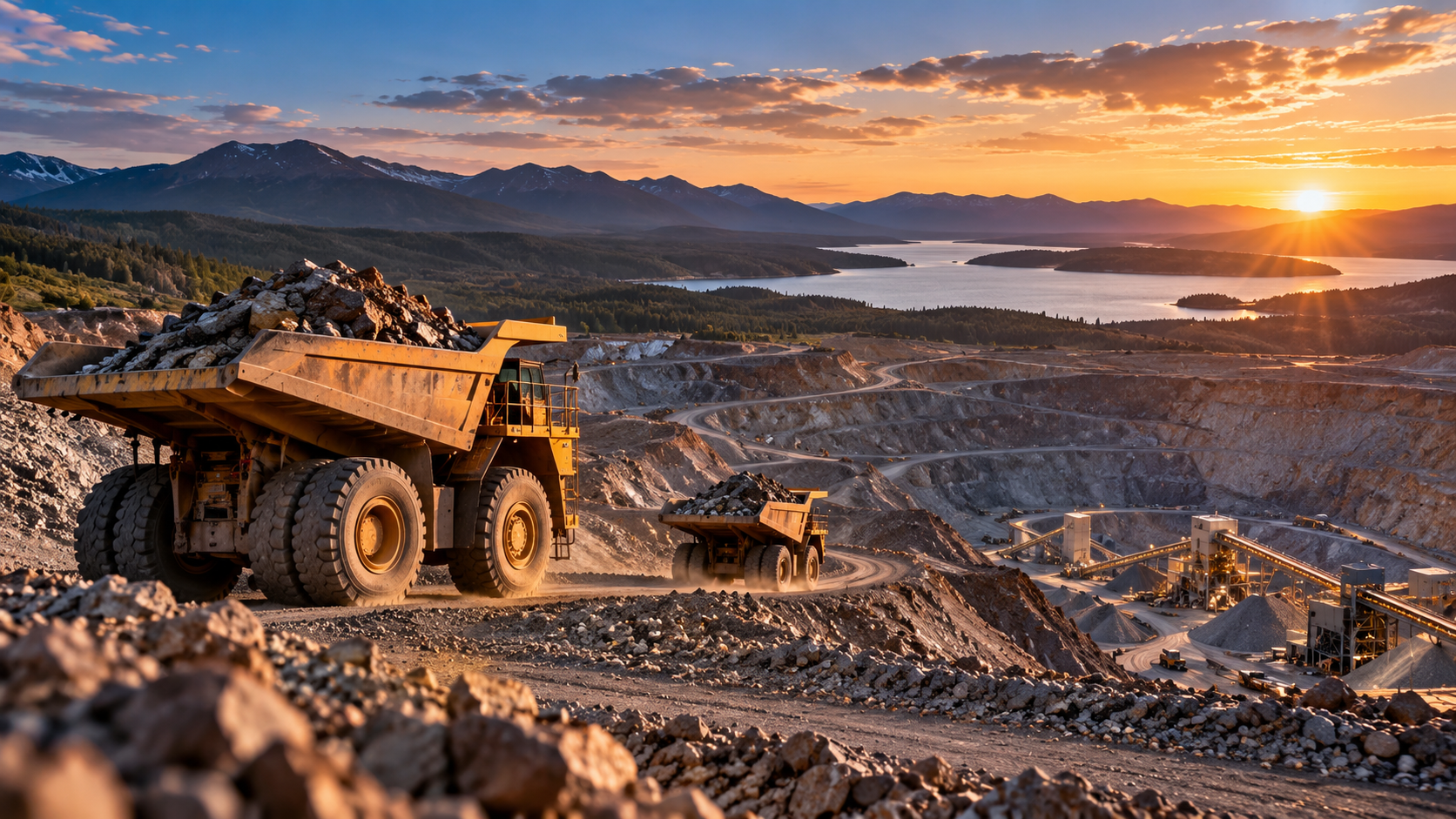
USA Rare Earth Makes a $2.8 Billion Move to Break China’s Grip on Critical Minerals

USA Rare Earth (Nasdaq: USAR) announced this morning a definitive agreement to acquire 100% of Serra Verde Group — owner of the Pela Ema rare earth mine and processing plant in Goiás, Brazil — in a transaction valued at approximately $2.8 billion. The deal is structured as $300 million in cash plus 126.849 million newly issued shares of USAR common stock, based on the company’s April 17 closing price of $19.95.

The acquisition is expected to close in the third quarter of 2026, pending regulatory approvals and customary closing conditions.

This is not a routine tuck-in. It is one of the most strategically significant critical minerals transactions to emerge from the Western world in years — and the timing is deliberate.

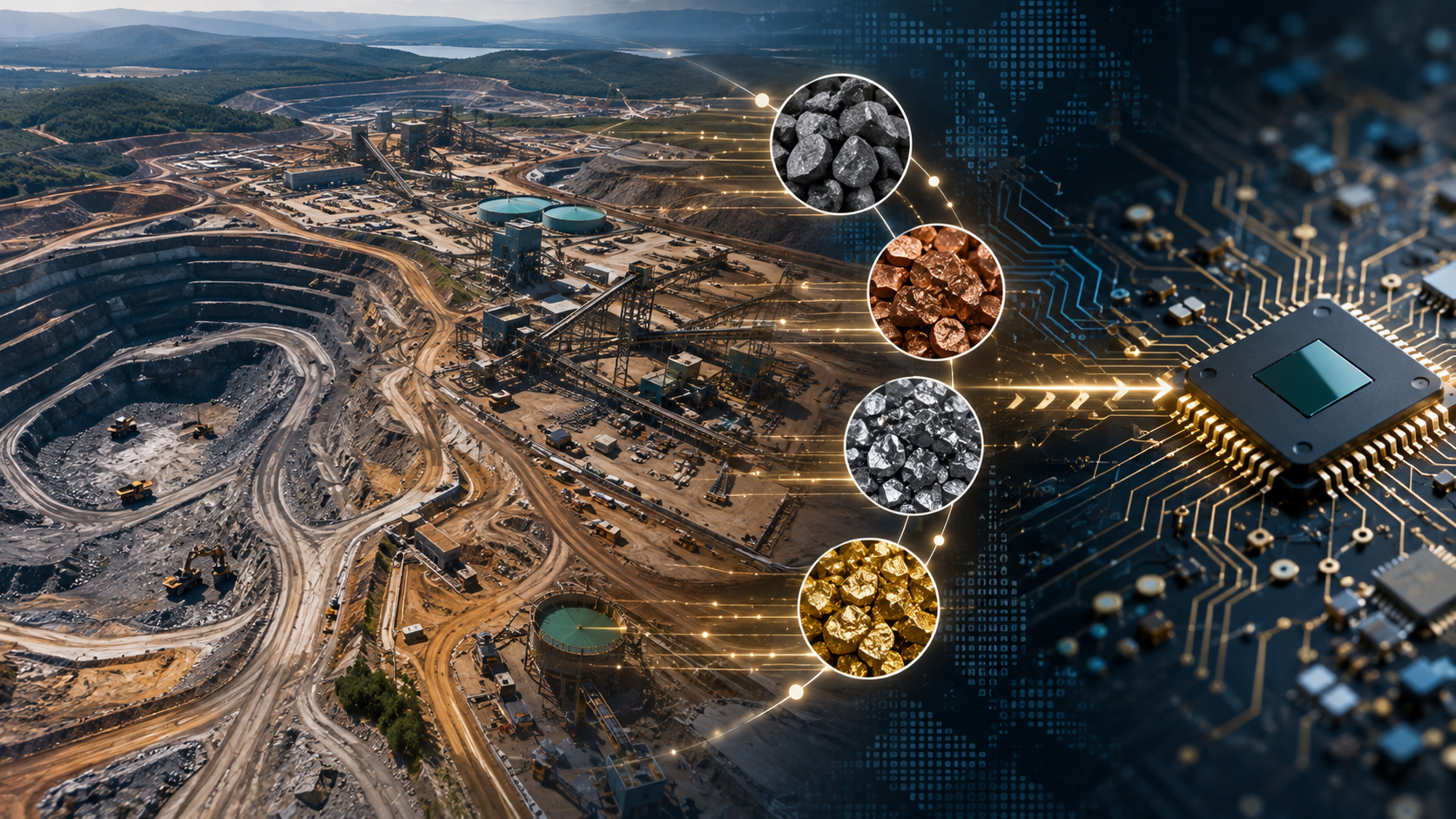
Serra Verde’s Pela Ema operation holds a distinction that very few assets in the world can claim: it is the only scaled producer outside of Asia capable of supplying all four magnetic rare earth elements — Neodymium (Nd), Praseodymium (Pr), Dysprosium (Dy), and Terbium (Tb) — at meaningful commercial volumes. These are the materials that go into permanent magnets, which in turn power electric vehicle motors, wind turbines, defense systems, and advanced electronics. China currently controls the overwhelming majority of global rare earth production and processing. Serra Verde represents a direct challenge to that dominance.

The operation is fully permitted and entered production in 2024 after more than $1.1 billion in capital investment. At Phase 1 nameplate capacity — expected to be reached by the end of 2027 — the mine is projected to produce approximately 6,400 metric tons of total rare earth oxide per year and generate annualized EBITDA of $550 to $650 million. The combined company is targeting approximately $1.8 billion in EBITDA by 2030.

The financial structure of this deal is notable beyond the headline price. Serra Verde has already secured a $565 million financing package from the U.S. International Development Finance Corporation to fund optimization and expansion through to positive cash flow. It has also locked in a 15-year, 100% offtake agreement with a special purpose vehicle capitalized by various U.S. government agencies and private capital sources — with guaranteed minimum floor prices for each of the four magnetic rare earths. That government-backed revenue floor substantially de-risks the asset and signals how seriously Washington views rare earth supply chain security as a national priority.

By end of 2027, Serra Verde’s output is expected to represent more than 50% of total non-China heavy rare earth supply globally — a figure that underscores just how critical this asset is to Western supply chain independence.

For USAR, the transaction adds Serra Verde leadership to its board, including Chairman Sir Mick Davis and CEO Thras Moraitis, who will also become President of the combined company. Pro-forma liquidity for the combined entity stands at approximately $3.2 billion.

Moelis & Company acted as exclusive financial advisor to USA Rare Earth. Goldman Sachs advised Serra Verde.

For small-cap investors tracking the critical minerals space, this is the deal that has been anticipated for years — and it closed on one of the most strategically defensible assets available outside of China.

USA Rare Earth to Acquire Texas Mineral Resources in Strategic Move to Consolidate Round Top Project

USA Rare Earth (NASDAQ: USAR) announced a definitive agreement to acquire Texas Mineral Resources Corp. (OTCQB: TMRC) in an all-stock transaction valued at approximately $73 million, a deal that would consolidate ownership of one of the most significant rare earth deposits in the United States. The transaction centers on the Round Top Heavy Rare Earth and Critical Minerals Project in West Texas, a large domestic resource that has drawn increasing attention amid global efforts to secure critical mineral supply chains.

Texas Mineral Resources currently holds an approximately 19% minority interest in the Round Top project, while USA Rare Earth operates the development through a joint venture structure. By acquiring Texas Mineral Resources, USA Rare Earth would effectively gain full ownership of the project, simplifying governance and aligning development strategy under a single operator. The companies said the transaction will be completed through the issuance of roughly 3.8 million shares of USA Rare Earth common stock to TMRC shareholders, with closing expected by the third quarter of 2026, subject to shareholder approval and customary closing conditions.

The Round Top deposit, located in Hudspeth County, Texas, roughly 85 miles southeast of El Paso, is considered one of the largest known deposits of heavy rare earth elements in North America. Heavy rare earths such as dysprosium and terbium are essential inputs for high-performance permanent magnets used in electric vehicles, defense technologies, robotics, and advanced electronics. As global demand for these materials continues to grow, governments and manufacturers have increasingly focused on developing domestic supply chains to reduce dependence on overseas processing and mining capacity.

USA Rare Earth has positioned Round Top as the cornerstone of its broader “mine-to-magnet” strategy, which aims to vertically integrate rare earth mining, processing, metal production, and magnet manufacturing within the United States. The company is advancing development of the deposit under an accelerated mining plan and has previously indicated that commercial production could begin later in the decade. At full scale, the operation is expected to process tens of thousands of metric tons of mineral feedstock per day by 2030, supporting the growing demand for critical materials used across high-technology and clean-energy industries.

The Round Top project also carries broader economic and strategic implications. Rare earth elements are widely considered critical to national security and advanced manufacturing, and the United States has prioritized domestic production after decades of reliance on foreign suppliers. China currently dominates global rare earth refining capacity, creating supply chain vulnerabilities that policymakers have increasingly sought to address through investment, policy initiatives, and support for domestic mining projects.

The consolidation of Round Top under a single owner may streamline project financing, engineering development, and permitting processes as the project moves toward the construction phase. USA Rare Earth has previously engaged engineering and infrastructure partners to support feasibility work and project planning tied to the future development of the mine and associated processing facilities.

For investors watching the rare earth and critical minerals sector, the acquisition underscores a broader trend of consolidation and vertical integration as companies seek to control strategic resources and build domestic supply chains. As demand for rare earth elements continues to expand across electric vehicles, renewable energy systems, and advanced electronics, projects like Round Top remain central to the evolving landscape of U.S. critical mineral development.

China Holds Back Key Rare Earths Despite Easing Other U.S. Export Curbs

Key Points:
– China lifts some trade curbs on 28 U.S. firms, but keeps rare earth metals off the table
– Export ban on 7 critical rare earth elements remains intact
– Dual-use export restrictions paused for 90 days amid renewed U.S.-China diplomacy
– Defense, energy, and EV sectors in U.S. remain exposed to supply risks

In a carefully calculated move, China announced on Thursday a temporary suspension of some trade restrictions targeting 28 American firms—but stopped short of lifting its export ban on seven critical rare earth elements, underscoring its ongoing strategic leverage over the United States.

The easing of some non-tariff measures comes just days after high-level trade talks in Geneva, where U.S. Treasury Secretary Scott Bessent and Chinese Vice Premier He Lifeng appeared together in a rare public show of diplomatic engagement. But while China’s Commerce Ministry agreed to suspend dual-use export curbs and temporarily removed 17 companies from its “unreliable entity list,” it retained export controls on key minerals like dysprosium, terbium, and yttrium—materials vital for U.S. defense and clean energy production.

The seven rare earths still restricted—samarium, gadolinium, terbium, dysprosium, lutetium, scandium, and yttrium—are central to everything from guided missiles to EV motors. According to analysts, this deliberate exclusion signals Beijing’s intent to maintain strategic pressure even as it opens the door to limited cooperation.

“This is China drawing a line in the sand,” said one Asia-based commodities analyst. “They’re signaling flexibility on diplomacy, but the core leverage—rare earth dominance—is not being sacrificed.”

The freeze on rare earth exports was initially introduced in early April as part of China’s retaliation against President Trump’s sweeping “Liberation Day” tariffs. That package included export licensing controls for the seven elements and the addition of several U.S. defense-adjacent companies to blacklists. While some of those companies, including Teledyne Brown Engineering and Kratos Unmanned Aerial Systems, received a 90-day reprieve, the rare earths ban remains firmly in place.

Notably, China’s Commerce Ministry released a parallel statement this week emphasizing the need for stronger national security oversight of its rare earth industry, including measures to combat smuggling and tighten internal supply chain controls. This was reinforced by state-linked social media accounts hinting at the metals’ impact on U.S. military readiness.

The U.S. currently sources over 70% of its rare earth imports from China, a vulnerability that has become more politically charged amid renewed trade hostilities. American efforts to diversify rare earth supply chains—such as investing in Australian mining firms or restarting domestic refining—remain years from full-scale viability.

For investors, the bifurcated approach by China suggests that while the broader trade environment may be softening temporarily, core strategic resources like rare earths are unlikely to be freely accessible in the near term. Defense contractors, energy manufacturers, and EV suppliers will continue to face uncertainty, potentially pushing up costs and driving supply chain shifts.

Until rare earth independence becomes a reality, this remains a pressure point Beijing is unlikely to relinquish.

Take a moment to take a look at more emerging growth natural resources companies by taking a look at Noble Capital Markets’ Research Analyst Mark Reichman’s coverage list.