Kuya Silver (KUYAF) – Thoughts on Recent Drilling at the Umm-Hadid Project


Thursday, September 03, 2026

Mark Reichman, Managing Director, Equity Research Analyst, Natural Resources, Noble Capital Markets, Inc.

Refer to the full report for the price target, fundamental analysis, and rating.

Encouraging Drill Results. Kuya Silver reported strong drilling results from the Umm-Hadid Project in Saudi Arabia, advancing toward a maiden NI 43-101 mineral resource estimate. Highlights include 26.10 meters grading 77.8 grams of silver per tonne and 9.17 meters grading 137.1 grams of silver per tonne, with both intervals containing exceptionally high-grade silver and gold zones. The new Target 01 drill results are part of an ongoing 10,000-meter drill program to define the continuity, geometry, and grade distribution of the silver-gold vein system and support delivery of a maiden mineral resource estimate and accompanying NI 43-101 technical report. 

Establishing Continuity. The current resource-definition work is focused on Target 01. High-grade mineralization has been encountered across multiple holes and drill sections, supporting the continuity of the broader silver-gold system. Target 01 covers approximately 4.5 kilometers by 2.5 kilometers, with the latest mineralized intervals occurring at relatively shallow depths averaging about 58 meters below surface.


Get the Full Report

Equity Research is available at no cost to Registered users of Channelchek. Not a Member? Click ‘Join’ to join the Channelchek Community. There is no cost to register, and we never collect credit card information.

This Company Sponsored Research is provided by Noble Capital Markets, Inc., a FINRA and S.E.C. registered broker-dealer (B/D).

*Analyst certification and important disclosures included in the full report. NOTE: investment decisions should not be based upon the content of this research summary. Proper due diligence is required before making any investment decision. 
Gold and Silver Added $5 Trillion in Value This Month

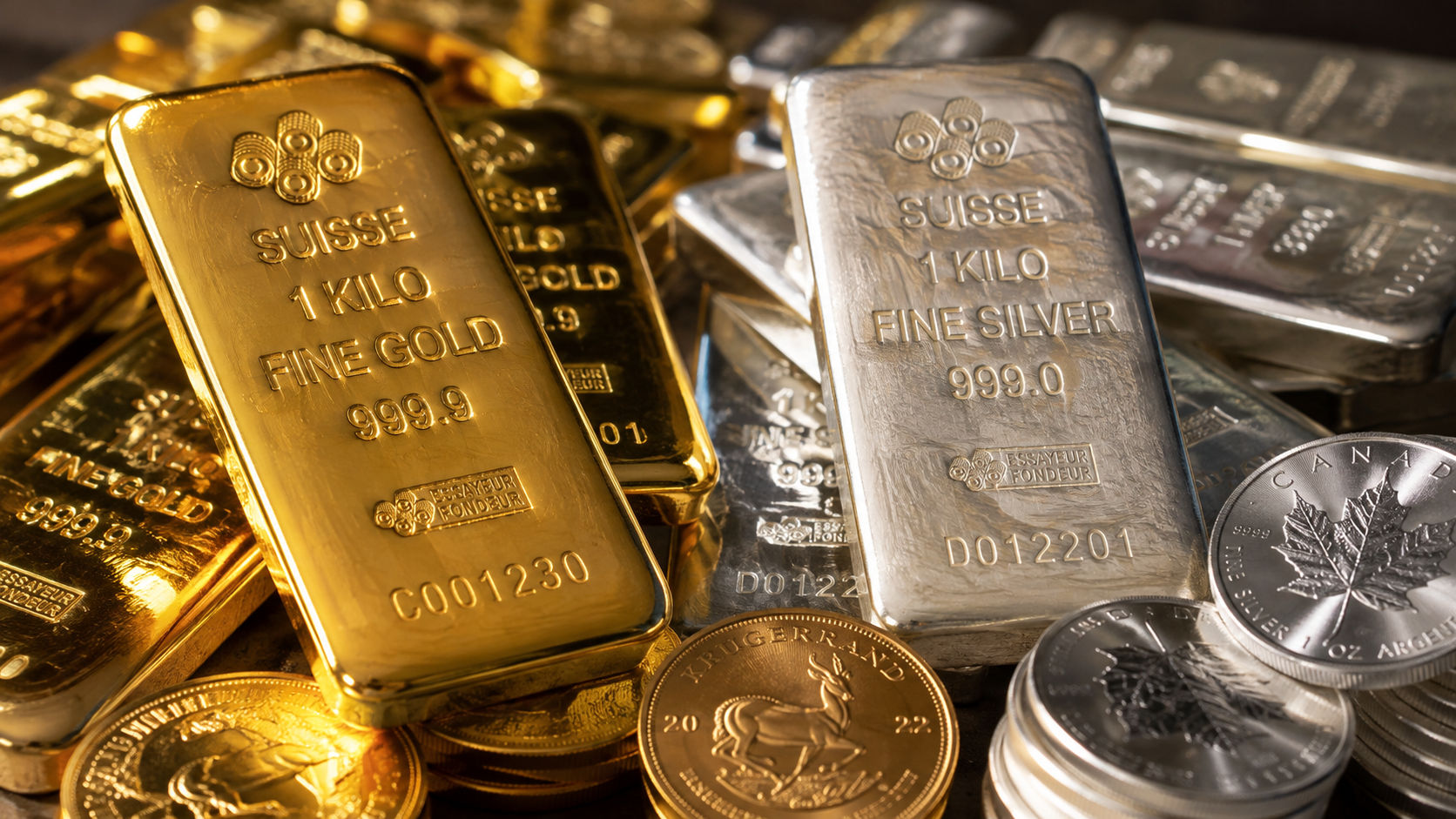
Gold and silver are having a genuinely remarkable stretch. Gold prices are up roughly 15% this month while silver has surged 19%, and combined, the two metals have added nearly $5 trillion in market value in just a few weeks, according to analysis from Bull Theory. Both remain below the record highs set earlier this year, but the pace of the move is striking, and the drivers behind it will look familiar if you’ve been following ChannelChek’s coverage this month.

A major catalyst for the late-August breakout traces directly back to the US Treasury’s decision to double its long-term bond buyback program to $4 billion per session, the same intervention we detailed when it first sent Treasury yields tumbling and lifted Bitcoin sharply higher. That move has triggered an aggressive wave of short covering and speculative buying across precious metals markets as well. Layered on top of that, the unresolved and escalating war between the US and Iran, which has pushed energy prices higher again in a story we covered just this past week, has reinforced gold’s role as the market’s primary safe-haven asset during periods of genuine geopolitical stress.

Silver Has a Story of Its Own

What makes silver’s outperformance particularly interesting is that it isn’t just riding gold’s coattails. The metal is facing a genuine physical supply deficit, compounded by industrial demand that has nothing to do with safe-haven positioning. Long-term structural consumption from AI data center infrastructure, electrical grid modernization, and advanced electronics, precisely the buildout we detailed in our recent look at the US data center construction boom, continues to absorb physical silver inventory faster than global mine production can keep pace. That is a demand story layered directly on top of a macro story, which helps explain why silver has outpaced gold’s already impressive move.

Truist’s chief investment officer recently upgraded his own outlook on gold from underweight back to neutral, citing several supporting factors: real yields have stopped climbing, partly because of the Treasury’s own buyback decision, gold has reclaimed its 200-day moving average in a positive technical signal, central banks continue adding to their gold reserves despite earlier concerns that demand might slow, and a softer US dollar, driven by cooling inflation data and a more dovish Fed posture, has provided an additional tailwind. He noted that with gold still roughly 15% below its recent highs, the overall weight of evidence now supports a more balanced view than the firm held previously.

For investors tracking the small and microcap space, this rally carries a specific implication worth watching. Smaller precious metals mining companies typically carry significantly more operating leverage to metal prices than large diversified miners, meaning a 15% to 19% move in the underlying commodity can translate into a considerably larger percentage move in smaller producers’ earnings and, potentially, their share prices. The setup here is genuinely three stories converging into one, monetary policy, geopolitical risk, and structural industrial demand from the same AI infrastructure buildout driving so much of this year’s market activity, all pushing in the same direction at once.

Kuya Silver (KUYAF) – Multiple Value Drivers Emerging


Friday, August 07, 2026

Mark Reichman, Managing Director, Equity Research Analyst, Natural Resources, Noble Capital Markets, Inc.

Refer to the full report for the price target, fundamental analysis, and rating.

Early results are encouraging. Kuya Silver reported encouraging preliminary sampling results from historic stockpiles and tailings at its Silver Kings Project in Northern Ontario, suggesting that previously mined above-ground materials may contain significant recoverable silver and cobalt. The strongest results came from the Kerr Lake Mill crushed stockpile, which returned a master composite grade of 168 g/t silver and 0.365% cobalt (276 g/t silver equivalent), while Frontier tailings returned 75 g/t silver and 0.037% cobalt. These findings support the company’s view that modern processing technologies could unlock value from legacy mining waste.

The program targeted multiple historic sites. The sampling program evaluated seven historic sites, including tailings facilities, blast rock stockpiles, and crushed material left by previous operators. These represent attractive reprocessing targets because historical mining methods were less efficient and often left behind economically valuable mineralization. While the results are preliminary and not representative of entire stockpiles, they demonstrate the potential for recovering silver, cobalt, and, in some cases, copper using modern sorting and processing techniques.


Get the Full Report

Equity Research is available at no cost to Registered users of Channelchek. Not a Member? Click ‘Join’ to join the Channelchek Community. There is no cost to register, and we never collect credit card information.

This Company Sponsored Research is provided by Noble Capital Markets, Inc., a FINRA and S.E.C. registered broker-dealer (B/D).

*Analyst certification and important disclosures included in the full report. NOTE: investment decisions should not be based upon the content of this research summary. Proper due diligence is required before making any investment decision. 
Kuya Silver (KUYAF) – Driving Mineral Resource Growth


Thursday, March 19, 2026

Mark Reichman, Managing Director, Equity Research Analyst, Natural Resources, Noble Capital Markets, Inc.

Hans Baldau, Associate Analyst, Noble Capital Markets, Inc.

Refer to the full report for the price target, fundamental analysis, and rating.

Kuya Silver is significantly scaling its exploration efforts at Bethania. The company has expanded its fully funded 2026 drill program to approximately 20,000 meters, making it the largest drilling campaign in the project’s history. By combining 10,000 meters of surface and 10,000 meters of underground drilling, Kuya seeks to extend known mineralization near existing operations and test new district scale targets, positioning the project for meaningful resource growth.

High-grade regional targets highlight strong expansion potential. Exploration has identified multiple vein systems beyond the current mine area, with high priority prospects such as Millococha, Tito PH, and Carmelitas demonstrating encouraging grades and geological continuity. These areas, supported by historic artisanal mining and recent sampling, suggest the presence of a broader mineralized system that could materially increase the overall resource base.


Get the Full Report

Equity Research is available at no cost to Registered users of Channelchek. Not a Member? Click ‘Join’ to join the Channelchek Community. There is no cost to register, and we never collect credit card information.

This Company Sponsored Research is provided by Noble Capital Markets, Inc., a FINRA and S.E.C. registered broker-dealer (B/D).

*Analyst certification and important disclosures included in the full report. NOTE: investment decisions should not be based upon the content of this research summary. Proper due diligence is required before making any investment decision. 

Gold and Silver Suffer Historic Selloff as Crowded Metals Trade Unravels

Gold and silver prices suffered a brutal reversal on Friday, marking one of the sharpest pullbacks in modern precious metals trading as a crowded bullish trade rapidly unwound. Gold futures plunged as much as 11%, briefly falling below $4,800 per ounce before stabilizing near $4,900, while silver collapsed more than 25% in its steepest one-day decline on record. The violent sell-off followed months of near-parabolic gains that had pushed both metals to historic highs and attracted increasingly speculative positioning.

The sudden reversal unfolded amid a broader risk-off move across global markets. Equities sold off sharply after President Trump nominated former Federal Reserve governor Kevin Warsh to succeed Jerome Powell as Fed chair, a decision markets interpreted as potentially restoring a more hawkish tilt to monetary policy. The US dollar strengthened in response, with the dollar index rising nearly 1%, adding pressure to metals that had benefited heavily from dollar weakness earlier this year.

Strategists largely agreed that the sell-off, while extreme, was not entirely unexpected. “The higher metals rise, the more likely 2026 will mark enduring price peaks — notably for silver — if history is a guide,” Bloomberg Intelligence senior commodity strategist Mike McGlone wrote, pointing to the speed and magnitude of the rally as warning signs. Gold and silver had become emblematic of the so-called “debasement trade,” fueled by expectations of aggressive rate cuts, fiscal expansion, and declining confidence in fiat currencies.

Ole Hansen, head of commodity strategy at Saxo Bank, warned earlier this week that the metals rally was entering a “dangerous phase.” According to Hansen, volatility itself became the catalyst for collapse. As price swings intensified, liquidity thinned, making the market vulnerable to forced selling. Once prices began to fall, leveraged positions were quickly unwound, accelerating losses and overwhelming buyers.

Gold’s rally had been particularly striking. Just days earlier, prices surged past $5,500 per ounce after the Federal Reserve held rates steady and Chair Jerome Powell offered limited resistance to a weakening dollar. Goldman Sachs had recently reiterated a bullish year-end target of $5,400, citing increased participation from private-sector investors and sustained demand for inflation hedges. That optimism evaporated quickly as sentiment flipped from fear of missing out to fear of being last out.

Silver’s decline was even more dramatic. After topping $120 per ounce earlier this week, the metal fell to around $87, still up roughly 28% year to date but far removed from its peak. Silver’s dual role as both a monetary and industrial metal tends to amplify volatility, and its explosive rise in 2025 left prices especially vulnerable to sharp corrections. JPMorgan analysts had cautioned earlier this month that silver had “significantly overshot” forecasted averages, even as they acknowledged the difficulty of calling a top in a momentum-driven market.

Despite the scale of the drop, some analysts argue the long-term bull case for precious metals may not be fully broken. Persistent fiscal deficits, geopolitical uncertainty, and structural shifts in global reserves could continue to support gold over time. Still, Friday’s crash served as a stark reminder that even the most compelling macro narratives can unravel quickly when trades become crowded — and that volatility cuts both ways.

Kuya Silver (KUYAF) – Letter of Intent to Purchase the Camila Processing Plant; Expansion Planned


Wednesday, January 28, 2026

Mark Reichman, Managing Director, Equity Research Analyst, Natural Resources, Noble Capital Markets, Inc.

Hans Baldau, Associate Analyst, Noble Capital Markets, Inc.

Refer to the full report for the price target, fundamental analysis, and rating.

Processing plant acquisition. Kuya Silver signed a Letter of Intent (LOI) to purchase 100% of SMRL Camila, the company that owns the Camila conventional flotation plant, for US$7.8 million, subject to closing conditions. The Camila plant is currently processing Kuya Silver’s mineralized material to produce silver and other metal concentrates on a toll-milling basis. The plant is located on a key transport corridor between the Bethania mine and Lima, Peru, where concentrate is shipped to port. Execution of a definitive agreement is subject to the completion of legal, financial, environmental, and technical due diligence.

Scalable processing capacity. The Camila plant currently operates at 150 metric tonnes per day with plans to increase production capacity to 300 to 350 tonnes per day, which Kuya Silver expects to undertake after closing the acquisition. The expansion is projected to require an additional capital investment in the range of US$0.7 million to US$1.0 million.


Get the Full Report

Equity Research is available at no cost to Registered users of Channelchek. Not a Member? Click ‘Join’ to join the Channelchek Community. There is no cost to register, and we never collect credit card information.

This Company Sponsored Research is provided by Noble Capital Markets, Inc., a FINRA and S.E.C. registered broker-dealer (B/D).

*Analyst certification and important disclosures included in the full report. NOTE: investment decisions should not be based upon the content of this research summary. Proper due diligence is required before making any investment decision. 
Are Investors Abandoning Crypto for Hard Assets?

The investment landscape entering 2026 has delivered an unmistakable verdict: when uncertainty strikes, capital flows to tangible assets. While cryptocurrencies continue to struggle with volatility and declining investor confidence, precious metals are shattering records in a historic surge that’s forcing investors to reconsider where true value resides.

In a stunning display of safe-haven demand, gold exploded past $5,100 per ounce in late January 2026, following a 65% gain throughout 2025. Silver achieved an even more extraordinary feat, soaring beyond $117 per ounce after rising over 200% in just 12 months. Platinum surged 121% while palladium rallied to breach $2,000 per ounce. This synchronized rally across all major precious metals represents the most significant wealth preservation movement in modern financial history.

Meanwhile, the cryptocurrency market tells a starkly different story. After finishing 2025 down 6% for Bitcoin and 11% for Ethereum, early 2026 has brought more pain. Bitcoin plunged below $90,000 in mid-January amid global risk-off sentiment, while Ethereum dropped below $3,000. Heavy liquidations continued to plague the market, with over $1 billion wiped out in a single January event as 182,000 traders saw their positions forcibly closed. Bitcoin ETFs recorded persistent outflows, with nearly $500 million exiting in late 2025 as investors lost confidence in digital assets.

The rotation from crypto to hard assets isn’t speculation—it’s quantifiable and accelerating. Gold funds attracted nearly $40 billion in 2025 alone, while gold mining funds soared 114% with $5.4 billion in net inflows during Q3—the largest quarterly move since 2009. Most tellingly, the Bitcoin-to-gold ratio collapsed by 50% throughout 2025 and continues to deteriorate. With gold now around $5,100 and Bitcoin at roughly $90,000, one bitcoin now buys less than 18 ounces of gold—down dramatically from highs where it purchased over 30 ounces.

Four converging forces explain this historic reallocation. The U.S. Dollar Index plummeted 10-11% in 2025, marking its worst performance in over five decades, driving investors urgently toward assets with intrinsic value. Goldman Sachs recently raised its December 2026 gold forecast to $5,400 per ounce. Federal Reserve rate cuts have made non-yielding assets like gold more attractive, while paradoxically failing to boost crypto as advocates predicted. Rising geopolitical tensions including tariff threats, military actions, and global debt fears have amplified safe-haven demand. Perhaps most critically, physical precious metals face real-world production limits—COMEX silver inventories plunged 26% in a single week in January 2026, triggering what analysts call a “run on the vaults” that pushed prices parabolic.

The market has spoken with unprecedented clarity: as gold breaches $5,100, silver soars past $117, and investment banks project gold could reach $6,000 by year-end, the evidence of a historic wealth rotation is irrefutable. When survival is at stake, investors don’t seek innovation—they seek preservation. And preservation, history repeatedly demonstrates, resides in physical assets that have maintained value for millennia, not digital tokens that have existed for barely a decade.

Silver Surges Past $100 an Ounce as Speculation, Tight Supply Fuel Historic Rally

Silver prices surged past the $100-per-ounce mark on Friday, reaching a milestone few market participants believed possible just a year ago. The move caps an extraordinary rally driven by speculative enthusiasm, strong investment demand, and years of structural supply deficits, while raising growing concerns about overheating and the risk of a sharp correction.

Spot silver climbed more than 5% on the day to trade above $101 per troy ounce, extending a powerful advance that began in 2025. The metal has gained roughly 40% since the start of 2026, following a staggering 147% surge last year—its strongest annual performance in more than four decades. Silver’s rally has been amplified by gold’s parallel rise, with gold prices also hitting record highs as geopolitical uncertainty and inflation hedging continue to dominate investor psychology.

Market analysts say silver’s lower absolute price compared to gold has made it especially attractive to retail investors, fueling momentum-driven buying. Waves of demand for physical bars and coins, combined with strong inflows into physically backed exchange-traded funds, have tightened available supply and intensified price moves.

The gold-to-silver ratio, a closely watched metric, has dropped sharply. It now takes just 50 ounces of silver to buy one ounce of gold—the lowest level in 14 years. Historically, such extremes have often preceded periods of underperformance for silver, suggesting the metal’s outperformance relative to gold may be stretched.

Fundamentally, the picture is more mixed. While silver benefits from its dual role as both a precious and industrial metal—used extensively in electronics, solar panels, and manufacturing—some analysts argue prices have outrun underlying demand. Bank of America estimates a fundamentally justified silver price closer to $60 an ounce, pointing to signs that solar-related demand may have peaked and that elevated prices could begin to curb industrial consumption.

Supply constraints, however, remain a key pillar of support. The silver market has recorded five consecutive years of structural deficits, a trend expected to continue into 2026. Recycling accounts for nearly 20% of global supply, but limited high-grade refining capacity has slowed the return of scrap metal to the market, preventing inventories from rebuilding quickly.

Although stockpiles in London and U.S. futures markets have partially recovered from last year’s lows, they remain well below historical norms. This reduced buffer has left the market more vulnerable to sudden surges in demand.

Looking ahead, analysts expect volatility to remain elevated. With some easing in physical market tightness and the possibility of profit-taking after the explosive rally, a pullback appears increasingly likely. Still, silver’s dramatic move above $100 underscores a broader reality: in an environment of geopolitical risk, supply constraints, and speculative fervor, precious metals remain firmly in the spotlight—and silver is leading the charge.

Metals at Record Highs: A Warning Sign for the Economy?

When virtually every metal on the commodities board flashes red-hot price signals simultaneously, savvy investors know to pay attention. Today’s market presents exactly that scenario, with precious and industrial metals alike reaching or approaching all-time highs—a phenomenon that historically precedes significant economic turbulence.

Gold continues setting fresh records, trading around $4,650 per ounce today after gaining roughly 73% over the past year. But gold’s ascent tells only part of the story. Silver has exploded to around $92 per ounce, marking an extraordinary 200% year-over-year surge. Platinum has climbed to approximately $2,411 per ounce, up 158% from last year, while palladium has nearly doubled, rising about 100% to trade near $1,907 per ounce.

The industrial metals complex mirrors this feverish activity. Copper smashed through $13,300 per metric ton today, marking a 38-40% year-over-year gain and setting new all-time highs. The surge reflects both AI-driven infrastructure demand and tariff-induced inventory stockpiling, with U.S. COMEX inventories ballooning from under 100,000 metric tons to over 500,000 metric tons in just one year.

When both safe-haven metals and industrial commodities rally simultaneously, it signals a dangerous market dynamic. Precious metals typically surge when investors flee traditional assets, seeking refuge from inflation, currency devaluation, or geopolitical instability. Industrial metals, conversely, usually rise on strong economic demand. Their concurrent ascent suggests investors are hedging against economic chaos while supply disruptions create artificial scarcity.

Base metal prices fall by around 30% on average during recessions, according to analysis from major financial institutions. The current recession risk for 2025 stands at 60%, with tariff-driven cuts to economic growth forecasts prompting analysts to turn bearish on near-term base metals prices. The mining sector itself appears to be pricing in recessionary conditions already.

The rally’s drivers paint a troubling picture. Supply disruptions from mining accidents and labor strikes have constrained copper output globally. Federal Reserve independence concerns following a criminal investigation into Chair Jerome Powell have driven safe-haven demand. Meanwhile, geopolitical flashpoints from Venezuela to Iran add fuel to the fire. Central bank gold purchases and rate cut expectations signal policymakers’ own concerns about economic stability.

History offers a stark lesson. Similar across-the-board metal rallies preceded the 2008 financial crisis and the early 1980s stagflation. When prices become untethered from fundamental demand and instead reflect fear, speculation, and monetary desperation, corrections inevitably follow—often accompanied by broader economic pain.

For small-cap investors, this environment demands defensive positioning. Companies with strong balance sheets, minimal commodity exposure, and recession-resistant business models deserve premium valuations. The metals market is flashing a warning sign that prudent investors ignore at their peril.

Kuya Silver (KUYAF) – Vertically Integrating its Operation


Wednesday, January 07, 2026

Mark Reichman, Managing Director, Equity Research Analyst, Natural Resources, Noble Capital Markets, Inc.

Hans Baldau, Associate Analyst, Noble Capital Markets, Inc.

Refer to the full report for the price target, fundamental analysis, and rating.

Private Placement Financing. Kuya Silver Corporation (OTCQB: KUYAF, CSE: KUYA) announced a brokered private placement pursuant to the listed issuer financing exemption of up to 15.0 million units of the company at a price of C$1.00 per unit for aggregate gross proceeds of up to C$15.0 million. Each unit will consist of one common share and one half of one common share purchase warrant. Each warrant entitles the holder to purchase one common share at an exercise price of C$1.30 per common share for a period of 36 months from the date of issuance.

Use of Proceeds. Kuya intends to use the net proceeds of the offering to advance the company’s Bethania project with the acquisition of and/or development of concentrate processing capacity. Kuya is evaluating several options, each of which is fully permitted and will allow the company to vertically integrate its production capabilities. Funds may also be used to explore the Silver Kings Project in Ontario, discretionary growth capital, and for general corporate purposes.


Get the Full Report

Equity Research is available at no cost to Registered users of Channelchek. Not a Member? Click ‘Join’ to join the Channelchek Community. There is no cost to register, and we never collect credit card information.

This Company Sponsored Research is provided by Noble Capital Markets, Inc., a FINRA and S.E.C. registered broker-dealer (B/D).

*Analyst certification and important disclosures included in the full report. NOTE: investment decisions should not be based upon the content of this research summary. Proper due diligence is required before making any investment decision. 
Gold and Silver Shatter Records as Investors Flock to Hard Assets Amid Global Uncertainty

Precious metals are closing out the year with extraordinary momentum, underscoring a broader shift in global investment sentiment toward safety, scarcity, and real assets. Gold, silver, and platinum all surged to fresh all-time highs this week, extending one of the strongest rallies in modern market history and signaling growing unease beneath the surface of global financial markets.

Spot gold climbed above $4,530 an ounce, capping a year in which the metal has gained roughly 70%. Silver has been even more explosive, soaring more than 150% year-to-date and briefly crossing the $75 mark. Platinum, often overshadowed by its peers, has joined the rally with force, jumping more than 40% in December alone as supply deficits tighten and industrial demand rebounds.

At its core, the rally reflects a powerful shift in investor psychology. Heightened geopolitical tensions—from US actions in Venezuela to military operations in Africa—have revived gold’s traditional role as a safe-haven asset. At the same time, a weakening US dollar has amplified gains, making dollar-priced commodities more attractive to global investors. The Bloomberg Dollar Spot Index’s sharp weekly decline has provided fresh fuel for metals already in motion.

Monetary policy has played an equally important role. Three interest rate cuts by the US Federal Reserve this year have reduced the opportunity cost of holding non-yielding assets like gold and silver. With markets increasingly pricing in further easing in 2026, investors are positioning ahead of a prolonged low-rate environment. The result has been strong inflows into exchange-traded funds, particularly gold-backed vehicles, signaling institutional conviction rather than short-term speculation.

Beyond macro policy, deeper structural concerns are driving what many analysts describe as the “debasement trade.” Rising government debt levels, persistent fiscal deficits, and political pressure on central bank independence have eroded confidence in fiat currencies and sovereign bonds. In response, investors are reallocating toward tangible assets perceived as stores of value in an era of monetary experimentation.

Silver’s rally highlights another critical theme: supply constraints meeting financial leverage. Following a historic short squeeze earlier in the year, physical silver availability remains tight across key global hubs. While speculative positions continue to grow on paper, the limited supply of deliverable metal has intensified price pressures. Potential US trade restrictions on critical mineral imports have only added to the uncertainty, reinforcing silver’s dual appeal as both a monetary and industrial asset.

Platinum’s surge reflects similar dynamics. Persistent supply disruptions in South Africa, combined with strong demand from automotive and jewelry sectors, have pushed the market into its third consecutive annual deficit. As investors broaden their exposure beyond gold, platinum is increasingly viewed as an undervalued hedge with asymmetric upside.

Taken together, the record-breaking rally in precious metals is not an isolated phenomenon—it is a mirror of today’s investment landscape. While equity markets remain resilient, the surge in hard assets suggests investors are quietly hedging against volatility, policy risk, and currency erosion. As the year draws to a close, gold and silver’s ascent sends a clear message: confidence may be high on the surface, but caution is deeply embedded in global portfolios.

Kuya Silver (KUYAF) – Umm Hadid: Early-Stage Discovery


Tuesday, December 23, 2025

Mark Reichman, Managing Director, Equity Research Analyst, Natural Resources, Noble Capital Markets, Inc.

Hans Baldau, Associate Analyst, Noble Capital Markets, Inc.

Refer to the full report for the price target, fundamental analysis, and rating.

High-grade silver-gold system confirmed. Kuya Silver reported strong initial exploration results from the Umm Hadid Project in Saudi Arabia, confirming high-grade silver-gold mineralization over a large area measuring approximately 6.0 km by 2.5 km. In our view, the scale of the mineralized footprint and grade tenor materially de-risks the project at an early stage. Umm Hadid is operated by Silver Mining LLC, a joint venture between Sumou Holding and Kuya Silver.

Maiden drilling validates surface results. The first drill program comprised 29 diamond drill holes totaling roughly 5,000 meters across three target areas defined by surface sampling. Drilling returned high-grade intercepts of up to 1,483.9 g/t silver equivalent over two meters, with several additional intersections grading several hundred grams per tonne. Surface sampling of 460 grab samples averaged 86.1 g/t silver equivalent, with peak values reaching 1,359.8 g/t. We believe a strong gold-silver correlation supports the presence of a large hydrothermal system.


Get the Full Report

Equity Research is available at no cost to Registered users of Channelchek. Not a Member? Click ‘Join’ to join the Channelchek Community. There is no cost to register, and we never collect credit card information.

This Company Sponsored Research is provided by Noble Capital Markets, Inc., a FINRA and S.E.C. registered broker-dealer (B/D).

*Analyst certification and important disclosures included in the full report. NOTE: investment decisions should not be based upon the content of this research summary. Proper due diligence is required before making any investment decision. 
Gold and Silver Surge to All-Time Highs as Geopolitical Risks Reshape Global Markets

Gold and silver have surged to historic highs, underscoring a powerful shift in global investor sentiment as geopolitical tensions intensify and confidence in traditional financial systems continues to erode. The rally marks one of the strongest performances for precious metals in more than four decades, driven by a potent mix of political uncertainty, monetary policy expectations, and structural demand.

Gold briefly climbed above $4,400 per ounce, eclipsing its previous record set earlier this year, while silver pushed toward the $70 level, a price not seen in modern trading history. These moves are not isolated technical breakouts; they reflect a broader re-pricing of risk across global markets as investors seek safety amid escalating international conflicts and economic uncertainty.

Geopolitical flashpoints have multiplied in recent months. The United States has intensified economic and energy pressure on Venezuela, while the conflict between Russia and Ukraine has expanded beyond traditional battlefields into global shipping lanes. Meanwhile, rising tensions between major world powers — including strained U.S.–China relations and growing unease in parts of Asia — have added to a climate of persistent instability. Historically, such environments have favored hard assets, and this cycle is proving no different.

At the same time, expectations for looser monetary policy have reinforced the rally. Markets are increasingly pricing in multiple U.S. interest rate cuts in 2026 as economic data shows signs of cooling inflation and slower job growth. Lower interest rates tend to weaken the opportunity cost of holding non-yielding assets like gold and silver, making them more attractive relative to bonds and cash.

Central banks have played a critical role in underpinning gold’s rise. Official sector purchases remain elevated as nations diversify reserves away from the U.S. dollar and reduce exposure to sovereign debt. This trend has been amplified by political rhetoric that has raised concerns about the long-term independence of central banks and the sustainability of ballooning government deficits.

Investor demand has followed suit. Gold-backed exchange-traded funds have recorded steady inflows, while silver has benefited from speculative activity and lingering supply disruptions following a historic short squeeze earlier in the year. Industrial demand — particularly for silver and platinum in energy, technology, and manufacturing — has added another layer of support.

Beyond traditional investors, new participants are entering the precious metals market. Corporate treasuries, alternative asset managers, and even stablecoin issuers are increasingly using physical metals as balance-sheet hedges, broadening the capital base supporting prices and making demand more resilient.

Looking ahead, major financial institutions remain bullish. Several banks project gold prices continuing higher into 2026, citing constrained physical supply, sustained central-bank buying, and ongoing geopolitical risk. While short-term volatility is inevitable, the underlying drivers of the rally appear firmly intact.

In an era defined by geopolitical fragmentation, monetary uncertainty, and rising systemic risk, gold and silver are once again fulfilling their historical role: not just as commodities, but as financial insurance in an increasingly unpredictable world.