Cardinal Infrastructure Expands into Georgia with A.L. Grading Acquisition, Accelerating Southeast Growth Strategy

Cardinal Infrastructure Group, Inc. (NASDAQ: CDNL) announced the acquisition of A.L. Grading Contractors, a Sugar Hill, Georgia-based grading and site development services provider, marking a significant step in the company’s expansion beyond its North Carolina roots and reinforcing its acquisition-led growth strategy.

The transaction adds a well-established regional contractor with approximately $160 million in annual sales to Cardinal’s platform. For a recently public small-cap company, the deal meaningfully increases geographic reach while strengthening service capabilities in grading, utilities, and residential site preparation across one of the fastest-growing regions in the Southeast.

Cardinal went public in late 2025 with a stated objective of building a scaled civil infrastructure operator through a combination of organic growth and targeted acquisitions. The addition of A.L. Grading aligns squarely with that strategy. Georgia’s population growth, housing demand, and ongoing development activity provide a sizable runway for infrastructure and site development work, giving Cardinal exposure to a broader pipeline of public and private projects.

The company also provided preliminary 2025 operating results alongside the acquisition announcement, signaling strong underlying momentum. Cardinal expects full-year revenue in the range of approximately $452 million to $460 million, representing roughly 45% year-over-year growth. Backlog expanded more than 30%, providing improved revenue visibility entering 2026. Those metrics suggest the company is not relying solely on M&A to drive growth but is also benefiting from strong project execution and demand fundamentals.

For small-cap investors, the combination of accelerating organic performance and disciplined bolt-on acquisitions can be particularly compelling. Infrastructure services is a fragmented sector, especially at the regional level. Operators with access to public capital and a scalable platform often have the opportunity to consolidate smaller private contractors, extract operating efficiencies, and improve bidding capacity on larger, multi-state contracts.

The acquisition also enhances Cardinal’s competitive positioning. With a larger footprint and expanded capabilities, the company can pursue more complex projects and serve developers operating across state lines. Geographic diversification may also help smooth revenue volatility tied to local permitting cycles or municipal spending patterns.

Importantly, this move comes at a time when capital markets remain selective for small-cap issuers. Companies demonstrating tangible growth, backlog expansion, and integration discipline are more likely to attract investor support. Cardinal’s ability to announce both a meaningful acquisition and strong forward outlook in the same update positions it as an emerging consolidator in the Southeast civil construction space.

While integration risk is always present in acquisition-driven strategies, the industrial services model often lends itself to scalable roll-ups when executed carefully. For Cardinal, expanding into Georgia represents more than a one-off transaction—it signals intent to build a broader regional infrastructure platform.

As infrastructure investment and residential development remain key economic drivers in the Southeast, Cardinal’s latest acquisition underscores how small-cap industrial companies can leverage public market access to accelerate growth and expand market share in fragmented sectors

Hims & Hers to Acquire Eucalyptus in $1.15 Billion Deal to Expand Global Digital Health Footprint

Hims & Hers Health, Inc. has announced a definitive agreement to acquire Eucalyptus in a transaction valued at up to $1.15 billion, marking one of the most significant global expansion moves in the consumer telehealth sector to date. The deal positions Hims & Hers to accelerate its ambition of becoming the leading global consumer health platform, extending its reach well beyond the United States.

Under the terms of the agreement, approximately $240 million will be paid in cash at closing, with the remaining consideration structured as deferred payments and performance-based earnouts through early 2029. The company has emphasized that the transaction is designed to preserve balance sheet flexibility, with most of the funding expected to come from existing cash reserves and future U.S. operating cash flows. The acquisition is subject to regulatory approvals and is anticipated to close in mid-2026.

The strategic logic behind the transaction is straightforward: scale, infrastructure, and international expertise. Eucalyptus operates a portfolio of digital health brands across Australia, the United Kingdom, Germany, Japan, and Canada, and has served more than 775,000 customers. With an annual revenue run-rate exceeding $450 million and triple-digit year-over-year ARR growth throughout 2025, Eucalyptus brings both growth momentum and operational discipline to the combined platform.

For Hims & Hers, whose U.S. platform has built a reputation for direct-to-consumer access to personalized treatments across areas such as mental health, dermatology, sexual health, and weight management, the deal creates a ready-made international footprint. Rather than entering new markets from scratch, the company gains regulatory expertise, localized clinical infrastructure, and established consumer brands in key geographies.

Chief Executive Officer Andrew Dudum framed the acquisition as the next logical step in the company’s evolution, emphasizing that while healthcare challenges are universal, solutions must be tailored regionally. By integrating Eucalyptus’ local operating model with Hims & Hers’ technology platform and brand infrastructure, the company aims to expand access to personalized care globally while maintaining clinical quality and compliance standards.

Eucalyptus’ credibility adds weight to the expansion strategy. The company has facilitated nearly two million consultations and has published more than 20 peer-reviewed studies examining patient outcomes and adherence. It is also the first Australian telehealth provider accredited by the Australian Council on Healthcare Standards, underscoring its regulatory and clinical rigor.

Leadership continuity appears central to the integration plan. Eucalyptus CEO Tim Doyle will join Hims & Hers as Senior Vice President of International, overseeing global operations outside the U.S. His experience scaling digital healthcare businesses across multiple regulatory environments is expected to be instrumental as the company pushes deeper into Europe and Asia-Pacific markets.

From a competitive standpoint, the acquisition strengthens Hims & Hers’ position as pharmaceutical manufacturers, biotech firms, and diagnostic companies increasingly seek scalable digital distribution partners. The combined entity will offer capabilities ranging from online pharmacy fulfillment to concierge-style telehealth services, broadening its appeal across therapeutic categories.

If successfully executed, the deal could establish category leadership in Australia and meaningfully expand market share in the UK and Germany within the next two years. More broadly, it signals that consumer-centric digital health platforms are entering a new phase of consolidation and global ambition.

For investors and industry observers alike, this transaction is less about short-term expansion and more about building infrastructure for long-term dominance in global consumer healthcare.

Power Metallic Mines Inc. (PNPNF) – Recent Assay Results and Observations from the Summer-Fall 2025 Drilling Program


Thursday, February 19, 2026

Power Metallic is a Canadian exploration company focused on advancing the Nisk Project Area (Nisk–Lion–Tiger)—a high–grade Copper–PGE, Nickel, gold and silver system—toward Canada’s next polymetallic mine. On 1 February 2021, Power Metallic (then Chilean Metals) secured an option to earn up to 80% of the Nisk project from Critical Elements Lithium Corp. (TSX–V: CRE). Following the June 2025 purchase of 313 adjoining claims (~167 km²) from Li–FT Power, the Company now controls ~212.86 km² and roughly 50 km of prospective basin margins. Power Metallic is expanding mineralization at the Nisk and Lion discovery zones, evaluating the Tiger target, and exploring the enlarged land package through successive drill programs. Beyond the Nisk Project Area, Power Metallic indirectly has an interest in significant land packages in British Columbia and Chile, by its 50% share ownership position in Chilean Metals Inc., which were spun out from Power Metallic via a plan of arrangement on February 3, 2025. It also owns 100% of Power Metallic Arabia which owns 100% interest in the Jabul Baudan exploration license in The Kingdon of Saudi Arabia’s JabalSaid Belt. The property encompasses over 200 square kilometres in an area recognized for its high prospectivity for copper gold and zinc mineralization. The region is known for its massive volcanic sulfide (VMS) deposits, including the world-class Jabal Sayid mine and the promising Umm and Damad deposit.

Mark Reichman, Managing Director, Equity Research Analyst, Natural Resources, Noble Capital Markets, Inc.

Hans Baldau, Associate Analyst, Noble Capital Markets, Inc.

Refer to the full report for the price target, fundamental analysis, and rating.

Expanding the High-Grade Core at Lion. Summer-Fall 2025 drilling successfully extended high-grade mineralization down plunge at the Lion Zone, with impressive intercepts including 8.40 meters grading 8.05% copper equivalent recovered, and 5.10 meters grading 9.86% copper equivalent recovered, reinforcing strong vertical continuity.

Precious Metals Significantly Enhance Value. Assays revealed substantial palladium, platinum, and gold contributions, materially boosting copper-equivalent grades and highlighting the robust polymetallic nature of the deposit.


Get the Full Report

Equity Research is available at no cost to Registered users of Channelchek. Not a Member? Click ‘Join’ to join the Channelchek Community. There is no cost to register, and we never collect credit card information.

This Research is provided by Noble Capital Markets, Inc., a FINRA and S.E.C. registered broker-dealer (B/D).

*Analyst certification and important disclosures included in the full report. NOTE: investment decisions should not be based upon the content of this research summary. Proper due diligence is required before making any investment decision. 

NeuroSense Therapeutics Ltd. (NRSN) – Post-Phase 2b Analysis Demonstrates Survival Benefit and Mortality Risk Reduction


Thursday, February 19, 2026

Robert LeBoyer, Senior Vice President, Equity Research Analyst, Biotechnology, Noble Capital Markets, Inc.

Refer to the full report for the price target, fundamental analysis, and rating.

PrimeC Demonstrates Survival Benefit and 65% Mortality Risk Reduction. NeuroSense announced a Post-Phase 2b Analysis of its trial testing PrimeC in ALS. New data shows PrimeC patients had an additional 14 months (about 70%) survival with 65% reduction in risk of death. These improvements in overall survival correlate with previous Phase 2b Paradigm data that showed improvements in several endpoints of function, biomarkers, and survival.

New Data Shows Continued Improvement In Survival. The newly released data show the PrimeC treated patients had a median survival benefit of 36.3 months compared with 21.4 months for the group that received placebo then PrimeC during the extension study. This improvement of about 14.9 months was a benefit of 70% in survival. The Hazard Ratio (HR, the probability of an event occurring) reduced risk of death by 65% (p=0.0037).


Get the Full Report

Equity Research is available at no cost to Registered users of Channelchek. Not a Member? Click ‘Join’ to join the Channelchek Community. There is no cost to register, and we never collect credit card information.

This Company Sponsored Research is provided by Noble Capital Markets, Inc., a FINRA and S.E.C. registered broker-dealer (B/D).

*Analyst certification and important disclosures included in the full report. NOTE: investment decisions should not be based upon the content of this research summary. Proper due diligence is required before making any investment decision. 

Fed Holds the Line: Officials Want More Proof Inflation Is Cooling Before Cutting Rates

Minutes from the latest meeting of the Federal Open Market Committee (FOMC) show a central bank increasingly cautious about cutting interest rates further, with most officials signaling they want clearer evidence that inflation is moving sustainably toward their 2% target before easing policy again.

At its Jan. 27–28 meeting, the policy-setting arm of the Federal Reserve voted to hold its benchmark interest rate steady at roughly 3.6%, following three rate cuts late last year. While two officials dissented in favor of another quarter-point reduction, the overwhelming majority agreed that the current rate is close to “neutral” — neither stimulating nor restraining economic growth.

The minutes, released Wednesday, reveal a committee divided into several camps. “Several” participants indicated that additional cuts would likely be appropriate if inflation continues to decline. However, “some” favored holding rates unchanged for an extended period, reflecting concerns that price pressures remain too elevated. A smaller group even expressed openness to signaling that the Fed’s next move could be either a rate cut or a hike, depending on incoming data — a notable shift from prior meetings when further tightening was largely ruled out.

Fed Chair Jerome Powell struck a measured tone following the January meeting, emphasizing that the central bank is “well positioned” to assess how economic conditions evolve before making additional adjustments. Powell pointed to signs of stabilization in the labor market and a still-expanding economy as justification for patience.

Recent economic data appear to reinforce that cautious stance. Consumer prices rose 2.4% in January compared with a year earlier, not far from the Fed’s target. Yet the central bank’s preferred inflation gauge — the personal consumption expenditures (PCE) index — is running closer to 3%, suggesting underlying price pressures remain sticky. Officials made clear in the minutes that they want greater confidence inflation is moving decisively lower before resuming rate cuts.

At the same time, the labor market has shown renewed resilience. Employers added 130,000 jobs in January, the strongest monthly gain in more than a year, while the unemployment rate edged down to 4.3%. Many officials described the job market as stabilizing after some softening in late 2025. Because rate cuts are typically deployed to prevent rising unemployment or stimulate slowing growth, the improving labor backdrop reduces the urgency for immediate action.

The Fed’s decision to stand pat also came despite public pressure from President Donald Trump, who has called for significantly lower rates. Policymakers, however, signaled they remain focused on their dual mandate of price stability and maximum employment rather than political considerations.

Markets are now recalibrating expectations for 2026. Earlier forecasts anticipated multiple rate cuts this year, but the tone of the minutes suggests the path forward will depend heavily on inflation data in the coming months. If price growth stalls above 2%, the Fed may extend its pause. If inflation resumes its downward trend, gradual cuts could still materialize.

For now, the message from the FOMC is clear: the battle against inflation is not yet fully won, and patience — not haste — will guide the next move in U.S. monetary policy.

Nvidia and Meta Deepen AI Alliance With Millions of Next-Gen Chips

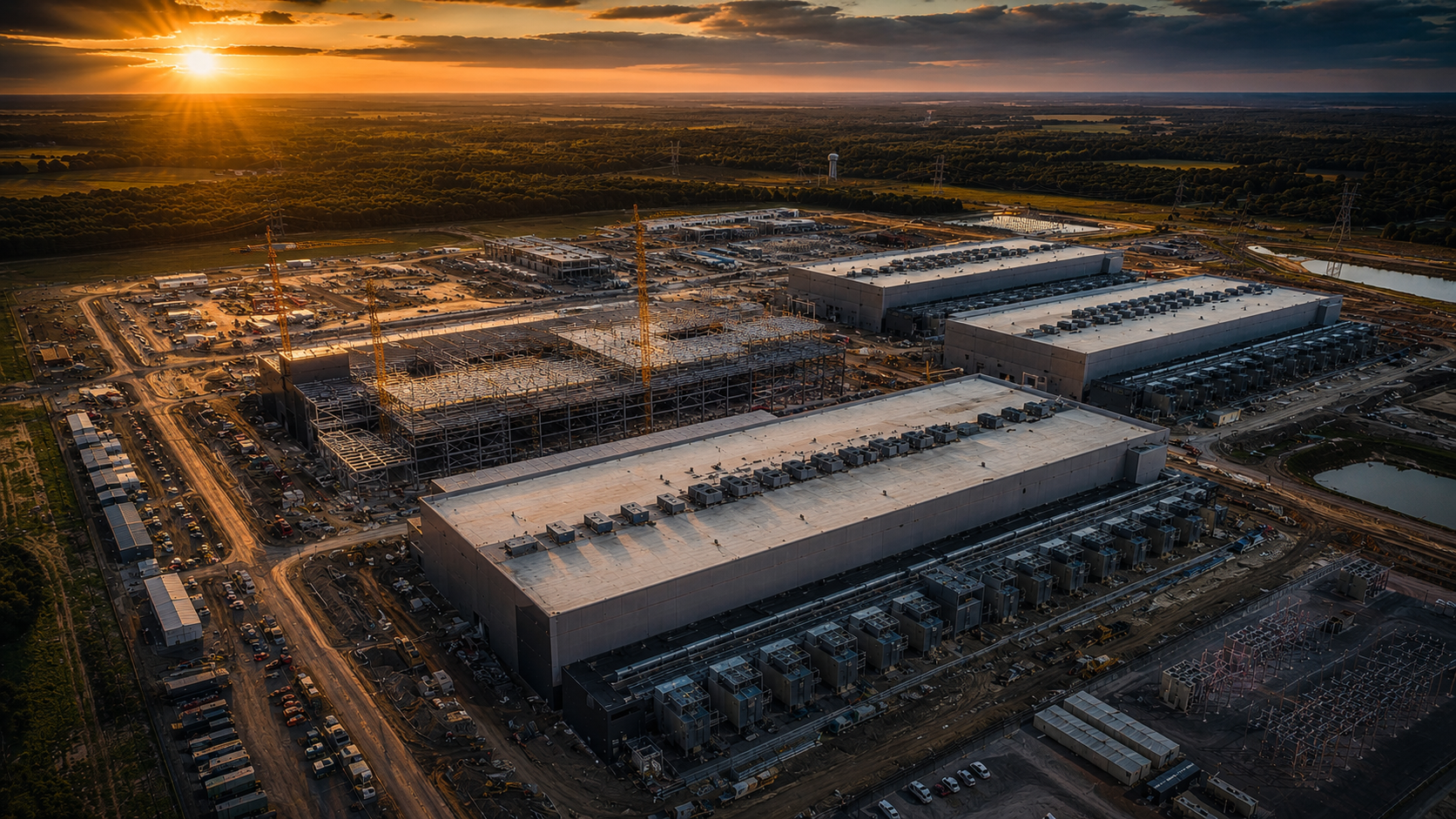
AI infrastructure is getting another massive upgrade. Nvidia and Meta have announced an expanded multiyear, multigenerational partnership that will deliver millions of Nvidia’s latest GPUs, CPUs, and networking products into Meta’s data centers. The move underscores just how aggressively the world’s largest tech platforms are investing in artificial intelligence — even as investors question the sustainability of that spending.

Under the agreement, Meta will deploy Nvidia’s Blackwell and next-generation Rubin GPUs to train and run AI models across its family of apps, including Facebook, Instagram, and WhatsApp. The chips will power everything from recommendation systems to advanced generative AI tools designed for billions of users worldwide.

Nvidia CEO Jensen Huang described the partnership as a deep integration across computing layers, from GPUs and CPUs to networking and software. The goal is to bring Nvidia’s full-stack AI platform into Meta’s infrastructure, allowing the company’s researchers and engineers to push the boundaries of large-scale AI deployment.

Importantly, Meta will use the chips both in its own data centers and through Nvidia’s Cloud Partner ecosystem, which includes providers like CoreWeave. That hybrid strategy gives Meta additional flexibility to scale workloads quickly without waiting for new facilities to come online.

Beyond GPUs, Meta is also rolling out Nvidia’s Grace CPU-only servers, with plans to adopt the next-generation Vera CPU systems in 2027. These CPU deployments are notable because they signal Nvidia’s growing ambition to compete more directly in the traditional server market long dominated by Intel and AMD. If Nvidia can establish a foothold in CPU-heavy environments alongside its GPU dominance, it could reshape the balance of power in enterprise data centers.

Meta also plans to integrate Nvidia’s Confidential Computing technology into WhatsApp, enhancing privacy protections by enabling secure data processing on GPUs. As AI systems increasingly rely on sensitive personal data, secure processing capabilities are becoming a competitive differentiator.

The announcement comes at a time when AI-related stocks have faced renewed scrutiny. Shares of Nvidia and Meta have cooled in early 2026 amid concerns that hyperscalers may be overspending on AI hardware. Companies such as Microsoft, Amazon, and Google have introduced their own custom AI chips, raising questions about whether Nvidia’s GPUs will remain indispensable.

There are also broader concerns about whether all AI workloads truly require high-performance GPUs, or whether specialized processors could handle certain tasks more efficiently. Yet analysts argue that Nvidia’s advantage lies in versatility. GPUs can support a wide range of AI applications, from training large language models to running inference at scale, while custom chips tend to be optimized for narrower use cases.

For Meta, the decision is clear: scale matters. Running AI at the level required to serve billions of users demands proven hardware, deep software integration, and reliable supply chains. By doubling down on Nvidia, Meta is signaling that it views AI not as an experimental feature, but as core infrastructure for its future.

The partnership reinforces Nvidia’s central role in the AI ecosystem — and shows that, despite market jitters, the largest tech companies are still betting big on next-generation computing power.

Seanergy Maritime (SHIP) – Strong 2025 Finish; Favorable 2026 Outlook


Wednesday, February 18, 2026

Seanergy Maritime Holdings Corp. is a prominent pure-play Capesize shipping company listed in the U.S. capital markets. Seanergy provides marine dry bulk transportation services through a modern fleet of Capesize vessels. The Company’s operating fleet consists of 18 vessels (1 Newcastlemax and 17 Capesize) with an average age of approximately 13.4 years and an aggregate cargo carrying capacity of approximately 3,236,212 dwt. Upon completion of the delivery of the previously announced Capesize vessel acquisition, the Company’s operating fleet will consist of 19 vessels (1 Newcastlemax and 18 Capesize) with an aggregate cargo carrying capacity of approximately 3,417,608 dwt. The Company is incorporated in the Marshall Islands and has executive offices in Glyfada, Greece. The Company’s common shares trade on the Nasdaq Capital Market under the symbol “SHIP”.

Mark Reichman, Managing Director, Equity Research Analyst, Natural Resources, Noble Capital Markets, Inc.

Hans Baldau, Associate Analyst, Noble Capital Markets, Inc.

Refer to the full report for the price target, fundamental analysis, and rating.

Q4’25 financial results. Seanergy reported Q4 net revenues of $49.4 million and adjusted EBITDA of $28.9 million, exceeding our estimates of $48.3 million and $28.2 million, respectively. Adjusted net income and adjusted EPS were $14.2 million and $0.68, ahead of our $11.7 million and $0.56 estimates. The stronger than expected earnings were due to a higher average time charter equivalent (TCE) rate of $26,614 per day versus our $26,000 estimate.

Favorable Capesize market. The Capesize market is supported by favorable supply and demand fundamentals. The global orderbook stands at roughly 12% of the fleet, while approximately 40% of Capesize, Newcastlemax, and VLOC vessels are over 15 years old, with special surveys expected to reduce effective supply by 1.5% to 2.5% annually. Additionally, Brazilian iron ore exports and West African bauxite shipments continue to expand, with Simandou expected to add incremental long-haul volumes in 2026 and 2027. In our view, this combination of structural supply constraints and steady commodity trade flows supports a constructive rate environment throughout 2026.


Get the Full Report

Equity Research is available at no cost to Registered users of Channelchek. Not a Member? Click ‘Join’ to join the Channelchek Community. There is no cost to register, and we never collect credit card information.

This Company Sponsored Research is provided by Noble Capital Markets, Inc., a FINRA and S.E.C. registered broker-dealer (B/D).

*Analyst certification and important disclosures included in the full report. NOTE: investment decisions should not be based upon the content of this research summary. Proper due diligence is required before making any investment decision. 

The AI Coding Boom Just Created a $1.5B Cloud Contender

Cloud infrastructure startup Render has secured $100 million in new funding at a $1.5 billion valuation, underscoring how the artificial intelligence boom is reshaping the competitive landscape of cloud computing. As developers increasingly rely on AI tools to generate code and launch applications, platforms that simplify deployment and infrastructure management are seeing surging demand.

Founded in 2018 and headquartered in San Francisco, Render offers developers an easy way to deploy web apps, databases and background services without the operational complexity traditionally associated with major cloud providers. The company now counts more than 4.5 million developers on its platform and is growing revenue at well over 100% annually, according to CEO and co-founder Anurag Goel.

The broader cloud market has long been dominated by giants like Amazon, Microsoft and Alphabet. But the rise of generative AI, sparked by the 2022 debut of OpenAI’s ChatGPT, has shifted how software is built and deployed. Developers are now asking AI systems to write applications for them, dramatically lowering the barrier to creating new products. That shift is driving demand for infrastructure platforms that can instantly host and scale those AI-built applications.

Render operates on top of established cloud services such as Amazon Web Services and Google Cloud Platform, but it has also begun testing its own server infrastructure. Moving some workloads in-house could reduce long-term costs and give the company greater control over performance and pricing. However, owning hardware introduces new operational risks, including the need to carefully manage capacity to avoid shortages or downtime.

Investors backing Render include 01A, Addition, Bessemer Venture Partners, General Catalyst and Georgian Partners. The new capital will primarily fund hiring, particularly engineers focused on expanding platform capabilities and reliability.

Render’s growth also reflects changes among legacy platform providers. Salesforce recently indicated it would scale back new feature development for Heroku, once a pioneer in the platform-as-a-service category. That decision has left many developers searching for modern alternatives, and Render is positioning itself as a natural successor.

The company has attracted customers ranging from startups to established brands. AI-powered app builder Base44 uses Render for deployment, and its founder has invested in the company after experiencing the product firsthand. Other customers include e-commerce platforms, media companies and emerging AI startups seeking simplified infrastructure.

Notably, OpenAI’s Codex coding application allows users to deploy apps directly to Render, alongside options such as Cloudflare, Netlify and Vercel. As AI-generated software becomes more common, being integrated into these development workflows provides a powerful distribution channel.

Render’s rise highlights a broader trend: as AI makes software creation easier, infrastructure simplicity becomes a competitive advantage. In a market historically defined by scale and complexity, the winners of the AI era may be those that remove friction rather than add features.

Strait of Hormuz Partially Closed as Iran Holds Nuclear Talks with U.S.

Iran on Tuesday announced a partial and temporary closure of the Strait of Hormuz, one of the world’s most strategically important oil chokepoints, as the country conducts military drills in the waterway. The move comes as Tehran and the United States hold renewed nuclear negotiations in Geneva, raising tensions across global energy markets.

According to Iranian state media, the closure is tied to a Revolutionary Guard exercise described as a “Smart Control” drill aimed at strengthening operational readiness and reinforcing deterrence capabilities. Officials characterized the move as precautionary and temporary, designed to ensure shipping safety during live-fire activities in designated areas of the strait.

The Strait of Hormuz is a narrow but critical passage linking oil producers in the Middle East with key markets in Asia, Europe, and beyond. Roughly 13 million barrels per day of crude oil passed through the waterway in 2025, accounting for approximately 31% of global seaborne crude flows, according to market intelligence firm Kpler. Any disruption — even a short-term one — carries significant implications for global energy security and oil price stability.

Markets reacted swiftly to the news, though the response was measured. Oil prices initially climbed on fears of supply interruptions but later pared gains as reports indicated that shipping delays would likely be minimal and temporary. Brent crude futures fell 1.8% to $67.48 per barrel, while U.S. West Texas Intermediate slipped 0.4% to $62.65.

Shipping industry representatives suggested the impact would likely be limited. The live-fire exercise overlaps with part of the inbound traffic lane of the strait’s Traffic Separation Scheme, prompting vessels to avoid the area for several hours. Given heightened geopolitical tensions in the region, commercial shipping operators are expected to comply fully with Iranian guidance to minimize risk.

The timing of the maneuver is particularly significant. It marks the first partial shutdown of the strait since January, when U.S. President Donald Trump threatened potential military action against Tehran. The renewed nuclear discussions in Geneva are aimed at resolving long-standing disputes over Iran’s nuclear program. Iranian officials indicated that both sides reached an understanding on certain guiding principles during the talks, though substantial work remains before any formal agreement is achieved.

Energy markets remain sensitive to developments in the region. The combination of diplomatic negotiations and visible military positioning has heightened uncertainty, even as oil supply continues to flow. While Tuesday’s closure appears temporary and controlled, it serves as a reminder of how quickly geopolitical risks can ripple through commodity markets.

For investors and policymakers, the episode reinforces a broader truth: chokepoints like the Strait of Hormuz represent both physical and psychological pressure points in the global energy system. Even limited disruptions can trigger volatility, particularly when layered on top of fragile diplomatic dynamics.

As negotiations continue, traders will closely monitor shipping flows, military activity, and official statements from both Tehran and Washington. In a world where energy markets remain tightly interconnected, stability in the Strait of Hormuz is not just a regional concern — it is a global one.

The GEO Group (GEO) – Solid 4Q25 Results


Tuesday, February 17, 2026

The GEO Group, Inc. (NYSE: GEO) is a leading diversified government service provider, specializing in design, financing, development, and support services for secure facilities, processing centers, and community reentry centers in the United States, Australia, South Africa, and the United Kingdom. GEO’s diversified services include enhanced in-custody rehabilitation and post-release support through the award-winning GEO Continuum of Care®, secure transportation, electronic monitoring, community-based programs, and correctional health and mental health care. GEO’s worldwide operations include the ownership and/or delivery of support services for 103 facilities totaling approximately 83,000 beds, including idle facilities and projects under development, with a workforce of up to approximately 18,000 employees.

Joe Gomes, CFA, Managing Director, Equity Research Analyst, Generalist , Noble Capital Markets, Inc.

Refer to the full report for the price target, fundamental analysis, and rating.

Overview. The GEO Group reported solid fourth quarter operating results. The census across the Company’s active ICE facilities have continued to steadily increase from the third quarter at approximately 22,000 to presently approximately 24,000, which is the highest level of ICE populations in the Company’s history. Mix change in the ISAP program could lead to higher revenue, even with relatively stable populations.

4Q25 Results. Revenue of $707.7 million was above our $665 million estimate and is up 16.5% year-over-year. Adjusted EBITDA for the fourth quarter of 2025 was approximately $126 million, up from approximately $108 million reported for the prior year’s fourth quarter. We were at $120 million. Adjusted EPS came in at $0.25 compared to $0.13 in 4Q24.


Get the Full Report

Equity Research is available at no cost to Registered users of Channelchek. Not a Member? Click ‘Join’ to join the Channelchek Community. There is no cost to register, and we never collect credit card information.

This Company Sponsored Research is provided by Noble Capital Markets, Inc., a FINRA and S.E.C. registered broker-dealer (B/D).

*Analyst certification and important disclosures included in the full report. NOTE: investment decisions should not be based upon the content of this research summary. Proper due diligence is required before making any investment decision. 

Conduent (CNDT) – New CEO Unveils Action Plan


Tuesday, February 17, 2026

Patrick McCann, CFA, Research Analyst, Noble Capital Markets, Inc.

Michael Kupinski, Director of Research, Equity Research Analyst, Digital, Media & Technology , Noble Capital Markets, Inc.

Refer to the full report for the price target, fundamental analysis, and rating.

Q4 results. Q4 revenue of $770 million was modestly below our estimate of $778 million, driven by ongoing softness in the Commercial segment, while adj. EBITDA of $50 million exceeded our estimate of $41 million as cost performance improved, resulting in a 6.5% adj. EBITDA margin.

New CEO outlines action plan. CEO Harsha V. Agadi outlined a framework centered on faster decision-making, reduced organizational complexity, and a “fix, sell, or grow” review of every business unit, with emphasis on financial discipline, cost reduction, and converting the pipeline into sustainable organic revenue and EBITDA growth.


Get the Full Report

Equity Research is available at no cost to Registered users of Channelchek. Not a Member? Click ‘Join’ to join the Channelchek Community. There is no cost to register, and we never collect credit card information.

This Company Sponsored Research is provided by Noble Capital Markets, Inc., a FINRA and S.E.C. registered broker-dealer (B/D).

*Analyst certification and important disclosures included in the full report. NOTE: investment decisions should not be based upon the content of this research summary. Proper due diligence is required before making any investment decision. 

Kelly Services (KELYA) – Reports 4Q25 Results


Tuesday, February 17, 2026

Kelly (Nasdaq: KELYA, KELYB) connects talented people to companies in need of their skills in areas including Science, Engineering, Education, Office, Contact Center, Light Industrial, and more. We’re always thinking about what’s next in the evolving world of work, and we help people ditch the script on old ways of thinking and embrace the value of all workstyles in the workplace. We directly employ nearly 350,000 people around the world and connect thousands more with work through our global network of talent suppliers and partners in our outsourcing and consulting practice. Revenue in 2021 was $4.9 billion. Visit kellyservices.com and let us help with what’s next for you.

Joe Gomes, CFA, Managing Director, Equity Research Analyst, Generalist , Noble Capital Markets, Inc.

Refer to the full report for the price target, fundamental analysis, and rating.

Overview. Kelly’s fourth quarter continued to be impacted by many of the same trends evident in previous quarters, most notably discrete impacts associated with reduced demand for U.S. federal government contractors and from three large commercial customers.  Employers continue to take a cautious approach to hiring amid a mixed labor market. However, the Company was able to capitalize on positive trends in each of the segments.

4Q25 Results. Revenue was $1.05 billion, down 11.9% y-o-y, but down only 3.9% excluding the discrete impacts associated with reduced demand for U.S. federal government contractors and from three large commercial customers. Gross margin declined 150 bps to 18.8%. Adjusted EBITDA totaled $12 million, or a 2.0% margin, compared to $43.5 million, or 3.7% margin, last year. Adjusted EPS was $0.16 versus $0.79 in 4Q24.


Get the Full Report

Equity Research is available at no cost to Registered users of Channelchek. Not a Member? Click ‘Join’ to join the Channelchek Community. There is no cost to register, and we never collect credit card information.

This Company Sponsored Research is provided by Noble Capital Markets, Inc., a FINRA and S.E.C. registered broker-dealer (B/D).

*Analyst certification and important disclosures included in the full report. NOTE: investment decisions should not be based upon the content of this research summary. Proper due diligence is required before making any investment decision. 

CoreCivic, Inc. (CXW) – A Strong End to the Year


Tuesday, February 17, 2026

CoreCivic is a diversified, government-solutions company with the scale and experience needed to solve tough government challenges in flexible, cost-effective ways. We provide a broad range of solutions to government partners that serve the public good through high-quality corrections and detention management, a network of residential and non-residential alternatives to incarceration to help address America’s recidivism crisis, and government real estate solutions. We are the nation’s largest owner of partnership correctional, detention and residential reentry facilities, and believe we are the largest private owner of real estate used by government agencies in the United States. We have been a flexible and dependable partner for government for nearly 40 years. Our employees are driven by a deep sense of service, high standards of professionalism and a responsibility to help government better the public good. Learn more at www.corecivic.com.

Joe Gomes, CFA, Managing Director, Equity Research Analyst, Generalist , Noble Capital Markets, Inc.

Refer to the full report for the price target, fundamental analysis, and rating.

Overview. CoreCivic reported a strong 4Q25, with management revenue from U.S. Immigration & Customs Enforcement (ICE), CXW’s largest government partner, more than doubling from the fourth quarter of 2024. Revenue from state customers increased 5.0% y-o-y. CoreCivic’s balance sheet remains strong, ending the quarter with leverage, measured as net debt to adjusted EBITDA, at 2.8x for the trailing twelve months.

4Q25 Results. Revenue was $603.9 million, up from $479.3 million in 4Q24 and our $595.8 million estimate, driven by higher populations. Adjusted EBITDA totaled $92.5 million, compared to $74.2 million last year and our $80.9 million projection. Adjusted EPS was $0.27 versus $0.16 last year.


Get the Full Report

Equity Research is available at no cost to Registered users of Channelchek. Not a Member? Click ‘Join’ to join the Channelchek Community. There is no cost to register, and we never collect credit card information.

This Company Sponsored Research is provided by Noble Capital Markets, Inc., a FINRA and S.E.C. registered broker-dealer (B/D).

*Analyst certification and important disclosures included in the full report. NOTE: investment decisions should not be based upon the content of this research summary. Proper due diligence is required before making any investment decision.