Berkshire’s Rare Tech Move Sends Alphabet Stock to All-Time High

Alphabet shares surged to a record high on Monday, climbing nearly 6% after Berkshire Hathaway disclosed a new multibillion-dollar stake in the Google parent company. The purchase, totaling 17.85 million shares valued at approximately $4.9 billion, marks one of Berkshire’s final large investments under Warren Buffett’s leadership — and a notable shift for a conglomerate traditionally cautious about high-growth tech stocks.

Berkshire’s move represents a major endorsement of Alphabet’s expanding artificial intelligence strategy during a period of heightened scrutiny across the tech sector. While many investors have begun questioning whether the rapid rise of AI-driven valuations is sustainable, Berkshire’s investment signals confidence in Alphabet’s fundamentals and its long-term ability to capitalize on AI innovation.

The investment also stands out given Berkshire’s historic stance on technology. Although Apple remains Berkshire’s largest holding, Buffett has long viewed it as more of a consumer products company than a pure tech play. A direct investment in Alphabet, however, reflects a meaningful step toward embracing companies at the center of the AI revolution. Market strategists point out that the move aligns with value-investing principles, given Alphabet’s comparatively attractive valuation relative to other AI frontrunners.

Investor sentiment around tech has become more cautious in recent months. Business leaders and market analysts have warned that the AI boom — powered by heavy data-center spending and ambitious product pipelines — could be creating inflated expectations. The Roundhill Magnificent 7 ETF, which tracks top tech names such as Microsoft, Nvidia, and Alphabet, has been mostly flat since September after significantly outperforming the broader market earlier in the year.

Despite the broader slowdown, Alphabet has stood out as one of the strongest performers among the “Magnificent Seven” stocks. Shares have surged nearly 14% in the current quarter and are up 46% year-to-date, making it the group’s top performer. Analysts attribute this strength to Alphabet’s accelerating AI investments, robust cloud division growth, and its ability to leverage its massive advertising business to fund further innovation.

Alphabet also trades at a relative discount compared to its peers, with shares valued at roughly 25 times forward earnings estimates. Microsoft trades at 29 times, while Nvidia approaches 30 — making Alphabet an appealing option for an investor focused on balancing growth potential with valuation discipline.

CFRA analysts highlight that Berkshire’s investment validates Alphabet’s strategic direction, particularly around Google Cloud and the expanding Gemini AI ecosystem. Recent earnings revealed that AI-powered tools and infrastructure investments are helping transform Google Cloud into a major growth engine, reversing its earlier status as a distant third player in the cloud market.

The move also reflects a bit of unfinished business for Buffett, who has previously acknowledged regretting missing the chance to invest in Google early on. With Berkshire preparing for leadership transition as Greg Abel is set to assume the CEO role at the end of 2025, the investment may represent a final major pivot toward companies leading the next technological era.

Alphabet’s rally could add roughly $180 billion in market value if gains hold. And with Berkshire’s reputation for long-term conviction, the investment has quickly captured the attention of both institutional and retail investors — offering a strong signal of confidence amid an increasingly cautious tech landscape.

Anthropic to Invest $50 Billion in U.S. AI Infrastructure, Beginning with Texas and New York Data Centers

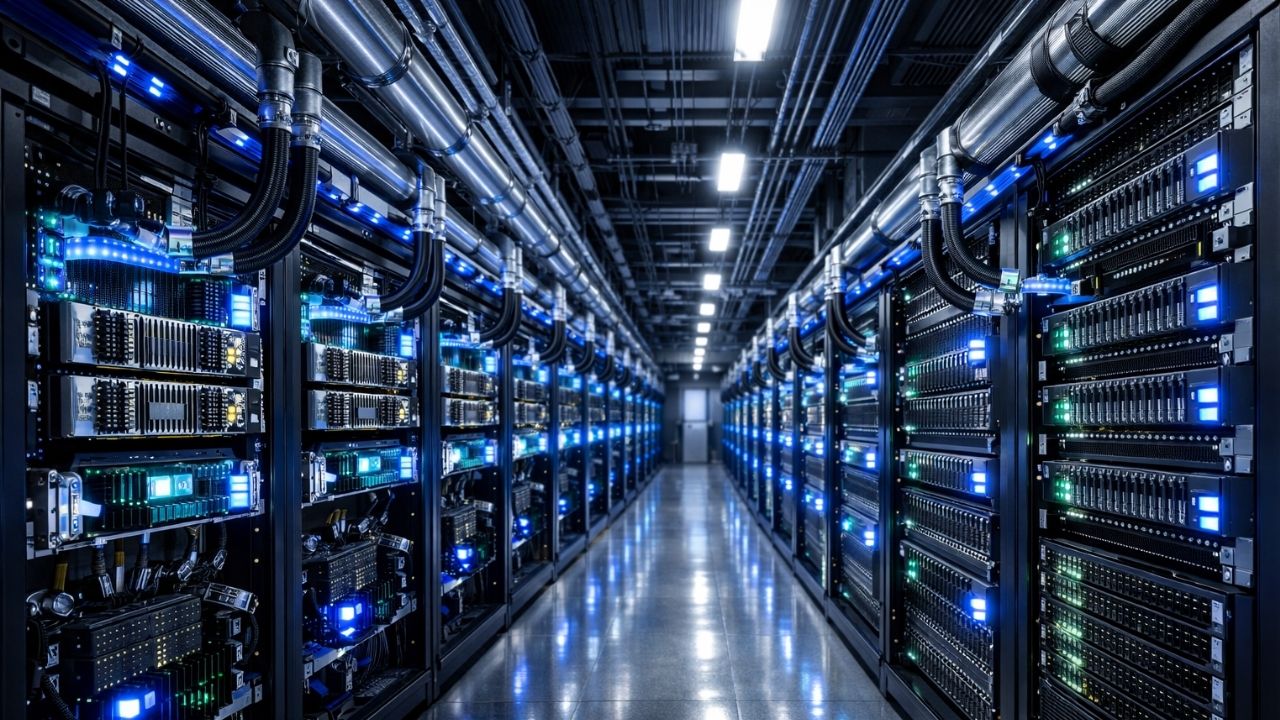
Anthropic, one of the fastest-growing artificial intelligence firms in the world, has announced an ambitious $50 billion plan to expand its U.S. infrastructure footprint through a series of advanced data centers starting in Texas and New York. The project, developed in partnership with AI cloud platform Fluidstack, positions the company as a major force in the domestic AI buildout race.

The initiative will fund the creation of custom-designed facilities built specifically to handle Anthropic’s rapidly scaling AI models and enterprise workloads. The company said the first sites will go live in 2026 and are expected to generate 800 permanent jobs and more than 2,000 construction roles across both states.

By building its own network of high-performance data centers, Anthropic aims to ensure greater control over compute availability, energy efficiency, and long-term scalability — key components in the race to dominate AI infrastructure. The decision also aligns with growing policy pressure from Washington to keep cutting-edge AI capacity within U.S. borders, protecting national interests and technological sovereignty.

This investment underscores Anthropic’s aggressive growth trajectory and signals that the company is willing to match, if not challenge, industry leader OpenAI’s spending spree. OpenAI has already committed more than $1.4 trillion in long-term infrastructure investments through partnerships with Nvidia, Oracle, Broadcom, Microsoft, and Google.

Anthropic’s partnership with Fluidstack — known for supplying GPU clusters to major AI players like Meta, Midjourney, and Mistral — reflects a strategic effort to move fast. Fluidstack’s expertise in scaling GPU infrastructure at record speed and efficiency gives Anthropic a distinct operational advantage as competition for compute power intensifies.

The company’s enterprise business has surged dramatically over the past year, serving more than 300,000 organizations. The number of enterprise accounts generating over $100,000 annually has nearly increased sevenfold, with projections showing Anthropic could reach profitability by 2028. By comparison, OpenAI is still expected to report multi-billion-dollar operating losses through that same period.

Beyond Texas and New York, Anthropic’s infrastructure expansion already includes a massive $11 billion data center campus in Indiana, developed with Amazon. The facility is operational, providing Anthropic with one of the largest AI-focused compute environments in the U.S. The company has also expanded its long-term compute partnership with Google, with additional commitments valued in the tens of billions.

Industry observers say Anthropic’s move could reshape the competitive landscape of AI infrastructure, helping to diversify the market beyond the dominance of hyperscale cloud providers. However, the scale of AI-related construction and energy use is prompting questions about sustainability and grid capacity — particularly as multiple firms rush to deploy gigawatt-scale facilities across the country.

With a $50 billion budget and an expanding nationwide footprint, Anthropic is betting big on the idea that the next wave of AI breakthroughs will depend not just on smarter algorithms, but on physical infrastructure capable of powering them at scale.

SoftBank Sells $5.8 Billion Nvidia Stake to Fuel Expanding AI Ambitions

SoftBank Group Corp. has sold its entire stake in Nvidia Corp. for $5.83 billion, marking another major move by founder Masayoshi Son to fund his growing ambitions in artificial intelligence. The sale underscores SoftBank’s shift toward becoming a central player in the AI ecosystem—one that spans data centers, chip design, robotics, and advanced cloud infrastructure.

The decision to sell Nvidia shares comes as global investors question whether massive AI spending—expected to exceed $1 trillion by companies like Meta Platforms and Alphabet—will produce long-term profits. Despite this uncertainty, Son continues to double down on AI, redirecting proceeds into projects such as Stargate, a mega data center venture being developed in collaboration with OpenAI and Oracle Corp.

SoftBank’s U.S.-listed shares rose more than 7% following the announcement, while Nvidia’s stock slipped over 3% during trading on Tuesday. The move illustrates the shifting balance of investor sentiment as capital flows from established AI leaders toward emerging infrastructure and hardware bets.

According to SoftBank executives, the Nvidia sale was not due to concerns about the chipmaker but rather a strategic move to free up capital. Chief Financial Officer Yoshimitsu Goto emphasized that the proceeds will be used to finance new AI initiatives, though he declined to comment on whether the sector is currently in a bubble.

This is not the first time SoftBank has exited Nvidia. The company sold its previous stake in 2019, only to re-enter the stock in 2020—just before Nvidia’s meteoric rise fueled by the AI boom. By March 2025, SoftBank had quietly accumulated a $3 billion position in Nvidia, which has since surged by more than $2 trillion in market value amid the global AI frenzy.

The timing of the sale proved highly profitable for SoftBank. The company recently reported a ¥2.5 trillion ($16.2 billion) net income for its fiscal second quarter, driven by its holdings in OpenAI, Arm Holdings, and other AI-focused firms. Analysts expect SoftBank to post its strongest annual profit since 2020, with the Nvidia sale adding significant liquidity to support its ongoing expansion.

Son’s AI roadmap is ambitious. In addition to the Stargate data center network, SoftBank is pursuing a $1 trillion AI manufacturing hub in Arizona, potential collaborations with Taiwan Semiconductor Manufacturing Co. (TSMC), and the acquisition of Ampere Computing LLC for $6.5 billion. The company has also agreed to purchase ABB Ltd.’s robotics division for $5.4 billion—moves that signal a vertically integrated AI empire in the making.

SoftBank’s financial strategy has been equally bold. It recently expanded its margin loan backed by Arm shares to $20 billion, secured an $8.5 billion bridge loan for its OpenAI investment, and committed the full $22.5 billion originally pledged to the AI startup.

The Japanese conglomerate’s stock has surged nearly 78% over the past quarter, its best performance in two decades. The company also announced a 4-for-1 stock split effective January 1, 2026, aimed at making its shares more accessible to retail investors.

As Son pushes deeper into the AI frontier, SoftBank’s latest divestment highlights both opportunity and risk. While the Nvidia exit frees billions for new ventures, it also removes exposure to one of the most successful AI chipmakers of the decade. Still, for Masayoshi Son, the message is clear: SoftBank’s future lies not in following AI’s leaders, but in building the infrastructure that powers them.

Rumble to Acquire Northern Data in Major AI Infrastructure Expansion

Rumble Inc. announced plans to acquire Northern Data AG, a European leader in artificial intelligence and high-performance computing infrastructure, marking a transformative moment for the company’s growing cloud division. The agreement represents a bold step in Rumble’s “Freedom-First” vision—an initiative centered on building technology that prioritizes privacy, independence, and resilience over centralized control.

Under the terms of the deal, Rumble will launch a voluntary public exchange offer to Northern Data shareholders, granting them newly issued Rumble shares in return. Once completed, the transaction will give Rumble access to one of Europe’s largest GPU fleets—approximately 22,000 Nvidia units, including the latest H100 and H200 chips—and a globally distributed network of data centers. This infusion of infrastructure will allow Rumble to expand its cloud services dramatically while strengthening its foothold in the global AI ecosystem.

The acquisition also accelerates Rumble’s international growth strategy, extending its reach beyond North America into major European markets such as Germany, Sweden, Norway, Portugal, the Netherlands, and the United Kingdom. Northern Data’s energy-efficient data centers and liquid-cooled GPU technology will provide Rumble with a strong foundation to compete in high-performance computing and AI training at scale.

A major backer of the deal is Tether, which made a $775 million strategic investment in Rumble earlier this year. Tether’s continued involvement underscores the growing alignment between decentralized finance and digital infrastructure, and the company is expected to serve as a key customer following the transaction’s completion. Together, Rumble, Northern Data, and Tether aim to form a vertically integrated AI ecosystem designed to challenge the dominance of established technology giants.

In addition to its infrastructure assets, Northern Data brings expertise in managing complex compute operations and optimizing power efficiency—critical advantages as demand for GPU-based AI processing surges worldwide. The company’s Maysville, Georgia facility alone is expected to deliver up to 180 megawatts of capacity once complete, contributing significantly to Rumble’s total data center output.

Beyond scaling capacity, Rumble expects the acquisition to fuel innovation across its video, creator, and advertising businesses. Access to advanced AI hardware will accelerate the company’s efforts to integrate machine learning into content delivery, recommendation systems, and advertising solutions. The move also supports Rumble’s broader ambition to develop complementary services such as AI chatbots, cloud productivity tools, and financial applications under the Rumble Wallet brand.

The exchange offer is expected to close in the second quarter of 2026, pending regulatory approvals. Northern Data shareholders will own roughly 30% of the combined company after the transaction, reflecting the strategic significance of the merger. Once finalized, Northern Data plans to delist its shares, with no separate offer required since it is not traded on a regulated market.

For Rumble, the acquisition represents far more than an infrastructure upgrade—it signals an intent to redefine how technology infrastructure is built and governed. By merging AI computing power, distributed data networks, and financial independence, the company aims to create a sustainable foundation for a new era of digital freedom.

Perfect (PERF) – Turning the Corner to Operating Profit


Wednesday, October 29, 2025

Patrick McCann, CFA, Research Analyst, Noble Capital Markets, Inc.

Michael Kupinski, Director of Research, Equity Research Analyst, Digital, Media & Technology , Noble Capital Markets, Inc.

Refer to the full report for the price target, fundamental analysis, and rating.

Q3 beat. Perfect reported Q3 revenue of $18.7 million, up 15.7% Y/Y and above our estimate of $17.8 million, with adj. EBITDA of $1.2 million, double expectations. Revenue growth was led by strong B2C performance. The company also achieved its first quarter of operating profit, reflecting greater scale efficiency and disciplined cost control.

Continued strength in B2C. YouCam subscribers totaled 946K, down slightly, likely due to price hikes that the company initiated, which have led to higher revenue per user. B2C strength remains solid, supported by the YouCam AI Agent, which links apps under a unified login to personalize experiences and increase retention. Two apps are integrated, with full rollout expected by year-end.


Get the Full Report

Equity Research is available at no cost to Registered users of Channelchek. Not a Member? Click ‘Join’ to join the Channelchek Community. There is no cost to register, and we never collect credit card information.

This Company Sponsored Research is provided by Noble Capital Markets, Inc., a FINRA and S.E.C. registered broker-dealer (B/D).

*Analyst certification and important disclosures included in the full report. NOTE: investment decisions should not be based upon the content of this research summary. Proper due diligence is required before making any investment decision. 

Nvidia Becomes World’s First $5 Trillion Company, Fueling Broader AI Sector Momentum

Nvidia has officially become the first company in history to surpass a $5 trillion market capitalization, cementing its dominance in the artificial intelligence (AI) revolution and signaling a powerful shift in the global technology landscape. The company’s rise — powered by record demand for AI hardware and deep partnerships across industries — is sending ripple effects through the broader tech market, particularly among smaller players looking to capture their share of AI-driven growth.

The milestone, achieved after a 3.4% surge in Nvidia’s stock on Wednesday, underscores investor conviction in AI as a defining megatrend of the decade. Nvidia’s flagship GTC event amplified that momentum, featuring new collaborations across supercomputing, robotics, self-driving technology, pharmaceuticals, and 6G telecom infrastructure. These partnerships — spanning names like Uber, Palantir, Eli Lilly, and Oracle — showcase how deeply Nvidia’s technology is embedded in nearly every major industry.

But beyond the headline number, Nvidia’s success story holds significant implications for small-cap investors. As Nvidia scales its AI infrastructure globally, it creates massive downstream demand for smaller companies involved in the supply chain — from semiconductor component suppliers and circuit board manufacturers to cooling system specialists, data center builders, and power management innovators. Many of these firms trade in the small-cap space, where growth potential often accelerates once industry giants expand their spending.

For example, Nvidia’s partnership with the U.S. Department of Energy to build seven new supercomputers — including one powered by 10,000 Blackwell GPUs — will require a vast ecosystem of supporting technologies. Companies producing advanced materials, thermal management solutions, or even power delivery systems are poised to benefit as AI hardware capacity scales. This trickle-down effect is giving smaller, often under-the-radar players new relevance as key enablers of the AI revolution.

Recent comments from President Trump ahead of his meeting with Nvidia CEO Jensen Huang added further fuel to the rally, hinting at possible approval for new chip exports to China. While Nvidia itself stands to gain directly from a reopened Chinese market, many smaller semiconductor and logistics firms could see indirect benefits through increased trade volume and component demand.

At the same time, Nvidia’s rise to a $5 trillion valuation also highlights the widening gap between mega-cap leaders and emerging competitors. This dynamic often drives investors to seek opportunities among smaller, more agile firms that can innovate faster or serve niche markets overlooked by giants. Small-cap semiconductor developers, specialized software providers, and manufacturing partners could all capture new contracts as AI adoption accelerates across industries.

For small-cap investors, Nvidia’s historic milestone isn’t just a headline — it’s a signal. The company’s continued dominance validates AI’s long-term growth story, but it also points to a new wave of opportunity in the ecosystem surrounding it. Companies supplying energy-efficient chips, precision cooling systems, or automation technologies could become the next big winners as global demand for AI infrastructure scales beyond what even Nvidia can deliver alone.

As AI reshapes industries from finance to manufacturing, the small-cap space may once again become the breeding ground for the next generation of tech leaders — powered, in part, by the unprecedented rise of Nvidia.

Google to Invest $15 Billion in First AI Hub in India

New Visakhapatnam facility to accelerate AI innovation, expand infrastructure, and strengthen India–U.S. tech collaboration

Google announced plans to establish its first artificial intelligence (AI) hub in Visakhapatnam (Vizag), Andhra Pradesh, marking its largest-ever investment in India. The $15 billion (USD) commitment, spread over five years from 2026 to 2030, will create a world-class AI and data center ecosystem designed to advance India’s digital and economic transformation.

The new AI hub will integrate AI infrastructure, data center capacity, clean energy generation, and an expanded fiber-optic network, positioning Visakhapatnam as a major AI and connectivity hub for both India and global markets. Developed in partnership with AdaniConneX and Airtel, the purpose-built data center campus will provide gigawatt-scale compute capacity and support low-latency, high-performance AI workloads.

“This digital infrastructure will go a long way in meeting the goals of our India AI mission,” said Shri Ashwini Vaishnaw, India’s Minister for IT. “We thank Google for making this $15 billion investment and for helping re-skill and upskill our IT professionals as part of their agenda.”

Thomas Kurian, CEO of Google Cloud, described the investment as a “landmark step in India’s digital future,” adding that the project reflects a shared commitment by the Indian and U.S. governments to harness AI responsibly for societal benefit.

The initiative aligns with India’s Viksit Bharat 2047 vision, which seeks to drive AI-powered innovation and digital inclusion. According to Google, the hub is expected to generate at least $15 billion in U.S. GDP over five years, reflecting new cross-border economic activity driven by cloud and AI adoption.

The AI hub will also include construction of a new international subsea gateway, connecting multiple subsea cables to Visakhapatnam and integrating with Google’s global network of over two million miles of terrestrial and subsea fiber. The gateway will enhance India’s digital resilience and provide new high-capacity, low-latency pathways that complement existing cable landings in Mumbai and Chennai.

When operational, the Visakhapatnam hub will join Google’s network of AI data centers across 12 countries, benefiting from technology developed by R&D teams in Bengaluru, Hyderabad, and Pune. The project will also advance Google’s sustainability goals, incorporating clean energy generation, transmission lines, and storage systems in Andhra Pradesh to power the facility responsibly.

The announcement comes amid ongoing trade tensions between India and the U.S., including recent tariff disputes and calls for boycotts of foreign goods. Despite the backdrop, Indian officials have reaffirmed their commitment to supporting U.S. investment and facilitating ease of business for multinational partners.

Google’s $15 billion plan follows the company’s broader global data center expansion, with $85 billion in infrastructure spending expected this year alone as demand for AI-driven services accelerates worldwide.

Bloom Energy Soars on $5 Billion AI Infrastructure Partnership with Brookfield Asset Management

Deal positions Bloom as a preferred power provider for Brookfield’s global AI factories and marks Brookfield’s first investment in its dedicated AI Infrastructure strategy

Shares of Bloom Energy (NYSE: BE) surged more than 20% in early trading Monday after the company announced a $5 billion strategic partnership with Brookfield Asset Management (NYSE: BAM, TSX: BAM) to develop and power next-generation AI infrastructure.

Under the agreement, Brookfield will invest up to $5 billion to deploy Bloom’s advanced fuel cell technology as the companies collaborate on the design and construction of “AI factories” — large-scale data centers purpose-built to meet the surging compute and energy demands of artificial intelligence. Bloom Energy will serve as Brookfield’s preferred onsite power provider for these facilities worldwide.

The partnership marks the first phase of a joint AI infrastructure vision and represents Brookfield’s inaugural investment through its newly established AI Infrastructure strategy, which focuses on power, compute, and capital integration for AI data centers. The two companies plan to announce their first European site before the end of the year.

“AI infrastructure must be built like a factory — with purpose, speed, and scale,” said KR Sridhar, Founder, Chairman and CEO of Bloom Energy. “AI factories demand massive power, rapid deployment and real-time responsiveness that legacy grids cannot support. Together with Brookfield, we’re creating a new blueprint for powering AI at scale.”

“Behind-the-meter power solutions are essential to closing the grid gap for AI factories,” added Sikander Rashid, Global Head of AI Infrastructure at Brookfield. “Bloom’s advanced fuel cell technology gives us the unique capability to design and construct modern AI factories with a holistic and innovative approach to power needs.”

A Blueprint for the AI Era

AI data centers are projected to require over 100 gigawatts of power in the U.S. alone by 2035, according to industry estimates. Bloom Energy’s solid oxide fuel cells generate electricity through chemical reactions rather than combustion, providing clean, resilient, and rapidly deployable onsite power — an attractive alternative to traditional grid dependency.

Bloom has already installed hundreds of megawatts of fuel cell systems supporting data centers for American Electric Power, Equinix, and Oracle. The company’s systems can be scaled modularly, reducing construction timelines and improving energy efficiency for high-demand AI applications.

Brookfield, one of the world’s largest alternative asset managers with over $1 trillion in assets under management, has been expanding aggressively into digital and energy infrastructure. Recent commitments include $9.98 billion to develop an AI data center in Sweden and €20 billion for AI projects in France. The firm also holds major stakes in Compass Datacenters, Duke Energy Florida, Colonial Enterprises, and Hotwire Communications, and recently inked a deal to supply Google with up to 3 GW of hydro power in the U.S.

Strategic Implications

The partnership underscores a growing convergence between energy technology and AI infrastructure. As the global race to build AI data centers accelerates, the need for reliable, low-carbon power sources has become a critical bottleneck. Brookfield’s capital and infrastructure expertise, combined with Bloom’s clean power solutions, could provide a scalable model for sustainable AI expansion.

For Bloom Energy, the partnership offers both near-term revenue visibility and long-term positioning at the center of AI-driven energy demand growth. For Brookfield, it establishes a strategic foothold in the AI ecosystem— one that aligns with its global energy transition and infrastructure investment priorities.

Wall Street Boosts S&P 500 Targets on AI Momentum and Earnings Strength

Wall Street’s bullish sentiment is gaining momentum as the S&P 500 hovers near record highs ahead of earnings season. Despite political uncertainty in Washington and lingering concerns about an “AI bubble,” several top strategists are raising their forecasts, pointing to what they describe as “fundamental strength” across corporate earnings and continued support from Federal Reserve rate cuts.

Ed Yardeni of Yardeni Research lifted his S&P 500 target to 7,000, calling the ongoing rally a “slow-motion melt-up” fueled by resilient profits and Fed easing. Similarly, Evercore ISI’s Julian Emanuel maintained a 7,750 base-case target for 2026, assigning a 30% probability to a “bubble scenario” that could propel the index to 9,000 if AI-driven capital investment accelerates.

Signs of that exuberance are already visible. On Monday, OpenAI revealed a multibillion-dollar deal with AMD, granting the ChatGPT maker rights to acquire up to 10% of the chip giant as part of what executives have dubbed “the world’s most ambitious AI buildout.” The announcement sparked renewed optimism in semiconductor and software names, reinforcing the view that AI investment remains the market’s primary growth engine.

Yet, opinions remain divided. Amazon’s Jeff Bezos recently described the AI boom as a “good kind of bubble” that could fuel long-term innovation and economic expansion. In contrast, Goldman Sachs CEO David Solomon urged caution, suggesting that some capital deployed in the AI race may not yield the expected returns, potentially setting up a correction in the next year or two.

That debate is playing out against elevated valuations. The S&P 500 is trading near 25 times expected 2025 earnings, a level DataTrek Research says “reflects complete confidence” that companies will deliver. Analysts project 13% earnings growth in 2026 and another 10% in 2027, driven primarily by the same mega-cap technology stocks that have led markets higher this year.

Big Tech now represents nearly half of the S&P 500’s market cap, with Alphabet, Amazon, Meta, Tesla, and other AI-focused firms comprising 48% of the index. Analysts note that “multiple expansion” in these names is the foundation of the bull case, with a record number of tech giants issuing positive earnings guidance last quarter — a signal that earnings momentum remains intact heading into Q3 results.

Goldman Sachs strategists led by David Kostin argue that Wall Street’s current earnings forecasts are too conservative, citing strong macro data and robust AI-driven demand. Morgan Stanley’s Mike Wilson echoed that optimism, noting that lower labor costs and pent-up demand could spark a return of “positive operating leverage” — where profits grow faster than revenues — not seen since 2021.

While some investors remain wary of inflation’s potential return, Wilson believes it could be a tailwind rather than a threat, with the Fed likely to tolerate higher prices as long as growth remains solid.

As earnings season begins, the question for investors is not whether the rally can continue — but whether it is still being driven by fundamentals or increasingly by momentum.

xAI Hits $200 Billion Valuation After $10 Billion Raise

Elon Musk’s artificial intelligence venture, xAI, has secured a massive $10 billion funding round that values the startup at $200 billion, according to reports from CNBC. The raise highlights the continued investor enthusiasm in the artificial intelligence sector, even as questions swirl about tech spending and long-term sustainability.

The new valuation more than doubles the company’s $75 billion mark from just two months earlier, underscoring the accelerating pace of capital flowing into AI. With this milestone, xAI now ranks among the world’s most valuable private technology companies, sitting alongside global heavyweights such as OpenAI, ByteDance, and Musk’s own SpaceX.

Expanding AI Infrastructure

Much of the funding is expected to be deployed toward data centers powered by advanced Nvidia and AMD graphics processors, a crucial component in developing and training next-generation AI systems. Analysts note that GPU-driven clusters are the backbone of today’s AI race, as firms compete to push the boundaries of model performance, scalability, and reliability.

xAI has already made headlines for Colossus, its supercomputer cluster in Memphis, Tennessee, which the company claims is the largest of its kind worldwide. The expansion of this infrastructure signals Musk’s intent to ensure that xAI can rival established leaders like OpenAI and Anthropic in the high-stakes competition to dominate the AI landscape.

The funding round arrives at a time when competitors are also securing significant backing. Earlier this month, Anthropic raised $13 billion at a valuation of $183 billion, while OpenAI is reportedly in talks for a stock sale that could value the company at around $500 billion. ByteDance, meanwhile, is preparing a new employee share buyback program at a valuation of more than $330 billion.

By entering the $200 billion valuation club, xAI not only signals its arrival among elite AI firms but also highlights the fierce battle for both talent and infrastructure. Much of the new capital is expected to go toward recruiting top AI researchers and engineers—an area where costs continue to rise as demand far exceeds supply.

Building Toward the Future

Musk’s AI ambitions go beyond technology alone. xAI acquired the social media platform X (formerly Twitter) earlier this year, giving it a unique advantage in terms of training data and user integration. By combining large-scale data resources with cutting-edge compute infrastructure, xAI is positioning itself as a long-term challenger to the sector’s biggest players.

The latest valuation leap reflects not just investor confidence in xAI, but also broader optimism that AI technologies will remain central to economic and business growth for years to come. With infrastructure rapidly scaling and capital continuing to pour in, xAI’s next steps will be closely watched as it attempts to shape the future of artificial intelligence.

Nvidia Faces Setback as China Reportedly Bans AI Chips

Nvidia, the world’s leading producer of artificial intelligence chips, is facing fresh uncertainty in one of its most important markets after reports that China has instructed domestic technology firms to stop using its products. According to sources familiar with the matter, Beijing’s Cyberspace Administration has urged major players, including TikTok parent company ByteDance and e-commerce giant Alibaba, to halt purchases of Nvidia’s RTX Pro 6000D chips. The processors were designed specifically for China after earlier restrictions limited the sale of more advanced models.

The development marks another escalation in the ongoing technology rivalry between the United States and China. Washington has already imposed limits on the export of advanced semiconductors to China, citing national security concerns. Last month, the Trump administration struck a deal with Nvidia that allowed its H20 server chips to be sold in the country under strict conditions, with a portion of sales revenues redirected to the U.S. government. However, Beijing’s reported response suggests a determination to reduce reliance on American hardware while accelerating investment in domestic alternatives.

Nvidia has long described its business in China as unpredictable, with company leaders acknowledging the volatility of operating amid geopolitical tensions. This latest setback follows news earlier in the week that Chinese regulators have launched an antitrust investigation into Nvidia’s $6.9 billion acquisition of Mellanox, an Israeli data center networking firm. The probe highlights Beijing’s willingness to scrutinize foreign acquisitions and could add further pressure to Nvidia’s strategic plans in the region.

Despite the challenges in China, Nvidia continues to expand globally at an aggressive pace. During a high-profile U.S. state visit to the U.K., the company announced £11 billion ($15 billion) in investment toward British artificial intelligence infrastructure. The move signals Nvidia’s intention to diversify its growth beyond Asia while deepening ties with Europe’s rapidly expanding AI sector. Other major American technology companies, including Microsoft, Google, and Salesforce, have announced similar multibillion-dollar AI commitments in the U.K., reflecting broader industry momentum.

China, however, remains a key focus for the global AI market. The country’s enormous tech ecosystem, vast consumer base, and strong government backing for artificial intelligence research make it one of the most competitive environments in the world. For Nvidia, exclusion from this market could slow growth and open the door for local competitors to capture share. At the same time, U.S. policy continues to shape the availability of high-performance chips abroad, adding layers of complexity for global semiconductor leaders.

The reported ban underscores the shifting dynamics of the U.S.-China tech rivalry and how quickly geopolitical tensions can reshape business strategies. While Nvidia remains dominant in AI chip innovation, its position in China has transformed from a driver of growth to a source of risk. The coming months will determine whether the company can adapt to the changing environment and preserve its competitive edge in the face of growing political and economic headwinds.

Nebius Stock Soars on $19B Microsoft AI Deal, Underscoring AI Infrastructure Boom

Nebius Group’s stock price skyrocketed this week after the Amsterdam-based artificial intelligence infrastructure firm announced a multi-year partnership with Microsoft worth up to $19.4 billion. The deal highlights the surging demand for GPU-powered cloud computing capacity and underscores the critical role infrastructure providers play in supporting the global AI boom.

Shares of Nebius, which was spun out of Russian internet company Yandex in 2023, surged more than 40% on Tuesday following the announcement. The rally came on top of a 60% spike in extended trading Monday, marking one of the steepest short-term gains for an AI-related stock in 2025. Under the agreement, Nebius will supply Microsoft with graphics processing units (GPUs) and computing power valued at $17.4 billion through 2031. Microsoft may also secure additional capacity, potentially bringing the total value of the contract to $19.4 billion.

The Nebius-Microsoft deal instantly positions the European company as a top-tier supplier of AI cloud infrastructure. GPUs are essential for training and scaling large language models, generative AI platforms, robotics, and other advanced artificial intelligence applications. As enterprises race to deploy AI, demand for this specialized hardware has grown far faster than traditional cloud services. For Microsoft, the agreement ensures Azure customers, OpenAI projects, and its own AI-powered products have the computing resources required to expand.

This partnership also shows that while Nvidia remains the leader in AI chips, competition is opening up. Nebius joins a growing roster of infrastructure providers—including CoreWeave, which saw its shares climb 8% on the news—benefiting from hyperscalers’ urgent need to lock in GPU supply. Investors see this as a sign that AI infrastructure spending could remain strong despite market concerns about inflated valuations.

Analysts note that the deal comes amid broader predictions of enormous long-term spending on AI hardware. Nvidia executives recently forecast that between $3 trillion and $4 trillion will flow into AI infrastructure globally by 2030. At the same time, some experts, including OpenAI CEO Sam Altman, have warned of a possible AI bubble as valuations for startups like Anthropic and OpenAI itself reach record highs. Nebius’s surge reflects the optimism that demand will outweigh bubble risks, at least for infrastructure suppliers.

For Nebius, the Microsoft partnership provides not only revenue security through 2031 but also credibility as a global player in the AI race. By aligning with one of the world’s largest technology companies, Nebius strengthens its position in a market where trust, scale, and performance are paramount.

The stock market response suggests investors believe infrastructure will be one of the most resilient segments of the artificial intelligence economy. While software companies may face volatile valuations, firms that deliver the backbone of AI workloads—GPUs, cloud data centers, and compute resources—are emerging as long-term winners. With its $19 billion deal, Nebius has firmly secured its spot in the spotlight.

AI Startup Augment Raises $85M to Scale Augie, Its Logistics Teammate

Logistics may be one of the most complex and fragmented industries, but San Francisco–based startup Augment is betting its AI teammate can streamline it. The company announced an $85 million Series A funding round this week, led by Redpoint Ventures with participation from 8VC, Shopify Ventures, Autotech Ventures, and others. The raise brings Augment’s total funding to $110 million, remarkable for a company that only came out of stealth five months ago.

At the heart of Augment’s pitch is Augie, its AI productivity platform designed to automate logistics workflows from start to finish. Unlike the patchwork of point solutions that often leave gaps, Augie takes end-to-end ownership of shipments—covering everything from front-office quoting and dispatch to back-office billing and compliance. The platform integrates directly with transportation management systems, shipper portals, and load boards while communicating seamlessly across channels, aiming to reduce the friction that bogs down brokers, shippers, and carriers.

The results so far are drawing attention. Customers report significant productivity gains, with some brokerage reps doubling or even tripling the number of loads managed daily without adding headcount. Shippers are seeing faster billing cycles and tighter adherence to service level agreements, while carriers benefit from quicker payments and fewer service calls. Augment claims Augie has already reduced invoice delays by 40%, shortened billing timelines by as much as eight days, improved gross margins by up to five percent per load, and boosted operational productivity by 30–50%.

That level of impact is what convinced investors to back such a large round so quickly. Co-founder and CEO Harish Abbott said the funds will be used to hire more than 50 engineers and expand its go-to-market teams by year-end, with deeper hiring in 2026. “Logistics runs on millions of decisions under pressure,” Abbott said. “Augie doesn’t just assist—it takes ownership.” His vision is for AI agents like Augie to become standard within 12 to 18 months, handling the majority of repetitive logistics workflows.

For co-founder Justin Hall, the mission is personal. After years in brokerages and fleets, he saw firsthand the waste created by siloed tools and manual processes. “The industry tried hundreds of point solutions that created new problems,” Hall said. “We built Augie as an AI teammate that keeps context and delivers efficiency, stronger margins, and easier work.”

Customers like Armstrong Transport Group, a $1.3 billion brokerage, are already seeing tangible results. Representatives there have gone from managing 10 loads a day to 20 or 30, while morale and customer service scores have improved. “If it gets sent to Augie, it gets done,” said William McManus, an operations specialist at Armstrong.

As freight networks grow more complex, Augment is investing not just in scaling Augie’s coverage but also in building a logistics-native knowledge hub that provides pricing, compliance, and service intelligence across modes. With over $35 billion in freight already managed through its platform, Augment is positioning itself as more than a tool—it wants to be the digital teammate behind the next era of logistics.