Warren Buffett Steps Down as Berkshire Hathaway Chairman, Closing a Remarkable Era

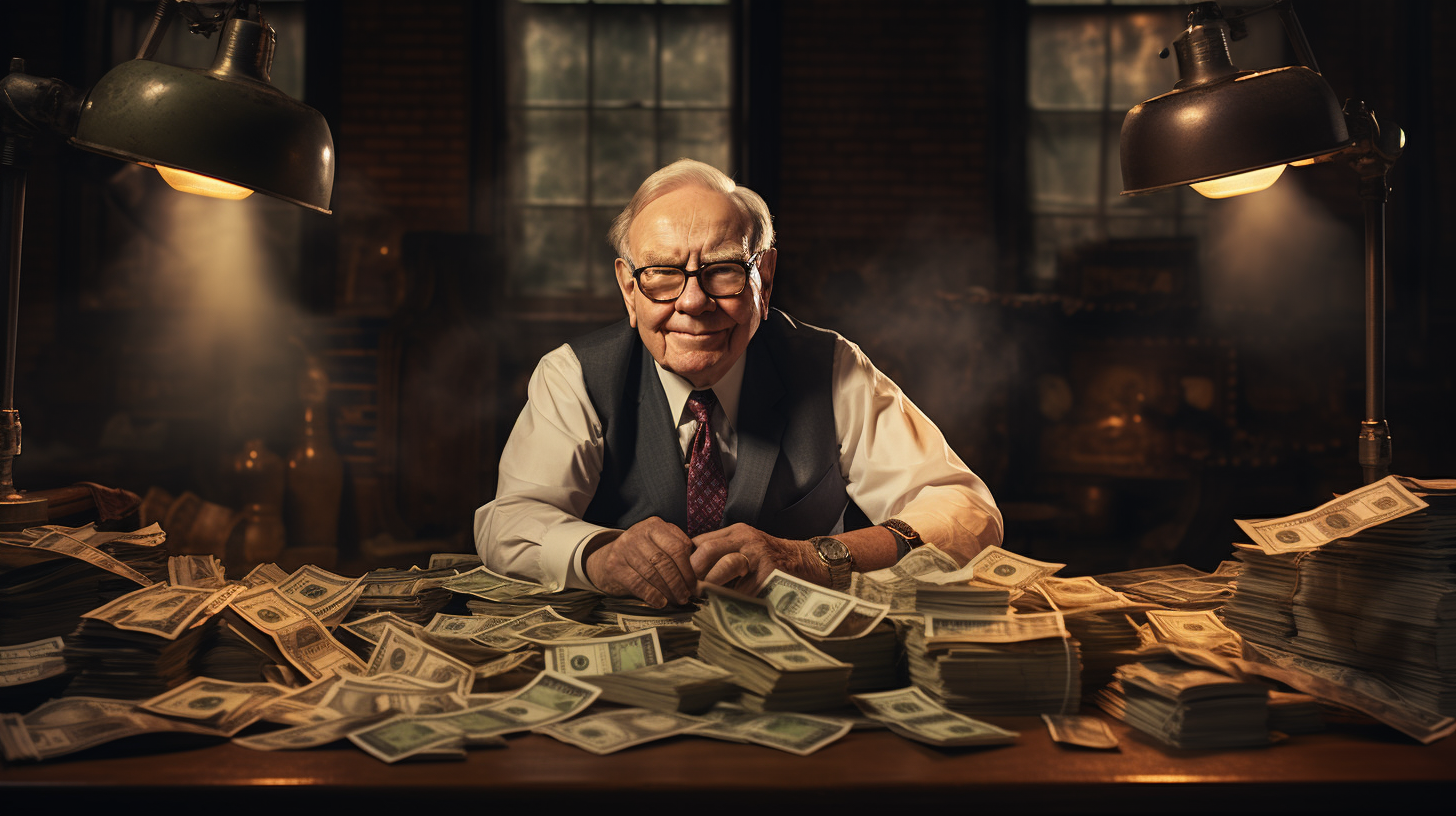
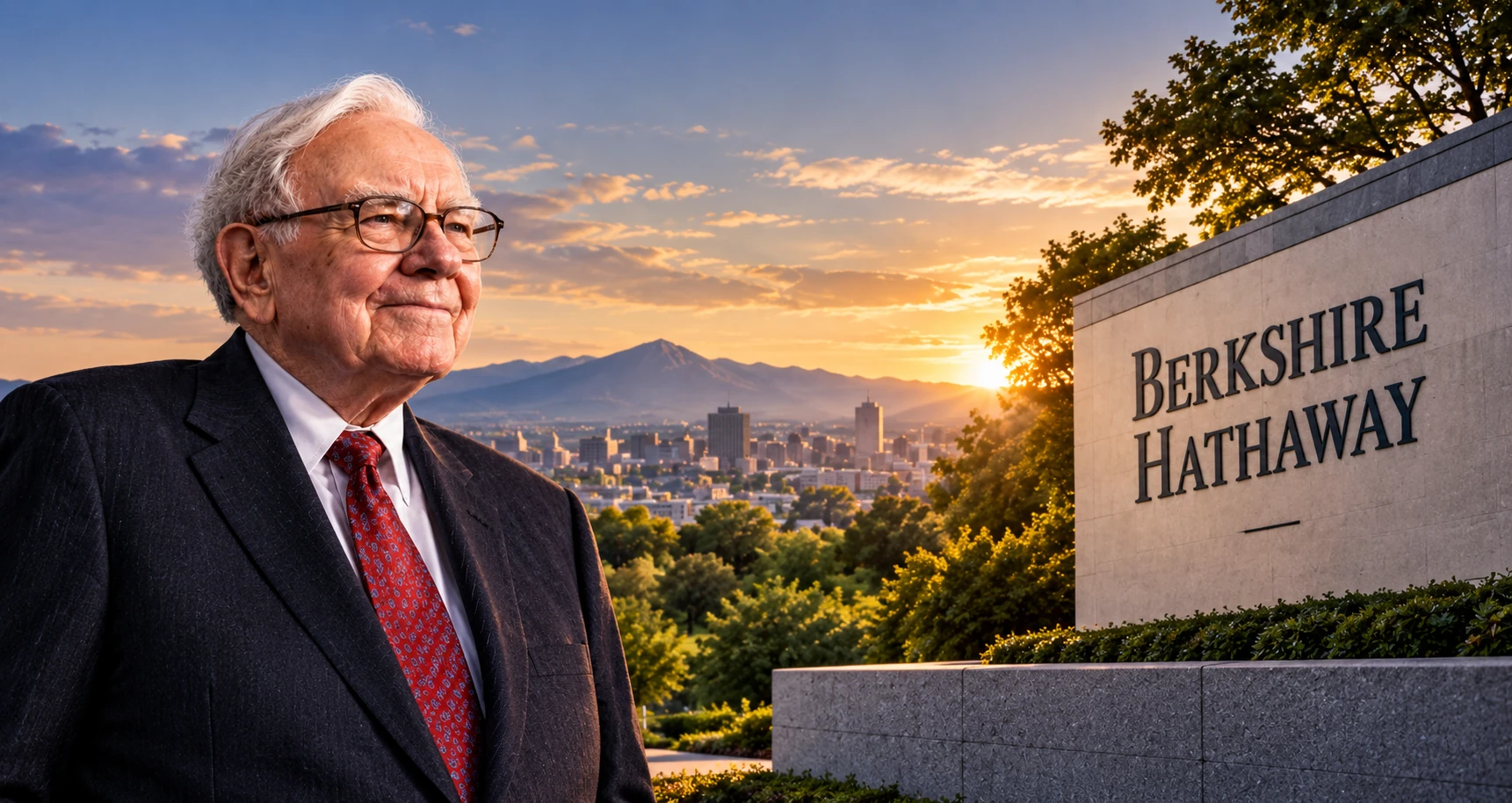
Warren Buffett stepped down Friday as chairman of Berkshire Hathaway (NYSE: BRK.A, BRK.B), bringing another chapter of one of the most consequential careers in modern investing to a close.

Buffett, who recently turned 96, has been named Chairman Emeritus and will remain on Berkshire’s board, where the company says he will continue to offer his judgment and perspective. His son, Howard G. Buffett, a Berkshire director since 1993, has been elected chairman, while Greg Abel remains chief executive officer and continues to run the company’s operations.

The transition completes a process that began earlier this year when Abel succeeded Buffett as CEO. Buffett described the timing as right, writing to shareholders that Abel had exceeded his already high expectations and had been making Berkshire’s important decisions for some time. He characterized Howard’s role differently: Abel will run the company, while Howard will help guard the culture and values Buffett spent decades building.

For investors, Buffett’s departure from the chairman’s seat is less about an abrupt change in control than the culmination of a succession plan years in the making. But symbolically, it closes an extraordinary period in American business.

From Struggling Textile Company to $1 Trillion Conglomerate

Buffett took control of Berkshire Hathaway in 1965, when it was still primarily a struggling New England textile manufacturer. What followed was one of the most remarkable transformations in corporate history.

Rather than remaining a textile business, Berkshire evolved into a sprawling collection of operating companies and investments spanning insurance, rail transportation, energy, manufacturing, retailing and services. Today its businesses include GEICO, BNSF Railway, Berkshire Hathaway Energy, Dairy Queen and numerous industrial and consumer companies.

The numbers illustrate the scale of the transformation. From 1965 through 2025, Berkshire’s per-share market value compounded at 19.7% annually, compared with 10.5% for the S&P 500 including dividends. Over the full period from 1964 through 2025, Berkshire’s gain totaled more than 6 million percent, versus roughly 46,000% for the S&P 500.

That record turned Buffett from a successful investor into a central figure in global finance and transformed Berkshire from an obscure textile company into a business valued at roughly $1 trillion.

A Different Approach to Building a Company

Much of Buffett’s success came from a model that was unusual when he began using it and remains difficult to replicate.

Berkshire’s insurance operations generated large amounts of float – premiums collected before claims are paid – that could be invested elsewhere. Buffett used that capital to buy public-company stakes and, increasingly, entire businesses.

Over time, Berkshire accumulated large positions in companies such as Coca-Cola and Apple while acquiring businesses ranging from GEICO and BNSF Railway to utilities, manufacturers and retailers. Buffett’s investment approach also evolved alongside longtime partner Charlie Munger, moving beyond simply buying statistically cheap companies toward acquiring strong businesses with durable competitive advantages, capable management and attractive long-term economics.

Berkshire then allowed many acquired companies to operate with significant autonomy rather than imposing a heavily centralized corporate structure. The combination of patient capital, decentralized management and an unusually long investment horizon became a defining part of Berkshire’s identity.

Crisis Investing Helped Build the Buffett Reputation

Buffett’s reputation was also reinforced by his willingness to deploy capital when markets were under severe stress.

During the 2008 financial crisis, Berkshire invested billions of dollars in companies including Goldman Sachs and General Electric at a time when access to capital had become extremely valuable. Those investments demonstrated one of Berkshire’s recurring advantages: maintaining enough liquidity to act aggressively when other investors were forced to retreat.

That philosophy remains visible today. As of June 30, Berkshire’s insurance and other businesses held approximately $359 billion in cash, cash equivalents and U.S. Treasury bills, giving the company an enormous pool of liquidity for investments, acquisitions or share repurchases. Buffett has long viewed that liquidity not as idle capital, but as both protection against unexpected events and optionality when attractive opportunities emerge.

Buffett Also Changed How Investors Think

Buffett’s influence extends well beyond Berkshire’s financial results. His annual shareholder letters became widely read explanations of investing, corporate governance, accounting and capital allocation, while Berkshire’s annual meeting in Omaha evolved into one of the largest gatherings of investors in the world.

Among the ideas Buffett repeatedly emphasized were relatively simple concepts that often proved difficult to practice: focus on long-term business value rather than short-term stock movements, avoid excessive leverage, understand what you own and remain disciplined when markets become euphoric or fearful.

His emphasis on treating shareholders as long-term business partners also helped shape Berkshire’s unusually loyal investor base. In his final message as chairman, Buffett returned to that idea, noting that he and Munger had always sought shareholders who thought in decades rather than quarters.

What Happens to Berkshire Now?

The most important question for Berkshire investors is how much the company changes without Buffett holding either the CEO or chairman title. Operationally, the transition is already well underway.

Greg Abel became CEO at the beginning of 2026 and is responsible for running Berkshire and making capital-allocation decisions. Buffett said Friday that Abel has fully taken control of the CEO role and that he has not had reason to question the decisions Abel has made.

Howard Buffett’s position as chairman is expected to be more focused on governance and protecting Berkshire’s corporate culture than managing day-to-day operations. Buffett described his son as a safeguard for the values he believes are central to the company.

Berkshire also enters the post-Buffett era with substantial financial strength. At June 30, the company reported roughly $1.26 trillion in total assets and nearly $748 billion in Berkshire shareholders’ equity, alongside its large holdings of cash and Treasury bills. That gives Abel considerable flexibility, but also presents one of Berkshire’s biggest challenges: its enormous size makes finding investments capable of materially moving the company increasingly difficult.

The Next Berkshire Will Inevitably Look Different

No successor can realistically replicate Buffett’s exact role. For decades, he served simultaneously as chief executive, chairman, chief capital allocator, public face of the company and one of its largest shareholders.

Berkshire’s next generation of leadership is intentionally more distributed, with Abel managing the business, Howard Buffett overseeing the board and Berkshire’s existing managers continuing to run individual subsidiaries. Investors will therefore be watching whether the company can preserve the elements of Buffett’s system that made it distinctive: disciplined capital allocation, conservative financing, decentralized operations and a willingness to wait for attractive opportunities.

There are reasons for continuity. Buffett remains a director and major shareholder, and the current succession structure was developed over many years rather than assembled suddenly. But Berkshire is unquestionably entering a new era.

Buffett took control of a struggling textile operation more than six decades ago and turned it into one of the largest and most financially powerful companies in the world. Few investors have produced comparable long-term returns, and fewer still have had such a lasting influence on how generations of investors think about businesses, markets and capital.

In his letter Friday, Buffett acknowledged the inevitability of the transition with characteristic simplicity: “Father Time always wins.” He added that Berkshire had reached a point where he was more confident than ever about what lies ahead.

That confidence will now be tested under a new generation of leadership. For Berkshire shareholders, the Buffett era may be ending – but the company he built is designed to continue long after him.


Berkshire’s Rare Tech Move Sends Alphabet Stock to All-Time High

Alphabet shares surged to a record high on Monday, climbing nearly 6% after Berkshire Hathaway disclosed a new multibillion-dollar stake in the Google parent company. The purchase, totaling 17.85 million shares valued at approximately $4.9 billion, marks one of Berkshire’s final large investments under Warren Buffett’s leadership — and a notable shift for a conglomerate traditionally cautious about high-growth tech stocks.

Berkshire’s move represents a major endorsement of Alphabet’s expanding artificial intelligence strategy during a period of heightened scrutiny across the tech sector. While many investors have begun questioning whether the rapid rise of AI-driven valuations is sustainable, Berkshire’s investment signals confidence in Alphabet’s fundamentals and its long-term ability to capitalize on AI innovation.

The investment also stands out given Berkshire’s historic stance on technology. Although Apple remains Berkshire’s largest holding, Buffett has long viewed it as more of a consumer products company than a pure tech play. A direct investment in Alphabet, however, reflects a meaningful step toward embracing companies at the center of the AI revolution. Market strategists point out that the move aligns with value-investing principles, given Alphabet’s comparatively attractive valuation relative to other AI frontrunners.

Investor sentiment around tech has become more cautious in recent months. Business leaders and market analysts have warned that the AI boom — powered by heavy data-center spending and ambitious product pipelines — could be creating inflated expectations. The Roundhill Magnificent 7 ETF, which tracks top tech names such as Microsoft, Nvidia, and Alphabet, has been mostly flat since September after significantly outperforming the broader market earlier in the year.

Despite the broader slowdown, Alphabet has stood out as one of the strongest performers among the “Magnificent Seven” stocks. Shares have surged nearly 14% in the current quarter and are up 46% year-to-date, making it the group’s top performer. Analysts attribute this strength to Alphabet’s accelerating AI investments, robust cloud division growth, and its ability to leverage its massive advertising business to fund further innovation.

Alphabet also trades at a relative discount compared to its peers, with shares valued at roughly 25 times forward earnings estimates. Microsoft trades at 29 times, while Nvidia approaches 30 — making Alphabet an appealing option for an investor focused on balancing growth potential with valuation discipline.

CFRA analysts highlight that Berkshire’s investment validates Alphabet’s strategic direction, particularly around Google Cloud and the expanding Gemini AI ecosystem. Recent earnings revealed that AI-powered tools and infrastructure investments are helping transform Google Cloud into a major growth engine, reversing its earlier status as a distant third player in the cloud market.

The move also reflects a bit of unfinished business for Buffett, who has previously acknowledged regretting missing the chance to invest in Google early on. With Berkshire preparing for leadership transition as Greg Abel is set to assume the CEO role at the end of 2025, the investment may represent a final major pivot toward companies leading the next technological era.

Alphabet’s rally could add roughly $180 billion in market value if gains hold. And with Berkshire’s reputation for long-term conviction, the investment has quickly captured the attention of both institutional and retail investors — offering a strong signal of confidence amid an increasingly cautious tech landscape.

Can Warren Buffett’s Investment Style Be Applied to Small-Cap Stocks?

Warren Buffett’s name is synonymous with long-term, value-based investing. His classic strategy — identifying quality companies with durable advantages and buying them at fair prices — has stood the test of time. But can this approach be adapted to today’s small-cap investing landscape?

The answer is yes — but with important modifications.

What Buffett’s Style Is All About

Buffett’s investment principles, especially in his early career, revolved around:

  • Buying high-quality businesses at undervalued or fair prices
  • Focusing on companies with strong returns on capital
  • Identifying durable competitive advantages (or “moats”)
  • Prioritizing capable and ethical management
  • Holding for the long term to allow value to compound

These timeless ideas can work well with small-cap companies — in fact, Buffett himself built much of his early wealth in this space.

Why Small-Caps Offer Unique Opportunities

Small-cap stocks are often overlooked and underfollowed by analysts, creating inefficiencies that patient, disciplined investors can exploit. Many of these companies operate in niche markets and still have room to grow, which means they may offer significantly higher upside potential than their large-cap counterparts.

What’s more, investors often have more direct access to management in small-caps, which enhances due diligence and helps gauge leadership quality — something Buffett emphasized early in his career.

But There Are Risks

Applying Buffett’s approach to small-caps also comes with new challenges:

  • Higher volatility: Small-caps are more sensitive to economic swings.
  • Weaker moats: Many are still building their competitive edge.
  • Limited financial history: Often, small-caps don’t have years of consistent performance to analyze.
  • Liquidity issues: Thin trading volumes can make it harder to enter or exit positions efficiently.

How to Adapt Buffett’s Style for Small-Cap Investing

To use Buffett’s playbook in the small-cap space, investors must tailor their approach:

  • Focus on management quality: In small companies, the CEO often is the business. Their vision and execution ability can make or break your investment.
  • Use a longer time horizon: Value in small-caps often takes time to be realized. Impatient investors are likely to miss out.
  • Demand a margin of safety: Given the risks, buying well below intrinsic value is essential.
  • Look for early moats: These might not be fully formed yet, but signs of customer loyalty, unique positioning, or intellectual property are promising indicators.
  • Stick to your circle of competence: Understanding the business and industry is even more critical when the data is sparse.

Final Thought

Buffett’s philosophy isn’t limited to blue-chip giants. In fact, it may shine brightest where the market is least efficient. The key to applying his principles to small-caps lies in disciplined research, patience, and a sharp eye for leadership. If you’re willing to do the work, small-cap investing — Buffett-style — can be a powerful path to wealth.

Warren Buffett’s Berkshire Hathaway in the Spotlight After Strong Earnings and New Legal Risks

Berkshire Hathaway, the conglomerate led by legendary investor Warren Buffett, was in the news this week after posting strong fourth quarter financial results. However, the company’s stock price slipped after Buffett warned of more modest growth prospects ahead and new legal risks facing one of Berkshire’s businesses were highlighted.

In his widely-read annual letter to shareholders released over the weekend, the 93-year-old Buffett reported that Berkshire’s operating profit soared 21% to $37.4 billion in 2022. These stellar results were driven by gains in the company’s massive insurance operations, which include brands like GEICO and General Re. Berkshire also boasted enormous cash reserves topping $167 billion by the end of last year.

This kind of performance has led some investors to speculate that Berkshire may soon reach a $1 trillion valuation, joining an elite club of companies like Apple and Microsoft. But Buffett himself threw cold water on expectations that Berkshire would continue to post outsized growth, stating “All in all, we have no possibility of eye-popping performance.”

In plain English, Buffett was telling shareholders not to expect Berkshire to significantly outperform the overall stock market going forward. He admitted the conglomerate, which owns over 90 businesses ranging from railroads to candy makers, now lacks enough attractive investment options to “move the needle.”

Still, Buffett assured investors that conservatively-managed Berkshire is “built to last” even in turbulent times. He also confirmed that his trusted deputy, Greg Abel, is ready to smoothly take over managing the company when needed.

But some cracks in Berkshire’s fortress-like foundation were revealed this week when the company disclosed new legal risks facing one of its utilities, PacificCorp. PacificCorp, which operates as Rocky Mountain Power, may be sued by the federal government over alleged failure to prevent a major wildfire in Oregon in 2020.

Buffett’s letter predicted the total costs of wildfires, which are becoming larger and more frequent across the Western U.S., will weigh on Berkshire’s utility earnings for many years. This warning likely contributed to the company’s stock slipping from all-time highs reached after the strong quarterly results were announced.

While Berkshire still posted impressive overall gains last year, the legal overhang on one of its utilities and Buffett’s clear message that Berkshire’s best growth is likely in the past may temper investor enthusiasm going forward. The legendary investor, who has delivered 20% average annual returns to shareholders over 50 years, is clearly preparing investors for more modest goals ahead.

Some analysts believe Berkshire’s stock may be approaching full valuation given the cautious outlook expressed by Buffett. The company’s enormous size also limits its ability to find investments large enough to significantly boost future growth. However, Berkshire still possesses an unparalleled collection of businesses that generate steady profits year after year. For long-term investors, Berkshire remains a rock-solid holding despite its fainter future growth prospects.

Retail Investors Await Institutional Investors’ SEC Filings

For the Third Time This Year, Investors Get to Peak Behind the “Smart Money” Curtain

What’s smart money doing?

If retail investors weren’t always eager to know what hedge fund managers, corporate insiders, and others building positions in a stock have been doing, shows like CNBC’s Closing Bell, news sources like Investors Business Daily, and communities like Seeking Alpha would get far less attention. Next week, the most followed institutional investors are expected to make their quarter-end holdings public. This will usher in a lot of buzz around the surprise changes in holdings and even short positions in celebrity investor portfolios.

Popular SEC Filings

The most popular SEC filings from the supposed “smart money” that small investors look to for ideas are:

Form 13D – This is a filing that is required to be made by any person or group that acquires 5% or more of a company’s voting securities. The filing must disclose the person’s or group’s intentions with respect to the company, such as whether they plan to take control of the company or simply invest in it.

Investors may recall Elon Musk’s accumulation of Twitter shares was incorrectly filed on form 13-G which is for passive investors. He later had to amend his filing on 13D as his accumulation of shares was discovered to be predatory.

Form 4 – This is a filing that is required to be made by any officer, director, or 10% shareholder of a company when they buy or sell shares of the company’s stock. The filing must disclose the number of shares bought or sold, the price per share, and the date of the transaction.

This is the filing that the public used to discover that in 2021, Mark Zuckerberg sold Meta (META) shares (Facebook) almost daily for a total of $4.1 billion. The same year Jeff Bezos sold $8.8 billion worth of Amazon (AMZN) stock, mostly during the month of November.

Both of the filing types mentioned above are as needed, they don’t have a recurring season. However, another popular filing is form 13-F, these much anticipated filings occur four times each year.

Form 13F – This is a quarterly report that is required to be filed by institutional investment managers with at least $100 million in assets under management. The report discloses the manager’s equity and other public securities, including the number of shares held, the CUSIP number, and the market value.

Investors will pour over the quarter-end snapshot of the account and measure changes from the prior quarter, especially from investors like Warren Buffett, Bill Ackman, and Cathie Wood for insights. When Michael Burry filed his 13-F in mid May 2022, he had a position showing that he was short Apple (AAPL). Headlines erupted across news sources, and this certainly had an impact on the tech company’s stock price as other investors questioned its high valuation against any positions they may have had.

The Consistency of the 13-F

The SEC 13-F is a regular filing for large funds. Interested investors can generally mark their calendars for when a funds 13-F will be released. The SEC requires a quarterly report filed no later than 45 days from the calendar quarter’s ends. Most popular managers wait until the last minute, as they may not be so eager to share their funds positions any sooner than needed. This means that most 13-F filings are on February 15 (or before), May 15 (or before), August 15 (or before), and November 15 (or before). In 2023, August 15th is next Tuesday. During the second quarter of 2023 there seemed to have been significant sector rotation, and a reduction in short positions among large funds. This will make for above average interest.

Famous Investors that file a Form 13F

The legendary investor Warren Buffett is the CEO of Berkshire Hathaway. His company’s Form 13F filings are closely watched by investors around the world.

Warren Buffett, last filed a 13-F on May 15, 2023

Ray Dalio is the founder of Bridgewater Associates, one of the world’s largest hedge funds. His company’s Form 13F filings are also very popular with investors.

Ray Dalio, founder of Bridgewater Associates, last filed a 13-F on May 15, 2023

Michael Burry is the investor who famously bet against the housing market in the lead-up to the 2008 financial crisis. His company’s Form 13F filings are often seen as positions of a highly regarded contrarian.

Dr. Michael Burry, last filed a 13-F on May 15, 2023

Cathie Wood is the CEO of ARK Invest, a firm that invests in disruptive technologies. Her company’s Form 13F filings are often seen as a bellwether for the future of technology. Wood is always open and transparent about her funds holdings. This may explain why she is among the earliest filers after each quarter-end.

Cathie Wood, last filed a 13-F on July 10, 2023 for the second quarter ended June 31, 2023

Drawbacks to Using Form 13F

While Form 13F filings can be a valuable source of information for investors, it isn’t magic. And if it is going to weigh heavily as part of an investor’s selection process, some drawbacks should be considered.

The information is delayed: Form 13F filings are not real-time information. They are usually filed 45 days after the end of the quarter, so the information is already outdated by the time it is available to the public.

The information is not complete: Form 13F filings only disclose the top 10 holdings of each fund. This means that investors do not have a complete picture of the fund’s portfolio.

It is not always clear if a position is based on expectations for the one holding, or should be viewed in light of the full portfolio, balancing risk and potential reward. For example, an investment manager may be bullish on tech and long a tech megacap with a lower than average P/E ratio and as of the same filing, short a similar amount of a tech megacap with a higher P/E ratio. The fund manager may be bullish on both, and the nature of the positions may indicate an expectation that the P/E ratios are likely to move toward a similar ratio. If there is just a focus on one side (long or short), the investor may read the intentions or expectations wrong.

Take Away

As earnings season fades, the third week in August will provide a mountain of information on what institutional investors were doing during the second quarter. This is a great place to find ideas and understand any changes in flows.

Investors should be cautioned that this is only a June 30th snap shot, and these holdings may have changed days later.’

Paul Hoffman

Managing Editor, Channelchek

Sources

https://fintel.io/search?search=ray+dalio+13-f

https://fintel.io/i13fs/ark-investment-management

https://whalewisdom.com/filer/scion-asset-management-llc

https://www.vrresearch.com/blog/learn-about-hedge-funds-from-13f-filings

https://www.forbes.com/sites/rachelsandler/2022/01/06/mark-zuckerberg-sold-facebook-stock-nearly-every-weekday-last-year-for-almost-11-months/?sh=6cebeeb03f71

https://www.sec.gov/Archives/edgar/data/1418091/000110465922045641/tm2212748d1_sc13da.htm