Anthropic Just Filed for an IPO at $965 Billion. The AI Capital Cycle Has Entered a New Phase

The artificial intelligence industry’s march toward public markets just crossed a threshold that Wall Street has been watching closely for months. Anthropic, the San Francisco-based AI company behind the Claude family of large language models, confirmed Monday it has submitted a confidential draft S-1 registration statement to the Securities and Exchange Commission — the first formal legal step toward an initial public offering.

The filing contains no share count, no price range, and no confirmed listing date. Under the confidential process, full financial disclosures remain private until the SEC completes its review, at which point Anthropic will decide whether to proceed based on market conditions. A public debut as early as Fall 2026 is widely expected.

What is known is the valuation at which Anthropic is entering this process. Just days before the filing, the company closed a $65 billion Series H funding round co-led by Altimeter Capital, Dragoneer, Greenoaks, Sequoia Capital, Capital Group, Coatue, and D1 Capital Partners, pushing its post-money valuation to approximately $965 billion. That figure places Anthropic ahead of rival OpenAI in private market valuation and positions it at the front of the most consequential IPO pipeline in the history of the technology industry.

The Company Behind the Filing

Anthropic was founded in 2021 by Dario Amodei, Daniela Amodei, and several colleagues who departed OpenAI. The company has built its business on the Claude model family, which spans consumer, enterprise, and frontier AI applications, and has established major compute agreements with Amazon, Google, and Broadcom. Claude is available across AWS, Google Cloud, and Microsoft Azure, giving the company distribution through the three largest cloud platforms simultaneously. The company’s CFO described the latest funding round as support to serve the demand for Claude while expanding research, compute capacity, and product partnerships.

The Broader IPO Context

Anthropic’s filing lands inside what is shaping up to be the most concentrated AI IPO season in market history. Cerebras Systems debuted on Nasdaq in May, surging nearly 90% on its first day of trading in the largest US tech IPO since Uber in 2019. SpaceX’s roadshow begins Thursday with the June 12 Nasdaq listing targeting a $1.75 trillion valuation and a $75 billion raise. OpenAI is expected to follow Anthropic to the SEC with its own filing in the weeks ahead.

The cumulative implied valuation of these four AI companies alone approaches $4 trillion. That number represents an entirely new category of public market listing, and its effect on sentiment, capital allocation, and sector multiples across the AI ecosystem is already being felt.

What It Means for Smaller AI Companies

For investors in the sub-$2 billion AI space, the Anthropic filing matters for a specific reason. Cerebras and Nvidia represent the hardware and infrastructure layer of AI. Anthropic and OpenAI represent the model and software layer. When both layers of the AI stack are simultaneously achieving historic public market valuations, the effect on smaller companies operating across either layer is historically consistent: institutional capital broadens its reach, multiples expand across the sector, and the companies that were already building real products in the space benefit from the rising tide.

The IPO window that cracked open with Cerebras in May is now wide open. Anthropic just made sure of it.

SpaceX Is Targeting the Largest IPO in History

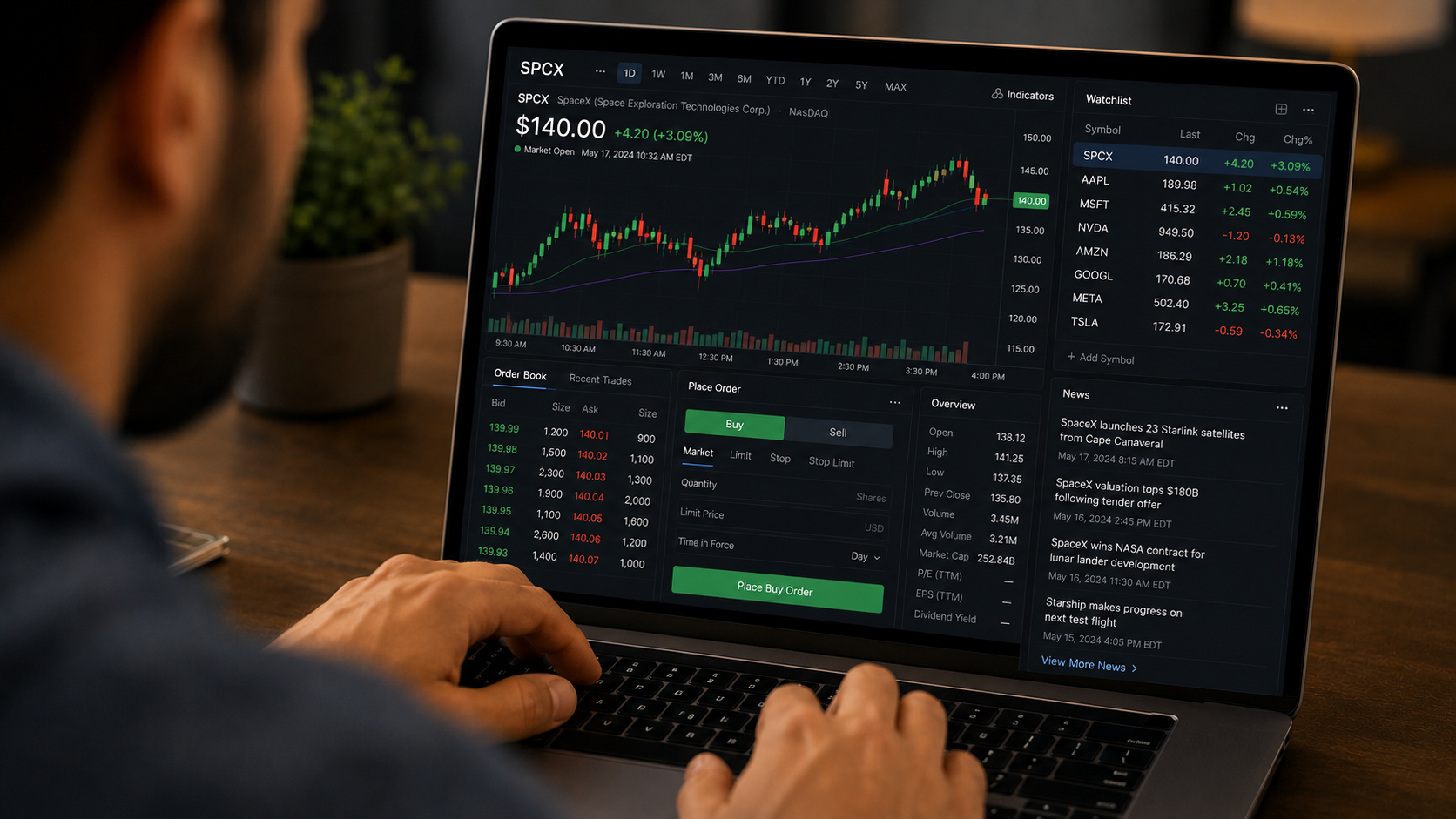
The IPO market is about to face its most consequential test in decades. SpaceX, Elon Musk’s aerospace, satellite, and artificial intelligence conglomerate, is targeting a June 12 Nasdaq debut under the ticker SPCX — aiming to raise as much as $75 billion at a valuation approaching $1.75 trillion. If it prices at that level, it would shatter Saudi Aramco’s 2019 record of $35.4 billion as the largest initial public offering ever completed.

The timeline is now concrete. SpaceX is expected to file its S-1 prospectus publicly this week, with a roadshow scheduled to begin June 4 and share pricing targeted for June 11. A 5-for-1 stock split is completing by May 22, adjusting the internal per-share value from $526.59 to approximately $105.32 — a move widely interpreted as lowering the entry price ahead of listing to broaden retail accessibility. Musk has reportedly directed that up to 30% of IPO shares be reserved for individual investors, an unusually high retail allocation for a deal of this magnitude.

What SpaceX Actually Is Now

SpaceX merged with Musk’s AI venture xAI in February, creating a combined entity that now encompasses the Falcon 9 rocket program, the Starlink satellite internet service, the Starship development program, and xAI’s artificial intelligence platform. The company generated between $15 billion and $16 billion in revenue in 2025, with Starlink — which now serves more than 9 million users globally — serving as the primary growth engine. At the targeted $1.75 trillion valuation, the deal implies a revenue multiple of approximately 109 to 116 times trailing sales — a figure that reflects growth expectations rather than current fundamentals.

BlackRock is reportedly in discussions to invest between $5 billion and $10 billion in the offering, which would represent one of the largest anchor commitments in IPO history. The deal’s dual-class share structure will preserve Musk’s voting control following the listing.

The Context: A Record That Puts Everything Else in Perspective

SpaceX’s targeted raise of $75 billion is more than double Aramco’s record. It is more than the combined IPO proceeds of the ten largest US technology listings in the past decade. The valuation of $1.75 trillion would immediately place SPCX among the ten most valuable publicly traded companies in the world on its first day of trading.

The deal follows Cerebras Systems’ blockbuster Nasdaq debut last week, which saw shares surge nearly 90% on the first day of trading and briefly pushed the company’s market cap above $100 billion. That listing, itself the largest US tech IPO since Uber in 2019, now looks like a warm-up act.

What It Means for Smaller Investors and the Broader Market

For small and microcap investors the SpaceX IPO is relevant on two levels. First, the deal’s scale and the retail allocation represent a genuine opportunity for individual investors to participate in a listing that institutional capital will compete aggressively to access. Second, a successful SpaceX debut at or near the targeted valuation would validate the current wave of AI and space technology investment theses — and create a rising tide for smaller companies operating in adjacent spaces.

Domestic satellite technology providers, aerospace component manufacturers, launch infrastructure companies, and AI hardware suppliers in the sub-$2 billion market cap range have historically seen multiple expansion in the wake of high-profile sector listings. SpaceX going public at $1.75 trillion would be the most powerful sector validation signal the space and AI technology markets have ever received.

OpenAI and Anthropic are both reportedly preparing IPO filings for later in 2026. The window is open and the market is paying attention.

Madison Air’s $2.2B IPO Is the Largest US Industrial Listing in 27 Years

The industrial sector just had its biggest IPO moment since 1999, and artificial intelligence deserves much of the credit.

Madison Air Solutions Corp. (NYSE: MAIR) debuted on the New York Stock Exchange Thursday, raising $2.23 billion after pricing 82.7 million shares at $27 each — the top of its marketed range. By early afternoon, shares were trading around $31.26, a 16% pop that gave the Chicago-based ventilation and filtration systems provider a market capitalization of approximately $13.2 billion.

The last time a US industrial company pulled off an IPO of this magnitude was when UPS raised $5.5 billion in 1999 — a listing that rode the wave of early e-commerce enthusiasm. Madison Air is riding a different wave: the data center buildout fueling the AI boom.

While the company operates across more than 30 brand names — including Nortek Data Center Cooling, Airxchange and Zephyr — and generates revenue from sectors spanning semiconductor manufacturing and life sciences, it is the data center angle that captured investor attention. Data centers account for roughly 20% of Madison Air’s commercial business, and that segment drove about two-thirds of total revenue in 2025. The company’s liquid, hybrid and air cooling products are increasingly critical infrastructure as hyperscalers race to build out AI compute capacity.

The pitch landed. Madison Air is entering the public markets at a moment when HVAC and thermal management companies tied to the data center buildout have become some of the most sought-after names in industrials. Comfort Systems USA surged more than 360% in the 12 months through Wednesday, while Modine Manufacturing roughly tripled over the same period. Madison Air’s IPO is the latest — and largest — in a string of high-profile industrial debuts, following Legence Corp., which surged 148% from its September IPO through Wednesday, and Forgent Power Solutions, which is up 20% since its February debut.

The company posted revenue of $3.34 billion and net income of $124 million for 2025, compared with $2.62 billion in revenue and $236 million in net income the year prior. The margin compression is worth noting — net income fell despite revenue growth — as tariffs added $51.3 million to the company’s cost of goods sold last year. CEO Jill Wyant said Madison Air is offsetting those pressures through pricing adjustments and is still evaluating the impact of more recent tariff changes on metals.

Founder Larry Gies retains control of the company through super-voting shares following the IPO. Madison Industries, which Gies controls, also participated in a concurrent $100 million private placement at the IPO price. The deal was led by Goldman Sachs, Barclays, Jefferies and Wells Fargo, with anchor interest from Morgan Stanley Investment Management, Durable Capital Partners and HRTG GPE — institutions that collectively expressed interest in up to $525 million of shares ahead of the offering.

Madison Air is not a small-cap story — at $13.2 billion, it clears the threshold by a wide margin. But its market debut matters to small and microcap investors for a clear reason: it validates the investability of the broader AI infrastructure supply chain at scale. The companies supplying cooling systems, filtration and thermal management to data centers — many of them smaller, less-covered names — are operating in what Madison Air estimates is a $40 billion market for specialized air systems. When an IPO of this size trades up 16% on day one, it sends a signal about where institutional capital is flowing. The picks-and-shovels trade around AI infrastructure is far from over.

Ackman Returns to IPO Market With Ambitious Pershing Square Offering

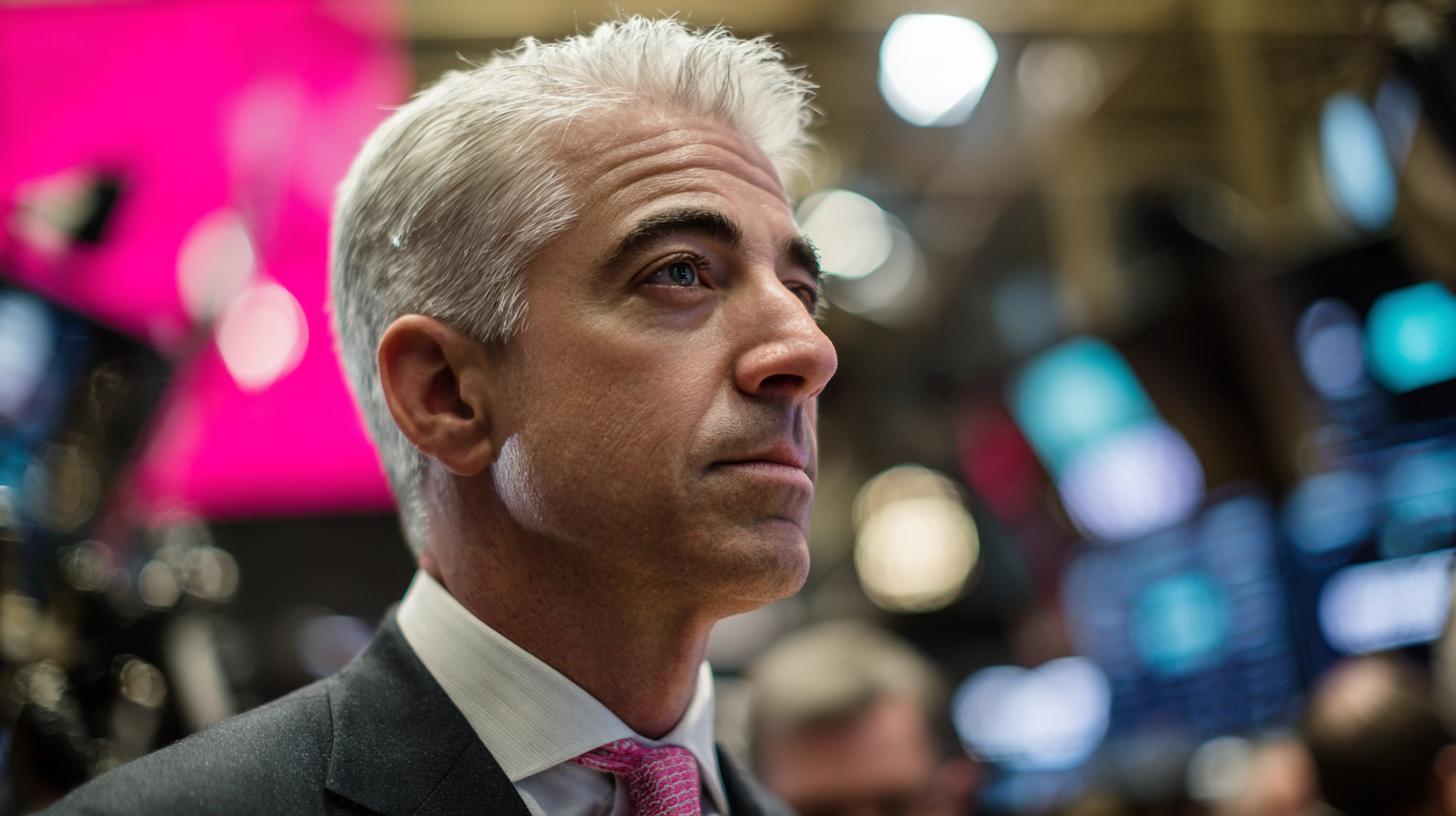
Billionaire investor Bill Ackman is once again turning to public markets to expand his investment platform, unveiling plans for a combined offering that could raise as much as $10 billion. The deal would bring a new closed-end fund, Pershing Square USA Ltd., to the New York Stock Exchange while also giving investors equity exposure to Pershing Square Inc., the hedge fund management firm behind the strategy.

The structure of the proposed IPO is designed to give investors exposure to both the investment vehicle and the management company. Under the filing with the U.S. Securities and Exchange Commission, investors who purchase shares in the Pershing Square USA closed-end fund will also receive shares in Pershing Square Inc. For every 100 shares purchased in the fund at $50 per share, investors will receive 20 shares in the management company at no additional cost.

The combined offering aims to raise between $5 billion and $10 billion, positioning it as one of the more notable capital markets transactions of the year. If successful, the deal would further expand Pershing Square’s access to permanent capital and broaden its base of public-market investors.

Pershing Square has built its reputation around concentrated investments in a limited number of companies, often paired with activist engagement. The firm currently manages approximately $30.7 billion in assets, with about $20.7 billion representing fee-paying capital as of the end of 2025.

The IPO also reflects Ackman’s longer-term vision of creating a publicly traded investment platform similar in structure to Berkshire Hathaway, allowing investors to participate in the firm’s long-term investment strategy through publicly listed securities.

The strategy arrives at a time of heightened market volatility driven by geopolitical tensions, inflation concerns, and shifting global economic conditions. For investment firms that rely on long-term value-oriented strategies, volatile markets can create opportunities to acquire companies at lower valuations.

Pershing Square USA is expected to focus on acquiring significant stakes in a relatively small group of businesses, continuing the firm’s long-standing investment philosophy of concentrated positions. The firm’s core funds have historically held large stakes in companies such as Alphabet, Chipotle Mexican Grill, and Brookfield.

Part of the capital being raised in the offering will come from a previously secured private placement totaling roughly $2.8 billion. Those funds were committed by institutional investors including family offices, pension funds, and insurance companies. Participants in the private placement are expected to receive additional shares in the management company compared to public investors.

Once the transaction is completed, Pershing Square Inc. and Pershing Square USA are expected to trade as separate publicly listed entities. The closed-end fund will list on the New York Stock Exchange under the ticker symbol PSUS, while the asset management company is expected to trade under the ticker PS.

Unlike traditional mutual funds, closed-end funds issue a fixed number of shares that trade on an exchange. Because of this structure, the market price of the shares can trade at a premium or discount to the value of the underlying portfolio holdings.

Pershing Square already operates a similar structure through Pershing Square Holdings Ltd., its London-listed closed-end fund, which manages more than $17 billion in assets but currently trades at a discount to its net asset value.

Major investment banks including Citigroup, UBS, Bank of America, Jefferies, and Wells Fargo are leading the underwriting for the IPO.

The offering represents Ackman’s latest effort to expand Pershing Square’s reach in public markets while building a larger permanent capital base to support its long-term investment strategy.

Elon Musk’s Boldest Bet Yet: How SpaceX Became the Lifeline That Turned xAI Into a $1.25 Trillion Giant

Elon Musk has never been shy about bending corporate structure to his will, but his latest move may be the most audacious of his career. By merging SpaceX with xAI, Musk has created a $1.25 trillion private colossus, instantly making it the most valuable private company in history — and rescuing a cash-hungry AI venture in the process.

The deal folds Musk’s dominant rocket maker, his lossmaking artificial intelligence startup xAI, and the social media platform X into a single vertically integrated entity. Musk framed the merger as a necessary step toward launching data centers into orbit, building factories on the Moon, and ultimately colonizing Mars. Supporters see visionary logic. Critics see financial engineering on a historic scale.

At the heart of the transaction is SpaceX’s balance sheet. The company, now marked up to a $1 trillion valuation, generates roughly $16 billion in annual revenue, driven by its near-monopoly on commercial rocket launches and the rapid expansion of its Starlink satellite broadband business. That steady cash flow and investor confidence gave Musk the leverage to absorb xAI, which reportedly burns around $1 billion per month as it races to build advanced AI models and massive data centers.

Under the terms of the deal, SpaceX will acquire xAI for $250 billion, matching the valuation implied by a recent funding round. xAI shareholders will receive SpaceX stock at roughly a seven-to-one exchange ratio, with the combined entity priced at $527 per share. Investors were briefed on hurried calls, with many reportedly blindsided by both the speed and the scale of the merger.

The strategic rationale is straightforward: AI’s biggest bottlenecks are energy, compute, and data — areas where Musk already has deep assets. SpaceX provides launch capability and satellite infrastructure, Starlink delivers global connectivity, X contributes a vast real-time data stream, and xAI supplies the models. In theory, the combination creates a self-reinforcing ecosystem few competitors can match.

Yet the risks are just as real. xAI’s revenues remain in the low hundreds of millions, far behind rivals like OpenAI, Google, and Anthropic. Folding such a capital-intensive, lossmaking business into SpaceX complicates a planned June IPO, which could raise as much as $50 billion. Existing SpaceX shareholders will be diluted as the company issues new shares to fund the acquisition — a move that has unsettled some long-term investors.

Still, Musk has a long track record of forcing through controversial deals. His 2016 acquisition of SolarCity using Tesla stock faced years of litigation, yet ultimately rewarded shareholders who stayed the course. Many investors believe this is another example of Musk using his control, credibility, and cult-like investor loyalty to move faster than governance norms would typically allow.

The broader market implication is clear: Musk is racing to position his empire at the center of the AI arms race, even if it means rewriting the rules of valuation along the way. Whether this $1.25 trillion gamble proves visionary or reckless will depend on whether xAI can convert ambition into revenue — before investor patience runs out.

OpenAI Expands Employee Share Sale to $10.3 Billion at $500B Valuation

OpenAI is expanding its latest secondary share sale, allowing current and former employees to sell up to $10.3 billion worth of stock. The transaction values the artificial intelligence company at $500 billion, reinforcing its position as one of the most highly valued private startups globally. The expanded sale, up from the $6 billion originally targeted, provides employees an opportunity to realize gains without forcing the company into a near-term public listing.

For staff who have held shares for more than two years, the window to participate runs through the end of September, with the transaction expected to close in October. Major institutional investors including SoftBank, Dragoneer Investment Group, Thrive Capital, Abu Dhabi’s MGX, and T. Rowe Price are expected to purchase the shares, according to people familiar with the offering.

The offering follows a sharp rise in OpenAI’s valuation. Earlier in 2025, the company raised capital at a $300 billion valuation. The new $500 billion figure reflects investor confidence in OpenAI’s revenue growth trajectory, driven by enterprise adoption of its AI models and partnerships with major cloud providers.

The $200 billion valuation jump in less than a year highlights both market enthusiasm for AI and the scarcity of opportunities to invest directly in sector leaders. With OpenAI remaining private, secondary sales represent one of the few avenues for institutional investors to gain exposure at scale.

Secondary share sales have become a preferred mechanism for late-stage startups to provide liquidity to employees while avoiding the volatility of public markets. By giving staff the ability to convert equity into cash, companies like OpenAI can retain talent in an increasingly competitive industry.

Other major startups, including SpaceX, Stripe, and Databricks, have employed similar strategies to balance growth with employee satisfaction. For investors, these transactions provide a controlled entry point into companies with high valuations, while founders and leadership avoid the pressure of quarterly earnings scrutiny.

For outside investors, OpenAI’s decision underscores the strength of demand for exposure to artificial intelligence platforms. With public-market alternatives limited to large tech incumbents, institutional capital continues to flow into private leaders despite lofty valuations.

Still, some analysts caution that these valuations hinge on sustained revenue expansion and market share gains in a sector that is evolving rapidly. For now, OpenAI’s positioning at the forefront of generative AI makes it one of the most closely watched private companies in the world.

Bit Digital (BTBT) – WhiteFiber IPO


Wednesday, August 13, 2025

Joe Gomes, CFA, Managing Director, Equity Research Analyst, Generalist , Noble Capital Markets, Inc.

Refer to the full report for the price target, fundamental analysis, and rating.

IPO. WhiteFiber has been brought public through the sale of 9.375 million shares at $17/sh. Upon completion of the offering, Bit Digital retained ownership of 74.3% of the 36.4 million outstanding shares (71.5% if the underwriters exercised the full option). WhiteFiber shares are trading on the NASDAQ under the symbol WYFI.

Funding. Net proceeds from the IPO were expected to be approximately $145.1 million, or approximately $167.4 million if the underwriters exercised their option in full. Management anticipates using the funds for the build out and expansion of the business.


Get the Full Report

Equity Research is available at no cost to Registered users of Channelchek. Not a Member? Click ‘Join’ to join the Channelchek Community. There is no cost to register, and we never collect credit card information.

This Company Sponsored Research is provided by Noble Capital Markets, Inc., a FINRA and S.E.C. registered broker-dealer (B/D).

*Analyst certification and important disclosures included in the full report. NOTE: investment decisions should not be based upon the content of this research summary. Proper due diligence is required before making any investment decision. 

Fannie Mae and Freddie Mac Edge Closer to Historic IPOs

Key Points:
– Administration aims to take mortgage giants public by year-end, potentially valuing them at $500B+.
– Fannie and Freddie have been under federal conservatorship since the 2008 financial crisis.
– Privatization could reshape the $12T U.S. housing finance system.

President Donald Trump’s administration is pushing ahead with plans to take mortgage finance giants Fannie Mae and Freddie Mac public before the end of 2025, a move that could mark one of the largest and most closely watched privatizations in U.S. history.

According to people familiar with the matter, discussions are underway that could value the two government-sponsored enterprises (GSEs) at a combined $500 billion or more. The share sales could raise roughly $30 billion, injecting fresh capital into companies that have been under federal control since the 2008 financial crisis.

Fannie Mae and Freddie Mac play a central role in the U.S. housing market, buying mortgages from lenders, packaging them into mortgage-backed securities (MBS), and guaranteeing timely payment of principal and interest to investors. By recycling capital back to banks and mortgage companies, they help ensure a steady flow of financing for homebuyers, multifamily developers, and real estate investors.

Both companies were placed into conservatorship in September 2008 after the housing market collapse left them on the brink of insolvency. The U.S. Treasury provided a combined $191 billion in support, receiving preferred shares in return. Over the years, the companies have paid the government more than that amount in dividends, but attempts to return them to private ownership have repeatedly stalled amid political divisions and the complexity of reforming the $12 trillion mortgage market they underpin.

Trump has long signaled his desire to end federal conservatorship of the mortgage giants, including during his first term. His return to the White House has revived optimism among investors who have held shares in the companies for years in anticipation of privatization. Billionaire hedge fund manager Bill Ackman, a prominent shareholder, has said he expects Trump to complete the process.

Still, the road to IPOs is unlikely to be straightforward. Fannie and Freddie guarantee or own about half of all U.S. home loans, meaning any shift in ownership must be carefully managed to avoid disrupting housing finance. The administration is expected to keep some form of oversight in place even after the companies are privatized, with Trump previously saying in May that he intends to retain a role for federal supervision.

Market reaction to the Wall Street Journal report on the IPO plan was swift. Shares of both companies, which trade over the counter, surged more than 21%, hitting their highest levels in over a month.

In recent days, Trump has met with the CEOs of major banks including Citigroup and Bank of America to discuss the potential privatization, according to earlier Reuters reporting. Financial institutions are expected to play a critical role in structuring the offerings and preparing the companies for life after conservatorship.

If successful, the IPOs of Fannie Mae and Freddie Mac would represent a historic shift in the U.S. housing finance system—one that could reshape the secondary mortgage market, alter investor participation in MBS, and redefine the federal government’s role in backstopping the nation’s home loan market.

Rubrik to Acquire AI Startup Predibase in Strategic Expansion Push

Key Points:
– Rubrik is acquiring AI startup Predibase for over $100 million to expand into enterprise AI infrastructure.
– Predibase’s platform allows businesses to customize and deploy AI models using data from third-party sources.
– The acquisition aligns with Rubrik’s strategy to evolve into a multi-product enterprise platform focused on security and AI innovation.

Rubrik, the data security and management company, is set to acquire artificial intelligence startup Predibase in a move that deepens its presence in the fast-growing AI infrastructure market. The acquisition, valued at over $100 million according to a source familiar with the terms, marks a significant step in Rubrik’s efforts to broaden its capabilities beyond data backup and cyber resilience.

Predibase, founded in 2021, specializes in tools that help organizations efficiently deploy custom AI models using their own data. The San Francisco-based startup has attracted attention for its developer-focused platform that integrates with a wide range of third-party data systems. By enabling customization and deployment of large language models (LLMs), Predibase aims to help businesses move beyond generic AI tools and build solutions tailored to their internal data needs.

Rubrik, which went public in 2024 and has seen robust revenue growth since its IPO, views the deal as an opportunity to evolve into a multi-product enterprise software provider. The company has already established itself as a key player in data protection and ransomware recovery, boasting more than $1 billion in annualized recurring revenue. The integration of Predibase’s AI model deployment tools adds a new layer to Rubrik’s offerings—one that taps into the increasing demand for AI-powered automation across enterprises.

With this acquisition, Rubrik aims to give customers the ability to build secure, cost-effective AI agents that can reason over large datasets housed within both Rubrik’s ecosystem and external cloud platforms. These include major cloud data players such as Amazon Web Services, Google Cloud, Snowflake, and Databricks, with whom Predibase already integrates.

The Predibase platform will continue to operate independently after the acquisition closes, preserving its existing customer relationships and developer-centric approach. Predibase’s technology will also be enhanced by Rubrik’s Annapurna platform, which enables secure aggregation of data from multiple sources. Together, the two platforms are expected to provide businesses with an end-to-end stack for building and deploying AI models grounded in private enterprise data.

Predibase’s team, including co-founders who previously worked on AI infrastructure at Uber, brings technical depth and credibility to Rubrik’s expanding AI strategy. Their work at Uber on machine learning platforms laid the groundwork for scalable AI services, and they bring similar ambitions to their new parent company.

For Rubrik, the acquisition underscores a broader ambition to become a long-term platform player in the enterprise technology space. As more businesses look to harness generative AI for insights and automation, the demand for tools that enable secure, high-performance model training and deployment is growing rapidly. With Predibase now in its fold, Rubrik is positioning itself to be at the center of this next wave of enterprise AI adoption.

Circle Targets Nearly $6 Billion Valuation in Landmark Stablecoin IPO

Key Points:
– Circle launches IPO to raise $624M, targeting a $5.65B valuation amid stablecoin growth.
– USDC’s market cap has surged 40% in 2025, driven by rising demand and pending U.S. regulation.
– Cathie Wood’s ARK and Coinbase stand to benefit as Circle eyes wider institutional adoption.

Circle, the fintech firm behind the widely-used USDC stablecoin, has officially launched its long-anticipated initial public offering (IPO), aiming to raise approximately $624 million. The move would value the company at around $5.65 billion — and closer to $6.7 billion when including outstanding shares and options — marking a pivotal moment for both Circle and the broader digital asset space.

The offering includes 24 million shares of Class A common stock, priced between $24 and $26 per share. Of those, Circle itself will sell 9.6 million, while existing shareholders are offloading the remaining 14.4 million. The shares will trade under the ticker CRCL on the New York Stock Exchange, giving traditional investors direct exposure to one of the most influential players in the crypto ecosystem.

Founded in 2018, Circle’s signature product, USD Coin (USDC), is now the second-largest stablecoin in the world, with around $62 billion in circulation — roughly 27% of the total stablecoin market. It trails only Tether (USDT), which holds a 67% share. However, USDC has outpaced its rival in growth this year, boasting a 40% increase in market cap compared to Tether’s 10%, according to CryptoQuant.

The IPO comes at a strategic inflection point for the crypto industry, as U.S. lawmakers move closer to passing the first major federal legislation aimed at stablecoins. Last week, the Senate advanced a regulatory bill that would establish clear guidelines for their issuance and oversight. Former President Donald Trump, now back in office, has voiced strong support for crypto regulation and stated his desire to sign a stablecoin-focused bill before the August recess.

A significant backer of Circle’s IPO is ARK Investment Management, led by Cathie Wood, which has signaled interest in purchasing up to $150 million worth of shares — a vote of confidence in Circle’s future and stablecoin utility.

The IPO is also expected to have notable ripple effects for Coinbase, a co-founder of USDC and one of its primary distribution channels. Coinbase and Circle maintain a 50/50 revenue-sharing agreement on USDC, and the crypto exchange earns 100% of the interest income generated by USDC-based products on its platform. Coinbase CEO Brian Armstrong has called making USDC the world’s top stablecoin a “stretch goal” for the company.

Beyond trading and DeFi use cases, USDC and other stablecoins have increasingly been recognized for their ability to move U.S. dollars quickly and inexpensively across borders. This functionality is attracting attention from fintech firms, traditional banks, and policymakers alike — especially as global conversations around preserving U.S. dollar dominance intensify.

With its IPO, Circle isn’t just going public — it’s stepping into the spotlight as a central player in the next era of global finance.

Tech IPO Market Stirs Back to Life After Years of Drought

Key Points:
IPO Market Rebounds: eToro and CoreWeave spark renewed tech IPO momentum.
Startups Move Ahead: Chime and Hinge Health revive public debut plans.
AI & Fintech Lead: These sectors drive the IPO resurgence despite market uncertainty.

After several years of stagnation, the tech IPO market is finally showing signs of revival. Recent successful listings from high-profile companies like eToro and CoreWeave, coupled with a growing pipeline of IPO-ready startups, have rekindled optimism among venture capitalists and retail investors alike.

Earlier this week, eToro, the social trading and brokerage platform based in Israel, made a striking debut on the Nasdaq. Its stock surged nearly 29% after pricing above the expected range—a strong signal that investor appetite for new tech listings may be returning. The timing was crucial. Just weeks ago, uncertainty stemming from President Trump’s abrupt tariff policy had cast a shadow over the broader market and cooled IPO ambitions.

Adding further momentum, CoreWeave, an AI infrastructure company, posted a remarkable 420% revenue increase in its first earnings report since going public in March. The company’s stock has more than doubled in value since its IPO, reflecting sustained investor enthusiasm for artificial intelligence and cloud infrastructure plays. According to PitchBook and the National Venture Capital Association, nearly 40% of Q1 venture capital exit value came from CoreWeave’s listing alone.

This rebound, however, comes after a long dry spell. Since early 2022, startups across fintech, health tech, and enterprise software have largely stayed private, waiting for more favorable conditions. The brief optimism earlier this year was quickly dampened when the Trump administration’s surprise tariff announcement in April rattled the markets. In response, companies like Klarna and StubHub shelved their IPO plans.

But with the administration now pausing its most aggressive tariff measures for 90 days, confidence is starting to return. Fintech company Chime filed its IPO prospectus this week, having delayed its plans due to the earlier tariff-driven volatility. Similarly, digital health firm Omada Health submitted its filing last week.

Next week, all eyes will be on Hinge Health, a virtual physical therapy platform. The company updated its IPO filing with a pricing range of $28–$32, potentially valuing it at $2.4 billion. This offering will be an important litmus test for investor sentiment toward the digital health sector, which boomed during the pandemic but has since seen growth slow.

Meanwhile, Cerebras, a chipmaker focused on AI hardware, has finally cleared regulatory hurdles and is preparing to go public later this year. The move reflects strong demand in the AI space, even as regulatory and geopolitical risks linger.

There are also notable shifts in the digital asset space. Galaxy Digital, originally listed in Canada due to U.S. regulatory hesitance toward crypto, has now moved its shares to the Nasdaq in a bid to access a broader investor base.

Despite these encouraging signs, experts remain cautious. Ernst & Young’s Rachel Gerring believes the IPO market is “trending in the right direction,” but warns that volatility and geopolitical risks could still stall momentum. Many startups are being advised to focus on readiness rather than timing, ensuring they can launch when conditions are ideal.

For now, the market is showing signs of life. But whether this marks the start of a sustained comeback or another false dawn remains to be seen.

CoreWeave Launches $2.7 Billion IPO Amid AI Cloud Boom

Key Points:
– Nvidia-backed AI cloud firm aims for a $32B valuation with shares priced at $47-$55.
– Once a crypto-mining firm, CoreWeave now dominates AI cloud services, with Microsoft driving most of its revenue.
– Despite backing from Cisco and JPMorgan, CoreWeave faces high losses and financial control concerns.

CoreWeave Inc., a cloud-computing firm specializing in AI infrastructure, has announced plans for an initial public offering (IPO) aimed at raising as much as $2.7 billion. The Nvidia-backed company, along with some of its investors, is marketing shares at a price range of $47 to $55, which would give CoreWeave a market value of approximately $26 billion based on outstanding shares. If fully diluted, the valuation could reach as high as $32 billion.

Founded in 2017 as a crypto-mining firm, CoreWeave has rapidly transitioned into a leading provider of cloud-based AI solutions. The company has established itself as a crucial player in AI computing by leveraging Nvidia’s high-performance GPUs to power data centers. This strategic positioning has allowed it to secure major customers, including Microsoft, which accounted for nearly two-thirds of its 2024 revenue.

CoreWeave reported revenue of $1.9 billion in 2024, a massive jump from $229 million in the prior year. However, the company is still operating at a loss, with a net deficit of $863 million last year compared to $594 million in 2023. The high concentration of revenue from a small number of clients—77% of 2024 revenue coming from just two customers—remains a potential risk factor for investors.

Ahead of its public listing, CoreWeave has sealed significant partnerships, including a deal to provide AI infrastructure to OpenAI worth up to $11.9 billion. Additionally, the company is set to acquire AI developer platform Weights & Biases for approximately 1 million Class A shares, a move expected to enhance its cloud capabilities.

Despite its rapid expansion, CoreWeave faces challenges related to internal financial controls. In its IPO filings, the company disclosed “material weaknesses” in IT controls and a shortage of qualified personnel in financial reporting. Addressing these issues will be crucial as it transitions into a publicly traded company.

The IPO comes amid heightened investor interest in AI-driven cloud infrastructure. CoreWeave has attracted backing from prominent firms including Magnetar Capital, Coatue Management, Jane Street, Fidelity, and Lykos Global Management. Notably, Cisco Systems recently invested in CoreWeave as part of a transaction valuing the company at $23 billion.

Following the IPO, CEO Michael Intrator is expected to hold 37% of shareholder voting power through his control of Class B shares. Nvidia, a key investor, will retain 1.2% of voting power, while Magnetar will hold 7%.

The offering is being led by Morgan Stanley, JPMorgan, and Goldman Sachs, with CoreWeave shares set to trade under the ticker symbol CRWV on the Nasdaq. The outcome of this IPO will serve as a critical indicator of investor appetite for AI-focused cloud firms and could set the stage for further public offerings in the sector.

Kestra Medical Technologies Prices Upsized IPO at $17 Per Share

Key Points:
– Kestra Medical Technologies has priced its upsized initial public offering (IPO) of 11,882,352 common shares at $17.00 per share, aiming to raise approximately $202 million.
– Shares are set to begin trading on the Nasdaq Global Select Market on March 6, 2025, under the ticker symbol “KMTS.”
– Kestra specializes in wearable medical devices and digital healthcare solutions, particularly for cardiovascular disease monitoring and intervention.

Kestra Medical Technologies, a Kirkland, Washington-based company specializing in wearable medical devices and digital healthcare solutions, has announced the pricing of its upsized initial public offering (IPO). The company is offering 11,882,352 common shares at a public offering price of $17.00 per share, with gross proceeds expected to be approximately $202 million, excluding any exercise of the underwriters’ option to purchase additional shares. This option allows underwriters a 30-day period to acquire up to 1,782,352 additional common shares at the IPO price, less underwriting discounts and commissions.

Trading of Kestra’s common shares is scheduled to commence on March 6, 2025, on the Nasdaq Global Select Market under the ticker symbol “KMTS.” The closing of the offering is anticipated to occur on March 7, 2025, contingent upon the fulfillment of customary closing conditions.

The IPO is being led by prominent financial institutions, with BofA Securities, Goldman Sachs & Co. LLC, and Piper Sandler acting as lead bookrunners. Wells Fargo Securities and Stifel are serving as bookrunners, while Wolfe | Nomura Alliance is participating as co-manager for the offering.

Kestra Medical Technologies is a commercial-stage company focused on transforming patient outcomes in cardiovascular disease through intuitive, intelligent, and connected monitoring and therapeutic intervention technologies. Their flagship product, the ASSURE® Wearable Cardioverter Defibrillator (WCD) system, is designed to provide automatic detection and defibrillation for ventricular arrhythmias, offering a modern approach to sudden cardiac arrest protection. The ASSURE system integrates with the Kestra CareStation™ remote patient data platform, enabling configurable notifications for clinical events and trending of physiological and device data at any time.

The company’s decision to go public comes amid increasing demand for wearable medical technology, particularly in the cardiovascular sector. As heart disease remains one of the leading causes of death globally, there is a growing market for advanced monitoring and intervention solutions. Kestra’s innovative approach to real-time monitoring and emergency response through connected devices positions it as a competitive player in this expanding industry. The funds raised through the IPO will likely support further research and development, product expansion, and potential strategic partnerships to enhance its market presence.

Investors will be closely watching the stock’s performance following its debut on the Nasdaq. Given the strong interest in digital healthcare and the increasing adoption of wearable medical devices, Kestra’s IPO could attract significant attention from both institutional and retail investors. The success of this offering could also signal broader investor confidence in the future of digital health solutions, particularly those that leverage artificial intelligence and real-time data tracking to improve patient outcomes.