BYD Surpasses Tesla to Become World’s Largest EV Maker

BYD Co., the Chinese electric vehicle giant, has hit a major milestone, surpassing Tesla Inc. to claim the title of the world’s largest electric vehicle maker in 2025. The achievement comes amid a challenging backdrop for China’s auto market, with heightened domestic competition and shifting government incentives.

The Shenzhen-based company delivered a total of 4.6 million vehicles last year, representing a 7.7% increase from 2024, and meeting the full-year sales target it set in September. Nearly half of these vehicles—2.26 million—were fully electric, with the remainder comprising plug-in hybrid models. In contrast, Tesla’s full-year deliveries are projected to reach approximately 1.66 million vehicles, marking its second consecutive annual decline. The US automaker’s fourth-quarter shipments alone were down 11% from a year earlier.

BYD’s milestone was reflected in market performance, with its Hong Kong-listed shares rising as much as 2.3% on the first trading day of 2026. Despite this growth, the company faces significant pressure in the year ahead. China’s reduction of certain EV purchase incentives and an influx of new domestic models have intensified competition. Geely Automobile Holdings Ltd. and Xiaomi Corp., among others, have launched new vehicles that are capturing consumer attention, making the domestic landscape more challenging.

Chief Executive Officer Wang Chuanfu acknowledged that BYD’s technological lead over competitors has narrowed, affecting domestic sales. However, he expressed confidence in the company’s 120,000-strong engineering team and hinted at upcoming breakthroughs that could help BYD regain an edge.

International markets have emerged as a bright spot for BYD. Overseas deliveries reached 1.05 million units in 2025, surpassing expectations and helping offset domestic softness. The company has set ambitious targets for 2026, aiming to sell between 1.5 million and 1.6 million vehicles outside China. Analysts from Deutsche Bank and Morgan Stanley forecast that new product launches and a refreshed technology platform could further strengthen BYD’s global competitiveness.

Nevertheless, the company faces financial and regulatory hurdles. BYD posted back-to-back quarterly profit declines in 2025 and has been at the center of China’s efforts to curb aggressive EV discounting. This regulatory scrutiny may accelerate consolidation within the industry and reshape the competitive hierarchy.

Tesla, meanwhile, is grappling with its own set of challenges. Production line adjustments for the redesigned Model Y slowed early 2025 deliveries, while the US elimination of federal EV purchase incentives is expected to weigh on demand. Additionally, CEO Elon Musk’s controversial political profile has reportedly deterred some buyers, further complicating the company’s outlook.

Despite these headwinds, BYD appears poised to maintain its lead. Analyst estimates suggest total sales could reach 5.3 million units in 2026, allowing the company to solidify its position as the top global EV maker. With growing overseas momentum, strategic product launches, and continued investment in technology, BYD is not just overtaking Tesla—it is reshaping the global electric vehicle landscape.

Long-Maturity Treasuries Slide Into 2026 After Strong 2025 Gains

Long-maturity U.S. Treasuries opened 2026 on a cautious note, following the market’s most robust annual performance in five years. While last year saw substantial gains for government bonds, investors are now recalibrating as the potential for additional Federal Reserve interest-rate cuts raises concerns about inflation and fiscal sustainability.

The 30-year Treasury yield rose roughly two basis points to 4.87%, reflecting modest losses but signaling increased volatility after last year’s record gains. In contrast, shorter-dated Treasuries, which are more directly influenced by Fed policy, remained relatively stable or slightly lower. This divergence continues the trend observed in late 2025, when the Fed cut its target range by three quarter-point moves, leading short-term yields lower while long-term rates were supported by economic resilience and fiscal pressures.

Investor focus has shifted to how a potential new Fed leadership might approach monetary policy. Long-term bond yields face upward pressure not only from prospective rate cuts but also from the U.S. government’s challenging fiscal outlook and signs of continued economic strength. Data released late last year indicated the U.S. economy expanded at the fastest pace in two years, complicating the narrative that rate reductions alone would sustain low yields.

Market participants are also closely watching interest-rate derivatives. Recent trading shows heavy demand for options that protect against the federal funds rate dropping to 0% from its current 3.5% range, while swap contracts suggest a more moderate decline toward a 3% floor by year-end. These instruments highlight investor uncertainty over the Fed’s next moves and underline the tension between potential policy easing and persistent inflation, which remains above the central bank’s 2% target.

Despite these concerns, Treasuries continue to serve a strategic role for investors. Portfolio managers cite historically high stock valuations as a compelling reason to maintain exposure to government bonds, providing a hedge against market corrections. James Athey, a portfolio manager at Marlborough Investment Management, notes that volatility is likely to return to bond markets as investors wrestle with the Fed’s evolving policy stance. This environment may produce short-term swings in long-term yields, even as the overall trend for bonds remains influenced by macroeconomic fundamentals.

Globally, bond markets are experiencing similar pressures. Germany’s 10-year yields climbed six basis points to 2.91%, while the UK’s 10-year yield rose five basis points to 4.53%. In Australia, 10-year bonds slumped as yields jumped eight basis points on speculation that rising commodity prices could accelerate growth and prompt the Reserve Bank of Australia to raise rates. Meanwhile, January marks one of the busiest months for new corporate bond issuance, increasing competition for investor capital and adding another layer of pressure on Treasury prices.

Looking ahead, Treasuries are expected to remain a key tool for risk management, particularly for investors balancing exposure to equities and small caps. While the bond market’s exceptional 2025 performance sets a high bar, 2026 may bring more volatility and narrower returns, underscoring the importance of strategic positioning across maturities.

V2X (VVX) – A Strong End to 2025 Awards


Friday, January 02, 2026

V2X builds innovative solutions that integrate physical and digital environments by aligning people, actions, and technology. V2X is embedded in all elements of a critical mission’s lifecycle to enhance readiness, optimize resource management, and boost security. The company provides innovation spanning national security, defense, civilian, and international markets. With a global team of approximately 16,000 professionals, V2X enables mission success by injecting AI and machine learning capabilities to meet today’s toughest challenges across all operational domains.

Joe Gomes, CFA, Managing Director, Equity Research Analyst, Generalist , Noble Capital Markets, Inc.

Refer to the full report for the price target, fundamental analysis, and rating.

DMEA ATSP. V2X subsidiary Vertex Aerospace has been named as an awardee to the Defense Microelectronics Activity (DMEA) Advanced Technology Support Program (ATSP), according to the daily Department of War contract award activity. With multi-billion dollar potential, this award caps a strong year for V2X. The Company has won places on multiple billion dollar contracts, which bode well for the future.

Details. DMEA ATSP is an ID/IQ contract with a $23.357 billion ceiling. This multiple award contract has a base ordering period of five years with two option periods, three years and two years respectively, to establish a 10 year ordering period. There are a total of 10 awardees, including Vertex. As an ID/IQ, Vertex will need to compete for each award, but we are confident the Company will receive its fair share of wins under the contract.


Get the Full Report

Equity Research is available at no cost to Registered users of Channelchek. Not a Member? Click ‘Join’ to join the Channelchek Community. There is no cost to register, and we never collect credit card information.

This Company Sponsored Research is provided by Noble Capital Markets, Inc., a FINRA and S.E.C. registered broker-dealer (B/D).

*Analyst certification and important disclosures included in the full report. NOTE: investment decisions should not be based upon the content of this research summary. Proper due diligence is required before making any investment decision. 

Twin Hospitality (TWNP) – A Management Change


Friday, January 02, 2026

Joe Gomes, CFA, Managing Director, Equity Research Analyst, Generalist , Noble Capital Markets, Inc.

Refer to the full report for the price target, fundamental analysis, and rating.

Leadership Transition. Twin Hospitality announced Andy Wiederhorn has been named Chief Executive Officer of the Company and Roger Gondek has been named President of Twin Peaks, replacing former CEO and President Kim Boerema. While somewhat surprising, as Mr. Boerema was appointed CEO just this past May, the new leadership simplifies the leadership structure and optimizes resources while minimizing overhead, without any significant change in ability, in our view.

Roger Gondek. We believe the elevation of Mr. Gondek to President of Twin Peaks Restaurant to be the headline. Already serving as Chief Operating Officer of Twin Peaks since 2017, Mr. Gondek brings approximately 15 years of experience with the brand, including previous operations leadership roles with Twin Peaks’ largest franchisee. Mr. Gondek was the Executive Vice President of Operations of La Cima Restaurants, LLC, a franchiser of 43 Twin Peaks restaurants in Florida, Alabama, Georgia, South Carolina, North Carolina, and Tennessee, from June 2011 to July 2017. Prior to La Cima Restaurants, Mr. Gondek was a Divisional Vice President at Hooters of America from October 2001 to February 2011. Mr. Gondek has a deep understanding of Twin Peaks markets, in our opinion.


Get the Full Report

Equity Research is available at no cost to Registered users of Channelchek. Not a Member? Click ‘Join’ to join the Channelchek Community. There is no cost to register, and we never collect credit card information.

This Company Sponsored Research is provided by Noble Capital Markets, Inc., a FINRA and S.E.C. registered broker-dealer (B/D).

*Analyst certification and important disclosures included in the full report. NOTE: investment decisions should not be based upon the content of this research summary. Proper due diligence is required before making any investment decision. 

ONE Group Hospitality (STKS) – Development Update


Friday, January 02, 2026

Joe Gomes, CFA, Managing Director, Equity Research Analyst, Generalist , Noble Capital Markets, Inc.

Refer to the full report for the price target, fundamental analysis, and rating.

Milestones. ONE Group announced a number of development milestones achieved during 4Q25. These include: entering into ten restaurant asset-light development agreements; an expanded footprint in large-market, professional sports & entertainment stadiums; opening two new STK locations; launching Benihana-branded retail product; and planning capital-efficient growth for 2026.

Largest Agreement. The ONE Group has entered into its largest asset-light development agreement in the Company’s history, securing development rights for a total of ten restaurants, either Benihana or Benihana Express locations, throughout the Greater San Francisco Bay Area. The two Benihana joint venture locations are expected to open in 2026, with the remaining franchised and licensed locations to open over the next seven years.


Get the Full Report

Equity Research is available at no cost to Registered users of Channelchek. Not a Member? Click ‘Join’ to join the Channelchek Community. There is no cost to register, and we never collect credit card information.

This Company Sponsored Research is provided by Noble Capital Markets, Inc., a FINRA and S.E.C. registered broker-dealer (B/D).

*Analyst certification and important disclosures included in the full report. NOTE: investment decisions should not be based upon the content of this research summary. Proper due diligence is required before making any investment decision. 

Bitcoin Heads Toward a Negative Year-End, but January Could Bring a Relief Rally

Bitcoin is on track to close out the year in negative territory, marking a sharp contrast to the record highs seen earlier in 2025. After months of volatility and a steep pullback from its peak, the world’s largest cryptocurrency has struggled to regain momentum, spending much of December locked in a narrow trading range.

As the year draws to a close, bitcoin has hovered around the mid-to-high $80,000 level, capping a third consecutive month of losses. Year to date, the digital asset is down roughly 5%, weighed down by aggressive liquidations, profit-taking by long-term holders, and fading speculative demand following its dramatic run above $120,000 earlier in the fall.

The recent decline has pushed bitcoin nearly 30% below its October highs, dragging the broader crypto market lower in the process. While multi-month losing streaks are rare for bitcoin, they tend to occur during periods of transition rather than prolonged bear markets.

Despite the weak finish to the year, some analysts see conditions forming for a potential rebound as early as January. Technical indicators tracked by several crypto research firms suggest that bitcoin’s downtrend may be losing strength, setting the stage for a possible shift in momentum at the start of the new year.

One factor that could support prices is portfolio rebalancing. As institutional investors adjust allocations following year-end performance reviews, capital flows back into bitcoin-linked exchange-traded products could provide a short-term lift. Historically, such rebalancing activity has helped spark relief rallies after extended pullbacks.

Still, expectations for a strong breakout remain muted. Many strategists believe the first half of 2026 will likely be characterized by consolidation rather than explosive upside. Analysts point to tighter liquidity conditions, selective institutional demand, and lingering uncertainty around global macroeconomic trends as reasons for caution.

That said, bitcoin’s longer-term outlook remains supported by structural tailwinds. The crypto sector entered 2025 with increased regulatory clarity, growing institutional acceptance, and policy developments that helped legitimize digital assets in traditional finance. While those catalysts fueled last year’s rally, the recent correction has tempered expectations for near-term gains.

Several market observers now anticipate bitcoin trading within a broad range during the first quarter of 2026, with price action potentially fluctuating between the low $80,000s and near $100,000. Rather than a rapid surge, analysts expect renewed accumulation and base-building to define the early months of the year.

Looking further ahead, forecasts for bitcoin’s next major peak vary widely. Some analysts expect a return toward prior highs later in 2026, while others caution that gains may be more modest than previous cycles. What remains clear is that volatility is likely to persist, keeping bitcoin firmly in focus for investors navigating the evolving digital asset landscape.

2025 Year-End Wrap: Small-Cap Investors Eye Mining, Biotech, and Tech for 2026 Opportunities

As 2025 comes to a close, the investment landscape has offered a year of contrasts. Mega-cap tech stocks dominated headlines, driven by artificial intelligence and cloud computing, while the small-cap sector faced a challenging environment, weighed down by elevated interest rates, cautious credit markets, and selective investor demand. Yet for those focused on quality small-cap companies, the year also laid the groundwork for potential gains in 2026, particularly in mining, biotech, and technology sectors.

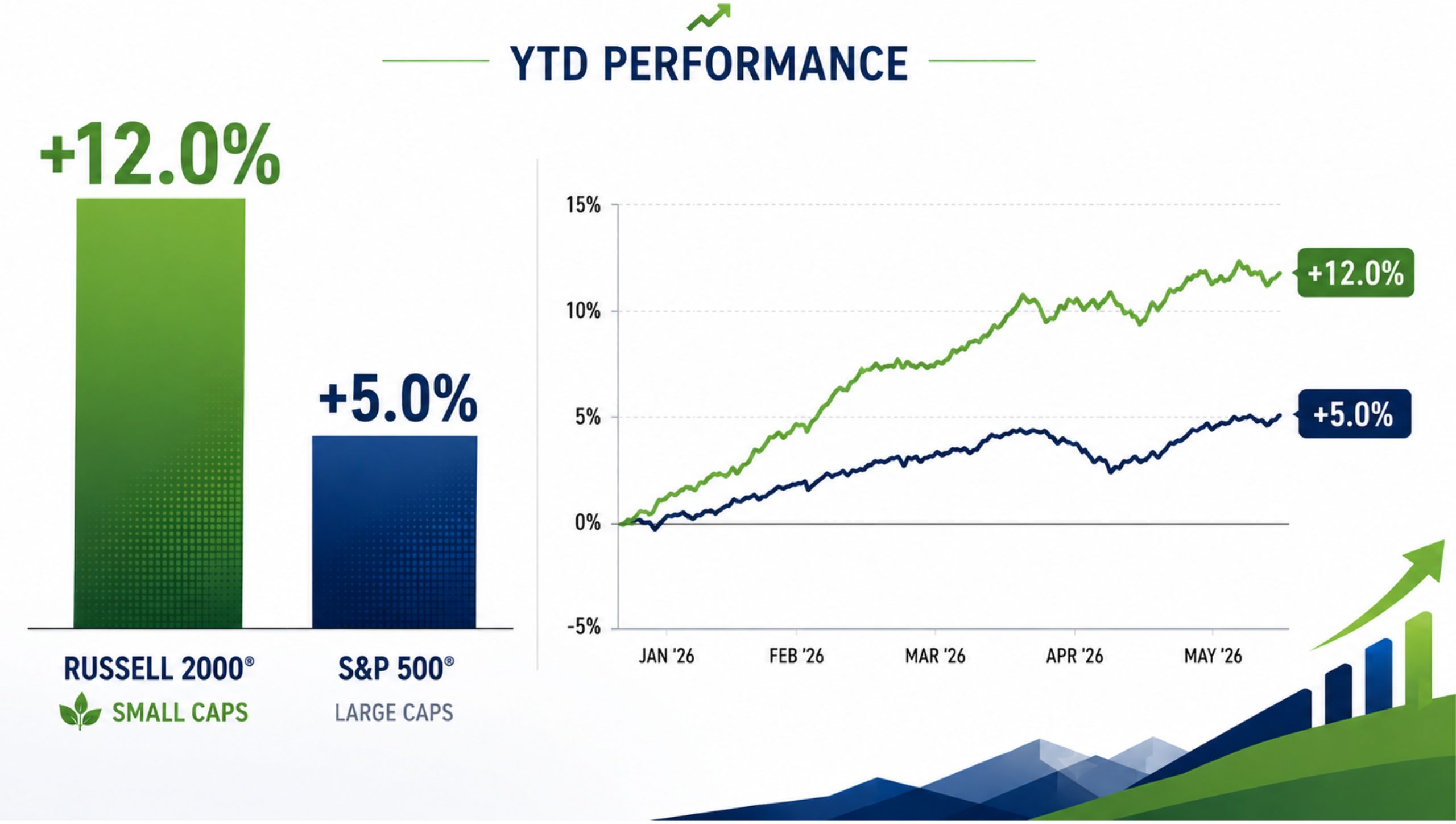
The Russell 2000, a key small-cap benchmark, lagged behind the broader S&P 500 in 2025. Despite underperformance, this divergence has created opportunity. Valuation gaps between small caps and large caps widened, offering investors attractive entry points in companies with strong fundamentals. Small-cap stocks with solid balance sheets and consistent cash flow outperformed peers reliant on speculative growth or cheap capital.

Certain sectors stood out for resilience and growth. Mining and natural resources small caps benefited from ongoing global demand for metals and energy transition materials. Lithium, copper, and critical minerals companies were particularly well-positioned as governments and private companies accelerated clean energy initiatives. These companies not only captured investor interest but also provided a hedge against inflation and volatility in broader equity markets.

The biotech sector saw selective strength as well. Smaller firms focused on innovative therapies, AI-assisted drug discovery, and niche medical devices attracted attention despite macroeconomic headwinds. With continued demand for breakthroughs in personalized medicine, gene therapy, and diagnostic technology, biotech small caps offered a combination of growth potential and sector tailwinds. Investors increasingly favored companies demonstrating revenue traction or near-term product catalysts over speculative pipeline stories.

Technology-focused small caps, including niche AI, cybersecurity, and software-as-a-service providers, also experienced renewed interest. While mega-cap tech firms dominated headlines, small-cap innovators positioned in AI infrastructure, enterprise solutions, and specialized tech services saw capital flow in. These companies benefited from both secular growth trends and attractive valuations relative to large peers, making them a compelling segment for investors looking to balance growth with risk management.

Looking ahead to 2026, the outlook for small-cap equities appears cautiously optimistic. Analysts expect stabilization in interest rates, improving liquidity conditions, and renewed investor rotation from high-valuation mega caps into undervalued small caps. Investors are likely to focus on quality, balance sheet strength, and exposure to durable economic trends, particularly in mining, biotech, and technology. These sectors are well-positioned to capture structural tailwinds, whether from AI adoption, healthcare innovation, or energy transition.

While selectivity will be critical, the combination of lower valuations, sector-specific growth opportunities, and improving market sentiment provides a favorable backdrop for small-cap investors. Those disciplined in stock selection and sector focus may find meaningful upside potential as the market moves into 2026.

In summary, 2025 highlighted the challenges of small-cap investing but also underscored key opportunities. Mining, biotech, and technology sectors emerged as standout areas, offering both resilience and growth potential. As investors enter 2026, the small-cap space remains a fertile ground for disciplined, research-driven investment strategies.

Meta Acquires AI Startup Manus to Accelerate Next Phase of Artificial Intelligence Strategy

Meta is continuing its aggressive expansion into artificial intelligence with the acquisition of Manus, a fast-growing AI startup, signaling the company’s intent to strengthen its position in an increasingly competitive AI landscape. The Facebook and Instagram parent company confirmed the deal this week, though it did not disclose financial terms. Multiple reports estimate the transaction value at more than $2 billion.

Manus, now headquartered in Singapore, gained industry attention earlier this year after launching a general-purpose AI agent designed to assist users with research, coding, and productivity-driven tasks. The platform operates on a subscription model and has experienced rapid adoption across both individual users and businesses. Within just eight months of launch, Manus surpassed $100 million in annual recurring revenue, highlighting strong market demand for its AI capabilities.

Meta described the acquisition as a strategic fit for its broader AI ambitions. The company plans to scale Manus’ technology across its ecosystem, including integration into Meta AI for both consumer and enterprise use cases. Importantly, Meta indicated that Manus will continue operating its existing services independently, allowing current users to retain access through the startup’s app and website.

Leadership at Manus emphasized continuity following the acquisition. The company views the partnership as an opportunity to grow on a more stable foundation while preserving its operational autonomy and product direction. This approach reflects Meta’s recent strategy of acquiring specialized AI teams while allowing them to maintain their core innovation culture.

The deal also carries geopolitical implications. Manus previously received backing from several Chinese-linked investors and originated from a company founded in China before relocating to Singapore. Meta confirmed that, following the acquisition, there will be no remaining Chinese ownership interests in Manus. The startup will also discontinue operations in China while continuing to expand from its Singapore base, where the majority of its workforce is located.

Meta’s move comes as CEO Mark Zuckerberg intensifies efforts to position the company at the forefront of artificial intelligence development. Facing stiff competition from rivals such as Google and OpenAI, Meta has made AI a central pillar of its long-term growth strategy. Earlier this year, the company made a multibillion-dollar investment in AI data firm Scale and recruited its CEO to help lead advanced AI research initiatives.

By bringing Manus under its umbrella, Meta gains a commercially proven AI platform and a rapidly scaling technology team. The acquisition reinforces Meta’s commitment to embedding AI across its products while accelerating innovation in intelligent agents that could reshape how users interact with digital platforms in the years ahead.

Snail (SNAL) – Investor Day Highlights


Tuesday, December 30, 2025

Snail is a leading, global independent developer and publisher of interactive digital entertainment for consumers around the world, with a premier portfolio of premium games designed for use on a variety of platforms, including consoles, PCs and mobile devices.

Michael Kupinski, Director of Research, Equity Research Analyst, Digital, Media & Technology , Noble Capital Markets, Inc.

Jacob Mutchler, Research Associate, Noble Capital Markets, Inc.

Refer to the full report for the price target, fundamental analysis, and rating.

Investor Day. At the company’s 2025 Investor Day on December 16th in New York, management provided a strategic update on its product release roadmap and highlighted early progress in the development of its digital asset strategy. Notably, the company symbolically minted its first stablecoin known as USDO during the presentation. A replay of the presentation can be viewed here.

Digital strategy. The company aims to utilize the USDO token to integrate a digital payment system across its gaming platforms and create a rewards ecosystem. Importantly, this positions Snail to be an early mover in utilizing stablecoins in gaming, leveraging its sizeable user base of roughly 91 million ARK gamers.


Get the Full Report

Equity Research is available at no cost to Registered users of Channelchek. Not a Member? Click ‘Join’ to join the Channelchek Community. There is no cost to register, and we never collect credit card information.

This Company Sponsored Research is provided by Noble Capital Markets, Inc., a FINRA and S.E.C. registered broker-dealer (B/D).

*Analyst certification and important disclosures included in the full report. NOTE: investment decisions should not be based upon the content of this research summary. Proper due diligence is required before making any investment decision. 

Newsmax (NMAX) – Expands Global Reach


Tuesday, December 30, 2025

Michael Kupinski, Director of Research, Equity Research Analyst, Digital, Media & Technology , Noble Capital Markets, Inc.

Jacob Mutchler, Research Associate, Noble Capital Markets, Inc.

Refer to the full report for the price target, fundamental analysis, and rating.

Executing key growth driver. Newsmax Broadcasting is executing a focused international expansion strategy aimed at extending its U.S. news brand to global audiences through capital-efficient distribution and licensing agreements. By prioritizing multi-year carriage partnerships and selective localization, the company has expanded availability to more than 100 countries across five continents, positioning international markets as a growing driver of long-term reach and revenue diversification.

Recent distribution agreement. Newsmax secured new multi-year distribution agreements across Europe and the Eastern Mediterranean. The channel launched on Free TV in France, reaching approximately 3.5 million households, on HOT in Israel to more than 200,000 subscribers, and on Primetel in Cyprus. These partnerships deepen Newsmax’s presence in strategically important markets and increase access to U.S. and global news content for international audiences.


Get the Full Report

Equity Research is available at no cost to Registered users of Channelchek. Not a Member? Click ‘Join’ to join the Channelchek Community. There is no cost to register, and we never collect credit card information.

This Company Sponsored Research is provided by Noble Capital Markets, Inc., a FINRA and S.E.C. registered broker-dealer (B/D).

*Analyst certification and important disclosures included in the full report. NOTE: investment decisions should not be based upon the content of this research summary. Proper due diligence is required before making any investment decision. 

Why Elevated U.S. Tariffs Are Becoming a Long-Term Reality — and What It Means for Small-Cap Stocks

U.S. tariff policy has undergone a dramatic transformation in 2025, reshaping the economic backdrop that investors will carry into the new year. Average tariff rates that once hovered near historic lows have surged above 15%, marking one of the sharpest shifts toward protectionism in decades. As 2026 approaches, market analysts widely expect these levels to remain largely intact, creating a new operating environment for companies—especially small-cap firms that are more sensitive to input costs and domestic demand.

Policy expectations across Wall Street suggest that the current tariff framework is no longer temporary. Multiple economic models now assume an average tariff rate near 15% through at least the first half of 2026. While limited exemptions may be granted on select goods, few observers see a broad rollback on the horizon. The implication is that businesses, investors, and consumers must adjust to tariffs as a structural feature of the U.S. economy rather than a short-term negotiating tactic.

Legal challenges to the administration’s authority to impose sweeping tariffs could introduce volatility, but most experts believe these efforts will not materially change the outcome. Even if courts restrict certain tariff powers, alternative statutory tools remain available to maintain similar rate levels. For markets, this means that any legal disruption is likely to be brief and tactical, not transformational.

Political incentives further reinforce the durability of current tariff policy. Trade protection has become a cornerstone of the administration’s broader economic agenda, tied to reshoring manufacturing, strengthening supply chains, and generating government revenue. Tariff collections in 2025 have already reached historically high levels, strengthening the case for maintaining the policy despite concerns over rising costs.

For small-cap companies, the persistence of elevated tariffs presents a mixed picture. On one hand, firms that rely heavily on imported inputs face margin pressure as higher costs work their way through supply chains. Many companies were able to temporarily cushion the impact by building inventory ahead of tariff increases, but those buffers are now thinning. As restocking occurs at higher tariff rates, pricing decisions will become more difficult—particularly for smaller businesses with limited pricing power.

On the other hand, small-cap stocks with domestic production, localized supply chains, or exposure to U.S. manufacturing could benefit from a more protected competitive landscape. Tariffs may reduce foreign competition in certain sectors, allowing domestic players to capture market share or stabilize pricing. For investors focused on small caps, this dynamic makes sector selection increasingly important.

Looking ahead, 2026 is shaping up to be the year when the economic consequences of tariffs become more visible. While some easing could occur around politically sensitive consumer goods, analysts do not expect a meaningful decline in overall rates. Instead, the emphasis is likely to shift toward managing the downstream effects on inflation, corporate earnings, and consumer spending.

For small-cap investors, clarity may be the most valuable takeaway. With tariff policy appearing set for the foreseeable future, markets can move past speculation and focus on fundamentals. Companies that adapt efficiently—by reshoring production, renegotiating supplier contracts, or passing through costs strategically—may emerge stronger. In a higher-tariff world, resilience and adaptability could become defining traits of the next generation of small-cap winners.

Homebuyer Momentum Builds as Pending Home Sales Record Biggest Monthly Jump Since Early 2023

The U.S. housing market showed renewed signs of life in November as pending home sales posted their strongest monthly increase in nearly two years. New data from the National Association of Realtors reveals that contract signings rose 3.3% compared with October, far exceeding expectations and signaling that buyer activity may be stabilizing after a prolonged slowdown.

Pending home sales are considered a leading indicator for the housing market because homes typically go under contract one to two months before a sale is finalized. The November increase pushed the Pending Home Sales Index up to 79.2, a notable improvement even though the reading remains below the long-term benchmark of 100, which reflects average activity levels in 2001. Compared with November of last year, pending sales increased 2.6%, suggesting demand is gradually recovering.

One of the most important drivers behind the uptick in housing activity has been improving affordability. Mortgage rates have eased from their recent highs, providing relief to buyers who had been priced out of the market. The average rate on a 30-year fixed mortgage has hovered near 6.2% in recent months, down from approximately 7% earlier in 2025 and well below levels seen during the summer. Even modest declines in interest rates can significantly reduce monthly mortgage payments, encouraging more buyers to re-enter the market.

Slower home price growth has also contributed to rising buyer confidence. After years of rapid appreciation, price gains have moderated across much of the country, helping incomes catch up with housing costs. At the same time, wage growth has remained relatively strong, further supporting affordability and boosting purchasing power.

Regionally, pending home sales rose across all parts of the United States in November. The West recorded the largest month-over-month increase at 9.2%, reflecting strong pent-up demand in markets that were previously among the most constrained by affordability challenges. Gains in the Midwest, South, and Northeast suggest the recovery is becoming more evenly distributed rather than concentrated in isolated markets.

Inventory levels, while still tight by historical standards, have improved compared with last year. More homes available for sale have given buyers greater flexibility and reduced competitive pressures that previously discouraged many from making offers. This gradual improvement in supply has helped support the rise in contract activity without reigniting runaway price growth.

Despite the positive momentum, the housing market remains in a fragile recovery phase. Overall home sales in 2025 are still expected to rank near three-decade lows, underscoring how deeply elevated interest rates disrupted activity over the past several years. Many homeowners remain reluctant to sell because doing so would mean giving up ultra-low mortgage rates secured before 2022.

Looking ahead, housing market forecasts suggest a slow and uneven normalization rather than a sharp rebound. Continued declines in mortgage rates, steady wage growth, and incremental improvements in inventory will be critical to sustaining buyer demand. November’s surge in pending home sales does not mark a full recovery, but it does indicate that homebuyer momentum is building and that the long housing slowdown may be starting to ease.

This combination of improving affordability, stabilizing prices, and renewed buyer interest positions the housing market for a potentially stronger 2026 if current trends continue.

SoftBank to Pay $4 Billion for Data Center Firm DigitalBridge

SoftBank Group Corp. has agreed to acquire DigitalBridge Group Inc. in a cash deal valuing the digital infrastructure investor at approximately $4 billion, including debt. The transaction underscores SoftBank founder Masayoshi Son’s renewed push to dominate the backbone of the artificial intelligence economy: data centers, computing power, and the infrastructure required to scale AI globally.

Under the terms of the agreement, SoftBank will pay $16 per share for New York–listed DigitalBridge, representing a roughly 15% premium to the firm’s closing price on December 26. Shares of DigitalBridge jumped nearly 10% following the announcement, trading just below the offer price. The deal is expected to close in the second half of 2026, subject to regulatory approvals.

DigitalBridge is one of the largest global investors dedicated exclusively to digital infrastructure, managing roughly $108 billion in assets as of September. Its portfolio includes a roster of major data center and connectivity platforms such as Vantage Data Centers, Switch Inc., AtlasEdge, DataBank, Yondr Group, and AIMS. By acquiring DigitalBridge, SoftBank gains not only physical infrastructure exposure but also deep relationships with institutional investors actively deploying capital into data center development worldwide.

The acquisition comes amid an unprecedented surge in demand for data centers, driven by the rapid adoption of generative AI and cloud computing. Major players across finance and technology have poured capital into the sector. BlackRock’s $40 billion purchase of Aligned Data Centers and Oracle’s multiyear agreement to provide OpenAI with up to 4.5 gigawatts of computing power highlight the scale of investment reshaping the industry.

For SoftBank, the deal fits squarely into Son’s long-term vision of building an AI-centric ecosystem. Earlier this year, SoftBank announced the $500 billion “Stargate” initiative alongside OpenAI, Oracle, and Abu Dhabi-backed MGX, aiming to develop large-scale data centers across the United States. While the project’s rollout has been slower than initially promised due to financing challenges and site selection disputes, the DigitalBridge acquisition strengthens SoftBank’s strategic positioning in the infrastructure layer of AI.

The deal may also pave the way for further consolidation. SoftBank has reportedly held discussions about acquiring Switch Inc., one of DigitalBridge’s portfolio companies, at a valuation approaching $50 billion including debt. If pursued, such a move would further cement SoftBank’s influence over critical AI infrastructure assets.

Despite its reputation for high-profile technology bets—such as Alibaba, Arm Holdings, and the ill-fated WeWork investment—SoftBank has prior experience in asset management. Its 2017 acquisition of Fortress Investment Group, later sold in 2024, demonstrated Son’s willingness to operate across both technology and investment platforms.

Funding the AI push has required difficult trade-offs. Son recently disclosed that SoftBank sold a $5.8 billion stake in Nvidia to reallocate capital toward broader AI investments. The DigitalBridge acquisition signals that SoftBank is betting heavily that control of digital infrastructure—not just software or chips—will define the next phase of the AI revolution.