Atlas Energy’s Strategic Power Play: $220M Moser Energy Acquisition

Key Points:
– Atlas’s $220M Moser deal adds 212MW power fleet, expanding beyond proppant
– Deal valued at 4.3x 2025 EBITDA with Moser’s 50%+ margins
– Q4 revenue up 92% YOY despite profit pressure, Moser adds stability

Atlas Energy Solutions (NYSE: AESI) is making a bold move into the distributed power market with its $220 million acquisition of Moser Energy Systems, marking a significant expansion beyond its core proppant and logistics business. The deal, announced Monday, represents a strategic pivot that could reshape Atlas’s market position in the energy sector.

The transaction, structured with $180 million in cash and approximately 1.7 million shares of Atlas common stock, values Moser’s operations at roughly 4.3x projected 2025 Adjusted EBITDA. This relatively attractive multiple reflects the strategic value Atlas sees in Moser’s distributed power solutions business, which brings with it a substantial fleet of natural gas-powered assets totaling approximately 212 megawatts.

“This acquisition diversifies the Company into attractive high-growth end markets in both production and distributed power while strengthening Atlas’s current market position,” said John Turner, President and CEO of Atlas. The deal appears well-timed, as the energy sector increasingly focuses on efficient power solutions and environmental considerations.

Mark Reichman, Senior research analyst at Noble Capital Markets, sees broader implications for Atlas’s market position. “In our view, the accretive acquisition of Moser is a strategic play on the theme of electrification and growing demand for electricity,” he notes. “It provides a platform for growth in the distributed power market and provides entry into adjacent end markets, including midstream infrastructure, RNG plants, data centers, and industrial backup power. It enhances and extends Atlas’s competitive position as an integrated solutions provider with exposure to both oilfield services and the distributed power market.”

The strategic rationale becomes clearer when examining Atlas’s preliminary fourth-quarter results for 2024. While the company reported strong revenue growth of approximately 92% year-over-year for Q4, reaching between $270-272 million, its gross profit and Adjusted EBITDA showed some pressure. This acquisition could help stabilize earnings through market cycles by adding Moser’s impressive 50%+ EBITDA margins and robust cash flow generation to Atlas’s portfolio.

Moser’s integration into Atlas creates an innovative energy solutions provider that combines Atlas’s existing completion platform with Moser’s distributed power expertise. The merger brings critical manufacturing capabilities in-house, potentially reducing maintenance and equipment replacement costs while improving quality control. This vertical integration could prove particularly valuable in the current market environment where supply chain reliability is paramount.

The geographic fit appears strong, with Moser’s operations complementing Atlas’s core presence in the Permian Basin while adding diversity through operations across other key oil and gas basins in the central United States. This expansion could help Atlas better serve existing customers while opening new market opportunities.

Looking ahead, Atlas expects the transaction to close by the end of the first quarter of 2025, subject to customary conditions. The company has secured financing through an upsizing amendment to its existing delayed draw term loan facility, demonstrating confidence in the deal’s financial structure.

For investors, this acquisition signals Atlas’s evolution from a pure-play proppant and logistics provider to a more diversified energy solutions company. The move could reduce the company’s exposure to completion operation volatility while positioning it to capitalize on the growing demand for distributed power solutions in the oil and gas sector.

The market will be watching closely to see how quickly Atlas can integrate Moser’s operations and whether the projected $40-45 million in Adjusted EBITDA contribution for 2025 materializes as expected. With energy markets continuing to evolve, this strategic expansion could position Atlas for more stable growth in the years ahead.


DeepSeek Shakes Wall Street: How a Chinese AI Upstart Threatens U.S. Tech Dominance

Key Points:
– DeepSeek’s cost-effective AI model challenges U.S. tech giants, raising doubts about massive AI spending.
– The R1 model, developed for under $6 million, rivals OpenAI’s ChatGPT, sparking investor concerns.
– Wall Street reacts sharply, with major tech stocks like Nvidia and Microsoft experiencing significant drops.

The AI revolution, which has captivated Wall Street and reshaped the tech landscape, is facing a new challenge. DeepSeek, a Chinese AI startup, has emerged as a formidable competitor to U.S. tech giants, sparking concerns about the future of American AI leadership. With its cost-effective and high-performing AI model, DeepSeek is not only disrupting the market but also forcing investors to rethink the exorbitant spending habits of Silicon Valley.

DeepSeek’s R1 model, released in late January 2025, has quickly gained traction, topping iPhone download charts in the U.S. and rivaling OpenAI’s ChatGPT in performance benchmarks. What sets DeepSeek apart is its ability to achieve these results at a fraction of the cost. While OpenAI’s GPT models reportedly cost over 100 million to train, DeepSeek claims its breakthrough was developed for less than 6 million. This stark contrast has raised questions about the necessity of the massive investments being made by U.S. tech companies.

The implications of DeepSeek’s success are far-reaching. If cheaper alternatives can deliver comparable results, the current AI development process—built on expensive chips and vast amounts of data—could be upended. This has already sent shockwaves through Wall Street. Nvidia, a key player in the AI chip market, saw its stock drop by more than 12%, while other tech giants like Microsoft, Alphabet, and Amazon also experienced declines. The broader market felt the impact, with the Nasdaq Composite sinking 2.2% as investors grappled with the potential risks to tech’s growth trajectory.

The financial significance of prominent tech players weighed down the entire market. All three major indexes were in the red, with the tech-heavy Nasdaq Composite sinking 2.2%. A slowdown in tech also highlighted how reliant the broader market is on Silicon Valley to continue to deliver growth. Any risk to tech’s upward trajectory can have an outsize impact on Wall Street.

DeepSeek’s rise also underscores the complexities of the global tech race. Despite U.S. export controls on advanced chips designed to curb China’s AI progress, DeepSeek’s engineers managed to innovate using less advanced technology. This not only challenges the effectiveness of such restrictions but also highlights China’s growing ability to compete in the AI arena.

The global battle over tech supremacy has escalated in recent years, evolving into a key theme in foreign policy. Logistic shocks brought on by the Covid pandemic also underscored the importance of domestic supply chains and protecting access to key technology. The US has attempted to maintain its edge in advanced tech by banning the export of certain goods in the interest of national security. Cutting edge GPU semiconductors, the kind used in building out advanced AI tools, are among the the technologies that American firms are restricted from selling to China.

But the early success of DeepSeek, which was purportedly developed for mere millions, indicates its engineers were able to essentially circumvent those restrictions by working with less advanced technology. The export controls were designed to prevent or slow China’s AI progress. But in forcing Chinese technologists to work without the most cutting-edge tools, a foreign competitor managed to develop a far cheaper and perhaps more innovative model.

As Wall Street reevaluates the AI spending boom, DeepSeek’s emergence serves as a reminder that innovation doesn’t always come with a hefty price tag. The question now is whether U.S. tech giants can adapt to this new reality or if they risk being outpaced by more cost-efficient competitors.

Diversified Expands Portfolio with Strategic Maverick Natural Resources Acquisition

Key Points:
– $1.275B deal creates $3.8B energy giant with doubled production
– Shifts from gas-heavy to balanced oil/gas portfolio
– 3.3x EBITDA price with $345M cash flow; EIG takes 20% stake

Diversified Energy (NYSE:DEC) made waves in the energy sector Monday with its $1.275 billion acquisition of Maverick Natural Resources, a move that signals a major shift in domestic energy production strategy and could spark further consolidation in the industry.

The deal, which combines two major players in the U.S. energy market, is set to nearly double Diversified’s revenue and significantly boost its free cash flow, according to company statements. Market observers note this could mark the beginning of a new wave of consolidation in the domestic energy sector, as companies seek to build scale and efficiency in an increasingly competitive market.

“This acquisition expands our unique and highly focused energy production company with a complementary portfolio of attractive, high-quality assets,” said Rusty Hutson, Jr., CEO of Diversified. The combined company will boast an enterprise value of approximately $3.8 billion and operate across five distinct regions, with production reaching approximately 1,200 MMcfe/d.

What’s catching investors’ attention is the deal’s attractive valuation at roughly 3.3 times LTM EBITDA, suggesting Diversified may have found value in a market where quality assets often command premium multiples. The transaction structure, including the assumption of $700 million in Maverick debt and the issuance of 21.2 million new shares, appears designed to maintain financial flexibility while expanding the company’s operational footprint.

Perhaps most significantly, the merger dramatically shifts Diversified’s production mix. While the company has historically been heavily weighted toward natural gas with about 85% of production, Maverick brings a more balanced portfolio with 55% liquids production. This diversification could prove crucial in navigating volatile energy markets.

The deal also marks a strategic entry into the coveted Permian Basin, while strengthening Diversified’s position in the Western Anadarko Basin. Industry analysts suggest this multi-basin exposure could provide valuable operational flexibility and help mitigate regional production risks.

EIG, a major energy-focused investor, will emerge as a significant stakeholder, owning approximately 20% of the outstanding shares post-merger. This backing from a sophisticated institutional investor may provide additional validation for Diversified’s growth strategy.

Looking ahead, the combined company is positioned to benefit from substantial operational synergies and improved market presence. With a projected free cash flow of $345 million, the merged entity should have ample resources to fund both growth initiatives and shareholder returns.

The transaction, expected to close in the first half of 2025, still requires shareholder approval and regulatory clearance. However, with unanimous board approval and strong strategic rationale, the deal appears well-positioned to move forward.

For investors watching the energy sector, this merger could signal a broader trend toward consolidation as companies seek to build scale and improve operational efficiency in an evolving market landscape. The success of this integration could set a template for future deals in the domestic energy sector.

Take a moment to take a look at Senior Research Analyst Mark Reichman’s Industrials and Basic Industries coverage list.

Novo Nordisk Stock Soars After Groundbreaking Results for New Obesity Drug

Key Points:
– Novo Nordisk’s amycretin led to 22% average weight loss in a 36-week trial.
– Shares rose 7.13%, marking the best single-day gain since March 2024.
– Amycretin targets dual hormones to tackle hunger and appetite, showcasing groundbreaking innovation.

Novo Nordisk shares surged Friday after the pharmaceutical giant announced promising early-stage trial results for amycretin, a groundbreaking weight-loss drug administered through a once-weekly injection. The Danish company revealed that the treatment led to an average weight reduction of 22% in overweight and obese patients over a 36-week trial, marking a significant advancement in the fight against obesity. This compares to a 2% weight gain observed in patients receiving a placebo, showcasing the drug’s potential to reshape the treatment landscape for weight management.

The trial involved 125 participants and highlighted amycretin’s innovative mechanism of action. The drug targets GLP-1, a gut hormone that regulates appetite, and amylin, a hormone produced by the pancreas that influences hunger. This dual-action approach is a step forward from Novo Nordisk’s flagship products, Wegovy, which mimics GLP-1, and Ozempic, its well-known diabetes treatment. Amycretin’s ability to address weight loss through multiple pathways underscores its potential to provide life-changing results for patients struggling with obesity.

Novo Nordisk’s stock rose by 7.13% on Friday, reaching its best single-day performance since March 2024. The initial gains peaked at nearly 14% before settling, reflecting strong investor confidence in the company’s ability to expand its market dominance in obesity therapeutics. Fellow Danish drugmaker Zealand Pharma also benefited from the announcement, with shares climbing 4.7%, while rival Eli Lilly, the maker of obesity drug Zepbound, saw a slight dip in premarket trading.

The pharmaceutical industry has been increasingly focused on developing more effective weight-loss solutions, with obesity affecting millions worldwide and posing significant health risks. Novo Nordisk’s continued innovation in this space has made it a frontrunner, and the results from the amycretin trial further solidify its position. The company is already exploring oral formulations of the drug, which, in a separate early-stage trial announced last September, demonstrated a 13.1% weight reduction over 12 weeks.

Safety and tolerability are key considerations for any obesity treatment, and amycretin appears to meet these benchmarks. The most common side effects observed during the trial were gastrointestinal issues, but most were mild to moderate in severity. These findings align with patient tolerability seen in previous trials for similar drugs, making amycretin a promising addition to Novo Nordisk’s portfolio.

Martin Lange, executive vice president for development at Novo Nordisk, expressed optimism about the trial results. “We are very encouraged by the subcutaneous phase 1b/2a results for amycretin in people living with overweight or obesity,” Lange said in a statement. “The results seen in the trial support the weight-lowering potential of this novel unimolecular GLP-1 and amylin receptor agonist.”

As Novo Nordisk invests further in amycretin, the drug has the potential to transform the obesity treatment market, which is projected to grow substantially in the coming years. The company’s strategic focus on innovative, science-driven solutions positions it to maintain a competitive edge while addressing a critical global health challenge.

Cars Commerce Expands Into the Wholesale Market with DealerClub Acquisition

Key Points:
– Acquires DealerClub for $25 million to revolutionize dealer-to-dealer digital auctions with reputation-based transparency.
– Integrates DealerClub’s innovative platform with AccuTrade, creating a seamless retail and wholesale ecosystem for automotive dealers.
– Strengthens Cars Commerce’s role in the $10B wholesale market, empowering dealers to optimize inventory and boost profitability.

Cars Commerce, the parent company of Cars.com, is making a bold move into the wholesale automotive market with its acquisition of DealerClub, a reputation-driven digital auction platform. This purchase, finalized for $25 million in cash with the potential for up to $88 million in performance-based payouts, reflects Cars Commerce’s strategic vision to streamline how dealers trade vehicles and optimize inventory management.

DealerClub’s innovative platform has made waves in the industry since its launch in 2024. Unlike traditional wholesale systems, DealerClub focuses on reputation-based transactions, which foster trust between dealers and reduce common challenges like arbitration disputes and title issues. This groundbreaking approach has attracted over 650 dealers to the platform and provides Cars Commerce with a strong foothold in the $10 billion wholesale used car market.

Revolutionizing Wholesale with Technology

The acquisition builds on Cars Commerce’s mission to use technology to simplify the car-buying and selling process. DealerClub’s platform, designed to facilitate seamless dealer-to-dealer transactions, aligns perfectly with this goal.

“This is a critical step for us,” said Alex Vetter, CEO of Cars Commerce. “Dealers need efficient, transparent solutions to manage inventory and boost profitability. DealerClub’s technology adds a new dimension to our platform, making it easier for dealers to trade within a trusted network while keeping more profit in their pockets.”

Cars Commerce plans to integrate DealerClub with its existing tools, such as the AccuTrade appraisal platform, creating a full-service solution that combines retail and wholesale capabilities. This unified ecosystem will allow dealers to handle every aspect of vehicle trading—from appraisal to resale—on a single platform.

What It Means for Dealers

The acquisition introduces several new opportunities for automotive dealers:

  • Greater Transparency: DealerClub’s reputation-based model brings a level of trust and clarity to the wholesale market that hasn’t been seen before, mirroring Cars Commerce’s success in consumer and dealer reviews.
  • Efficiency Gains: Dealers can now manage wholesale transactions with minimal risk and streamlined processes, saving time and money.
  • New Revenue Potential: Cars Commerce’s transactional model, combined with its established subscription business, promises long-term financial benefits for both the company and its dealer partners.

The integration also strengthens Cars Commerce’s position as a technology leader in the automotive space. As the industry moves toward digitization, platforms like DealerClub are becoming essential tools for dealers looking to stay competitive.

What’s Next for Cars Commerce?

While the acquisition is expected to have minimal financial impact in 2025, Cars Commerce sees it as a long-term investment. The company is committed to scaling DealerClub, even if it means short-term costs. Given the proven track record of DealerClub’s founder, Joe Neiman—who previously built ACV Auctions into an industry leader—expectations are high for the platform’s growth and success.

This move highlights Cars Commerce’s broader ambition to be a one-stop shop for all aspects of the car trade, from consumer-facing marketplaces to behind-the-scenes wholesale operations. As dealers continue to navigate challenges like inventory shortages and shifting market demands, Cars Commerce is positioning itself as the partner they can rely on for innovative solutions.

With DealerClub in its portfolio, Cars Commerce is no longer just a leader in the retail automotive space; it’s reshaping the future of wholesale as well.

Positive Market Sentiment Brings Opportunity to Small and Micro-Cap Investors

The current market environment is marked by a wave of optimism, creating a fertile ground for small and micro-cap companies to thrive. While the broader market reacts to macroeconomic developments like tariffs and international trade policies, the small and micro-cap space stands apart as a unique opportunity for investors.

Tariffs: Minimal Impact on Small-Cap Companies

One of the key drivers of recent market attention has been the announcement of new tariffs as part of former President Trump’s policies. While these tariffs primarily target international trade and large multinational corporations, their effect on small-cap companies is expected to be minimal. Most small and micro-cap businesses focus on domestic markets, which shields them from the volatility of global trade tensions. This domestic focus positions these companies as a more stable option for investors seeking growth opportunities in uncertain times.

The Benefits of Lower Interest Rates

Another factor fueling positive sentiment in the small-cap space is the current trend of lower interest rates. As borrowing costs decrease, small businesses gain easier access to capital, enabling them to expand operations, invest in new projects, and drive revenue growth. For investors, this creates a virtuous cycle: lower interest rates improve business fundamentals, which in turn boosts the appeal of small-cap stocks. Historically, small-cap companies have outperformed in low-interest-rate environments, and today’s conditions appear no different.

IPO Activity Signals Market Strength

A surge in IPO activity is another indicator of the favorable environment for small and micro-cap companies. New businesses entering the public markets not only reflect broader economic optimism but also generate increased deal flow and investment opportunities within the small-cap space. This uptick in IPOs suggests that entrepreneurs and business leaders are confident in their ability to raise capital and succeed in today’s market, which bodes well for the ecosystem as a whole.

Opportunities in the Current Market Environment

The combination of limited tariff exposure, lower interest rates, and rising IPO activity underscores the abundance of opportunities available in the small and micro-cap marketplace. Investors are increasingly recognizing the potential for strong returns in this sector, particularly as the broader market sentiment remains positive. Unlike larger companies that may struggle with global uncertainties, small-cap firms are well-positioned to capitalize on domestic growth trends.

For investors seeking alpha, this environment offers a chance to identify high-growth companies at attractive valuations. Additionally, the renewed interest in small and micro-cap stocks aligns with the broader market’s appetite for innovation and entrepreneurial ventures. As these companies grow and mature, they provide a dynamic pathway for wealth creation and portfolio diversification.

The current market sentiment is paving the way for small and micro-cap companies to shine. With limited exposure to international trade risks, the tailwind of lower interest rates, and robust IPO activity, the small-cap space is uniquely positioned to benefit from today’s economic conditions. For investors, this environment represents a compelling opportunity to participate in the growth and success of innovative, domestic-focused businesses. As the marketplace evolves, those who seize the moment stand to reap significant rewards

U.S. Labor Market Stays Resilient Despite Slight Rise in Jobless Claims

Key Points:
– Weekly jobless claims increased by 6,000 to 223,000, signaling continued labor market stability.
– Unadjusted claims dropped significantly, reflecting regional declines in layoffs.
– The Federal Reserve is unlikely to cut interest rates next week due to a strong labor market.

The U.S. labor market continues to display resilience as the year begins, with a slight increase in weekly jobless claims reflecting a stable environment for workers. According to the latest Labor Department report, initial claims for state unemployment benefits rose by 6,000 to a seasonally adjusted 223,000 for the week ending January 18, just above market expectations of 220,000. This small rise indicates that while the pace of hiring may have moderated, there are no signs of widespread layoffs.

Unadjusted claims saw a significant drop of 68,135, with the largest declines observed in states such as Texas, Ohio, Georgia, and New York. Meanwhile, California recorded a modest increase in filings, partly attributed to disruptions caused by recent wildfires. Weather-related factors, such as blizzards and freezing temperatures in parts of the country, could result in temporary fluctuations in claims over the coming weeks. Nonetheless, economists remain optimistic that the broader labor market will stay on course.

“The labor market is historically tight, but some sectors are slowing the pace of hirings,” said Jeffrey Roach, Chief Economist at LPL Financial. He added, “As long as wage growth outpaces the rate of inflation, the economy will chug along, and the Fed will not cut rates as much as expected a few months ago.”

The Federal Reserve, which has been cautious about its monetary policy, is expected to maintain interest rates at their current level during its upcoming meeting. Over the past year, the Fed reduced rates by 100 basis points, bringing them to a range of 4.25%-4.50%. While policymakers initially anticipated further cuts in 2025, strong labor market data, coupled with easing inflationary pressures, have prompted a more measured approach.

In December, nonfarm payrolls increased by 256,000, capping a year in which the economy added 2.2 million jobs. This marked an average monthly gain of 186,000 jobs, a slowdown compared to the 3.0 million jobs created in 2023. Although hiring has moderated, the overall labor market remains tight, with low unemployment levels and steady wage growth supporting economic activity.

However, challenges persist for workers who lose their jobs. The number of continuing claims, which represent individuals still receiving unemployment benefits after their initial claims, rose by 46,000 to 1.899 million in mid-January. This marks the highest level since November 2021 and highlights the difficulties some workers face in securing new employment opportunities, despite a low overall pace of layoffs.

Economists note that the labor market is likely to remain stable, even as external factors such as extreme weather and geopolitical developments pose risks. Looking ahead, data on continuing claims and hiring trends will be closely monitored to assess the labor market’s performance as 2025 progresses.

With a historically tight labor market and wage growth keeping pace with inflation, the U.S. economy appears poised to maintain its current momentum. While hiring may slow further in certain sectors, the broader labor market is expected to remain a pillar of economic stability in the months ahead.

Beta Bionics Unveils $112.5 Million IPO Terms, Pioneers Autonomous Insulin Delivery Technology

Key Points:
– Beta Bionics’ iLet Bionic Pancreas is the first FDA-approved device to autonomously determine insulin doses using adaptive algorithms.
– The company plans to raise $112.5 million by offering 7.5 million shares at a price range of $14-$16, achieving a potential market cap of $577.35 million.
– Beta Bionics is part of a surge in biotech IPOs, reflecting investor confidence in transformative medical technologies.

Beta Bionics, the California-based innovator behind the iLet Bionic Pancreas, disclosed plans for a $112.5 million IPO, marking a pivotal moment in healthcare technology. The IPO terms, filed on January 22, 2025, outline the offering of 7.5 million shares priced between $14.00 and $16.00. At the midpoint of $15.00 per share, the company would achieve a market cap of approximately $577.35 million. Trading is set to commence on January 30, 2025, under the proposed ticker symbol “BBNX” on the NASDAQ.

The iLet Bionic Pancreas represents a groundbreaking advancement in diabetes management, being the first FDA-approved insulin delivery device to use adaptive closed-loop algorithms. This innovation enables the device to autonomously determine every insulin dose without requiring users to count carbohydrates, offering a significant improvement in the quality of life for individuals with Type 1 diabetes (T1D).

T1D affects approximately 1.8 million people in the U.S., all of whom rely on daily insulin replacement. The iLet system, cleared by the FDA for patients aged six and older in May 2023, targets this market with a vision to transform diabetes care. Despite its groundbreaking potential, Beta Bionics is currently unprofitable, reporting a net loss of $55.4 million on $53.1 million in revenue for the 12 months ending September 30, 2024.

The IPO, led by BofA Securities, Piper Sandler, Leerink, and Stifel, will provide the funding necessary for Beta Bionics to expand commercialization efforts and further develop its innovative technology. This initiative positions the company at the forefront of the intersection between healthcare and technology, emphasizing the growing demand for automated and personalized solutions in chronic disease management.

Beta Bionics’ IPO is part of a broader trend highlighting the growing prominence of biotech companies in public markets. With the rapid advancements in medical technology and increasing regulatory approvals, the biotech sector has emerged as a key driver of innovation. Biotech IPOs have gained momentum, reflecting strong investor interest in companies addressing critical healthcare needs with cutting-edge solutions.

In particular, biotech firms are increasingly leveraging public funding to accelerate the development and distribution of transformative therapies and devices. The promise of addressing unmet medical needs, coupled with advancements in artificial intelligence and biotechnology, has fueled optimism in the sector. Companies like Beta Bionics exemplify how public markets can empower medical innovation to scale, potentially improving millions of lives.

Investors are drawn to biotech IPOs not only for their market potential but also for their societal impact, as these companies strive to tackle some of the world’s most pressing healthcare challenges. Beta Bionics’ iLet device is a prime example of this trend, offering a glimpse into the future of automated, patient-centric care.

Take a moment to take a look at more emerging growth healthcare companies by taking a look at Noble Capital Markets’ Research Analyst Robert LeBoyer’s coverage list.

Nvidia and Tech Stocks Rally After Trump’s $500 Billion Stargate AI Announcement

Key Points:
– Nvidia shares rose over 4%, pushing its market cap to $3.58 trillion after the Stargate AI project announcement.
– The $500 billion initiative aims to secure U.S. dominance in AI infrastructure and job creation.
– Tech stocks rallied broadly, with Microsoft, Oracle, Arm, and SoftBank posting significant gains.

Nvidia stock surged by more than 4% on Wednesday, marking a significant leap following President Donald Trump’s announcement of the massive $500 billion Stargate AI initiative. The project, set to revolutionize the U.S. artificial intelligence landscape, represents one of the largest investments in AI infrastructure to date. Stargate is backed by industry giants including SoftBank, OpenAI, Oracle, and MGX, with OpenAI naming Nvidia, Microsoft, and chip designer Arm as key technology partners. The project aims to deploy $100 billion immediately, with a staggering $500 billion planned over the next four years, primarily to build colossal data centers that will power next-generation AI technologies.

The announcement catalyzed a rally across the technology sector, with Nvidia’s market capitalization climbing to $3.58 trillion, surpassing Apple’s $3.35 trillion valuation. Other major players in the industry followed suit, with Microsoft shares gaining 3.71%, Oracle increasing by 5.5%, and Arm surging by over 15%. SoftBank, a major financial backer of Stargate, saw its stock jump nearly 11%. Companies closely tied to Nvidia’s ecosystem, such as server manufacturers Dell and Super Micro Computer, also posted substantial gains of 7% and 6%, respectively. The broader tech-heavy Nasdaq responded positively, with futures climbing 1.4%, signaling widespread investor enthusiasm for the project.

President Trump highlighted the significance of the Stargate initiative, describing the forthcoming data centers as “colossal structures” that will provide thousands of jobs while strengthening America’s technological edge. He emphasized the need to maintain U.S. leadership in AI development, particularly amid rising competition with China. The announcement comes in the wake of executive orders from the Biden administration aimed at curbing AI chip exports to China and accelerating the domestic buildout of AI infrastructure. The Stargate project is seen as a direct response to these geopolitical challenges, positioning the U.S. as a leader in both innovation and economic growth driven by AI.

Despite the optimism, the initiative is not without challenges. Nvidia recently faced hurdles when major clients, including Amazon, Google, and Meta, canceled orders for its Blackwell AI chips due to issues such as glitches and overheating. This, combined with U.S. government restrictions on the export of AI chips, has raised questions about the company’s ability to maintain its growth trajectory. Furthermore, Tesla CEO Elon Musk expressed doubts about OpenAI’s financial capacity to support the ambitious Stargate project. In a post on his social media platform X, Musk noted that OpenAI reported a $5 billion loss in 2024 despite generating $3.7 billion in revenue.

Analysts, however, remain optimistic about the long-term impact of Stargate. Dan Ives of Wedbush described the project as a “critical juncture” for AI development in the U.S. and a strategic move in the high-stakes competition with China. The Stargate initiative not only promises to reshape the AI landscape but also underscores the growing importance of artificial intelligence in geopolitics and global economic strategy. With plans to build advanced infrastructure and create thousands of jobs, the project has the potential to drive significant innovation and solidify the U.S.’s position as a global leader in technology.

Trump’s Tariff Plan: A Bold Shift in North American Trade Policy

Key Points:
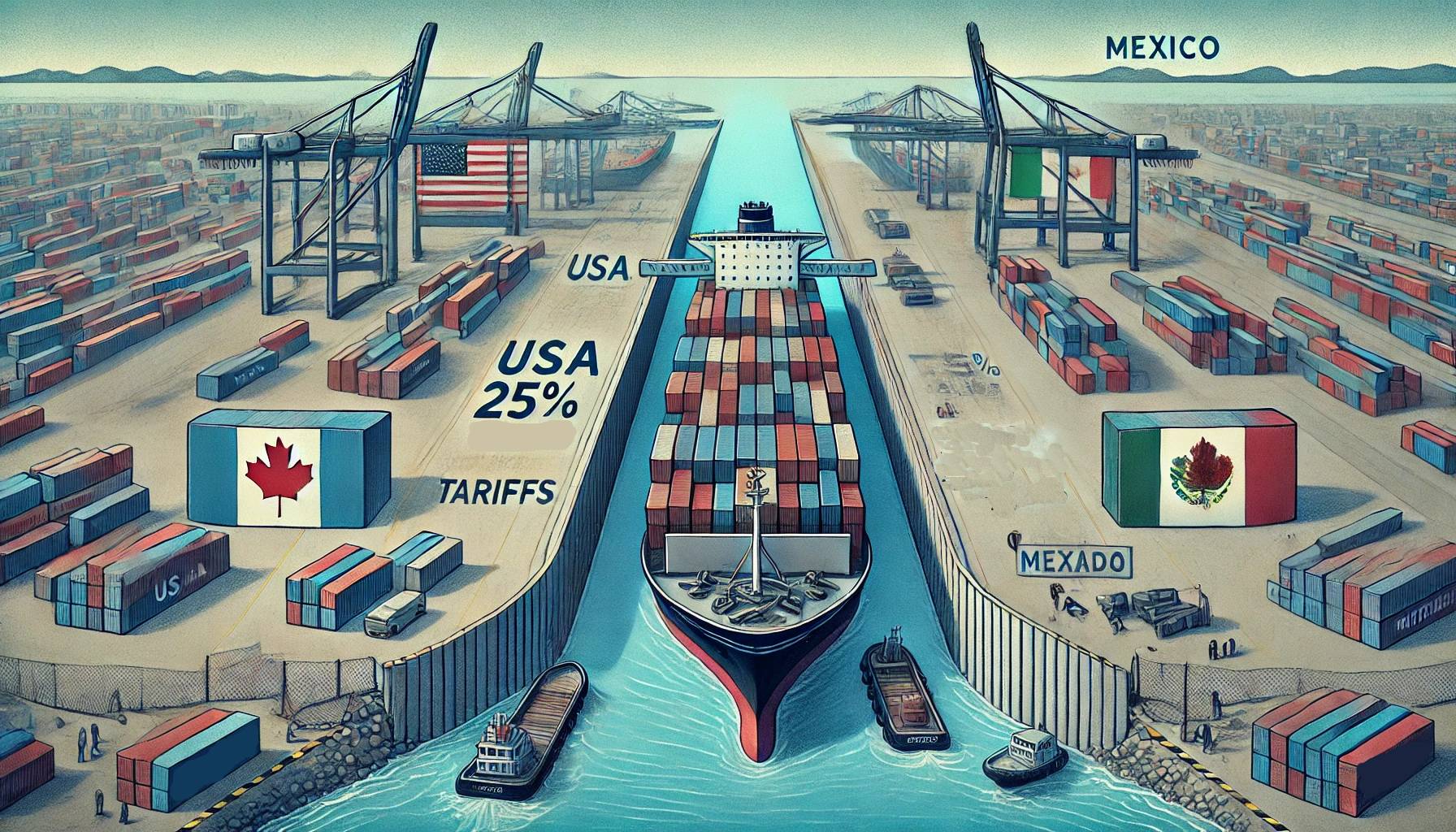
– Trump plans 25% tariffs on Mexico and Canada starting February 1.
– Critics warn of inflation and trade retaliation risks.
– Supporters see tariffs as a tool to protect U.S. industries.

President Donald Trump has announced plans to impose 25% tariffs on Mexico and Canada starting February 1, signaling a dramatic shift in North American trade policy. The move, revealed during an Oval Office signing ceremony, marks a stark departure from the United States-Mexico-Canada Agreement (USMCA) established during Trump’s first term. This decision could lead to higher prices for American consumers and significant changes in trade dynamics with two of the United States’ largest trading partners.

The executive action signed by Trump directs federal agencies to investigate the causes of U.S. trade deficits, evaluate the impact of existing trade agreements, and explore ways to implement stricter trade policies. Among the areas of focus is the USMCA, which the administration will assess to determine whether the agreement adequately serves American workers and businesses. The action also emphasizes the administration’s commitment to reducing the flow of fentanyl and undocumented migrants into the U.S. by leveraging stricter trade measures.

Trump’s proposal to overhaul trade policy aligns with his “America First” agenda, which seeks to prioritize American manufacturers, farmers, and workers. In his inaugural address, Trump emphasized the need to shift the burden of taxation from American citizens to foreign nations through tariffs. The administration’s aim to establish an “External Revenue Service” to collect tariffs further underscores the president’s commitment to this vision. However, the exact mechanisms for implementing these sweeping changes remain under debate within the administration.

Critics argue that imposing such high tariffs could backfire, harming the U.S. economy and straining relationships with key trading partners. Mexico and Canada collectively accounted for 30% of all U.S. imports in 2024, and retaliatory tariffs could impact American exports, particularly in industries like agriculture, automotive, and manufacturing. Economists warn that these measures could also exacerbate inflation, raising costs for American consumers already grappling with economic pressures.

Proponents of the tariff plan argue that import taxes could serve as a strategic tool to protect domestic industries and strengthen the U.S. economy in the long run. Trump has historically used tariff threats to bring foreign nations to the negotiating table, achieving concessions in trade agreements. However, the administration’s current stance has sparked concerns about potential trade wars and the broader implications for global trade relations.

The ideological divide within Trump’s economic team reflects ongoing debates about the best approach to achieve the administration’s goals. Some advisers advocate for a gradual implementation of tariffs to allow time for negotiations, while others support immediate and comprehensive measures to send a strong message. The legal basis for the tariffs, including the possible use of emergency powers, remains a key area of discussion.

As the February 1 deadline approaches, businesses and consumers are bracing for the potential impact of these tariffs. Analysts predict higher costs for imported goods, including electrical devices, transportation equipment, and everyday consumer products. Retaliatory measures from Mexico and Canada could further disrupt supply chains and affect industries reliant on cross-border trade.

The ultimate success of Trump’s trade policy will depend on its execution and the administration’s ability to navigate the complexities of international trade. While the president remains committed to fulfilling his campaign pledges, the long-term consequences of these tariffs on the U.S. economy and global trade landscape remain uncertain. Investors, businesses, and consumers alike will be closely watching as the situation unfolds.

Apple Faces Challenges Amid Downgrades: Weak iPhone Sales and AI Outlook Impact Stock

Key Points:
– Jefferies cut Apple to “Underperform” with a price target of $200.75, while Loop Capital downgraded it to “Hold” at $230.
– Declining sales in China and a 1% dip in market share are major concerns for Apple’s flagship product.
– Apple’s AI initiatives, including Apple Intelligence, have not generated the anticipated sales supercycle, dampening investor enthusiasm.

Apple Inc. (AAPL) is grappling with significant challenges as analysts issue downgrades to its stock, citing weaker-than-expected iPhone sales and underwhelming performance in its artificial intelligence (AI) initiatives. The stock fell 3.82% on Tuesday following these reports, adding to mounting concerns about the tech giant’s ability to sustain its growth trajectory in an increasingly competitive market.

Jefferies analyst Edison Lee downgraded Apple to “Underperform” and slashed the price target to $200.75, a 13% reduction. Meanwhile, Loop Capital downgraded the stock from “Buy” to “Hold” and revised its target to $230, down from $275. Both firms point to headwinds in Apple’s core iPhone business and tepid consumer interest in AI-powered products as key factors behind their decisions.

The iPhone, which accounts for over half of Apple’s total revenue, is facing significant challenges. According to Jefferies, iPhone sales in China dropped by 15% to 20% year over year. This decline reflects both increased competition from local players like Huawei and Xiaomi and cautious consumer spending amid a slower Chinese economic recovery.

China has long been a critical market for Apple, contributing $66.9 billion in revenue in 2024, despite an 8% decline compared to the previous year. However, the company’s difficulties in this region are not new; Apple has struggled with currency fluctuations and declining sales for the past two years.

Globally, Apple’s iPhone market share fell by roughly 1% in Q4, landing at 23%, even as overall smartphone shipments rose by 3%. These numbers, provided by Canalys and IDC, underscore the growing competition Apple faces as it tries to maintain dominance in a crowded market.

Apple’s push into AI has also been a point of contention among analysts. The company debuted its AI platform, Apple Intelligence, in October 2024, marketing it as a transformative tool for its flagship devices. However, the staggered rollout has led to confusion among consumers, with many unaware of the platform’s full capabilities.

Jefferies had predicted that Apple Intelligence would drive a “sales supercycle,” but early indications suggest that adoption has been slow. This is a stark contrast to the success of other tech giants like Alphabet and Meta, whose innovative AI initiatives have helped drive their stock prices up 30% and 36%, respectively, over the past year.

The slow uptake of AI-powered devices further complicates Apple’s outlook, as the company seeks to diversify its revenue streams beyond the iPhone. While Apple’s Services segment remains a bright spot, generating $96.1 billion in 2024, the company will need to demonstrate sustained growth in other areas to regain investor confidence.

Despite these challenges, Apple has several opportunities to stabilize its position. The upcoming launch of a new iPhone SE, entry-level iPads, and MacBook Airs may provide a much-needed boost in mid-range and budget segments. Additionally, Apple’s brand loyalty and reputation for innovation could help it weather short-term setbacks.

The company is set to report its first-quarter earnings on January 30. Analysts and investors will be watching closely to see if Apple can reverse its recent trends and reestablish itself as a leader in both hardware and emerging technologies like AI.

Supreme Court Upholds TikTok Ban Law, Putting App’s Future in Trump’s Hands

In a landmark decision, the Supreme Court has upheld a law that would effectively ban TikTok in the United States by January 19 unless the social media platform is sold to an owner not controlled by a foreign adversary. The ruling places the fate of the app, used by 170 million Americans, in the hands of President-elect Donald Trump, who takes office on January 20.

The Court sided with the government’s position that ByteDance’s ties to China pose national security concerns, rejecting TikTok’s First Amendment arguments. While acknowledging the platform’s significance, the Court emphasized Congress’s authority to address national security threats. “There is no doubt that, for more than 170 million Americans, TikTok offers a distinctive and expansive outlet for expression, means of engagement, and source of community,” the Court stated, but concluded that the security concerns outweighed these considerations.

Trump, who previously promised to “save TikTok,” now holds significant influence over the app’s future. “It ultimately goes up to me, so you’re going to see what I’m going to do,” Trump told CNN following the Court’s decision. He has reportedly discussed the matter with Chinese President Xi Jinping and is considering various options, including an executive order that would delay the ban’s enforcement by 60 to 90 days.

The implementation of the ban would have far-reaching consequences for the tech industry. Major companies like Apple and Google would be prohibited from offering TikTok in their app stores, while cloud providers such as Microsoft, Amazon, and Oracle would be barred from hosting the service. Violations could result in penalties of up to $5,000 for each instance of US user access.

Several potential solutions have emerged as stakeholders scramble to prevent a shutdown. Chinese officials have reportedly discussed selling TikTok’s US operations to Elon Musk, owner of X, although their preference is to maintain ByteDance’s ownership. Additionally, a consortium led by billionaire Frank McCourt Jr. and including “Shark Tank” star Kevin O’Leary has expressed interest in acquiring the platform for up to $20 billion. “There’s a deal to be made here so that US TikTok can stay in business,” McCourt stated recently.

The ruling’s impact extends beyond TikTok itself, potentially reshaping the competitive landscape of social media. Industry analysts predict significant benefits for established platforms if TikTok exits the US market. William Blair research analyst Ralph Schackart estimates that Meta’s Instagram could capture 60-70% of TikTok’s advertising revenue, noting that Instagram “monetizes at around 3x the rate of TikTok.” Similarly, Morgan Stanley projects that YouTube’s Shorts platform could gain $400-750 million in ad revenue for every 10% of former TikTok user time it captures.

As the situation develops, legislative solutions are also being explored. Senator Ed Markey has introduced a bill that would extend the divestiture deadline by 270 days, potentially providing crucial additional time for negotiations. Trump’s incoming administration has multiple options, including pushing Congress to overturn the law, encouraging an extension of the deadline, or facilitating a sale of the US operations.

As the January 19 deadline approaches, the tech industry, millions of users, and the advertising market await clarity on whether Trump’s administration will enforce the ban, negotiate a sale, or find another solution to keep the popular platform operating in the United States. The outcome of this high-stakes situation will likely set important precedents for foreign-owned technology companies operating in the US market.

Bitcoin Surges Past $100,000 as Trump’s Pro-Crypto Presidency Looms

Key Points:
– Bitcoin hits $104,000, marking a 420% increase from its $20,000 price two years ago
– Trump names David Sacks as crypto “czar” and plans regulatory overhaul
– Administration aims to create $21 billion Strategic Bitcoin Reserve

Bitcoin’s price surged past $100,000 on Friday as cryptocurrency markets anticipate major policy shifts under President-elect Donald Trump’s incoming administration. The world’s leading cryptocurrency rose approximately 5% to $104,000, reflecting growing optimism about Trump’s promised pro-crypto agenda.

Trump, who once dismissed bitcoin as a “scam,” has undergone a dramatic shift in his stance toward digital currencies. His campaign promises include transforming the United States into the global “crypto capital,” with specific plans for industry-friendly regulations and the establishment of a government cryptocurrency stockpile.

The president-elect has already begun assembling a team of crypto advocates for key positions, including David Sacks as the administration’s cryptocurrency “czar” and Bo Hines as executive director of the Presidential Council of Advisers for Digital Assets. Paul Atkins, Trump’s pick to lead the SEC, has been a vocal supporter of cryptocurrencies, signaling a stark departure from the regulatory approach of the Biden administration.

One of Trump’s most ambitious proposals is the creation of a Strategic Bitcoin Reserve, which would require the Treasury Department to maintain at least $21 billion in bitcoin through its Exchange Stabilization Fund. This initiative would represent a significant shift in government policy, as historically, the U.S. has auctioned off cryptocurrency seized in law enforcement operations.

The cryptocurrency industry, which felt targeted by outgoing SEC Chairman Gary Gensler’s enforcement actions, has welcomed these developments. Peter Van Valkenburgh, executive director of Coin Center, expressed optimism about the expected “tone change at the SEC” under the new administration.

The industry’s enthusiasm is evident in the organization of the first-ever “Crypto Ball,” a sold-out celebration featuring “an elite lineup of musical entertainment” to mark the inauguration of what supporters are calling the first “crypto president.”

However, critics continue to raise concerns about cryptocurrency’s volatile nature and its potential use in illegal activities. Despite these reservations, bitcoin has demonstrated remarkable resilience, with its value increasing dramatically from around $20,000 two years ago to its current record levels.

As Trump prepares to take office on January 20, the cryptocurrency market eagerly awaits the implementation of his promised policies, which could reshape the regulatory landscape for digital assets in the United States.

Take a moment and take a look at Bitcoin Depot and Bit Digital in the cryptocurrency space.