Shein Files Confidentially for U.S. IPO, Seeks to Capture Investor Interest

Chinese fast fashion juggernaut Shein has filed confidentially for an initial public offering in the U.S., positioning itself to become one of the most highly-anticipated public debuts. As Shein aims to expand its global empire and enormous valuation, the company will need to convince investors it can overcome mounting controversies.

Currently privately held with an estimated $66 billion valuation, Shein is seeking to capitalize on surging investor appetite for ecommerce platforms. By targeting Gen Z and millennial shoppers with on-trend fast fashion at rock-bottom prices, Shein has experienced explosive growth. The company could start trading publicly in the U.S. as early as 2024 if it gains regulatory approval.

Shein Hopes to Captivate Ecommerce Investors

As a digital-only retailer with minimal storefronts, Shein epitomizes many of today’s leading ecommerce firms. With targeted influencer marketing and constantly updated inventory, Shein has won over young consumers across the globe. Revenues reached nearly $16 billion in 2021, making Shein one of the largest fashion retailers based on sales.

This rapid ascent has drawn comparisons to platforms like Pinduoduo and Meituan in China. Shein hopes investors will value it similarly and overlook the controversies it has battled along the way. Skeptics, however, point to lingering risks that could limit Shein’s appeal.

Mounting Concerns Create Obstacles for Shein’s IPO

While Shein has taken steps to revamp public perception, the company faces no shortage of detractors. Lawmakers across the political spectrum have raised alarms over Shein’s supply chain and environmental harms.

Accused of using labor from China’s Xinjiang region linked to human rights abuses, Shein must convince regulators it complies with ethical sourcing standards. The shadowy leadership of founder and CEO Sky Xu also clashes with typical corporate governance. As other Chinese firms face heightened scrutiny and even delisting threats in the U.S., Shein’s close China ties could hamper its reception.

Alongside these issues, fast fashion business models face growing backlash for fueling waste and pollution. Though unlikely to vanish overnight, changing consumer preferences add uncertainty to the sector’s outlook.

Betting on Shein’s Growth Trajectory

While risks abound, Shein’s blockbuster financials may simply be too impressive for investors to ignore. Early in its life as a public firm, revenue expansion and user growth will remain the key metrics to watch.

As a veteran of the ultra-fast fashion space, Shein has proven adept at riding waves of consumer demand. The recent downturn for stocks like Farfetch and Revolve point to lingering appetite for digital fashion platforms. Though controversies cast a shadow, for risk-tolerant investors, getting in early with Shein could bring substantial rewards.


Coinbase Aims for Crypto Crown as Binance Stumbles

With the U.S. government cracking down on Binance, slapping the world’s largest cryptocurrency exchange with $4.3 billion in fines and forcing its maverick founder Changpeng “CZ” Zhao to relinquish control, arch-rival Coinbase sees an opening to reclaim market share by playing the role of the “good guy” traded on Wall Street.

Coinbase shares have jumped some 18% over the past week to around $118 as CEO Brian Armstrong asserted last Tuesday’s settlement finally “closes that chapter of crypto’s history” in which Binance flouted global regulations while handling over $15 trillion in trades since 2017. By contrast, Armstrong now aims to position Nasdaq-listed Coinbase as the compliant, institutional exchange best positioned to capitalize on the crypto industry’s shift toward greater oversight.

“Building a company offshore, skirting regulation, it’s just not going to work,” Armstrong told CNBC, taking a shot across the bow of both Binance as well as consumers who transacted on the exchange drawn by its swift listings of new – often risky – digital assets. With federal agencies now policing crypto’s “Wild West” era, Armstrong wants to reassure investors that Coinbase will work hand-in-hand with authorities, supporting his belief that crypto can operate by the same rules as traditional finance.

Whether such harmony emerges remains clouded by legal issues confronting Coinbase itself, including an ongoing SEC lawsuit filed last June. While Armstrong feels “very good” about Coinbase’s defense and his aim is full regulatory clarity, such certainty seems distant given bitcoin’s recent plunge marking another crypto winter. Nonetheless, the humbling of the industry’s one-time dominant exchange gives his company a momentary edge.

Binance’s astronomical rise represented a meteoric challenge to Coinbase’s early market supremacy following its 2012 launch and 2017 debut on public markets weeks before bitcoin hit a historic peak near $20,000. Former Bloomberg programmer and Tokyo Stock Exchange developer Changpeng Zhao founded Binance in Shanghai in 2017, developing technical capabilities allowing it to scale at warp speed by listing new cryptocurrencies faster than cautious Coinbase.

With an opaque corporate structure based initially in Asia and subsequently the Cayman Islands, Binance also dodged oversight as global regulators sounded alarms. But its explosive growth quickly afforded Zhao celebrity status as one of crypto’s biggest whales and most vocal proselytizers. Meanwhile, to keep pace with its insurgent rival now commanding the majority of trading volumes, Coinbase rushed to expand its offerings but continued adhering to compliance standards in order to maintain institutional investor confidence.

Yet as U.S. authorities targeted Binance last year with a series of harsh punitive actions, momentum swung back toward its compliant competitor. Both the CFTC and SEC ultimately launched suits against Zhao’s exchange for allegedly violating investor protection statutes, culminating in extensive settlement terms compromising Binance’s autonomy going forward. With its renegade era under CZ seemingly finished, Armstrong aims to leverage Coinbase’s head start collaborating openly with financial watchdogs.

Despite his bravado about closing an ignominious chapter for crypto, Armstrong must still confront lingering suspicions from regulators like the SEC about whether any exchanges can provide adequate investor protections around highly speculative digital assets. Coinbase itself has fought SEC assertions that it facilitated unregistered securities trades.

While the two suits differ, both target core business models questioning whether current legislation written before crypto’s advent can properly govern such technologies. Beyond exacting large fines, authorities want to slow crypto trading – putting platforms like Coinbase and Binance in an existential vice grip complicated by token assets’ fluctuation between currency and security classifications.

How Congress and agencies like the SEC ultimately delineate acceptable crypto activity under existing statutes or new legislation could determine which exchanges remain standing. Ironically victories could stem as much from legal ingenuity as technology innovation. But with Binance at least temporarily defanged, Coinbase remains well positioned to shape crypto’s second act blending Wall Street’s institutional trust with Silicon Valley’s disruptive daring.

Clearly the crypto landscape entering 2024 stands on shifting sands, clouded by bitcoin’s swoon, regulatory turbulence and possible global recession. Yet should pioneer blockchain currencies and exchanges somehow emerge resilient, Coinbase sits ready to seize the market share boon a humbled Binance left on the table. After years sparring in crypto’s octagon, this match’s decision appears nearer – though mainstream adoption stays stubbornly out of reach.

COP28 Climate Summit Stirs Controversy, Poses Risks for Energy Investors

As the next pivotal United Nations climate change conference quickly approaches, the COP28 summit to be held in Dubai has already attracted controversy before it even begins. Critics argue the UAE’s plans to use its host status to lobby for oil and gas deals creates an irreconcilable conflict of interest. This brewing scandal underscores risks for the energy investment community in navigating the global green transition.

Leaked documents revealed the summit’s president, Sultan Al-Jaber, intends to meet with officials from over a dozen countries to promote fossil fuel projects. As CEO of Abu Dhabi National Oil Company (ADNOC), the world’s 12th largest oil producer, Al-Jaber seemingly represents business as usual in the hydrocarbon sector – precisely as climate scientists urge rapid movement away from planet-warming emissions. This dual role as OPEC’s former president alongside COP28 president epitomizes the conference’s core tension.

While the UAE defends Al-Jaber’s energy background as an asset for summit leadership, others see an fox guarding the henhouse. Renewable energy interests hope COP meetings accelerate emissions cuts to open investment opportunities and meet targeted market shares. In contrast, unchecked fossil fuel dominance could strand assets and leave oil-rich economies behind. For financial institutions, balancing these competing interests grows increasingly complex.

As the global community seeks alignment on climate policy, COP28 takes on heightened importance after last year’s loss of momentum in Egypt. But with Al-Jaber pushing liquefied natural gas deals behind the scenes, the summit’s bold ambitions appear under threat – before even officially starting next week. This risks paralyzing investors betting on meaningful multilateral progress from the 12-day affair.

Rather than showcasing global unity, the conference could further fragment cooperative efforts. Those banking on strengthened commitments and standardized transparency may be severely disappointed. An already divided energy landscape would only become more fractured and filled with uncertainties.

While surging energy prices have boosted oil and gas profits recently, leaving firms cash rich for transitions, alerts sound over stranded asset dangers in the longer run. Without reliable political tailwinds, capital allocation planning swims in obscurity. Investors may continue clinging to the devil they know, slowing sustainability spending despite rhetorical Net Zero pledges.

ESG fund managers face particularly hard choices weighing reputational concerns with fiduciary obligations, as greenwashing allegations persist. Index providers must carefully contemplate emissions-heavy exposure amid heightening transition materiality. Even hydrocarbon majors pursuing renewables see climate credibility doubly damaged by COP28 coziness with embedded fossil fuel agendas.

In effect, the UAE’s COP28 aspirations throw harsh light on the messy entanglements linking energy incumbents to global cooperation imperatives. This summit was envisioned for closing gaps to carbon neutrality – not leveraging elite access for oil field services contracts or petrochemical exports. Dubai’s shone vision as progressive climate broker now sees tarnish.

While Al-Jaber resides at the controversy’s core, larger questions confront energy interests worldwide. How can multinational forums effectively drive sustainability without undermining diverse domestic interests or economic lifelines? Does climate progress rely on energy industrialists gradually conceding ground? Regardless of COP28’s impact, these dilemmas will persist in boardrooms everywhere industries collide with ecological boundaries.

For anxious energy investors, perhaps the greatest risk is policy paralysis. Without milestone markers implemented, capital deployment floats ambiguously while net-zero targets linger out of reach. Until political will consolidates around winding down emissions directly, bankers and shareholders face accumulating uncertainty handicapping strategic decision-making.

Of course, COP meetings have always brought thorny issues to the surface divisions easy to ignore otherwise. But the solution remains clear even if the path does not: economics needs ecology for human prosperity’s endurance. For financial players, that means sustained stakeholder value depends on sustainable business practices without exception. What hangs in the balance moving forward is how smoothly the global energy complex can stick that critical landing.

Take a moment to take a look at Noble Capital Markets’ Senior Research Analyst Michael Heim’s coverage list.

The Recent Russell 2000 Breakout Rally

The Russell 2000 index has been an overlooked area of the stock market this year, dominated by the headlines and volatility of mega-cap tech and blue chips. However, a seismic shift occurred last Wednesday when the Russell 2000 rallied over 6% for its best day since March, turning positive for 2023.

This index of approximately 2,000 small-cap stocks just made Wall Street wake up and take notice thanks to this violent swing. Now is the time for investors to understand what’s driving the resurgence and how to capitalize in small caps.

What is the Russell 2000 and Why Does It Matter?

The Russell 2000 index measures the performance of U.S. small-cap stocks with market caps below $3.7 billion. Weights are assigned by market cap, so the index serves as a benchmark for bonafide smaller firms. These companies tend to be younger with higher volatility and growth prospects.

As a result, the Russell 2000 provides a barometer of investor sentiment towards risk assets. Turning points in the index can indicate shifts in the overall stock market as traders move towards or away from speculation.

The recent 6%+ rally last Wednesday jolted the Russell 2000 into positive return territory for the year so far, now up 4% year-to-date. This signals a potential appetite for risk returning to markets, with traders betting on outsized returns potential in small caps after a prolonged lull.

Why Invest in Small Caps?

Investing in Russell 2000 companies over other stocks has compelling advantages if timed appropriately in the market cycle. First, smaller firms have lower visibility and coverage, so mispricings are more common. This creates pockets of opportunities for above-average returns compared to efficient larger cap markets.

Additionally, smaller size allows for exponential growth that massive companies simply can’t replicate. A small cap doubling in customers or revenue could lead to a 10X stock return, while a blue chip would move only minimally. This asymmetric payoff profile rewards those willing to take on some extra risk.

Finally, identifying world-changing new products and innovations is easier in earlier stage small caps not yet on the main stage. Getting in early on the next Roku, Tesla, or Shake Shack while still qualifying for the 2000 index can deliver truly explosive portfolio growth.

What Investors Should Watch Next

Markets are now intently watching the Russell 2000 to see if last week’s awakening of small-cap animal spirits has true staying power. Traders want confirmation that the breakout can lead to a sustained run versus just being a short-lived dead cat bounce.

If the rally holds, it solidifies the thesis of rotating back towards risk—and earlier stage small names often lead the way in such environments. Savvy investors will use this volatility to start building positions in promising small caps with expanding growth prospects.

The secret is identifying the next crop of disruptors poised to multiply before the herd catches on. By getting ahead of the crowd now eyeing the Russell 2000’s surge, spectacular returns await those able to time the next leg up.

Bargain Hunting for Small Caps at NobleCon

One of the most effective ways to identify the small caps destined to drive the next market boom is to connect directly with leadership at the source. The annual NobleCon investor conference gives the opportunity for exactly that.

On December 3-5 in Boca Raton, Florida, small-cap firms will present their latest innovations, opportunities, and reasons to invest. Attendees gain first look access to fast-growing startups and tomorrow’s giants while they still qualify for the Russell 2000. Now in its 19th year, NobleCon19 promises to uncover the next crop of small cap innovators during the multi-day conference.

For investors looking to capitalize on the Russell 2000’s resurgence, NobleCon19 provides the direct pipeline to target ideas perfectly positioned to ride the reawakening wave in small caps. To learn more and register, visit www.noblecon19.com before discounted early bird rates expire.

Black Friday 2023 Kicks Off After Strong Online Sales on Thanksgiving

Black Friday 2023 is officially here, kicking off the year’s biggest shopping weekend both online and in stores. Early indicators suggest consumers are hungry for deals, with e-commerce sales on Thanksgiving Day jumping 5.5% year-over-year to $5.6 billion according to Adobe Analytics.

The robust online sales activity on Turkey Day comes ahead of an expected $9.6 billion in Cyber Monday revenue, a 5.7% increase from last year. While these growth figures represent a slowdown from the blistering pace set during the pandemic, they highlight that holiday shoppers are still responding to discounts even amidst broader economic uncertainty.

This sets the stage for a pivotal Black Friday that may determine whether projections for up to 4% gains in total holiday sales materialize. Shoppers are expected to turn out in force to scoop up deals on popular items like toys, apparel, jewelry, and consumer tech that were top sellers online on Thanksgiving.

Mobile Shopping Surge Drives Online Revenue

Fueling the growth in Thanksgiving e-commerce sales is the continued surge in smartphone shopping. A record 59% of online revenue came from mobile devices as people browsed and bought gifts on the go. With mobile penetration rising every year, retailers have adapted their sites and apps to make it easier for iPhone and Android users to capitalize on promotions.

Savvy shoppers are discovering they can beat crowds and inventory shortages by taking advantage of online-only deals as well as ordering online and picking up in store. Retailers are encouraging this omnichannel behavior by making curbside pickup fast and frictionless. The convenience of mobile ordering combined with flexible fulfillment options underlies the shift towards more Thanksgiving and Black Friday spending happening digitally.

Top Deals Entice Consumers

Despite economic pressures from inflation and higher interest rates, consumers have shown a willingness to spend when the price is right. Adobe tracked toys discounted up to 28%, electronics up to 27% off, and computers 22% off on Thanksgiving, leading to triple-digit surge in those categories versus October.

Amazon and Target rolled out additional Black Friday toy deals with major markdowns on Barbie dream campers, Marvel action figures, and Nintendo Switch gaming bundles expected to rank among the most popular purchases.

Similarly, doors opening early at retailers like Best Buy, Walmart, and Apple will likely attract shoppers chasing deals on big-screen TVs, Bluetooth speakers, tablets, and the hot new Airpods Pro 2 earbuds. Though buying conditions are tougher this year, bargain hunters still prioritize snagging discounted must-have gifts for loved ones.

What’s at Stake for Retailers

While Thanksgiving and Black Friday don’t determine overall holiday fortunes, they set the tone for retailers during the critical year-end sales period. Those who miss targets this weekend play catch-up and may have to result to profit-busting promotions to move stagnant inventory later in December.

However, retailers who excite shoppers out the gates with alluring deals and experiences create positive momentum they can ride into the New Year. The outperformance of those players better able to adapt to the mobile and omnichannel-centric future of holiday shopping will be on full display this weekend.

For consumers, the state of Black Friday offers clues into buying conditions for the next month as they weigh completing wish lists amidst budget realities. With early reads tilting positive, cautious optimism seems warranted – though restraint may still pay off waiting to see if deals sweeten further in December.

One thing is certain: all eyes turn to how activity plays out on the unofficial start to the holiday sales season. Black Friday retains symbolic importance for retailers and consumers alike – so expect the 2023 version to again provide intrigue and insights into the health of the US consumer.

Oil Prices Plunge As OPEC+ Delays Key Output Decision

Oil markets were thrown into turmoil on Wednesday after the OPEC+ alliance unexpectedly postponed a critical meeting to determine production levels. Prices promptly plunged over 5% as hopes for additional output cuts to stabilize crude markets were dashed, at least temporarily.

The closely-watched meeting was originally slated for December 3-4. But OPEC+, which includes the 13 member countries of the Organization of Petroleum Exporting Countries along with Russia and other non-members, said the summit would now take place on December 6 instead, offering no explanation for the delay.

The last-minute postponement fueled speculation that the group is struggling to build consensus around boosting production cuts aimed at reversing oil’s steep two-month slide. Disagreements apparently center on Saudi dissatisfaction with other nations flouting their output quotas. Compliance has emerged as a major flashpoint as oil revenue pressures intensify amid rising recession fears.

Prices Rally on Cut Hopes

In recent weeks, oil had rebounded from mid-October lows on mounting expectations that OPEC+ would intervene to tighten supply and put a floor under prices once more.

The alliance has already removed over 5 million barrels per day since 2023 through unilateral Saudi production cuts and collective OPEC+ reductions. But crude has continued drifting lower, with Brent plunging below $80 per barrel last week for the first time since January.

Demand outlooks have deteriorated significantly, especially in China where crude imports fell in October to their lowest since 2007. At the same time, releases from strategic petroleum reserves and resilient non-OPEC production have expanded inventories, exacerbating the supply glut.

Output Quotas Trigger Internal Rifts

Energy analysts widely anticipate that OPEC+ will finalize plans at next week’s rescheduled talks to extend existing production cuts until mid-2024. Saudi Arabia and Russia, the alliance’s de factor leaders, both support additional trims.

However, firming up commitments from the broader group may prove challenging. Crude exports are critical to the economies of many member nations. With government budgets squeezed by weakened prices, some countries have little incentive to curb production.

Unconfirmed reports suggest that Saudi Arabia demanded Iraq and several other laggards bolster compliance with quotas before it agrees to further output reductions. But getting all parties in line with their assigned targets has long confounded the alliance.

Where Oil Goes Next

For now, oil markets are in limbo awaiting next Thursday’s OPEC+ gathering. Prices could see added volatility until the cartel unveils its plans.

Most analysts still expect that additional cuts will emerge, possibly in the 500,000 barrels per day range. That may be enough to place a temporary floor under the market and keep Brent crude from approaching $70 per barrel.

But if internal dissent paralyzes OPEC+ from reaching an agreement, or one that falls significantly short of projections, another downward spiral is probable. Pressure would only escalate on the alliance to take more drastic actions to stabilize prices in 2024 as economic storm clouds gather.

Binance CEO Pleads Guilty to Money Laundering

In a watershed moment for cryptocurrency oversight, Changpeng Zhao, billionaire founder of crypto exchange Binance, pleaded guilty on Tuesday to charges related to money laundering and sanctions violations. Binance itself also pleaded guilty to similar criminal charges for failing to prevent illegal activity on its platform.

The guilty pleas are part of a sweeping, coordinated crackdown on Binance by U.S. law enforcement and regulators. As part of the settlement, Binance agreed to pay over $4 billion in fines and penalties to various government agencies. Zhao himself will personally pay $200 million in fines and has stepped down as CEO.

The implications of this development on the broader crypto sector could be profound. As the world’s largest crypto trading platform, Binance has played an outsized role in the growth of the industry. Its legal troubles and the record penalties imposed call into question the viability of exchanges that flout compliance rules in the name of rapid expansion.

Prosecutors allege that Binance repeatedly ignored anti-money laundering obligations and allowed drug traffickers, hackers, and even terrorist groups like ISIS to freely use its platform. According to the Department of Justice, Binance processed transactions for mixing services used to launder money and facilitated over 1.5 million trades in violation of U.S. sanctions.

U.S. authorities were unequivocal in their criticism of Binance’s focus on profits over meeting regulatory requirements. This suggests that other exchanges that aggressively pursued growth while turning a “blind eye” to compliance may face similar crackdowns in the future. The $3.4 billion civil penalty imposed on Binance also sets a benchmark for potential fines other non-compliant entities may confront.

The charges against the world’s largest crypto exchange and its high-profile leader represent federal authorities’ most aggressive action yet to rein in lawlessness in the cryptocurrency industry. Officials made clear they will continue targeting crypto companies that break laws around money laundering, sanctions evasion, and other illicit finance.

More broadly, CZ’s guilty plea underscores the pressing need for sensible guardrails if crypto is to shed its reputation as primarily facilitating illegal activity. Though blockchain technology offers many potential benefits, its pseudonymous nature makes it vulnerable to abuse by criminals and terrorists financing unless exchanges rigorously verify customer identities and the source of funds.

For the wider crypto sector, the Binance takedown may spur valuable change. Many experts argue overly lax regulation allowed crypto exchanges to ignore Anti-Money Laundering rules other financial institutions must follow. The billion-dollar penalties against Binance could convince the industry it’s cheaper to self-regulate.

The Binance case may accelerate calls for a regulatory framework tailored to the unique risks posed by cryptocurrencies. Rather than stifle innovation in this nascent industry, thoughtful policies around KYC, anti-money laundering, investor protections and other issues could instill greater confidence in cryptocurrencies among mainstream investors and financial institutions.

Of course, because cryptocurrency transactions are pseudonymous, crypto will likely remain appealing for certain unlawful activities like narcotics sales and ransomware. But with Binance’s guilty plea, regulators sent the message that flagrant non-compliance will not fly. Exchanges allowing outright criminal abuse may face existential legal threats.

For exchanges determined to operate legally, the Binance debacle highlights the existential risks of non-compliance. No matter how large or influential, exchanges that refuse to meet their regulatory responsibilities risk jeopardizing their futures. Expect most exchanges to immediately review their KYC and AML policies in the wake of the Binance penalties.

At minimum, the charges will likely damage Binance’s reputation. Although the company remains operational, it could lose market share to competitors perceived as more law-abiding. For crypto investors, the uncertainty and loss of trust surrounding such a dominant player create fresh volatility in already turbulent markets.

Perhaps most profoundly, seeing handcuffs slapped on crypto’s one-time “king” punctures the industry’s former aura of impunity. After the Binance takedown, ongoing federal probes into FTX and other exchanges, and Sam Bankman-Fried’s criminal conviction, crypto fraudsters might finally fear the consequences many avoided for so long. For better or worse, crypto is evolving.

Fed Signals No Rate Cuts Coming Despite Recession Fears

Despite growing fears of an impending recession, the Federal Reserve is showing no signs of pivoting towards interest rate cuts any time soon, according to minutes from the central bank’s early-November policy meeting.

The minutes underscored Fed officials’ steadfast commitment to taming inflation through restrictive monetary policy, even as markets widely expect rate cuts to begin in the first half of 2024.

“The fact is, the Committee is not thinking about rate cuts right now at all,” Fed Chair Jerome Powell asserted bluntly in his post-meeting press conference.

The summary of discussions revealed Fed policymakers believe keeping rates elevated will be “critical” to hit their 2% inflation target over time. And it gave no indication that the group even considered the appropriate timing for eventually lowering rates from the current range of 5.25-5.50%, the highest since 2000.

Despite investors betting on cuts starting in May, the minutes signaled the Fed intends to stand firm and base upcoming policy moves solely on incoming data, rather than forecasts. Officials stressed the need for “persistently restrictive” policy to curb price increases.

Still, Fed leaders acknowledged they must remain nimble in response to shifting financial conditions or economic trajectories that could alter the monetary path.

Surging Treasury Yields Garner Attention

This balanced posture comes after the early-November gathering saw extensive debate around rapidly rising Treasury yields, as 10-year rates hit fresh 15-year highs over 4.3%.

The minutes linked this upward pressure on benchmark yields to several key drivers, including increased Treasury issuance to finance swelling federal deficits.

Analysts say the Fed’s aggressive rate hikes are also forcing up yields on government bonds. Meanwhile, any hints around the Fed’s own policy outlook can sway rate expectations.

Fed participants decided higher term premiums rooted in fundamental supply and demand forces do not necessarily warrant a response. However, the reaction in financial markets will require vigilant monitoring in case yield spikes impact the real economy.

Moderating Growth, Elevated Inflation Still Loom

Despite the tightening already underway, the minutes paint a picture of an economy still battling high inflation even as growth shows signs of slowing markedly.

Participants expect a significant deceleration from the third quarter’s 4.9% GDP growth pace. And they see rising risks of below-trend expansion looking ahead.

Nevertheless, on inflation, officials suggested hazards remain tilted to the upside. Price increases slowed to a still-high 7.7% annual clip in October per CPI data, but stickier components like rents and services have been slower to relent.

The Fed’s preferred PCE inflation gauge has also moderated over recent months. But at 3.7% annually in September, it remains well above the rigid 2% target.

Considering lags in policy impacts, the minutes indicated Fed officials believe the cumulative effect of 375 basis points worth of interest rate hikes this year should help restore price stability over the medium term.

Markets Still Misaligned with Fed’s Outlook

Despite the Fed’s clear messaging, futures markets continue to forecast rate cuts commencing in the first half of 2023. Traders are betting on a recession forcing the Fed’s hand.

However, several Fed policymakers have recently pushed back on expectations for near-term policy pivots.

For now, the Fed seems inclined to stick to its guns, rather than bowing to market hopes or economic worries. With inflation still unacceptably high amid a strong jobs market, policymakers are staying the course on rate hikes for the foreseeable future, according to the latest minutes.

Nvidia Out to Prove AI Means (Even More) Business

Chipmaker Nvidia (NVDA) is slated to report fiscal third quarter financial results after Tuesday’s closing bell, with major implications for tech stocks as investors parse the numbers for clues about the artificial intelligence boom.

Heading into the print, Nvidia shares closed at an all-time record high of $504.09 on Monday, capping a momentous run over the last year. Bolstered by explosive growth in data center revenue tied to AI applications, the stock has doubled since November 2022.

Now, Wall Street awaits Nvidia’s latest earnings and guidance with bated breath, eager to gauge the pace of expansion in the company’s most promising segments serving AI needs.

Consensus estimates call for dramatic sales and profit surges versus last year’s third quarter results. But in 2022, Nvidia has made beating expectations look easy.

This time, another strong showing could validate nosebleed valuations across tech stocks and reinforce the bid under mega-cap names like Microsoft and Alphabet that have ridden AI fervor to their own historic highs this month.

By contrast, any signs of weakness threatening Nvidia’s narrative as an AI juggernaut could prompt the momentum-driven sector to stumble. An upside surprise remains the base case for most analysts. But with tech trading at elevated multiples, the stakes are undoubtedly high heading into Tuesday’s report.

AI Arms Race Boosting Data Center Sales

Nvidia’s data center segment, which produces graphics chips for AI computing and data analytics, has turbocharged overall company growth in recent quarters. Third quarter data center revenue is expected to eclipse $12.8 billion, up 235% year-over-year.

Strength is being driven by demand from hyperscale customers like Amazon Web Services, Microsoft Azure, and Alphabet Cloud racing to build out AI-optimized infrastructure. The intense competition has fueled a powerful upgrade cycle benefiting Nvidia.

Now, hopes are high that Nvidia’s next-generation H100 processor, unveiled in late 2021 and ramping production through 2024, will drive another leg higher for data center sales.

Management’s commentary around H100 adoption and trajectory will help investors gauge expectations moving forward. An increase to the long-term target for overall company revenue, last quantified between $50 billion and $60 billion, could also catalyze more upside.

What’s Next for Gaming and Auto?

Beyond data center, Nvidia’s gaming segment remains closely monitored after a pandemic-era boom went bust in 2022 amid fading consumer demand. The crypto mining crash also slammed graphics card orders.

Gaming revenue is expected to grow 73% annually in the quarter to $2.7 billion, signaling a possible bottom but well below 2021’s peak near $3.5 billion. Investors will watch for reassurance that the inventory correction is complete and gaming sales have stabilized.

Meanwhile, Nvidia’s exposure to AI extends across emerging autonomous driving initiatives in the auto sector. Design wins and partnerships with electric vehicle makers could open another massive opportunity. Updates on traction here have the potential to pique further interest.

Evercore ISI analyst Julian Emanuel summed up the situation: “It’s still NVDA’s world when it comes to [fourth quarter] reports – we’ll all just be living in it.”

In other words, Nvidia remains the pace-setter steering tech sector sentiment to kick off 2024. And while AI adoption appears inevitable in the long run, the market remains keenly sensitive to indications that roadmap is progressing as quickly as hoped.

Merck Bets on Neurodegenerative Disease Treatments with Caraway Buyout

Pharmaceutical giant Merck announced Tuesday that it will acquire Caraway Therapeutics, a preclinical biotech company pursuing novel approaches to treating genetically defined neurodegenerative and rare diseases. The deal reflects Merck’s ongoing commitment to developing much-needed disease-modifying therapies for progressive brain conditions.

Under the agreement, Merck will make an upfront payment to obtain Caraway, followed by additional milestone payments contingent upon the progress of certain Caraway pipeline assets. Though financial terms were not disclosed, the total potential consideration could reach up to $610 million.

“Caraway’s multidisciplinary approach has yielded important progress in evaluating novel mechanisms of modulation of lysosomal function with potential for the treatment of progressive neurodegenerative diseases,” said George Addona, Merck’s head of discovery. “We look forward to applying our expertise to build upon this work with the goal of developing much needed disease-modifying therapies for these conditions.”

Unlike symptomatic treatments, disease-modifying therapies aim to directly impact underlying disease processes and ultimately alter the course of a condition’s progression. This has remained an elusive goal for brain diseases like Alzheimer’s and Parkinson’s.

Caraway’s work targets dysfunctions in cellular “recycling” processes that clear toxic materials from the brain. Its treatments stimulate lysosomes, which act as cell disposal units, to boost their activity. Researchers believe a boost in waste clearance could counter neurodegeneration.

Merck has been an investor in Caraway since 2018 through its venture capital arm MRL Ventures Fund. Now, by folding Caraway’s team and portfolio into its research labs, Merck aims to leverage its considerable drug development capabilities to advance lysosomal modulation treatments for neurodegeneration.

“This is a testament to the hard work and dedication of the Caraway team and our mission to develop therapeutics with the potential to alter the progression of devastating neurodegenerative diseases and help patients,” said Caraway CEO Martin D. Williams in a statement. “This acquisition leverages Merck’s industry-leading research and development capabilities to help further advance our discovery and preclinical programs.”

Alongside Merck, Caraway has been backed by several high-profile life sciences investors including SV Health Investors, AbbVie Ventures, Amgen Ventures, and Eisai Innovation.

An Urgent Need for Better Brain Treatments

Currently available medications can only manage symptoms for a period of time for Alzheimer’s, Parkinson’s, and related neurodegenerative diseases. None treat underlying pathologies or substantially slow worsening cognition and functionality.

Alzheimer’s alone impacts more than 6 million Americans and the prevalence is expected to triple in the next 30 years if no new treatments emerge. Experts have emphasized the urgent need for innovations.

Major players in the pharmaceutical industry have confronted disappointed late-stage clinical trial results among proposed Alzheimer’s treatments over the past decade, suffering high-profile setbacks.

Yet Merck’s buy-in suggests promise still exists in Caraway’s early-stage lysosomal modulation approach, even though treatments haven’t advanced to human testing yet. Merck aims to apply its extensive expertise to push potential therapies over the finish line where others have stumbled before.

Continuing a Neuroscience Focus

Alongside this deal, Merck continues to expand its research across neurodegenerative diseases in other ways. Thus far in 2023, Merck has also entered into research collaborations to pursue non-amyloid targets for Alzheimer’s and chiral chemistry for better brain penetrance among compounds targeting neurological conditions.

“The alignment with Caraway’s innovative science and focus on elucidating disease-modifying neurotherapeutics dovetails nicely with our ongoing work,” said Addona.

Overall, Merck’s acquisition of Caraway signals both increasing momentum around emerging theories of neurodegeneration—like waste clearance’s role—and a formidable commitment by the pharma organization to translating the latest science into paradigm-shifting treatments for patients.

Microsoft Scores AI Talent by Hiring OpenAI’s Sam Altman

Microsoft emerged victorious in the artificial intelligence talent wars by hiring ousted OpenAI CEO Sam Altman and other key staff from the pioneering startup. This coup ensures Microsoft retains exclusive access to OpenAI’s groundbreaking AI technology for its cloud and Office products.

OpenAI has been a strategic partner for Microsoft since 2019, when the software giant invested $1 billion in the nonprofit research lab. However, the surprise leadership shakeup at OpenAI late last week had sparked fears that Microsoft could lose its AI edge to hungry rivals.

Hiring Altman and other top OpenAI researchers nullifies this threat. Altman will lead a new Microsoft research group developing advanced AI. Joining him from OpenAI are co-founder Greg Brockman and key staff like Szymon Sidor.

This star-studded team will provide Microsoft with a huge boost in the race against Google, Amazon and Apple to dominate artificial intelligence. Microsoft’s share price rose 1.5% on Monday on the news, adding nearly $30 billion to its valuation.

The poaching also prevents Altman from jumping ship to competitors, according to analysts. “If Microsoft lost Altman, he could have gone to Amazon, Google, Apple, or a host of other tech companies,” said analyst Dan Ives of Wedbush Securities. “Instead he is safely in Microsoft’s HQ now.”

OpenAI Turmoil Prompted Microsoft’s Bold Move

The impetus for Microsoft’s talent grab was OpenAI’s messy leadership shakeup last week. Altman and other executives were reportedly forced out by OpenAI board chair.

The nonprofit recently created a for-profit subsidiary to commercialize its research. This entity was prepping for a share sale at an $86 billion valuation that would financially reward employees. But with Altman’s ouster, these lucrative payouts are now in jeopardy.

This uncertainty likely prompted top OpenAI staff to leap to the stability of Microsoft. Analysts believe more employees could follow as doubts grow about OpenAI’s direction under Emmett Shear.

Microsoft’s infrastructure and resources also make it an attractive home. The tech giant can provide the enormous computing power needed to develop ever-larger AI models. OpenAI’s latest system, GPT-3, required 285,000 CPU cores and 10,000 GPUs to train.

By housing OpenAI’s brightest minds, Microsoft aims to supercharge its AI capabilities across consumer and enterprise products.

The Rise of AI and Competition in the Cloud

Artificial intelligence is transforming the technology landscape. AI powers everything from search engines and digital assistants to facial recognition and self-driving cars.

Tech giants are racing to lead this AI revolution, as it promises to reshape industries and create trillion-dollar markets. This battle spans hardware, software and talent acquisition.

Microsoft trails category leader Google in consumer AI, but leads in enterprise applications. Meanwhile, Amazon dominates the cloud infrastructure underpinning AI development.

Cloud computing and AI are symbiotic technologies. The hyperscale data centers operated by Azure, AWS and Google Cloud provide the computational muscle for AI training. These clouds also allow companies to access AI tools on-demand.

This has sparked intense competition between the “Big 3” cloud providers. AWS currently has 33% market share versus 21% for Azure and 10% for Google Cloud. But Microsoft is quickly gaining ground.

Hiring Altman could significantly advance Microsoft’s position. His team can create exclusive AI capabilities that serve as a differentiator for Azure versus alternatives.

Microsoft’s Prospects in AI and the Stock Market

Microsoft’s big OpenAI poach turbocharged its already strong prospects in artificial intelligence. With Altman on board, Microsoft is better positioned than any rival to lead the next wave of AI innovation.

This coup should aid Microsoft’s fast-growing cloud business. New AI tools could help Microsoft chip away at AWS’s dominance while holding off Google Cloud.

If Microsoft extends its edge in enterprise AI, that would further boost revenue and earnings. This helps explain Wall Street’s positive reaction lifting Microsoft’s stock 1.5% and adding $30 billion in market value.

The success of cloud and AI has fueled Microsoft’s transformation from a stagnant also-ran to a Wall Street darling. Its stock has nearly tripled since early 2020 as earnings rapidly appreciate thanks to its cloud and subscription-based revenue.

Microsoft stock trades at a reasonable forward P/E of 25 and offers a dividend yield around 1%. If Microsoft keeps leveraging AI to expand its cloud business, its stock could have much further to run.

Hiring Altman and deploying OpenAI’s technology across Microsoft’s vast resources places a momentous technology advantage within the company’s grasp. Realizing this potential would be a major coup for Satya Nadella as CEO. With OpenAI’s crown jewels now safely in house, Microsoft’s tech lead looks more secure than ever.

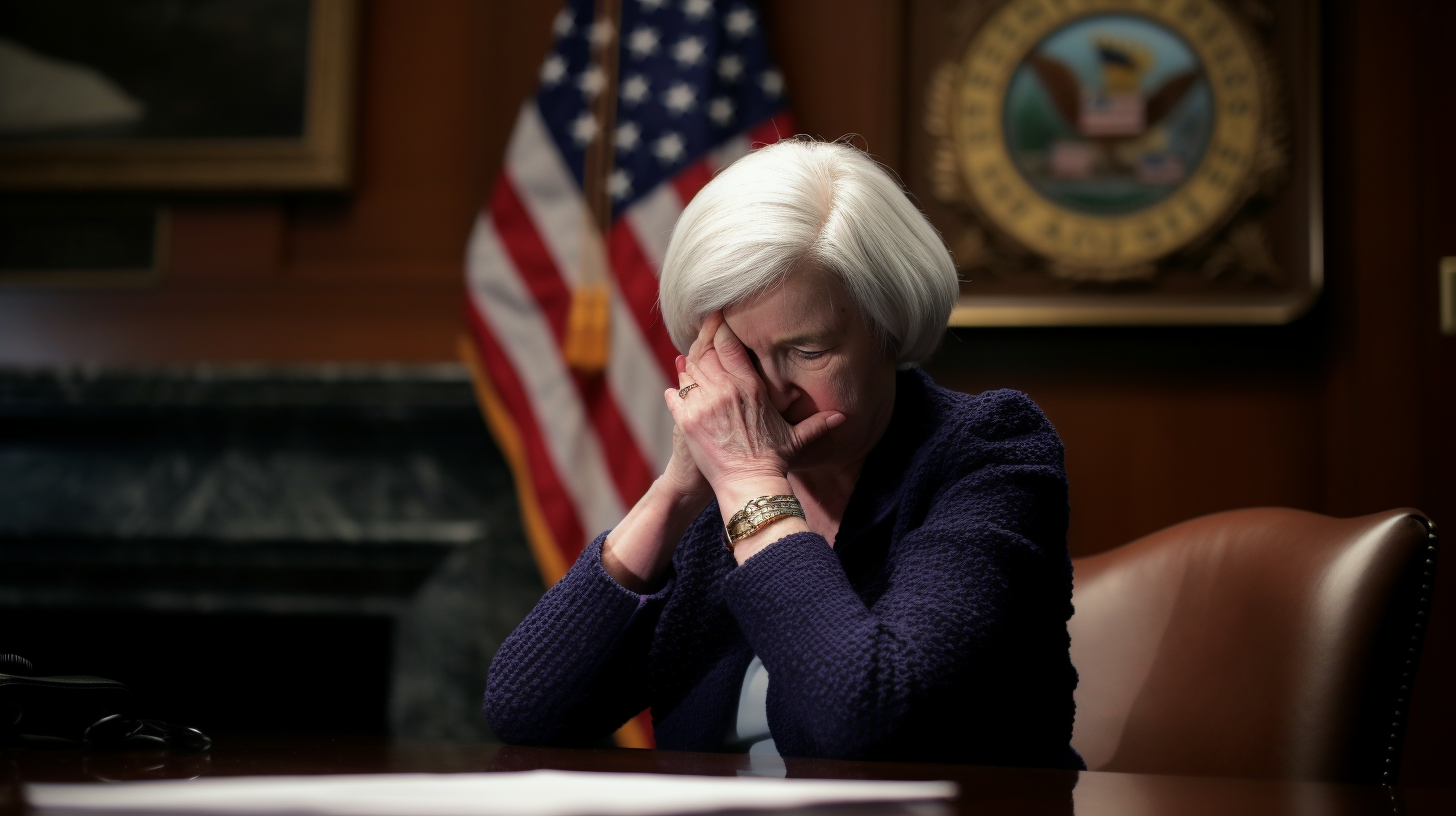
Yellen: Food, Rent Inflation Clouding View of Economy

Treasury Secretary Janet Yellen recently pointed to persistently high food and rent prices as a major reason why public perception of the economy remains negative, despite progress on overall inflation. With President Biden’s reelection chances closely tied to economic views, this consumer disconnect poses a threat.

In an interview with CNBC, Yellen acknowledged inflation rates have meaningfully declined from last year’s 40-year highs. However, she noted that “Americans still see increases in some important prices, including food, from where we were prior to the pandemic.”

While the administration touts top-line statistics pointing to economic strength, Yellen admitted that “this remains notable to people who go to the store and shop.”

Rent inflation also sticks out painfully to consumers, even as broader price growth cools. “Rents are rising less quickly now, but are certainly higher than they were before the pandemic,” Yellen said.

Polls Reveal Sour Public Mood Despite “Bidenomics”

This stubborn inflation in highly visible categories is clashing with the White House’s rosier messaging. The administration has dubbed the economy “Bidenomics” and trumpets metrics like robust job gains.

But almost 60% of voters disapprove of Biden’s economic leadership in the latest polling. His approval rating lags the economic data as people feel pinched by prices at the grocery store and housing costs.

Per Yellen, the disconnect boils down to prices remaining “higher than they used to be accustomed to.” She stressed the administration must now “explain to Americans what President Biden has done to improve the economy.”

Yellen expressed optimism views will shift “as inflation comes down, prices stop rising, and the labor market remains strong.” Time will tell if this turnaround happens soon enough to impact the 2024 election.

Food Prices Remain a Stinging Reminder of Inflation’s Sting

Of all consumer goods, food prices stand out as a persistent driver of inflation angst. Grocery bills grew 12% year-over-year in October, far above the 7.7% overall inflation rate. From eggs to lunch meats, few foods escape sticker shock at the store.

Russia’s invasion of Ukraine damaged vital grain supplies, resulting in huge price spikes for wheat, corn and cooking oils. Lingering supply chain dysfunction continues hampering food transport and packaging.

Restaurants also face higher food costs, which owners pass along through bigger menu price tags. Rising labor costs further squeeze restaurant margins.

In all, grocery and dining prices have become stinging daily reminders that inflation remains an economic burden. This clouds public sentiment despite falling gas prices and cheaper consumer goods.

Rents and Housing Costs Also Weigh Heavily on Consumers

Along with food, Yellen called out persistent rent inflation as a culprit of economic gloom. Annual rent growth sits around 7%, down from last year but still squeezing household budgets.

Low rental vacancy rates give landlords continued pricing power in many markets. While mortgage rates have shot higher, rents have yet to meaningfully slow for lack of alternatives.

Surging rents are especially painful due to housing’s outsize impact on living costs. One report estimated that housing accounts for 40% of a typical family’s inflation burden.

Beyond rent, housing costs like property taxes, homeowner insurance, and home services are also outpacing overall inflation. And higher mortgage rates make buying a home even less affordable.

These housing stresses help explain why such a large majority of Americans still rate current economic conditions as poor. With shelter eating up more paychecks, consumers feel deprived despite broader progress.

All Eyes on Food and Housing Costs as Midterms Approach

Yellen made clear that stubborn inflation in categories like food and rent is the administration’s biggest obstacle to touting economic gains. As President Biden gears up for a likely 2024 reelection bid, perceptions of the economy will carry substantial weight.

Democrats are hoping the public mood brightens as the impact of cooling prices materializes. But that remains uncertain with high-visibility costs still stinging consumers.

If relief arrives soon across grocery aisles and rent rolls, voters may yet reward President Biden and Democrats for delivering an overdue inflation reprieve. But the clock is ticking with the 2024 campaign cycle fast approaching.

For now, Biden’s political fate remains tied to the cost of bread and monthly housing bills. If lidding inflation can make such necessities feel affordable again, the president may stand to benefit.

Millions of Gig Workers May Be Missing from Monthly Jobs Data

Each month the U.S. Labor Department releases its closely-watched jobs report, providing key employment statistics that the Federal Reserve monitors to gauge the health of the economy. However, new research suggests these monthly figures may be significantly undercounting workers, specifically those in the rising “gig economy.”

Economists estimate the undercount could range from hundreds of thousands to as many as 13 million gig workers. This discrepancy suggests the labor market may be even tighter than the official statistics indicate, allowing more room for employment growth before hitting problematic levels of inflation.

Gig Workers Slip Through the Cracks

Gig workers, such as Uber drivers, freelancers, and casual laborers, often don’t consider themselves part of the workforce or even “employed” in the traditional sense. As a result, when responding to government labor surveys, they fail to identify themselves as active participants in the job market.

Researchers Anat Bracha and Mary Burke examined this response pattern by comparing informal work surveys with standard employment surveys. They uncovered a troubling gap where potentially millions of gig workers get missed each month in the jobs data.

For the Fed, Underestimating Tightness Raises Risks

For the Federal Reserve, accurate employment statistics are critical to promoting its dual mandate of stable prices and maximum employment. If the labor market is tighter than the data suggests, it could force Fed policymakers to act more aggressively with interest rate hikes to ward off inflationary pressures.

An undercount means the economy likely has more remaining labor supply before hitting problematic levels of inflation-fueling tightness. With more Americans able to work productively without triggering price hikes, the Fed may not need to cool off the job market as quickly.

Implications for Fed Policy Decisions

In recent years, the Fed has dramatically revised its estimates for full employment to account for the lack of rising inflation despite ultra-low unemployment. Recognizing millions more gig workers could further adjust views on labor market capacity.

According to the researchers, the uncounted gig workers indicate the economy has had more room to grow without excessive inflation than recognized. As a result, they argue the Fed’s benchmark for tight labor markets could be revised upwards, allowing for less aggressive rate hikes.

Gig Workforce Expected to Expand Post-Pandemic

The gig economy workforce has swelled over the past decade. But the COVID-19 pandemic triggered massive layoffs, confusing estimates of its true size.

As the economy rebounds, gig work is expected to continue expanding. Younger generations show a preference for the flexibility of gig roles over traditional 9-to-5 employment. Moreover, companies are incentivized to hire temporary contract laborers to reduce benefit costs.

Accurately capturing this crucial and expanding segment of the workforce in monthly jobs data is necessary for the Fed to make informed policy moves. The research highlights an urgent need to refine labor survey approaches to avoid missteps.

Adapting Surveys to Evolve with the Economy

Government surveys designed decades ago need to adapt to reflect the rapidly changing nature of work. Respondents should be explicitly asked whether they engage in gig work and probed on their monthly hours and earnings.

Modernizing measurement approaches could reveal a hidden bounty of untapped labor supply and productivity from gig workers. With more accurate insight into true employment levels, the Fed can better balance its dual goals and promote an economy that benefits all Americans.