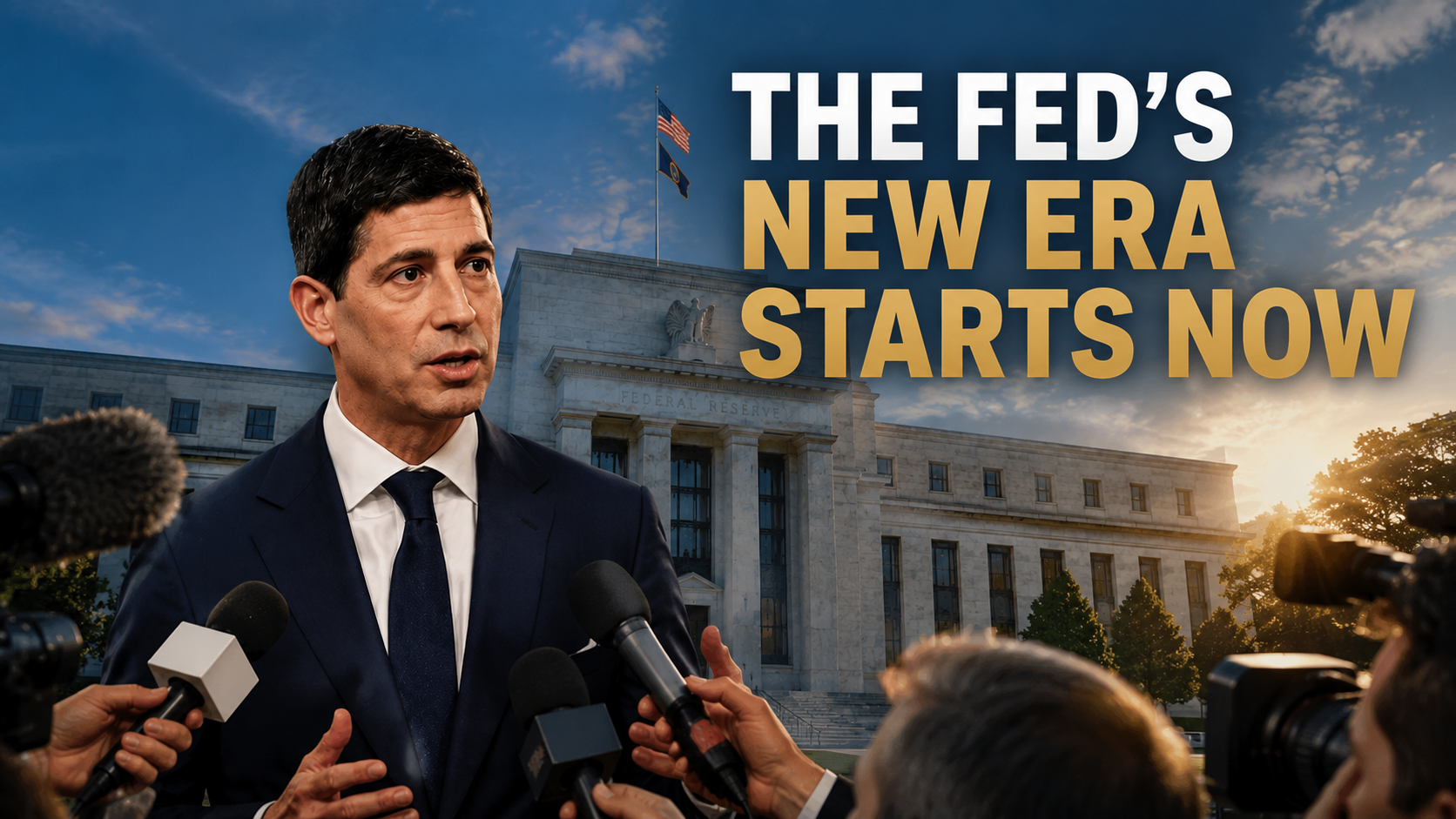
The Fed’s New Era Starts Now – Warsh Holds Rates, Drops the Easing Bias, and Skips His Own Dot

Kevin Warsh’s first meeting as Federal Reserve Chair delivered exactly the kind of message markets had been bracing for. The Federal Open Market Committee voted Wednesday to leave the federal funds rate unchanged at 3.50% to 3.75% — the fourth consecutive hold — while removing the easing bias that had defined the Fed’s communication through the prior cycle and signaling, through its updated projections, that the next move is now more likely to be up than down.

The major averages slid into negative territory following the 2:00 PM ET announcement as investors absorbed a decidedly more hawkish posture from the central bank under its new leadership. The rate decision itself was never in doubt — futures had priced a hold at roughly 97%. What moved markets was everything around the number.

The Dot Plot Turns Hawkish

The headline shift came in the updated Summary of Economic Projections. Of the 18 Fed officials who submitted forecasts, nine now project the federal funds rate finishing 2026 above its current target range — a near-even split that puts at least one 2026 rate hike formally on the table. As recently as March, the committee’s projections had included a rate cut for the year. That cut is now gone, replaced by a median outlook that effectively signals rates will remain elevated through year-end with hikes a live possibility.

For a market that spent much of June pricing in a roughly 68% probability of a 25 basis point hike by December, the projections served as validation rather than surprise. But validation from the Fed itself carries weight that market speculation does not, and Treasury yields and equities repriced accordingly.

Warsh Makes His Mark on Process

The most distinctive element of the meeting was structural. Warsh confirmed he deliberately withheld his own projection from the dot plot — the missing submission that analysts had flagged in the data. He explained that while he has encouraged his colleagues to continue submitting forecasts, he has refrained from offering his own, consistent with long-held views about the Summary of Economic Projections as currently structured.

The decision reflects Warsh’s well-documented preference for a “less-is-more” approach to forward guidance, a philosophy that could meaningfully reduce the Fed’s predictability going forward. Warsh also announced the creation of a task force to overhaul major Federal Reserve operations, signaling early that his tenure will involve institutional change beyond the quarter-to-quarter rate decisions. A new chair reshaping how the Fed communicates introduces a variable markets have not had to price in years.

Why This Matters for Smaller Companies

For investors in the small and microcap space, the message from Warsh’s debut is direct and consequential. Small and microcap companies carry disproportionately more variable-rate debt than their large cap counterparts, which means the removal of the easing bias and the hawkish shift in projections translate into a tangible extension of the higher-cost-of-capital environment these companies have been navigating all year.

The rate relief that smaller, more leveraged companies had been counting on to refinance debt and expand margins now appears to be off the table through at least the end of 2026 — and a hike before year-end is a genuine possibility rather than a tail risk. The Russell 2000 has spent the year caught between strong underlying fundamentals and a punishing rate backdrop, and Wednesday’s meeting tilts that balance back toward the rate headwind in the near term.

The longer-term setup for small caps remains intact: historic valuation discounts, improving earnings growth, and domestic revenue exposure that insulates these companies from global trade friction. But the path there now runs through a Fed that has made clear it will not ease until inflation, currently running at 4.2%, moves decisively toward target. Warsh has set the tone. The market heard it clearly.

The Fed Meets This Week in Kevin Warsh’s First Test. The Dot Plot Matters More Than the Decision.

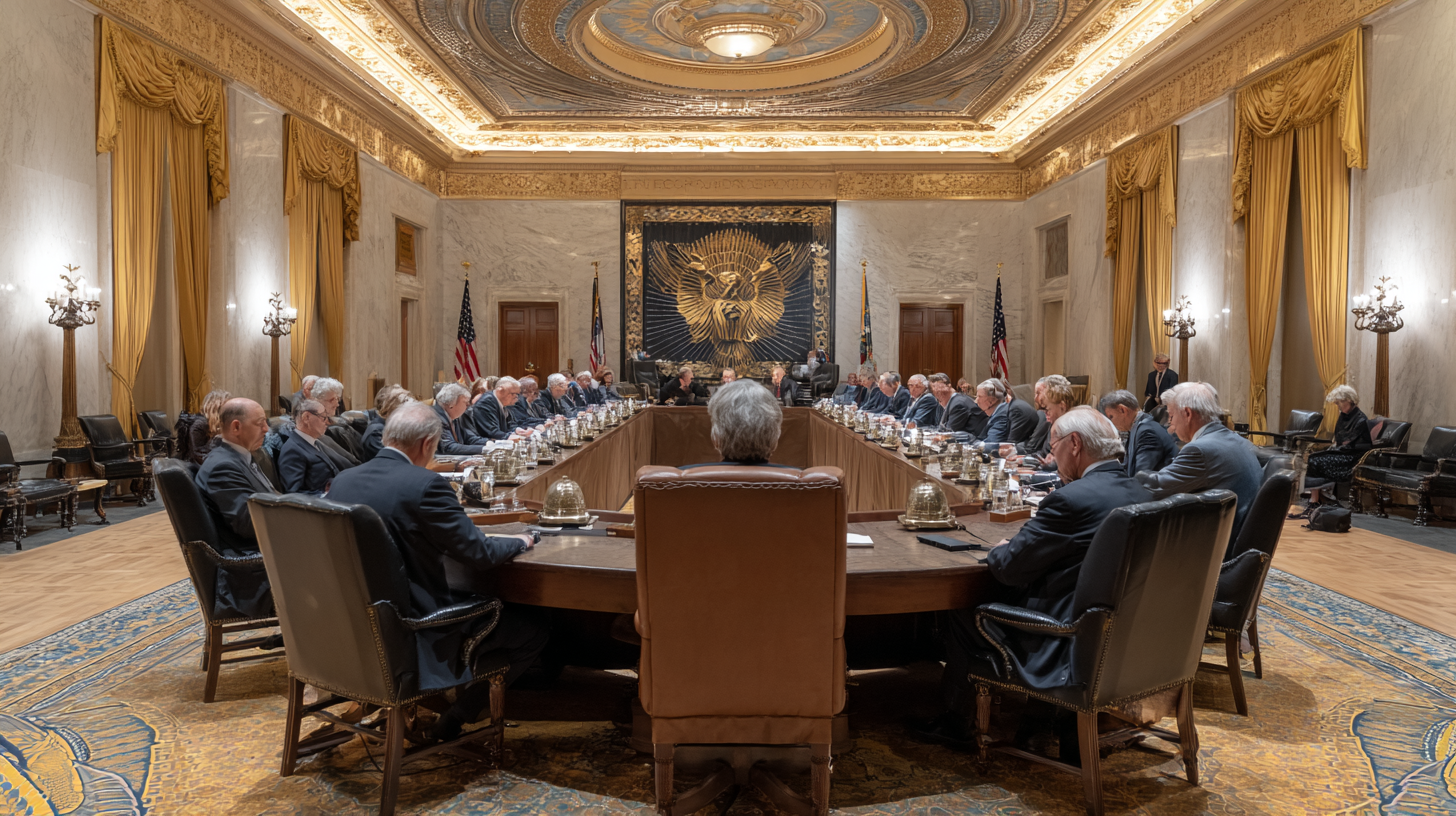
The Federal Open Market Committee convenes Tuesday and Wednesday for what is shaping up to be one of the most closely watched meetings in recent memory — not because of what the Fed is expected to do, but because of what it is expected to signal. The committee will almost certainly leave the federal funds rate unchanged at its current range of 3.50% to 3.75%, with futures markets pricing in a 99.6% probability of no change. The rate decision is effectively a foregone conclusion. Everything else about this meeting is not.

This is Kevin Warsh’s first FOMC meeting as Federal Reserve Chair, following Jerome Powell’s departure in May. It arrives at a moment of genuine tension within the committee and a macroeconomic backdrop that has scrambled the Fed’s traditional playbook. For investors in the small and microcap space, where borrowing costs and rate expectations weigh more heavily than almost any other variable, the signals coming out of Wednesday’s meeting matter enormously.

The Bias Shift to Watch

The single most important element of this meeting is language, not numbers. For the past three consecutive meetings, the FOMC has included an identical sentence in its post-meeting statement reflecting an inclination toward easing rates in the months ahead. The question now is whether the committee removes or revises that language — shifting its bias from easing toward neutral, or potentially even toward tightening.

That shift would be significant. Under the Fed’s traditional framework, rate cuts are appropriate when inflation is tame and the labor market is struggling. The current environment is the inverse: inflation is running at 4.2% year over year, the highest in three years, while the May jobs report showed the economy adding 172,000 positions, nearly double expectations. Under a strict reading of the dual mandate, those conditions argue for tighter policy, not looser. The market is watching to see whether Warsh’s committee acknowledges that reality in its statement language.

A Committee Already Divided

Warsh inherits a committee that is showing unusual signs of internal disagreement. The May meeting produced four dissents — the most since late 1992. One policymaker favored cutting rates outright, while three others objected to the easing bias in the statement, signaling they believed the Fed’s tone was too dovish given the inflation backdrop. That depth of division is rare and it complicates Warsh’s task in his first meeting. Building consensus around a unified message will be one of the early tests of his chairmanship.

Why the Dot Plot Is the Real Event

Alongside the rate decision, the Fed will release its updated Summary of Economic Projections — the so-called dot plot — which maps where each committee member expects rates to head over the coming years. Heading into this meeting, traders see close to a 50% probability of at least one rate hike before year-end, a dramatic reversal from the two cuts that consensus expected as recently as March. If the dot plot reflects a committee leaning toward hikes, Treasury yields will likely move higher and the entire rate-sensitive corner of the market will reprice accordingly.

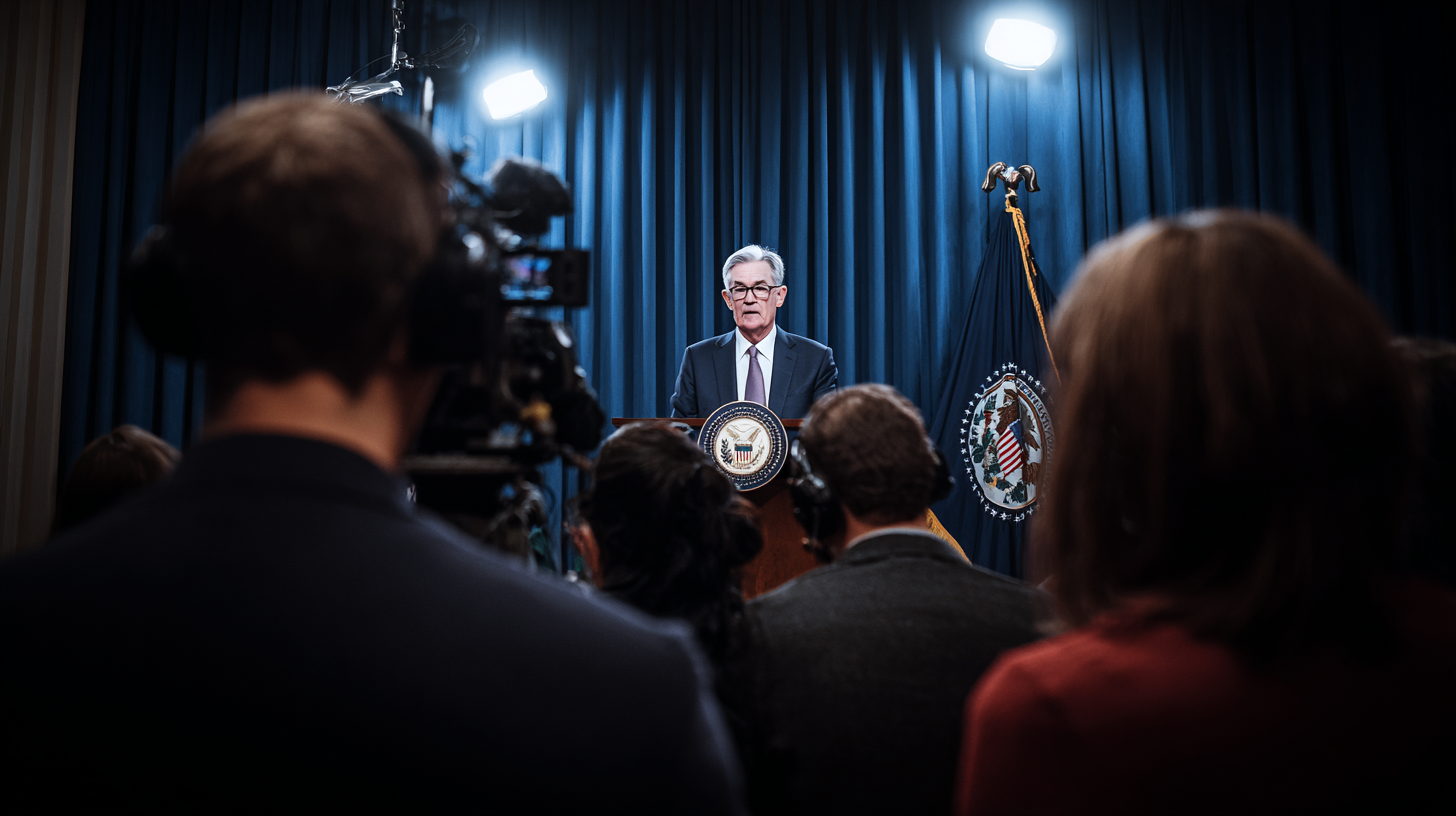
Warsh’s post-decision press conference is the other key moment. Markets are still calibrating his reputation as a policy hawk, and his tone on the path forward — whether he leaves the door open to hikes or pushes back on that speculation — will set the direction for rate expectations through the summer.

The Small Cap Stakes

For companies in the sub-$2 billion market cap range, this meeting carries direct consequences. Small and microcap companies carry disproportionately more variable-rate debt than their large cap counterparts, which means their interest expense moves in near real time with rate expectations. A committee that signals higher-for-longer, or hints at hikes, extends the timeline for the rate relief that smaller, more leveraged companies have been counting on to refinance debt and expand margins.

The Russell 2000 has spent much of 2026 caught between strong underlying fundamentals and a punishing rate environment. Wednesday afternoon will go a long way toward determining which of those forces dominates heading into the second half of the year. The Fed may not move a single basis point this week. It can still move the market.

Federal Reserve Holds Rates Steady in March 2026 — One Cut Still on the Table as Economy Shows Resilience

The Federal Reserve held its benchmark interest rate unchanged Wednesday, keeping the federal funds rate in the range of 3.5% to 3.75% as policymakers assess a shifting economic landscape shaped by elevated energy prices, a resilient growth outlook, and ongoing uncertainty tied to the conflict in the Middle East. The decision marks the second consecutive hold this year, with officials maintaining their projection of one rate cut in 2026 — consistent with guidance issued in December.

The vote was split. Fed Governor Stephen Miran dissented in favor of an immediate quarter-point reduction, reflecting the diversity of views inside the central bank as policymakers weigh competing signals from inflation data, labor markets, and geopolitical developments.

For the first time, the Fed formally acknowledged the war in Iran as an economic variable, stating that “the implications of developments in the Middle East for the U.S. economy are uncertain.” The acknowledgment signals that policymakers are actively monitoring the conflict’s impact on energy prices and supply chains as they assess the timing and pace of future policy adjustments.

Inflation forecasts were revised modestly higher as a result. Officials now see headline inflation at 2.7% for 2026, up from a prior estimate of 2.4%, and core inflation — which excludes food and energy — at 2.7% versus the previous 2.5% projection. While inflation remains above the Fed’s 2% target, the central bank’s updated projections also reflect a more optimistic view of overall economic growth, suggesting policymakers see the current environment as manageable rather than alarming.

In a constructive revision, the Fed raised its GDP growth forecast to 2.4% for 2026, up from 2.3% previously, reflecting continued economic momentum. The unemployment rate projection held steady at 4.4% — a level historically consistent with a healthy labor market.

Month-to-month payroll data has been choppy — January posted a gain of 126,000 jobs followed by a decline of 92,000 in February — but the unemployment rate has remained largely stable throughout the swing, which Fed officials noted as a point of continuity. Policymakers are watching incoming data closely before drawing conclusions about the labor market’s direction.

The Fed’s steady-hand approach offers a degree of predictability that markets and businesses can plan around. With one rate cut still projected for 2026, the path toward monetary easing remains intact — even if the timeline is data-dependent. For small and microcap companies, the key takeaway is that the cost of capital environment, while elevated, appears to be stabilizing rather than tightening further.

The breadth of opinion inside the Fed — ranging from no cuts to as many as four this year — reflects genuine debate rather than consensus pessimism, and leaves room for the policy outlook to shift as energy markets and labor data evolve through the year.

Adding another dimension to the Fed’s near-term story: Chair Jerome Powell’s term expires May 15, and his nominated successor Kevin Warsh awaits Senate confirmation. The transition is unfolding against a complex political backdrop, but the Fed’s institutional framework and data-driven decision-making process are expected to remain intact regardless of timing.

The direction of travel on rates is still lower. The question is when.

Fed Holds the Line: Officials Want More Proof Inflation Is Cooling Before Cutting Rates

Minutes from the latest meeting of the Federal Open Market Committee (FOMC) show a central bank increasingly cautious about cutting interest rates further, with most officials signaling they want clearer evidence that inflation is moving sustainably toward their 2% target before easing policy again.

At its Jan. 27–28 meeting, the policy-setting arm of the Federal Reserve voted to hold its benchmark interest rate steady at roughly 3.6%, following three rate cuts late last year. While two officials dissented in favor of another quarter-point reduction, the overwhelming majority agreed that the current rate is close to “neutral” — neither stimulating nor restraining economic growth.

The minutes, released Wednesday, reveal a committee divided into several camps. “Several” participants indicated that additional cuts would likely be appropriate if inflation continues to decline. However, “some” favored holding rates unchanged for an extended period, reflecting concerns that price pressures remain too elevated. A smaller group even expressed openness to signaling that the Fed’s next move could be either a rate cut or a hike, depending on incoming data — a notable shift from prior meetings when further tightening was largely ruled out.

Fed Chair Jerome Powell struck a measured tone following the January meeting, emphasizing that the central bank is “well positioned” to assess how economic conditions evolve before making additional adjustments. Powell pointed to signs of stabilization in the labor market and a still-expanding economy as justification for patience.

Recent economic data appear to reinforce that cautious stance. Consumer prices rose 2.4% in January compared with a year earlier, not far from the Fed’s target. Yet the central bank’s preferred inflation gauge — the personal consumption expenditures (PCE) index — is running closer to 3%, suggesting underlying price pressures remain sticky. Officials made clear in the minutes that they want greater confidence inflation is moving decisively lower before resuming rate cuts.

At the same time, the labor market has shown renewed resilience. Employers added 130,000 jobs in January, the strongest monthly gain in more than a year, while the unemployment rate edged down to 4.3%. Many officials described the job market as stabilizing after some softening in late 2025. Because rate cuts are typically deployed to prevent rising unemployment or stimulate slowing growth, the improving labor backdrop reduces the urgency for immediate action.

The Fed’s decision to stand pat also came despite public pressure from President Donald Trump, who has called for significantly lower rates. Policymakers, however, signaled they remain focused on their dual mandate of price stability and maximum employment rather than political considerations.

Markets are now recalibrating expectations for 2026. Earlier forecasts anticipated multiple rate cuts this year, but the tone of the minutes suggests the path forward will depend heavily on inflation data in the coming months. If price growth stalls above 2%, the Fed may extend its pause. If inflation resumes its downward trend, gradual cuts could still materialize.

For now, the message from the FOMC is clear: the battle against inflation is not yet fully won, and patience — not haste — will guide the next move in U.S. monetary policy.

Lawsuit Pressures Fed to Open Doors: Could Transparency Shift Market Dynamics?

Key Points:
– Azoria Capital sues the Federal Reserve, demanding public access to FOMC meetings.
– The lawsuit challenges the Fed’s closed-door practices under a 1976 federal law.
– Rising political pressure may reshape how investors engage with monetary policy decisions.

In a dramatic turn that could upend decades of Federal Reserve protocol, asset manager Azoria Capital filed a lawsuit Thursday demanding the central bank’s monetary policy meetings be opened to the public. The suit, lodged in a Washington, D.C. federal court, accuses the Fed’s Federal Open Market Committee (FOMC) of violating a 1976 transparency law by continuing to hold closed-door deliberations.

The timing couldn’t be more critical. The FOMC is set to meet July 29–30, and Azoria is seeking a temporary restraining order that would force those discussions—typically among the most market-sensitive of any U.S. institution—into the public sphere.

Behind the suit is James Fishback, Azoria Capital’s CEO and a figure closely tied to the Trump administration. Fishback contends the FOMC’s secrecy isn’t just outdated—it’s damaging. “By operating beyond public scrutiny, the FOMC is deliberately undermining the accountability envisioned by Congress,” the lawsuit claims, adding that real-time access to Fed discussions would give investors critical tools to navigate volatility sparked by monetary shifts.

The move comes as President Trump, currently touring the Fed’s $2.5 billion refurbishment project in Washington, escalates his criticism of central bank leadership. Trump has long accused Chair Jerome Powell and other officials of keeping interest rates unnecessarily high—claims echoed in Azoria’s filing, which alleges the Fed’s policy stance is “politically motivated” and intended to sabotage the administration’s economic agenda.

While the Fed hasn’t raised rates during Trump’s term so far, it has also declined to cut them, preferring to take a wait-and-see approach to assess the impact of new trade and fiscal policies. Yet that inaction has drawn ire from two sides—those demanding tighter control of inflation and those, like the administration, calling for looser credit to fuel growth.

Market reaction to the lawsuit has been cautious but curious. The idea of live-streamed or even partially open FOMC meetings could fundamentally alter the pace at which market participants digest rate signals. That shift could lead to sharper intraday volatility but also present opportunities for nimble traders and small-cap managers who thrive in environments of rapid change.

For investors in the middle market and beyond, the lawsuit underscores a growing theme: political and legal challenges are no longer background noise—they are becoming tradable events. Should Azoria’s case gain traction, it could pave the way for real-time transparency around monetary policy, potentially giving smaller firms an edge over traditional gatekeepers.

Whether or not the courts side with Azoria, the message is clear—investors are demanding a seat at the Fed’s table. And in a climate where every basis point counts, that demand might just get louder.

Federal Reserve Holds Rates Steady, Adjusts Growth and Inflation Outlook Amid Policy Uncertainty

Key Points:
– The Fed maintained its benchmark interest rate at 4.25%-4.5% for the second consecutive meeting.
– Core PCE inflation is now expected to be 2.8% at year-end, up from 2.5%.
– GDP growth projections for 2025 were lowered from 2.1% to 1.7%.

The Federal Reserve opted to hold interest rates steady at its March meeting, maintaining the federal funds rate within a range of 4.25% to 4.5%. This decision marks the second consecutive meeting in which borrowing costs remain unchanged, following a series of three rate cuts in late 2024. However, alongside the decision, policymakers signaled a revised economic outlook, reflecting slower growth and more persistent inflation.

Fed officials now forecast that the U.S. economy will grow at an annualized pace of 1.7% in 2025, a downward revision from the previous estimate of 2.1%. At the same time, inflation projections have been raised, with the core Personal Consumption Expenditures (PCE) index now expected to reach 2.8% by year-end, up from 2.5% previously. These adjustments reflect increasing uncertainty surrounding the economic impact of new trade policies and tariffs imposed by the Trump administration.

“Uncertainty around the economic outlook has increased,” the Fed noted in its official statement, referring to the administration’s aggressive tariff measures targeting China, Canada, and Mexico. Additional duties on steel, aluminum, and other imports are expected to be announced next month, potentially disrupting supply chains and fueling inflationary pressures.

While the Fed’s statement maintained language indicating that “economic activity has continued to expand at a solid pace,” policymakers acknowledged growing concerns about the possibility of stagflation—a scenario where growth stagnates, inflation remains high, and unemployment rises. The unemployment rate projection was slightly raised to 4.4% from 4.3%, reflecting potential labor market softening.

In an additional policy shift, the central bank announced a slower pace of balance sheet reduction. Beginning in April, the Fed will reduce the amount of Treasuries rolling off its balance sheet from $25 billion to $5 billion per month, while keeping mortgage-backed security reductions steady at $35 billion per month. The decision was not unanimous, with Fed Governor Chris Waller dissenting due to concerns about slowing the pace of quantitative tightening.

Despite these shifts, the Fed’s “dot plot”—a key indicator of policymakers’ rate projections—still points to two rate cuts in 2025. However, there is growing division among officials, with nine members supporting two cuts, four favoring just one, and another four seeing no cuts at all.

The Fed’s decision and economic projections have triggered mixed reactions in the financial markets. Stocks initially fluctuated as investors assessed the impact of slower economic growth and the persistence of inflation. The S&P 500 and Nasdaq saw volatile trading, while the Dow remained under pressure amid concerns that the Fed may not cut rates as aggressively as previously expected. Bond markets also responded, with yields on the 10-year Treasury note rising slightly as inflation concerns remained elevated.

Investors are increasingly wary of a scenario where economic growth weakens while inflation remains sticky, a condition that could lead to stagflation. Sectors such as financials and consumer discretionary stocks saw selling pressure, while defensive assets, including gold and utilities, gained traction as traders sought safe-haven investments.

Looking ahead, the Fed’s challenge will be navigating the dual risks of inflationary pressures and economic slowdown. The upcoming release of February’s core PCE inflation data next week will provide further insights, with economists anticipating a slight uptick to 2.7% from January’s 2.6%—a figure still far from the Fed’s 2% target.

As the economic landscape continues to evolve, markets will be closely watching the Fed’s next moves and whether the central bank can balance its mandate for maximum employment with maintaining price stability.

Fed Holds Rates Steady, Signals Caution on Inflation and Economic Policies

Key Points:
– The Federal Reserve kept its benchmark interest rate unchanged at 4.25%-4.50%.
– Policymakers removed previous language suggesting inflation had “made progress” toward the 2% target.
– Uncertainty looms over the impact of President Trump’s proposed tariffs and economic policies.

The Federal Reserve opted to hold interest rates steady on Wednesday, pausing after three consecutive cuts in 2024, as officials await further data on inflation and economic trends. The unanimous decision keeps the federal funds rate within the 4.25%-4.50% range, with policymakers expressing a cautious stance on future rate moves.

Notably, the Fed adjusted its policy statement, omitting previous language that inflation had “made progress” toward its 2% target. Instead, it acknowledged that inflation remains “somewhat elevated.” This signals that officials see a higher bar for additional rate cuts, even after reducing borrowing costs by a full percentage point last year.

“Economic activity has continued to expand at a solid pace. The unemployment rate has stabilized at a low level in recent months, and labor market conditions remain solid,” the Federal Open Market Committee (FOMC) stated. Policymakers reiterated that future rate adjustments would be data-dependent, assessing incoming economic indicators and evolving risks.

The Fed’s cautious stance follows months of inflation readings that have hovered above its 2% target. While some indicators, such as the Consumer Price Index (CPI), have shown slight improvement, core inflation remains persistent. The next reading of the Fed’s preferred inflation gauge, the Personal Consumption Expenditures (PCE) index, is due on Friday and could influence future policy decisions.

Adding complexity to the Fed’s outlook, President Donald Trump has signaled intentions to impose tariffs on key trading partners, including Mexico, Canada, and China. Some economists warn that such actions could drive inflation higher, making the Fed’s task of achieving price stability more challenging. Furthermore, Trump has openly pushed for deeper rate cuts, hinting at potential friction with Fed Chair Jerome Powell.

With today’s decision, investors will closely monitor upcoming inflation reports and any shifts in the Fed’s stance. Policymakers have indicated expectations for just two rate cuts in 2025, down from previous forecasts of four. Any sustained inflationary pressures or shifts in fiscal policy could further delay monetary easing.

Fed Chair Powell is set to hold a press conference later today, where he is expected to provide additional insights into the central bank’s outlook and response to evolving economic conditions.

Treasury Yields Tumble as Federal Reserve Hints at Potential Rate Cut

Key Points:
– The 10-year Treasury yield fell below 4% for the first time since February, responding to Fed Chair Powell’s comments on potential rate cuts.
– Economic indicators, including increased jobless claims and a contraction in manufacturing activity, suggest a cooling economy.
– The Federal Reserve is closely monitoring economic data to determine the timing of potential interest rate reductions.

In a significant shift in the financial landscape, U.S. Treasury yields have taken a noticeable downturn, with the benchmark 10-year yield dipping below the 4% mark for the first time since February. This movement comes in the wake of Federal Reserve Chairman Jerome Powell’s recent comments, which have opened the door to potential interest rate cuts as early as September.

The yield on the 10-year Treasury, a key indicator of economic sentiment and borrowing costs, fell to 3.997% on Thursday, August 1, 2024. Simultaneously, the 2-year Treasury yield, which is more sensitive to short-term rate expectations, slipped to 4.23%. These declining yields reflect growing investor confidence that the Fed’s tightening cycle may be nearing its end.

Powell’s remarks following the July Federal Open Market Committee (FOMC) meeting have been pivotal in shaping market expectations. The Fed Chair indicated that the economy is approaching a point where reducing the policy rate might be appropriate. This statement has been interpreted as a signal that the central bank is preparing to pivot from its aggressive rate-hiking stance to a more accommodative policy.

However, Powell emphasized that any decision to cut rates would be data-dependent, considering factors such as economic indicators, inflation trends, and labor market conditions. This cautious approach underscores the delicate balance the Fed must maintain between curbing inflation and supporting economic growth.

Recent economic data has added weight to the case for potential rate cuts. The latest report on initial jobless claims showed a surge to 249,000 for the week ended July 27, significantly exceeding economists’ expectations. This increase in unemployment claims, coupled with rising continuing claims, suggests a potential softening in the labor market – a key area of focus for the Fed.

Furthermore, the Institute for Supply Management’s (ISM) manufacturing index came in at 46.8, falling short of forecasts and indicating a contraction in manufacturing activity. A reading below 50 on this index signifies economic contraction in the sector, adding to concerns about overall economic health.

These economic indicators paint a picture of a cooling economy, which could prompt the Fed to consider easing its monetary policy sooner rather than later. Some market analysts, like Adam Crisafulli of Vital Knowledge, argue that these signs of economic slowdown suggest the Fed should have already begun its easing cycle.

As investors digest these developments, the bond market has responded with lower yields across various maturities. The yield curve, which plots yields across different bond maturities, has shifted downward, reflecting expectations of lower interest rates in the future.

Looking ahead, market participants will be closely watching upcoming economic data and Fed communications for further clues about the timing and extent of potential rate cuts. With three more Fed meetings scheduled for this year, there’s ample opportunity for the central bank to adjust its policy stance if economic conditions warrant such action.

The decline in Treasury yields has broader implications for the economy. Lower yields can lead to reduced borrowing costs for businesses and consumers, potentially stimulating economic activity. However, they also reflect concerns about economic growth and can impact returns for fixed-income investors.

As the financial world grapples with these evolving dynamics, the interplay between economic data, Fed policy, and market reactions will continue to shape the trajectory of Treasury yields and the broader economic outlook in the months ahead.

Fed Holds Steady on Rates, Signals Progress on Inflation

Key Points:
– Federal Reserve maintains interest rates at 5.25%-5.5%
– Statement indicates progress towards 2% inflation target
– Fed Chair Powell suggests potential rate cut as early as September

The Federal Reserve held its benchmark interest rate steady on Wednesday, July 31, 2024, while signaling that inflation is moving closer to its 2% target. This decision, made unanimously by the Federal Open Market Committee (FOMC), keeps the federal funds rate at a 23-year high of 5.25%-5.5%.

In its post-meeting statement, the Fed noted “some further progress” toward its inflation objective, a slight upgrade from previous language. The committee also stated that risks to achieving its employment and inflation goals “continue to move into better balance,” suggesting a more optimistic outlook on the economic landscape.

Fed Chair Jerome Powell, in his press conference, opened the door to potential rate cuts, stating that a reduction “could be on the table as soon as the next meeting in September” if economic data shows continued easing of inflation. This comment sparked a rally in the stock market, with investors interpreting it as a sign of a potential shift in monetary policy.

Despite these hints at future easing, the Fed maintained its stance that it does not expect to reduce rates until it has “gained greater confidence that inflation is moving sustainably toward 2 percent.” This language underscores the Fed’s data-dependent approach and reluctance to commit to a predetermined course of action.

Recent economic indicators have presented a mixed picture. While inflation has cooled from its mid-2022 peak, with the Fed’s preferred measure, the personal consumption expenditures price index, showing inflation around 2.5% annually, other gauges indicate slightly higher readings. The economy has shown resilience, with GDP growing at a 2.8% annualized rate in the second quarter, surpassing expectations.

The labor market, while still robust with a 4.1% unemployment rate, has shown signs of cooling. The ADP report released on the same day indicated slower private sector job growth in July, with wages increasing at their slowest pace in three years. This data, along with the Labor Department’s report of slowing wage and benefit cost increases, provides some positive signals on the inflation front.

However, the Fed’s decision to maintain high interest rates comes amid concerns about the economy’s ability to withstand such elevated borrowing costs for an extended period. Some sectors, like the housing market, have shown surprising resilience, with pending home sales surging 4.8% in June, defying expectations.

As the Fed continues to navigate the complex economic landscape, market participants will be closely watching for further signs of policy shifts. The September meeting now looms large on the horizon, with the potential for the first rate cut in years if inflation data continues to trend favorably.

For now, the Fed’s cautious approach and data-dependent stance remain intact, as it seeks to balance its dual mandate of price stability and maximum employment in an ever-evolving economic environment.

Core PCE Inflation Slows to Lowest Since 2021

The Personal Consumption Expenditures (PCE) price index rose 0.4% in January from the previous month, notching its largest monthly gain since January 2023, according to data released by the Commerce Department on Thursday. On an annual basis, headline PCE inflation, which includes volatile food and energy categories, slowed to 2.4% from 2.6% in December.

More importantly, the Federal Reserve’s preferred core PCE inflation gauge, which excludes food and energy, increased 0.4% month-over-month and 2.8% year-over-year. The 2.8% annual increase was the slowest since March 2021 and matched analyst estimates. However, the monthly pop indicates inflation may be bottoming out after two straight months of cooling.

The data presents a mixed picture for the Federal Reserve as it fights to lower inflation back to its 2% target. On one hand, the slowing annual inflation rate shows the cumulative effect of the Fed’s aggressive interest rate hikes in 2022. This supports the case for ending the hiking cycle soon and potentially cutting rates later this year if the trend continues.

On the other hand, the sharp monthly increase in January shows inflation is not yet on a clear downward trajectory. Some components of the PCE report also flashed warning signs. Services inflation excluding energy picked up while goods disinflation moderated. This could reflect the tight labor market and pent-up services demand.

Markets are currently pricing in around a 40% chance of a rate cut in June. But with inflation showing signs of stabilizing in January, the Fed will likely want to see a more definitive downward trend before changing course. Central bank officials have repeatedly emphasized they need to see “substantially more evidence” that inflation is falling before pausing or loosening policy.

The latest PCE data will unlikely satisfy that threshold. As a result, markets now see almost no chance of a rate cut at the March Fed meeting and still expect at least one more 25 basis point hike to the fed funds target range.

The January monthly pop in inflation will make Fed officials more cautious about declaring victory too soon or pivoting prematurely to rate cuts. But the slowing annual trend remains intact for now. As long as that continues, the Fed could shift to data-dependent mode later this year and consider rate cuts if other economic barometers, like employment, soften.

For consumers and businesses, the inflation outlook remains murky in the near-term but with some positive signs on the horizon. Overall price increases are gradually cooling from their peaks but could plateau at moderately high levels in the first half of 2024 based on January’s data.

Households will get temporary relief at the gas pump as energy inflation keeps slowing. But they will continue facing higher rents, medical care costs, and services prices amid strong demand and tight labor markets. Supply chain difficulties and China’s reopening could also re-accelerate some goods inflation.

Still, the Fed’s sustained monetary policy tightening should help rebalance demand and supply over time. As rate hikes compound and growth slows, inflationary pressures should continue easing. But consumers and businesses cannot expect rapid deflation or a return to the low inflation regime of the past decade anytime soon.

For the FOMC, the January data signals a need to hold steady at the upcoming March meeting and remain patient through the first half of 2024. Jumping straight to rate cuts risks repeating the mistake of the 1970s by loosening too soon. Officials have to let the delayed effects of tightening play out further.

With inflation showing early tentative signs of plateauing, the Fed is likely on hold for at least a few more meetings. But if price increases continue declining back toward 2% later this year, then small rate cuts can be back on the table. For now, the January data highlights the bumpy road back to price stability.

Fed in No Rush to Cut Rates While Inflation Remains Elevated

The minutes from the Federal Reserve’s latest Federal Open Market Committee (FOMC) meeting reveal a cautious stance by policymakers toward lowering interest rates this year, despite growing evidence of cooling inflation. The minutes underscored the desire by Fed officials to see more definitive and sustainable proof that inflation is falling steadily back towards the Fed’s 2% target before they are ready to start cutting rates. This patient approach stands in contrast to market expectations earlier in 2024 that rate cuts could begin as soon as March.

The deliberations detailed in the minutes point to several key insights into the Fed’s current thinking. Officials noted they have likely finished raising the federal funds rate as part of the current tightening cycle, with the rate now in a range of 4.5-4.75% after starting 2022 near zero. However, they emphasized they are in no rush to start cutting rates, wanting greater confidence first that disinflation trends will persist. Members cited the risks of easing policy too quickly if inflation fails to keep slowing.

The minutes revealed Fed officials’ desire to cautiously assess upcoming inflation data to judge whether the recent downward trajectory is sustainable and not just driven by temporary factors. This patient approach comes despite recent encouraging reports of inflation slowing. The latest CPI and PPI reports actually came in above expectations, challenging hopes of more decisively decelerating price increases.

Officials also noted the economy remains resilient with a strong job market. This provides the ability to take a patient stance toward rate cuts rather than acting preemptively. How to manage the Fed’s $8 trillion balance sheet was also discussed, but details were light, with further debate expected at upcoming meetings.

Moreover, policymakers stressed ongoing unease over still elevated inflation and the harm it causes households, especially more vulnerable groups. This reinforced their cautious posture of needing solid evidence of controlled inflation before charting a policy shift.

In response to the minutes, markets have significantly pushed back expectations for the Fed’s rate cut timeline. Traders are now pricing in cuts starting in June rather than March, with the overall pace of 2024 cuts slowing. The minutes align with recent comments from Fed Chair Jerome Powell emphasizing the need for sustained proof that inflationary pressures are abating before rate reductions can begin.

The minutes highlight the tricky position the Fed faces in navigating policy uncertainty over how quickly inflation will decline even after aggressive 2023 rate hikes. Officials debated incoming data signals of potentially transitory inflation reductions versus risks of misjudging and overtightening policy. With the economy expanding solidly for now, the Fed has the leeway to be patient and avoid premature policy loosening. But further volatility in inflation readings could force difficult adjustments.

Looking ahead, markets will be hyper-focused on upcoming economic releases for evidence that could support a more decisive pivot in policy. Any signs of inflation slowing convincingly toward the Fed’s 2% goal could boost rate cut bets. Yet with labor markets and consumer demand still resilient, cooling inflation to the Fed’s satisfaction may take time. The minutes clearly signaled Fed officials will not be rushed into lowering rates until they are fully convinced price stability is sustainably taking hold. Their data-dependent approach points to a bumpy path ahead for markets.

Powell Reiterates Careful Approach to Rate Cuts

In a recent interview on “60 Minutes,” Federal Reserve Chair Jerome Powell underscored the central bank’s commitment to a cautious approach regarding interest rate cuts in the upcoming year. Powell emphasized that any rate adjustments would likely unfold at a slower pace than market expectations, signaling a deliberate strategy in response to prevailing economic conditions.

Powell expressed confidence in the current state of the economy, highlighting the need for substantial evidence of sustained inflation movement toward the 2% target before considering rate cuts. He also assured the general public that the upcoming presidential election would not influence the Federal Reserve’s decision-making process.

Powell indicated that the Federal Open Market Committee (FOMC) is unlikely to make its first move, in the form of a rate cut, in March. This statement contrasted with market expectations, which have been making aggressive bets on multiple rate cuts throughout the year.

While market pricing suggests the possibility of five quarter-percentage points reductions, Powell aligned with the FOMC’s December “dot plot,” which indicated three potential moves. This clarification sought to manage expectations and temper speculation surrounding the timing and extent of rate adjustments.

Powell acknowledged that inflation remains above the Fed’s target but has stabilized. The robust job market, with 353,000 non-farm jobs added in January, adds to the Federal Reserve’s positive outlook. Powell identified geopolitical events as the primary risk to the economy.

Following the interview, U.S. stocks experienced a decline, reacting to Powell’s cautious stance on rate cuts. The market had previously seen a week of volatility, concluding with weekly gains driven by a strong January jobs report and positive corporate earnings updates.

Powell addressed public perception of inflation, noting that while the official data may show stability, people are experiencing higher prices for basic necessities. He highlighted the dissatisfaction among the public with the current economic situation despite its overall strength. Powell clarified the distinction between inflation and the absolute price level of goods and services. He explained that people’s dissatisfaction often stems from the rising prices of essential items like bread, milk, eggs, and meats, even though the overall economy is performing well.

Powell acknowledged the challenge in communicating economic concepts to the public, noting the discrepancy between public sentiment and economic indicators. He addressed the professional investing public’s understanding of the rate of change in inflation compared to the general public’s focus on the absolute price level.

Powell’s reaffirmation of a cautious approach to rate cuts serves as a crucial communication strategy to manage market expectations and maintain confidence in the economic outlook. The interview highlighted the Federal Reserve’s commitment to data-driven decisions and its consideration of various economic factors in determining the timing and extent of any potential rate adjustments.

Fed Holds Rates Steady, Cools Expectations for Imminent Cuts

The Federal Reserve left interest rates unchanged on Wednesday following its January policy meeting, keeping the federal funds rate target range at 5.25-5.50%, the highest level since 2007. The decision came as expected, but Fed Chair Jerome Powell pushed back on market bets of rate cuts potentially starting as soon as March.

In the post-meeting statement, the Fed removed language about needing additional policy tightening, signaling a likely prolonged pause in rate hikes as it assesses the impact of its aggressive actions over the past year. However, officials emphasized they do not foresee cuts on the horizon until inflation shows “greater progress” moving back to the 2% goal sustainably.

Powell Caution on Rate Cuts

During his press conference, Powell aimed to temper expectations that rate cuts could begin in just a couple months. He stated March is “probably not the most likely case” for the start of easing, rather the “base case” is the Fed holds rates steady for an extended period to confirm inflation is solidly on a downward trajectory.

Markets have been pricing in rate cuts in 2024 based on recent data showing inflation cooling from 40-year highs last year. But the Fed wants to avoid undoing its progress prematurely. Powell said the central bank would need more consistent evidence on inflation, not just a few months of decent data.

Still Room for Soft Landing

The tone indicates the Fed believes there is room for a soft landing where inflation declines closer to target without triggering a recession. Powell cited solid economic growth, a strong job market near 50-year low unemployment, and six straight months of easing price pressures.

While risks remain, the Fed views risks to its dual mandate as balancing out rather than tilted to the downside. As long as the labor market and consumer spending hold up, a hard landing with severe growth contraction may be avoided.

Markets Catching Up to Fed’s Thinking

Markets initially expected interest rate cuts to start in early 2024 after the Fed’s blistering pace of hikes over the past year. But officials have been consistent that they need to keep policy restrictive for some time to ensure inflation’s retreat is lasting.

After the latest guidance reiterating this view, traders adjusted expectations for the timing of cuts. Futures now show around a coin flip chance of a small 25 basis point rate cut at the March FOMC meeting, compared to up to a 70% chance priced in earlier.

Overall the Fed is making clear that investors are too optimistic on the imminence of policy easing. The bar to cutting rates remains high while the economy expands moderately and inflation readings continue improving.

Normalizing Policy Ahead

Looking beyond immediate rate moves, the Fed is focused on plotting a course back to more normal policy over time. This likely entails holding rates around the current elevated range for much of 2024 to solidify inflation’s descent.

Then later this year or early 2025, the beginnings of rate cuts could materialize if justified by the data. The dot plot forecast shows Fed officials pencil in taking rates down to 4.5-4.75% by year’s end.

But Powell was adamant that lowering rates is not yet on the table. The Fed will need a lengthy period of inflation at or very close to its 2% goal before definitively shifting to an easing cycle.

In the meantime, officials are content to pause after their historic tightening campaign while still keeping rates restrictive enough to maintain control over prices. As Powell made clear, investors anxiously awaiting rate cuts will likely need to keep waiting a bit longer.