Michael Kupinski, Director of Research, Equity Research Analyst, Digital, Media & Technology , Noble Capital Markets, Inc.
Jacob Mutchler, Research Associate, Noble Capital Markets, Inc.
Refer to the full report for the price target, fundamental analysis, and rating.
Special dividend. On Friday, February 21, the company announced that its board of directors approved a nonrecurring special cash dividend of $3.31 per share. The sizeable cash dividend, payable on March 11 to shareholders of record on March 3, represented a yield of roughly 20% at the time of announcement. Furthermore, the cash dividend totals roughly $60 million and will be funded entirely through the company’s healthy cash position.
Delivering value. In our view, the special cash dividend is illustrative of the Board of Directors’ confidence in the company’s long-term outlook, strong financial position, and commitment to deliver value to shareholders. Notably, we believe the company will be able to pay out the sizeable dividend without compromising its strategic growth initiatives in player retention and quality of gameplay.
Equity Research is available at no cost to Registered users of Channelchek. Not a Member? Click ‘Join’ to join the Channelchek Community. There is no cost to register, and we never collect credit card information.
This Company Sponsored Research is provided by Noble Capital Markets, Inc., a FINRA and S.E.C. registered broker-dealer (B/D).
*Analyst certification and important disclosures included in the full report. NOTE: investment decisions should not be based upon the content of this research summary. Proper due diligence is required before making any investment decision.
Codere Online refers, collectively, to Codere Online Luxembourg, S.A. and its subsidiaries. Codere Online launched in 2014 as part of the renowned casino operator Codere Group. Codere Online offers online sports betting and online casino through its state-of-the art website and mobile application. Codere currently operates in its core markets of Spain, Italy, Mexico, Colombia, Panama and the City of Buenos Aires (Argentina). Codere Online’s online business is complemented by Codere Group’s physical presence throughout Latin America, forming the foundation of the leading omnichannel gaming and casino presence in the region.
Michael Kupinski, Director of Research, Equity Research Analyst, Digital, Media & Technology , Noble Capital Markets, Inc.
Jacob Mutchler, Research Associate, Noble Capital Markets, Inc.
Refer to the full report for the price target, fundamental analysis, and rating.
Currency exchange impact. Q4 revenue of €52.6 million was roughly in line with our estimate of €55.0 million in spite of currency headwinds. Adj. EBITDA of €1.9 million was better than our estimate of €1.5 million. Notably, revenues would have been stronger if not for the depreciation of the Mexican Peso, down roughly 13.5% against the Euro. On a constant currency basis, revenue was up a strong 15% compared to reported growth of 5%.
Significant market opportunity. There appears to be a very large market opportunity for the company in Latin America, with Latin American markets expected to grow a strong 33% plus Compound Annual Revenue Growth Rate. In our view, the company likely will take a disciplined approach to entering new markets by seeking partners. We believe that such a strategy could allow the company to accelerate revenue growth while allowing adj. EBITDA growth.
Equity Research is available at no cost to Registered users of Channelchek. Not a Member? Click ‘Join’ to join the Channelchek Community. There is no cost to register, and we never collect credit card information.
This Company Sponsored Research is provided by Noble Capital Markets, Inc., a FINRA and S.E.C. registered broker-dealer (B/D).
*Analyst certification and important disclosures included in the full report. NOTE: investment decisions should not be based upon the content of this research summary. Proper due diligence is required before making any investment decision.
ACCO Brands Corporation is one of the world’s largest designers, marketers and manufacturers of branded academic, consumer and business products. Our widely recognized brands include AT-A-GLANCE®, Esselte®, Five Star®, GBC®, Kensington®, Leitz®, Mead®, PowerA®, Quartet®, Rapid®, Rexel®, Swingline®, Tilibra®, and many others. Our products are sold in more than 100 countries around the world. More information about ACCO Brands, the Home of Great Brands Built by Great People, can be found at www.accobrands.com.
Joe Gomes, CFA, Managing Director, Equity Research Analyst, Generalist , Noble Capital Markets, Inc.
Joshua Zoepfel, Research Associate, Noble Capital Markets, Inc.
Refer to the full report for the price target, fundamental analysis, and rating.
An Overreaction. ACCO shares fell over 17% Friday, hitting a new 52-week low, on 4.5x normal daily volume. We believe the move to be misguided and not reflective of ongoing opportunities for the Company. We would reiterate, excluding unexpectedly negative forex, that ACCO’s 4Q24 results were in line with expectations.
Go Forward. While the operating environment remains challenging, there are green shoots of opportunity for the Company, such as the renewed back to office movement. Management is placing a primary focus on improving sales trends through a number of efforts, which, when combined with cost reduction efforts, places ACCO in position to generate substantial returns once the top line improves.
Equity Research is available at no cost to Registered users of Channelchek. Not a Member? Click ‘Join’ to join the Channelchek Community. There is no cost to register, and we never collect credit card information.
This Company Sponsored Research is provided by Noble Capital Markets, Inc., a FINRA and S.E.C. registered broker-dealer (B/D).
*Analyst certification and important disclosures included in the full report. NOTE: investment decisions should not be based upon the content of this research summary. Proper due diligence is required before making any investment decision.
Key Points: – $500B U.S. investment includes Houston AI server factory opening 2026. – 20,000 new jobs focused on R&D, engineering, and AI development. – Announcement follows Trump meeting amid renewed
Apple has unveiled ambitious plans to inject $500 billion into the U.S. economy over the next four years, with a significant focus on artificial intelligence infrastructure. The technology giant announced Monday that it will partner with manufacturers to build a 250,000-square-foot AI server facility in Houston, Texas, dedicated to producing hardware for Apple Intelligence, the company’s AI personal assistant that powers iPhones, iPads, and Mac computers.
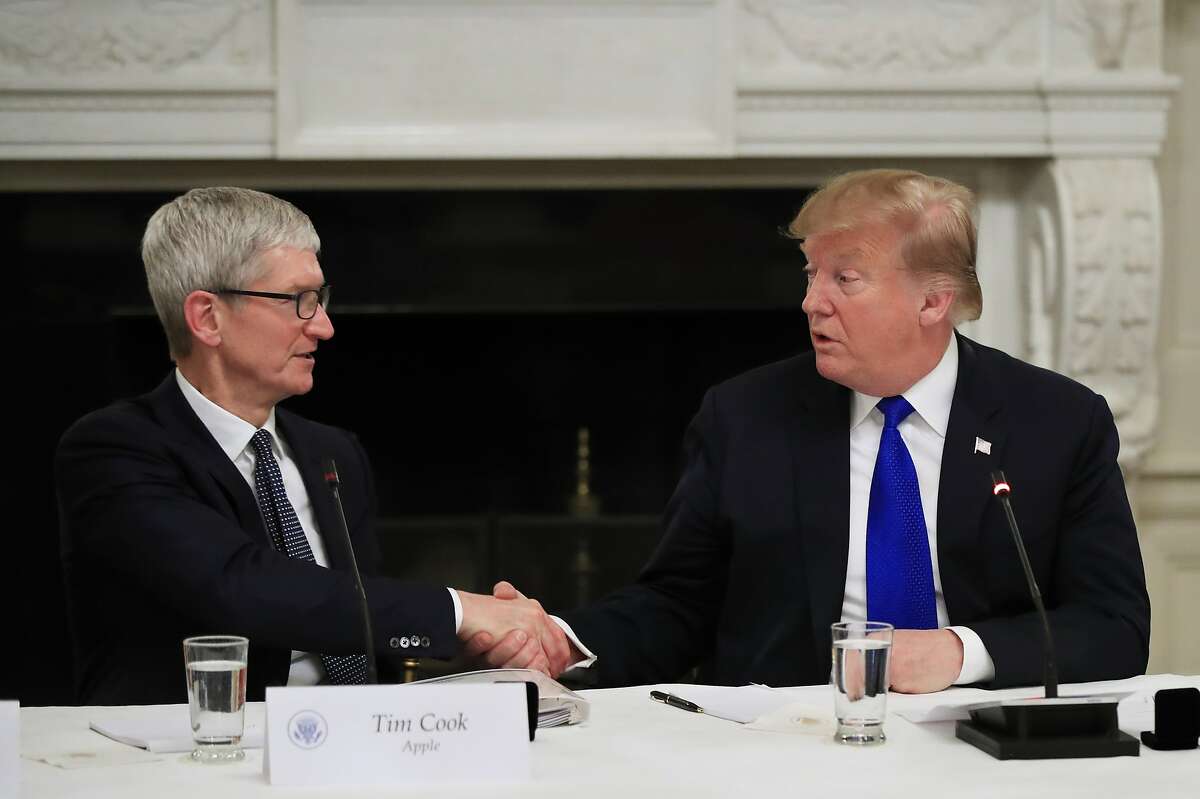
This massive investment comes at a pivotal moment for Apple as it navigates growing tensions between the U.S. and China. The announcement follows a recent meeting between Apple CEO Tim Cook and President Donald Trump, who has reintroduced tariffs on Chinese imports. With Apple historically dependent on Chinese manufacturing for its devices, this U.S.-focused investment signals a strategic pivot in its production approach.
“We are bullish on the future of American innovation, and we’re proud to build on our long-standing U.S. investments with this $500 billion commitment to our country’s future,” said Apple CEO Tim Cook in the announcement.
The Houston facility, expected to begin operations in 2026, represents just one component of Apple’s comprehensive investment strategy. The company plans to hire approximately 20,000 new employees across the United States, with positions concentrated in research and development, silicon engineering, software development, and artificial intelligence.
Apple’s investment will extend beyond direct manufacturing to include doubling its U.S. Advanced Manufacturing Fund to $10 billion, establishing a new manufacturing academy in Michigan, and expanding R&D investments in cutting-edge fields like silicon engineering. The company also emphasized its content production for Apple TV+, which currently spans 20 states.
This investment announcement arrives as Apple accelerates its push into artificial intelligence with Apple Intelligence, its AI assistant unveiled earlier this year. The Texas server facility suggests Apple is building infrastructure to support more advanced AI capabilities while keeping sensitive data processing within U.S. borders—a growing concern for tech companies handling vast amounts of user information.
Apple highlighted its substantial economic contribution to the United States, noting it has paid more than $75 billion in U.S. taxes over the past five years, including $19 billion in 2024 alone, positioning itself as one of the nation’s largest corporate taxpayers.
The investment plan represents Apple’s response to mounting pressure from the Trump administration regarding U.S. manufacturing. Earlier this month, President Trump signed an order imposing additional 10% tariffs on Chinese goods, supplementing existing tariffs of up to 25% established during his first term. These trade policies have created significant challenges for companies like Apple that rely heavily on global supply chains centered in Asia.
By committing to this historic U.S. investment, Apple appears to be strategically addressing political pressures while simultaneously building the infrastructure needed to support its AI-driven future. The company’s decision to focus on AI server manufacturing also indicates its long-term commitment to developing proprietary AI solutions rather than solely relying on third-party providers like Google or OpenAI.
Industry analysts view this investment as a significant move that could inspire other tech giants to increase their U.S. manufacturing presence. The Houston facility in particular represents a strategic choice, capitalizing on Texas’s growing reputation as a technology hub outside of traditional centers like California and New York.
As competition in AI technology intensifies among major tech companies, Apple’s substantial investment in domestic AI infrastructure suggests the company is positioning itself for a future where AI capabilities become an increasingly critical differentiator in consumer technology products.
Key Points: – The Dow fell 805 points, with a two-day loss exceeding 1,200 points, while the S&P 500 and Nasdaq also declined. – Economic data signaled weaker consumer sentiment, a slowing housing market, and increased inflation concerns. – Investors moved toward safer assets, boosting bonds and defensive stocks, while major indexes fell below key technical levels.
Stocks sold off on Friday as new U.S. economic data raised investor concerns over slowing growth and persistent inflation. The Dow Jones Industrial Average tumbled 805 points, or 1.8%, bringing its two-day losses to more than 1,200 points. The S&P 500 fell 1.6%, while the Nasdaq Composite dropped over 2% as investors moved away from equities in search of safer assets.
United Health led the Dow’s decline, plunging 7% following a Wall Street Journal report that the insurer is under investigation by the Justice Department. The stock was on track for its worst day since March 2020. Meanwhile, broader economic indicators pointed to growing uncertainty. The University of Michigan consumer sentiment index fell to 64.7 in January, a sharper decline than expected, reflecting rising inflation concerns. Additionally, the 5-year inflation outlook in the survey hit 3.5%, its highest level since 1995.
Housing market data also contributed to the negative sentiment, with existing home sales dropping more than anticipated to 4.08 million units. The U.S. services purchasing managers index (PMI) also showed signs of weakness, slipping into contraction territory for February. These factors compounded fears that economic conditions may not be as strong as previously believed.
Investors sought refuge in traditionally defensive assets. The benchmark 10-year Treasury note yield declined by 8 basis points to 4.418%, boosting bond prices. The Japanese yen also strengthened against the U.S. dollar. Defensive stocks, including Procter & Gamble, General Mills, Kraft Heinz, and Mondelez, posted gains as investors shifted toward more stable sectors.
Market weakness extended across the week, with the S&P 500 down about 1%, the Dow shedding 2%, and the Nasdaq losing 1.6%. Several factors weighed on stocks, including Walmart’s weaker-than-expected earnings guidance, which sent its stock down 3% on Friday and more than 9% for the week. Inflation concerns and losses in Palantir further pressured the market.
Technical indicators added to the cautious outlook. The Dow and Nasdaq both fell below their 50-day moving averages in afternoon trading. The Dow, down 1.8%, slipped under its 50-day average of 43,695.91 for the first time since Jan. 21, while the Nasdaq, down 2%, dropped below 19,686.10, marking its first break of that level since Feb. 12.
As investors brace for more potential volatility, the focus remains on upcoming economic data and policy developments. With inflationary pressures persisting and uncertainty surrounding future policy decisions, the market’s direction remains uncertain heading into next week.
Key Points: – Celsius acquires Alani Nutrition in a $1.8 billion deal, expected to close in Q2 2025. – The merger aims to create a leading functional beverage platform, catering to growing demand for zero-sugar alternatives. – Celsius projects $2 billion in sales post-acquisition, with $50 million in cost synergies over two years.
Celsius Holdings has announced plans to acquire Alani Nutrition in a landmark $1.8 billion deal, marking a major consolidation in the U.S. energy drink market. The agreement, expected to be finalized in the second quarter of 2025, includes a net purchase price of $1.65 billion and $150 million in tax assets.
Alani Nutrition, founded in 2018, has built a reputation as a “female-focused” brand offering functional beverages and snacks tailored to Gen Z and millennial consumers. The Kentucky-based company, previously operated by Congo Brands, produces energy drinks, protein shakes, snacks, and protein powders. The acquisition will transfer ownership from co-founders Katy and Haydn Schneider, as well as Congo Brands’ co-founders Max Clemons and Trey Steiger, to Celsius Holdings.
Celsius believes the deal will create a powerful synergy, forming a “leading better-for-you, functional lifestyle platform.” By integrating Alani Nu’s products, Celsius aims to expand its reach in the functional beverage space and tap into growing demand for zero-sugar alternatives. The company expects the merger to drive approximately $2 billion in sales, leveraging the combined distribution networks, brand awareness, and innovation capabilities of both entities.
John Fieldly, Chairman and CEO of Celsius, highlighted the strategic benefits of the acquisition, stating that it will “broaden the availability of Alani Nu’s functional products” and strengthen the company’s presence in new market segments. The transaction is projected to be accretive to cash earnings per share (EPS) within the first full year of ownership, with an estimated $50 million in cost synergies to be realized over two years post-closing.
Max Clemons of Congo Brands expressed confidence in the deal, emphasizing that Celsius will “unlock key growth opportunities” for Alani Nu, particularly in expanding its distribution and consumer engagement.
The acquisition announcement coincided with Celsius reporting its fourth-quarter and full-year financial results for 2024. The company posted annual revenue of $1.36 billion, reflecting a 3% increase over the prior year. North American sales accounted for $1.28 billion, growing by 1%, while international revenues surged 37% to $74.7 million. Despite the revenue growth, Celsius experienced a decline in profitability, with adjusted EBITDA down 13% to $255.7 million and net profit falling 36% to $145.1 million.
Industry analysts view this acquisition as a strategic move that could help Celsius regain momentum in a highly competitive market. By capitalizing on Alani Nu’s strong brand presence and consumer loyalty, Celsius aims to solidify its position as a leader in the energy and functional beverage sector. The deal also signals an increasing trend of consolidation in the market, as major players look to expand their portfolios to meet shifting consumer preferences.
As the acquisition moves forward, investors and industry watchers will closely monitor how Celsius integrates Alani Nu into its operations and whether the expected synergies materialize. If successful, the merger could serve as a blueprint for future partnerships in the rapidly evolving health and wellness beverage industry.
Key Points: – Treasury yields declined slightly as investors analyzed economic data and Trump’s proposed tariffs. – Jobless claims came in higher than expected, signaling a potential softening in the labor market. – Fed officials emphasized the need for further inflation progress before considering rate cuts.
U.S. Treasury yields edged lower on Thursday as investors assessed fresh economic data and the potential impact of U.S. President Donald Trump’s proposed tariffs. The 10-year Treasury yield declined more than 2 basis points to 4.507%, while the 2-year Treasury yield dropped 2.3 basis points to 4.253%. Yields move inversely to bond prices, meaning demand for Treasuries increased slightly as investors sought stability amid economic uncertainty.
One of the key economic reports influencing the bond market was the latest weekly initial jobless claims data, which showed 219,000 new claims for unemployment benefits in the week ending Feb. 15. This was slightly above the 215,000 claims economists had expected, signaling a modest cooling in the labor market. Investors also awaited the release of the Philadelphia Fed Manufacturing Index, an important measure of regional economic activity that could provide further insight into the strength of the U.S. economy.
At the same time, Federal Reserve officials were scheduled to speak throughout the day, offering additional perspectives on monetary policy. Among them, Fed Bank of Chicago President Austan Goolsbee and Fed Governor Adriana Kugler were expected to discuss economic conditions and the outlook for inflation. The market remained focused on any indications of future interest rate changes, particularly given the Federal Reserve’s cautious stance on inflation.
Another factor weighing on investor sentiment was Trump’s latest tariff proposal, which called for a 25% duty on key imports, including automobiles, pharmaceuticals, and semiconductors. The former president stated that these tariffs could increase significantly over time and potentially take effect as early as April 2. Investors closely monitored these developments, as trade policies can have broad economic implications, affecting corporate profitability, inflationary pressures, and overall market stability.
Meanwhile, the Federal Reserve’s recently released meeting minutes suggested that policymakers remain concerned about inflation risks. Officials emphasized that they would need to see sustained progress on inflation before considering additional interest rate cuts. They also noted that potential shifts in trade and immigration policies could create further economic uncertainty.
Bond markets reacted cautiously to these developments, with Treasury yields experiencing a slight decline as investors weighed the implications for future monetary policy. Lower yields often indicate increased investor demand for safe-haven assets, particularly when concerns about economic growth or inflation emerge.
As the economic landscape continues to evolve, market participants will closely watch upcoming data releases and Federal Reserve commentary for further indications of policy direction. The trajectory of interest rates remains a key focus, with investors balancing optimism about economic resilience against concerns over inflation and potential trade disruptions.
Key Points: – Acquiring FibroGen’s China operations for $160M secures rights to anemia drug roxadustat. – The sale extends cash runway to 2027 and funds key drug development. – Roxadustat leads in China, but faces generic competition and regulatory scrutiny.
AstraZeneca (AZN) has announced a $160 million acquisition of FibroGen’s (FGEN) China business, securing regional rights to the oral anemia drug roxadustat. This deal strengthens AstraZeneca’s footprint in the Chinese pharmaceutical market while providing FibroGen with a much-needed financial boost.
The relationship between AstraZeneca and FibroGen surrounding roxadustat dates back over a decade. Initially, AstraZeneca held broader rights to the HIF-PH inhibitor but returned control in the U.S. and select other markets last year. However, the company maintained an interest in China and South Korea, where the drug is marketed under the brand name Evrenzo.
With this acquisition, AstraZeneca will pay an enterprise value of $85 million, in addition to $75 million of net cash currently held by FibroGen’s Chinese operations. The transaction is expected to close in mid-2025, at which point FibroGen plans to use the proceeds to repay a term loan facility managed by Morgan Stanley Tactical Value, simplifying its capital structure.
For FibroGen, this sale represents a crucial financial lifeline. Entering 2024, the company held $121.1 million in cash and equivalents. The proceeds from this transaction, coupled with loan repayment, should extend FibroGen’s cash runway into 2027. The move allows the company to refocus on developing FG-3246, a CD46-targeting antibody-drug conjugate, and FG-3180, a companion PET imaging agent for metastatic castration-resistant prostate cancer (mCRPC).
“This deal bolsters our company on several fronts,” said FibroGen CEO Thane Wettig. “It strengthens our financial position, meaningfully extending our cash runway, and enables us to continue progressing key clinical development programs.”
Roxadustat is a leading treatment for anemia in chronic kidney disease in China, and regulatory bodies are considering its approval for chemotherapy-induced anemia. Despite its dominance, the drug faces increasing competition, as Chinese regulators approved a generic version from CSPC Pharmaceutical last summer. Several other companies are also seeking approval for their own generic versions.
China remains a crucial market for AstraZeneca, though the company has recently encountered challenges, including a slowdown in sales and an ongoing investigation into its former China head, Leon Wang, over potential tax violations. Nevertheless, AstraZeneca CEO Pascal Soriot remains optimistic, stating in a recent earnings call that “longer term, we see continuous opportunity for growth in China.”
While today’s deal secures AstraZeneca’s position in China, FibroGen retains the rights to roxadustat in other markets, including the U.S., where it has faced regulatory setbacks. The drug was rejected by the FDA in 2021 for chronic kidney disease and later failed a Phase 3 anemia trial in 2023. However, FibroGen is still evaluating development plans for anemia associated with lower-risk myelodysplastic syndrome, with hopes of meeting with the FDA in the second quarter to discuss potential next steps.
As the transaction moves forward, both AstraZeneca and FibroGen are positioning themselves for long-term growth, with AstraZeneca reinforcing its presence in China’s expanding pharmaceutical sector and FibroGen securing the resources to pursue future drug development.
Key Points: – Microsoft’s entry into quantum hardware could reshape competitive dynamics in the quantum computing market – Integration potential with AI suggests broader implications for tech sector valuations – Early-stage quantum companies may face increased pressure as tech giants advance their capabilities
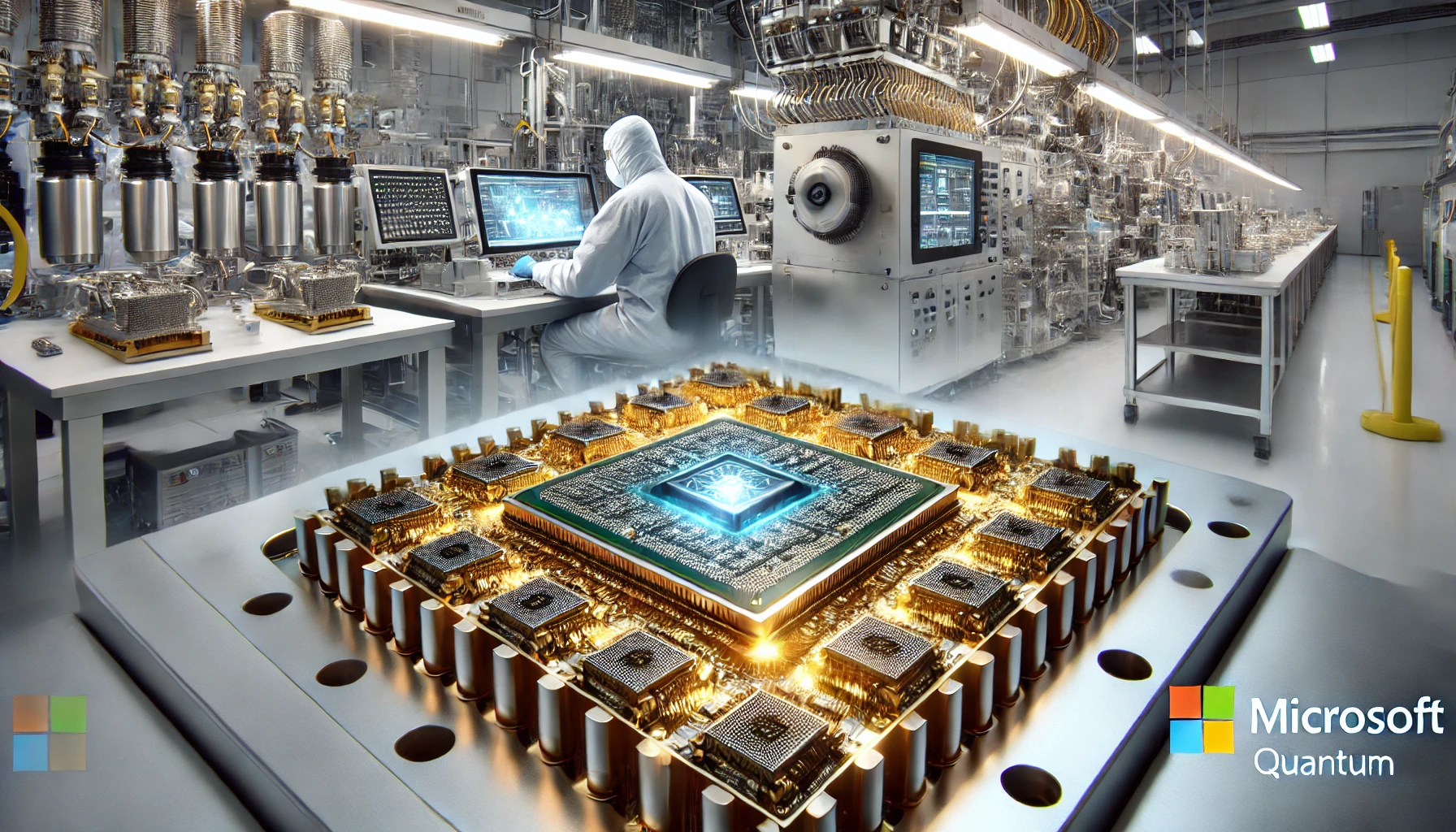
The tech investment landscape is witnessing a seismic shift as Microsoft unveils its Majorana 1 quantum chip, marking a crucial moment that could reshape investment strategies across both quantum-specific and broader technology portfolios. This development signals a potential acceleration in the commercialization timeline for quantum computing, challenging current market valuations and investment theses.
While quantum computing stocks like IonQ (+237% in 2024) and Rigetti (+1,500%) have seen spectacular gains, Microsoft’s entry into quantum hardware manufacturing raises important questions about the sustainability of pure-play quantum investments. The tech giant’s decision to manufacture its quantum chips in-house, rather than relying on traditional semiconductor fabrication partners, suggests a potential restructuring of the quantum supply chain that investors need to consider.
The market implications of this development extend far beyond the quantum computing sector. Microsoft’s strategic positioning of quantum computing as an AI enhancement tool points to a broader technology ecosystem play. This convergence could significantly impact valuations across the tech sector, particularly for companies involved in AI infrastructure and development.
Traditional tech investors should pay particular attention to Microsoft’s timeline projection. The company’s assertion that practical quantum applications are “years, not decades” away could accelerate investment in quantum-ready infrastructure and security solutions. This shift could benefit companies developing quantum-resistant cryptography and quantum software development tools.
The ripple effects are already visible in the venture capital space, with increased investment flowing into quantum-adjacent technologies. Startups working on quantum software, error correction, and control systems are attracting significant attention, even as the hardware segment becomes more competitive with major tech players entering the field.
For institutional investors, Microsoft’s advancement suggests a potential restructuring of quantum investment strategies. Rather than focusing solely on pure-play quantum companies, a more nuanced approach considering the entire quantum value chain – from basic research to commercial applications – may be prudent.
The development also raises questions about the future of quantum cloud services. While Microsoft plans to keep Majorana 1 focused on research partnerships, the company’s hints at future cloud integration through Azure could pressure current quantum-as-a-service providers. This dynamic might force investors to reassess the valuation metrics for companies whose business models rely heavily on quantum cloud service revenue.
Looking ahead, investors should monitor several key indicators: the pace of quantum patent filings, quantum-ready cybersecurity adoption rates, and strategic partnerships between quantum hardware providers and traditional tech companies. These metrics could provide early signals of quantum technology’s transition from research to commercial applications.
Key Points: – Proposed 25% tariffs target automotive, pharmaceutical, and semiconductor imports – Implementation could begin as early as April 2, following March steel and aluminum tariffs – Multiple sectors face supply chain disruption and potential cost increase
Global markets are adjusting to President Trump’s unexpected announcement of 25% tariffs on imported automobiles, pharmaceuticals, and semiconductors, with futures markets showing increased volatility. The proposal, announced Tuesday from Mar-a-Lago, represents a significant expansion of the administration’s trade policies and could reshape multiple industry sectors.
The automotive sector, which accounts for approximately 3% of U.S. GDP, faces potentially substantial restructuring. Major automakers with significant foreign manufacturing operations saw their stocks decline in after-hours trading. Companies like Toyota (TM) fell 3.2%, while General Motors (GM) and Ford (F) showed mixed reactions as investors weighed potential domestic manufacturing advantages against supply chain disruptions.
The pharmaceutical sector, already dealing with pricing pressures and supply chain challenges, could see significant market adjustments. Major pharmaceutical ETFs declined following the announcement, with the iShares U.S. Pharmaceuticals ETF (IHE) dropping 2.1%. Indian pharmaceutical ADRs were particularly affected, with Dr. Reddy’s Laboratories (RDY) and Sun Pharmaceutical Industries experiencing notable declines.
Semiconductor stocks faced immediate pressure, with the Philadelphia Semiconductor Index (SOX) declining 2.8%. Taiwan Semiconductor Manufacturing Company (TSM), a crucial supplier to U.S. tech giants, saw its ADRs fall 4.1%. The potential tariffs add another layer of complexity to an industry already managing global chip shortages and supply chain constraints.
Market data suggests significant sector rotation as investors reassess positions. Defense stocks and domestic manufacturers showed strength, while companies heavily dependent on global supply chains experienced selling pressure. The CBOE Volatility Index (VIX) jumped 15%, reflecting increased market uncertainty.
From an investment perspective, the proposed tariffs create both opportunities and risks. Domestic manufacturers could benefit from reduced competition and increased demand, while companies reliant on global supply chains may face margin pressure. The financial sector is also monitoring the situation, as trade policy shifts could impact currency markets and international banking operations.
Bond markets reflected the uncertainty, with Treasury yields declining as investors sought safe-haven assets. The 10-year Treasury yield fell 7 basis points, while gold futures rose 1.2%, indicating defensive positioning among institutional investors.
The implementation timeline, potentially beginning April 2, gives markets limited adjustment time. This compressed schedule could lead to increased volatility as companies rush to adapt supply chains and adjust pricing strategies. The speed of implementation may also affect Q2 earnings forecasts across multiple sectors.
Looking ahead, investors are focusing on several key metrics: changes in manufacturing capacity utilization, supplier cost indices, and consumer price impacts. These indicators could provide early signals of the tariffs’ economic effects and guide investment strategies in affected sectors.
The market response suggests a period of adjustment ahead as companies and investors navigate this significant shift in trade policy. With implementation potentially weeks away, sector rotation and volatility may continue as markets price in the full implications of these sweeping trade measures.
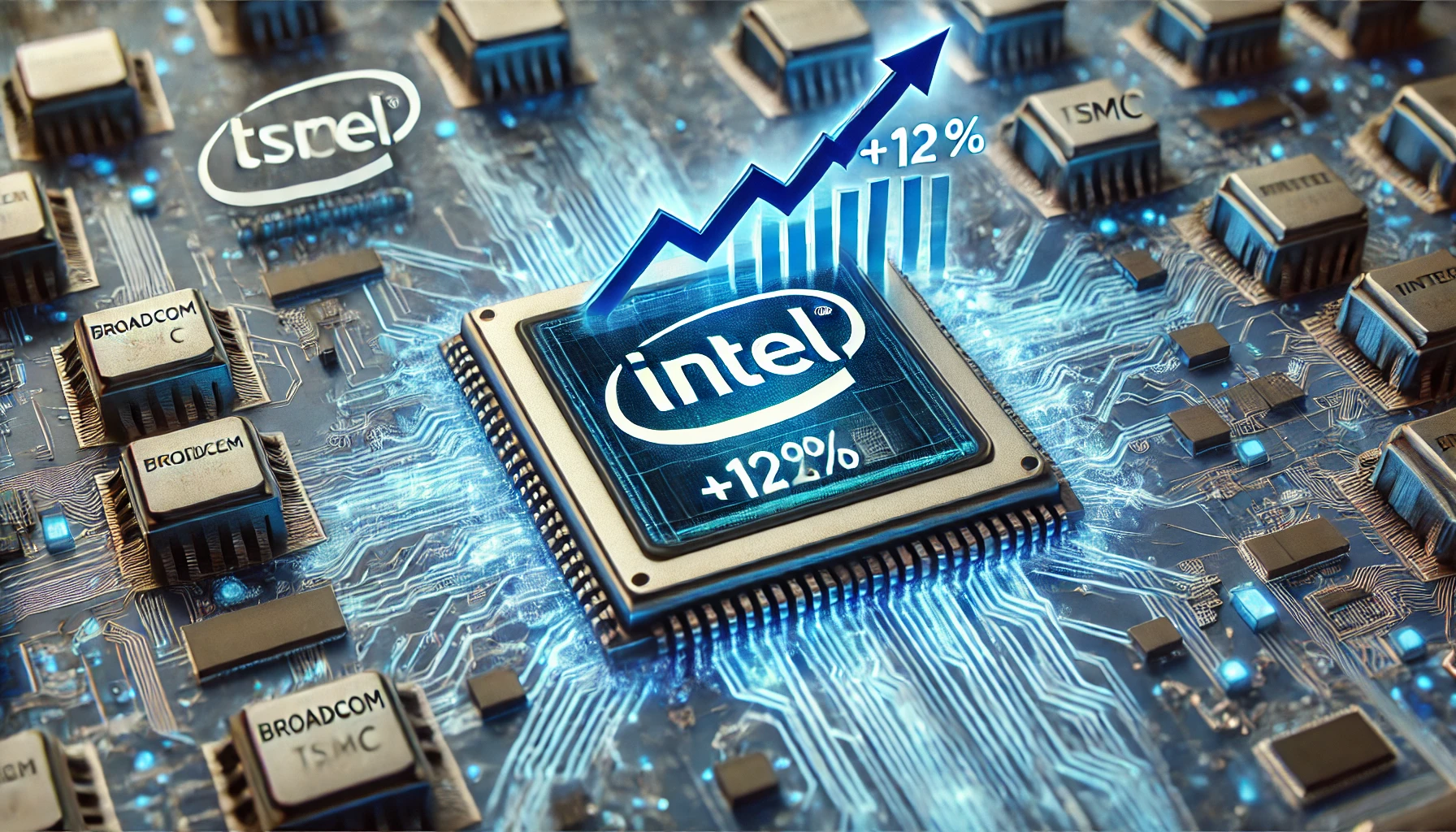
Key Points: – Broadcom and Taiwan Semiconductor Manufacturing Co. (TSMC) are reportedly considering independent deals that could split Intel. – Intel has lost billions in market value after falling behind in the AI-driven semiconductor boom. – Despite a 60% slump in 2024, Intel shares have climbed 29% this year, with a 12% rally on Tuesday.
Intel shares surged 12% on Tuesday following a report from The Wall Street Journal that Broadcom and Taiwan Semiconductor Manufacturing Co. (TSMC) are contemplating bids that could potentially split the struggling chip giant. This marked Intel’s best single-day performance since March 2020, fueling renewed investor interest in the company’s future.
According to sources cited by The Wall Street Journal, Broadcom is evaluating a deal to acquire Intel’s chip design and marketing unit, while TSMC is considering a stake or full control of Intel’s manufacturing facilities. These discussions are still in their early stages, with no official bids filed and negotiations remaining largely informal.
Intel, once a dominant force in the semiconductor industry, has faced significant challenges in recent years. As the artificial intelligence boom propelled competitors such as Nvidia and AMD to new heights, Intel struggled to keep pace. The company has shed billions in market value, unable to capitalize on the AI-driven demand that has reshaped the sector.
In August 2024, Intel suffered its worst stock market day in five decades, with shares plummeting to their lowest level since 2013 following disappointing quarterly results. The company’s struggles prompted major cost-cutting measures, including a 15% reduction in its workforce. Amid these difficulties, Intel’s board ousted CEO Pat Gelsinger in December, citing waning investor confidence in his ability to steer the company back to profitability.
The prospect of Broadcom and TSMC acquiring different segments of Intel signals a possible strategic shift for the embattled chipmaker. Broadcom, known for its aggressive acquisition strategy, could benefit from Intel’s chip design expertise and established market presence. Meanwhile, TSMC, the world’s largest contract chipmaker, would strengthen its global semiconductor manufacturing footprint by securing Intel’s production facilities.
Investors responded positively to the news, with Intel shares soaring 12% on Tuesday. The rally extended the stock’s year-to-date gains to 29%, offering some relief after a brutal 2024 that saw a 60% decline in share value. Meanwhile, Broadcom shares fell 2%, while TSMC experienced a modest dip of less than 1%.
The potential breakup of Intel comes amid broader geopolitical concerns surrounding semiconductor production. The U.S. government has intensified efforts to safeguard domestic chip manufacturing, with Vice President JD Vance recently affirming that AI chip production will be protected from foreign adversaries. This sentiment boosted Intel’s stock last week, as the company remains a key player in the U.S. semiconductor supply chain.
As Intel navigates its uncertain future, the reported interest from Broadcom and TSMC could present an opportunity for the company to restructure and regain competitiveness in the rapidly evolving semiconductor industry.
Key Points: – New tariffs on building materials and sustained high mortgage rates are dampening homebuilder confidence. – Delinquency on government-backed loans is increasing, signaling strain among lower-income homeowners. – Inflation and interest rates continue to influence housing affordability, with potential broader market implications.
In a troubling sign for the U.S. housing market, homebuilder confidence has plummeted to its lowest level in five months, primarily due to rising costs from new tariffs and high mortgage rates. The National Association of Home Builders (NAHB)/Wells Fargo Housing Market Index dropped to 42 in February, down from expectations of 46, indicating more builders view current conditions as poor. This downturn comes at a time when President Trump’s new tariffs on steel and aluminum, set to impact construction costs, are causing significant concern among builders.
Simultaneously, the mortgage landscape is growing more challenging for homeowners, particularly those with government-backed loans. Delinquency rates on Federal Housing Administration (FHA) and Veterans Affairs (VA) loans have surged past pre-pandemic levels, reaching 11.03% and 4.7% respectively. This rise underscores the financial strain felt by lower-income brackets amidst persistent inflation and elevated borrowing costs. Despite a slight decrease in interest rates in late 2024, the current economic climate has left many homeowners struggling to keep up with their mortgage payments, with job loss and excessive debt cited as major reasons for delinquency.
The broader economic implications are significant. While conventional mortgage delinquencies remain near historical lows, the uptick in FHA and VA loan issues might foreshadow a wider trend if economic conditions do not improve. Analysts like James Knightley from ING point out that while higher-income households might have seen benefits from stock market gains, the lower-income segment is feeling the squeeze from both rising costs and stagnant or reduced real income.
Moreover, recent data from ICE Mortgage Technology suggests that even high-income earners are beginning to show signs of financial stress, with delinquencies on various types of debt increasing. This could signal a more widespread economic downturn if not addressed. The housing market, often a bellwether for economic health, is thus at a critical juncture, with builders and buyers alike looking for signs of relief or further policy adjustments to navigate these turbulent times.
The current scenario might lead to a more cautious approach from builders. With 26% of builders cutting home prices in February and 59% offering incentives, it’s clear the market is feeling the pressure. Additionally, the NAHB survey’s indicators for future sales and buyer traffic have seen significant declines, suggesting a potential slowdown in housing activity unless there are interventions to ease the financial burden on potential buyers and builders alike.
As the market braces for these economic headwinds, stakeholders are watching closely for any policy shifts that could alleviate the pressures on the housing sector. Whether through regulatory reforms, adjustments in monetary policy, or international trade negotiations to mitigate tariff impacts, the path forward for housing will be shaped by how these challenges are met.
The ripple effects of these economic pressures could extend beyond the housing market, potentially impacting related industries like construction materials, home furnishing, and real estate services. There’s a growing concern that if the housing market continues to struggle, it might pull down consumer spending, which constitutes a significant portion of U.S. GDP, leading to a broader economic slowdown.
In response, some in the industry are calling for more robust support mechanisms, like expanded first-time buyer incentives or government-backed initiatives to stimulate construction activity. The hope is that such measures could help stabilize the market and protect the livelihoods of those dependent on the housing sector, while also ensuring that the American dream of homeownership remains within reach for the next generation.
Key Points: – Oil prices retreat as markets weigh impact of potential US retaliatory tariffs – Treasury signals stricter Iran export limits, targeting 100,000 barrels per day – JPMorgan forecasts Brent crude to average $61 in 2026 amid supply surplus
Crude oil markets demonstrated heightened volatility on Friday as traders grappled with conflicting signals from geopolitical tensions and trade policy uncertainties. The commodity market’s response highlights growing concerns about global demand amid an increasingly complex international trade landscape.
West Texas Intermediate (WTI) crude retreated below the critical $71 mark, continuing its downward trajectory for the week, while Brent futures showed resilience but remained vulnerable to mounting trade concerns. The mixed performance comes as markets digest President Trump’s latest trade policy moves and stricter Iran sanctions.
Treasury Secretary Scott Bessent’s hawkish statements regarding Iranian oil exports sent initial shockwaves through the market, pushing prices up by 1% in early trading. “We are committed to bringing the Iranians to going back to 100,000 barrels per day of exports, as when Trump left office,” Bessent told Fox Business, signaling a potentially significant supply disruption.
However, the bullish momentum was quickly tempered by escalating trade tensions. President Trump’s signing of a reciprocal tariff plan, although delayed for negotiations, has introduced new uncertainties into the global economic outlook. The move follows recent targeted sanctions against Chinese products, which prompted immediate retaliation from Beijing.
“The demand picture remains in question near term as the retaliation of even higher US tariffs may hamper global demand,” warns Dennis Kissler, senior vice president at BOK Financial. This sentiment echoes throughout the trading community, with many analysts expressing concern about the potential impact on global growth and oil demand.
Adding another layer of complexity to the market outlook, recent developments in the Ukraine-Russia conflict have introduced additional price pressures. JPMorgan’s commodity team, led by Natasha Kaneva, maintains their 2025 Brent forecast at $73 per barrel, citing supply surpluses. Their analysis extends into 2026, projecting prices to decline below $60 by year-end.
Market veterans note that the current price action reflects a delicate balance between supply-side constraints and demand-side uncertainties. “We’re seeing a market that’s increasingly sensitive to macro factors beyond traditional supply-demand dynamics,” explains Maria Rodriguez, chief commodities strategist at Global Market Analytics. “The interplay between trade policy, geopolitical tensions, and energy security concerns is creating a complex trading environment.”
Technical analysts point to key support levels around $70 for WTI crude, suggesting potential downside risks if this threshold is breached. “The market is showing signs of technical weakness, with the 50-day moving average crossing below the 200-day moving average, forming what traders call a ‘death cross,'” notes Alex Chen, senior technical analyst at Energy Market Solutions. This bearish technical signal, combined with fundamental headwinds, could pressure prices further in the near term.
Looking ahead to Q2 2025, market participants are closely monitoring several key factors that could influence price direction. The effectiveness of Iran sanctions, potential shifts in OPEC+ production policy, and the outcome of trade negotiations between major economies will likely determine the market’s trajectory. Goldman Sachs maintains a more bullish outlook than its peers, forecasting Brent crude to reach $85 per barrel by year-end, citing potential supply disruptions and stronger-than-expected Chinese demand.