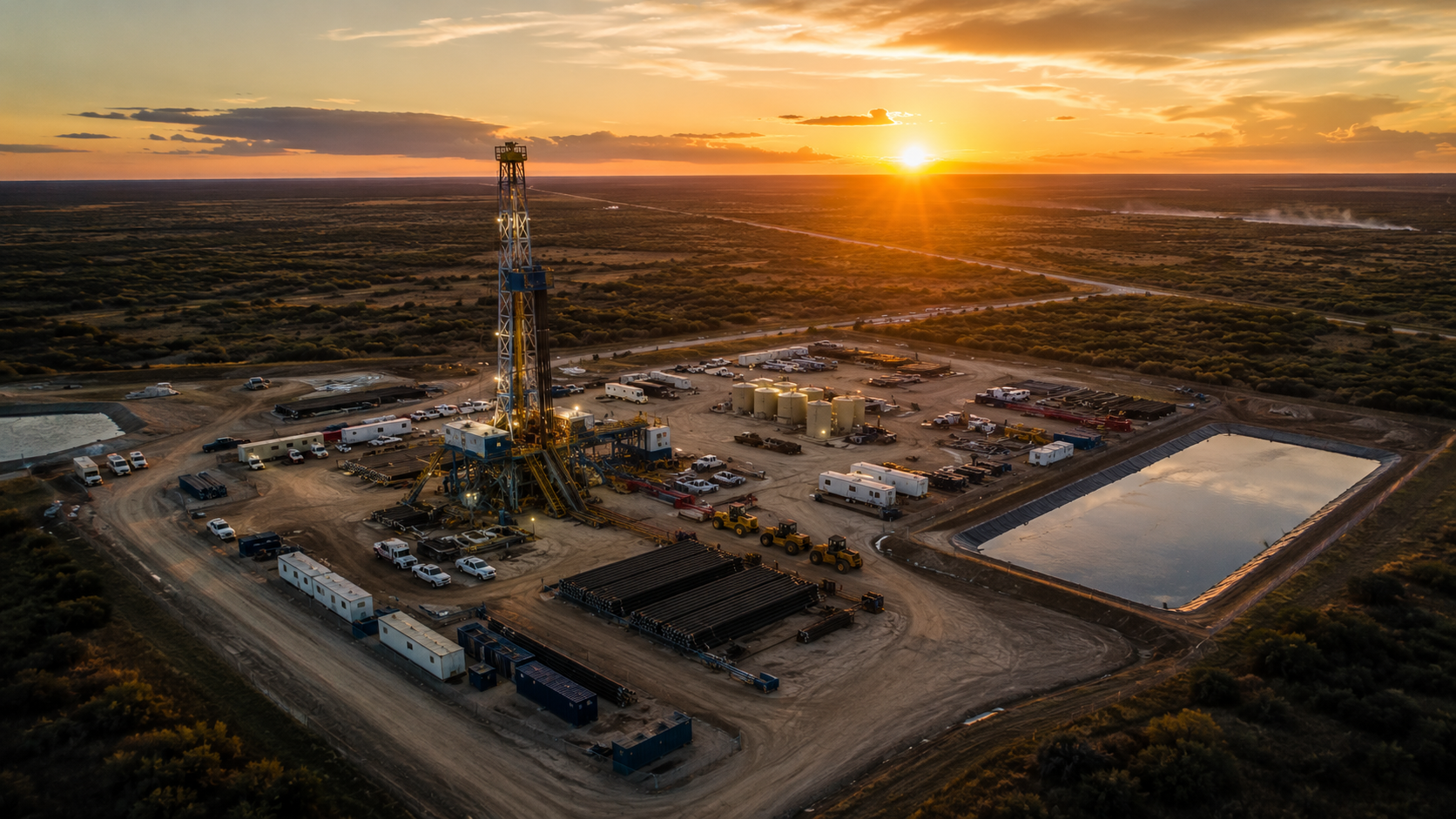
Magnolia Oil and Gas (NYSE: MGY) announced Monday it has entered into a definitive purchase agreement to acquire WildFire Energy for approximately $4.06 billion, marking the largest acquisition in the company’s history and one of the most significant domestic upstream deals of 2026. WildFire, backed by private equity firms Warburg Pincus and Kayne Anderson, operates in the same South Texas basin where Magnolia has built its entire business, making this a pure concentration play rather than a diversification move.
Under the terms of the agreement, WildFire owners will receive 32.2 million shares of Magnolia’s Class A common stock, and Magnolia will assume $600 million in outstanding notes due in 2029. The transaction is expected to close in late Q3 2026. Committed financing has been arranged through JPMorgan Chase and Citigroup.
What Magnolia Is Actually Getting
The deal goes well beyond additional drilling locations. WildFire’s assets are concentrated in the Eagle Ford Shale and Austin Chalk formations in the Giddings area of South Texas, directly adjacent to and overlapping with Magnolia’s existing operations. That geographic overlap is central to the deal thesis because it allows Magnolia to integrate the acquired production into its existing infrastructure with minimal incremental investment.
Two components of the transaction stand out from a typical upstream acquisition. First, the deal includes a sand mine that supplies approximately 80% of Magnolia’s current annual sand consumption, including 100% of WildFire’s sand requirements, with additional third-party sales on top. Controlling your own frac sand supply in a market where sand costs represent a meaningful share of well completion expenses is a structural cost advantage that compounds over every well drilled.
Second, the transaction includes more than 500 miles of gas gathering pipelines in the Giddings area. Owning midstream infrastructure rather than paying third-party gathering and processing fees directly improves operating margins on every barrel produced. For investors who follow midstream economics, companies like Summit Midstream Partners understand exactly how valuable that kind of infrastructure control can be at scale.
The Shareholder Return Story
Magnolia is framing this as a free cash flow accretion story above all else. The confidence in the acquired asset quality translated into an immediate 9% increase in the quarterly dividend to $0.18 per share, payable in Q3 2026. The company also reaffirmed its ongoing commitment to repurchasing at least 1% of outstanding shares per quarter.
On the production side, Magnolia reported Q2 total production averaging 106,100 barrels of oil equivalent per day, with D&C capital of $125 million and $296 million of cash on the balance sheet at quarter end. The company raised its full-year 2026 standalone production growth guidance from 5% to 6% alongside the deal announcement.
The Broader E&P Consolidation Signal
For investors tracking domestic energy producers in the small and microcap space, the Magnolia-WildFire combination reinforces a consolidation pattern that has been accelerating throughout 2026. Private equity-backed E&P companies that built significant acreage positions during the downturn are now exiting to public company buyers at scale. The acquirers with the strongest balance sheets, the lowest cost structures, and the most disciplined capital allocation frameworks are the ones winning the assets.
That dynamic creates a dual opportunity for smaller energy names. Companies like InPlay Oil and Gas and Alliance Resource Partners that operate with similar discipline in their respective basins represent the kind of focused, well-run operators that either benefit from the same elevated pricing environment driving Magnolia’s economics or become attractive consolidation targets themselves as the deal cycle continues.
ATLANTA, July 20, 2026 (GLOBE NEWSWIRE) — DLH Holdings Corp. (NASDAQ: DLHC) (“DLH” or the “Company”), a leading provider of science research and development, systems engineering and integration, and digital transformation and cyber security solutions to federal agencies, will release financial results for the fiscal third quarter ended June 30, 2026 on July 29, 2026 after the market closes. DLH will then host a conference call for the investment community at 10:00 a.m. Eastern Time the following day, July 30, 2026, during which members of senior management will make a brief presentation focused on the financial results and operating trends. A question-and-answer session will follow.
Interested parties may listen to the conference call by dialing 888-347-5290 or 412-317-5256. Presentation materials will also be posted on the Investor Relations section of the DLH website prior to the commencement of the conference call. A digital recording of the conference call will be available for replay two hours after the completion of the call and can be accessed on the DLH Investor Relations website or by dialing 1-855-669-9658 and entering the conference ID 1652291.
About DLH DLH (NASDAQ: DLHC) enhances technology, public health, and cyber security readiness missions through science, technology, cyber, and engineering solutions and services. Our experts solve some of the most complex and critical missions faced by federal customers, leveraging digital transformation, artificial intelligence, advanced analytics, cloud-based applications, telehealth systems, and more. With a world-class workforce dedicated to the idea that “Your Mission is Our Passion,” DLH brings a unique combination of government sector experience, proven methodology, and unwavering commitment to innovative solutions to improve the lives of millions. For more information, visit www.DLHcorp.com.
INVESTOR RELATIONS Contact: Chris Witty Phone: 646-438-9385 Email: [email protected]
Elroy Air Recently Announced a Demand Pipeline Exceeding 1,400 Aircraft
Kratos to Increase Current Sacramento Workforce of 450+ High-Tech Employees as Production of Elroy Air’s Autonomous Cargo Aircraft Accelerates
SAN DIEGO, July 20, 2026 (GLOBE NEWSWIRE) — Kratos Defense & Security Solutions, Inc. (NASDAQ: KTOS), a Technology Company in the Defense, National Security and Global Markets, today announced that it will manufacture Elroy Air’s Chaparral autonomous cargo aircraft in its expanding Sacramento, California production facility, supporting increasing demand across commercial logistics and defense markets while expecting to further grow its regional workforce of 450 high-tech employees by more than 50 as Chaparral production ramps.
The Chaparral is a hybrid-electric, vertical takeoff and landing (VTOL) autonomous cargo aircraft designed to transport more than 500 pounds of payload with a maximum range of up to 450 miles without requiring traditional airport infrastructure. The system is designed to support commercial middle-mile logistics while also providing a flexible, autonomous resupply capability for military operations.
The announcement marks the transition from strategic manufacturing partner to production execution following Elroy Air’s recent announcement of its planned public listing and continued commercial momentum. Kratos is the exclusive U.S. manufacturer of the Chaparral aircraft and will fulfill all U.S. customer orders, with the first production aircraft planned for late 2026. Recent expansion of Kratos’ Sacramento manufacturing operations provides the production capacity necessary to support anticipated increases in aircraft deliveries.
Located within driving distance of Elroy Air’s headquarters, the expanded Sacramento facility strengthens collaboration between the two companies while increasing manufacturing capacity for one of the industry’s most advanced autonomous cargo aircraft. The expansion will drive additional hiring across aircraft technicians, composite manufacturing specialists, assemblers, engineers, production operations, quality assurance, and program management positions, bringing Kratos’ Sacramento-area workforce to more than 500 employees.
Steve Fendley, President of Kratos’ Unmanned Systems Division, said, “At Kratos, we have built our business around rapidly transitioning advanced unmanned aircraft from development into affordable, scalable production. Chaparral represents another example of Kratos leveraging its proven manufacturing capability, established supply chain, and experienced workforce to help bring an innovative aircraft into production at scale. As demand continues to build, our expanding Sacramento facility is well positioned to support both commercial and defense customers while creating additional high-value aerospace jobs in California.”
Dr. Andrew Clare, CEO of Elroy Air, said, “Demand for Chaparral is accelerating across defense, rapid response and commercial logistics and meeting it requires manufacturing at scale. Partnering with Kratos lets us build American-made autonomous cargo drones right here in California, at the pace our customers need.”
Elroy Air recently announced a demand pipeline exceeding 1,400 aircraft representing more than $5 billion in potential revenue opportunities from leading logistics and aviation companies, including Bristow Group, Barq Group, SLI, and FedEx. The company has also supported defense programs with the U.S. Army, U.S. Marine Corps, and U.S. Air Force for more than six years, demonstrating the growing dual-use market opportunity for the Chaparral platform. The company also recently announced plans to become a publicly traded company, positioning it to accelerate commercial-scale production.
Kratos continues to expand its national manufacturing footprint to meet increasing demand for affordable, mission-ready unmanned systems supporting U.S. and allied defense priorities, while enabling the production of innovative dual-use technologies serving both commercial and government customers.
About Kratos Defense & Security Solutions Kratos Defense & Security Solutions, Inc. (NASDAQ: KTOS) is a technology, products, system and software company addressing the defense, national security, and commercial markets. Kratos makes true internally funded research, development, capital and other investments, to rapidly develop, produce and field solutions that address our customers’ mission critical needs and requirements. At Kratos, affordability is a technology, and we seek to utilize proven, leading-edge approaches and technology, not unproven bleeding edge approaches or technology, with Kratos’ approach designed to reduce cost, schedule and risk, enabling us to be first to market with cost effective solutions. We believe that Kratos is known as an innovative disruptive change agent in the industry, a company that is an expert in designing products and systems up front for successful rapid, large quantity, low-cost future manufacturing which is a value-add competitive differentiator for our large traditional prime system integrator partners and also to our government and commercial customers. Kratos intends to pursue program and contract opportunities as the prime or lead contractor when we believe that our probability of win (PWin) is high and any investment required by Kratos is within our capital resource comfort level. We intend to partner and team with a large, traditional system integrator when our assessment of PWin is greater or required investment is beyond Kratos’ comfort level. Kratos’ primary business areas include virtualized ground systems for satellites and space vehicles including software for command & control (C2) and telemetry, tracking and control (TT&C), jet powered unmanned aerial drone systems, hypersonic vehicles and rocket systems, propulsion systems for drones, missiles, loitering munitions, supersonic systems, space craft and launch systems, C5ISR and microwave electronic products for missile, radar, missile defense, space, satellite, counter UAS, directed energy, communication and other systems, and virtual & augmented reality training systems for the warfighter. For more information, visit www.KratosDefense.com and follow Kratos on LinkedIn and X.
Notice Regarding Forward-Looking Statements Certain statements in this press release may constitute “forward-looking statements” within the meaning of the Private Securities Litigation Reform Act of 1995. These forward-looking statements are made on the basis of the current beliefs, expectations and assumptions of the management of Kratos and are subject to significant risks and uncertainty. Investors are cautioned not to place undue reliance on any such forward-looking statements. All such forward-looking statements speak only as of the date they are made, and Kratos undertakes no obligation to update or revise these statements, whether as a result of new information, future events or otherwise. Although Kratos believes that the expectations reflected in these forward-looking statements are reasonable, these statements involve many risks and uncertainties that may cause actual results to differ materially from what may be expressed or implied in these forward-looking statements. For a further discussion of risks and uncertainties that could cause actual results to differ from those expressed in these forward-looking statements, as well as risks relating to the business of Kratos in general, see the risk disclosures in the Annual Report on Form 10-K of Kratos for the year ended December 28, 2025, and in subsequent reports on Forms 10-Q and 8-K and other filings made with the SEC by Kratos.
PDF Version New capabilities position Company to pursue additional global defense opportunities
CHARLOTTE, N.C., July 20, 2026 (GLOBE NEWSWIRE) — NN, Inc. (NASDAQ: NNBR) (“NN” or the “Company”), a global diversified industrial company that engineers, co-develops and manufactures precision components and assemblies with six sigma quality, today announced entry into a brand-new market segment for the company. The company has successfully entered the Tier 1 contract manufacturing industry for firearm components in the United States market. The key components of this successful market entry are:
Turnkey Tier 1 contract manufacturing
Collaborative product development
Additive manufacturing during prototyping
High volume titanium machining
High volume laser welding and assembly
Multiple surface treatment advancements including ceramic surface coating, physical vapor deposition, and nanocomposite diamond-like carbon coating
ATF and FFL compliance program
CMMC Tier 2 certification program
TISAX Tier 2 certification program
ITAR compliance program
Encrypted communications portal that is CMMC, NIST, ITAR and HIPAA compliant
Attendance at weapons shows in the United States
NN has entered into a contract manufacturing agreement to mass produce completed firearms products for a leading provider of firearms products in the United States. This new business for NN was achieved after a multi-year effort that required:
New products
Titanium machining breakthroughs
Surface treatment breakthroughs
Specialized equipment investments
Multi-year collaborative innovation program with a leading brand owner
This new product category is included within NN’s business growth program in Defense & Electronics. This new business begins in Q3 and will continue ramping up through 2028. This new business is expected to add between $12 million to $15 million in sales.
Growth in Defense & Electronics is a key component of the company’s 5-point growth plan. It is a direct application and natural extension of its in-house capabilities into a new market. Including these new wins, NN has won 20+ new programs worth >$30 to $35 million per year over the last 3 years. The company also has an additional pipeline in Defense & Electronics of $75 million of opportunities and has recently hired a Defense industry specialist. Of note, the company is evaluating the manufacturing of munitions for attack drones.
NN has a multi-product game plan within its Defense & Electronics growth program.
Gold and silver plating of critical electronics modules that are contained in advanced weapon systems
Complicated metal fabrications that are key components within guidance and weapon systems
High-end machined parts that are components in firearms (the focus on this article)
The US defense market is at record spending levels with a 5-year outlook to keep growing. Specific to this new set of awards, the US firearms market is growing due to increased emphasis on baseline safety.
The company is employing a large portion of its US footprint to make products for the defense, electronics, and weapons markets. NN now has 8 plants that are ITAR compliant. This enables the company to have a wide aperture onto these markets with a broad product offering of machined parts, stamped parts, plated parts, and assemblies.
Harold Bevis, President and Chief Executive Officer of NN, Inc., commented, “This is a nice advancement for NN’s sales growth program into new markets. It is another direct payoff on the investments we are making to establish premier positions in high-value markets. A tremendous amount of collaborative innovation occurred between the brand owner and NN over the last couple of years on this program. Many prototypes and many samples were iterated in order to arrive at the perfect next-generation product performance.
“We are creating additional competitive barriers by adding distinguishing factory credentials for this new market – ATF and FFL compliance, ITAR compliance, CMMC Tier 2 certification, and TISAX Tier 2 certification. These credentials enhance participation in these markets.
“A fun fact that is due to the multipart complexity of this new product line is that these products are now the highest-priced products in the company’s portfolio of new products. Prices will range from $200 to $500 for each product.”
Bevis concluded, “NN is underway with a multi-year program of sales-driven earnings improvements and this is another building block. Our Defense products growth program is achieving victories. The Defense & Electronics business is already nearly $60 million in sales, and we have a 5-year goal for it to grow to $100 million. It is one of our most profitable segments also due to higher value-add. Our 5 pillars of entrepreneurial break-out growth continue to be focused upon: data center and electric grid, defense and electronics, medical products, high-value vehicle products, and high-value stamped products.
“We will combine this new information along with recent new wins in Data Center and Medical products and adjust 2026 guidance, if needed, for sales, adjusted EBITDA, and New Wins when we release Q2 2026 earnings on August 6. We look forward to discussing this new advancement further at that time.”
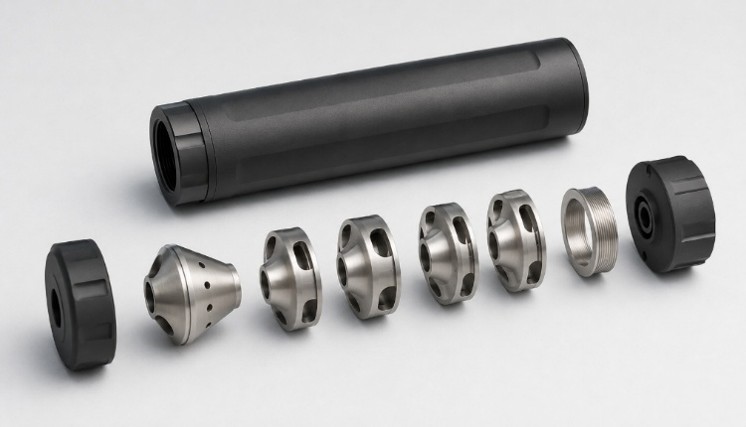
Suppressor Pieces and Assembled Product
About NN, Inc. NN, Inc., a global diversified industrial company, combines advanced engineering and production capabilities with in-depth materials science expertise to design and manufacture high-precision components and assemblies for a variety of markets on a global basis. Headquartered in Charlotte, North Carolina, NN has facilities in North America, South America, Europe, and China. For more information about the company and its products, please visit www.nninc.com.
Forward-Looking Statements This press release contains express and implied forward-looking statements within the meaning of the Private Securities Litigation Reform Act of 1995, including, but not limited to, statements regarding the future growth of NN’s medical business, including NN’s expectations regarding current and future customers and programs, the size and future outlook of the medical market, including robotics-assisted surgery, NN’s competitive position in the medical market, expected new business wins for 2026, and NN’s 2026 performance and other statements that are not historical facts.
Forward-looking statements generally will be accompanied by words such as “anticipate,” “believe,” “could,” “estimate,” “expect,” “forecast,” “guidance,” “intend,” “may,” “will,” “possible,” “potential,” “predict,” “project”, “achieve,” “growth,” “enable,” “improve,” or the negative of these terms, and similar words, phrases or expressions that convey uncertainty of future events or outcomes. Forward-looking statements involve a number of risks and uncertainties that are outside of management’s control and that may cause actual results to be materially different from such statements. Such factors include, among others, general economic conditions and economic conditions in the industrial sector; competitive influences; risks that current customers will commence or increase captive production; risks of capacity underutilization; quality issues; inflationary pressures and material changes in the costs and availability of raw materials, supply chain shortages and disruptions, the availability of labor and labor distributions along the supply chain; our dependence on certain major customers, some of whom are not parties to long-term agreements (and/or are terminable on short notice); the impact of acquisitions and divestitures, as well as expansion of end markets and product offerings; our ability to hire or retain key personnel; the restrictions contained in our debt agreements; the level of our indebtedness and our ability to financing at favorable rates, if at all, or to refinance existing debt as it matures; our ability to secure, maintain or enforce patents or other appropriate protections for our intellectual property; the impact on climate change on our operations; economic, social and geopolitical instability, military conflict, currency fluctuations, and other risks of doing business outside of the United States; and uncertainty of government policies and actions in respect to global trade and tariffs, including the potential impacts of tariffs on the United States economy, the economy of other countries in which we conduct operations and our industry, cyber liability or potential liability for breaches of our or our service providers’ information technology systems or business operations disruptions. The foregoing factors should not be construed as exhaustive and should be read in conjunction with the sections entitled “Risk Factors” and “Management’s Discussion and Analysis of Financial Condition and Results of Operations” included in the Company’s filings made with the U.S. Securities and Exchange Commission. Any forward-looking statement speaks only as of the date of this press release, and the Company undertakes no obligation to publicly update or review any forward-looking statement, whether as a result of new information, future developments or otherwise, except as required by law. New risks and uncertainties may emerge from time to time, and it is not possible for the Company to predict their occurrence or how they will affect the Company. The Company qualifies all forward-looking statements by these cautionary statements.
Investor & Media Contact: Joe Caminiti [email protected] 312-445-2870
STAFFORD, Texas, July 20, 2026 (GLOBE NEWSWIRE) — Greenwich LifeSciences, Inc. (Nasdaq: GLSI) (the “Company”), a clinical-stage biopharmaceutical company focused on its Phase III clinical trial, FLAMINGO-01, which is evaluating GLSI-100, an immunotherapy to prevent breast cancer recurrences, today provided the following clinical updates on FLAMINGO-01.
FLAMINGO-01 Data Safety Monitoring Board (DSMB)
The FLAMINGO-01 DSMB met in May 2026 and recommended the study continue as is without modification.
FLAMINGO-01 Steering Committee Clinical Strategy
On December 22, 2025, the company announced the following objectives:
“The Steering Committee also met at SABCS 2025 and discussed the clinical strategy, endorsing the planned modifications to FLAMINGO-01. The planned modifications subject to regulatory approval include:
increasing the size of the study, which would increase the power of the study thus decreasing the risk by designing the study to assume more recurrences even though fewer recurrences may be anticipated and observed,
doubling or quadrupling the enrollment rate, which will increase the patient years in the study more rapidly thus proportionately increase the event rate, which may shorten the time to reach an interim analysis or milestone,
continuing to enroll past the interim analyses so that the current momentum at the clinical sites continues,
using the interim analysis to potentially resize the study or to change the subsequent interim analysis, to change the number of events triggering an analysis, or to change the timing of the study based on recommendations by an independent committee, and
using a recently manufactured GP2 commercial drug product lot in FLAMINGO-01″
CEO Snehal Patel commented, “We are pleased to announce that following review by FDA and EMA regulatory authorities that these objectives have been met and that FLAMINGO-01 now has the hallmarks of a large pharma Phase III clinical trial. The study is now designed and sized to improve the probability of success, to attract the interest of sophisticated investors and pharma companies, and to maximize the chances that the Company could file a BLA after interim analysis 1, after interim analysis 2, or after the end of the study.”
Mr. Patel further added, “The transition is now underway globally at all sites. We have provided below in this press release the details of the study design reviewed by both the US and EU agencies, and currently subject to review by the UK and Canada, and will be updating the Company website and presentation, www.ClinicalTrials.gov, and videos accordingly. These agencies may provide additional recommendations or requirements at any time and we remain flexible to accommodate their advice as needed.”
The Company plans to now leverage the increased enrollment rate resulting from the combination of all HLA types together with the following: 1) the very high interest from patients and clinicians which has led to almost 200 clinical trial sites in the US and Europe, 2) the clinical operational capability in place 3) the currently trending low event rate, and 4) the efficient cost structure and burn rate that the Company has successfully funded through small capital raises.
Enrollment Rate into the Blinded Arm
As previously disclosed, all European and US Sites will combine all new patients independent of HLA type in the randomized arms of FLAMINGO-01. Non-HLA-A*02 patients who represent about 55% of the population and were on waiting lists for up to a year are now eligible for enrollment, which could provide for the rapid enrollment of up to 300 patients. This protocol amendment will more than double the enrollment rate increasing it by 122% or resulting in a 2.22x faster enrollment rate (55%/45% = 122%), which proportionately increases the event rate. This more than doubling of the event rate, provides an opportunity to derisk the study and provide multiple pathways to filing a BLA in the US with much higher probabilities of success at each opportunity for analysis.
Leveraging the High Interest from Patients and Clinicians
The Company has achieved a major milestone by screening over 1,500 patients in Flamingo-01, continuing its screening rate of approximately 150-200 patients per quarter or the equivalent of 600-800 patients per year in approximately 170-180 sites.
The 11 participating countries include: US, Spain, France, Germany, Italy, Poland, Romania, Ireland, Portugal, Belgium, and Austria. The Company is planning to add the following additional European countries due to interest from principal investigators and patients: Norway, Denmark, and Sweden in addition to the UK and Canada.
Rationale to Keep Enrollment Open Until Interim Analyses
In the double-blinded arms of the Phase III trial, the originally designed 500 HLA-A*02 patients were likely to be filled before the interim analysis and thus the clinical sites would have had to stop enrolling. If the interim analysis suggested that more patients should be enrolled, restarting enrollment would have been very difficult. A 2.22x increase in the enrollment rate without any other modifications would have accelerated the stopping of enrollment, but the probability of a successful data analysis at the interim analysis and the filing of BLA would not be increased. It isn’t in the study’s best interest to wait for more events without the option to continue enrolling to increase the event rate. It is optimal to keep enrolling while collecting events because even patients in the study for only a short time are at risk of recurrence and can add information to analyses.
Capital Raising Strategy Has Kept up with Modestly Increasing Burn Rate
The cash burn will be manageable as in the past due to the efficiently run and internalized clinical operations. The manufacturing of GP2 vials for the Phase III clinical trial has been completed with sufficient vials to treat all patients. Most of the start-up costs for the clinical sites have been paid. Many patients have entered the booster phase with 2 vaccinations per year with lower costs thus offsetting the higher costs for patients entering the study, when 6 vaccinations in the first 6 months during the primary immunization series are required.
The Company’s annual burn rate was approximately $7 million in 2024 and 2023 and $10 million in 2025. The income statements for these periods have been reported as much higher losses, but the cash flow used for operations is much lower due to the non-cash stock and options expenses added to the income statements.
For the second quarter of 2026, the burn rate is expected to be approximately $2 million versus a $4.7 million burn rate in the first quarter of 2026, leading to a Q2 2026 cash balance of approximately $8.9 million as of June 30, 2026 and an expected burn rate of $2-4 million per quarter going forward. The above preliminary financial figures are unaudited and are subject to change following completion of the Company’s financial review for Q2 2026. This capital raising strategy may provide a bridge to non-dilutive funding, such as strategic/licensing partnerships or debt/royalty financing vehicles, that would further fund FLAMINGO-01 and potential commercial launch activities.
Improved Trial Design Allows for Substantial Reduction in Risk
In the double-blinded arms of the Phase III trial, the trial has been designed to detect a hazard ratio (HR) of 0.55 in invasive breast cancer-free survival, where 28 events will be required for the 1st interim analysis, 56 events will be required for the 2nd interim analysis, and 133 events will be required to end the study. Interim analyses for superiority and futility will be conducted and, if successful, could lead to the filing of a BLA in the US at those times. The number of patients enrolled in the study will depend on the event rate and thus enrollment may continue for as long as necessary up to a maximum of 2,000 patients. This sample size provides 80% power if the annual rate of events in placebo-treated subjects is 2.4% or greater and the HR is 0.55. In addition, the number of events may be adapted by the DSMB based on interim analyses.
By doubling the number of events to trigger an interim and increasing the HR, which is offset by the more than doubling event rate due to the higher enrollment rate, and may or may not alter time lines, the probability of a positive study outcome can be increased substantially. An increase of the HR puts FLAMINGO-01 more in line with other prominent large pharma breast cancer Phase III clinical trials such as Katherine for Kadcyla and Destiny Breast-05 for Enhertu. The HR is equal to one minus the percent reduction in events caused by the treatment arm. For example, an HR = 0.3 would suggest a 70% reduction in events and an HR = 0.75 would suggest a 25% reduction in events by the treatment arm.
The Katherine study which compared Kadcyla to Herceptin breast cancer treatment in the adjuvant setting after surgery in the residual disease population assumed a design HR = 0.75 but realized a lower study result HR at the first interim of 0.5, which led to a sufficiently low p value and strong enough statistical significance to warrant approval for Kadcyla in the adjuvant setting following submission of interim data to the FDA. Approximately 1,486 patients were enrolled, 256 events were observed at the interim analysis, and 385 events were observed at the final analysis.
The Destiny Breast-05 study which compared Enhertu to Kadcyla breast cancer treatment in the adjuvant setting after surgery, in a higher risk residual disease population than Katherine, assumed a design HR = 0.675 but realized a lower study result HR at the first interim of 0.5, which led to a sufficiently low p value and strong enough statistical significance to warrant approval for Enhertu in the adjuvant setting following submission of interim data to the FDA. Approximately 1,635 patients were enrolled and 153 events were observed at the interim analysis.
GLSI-100 by contrast has shown a study result HR = 0.2 in the Phase IIb clinical trial for HLA-A*02 patients. In the 250 patient non-HLA-A*02 open label arm of FLAMINGO-01, which is now fully enrolled and where all patients received GLSI-100, a preliminary analysis of recurrence rates after the PIS is completed shows an approximately 70-80% reduction in recurrence rate or a HR = 0.2-0.3 when calculated by various methods. This data is early and will continue to mature over time. This low event rate is supported by immune response data that was recently published at AACR and ASCO conferences in 2026. The section below, “About FLAMINGO-01 Open Label Phase III Data”, summarizes these results and provides links to the posters at the conferences.
By increasing the original FLAMINGO-01 trial design HR = 0.3 to a design HR = 0.55 and by doubling the events required to trigger the first interim analysis from 14 to 28 events, the probability of success or power at the first interim analysis, if a lower study result HR = 0.3 is realized, increases from less than 20% to more than 85%. This increase in power at the first interim, when the study result HR is lower than the design HR, is possible due to the combination of both HLA types, while the more than double event rate at 2.22x offsets the doubling of the events required to trigger this first interim analysis. Effectively increasing the probability of filing a BLA at the first interim analysis from 20% to 85% justifies the study design changes.
Additional benefits of the new design include:
The first interim results may affect or alter the design of the second interim.
Endpoints can be analyzed by individual HLA types as well as one combined group of all HLA types and given that each patient has 2 HLA-A alleles, one from each parent, there are multiple analyses that can be conducted.
Doubling the market for GLSI-100 to potentially $10 billion in revenue per year by accelerating the clinical development of the non-HLA-A*02 population.
Capital raise requirements are still modest, based on the Company’s disciplined operations and low burn rate.
About FLAMINGO-01 Open Label Phase III Data
More than 1,500 patients have been screened at a screen rate of approximately 600-800 patients per year. The 250 patient non-HLA-A*02 arm is now fully enrolled, where all patients received GLSI-100, which is 5 times more treated patients and recurrence rate data than the approximately 50 patients treated in the Phase IIb trial. The Primary Immunization Series (PIS), which includes the first 6 GLSI-100 injections over the first 6 months and is required to reach peak protection, is followed by 5 booster injections given every 6 months to prolong the immune response, thereby providing longer-term protection.
In the non-HLA-A*02 arm, a preliminary analysis of recurrence rates after the PIS is completed shows an approximately 70-80% reduction in recurrence rate.
The non-HLA-A*02 arm is trending similarly to the Phase IIb trial results and hazard ratio where HLA-A*02 patients were treated and where breast cancer recurrences were reduced up to 80% compared to a 20-50% reduction in recurrence rate by other approved products.
The immune response at baseline prior to any GLSI-100 treatment, the increasing immune response during the PIS, and the safety profile of non-HLA-A*02 patients is trending similarly to the HLA-A*02 arms of FLAMINGO-01 and to the Phase IIb study.
The AACR Meeting 2026 delayed-type-hypersensitivity (DTH) poster and the ASCO Meeting 2026 injection site reaction (ISR) poster can be seen and downloaded at the bottom of the Phase III clinical trial tab on the Company’s website here.
As shown in both posters the frequency of DTH and ISR reactions increased statistically significantly over time.
As reported in Table 1 of each poster, each HLA-A type exhibited more frequent immune reactivity after treatment with GLSI-100 than at baseline.
Baseline DTH reaction prior to any treatment suggests that GP2 may be a natural antigen and that GP2 specific T cells may exist in some patients prior to any treatment with GLSI-100. Baseline immune response to GP2 prior to any vaccination with GP2 was also observed in the Phase IIb trial and is being observed in the blinded randomized arms of FLAMINGO-01, where HLA-A*02 only patients are being vaccinated.
Analysis of the open label data from FLAMINGO-01 has been conducted in a manner that maintains the study blind. The open label recurrence rate, immune response, and safety data is based on the patients enrolled to date in FLAMINGO-01 and the data provided by the clinical sites so far, which is not completed or fully reviewed, and is thus preliminary. While comparing any preliminary FLAMINGO-01 data to the Phase IIb clinical trial data may be possible, these preliminary results are not a prediction of future results, and the results at the end of the study may differ.
About GLSI-100 Phase IIb Study
In the prospective, randomized, single-blinded, placebo-controlled, multi-center (16 sites led by MD Anderson Cancer Center) Phase IIb clinical trial of HLA-A*02 breast cancer patients, 46 HER2/neu 3+ over-expressor patients were treated with GLSI-100, and 50 placebo patients were treated with GM-CSF alone. After 5 years of follow-up, there was an 80% or greater reduction in cancer recurrences in the HER2/neu 3+ patients who were treated with GLSI-100, followed, and remained disease free over the first 6 months, which we believe is the time required to reach peak immunity and thus maximum efficacy and protection. The Phase IIb posters and results can be summarized as follows and can be seen here:
80% or greater reduction in metastatic breast cancer recurrence rate over 5 years of follow-up with a peak immune response at 6 months and well-tolerated safety profile.
The PIS elicited a potent immune response as measured by local skin tests and immunological assays.
About FLAMINGO-01 and GLSI-100
FLAMINGO-01 (NCT05232916) is a Phase III clinical trial designed to evaluate the safety and efficacy of Fast Track designated GLSI-100 (GP2 + GM-CSF) in HER2 positive breast cancer patients who had residual disease or high-risk pathologic complete response at surgery and who have completed both neoadjuvant and postoperative adjuvant trastuzumab based treatment. The trial is led by Baylor College of Medicine and currently includes US and European clinical sites from university-based hospitals and academic and cooperative networks with plans to open up to 170-180 sites globally.
For more information on FLAMINGO-01, please visit the Company’s website here and clinicaltrials.gov here. Contact information and an interactive map of the majority of participating clinical sites can be viewed under the “Contacts and Locations” section. Please note that the interactive map is not viewable on mobile screens. Related questions and participation interest can be emailed to: [email protected]
About Breast Cancer and HER2/neu Positivity
One in eight U.S. women will develop invasive breast cancer over her lifetime. In the US and Europe, there are approximately 700,000 new breast cancer patients per year and 9.5 million breast cancer survivors. HER2 (human epidermal growth factor receptor 2) protein is a cell surface receptor protein that is expressed in a variety of common cancers, including in 75% of breast cancers at low (1+), intermediate (2+), and high (3+ or over-expressor) levels.
About Greenwich LifeSciences, Inc.
Greenwich LifeSciences is a clinical-stage biopharmaceutical company focused on the development of GP2, an immunotherapy to prevent breast cancer recurrences in patients who have previously undergone surgery. GP2 is a 9 amino acid transmembrane peptide of the HER2 protein, a cell surface receptor protein that is expressed in a variety of common cancers, including expression in 75% of breast cancers at low (1+), intermediate (2+), and high (3+ or over-expressor) levels. Greenwich LifeSciences has commenced a Phase III clinical trial, FLAMINGO-01. For more information on Greenwich LifeSciences, please visit the Company’s website at www.greenwichlifesciences.com and follow the Company’s Twitter at https://twitter.com/GreenwichLS.
Forward-Looking Statement Disclaimer
Statements in this press release contain “forward-looking statements” that are subject to substantial risks and uncertainties. All statements, other than statements of historical fact, contained in this press release are forward-looking statements. Forward-looking statements contained in this press release may be identified by the use of words such as “anticipate,” “believe,” “contemplate,” “could,” “estimate,” “expect,” “intend,” “seek,” “may,” “might,” “plan,” “potential,” “predict,” “project,” “target,” “aim,” “should,” “will,” “would,” or the negative of these words or other similar expressions, although not all forward-looking statements contain these words. Forward-looking statements are based on Greenwich LifeSciences Inc.’s current expectations and are subject to inherent uncertainties, risks and assumptions that are difficult to predict, including statements regarding the intended use of net proceeds from the public offering; consequently, actual results may differ materially from those expressed or implied by such forward-looking statements. Further, certain forward-looking statements are based on assumptions as to future events that may not prove to be accurate. These and other risks and uncertainties are described more fully in the section entitled “Risk Factors” in Greenwich LifeSciences’ Annual Report on the most recent Form 10-K for the year ended December 31, 2025, and other periodic reports filed with the Securities and Exchange Commission. Forward-looking statements contained in this announcement are made as of this date, and Greenwich LifeSciences, Inc. undertakes no duty to update such information except as required under applicable law.
Netflix dropped 11% at the open Friday, erasing roughly $100 billion in market value in a single session. The trigger was not a collapse in the business. It was a third-quarter revenue guidance figure of $12.86 billion that came in approximately $140 million below what Wall Street had been expecting. To put that in proportion, the guidance miss that wiped out $100 billion in shareholder value represented barely 1% of the number analysts had modeled.
The second-quarter results themselves were solid by any conventional standard. Revenue grew 13.4% year over year to $12.56 billion. Earnings per share of $0.80 beat the $0.79 consensus estimate. Net income reached $3.4 billion. Subscribers streamed more than 97 billion hours of content in the first half of 2026, up nearly 2% from the prior year. The advertising business is on track to generate approximately $3 billion in full-year revenue, nearly double last year’s figure.
None of it mattered. The stock opened at its lowest level in over a year, down 46% from its 52-week high, trading at roughly 18 times forward earnings with a PEG ratio below 1.0. By most traditional valuation frameworks, Netflix now looks undervalued relative to its growth rate. The market does not care. It is punishing the guidance, not the business.
The Pattern That Should Concern Every Large Cap Investor
This is now the second time in 48 hours that a dominant technology company has posted strong results and been met with aggressive selling. Earlier this week, TSMC reported 77% annual earnings growth and fell 4%. Broadcom beat estimates last month and dropped 15%. SK Hynix debuted on Nasdaq with a 13% pop and gave it all back the next day.
The common thread connecting all of these moves is not deteriorating fundamentals. It is elevated expectations meeting reality. When stocks are priced for perfection across an entire sector, even slight misses on forward guidance trigger outsized reactions because the margin for error has been completely compressed out of the valuation. Netflix guided Q3 revenue 1% below consensus and lost 11%. That math only works when the stock was priced as though every quarter would exceed expectations indefinitely.
Where the Capital Is Going
The more important story for investors is not what Netflix lost on Friday. It is where the money leaving these positions is landing. Yesterday, eight of eleven S&P 500 sectors finished positive while technology, communications, and consumer discretionary fell. Consumer Staples gained 2.9%. Healthcare rallied. REITs outperformed. The Russell 2000 was green while the Nasdaq dropped more than 1%.
That pattern has now repeated for three consecutive sessions. Capital is not leaving the equity market. It is leaving the most crowded, most expensive positions in the market and rotating into sectors and market cap segments where valuations have not been stretched to the point where a 1% guidance miss destroys $100 billion in value.
For companies in the sub-$2 billion market cap space, this dynamic is the investment case in real time. Smaller companies with reasonable multiples, growing earnings, and domestic revenue exposure do not carry the same expectation burden that is currently crushing the largest names in technology and media. When a Netflix or TSMC sells off on strong results because the price already assumed perfection, the relative attractiveness of companies that never priced in perfection to begin with becomes considerably harder to ignore.
The market is not punishing bad businesses. It is punishing expensive ones. That distinction is everything right now.
Something unusual is happening in the semiconductor sector. Companies are posting some of the strongest quarterly results in the industry’s history, and investors are selling anyway. TSMC reported 77% annual earnings growth this week and fell 4%. Broadcom beat estimates in June and dropped 15%. SK Hynix debuted on Nasdaq, surged 13% on day one, then gave back 8% the next session while its Seoul-listed shares posted their worst day ever. The Philadelphia Semiconductor Index hit two-month lows this week even though every major chip company reporting this earnings season has beaten expectations.
The business has never been better. The stocks are telling a completely different story.
Three Forces Colliding at Once
The first is an AI spending backlash. The largest technology companies in the world are projected to spend more than $700 billion on artificial intelligence infrastructure in 2026 alone, a 70% increase from the prior year. For most of the past two years, investors rewarded that spending as a sign of conviction and growth. That sentiment has shifted. The market is no longer asking whether AI is real. It is asking when the spending starts generating measurable returns, and until that answer becomes clear, the companies most associated with the AI capex cycle are being punished on earnings day regardless of what the numbers actually show.
The second is margin pressure. TSMC guided strong revenue this week but flagged elevated capital spending alongside pressure on both gross and operating margins. The market is drawing a distinction it had previously ignored: growth funded by margin compression is not the same as profitable growth, and investors are no longer willing to pay peak multiples for companies investing at this pace without near-term margin expansion.
The third is geopolitical risk that refuses to stay in the background. The Iran conflict has re-escalated sharply this week, with six consecutive nights of US-Iran military exchanges driving oil back above $80 and reigniting inflation concerns. US-China semiconductor export restrictions remain a persistent overhang. South Korea’s KOSPI triggered a circuit breaker earlier this month on a tech-driven selloff. Each of these individually would pressure the sector. Together they are repricing a group of stocks that had been valued as though the operating environment carried no friction at all.
Where the Selloff Is Not Happening
This is the distinction that matters most for investors tracking the semiconductor space below the $2 billion market cap threshold. The selloff is concentrated almost entirely at the large cap level, where valuations had stretched the furthest and expectations were the highest. Nvidia, Broadcom, TSMC, AMD, and Micron collectively added trillions in market value over the past two years on the AI trade. When expectations at that altitude go unmet even slightly, the correction is sharp and immediate.
Smaller semiconductor companies are experiencing a fundamentally different dynamic. Many never ran to the same extreme multiples. Their earnings expectations were never priced for perfection. Some are being dragged lower by broad sector sentiment despite having risk profiles that look nothing like the mega cap names driving the index. Others are holding up precisely because their valuations left room for imperfection from the start.
That divergence is not a footnote. It is the investment case. The demand environment driving chip sector growth has not changed. Hyperscaler capital expenditure commitments remain intact. AI infrastructure buildout timelines have not been revised downward. The companies supplying specialty materials, advanced packaging, power management components, and edge computing hardware into that same supply chain are operating in the same demand environment as Nvidia and TSMC, but at valuations that never assumed everything would go perfectly.
The semiconductor sector is not broken. It is repricing at the top. For investors willing to look past the headlines and into the supply chain beneath them, the relative value case for smaller names in the same ecosystem just became considerably more compelling.
Joe Gomes, CFA, Managing Director, Equity Research Analyst, Generalist , Noble Capital Markets, Inc.
Refer to the full report for the price target, fundamental analysis, and rating.
Increased Ratio. Yesterday, T3 announced that, given the recent stock activity, the T3 Board of Directors determined to significantly increase the ratio from the 1-for-50 disclosed in July 13th’s 8-K to 1-for-125. T3 Defense still expects that its common stock will open for trading on the Nasdaq Capital Market on a reverse split-adjusted basis on July 20, 2026, under the existing trading symbol “DFNS”.
Impact. At the Effective Date of the reverse stock split, every 125 shares of common stock outstanding and held of record by each stockholder of the Company will be automatically reclassified into one new share of Common Stock, reducing the number of shares of common stock issued and outstanding from approximately 139.8 million to approximately 1 million. We will update our models and price target following the split.
Equity Research is available at no cost to Registered users of Channelchek. Not a Member? Click ‘Join’ to join the Channelchek Community. There is no cost to register, and we never collect credit card information.
This Company Sponsored Research is provided by Noble Capital Markets, Inc., a FINRA and S.E.C. registered broker-dealer (B/D).
*Analyst certification and important disclosures included in the full report. NOTE: investment decisions should not be based upon the content of this research summary. Proper due diligence is required before making any investment decision.
Mark Reichman, Managing Director, Equity Research Analyst, Natural Resources, Noble Capital Markets, Inc.
Refer to the full report for the price target, fundamental analysis, and rating.
Golden Gate FAST-41 Designation. Resolution Minerals’ Golden Gate Project in Idaho has been granted FAST-41 Transparency Coverage by the U.S. Federal Permitting Council, making it the Company’s second project to receive the designation after Antimony Ridge. The designation highlights the strategic importance of the Horse Heaven Project as a domestic source of tungsten, antimony, and gold and is expected to accelerate permitting through enhanced federal coordination and oversight.
Golden Gate Plan of Operations. The Golden Gate Project is part of Resolution’s 15,000-acre Horse Heaven Project, which also includes the Antimony Ridge target, the Johnson Creek Tungsten Mill, and historical tungsten stockpiles. The Company has submitted a Plan of Operations that includes construction of new access roads, up to 340 drill holes and 2,000 feet of trenching, while continuing a fully funded 45-hole drilling program to advance resource definition.
Equity Research is available at no cost to Registered users of Channelchek. Not a Member? Click ‘Join’ to join the Channelchek Community. There is no cost to register, and we never collect credit card information.
This Research is provided by Noble Capital Markets, Inc., a FINRA and S.E.C. registered broker-dealer (B/D).
*Analyst certification and important disclosures included in the full report. NOTE: investment decisions should not be based upon the content of this research summary. Proper due diligence is required before making any investment decision.
Joe Gomes, CFA, Managing Director, Equity Research Analyst, Generalist , Noble Capital Markets, Inc.
Refer to the full report for the price target, fundamental analysis, and rating.
Momentum. Recent awards, facilities expansion, world events, and increasing defense spending worldwide are combining to provide positive momentum to Kratos’ business, in our view. With proven, existing products focused on key areas of new Defense priorities, we continue to believe Kratos is well-positioned to capitalize on the current operating environment.
$400M Hypersonics. The Company recently received approximately $400 million in funding from the Department of War (DoW) related to certain hypersonic systems and other National Security related programs. Notably, beginning in June and both increasing and accelerating into July, Kratos is seeing significant funding from the DoW, which is expected to accelerate the Company’s organic growth rate, increase operating cash receipts, while reducing customer receivables, inventory, and assets where Kratos had previously “leaned forward” to ensure Kratos met or exceeded customers’ schedule-related and other expectations.
Equity Research is available at no cost to Registered users of Channelchek. Not a Member? Click ‘Join’ to join the Channelchek Community. There is no cost to register, and we never collect credit card information.
This Research is provided by Noble Capital Markets, Inc., a FINRA and S.E.C. registered broker-dealer (B/D).
*Analyst certification and important disclosures included in the full report. NOTE: investment decisions should not be based upon the content of this research summary. Proper due diligence is required before making any investment decision.
The biggest potential acquisition in fintech history is now on the table. Stripe, the privately held payments giant valued at $159 billion, and private equity firm Advent International have submitted a joint offer to acquire PayPal Holdings (Nasdaq: PYPL) for $60.50 per share in a deal valued at more than $53 billion. The offer represents a 28% premium to PayPal’s closing price on July 14 and is backed by approximately $50 billion in committed bank financing. PayPal shares surged roughly 18% on the news.
PayPal has not formally responded to the proposal. Stripe and Advent are reportedly pushing to advance discussions over the coming weeks. Under the terms of the offer, the two firms would share ownership of PayPal on an equal basis, with no plans to break up or dismantle the company.
How PayPal Got Here
The offer arrives at a moment of profound vulnerability for a company that once defined digital payments. At its 2021 peak, PayPal commanded a market capitalization of approximately $360 billion. By early 2026, that figure had fallen to as low as $36 billion, a decline of roughly 90% driven by years of slowing growth, intensifying competition from Apple Pay, Google Pay, and a new generation of embedded payment platforms, and repeated failed turnaround attempts that left investors skeptical of the company’s ability to reclaim relevance.
The current leadership team, led by new CEO Enrique Lores who replaced Alex Chriss earlier this year, has launched a restructuring built around a three-unit organizational model and announced plans to cut approximately 20% of the workforce, roughly 4,760 positions, as part of an effort to generate at least $1.5 billion in gross run-rate savings. The company’s full-year 2026 adjusted profit guidance calls for a low-single-digit percentage decline, a forecast that does not inspire confidence in a rapid recovery.
At roughly eight times projected 2026 earnings, PayPal trades at a multiple well below most of its fintech peers, a discounted valuation that has made it an increasingly obvious target for a strategic acquirer with the scale and resources to execute what current management has not been able to deliver.
Why Stripe Wants PayPal
Stripe has built a dominant position in merchant payments infrastructure, powering the backend payment processing for millions of businesses globally. What it lacks is a large-scale consumer payments brand. PayPal, despite its struggles, still maintains one of the most recognized consumer payment platforms in the world, with hundreds of millions of active accounts and deeply embedded relationships with both consumers and merchants across global e-commerce.
Combining the two would create a payments entity spanning both sides of the transaction, merchant infrastructure and consumer wallet, with combined processing volume that would rival any player in the industry. Both companies have also been prominent in bringing stablecoin capabilities onto traditional payment rails, positioning the combined entity at the intersection of legacy digital payments and next-generation blockchain-based settlement.
What It Signals for Smaller Fintech Companies
For investors tracking fintech companies in the small and microcap space, a $53 billion deal for PayPal sends an unmistakable signal about where consolidation pressure is headed. When the largest private payments company in the world moves to acquire the most recognizable consumer payments brand, the competitive dynamics for every smaller player in the ecosystem shift. Niche payment processors, vertical-specific fintech platforms, and emerging stablecoin infrastructure companies either become more attractive acquisition targets themselves or face a combined competitor with unprecedented scale.
The Nuvei-Payoneer combination we covered last month was a $2.75 billion deal built around the same thesis: payments consolidation around platforms that can handle the full transaction lifecycle across borders. The Stripe-PayPal proposal takes that logic and multiplies it by a factor of twenty. The fintech M&A cycle is not winding down. It is escalating to a scale the industry has never seen.
NEW YORK and NETANYA, Israel, July 16, 2026 (GLOBE NEWSWIRE) — T3 Defense Inc. (NASDAQ: DFNS) (“T3 Defense” or the “Company”), a defense company that acquires and operates mission-critical defense businesses, today announced that its Board of Directors approved a 1-for-125 reverse stock split (the “Reverse Stock Split”) of the Company’s common stock, par value $0.0001 per share (“Common Stock”), that is expected to become effective at 12:01 a.m. on Monday, July 20, 2026 (the “Effective Date”). Given the recent stock activity, the T3 Board of Directors determined to significantly increase the ratio from the 1-for-50 disclosed on the Current Report on Form 8-K filed by the Company with the SEC.
T3 Defense expects that its Common Stock will open for trading on the Nasdaq Capital Market on a reverse split-adjusted basis on July 20, 2026 under the existing trading symbol “DFNS”. The new CUSIP number for the Common Stock following the Reverse Stock Split will be 67054R 302.
The Reverse Stock Split was approved by the Company’s Board of Directors under authority granted by the Company’s stockholders at a special meeting held on June 24, 2026. The Company will file an amendment to its Amended and Restated Certificate of Incorporation to implement the Reverse Stock Split as of the Effective Time. The Reverse Stock Split is intended to, among other things, increase the per share trading price of the Common Stock to satisfy the minimum bid price requirement for continued listing on the Nasdaq Capital Market. Stockholders will not need to take any action with respect to the reverse stock split.
At the Effective Date of the Reverse Stock Split, every 125 shares of Common Stock outstanding and held of record by each stockholder of the Company will be automatically reclassified into one new share of Common Stock, reducing the number of shares of Common Stock issued and outstanding from approximately 139.8 million to approximately 1 million. The amount of authorized Common Stock, as well as the par value for the Common Stock, will not be affected. The shares of Common Stock underlying the Company’s outstanding stock options and warrants will be proportionately adjusted.
The Reverse Stock Split will affect all stockholders uniformly and will not alter any stockholder’s percentage interest in the Company’s equity. No fractional shares will be issued in connection with the Reverse Stock Split. Instead, each fractional share resulting from the Reverse Stock Split will be rounded up to the nearest whole share. The Reverse Stock Split will not alter any stockholder’s percentage ownership interest in T3 Defense.
Continental Stock Transfer & Trust Company is acting as transfer and exchange agent for the Reverse Stock Split. Registered stockholders who hold shares of Common Stock are not required to take any action to receive post-reverse split shares. Stockholders owning shares via a broker, bank, trust or other nominee will have their positions automatically adjusted to reflect the Reverse Stock Split, subject to such broker’s particular processes, and will not be required to take any action in connection with the Reverse Stock Split.
Additional information regarding the Reverse Stock Split can be found in the Company’s amended and restated definitive proxy statement filed with the Securities and Exchange Commission (the “SEC”) on June 1, 2026 (the “Proxy Statement”), which is available on the SEC’s website at www.sec.gov and on the Company’s website at https://investors.t3dfns.com.
About T3 Defense Inc.
T3 Defense Inc. (NASDAQ: DFNS), is a defense company that acquires and operates mission-critical defense businesses involved in national security programs. It focuses on manufacturers with strong customer relationships and solid order backlogs, often capacity-and resource-constrained and specialized areas such as drones and autonomous vehicles, counter-drone systems, advanced manufacturing, tactical robotics, and AI software and system integration. Through disciplined acquisitions, centralized capital and strategy, and decentralized day-to-day operations, T3 Defense aims to strengthen essential defense capabilities and build long-term value.
T3 Defense Inc. 575 5th Avenue New York, NY 10017 [email protected] www.t3dfns.com
Investor Relations The Equity Group Inc. Lena Cati [email protected] +1 (212) 836-9611
Certain statements in this press release may be considered “forward-looking statements” within the meaning of the Private Securities Litigation Reform Act of 1995. Forward-looking statements generally relate to future events or T3 Defense’s future financial or operating performance. For example, statements regarding the Reverse Stock Split and timing thereof and T3 Defense’s intention with respect to compliance with the price requirements for maintaining its listing on the Nasdaq Capital Market are forward-looking statements. In some cases, you can identify forward-looking statements by terminology such as “pro forma,” “may,” “should,” “could,” “might,” “plan,” “possible,” “project,” “strive,” “budget,” “forecast,” “expect,” “intend,” “will,” “estimate,” “anticipate,” “believe,” “predict,” “potential” or “continue,” or the negatives of these terms or variations of them or similar terminology. Such forward-looking statements are subject to risks, uncertainties, and other important factors that could cause actual results to differ materially from those expressed or implied by such forward-looking statements. Factors that may impact such forward-looking statements include, but are not limited to, market conditions and their impact on T3 Defense’s trading price on the Nasdaq Capital Market; and other factors discussed in the Proxy Statement. These and other important factors discussed under the caption “Risk Factors” in T3 Defense’s Annual Report on Form 10-K for the year ended December 31, 2025 filed with the SEC on April 9, 2026, and T3 Defense’s other reports filed with the SEC could cause actual results to differ materially from those indicated by the forward-looking statements made in this press release. These forward-looking statements are based upon estimates and assumptions that, while considered reasonable by T3 Defense and its management, are inherently uncertain. Nothing in this press release should be regarded as a representation by any person that the forward-looking statements set forth herein will be achieved or that any of the contemplated results of such forward-looking statements will be achieved. You should not place undue reliance on forward-looking statements, which speak only as of the date they are made. T3 Defense undertakes no obligation to update or revise any forward-looking statements, whether as a result of new information, future events or otherwise, except as may be required under applicable securities laws.
SAN DIEGO, July 16, 2026 (GLOBE NEWSWIRE) — Gyre Therapeutics, Inc. (“Gyre”, “Gyre Therapeutics” or the “Company”) (Nasdaq: GYRE), an innovative, commercial-stage biopharmaceutical company with operations in the United States and China, today announced that its Board of Directors has appointed three new members, effective August 1, 2026: Yue Xiong, Ph.D., the Company’s Chief Scientific Officer; Maxwell (“Max”) Kirkby; and Claire Weston, Ph.D. With these appointments, the Board expands its scientific, clinical development, and cross-border biopharmaceutical operating expertise as Gyre advances its broad pipeline of products targeting numerous therapeutic areas including fibrosis, cancer, inflammation and pain.
Dr. Xiong will serve as a Class I director, with a term expiring at the Company’s 2028 annual meeting of stockholders. Mr. Kirkby will serve as a Class II director, with a term expiring at the Company’s 2029 annual meeting of stockholders, and has also been appointed to the Compensation Committee of the Board. Dr. Weston will serve as a Class III director, with a term expiring at the Company’s 2027 annual meeting of stockholders, and has been appointed to the Audit Committee of the Board.
“We are pleased to welcome Max and Claire to our Board, and to formally recognize Yue’s expanded role as a director,” said Dr. Ying Luo, President and Chief Executive Officer of Gyre. “Max brings decades of cross-border drug development experience spanning China, Japan, the U.S. and Europe, which is directly relevant as we continue to advance our programs through the clinic worldwide and expand our global footprint. Claire’s background building and scaling life sciences companies, together with her operating and governance experience, will strengthen our Audit Committee as we grow as a public company. And Yue’s deep scientific leadership, both in ubiquitin biology and in building Cullgen’s degrader platform, has already been instrumental to our pipeline — we’re glad to have his perspective formally represented at the Board level. Together, these appointments reflect our continued commitment to strong governance as Gyre advances its portfolio of clinical assets and targeted protein degrader and degrader-antibody conjugates platforms.”
About the New Directors
Yue Xiong, Ph.D.
Dr. Xiong has served as Gyre’s Chief Scientific Officer since May 2026. Dr. Xiong previously served as a member of the board of directors of Cullgen, Inc., a biopharmaceutical company, from 2018 until the closing of Cullgen’s merger with Gyre, and as Chief Scientific Officer of Cullgen from August 2020 until closing of Cullgen’s merger with Gyre. After completing a postdoctoral fellowship in cell biology at Cold Spring Harbor Lab, Dr. Xiong joined the Department of Biochemistry and Biophysics at University of North Carolina at Chapel Hill in 1993. He was a William R. Kenan Professor of Biochemistry and Biophysics from January 2005 to July 2020, where he was responsible for classroom teaching and laboratory mentoring of students and trainees, conducting research, recruitment and mentoring of junior faculty and participating other university activities. From September 2006 to July 2020, Dr. Xiong also led the Cancer Cell Biology Program the UNC Lineberger Comprehensive Cancer Center, where he was responsible for organizing program activity such as monthly seminars, annual retreat and symposium, preparing annual program progress report to NCI and competing renewal cancer center core grant, and other research activity in the cancer center. Dr. Xiong has an undergraduate degree from Fudan University and a Ph.D. in Biology from the University of Rochester. Dr. Xiong has received several awards for his scholarship and research, published more than 200 research articles in peer-reviewed journals and is a named inventor on two U.S. patents. He was elected as a fellow of American Association for the Advancement of Science (“AAAS”) in 2012.
Maxwell Kirkby
Maxwell Kirkby is the co-owner of Huang and Kirkby Pharma Consulting, a consulting company that he co-founded in May 2024. Mr. Kirkby previously served in various leadership roles at Bristol-Myers Squibb Company, a global biopharmaceutical company, including as the Executive Director and Head of R&D Strategy, China, from March 2022 to May 2024 and Interim Head of R&D, China from May 2023 to November 2024. Prior to joining Bristol-Myers, Mr. Kirkby served as the Executive Director and Head of Japan & Asia Pacific Development at Amgen Inc., a global biopharmaceutical company, from February 2020 to March 2022. Prior to joining Amgen, from August 1989 to January 2020, Mr. Kirkby held positions of increasing responsibility at AstraZeneca plc, a global biopharmaceutical company, most recently serving as VP of Development, China.
Claire Weston, Ph.D.
Claire Weston, Ph.D. is the Founder & Chief Executive Officer of Tactus AI LLC an AI healthcare company, which she has led since January 2025. Dr. Weston previously served as a member of the Executive Leadership Team and a Board Observer at CellCarta Biosciences, Inc., a private biotechnology company, from May 2021 to February 2023. Dr. Weston founded and served as the Chief Executive Officer of Reveal Biosciences Inc., a private AI-powered digital pathology platform, from June 2012 until the company was acquired by CellCarta Biosciences in May 2021. She also served as the Chair of the Board of Directors of Reveal Biosciences from 2019 to May 2021. Prior to this, Dr. Weston served as senior scientist at Vala Sciences, Inc., a private biotechnology company, from April 2011 to July 2012. Dr. Weston was a Board Director for Athena, a non-profit supporting women in STEM, from January 2020 to December 2022. Dr. Weston received a B.Sc. in Biotechnology from Cardiff University and a Ph.D. in Cell Biology from the University of Cambridge and completed postdoctoral studies at the UMass Chan Medical School.
About Gyre Pharmaceuticals
Gyre Pharmaceuticals Co., Ltd., a subsidiary of Gyre Therapeutics, Inc., is a commercial-stage biopharmaceutical company committed to the research, development, manufacturing and commercialization of innovative drugs for organ fibrosis. Its flagship product, ETUARY™ (pirfenidone capsule), was the first approved treatment for IPF in the PRC in 2011 and has maintained a prominent market share over the past several years. In addition, Gyre Pharmaceuticals’ pipeline includes F351 (hydronidone), which demonstrated statistically significant fibrosis regression after 52 weeks of treatment in a pivotal Phase 3 clinical trial in CHB-associated liver fibrosis in the PRC. In May 2026, China’s National Medical Products Administration (NMPA) accepted Gyre Pharmaceutical’s New Drug Application (NDA) for F351 as a treatment for chronic hepatitis B (CHB)-induced liver fibrosis, which is liver damage resulting from the infection of the hepatitis B virus (HBV). F351 received Breakthrough Therapy designation by the CDE of the NMPA in March 2021. Gyre Pharmaceuticals is also developing treatments for PD, RILI with or without immune-related pneumonitis, COPD, PAH and ALF/ACLF. As of March 31, 2026, Gyre Therapeutics owns a 69.7% equity interest in Gyre Pharmaceuticals.
About Gyre Therapeutics
Gyre Therapeutics is a commercial-stage biopharmaceutical company headquartered in San Diego, CA focused on the development and commercialization of small-molecule therapeutics with its most advanced programs addressing organ fibrosis and inflammatory diseases.
Gyre’s wholly-owned subsidiary, Cullgen Inc., is a clinical-stage biopharmaceutical company focused on the discovery and development of targeted protein degrader and degrader-antibody conjugate (DAC) therapies for critical conditions including cancer and inflammatory diseases. Cullgen has created a portfolio of highly selective targeted protein degrader and DAC product candidates designed to potently and efficiently eliminate therapeutically relevant proteins in patients.
Forward-Looking Statements
This press release contains “forward-looking statements” within the meaning of the “safe harbor” provisions of the Private Securities Litigation Reform Act of 1995, which statements are subject to substantial risks and uncertainties and are based on estimates and assumptions. All statements, other than statements of historical facts included in this press release, are forward-looking statements, including statements concerning the expected contributions of the newly appointed directors to the Company’s strategy and governance. In some cases, you can identify forward-looking statements by terms such as “may,” “might,” “will,” “objective,” “intend,” “should,” “could,” “can,” “would,” “expect,” “believe,” “design,” “estimate,” “predict,” “potential,” “plan” or the negative of these terms, and similar expressions intended to identify forward-looking statements. These statements reflect our plans, estimates, and expectations, as of the date of this press release. These statements involve known and unknown risks, uncertainties and other factors that could cause our actual results to differ materially from the forward-looking statements expressed or implied in this press release. Additional risks and factors are identified under “Risk Factors” in Gyre’s Annual Report on Form 10-K for the year ended December 31, 2025 filed on March 13, 2026, and in other filings with the Securities and Exchange Commission.
Gyre expressly disclaims any obligation to update any forward-looking statements whether as a result of new information, future events or otherwise, except as required by law.