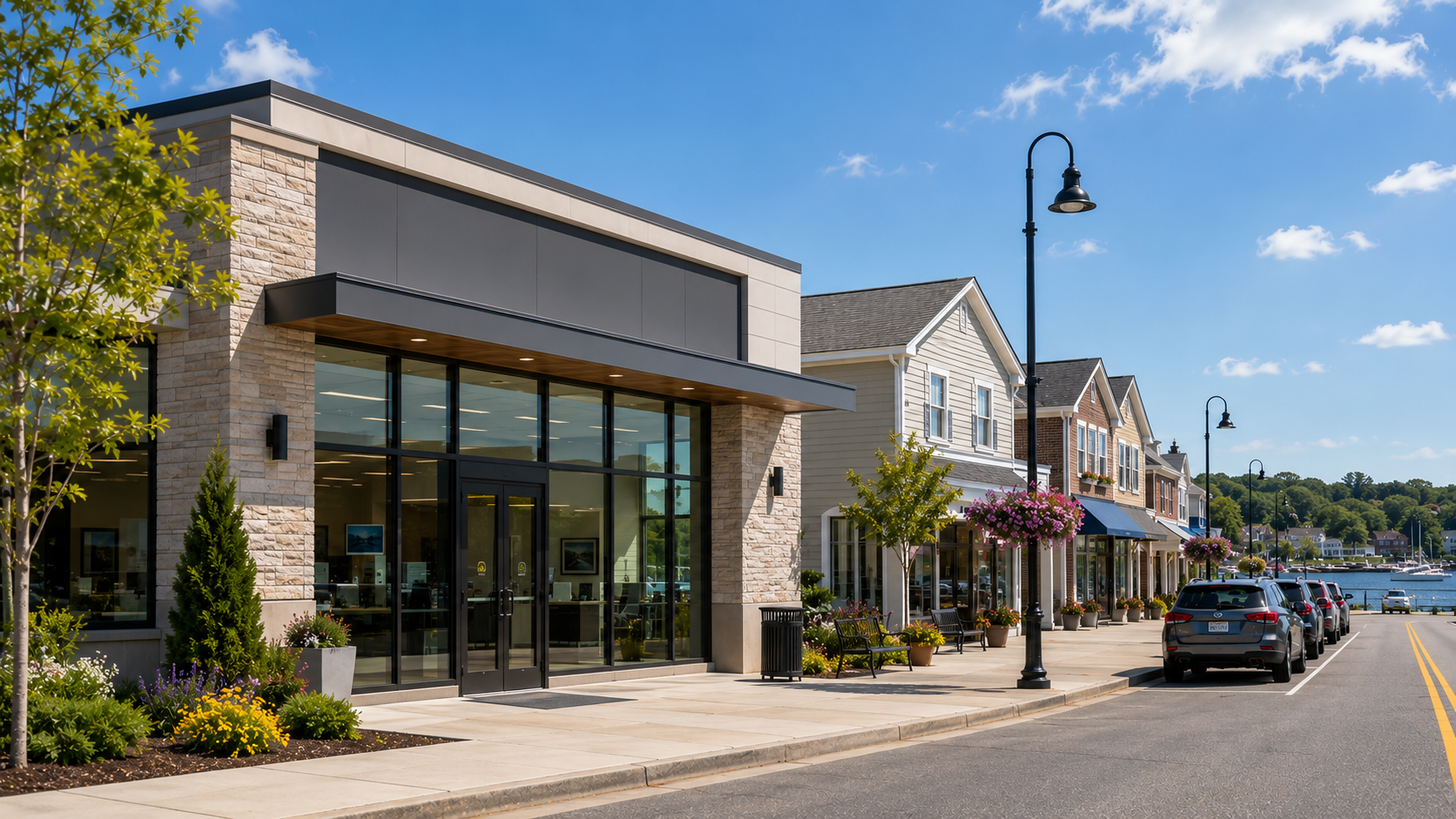
The community banking consolidation wave just produced one of its most strategically significant deals of the year. First Hawaiian, Inc. (Nasdaq: FHB), parent company of Hawaii’s oldest and largest financial institution, announced today it has entered into a definitive agreement to acquire TriCo Bancshares (Nasdaq: TCBK), parent company of California-based Tri Counties Bank, in an all-stock transaction. The deal creates a combined institution with approximately $34 billion in assets and positions it as the sixth largest bank headquartered in the Western United States.
Under the terms of the agreement, TriCo shareholders will receive 2.095 shares of First Hawaiian common stock for each TriCo share, representing $63.12 per share based on First Hawaiian’s July 10 closing price. Upon completion, First Hawaiian shareholders will own approximately 65% of the combined company and TriCo shareholders approximately 35%. Four current TriCo directors, including CEO Rick Smith, will join First Hawaiian’s board. The transaction is expected to close by the end of 2026, subject to regulatory approvals and shareholder votes from both companies.
Why This Combination Makes Sense
The strategic logic is geographic diversification. First Hawaiian has built a dominant franchise across Hawaii, Guam, and Saipan over its 168-year history, but its mainland presence has been limited. TriCo brings a well-established community banking network throughout California, with deep local market positions, an experienced leadership team, and a strong deposit franchise. The combination gives First Hawaiian a meaningful footprint on the mainland without requiring it to build from scratch in a new market.
Importantly, the two institutions share a similar operating philosophy. Both are relationship-driven, community-focused banks with disciplined credit cultures and strong local reputations. First Hawaiian has committed to retaining the Tri Counties Bank branding on the mainland and has stated there are no expected branch closings associated with the transaction, a signal that the deal is designed to preserve both franchises rather than collapse one into the other.
The Financial Profile of the Combined Company
First Hawaiian released preliminary second quarter results alongside the merger announcement, and the numbers reinforce why the company is in a position to execute an acquisition of this scale. Net income came in at $73.4 million with diluted earnings per share of $0.60, compared to $67.8 million and $0.55 in the prior quarter. Net interest margin expanded six basis points to 3.25%, return on average assets improved to 1.23%, and tangible book value per share grew 3% quarter over quarter to $15.04. Gross loans increased to $14.6 billion from $14.4 billion the prior quarter.
Those are the metrics of a bank operating from a position of strength rather than necessity.
The Broader Community Banking Signal
For investors tracking community and regional banks in the small and microcap space, the First Hawaiian-TriCo deal continues a clear consolidation pattern. Rising funding costs, increasing regulatory burden, commercial real estate exposure, and intensifying competition from larger institutions and fintech platforms are all creating pressure on smaller banks to pursue scale through combination rather than organic growth alone.
The structure of this deal is worth noting. An all-stock transaction with no branch closings, retained branding, shared board representation, and leadership drawn from both organizations reflects a partnership model rather than a hostile takeover. That approach tends to preserve customer relationships and employee retention, both of which are critical for community banks where the value of the franchise is built almost entirely on local trust.
As the cost of remaining independent continues to rise for smaller banking institutions, transactions like this one are likely to become more frequent. The banks that choose their partners wisely and execute clean integrations will be the ones best positioned to compete in an increasingly consolidated landscape.
Michael Kupinski, Director of Research, Equity Research Analyst, Digital, Media & Technology , Noble Capital Markets, Inc.
Jacob Mutchler, Research Associate, Noble Capital Markets, Inc.
Refer to the full report for the price target, fundamental analysis, and rating.
Initiating coverage with an Outperform rating. We are initiating coverage on VivoPower International PLC (NASDAQ: VIVO) with an Outperform rating and $10 Price target. The company has recently pivoted toward acquiring and developing power-secured land and powered-shell data center infrastructure, targeting one of the most constrained inputs in the AI value chain: grid-connected power capacity.
Capital-Light Business Model. The company occupies an upstream position within the AI data center value chain. Rather than owning and operating IT infrastructure, it seeks to generate returns through land development, power procurement, and long-term leasing arrangements. In our view, this model provides exposure to AI infrastructure demand while reducing technology and operating risks.
Equity Research is available at no cost to Registered users of Channelchek. Not a Member? Click ‘Join’ to join the Channelchek Community. There is no cost to register, and we never collect credit card information.
This Research is provided by Noble Capital Markets, Inc., a FINRA and S.E.C. registered broker-dealer (B/D).
*Analyst certification and important disclosures included in the full report. NOTE: investment decisions should not be based upon the content of this research summary. Proper due diligence is required before making any investment decision.
Joe Gomes, CFA, Managing Director, Equity Research Analyst, Generalist , Noble Capital Markets, Inc.
Refer to the full report for the price target, fundamental analysis, and rating.
Another Acquisition. On Friday, T3 Defense announced the acquisition of a 60% stake in Project35, a leading Israeli developer and manufacturer of drones, aerial interceptors and counter-UAV systems for Tier-1 defense customers in Israel and around the world. The acquisition launches T3 Defense into the center of the fast-expanding drone and counter-UAV (C-UAV) armament market, adding field-proven platforms and a new class of autonomous interceptor to its portfolio.
Terms. Under the terms of the transaction, T3 acquired its stake for 21,059,871 shares of T3 Defense common stock and a 12% promissory note due one day before the anniversary date in the principal amount of $1,250,000. At a current stock price of approximately $0.11, the value of the deal is about $3.56 million. Following closing, T3 Defense expects to work with Project35’s management team to support commercialization, production scaling, and expansion into additional customer programs, in addition to investing $2.5 million directly into the company’s operations over the next 12 months.
Equity Research is available at no cost to Registered users of Channelchek. Not a Member? Click ‘Join’ to join the Channelchek Community. There is no cost to register, and we never collect credit card information.
This Company Sponsored Research is provided by Noble Capital Markets, Inc., a FINRA and S.E.C. registered broker-dealer (B/D).
*Analyst certification and important disclosures included in the full report. NOTE: investment decisions should not be based upon the content of this research summary. Proper due diligence is required before making any investment decision.
The U.S. government sold $25 billion of 30-year Treasury bonds yesterday at a yield of 5.058%, the richest rate on a long bond auction since 2007. That headline number is drawing attention, but the full picture from this week’s auctions is more balanced than the yield alone suggests.
Start with the demand side. Pre-auction trading had the 30-year yield sitting at 5.061% just before the bidding deadline, meaning the final result actually came in slightly better than the market was pricing, a sign that buyers stepped in rather than stepped back. That is generally read as a healthy outcome, not a warning sign. Context matters here too. Existing 30-year bonds have already traded as high as 5.20% earlier this year, so yesterday’s print sits within a range the market has already absorbed rather than representing new, uncharted territory.
A day earlier, the Treasury auctioned $42 billion of 10-year notes, and that result was cleaner still. The auction cleared at 4.58% with a bid-to-cover ratio of 2.59, comfortably above the 2.5 level traders typically use as a benchmark for solid demand. No stress signals, no last-minute yield spike, no indication that investors are hesitant to hold U.S. government debt at current levels. Between the two auctions, the government raised $67 billion this week alone as part of a broader $119 billion week of coupon issuance, and both sales found willing buyers.
The interesting nuance is why the 30-year yield moved more than the 10-year. When the long end of the curve carries a higher premium relative to shorter maturities, it typically reflects investors asking for more compensation to hold debt across multiple decades rather than any concern about near-term credit risk. That’s consistent with straightforward supply and demand dynamics: more long-duration issuance generally requires a higher yield to clear the market, independent of the government’s underlying fiscal position.
The practical relevance for investors runs in a few directions. The 10-year yield is the direct reference point for 30-year mortgage rates, so a 4.58% clearing yield keeps the housing affordability conversation roughly where it has been. For companies that borrow against Treasury benchmarks, and smaller, more leveraged businesses in particular tend to feel rate moves more directly, the cost of long-term borrowing is shaped as much by auction dynamics like these as by anything the Federal Reserve decides at its policy meetings. The Fed sets the front end of the curve through its rate decisions. The long end responds to a separate set of forces, including how much duration the market is being asked to absorb and at what price investors are willing to hold it.
Taken together, this week’s auctions showed a market that is functioning and finding demand, just at a higher price for long-duration debt than it has required in nearly two decades. Whether that becomes a durable new range or eases as issuance patterns shift is something the next several auction cycles will help clarify.
SK Hynix began trading on the Nasdaq this morning, and the market’s answer to seven-times oversubscribed demand was immediate. Shares opened at $170, up 14% from the $149 offer price, and were trading as much as 16.7% higher intraday under the temporary ticker SKHYV before the stock moves to its permanent symbol, SKHY, on Monday.
The final numbers on the raise came in at $26.5 billion, slightly below the roughly $28 billion initially targeted but still enough to make this the largest first-time listing by a foreign company in U.S. history, surpassing Alibaba’s American debut. The offering consisted of 177.9 million American depositary receipts, each representing one-tenth of a common share.
The scale of demand tells the real story here. SK Hynix’s South Korea-listed shares have climbed 174% over the past six months and 634% over the past year, and the company’s SEC filing disclosed it now holds 56.4% of the global high-bandwidth memory market, the largest share among the three companies, Micron, Samsung, and SK Hynix, that make this specialized chip. HBM sits directly next to AI processors like Nvidia’s GPUs, holding the data those chips need instantly rather than forcing them to reach across a data center for it. Every major AI buildout depends on it, and there currently isn’t enough to go around.
That shortage, according to industry estimates cited in today’s coverage, could persist into 2030 simply because new fabrication capacity takes years to bring online. It is precisely what SK Hynix’s listing is designed to help fix. Proceeds are earmarked for new manufacturing facilities and equipment, giving U.S. investors a rare direct stake in a name that has mostly been accessible only through Seoul-listed shares.
But the timing carries its own tension. Just three days before this debut, memory stocks including Micron, Samsung, and SK Hynix itself slid into a bear market, a reminder that this industry has a well-earned reputation for violent cycles. Patrick Moorhead, founder of Moor Insights & Strategy, put it bluntly, noting that memory makers were selling chips below cost with negative gross margins only a few years ago before capital expenditure pulled back sharply and demand caught fire again. Micron has responded by locking customers into five-year strategic supply agreements with large upfront payments, a structural shift from the one-year contracts that used to define the industry, aimed at smoothing out exactly this kind of boom-and-bust pattern. Whether that holds the next downturn at bay is an open question nobody can answer yet.
For small and micro-cap investors, SK Hynix itself is now a trillion-dollar company well outside that world. But the moment matters anyway. When the second-largest foreign listing in U.S. history debuts to a 14% pop just days after its own sector fell into bear market territory, it captures the exact push and pull defining the memory trade in 2026: extraordinary current profitability sitting on top of an industry that has never once avoided the cycle eventually turning. The public companies feeding into this supply chain, from equipment makers to specialty materials suppliers, are all trading in that same shadow today.
NEW YORK–(BUSINESS WIRE)– Perfect Corp. (NYSE: PERF) (“Perfect” or the “Company”), a leading artificial intelligence (“AI”) company offering AI and augmented reality (“AR”)-powered solutions to beauty, fashion, photo and video creative industries, announced today that it has entered into a definitive Agreement and Plan of Merger (the “Merger Agreement”), dated as of July 10, 2026, with ProjectNY, an exempted company with limited liability incorporated under the laws of the Cayman Islands controlled by Ms. Alice H. Chang (“Merger Sub”), pursuant to which, and subject to the terms and conditions thereof, Merger Sub will merge with and into the Company (the “Merger”), with the Company surviving the Merger as the surviving company (the “Surviving Company”) and becoming a privately held company.
Pursuant to the terms of the Merger Agreement, at the effective time of the Merger (the “Effective Time”), each ordinary share of the Company issued and outstanding immediately prior to the Effective Time, other than the Excluded Shares, the Continuing Shares and the Dissenting Shares, each as defined in the Merger Agreement, will be cancelled and cease to exist in exchange for the right to receive US$2.00 in cash per share without interest (the “Per Share Merger Consideration”).
The Per Share Merger Consideration represents a premium of approximately 48.1% to the closing price of the Company’s Class A ordinary shares on March 17, 2026, the last trading day prior to the Company’s announcement on March 18, 2026 of its receipt of the preliminary non-binding going-private proposal, and a premium of approximately 39.6% to the volume-weighted average closing price of the Company’s Class A ordinary shares during the 30 trading days prior to that announcement.
Concurrently with the execution of the Merger Agreement, Merger Sub entered into separate voting and support agreements with Ms. Alice H. Chang and her controlled entities GOLDEN EDGE CO., LTD., DVDonet.com. Inc. and World Speed Company Limited (the “Chairwoman Parties”) as well as CyberLink International Technology Corp. (“CyberLink”). Pursuant to such agreements, Chairwoman Parties and CyberLink will vote all ordinary shares they hold directly or indirectly in favor of the authorization and approval of the Merger Agreement, the plan of merger and the transactions contemplated thereby, including the Merger. Such ordinary shares represent approximately 53.4% of the total issued and outstanding share capital of the Company and approximately 81.2% of the total voting power of the Company as of the date of the Merger Agreement.
The Merger is expected to be funded through available cash of the Company and its subsidiaries. The Continuing Shareholders will not receive cash consideration for their Continuing Shares, which will not be cancelled in the Merger and will remain outstanding and continue to exist as ordinary shares of the Surviving Company at the Effective Time.
The Company’s board of directors (the “Board”), acting upon the unanimous recommendation of the special committee of independent and disinterested directors established by the Board (the “Special Committee”), approved the Merger Agreement, the plan of merger, and the transactions contemplated thereby, including the Merger, and resolved to recommend that the Company’s shareholders vote to approve them. The Special Committee negotiated the terms of the Merger Agreement with the assistance of its own financial and legal advisors.
The Merger, which is currently expected to close during the last quarter of 2026, is subject to customary closing conditions, including the approval of the Merger Agreement, the plan of merger and the transactions contemplated thereby, including the Merger, by the affirmative vote of at least two-thirds of the votes cast by holders of the Company’s ordinary shares present and voting in person or by proxy as a single class at an extraordinary general meeting of the Company’s shareholders.
If completed, the Merger will result in the Company becoming a privately held company, its Class A ordinary shares will no longer be listed on the New York Stock Exchange, and the Company’s Class A ordinary shares and warrants will be deregistered under the U.S. Securities Exchange Act of 1934, as amended.
Advisors
Kroll, LLC is serving as financial advisor to the Special Committee; DLA Piper UK LLP is serving as international legal counsel to the Special Committee.
Sullivan & Cromwell LLP is serving as U.S. legal counsel to Merger Sub, the Chairwoman Parties and CyberLink; and Maples and Calder (Hong Kong) LLP is serving as Cayman Islands legal counsel to Merger Sub and the Chairwoman Parties.
Additional Information About the Merger
The Company will furnish to the U.S. Securities and Exchange Commission (the “SEC”) a current report on Form 6-K regarding the Merger, which will include as an exhibit thereto the Merger Agreement. All parties desiring details regarding the Merger are urged to review these documents, which will be available at the SEC’s website.
In connection with the Merger, the Company will prepare and mail to its shareholders a proxy statement that will include a copy of the Merger Agreement. In addition, in connection with the Merger, the Company and certain other participants in the Merger will prepare and file with the SEC a Schedule 13E-3 transaction statement that will include the Company’s proxy statement (the “Schedule 13E-3”). INVESTORS AND SHAREHOLDERS ARE URGED TO READ CAREFULLY AND IN THEIR ENTIRETY THE SCHEDULE 13E-3, THE PROXY STATEMENT AND OTHER MATERIALS FILED WITH OR FURNISHED TO THE SEC WHEN THEY BECOME AVAILABLE, AS THEY WILL CONTAIN IMPORTANT INFORMATION ABOUT THE COMPANY, THE MERGER AND RELATED MATTERS. In addition to receiving the proxy statement and Schedule 13E-3 by mail, shareholders will also be able to obtain these documents, as well as other filings containing information about the Company, the Merger and related matters, without charge from the SEC’s website.
This announcement is neither a solicitation of proxy, an offer to purchase nor a solicitation of an offer to sell any securities, and it is not a substitute for any proxy statement, Schedule 13E-3 or other materials that may be filed with or furnished to the SEC in connection with the Merger.
About Perfect Corp.
Founded in 2015, Perfect Corp. is a leading AI company offering self-developed AI- and AR-powered solutions dedicated to transforming the world with digital tech innovations that make your virtual world beautiful. On Perfect’s direct consumer business side, Perfect operates a family of YouCam consumer apps and web-editing services for photo, video and camera users, centered on unleashing creativity with AI-driven features for creation, beautification and enhancement. On Perfect’s enterprise business side, Perfect empowers major beauty, skincare, fashion, jewelry, and watch brands and retailers by supplying them with omnichannel shopping experiences through AR product try-ons and AI-powered skin diagnostics. With cutting-edge technologies such as Generative AI, real-time facial and hand 3D AR rendering and cloud solutions, Perfect enables a personalized, enjoyable and engaging shopping journey and helps brands elevate customer engagement, increase conversion rates, and propel sales growth. Throughout this journey, Perfect maintains its unwavering commitment to environmental sustainability and fulfilling social responsibilities. For more information, visit https://ir.perfectcorp.com/.
Forward-Looking Statements
This communication contains forward-looking statements within the meaning of Section 27A of the U.S. Securities Act of 1933, as amended, or the Securities Act, and Section 21E of the U.S. Securities Exchange Act of 1934, as amended, or the Exchange Act, that are based on beliefs and assumptions and on information currently available to Perfect. In some cases, forward-looking statements can be identified by words such as may, will, could, would, should, expect, intend, plan, anticipate, believe, estimate, predict, project, potential, continue, ongoing, target, seek or the negative or plural of these words, or other similar expressions that are predictions or indicate future events or prospects, although not all forward-looking statements contain these words. Forward-looking statements in this communication include, without limitation, statements regarding the proposed Merger, the expected timing and completion of the Merger, the expected funding of the Merger, the expected treatment of the Company’s ordinary shares, options, warrants, Company Earnout Shares and Continuing Shares, the expected delisting and deregistration of the Company’s Class A ordinary shares and warrants, the expected filing and mailing of transaction materials, the anticipated timing of the shareholders meeting and the expected benefits or effects of the Merger. These statements involve risks, uncertainties and other factors that may cause actual results, levels of activity, performance or achievements to be materially different from those expressed or implied by these forward-looking statements. Factors that could cause actual results to differ materially include, among others, risks and uncertainties relating to the ability to complete the Merger on the proposed terms or anticipated timeline or at all; the possibility that competing offers or acquisition proposals will be made; the possibility that required shareholder approval, regulatory approvals or other consents may not be obtained; the failure to satisfy other conditions to the completion of the Merger; potential litigation relating to the Merger; the amount of costs, fees, expenses and charges related to the Merger; the effect of the announcement, pendency or completion of the Merger on the Company’s business, results of operations, financial condition, cash flows, prospects, relationships with customers, suppliers and employees, operating results and business generally; and other risks and uncertainties described in the Company’s filings with the SEC. Perfect cannot assure you that the forward-looking statements in this communication will prove to be accurate. There may be additional risks that Perfect presently does not know or that Perfect currently does not believe are material that could also cause actual results to differ from those contained in the forward-looking statements. Forward-looking statements speak only as of the date they are made. Except as required by applicable law, Perfect does not undertake any obligation to update or revise any forward-looking statements, whether as a result of new information, future events or otherwise.
Earnings Release Scheduled for Thursday, August 6, 2026 Before the Market Opens
Conference Call Scheduled for Thursday, August 6, 2026 at 1:00 PM (Eastern Time)
BOCA RATON, Fla.–(BUSINESS WIRE)–Jul. 9, 2026– The GEO Group, Inc. (NYSE:GEO) (“GEO”) will release its second quarter 2026 financial results on Thursday, August 6, 2026 before the market opens. GEO has scheduled a conference call and simultaneous webcast for 1:00 PM (Eastern Time) on Thursday, August 6, 2026.
To participate in the teleconference, please contact one of the following numbers 5 minutes prior to the scheduled start time:
In addition, a live audio webcast of the conference call may be accessed on the Webcasts section of GEO’s investor relations home page at investors.geogroup.com. A webcast replay will remain available on the website for one year.
A telephonic replay will also be available through August 13, 2026. The replay numbers are 1-855-669-9658 (U.S.) and 1-412-317-0088 (International). The passcode for the telephonic replay is 1433186. If you have any questions, please contact GEO at 1-866-301-4436.
Mark Reichman, Managing Director, Equity Research Analyst, Natural Resources, Noble Capital Markets, Inc.
Refer to the full report for the price target, fundamental analysis, and rating.
FY 2027 first quarter financial results. AZZ reported adjusted net income of $55.8 million, or $1.85 per share, compared to $53.8 million, or $1.78 per share, during the prior year period. We had forecast adjusted net income of $51.4 million or $1.70 per share. Compared to the first quarter of FY 2026, sales increased 6.3% to $448.5 million. Adjusted EBITDA amounted to $99.5 million compared to our estimate of $96.8 million. Compared to the prior year period, first quarter Metal Coatings sales were up 12.3% to $210.3 million, while Precoat Metal sales increased 1.5% to $238.2 million. First quarter segment adjusted EBITDA margin amounted to 30.3% for Metal Coatings and 21.7% for Precoat Metals.
FY 2027 Corporate Guidance. Management now expects FY 2027 sales in the range of $1.80 to $1.85 billion, compared to previous expectations of $1.725 to $1.775 billion. Adjusted EBITDA is expected to be in the range of $375 to $415 million, compared to prior guidance of $360 to $400 million. Adjusted EPS is now projected to be $6.75 to $7.15 versus prior expectations of $6.50 to $7.00.
Equity Research is available at no cost to Registered users of Channelchek. Not a Member? Click ‘Join’ to join the Channelchek Community. There is no cost to register, and we never collect credit card information.
This Company Sponsored Research is provided by Noble Capital Markets, Inc., a FINRA and S.E.C. registered broker-dealer (B/D).
*Analyst certification and important disclosures included in the full report. NOTE: investment decisions should not be based upon the content of this research summary. Proper due diligence is required before making any investment decision.
For most of the past five years, the Magnificent Seven traded at a persistent and widening premium to the rest of the S&P 500. That premium has now compressed to its lowest level in more than a decade, and the implications for how capital flows through the broader market are significant.
The price-to-earnings multiple premium for the Magnificent Seven relative to the other 493 companies in the S&P 500 has dropped to approximately 10%, according to Morgan Stanley. That figure held above 30% for most of the 2020s. The collapse in relative valuation is not because these companies are struggling operationally. It is because the market is repricing what it is willing to pay for growth when that growth comes at the cost of massive, accelerating capital expenditure with uncertain near-term returns.
What’s Driving the Compression
All seven stocks have underperformed the S&P 500 in 2026 except Alphabet, which has gained 14.5% year to date versus the benchmark’s 8.8% advance. Nvidia, Microsoft, Amazon, Meta, Apple, and Tesla have all lagged the index. For a group that dominated market leadership for the better part of three years, the collective underperformance is striking.
The primary source of investor frustration is capital spending on artificial intelligence infrastructure. The Magnificent Seven’s combined AI-related capital expenditures are projected to exceed $700 billion in 2026, a 70% increase from the prior year. That level of spending is consuming corporate cash generation at a pace that has pushed the group’s collective 12-month forward free cash flow projections sharply below their 2024 peak. Investors are watching these companies pour hundreds of billions into data centers and GPUs while the revenue return on that investment remains difficult to quantify with precision.
Layer on the prospect of a Fed rate hike later this year, which would increase the cost of financing AI projects, and the math behind the underperformance becomes straightforward. Higher rates, lower free cash flow, and uncertain AI monetization timelines are a combination that compresses multiples regardless of how strong the underlying business remains.
The Mirror Image for Small Caps
What makes this data point particularly relevant for ChannelChek’s audience is what happens to the rest of the market when the Magnificent Seven’s gravitational pull weakens. For most of 2023 and 2024, the concentration of capital in seven stocks starved the rest of the equity universe of institutional attention and flows. The top ten companies in the S&P 500 grew to represent more than 35% of the index’s total weight, up from 18% a decade ago. That concentration meant the other 493 companies, and the thousands of smaller companies outside the index entirely, were competing for a shrinking share of investor capital.
That dynamic is now reversing. The Russell 2000 posted its best first half in 35 years, gaining nearly 22% through June. Market breadth has expanded meaningfully, with advancing stocks consistently outnumbering decliners. The equal-weight S&P 500 has outperformed the cap-weighted version. Capital that was previously locked into mega cap technology is rotating into industrials, consumer companies, energy producers, and the broader small cap universe.
The Magnificent Seven premium compressing to 10% is the quantitative proof of what the price action has been saying all year. The trade that dominated markets for the past three years is losing its hold, and the beneficiaries are the companies that were left behind during the concentration era. Many of those companies trade well below the $2 billion market cap threshold and are only now beginning to see the valuation and capital flow benefits of a broadening market.
The Magnificent Seven are not broken. They are just no longer the only game in town. For investors positioned in the rest of the market, that is exactly the environment they have been waiting for.
GLYFADA, Greece, July 08, 2026 (GLOBE NEWSWIRE) — Seanergy Maritime Holdings Corp. (the “Company” or “Seanergy”) (NASDAQ: SHIP) announced today the pricing of the offering of €100 million of unsecured bonds (the “Bonds”) to investors in Greece. The Bonds will be admitted to trading on the Fixed Income Securities Segment of Euronext Athens Holding S.A. (“Euronext Athens”).
The Bonds mature in July 2031, were issued at par and carry a coupon of 4.90% per annum, payable semi-annually. Settlement is expected on July 10, 2026 and trading is expected to commence on July 13, 2026.
The proceeds are expected to be used to finance part of the cost of newbuilding vessels and/or second-hand vessel acquisitions, as well as for general corporate and working capital purposes. Offering expenses are estimated at approximately €4.4 million.
Stamatis Tsantanis, the Company’s Chairman & Chief Executive Officer, stated:
“We are very pleased with the successful completion of this offering, which represents an important milestone for Seanergy in the Hellenic capital markets.
“We sincerely thank the Hellenic investment community for its strong confidence in our strategy and long-term prospects.
“The Bonds provide meaningful non-dilutive capital, diversifying further our capital structure, while supporting the disciplined execution of our fleet growth strategy.”
The Bonds have not been and will not be registered under the Securities Act of 1933, as amended or the securities laws of any state of the United States, and, subject to certain exceptions, may not be offered or sold within the United States. The offering of Bonds is not directed to, and may not be accessed by, any person located in the United States. This press release does not constitute an offer to sell or the solicitation of an offer to buy the Bonds, nor shall it constitute an offer, solicitation or sale in any jurisdiction in which such offer, solicitation or sale would be unlawful.
AboutSeanergyMaritimeHoldingsCorp.
Seanergy Maritime Holdings Corp. is a prominent pure-play Capesize shipping company publicly listed in the U.S. Seanergy provides marine dry bulk transportation services through a modern fleet of Capesize vessels. The Company owns or finance leases 19 vessels (2 Newcastlemax and 17 Capesize) with an average age of approximately 15.0 years and an aggregate cargo carrying capacity of approximately 3,463,843 dwt. Upon completion of the sale of the M/V Dukeship and the delivery of the newbuilding vessels, the Company is expected to own or finance lease 24 vessels (3 Newcastlemax and 21 Capesize), with an aggregate cargo carrying capacity of approximately 4,400,390 dwt.
The Company is incorporated in the Republic of the Marshall Islands and has executive offices in Glyfada, Greece. The Company’s common shares trade on the Nasdaq Capital Market under the symbol “SHIP”.
This press release contains forward-looking statements (as defined in Section 27A of the Securities Act of 1933, as amended, and Section 21E of the Securities Exchange Act of 1934, as amended) concerning future events, including with respect to the consummation of and use of proceeds of the offering of Bonds. Words such as “may”, “should”, “expects”, “intends”, “plans”, “believes”, “anticipates”, “hopes”, “estimates” and variations of such words and similar expressions are intended to identify forward-looking statements. These statements involve known and unknown risks and are based upon a number of assumptions and estimates, which are inherently subject to significant uncertainties and contingencies, many of which are beyond the control of the Company. Actual results differ materially from those expressed or implied by such forward-looking statements. Factors that could cause actual results to differ materially include, but are not limited to, the Company’s operating or financial results; the Company’s liquidity, including its ability to service its indebtedness; competitive factors in the market in which the Company operates; shipping industry trends, including charter rates, vessel values and factors affecting vessel supply and demand; future, pending or recent acquisitions and dispositions, business strategy, impacts of litigation, areas of possible expansion or contraction, and expected capital spending or operating expenses; risks associated with operations outside the United States; risks arising from trade disputes between the U.S. and China, including the re-imposition of reciprocal port fees; broader market impacts arising from trade disputes or war (or threatened war) or international hostilities, such as between the U.S. and Israel and Iran, the U.S. and Venezuela, China and Taiwan and Russia and Ukraine; risks associated with the length and severity of pandemics; and other factors listed from time to time in the Company’s filings with the SEC, including its most recent annual report on Form 20-F. The Company’s filings can be obtained free of charge on the SEC’s website at www.sec.gov. Except to the extent required by law, the Company expressly disclaims any obligations or undertaking to release publicly any updates or revisions to any forward-looking statements contained herein to reflect any change in the Company’s expectations with respect thereto or any change in events, conditions or circumstances on which any statement is based.
For further information please contact: Seanergy Investor Relations Tel: +30 213 0181 522 E-mail: [email protected]
Capital Link, Inc. Paul Lampoutis 230 Park Avenue Suite 1540 New York, NY 10169 Tel: (212) 661-7566 E-mail: [email protected]
Anna Wichmann Capital Link Athens Tel: +30 210 6109 800 E-mail: [email protected]
STAFFORD, Texas, July 09, 2026 (GLOBE NEWSWIRE) — Greenwich LifeSciences, Inc. (Nasdaq: GLSI) (the “Company”), a clinical-stage biopharmaceutical company focused on its Phase III clinical trial, FLAMINGO-01, which is evaluating GLSI-100, an immunotherapy to prevent breast cancer recurrences, today provided the following update on the use of commercially manufactured GP2 in FLAMINGO-01 in Europe.
All European and US Sites to Treat Patients with Commercially Manufactured GP2
The Company previously announced that the first three commercial lots of GP2 active ingredient were manufactured in 2023 in an approved commercial facility, which could be used to prepare approximately 200,000 doses of GP2. In 2024, the first commercial lot filling GP2 into vials for commercial sale or for clinical use was manufactured in a commercial facility. In addition, drug stability programs were initiated for all four lots. Data on these commercial lots was submitted to the FDA, and after review, the first commercial lot of GP2 vials was approved for use in FLAMINGO-01 in the US in early 2026. All approximately 40-50 US sites have been supplied with commercially manufactured GP2 vials and have begun treating patients with these vials. We were able to efficiently distribute the GP2 vials and communicate with the US pharmacists working with our warehouse partners and through our clinical team, which we internalized in Q4 2025.
The European Medicines Agency (EMA) has completed their review and will also allow use of the same commercially manufactured GP2 lot in FLAMINGO-01 in Europe. Thus, all clinical sites in the US and Europe, which have increased from 160 sites to approximately 170-180 sites, are expected to be using the same lot with shipments to European pharmacies already under way. We are now seeking approval to use this lot in the UK and Canada in separate and independent regulatory processes.
About FLAMINGO-01 Open Label Phase III Data
More than 1,300 patients have been screened with a current screen rate of approximately 800 patients per year. The 250 patient non-HLA-A*02 arm is now fully enrolled, where all patients received GLSI-100, which is 5 times more treated patients and recurrence rate data than the approximately 50 patients treated in the Phase IIb trial. The Primary Immunization Series (PIS), which includes the first 6 GLSI-100 injections over the first 6 months and is required to reach peak protection, is followed by 5 booster injections given every 6 months to prolong the immune response, thereby providing longer-term protection.
In the non-HLA-A*02 arm, a preliminary analysis of recurrence rates after the PIS is completed shows an approximately 70-80% reduction in recurrence rate.
This observation is trending similarly to the Phase IIb trial results and hazard ratio where HLA-A*02 patients were treated and where breast cancer recurrences were reduced up to 80% compared to a 20-50% reduction in recurrence rate by other approved products.
The immune response at baseline prior to any GLSI-100 treatment, the increasing immune response during the PIS, and the safety profile of non-HLA-A*02 patients is trending similarly to the HLA-A*02 arms of FLAMINGO-01 and to the Phase IIb study.
The AACR Meeting 2026 delayed-type-hypersensitivity (DTH) poster and the ASCO Meeting 2026 injection site reaction (ISR) poster can be seen and downloaded at the bottom of the Phase III clinical trial tab on the Company’s website here.
As shown in both posters the frequency of DTH and ISR reactions increased statistically significantly over time.
As reported in Table 1 of each poster, each HLA-A type exhibited more frequent immune reactivity after treatment with GLSI-100 than at baseline.
Baseline DTH reaction prior to any treatment suggests that GP2 may be a natural antigen and that GP2 specific T cells may exist in some patients prior to any treatment with GLSI-100. Baseline immune response to GP2 prior to any vaccination with GP2 was also observed in the Phase IIb trial and is being observed in the blinded randomized arms of FLAMINGO-01, where HLA-A*02 only patients are being vaccinated.
Analysis of the open label data from FLAMINGO-01 has been conducted in a manner that maintains the study blind. The open label recurrence rate, immune response, and safety data is based on the patients enrolled to date in FLAMINGO-01 and the data provided by the clinical sites so far, which is not completed or fully reviewed, and is thus preliminary. While comparing any preliminary FLAMINGO-01 data to the Phase IIb clinical trial data may be possible, these preliminary results are not a prediction of future results, and the results at the end of the study may differ.
About GLSI-100 Phase IIb Study
In the prospective, randomized, single-blinded, placebo-controlled, multi-center (16 sites led by MD Anderson Cancer Center) Phase IIb clinical trial of HLA-A*02 breast cancer patients, 46 HER2/neu 3+ over-expressor patients were treated with GLSI-100, and 50 placebo patients were treated with GM-CSF alone. After 5 years of follow-up, there was an 80% or greater reduction in cancer recurrences in the HER2/neu 3+ patients who were treated with GLSI-100, followed, and remained disease free over the first 6 months, which we believe is the time required to reach peak immunity and thus maximum efficacy and protection. The Phase IIb posters and results can be summarized as follows and can be seen here:
80% or greater reduction in metastatic breast cancer recurrence rate over 5 years of follow-up with a peak immune response at 6 months and well-tolerated safety profile.
The PIS elicited a potent immune response as measured by local skin tests and immunological assays.
About FLAMINGO-01 and GLSI-100
FLAMINGO-01 (NCT05232916) is a Phase III clinical trial designed to evaluate the safety and efficacy of Fast Track designated GLSI-100 (GP2 + GM-CSF) in HER2 positive breast cancer patients who had residual disease or high-risk pathologic complete response at surgery and who have completed both neoadjuvant and postoperative adjuvant trastuzumab based treatment. The trial is led by Baylor College of Medicine and currently includes US and European clinical sites from university-based hospitals and academic and cooperative networks with plans to open up to 170-180 sites globally.
For more information on FLAMINGO-01, please visit the Company’s website here and clinicaltrials.gov here. Contact information and an interactive map of the majority of participating clinical sites can be viewed under the “Contacts and Locations” section. Please note that the interactive map is not viewable on mobile screens. Related questions and participation interest can be emailed to: [email protected]
About Breast Cancer and HER2/neu Positivity
One in eight U.S. women will develop invasive breast cancer over her lifetime, with approximately 300,000 new breast cancer patients and 4 million breast cancer survivors. HER2 (human epidermal growth factor receptor 2) protein is a cell surface receptor protein that is expressed in a variety of common cancers, including in 75% of breast cancers at low (1+), intermediate (2+), and high (3+ or over-expressor) levels.
About Greenwich LifeSciences, Inc.
Greenwich LifeSciences is a clinical-stage biopharmaceutical company focused on the development of GP2, an immunotherapy to prevent breast cancer recurrences in patients who have previously undergone surgery. GP2 is a 9 amino acid transmembrane peptide of the HER2 protein, a cell surface receptor protein that is expressed in a variety of common cancers, including expression in 75% of breast cancers at low (1+), intermediate (2+), and high (3+ or over-expressor) levels. Greenwich LifeSciences has commenced a Phase III clinical trial, FLAMINGO-01. For more information on Greenwich LifeSciences, please visit the Company’s website at www.greenwichlifesciences.com and follow the Company’s Twitter at https://twitter.com/GreenwichLS.
Forward-Looking Statement Disclaimer
Statements in this press release contain “forward-looking statements” that are subject to substantial risks and uncertainties. All statements, other than statements of historical fact, contained in this press release are forward-looking statements. Forward-looking statements contained in this press release may be identified by the use of words such as “anticipate,” “believe,” “contemplate,” “could,” “estimate,” “expect,” “intend,” “seek,” “may,” “might,” “plan,” “potential,” “predict,” “project,” “target,” “aim,” “should,” “will,” “would,” or the negative of these words or other similar expressions, although not all forward-looking statements contain these words. Forward-looking statements are based on Greenwich LifeSciences Inc.’s current expectations and are subject to inherent uncertainties, risks and assumptions that are difficult to predict, including statements regarding the intended use of net proceeds from the public offering; consequently, actual results may differ materially from those expressed or implied by such forward-looking statements. Further, certain forward-looking statements are based on assumptions as to future events that may not prove to be accurate. These and other risks and uncertainties are described more fully in the section entitled “Risk Factors” in Greenwich LifeSciences’ Annual Report on the most recent Form 10-K for the year ended December 31, 2025, and other periodic reports filed with the Securities and Exchange Commission. Forward-looking statements contained in this announcement are made as of this date, and Greenwich LifeSciences, Inc. undertakes no duty to update such information except as required under applicable law.
JPMorgan announced this week that it is building a new investment banking team dedicated entirely to small-cap dealmaking, targeting companies valued between $100 million and $500 million. The team will sit alongside the bank’s existing middle-market group, which covers companies between $500 million and $1 billion and already employs nearly 400 bankers. According to an internal memo reported by Yahoo Finance, the new group will be based in New York, Los Angeles, Dallas, Chicago, and Atlanta, with plans to hire more than 75 bankers in the near term. It will start by focusing on diversified industries, consumer and retail, and business services, led by new hire Michael Flynn, a veteran middle-market banker.
It is a notable move for a bank of JPMorgan’s size. But for investors who have been paying attention to small and micro caps all year, this is a confirmation, not a discovery.
The Russell 2000 gained nearly 22% in the first half of 2026, its best first-half performance since 1991, outpacing the S&P 500 and Dow’s roughly 9% gains and the Nasdaq’s 13% rise. Every sector in the index finished the first half in positive territory, led by technology, industrials, financials, and healthcare. Analysts have pointed to easing financial conditions, a healthier credit backdrop, and valuations that remain meaningfully discounted relative to large caps as reasons the rally has legs. Small caps also tend to benefit disproportionately once a rate-cutting cycle takes hold, since a larger share of their balance sheets rely on variable or shorter-term financing.
What JPMorgan’s move really signals is that the largest pools of capital are starting to reposition toward a part of the market that has been overlooked for the better part of a decade. Big banks do not build out dedicated coverage teams on a whim. They do it when deal flow, IPO activity, and client demand justify the headcount, and that kind of infrastructure typically follows smart money into a space rather than leading it there.
That kind of institutional attention tends to arrive with real consequences for pricing. More bankers covering the space usually means more IPOs, more M&A activity, more equity research, and ultimately more liquidity flowing into names that have traded at a discount simply because fewer people were watching them closely. Small caps have historically underperformed for years at a time before snapping back sharply once capital rotates in, and that rotation is often driven by exactly this kind of institutional repositioning rather than a single catalyst.
For investors, the takeaway is straightforward. Institutional capital chasing small caps tends to compress the valuation gap that made the space attractive in the first place. Getting positioned ahead of that convergence, rather than after it, is where the real opportunity sits. With small caps already outperforming and now drawing this kind of attention from a bank the size of JPMorgan, the window to act on that discount looks like it will not stay open indefinitely.
Robert LeBoyer, Senior Vice President, Equity Research Analyst, Biotechnology, Noble Capital Markets, Inc.
Refer to the full report for the price target, fundamental analysis, and rating.
Data From Part C Announced. MAIA announced data from Part C (Expansion stage) of its Phase 2 THIO-101 trial in non-small cell lung cancer (NSCLC). This open-label stage of the trial tests the combination of ateganosine and cemiplimab (Libtayo, from Regeneron) as a third-line (3L) therapy for patients with advanced disease that no longer respond to other therapies. The data after the first evaluation have a Disease Control Rate (DCR) of 90.5% (19 out of 21 patients), compared with published rates of 25% to 35%. We view this as a good sign that patient responses are consistent with previous data.
Design Of the Phase 2 THIO-101 Trial. The Phase 2 THIO-101 Expansion stage is the third part of the Phase 2 trial. Part A tested safety, while Part B was for dose optimization and selection. Part C is currently testing the combination of the 180 mg dose of ateganosine with cemiplimab. If positive, the data could be used to apply for accelerated approval from the FDA.
Equity Research is available at no cost to Registered users of Channelchek. Not a Member? Click ‘Join’ to join the Channelchek Community. There is no cost to register, and we never collect credit card information.
This Company Sponsored Research is provided by Noble Capital Markets, Inc., a FINRA and S.E.C. registered broker-dealer (B/D).
*Analyst certification and important disclosures included in the full report. NOTE: investment decisions should not be based upon the content of this research summary. Proper due diligence is required before making any investment decision.