U.S. Treasury yields fell significantly on Wednesday as soft economic data increased expectations for the Federal Reserve to cut interest rates by September. The decline was driven by weaker reports on private-sector job growth and a contraction in service-sector activity, leading traders to price in a more aggressive pace of monetary easing.
Yields across the curve, particularly from the 2-year to the 10-year notes, dropped to their lowest levels since early May. The benchmark 10-year yield declined to 4.35%, highlighting the bond market’s strong reaction to signs of slowing economic momentum.
The first catalyst came from the ADP employment report, which showed the slowest pace of job creation in two years. That was followed by the Institute for Supply Management’s services index, which signaled contraction for the first time in nearly a year. Together, these indicators pointed to a potential softening in the labor market and raised concerns about overall economic resilience.
Market participants increased their bets that the Fed could start cutting rates as early as September, with the probability of a move rising to around 95%, up from just over 80% the day before. Additionally, expectations for two rate cuts by the end of 2025—likely in October and December—also gained traction.
Adding to the market’s reaction was a sharp decline in oil prices, spurred by indications that Saudi Arabia may be open to increasing oil production. Falling energy prices helped reinforce the idea that inflation pressures could be easing, giving the Fed more room to support the economy with lower interest rates.
Despite these signals, not all data pointed to weakness. A separate government report released Tuesday showed that job openings increased in April, and hiring also improved. Furthermore, within the ISM services report, the employment component showed unexpected strength, and the prices paid index rose to its highest level since late 2022. These mixed signals reflect the complexity of the current economic environment and suggest that the Fed will continue to weigh multiple indicators before making a policy decision.
Recent volatility in rate expectations followed a series of mixed economic releases throughout the spring. While rate cut hopes grew late last year, persistent inflation and stronger-than-expected economic activity had cooled those expectations in recent months. May saw the Treasury market lose 1%, as measured by a Bloomberg index, though it remains up 2.1% year-to-date through early June.
All eyes now turn to the upcoming U.S. government employment report for May, due Friday. Economists expect a payroll gain of 130,000 jobs, down from April’s increase of 177,000, with the unemployment rate forecast to remain at 4.2%. A notable rise in the jobless rate could give the Fed additional justification to pivot toward rate cuts.
Investors will continue to monitor labor market indicators, inflation data, and Fed commentary as they navigate an uncertain path for interest rates heading into the second half of 2025.
Key Points: – Marex acquires Brazil-based Agrinvest Commodities to broaden agricultural and physical market presence. – The acquisition adds 1,300 clients and 100 employees to Marex’s regional footprint. – Marex gains strategic exposure to Brazil’s critical corn and soybean markets.
As global demand for agricultural commodities grows and Brazil cements its position as a vital supplier, Marex Group plc (NASDAQ: MRX) is making a bold strategic leap into the heart of South America. The global financial services platform announced today its acquisition of Agrinvest Commodities, a prominent Brazilian firm specializing in physical agricultural markets and client-focused risk consulting.
Agrinvest brings to Marex a powerful combination of on-the-ground commodity brokering—primarily in corn and soybeans—and advisory services that help producers and buyers navigate price volatility through smart hedging strategies. The acquisition introduces approximately 1,300 new clients and 100 employees to the Marex ecosystem, enhancing the Group’s reach and capacity across Latin America.
This expansion marks a pivotal step for Marex, which already maintains a derivatives presence in Brazil. By acquiring Agrinvest, the company gains immediate physical trading capabilities, enabling a more integrated offering to agricultural clients. From trade execution to risk management, Marex can now support the full value chain.
Brazil’s stature in global food supply cannot be overstated—it’s a leading producer and exporter of several staple commodities. The move gives Marex critical exposure to this dynamic market while positioning it to offer expanded services and infrastructure to clients operating at the production level.
The acquisition is also a play to diversify revenue streams. Known for its strength in metals, energy, and financial markets, Marex is now enhancing its agricultural vertical. The addition of a trusted, well-established Brazilian partner strengthens the Group’s resilience in the face of market cycles and positions it for further cross-border opportunities.
For Agrinvest, the transaction represents an opportunity to scale up its operations with the support of Marex’s global infrastructure and technological resources. Clients will benefit from access to broader hedging tools, deeper liquidity, and international expertise, while Marex stands to gain deeper penetration in one of the most strategically important agricultural markets in the world.
As the commodity landscape continues to evolve, this acquisition signals Marex’s intention to remain a central player—connecting producers to markets, clients to opportunity, and strategies to outcomes.
In a strategic move set to reshape the industrial process technology sector, Chart Industries and Flowserve Corporation announced on June 4, 2025, that they will merge in an all-stock transaction, forming a combined company valued at approximately $19 billion. This merger of equals brings together two highly complementary businesses to create a global leader in flow and thermal management solutions.
The newly combined entity will boast an extensive installed base of over 5.5 million assets across more than 50 countries, offering a comprehensive platform that spans the full customer lifecycle—from process design to mission-critical equipment, aftermarket support, and digital monitoring solutions. With combined last twelve months (LTM) revenue of $8.8 billion, the new company is set to make a significant impact across a wide array of high-growth industries, including energy, power generation, chemical processing, data centers, and carbon capture.
At the heart of this merger is a shared commitment to delivering world-class technologies and services. Chart’s expertise in cryogenic, thermal, and specialty solutions blends seamlessly with Flowserve’s core strengths in flow management, including pumps, valves, and seals. This merger creates a differentiated industrial technology platform that is expected to enhance performance, increase predictability through market cycles, and expand customer reach globally.
A major benefit of the transaction is the expansion of aftermarket services, which will now account for roughly $3.7 billion annually, or 42% of total revenue. This significant recurring revenue stream positions the company for stable cash flow and long-term growth. Further, the merger is expected to generate approximately $300 million in annual cost synergies within three years, driven by procurement efficiencies, facility consolidations, and operational streamlining. On top of that, incremental revenue synergies of at least 2% are anticipated over time.
The transaction has been unanimously approved by both boards of directors. Upon completion, Chart shareholders will own 53.5% and Flowserve shareholders will own 46.5% of the combined company. Jill Evanko, current CEO of Chart, will serve as Chair of the Board, while Scott Rowe, CEO of Flowserve, will become the Chief Executive Officer. The board will be evenly split, with six directors from each company.
Financially, the combined company will aim to maintain an investment-grade balance sheet with a leverage ratio of 2.0x net debt to adjusted EBITDA at closing. The firm expects strong cash generation, supporting growth initiatives, debt reduction, and a continued shareholder dividend.
Headquartered in Dallas, Texas, with continued operations in Atlanta and Houston, the new company is poised to become a global industrial technology giant. A new brand identity will be unveiled upon closing, which is expected by Q4 2025, pending shareholder and regulatory approvals.
This transformative merger marks a significant step forward in innovation, scale, and service within the industrial process sector, positioning the company to capitalize on growing demand for integrated and sustainable technologies worldwide.
Joe Gomes, CFA, Managing Director, Equity Research Analyst, Generalist , Noble Capital Markets, Inc.
Refer to the full report for the price target, fundamental analysis, and rating.
Initiation of Research Coverage. We are initiating research coverage of Titan International with an Outperform rating and an $11 price target. Titan is a worldwide leader in the manufacture of off road wheels, tires, and undercarriages for the agriculture, construction, mining, and consumer space.
Transformation. Titan has undergone a strategic transformation since 2019. Management has restructured the Company, eliminating non-core assets, improving the balance sheet, and diversifying the business through acquisitions. Though still subject to cyclicality of its end markets, we believe Titan is well positioned to capitalize on improving end market demand.
Equity Research is available at no cost to Registered users of Channelchek. Not a Member? Click ‘Join’ to join the Channelchek Community. There is no cost to register, and we never collect credit card information.
This Company Sponsored Research is provided by Noble Capital Markets, Inc., a FINRA and S.E.C. registered broker-dealer (B/D).
*Analyst certification and important disclosures included in the full report. NOTE: investment decisions should not be based upon the content of this research summary. Proper due diligence is required before making any investment decision.
SAN DIEGO, June 03, 2025 (GLOBE NEWSWIRE) — Kratos Defense & Security Solutions, Inc. (Nasdaq: KTOS), a Technology Company in the Defense, National Security and Global Markets, and GE Aerospace (NYSE: GE) today announced a formal teaming agreement to advance propulsion technologies for the next generation of affordable unmanned aerial systems and Collaborative Combat Aircraft-type (CCA-type) aircraft.
Eric DeMarco, President and CEO of Kratos, said, “Kratos’ strategically important Teaming Agreement with GE Aerospace continues to rapidly advance and expand, with the GEK family of engines targeting certain of the most important, mission critical and highest priority needs and requirements of United States National Security. At Kratos, affordability is a technology and delivering more capability for less cost as quickly as possible are key contributions we are bringing for truly industry leading GEK offerings with our partner and global leader GE Aerospace.”
“The formalization of this teaming agreement and initiation of development of these new engines mark another step forward in our dedication to providing affordable, adaptable, high-performance propulsion systems for the future force,” said Amy Gowder, President and CEO of Defense & Systems at GE Aerospace. “We’re thrilled to continue our collaboration with Kratos and accelerate development across various classes of unmanned systems.”
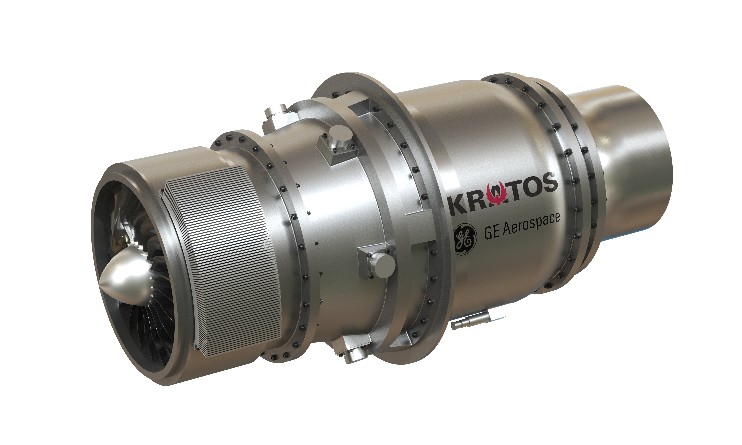
This collaboration strengthens Kratos’ ongoing partnership with GE Aerospace – building on last year’s Memorandum of Understanding (MOU) to advance the development and production of small, cost-effective engines for unmanned platforms. The new teaming agreement expands on that MOU and provides the framework for the two companies to develop, manufacture, test, and field the GEK800 Engine, as well as collaborate on other low-cost expendable turbofan engines.
In addition to the joint work on the GEK800, the companies have commenced work on another new engine, the GEK1500. The engines under development support unmanned aerial systems (UAS), collaborative combat aircraft, and similar applications, positioning Kratos and GE Aerospace to offer affordable mass propulsion solutions across a range of next-generation defense applications for the Department of Defense.
Kratos brings more than 20 years of experience developing and producing small, affordable engines for UAS, drones, and missile platforms. GE Aerospace adds a century of expertise in propulsion technology and the ability to scale advanced designs into high-rate production —helping bridge the gap from prototype to deployment.
About Kratos Defense & Security Solutions Kratos Defense & Security Solutions, Inc. (NASDAQ: KTOS) is a technology, products, system and software company addressing the defense, national security, and commercial markets. Kratos makes true internally funded research, development, capital and other investments, to rapidly develop, produce and field solutions that address our customers’ mission critical needs and requirements. At Kratos, affordability is a technology, and we seek to utilize proven, leading edge approaches and technology, not unproven bleeding edge approaches or technology, with Kratos’ approach designed to reduce cost, schedule and risk, enabling us to be first to market with cost effective solutions. We believe that Kratos is known as an innovative disruptive change agent in the industry, a company that is an expert in designing products and systems up front for successful rapid, large quantity, low-cost future manufacturing which is a value add competitive differentiator for our large traditional prime system integrator partners and also to our government and commercial customers. Kratos intends to pursue program and contract opportunities as the prime or lead contractor when we believe that our probability of win (PWin) is high and any investment required by Kratos is within our capital resource comfort level. We intend to partner and team with a large, traditional system integrator when our assessment of PWin is greater or required investment is beyond Kratos’ comfort level. Kratos’ primary business areas include virtualized ground systems for satellites and space vehicles including software for command & control (C2) and telemetry, tracking and control (TT&C), jet powered unmanned aerial drone systems, advanced vehicles and rocket systems, propulsion systems for drones, missiles, loitering munitions, supersonic systems, space craft and launch systems, C5ISR and microwave electronic products for missile, radar, missile defense, space, satellite, counter UAS, directed energy, communication and other systems, and virtual & augmented reality training systems for the warfighter. For more information, visit www.KratosDefense.com.
About GE Aerospace GE Aerospace is a global aerospace propulsion, services, and systems leader with an installed base of approximately 45,000 commercial and 25,000 military aircraft engines. With a global team of approximately 53,000 employees building on more than a century of innovation and learning, GE Aerospace is committed to inventing the future of flight, lifting people up, and bringing them home safely. Learn more about how GE Aerospace and its partners are defining flight for today, tomorrow, and the future at www.geaerospace.com.
Notice Regarding Forward-Looking Statements Certain statements in this press release may constitute “forward-looking statements” within the meaning of the Private Securities Litigation Reform Act of 1995. These forward-looking statements are made on the basis of the current beliefs, expectations and assumptions of the management of Kratos and are subject to significant risks and uncertainty. Investors are cautioned not to place undue reliance on any such forward-looking statements. All such forward-looking statements speak only as of the date they are made, and Kratos undertakes no obligation to update or revise these statements, whether as a result of new information, future events or otherwise. Although Kratos believes that the expectations reflected in these forward-looking statements are reasonable, these statements involve many risks and uncertainties that may cause actual results to differ materially from what may be expressed or implied in these forward-looking statements. For a further discussion of risks and uncertainties that could cause actual results to differ from those expressed in these forward-looking statements, as well as risks relating to the business of Kratos in general, see the risk disclosures in the Annual Report on Form 10-K of Kratos for the year ended December 29, 2024, and in subsequent reports on Forms 10-Q and 8-K and other filings made with the SEC by Kratos.
Key Points – Job openings rose to 7.39M in April, defying tariff fears. – Hiring and quits edged up slightly, but remain subdued. – Unemployment rate stayed at 4.2% as labor market holds firm.
In a surprising development for economic watchers, job openings in the United States increased in April, defying expectations of a slowdown amid escalating trade tensions. According to the latest data from the Bureau of Labor Statistics, open positions climbed to 7.39 million, up from 7.2 million the previous month. This rise marks a significant rebound from March’s near four-year low and comes as the first round of President Trump’s wide-ranging tariffs began to take effect.
Despite concerns that these new trade measures could dampen business confidence and hiring, the April data suggests that the labor market continues to show resilience. Economists had forecasted a decline in job openings to 7.1 million, making the latest figures particularly notable. Although headline numbers remain solid, underlying indicators suggest that the labor market is not without its challenges.
While the number of job openings increased, broader hiring activity showed only modest gains. Employers brought on 5.57 million new hires in April, a slight uptick from the 5.4 million seen in March. The hiring rate inched up to 3.5%, but this remains relatively low by historical standards and reflects ongoing caution among employers.
Worker behavior also points to a more reserved outlook. The quits rate—often seen as a barometer of employee confidence—dipped to 2% from 2.1% in March. This slight decline indicates that fewer workers are willing to voluntarily leave their jobs, a potential signal that many remain uncertain about finding new opportunities in a changing economic environment.
Taken together, these data points suggest that while businesses are still looking to hire, both employers and workers are navigating an atmosphere shaped by uncertainty. Companies may be posting jobs but are hesitant to move aggressively on staffing until there is more clarity on the economic direction, particularly with regard to ongoing trade disputes and tariff implementation.
Despite these headwinds, the broader labor market continues to hold steady. April saw 177,000 new nonfarm payroll additions, and the unemployment rate remained unchanged at 4.2%. These figures indicate that the overall employment landscape remains stable for now, even as underlying dynamics hint at a more cautious economic tone.
Looking forward, analysts expect the May jobs report to show only a slight easing in job growth, with consensus estimates pointing to 130,000 new positions. The unemployment rate is projected to stay flat, reinforcing the view that the labor market, while not accelerating, is also not deteriorating in a meaningful way.
Overall, April’s labor market data paints a picture of a U.S. economy that remains functional but wary. With trade policy still in flux and many businesses unsure about future demand and costs, the job market appears to be holding its ground—for now.
Codere Online refers, collectively, to Codere Online Luxembourg, S.A. and its subsidiaries. Codere Online launched in 2014 as part of the renowned casino operator Codere Group. Codere Online offers online sports betting and online casino through its state-of-the art website and mobile application. Codere currently operates in its core markets of Spain, Italy, Mexico, Colombia, Panama and the City of Buenos Aires (Argentina). Codere Online’s online business is complemented by Codere Group’s physical presence throughout Latin America, forming the foundation of the leading omnichannel gaming and casino presence in the region.
Michael Kupinski, Director of Research, Equity Research Analyst, Digital, Media & Technology , Noble Capital Markets, Inc.
Jacob Mutchler, Research Associate, Noble Capital Markets, Inc.
Refer to the full report for the price target, fundamental analysis, and rating.
Files 20-F with SEC. On June 2, the company announced the filing of its 2024 annual report with the SEC. As a reminder, the company was not in compliance with Nasdaq listing requirements regarding the timely filing of financial results and requested a hearing to review the delisting determination. The issue started with a change in the company’s auditors.
Satisfying listing requirements. Notably, with the filing of its 20-F, the company believes it has regained compliance with the Nasdaq listing requirements and does not anticipate the hearing requested on May 22 will be necessary. Importantly, the filing puts the company back on track with its financial reporting.
Equity Research is available at no cost to Registered users of Channelchek. Not a Member? Click ‘Join’ to join the Channelchek Community. There is no cost to register, and we never collect credit card information.
This Company Sponsored Research is provided by Noble Capital Markets, Inc., a FINRA and S.E.C. registered broker-dealer (B/D).
*Analyst certification and important disclosures included in the full report. NOTE: investment decisions should not be based upon the content of this research summary. Proper due diligence is required before making any investment decision.
Mark Reichman, Managing Director, Equity Research Analyst, Natural Resources, Noble Capital Markets, Inc.
Refer to the full report for the price target, fundamental analysis, and rating.
First quarter 2025 financial results. Nicola Mining (TSX.V: NIM, OTCQB: HUSIF) reported a first quarter 2025 loss of C$475,808 or C$(0.00) per share compared to a loss of C$1,028,129 or $(0.01) per share during the prior year period. We had projected a loss of C$1,044,879 or C$(0.01) per share. The variance to our estimates was largely due to a gain on marketable securities. We increased our 2025 net income and EPS estimates to C$8,803,755 and C$0.05 per share, respectively, from C$7,724,367 and C$0.04. We updated our commodity grade assumptions, along with higher metals price estimates based on actual April and May pricing and CME futures settlements for the remainder of the year.
Mill operations to commence shortly. We expect Nicola Mining to commence milling operations on or around June 15. On May 11, Talisker Resources Ltd. (TSX: TSK, OTCQX: TSKFF) began trucking run of mine material from its Mustang Mine to Nicola’s Craigmont Mill in British Columbia. Approximately 2,000 tonnes of ore had been delivered as of June 1, and we expect a stockpile of 2,500 to 3,000 tonnes prior to the mill commencing operations.
Equity Research is available at no cost to Registered users of Channelchek. Not a Member? Click ‘Join’ to join the Channelchek Community. There is no cost to register, and we never collect credit card information.
This Company Sponsored Research is provided by Noble Capital Markets, Inc., a FINRA and S.E.C. registered broker-dealer (B/D).
*Analyst certification and important disclosures included in the full report. NOTE: investment decisions should not be based upon the content of this research summary. Proper due diligence is required before making any investment decision.
Key Points: – Meta signs 20-year deal for 1.1 GW of nuclear power from Clinton Clean Energy Center. – Supports grid stability and emissions goals, keeping the Illinois plant from closing. – Part of broader tech shift toward nuclear as AI and data center power demands grow.
Meta has taken a major step toward securing its clean energy future with the announcement of a 20-year agreement to purchase nuclear power from Constellation Energy. Beginning in 2027, the tech giant will buy approximately 1.1 gigawatts of electricity annually from the Clinton Clean Energy Center in Illinois—effectively the full output of the plant’s sole nuclear reactor.
This long-term deal highlights the increasing role of nuclear power in the digital economy, as energy-intensive data centers drive up electricity demand. For Meta, which has pledged to power its operations with 100% clean energy, the agreement is a crucial move to ensure long-term, zero-emission power availability.
The Clinton Clean Energy Center has faced financial uncertainty in recent years. It has operated with the support of zero-emissions credits since 2017, which recently expired. Without a new revenue source, the facility was at risk of early retirement. Meta’s commitment not only guarantees the plant’s continued operation but also supports its potential relicensing and even a modest expansion of its output by 30 megawatts.
While the electricity generated at Clinton will not directly power Meta’s data centers, the deal helps ensure a consistent flow of clean energy to the regional grid. In turn, this strengthens the broader power infrastructure that supports Meta’s energy goals.
This marks Meta’s first official investment in nuclear energy and comes amid a broader trend of tech companies aligning with the nuclear sector. In recent months, Microsoft agreed to buy power from a restarted reactor at Three Mile Island, and Amazon has poured over $500 million into the development of small modular reactors (SMRs). Google is also investing in new nuclear projects and advanced reactor developers.
All three tech giants—Meta, Google, and Amazon—signed a pledge earlier this year calling for a global tripling of nuclear energy production by 2050. The pledge reflects growing consensus in the tech world that nuclear power is essential for achieving deep decarbonization while meeting soaring energy demand.
This partnership also comes as the U.S. government accelerates support for nuclear expansion. President Trump recently signed a series of executive orders aimed at reducing regulatory barriers and developing a domestic supply chain for nuclear fuel. These actions are intended to pave the way for faster deployment of advanced reactors, especially SMRs, which are seen as more scalable and cost-effective than traditional nuclear facilities.
Although Meta’s current agreement focuses on a legacy reactor, the company has signaled strong interest in the next generation of nuclear technology. In December, it issued a request for proposals from developers of advanced nuclear projects, seeking to add between one and four gigawatts of new capacity in the U.S. That process is still underway and represents Meta’s broader ambition to shape the future of clean, reliable power.
Constellation, meanwhile, has hinted that it may pursue a new permit to build an SMR at the Clinton site, signaling long-term potential for growth and innovation at the facility.
The U.S. manufacturing sector continues to show signs of stress, with May’s ISM Manufacturing PMI slipping further into contraction territory at 48.5 — down from April’s 48.7. This persistent decline highlights the fragility of the sector amid deepening global trade tensions and domestic economic uncertainty. Perhaps more alarmingly, U.S. imports plunged to their lowest levels since 2009, registering a reading of 39.9, a significant drop from April’s 47.1.
This steep decline in imports reflects both softening demand and the growing impact of tariffs, many of which have been reintroduced or expanded under President Trump’s revised trade policy. According to Susan Spence of the ISM Manufacturing Business Survey Committee, tariffs were the most cited concern among respondents — with 86% mentioning them. Several likened the current climate to the disarray of the early pandemic.
For small-cap stocks, especially those tied to industrials, materials, and manufacturing, this environment spells both challenge and opportunity. Small caps are often more domestically focused than their large-cap counterparts and tend to be more sensitive to economic cycles. When manufacturing slows, these companies typically suffer more acutely from reduced orders, higher input costs due to tariffs, and tighter margins.
However, the current backdrop is more nuanced. While ISM’s index showed contraction, S&P Global’s separate gauge of manufacturing activity rose to 52, indicating slight expansion. Yet, even that report carried warnings: Chief economist Chris Williamson noted that the uptick is likely temporary, driven by inventory hoarding amid fears of supply chain issues and rising prices.
This divergence reveals how mixed signals are becoming the norm — complicating investment strategies in the small-cap space. On one hand, small manufacturers that rely on imported materials face margin pressure from rising input costs due to tariffs. On the other, those able to localize supply chains or produce domestically could benefit from reshoring trends and domestic inventory build-up.
For investors, the key takeaway is caution, not panic. Many small-cap industrials are already priced for a slowdown, but those with strong balance sheets and pricing power may weather the storm — or even gain market share as competitors falter. Meanwhile, increased inventory levels could provide short-term tailwinds, though that may evaporate quickly if demand doesn’t keep pace.
Marketwide, prolonged manufacturing contraction can pressure broader economic indicators, especially employment and capital spending, ultimately weighing on the S&P 500 and Dow. The Nasdaq, less exposed to traditional manufacturing, may prove more resilient.
In conclusion, the state of U.S. manufacturing is flashing caution signs, especially for small-cap stocks in the sector. While short-term inventory surges and reshoring trends may offer brief relief, the longer-term picture remains clouded by tariff uncertainties and fragile global trade relations. Investors would be wise to look for companies with flexible supply chains, diversified revenue streams, and strong cash positions as potential outperformers in this challenging landscape.
The GEO Group, Inc. (NYSE: GEO) is a leading diversified government service provider, specializing in design, financing, development, and support services for secure facilities, processing centers, and community reentry centers in the United States, Australia, South Africa, and the United Kingdom. GEO’s diversified services include enhanced in-custody rehabilitation and post-release support through the award-winning GEO Continuum of Care®, secure transportation, electronic monitoring, community-based programs, and correctional health and mental health care. GEO’s worldwide operations include the ownership and/or delivery of support services for 103 facilities totaling approximately 83,000 beds, including idle facilities and projects under development, with a workforce of up to approximately 18,000 employees.
Joe Gomes, CFA, Managing Director, Equity Research Analyst, Generalist , Noble Capital Markets, Inc.
Refer to the full report for the price target, fundamental analysis, and rating.
Enter Negotiations for Extension. On Friday, it was announced the government intends to enter into negotiations with GEO’s BI subsidiary for a one year extension of the ISAP program, which is currently effective through July 31, 2025. We would view an extension of this program as a significant positive for GEO in both the near-term and longer term.
A Positive Future? Acknowledging Friday’s release is limited to extending the current contract for a year, the verbiage used by the government contracting agency highlights the moat GEO has built around the business, suggesting the Company should be in the catbird’s seat for a longer term renewal. For example, the government states, “Market research conducted by the Office of Acquisition Management revealed that there is only one responsible source because the current contractor is uniquely positioned to maintain existing operations of the program without transitioning active program participants between contractor solutions.”
Equity Research is available at no cost to Registered users of Channelchek. Not a Member? Click ‘Join’ to join the Channelchek Community. There is no cost to register, and we never collect credit card information.
This Company Sponsored Research is provided by Noble Capital Markets, Inc., a FINRA and S.E.C. registered broker-dealer (B/D).
*Analyst certification and important disclosures included in the full report. NOTE: investment decisions should not be based upon the content of this research summary. Proper due diligence is required before making any investment decision.
Robert LeBoyer, Senior Vice President, Equity Research Analyst, Biotechnology, Noble Capital Markets, Inc.
Refer to the full report for the price target, fundamental analysis, and rating.
Net Loss of $1.4 Million Was Less Than We Expected. 1Q25 Nutriband reported a loss for 1Q26, ended April 30, 2025, of $1.4 million or $(0.12) per share. Product Sales were $0.67 million, slightly below the $0.7 million we had estimated. Importantly, the company made progress advancing its abuse-resistant AVERSA Fentanyl patch toward clinical testing. We expect future revenues to be driven by AVERSA Fentanyl and see the current product sales as a means to offset the cost of product development. Cash at the end of the quarter was $3.0 million.
Total Expenses Were Below Expectations. During the quarter, COGS were $0.4 million or 62% of sales, lower than the 70% we had expected and the 65% seen for FY2024. SG&A and R&D were both close to our estimates, with Total Expenses of $2.1 million lower than our estimate of $2.5 million. We had initially allowed for a stock offering during the quarter that would have increased the Weighted Average Shares Outstanding to 13.2 million, compared with the reported 11.1 million.
Equity Research is available at no cost to Registered users of Channelchek. Not a Member? Click ‘Join’ to join the Channelchek Community. There is no cost to register, and we never collect credit card information.
This Company Sponsored Research is provided by Noble Capital Markets, Inc., a FINRA and S.E.C. registered broker-dealer (B/D).
*Analyst certification and important disclosures included in the full report. NOTE: investment decisions should not be based upon the content of this research summary. Proper due diligence is required before making any investment decision.
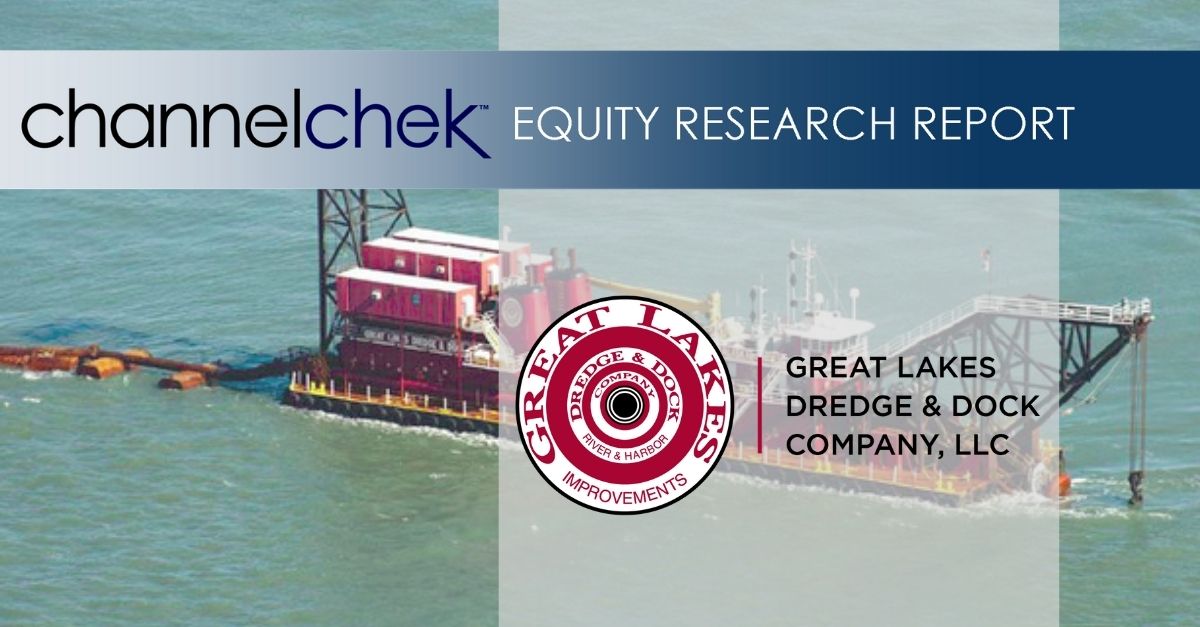
Great Lakes Dredge & Dock Corporation is the largest provider of dredging services in the United States. In addition, Great Lakes is fully engaged in expanding its core business into the rapidly developing offshore wind energy industry. The Company has a long history of performing significant international projects. The Company employs experienced civil, ocean and mechanical engineering staff in its estimating, production and project management functions. In its over 131-year history, the Company has never failed to complete a marine project. Great Lakes owns and operates the largest and most diverse fleet in the U.S. dredging industry, comprised of approximately 200 specialized vessels. Great Lakes has a disciplined training program for engineers that ensures experienced-based performance as they advance through Company operations. The Company’s Incident-and Injury-Free® (IIF®) safety management program is integrated into all aspects of the Company’s culture. The Company’s commitment to the IIF® culture promotes a work environment where employee safety is paramount.
Joe Gomes, CFA, Managing Director, Equity Research Analyst, Generalist , Noble Capital Markets, Inc.
Hans Baldau, Associate Analyst, Noble Capital Markets, Inc.
Refer to the full report for the price target, fundamental analysis, and rating.
New Award. In Friday’s Department of Defense contract releases, Great Lakes was awarded a new $35.8 million dredging contract for Galveston, TX. The contract should be completed by the beginning of November 2025. We view this as Great Lakes filling in the very limited open 2025 calendar.
Empire 1 Restarted. In mid-May, the stop work order on the Empire 1 offshore wind project was lifted allowing construction activities to resume. Equinor will perform an updated assessment of the project economics in the second quarter. Empire aims to be able to execute planned activities in the offshore installation window in 2025 and reach its planned commercial operation date in 2027. Empire will engage with suppliers and regulatory bodies to reduce the impact of the stop work order. This is positive news for the still under construction Acadia.
Equity Research is available at no cost to Registered users of Channelchek. Not a Member? Click ‘Join’ to join the Channelchek Community. There is no cost to register, and we never collect credit card information.
This Company Sponsored Research is provided by Noble Capital Markets, Inc., a FINRA and S.E.C. registered broker-dealer (B/D).
*Analyst certification and important disclosures included in the full report. NOTE: investment decisions should not be based upon the content of this research summary. Proper due diligence is required before making any investment decision.