Nine months ago, Oracle was the hottest stock in enterprise technology. On September 10, 2025, shares surged 36% in a single session after reports surfaced that OpenAI had committed to a $300 billion, five-year cloud computing deal with the company. The stock hit a record high of $345.72. The narrative was irresistible: Oracle had reinvented itself as an AI infrastructure company, and the biggest name in artificial intelligence had just bet hundreds of billions on that transformation.
Today, Oracle trades below $140. The stock has fallen more than 50% from its June 2026 high and roughly 62% from last September’s peak. What happened in between is a story about what goes wrong when a company takes on enormous financial risk to chase AI demand that may not materialize as quickly, or as reliably, as the contracts suggest.
The Numbers That Spooked the Market
Oracle’s fiscal 2026 results, released in June, contained strong headline numbers. Revenue grew. Earnings beat estimates. Cloud infrastructure revenue surged 93% year over year in Q4. Under normal circumstances, those would be the kind of results that lift a stock. Instead, shares fell more than 12% in a single session after the report because of what the financial statements revealed underneath the growth.
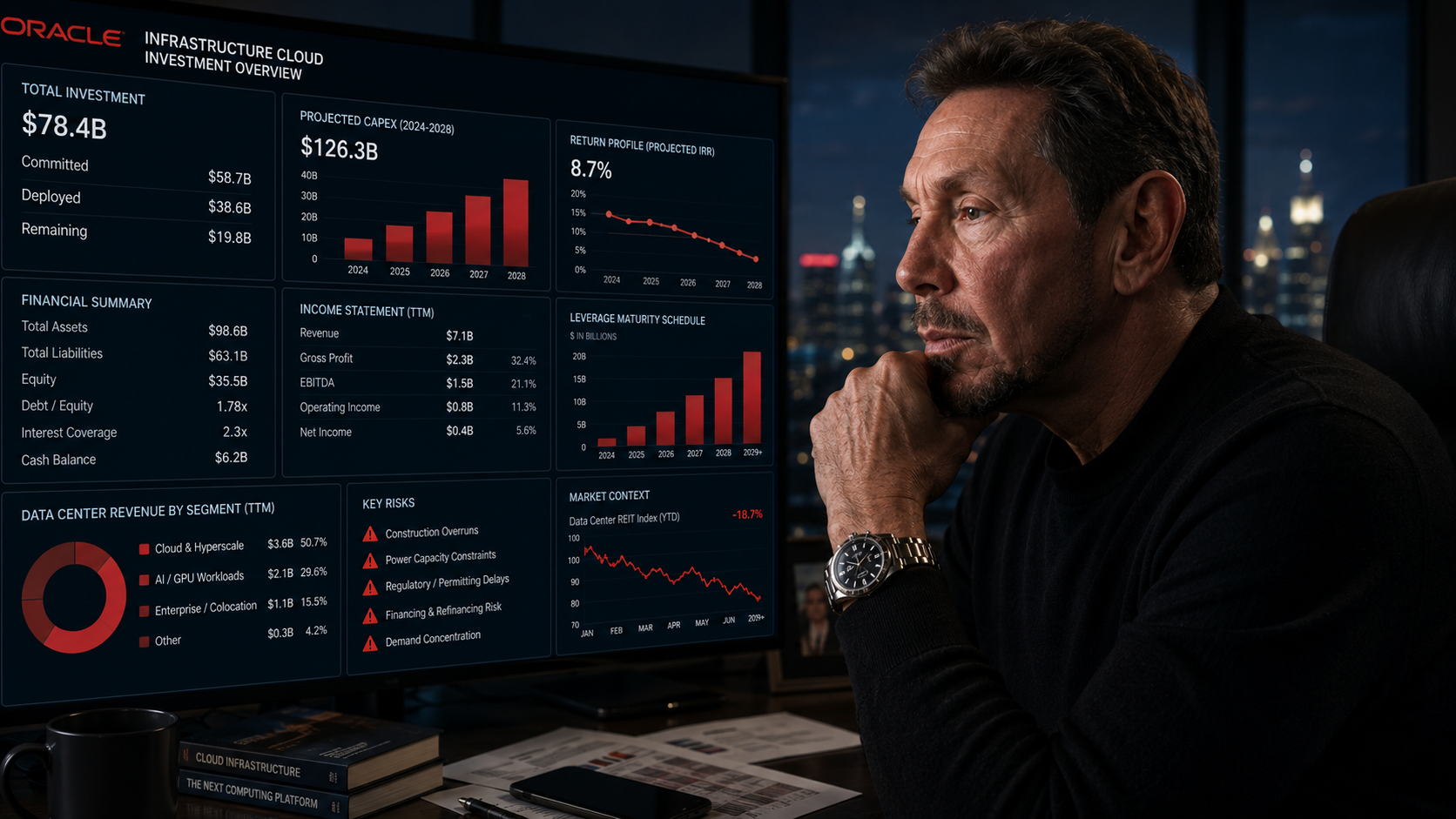
Capital expenditures for the fiscal year surged to approximately $56 billion, a 162% increase from the prior year. That spending pushed Oracle into negative free cash flow of roughly $24 billion. Total debt swelled to approximately $130 billion. Management indicated that spending would remain elevated, with approximately $70 billion in capex planned for fiscal 2027, and floated the possibility of additional debt and equity raises to fund the buildout. The company’s CFO warned that gross margins would decline in fiscal 2027 as new data center projects ramp up.
The OpenAI Concentration Problem
The risk that has rattled investors most is customer concentration. Oracle ended fiscal 2026 with $638 billion in remaining performance obligations, a 363% increase from $138 billion a year earlier. That figure represents signed contracts for services not yet delivered, and on its face it looks like an extraordinary demand signal. The concern is who those contracts belong to.
Approximately $300 billion of Oracle’s RPO is reportedly attributable to OpenAI alone. OpenAI generates roughly $25 billion in annualized revenue and continues to operate at a significant loss, relying on outside investors to fund its operations. When OpenAI announced earlier this summer that it would delay its IPO from 2026 to 2027, Oracle shares dropped 9% in a single week because the delay raised questions about whether OpenAI would have the financial capacity to honor the scale of its commitments.
Oracle’s own annual report contained unusually thorough risk disclosures about the possibility that its largest AI infrastructure customers might not be able to fulfill their obligations. For a company carrying $130 billion in debt to build data centers designed to serve those exact customers, that warning landed with force.
What This Tells the Broader Market
For investors tracking the AI infrastructure buildout, Oracle’s decline is not an indictment of AI demand itself. It is a case study in concentration risk, leverage, and the gap between signed contracts and delivered revenue. The demand for AI compute capacity is real and growing. But the financial structures being built to serve that demand carry meaningful risk when they depend heavily on a small number of customers whose own economics remain unproven.
Smaller cloud infrastructure, data center, and AI services companies with more diversified customer bases and conservative balance sheets face a fundamentally different risk profile. The AI infrastructure buildout is not slowing down. But Oracle’s 50% decline is a reminder that how a company finances its participation in that buildout matters as much as the demand itself.