A $60 Million Microsoft Investment Just Opened a New Door for AI Research

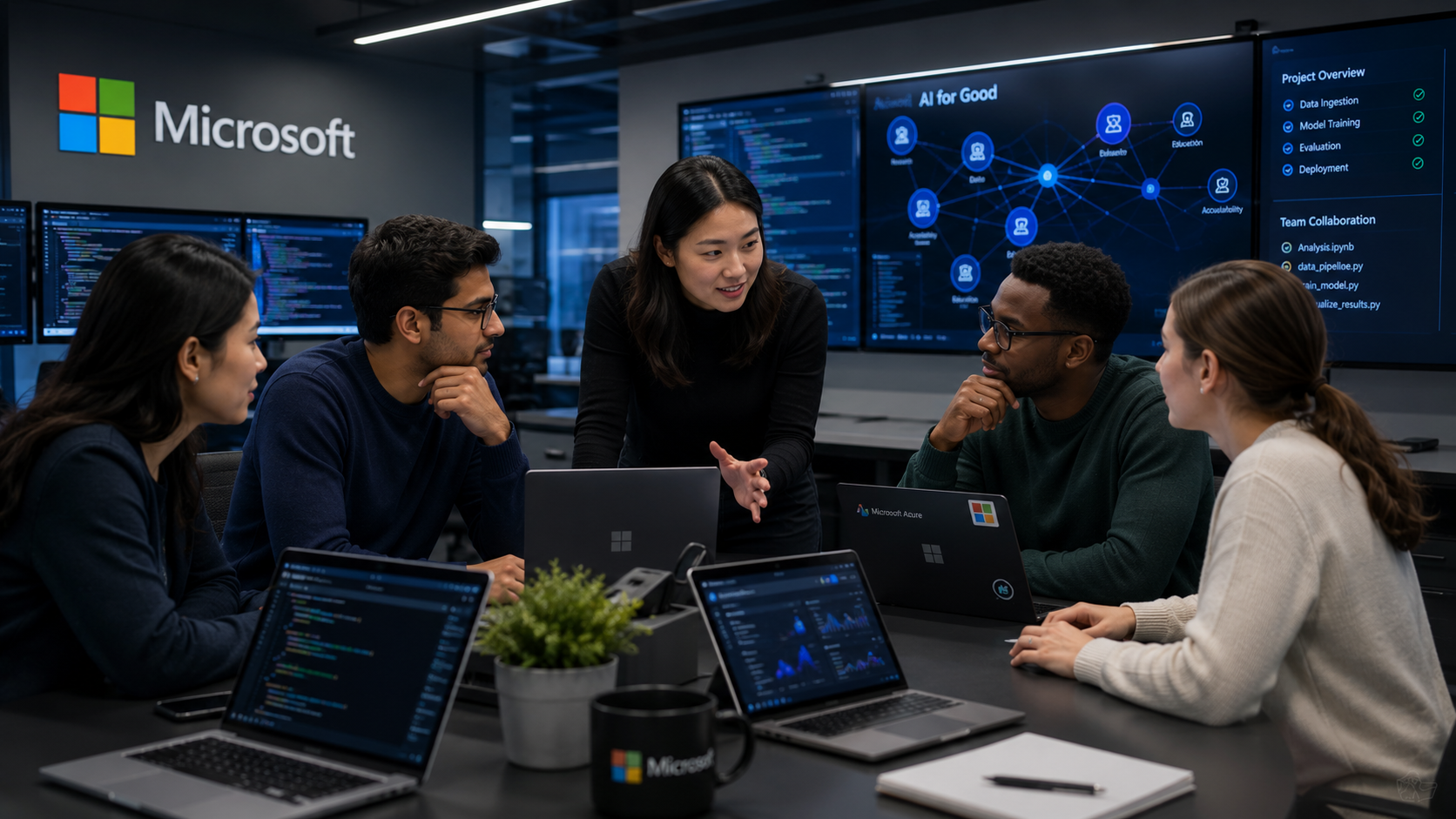
The federal government’s push to embed artificial intelligence into the core of American scientific research just gained a major private sector partner. Microsoft announced Wednesday it is investing $60 million to advance the Department of Energy’s Genesis Mission, a program designed to unite 17 national laboratories, industry partners, and academic institutions around AI-enabled research and development. The stated goal is to harness AI for breakthroughs in energy dominance, discovery science, and national security.

The investment breaks down into two distinct components. Forty million dollars will fund Azure compute and AI credits distributed to the program over three years, giving national lab researchers direct access to Microsoft’s cloud infrastructure and AI models. The remaining $20 million will go toward what Microsoft calls solution engineering enablement services, covering the engineering, architecture, deployment, and adoption support needed to actually turn that cloud capacity into usable research outcomes rather than unused credits sitting on a balance sheet.

A New Management Layer for a Sprawling Initiative

Alongside the investment, Microsoft is launching a new program called SPARK, short for Scientific Partnership Advancing Research and Knowledge, which will function as a management office for the Genesis Mission. SPARK is designed to facilitate secure collaboration across the many institutions involved, addressing one of the most persistent challenges in large, multi-lab federal research initiatives: coordinating dozens of separate organizations with different systems, security requirements, and research priorities into a single functioning research enterprise.

Microsoft’s language around the announcement was notably direct about where it sees this heading. The company described entering an era where AI and quantum computing do not just support the scientific process but become essential to it, committing to provide hyperscale compute, advanced models, emerging quantum capabilities, and dedicated technical expertise running alongside the labs’ own world-leading systems.

Why This Matters Beyond Microsoft

For investors tracking the broader technology ecosystem, the Genesis Mission is a continuation of a theme that has defined 2026: the federal government treating AI and quantum computing infrastructure as a strategic national priority rather than a purely commercial pursuit. Earlier this year, the Trump administration committed $2 billion in direct equity investments across nine domestic quantum computing companies under the CHIPS and Science Act framework, a move that signaled Washington views these technologies with the same urgency it once reserved for semiconductor manufacturing and rare earth supply chains.

The Genesis Mission operates on a different mechanism, funding compute access and research infrastructure rather than taking direct equity stakes, but the underlying logic is the same. When 17 national laboratories gain hyperscale AI and quantum compute access, the research output that follows tends to generate downstream commercial opportunities. National lab research has historically been a significant source of spinout technology, licensing agreements, and early-stage partnerships that eventually flow into smaller, publicly traded companies operating in specialized AI, quantum computing, and scientific instrumentation niches.

The Small Cap Angle

For companies operating below the $2 billion market cap threshold in the AI infrastructure, quantum computing, and specialized scientific computing space, initiatives like the Genesis Mission represent a slower-moving but potentially significant catalyst. Government-funded research at this scale often creates procurement opportunities, licensing pathways, and collaborative research agreements that smaller, more nimble companies are frequently better positioned to capture than the largest technology platforms funding the core infrastructure.

As the Genesis Mission matures over its three-year funding window, the research coming out of these 17 laboratories is worth monitoring closely. History suggests that when the federal government makes this scale of commitment to a specific technology area, the commercial ecosystem around it tends to expand well beyond the initial corporate partners involved.

Microsoft Just Torched 3,200 Xbox Jobs and Admitted the Console Model Is Broken

Microsoft (NASDAQ: MSFT) announced this morning that it is cutting 4,800 roles across the company, roughly 2.1% of its workforce. The bulk of the pain, 3,200 positions, lands in the Xbox division. The stock fell more than 1% on the news. Microsoft is now down about 20% year to date, while Alphabet is up 14% and Amazon is up 5%.

But the layoff count is not the story. The story is what Xbox CEO Asha Sharma actually wrote in her memo to employees.

The Quote That Should Get Every Console Investor’s Attention

“Our business today is not healthy,” Sharma told her team. “We are operating at margins that are 3-10x lower than comparable platform and publishing businesses. We must reset XBOX.” She followed it with an even sharper number. “In a typical year, we lost 64 cents for every dollar we invested.”

That is a public admission from a Big Tech executive that an entire business unit has been burning cash at a structural rate. It is unusually blunt, and it is worth paying attention to.

What Is Actually Happening

The first round of cuts includes 1,600 employees today. Microsoft is moving four studios, Ninja Theory, Undead Labs, Compulsion Games, and Double Fine Productions, to outside management. It is working to sell or spin off a fifth, Arkane Studios in France. Sharma also flagged that some workflows pass through 14 layers of management, which she plans to compress to no more than five and ideally three.

Sharma took over Xbox in February and has already cut the price of Game Pass and reworked branding. This move is her most aggressive yet.

The context matters. Microsoft entered this console generation with a smaller install base and higher costs than Sony and Nintendo. The company then poured money into putting first-party games on rival platforms and expanding Game Pass, and the payoff never materialized. Meanwhile, the entire industry is facing a memory and storage crisis that has forced Microsoft, Sony, and Nintendo to raise console prices. Nintendo shares are down 52% over the past twelve months. Sony is off 17%.

The AI Overhang

Microsoft chief people officer Amy Coleman said none of the eliminated roles will be replaced by AI, but acknowledged the technology is changing how work gets done. That is corporate-speak for a much larger issue investors have been chewing on all year. Microsoft is spending heavily on AI infrastructure while the market is questioning whether AI labs will eventually displace demand for Microsoft 365 and its productivity stack. When your legacy cash cow is under pressure and your legacy loss-maker is being amputated on the same day, the market notices.

Why Small and Micro-Cap Investors Should Care

This is not just a Microsoft story. Console economics have propped up a range of small and micro-cap suppliers, developers, and specialty publishers for decades. A serious restructuring at Xbox has downstream implications for independent studios, middleware providers, gaming peripheral makers, and cloud gaming infrastructure names. The four studios moving to outside management, plus Arkane looking for a home, could create acquisition opportunities or standalone independence stories worth tracking.

There is also a broader read-through for anyone holding legacy technology names. When a business as embedded as Xbox can be publicly declared unhealthy by its own leadership, it forces investors to ask which other legacy businesses are quietly burning capital while management waits for the right moment to act.

The Bottom Line

Microsoft is not in trouble. It is a $3 trillion company that just made a hard call on a division that has been dragging on margins for years. But when a Big Tech leader tells you the console model is losing 64 cents on every dollar, believe her. The consumer technology stack is being repriced in real time, and the small caps that live downstream from it are next in line for the same conversation.

Microsoft Enters Quantum Hardware Race

Key Points:
– Microsoft’s entry into quantum hardware could reshape competitive dynamics in the quantum computing market
– Integration potential with AI suggests broader implications for tech sector valuations
– Early-stage quantum companies may face increased pressure as tech giants advance their capabilities

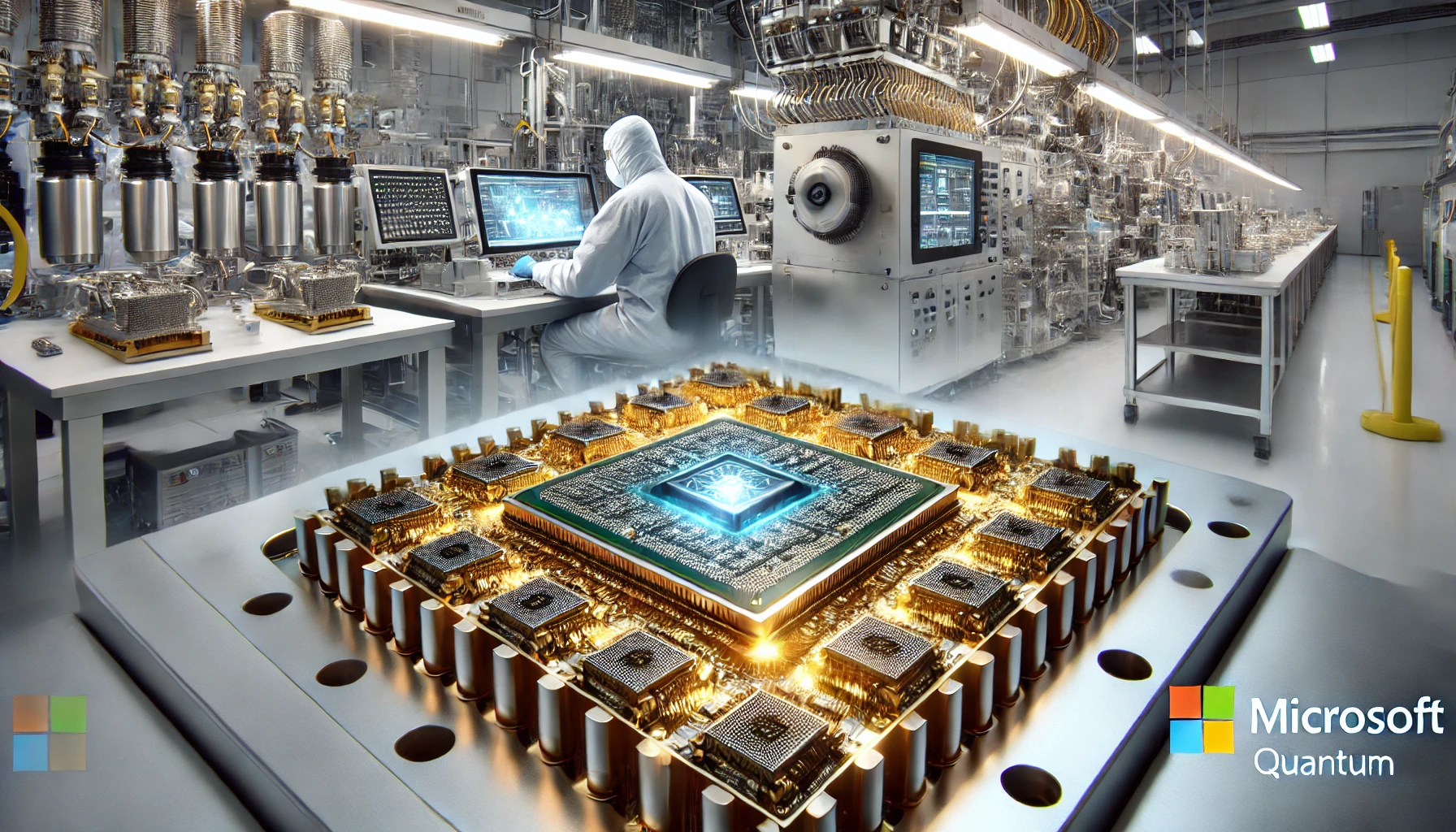
The tech investment landscape is witnessing a seismic shift as Microsoft unveils its Majorana 1 quantum chip, marking a crucial moment that could reshape investment strategies across both quantum-specific and broader technology portfolios. This development signals a potential acceleration in the commercialization timeline for quantum computing, challenging current market valuations and investment theses.

While quantum computing stocks like IonQ (+237% in 2024) and Rigetti (+1,500%) have seen spectacular gains, Microsoft’s entry into quantum hardware manufacturing raises important questions about the sustainability of pure-play quantum investments. The tech giant’s decision to manufacture its quantum chips in-house, rather than relying on traditional semiconductor fabrication partners, suggests a potential restructuring of the quantum supply chain that investors need to consider.

The market implications of this development extend far beyond the quantum computing sector. Microsoft’s strategic positioning of quantum computing as an AI enhancement tool points to a broader technology ecosystem play. This convergence could significantly impact valuations across the tech sector, particularly for companies involved in AI infrastructure and development.

Traditional tech investors should pay particular attention to Microsoft’s timeline projection. The company’s assertion that practical quantum applications are “years, not decades” away could accelerate investment in quantum-ready infrastructure and security solutions. This shift could benefit companies developing quantum-resistant cryptography and quantum software development tools.

The ripple effects are already visible in the venture capital space, with increased investment flowing into quantum-adjacent technologies. Startups working on quantum software, error correction, and control systems are attracting significant attention, even as the hardware segment becomes more competitive with major tech players entering the field.

For institutional investors, Microsoft’s advancement suggests a potential restructuring of quantum investment strategies. Rather than focusing solely on pure-play quantum companies, a more nuanced approach considering the entire quantum value chain – from basic research to commercial applications – may be prudent.

The development also raises questions about the future of quantum cloud services. While Microsoft plans to keep Majorana 1 focused on research partnerships, the company’s hints at future cloud integration through Azure could pressure current quantum-as-a-service providers. This dynamic might force investors to reassess the valuation metrics for companies whose business models rely heavily on quantum cloud service revenue.

Looking ahead, investors should monitor several key indicators: the pace of quantum patent filings, quantum-ready cybersecurity adoption rates, and strategic partnerships between quantum hardware providers and traditional tech companies. These metrics could provide early signals of quantum technology’s transition from research to commercial applications.

Global IT Meltdown: A Wake-Up Call for Markets and Tech Dependency

In an unprecedented technological catastrophe, a botched software update from cybersecurity firm CrowdStrike Holdings Inc. triggered a worldwide crash of Microsoft Windows computer systems on July 19, 2024. This event, described by experts as “the largest IT outage in history,” sent shockwaves through global markets and exposed the vulnerabilities of our increasingly interconnected digital infrastructure.

The outage’s impact was swift and far-reaching. Airlines grounded flights, banks reverted to backup systems, and healthcare providers struggled to access critical patient data. Emergency services, including 911 call centers, faced disruptions, highlighting the potential life-threatening consequences of such failures. The incident served as a stark reminder of how deeply technology is woven into the fabric of modern society and commerce.

As news of the outage spread, financial markets responded with notable volatility. CrowdStrike, the company at the center of the crisis, saw its shares plummet by as much as 20% in early trading before recovering slightly to close down 11%. This sharp decline wiped approximately $7.4 billion off the company’s market value, underscoring the severe financial consequences of technological mishaps.

The broader tech sector also felt the tremors. The Nasdaq Composite, home to many of the world’s largest technology companies, declined 0.5% as investors reassessed the risks associated with the sector. Meanwhile, the Dow Jones Industrial Average and S&P 500 also fell, by 0.9% and 0.5% respectively, reflecting wider market concerns about the potential economic impact of such large-scale disruptions.

Interestingly, the outage may have accelerated an ongoing trend of investor rotation out of large-cap tech stocks and into small-cap companies. This shift is partly driven by expectations of future interest rate cuts, which are typically more beneficial to smaller firms.

The CrowdStrike incident has brought several critical issues to the forefront, which are likely to shape market dynamics and corporate strategies in the coming years. The outage underscores the critical importance of robust cybersecurity measures. Companies that can demonstrate superior security protocols and resilience against such incidents may see increased investor interest.

The over-reliance on a handful of software vendors has been exposed as a significant risk. Businesses and investors alike may push for greater diversification in IT infrastructure to mitigate the impact of future outages. The scale of the disruption could prompt increased regulatory oversight of critical IT infrastructure. Companies in the tech sector may face new compliance requirements, potentially impacting their cost structures and profitability.

The incident highlights the need for comprehensive cyber insurance and risk management strategies. This could boost demand for specialized insurance products and risk consulting services. Organizations may increase investments in backup systems and redundancy measures, benefiting companies that provide these solutions.

The concurrent issues with Microsoft’s Azure cloud service may prompt a reevaluation of cloud dependency, potentially leading to a more distributed approach to cloud computing. The outage may accelerate interest in emerging technologies like blockchain and decentralized systems that promise greater resilience against single points of failure.

As markets digest the full implications of this event, it’s clear that the ripple effects will be felt for some time. Investors are likely to place greater emphasis on operational resilience and technological robustness in their valuation models. Companies that can demonstrate these qualities may command a premium, while those perceived as vulnerable could face valuation pressures.

Moreover, the incident serves as a wake-up call for policymakers and business leaders alike. It highlights the urgent need for comprehensive strategies to manage and mitigate the risks associated with our increasing reliance on digital systems.

In conclusion, while the immediate market impact of the CrowdStrike outage was significant, the long-term implications could be even more profound. As our world becomes increasingly digitized, ensuring the stability and security of our technological infrastructure is not just a matter of convenience—it’s a critical economic and social imperative. The markets of the future will undoubtedly reflect this new reality, with a heightened focus on technological resilience and security shaping investment decisions and corporate strategies for years to come.

Microsoft Ignites the AI Revolution With $3.3B Wisconsin Investment

The artificial intelligence revolution is rapidly reshaping industries across the globe, and Microsoft is doubling down with a massive $3.3 billion investment in Wisconsin. This multi-year commitment aims to transform the state into an AI innovation hub while positioning Microsoft as a preeminent leader in the generative AI market forecast to drive trillions in economic value creation.

At the core of Microsoft’s plans lies the construction of a cutting-edge $3.3 billion datacenter campus in Mount Pleasant, set to bolster the tech giant’s cloud computing muscle and AI capabilities. This modern facility, expected to be operational by 2026, will create thousands of new construction jobs over the next couple of years. More importantly, it will act as a launchpad for companies nationwide to access the latest AI cloud services and applications for driving efficiencies and growth across industries.

Microsoft isn’t just building physical infrastructure – it’s cultivating an entire ecosystem to proliferate AI adoption and expertise. A centerpiece is the establishment of the country’s inaugural manufacturing-focused AI Co-Innovation Lab. Housed at the University of Wisconsin-Milwaukee, this state-of-the-art facility will connect 270 local businesses directly with Microsoft’s AI experts. By 2030, the lab’s mission is to collaboratively design, prototype, and implement tailored AI solutions for 135 Wisconsin manufacturers and other participating companies.

This bold co-innovation strategy brings together key players like the startup fund TitletownTech, backed by the iconic Green Bay Packers franchise. Such partnerships could catalyze cross-pollination of ideas, talent, and domain expertise to keep Microsoft’s AI offerings razor-sharp and industry-relevant.

Perhaps most crucial is the workforce development component underpinning Microsoft’s Wisconsin roadmap. An overarching AI skilling initiative aims to train over 100,000 state residents in generative AI fundamentals by 2030 across industries. Specialized programs will also cultivate 3,000 accredited AI software developers and 1,000 cross-trained business leaders prepared to strategically harness AI capabilities.

The commitment extends beyond the technological aspects, with Microsoft earmarking funds for education, digital access, and community enrichment initiatives. A new 250-megawatt solar project and $20 million community fund for underserved areas demonstrate its intent for environmentally sustainable, inclusive growth.

From an investor’s perspective, Microsoft’s sweeping $3.3 billion investment could prove transformative on multiple fronts. It bolsters the company’s cloud infrastructure prowess while planting a strategic foothold in a resurgent manufacturing and innovation hub. This dynamic interplay could accelerate enterprise adoption of Microsoft’s AI offerings amid stiffening competition from rivals like Google, Amazon, and emerging AI startups.

Arguably more pivotal are the calculated workforce development and ecosystem-building initiatives underpinning this program. By nurturing a robust talent pipeline and collaborative networks spanning businesses, academic institutions, and community stakeholders, Microsoft is cultivating an AI market flywheel effect propelling its long-term competitive advantages.

The AI revolution’s socioeconomic impacts are poised to be transformative and profoundly disruptive over the coming decade. Generative AI alone could create trillions in annual economic value by 2030, according to some estimates. For investors, Microsoft’s multibillion-dollar Wisconsin commitment signals its intent to be an indispensable catalyst driving this seismic technological shift.

No investment of this scale and scope is without risk. Technological transitions breed uncertainty, and AI development remains a volatile, hyper-competitive battlefield. However, Microsoft’s holistic approach balancing infrastructure, innovation, talent, and sustainable growth principles could position it as an AI powerhouse for the modern era.

As the world inches toward an AI-driven future, all eyes should monitor how this Middle American heartland evolves into an unlikely nexus shaping the revolutionary capabilities poised to redefine sectors from manufacturing to healthcare, finance and beyond over the coming years.