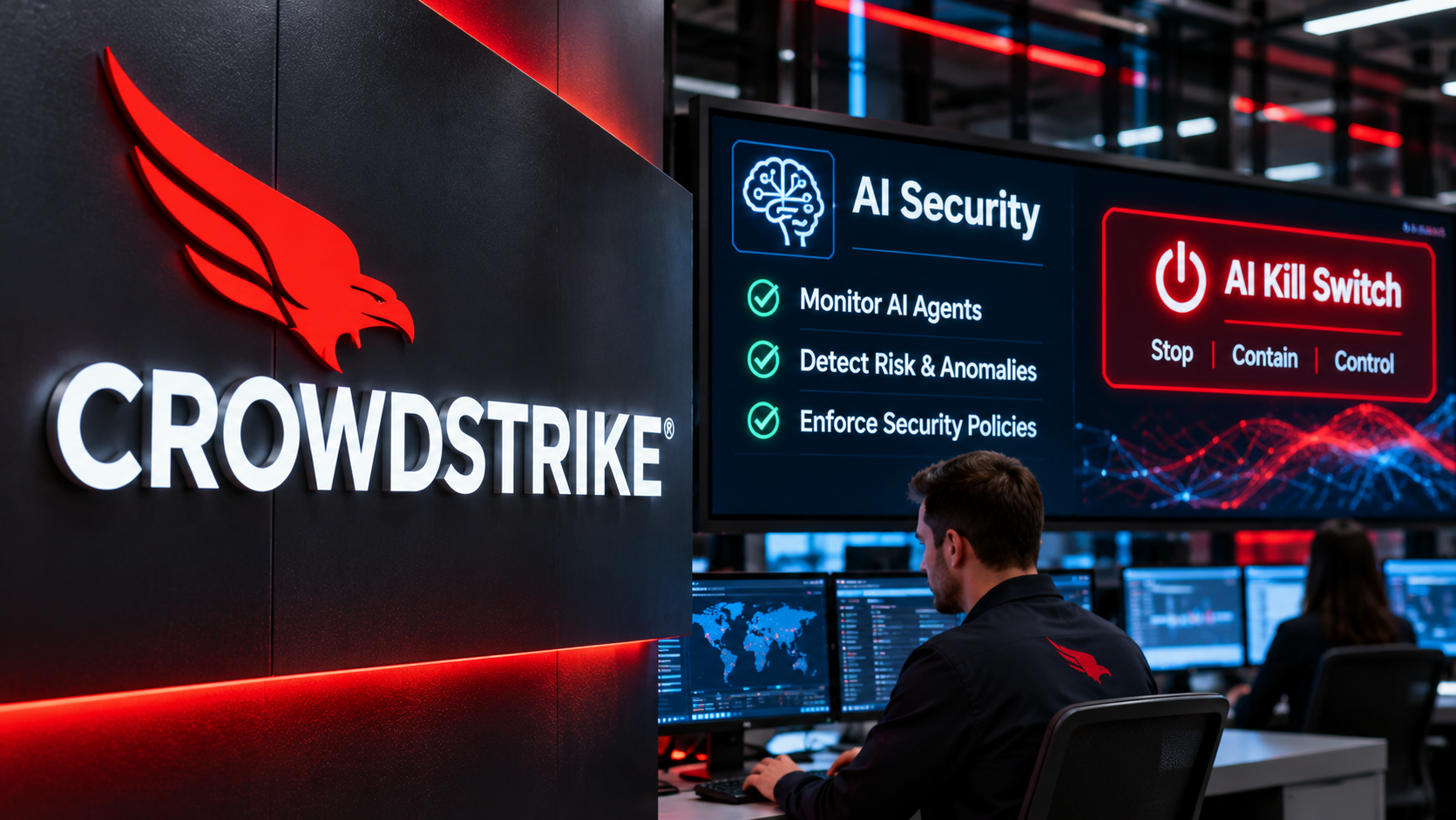
CrowdStrike (NASDAQ: CRWD) announced Tuesday, November 3, that it has agreed to acquire two artificial intelligence cybersecurity startups for a combined $495 million, while introducing a new security feature designed to stop autonomous AI agents from performing unauthorized actions. The announcements highlight the growing importance of AI security as businesses increasingly deploy automated systems across their operations.
The cybersecurity company has signed agreements to acquire Fiddler AI and Dreadnode, two privately held startups specializing in monitoring artificial intelligence systems and identifying potential security vulnerabilities.
According to The Wall Street Journal, CrowdStrike will pay approximately $400 million for Fiddler AI and $95 million for Dreadnode. The company did not disclose the individual purchase prices in its official announcements.
The acquisitions are expected to strengthen CrowdStrike’s Falcon cybersecurity platform by expanding its capabilities beyond traditional endpoint protection into monitoring, testing, and controlling AI-powered applications.
Fiddler AI develops technology that allows organizations to monitor artificial intelligence systems and understand how autonomous agents make decisions. Its platform provides visibility into agent behavior, including which tools agents use, what information they access, and how they complete assigned tasks.
CrowdStrike plans to integrate these capabilities into a new offering called Falcon Observe, helping businesses identify unexpected AI behavior and maintain records of automated decisions.
Dreadnode focuses on identifying security weaknesses in artificial intelligence models and applications before they are deployed. Its technology uses automated testing techniques to detect vulnerabilities that could allow attackers to manipulate AI systems, bypass safeguards, or gain unauthorized access to sensitive information.
By incorporating Dreadnode’s technology, CrowdStrike aims to help customers identify and address potential threats before AI applications enter production environments.
Alongside the acquisitions, CrowdStrike introduced an AI Kill Switch within its Falcon Guardian platform, giving cybersecurity teams greater control over autonomous AI agents operating within corporate networks.
AI agents differ from traditional chatbots because they can independently execute tasks, interact with applications, access company information, and make decisions based on predefined instructions.
While these capabilities can improve productivity, they also introduce security risks when agents receive excessive permissions, encounter malicious instructions, or operate outside their intended boundaries.
CrowdStrike’s new feature allows authorized administrators to interrupt potentially dangerous AI activity through gateway controls, prevent affected agents from relaunching, and restrict their access to enterprise resources. Additional capabilities to terminate agents directly on endpoints are planned for a future release.
The company also introduced enhancements designed to inspect AI communications, detect malicious prompts, and enforce security policies across enterprise applications.
CrowdStrike CEO George Kurtz emphasized that maintaining control over autonomous systems will be essential as organizations accelerate their adoption of artificial intelligence.
The announcements come as cybersecurity companies compete to develop new products addressing the risks associated with agentic AI, a category of artificial intelligence capable of performing multistep tasks with limited human intervention.
For investors, the acquisitions demonstrate how artificial intelligence is creating new opportunities for cybersecurity providers, even as concerns persist that AI automation could disrupt traditional software business models.
Companies deploying AI agents may require additional security tools to monitor automated activity, protect sensitive data, and meet regulatory compliance requirements. This could create recurring revenue opportunities for cybersecurity vendors offering integrated protection and monitoring services.
The expansion of AI security also presents opportunities for smaller technology companies developing specialized capabilities in identity management, automated testing, data protection, and AI governance.
However, increased competition, acquisition integration costs, and uncertainty surrounding enterprise AI adoption could influence how quickly these investments generate returns.
CrowdStrike shares gained more than 2% in early trading following the announcements, reflecting investor interest in the company’s expanding AI security strategy.
Both acquisitions are expected to close during CrowdStrike’s fiscal fourth quarter of 2027, subject to customary closing conditions. The company anticipates making the related security capabilities generally available during the same period.
As businesses move from experimenting with artificial intelligence to deploying autonomous agents throughout their operations, CrowdStrike’s latest investments underscore a broader shift in cybersecurity toward protecting not only computers and networks, but also the increasingly independent software systems operating within them.