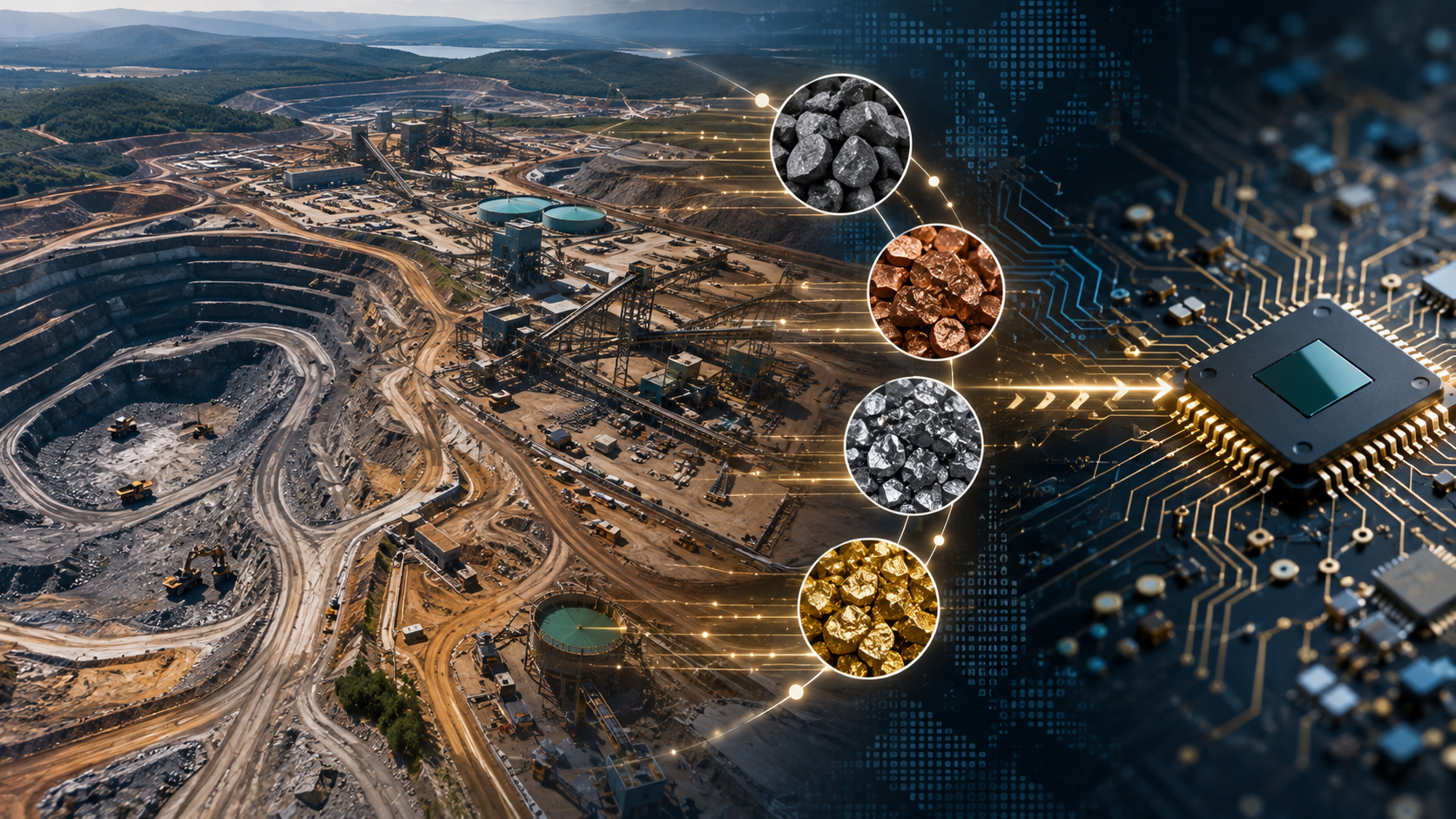
Mobix Labs (Nasdaq: MOBX), a semiconductor and defense electronics company, announced Wednesday it has signed a definitive all-stock agreement to acquire Special Project Delivery, a pre-revenue infrastructure development platform pursuing rare earth elements, critical minerals, energy storage, and Western US water resources. The deal is structured with consideration capped at 4.8 million Mobix shares, with closing targeted before the end of 2026, subject to shareholder approval.
Shares of Mobix climbed 5% in premarket trading following the announcement, recovering from a nearly 6% decline the prior session.
This is not a typical semiconductor company acquisition. Mobix currently supplies advanced wireless components and RF technology used in aerospace, defense, and homeland security systems, work that includes existing relationships with Boeing on 737 aircraft programs. The SPD deal adds an entirely different layer to that business: upstream control over the raw materials, energy infrastructure, and water resources that defense manufacturing and critical mineral processing actually depend on.
Mobix Chairman Jim Peterson framed the deal as central to the company’s broader National Security Matters initiative, describing control of strategic domestic mineral rights as fundamental to America’s long-term industrial strength. That initiative, launched earlier this year, has already included a separate acquisition of drone maker Vision Aerial, positioning Mobix as a company trying to assemble components, autonomous systems, and now raw materials under a single national security platform, rather than remaining a narrow RF and semiconductor supplier.
Investors need to understand what this transaction is and is not. SPD is explicitly described as pre-revenue, meaning it currently generates no sales. The company’s positioning across rare earth elements, critical minerals, energy storage, and water infrastructure remains largely conceptual at this stage, with no specific mineral deposits, resource grades, separation technology, capital expenditure estimates, permitting status, or customer commitments disclosed publicly as part of this announcement. Mobix itself is a microcap company that has carried substantial losses and limited liquidity in its own recent financial history.
This combination of a loss-making microcap acquirer and a pre-revenue target operating in a capital-intensive, multi-year development category, rare earth and critical mineral processing, is a materially higher-risk profile than a typical revenue-generating acquisition. The strategic thesis, positioning around America’s push to reduce dependence on foreign rare earth supply chains, is genuinely timely and aligned with a broader theme playing out across defense and industrial policy in 2026. But thematic alignment and executable, funded infrastructure are two very different things at this stage of the deal.
Why the Theme Itself Is Worth Watching Regardless
Independent of this specific transaction’s execution risk, the broader push toward domestic rare earth and critical mineral supply chains remains one of the more significant structural themes in the small cap space this year. Government-backed investment in quantum computing, semiconductor manufacturing, and critical minerals has accelerated sharply, and smaller companies positioning early in that supply chain, whether through actual production assets or, as in this case, an earlier-stage development platform, are drawing real investor attention as a result.
For investors tracking this space, the Mobix-SPD deal is a useful case study in distinguishing between a company aligning itself with a compelling macro theme and a company that has actually built or acquired producing assets within that theme. The rare earth and critical minerals buildout in the United States is real and accelerating. Whether any single microcap deal successfully executes on that opportunity is a separate question entirely, one that depends on capital access, permitting, technical validation, and years of infrastructure development still ahead.