OpenAI CEO Sam Altman Seeks Multi-Trillion Investment for AI Chip Development

OpenAI CEO Sam Altman is reportedly seeking multi-trillion dollar investments to transform the semiconductor industry and accelerate AI chip development according to sources cited in a recent Wall Street Journal article. The ambitious plan would involve raising between $5 to $7 trillion to overhaul global chip fabrication and production capabilities focused on advanced AI processors.

If secured, this would represent the largest private investment for AI research and development in history. Altman believes increased access to specialized AI hardware is crucial for companies like OpenAI to build the next generation of artificial intelligence systems.

The massive capital infusion would allow a dramatic scaling up of AI chip manufacturing output. This aims to alleviate supply bottlenecks for chips used to power AI models and applications which are currently dominated by Nvidia GPUs.

Altman has been open about the need for expanded “AI infrastructure” including more chip foundries, data centers, and energy capacity. Developing a robust supply chain for AI hardware is seen as vital for national and corporate competitiveness in artificial intelligence in the coming years.

OpenAI has not confirmed the rumored multi-trillion dollar amount. However, Altman is currently meeting with investors globally, especially in the Middle East. The government of the United Arab Emirates is already onboard with the project.

By reducing reliance on any single vendor like Nvidia, OpenAI hopes to foster a more decentralized AI chip ecosystem if enough capital can be deployed to expand production capacity exponentially. This ambitious initiative points to a future where specialized AI processors could become as abundant and critical as microchips are today.

The semiconductor industry may need to prepare for major disruptions if OpenAI succeeds in directing unprecedented investment towards AI infrastructure. While Altman’s tactics have drawn criticism in the past, he has demonstrated determination to position OpenAI at the forefront of the AI chip race.

Altman ruffled some feathers previously by making personal investments in AI chip startups like Rain Neuromorphics while leading OpenAI. This led to accusations of conflict of interest which contributed to Altman’s temporary removal as CEO of OpenAI in November 2023.

Since returning as CEO, Altman has been working diligently to put OpenAI in the driver’s seat of the AI chip race. With billions or even trillions in new capital, OpenAI would have the funds to dominate R&D and exponentially increase chip production for the AI systems of tomorrow.

If realized, this plan could significantly shift the balance of power in artificial intelligence towards companies and nations that control the means of production of AI hardware. The winners of the AI era may be determined by who can mobilize the resources and infrastructure to take chip development to the next level.

AstraZeneca Shares Drop Despite Strong 2024 Outlook

Shares of pharmaceutical giant AstraZeneca fell over 6% despite the company projecting double-digit growth for 2024. Investors were disappointed by AstraZeneca missing Q4 earnings expectations due to rising costs. However, smaller healthcare firms may offer more upside potential.

AstraZeneca reported fourth quarter core earnings per share of $1.45, below analyst estimates of $1.50. Higher research and development costs weighed on profits. Meanwhile, total revenue edged above expectations at $12.02 billion.

The company expects low double-digit percentage increases in both total revenue and core earnings per share in 2024. This robust guidance is driven by AstraZeneca’s oncology and rare disease drugs.

However, shares dropped as investors focused on the earnings miss and product mix in the latest quarterly results. While AstraZeneca maintains a strong long-term outlook, its scale and mature product portfolio limit rapid growth.

This has led some investors to turn their attention to younger healthcare companies in search of higher growth potential. Smaller biotechs and emerging medtech firms can offer more upside, albeit with higher risk.

For example, cancer immunotherapy developer Silverback Therapeutics went public in late 2020 and has seen its stock price triple over the last year. The company is advancing treatments that harness the body’s immune system to fight cancer.

Other high-growth areas include digital health, where newly public firms like GoodRx are disrupting pharmacy and drug pricing. And healthcare tech provider Oak Street Health has surged over 200% since its 2020 IPO.

These younger healthcare firms tend to have higher volatility compared to big pharmas like AstraZeneca. But their focus on new innovations and faster growth in underpenetrated markets make them appealing for growth-oriented investors.

However, due diligence is required as many of these stocks go on to underperform or even fail. Factors like clinical trial results, regulatory approvals, and market adoption can make or break emerging health stocks.

Diversification across multiple companies can help mitigate the risk. Investing in a healthcare-focused ETF is one method to gain diversified exposure to both mature drugmakers and higher-growth emerging stocks.

Additionally, many biotech and medtech IPOs have been impacted by the 2022/2023 bear market. This offers an opportunity for investors to buy promising stocks at lower valuations.

Overall, AstraZeneca maintains a healthy long-term outlook supported by its deep pipeline of new drugs. But near-term headwinds like rising costs and the latest earnings miss dragged shares lower.

This illustrates how even strong incumbent firms face challenges sustaining rapid growth. For investors seeking higher growth potential, carefully selected emerging healthcare stocks can provide more upside.

However, realizing this potential requires thorough due diligence. Not all emerging companies succeed, making diversification and patience key when investing in new healthcare names. But buying into the right stocks early can result in tremendous gains over the long-term.

The health sector’s constant innovation ensures exciting new companies will continue disrupting incumbents. While mature pharmas like AstraZeneca play a key role in the market, fast-growing upstarts are where outsized returns often lie.

US Treasury Yields Rise on Jobs Data

U.S. Treasury yields climbed higher on Thursday following the release of better-than-expected jobs data and recent commentary from Federal Reserve officials suggesting fewer interest rate cuts in 2024.

The yield on the benchmark 10-year Treasury note rose over 6 basis points to 4.16%, while the 2-year Treasury yield added around 3 basis points to hit 4.45%. Yields move opposite to prices.

This rise in Treasury yields indicates bond investors are selling Treasuries, pushing the prices down and yields up, as expectations shift for future Fed policy.

The catalyst behind the latest move was a new Labor Department report showing initial jobless claims for unemployment insurance decreased to 218,000 last week. This reading came in below economist estimates of 220,000 claims and suggests ongoing resilience in the job market.

With employers holding onto workers and unemployment remaining low, it signals the labor market remains fairly tight. A tight job market gives the Fed less room to aggressively cut interest rates to spur economic growth.

The jobs data follows recent commentary from multiple Fed officials about interest rate policy in 2024.

Minneapolis Fed President Neel Kashkari said this week he expects only 2-3 rate cuts by the Fed next year, rather than his prior estimate of up to 5 cuts.

Similarly, Fed Governor Lisa Cook said she anticipates “a couple” of rate cuts in 2024 as inflation continues to moderate.

Markets are now scaling back expectations for the pace and magnitude of rate reductions next year.

Fed Chair Jerome Powell fueled this reassessment last week when he stated policymakers plan to take a cautious approach to cutting interest rates. He said they will be closely monitoring incoming economic data.

Powell’s remarks broke from his previously more dovish tone and put a damper on market hopes for a rate cut as early as March this year.

With the Fed’s benchmark rate currently at 4.5-4.75%, less aggressive rate cuts mean higher rates, and thus yields, for longer. This is the primary factor pushing Treasury yields higher right now.

The next major data point that could shift rate cut expectations will be January’s Consumer Price Index reading due next week.

If the CPI shows inflation pressures moderating further, it will boost the case for fewer Fed rate hikes. On the other hand, a hotter inflation print could put rate cuts later in 2024 back on the table.

Beyond the CPI, Treasury yields will remain sensitive to economic data releases, Fed official speeches, and signals about quantitative tightening in the coming months.

Quantitative tightening, the Fed’s move to reduce its balance sheet after years of asset purchases, is another form of monetary policy tightening along with rate hikes. The pace of QT could impact yields.

For now, Treasuries and the yield curve may face upward pressure if the labor market and consumer spending hold up better than expected. This gives the Fed room to keep rates higher for longer to ensure inflation continues trending down.

In turn, investors will demand higher yields on bonds to compensate for reduced expectations of the Fed cutting rates, driving yields upwards across the curve.

The direction yields take from here will come down to the interplay between incoming economic data and how Fed officials interpret it with regards to their tightening cycle. The months ahead will bring more clarity on whether the Fed can achieve a soft landing.

The Top 5 Western Oil Giants Are Courting Investors with Record Payouts Despite Profit Declines

The biggest publicly traded oil companies in the West had a clear message for investors this earnings season: We’re going to keep paying you billions in dividends and stock buybacks, no matter how much our profits fluctuate.

BP, Chevron, ExxonMobil, Shell and TotalEnergies doled out over $111 billion to shareholders in 2023, an all-time record for the group, according to a Reuters analysis. This lavish payout comes even as the companies’ combined net profits sank 37% from 2022’s windfall heights of $196 billion.

It’s a calculated move to reassure investors, particularly major institutional shareholders like pension funds, that the oil supermajors still deserve a place in their portfolios despite LAST year’s stark reminder of the sector’s persistent volatility.

For over a decade, Big Oil has seen its status as a stalwart, dividend-paying pillar of investors’ portfolios slowly erode. The energy sector’s weighting in the S&P 500 index sat at just 4.4% in January, down dramatically from 14% in 2012.

Several factors catalyzed this decline: poor capital discipline leading to wasted spending and subsequent dividend cuts, huge swings in oil and gas prices, the rise of the tech sector, and growing concerns about oil’s role in climate change.

But Russia’s invasion of Ukraine in 2023 sparked an unexpected fossil fuel rally, with Brent crude prices averaging over $100 per barrel and natural gas prices skyrocketing. The oil giants cashed in with their highest profits ever, starkly highlighting the sector’s persistent upside potential.

Now with economic headwinds buffeting energy markets, their mammoth payouts to shareholders seek to underscore oil’s reliability versus more speculative investments. “During a time of geopolitical turmoil and economic uncertainty, our objective remained unchanged: safely deliver higher returns and lower carbon,” said Chevron CEO Mike Wirth after announcing a 6% dividend increase.

Take a moment to take a look at emerging growth companies by taking a look at Noble Capital Markets’ Research Analyst Michael Heim’s coverage list.

Besides dividends, oil majors are channeling these record buybacks to shareholders. Exxon Mobil alone spent $35 billion last year snapping up its own shares, while Shell has vowed “complete predictability” around shareholder returns.

This focus on payouts over production indicates Big Oil has absorbed the lessons of overspending on large-scale projects with uncertain demand outlooks. After former CEO John Browne spearheaded a failed push for aggressive growth at BP, lease write-downs of $60 billion soon followed.

Now with the transition to cleaner energy casting further uncertainty over long-term oil demand, companies are tightly rationing investment. Bernstein analyst Oswald Clint said investors “absolutely remember the sins of the past investment cycles and are pretty determined not to repeat those.”

While Exxon and Chevron are still expanding oil output, others like BP and Shell plan to cut production over this decade as part of their climate strategies. But all are aligning around far greater capital discipline and what they call “high-grading” their portfolios.

Rather than chasing growth, new projects must meet stricter hurdles for returns, emissions, and regulations. Tobias Wagner of Moody’s Investors Service expects only minimal investment increases industry-wide in 2024 given the cautious outlook.

So even as society decarbonizes, the oil supermajors are making a case that their stocks can still reward shareholders through the transition. Yet it remains to be seen whether investors who have fled the sector for greener pastures like clean energy and tech will find these guarantees compelling enough to return.

GM Commits $19 Billion Through 2035 to Secure EV Battery Materials From LG Chem

General Motors (GM) announced Wednesday its largest investment yet to lock up critical raw materials needed for its ambitious electric vehicle (EV) production plans. The Detroit automaker said it will spend $19 billion over the next decade to source cathode materials from South Korean supplier LG Chem.

The materials—including nickel, cobalt, manganese and aluminum—are key ingredients for the lithium-ion batteries that power EVs. Under the agreement spanning 2026-2035, LG Chem will ship over 500,000 tons of cathode materials to GM’s joint battery cell plants with LG spinoff Ultium Cells in the United States.

GM stated this is enough supply for approximately 5 million EVs with an estimated range of over 300 miles per charge. The materials will come from an LG Chem plant currently under construction in Tennessee.

For GM, signing a long-term purchase agreement helps mitigate risks around securing sufficient future EV battery supplies amid intensifying competition. As automakers collectively invest billions to shift their lineups to mostly EVs by 2030, critical mineral shortages could constrain production plans.

“This contract builds on GM’s commitment to create a strong, sustainable battery EV supply chain to support our fast-growing EV production needs,” said Jeff Morrison, GM vice president of global purchasing and supply chain.

The LG Chem deal ranks among the largest—if not the largest—EV supply contract inked by GM to date. It highlights an urgency by the company to lock up raw materials as the global auto industry accelerates its electric shift. GM aspires to exclusively sell EVs by 2035.

However, the 14-year LG Chem agreement also implies GM may be adapting its EV strategy to account for adoption happening slower than anticipated. The original pact was scheduled to expire in 2030, but GM extended it another five years.

After initially forecasting aggressive EV sales growth, GM has pulled back on targets amid steeping battery costs and strained consumer budgets. “We’re also being a little bit prudent about the pace at which the transition occurs,” said CEO Mary Barra.

Nonetheless, GM remains laser-focused on its EV future. It recently announced a $650 million investment to expand production of its profitable full-size SUVs—but as electric versions only by 2024. “We have the manufacturing flexibility to build EVs at scale,” said Barra.

For investors, GM’s major bet on EVs represents an opportunity to capitalize on the immense growth projected in the electric vehicle market over the next decade. Research firm IDTechEx forecasts the EV market will balloon from $287 billion in 2021 to over $1.3 trillion by 2031 as adoption accelerates globally. GM’s plan to phase out gas-powered cars and transition to an all-electric lineup positions it as a leading EV player in this booming new automotive era.

Meanwhile, LG Chem said it aims to “bolster cooperation with GM in the North American market” through the expanded cathode materials agreement. The supplier has jockeyed with China’s CATL for the title of world’s top EV battery maker.

For both LG and GM, ensuring cathode supply security with a US-based plant mitigates geopolitical risks. President Biden’s Inflation Reduction Act requires automakers to source critical minerals domestically or from allies to qualify for EV tax credits.

While the road to an all-electric future remains bumpy, GM’s huge bet on sourcing vital battery ingredients shows its commitment to phasing out the internal combustion engine. As Barra stated, “We’re on our way to an all-electric portfolio.”

Take a look Comstock Inc., a company that innovates technologies that contribute to global decarbonization by converting under-utilized natural resources into renewable fuels and electrification products to balance carbon emissions.

Novartis Scoops Up MorphoSys in $2.9B Bid to Expand in Oncology

Novartis made a big move this week to expand its oncology portfolio, announcing plans to acquire German biotech MorphoSys in an all-cash deal valued at approximately $2.9 billion. The proposed acquisition continues Novartis’ strategy of striking deals and partnerships to enhance its drug development capabilities, especially in cancer.

Under the terms of the agreement, Novartis will pay $73 per share to purchase all outstanding ordinary shares of MorphoSys, representing a premium of 37% over the biotech’s closing price on February 3rd. The deal has been unanimously approved by MorphoSys’ board and is expected to close in the first half of 2024, pending regulatory and shareholder approval.

Driving Novartis’ interest is MorphoSys’ lead pipeline candidate pelabresib, an investigational BET inhibitor being studied for myelofibrosis. Myelofibrosis is a type of bone marrow cancer that disrupts the body’s normal production of blood cells.

Pelabresib is currently in the Phase 3 MANIFEST-2 trial in combination with Incyte’s Jakafi for first-line myelofibrosis patients. While the trial posted mixed results in November, Novartis believes the data support a regulatory submission in the second half of 2024. The pharma giant sees pelabresib as having potential to be a “practice changing” myelofibrosis treatment.

Beyond pelabresib, MorphoSys brings other early-stage oncology assets that could strengthen Novartis’ position in blood cancers. However, the crown jewel of MorphoSys’ portfolio – its approved non-Hodgkin’s lymphoma drug Monjuvi – is not included in the acquisition. Just before the Novartis deal was announced, MorphoSys sold the global rights to Monjuvi to Incyte for $1.5 billion.

Novartis has been actively hunting for new drug programs and technology platforms to replenish its pipeline as patents expire over the next decade on blockbuster brands like Cosentyx and Entresto. The patent cliff threatens over 50% of Novartis’ current sales.

In 2022, the pharma giant established a $1 billion fund to invest in startups focused on potentially transformational medicines. It has also been open to large M&A, as seen last year with the $20.7 billion purchase of gene therapy biotech The Medicines Company.

The MorphoSys deal reinforces Novartis’ commitment to growing its oncology division, which accounted for over 30% of total sales in 2023. Earlier this year, Novartis acquired the oncology biotech Calypso for $335 million upfront.

From an investor perspective, the MorphoSys acquisition provides Novartis with multiple shots on goal in blood cancers. If pelabresib hits, it could generate peak sales above $1 billion annually according to analysts. And with MorphoSys trading at multi-year lows, Novartis appears to have struck at an opportune time.

However, the mixed clinical data keeps pelabresib’s commercial prospects uncertain. And with most of MorphoSys’ value residing in the newly divested Monjuvi, it remains to be seen if Novartis overpaid. Investors reacted with caution on Tuesday, with Novartis shares falling 1% on news of the acquisition.

But with MorphoSys providing additional expertise in hematology R&D and a foothold in the German biotech scene, Novartis can justify the deal as a strategic move to reinforce oncology leadership. The pharma giant has the resources to continue its shopping spree, with around $9 billion in annual free cash flow.

If Novartis can successfully integrate MorphoSys’ personnel and drug candidates into its pipeline, while achieving cost synergies, the acquisition could pay dividends over time as new oncology drugs emerge. But executing large M&A successfully is always challenging, and investors will watch closely how Novartis leverages its new MorphoSys assets.

Mark your calendars! Don’t miss Noble Capital Markets’ Emerging Growth Virtual Healthcare Equity Conference on April 17-18. This exclusive virtual event connects investors with 50 leading public biotech, healthcare services, and medical device companies. Presenting company slots are available…Read More

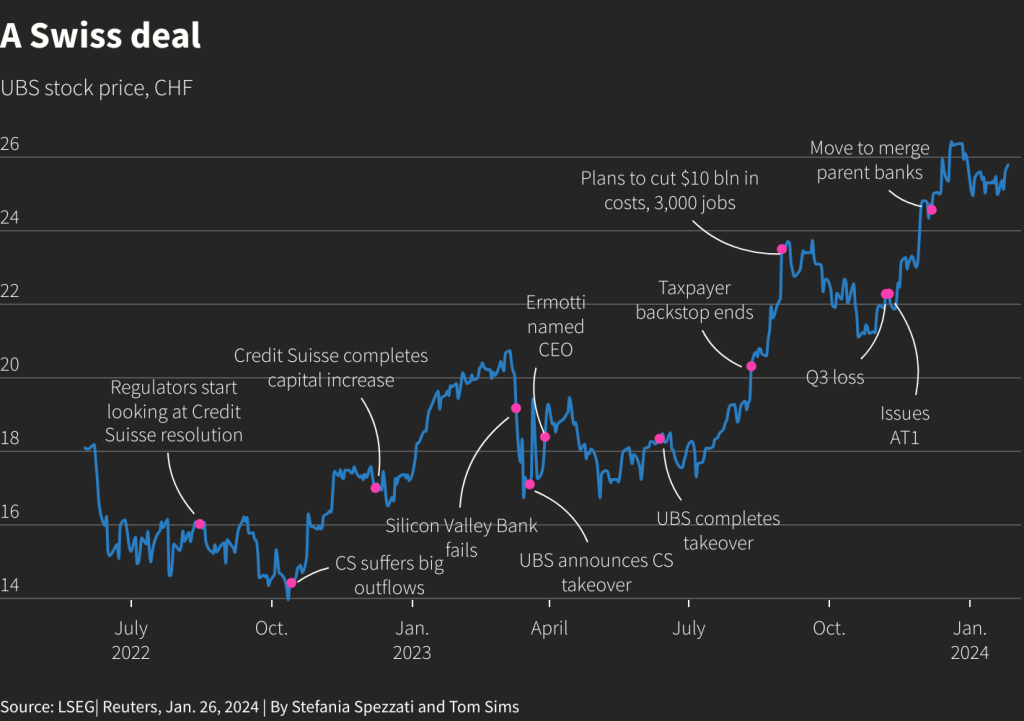
UBS Resumes Buybacks, Seeks More Savings from Credit Suisse Takeover

Swiss banking giant UBS announced several major strategic updates on Tuesday, including resuming share buybacks and increasing cost-cutting targets related to its takeover of Credit Suisse last year. The bank’s shares fell nearly 4% as investors reacted to financial results and the roadmap ahead.

UBS said it plans up to $1 billion in share repurchases in 2024, restarting its buyback program which was halted during the acquisition of Credit Suisse in March 2023. The deal, valued at nearly $16 billion, was the first ever merger between two global systemically important banks. It significantly expanded UBS’s wealth management operations and investment banking capabilities.

Integrating Credit Suisse is expected to generate major cost synergies over the next several years. UBS now estimates total savings of $13 billion by the end of 2026, up from the previous target of over $10 billion. Around half of the savings will come from headcount reductions, according to CFO Todd Tuckner.

While UBS said the initial phase of integration is complete, CEO Sergio Ermotti warned there is still significant restructuring ahead. The next few years will involve job cuts, combining IT systems, and optimizing operations. Ermotti cautioned that progress “will not be measured in a straight line” and the trickier parts of integration have yet to occur.

The bank reaffirmed its key financial targets, including for return on capital and cost-income ratios. It also set new ambitions, such as growing assets under management in its wealth management division to $5 trillion by 2028, up from $3.85 trillion currently.

For 2024, UBS proposed boosting its dividend by 27% compared to 2023. This comes as many European banks have been rewarding shareholders through dividends and buybacks.

UBS posted a small net loss of $279 million in the fourth quarter of 2023. The loss was attributed to Credit Suisse integration costs. However, the bank sees profitability improving in early 2024 amid better market activity and progress on merging operations.

UBS Swiss Deal
Image Credit: Reuters Graphics

The wealth management unit reported $22 billion in net new money growth during the quarter. However, a change in metrics makes the figure not directly comparable to previous periods. The investment bank posted a pre-tax loss of $169 million but is expected to return to profitability soon.

Shares fell due to concerns around UBS’s near-term profitability as integration costs weigh on performance. While cost savings are substantial over the long run, analysts pointed out revenue will likely drop in the next couple years before synergies are fully realized.

There are also lingering concerns around integrating such large banking operations smoothly. Regulators are keeping a close eye given the combined balance sheet is nearly twice the size of Switzerland’s GDP. However, UBS maintains only around one-third of assets are illiquid.

Overall, UBS remains confident in achieving strategic goals from its takeover of Credit Suisse, even if the next few years involve headaches from combining staff, technology, and business lines. Execution risks remain but cost cuts could significantly boost profitability down the line. Tuesday’s announcements provided investors more clarity around buybacks, dividends, and the path forward.

Palantir Shares Rocket on Strong Q4 Earnings Driven by AI Demand

Shares of data analytics company Palantir Technologies soared over 25% on Tuesday after the company reported fourth-quarter results that beat expectations, driven by strong demand for its artificial intelligence capabilities.

Palantir said revenue in the fourth quarter increased 20% year-over-year to $608.4 million, surpassing Wall Street estimates of $602.4 million. The revenue growth was led by the company’s commercial business, especially in the U.S., where Palantir has been rapidly building out its AI platform known as AIP.

In a letter to shareholders, Palantir CEO Alex Karp provided color on the ongoing demand for AI capabilities, stating that appetite for large language models in the U.S. “continues to be unrelenting.” Karp noted that Palantir conducted nearly 600 pilots of its AIP platform with customers last year.

The AI platform allows Palantir customers to build their own AI models specific to their business using the company’s robust data management and analytics capabilities. This enables tailored AI applications across a variety of industries and use cases, from risk modeling in financial services to supply chain optimization and more.

Analyst Commentary on AI Momentum

Multiple analysts upgraded Palantir stock and raised price targets following the strong quarterly showing, which provided tangible evidence of the company’s AI platform gaining traction with customers.

Citi analysts upgraded Palarntir to a Neutral rating from Sell, saying the results demonstrated “breakthrough momentum” for the commercial business driven by AI adoption. They see the momentum in AIP balancing out risks related to guidance for the non-U.S. commercial business.

Meanwhile, Jefferies analysts admitted they were previously wrong to downplay the impact AI could have for Palantir. They now believe the company is at an “inflection point” as the AIP platform ramps faster than their initial expectations.

Bank of America also noted that while still early, AIP is already having a meaningful impact on Palantir’s growth. They expect the AI momentum to continue and see significant opportunities in the U.S. government sector as well.

Concerns Around Valuation Remain

Despite the more constructive view on AI traction, some analysts still harbor concerns around Palantir’s valuation. Jefferies pointed out the stock trades at a 23% premium to large cap peers, leading them to remain sidelined for now despite the growth signals.

Citi also raised its target to $20, which offers upside from current levels but is likely still conservative relative to more bullish Street views. The premium multiple encapsulates the potential rewards and risks at this stage of Palantir’s expansion within AI.

Path Forward for AI Business

The fourth quarter results provided promising evidence that Palantir’s investments in AI and its unified data platform are allowing it to capitalize on the surging demand. But the company will likely need to maintain the commercial momentum and continue gaining AI adoption to justify a higher valuation.

If Palantir can consistently grow revenue, especially within the U.S. commercial landscape, while expanding AIP pilots into long-term customers, it could support a durable growth trajectory. Government work also offers a steady revenue stream to complement the more volatile commercial business over time.

Overall, Palantir’s latest quarter showcased its potential as an AI leader. But realizing the full upside will depend on smart and consistent execution across geographies and industries. The positive analyst reactions and stock move indicate investors are gaining confidence in Palantir’s ability to capture the AI opportunity.

Cigna Unloads Medicare Assets for $3.7B, Ups Investments in Core Segments

Health insurer Cigna announced Wednesday it is divesting its Medicare Advantage, Medicare Part D, and other Medicare operations to Health Care Service Corporation (HCSC) in a $3.7 billion cash deal.

Cigna said the sale will streamline its business to focus on growing its health services and benefits platforms. Proceeds will also fund share repurchases, with the transaction expected to be accretive to adjusted earnings per share in 2025.

Refocusing the Portfolio

The sale includes Cigna’s Medicare Advantage plans, Medicare Part D prescription drug plans, Cigna Supplemental Benefits, and the CareAllies health support services unit.

With HCSC taking over these businesses, Cigna can direct more investment and resources toward expanding its Evernorth health services division and Cigna Healthcare commercial health benefits segment.

Evernorth provides pharmacy benefits management, specialty pharmacy, and health technology solutions. Cigna Healthcare offers employer-sponsored group health plans as well as individual plans.

While Cigna sees Medicare as an attractive market, the segment required outsized focus and capital relative to its size within Cigna’s broader portfolio. The sale unlocks value and simplifies operations.

Gaining Scale and Capabilities

For HCSC, the transaction accelerates growth in Medicare, where the company has over 1 million members currently across 7 states. Adding Cigna’s Medicare customers and capabilities will expand HCSC’s geographic reach and enhance its product portfolio.

The businesses being acquired generated around $5.5 billion in 2022 revenues for Cigna. So the deal provides HCSC with meaningful membership and revenue growth in Medicare and immediate scale.

Cigna built a significant presence in Medicare through organic growth and acquisitions like HealthSpring in 2011. HCSC gains these customer relationships and infrastructure with the purchase.

Focusing on What Cigna Does Best

Cigna has been optimizing its portfolio under CEO David Cordani to concentrate on its core competencies. Last year, Cigna sold its international life, accident, and supplemental benefits businesses.

The Medicare sale continues this strategic focus on areas where Cigna has differentiated capabilities and growth opportunities. Evernorth provides unique pharmacy solutions and analytics. Cigna Healthcare leverages the company’s strong employer and health plan expertise.

The transaction value of $3.7 billion represents about 10 times Medicare Advantage customer revenue and 16 times Medicare Part D customer revenue. This appears a solid price for Cigna to unlock capital from non-core assets.

Financial Benefits

Cigna expects the deal will be 5-10% accretive to adjusted EPS in 2025 once completed. The company reaffirmed its 2024 outlook and long-term 10-13% annual EPS growth target.

Proceeds from the divestiture will primarily fund share buybacks, representing an attractive return of capital for investors. Cigna previously had around $7.5 billion remaining on its buyback authorization.

The deal is expected to close in the first quarter of 2025 after securing necessary regulatory clearances. There is no financing condition, providing transaction certainty.

Overall, the sale highlights Cigna’s disciplined portfolio approach to drive shareholder value. Consolidating its focus while monetizing Medicare strengthens Cigna’s growth trajectory in targeted segments. For HCSC, the deal accelerates its diversification into a key government market.

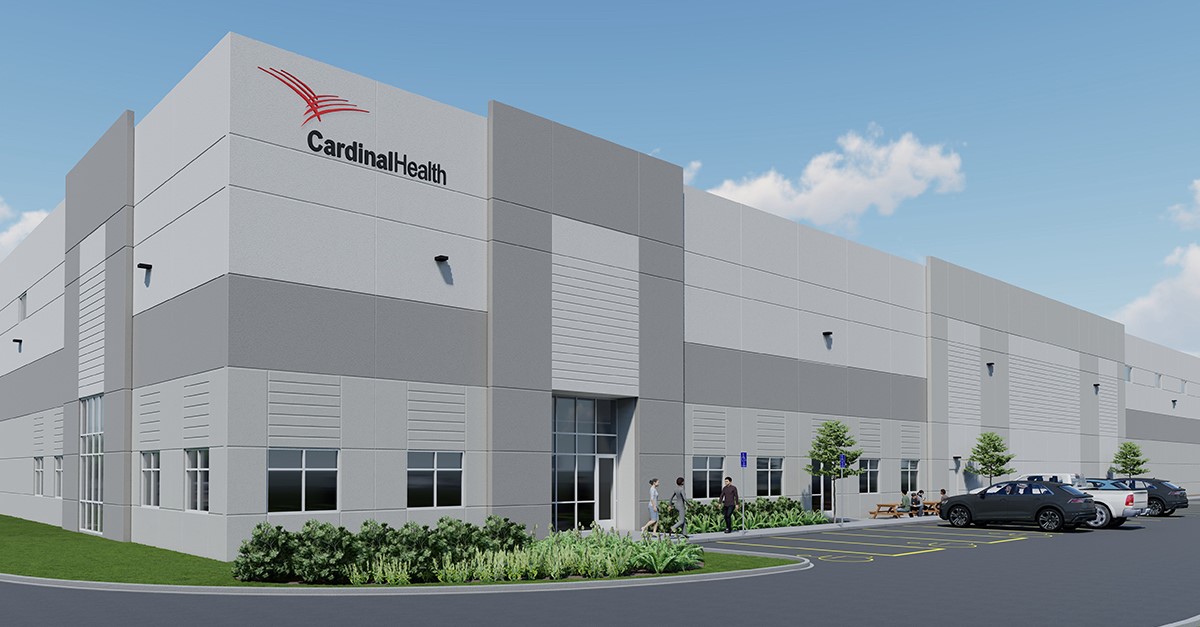
Cardinal Health Bolsters Specialty Offering With $1.2 Billion Acquisition

Cardinal Health announced Wednesday that it will acquire Specialty Networks for $1.2 billion in cash, strengthening the healthcare giant’s services for specialty physician practices. Specialty Networks provides technology-enabled group purchasing, practice management solutions, and data analytics to over 11,500 specialty providers across key areas like urology, rheumatology, and gastroenterology.

The deal enhances Cardinal Health’s capabilities in strategically important specialty areas while expanding its platform serving independent physicians. Here are some key details on the acquisition:

Expanding Service Offerings

Specialty Networks gives Cardinal Health new clinical and economic services to offer specialty physicians and practices. Its analytics platform, PPS Analytics, taps into electronic medical records, imaging systems, and other data sources to generate insights improving patient care and outcomes.

Cardinal gains Specialty Networks’ expertise optimizing specialty practice operations and finance. And through group purchasing relationships Specialty Networks facilitates, Cardinal Health can provide access to discounted products and services.

The combined specialty offerings will aim to boost efficiency, revenues, and coordination of care for specialty providers. This strengthens Cardinal’s value proposition as a distribution and services partner.

Supporting Independent Physicians

A key aspect is Specialty Networks’ focus on independent and community-based specialty practices. With over 1,200 physician practice customers, it expands Cardinal’s reach and understanding of this critical healthcare segment.

The medical landscape is increasingly consolidated, making it more vital for Cardinal Health to support independent practices’ success. Specialty Networks’ experience and technology assets aid in this aim.

Cardinal Health can also leverage Specialty Networks’ physician expertise and relationships to accelerate development of its Navista Network. This network assists independent community oncologists with practice solutions and clinical trials access.

Mark your calendars! Don’t miss Noble Capital Markets’ Emerging Growth Virtual Healthcare Equity Conference on April 17-18. This exclusive virtual event connects investors with 50 leading public biotech, healthcare services, and medical device companies. Presenting company slots are available…Read More

Enhanced Analytics and Insights

Specialty Networks’ rich specialty patient data and analytics capabilities will enhance Cardinal’s offerings. Its PPS Analytics platform mines electronic records and images using artificial intelligence to generate diagnostic and treatment insights.

Cardinal gains access to millions of longitudinal specialty patient data points. This strengthens its real-world evidence and insights for biopharma partners on the safety, efficacy and use of therapies.

The specialty data and analytics also aid population health management and value-based care initiatives. And they support Cardinal’s direct provider services like improved medication adherence programs.

Driving Growth in Key Areas

Specialty Networks expands Cardinal’s presence and cross-selling opportunities in strategic specialty therapeutic areas:

  • Urology – large patient population with ongoing and acute care needs
  • Rheumatology – fast growing with new advanced treatments
  • Gastroenterology – increasing prevalence of GI diseases

These are growth priorities where Specialty Networks strengthens Cardinal’s advantages. The deal accelerates Cardinal’s specialty growth plans through enhanced resources and newly integrated offerings.

Strong Cultural and Strategic Fit

Cardinal Health and Specialty Networks share a mission to bring value to physician practices while improving patient outcomes. Keeping Specialty Networks’ management team intact ensures continuity of its culture and physician focus.

The companies also have experience collaborating, as Specialty Networks is already a Cardinal Health specialty GPO partner. This makes integration of the businesses more seamless.

The acquisition is expected to be accretive to Cardinal’s non-GAAP earnings per share within 12 months post closing. Specialty Networks gives Cardinal Health a stronger specialty platform and differentiated assets to better serve practices and patients. Combining specialized expertise and technologies, the deal creates benefits for physicians and Cardinal Health alike.

Exro-SEA $300M Electric Merger: Creating an EV Propulsion Leader

Electric vehicle technology firm Exro Technologies is acquiring e-mobility drivetrain maker SEA Electric in an all-stock $300 million deal. The strategic merger combines two complementary electric propulsion platforms, setting the stage to disrupt the surging commercial EV space.

For investors, the transaction provides Exro with enhanced scale, revenue, and a clear path to profitability. With SEA’s major OEM customers like Volvo and Toyota, over 1,000 EV system orders are forecast for 2024 generating above $200 million sales.

The consolidated entity targets delivery of complete, next-gen propulsion solutions demanded by fleet operators and manufacturers transitioning to electric. Significant synergies, cross-selling opportunities, and cost savings are expected from the integration of the companies’ technologies.

Massive Addressable Market

Exro’s battery control electronics and SEA’s full electric drive systems together optimize EV power, efficiency, and costs. This unique, end-to-end capability unlocks a share of the enormous global commercial EV market.

Market research firm IDTechEx sees the medium and heavy commercial EV market reaching over $140 billion annually by 2031. With increasingly stringent emissions regulations worldwide, electrifying trucks, buses, construction equipment and beyond offers massive potential.

Exro and SEA aim to be at the forefront of this shift providing the integrated propulsion technologies enabling OEMs to electrify their offerings at scale.

Key Customer Wins

A huge value driver is SEA Electric’s multi-year supply agreements with heavy-duty truck leaders Mack and Hino for thousands of initial EV systems. This provides the merged Exro with committed volumes and Tier 1 auto relationships to leverage.

SEA’s proven proprietary technology underwent extensive validation by the major OEMs. Having signed binding long-term deals, SEA Electric immediately thrusts Exro into a commanding competitive position and cash flow generation.

Clear Path to Profitability

Beyond the technology and growth synergies, the transaction offers investors a profitability catalyst for Exro. Management estimates achieving positive cash flow within 12 months post-close given the ramping order book.

This would mark a key inflection point in Exro’s maturation toward becoming a fully self-sustaining EV enterprise. Profitability could further enhance access to capital to fuel expansion efforts.

The merger is subject to shareholder greenlighting, but the strategic fit and near-term income opportunity make a compelling case. With Polestar and others vying in electric commercial vehicles, Exro seizes pole position through its SEA Electric deal.

Take a look at some Century Lithium Corp., a Canadian based advanced stage lithium Company, focused on the growing electric vehicle and battery storage market.

Fed Holds Rates Steady, Cools Expectations for Imminent Cuts

The Federal Reserve left interest rates unchanged on Wednesday following its January policy meeting, keeping the federal funds rate target range at 5.25-5.50%, the highest level since 2007. The decision came as expected, but Fed Chair Jerome Powell pushed back on market bets of rate cuts potentially starting as soon as March.

In the post-meeting statement, the Fed removed language about needing additional policy tightening, signaling a likely prolonged pause in rate hikes as it assesses the impact of its aggressive actions over the past year. However, officials emphasized they do not foresee cuts on the horizon until inflation shows “greater progress” moving back to the 2% goal sustainably.

Powell Caution on Rate Cuts

During his press conference, Powell aimed to temper expectations that rate cuts could begin in just a couple months. He stated March is “probably not the most likely case” for the start of easing, rather the “base case” is the Fed holds rates steady for an extended period to confirm inflation is solidly on a downward trajectory.

Markets have been pricing in rate cuts in 2024 based on recent data showing inflation cooling from 40-year highs last year. But the Fed wants to avoid undoing its progress prematurely. Powell said the central bank would need more consistent evidence on inflation, not just a few months of decent data.

Still Room for Soft Landing

The tone indicates the Fed believes there is room for a soft landing where inflation declines closer to target without triggering a recession. Powell cited solid economic growth, a strong job market near 50-year low unemployment, and six straight months of easing price pressures.

While risks remain, the Fed views risks to its dual mandate as balancing out rather than tilted to the downside. As long as the labor market and consumer spending hold up, a hard landing with severe growth contraction may be avoided.

Markets Catching Up to Fed’s Thinking

Markets initially expected interest rate cuts to start in early 2024 after the Fed’s blistering pace of hikes over the past year. But officials have been consistent that they need to keep policy restrictive for some time to ensure inflation’s retreat is lasting.

After the latest guidance reiterating this view, traders adjusted expectations for the timing of cuts. Futures now show around a coin flip chance of a small 25 basis point rate cut at the March FOMC meeting, compared to up to a 70% chance priced in earlier.

Overall the Fed is making clear that investors are too optimistic on the imminence of policy easing. The bar to cutting rates remains high while the economy expands moderately and inflation readings continue improving.

Normalizing Policy Ahead

Looking beyond immediate rate moves, the Fed is focused on plotting a course back to more normal policy over time. This likely entails holding rates around the current elevated range for much of 2024 to solidify inflation’s descent.

Then later this year or early 2025, the beginnings of rate cuts could materialize if justified by the data. The dot plot forecast shows Fed officials pencil in taking rates down to 4.5-4.75% by year’s end.

But Powell was adamant that lowering rates is not yet on the table. The Fed will need a lengthy period of inflation at or very close to its 2% goal before definitively shifting to an easing cycle.

In the meantime, officials are content to pause after their historic tightening campaign while still keeping rates restrictive enough to maintain control over prices. As Powell made clear, investors anxiously awaiting rate cuts will likely need to keep waiting a bit longer.

Neuralink’s First Human Implant Could Spark Tech Stock Volatility

Elon Musk’s brain-computer interface company Neuralink announced this week it has conducted the first-ever implant of its device in a human subject. While details remain scant, the news serves as a milestone for a technology some believe could transform human capability. For tech investors, Neuralink’s progress stokes excitement but also uncertainty around the winners and losers in an era of enhanced humans.

Neuralink aims to develop a brain implant allowing paralyzed patients to control devices with their thoughts and able-bodied people to digitally communicate at speeds faster than speech. The first implant surgery comes after years of animal testing and brings the possibilities closer to reality.

According to Musk, the anonymous volunteer patient is “recovering well” and initial results show “promising neuron spike detection” from the 1024 electrode threads inserted by a surgical robot. The goal is for the implants to interpret brain signals, replacing the need for physical movement to operate computers or smartphones.

While the current trial is focused on quadriplegic patients, the ultimate vision is a technology so seamless it augments natural brain function. With the ability to download information directly into the brain, Neuralink promises a future where humans can achieve computer-like efficiency.

Leaps Forward, Ethical Debates

To technologists, successfully reading and transmitting neural signals brings humanity to the brink of a productivity revolution. Brain enhancement could elevate human potential and economic output, feeding into further innovation and growth.

However, developers must tread carefully given sobering lessons from the smartphone era’s negative effects on mental health. Addictive potential and unintended consequences abound when tampering with humanity’s most complex organ.

Investing Implications

For stocks, Neuralink’s progress exemplifies the promise and peril of emerging technologies. Huge opportunity exists as brain-computer interfaces enable new industries and services. But ethical debates or setbacks could also derail optimism.

The saga of Meta’s metaverse ambitions is instructive. Despite billions invested, underwhelming VR technology and idealistic vision have sunk the stock. Neuralink requires immense scientific progress to become reality. Any stumbles or loss of faith in the vision could rapidly deflate hype.

Yet some secular growth trends appear inevitable. Neuralink-inspired advances will boost artificial intelligence capabilities, a priority for giants like Alphabet and Amazon. Cloud infrastructure and high-performance computing demands will accelerate. Medical device makers and chip developers enabling products like Neuralink will see new markets open.

Mark your calendars for the upcoming Noble Capital Markets’ Emerging Growth Virtual Healthcare Equity Conference from April 17-18, 2024. The premier small-cap event will feature presentations from over 50 public emerging growth companies in the space.

But more speculative ideas or overvalued stocks could crumble on the slightest speedbump. Investors must differentiate between progress and promotional hype. In biotech, this means focusing on companies with robust, diversified drug pipelines rather than single-product moonshot bets.

Betting on Musk himself is dubious given the seesawing markets have experienced around Tesla and Twitter. While his cult of personality propels cash into his ventures, realistic timeframes and execution risks are higher than perceived.

Ultimately, Neuralink is emblematic of both the transformative potential and inherent volatility of disruptive technology. Its first human application sparks excitement, but a measured approach accounts for hurdles ahead. Investors can embrace futuristic optimism while grounding in reality.