| Key Points: – U.S. Treasury yields declined as investors shifted to safer assets amid election and Fed uncertainty. – Polls show Kamala Harris and Donald Trump in a dead heat, raising concerns about congressional control and potential policy impacts. – A quarter-point rate cut is widely expected from the Federal Reserve this week, aimed at stimulating economic growth. |
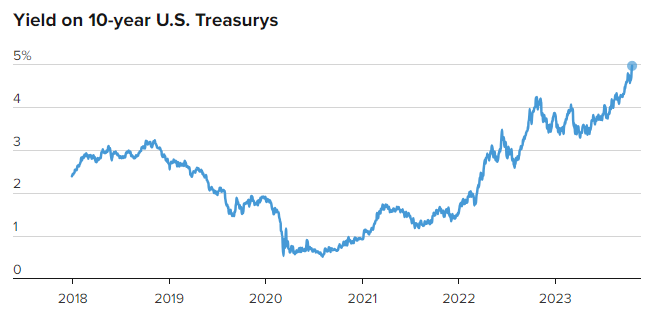
US Treasury yields fell on Monday as investors braced for a high-stakes week, with the upcoming U.S. presidential election and a key Federal Reserve rate decision poised to influence the economy and markets. The 10-year Treasury yield dropped nine basis points to 4.27%, while the 2-year yield decreased by over six basis points to 4.14%. These declines come as investors shift focus to safer assets amid election uncertainty and expected economic shifts. Yields, which move inversely to bond prices, reflected some caution as traders weigh potential election outcomes and their economic implications.
Polls indicate a tight race between Vice President Kamala Harris and former President Donald Trump, with NBC News showing the candidates locked at 49% each. Investors are particularly attentive to which party will control Congress, as this could dictate future policy moves, ranging from government spending to tax reforms. A split Congress would likely mean legislative gridlock, whereas a unified government might lead to significant policy changes. The election results could potentially impact stock markets, which experienced a volatile Monday, with the Dow Jones Industrial Average falling by 225 points or 0.5%, and both the S&P 500 and Nasdaq dipping by 0.2%.
In addition to the election, the Federal Reserve’s policy meeting on Thursday could mark another pivotal moment for markets. Analysts widely anticipate a quarter-point rate cut following the Fed’s recent 50 basis point cut in September. Traders are pricing in a 99% probability of this move, as tracked by CME Group’s FedWatch Tool. A rate cut could reduce borrowing costs and stimulate economic growth, potentially offsetting some of the anticipated volatility tied to the election.
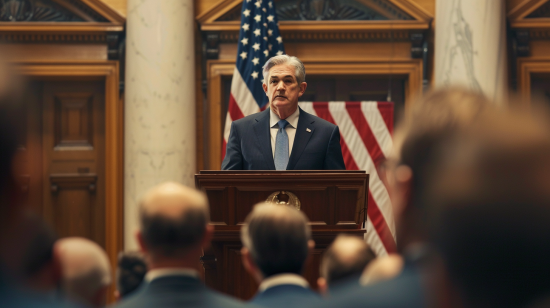
Also weighing on markets were economic data points, with September factory orders down 0.5% in line with expectations. The Purchasing Managers Index (PMI) is due on Tuesday, and these indicators may provide additional insight into the economy’s current health as markets prepare for Fed Chair Jerome Powell’s comments on Thursday. Analysts suggest Powell’s statements could hint at the Fed’s future outlook for rates, as the central bank navigates a gradually slowing economy.
The shift towards Treasurys reflects a defensive stance by investors seeking stability amid looming uncertainties. Michael Zezas, a strategist at Morgan Stanley, suggested patience will be crucial for investors as they navigate potential market noise surrounding the election. The Treasury market’s reaction indicates some investors are bracing for turbulence in stocks if the election results lead to unexpected outcomes. The safe-haven nature of U.S. bonds offers a buffer for investors looking to mitigate risk in a potentially volatile environment.
Adding to market dynamics, Nvidia shares climbed 2% on Monday after it was announced the company would replace Intel in the Dow Jones Industrial Average, a change reflecting Nvidia’s year-to-date rise of 178% as it capitalizes on the AI sector. This development underscores a broader trend where technology and AI stocks remain central to market sentiment.
As election day approaches, financial markets are set to respond not only to the presidential outcome but also to shifts in Congress. With the Fed’s decision and further economic indicators expected this week, both equities and bond markets may experience heightened volatility, particularly if post-election policy signals lead to significant shifts in fiscal or monetary policy.