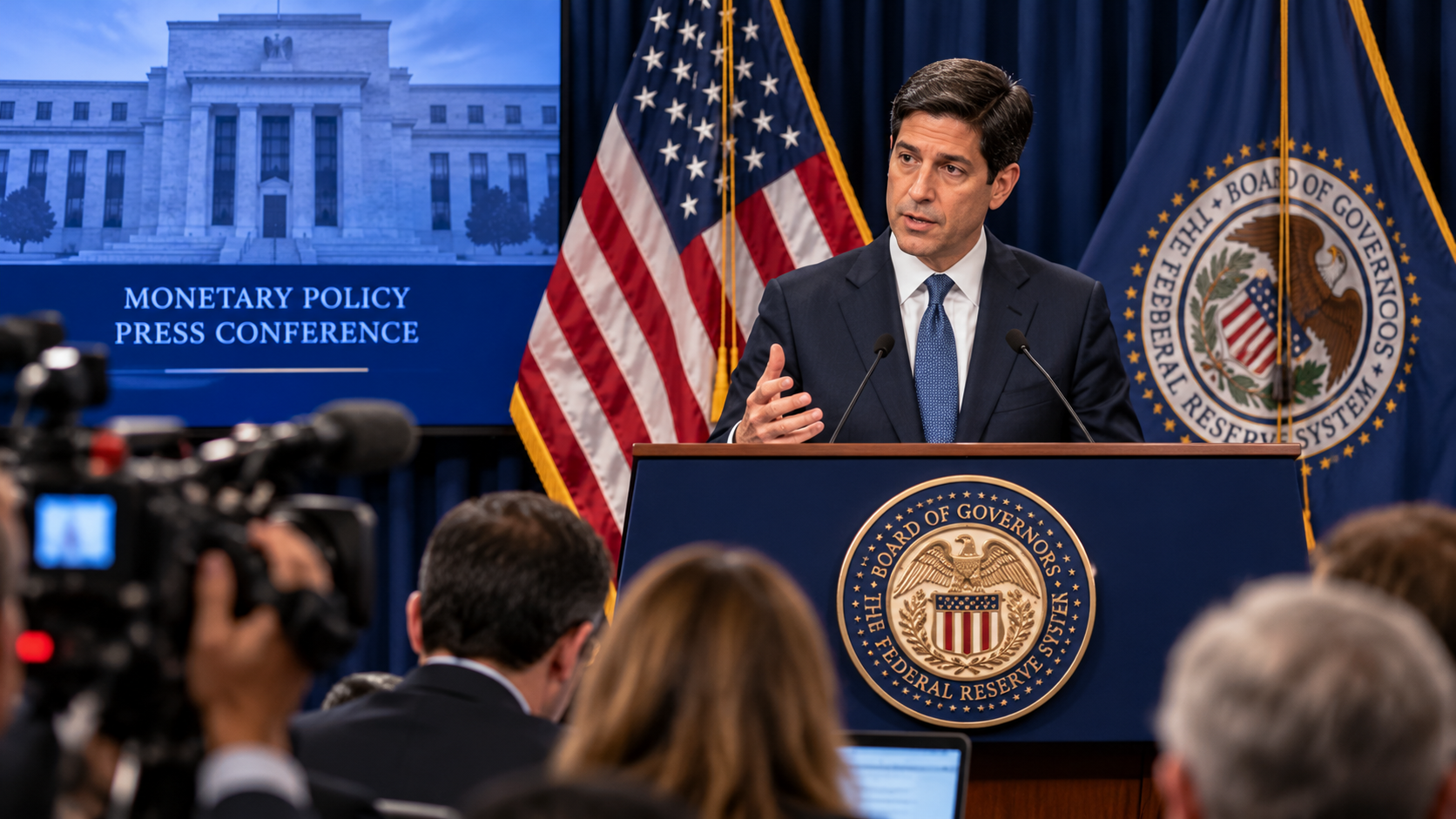
The Federal Reserve held interest rates steady Wednesday, October 28, maintaining its benchmark federal funds rate at 3.75% to 4.00% as policymakers weighed resilient economic growth against persistent inflation pressures. The widely anticipated decision followed September’s quarter-percentage-point rate increase and revealed a notable division among central bank officials over whether additional tightening is needed.
The Federal Open Market Committee voted 10–2 to leave rates unchanged, with Federal Reserve Governor Lisa Cook and Cleveland Fed President Beth Hammack dissenting in favor of another 25-basis-point increase. The split underscores growing concerns among some policymakers that inflation remains too elevated to justify a prolonged pause in monetary tightening.
In its official statement, the Federal Reserve acknowledged that inflation remains elevated while emphasizing the need for additional economic data before determining its next policy move. The central bank reiterated its commitment to returning inflation to its 2% target, signaling that further rate increases remain possible.
The decision comes after the Fed raised interest rates in September for the first time in more than three years. That move marked a shift toward tighter monetary policy as higher energy prices, persistent consumer spending, and broader price pressures complicated efforts to control inflation.
Recent economic data illustrate the challenge. Consumer prices rose 3.7% year over year in September, remaining well above the Fed’s target. Elevated energy costs have contributed to inflation, while price increases across other goods and services suggest that pressures are extending beyond fuel markets.
Despite those concerns, the Federal Reserve delivered a more optimistic assessment of overall economic activity. Policymakers described the economy as expanding at a strong pace, an upgrade from the characterization of solid growth used at their September meeting.
The statement highlighted resilient domestic spending, strong productivity growth, and robust capital investment. Officials also noted that job gains have generally kept pace with growth in the labor force, while the unemployment rate has changed relatively little.
This combination of economic strength and persistent inflation creates a difficult balancing act. Raising interest rates further could help reduce price pressures, but additional tightening would also increase borrowing costs for businesses and consumers.
For small-cap companies, the Fed’s decision carries particular significance. Smaller publicly traded businesses often depend more heavily on external financing than large corporations with substantial cash reserves and established access to capital markets.
Higher interest rates can increase the cost of refinancing debt, limit expansion opportunities, and reduce investor appetite for companies that require additional capital to fund operations.
Emerging biotechnology companies may be especially sensitive to these conditions because clinical development frequently requires significant funding before products generate commercial revenue. Small industrial manufacturers, technology companies, and consumer businesses can also face pressure from higher financing expenses and slower customer spending.
The Russell 2000 Index, which tracks smaller publicly traded U.S. companies, remains an important benchmark for investors assessing how changes in monetary policy influence the small-cap market.
The Fed’s decision also has implications for the housing market. Mortgage rates have climbed above 7% in recent weeks, weighing on affordability even as home prices continue rising in many parts of the country. Although mortgage rates are not directly set by the Federal Reserve, they are influenced by Treasury yields and expectations for future monetary policy.
Attention now turns to the Fed’s final scheduled policy meeting of 2026 in December. Investors have increasingly considered the possibility of another rate increase before year-end, particularly if inflation remains stubbornly above the central bank’s target.
Federal Reserve Chair Kevin Warsh’s post-meeting remarks will be closely examined for additional insight into how officials are evaluating inflation, economic growth, and the timing of potential future policy changes.
Wednesday’s decision leaves borrowing costs unchanged for now, but the dissenting votes and the Fed’s continued emphasis on price stability suggest that the debate over further tightening is far from settled.
For investors, particularly those focused on smaller companies, the direction of interest rates over the coming months could play a significant role in determining financing conditions, equity valuations, and market sentiment heading into 2027.