Instacart Shares Surge 40% in Strong Nasdaq Debut

Instacart experienced a red-hot debut on the public markets as shares soared 40% in its first day of trading. The grocery delivery pioneer opened at $42 per share on the Nasdaq exchange, well above its IPO price of $30.

The opening trade valued Instacart at nearly $14 billion, up from the $10 billion valuation set by its IPO pricing on Monday. Demand from investors seeking exposure to the future of grocery commerce drove the shares sharply higher out of the gate.

Trading volume was heavy early on, with over 18 million shares changing hands in the first 30 minutes. The stock traded as high as $47.57 at its peak, showcasing strong appetite for the newly minted public company.

Instacart (CART) raised $420 million through the IPO by selling 14.1 million shares, representing just 8% of its total outstanding shares. Existing shareholders also sold 7.9 million shares in the offering for liquidity.

The blockbuster debut delivered significant returns for IPO participants during a volatile time for tech stocks. But Instacart’s valuation remains below the $39 billion mark it reached at the height of pandemic demand in 2021, reflecting more measured recent tech valuations.

Still, the strong first day pop is a promising sign for Instacart as it embarks on the public market journey. The company priced its offering conservatively to allow room for an impressive inaugural rally.

The offering adds Instacart to the ranks of publicly traded ecommerce innovators disrupting traditional retail models. It joins the likes of DoorDash, Uber, and Amazon in leveraging technology to unlock the potential of online grocery delivery.

Instacart is at the forefront of transforming the $1 trillion grocery industry through its on-demand digital marketplace. Its platform connects customers with personal shoppers who handle orders from partner grocers and deliver items in as fast as an hour.

Take a look at 1-800-Flowers.com, a leading ecommerce business platform that features an all-star family of brands.

Founded in 2012 by an Amazon veteran, Instacart was early to recognize the coming wave of grocery ecommerce. The company scaled rapidly when the pandemic accelerated adoption of online ordering and delivery.

Instacart seized its first-mover advantage to emerge as a leader in the space. It has partnered with prominent national, regional, and local grocers to build a retail network covering over 85% of U.S. households.

The company aligned with shifting consumer preferences for convenience and digital experiences. Busy lifestyles and smartphone ubiquity make grocery delivery a killer app of modern ecommerce.

Instacart smartly invested to expand services like fast unstaffed delivery and self-service pickup. Its Instacart Ads platform also lets brands promote products through sponsored listings.

The company rapidly grew revenue to over $7 billion in 2021 during the pandemic-driven surge. More recently it has focused on boosting profitability as demand normalizes post-Covid.

Instacart generated $14 billion in gross merchandise volume in 2021. Its net revenue neared $2 billion, doubling from 2020. But losses have narrowed dramatically since the company turned EBITDA positive last year.

As the first major tech IPO of 2023, Instacart’s trading provides a blueprint for startups and venture investors awaiting public debuts this year. The initial reception indicates persistent investor appetite for innovative tech names with strong growth narratives.

The blockbuster debut opens an exciting new chapter for Instacart and the future of digital grocery. Its first trading day validated Instacart’s pioneering business model and resilient growth prospects.

FTX Lawsuit Targets Parents of Disgraced CEO Sam Bankman-Fried

The bankrupt cryptocurrency exchange FTX has taken a surprising legal step by launching a legal battle against Allan Joseph Bankman and Barbara Fried, the parents of its former CEO and founder, Sam Bankman-Fried. The lawsuit aims to recover both luxury property and millions of dollars in what FTX alleges to be “fraudulently transferred and misappropriated funds.”

FTX, once a rising star in the cryptocurrency world, faced financial turmoil amid allegations of extensive financial misconduct. The exchange’s new leadership has been working tirelessly to locate the billions of dollars in missing assets. Their latest move is an attempt to hold Bankman and Fried accountable.

Legal representatives of the FTX bankruptcy estate assert that Allan Joseph Bankman and Barbara Fried “exploited their access and influence within the FTX enterprise to enrich themselves, directly and indirectly, by millions of dollars.” This stunning accusation suggests that Bankman and Fried might have played a significant role in the financial irregularities that led to FTX’s collapse.

One of the most notable claims in the lawsuit is that Bankman and Fried discussed transferring a $10 million cash gift and a $16.4 million luxury property in The Bahamas to their son, Sam Bankman-Fried, despite FTX’s precarious financial situation. This raises questions about whether Bankman and Fried were aware of the exchange’s dire financial straits.

The lawsuit doesn’t stop there. It also alleges that as early as 2019, Allan Bankman actively participated in efforts to cover up a whistleblower complaint that could have “exposed the FTX Group as a house of cards.” The lawsuit cites emails written by Bankman in which he complained about his annual salary being only $200,000 when he believed he was “supposed to be getting $1M/yr.” The suit portrays this as Bankman lobbying his son to significantly increase his own salary.

Take a look at Bit Digital Inc., a sustainability focused generator of digital assets, that has a large-scale bitcoin mining business with operations across the U.S. and Canada.

Shockingly, within two weeks of these discussions, the suit claims that Sam Bankman-Fried collectively gifted his parents $10 million in funds from Alameda. Within three months, Bankman and Fried were deeded the $16.4 million property in The Bahamas. The timing and circumstances of these transactions raise serious questions about their legality and ethical implications.

Moreover, the lawsuit alleges that Bankman-Fried’s parents urged substantial political and charitable contributions, including significant amounts to Stanford University, seemingly aimed at enhancing Bankman and Fried’s professional and social status. Barbara Fried is also accused of encouraging her son and others within the company to avoid or even violate federal campaign finance disclosure rules by engaging in straw donations or concealing the FTX Group as the source of the contributions.

The involvement of Bankman-Fried’s parents in these activities is particularly noteworthy. Both are accomplished legal scholars who have taught at Stanford Law School. Barbara Fried specializes in ethics, while Allan Bankman’s expertise is in taxes. Their involvement in the alleged misconduct at FTX raises questions about their awareness of the situation and their potential role in enabling it.

Sam Bankman-Fried himself is independently facing multiple wire and securities fraud charges related to the alleged multibillion-dollar FTX fraud. Federal prosecutors and regulators have accused him of orchestrating “one of the biggest financial frauds in American history.” Bankman-Fried has maintained his innocence and pleaded not guilty to all charges. His criminal trial is scheduled to commence on October 3 in Manhattan.

The lawsuit against Bankman and Fried asserts that they “either knew or ignored bright red flags revealing that their son, Bankman-Fried, and other FTX Insiders were orchestrating a vast fraudulent scheme.” This suggests that FTX believes the parents played a more significant role in the alleged fraud than previously thought.

In their legal action against Bankman and Fried, FTX seeks various forms of compensatory relief, including punitive damages. The exchange aims to hold them accountable for their alleged “conscious, willful, wanton, and malicious conduct” that contributed to FTX’s financial woes. Additionally, FTX is looking to recover any property or payments made to the couple from the exchange.

The outcome of this legal battle remains uncertain, and it raises questions about how any potential clawbacks may affect Bankman and Fried’s ability to support their son’s legal defense as he faces criminal charges. The legal counsel for Allan Joseph Bankman and Barbara Fried has vehemently denied the allegations, characterizing them as “completely false.” They view FTX’s legal action as an attempt to intimidate their clients and undermine the upcoming trial of their child.

Take a a moment to look at Bitcoin Depot Inc., a company that enables users to convert cash to Bitcoin at kiosks located in thousands of name-brand retail locations across North America.

The implications of this legal showdown extend beyond the immediate parties involved. FTX’s efforts to recover lost assets and hold those responsible accountable are a crucial chapter in the cryptocurrency industry’s ongoing struggle with regulatory scrutiny and legal challenges. The outcome of this case may set a precedent for how authorities and stakeholders deal with alleged fraud and financial misconduct in the rapidly evolving world of cryptocurrencies.

As the legal battle unfolds, it will be closely watched by industry observers, legal experts, and cryptocurrency enthusiasts alike. The allegations and accusations against the parents of Sam Bankman-Fried have added another layer of complexity to a case that has already drawn significant attention and could have far-reaching consequences for the cryptocurrency ecosystem.

Knowles Pushes Into High-Growth Markets With Strategic Cornell Dubilier Acquisition

Knowles Corporation is aggressively transforming into an industrial technology powerhouse. The components supplier announced it will acquire capacitor manufacturer Cornell Dubilier in a $263 million all-cash deal. This strategic purchase provides Knowles with expanded exposure to highly attractive end markets including medtech, defense, and industrial electrification.

Privately-held Cornell Dubilier, based in South Carolina, is a leader in film, electrolytic and mica capacitors used in demanding applications. Its capacitors are found in sectors like aerospace, automation, and critical care medical devices. The company generates over $135 million in revenue annually.

The acquisition brings new state-of-the-art capacitor technology into Knowles’ portfolio. This allows Knowles to offer more innovative solutions and cross-selling opportunities to customers. Cornell Dubilier’s offerings create a compelling combined value proposition for Knowles in the industrials space.

Knowles CEO Jeffrey Niew stated the purchase will help Knowles “grow with new and existing customers as we work to generate stronger earnings and cash flow and create shareholder value.” The deal is expected to contribute positively to Knowles’ earnings per share (EPS) beginning in 2024.

Specifically, the acquisition provides three key benefits:

Expands Knowles’ addressable market – Cornell Dubilier significantly expands Knowles’ serviceable available market through its broad capacitor capabilities and presence in diverse sectors including medtech, defense, aerospace, and industrial automation.

Take a moment to take a look at Kratos Defense & Security Solutions Inc., a company specializing in unmanned systems, satellite communications, missile defense, and hypersonic systems.

Diversifies product portfolio – Combined with Knowles’ existing precision devices like RF filters and ceramic capacitors, the deal delivers a wider range of capacitor products and solutions including film, electrolytic, and mica capacitors.

Boosts profitability – Knowles expects the acquisition to be accretive to earnings per share starting in 2024. The purchase is forecast to contribute to the bottom line while Knowles maintains balance sheet flexibility through its capital deployment strategy.

For investors, the strategic deal offers exposure to higher growth markets as Knowles pivots towards attractive areas with strong tailwinds. The companies noted defense spending increases, healthcare application growth, and industrial automation advances are driving demand.

The announced $263 million price consists of $140 million upfront and $123 million in seller notes due over the next two years. Knowles expects to finance the deal through cash, existing credit, and the deferred paper. The total fair value transferred is estimated at 9.6x Cornell Dubilier’s trailing EBITDA including synergies.

The acquisition caps off a transformative year for Knowles as it shifts towards high value industrial technology. Knowles recently restructured divisions to optimize its focus areas. It is also reviewing strategic options for its consumer microphones segment.

Together, these moves aim to reshape Knowles into a higher growth, higher margin technology supplier. The company is working to leverage megatrends like IoT, EVs, and 5G adoption. Knowles is strengthening its industrial roots to drive value for shareholders.

The Cornell Dubilier deal provides Knowles with an expanded presence in crucial growth industries. It also refocuses the company towards participating in rising opportunities like defense, medtech, and automation. For investors, the transformative purchase plants Knowles firmly in key sectors, unlocking value over the long-term.

GXO Acquisition of PFSweb Signals Growth Potential for Logistics Amid Ecommerce Boom

GXO Logistics’ $181 million acquisition of ecommerce fulfillment provider PFSweb signals the immense growth runway ahead for logistics providers as online retail continues rapid expansion.

The deal provides GXO greater exposure to high-growth ecommerce categories like health, beauty, luxury goods, apparel and more where PFSweb has cultivated specialized omnichannel capabilities. GXO also gains PFSweb’s proprietary order management systems, fraud protection, customer care services and distribution technologies that will strengthen its end-to-end fulfillment offerings.

PFSweb serves over 100 prominent consumer brands, including L’Oreal, Pandora, Kendra Scott and others through its facilities across North America, the UK and Belgium. This expands GXO’s relationships in categories experiencing online growth thanks to shifting consumer preferences.

The transformational rise of ecommerce is reshaping logistics networks and fueling acquisitions across fulfillment, last-mile delivery and automation. According to Statista, global ecommerce sales are projected to reach $5.4 trillion in 2023, highlighting the seismic shift to online shopping.

As volumes accelerate, logistics providers aim to capture demand through robust delivery solutions tailor-made for ecommerce. Fulfillment and last-mile acquisitions have increased as giants like GXO, XPO Logistics, UPS and FedEx move to capitalize on the boom in digital orders.

Take a moment to take a look at more shipping and logistics companies by looking at Noble Capital Markets research analyst Michael Heim’s coverage list.

GXO is making sizable investments in automation, AI and optimizing warehouse flows to cement itself as the leader in orchestrating complex ecommerce fulfillment. The PFSweb deal aligns with its focus on allocating capital to high-growth, high-return logistics verticals.

For GXO, the acquisition deepens its competitive moat and brand relationships in strategically important retail categories. PFSweb’s expertise in direct-to-consumer support across the customer journey helps expand GXO’s proposition.

The blockbuster deal also gives GXO access to PFSweb’s 21-year track record successfully servicing and retaining top tier brands. PFSweb has developed a strong reputation for customized branded experiences and excellence in omnichannel execution.

GXO’s chief executive Malcolm Wilson emphasized how PFSweb complements GXO with brand relationships in rapidly expanding ecommerce verticals. The combination cross-sells more comprehensive logistics solutions to each company’s customer base.

For investors, GXO’s move spotlights the immense potential for logistics providers to capitalize on the secular shift online. Ecommerce has fundamentally transformed fulfillment, shipping and reverse logistics processes, with orders that are more variable, faster and customized compared to store replenishment.

Logistics companies essential to ecommerce are primed for significant growth as this trend accelerates. GXO, XPO, UPS, FedEx and other leaders stand to benefit from the structural shift given their networks, expertise and new technology investments.

Already PFSweb’s stock price has jumped nearly 50% following the acquisition news, underscoring Wall Street’s positive perspective. With ecommerce projected to continue double-digit expansion, the logistics sector remains firmly positioned to thrive into the future.

Snail Revolutionizes Single-Player With Innovative Twitch Integration in New Game

Gaming company Snail, Inc. is shaking up single-player games with the launch of Survivor Mercs, featuring groundbreaking Twitch integration that allows streamers to actively engage viewers.

Survivor Mercs is a roguelite military action game for PC. But what makes it truly unique is the ability for streamers to let their audience influence gameplay through real-time voting on upgrades, mercenaries and enemies.

This pioneering social element empowers streamers to meaningfully interact with fans during solo play for the first time. It expands engagement beyond passive viewing, creating a more immersive community experience.

As streaming continues growing, innovative integrations like Snail’s can profoundly impact both streamers and game developers. The company is leading the way in exploring how to make single-player gaming more social and fun to watch.

For streamers, it unlocks new ways to creatively involve their community. For developers, it opens up opportunities to design streamer-friendly games tailored for live audiences.

Snail’s CEO called the integration a “small step” toward reimagining audience participation in live gaming. But it could be a giant leap for revolutionizing solo play for the streaming era.

Beyond the groundbreaking Twitch element, Survivor Mercs promises challenging roguelite action with thousands of character combinations and procedurally generated maps.

Snail is pioneering the future of streaming-based gameplay. The company’s innovative integration of Twitch with solo play in Survivor Mercs kicks open the door to deeper social interaction and engagement between streamers and their loyal fans.

Take a look at Snail Inc., a global independent developer and publisher of interactive digital entertainment.

Tesla’s Dojo Supercomputer Presents Massive Upside for Investors

Tesla’s new Dojo supercomputer could unlock tremendous value for investors, according to analysts at Morgan Stanley. The bank predicts Dojo could boost Tesla’s market valuation by over $600 billion.

Morgan Stanley set a sky-high 12-18 month price target of $400 per share for Tesla based on Dojo’s potential. This implies a market cap of $1.39 trillion, which is nearly 76% above Tesla’s current $789 billion valuation.

Tesla only began producing Dojo in July 2022 but plans to invest over $1 billion in the powerful supercomputer over the next year. Dojo will be used to train artificial intelligence models for autonomous driving.

Morgan Stanley analysts estimate Dojo could enable robotaxis and software services that extend far beyond Tesla’s current business of vehicle manufacturing. The bank nearly doubled its 2040 revenue projection for Tesla’s network services division from $157 billion to $335 billion thanks to Dojo.

By licensing self-driving software powered by Dojo to third-party transportation fleets, Tesla could generate tremendous high-margin revenues. Morgan Stanley sees network services delivering over 60% of Tesla’s core earnings by 2040, up from just 30% in 2030.

Thanks to this upside potential, Morgan Stanley upgraded Tesla stock from Equal-Weight to Overweight. The analysts stated “Dojo completely changes the growth trajectory for Tesla’s autonomy business.”

At its current $248.50 share price, Tesla trades at a lofty forward P/E ratio of 57.9x compared to legacy automakers like Ford at 6.3x and GM at 4.6x. But if Morgan Stanley’s bull case proves accurate, Tesla could rapidly grow into its valuation over the next decade.

In summary, Tesla’s AI advantage with Dojo makes the stock’s premium valuation more reasonable. Investors buying at today’s prices could reap huge gains if Dojo unlocks a new $600 billion revenue stream in autonomous mobility services.

The Power and Potential of Dojo

Dojo represents a massive investment by Tesla as it aims to lead the future of autonomous driving. The specialized supercomputer is designed to train deep neural networks using vast amounts of visual data from Tesla’s fleet of vehicles.

This differentiated AI training will allow Tesla to improve perceptions for full self-driving at a faster pace. As self-driving functionality becomes more robust, Tesla can unlock new revenue opportunities.

Morgan Stanley analyst Adam Jones stated: “If Dojo can help make cars ‘see’ and ‘react,’ what other markets could open up? Think of any device at the edge with a camera that makes real-time decisions based on its visual field.”

Dojo’s processing power will permit Tesla to develop advanced simulations that speed up testing. The supercomputer’s capacity is expected to exceed that of the top 200 fastest supercomputers combined.

Tesla claims Dojo will drive down the costs of training networks by orders of magnitude. This efficiency can translate into higher margins as costs drop for autonomous AI development.

Dojo was designed in-house by Tesla AI director Andrej Karpathy and his team. Karpathy called Dojo the “most exciting thing I’ve seen in my career.” With Dojo, Tesla is aiming to reduce reliance on external cloud providers like Google and Amazon.

Morgan Stanley Boosts Tesla Price Target by 60%

The potential of monetizing Tesla’s self-driving lead through Dojo led analysts at Morgan Stanley to dramatically increase their expectations.

Led by analyst Adam Jones, Morgan Stanley boosted its 12-18 month price target on Tesla stock by 60% to $400 per share. This new level implies a market value for Tesla of nearly $1.39 trillion.

Hitting this price target would mean Tesla stock gaining about 76% from its current level around $248.50. Tesla shares jumped 6% on Monday following the report as investors reacted positively.

Jones explained the sharply higher price target by stating: “Dojo completely changes the growth trajectory for Tesla’s autonomy business.”

He expects Dojo will open up addressable markets for Tesla that “extend well beyond selling vehicles at a fixed price.” In other words, Dojo can turn Tesla into more of a high-margin software and services provider.

Take a look at One Stop Systems (OSS), a US-based company that designs and manufactures AI Transportable edge computing modules and systems that are used in autonomous vehicles.

Apple Goes Green: Tech Giant Unveils First Carbon Neutral Lineup

Apple just recently announced its first carbon neutral products – the new Apple Watch lineup. This achievement comes from innovations across Apple’s global supply chain over years to dramatically reduce emissions. It’s a major milestone toward Apple’s 2030 goal to make all products carbon neutral.

To become carbon neutral, Apple steeply cut watch emissions first via clean energy, recycled materials, and low-emission transportation. Any remaining emissions are addressed with high-quality carbon credits from nature-based projects like forests.

This shift demonstrates how companies can decarbonize operations and products through renewable electricity, material innovation, and carbon removal. If adopted widely, these strategies can significantly benefit the environment.

Apple’s progress was enabled by large investments in wind and solar energy. Their actions helped create over 15 gigawatts of new clean power. Scaling renewable energy is crucial for the transition away from fossil fuels.

Take a moment to look at more natural resources and mining companies by viewing Mark Reichman’s coverage list.

The company also pioneered using recycled metals and fibers in devices. This reduces the need for carbon-intensive mining and materials manufacturing. Broad adoption would lessen impacts on natural resources.

Additionally, Apple funded carbon removal through forest restoration. This supports nature-based solutions to sequester CO2. The climate impact could grow exponentially if more firms financed conservation projects.

In summary, Apple’s carbon neutral product milestone highlights the environmental promise of renewable energy, the circular economy, and carbon removal. It demonstrates the potential for these strategies to transform manufacturing, conserve natural resources, and fight climate change.

U.S. Justice Department Takes On Google Search Monopoly in Landmark Trial

The U.S. government is launching a monumental legal challenge against Google in a bid to curb the technology giant’s dominance in internet search. A federal antitrust trial begins Tuesday in Washington D.C. where the Justice Department and a coalition of state attorneys general will argue that Google improperly wields monopoly power.

At the heart of the case are allegations that Google unlawfully maintains its position in the search market through exclusionary distribution agreements and other anticompetitive practices. Google pays billions annually to companies like Apple and Samsung to preset Google as the default search engine on smartphones and other devices. This boxes out rivals, according to prosecutors.

The government contends that Google’s actions have suffocated competition in the critical gateway to the internet, enabling the company to extend its grasp with impunity. Google counters that its search supremacy is earned by offering a superior product that consumers freely choose, not due to illegal activity.

But smaller search upstarts like DuckDuckGo allege that Google abuses its might to hinder their ability to gain users. At stake in the trial is nothing less than how the power of dominant tech platforms is regulated and how competition – or lack of it – shapes the internet as we know it.

The verdict could lead to sweeping changes for Google if found guilty of violating antitrust law. Potential sanctions range from imposed restrictions on its business conduct to structural reorganization of the company. Fines could also be on the table.

Google’s practices echo the behavior that got Microsoft into hot water in the 1990s. That landmark case saw the government successfully prove Microsoft leveraged its Windows monopoly to quash competition. Google is accused of similar monopolistic plays via its search engine dominance.

The Google antitrust trial is slated to last around three months. Testimony from Google CEO Sundar Pichai and executives of tech firms like Apple is anticipated. The federal judge overseeing the case will determine if Google’s undisputed leadership in search equates to unlawful monopoly status.

The verdict stands to fundamentally shape Google’s role in internet search and potentially alter business practices of other dominant technology companies. It represents the most significant legal challenge to Silicon Valley power in the 21st century.

Take a look at Information Services Group, a leading global technology research and advisory firm.

Instacart Aims for $9.3 Billion Valuation in Upcoming IPO

Online grocery delivery firm Instacart is gearing up to go public and has set the terms for its initial public offering (IPO). In a regulatory filing on Monday, Instacart outlined plans to raise around $616 million through the offering of 22 million shares priced between $26 and $28 each.

The IPO would give Instacart a fully diluted valuation of up to $9.3 billion. This is below earlier estimates of a $40 billion valuation, indicating moderating growth expectations. Nonetheless, the offering could still mark one of the largest public listings this year amid a freeze on IPOs over the past year due to market volatility.

Founded in 2012, San Francisco-based Instacart has established itself as a leading online grocery platform in the U.S. It partners with grocers and retailers to deliver items to customers’ doors in as little as an hour. Instacart competes in a crowded space against entrenched firms like Walmart and Amazon as well as delivery apps like DoorDash and GoPuff.

Take a moment to look at 1-800 Flowers.com, a leading e-commerce business platform that delivers gifts designed to help inspire customers to give more, connect more, and build more relationships.

Instacart plans to sell 14.1 million newly issued shares in the IPO, with the remainder offered by existing shareholders. Multiple prominent investors have committed to buying shares in the offering, including PepsiCo, which is investing $175 million, and Norges Bank Investment Management, Norway’s sovereign wealth fund.

Proceeds from the IPO will provide funding for Instacart to invest in areas like technology, fulfillment, and advertising as it aims to turn a profit. The company posted revenues of $1.8 billion in 2020 but has yet to become profitable.

The upcoming listing will test investor appetite for high-growth tech IPOs after a yearlong freeze. Instacart’s debut performance will depend on prevailing market sentiment closer to its trading date. But a successful IPO could boost Instacart’s brand and validate its status as a leading next-generation grocery platform.

ICE Completes $11.9B Acquisition of Mortgage Tech Provider Black Knight

Intercontinental Exchange (ICE), the financial markets data and infrastructure company, has finalized its $11.9 billion acquisition of Black Knight, a leading provider of mortgage software, data and analytics solutions.

The deal expands ICE’s growing footprint in mortgage technology services. Black Knight strengthens ICE’s capabilities spanning mortgage origination, servicing, and secondary market activities.

ICE, with a market valuation of $63 billion, has been actively acquiring assets to build out its mortgage tech segment. Previous deals include Ellie Mae, Simplifile and MERS.
Black Knight, currently valued at around $10 billion, offers software and data services used by mortgage lenders, servicers, and real estate industry participants.

The combination aims to improve automation and digitization across the mortgage process through ICE’s financial resources and Black Knight’s housing domain expertise.

Black Knight shareholders could elect to receive the deal consideration in cash or ICE stock, subject to proration procedures. Preliminary results indicate strong demand for the stock option.

To secure regulatory clearances, ICE agreed to divest Black Knight’s Optimal Blue and Empower mortgage origination system businesses to Constellation Software Inc.
“Our team is ready to apply our proven playbook to help improve the homeownership experience for millions of families,” said ICE CEO Jeffrey Sprecher.

The deal expands ICE’s information services and market infrastructure footprint into the massive U.S. housing market, while providing Black Knight greater scale and distribution capabilities.

Take a moment to learn about Information Services Group, a leading technology research and advisory firm that specializes in digital transformation services, including automation, cloud and data analytics, and market intelligence.

Click here for company information, including equity research from Noble Capital Markets.

SoftBank’s Arm Aims for $52 Billion Valuation in Landmark US IPO

SoftBank Group’s Arm is gearing up for its highly-anticipated initial public offering (IPO), with ambitions to secure a valuation exceeding $52 billion. In an announcement made on Tuesday, the renowned chip designer unveiled plans to issue 95.5 million American depository shares, priced between $47 and $51 each, with a target of raising up to $4.87 billion at the upper end of this range.

While this valuation marks a decline from the $64 billion that SoftBank paid last month to acquire the remaining 25% stake in Arm from its $100 billion Vision Fund, it still surpasses the abandoned $40 billion sale of Arm to Nvidia Corp, which fell through last year due to opposition from antitrust regulators.

Arm, headquartered in Cambridge, England, holds a dominant position in the global technology landscape, powering over 99% of the world’s smartphones. Its innovative designs are also integral to a wide array of devices, spanning from tablets and laptops to servers and automobiles. Notably, Arm maintains a substantial presence in the United States.

Expected to be the largest IPO in the United States this year, Arm’s public offering carries significant weight as a litmus test for an IPO market grappling with challenges such as rising interest rates and geopolitical tensions stemming from the Ukraine conflict.

Despite these obstacles, investors are likely to welcome Arm’s IPO with open arms. The company boasts profitability and a remarkable history of technological innovation. Furthermore, Arm’s designs play a pivotal role in advancing emerging technologies like artificial intelligence and the metaverse.

For SoftBank, this IPO represents a major triumph. The Japanese conglomerate has been under pressure to enhance its investment returns, and while the sale of Arm would have been a monumental windfall, the IPO is a noteworthy achievement in its own right.

The success of Arm’s IPO hinges on several key factors:

1. IPO Market Conditions: The strength of the overall IPO market will play a vital role in determining Arm’s success.

2. Investor Appetite for Tech Stocks: As a technology company, Arm’s fate will be closely tied to investor sentiment towards tech stocks.

3. Valuation of Arm: The company’s valuation must be attractive to prospective investors.

4. Demand for Arm’s Shares: The level of demand for Arm’s shares will significantly impact the outcome.

If Arm’s IPO prevails, it could usher in a new era for the IPO market, potentially inspiring other startups to pursue public offerings. This success story would also bolster SoftBank’s financial standing and burnish its reputation as a savvy investor. Moreover, the technology industry would reap the rewards of heightened visibility and liquidity associated with Arm’s shares.

However, should Arm’s IPO falter, it could stymie the company’s growth prospects due to a lack of capital infusion. SoftBank would bear the financial brunt, and its reputation as an investor might suffer. Additionally, the technology sector would miss out on the potential benefits of Arm’s IPO.

In conclusion, Arm’s IPO is a watershed moment poised to leave an indelible mark on the company, SoftBank, and the technology sector at large. Its success will pivot on a complex interplay of factors, but if it prospers, it promises significant advantages for all stakeholders involved.

iCoreConnect (ICCT) Trending Following Merger

iCoreConnect, Inc. (Nasdaq: ICCT) recently underwent a business merger with FG Merger Corp. (Nasdaq: FGMC) and has since exhibited stability in the stock market. A notable event was a temporary halt in trading on Nasdaq due to a technical issue with the conversion of shares. However, trading resumed on August 30, 2023, after the issue was addressed.  iCoreConnect is currently trending on various financial social media platforms and websites, reflecting heightened investor interest. Their stock price is up 206% since the start of the week as trading opened Friday.


iCoreConnect’s primary objective is to improve workflow productivity and practice profitability via its cloud-based software and technology solutions. Currently, the company has a portfolio of 16 SaaS enterprise solutions. Additionally, they’ve secured endorsements from over 100 state or regional healthcare associations in the U.S. Based on their recent statements, iCoreConnect has projected its revenue and annualized recurring revenue for 2023 and expressed interest in expanding into the ePrescription and insurance verification sectors.


To understand more about iCoreConnect’s activities, developments, and potential in the healthcare technology and enterprise solutions industry, a recent report from Noble Capital Markets Analyst Gergory Aurand provides a detailed analysis and overview.

Learn more about iCoreConnect and read Noble’s report here

Will Scientific Research and Technological Innovation Be Stifled By Expiring Agreement?

Image: President Jimmy Carter and Chinese Vice Premier Deng Xiaoping meet outside of the Oval Office on Jan. 30, 1979

The US and China May Be Ending an Agreement on Science and Technology Cooperation − A Policy Expert Explains What This Means for Research

A decades-old science and technology cooperative agreement between the United States and China expires this week. On the surface, an expiring diplomatic agreement may not seem significant. But unless it’s renewed, the quiet end to a cooperative era may have consequences for scientific research and technological innovation.

The possible lapse comes after U.S. Rep. Mike Gallagher, R-Wis., led a congressional group warning the U.S. State Department in July 2023 to beware of cooperation with China. This group recommended to let the agreement expire without renewal, claiming China has gained a military advantage through its scientific and technological ties with the U.S.

The State Department has dragged its feet on renewing the agreement, only requesting an extension at the last moment to “amend and strengthen” the agreement.

The U.S. is an active international research collaborator, and since 2011 China has been its top scientific partner, displacing the United Kingdom, which had been the U.S.‘s most frequent collaborator for decades. China’s domestic research and development spending is closing in on parity with that of the United States. Its scholastic output is growing in both number and quality. According to recent studies, China’s science is becoming increasingly creative, breaking new ground.

This article was republished with permission from The Conversation, a news site dedicated to sharing ideas from academic experts. It represents the research-based findings and thoughts of, Caroline Wagner, Professor of Public Affairs, The Ohio State University.

As a policy analyst and public affairs professor, I research international collaboration in science and technology and its implications for public policy. Relations between countries are often enhanced by negotiating and signing agreements, and this agreement is no different. The U.S.’s science and technology agreement with China successfully built joint research projects and shared research centers between the two nations.

U.S. scientists can typically work with foreign counterparts without a political agreement. Most aren’t even aware of diplomatic agreements, which are signed long after researchers have worked together. But this is not the case with China, where the 1979 agreement became a prerequisite for and the initiator of cooperation.

In 1987 former President Jimmy Carter visited Yangshuo, his wife Rosalyn and he insisted that went around Yangshuo countryside by bicycle.

A 40-Year Diplomatic Investment

The U.S.-China science and technology agreement was part of a historic opening of relations between the two countries, following decades of antagonism and estrangement. U.S. President Richard Nixon set in motion the process of normalizing relations with China in the early 1970s. President Jimmy Carter continued to seek an improved relationship with China.

China had announced reforms, modernizations and a global opening after an intense period of isolation from the time of the Cultural Revolution from the late 1950s until the early 1970s. Among its “four modernizations” was science and technology, in addition to agriculture, defense and industry.

While China is historically known for inventing gunpowder, paper and the compass, China was not a scientific power in the 1970s. American and Chinese diplomats viewed science as a low-conflict activity, comparable to cultural exchange. They figured starting with a nonthreatening scientific agreement could pave the way for later discussions on more politically sensitive issues.

On July 28, 1979, Carter and Chinese Premier Deng Xiaoping signed an “umbrella agreement” that contained a general statement of intent to cooperate in science and technology, with specifics to be worked out later.

In the years that followed, China’s economy flourished, as did its scientific output. As China’s economy expanded, so did its investment in domestic research and development. This all boosted China’s ability to collaborate in science – aiding their own economy.

Early collaboration under the 1979 umbrella agreement was mostly symbolic and based upon information exchange, but substantive collaborations grew over time.

A major early achievement came when the two countries published research showing mothers could ingest folic acid to prevent birth defects like spina bifida in developing embryos. Other successful partnerships developed renewable energy, rapid diagnostic tests for the SARS virus and a solar-driven method for producing hydrogen fuel.

Joint projects then began to emerge independent of government agreements or aid. Researchers linked up around common interests – this is how nation-to-nation scientific collaboration thrives.

Many of these projects were initiated by Chinese Americans or Chinese nationals working in the United States who cooperated with researchers back home. In the earliest days of the COVID-19 pandemic, these strong ties led to rapid, increased Chinese-U.S. cooperation in response to the crisis.

Time of Conflict

Throughout the 2000s and 2010s, scientific collaboration between the two countries increased dramatically – joint research projects expanded, visiting students in science and engineering skyrocketed in number and collaborative publications received more recognition.

As China’s economy and technological success grew, however, U.S. government agencies and Congress began to scrutinize the agreement and its output. Chinese know-how began to build military strength and, with China’s military and political influence growing, they worried about intellectual property theft, trade secret violations and national security vulnerabilities coming from connections with the U.S.

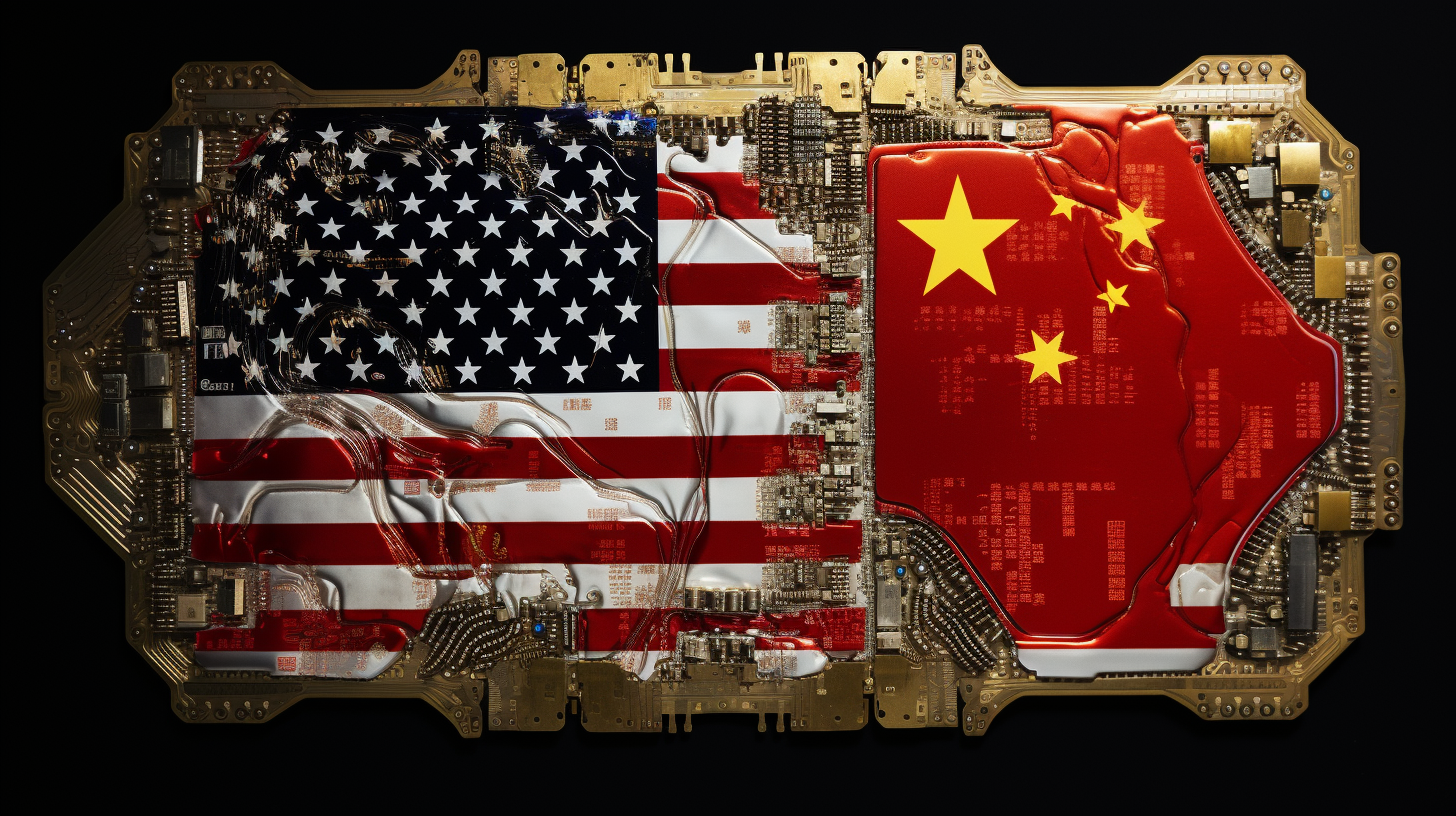
Recent U.S. legislation, such as the CHIPS and Science Act, is a direct response to China’s stunning expansion. Through the CHIPS and Science Act, the U.S. will boost its semiconductor industry, seen as the platform for building future industries, while seeking to limit China’s access to advances in AI and electronics.

A Victim of Success?

Some politicians believe this bilateral science and technology agreement, negotiated in the 1970s as the least contentious form of cooperation – and one renewed many times – may now threaten the United States’ dominance in science and technology. As political and military tensions grow, both countries are wary of renewal of the agreement, even as China has signed similar agreements with over 100 nations.

The United States is stuck in a world that no longer exists – one where it dominates science and technology. China now leads the world in research publications recognized as high quality work, and it produces many more engineers than the U.S. By all measures, China’s research spending is soaring.

Even if the recent extension results in a renegotiated agreement, the U.S. has signaled to China a reluctance to cooperate. Since 2018, joint publications have dropped in number. Chinese researchers are less willing to come to the U.S. Meanwhile, Chinese researchers who are in the U.S. are increasingly likely to return home taking valuable knowledge with them.

The U.S. risks being cut off from top know-how as China forges ahead. Perhaps looking at science as a globally shared resource could help both parties craft a truly “win-win” agreement.