Mark Reichman, Managing Director, Equity Research Analyst, Natural Resources, Noble Capital Markets, Inc.
Refer to the full report for the price target, fundamental analysis, and rating.
Updating estimates. We have increased our Q2 FY2026 revenue, adjusted funds flow (AFF), and AFF per share estimates to C$122.0 million, C$49.6 million, and C$1.77, respectively, from C$104.0 million, C$36.2 million, and C$1.29. While we have lowered our production estimate to 18,663 barrels of oil equivalent per day (boe/d) from 18,875 boe/d due to Q2 weather impacts, the increases in our estimates are largely due to higher crude oil prices. For FY 2026, we now project revenue, AFF, and AFF per share of C$425.6 million, C$162.5 million, and C$5.80, respectively, compared to our prior estimates of C$406.2 million, C$148.4 million, and C$5.29. Our FY 2026 average production forecast of 18,900 boe/d is unchanged.
Outlook. InPlay has approximately 190 Tier 1 drilling locations that provide an estimated 10 to 15 years of high-return inventory. The company’s low-decline asset base supports sustainable free cash flow generation while limiting capital requirements needed to maintain production. Conservative leverage provides capacity for future acquisitions while maintaining shareholder returns through the dividend.
Equity Research is available at no cost to Registered users of Channelchek. Not a Member? Click ‘Join’ to join the Channelchek Community. There is no cost to register, and we never collect credit card information.
This Company Sponsored Research is provided by Noble Capital Markets, Inc., a FINRA and S.E.C. registered broker-dealer (B/D).
*Analyst certification and important disclosures included in the full report. NOTE: investment decisions should not be based upon the content of this research summary. Proper due diligence is required before making any investment decision.
Mark Reichman, Managing Director, Equity Research Analyst, Natural Resources, Noble Capital Markets, Inc.
Refer to the full report for the price target, fundamental analysis, and rating.
Tier 1 Gold Deposit Potential. Tectonic Metals Inc. is a Canadian mineral exploration company focused on the acquisition, exploration, and advancement of gold projects in Alaska, one of the world’s premier mining jurisdictions. The company’s flagship asset is the district-scale Flat Gold Project in southwestern Alaska, which hosts a rapidly growing intrusion-related gold system with multi-million-ounce potential and remains the primary focus of exploration and resource expansion. Tectonic also owns the Tibbs Gold Project in Alaska’s Goodpaster Mining District.
Expanding the Leadership Team. Tectonic Metals recently appointed Ms. Keren Yun as Vice President, Investor Relations to lead investor relations, stakeholder engagement, and capital markets communications. Her appointment will strengthen the company’s engagement with the investment community as the company advances the Flat Gold Project and executes its district-scale exploration strategy. Ms. Yun is a strategic communications and investor relations professional with over two decades of experience working with exploration, development, and producing companies across the global mining sector. Prior to joining Tectonic, Ms. Yun led communications initiatives supporting Wyloo’s Eagle Nest Project in Ontario.
Equity Research is available at no cost to Registered users of Channelchek. Not a Member? Click ‘Join’ to join the Channelchek Community. There is no cost to register, and we never collect credit card information.
This Research is provided by Noble Capital Markets, Inc., a FINRA and S.E.C. registered broker-dealer (B/D).
*Analyst certification and important disclosures included in the full report. NOTE: investment decisions should not be based upon the content of this research summary. Proper due diligence is required before making any investment decision.
VANCOUVER, BRITISH COLUMBIA, July 30, 2026 – Tectonic Metals Inc. (“Tectonic” or the “Company”) (TSX-V: TECT; OTCQX: TETOF) today announced the appointment of Ms. Keren Yun as Vice President, Investor Relations. The Company also announced equity grants pursuant to its equity plans.
The addition of Ms. Yun reflects Tectonic’s continued growth as the Company advances the Flat Gold Project (“Flat“) and executes its district-scale exploration strategy. Ms. Yun, whose appointment became effective June 29, 2026, will lead investor relations, stakeholder engagement and capital markets communications, strengthening the Company’s engagement with the investment community in its next phase of growth.
Tony Reda, Co-Founder, President and CEO, commented:
“Keren’s experience and understanding of the mining investment community make her an excellent addition to our leadership team. As we continue to build awareness of the opportunity at Flat and expand our reach following our recent qualification to the OTCQX Best Market, her expertise will help ensure our story is communicated clearly and consistently to investors. We are pleased to welcome her to Tectonic.”
Ms. Yun is a strategic communications and investor relations professional with over two decades of experience working with exploration, development and producing companies across the global mining sector. Prior to joining Tectonic, she led communications initiatives supporting Wyloo’s Eagle’s Nest Project in Ontario’s Ring of Fire, one of Canada’s most significant regions for critical minerals development. Ms. Yun has also held senior investor relations and communications roles, building trusted relationships with the investment community and supporting companies through key corporate milestones and growth.
Stock Option Grant
The Company also announces that it has granted a total of 2,146,000 incentive stock options to officers, employees and contractors of the Company, to purchase up to 2,146,000 common shares (“Option Shares”) in the capital of Tectonic. The stock options have an exercise price of C$2.10 per Option Share, expire five years from the grant date, with 300,000 stock options vesting over a 36-month period in three equal installments every twelve months from the grant date, and the balance vesting over an 18-month period in three equal installments every six months from the grant date.
Deferred Share Unit (“DSU”) Grant
The Company also announces that it has granted a total of 100,000 DSUs to certain non-employee Directors of the Company. The DSUs will vest on the later of: the date which is one year from the date of grant; and the date of shareholder and TSXV approval of the DSU Plan. The DSUs will settle on the DSU holders’ termination date. The DSUs will be settled in cash if the required shareholder approval is not received at the next annual shareholder meeting held by the Company and are subject to TSXV approval.
Restricted Share Unit (“RSU”) Grant
The Company also announces that it has granted a total of 174,000 RSUs to certain executives of the Company. The RSUs vest over an 18-month period in three equal installments every six months from the grant date.
About Tectonic Metals Inc.
Tectonic Metals Inc. is a mineral exploration company led by an experienced and well-respected technical and financial team with a track record of wealth creation for shareholders. The Company is focused on exploring and developing its flagship Flat Gold Project in southwestern Alaska, covering 99,840 acres of predominantly Native-owned land belonging to Doyon, Ltd., a leading Alaska Native Regional Corporation and one of Tectonic’s largest shareholders. The current focus is on advancing the Chicken Mountain target, one of six multi-kilometre-scale intrusion zones at the Flat Gold Project, where drilling has achieved a 100% success rate across 191 holes to date.
Key members of the Tectonic team were involved in Kaminak Gold Corporation, the company that raised C$165 million to fund the acquisition, discovery and advancement of the Coffee Gold Project through to the completion of a bankable feasibility study before selling the multi-million-ounce gold project to Goldcorp Inc. for C$520 million in 2016.
On behalf of Tectonic Metals Inc.,
Tony Reda President and Chief Executive Officer
For further information about Tectonic Metals Inc. or this news release, please visit our website at www.tectonicmetals.com or contact:
Cautionary Note Regarding Forward-Looking Statements, Historical Information and Visual Observations
This news release contains “forward-looking statements” and “forward-looking information” (collectively, “forward-looking statements”) within the meaning of applicable Canadian securities laws. All statements herein that are not statements of historical fact may be deemed to be forward-looking statements. Forward-looking statements are often, but not always, identified by words such as “may,” “will,” “should,” “anticipate,” “believe,” “expect,” “intend,” “plan,” “estimate,” “potential,” “target,” or similar terminology, or that events or conditions “may” or “will” occur.
Forward-looking statements in this release include, but are not limited to, statements regarding: the potential for mineralization at Tectonic’s projects; the nature, scope, and timing of future exploration activities; the interpretation of geological observations; the possible size or scale of mineralized systems; the receipt of regulatory approvals, and the anticipated benefits of current and future exploration programs.
This release also refers to historical information, including results from past exploration activities and placer production figures. Such historical information has not been independently verified by Tectonic, may not be reliable, and should not be relied upon as current, NI 43-101 compliant data.
In addition, this release contains, detailed geological notes, and descriptive observations such as alteration styles, mineralogy and visible gold. These observations are preliminary in nature, may not be representative of the entire interval or system, and should not be relied upon as a guarantee of mineralized assay results or as the basis for any investment decision. Investors and readers are cautioned that visual estimates, core photographs, and geological descriptions are not substitutes for laboratory assay results and do not demonstrate the economic viability of any mineral deposit.
Forward-looking statements are not guarantees of future performance. They are based on a number of assumptions made as of the date such statements are provided, including, among others: assumptions regarding future gold and other metal prices; currency exchange and interest rates; favourable operating and political conditions; timely receipt of permits and regulatory approvals; availability of labour, equipment, and services; stability of financial and capital markets; availability of financing on acceptable terms; accuracy of exploration data and geological models; and the ability to successfully advance planned exploration programs. Many of these assumptions are beyond the control of Tectonic and may prove to be incorrect.
Forward-looking statements are subject to known and unknown risks, uncertainties, and other factors that may cause actual results, performance, or achievements to differ materially from those expressed or implied. These risks include, without limitation: risks inherent to mineral exploration and development; volatility of commodity prices; changes in laws, regulations, and policies; delays or inability to obtain required approvals and permits; availability of financing; general economic, political, and market conditions; labour disputes and shortages; equipment and supply risks; environmental and social risks; competition; inaccuracies in exploration results or geological interpretations; and other risks detailed from time to time in the Company’s continuous disclosure filings.
Although management believes the expectations expressed in such forward-looking statements are reasonable as of the date made, there can be no assurance they will prove to be correct. Readers are cautioned not to place undue reliance on forward-looking statements, historical information, or preliminary visual geological observations. Actual results and future events may differ materially from those anticipated. All forward-looking statements contained in this news release are expressly qualified by this cautionary statement. Tectonic disclaims any intention or obligation to update or revise forward-looking statements, whether as a result of new information, future events, or otherwise, except as required by applicable securities laws.
Neither the TSX Venture Exchange nor its Regulation Services Provider (as that term is defined in the policies of the TSX Venture Exchange) accepts responsibility for the adequacy or accuracy of this release.
Mark Reichman, Managing Director, Equity Research Analyst, Natural Resources, Noble Capital Markets, Inc.
Refer to the full report for the price target, fundamental analysis, and rating.
Building North America’s LFP Supply Chain. First Phosphate Corp. is a Québec-based critical minerals development company focused on establishing a fully integrated North American lithium iron phosphate (LFP) battery materials supply chain. First Phosphate is dedicated exclusively to supplying the rapidly expanding LFP battery market through the production of high-purity igneous phosphate, purified phosphoric acid, and iron phosphate precursor materials.
Differentiated with Significant Competitive Advantages. First Phosphate benefits from significant competitive advantages and differentiation within both the phosphate industry and the broader critical minerals sector. Most phosphate producers worldwide focus on fertilizer markets using sedimentary phosphate deposits that require significant upgrading and are generally less suitable for producing battery-grade phosphoric acid. By contrast, First Phosphate is exclusively targeting the LFP battery industry using rare high-purity igneous phosphate, allowing it to focus on higher-value specialty battery materials.
Equity Research is available at no cost to Registered users of Channelchek. Not a Member? Click ‘Join’ to join the Channelchek Community. There is no cost to register, and we never collect credit card information.
This Research is provided by Noble Capital Markets, Inc., a FINRA and S.E.C. registered broker-dealer (B/D).
*Analyst certification and important disclosures included in the full report. NOTE: investment decisions should not be based upon the content of this research summary. Proper due diligence is required before making any investment decision.
Mark Reichman, Managing Director, Equity Research Analyst, Natural Resources, Noble Capital Markets, Inc.
Refer to the full report for the price target, fundamental analysis, and rating.
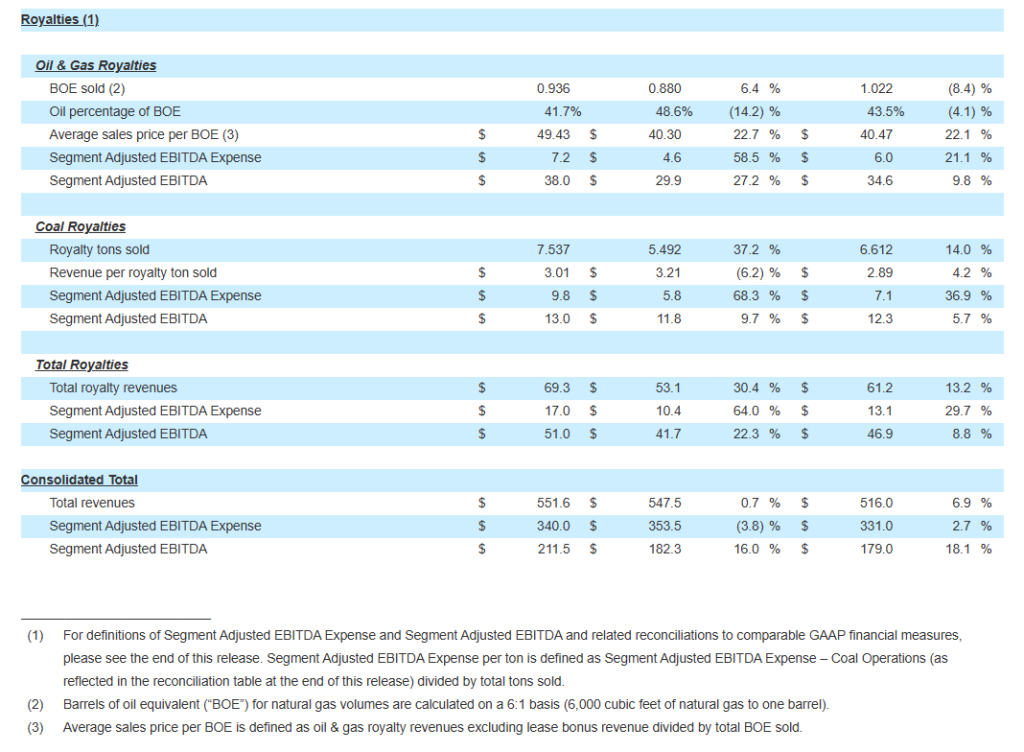
Second Quarter Financial Results. Compared to the prior year period, second-quarter 2026 revenue increased to $551.6 million from $547.5 million due to strong oil & gas royalty revenues, increased coal sales volumes, and higher other revenues, partially offset by a lower average realized coal sales price per ton. Adjusted EBITDA increased 14.7% to $185.7 million compared to $161.9 million in the second quarter of last year. Adjusted net income attributable to ARLP increased to $79.6 million, or $0.61 per unit, compared to $59.4 million, or $0.46 per unit, during the prior year period. Second quarter financial results were largely in line with our estimates. We had projected total revenue of $553.5 million, adj. EBITDA of $181.2 million, and EPU of $0.62.
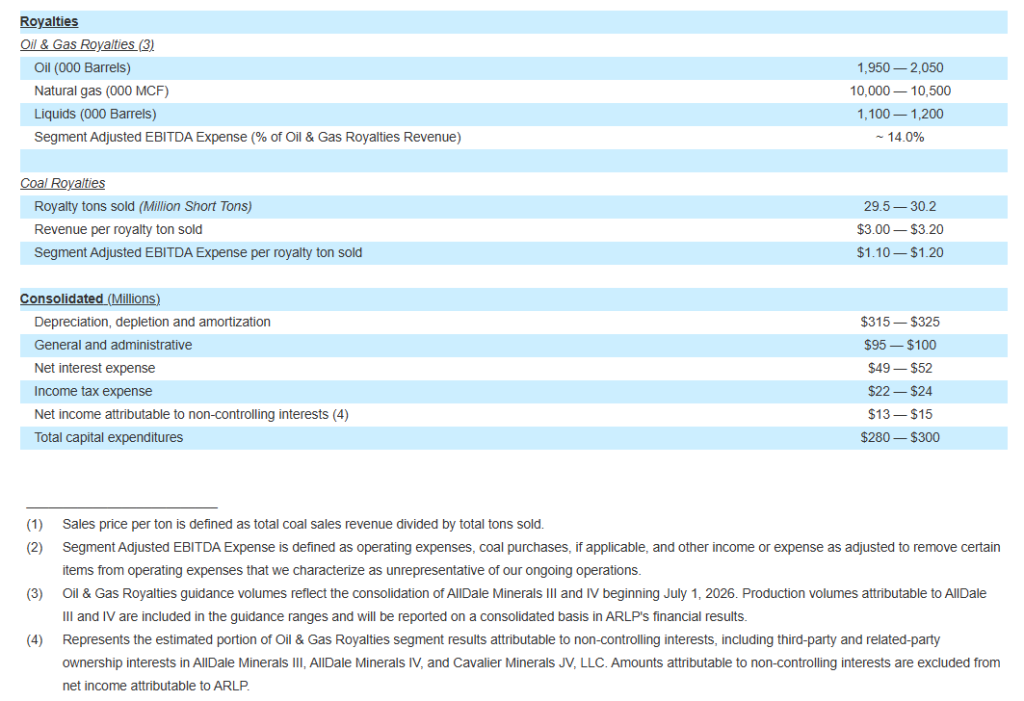
Oil & Gas Royalties Remain a Key Growth Driver. The oil & gas royalties segment delivered record quarterly revenue and segment adjusted EBITDA, driven by increased volumes and higher commodity prices. On July 1, ARLP closed the $206.2 million AllDale III and IV acquisition. Crude oil volumes are now expected to be in the range of 1.95 million to 2.05 million barrels, natural gas volumes are expected to be in the range of 10.0 million to 10.5 million MCF, and liquids volumes are expected to be in the range of 1.1 million to 1.2 million barrels.
Equity Research is available at no cost to Registered users of Channelchek. Not a Member? Click ‘Join’ to join the Channelchek Community. There is no cost to register, and we never collect credit card information.
This Company Sponsored Research is provided by Noble Capital Markets, Inc., a FINRA and S.E.C. registered broker-dealer (B/D).
*Analyst certification and important disclosures included in the full report. NOTE: investment decisions should not be based upon the content of this research summary. Proper due diligence is required before making any investment decision.
Total revenue of $551.6 million, net income of $79.6 million, and Adjusted EBITDA of $185.7 million, up year-over-year 0.7%, 33.9% and 14.7%, respectively
Record oil & gas royalty revenues of $46.3 million, up 30.5% year-over-year
Secured 21.2 million additional committed and priced sales tons over the 2026 – 2031 time period
Distributable Cash Flow of $108.2 million and Distribution Coverage Ratio of 1.39x both improved by 39.0% sequentially
Declares quarterly cash distribution of $0.60 per unit, or $2.40 per unit annualized
On July 1, 2026, completed our $206.2 million acquisition of oil & gas mineral interests, adding 48,500 net royalty acres to the Oil & Gas Royalties segment
TULSA, Okla.–(BUSINESS WIRE)–Alliance Resource Partners, L.P. (NASDAQ: ARLP) (“we,” “us,” “our,” “ARLP” or the “Partnership”) today reported financial and operating results for the three and six months ended June 30, 2026 (the “2026 Quarter” and “2026 Period,” respectively). This release includes comparisons of results to the three and six months ended June 30, 2025 (the “2025 Quarter” and “2025 Period,” respectively) and to the quarter ended March 31, 2026 (the “Sequential Quarter”). All references in the text of this release to “net income” refer to “net income attributable to ARLP.” For a definition of Distributable Cash Flow, Distribution Coverage Ratio, EBITDA, Adjusted EBITDA and Segment Adjusted EBITDA Expense and related reconciliations to comparable GAAP financial measures, please see the end of this release.
For the 2026 Quarter, net income increased 33.9% to $79.6 million, or $0.61 per basic and diluted limited partner unit, compared to $59.4 million, or $0.46 per basic and diluted limited partner unit for the 2025 Quarter primarily as a result of higher total revenues and equity method investment income, and the impact of an impairment loss taken in the 2025 Quarter on a preferred equity investment. Total revenues increased to $551.6 million in the 2026 Quarter compared to $547.5 million for the 2025 Quarter as a result of record oil & gas royalty revenues, increased coal sales volumes and higher other revenues, partially offset by lower coal sales price per ton. Adjusted EBITDA increased 14.7% to $185.7 million in the 2026 Quarter compared to $161.9 million in the 2025 Quarter.
Compared to the Sequential Quarter, total revenues increased 6.9% due to higher coal sales volumes, which rose 8.9% to 8.6 million tons sold in the 2026 Quarter compared to 7.9 million tons sold in the Sequential Quarter, partially offset by 2.7% lower coal sales prices per ton. Net income increased by $70.5 million compared to the Sequential Quarter driven by higher revenues, increased investment income, a smaller decline in the fair value of our digital assets, and a $37.8 million non-cash asset impairment charge in the Sequential Quarter at our Mettiki mine. Adjusted EBITDA for the 2026 Quarter increased by 19.8% compared to the Sequential Quarter.
Total revenues decreased slightly to $1.07 billion for the 2026 Period compared to $1.09 billion for the 2025 Period primarily due to lower coal sales, partially offset by record oil & gas royalty revenues. Net income for the 2026 Period was $88.7 million, or $0.68 per basic and diluted limited partner unit, compared to $133.4 million, or $1.03 per basic and diluted limited partner unit, for the 2025 Period. Adjusted EBITDA for the 2026 Period increased 5.8% to $340.7 million compared to $321.9 million for the 2025 Period.
CEO Commentary
“Our coal operations performed well during the quarter, highlighted by strong productivity and disciplined cost control,” said Joseph W. Craft III, Chairman, President and Chief Executive Officer. “River View and Tunnel Ridge generated superior operating results, driving Segment Adjusted EBITDA expense per ton sold lower by 6.3% year-over-year and 6.6% sequentially. With Hamilton recently returning to longwall production and no additional longwall moves expected until 2027, we believe our operations are well-positioned to meaningfully increase production and cash flow generation during the second half of this year.”
Mr. Craft added, “Our Oil & Gas Royalties segment delivered record quarterly revenue of $46.3 million and Segment Adjusted EBITDA of $38.0 million, driven by stronger realized commodity pricing. Subsequent to quarter end, we successfully closed the $206.2 million AllDale III & IV acquisition. With this transaction, our cumulative investment in oil & gas royalties now exceeds $1.0 billion, marking a significant milestone in the evolution of ARLP’s diversified natural resource platform.”
Mr. Craft continued, “Repeating my comments when we announced our agreement to buy these reserves, this acquisition accelerates the continued growth of our Oil & Gas Royalties segment, adding scale and development upside across multiple U.S. basins, anchored by a meaningful Permian position. It also expands our natural gas footprint with entry into the Haynesville, a resource play well-positioned to benefit from long-term LNG export demand growth. We believe this acquisition will be immediately accretive to ARLP’s free cash flow per unit and strengthens ARLP’s long-term royalty platform, broadens our exposure to high-quality operators and advances our long-term strategy of building a durable, cash-generating royalties business that complements our existing coal operations.”
Segment Results and Analysis (Unaudited)
Coal Operations
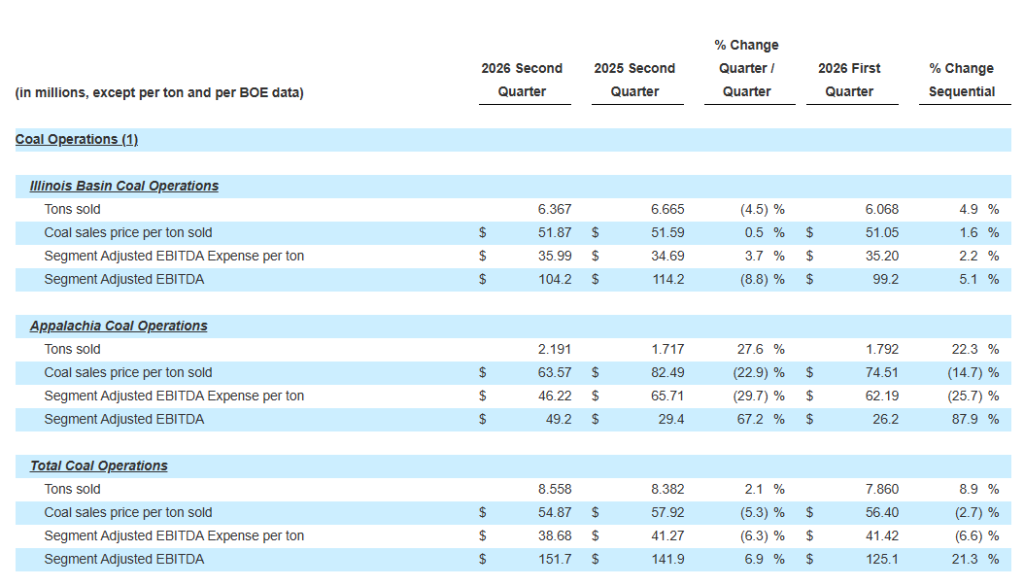
Coal sales volumes decreased by 4.5% in the Illinois Basin compared to the 2025 Quarter due primarily to decreased tons sold from our Hamilton mine as a result of a planned extended longwall move during the 2026 Quarter, partially offset by a strong sales performance and productivity at our River View complex. Compared to the Sequential Quarter, tons sold increased by 4.9% driven primarily by River View’s strong performance during the 2026 Quarter. In Appalachia, tons sold increased by 27.6% and 22.3% compared to the 2025 Quarter and Sequential Quarter, respectively, primarily as a result of increased production at our Tunnel Ridge longwall operation due to improved recoveries and higher productivity. Coal sales price per ton decreased by 22.9% and 14.7% in Appalachia compared to the 2025 Quarter and Sequential Quarter, respectively, primarily due to an increased sales mix of lower priced Tunnel Ridge sales volumes in the 2026 Quarter and reduced sales price per ton at Mettiki. ARLP ended the 2026 Quarter with total coal inventory of 0.8 million tons, representing a decrease of 0.3 million tons compared to the end of both the 2025 Quarter and Sequential Quarter.
Segment Adjusted EBITDA Expense per ton in the Illinois Basin increased 3.7% and 2.2% compared to the 2025 Quarter and Sequential Quarter, respectively, due primarily to the planned extended longwall move at our Hamilton mine during the 2026 Quarter. In Appalachia, Segment Adjusted EBITDA Expense per ton for the 2026 Quarter decreased by 29.7% and 25.7% compared to the 2025 Quarter and Sequential Quarter, respectively, as a result of increased production at our Tunnel Ridge operation.
Royalties
Segment Adjusted EBITDA for the Oil & Gas Royalties segment increased to a record $38.0 million in the 2026 Quarter compared to $29.9 million and $34.6 million in the 2025 Quarter and Sequential Quarter, respectively, primarily due to higher average sales prices per MBOE, which increased 22.7% and 22.1%, respectively, partially offset by higher expenses. Oil & gas royalty volumes increased 6.4% compared to the 2025 Quarter as a result of increased drilling and completion activities on our acreage combined with additional oil & gas mineral interests acquired. Volumes decreased 8.4% sequentially due to natural decline from high-ownership pads completed in the Sequential Quarter.
Segment Adjusted EBITDA for the Coal Royalties segment increased to $13.0 million in the 2026 Quarter compared to $11.8 million and $12.3 million in the 2025 Quarter and Sequential Quarter, respectively, due to higher royalty tons sold, primarily from Tunnel Ridge and River View, partially offset by higher expenses.
Balance Sheet and Liquidity
As of June 30, 2026, total debt and finance leases were outstanding in the amount of $590.2 million. The Partnership’s total and net leverage ratios were 0.82 times and 0.67 times debt to trailing twelve months Adjusted EBITDA, respectively, as of June 30, 2026. ARLP ended the 2026 Quarter with total liquidity of $424.0 million, which included $111.2 million of cash and cash equivalents and $312.8 million of borrowings available under its revolving credit and accounts receivable securitization facilities. In addition, ARLP held 646 bitcoins valued at $37.9 million as of June 30, 2026.
Distributions
ARLP announced today that the Board of Directors of ARLP’s general partner approved a cash distribution to unitholders for the 2026 Quarter of $0.60 per unit (an annualized rate of $2.40 per unit), payable on August 14, 2026, to all unitholders of record as of the close of trading on August 7, 2026. The Distribution Coverage Ratio for the 2026 Quarter was 1.39x.
Concurrent with this announcement, we are providing qualified notice to brokers and nominees that hold ARLP units on behalf of non-U.S. investors under Treasury Regulation Section 1.1446-4(b) and (d) and Treasury Regulation Section 1.1446(f)-4(c)(2)(iii). Brokers and nominees should treat one hundred percent (100%) of ARLP’s distributions to non-U.S. investors as being attributable to income that is effectively connected with a United States trade or business. In addition, brokers and nominees should treat one hundred percent (100%) of the distribution as being in excess of cumulative net income for purposes of determining the amount to withhold. Accordingly, ARLP’s distributions to non-U.S. investors are subject to federal income tax withholding at a rate equal to the highest applicable effective tax rate plus ten percent (10%). Nominees, and not ARLP, are treated as the withholding agents responsible for withholding on the distributions received by them on behalf of non-U.S. investors.
July 2026 Acquisition of Oil & Gas Royalties
On July 1, 2026, we completed the previously announced acquisition of certain general partner and limited partner interests in AllDale Minerals III, LP and AllDale Minerals IV, LP (collectively “AllDale III & IV”) for approximately $206.2 million, subject to customary post-closing adjustments. The AllDale III & IV acquisition expands and diversifies our portfolio of mineral and royalty interests through the added control of approximately 48,500 net royalty acres across premier basins and resource plays including the Permian, Anadarko, Bakken and Haynesville.
ARLP funded the acquisition using a combination of cash on hand, borrowings under its revolving credit facility, and a new $150.0 million term loan at its wholly owned subsidiary Alliance Minerals, LLC.
Outlook
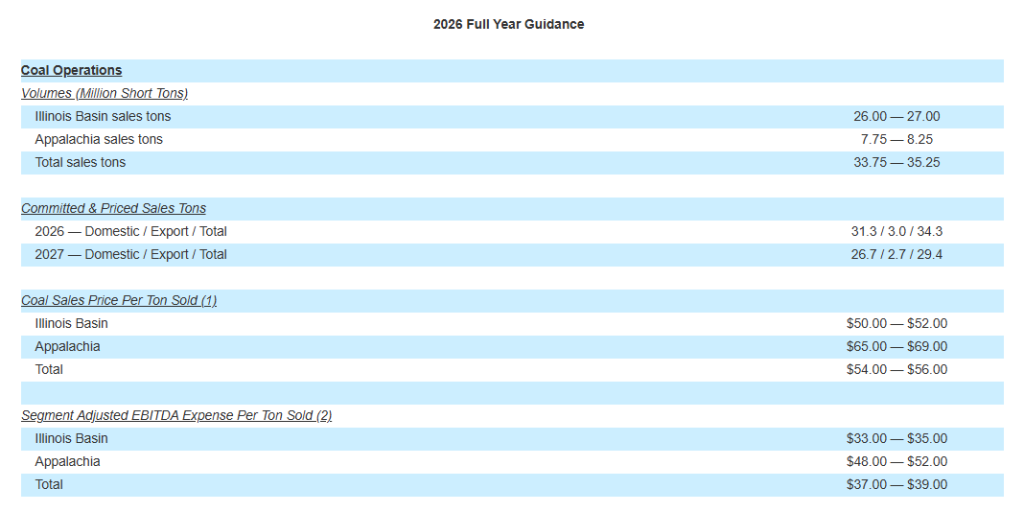
“Due to our strong contracted sales book, we were minimally impacted this quarter by lower domestic coal demand in the first half of this year due to mild weather and lower natural gas prices,” Mr. Craft continued. “During the quarter, we continued to add to our sales book by securing an additional 21.2 million committed and priced coal sales tons over the 2026 to 2031 time period. Our expected 2026 coal sales tons are essentially fully committed at the midpoint of guidance, and we now have 29.4 million tons committed and priced for 2027 delivery. We believe this level of forward commitment reflects both the strategic importance of our coal supply and the confidence customers place in ARLP’s ability to deliver.”
Mr. Craft concluded, “We are increasing our full-year oil & gas royalties volume guidance to reflect the contribution of the AllDale III & IV acquisition beginning in the third quarter of 2026. Similar to our coal segment, we believe our Oil & Gas Royalties segment is well-positioned to meaningfully increase production and cash flow generation during the second half of this year. Looking ahead, our strategy within this segment is focused on reducing leverage, maintaining financial flexibility, and pursuing disciplined acquisition opportunities that enhance long-term unitholder value.”
Guidance
ARLP is updating the following guidance for the full year ending December 31, 2026:
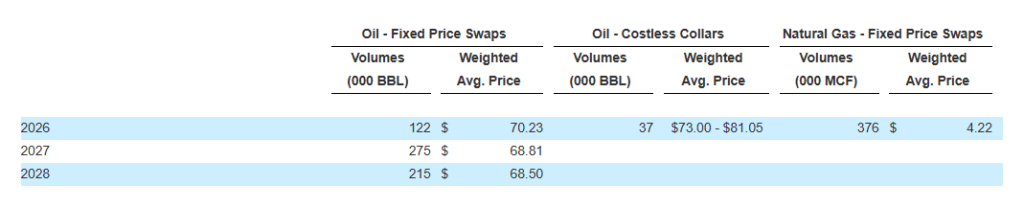
Derivatives
As of the date of this press release, ARLP had the following outstanding derivative contracts assumed in connection with the AllDale III & IV acquisition. When aggregating multiple contracts, the weighted average contract price is disclosed.
Conference Call
A conference call regarding ARLP’s 2026 Quarter financial results and updated 2026 guidance is scheduled for today at 10:00 a.m. Eastern. To participate in the conference call, dial (877) 407-0784 and request to be connected to the Alliance Resource Partners, L.P. earnings conference call. International callers should dial (201) 689-8560 and request to be connected to the same call. Investors may also listen to the call via the “Investors” section of ARLP’s website at www.arlp.com.
An audio replay of the conference call will be available for approximately one week. To access the audio replay, dial U.S. Toll Free (844) 512-2921; International Toll (412) 317-6671 and request to be connected to replay using access code 13761715.
About Alliance Resource Partners, L.P.
ARLP is a diversified natural resource company that is currently the second largest coal producer in the eastern United States, supplying reliable, affordable energy domestically and internationally to major utilities, metallurgical and industrial users. ARLP also generates operating and royalty income from mineral interests it owns in strategic coal and oil & gas producing regions in the United States. In addition, ARLP is positioning itself as a reliable energy partner for the future by pursuing opportunities that support the growth and development of energy-related technologies and infrastructure.
News, unit prices and additional information about ARLP, including filings with the Securities and Exchange Commission (“SEC”), are available at www.arlp.com. For more information, contact the investor relations department of ARLP at (918) 295-7673 or via e-mail at [email protected].
The statements and projections used throughout this release are based on current expectations. These statements and projections are forward-looking, and actual results may differ materially. These projections do not include the potential impact of any mergers, acquisitions or other business combinations that may occur after the date of this release. We have included more information below regarding business risks that could affect our results.
FORWARD-LOOKING STATEMENTS: With the exception of historical matters, any matters discussed in this press release are forward-looking statements that involve risks and uncertainties that could cause actual results to differ materially from projected results. Those forward-looking statements include expectations with respect to our future financial and operational performance, coal and oil & gas consumption and expected future prices, our ability to increase or maintain unitholder distributions in future quarters, business plans and potential growth with respect to our energy and infrastructure investments, optimizing cash flows, reducing operating and capital expenditures, infrastructure projects at our existing properties, growth in domestic electricity demand, preserving liquidity and maintaining financial flexibility, and our future repurchases of units. These risks to our ability to achieve these outcomes include, but are not limited to, the following: decline in the coal industry’s share of electricity generation, including as a result of environmental concerns related to coal mining and combustion, the cost and perceived benefits of other sources of electricity and fuels, such as oil & gas, nuclear energy, and renewable fuels and the retirement of coal-fired power plants in the U.S.; our ability to provide fuel for growth in domestic energy demand, should it materialize; changes in macroeconomic and market conditions and market volatility, and the impact of such changes and volatility on our financial position; changes in global economic and geo-political conditions or changes in industries in which our customers operate; changes in commodity prices, demand and availability which could affect our operating results and cash flows; impacts of geopolitical events, including the conflicts in Ukraine and in the Middle East, including Iran and disruption of maritime traffic through the Strait of Hormuz; actions of the major oil-producing countries with respect to oil production volumes and prices and the direct and indirect impacts over the near and long term on oil & gas exploration and production operations at the properties in which we hold mineral interests; changes in competition in domestic and international coal markets and our ability to respond to such changes; potential shut-ins of production by the operators of the properties in which we hold oil & gas mineral interests due to low commodity prices or the lack of downstream demand or storage capacity; risks associated with the expansion of and investments into the infrastructure of our operations and properties, including the timing of such investments coming online; our ability to identify and complete acquisitions and to successfully integrate such acquisitions into our business and achieve the anticipated benefits therefrom; our ability to identify and invest in new energy and infrastructure ventures; the success of our development and growth plans for our wholly owned subsidiary, Matrix Design Group, LLC, and our investments in emerging and other infrastructure and technology companies; dependence on significant customer contracts, and failure of customers to renew existing contracts upon expiration; adjustments made in price, volume, or terms to existing coal supply agreements; the effects of and changes in trade, monetary and fiscal policies and laws, and the results of central bank policy actions including interest rates, bank failures, and associated liquidity risks; the effects of and changes in taxes or tariffs and other trade measures adopted or threatened by the United States and foreign governments, including the imposition of or increase in tariffs on steel and/or other raw materials; legislation, regulations, and court decisions and interpretations thereof, both domestic and foreign, including those relating to the environment and the release of greenhouse gases, such as state legislation seeking to impose liability on a wide range of energy companies under greenhouse gas “superfund” laws, mining, miner health and safety, hydraulic fracturing, and health care; deregulation of the electric utility industry or the effects of any adverse change in the coal industry, electric utility industry, or general economic conditions; investors’ and other stakeholders’ attention to sustainability matters; liquidity constraints, including those resulting from any future unavailability of financing; customer bankruptcies, cancellations or breaches to existing contracts, or other failures to perform; customer delays, failure to take coal under contracts or defaults in making payments; our productivity levels and margins earned on our coal sales; disruptions to oil & gas exploration and production operations at the properties in which we hold mineral interests; changes in equipment, raw material, service or labor costs or availability, including due to inflationary pressures or tariffs; changes in our ability to recruit, hire and maintain labor; our ability to maintain satisfactory relations with our employees; increases in labor costs, including increases in the costs of health insurance, adverse changes in work rules, or cash payments or projections associated with workers’ compensation claims; increases in transportation costs and risk of transportation delays or interruptions; operational interruptions due to geologic, permitting, labor, weather, supply chain shortage of equipment or mine supplies, or other factors; risks associated with major mine-related accidents, mine fires, mine floods or other interruptions; results of litigation, including claims not yet asserted; foreign currency fluctuations that could adversely affect the competitiveness of our coal abroad; difficulty maintaining our surety bonds for mine reclamation as well as workers’ compensation and black lung benefits; difficulty in making accurate assumptions and projections regarding post-mine reclamation as well as pension, black lung benefits, and other post-retirement benefit liabilities; uncertainties in estimating and replacing our coal mineral reserves and resources; uncertainties in estimating and replacing our oil & gas reserves; uncertainties in the amount of oil & gas production due to the level of drilling and completion activity by the operators of our oil & gas properties; the impact of current and potential changes to federal or state tax rules and regulations, including a loss or reduction of benefits from certain tax deductions and credits; difficulty obtaining commercial property insurance, and risks associated with our participation in the commercial insurance property program; evolving cybersecurity risks, such as those involving unauthorized access, denial-of-service attacks, malicious software, data privacy breaches by employees, insiders or others with authorized access, cyber or phishing attacks, ransomware, malware, social engineering, physical breaches, or other actions; and difficulty in making accurate assumptions and projections regarding future revenues and costs associated with equity investments in companies we do not control.
Additional information concerning these, and other factors can be found in ARLP’s public periodic filings with the SEC, including ARLP’s Annual Report on Form 10-K for the year ended December 31, 2025, filed on February 26, 2026, and ARLP’s Quarterly Report on Form 10-Q for the quarter ended March 31, 2026, filed on May 8, 2026. Except as required by applicable securities laws, ARLP does not intend to update its forward-looking statements.
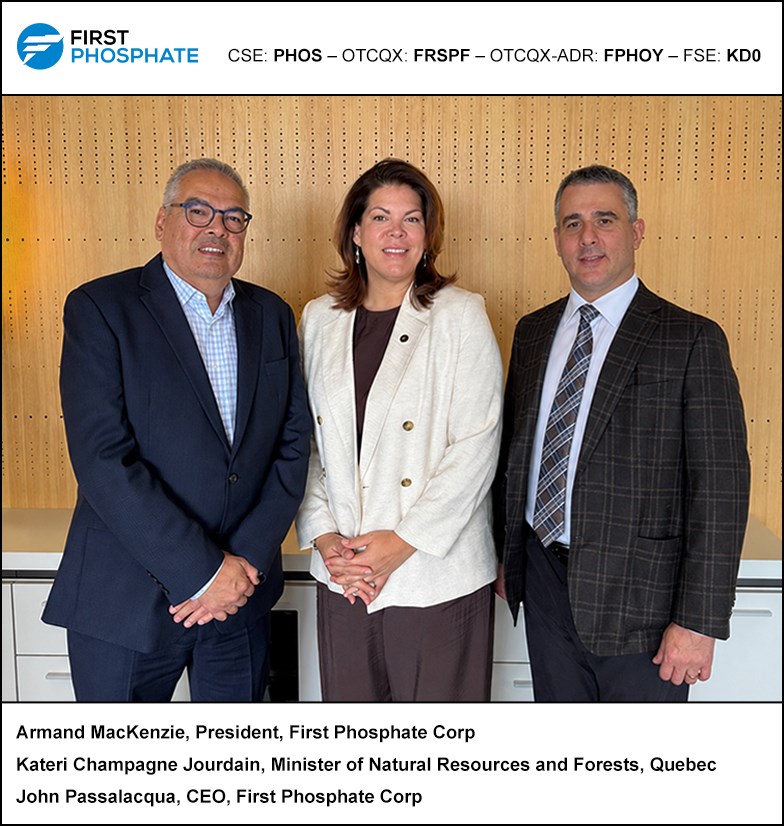
Saguenay-Lac-Saint-Jean, Québec–(Newsfile Corp. – July 27, 2026) – First Phosphate Corp. (CSE: PHOS) (OTCQX: FRSPF) (OTCQX ADR: FPHOY) (FSE: KD0) (“First Phosphate“) is pleased to announce that its Bégin-Lamarche igneous rock phosphate mining project has been selected for “Filon” support status with the Quebec Ministry of Natural Resources and Forests (“MRNF”), an initiative aimed at accelerating mining projects in Quebec.
The objective of the MRNF’s Filon support is to foster a common understanding of the Bégin-Lamarche phosphate mining project with a view to accelerate its key development milestones. The specialized support to be provided to First Phosphate is intended to facilitate discussions with the government departments and agencies responsible for issuing mining authorizations or permits.
“With the Bégin-Lamarche project, Québec is transforming its geological potential into an economic advantage. By developing a high-purity phosphate deposit intended for the battery sector, we are helping to build a more innovative, more resilient economy focused on future markets. Filon will advance this structural project through a specialized support mechanism.”
Kateri Champagne Jourdain, Québec Minister of Natural Resources and Forests
“We appreciate that the Government of Québec has granted accelerated status to our Bégin-Lamarche igneous rock phosphate project,” said John Passalacqua, CEO of First Phosphate. “Our project holds significant strategic value in helping to onshore the lithium iron phosphate (“LFP”) battery supply chain in North America.”
Announced as part of the Québec Strategy for the Development of Critical and Strategic Minerals 2025-2031, Filon targets critical and strategic mineral projects in Quebec.
The scientific and technical information relating to First Phosphate contained in this press release has been reviewed and approved by Steeve Lavoie, P.Geo., Chief Geologist of First Phosphate, who is a Qualified Person within the meaning of National Instrument 43-101 – Standards of Disclosure for Mineral Projects (“NI 43-101”).
About First Phosphate Corp.
First Phosphate (CSE: PHOS) (OTCQX: FRSPF) (OTCQX ADR: FPHOY) (FSE: KD0) is a mineral exploration and development and clean technology company dedicated to building and reshoring a vertically integrated mine-to-market supply chain for the production of LFP batteries in North America. Target markets include energy storage, data centers, robotics, mobility, and national security. First Phosphate’s flagship Bégin-Lamarche property, located in Saguenay-Lac-Saint-Jean, Québec, Canada, represents a rare North American igneous phosphate resource producing high-purity phosphate characterized by very low levels of impurities.
Forward-Looking Information and Cautionary Statement
This release includes certain statements that may be deemed “forward-looking information”. Any statement that discusses predictions, expectations, beliefs, plans, projections, objectives, assumptions, future events or performance (often but not always using phrases such as “expects”, or “does not expect”, “is expected”, “anticipates” or “does not anticipate”, “plans”, “budget”, “scheduled”, “forecasts”, “estimates”, “believes” or “intends” or variations of such words and phrases or stating that certain actions, events or results “may” or “could”, “would”, “might” or “will” be taken to occur or be achieved) are not statements of historical fact and may be forward-looking information. In particular, this press release contains forward-looking information relating to, among other things: the Company’s participation in the Filon program, the support to be provided and the expected outcomes.
Although the Company believes the expectations expressed in such forward-looking statements are based on reasonable assumptions, such statements are not guarantees of future performance and actual results or developments may differ materially from those forward-looking statements. Factors that could cause actual results to differ materially from those in forward-looking statements include market prices, development and exploration successes, and continued availability of capital and financing and general economic, market or business conditions. These statements are based on a number of assumptions including, among other things, assumptions regarding general business and economic conditions that engineering and construction timetables and capital costs for the Company’s, exploration, development and expansion projects are correctly estimated and not affected by unforeseen circumstances; the ability to obtain financing for its proposed operations on acceptable terms; no material deterioration in general business and economic conditions; no material delays in obtaining permits and other approvals; no significant disruptions affecting the activities of the Company or its ability to access required project equipment and services, and operating supplies in sufficient quantities and on a timely basis; inflation and prices for Company project inputs being approximately consistent with anticipated levels; the ability to complete the exploration and development programs consistent with the Company’s expectations; commodity price expectations including assumptions for P2O5; the Company’s relationship with local municipalities and First Nations remaining consistent with the Company’s expectations; the Company’s relationship with other third-party partners and suppliers remaining consistent with the Company’s expectations; and government relations and actions being consistent with Company expectations. Investors are cautioned that any such statements are not guarantees of future performance and actual results or developments may differ materially from those projected in the forward-looking statements. Accordingly, readers should not place undue reliance on the forward-looking information contained in this press release. The Company does not assume any obligation to update or revise its forward-looking statements, whether because of new information, future events or otherwise, except as required by applicable law. All forward-looking information contained in this release is qualified by these cautionary statements.
Mark Reichman, Managing Director, Equity Research Analyst, Natural Resources, Noble Capital Markets, Inc.
Refer to the full report for the price target, fundamental analysis, and rating.
Supporting Project Advancement. Aurania Resources has appointed current independent director Mr. Thomas Ullrich as Special Advisor, effective immediately, to support the advancement of the company’s strategic projects. Working closely with President and Chief Executive Officer Dr. Keith Barron, Mr. Ullrich will provide strategic guidance on operational and mineral exploration activities, evaluate strategic opportunities, assist with project management, strengthen industry relationships, and help prioritize key initiatives across the company’s portfolio while continuing to serve on the Board of Directors.
Leveraging Experience and Expertise. Mr. Ullrich offers more than 35 years of experience in mineral exploration and geoscience, with expertise encompassing technical exploration, project evaluation, and capital markets. He currently serves as Chief Executive Officer and a director of Aston Bay Holdings Ltd. and previously held senior technical roles with Antofagasta Minerals and Almaden Minerals, where he managed the drill program that led to the discovery of the Ixtaca silver-gold deposit in Mexico. We think Mr. Ullrich’s expanded role will enhance Aurania’s ability to advance its exploration and development initiatives to create long-term shareholder value.
Equity Research is available at no cost to Registered users of Channelchek. Not a Member? Click ‘Join’ to join the Channelchek Community. There is no cost to register, and we never collect credit card information.
This Company Sponsored Research is provided by Noble Capital Markets, Inc., a FINRA and S.E.C. registered broker-dealer (B/D).
*Analyst certification and important disclosures included in the full report. NOTE: investment decisions should not be based upon the content of this research summary. Proper due diligence is required before making any investment decision.
Toronto, Ontario–(Newsfile Corp. – July 23, 2026) – Aurania Resources Ltd. (TSXV: ARU) (OTCQB: AUIAF) (FSE: 20Q) (“Aurania” or the “Company”) is pleased to announce that its Board of Directors have appointed Mr. Thomas Ullrich as Special Advisor to the Company, effective immediately.
Mr. Ullrich, is currently an independent director of the Company and has over 35 years of experience in mineral exploration and geoscience
Working closely with Aurania’s President and CEO, Dr. Keith Barron, Mr. Ullrich will support the advancement of Aurania’s projects by providing strategic guidance on the operational and mineral exploration activities of the Company
The Board of Directors has granted Mr. Ullrich 350,000 stock options as compensation for his role as Special Advisor
“Tom Ullrich has been a highly valued member of our Board since July 2022 and brings extensive technical experience in the mining industry as well as capital markets, project evaluation and project advancement experience,” said Dr. Keith Barron, Chairman, President and CEO of the Company. “As we advance our exploration and development initiatives, we believe Tom’s increased involvement and support will strengthen our ability to unlock value across our project portfolio while supporting our long-term strategy.”
Mr. Ullrich has over 35 years of experience in mineral exploration and geoscience. He has been the CEO and director of Aston Bay since 2016. Prior to that, Mr. Ullrich was Chief Geologist North America for Antofagasta Minerals plc, investigating the region’s copper potential through extensive property evaluations and management of drill programs in the United States, Mexico and Canada. Prior to Antofagasta, he was Senior Geologist for Almaden Minerals, where he managed the drill program for the team’s discovery of the Ixtaca Ag-Au deposit in Mexico. Mr. Ullrich also established the Ar-Ar geochronology lab at the University of British Columbia and studied the Candelaria Cu-Au mine, Chile, while at Queen’s University. Mr. Ullrich is also on the Technical Advisory Board for American West Metals Limited.
“I am pleased to take on this expanded role and work more closely with the management team,” said Thomas Ullrich. “Aurania’s CEO, Keith Barron has assembled a unique and compelling collection of projects globally, including strategically important projects for critical minerals. I look forward to contributing to the advancement of these projects and supporting Aurania’s efforts to create long-term value for shareholders.”
In his capacity as Special Advisor to advise and oversee the Company’s operational and exploration activities, Mr. Ullrich may also assist in the evaluation of strategic opportunities, project management, strengthening industry relationships and prioritizing specific initiatives within Aurania’s portfolio of projects.
Thomas Ullrich will continue to serve as a director of the Company’s board of directors while undertaking these advisory responsibilities and will report to the board of directors.
In conjunction with the aforementioned appointment and pursuant to the Company’s Stock Option Plan, the Board of Directors granted Mr. Ullrich 350,000 stock options on July 22, 2026 at an exercise price of C$0.215. These options are exercisable for five years from the date of grant and the options shall vest in thirds on the date of grant and each of the first and second anniversaries of the dates of grant. In the event Mr. Ullrich intends to exercise such stock options, he shall be solely responsible for paying the entirety of the exercise price.
About Aurania Aurania is a mineral exploration company engaged in the identification, evaluation, acquisition, and exploration of mineral property interests, with a focus on precious metals and critical energy in Europe and abroad.
Neither the TSXV nor its Regulation Services Provider (as that term is defined in the policies of the TSXV) accepts responsibility for the adequacy or accuracy of this release.
Forward-Looking Statements This news release contains forward-looking information as such term is defined in applicable securities laws, which relate to future events or future performance and reflect management’s current expectations and assumptions. The forward-looking information includes Mr. Ullrich’s proposed role and responsibilities as Special Advisor to the Company, and that Mr. Ullrich’s increased involvement and support will strengthen the Company’s ability to unlock value across its project portfolio while supporting its long-term strategy, Aurania’s objectives, goals, future plans or other statements of intent, Aurania’s ongoing engagement in the identification, evaluation, acquisition and exploration of mineral property interests, and any potential exploration results or potential mineralization resulting therefrom and Aurania’s ongoing exploration efforts in France, Italy, Ecuador and abroad, Such forward-looking statements reflect management’s current beliefs and are based on assumptions made by and information currently available to Aurania, including the assumption that, there will be no material adverse change in metal prices and all necessary consents, licenses, permits and approvals will be obtained, including various local government licenses and the market. Investors are cautioned that these forward-looking statements are neither promises nor guarantees and are subject to risks and uncertainties that may cause future results to differ materially from those expected. Risk factors that could cause actual results to differ materially from the results expressed or implied by the forward-looking information include, among other things, the state of the capital markets generally and of the mining markets more particularly, any commodity prices supply chain disruptions, restrictions on labour and workplace attendance and local and international travel due to war, weather, pandemics or otherwise; a failure to obtain or delays in obtaining the required regulatory licenses, permits, approvals and consents; an inability to access financing as needed, including pursuant to the Loan; a general economic downturn, a volatile stock price, labour strikes, political unrest, changes in the mining regulatory regime governing Aurania; a failure to comply with environmental regulations; a weakening of market and industry reliance on precious metals, copper and critical minerals; and those risks set out in the Company’s public documents filed on SEDAR+. Aurania cautions the reader that the above list of risk factors is not exhaustive. Although the Company believes that the assumptions and factors used in preparing the forward-looking information in this news release are reasonable, undue reliance should not be placed on such information, which only applies as of the date of this news release, and no assurance can be given that such events will occur in the disclosed time frames or at all. The Company disclaims any intention or obligation to update or revise any forward-looking information, whether as a result of new information, future events or otherwise, other than as required by law.
Mark Reichman, Managing Director, Equity Research Analyst, Natural Resources, Noble Capital Markets, Inc.
Refer to the full report for the price target, fundamental analysis, and rating.
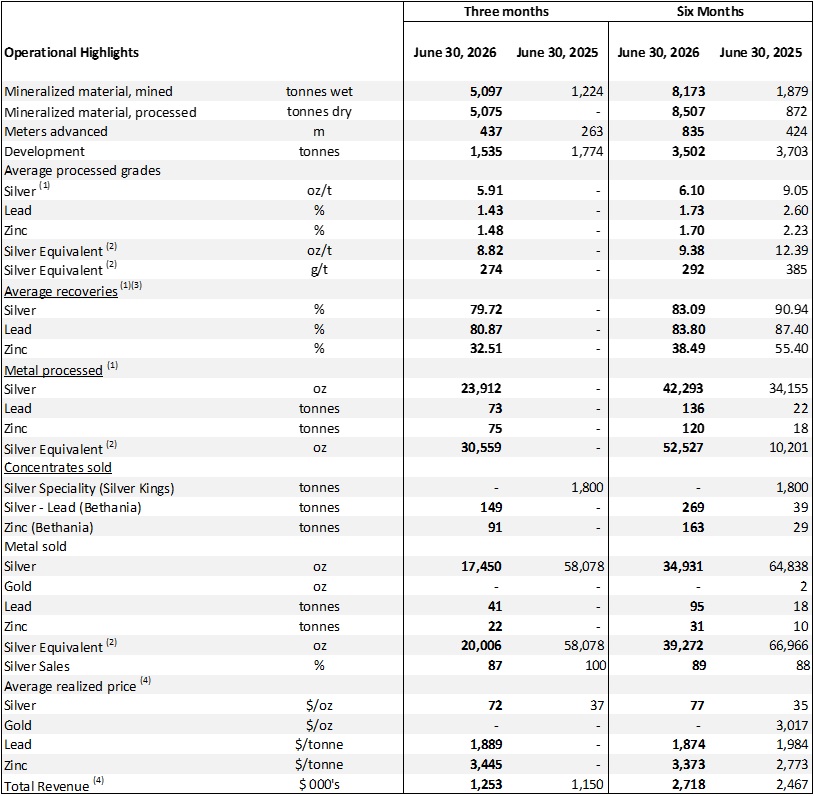
Strong Operating Momentum. Kuya Silver reported another record quarter at its Bethania mine, with mined mineralized material increasing 66% sequentially to 5,097 tonnes. The company also achieved record quarterly silver production of 23,912 ounces or 30,559 silver-equivalent ounces, along with record monthly production in June as underground development, mine sequencing, and production rates continued to improve. Management expects recoveries and grades to continue strengthening as the operation advances toward steady-state production.
Quarterly Financial Highlights. Revenue for the quarter totaled approximately $1.25 million, generated primarily from silver sales, which accounted for 87% of total revenue. Metal sold included 17,450 ounces of silver or 20,006 ounces of silver equivalent. The company realized an average silver selling price of $72 per ounce during the quarter, benefiting from a favorable silver price environment. While quarterly silver sales volumes were lower than the prior year due to the timing of sales, higher realized silver prices supported revenue growth as production continued to ramp toward higher sustainable mining rates. We expect the company to release full second quarter financial and operational results in mid-August.
Equity Research is available at no cost to Registered users of Channelchek. Not a Member? Click ‘Join’ to join the Channelchek Community. There is no cost to register, and we never collect credit card information.
This Company Sponsored Research is provided by Noble Capital Markets, Inc., a FINRA and S.E.C. registered broker-dealer (B/D).
*Analyst certification and important disclosures included in the full report. NOTE: investment decisions should not be based upon the content of this research summary. Proper due diligence is required before making any investment decision.
All references to dollar amounts are references to U.S. Dollars, unless otherwise stated
Toronto, Ontario–(Newsfile Corp. – July 21, 2026) – Kuya Silver Corporation (CSE: KUYA) (OTCQB: KUYAF) (FSE: 6MR1) (the “Company” or “Kuya Silver“) is pleased to report record quarterly production and provide an operational update for the second quarter of 2026 at the Bethania silver project, which again delivered record daily and quarterly production rates as the ramp-up continued to show significant progress during the quarter. Although the short-term progress at Bethania is encouraging, preparations are underway for upward step change in production later this year as additional underground development is completed.
Operational Highlights
5,097 metric tonnes of mineralized material mined at Bethania, a 66% increase quarter over quarter.
Record 23,912 oz silver (30,559 silver equivalent) processed during the quarter.
Record monthly production in June of 13,273 silver equivalent ounces as grades improved toward the end of the quarter.
Continued strong underground development with record 437 meters advanced while drilling and blasting 1,535 metric tonnes of development material to support the expansion of underground mining operations.
Silver production was 87% of the quarterly revenue from Bethania in Q2 with an average selling price of $72/oz.
The Company continued to develop partnerships with local contractors to accelerate our exploration and mine development objectives.
Kuya Silver Delivers Steady Progress at Bethania in Q2
Production of mineralized material at the Bethania Project totalled 5,097 metric tonnes, another quarterly record and a 66% improvement over Q1 2026 as production continues to steadily ramp up. Development activities achieved total of 437 metres of underground advancement and 1,535 tonnes of development material in the quarter. Kuya Silver achieved a record daily production of 124 tonnes and a record monthly production of 2,040 tonnes (68 tpd) in Q2, as well as a monthly record for silver production (13,273 oz Ag eq.) demonstrating that the Company’s methodical ramp-up process is generating positive results.
Silver recoveries averaged 79.7% during Q2 2026, directly reflecting the lower-grade development material and stope scheduling early in the quarter, which resulted in an average grade of 5.9 oz/t silver (8.8 oz/t or 274 g/t Ag equivalent). Mine sequencing optimizations implemented by the Kuya Silver team began delivering positive results mid-quarter. By June, silver grades increased to 6.66 oz/t exceeding management’s expectations, and silver recoveries improved to approximately 82%. Kuya Silver has previously achieved silver recoveries exceeding 90% when processing higher-grade batches, the Company expects recoveries to continue improving toward these levels as the mine reaches steady-state production. Furthermore, Kuya Silver has launched a metallurgical testing campaign to further optimize recoveries.
In addition, Kuya Silver approved the installation of a dual-car hoisting winch system at Bethania, expected to be commissioned in October 2026. This infrastructure upgrade is expected to improve efficiency of the mine’s ore extraction by enabling simultaneous haulage of two ore cars. This improvement will support the ongoing production ramp-up and provide flexibility and redundancy to materials handling as the Company advances the underground ramp project.
David Stein, Kuya Silver’s President and CEO, stated, “The ramp up strategy to produce at the Bethania mine while taking on ambitious mine development to expand production to our Phase 1 target of 350 tpd has allowed the Company to generate significant revenue and reduce our burn rate. The revenue from mining operations on top of the Company’s already strong balance sheet puts Kuya Silver in an excellent position, for the first time in our history, to deliver on its near-term production targets while at the same time expanding our exploration efforts to delineate more silver at the Bethania mine and the six other silver veins systems we control in the Bethania district.”
Table 1: Production highlights from the Bethania silver mine
(1)Information has been revised from amounts previously disclosed in the Company’s press release dated April 22, 2026. The revisions relate primarily to the correction of previously reported production metrics.
(2)prices for silver equivalent calculations use period ending spot prices and are as follows: June 30, 2026 $61/oz, lead $1,877/tonne, zinc$3,552/tonne Mar. 31 2026 silver $74/oz, lead $1,909/tonne, zinc$3,230/tonne June 30, 2025 $36/oz, lead $2,205/tonne, zinc$2,764/tonne Mar. 31 2026 silver $74/oz, lead $1,909/tonne Mar. 31, 2025 period; silver $34/oz, gold $3122.80/oz, lead $2,002/tonne, zinc $2,829/tonne.
(3)includes only payable recovery i.e. lead in the silver- lead concentrate and zinc in the zinc concentrate and silver in both concentrates.
(4)may include provisional settlements at the end of the period, net of treatment and refining costs.
Developing Partnerships with Local Mining and Exploration Contractors
As part of its strategy to sustain production growth and expand exploration efforts at the Bethania project, Kuya Silver is in the process of onboarding up to three specialized contractors to support development, drilling and operations at the project. The underground drilling contract to operate three drill rigs at Bethania has been formally awarded to Safasermin S.A.C., an experienced Peruvian drilling and exploration contractor, pending the finalization of contract details. All three rigs are initially planned to operate underground at the Bethania mine; however, surface drilling is expected to be added and become a significant component of the drilling program during the second half of 2026.
Following a competitive bidding process, comprehensive site visits and final negotiations, Kuya Silver has issued a formal Letter of Award to Minera Tauro S.A.C. to perform additional underground development at the Bethania mine. The contractor has officially confirmed its acceptance. Pending final execution of the contract, Minera Tauro is expected to mobilize in the coming weeks to accelerate underground development. This partnership will allow Kuya Silver’s in-house operations staff to focus on achieving greater production levels as the ramp-up continues.
Kuya Silver has also commenced portal development for the new internal ramp project and advanced a rigorous, competitive bidding process to shift the majority of the ramp development to a specialized mining contractor. Following comprehensive site visits and detailed evaluations of the project’s technical data and Terms of Reference, Kuya Silver has finalized the receipt of complete technical and economic proposals from four highly respected mining contractors. The Company is currently evaluating the final submissions and expects to formally award the contract and mobilize the selected contractor shortly.
In parallel, Kuya Silver has completed a geomechanical assessment and ground-support design study for the ramp project, characterizing rock-mass conditions and establishing the optimal reinforcement system for each section of the planned corridor. This engineering work enables the Company to move directly from contractor award to mobilization without delay. The preparatory work is expected to provide greater confidence in both the execution timeline and the cost profile of this critical infrastructure investment.
Christian Aramayo, Kuya Silver’s Chief Operating Officer, remarked, “At Bethania, our development decisions are driven by geology, not short-term price volatility. We are partnering with elite contractors and expanding our team to optimize development ahead of completing our Phase 1 ramp-up. We are committing to disciplined, high-return infrastructure, such as advancing our new internal ramp project, to unlock the deeper, and higher-grade vein structures within the Bethania system. Our strong balance sheet allows us to build our infrastructure the right way, ensuring we develop a safe and flexible operation, capable of maximizing the margin of every ounce we mine.”
Camila Plant Update
Kuya Silver continues to process its mineralized material at the Camila Plant. The Company announced an LOI on January 27, 2026 (see press release) and plans to make a separate announcement.
Support for Local Districts and Earthquake Relief Efforts
While Kuya Silver’s Bethania mine and infrastructure reported no measurable impact from the July 19th 5.5 magnitude earthquake in the Junin region, we recognize the severe toll this seismic event has taken on the surrounding towns and districts, particularly in the district of Chongos Bajo and the highly affected area of Chupuro. Kuya Silver extends its deepest sympathies to the people of Junin and is actively working to support recovery efforts.
As part of our commitment to our local workforce and neighboring populations, Kuya Silver is providing direct assistance to our employees who have family members in the affected areas. Furthermore, the Company is making direct donations to support the local emergency relief efforts.
For our partners, contractors, and stakeholders who wish to join these relief efforts, local institutions have established official donation reception centers to support the victims. Donations of drinking water, non-perishable food, warm clothing, and essential medicines are currently being received at the following collection point: Municipalidad Distrital de Chongos Bajo: Main municipal offices.
Quality Assurance and Quality Control
Quality assurance and quality control include two sampling procedures. Underground vein material from stopes are sampled to confirm vein grades and to reconcile against the mine model; and sampling of freshly mined material in stockpiles to determine dilution and the head grade that is sent to the processing plant.
Underground vein sampling was conducted systematically every 4 meters along the galleries. This involved excavating a narrow and continuous channel either parallel to the vein or perpendicular to its orientation. The entire volume of material excavated from the channel was collected as a sample.
Freshly mined material in the stockpiles and concentrate stockpiles were sampled using trenching, a method involving the excavation of narrow trenches perpendicular to the major axis of the pile. Trenches were systematically dug at regular intervals across all depths of the pile. The location of each trench was referenced to a topographic control point and recorded in the sampling log.
All material was carefully collected on plastic sheets, then pulverized at the mine site. The pulverized material was quartered, and one quarter was labeled and secured in vinyl sample bags. The samples were then transported to Dmtri I. Mendelejeff laboratory in Huancayo for processing using fire assay followed by atomic absorption spectroscopy (AAS).
All concentrate assay results are cross-checked against independent analyses conducted by the buyer. Furthermore, sample security protocols include sealed trucks for transporting run-of-mine (ROM) material and concentrate trucks with tamper-proof devices with safety seals, and a documented custody chain overseen by the mine superintendent (Bethania).
National Instrument 43-101 Disclosure
The technical content of this news release has been reviewed and approved by Mr. Kevin J. O’Connell, P.E., Independent Technical Advisor to of Kuya Silver and a Qualified Person as defined by National Instrument 43-101.
About Kuya Silver Corporation
Kuya Silver is a Canadian‐based, growth-oriented mining company with a focus on silver. Kuya Silver operates the Bethania silver mine in Peru, while developing district-scale silver projects in mining-friendly jurisdictions including Peru and Canada.
This news release contains statements that constitute “forward-looking information,” including statements regarding the plans, intentions, beliefs, and current expectations of the Company, its directors, or its officers with respect to the future business activities of the Company. The words “may,” “would,” “could,” “will,” “intend,” “plan,” “anticipate,” “believe,” “estimate,” “expect,” “must,” “next,” “propose,” “new,” “potential,” “prospective,” “target,” “future,” “verge,” “favorable,” “implications,” and “ongoing,” and similar expressions, as they relate to the Company or its management, are intended to identify such forward-looking information. Investors are cautioned that statements including forward-looking information are not guarantees of future business activities and involve risks and uncertainties, and that the Company’s future business activities may differ materially from those described in the forward-looking information as a result of various factors, including but not limited to fluctuations in market prices, successes of the operations of the Company, continued availability of capital and financing, and general economic, market, and business conditions. There can be no assurances that such forward-looking information will prove accurate, and therefore, readers are advised to rely on their own evaluation of the risks and uncertainties. The Company does not assume any obligation to update any forward-looking information except as required under the applicable securities laws.
Neither the Canadian Securities Exchange nor the Investment Industry Regulatory Organization of Canada accepts responsibility for the adequacy or accuracy of this release.
Magnolia Oil and Gas (NYSE: MGY) announced Monday it has entered into a definitive purchase agreement to acquire WildFire Energy for approximately $4.06 billion, marking the largest acquisition in the company’s history and one of the most significant domestic upstream deals of 2026. WildFire, backed by private equity firms Warburg Pincus and Kayne Anderson, operates in the same South Texas basin where Magnolia has built its entire business, making this a pure concentration play rather than a diversification move.
Under the terms of the agreement, WildFire owners will receive 32.2 million shares of Magnolia’s Class A common stock, and Magnolia will assume $600 million in outstanding notes due in 2029. The transaction is expected to close in late Q3 2026. Committed financing has been arranged through JPMorgan Chase and Citigroup.
What Magnolia Is Actually Getting
The deal goes well beyond additional drilling locations. WildFire’s assets are concentrated in the Eagle Ford Shale and Austin Chalk formations in the Giddings area of South Texas, directly adjacent to and overlapping with Magnolia’s existing operations. That geographic overlap is central to the deal thesis because it allows Magnolia to integrate the acquired production into its existing infrastructure with minimal incremental investment.
Two components of the transaction stand out from a typical upstream acquisition. First, the deal includes a sand mine that supplies approximately 80% of Magnolia’s current annual sand consumption, including 100% of WildFire’s sand requirements, with additional third-party sales on top. Controlling your own frac sand supply in a market where sand costs represent a meaningful share of well completion expenses is a structural cost advantage that compounds over every well drilled.
Second, the transaction includes more than 500 miles of gas gathering pipelines in the Giddings area. Owning midstream infrastructure rather than paying third-party gathering and processing fees directly improves operating margins on every barrel produced. For investors who follow midstream economics, companies like Summit Midstream Partners understand exactly how valuable that kind of infrastructure control can be at scale.
The Shareholder Return Story
Magnolia is framing this as a free cash flow accretion story above all else. The confidence in the acquired asset quality translated into an immediate 9% increase in the quarterly dividend to $0.18 per share, payable in Q3 2026. The company also reaffirmed its ongoing commitment to repurchasing at least 1% of outstanding shares per quarter.
On the production side, Magnolia reported Q2 total production averaging 106,100 barrels of oil equivalent per day, with D&C capital of $125 million and $296 million of cash on the balance sheet at quarter end. The company raised its full-year 2026 standalone production growth guidance from 5% to 6% alongside the deal announcement.
The Broader E&P Consolidation Signal
For investors tracking domestic energy producers in the small and microcap space, the Magnolia-WildFire combination reinforces a consolidation pattern that has been accelerating throughout 2026. Private equity-backed E&P companies that built significant acreage positions during the downturn are now exiting to public company buyers at scale. The acquirers with the strongest balance sheets, the lowest cost structures, and the most disciplined capital allocation frameworks are the ones winning the assets.
That dynamic creates a dual opportunity for smaller energy names. Companies like InPlay Oil and Gas and Alliance Resource Partners that operate with similar discipline in their respective basins represent the kind of focused, well-run operators that either benefit from the same elevated pricing environment driving Magnolia’s economics or become attractive consolidation targets themselves as the deal cycle continues.
Mark Reichman, Managing Director, Equity Research Analyst, Natural Resources, Noble Capital Markets, Inc.
Refer to the full report for the price target, fundamental analysis, and rating.
Golden Gate FAST-41 Designation. Resolution Minerals’ Golden Gate Project in Idaho has been granted FAST-41 Transparency Coverage by the U.S. Federal Permitting Council, making it the Company’s second project to receive the designation after Antimony Ridge. The designation highlights the strategic importance of the Horse Heaven Project as a domestic source of tungsten, antimony, and gold and is expected to accelerate permitting through enhanced federal coordination and oversight.
Golden Gate Plan of Operations. The Golden Gate Project is part of Resolution’s 15,000-acre Horse Heaven Project, which also includes the Antimony Ridge target, the Johnson Creek Tungsten Mill, and historical tungsten stockpiles. The Company has submitted a Plan of Operations that includes construction of new access roads, up to 340 drill holes and 2,000 feet of trenching, while continuing a fully funded 45-hole drilling program to advance resource definition.
Equity Research is available at no cost to Registered users of Channelchek. Not a Member? Click ‘Join’ to join the Channelchek Community. There is no cost to register, and we never collect credit card information.
This Research is provided by Noble Capital Markets, Inc., a FINRA and S.E.C. registered broker-dealer (B/D).
*Analyst certification and important disclosures included in the full report. NOTE: investment decisions should not be based upon the content of this research summary. Proper due diligence is required before making any investment decision.