CHATHAM, N.J., May 09, 2023 (GLOBE NEWSWIRE) — Tonix Pharmaceuticals Holding Corp. (Nasdaq: TNXP) (Tonix or the Company), a clinical-stage biopharmaceutical company, today announced that it will effect a 1-for-6.25 reverse stock split of its outstanding common stock. This will be effective for trading purposes as of the commencement of trading on May 10, 2023.
The reverse stock split was previously approved by the Board of Directors of Tonix in accordance with Nevada law, under which no stockholder approval is required, and is intended to increase the per share trading price of Tonix’s common stock to satisfy the $1.00 minimum bid price requirement for continued listing on The NASDAQ Capital Market (Rule 5550(a)(1)). Tonix’s common stock will continue to trade on the NASDAQ Capital Market under the symbol “TNXP” and under a new CUSIP number, 890260854. As a result of the reverse stock split, every six and one-quarter pre-split shares of common stock outstanding will become one share of common stock. The reverse stock split will also proportionately reduce the number of shares of authorized common stock from 1 billion to 160 million shares. The reverse split will also apply to common stock issuable upon the exercise of Tonix’s outstanding warrants and stock options.
Tonix’s transfer agent, VStock Transfer LLC, which is also acting as the exchange agent for the reverse split, will provide instructions to shareholders regarding the process for exchanging share certificates. Any fractional shares of common stock resulting from the reverse stock split will be rounded up to the nearest whole post-split share and no shareholders will receive cash in lieu of fractional shares.
Tonix Pharmaceuticals Holding Corp.*
Tonix is a clinical-stage biopharmaceutical company focused on discovering, licensing, acquiring and developing therapeutics to treat and prevent human disease and alleviate suffering. Tonix’s portfolio is composed of central nervous system (CNS), rare disease, immunology and infectious disease product candidates. Tonix’s CNS portfolio includes both small molecules and biologics to treat pain, neurologic, psychiatric and addiction conditions. Tonix’s lead CNS candidate, TNX-102 SL (cyclobenzaprine HCl sublingual tablet), is in mid-Phase 3 development for the management of fibromyalgia with topline data expected in the fourth quarter of 2023. TNX-102 SL is also being developed to treat Long COVID, a chronic post-acute COVID-19 condition. Enrollment in a Phase 2 study has been completed, and topline results are expected in the third quarter of 2023. TNX-1900 (intranasal potentiated oxytocin), in development for chronic migraine, is currently enrolling with topline data expected in the fourth quarter of 2023. TNX-601 ER (tianeptine hemioxalate extended-release tablets), a once-daily formulation being developed as a treatment for major depressive disorder (MDD), is also currently enrolling with interim data expected in the fourth quarter of 2023. TNX-1300 (cocaine esterase) is a biologic designed to treat cocaine intoxication and has been granted Breakthrough Therapy designation by the FDA. A Phase 2 study of TNX-1300 is expected to be initiated in the third quarter of 2023. Tonix’s rare disease portfolio includes TNX-2900 (intranasal potentiated oxytocin) for the treatment of Prader-Willi syndrome. TNX-2900 has been granted Orphan Drug designation by the FDA. Tonix’s immunology portfolio includes biologics to address organ transplant rejection, autoimmunity and cancer, including TNX-1500, which is a humanized monoclonal antibody targeting CD40-ligand (CD40L or CD154) being developed for the prevention of allograft rejection and for the treatment of autoimmune diseases. A Phase 1 study of TNX-1500 is expected to be initiated in the third quarter of 2023. Tonix’s infectious disease pipeline includes TNX-801, a vaccine in development to prevent smallpox and mpox, for which a Phase 1 study is expected to be initiated in the second half of 2023. TNX-801 also serves as the live virus vaccine platform or recombinant pox vaccine platform for other infectious diseases. The infectious disease portfolio also includes TNX-3900 and TNX-4000, classes of broad-spectrum small molecule oral antivirals.
*All of Tonix’s product candidates are investigational new drugs or biologics and none has been approved for any indication.
This press release and further information about Tonix can be found at www.tonixpharma.com.
Forward Looking Statements
Certain statements in this press release are forward-looking within the meaning of the Private Securities Litigation Reform Act of 1995. These statements may be identified by the use of forward-looking words such as “anticipate,” “believe,” “forecast,” “estimate,” “expect,” and “intend,” among others. These forward-looking statements are based on Tonix’s current expectations and actual results could differ materially. There are a number of factors that could cause actual events to differ materially from those indicated by such forward-looking statements. These factors include, but are not limited to, risks related to the failure to obtain FDA clearances or approvals and noncompliance with FDA regulations; delays and uncertainties caused by the global COVID-19 pandemic; risks related to the timing and progress of clinical development of our product candidates; our need for additional financing; uncertainties of patent protection and litigation; uncertainties of government or third party payor reimbursement; limited research and development efforts and dependence upon third parties; and substantial competition. As with any pharmaceutical under development, there are significant risks in the development, regulatory approval and commercialization of new products. Tonix does not undertake an obligation to update or revise any forward-looking statement. Investors should read the risk factors set forth in the Annual Report on Form 10-K for the year ended December 31, 2022, as filed with the Securities and Exchange Commission (the “SEC”) on March 13, 2023, and periodic reports filed with the SEC on or after the date thereof. All of Tonix’s forward-looking statements are expressly qualified by all such risk factors and other cautionary statements. The information set forth herein speaks only as of the date thereof.
Atlanta, GA, May 9, 2023 – GeoVax Labs, Inc. (Nasdaq: GOVX), a biotechnology company developing immunotherapies and vaccines against cancers and infectious diseases, today announced that it will participate in the Alliance Global Partners’ Virtual Healthcare Conference being held May 23-24, 2023.
During the event, the GeoVax management team will be conducting one-on-one investor meetings. To request a meeting with management please contact your appropriate A.G.P. representative or the conference management team at [email protected].
About GeoVax
GeoVax Labs, Inc. is a clinical-stage biotechnology company developing novel therapies and vaccines for solid tumor cancers and many of the world’s most threatening infectious diseases. The company’s lead program in oncology is a novel oncolytic solid tumor gene-directed therapy, Gedeptin®, presently in a multicenter Phase 1/2 clinical trial for advanced head and neck cancers. GeoVax’s lead infectious disease candidate is GEO-CM04S1, a next-generation COVID-19 vaccine targeting high-risk immunocompromised patient populations. Currently in two Phase 2 clinical trials, GEO-CM04S1 is being evaluated as a COVID-19 vaccine for immunocompromised patients such as those suffering from hematologic cancers and other patient populations for whom the current authorized COVID-19 vaccines are insufficient. In addition, GEO-CM04S1 is in a Phase 2 clinical trial evaluating the vaccine as a more robust, durable COVID-19 booster among healthy patients who previously received the mRNA vaccines. GeoVax has a leadership team who have driven significant value creation across multiple life science companies over the past several decades. For more information, visit our website: www.geovax.com.
Tonix is a clinical-stage biopharmaceutical company focused on discovering, licensing, acquiring and developing therapeutics and diagnostics to treat and prevent human disease and alleviate suffering. Tonix’s portfolio is composed of immunology, rare disease, infectious disease, and central nervous system (CNS) product candidates. Tonix’s immunology portfolio includes biologics to address organ transplant rejection, autoimmunity and cancer, including TNX-15001 which is a humanized monoclonal antibody targeting CD40-ligand being developed for the prevention of allograft and xenograft rejection and for the treatment of autoimmune diseases. A Phase 1 study of TNX-1500 is expected to be initiated in the second half of 2022. Tonix’s rare disease portfolio includes TNX-29002 for the treatment of Prader-Willi syndrome. TNX-2900 has been granted Orphan-Drug Designation by the FDA. Tonix’s infectious disease pipeline includes a vaccine in development to prevent smallpox and monkeypox called TNX-8013, next-generation vaccines to prevent COVID-19, and an antiviral to treat COVID-19. Tonix’s lead vaccine candidates for COVID-19 are TNX-1840 and TNX-18504, which are live virus vaccines based on Tonix’s recombinant pox vaccine (RPV) platform. TNX-35005 (sangivamycin, i.v. solution) is a small molecule antiviral drug to treat acute COVID-19 and is in the pre-IND stage of development. TNX-102 SL6, (cyclobenzaprine HCl sublingual tablets), is a small molecule drug being developed to treat Long COVID, a chronic post-acute COVID-19 condition. Tonix expects to initiate a Phase 2 study in Long COVID in the second quarter of 2022. The Company’s CNS portfolio includes both small molecules and biologics to treat pain, neurologic, psychiatric and addiction conditions. Tonix’s lead CNS candidate, TNX-102 SL, is in mid-Phase 3 development for the management of fibromyalgia with a new Phase 3 study launched in the second quarter of 2022. Finally, TNX-13007 is a biologic designed to treat cocaine intoxication that is expected to start a Phase 2 trial in the second quarter of 2022. TNX-1300 has been granted Breakthrough Therapy Designation by the FDA.
Robert LeBoyer, Senior Vice President, Equity Research Analyst, Biotechnology, Noble Capital Markets, Inc.
Refer to the full report for the price target, fundamental analysis, and rating.
1Q23 Reported Within Expectations. Tonix reported a 1Q23 loss of $33.0 million or $(0.52) per share, consistent with our expectations of a loss of $34.8 million or $(0.57) per share. During the quarter, the company reported a shift in pipeline priorities toward its CNS programs and discontinuation of some early-stage programs. There are several clinical data presentations expected during 2H23 that we see as potential drivers of the stock in 2H23. The company ended the quarter with $72.0 million in cash.
Looking Forward To Phase 3 Results In Fibromyalgia. Data was presented for the completed RELIEF Phase 3, the first of the two studies needed for an NDA. The interim analysis for the Phase 3 RESILIANT trial has been cancelled, avoiding the “statistical penalty” for the early analysis as well as saving time and money. The RESILIANT data announcement is expected in 4Q23.
Equity Research is available at no cost to Registered users of Channelchek. Not a Member? Click ‘Join’ to join the Channelchek Community. There is no cost to register, and we never collect credit card information.
This Company Sponsored Research is provided by Noble Capital Markets, Inc., a FINRA and S.E.C. registered broker-dealer (B/D).
*Analyst certification and important disclosures included in the full report. NOTE: investment decisions should not be based upon the content of this research summary. Proper due diligence is required before making any investment decision.
MAIA is a targeted therapy, immuno-oncology company focused on the development and commercialization of potential first-in-class drugs with novel mechanisms of action that are intended to meaningfully improve and extend the lives of people with cancer. Our lead program is THIO, a potential first-in-class cancer telomere targeting agent in clinical development for the treatment of NSCLC patients with telomerase-positive cancer cells. For more information, please visit www.maiabiotech.com.
Robert LeBoyer, Senior Vice President, Equity Research Analyst, Biotechnology, Noble Capital Markets, Inc.
Refer to the full report for the price target, fundamental analysis, and rating.
1Q23 Loss Reported With Progress Review. Maia Biotechnology announced a 1Q23 loss of $4.1 million or $(0.38) per share. Progress during the quarter included announcement of preliminary safety data from its lead trial in non-small cell lung cancer, THIO-101, and patient enrollment in Part B. Preclinical data was presented on THIO in liver cancer, an indication planned for the THIO-102 trial later in 2H23. Cash on March 31 was $7.6 million, excluding $5.75 million raised in a public offering completed in late April.
THIO-101 Part A Safety Results Were Presented. THIO-101 is the first trial testing THIO in combination with Libtayo, an anti-PD-1 checkpoint inhibitor from Regeneron. The data was from the Part A safety lead-in stage that tested a dose of 360 mg in 6 patients with advanced non-small cell lung cancer. There were no dose-limiting toxicities or safety issues reported. As of April 2023, the first two patients enrolled in Part A were still alive and reached survival endpoints of 10 and 9 months. Both patients have advanced Stage IV metastatic disease and had failed third and fourth line of therapy, with life expectancy of about 6 months.
Equity Research is available at no cost to Registered users of Channelchek. Not a Member? Click ‘Join’ to join the Channelchek Community. There is no cost to register, and we never collect credit card information.
This Company Sponsored Research is provided by Noble Capital Markets, Inc., a FINRA and S.E.C. registered broker-dealer (B/D).
*Analyst certification and important disclosures included in the full report. NOTE: investment decisions should not be based upon the content of this research summary. Proper due diligence is required before making any investment decision.
NEWTOWN, Pa., May 08, 2023 (GLOBE NEWSWIRE) — Onconova Therapeutics, Inc. (NASDAQ: ONTX), (“Onconova” or “the Company”), a clinical-stage biopharmaceutical company focused on discovering and developing novel products for patients with cancer, today announced an upcoming presentation at the International Society of Investigative Dermatology (ISID) International Epidermolysis Bullosa Symposium, which is being held in Osaka, Japan through May 9, 2023.
The presentation will take place on May 9, 2023, at 1:00 p.m. Japan Standard Time. During the presentation, Onconova and the principal investigators will provide an overview of its investigator-sponsored clinical program evaluating rigosertib monotherapy in squamous cell carcinoma complicating recessive dystrophic epidermolysis bullosa (RDEB-associated SCC). The Company previously announced that both of the program’s evaluable participants achieved a complete clinical response of all cancerous skin lesions. Onconova plans to review these findings with regulators to determine the most expeditious path toward approval for rigosertib in RDEB-associated SCC.
Steven M. Fruchtman, M.D., President and Chief Executive Officer of Onconova, commented, “RDEB-associated SCC is an ultra-rare disease with a tragically poor prognosis. The most common cause of death for patients with RDEB is the development of metastatic SCC, driven by the overexpression of PLK-1. Our investigator-sponsored clinical program has produced very promising results based on the complete resolution of the SCCs in patients with RDEB treated to date, suggesting rigosertib can address a pressing unmet need in this indication and may have therapeutic potential in other more common SCCs driven by PLK-1. We look forward to discussing these results with the clinical and scientific community at the upcoming ISID symposium.”
A copy of the slides from the oral presentation will be available on the “Scientific Presentations” section of the Onconova website following the conclusion of the symposium.
About RDEB-associated SCC
RDEB is caused by insufficient expression of type VII collagen protein, which is responsible for anchoring the skin’s inner layer to its outer layer. This leads to extreme skin fragility as well as chronic blistering and wound formation with recurrent infections in RDEB patients, many of whom go on to develop metastatic squamous cell carcinoma driven by overexpression of polo like kinase 1 (PLK-1). RDEB-associated SCC tumors show a highly aggressive and early metastasizing course that makes them the primary cause of death for these patients, with a cumulative risk of death of 70% and 78.7% by ages 45 and 55, respectively1,2. RDEB-associated SCC can appear in pediatric patients or in young adults. Currently available treatments such as targeted therapies and conventional chemo- and/or radiotherapy have demonstrated limited response rates and poor durability in RDEB-associated SCC1,3.
About Onconova Therapeutics, Inc.
Onconova Therapeutics is a clinical-stage biopharmaceutical company focused on discovering and developing novel products for patients with cancer. The Company has proprietary targeted anti-cancer agents designed to disrupt specific cellular pathways that are important for cancer cell proliferation.
Onconova’s novel, proprietary multi-kinase inhibitor narazaciclib (formerly ON 123300) is being evaluated in two separate and complementary Phase 1 dose escalation and expansion studies. These trials are currently underway in the United States and China. Based on preclinical and clinical studies of CDK 4/6 inhibitors, Onconova is also planning a combination trial of narazaciclib with estrogen blockade in advanced endometrial cancer, as well as evaluating opportunities for potential clinical studies in additional indications.
Onconova’s product candidate rigosertib is being studied in multiple investigator-sponsored studies, including a dose-escalation and expansion Phase 1/2a study of oral rigosertib in combination with nivolumab in patients with KRAS+ non-small cell lung cancer, and a Phase 2 program evaluating rigosertib monotherapy in advanced squamous cell carcinoma complicating recessive dystrophic epidermolysis bullosa (RDEB-associated SCC).
Fine et al. J Am Acad Dermatol. 2009 Feb; 60(2):203-11. doi: 10.1016/j.jaad.2008.09.035.
Stratigos et al. Eur J Cancer. 2020 Mar;128:83-102. doi: 10.1016/j.ejca.2020.01.008.
Forward Looking Statements
Some of the statements in this release are forward-looking statements within the meaning of Section 27A of the Securities Act of 1933, as amended, Section 21E of the Securities Exchange Act of 1934, as amended, and the Private Securities Litigation Reform Act of 1995, and involve risks and uncertainties. These statements relate to Onconova’s expectations regarding its clinical development and trials, its product candidates, its business and financial position. Onconova has attempted to identify forward-looking statements by terminology including “believes,” “estimates,” “anticipates,” “expects,” “plans,” “intends,” “may,” “could,” “might,” “will,” “should,” “preliminary,” “encouraging,” “approximately” or other words that convey uncertainty of future events or outcomes. Although Onconova believes that the expectations reflected in such forward-looking statements are reasonable as of the date made, expectations may prove to have been materially different from the results expressed or implied by such forward-looking statements. These statements are only predictions and involve known and unknown risks, uncertainties, and other factors, including the success and timing of Onconova’s clinical trials, investigator-initiated trials and regulatory agency and institutional review board approvals of protocols, Onconova’s collaborations, market conditions and those discussed under the heading “Risk Factors” in Onconova’s most recent Annual Report on Form 10-K and quarterly reports on Form 10-Q. Any forward-looking statements contained in this release speak only as of its date. Onconova undertakes no obligation to update any forward-looking statements contained in this release to reflect events or circumstances occurring after its date or to reflect the occurrence of unanticipated events.
Prioritizing Late-Stage Clinical CNS Programs in Fibromyalgia, Depression, Migraine, and Cocaine Intoxication
Topline Results Expected in Fourth Quarter 2023 for Potentially Confirmatory Phase 3 Trial of TNX-102 SL for Fibromyalgia
Potentially Pivotal Phase 2 Trial of TNX-601 ER for Major Depressive Disorder (MDD) Enrolling; TNX-601 ER Represents an Innovative Approach for MDD through Restoration of Neuroplasticity and Neurogenesis
Cash and Cash Equivalents of Approximately $72.0 Million at March 31, 2023
CHATHAM, N.J., May 08, 2023 (GLOBE NEWSWIRE) — Tonix Pharmaceuticals Holding Corp. (Nasdaq: TNXP) (Tonix or the Company), a clinical-stage biopharmaceutical company, today announced financial results for the first quarter ended March 31, 2023, and provided an overview of recent operational highlights.
“With much achieved already, we expect 2023 will continue to serve as an important milestone year for Tonix,” said Seth Lederman, M.D., Chief Executive Officer of Tonix. “The prioritization of key programs in our pipeline highlights our commitment to helping bring relief and value to patients suffering from diseases with limited or insufficient therapeutic options. We are pleased with the enrollment in our current RESILIENT Phase 3 study for TNX-102 SL (cyclobenzaprine HCl sublingual tablets) in fibromyalgia. We are looking forward to topline results from the trial in the fourth quarter of this year. If successful, we believe it will be the second and final adequate and well-controlled efficacy trial required for filing a New Drug Application (NDA) for approval by the U.S. Food and Drug Administration (FDA). Moreover, we believe we have satisfied all the other clinical and non-clinical requirements for an NDA submission. In addition, we are excited to have initiated enrollment in the potentially pivotal UPLIFT Phase 2 study of TNX-601 ER (tianeptine hemioxalate extended release tablets) for major depressive disorder (MDD). TNX-601 ER represents a novel approach to treating depression in the U.S., since the active ingredient tianeptine restores neuroplasticity and neurogenesis rather than modulating neurotransmitter levels and activity.”
Recent Highlights—Key Product Candidates*
Central Nervous System (CNS) Pipeline
TNX-102 SL: small molecule for the management of fibromyalgia (FM)
In March 2023 at the 5th International Congress on Controversies in Fibromyalgia, the Company presented positive efficacy and safety data from Phase 3 RELIEF Study of TNX-102 SL for the management of fibromyalgia. Titled “Efficacy and Safety of TNX-102 SL (Sublingual Cyclobenzaprine) for the Treatment of Fibromyalgia: Results from the Randomized, Placebo Controlled RELIEF Trial”, the presentation displayed the data that TNX-102 SL met its pre-specified primary endpoint in the Phase 3 RELIEF trial, significantly reducing daily pain compared to placebo (p=0.01) in participants with fibromyalgia. In addition, TNX-102 SL was well tolerated with the most common adverse event associated with active treatment being oral numbness or hypoaesthesia, an administration site reaction that is typically transient, was never rated as severe, and led to only one discontinuation.
The Company recently announced new plans to eliminate the interim analysis to streamline the ongoing Phase 3 RESILIENT trial and to provide topline data in the fourth quarter of 2023. Target enrollment for the TNX-102 SL fibromyalgia study remains approximately 470 participants.
TNX-102 SL for the treatment of Fibromyalgia-Type Long COVID, also known as Post-Acute Sequelae of COVID-19 (PASC)
In April 2023, enrollment of 63 participants was completed in the PREVAIL study, a Phase 2 study of TNX-102 SL for fibromyalgia-type Long COVID.
Topline results from the PREVAIL Phase 2 trial are expected in the third quarter of 2023.
In February 2023 at a virtual event co-hosted by BIO and Solve M.E. titled, “Long COVID: What Will it Take to Accelerate Therapeutic Progress?”, the Company presented its analysis that the majority of Long COVID patients present with a constellation of symptoms including multisite pain, fatigue, sleep disorders and cognitive dysfunction or brain fog. These symptoms overlap with fibromyalgia and chronic fatigue syndrome/myalgic encephalomyelitis (CFS/ME). Fibromyalgia-type Long COVID, like fibromyalgia and CFS/ME, appears to be one of several chronic overlapping pain conditions that have in common the neurological process called central sensitization.
TNX-601 ER: a once-daily orally-administered small molecule for the treatment of MDD, Posttraumatic Stress Disorder (PTSD), neurocognitive dysfunction associated with corticosteroid use and potentially Alzheimer’s disease
In March 2023, enrollment was initiated in the potentially pivotal Phase 2 ‘UPLIFT’ Study for the treatment of MDD. Results from a planned interim analysis are expected to be released in the fourth quarter of 2023.
TNX-601 ER represents a novel approach to treating depression in the U.S., since the active ingredient tianeptine induces a neuroprotective and resilient phenotype in both neurons and microglia under conditions of stress. The Phase 2 UPLIFT study is a double-blind, randomized, multicenter, placebo-controlled study to evaluate the efficacy and safety of TNX-601 ER taken orally once-daily for 6 weeks to treat MDD. It is a parallel design study with two arms, a TNX-601 ER 39.4 mg arm and a placebo arm. A total of 300 participants will be randomized in a 1:1 ratio into the two arms across approximately 30 U.S. sites, enrolling adult patients 18-65 years old. The primary efficacy endpoint is mean change from baseline in the Montgomery-Åsberg Depression Rating Scale (MADRS) total score at Week 6.
TNX-1900 (intranasal potentiated oxytocin): small peptide for migraine, craniofacial pain, insulin resistance and related disorders, and obesity-associated binge eating disorder
In February 2023, enrollment began in the Phase 2 PREVENTION study of TNX-1900 for the prevention of migraine headache in chronic migraineurs. The double-blind, placebo-controlled study has a target enrollment of 150 participants at approximately 25 sites across the U.S, with topline results expected in the fourth quarter of 2023.
In January 2023, data from clinical and nonclinical studies were presented at the 16th Annual Headache Cooperative of the Pacific (HCOP) Winter Conference by collaborator Professor David Yeomans. The oral presentation titled, “Primary vs Secondary Sex Hormones and Migraine,” includes research sponsored and licensed by Tonix. Preliminary results from a positron emission tomography study in humans showed that intranasal delivery of a radioisotope of magnesium-potentiated oxytocin is delivered to the trigeminal ganglia, which have known roles in migraine headaches. In addition, preliminary results of data collected from isolated human trigeminal ganglia neurons in vitro show co-expression of oxytocin receptors and calcitonin gene-related peptide, which are believed to represent the first observation of oxytocin receptors in human trigeminal ganglia. Furthermore, the presentation highlights data which suggest a sex difference in oxytocin potency.
Tonix expects to initiate a potentially pivotal, Phase 2 clinical study of TNX-1300 for the treatment of cocaine intoxication in the third quarter of 2023.
As previously disclosed, in 2022, Tonix received a Cooperative Agreement grant from the National Institute on Drug Abuse (NIDA), part of the National Institutes of Health (NIH), to support development of TNX-1300.
TNX-1300 has been granted Breakthrough Therapy designation by the FDA.
Rare Disease Pipeline
TNX-2900 (intranasal potentiated oxytocin): small peptide for the treatment of Prader-Willi syndrome (PWS)
TNX-2900 has been granted Orphan Drug designation from the FDA for the treatment of PWS.
In March 2023, Tonix delivered a presentation titled, “TNX-2900 (Intranasal Oxytocin + Magnesium) in Development for the Treatment of Hyperphagia in Adolescents and Young Adults with Prader-Willi Syndrome” at the Rare Disease Innovation and Partnership Summit. The presentation displayed data showing the enhancing effects of magnesium (Mg2+) on the activation of oxytocin receptors. The Mg2+ enhanced formulation of intranasal oxytocin is the basis for TNX-2900, in development to treat hyperphagia, or pathological over-eating, in children and young adult patients with PWS.
Immunology Pipeline
TNX-1500 (anti-CD40L monoclonal antibody): third generation anti-CD40L monoclonal antibody for prophylaxis of organ transplant rejection and treatment of autoimmune disorders.
In May 2023, the IND for prevention of organ rejection in patients receiving a kidney transplant was cleared by FDA. A First-in-Human Phase 1 study is expected to initiate in the third quarter of 2023.The first indication for TNX-1500 will be prophylaxis of organ rejection in adult patients receiving a kidney transplant, but multiple additional indications are possible, including autoimmune diseases.
Tonix announced a research agreement with Boston Children’s Hospital to study TNX-1500 for the prevention of graft-versus-host diseases (GvHD) after hematopoietic stem cell transplantation (HCT) in animals. HCT from unrelated donors is a component of the treatment protocol for several hematologic malignancies, but GvHD complicates treatment and limits the success of engraftment after HCT. In April 2023, the Company announced the online publication of two papers in the American Journal of Transplantation by faculty at the Center for Transplantation Sciences, Massachusetts General Hospital (MGH) in collaboration with Tonix Pharmaceuticals1,2. The publications include data demonstrating that TNX-1500 showed activity in preventing organ rejection and was well tolerated in non-human primates. To date, there has not been a humanized anti-CD40L antibody that can effectively prevent transplant rejections with an acceptable level of safety.
Infectious Disease Pipeline
TNX-801 (live horsepox virus vaccine for percutaneous administration): vaccine to protect against smallpox and monkeypox (mpox) designed as a single-administration vaccine to elicit T cell immunity.
As previously announced, a Phase 1 study is expected to start in the second half of 2023.
In January 2023, the Company appointed Zeil Rosenberg, M.D., M.P.H., as Executive Vice President, Medical for Infectious Disease programs. Dr. Rosenberg is responsible for leading the Company’s clinical development efforts for vaccines, including TNX-801.
A publication describing the activity of TNX-801 to protect non-human primates against a lethal challenge with intra-tracheal monkeypox was published in the peer-reviewed journal, Viruses3.
*All of Tonix’s product candidates are investigational new drugs or biologics and none has been approved for any indication.
1Lassiter, G., et al. (2023). TNX-1500, a crystallizable fragment–modified anti-CD154 antibody, prolongs non-human primate renal allograft survival. American Journal of Transplantation. https://doi.org/10.1016/j.ajt.2023.03.022
2Miura, S., et al. (2023). TNX-1500, a crystallizable fragment–modified anti-CD154 antibody, prolongs non-human primate cardiac allograft survival. American Journal of Transplantation. https://doi.org/10.1016/j.ajt.2023.03.025
3Noyce RS, et al. (2023). Single Dose of Recombinant Chimeric Horsepox Virus (TNX-801) Vaccination Protects Macaques from Lethal Monkeypox Challenge. Viruses. 15(2):356. doi: 10.3390/v15020356
Recent Highlights—Corporate and Other
In April 2023, Tonix announced it is reallocating resources and cash to streamline its pipeline and focus on its mid- and late-stage clinical programs within its core CNS portfolio. The pipeline realignment prioritizes key near-term value drivers, reduces investment in several longer-term programs, particularly COVID-19-related studies, and delays the start of a PTSD study in Kenya.
Recent Highlights—Financial
As of March 31, 2023, Tonix had $72.0 million of cash and cash equivalents, compared to $120.2 million as of December 31, 2022. Net cash used by financing activities was approximately $11.5 million for first quarter 2023, compared to net cash provided by financing activities of $13.1 million for the same period in 2022.
On April 8, 2020, the Company entered into a sales agreement (the “Sales Agreement”) with AGP of up to $320.0 million in at-the-market offerings (“ATM”) sales. During the quarter ended March 31, 2023, the Company sold approximately 3.2 million shares of common stock under the Sales Agreement, for net proceeds of approximately $2.0 million. Subsequent to March 31, 2023, the Company has sold 0.9 million shares of common stock under the Sales Agreement, for net proceeds of approximately $0.5 million.
In January 1, 2023, the Company repurchased 16,700,269 shares of common stock under its share repurchase programs at an average price per share of $0.82 for a gross aggregate cost of approximately $13.6 million.
Cash used in operations was approximately $32.9 million for the first quarter ended March 31, 2023, compared to $31.0 million for the first quarter ended March 31, 2022.
Cash used by investing activities for the first quarter ended March 31, 2023, and 2022 was approximately $3.8 million and $20.2 million, respectively, related to the purchase of property and equipment.
First Quarter 2023 Financial Results
R&D expenses for the first quarter 2023 were $26.5 million, compared to $18.4 million for the same period in 2022. As planned, R&D expenses will be increasing during 2023 as we move our clinical development programs forward and invest in our development pipeline.
G&A expenses for the first quarter 2023 were $7.4 million, compared to $8.0 million for the same period in 2022. The decrease is primarily due to decreased employee-related and financial reporting expenses.
Net loss was $33.0 million, or $0.52 per share, basic and diluted, for the first quarter 2023, compared to net loss of $26.4 million, or $1.61 per share, basic and diluted, for the same period in 2022. The basic and diluted weighted average common shares outstanding for the first quarter 2023 was 63,352,898 compared to 16,445,010 shares for the same period in 2022.
Tonix Pharmaceuticals Holding Corp.*
Tonix is a clinical-stage biopharmaceutical company focused on discovering, licensing, acquiring and developing therapeutics to treat and prevent human disease and alleviate suffering. Tonix’s portfolio is composed of central nervous system (CNS), rare disease, immunology and infectious disease product candidates. Tonix’s CNS portfolio includes both small molecules and biologics to treat pain, neurologic, psychiatric and addiction conditions. Tonix’s lead CNS candidate, TNX-102 SL (cyclobenzaprine HCl sublingual tablet), is in mid-Phase 3 development for the management of fibromyalgia with topline data expected in the fourth quarter of 2023. TNX-102 SL is also being developed to treat Long COVID, a chronic post-acute COVID-19 condition. Enrollment in a Phase 2 study has been completed, and topline results are expected in the third quarter of 2023. TNX-1900 (intranasal potentiated oxytocin), in development for chronic migraine, is currently enrolling with topline data expected in the fourth quarter of 2023. TNX-601 ER (tianeptine hemioxalate extended-release tablets), a once-daily formulation being developed as a treatment for major depressive disorder (MDD), is also currently enrolling with interim data expected in the fourth quarter of 2023. TNX-1300 (cocaine esterase) is a biologic designed to treat cocaine intoxication and has been granted Breakthrough Therapy designation by the FDA. A Phase 2 study of TNX-1300 is expected to be initiated in the third quarter of 2023. Tonix’s rare disease portfolio includes TNX-2900 (intranasal potentiated oxytocin) for the treatment of Prader-Willi syndrome. TNX-2900 has been granted Orphan Drug designation by the FDA. Tonix’s immunology portfolio includes biologics to address organ transplant rejection, autoimmunity and cancer, including TNX-1500, which is a humanized monoclonal antibody targeting CD40-ligand (CD40L or CD154) being developed for the prevention of allograft rejection and for the treatment of autoimmune diseases. A Phase 1 study of TNX-1500 is expected to be initiated in the third quarter of 2023. Tonix’s infectious disease pipeline includes TNX-801, a vaccine in development to prevent smallpox and mpox, for which a Phase 1 study is expected to be initiated in the second half of 2023. TNX-801 also serves as the live virus vaccine platform or recombinant pox vaccine platform for other infectious diseases. The infectious disease portfolio also includes TNX-3900 and TNX-4000, classes of broad-spectrum small molecule oral antivirals.
*All of Tonix’s product candidates are investigational new drugs or biologics and none has been approved for any indication.
This press release and further information about Tonix can be found at www.tonixpharma.com.
Forward Looking Statements
Certain statements in this press release are forward-looking within the meaning of the Private Securities Litigation Reform Act of 1995. These statements may be identified by the use of forward-looking words such as “anticipate,” “believe,” “forecast,” “estimate,” “expect,” and “intend,” among others. These forward-looking statements are based on Tonix’s current expectations and actual results could differ materially. There are a number of factors that could cause actual events to differ materially from those indicated by such forward-looking statements. These factors include, but are not limited to, risks related to the failure to obtain FDA clearances or approvals and noncompliance with FDA regulations; delays and uncertainties caused by the global COVID-19 pandemic; risks related to the timing and progress of clinical development of our product candidates; our need for additional financing; uncertainties of patent protection and litigation; uncertainties of government or third party payor reimbursement; limited research and development efforts and dependence upon third parties; and substantial competition. As with any pharmaceutical under development, there are significant risks in the development, regulatory approval and commercialization of new products. Tonix does not undertake an obligation to update or revise any forward-looking statement. Investors should read the risk factors set forth in the Annual Report on Form 10-K for the year ended December 31, 2022, as filed with the Securities and Exchange Commission (the “SEC”) on March 13, 2023, and periodic reports filed with the SEC on or after the date thereof. All of Tonix’s forward-looking statements are expressly qualified by all such risk factors and other cautionary statements. The information set forth herein speaks only as of the date thereof.
TONIX PHARMACEUTICALS HOLDING CORP. CONDENSED CONSOLIDATED STATEMENTS OF OPERATIONS (In Thousands, Except Share and Per Share Amounts) (unaudited)
Three Months Ended March 31,
2023
2022
COSTS AND EXPENSES:
Research and development
$
26,511
$
18,422
General and administrative
7,391
8,014
33,902
26,436
Operating loss
(33,902
)
(26,436
)
Interest income
897
19
Net loss
$
(33,005
)
$
(26,417
)
Net loss per common share, basic and diluted
$
(0.52
)
$
(1.61
)
Weighted average common shares outstanding, basic and diluted
63,352,898
16,445,010
See the accompanying notes to the condensed consolidated financial statements
1The condensed consolidated balance sheet for the year ended December 31, 2022 has been derived from the audited financial statements but do not include all of the information and footnotes required by accounting principles generally accepted in the United States for complete financial statements.
Ocugen, Inc. is a biotechnology company focused on developing and commercializing novel gene therapies, biologicals, and vaccines. The lead product, Covaxin, is a killed-virus vaccine for COVID-19 in-licensed from Bharat Biotech (India). The lead product in its gene therapy program, OCU400, is in Phase 1/2 clinical trials for retinitis pigmentosa.
Robert LeBoyer, Senior Vice President, Equity Research Analyst, Biotechnology, Noble Capital Markets, Inc.
Refer to the full report for the price target, fundamental analysis, and rating.
Financial Report Includes Discontinuation Of Covaxin. Ocugen reported 1Q23 financial results of a loss of $16.5 million or $(0.07) per share, beating our estimate of a loss of $23.9 million or $(0.11) per share. The difference was largely due to lower Research and Development spending at $9.6 million compared to our estimate of $15.9 million, attributed to the discontinuation of Covaxin development. Cash on hand at March 31 was $76.7 million, with the reduction in R&D expected to extend the cash runway into 1Q24.
Moving Beyond Covaxin. In view of recent changes in FDA guidance for monovalent COVID-19 vaccines, Ocugen has determined that Covaxin is no longer commercially viable and has discontinued development. We see this as a neutral to mild positive since the company had already announced that it would not continue development without outside funding. This should complete the shift to the gene therapy platform, NeoCart, and the inhaled vaccines.
Equity Research is available at no cost to Registered users of Channelchek. Not a Member? Click ‘Join’ to join the Channelchek Community. There is no cost to register, and we never collect credit card information.
This Company Sponsored Research is provided by Noble Capital Markets, Inc., a FINRA and S.E.C. registered broker-dealer (B/D).
*Analyst certification and important disclosures included in the full report. NOTE: investment decisions should not be based upon the content of this research summary. Proper due diligence is required before making any investment decision.
GeoVax Labs, Inc., a clinical-stage biotechnology company, develops human vaccines for infectious diseases and cancer in the United States and internationally. The company through its patented Modified Vaccinia Ankara-Virus Like Particle vaccine platform develops various vaccines. It is developing various vaccines that are in human clinical trials, and preclinical research and development phases, including vaccines against human immunodeficiency virus (HIV); Zika virus; malaria; and hemorrhagic fever viruses, such as Ebola, Sudan, Marburg, and Lassa, as well as therapeutic vaccines for chronic Hepatitis B infections and cancers. The company has collaboration and partnership agreements with the National Institute of Allergy and Infectious Diseases of the National Institutes of Health; the HIV Vaccines Trial Network; Centers for Disease Control and Prevention; United States Army Research Institute of Infectious Disease; U.S. Naval Research Laboratory; Emory University; University of Pittsburgh; Georgia State University Research Foundation; Peking University; University of Texas Medical Branch; the Institute of Human Virology at the University of Maryland; the Scripps Research Institute; the Burnet Institute; American Gene Technologies, Inc.; Viamune, Inc.; Vaxeal Holding SA; CaroGen Corporation; Virometix AG; and Leidos, Inc. GeoVax Labs, Inc. was founded in 2001 and is based in Smyrna, Georgia.
Robert LeBoyer, Senior Vice President, Equity Research Analyst, Biotechnology, Noble Capital Markets, Inc.
Refer to the full report for the price target, fundamental analysis, and rating.
Initiating Coverage of GOVX. GeoVax Labs is developing gene therapies, immunotherapies, and vaccines for cancer and infectious diseases. Gedeptin, its lead cancer product, is a gene-directed therapy for cancer. The treatment delivers a gene to the cancer cells that converts an inactive prodrug into an active cytotoxic drug within the tumor cells.
Gedeptin Uses A Proprietary Gene Delivery Technology. Gedeptin uses an adenovirus vector to deliver a gene to cancer cells that converts an inactive prodrug into an active cytotoxic drug within the tumor cells. This increases the drug’s potency inside the cancer cells while avoiding healthy tissue. Gedeptin is currently in a Phase 1/2 trial for advanced head and neck cancers, and has been granted Orphan Drug Designation for oral and pharyngeal cancers.
Equity Research is available at no cost to Registered users of Channelchek. Not a Member? Click ‘Join’ to join the Channelchek Community. There is no cost to register, and we never collect credit card information.
This Company Sponsored Research is provided by Noble Capital Markets, Inc., a FINRA and S.E.C. registered broker-dealer (B/D).
*Analyst certification and important disclosures included in the full report. NOTE: investment decisions should not be based upon the content of this research summary. Proper due diligence is required before making any investment decision.
Announced Positive Preliminary Safety and Efficacy Results from the Phase 1/2 Trial of OCU400 for the Treatment of Retinitis Pigmentosa (RP) and Leber Congenital Amaurosis (LCA)
Received Orphan Drug Designation (ODD) from the FDA for OCU410ST for the Treatment of ABCA4-Associated Retinopathies Including Stargardt, Retinitis Pigmentosa (RP19), and Cone-Rod Dystrophy 3 (CORD3) Diseases
Submitted Multiple Proposals for Federal Funding of Ocugen’s Inhaled Vaccines for COVID-19 and Flu
MALVERN, Pa., May 05, 2023 (GLOBE NEWSWIRE) — Ocugen, Inc. (Ocugen or the Company) (NASDAQ: OCGN), a biotechnology company focused on discovering, developing, and commercializing novel gene and cell therapies, biologics, and vaccines, today reported first quarter 2023 financial results along with a general business update.
“I am excited about our pipeline achievements to date — especially those for our modifier gene therapy platform,” said Dr. Shankar Musunuri, Chairman, Chief Executive Officer, and Co-Founder of Ocugen. “The preliminary positive efficacy and safety results from our Phase 1/2 trial of OCU400 support the potential for this first-in-class therapeutic approach to be a viable gene-agnostic treatment for RP and LCA patients. Based on proof-of-concept data, we are getting ready to introduce two more programs with the modifier concept into the clinic —including OCU410 for dry age-related macular degeneration.”
OCU410ST recently received broad ODD from the FDA for the treatment of ABCA4-associated retinopathies including Stargardt, RP19, and CORD3 diseases. This designation acknowledges the potential for OCU410ST to fulfill a significant unmet medical need and represents a noteworthy milestone in our effort to develop innovative treatments for inherited retinal diseases.
Ocugen remains dedicated to our potentially first-in-class ophthalmic programs targeting blindness diseases and vaccines to support public health. Since the beginning of the year, the Company has been leading advocacy efforts and pursuing government funding to potentially bring its inhaled vaccines for COVID-19 and flu to patients and healthcare professionals searching for next generation options. Given the FDA’s recent cancellation of emergency use authorizations issued to monovalent vaccines, Ocugen will now focus its efforts solely on the development of the inhaled mucosal vaccine platform, starting with quadrivalent flu and bivalent COVID-19.
“We will continue to deliver on our corporate goals and scientific programs throughout 2023 and look forward to providing updates across our comprehensive portfolio in the coming months,” concluded Dr. Musunuri.
Ophthalmic Gene Therapies
OCU400 – Preliminary safety and efficacy results among RP patients treated in the first two cohorts of the Phase 1/2 trial indicate positive trend in multi-luminance mobility testing and best-corrected visual acuity scores for OCU400 treated eyes. Received FDA approval to enroll pediatric patients in the ongoing Phase 1/2 trial; dosing to be initiated in the second quarter of 2023. Phase 3 adult trial to be initiated near the end of 2023.
OCU410 – Ocugen intends to submit an Investigational New Drug (“IND”) application for OCU410 in the second quarter of 2023 to initiate a Phase 1/2 trial.
OCU410ST – FDA granted ODD to OCU410ST for the treatment of ABCA4-associated retinopathies including Stargardt, RP19, and CRD3 diseases. Ocugen intends to submit an IND application for OCU410ST in the second quarter of 2023 to initiate a Phase 1/2 trial.
Ophthalmic Biologic Product
OCU200 – Submitted an IND application to the FDA in February 2023 to initiate a Phase 1 trial targeting diabetic macular edema. In April, the IND was placed on clinical hold by the FDA as part of its request for additional information related to chemistry, manufacturing, and controls prior to initiating the Phase 1 trial. The company plans to respond to the FDA promptly to get FDA clearance to initiate the Phase 1 trial.
Regenerative Cell Therapies
NeoCart® – Renovations continue on cGMP manufacturing facility for NeoCart, with completion planned for the fourth quarter of 2023.
Vaccines Portfolio
OCU500/OCU510/OCU520 – Intend to submit an IND application to the FDA in late 2023/early 2024. Continuing to work with government agencies to obtain government funding.
COVAXIN™ – Ocugen has concluded that the development of COVAXIN in North America is not commercially viable as a result of the FDA’s recent decision around monovalent vaccines.
First Quarter 2023 Financial Results
The Company’s cash, cash equivalents, and investments totaled $76.7 million as of March 31, 2023 compared to $90.9 million as of December 31, 2022. The Company estimates that its current cash, cash equivalents, and investments will enable it to fund its operations into the first quarter of 2024. The Company had 226.4 million shares of common stock outstanding as of March 31, 2023.
Total operating expenses for the three months ended March 31, 2023 were $17.8 million and included research and development expenses of $9.6 million and general and administrative expenses of $8.2 million. This compares to total operating expenses for the three months ended March 31, 2022 of $18.0 million that included research and development expenses of $7.9 million and general and administrative expenses of $10.1 million.
Ocugen reported a $0.07 net loss per common share for the three months ended March 31, 2023 compared to a $0.09 net loss per common share for the three months ended March 31, 2022.
Conference Call and Webcast Details
Ocugen has scheduled a conference call and webcast for 8:30 a.m. ET today to discuss the financial results and recent business highlights. Ocugen’s senior management team will host the call, which will be open to all listeners. There will also be a question-and-answer session following the prepared remarks.
Attendees are invited to participate on the call or webcast using the following details:
Dial-in Numbers: (800) 715-9871 for U.S. callers and (646) 307-1963 for international callers Conference ID: 4613996 Webcast: Available on the events section of the Ocugen investor site
A replay of the call and archived webcast will be available for approximately 45 days following the event on the Ocugen investor site.
About Ocugen, Inc. Ocugen, Inc. is a biotechnology company focused on discovering, developing, and commercializing novel gene and cell therapies and vaccines that improve health and offer hope for patients across the globe. We are making an impact on patient’s lives through courageous innovation—forging new scientific paths that harness our unique intellectual and human capital. Our breakthrough modifier gene therapy platform has the potential to treat multiple retinal diseases with a single product, and we are advancing research in infectious diseases to support public health and orthopedic diseases to address unmet medical needs. Discover more at www.ocugen.com and follow us on Twitter and LinkedIn.
Cautionary Note on Forward-Looking Statements This press release contains forward-looking statements within the meaning of The Private Securities Litigation Reform Act of 1995, which are subject to risks and uncertainties. We may, in some cases, use terms such as “predicts,” “believes,” “potential,” “proposed,” “continue,” “estimates,” “anticipates,” “expects,” “plans,” “intends,” “may,” “could,” “might,” “will,” “should,” or other words that convey uncertainty of future events or outcomes to identify these forward-looking statements. Such statements are subject to numerous important factors, risks, and uncertainties that may cause actual events or results to differ materially from our current expectations. These and other risks and uncertainties are more fully described in our periodic filings with the Securities and Exchange Commission (SEC), including the risk factors described in the section entitled “Risk Factors” in the quarterly and annual reports that we file with the SEC. Any forward-looking statements that we make in this press release speak only as of the date of this press release. Except as required by law, we assume no obligation to update forward-looking statements contained in this press release whether as a result of new information, future events, or otherwise, after the date of this press release.
Company to host conference call and webcast at 4:30 p.m. ET on Monday, May 15, 2023
NEWTOWN, Pa., May 04, 2023 (GLOBE NEWSWIRE) — Onconova Therapeutics, Inc. (NASDAQ: ONTX), (“Onconova” or “the Company”), a clinical-stage biopharmaceutical company focused on discovering and developing novel products for patients with cancer, today announced that the Company intends to release its first quarter 2023 financial results on Monday, May 15, 2023. Management plans to host a conference call and live webcast at 4:30 p.m. ET on the same day to discuss these results and provide an update on its pipeline programs.
Conference Call and Webcast Information
Interested parties who wish to participate in the conference call may do so by dialing (800) 715-9871 for domestic and (646) 307-1963 for international callers and using conference ID 9090989.
Those interested in listening to the conference call via the internet may do so by visiting the investors and media page on the Company’s website at www.onconova.com and clicking on the webcast link. In addition to the live webcast, a replay will be available on the Onconova website for 90 days following the call.
About Onconova Therapeutics, Inc.
Onconova Therapeutics is a clinical-stage biopharmaceutical company focused on discovering and developing novel products for patients with cancer. The Company has proprietary targeted anti-cancer agents designed to disrupt specific cellular pathways that are important for cancer cell proliferation.
Onconova’s novel, proprietary multi-kinase inhibitor narazaciclib (formerly ON 123300) is being evaluated in two separate and complementary Phase 1 dose escalation and expansion studies. These trials are currently underway in the United States and China. Based on preclinical and clinical studies of CDK 4/6 inhibitors, Onconova is also planning a combination trial of narazaciclib with estrogen blockade in advanced endometrial cancer, as well as its clinical study in additional indications.
Onconova’s product candidate rigosertib is being studied in multiple investigator-sponsored studies, including a dose-escalation and expansion Phase 1/2a study of oral rigosertib in combination with nivolumab in patients with KRAS+ non-small cell lung cancer, and a Phase 2 program evaluating rigosertib monotherapy in advanced squamous cell carcinoma complicating recessive dystrophic epidermolysis bullosa (RDEB-associated SCC).
Some of the statements in this release are forward-looking statements within the meaning of Section 27A of the Securities Act of 1933, as amended, Section 21E of the Securities Exchange Act of 1934, as amended, and the Private Securities Litigation Reform Act of 1995, and involve risks and uncertainties. These statements relate to Onconova’s expectations regarding its clinical development and trials, its product candidates, its business and financial position. Onconova has attempted to identify forward-looking statements by terminology including “believes,” “estimates,” “anticipates,” “expects,” “plans,” “intends,” “may,” “could,” “might,” “will,” “should,” “preliminary,” “encouraging,” “approximately” or other words that convey uncertainty of future events or outcomes. Although Onconova believes that the expectations reflected in such forward-looking statements are reasonable as of the date made, expectations may prove to have been materially different from the results expressed or implied by such forward-looking statements. These statements are only predictions and involve known and unknown risks, uncertainties, and other factors, including the success and timing of Onconova’s clinical trials, investigator-initiated trials and regulatory agency and institutional review board approvals of protocols, Onconova’s collaborations, market conditions and those discussed under the heading “Risk Factors” in Onconova’s most recent Annual Report on Form 10-K and quarterly reports on Form 10-Q. Any forward-looking statements contained in this release speak only as of its date. Onconova undertakes no obligation to update any forward-looking statements contained in this release to reflect events or circumstances occurring after its date or to reflect the occurrence of unanticipated events.
Image: Rendering of folate receptors on a cancer cell
Understanding ImmunoGen’s Great Performance, and Related Stocks
Discovering a company developing a novel and more effective mechanism or method of doing something, and then investing in shares, is one reason investors pay attention to small-cap stocks. Innovations that improve results of any kind are valuable and usually rewarded. Nowhere is this more true than in biotech or biopharma stocks. After all, better treatments for frightening diseases will always be in demand. However, the big difference between the biotech industry and say, computer technology, is the approval process. FDA requirements are many and approval is slow and uncertain – overall, it’s a high bar to overcome.
Is it Worth it for Investors?
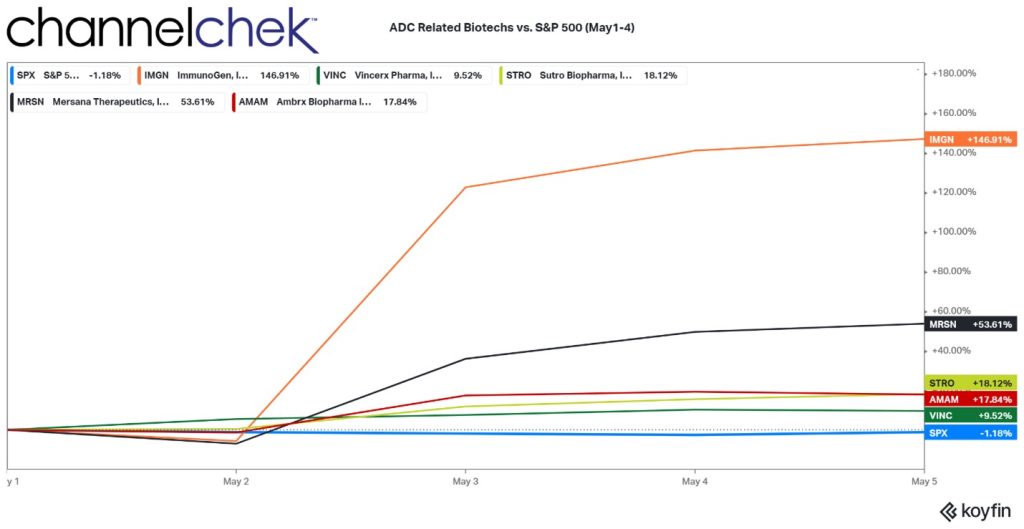
Over the past two days, ImmunoGen (IMGN:Nasdaq) a U.S. based clinical-stage biotech company, has had the kind of moonshot trajectory that investors dream about. The company reported promising topline phase III data and overall survival benefits in folate receptor alpha (FRα)-positive platinum-resistant ovarian cancer patients. Immunogen plans to submit the drug for full approval in the U.S. and Europe. The company’s therapy is a is a first-in-class ADC comprising folate receptor alpha-binding antibody. The stock during the first four days of this week is up over 145%. The reason for the sudden moonshot is the company announced that it expects full FDA approval of one of its ADC candidates (Elahere). ADC, or antibody-drug conjugates, are a very targeted way to treat some solid tumor cancers, and seem to represent the “more effective mechanisms or method of doing something” mentioned above as sought after by small-cap investors.
Excitement Over ADC
An antibody-drug conjugate consists of an antibody that targets a specific antigen or receptor on cancer cells, it carries with it an impactful anticancer drug. The antibody which is linked to a toxin such as a chemotherapy drug, is found by folate receptors on the cancer cells; they will bind with the receptors on the cancer cells, the toxic payload is then delivered to the cells, which internalize it. Once in the cancer cell, the toxin is released. This therapy is designed to result in the selective killing of cancer cells while minimizing damage to healthy cells. ADCs have continued to show promising results in treating various types of cancer and are an active area of research by a few publicly traded small-cap biotechs developing alternatives in oncology.
Stock Market Behavior
As with other industries, the stocks of the peer group will often respond to news of the other. This was the case this week for the subgroup of stocks that are in various stages of researching ADC therapies against cancer.
As the chart below indicates, since May 1, the S&P 500 sank by more than 1.00%, yet cancer research biotech, which is not highly correlated to the overall market, rewarded investors in companies working with ADC technology for better cancer outcomes.
Among the stocks that seemed to have gotten a boost from Immunogen’s good news are:
Ambrx Biopharma (AMAM:Nasdaq) is a clinical-stage biologics company. The company’s lead product candidate is ARX788, an anti-HER2 antibody-drug conjugate (ADC), which is being investigated in various clinical trials for the treatment of breast cancer, gastric/gastroesophageal junction cancer, and other solid tumors.
Mersana Therapeutics (MRSN:Nasdaq) is a clinical-stage biopharmaceutical company developing antibody-drug conjugates (ADC) for cancer patients with unmet needs.
Vincerx Pharma (VINC:Nasdaq) is a four-year-old clinical-stage biopharmaceutical company. VIP236, a small molecule drug conjugate that is in Phase 1 clinical trials to treat solid tumors. The company’s preclinical stage product candidates include VIP943 and VIP924 for the treatment of hematologic malignancies.
Sutro Biopharma (STRO:Nasdaq) is a clinical-stage oncology company that develops site-specific and novel-format antibody-drug conjugates (ADC). The company’s candidates include STRO-001, an ADC directed against the cancer target CD74 for patients with multiple myeloma and non-Hodgkin lymphoma, an ADC directed against folate receptor-alpha for patients with ovarian and endometrial cancers, which is in Phase 1 clinical trials.
As these biotech companies that are focused on ADC cancer treatment move their products through clinical trials, each success (or failure) is likely to impact the group. Not yet in the publicly traded group, but also being watched by those involved with ADC cancer stocks is OS Therapies.
OS Therapies (OSTX) is a U.S.-based biotech company that is developing therapies to treat specific cancers. The company completed its filing with the SEC last month to go public through an initial public offering (IPO). The biotech company hopes to list its shares on the NYSE American and trade under the symbol OSTX. It is a clinical-stage phase II biopharmaceutical company focused on the identification, development, and commercialization of treatments for Osteosarcoma (OS) and other solid tumors. There have not been any new treatments approved by the FDA for Osteosarcoma for more than 40 years.
The lead core product candidates OS Therapies is researching are OST-HER2 and the OST-Tunable Drug Conjugate (OST-TDC) platform. The company says it intends to expand its pipeline beyond osteosarcoma into solid tumors. The OST-Tunable Drug Conjugate (OST-TDC) platform could deliver the next-generation ADC technology with the intent of providing a more potent drug and better efficacy with an improved safety profile, a potential “Best-in-Class”. Importantly, OS Therapies lead ADC drug will target folate receptor alpha-binding utilizing a small molecule ligand the same druggable target to Immunogen’s (IMGN) folate receptor alpha-binding site which is something that could become extremely notable to investors and larger pharmaceutical companies. Immunogen has now proved that folate receptor alpha-binding site can work.
The next generation ADC, according to the company filing, will be targeting ovarian, lung and pancreatic cancers. “Tunable” is a term used in drug development that refers to the properties that can be influenced by chemical modifications, and “antibody-drug conjugate.”
An IPO date for OS Therapies has not yet been confirmed.
Take Away
Stocks tend to trade up or down depending on the mood of the market. The current mood is that the overall market may still be overpriced. As such, 2023 has been marked by the bulls and bears duking it out – without any clear direction.
Biotech stocks tend to be far less correlated to what is going on in other areas of the market. This makes the sector and various peer groups worth a visit in bad markets. For example, when the pandemic began to unfold, many biotech stocks rocketed during the same period the overall market was crashing.
Within biotech, companies those working on the production of related technology typically trade in rough tandem with each other. Biotech stocks developing ADC, presumed to be a breaktrough in treating many types of cancers, have gotten a lift in anticipation of the imminent success of one of their peers.
To do a deeper dive into small-cap names, scroll up to the search bar found next to the Channelchek logo, then enter a company name, ticker, or other keyword.
FLORHAM PARK, N.J., May 04, 2023 (GLOBE NEWSWIRE) — PDS Biotechnology Corporation (Nasdaq: PDSB), a clinical-stage immunotherapy company developing a growing pipeline of targeted immunotherapies for cancer and infectious disease, today announced that the Company will release financial results for the first quarter of 2023 on Monday, May 15, 2023, before the market opens. Following the release, management will host a conference call to review the financial results and provide a business update.
Monday, May 15, 2023, 8:00 AM ET Domestic: 877-407-3088 International: 201-389-0927 Conference ID: 13738216 Webcast: PDS Biotech Earnings Webcast
After the live webcast, the event will be archived on PDS Biotech’s website for six months.
About PDS Biotechnology PDS Biotech is a clinical-stage immunotherapy company developing a growing pipeline of targeted cancer and infectious disease immunotherapies based on our proprietary Versamune®, Versamune® plus PDS0301, and Infectimune™ T cell-activating platforms. We believe our targeted immunotherapies have the potential to overcome the limitations of current immunotherapy approaches through the activation of the right type, quantity and potency of T cells. To date, our lead Versamune® clinical candidate, PDS0101, has demonstrated the ability to reduce and shrink tumors and stabilize disease in combination with approved and investigational therapeutics in patients with a broad range of HPV16- associated cancers in multiple Phase 2 clinical trials and will be advancing into a Phase 3 clinical trial in combination with KEYTRUDA® for the treatment of recurrent/metastatic HPV16-positive head and neck cancer in 2023. Our Infectimune™ based vaccines have also demonstrated the potential to induce not only robust and durable neutralizing antibody responses, but also powerful T cell responses, including long-lasting memory T cell responses in pre-clinical studies to date. To learn more, please visit www.pdsbiotech.com or follow us on Twitter at @PDSBiotech.
Multiple Additional Indications Possible, Including Autoimmune Diseases: Pipeline within a Product
Published Non-Human Primate Studies Show TNX-1500 Prolongs Renal and Heart Allograft Survival
Phase 1 Clinical Trial of TNX-1500 Expected to Start Third Quarter 2023
CHATHAM, N.J., May 04, 2023 (GLOBE NEWSWIRE) — Tonix Pharmaceuticals Holding Corp. (Nasdaq: TNXP), a clinical-stage biopharmaceutical company, today announced the U.S. Food and Drug Administration (FDA) has cleared the Investigational New Drug (IND) application to support a Phase 1 clinical trial with TNX-1500 (anti-CD40L monoclonal antibody [mAb]). The first indication Tonix is seeking for TNX-1500 is the prevention of organ rejection in patients receiving a kidney transplant. The Company expects to initiate enrollment in the Phase 1 study in the third quarter of 2023.
The IND application for TNX-1500 was supported by preclinical allotransplantation studies conducted at the Massachusetts General Hospital (MGH), led by principal investigators Tatsuo Kawai, MD, PhD, A. Benedict Cosimi Chair in Transplant Surgery, MGH and Professor of Surgery, Harvard Medical School (HMS), and Richard N. Pierson III, M.D., scientific director of the Center for Transplantation Sciences in the Department of Surgery at MGH and Professor of Surgery at HMS.
“This is an important milestone as we advance TNX-1500 into clinical development,” said Seth Lederman, M.D., Chief Executive Officer of Tonix Pharmaceuticals. “Despite advancements in the field of solid organ transplantation, there remains a significant need for new treatments with improved activity and tolerability to prevent organ transplant rejection. Our primary focus of early development will be allotransplantation in which the donor organ comes from another human. However, in the longer term we hope to develop TNX-1500 for xenograft transplantation in which the donor organ comes from a genetically engineered pig.”
Dr. Lederman continued, “We view TNX-1500 as a pipeline within a product, because of its potential to treat a number of autoimmune diseases. Anti-CD40L mAbs have demonstrated activity and tolerability in autoimmune diseases like systemic lupus erythematosus and Sjögren’s Syndrome. An anti-CD40L mAb is also in development for multiple sclerosis. CD40L is a member of the TNFα super gene family. Other TNFα super gene members have been the targets of successful mAb therapeutics: TNFα and RANKL for autoimmune diseases and osteoporosis, respectively. Still other TNFα super gene family members are targeted by mAbs in development including TNF-like ligand 1A (TL1A) and CD30L for ulcerative colitis and Ox40L for atopic dermatitis.”
TNX-1500 is a third generation anti-CD40L mAb that has been designed by protein engineering to decrease FcγRIIA binding and to therefore reduce the potential for thrombosis. Preclinical studies in non-human primates demonstrated that TNX-1500 showed activity in preventing allograft organ rejection and was well tolerated1,2.
About TNX-1500
TNX-1500 (Fc-modified anti-CD40L mAb) is a humanized monoclonal antibody that interacts with the CD40-ligand (CD40L), which is also known as CD154. TNX-1500 is being developed for the prevention of allograft and xenograft rejection, for the treatment of autoimmune diseases and for the prevention of graft-versus-host disease (GvHD) after hematopoietic stem cell transplantation (HCT). A Phase 1 study of TNX-1500 is expected to be initiated in the third quarter of 2023. Two articles have recently published in the American Journal of Transplantation that demonstrate TNX-1500 prolongs non-human primate renal and heart allograft survival1,2.
1Lassiter, G., et al. (2023). TNX-1500, a crystallizable fragment–modified anti-CD154 antibody, prolongs non-human primate renal allograft survival. American Journal of Transplantation. April 3, 2023. https://doi.org/10.1016/j.ajt.2023.03.022
2Miura, S., et al. (2023) TNX-1500, a crystallizable fragment–modified anti-CD154 antibody, prolongs non-human primate cardiac allograft survival. American Journal of Transplantation. April 6, 2023. https://doi.org/10.1016/j.ajt.2023.03.025
Tonix Pharmaceuticals Holding Corp.*
Tonix is a clinical-stage biopharmaceutical company focused on discovering, licensing, acquiring and developing therapeutics to treat and prevent human disease and alleviate suffering. Tonix’s portfolio is composed of central nervous system (CNS), rare disease, immunology and infectious disease product candidates. Tonix’s CNS portfolio includes both small molecules and biologics to treat pain, neurologic, psychiatric and addiction conditions. Tonix’s lead CNS candidate, TNX-102 SL (cyclobenzaprine HCl sublingual tablet), is in mid-Phase 3 development for the management of fibromyalgia with topline data expected in the fourth quarter of 2023. TNX-102 SL is also being developed to treat Long COVID, a chronic post-acute COVID-19 condition. Enrollment in a Phase 2 study has been completed, and topline results are expected in the third quarter of 2023. TNX-1900 (intranasal potentiated oxytocin), in development for chronic migraine, is currently enrolling with topline data expected in the fourth quarter of 2023. TNX-601 ER (tianeptine hemioxalate extended-release tablets), a once-daily formulation being developed as a treatment for major depressive disorder (MDD), is also currently enrolling with interim data expected in the fourth quarter of 2023. TNX-1300 (cocaine esterase) is a biologic designed to treat cocaine intoxication and has been granted Breakthrough Therapy designation by the FDA. A Phase 2 study of TNX-1300 is expected to be initiated in the third quarter of 2023. Tonix’s rare disease portfolio includes TNX-2900 (intranasal potentiated oxytocin) for the treatment of Prader-Willi syndrome. TNX-2900 has been granted Orphan Drug designation by the FDA. Tonix’s immunology portfolio includes biologics to address organ transplant rejection, autoimmunity and cancer, including TNX-1500, which is a humanized monoclonal antibody targeting CD40-ligand (CD40L or CD154) being developed for the prevention of allograft and xenograft rejection and for the treatment of autoimmune diseases. A Phase 1 study of TNX-1500 is expected to be initiated in the third quarter of 2023. Tonix’s infectious disease pipeline includes TNX-801, a vaccine in development to prevent smallpox and mpox, for which a Phase 1 study is expected to be initiated in the second half of 2023. TNX-801 also serves as the live virus vaccine platform or recombinant pox vaccine platform for other infectious diseases. The infectious disease portfolio also includes TNX-3900 and TNX-4000, classes of broad-spectrum small molecule oral antivirals.
*All of Tonix’s product candidates are investigational new drugs (IND) or biologics and have not been approved for any indication. TNX-801, TNX-2900, TNX-3900 and TNX-4000 are in pre-IND stage of development and have not been approved for any indication.
Forward Looking Statements
Certain statements in this press release are forward-looking within the meaning of the Private Securities Litigation Reform Act of 1995. These statements may be identified by the use of forward-looking words such as “anticipate,” “believe,” “forecast,” “estimate,” “expect,” and “intend,” among others. These forward-looking statements are based on Tonix’s current expectations and actual results could differ materially. There are a number of factors that could cause actual events to differ materially from those indicated by such forward-looking statements. These factors include, but are not limited to, risks related to the failure to obtain FDA clearances or approvals and noncompliance with FDA regulations; delays and uncertainties caused by the global COVID-19 pandemic; risks related to the timing and progress of clinical development of our product candidates; our need for additional financing; uncertainties of patent protection and litigation; uncertainties of government or third party payor reimbursement; limited research and development efforts and dependence upon third parties; and substantial competition. As with any pharmaceutical under development, there are significant risks in the development, regulatory approval and commercialization of new products. Tonix does not undertake an obligation to update or revise any forward-looking statement. Investors should read the risk factors set forth in the Annual Report on Form 10-K for the year ended December 31, 2022, as filed with the Securities and Exchange Commission (the “SEC”) on March 13, 2023, and periodic reports filed with the SEC on or after the date thereof. All of Tonix’s forward-looking statements are expressly qualified by all such risk factors and other cautionary statements. The information set forth herein speaks only as of the date thereof.