Five Reasons Oil and Energy May Tick Back Up

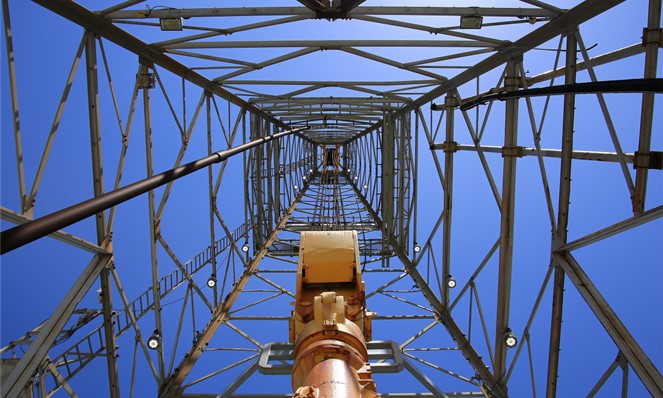
Image Credit: Aron Razif (Pexels)

The Ups and Downs of Oil Prices

The benefit of a recessionary economy is it helps to correct supply-demand imbalances. An obvious negative to this is it does so in a way where demand drops, causing supply to be more closely matched. This brings about downward pressure on prices. The price of oil is now where it was in January, before the Russian invasion of Ukraine, and before the partial ban on Russian oil by many large consumers.

The nine-month lows are a market response to an expected decline in economic activity as rising interest rates increase the potential for a deeper global recession – with further price pressure coming from a surging U.S. dollar.

Source: Koyfin

Contracts for both Brent crude and WTI are up near 2% to start this final week of September, but are in part bouncing after a drop of 5% on Friday.

Another factor working against oil price increases is the strength of the dollar. The dollar index measures the $USD against a basket of major currencies; it has climbed to a 20-year high. Dollar-denominated oil has become much more expensive around the globe as oil is transacted in $USD. This pricing also has helped reduce demand for crude.

Five Reasons Oil and Energy May Tick Back Up

Yields on Eurozone government bonds are now rising. This may slow or reverse the strengthening of U.S. dollars as higher yields make them more competitive with U.S. government bonds. This could slow or reverse foreign exchange considerations and stem the rising cost of oil (after conversion to $USD) and help put upward pressure on demand.

Winter is approaching in Europe, and demand naturally picks up in the colder months for petroleum products. This additional demand would begin about the time that Europe has planned a full embargo on imports from Russia. A full embargo would halt the current 1.3 million barrels a day reaching the West. This supply would then have to be filled from other sources which would be expected to put upward prices on oil.

The Biden administration is proposing to replenish crude pulled from the Strategic Oil Reserve under a plan that is likely to see it order 60 million barrels this fall for delivery at an unspecified time in the future. That leaves at least another 100 million barrels to bring the country back to where we were in March 2022 – over two hundred more to bring us back to the peak. This promises to keep demand up well past any current crisis.

It has been a quiet hurricane season for the Gulf states, but there are at least two months left before Florida, Texas, and Louisiana, can let their guard down. These months are known for the strongest, most powerful hurricanes. The shutting of offshore oil wells or production in preparation (or repair after any storm) could cause rapidly rising prices.

Data last week showed OPEC-plus missed its target by 3.58 million barrels per day in August; this is a bigger shortfall than in July. Prices trend with expectations, if OPEC-plus continues to fall short, this could provide for prices to rise.

Take Away

Oil price increases and the concomitant strength of the energy sector has been a standout among other investments in 2022. There has been a slide in both since early June. A recipe for higher levels may be coming together in  the months ahead as a multitude of factors come together that may reduce supply just as demand is building in the Northern hemisphere.

Paul Hoffman

Managing Editor, Channelchek

Sources

https://www.reuters.com/markets/europe/euro-zone-yields-hit-new-multi-year-highs-after-global-rate-hikes-2022-09-22/

https://markets.businessinsider.com/news/commodities/russia-putin-oil-exports-europe-economic-retaliation-rbc-helima-croft-2022-9

https://www.reuters.com/business/energy/when-eu-embargo-comes-where-will-russia-sell-its-crude-oil-2022-09-23/

https://www.reuters.com/business/energy/oil-claws-back-some-losses-strong-dollar-caps-gains-2022-09-26/

https://www.reuters.com/markets/commodities/quiet-start-us-hurricane-season-takes-heat-out-oil-prices-

Suggested Content

Interview with InPlay Oil President & CEO Doug Bartole

Watch the Video

Release – InPlay Oil Corp. Announces Inaugural Sustainability Report

Research, News, and Market Data on IPOOF

CALGARY, Alberta, Sept. 22, 2022 (GLOBE NEWSWIRE) — InPlay Oil Corp. (TSX: IPO) (OTCQX: IPOOF) (“InPlay” or the “Company”) is pleased to announce that it has published its inaugural sustainability report (the “Sustainability Report”) which can be accessed through the Company’s website.

The Sustainability Report highlights the Company’s significant environmental successes and reaffirms the Company’s commitment to environmental stewardship while safely and efficiently developing our assets that contribute to the local, provincial and Canadian economies. The Sustainability Report outlines the Company’s progress on environmental, social and governance (“ESG”) practices and has been prepared using principles set forth by the Task Force on Climate-related Financial Disclosure (“TCFD”). The Company’s Board of Directors has approved the Sustainability Report which contains performance metrics for the 2020 and 2021 calendar years. Our goal is to ensure all stakeholders benefit from our business operations both in the short-term and long into the future.

For further information please contact:

Doug Bartole
President and Chief Executive Officer
InPlay Oil Corp.
Telephone: (587) 955-0632
 Darren Dittmer
Chief Financial Officer
InPlay Oil Corp.
Telephone: (587) 955-0634


Reader Advisories

Forward-Looking Statements

This news release contains certain forward–looking statements within the meaning of applicable securities laws. The use of any of the words “expect”, “anticipate”, “continue”, “estimate”, “may”, “will”, “project”, “should”, “believe”, “plans”, “intends”, “forecast”, “targets”, “framework” and similar expressions are intended to identify forward-looking statements. In particular, but without limiting the foregoing, this news release contains forward looking statements pertaining to the following: statements with respect to the Company’s commitments and goals, including its commitment to environmental stewardship while safely and efficiently developing our assets and its goal of ensuring all stakeholders benefit from our business operations both in the short-term and long into the future.

Forward-looking statements are based on a number of material factors, expectations or assumptions of InPlay which have been used to develop such statements but which may prove to be incorrect. Although InPlay believes that the expectations reflected in such forward looking statements are reasonable, undue reliance should not be placed on forward-looking statements because InPlay can give no assurance that such expectations will prove to be correct. In addition to other factors and assumptions which may be identified herein, assumptions have been made regarding, among other things: the impact of increasing competition; the general stability of the economic and political environment in which InPlay operates; the timely receipt of any required regulatory approvals; the ability of InPlay to obtain qualified staff, equipment and services in a timely and cost efficient manner; drilling results; the ability of the operator of the projects in which InPlay has an interest in to operate the field in a safe, efficient and effective manner; the ability of InPlay to obtain debt financing on acceptable terms and the anticipated lifting of certain restrictions on the payment of distributions to shareholders which currently exist thereunder; field production rates and decline rates; the ability to replace and expand oil and natural gas reserves through acquisition, development and exploration; the timing and cost of pipeline, storage and facility construction and the ability of InPlay to secure adequate product transportation; future commodity prices; expectations regarding the potential impact of COVID-19 and the Russia/Ukraine conflict; currency, exchange and interest rates; regulatory framework regarding royalties, taxes and environmental matters in the jurisdictions in which InPlay operates; and the ability of InPlay to successfully market its oil and natural gas products.

The forward-looking statements included herein are not guarantees of future performance and should not be unduly relied upon. Such statements, including the assumptions made in respect thereof, involve known and unknown risks, uncertainties and other factors that may cause actual results or events to defer materially from those anticipated in such forward-looking statements including, without limitation: the continuing impact of the COVID-19 pandemic and the Russia/Ukraine conflict; changes in commodity prices and other assumptions outlined herein; the potential for variation in the quality of the reservoirs in which we operate; changes in the demand for or supply of our products; unanticipated operating results or production declines; changes in tax or environmental laws, royalty rates or other regulatory matters; changes in development plans or strategies of InPlay or by third party operators of our properties; changes in our credit structure, increased debt levels or debt service requirements; inaccurate estimation of our light crude oil and natural gas reserve and resource volumes; limited, unfavorable or a lack of access to capital markets; increased costs; a lack of adequate insurance coverage; the impact of competitors; and certain other risks detailed from time-to-time in InPlay’s continuous disclosure documents filed on SEDAR including our Annual Information Form and our MD&A.

The forward-looking statements contained in this news release speak only as of the date hereof and InPlay does not assume any obligation to publicly update or revise any of the included forward-looking statements, whether as a result of new information, future events or otherwise, except as may be required by applicable securities laws.

Release – Alvopetro Announces Warrant Exercise and Debt Repayment

Research, News, and Market Data on ALVOF

Sep 19, 2022

CALGARY, AB, Sept. 19, 2022 /CNW/ – Alvopetro Energy Ltd. (TSXV: ALV) (OTCQX: ALVOF) (“Alvopetro”) announces the exercise of all outstanding warrants held by Cordiant Capital Inc. (“Cordiant”) and that we have now repaid the remaining $2.5 million outstanding on the credit facility. 

A total of 2,685,956 warrants at a strike price of US$1.80 were granted to Cordiant in connection with the 2019 $15 million debt financing. Cordiant provided notice to exercise all warrants outstanding and in connection with the exercise, Alvopetro agreed to amend the terms of the warrant certificates so that a total of 1,342,978 of the warrants have been exercised by way of a cashless exercise with 738,638 common shares issued as a result of the cashless exercise. The remaining 1,342,978 warrants have been exercised at the strike price of US$1.80 per share, for total cash proceeds to Alvopetro of US$2.4 million. A total of 2,081,616 common shares have been issued in connection with the exercise. Alvopetro has also now repaid the final $2.5 million outstanding on our credit facility effective September 15, 2022.

President and CEO, Corey Ruttan commented:

“We would like to thank Cordiant for their support over the last three years.  Their support was instrumental in providing us with the financial resources to bring our Caburé project onstream. The project has been consistently delivering results above pre-commercialization expectations allowing us to aggressively repay outstanding debt. We are proud to have been able to completely repay all project debt financing within the first 27 months of starting production. During this same time, we started quarterly dividends to our shareholders and we are now also firmly focused on our organic growth plans.”

Corporate Presentation

Alvopetro’s updated corporate presentation is available on our website at:http://www.alvopetro.com/corporate-presentation

Social Media

Follow Alvopetro on our social media channels at the following links:

Twitter – https://twitter.com/AlvopetroEnergyInstagram – https://www.instagram.com/alvopetro/LinkedIn – https://www.linkedin.com/company/alvopetro-energy-ltdYouTube: https://www.youtube.com/channel/UCgDn_igrQgdlj-maR6fWB0w

Alvopetro Energy Ltd.’s vision is to become a leading independent upstream and midstream operator in Brazil. Our strategy is to unlock the on-shore natural gas potential in the state of Bahia in Brazil, building off the development of our Caburé natural gas field and our strategic midstream infrastructure.

Neither the TSX Venture Exchange nor its Regulation Services Provider (as that term is defined in the policies of the TSX Venture Exchange) accepts responsibility for the adequacy or accuracy of this news release.

All amounts contained in this new release are in United States dollars, unless otherwise stated and all tabular amounts are in thousands of United States dollars, except as otherwise noted.

Forward-Looking Statements and Cautionary Language. This news release contains “forward-looking information” within the meaning of applicable securities laws. The use of any of the words “will”, “expect”, “intend” and other similar words or expressions are intended to identify forward-looking information. Forwardlooking statements involve significant risks and uncertainties, should not be read as guarantees of future performance or results, and will not necessarily be accurate indications of whether or not such results will be achieved. A number of factors could cause actual results to vary significantly from the expectations discussed in the forward-looking statements. These forward-looking statements reflect current assumptions and expectations regarding future events. Accordingly, when relying on forward-looking statements to make decisions, Alvopetro cautions readers not to place undue reliance on these statements, as forward-looking statements involve significant risks and uncertainties. More particularly and without limitation, this news release contains forward-looking information concerning Alvopetro’s operational activities. The forwardlooking statements are based on certain key expectations and assumptions made by Alvopetro, including but not limited to expectations and assumptions concerning, equipment availability, the timing of regulatory licenses and approvals, the success of future drilling, completion, testing, recompletion and development activities, the outlook for commodity markets and ability to access capital markets, the impact of the COVID-19 pandemic, the performance of producing wells and reservoirs, well development and operating performance, foreign exchange rates, general economic and business conditions, weather and access to drilling locations, the availability and cost of labour and services, environmental regulation, including regulation relating to hydraulic fracturing and stimulation, the ability to monetize hydrocarbons discovered, expectations regarding Alvopetro’s working interest and the outcome of any redeterminations, the regulatory and legal environment and other risks associated with oil and gas operations. The reader is cautioned that assumptions used in the preparation of such information, although considered reasonable at the time of preparation, may prove to be incorrect. Actual results achieved during the forecast period will vary from the information provided herein as a result of numerous known and unknown risks and uncertainties and other factors.  Although Alvopetro believes that the expectations and assumptions on which such forward-looking information is based are reasonable, undue reliance should not be placed on the forward-looking information because Alvopetro can give no assurance that it will prove to be correct. Readers are cautioned that the foregoing list of factors is not exhaustive. Additional information on factors that could affect the operations or financial results of Alvopetro are included in our annual information form which may be accessed on Alvopetro’s SEDAR profile at www.sedar.com. The forward-looking information contained in this news release is made as of the date hereof and Alvopetro undertakes no obligation to update publicly or revise any forward-looking information, whether as a result of new information, future events or otherwise, unless so required by applicable securities laws.

www.alvopetro.comTSX-V: ALV, OTCQX: ALVOF 

SOURCE Alvopetro Energy Ltd.

Release – U.S. Department of Agriculture Selects Gevo’s Climate-Smart Farm-to-Flight Proposal with a Funding Ceiling of $30MM

Research, News, and Market Data on GEVO

September 19, 2022

ENGLEWOOD, Colo., Sept. 19, 2022 (GLOBE NEWSWIRE) — Gevo, Inc. (NASDAQ: GEVO) is pleased to announce that the U.S. Department of Agriculture has selected Gevo’s Climate-Smart Farm to Flight proposal for funding with an award ceiling of up to $30 million. Gevo’s project was one of the 70 projects selected by the USDA under the first pool of the Partnerships for Climate-Smart Commodities funding opportunity totaling $2.8 billion. The project aims to create critical structural climate-smart market incentives for low carbon-intensity corn as well as to accelerate the production of sustainable aviation fuel to reduce the sector’s dependency on fossil-based fuels.  

“We are honored that our proposal was selected for funding as part of this historic partnership for Climate-Smart Commodities from the U.S. Department of Agriculture,” says Dr. Paul Bloom, Chief Carbon Officer and Chief Innovation Officer for Gevo. “We look forward to working with the great team of partners we’ve assembled to lower our carbon footprint throughout the entire SAF business system while delivering high-quality carbon accounting and rewarding growers for their contributions.”

The project will also focus on the importance of immutable tracking and tracing of the carbon-intensity score starting at the farm production level, through biofuels production, all the way to the sale to an airline company. Gevo plans to accomplish this with further development and implementation of Verity Tracking, a blockchain enabled solutions platform for carbon tracking through the entire business system.

About Gevo
Gevo’s mission is to transform renewable energy and carbon into energy-dense liquid hydrocarbons. These liquid hydrocarbons can be used for drop-in transportation fuels such as gasoline, jet fuel and diesel fuel, that when burned have the potential to yield net-zero greenhouse gas emissions when measured across the full life cycle of the products. Gevo uses low-carbon renewable resource-based carbohydrates as raw materials and is in an advanced state of developing renewable electricity and renewable natural gas for use in production processes, resulting in low-carbon fuels with substantially reduced carbon intensity (the level of greenhouse gas emissions compared to standard petroleum fossil-based fuels across their life cycle). Gevo’s products perform as well or better than traditional fossil-based fuels in infrastructure and engines, but with substantially reduced greenhouse gas emissions. In addition to addressing the problems of fuels, Gevo’s technology also enables certain plastics, such as polyester, to be made with more sustainable ingredients. Gevo’s ability to penetrate the growing low-carbon fuels market depends on the price of oil and the value of abating carbon emissions that would otherwise increase greenhouse gas emissions. Gevo believes that its proven, patented technology enabling the use of a variety of low-carbon sustainable feedstocks to produce price-competitive low-carbon products such as gasoline components, jet fuel and diesel fuel yields the potential to generate project and corporate returns that justify the build-out of a multi-billion-dollar business.

Gevo believes that the Argonne National Laboratory GREET model is the best available standard of scientific-based measurement for life cycle inventory or LCI.

Learn more at Gevo’s website: www.gevo.com

Forward-Looking Statements
Certain statements in this press release may constitute “forward-looking statements” within the meaning of the Private Securities Litigation Reform Act of 1995. These forward-looking statements relate to a variety of matters, without limitation, including Gevo’s technology, U.S. Department of Agriculture, the production of SAF, the attributes of Gevo’s products, and other statements that are not purely statements of historical fact. These forward-looking statements are made on the basis of the current beliefs, expectations and assumptions of the management of Gevo and are subject to significant risks and uncertainty. Investors are cautioned not to place undue reliance on any such forward-looking statements. All such forward-looking statements speak only as of the date they are made, and Gevo undertakes no obligation to update or revise these statements, whether as a result of new information, future events or otherwise. Although Gevo believes that the expectations reflected in these forward-looking statements are reasonable, these statements involve many risks and uncertainties that may cause actual results to differ materially from what may be expressed or implied in these forward-looking statements. For a further discussion of risks and uncertainties that could cause actual results to differ from those expressed in these forward-looking statements, as well as risks relating to the business of Gevo in general, see the risk disclosures in the Annual Report on Form 10-K of Gevo for the year ended December 31, 2021, and in subsequent reports on Forms 10-Q and 8-K and other filings made with the U.S. Securities and Exchange Commission by Gevo.

Investor and Media Contact
Heather L. Manuel
303-883-1114
[email protected]

Release – Alvopetro Confirms US$0.08 Per Share Q3 2022 Dividend

Research, News, and Market Data on ALVOF

Sep 15, 2022

CALGARY, AB, Sept. 15, 2022 /CNW/ – Alvopetro Energy Ltd. (TSXV: ALV) (OTCQX: ALVOF) announces that our Board of Directors has declared a quarterly dividend of US$0.08 per common share, payable in cash on October 14, 2022, to shareholders of record at the close of business on September 29, 2022. This dividend is designated as an “eligible dividend” for Canadian income tax purposes. 

Dividend payments to non-residents of Canada will be subject to withholding taxes at the Canadian statutory rate of 25%.  Shareholders may be entitled to a reduced withholding tax rate under a tax treaty between their country of residence and Canada.  For further information, see Alvopetro’s website at  https://alvopetro.com/Dividends-Non-resident-Shareholders.

Corporate Presentation

Alvopetro’s updated corporate presentation is available on our website at:http://www.alvopetro.com/corporate-presentation

Social Media

Follow Alvopetro on our social media channels at the following links:

Twitter – https://twitter.com/AlvopetroEnergy Instagram – https://www.instagram.com/alvopetro/ LinkedIn – https://www.linkedin.com/company/alvopetro-energy-ltd

Alvopetro Energy Ltd.’s vision is to become a leading independent upstream and midstream operator in Brazil. Our strategy is to unlock the on-shore natural gas potential in the state of Bahia in Brazil, building off the development of our Caburé natural gas field and our strategic midstream infrastructure.

Neither the TSX Venture Exchange nor its Regulation Services Provider (as that term is defined in the policies of the TSX Venture Exchange) accepts responsibility for the adequacy or accuracy of this news release.

All amounts contained in this new release are in United States dollars, unless otherwise stated and all tabular amounts are in thousands of United States dollars, except as otherwise noted.

Forward-Looking Statements and Cautionary Language. This news release contains “forward-looking information” within the meaning of applicable securities laws. The use of any of the words “will”, “expect”, “intend” and other similar words or expressions are intended to identify forward-looking information. Forwardlooking statements involve significant risks and uncertainties, should not be read as guarantees of future performance or results, and will not necessarily be accurate indications of whether or not such results will be achieved. A number of factors could cause actual results to vary significantly from the expectations discussed in the forward-looking statements. These forward-looking statements reflect current assumptions and expectations regarding future events. Accordingly, when relying on forward-looking statements to make decisions, Alvopetro cautions readers not to place undue reliance on these statements, as forward-looking statements involve significant risks and uncertainties. More particularly and without limitation, this news release contains forward-looking information concerning the Company’s plans for dividends in the future, the timing and amount of such dividends and the expected tax treatment thereof. The forwardlooking statements are based on certain key expectations and assumptions made by Alvopetro, including but not limited to equipment availability, the timing of regulatory licenses and approvals, the success of future drilling, completion, testing, recompletion and development activities, the outlook for commodity markets and ability to access capital markets, the impact of the COVID-19 pandemic and other significant worldwide events, the performance of producing wells and reservoirs, well development and operating performance, foreign exchange rates, general economic and business conditions, weather and access to drilling locations, the availability and cost of labour and services, environmental regulation, including regulation relating to hydraulic fracturing and stimulation, the ability to monetize hydrocarbons discovered, expectations regarding Alvopetro’s working interest in properties and the outcome of any redeterminations, the regulatory and legal environment and other risks associated with oil and gas operations. The reader is cautioned that assumptions used in the preparation of such information, although considered reasonable at the time of preparation, may prove to be incorrect. Actual results achieved during the forecast period will vary from the information provided herein as a result of numerous known and unknown risks and uncertainties and other factors. In addition, the declaration, timing, amount and payment of future dividends remain at the discretion of the Board of Directors. Although Alvopetro believes that the expectations and assumptions on which such forward-looking information is based are reasonable, undue reliance should not be placed on the forward-looking information because Alvopetro can give no assurance that it will prove to be correct. Readers are cautioned that the foregoing list of factors is not exhaustive. Additional information on factors that could affect the operations or financial results of Alvopetro are included in our annual information form which may be accessed on Alvopetro’s SEDAR profile at www.sedar.com. The forward-looking information contained in this news release is made as of the date hereof and Alvopetro undertakes no obligation to update publicly or revise any forward-looking information, whether as a result of new information, future events or otherwise, unless so required by applicable securities laws.

www.alvopetro.comTSX-V: ALV, OTCQX: ALVOF

SOURCE Alvopetro Energy Ltd.

Release – The Gevo NW Iowa RNG Project Achieves Important EPA Milestone Ahead of Schedule

Research, News, and Market Data on GEVO

ENGLEWOOD, Colo., Sept. 13, 2022 (GLOBE NEWSWIRE) — Gevo, Inc. (NASDAQ: GEVO) is pleased to announce that its Northwest Iowa Renewable Natural Gas project, Gevo NW Iowa RNG, LLC (Gevo RNG), was granted registration approval by the Environmental Protection Agency (EPA), allowing Gevo RNG to participate in the Renewable Fuel Standard (RFS) program.

Gevo previously estimated that approval for RFS Renewable Identification Numbers (RINS) through RFS and carbon credits through California’s Low Carbon Fuel Standard (LCFS) program would happen in late 2022 or early 2023. This early approval is a result of the quality work by Gevo’s expert operations, sustainability, and compliance teams as well as Gevo’s dedicated project partners.

“The work we are doing at the Northwest Iowa RNG operations is critical to Gevo’s work in the reduction of the carbon intensity of fuels. While Gevo RNG is just one piece of the circular economy that Gevo is building, the capture of manure to make RNG in the production of transportation fuels is a very important component, said Dr. Chris Ryan, President and Chief Operating Officer at Gevo, Inc. Meeting the EPA registration requirements ahead of schedule is the direct result of the efforts of a dedicated team of hard-working individuals who demonstrate our collective commitment to this mission.”

The RNG Project generates renewable natural gas captured from dairy cow manure. The manure for the RNG Project is supplied by three dairy farms located in Northwest Iowa totaling over 20,000 milking cows. At full operational capacity, the RNG Project is expected to generate approximately 355,000 MMBtu of RNG per year, which is marketed by BP Canada Energy Marketing Corp. and BP Products North America Inc. (collectively, “bp”) in California on behalf of Gevo.

About Gevo
Gevo’s mission is to transform renewable energy and carbon into energy-dense liquid hydrocarbons. These liquid hydrocarbons can be used for drop-in transportation fuels such as gasoline, jet fuel and diesel fuel, that when burned have the potential to yield net-zero greenhouse gas emissions when measured across the full life cycle of the products. Gevo uses low-carbon renewable resource-based carbohydrates as raw materials, and is in an advanced state of developing renewable electricity and renewable natural gas for use in production processes, resulting in low-carbon fuels with substantially reduced carbon intensity (the level of greenhouse gas emissions compared to standard petroleum fossil-based fuels across their life cycle). Gevo’s products perform as well or better than traditional fossil-based fuels in infrastructure and engines, but with substantially reduced greenhouse gas emissions. In addition to addressing the problems of fuels, Gevo’s technology also enables certain plastics, such as polyester, to be made with more sustainable ingredients. Gevo’s ability to penetrate the growing low-carbon fuels market depends on the price of oil and the value of abating carbon emissions that would otherwise increase greenhouse gas emissions. Gevo believes that its proven, patented technology enabling the use of a variety of low-carbon sustainable feedstocks to produce price-competitive low-carbon products such as gasoline components, jet fuel and diesel fuel yields the potential to generate project and corporate returns that justify the build-out of a multi-billion-dollar business.

Gevo believes that the Argonne National Laboratory GREET model is the best available standard of scientific-based measurement for life cycle inventory or LCI.

Learn more at Gevo’s website: www.gevo.com

Forward-Looking Statements
Certain statements in this press release may constitute “forward-looking statements” within the meaning of the Private Securities Litigation Reform Act of 1995. These forward-looking statements relate to a variety of matters, without limitation, including Gevo RNG, the EPA registration approval, Gevo’s production of renewable natural gas, and other statements that are not purely statements of historical fact. These forward-looking statements are made on the basis of the current beliefs, expectations and assumptions of the management of Gevo and are subject to significant risks and uncertainty. Investors are cautioned not to place undue reliance on any such forward-looking statements. All such forward-looking statements speak only as of the date they are made, and Gevo undertakes no obligation to update or revise these statements, whether as a result of new information, future events or otherwise. Although Gevo believes that the expectations reflected in these forward-looking statements are reasonable, these statements involve many risks and uncertainties that may cause actual results to differ materially from what may be expressed or implied in these forward-looking statements. For a further discussion of risks and uncertainties that could cause actual results to differ from those expressed in these forward-looking statements, as well as risks relating to the business of Gevo in general, see the risk disclosures in the Annual Report on Form 10-K of Gevo for the year ended December 31, 2021, and in subsequent reports on Forms 10-Q and 8-K and other filings made with the U.S. Securities and Exchange Commission by Gevo.

Media Contact
Heather L. Manuel
+1 303-883-1114
[email protected]

Release – InPlay Oil Corp. Announces Participation in Noble Capital Markets C-Suite Interview Series

Research, News, and Market Data on IPOOF

September 12, 2022 09:00 ET | Source: InPlay Oil Corp.

CALGARY, Alberta, Sept. 12, 2022 (GLOBE NEWSWIRE) — InPlay Oil Corp. (TSX: IPO) (OTCQX: IPOOF) (“InPlay” or the “Company”) today announced their participation in Noble Capital Markets’ C-Suite Interview Series, presented by Channelchek.

InPlay Oil (IPOOF)(IPO.V) President & CEO Doug Bartole sat down with Noble Capital Markets Senior Research Analyst Michael Heim for this exclusive interview. Topics covered include:

  • How has InPlay reacted to recent energy sector strength?
  • How have drilling costs been affected by inflation and increased production?
  • Behind the decision to raise their credit facility while paying down debt
  • The current acquisition landscape
  • How sustainable are the current oil prices?
  • Why is InPlay an attractive way to invest in the energy space?

The interview was recorded on August 30, 2022 and is available now on Channelchek.

About InPlay Oil Corp.

InPlay is a junior oil and gas exploration and production company with operations in Alberta focused on light oil production. The company operates long-lived, low-decline properties with drilling development and enhanced oil recovery potential as well as undeveloped lands with exploration possibilities. The common shares of InPlay trade on the Toronto Stock Exchange under the symbol IPO and the OTCQX Exchange under the symbol IPOOF.

About Noble Capital Markets

Noble Capital Markets, Inc. was incorporated in 1984 as a full-service SEC / FINRA registered broker-dealer, dedicated exclusively to serving underfollowed small / microcap companies through investment banking, wealth management, trading & execution, and equity research activities. Over the past 37 years, Noble has raised billions of dollars for these companies and published more than 45,000 equity research reports. www.noblecapitalmarkets.com email: [email protected].

About Channelchek
Channelchek (.com) is a comprehensive investor-centric portal – featuring more than 6,000 emerging growth companies – that provides advanced market data, independent research, balanced news, video webcasts, exclusive c-suite interviews, and access to virtual road shows. The site is available to the public at every level without cost or obligation. Research on Channelchek is provided by Noble Capital Markets, Inc., an SEC / FINRA registered broker-dealer since 1984. www.channelchek.com email: [email protected]

For further information please contact:

Doug Bartole
President and Chief Executive Officer
InPlay Oil Corp.
Telephone: (587) 955-0632
 Darren Dittmer
Chief Financial Officer
InPlay Oil Corp.
Telephone: (587) 955-0634

Release – Alvopetro Announces Discovery at Caburé Unit-C Well, August 2022 Record Sales Volumes and an Operational Update

Research, News, and Market Data on ALVOF

Sep 08, 2022

CALGARY, AB, Sept. 8, 2022 /CNW/ – Alvopetro Energy Ltd. (TSXV: ALV); (OTCQX: ALVOF) announces a discovery at our 49.1% Caburé Unit C well, record August sales volumes and an operational update. 

7-CARN-2D-BA Well (“Unit-C Well”)

The Unit-C well at the Caburé Unit (49.1% Alvopetro) was spud in July and drilled to a total measured depth (“MD”) of 2,096 metres. Based on Alvopetro’s analysis of open hole logs and fluid samples confirming hydrocarbons, the well has potential net pay in multiple formations using a 6% porosity cut-off, 50% Vshale cut-off and 50% water saturation cut-off. The well was drilled with development objectives in the Pojuca and Marfim sands that are producing from, or tested hydrocarbons in, the offsetting Unit well (IMET-10).  The well was also drilled with exploratory objectives in the deeper Maracangalha sands that are producing on the eastern side of the bounding fault. The well encountered a total of 52.6 metres of potential net hydrocarbon pay at an average 37.2% water saturation and average porosity of 16.8% in multiple formations. Fluid samples were also collected using a formation testing tool with natural gas being recovered from a sand in the Maracangalha Formation at 1,443.5 metres total vertical depth and oil from a deeper sand at 1,633.6 metres total vertical depth. Potential net pay is summarized, by formation, as follows:

FormationObjectiveNet Pay (metres)Water Saturation (%)Porosity (%)
PojucaDevelopment19.931.924.6
MarfimDevelopment3.930.412.1
MaracangalhaExploration28.841.712.1
Total52.637.216.8

August 2022 Sales Volumes

Our August daily sales volumes averaged 2,727 boepd, including natural gas sales of 15.6 MMcfpd, and associated natural gas liquids sales from condensate of 120 bopd, based on field estimates. Our August sales volumes are a record for Alvopetro, 8% above July sales volumes of 2,514 boepd and 16% above average volumes in the second quarter of 2022 of 2,359 boepd.

Operational Update

On August 26th, we spud our 182-C2 well on Block 182 (100% Alvopetro).  The 182-C2 well is a follow-up well to our 182-C1 well drilled earlier this year and targets the Agua Grande and Sergi Formations further east from the bounding fault encountered during drilling of the 182-C1 well.

On our Murucututu project, the ANP inspection of our fiscal meter station at our 183-1 location was completed last week and, subject to receipt of all finalized reports, we expect to commence production from our 183-1 well this month.

Corporate Presentation

Alvopetro’s updated corporate presentation is available on our website at:

http://www.alvopetro.com/corporate-presentation

Social Media

Follow Alvopetro on our social media channels at the following links:

Twitter – https://twitter.com/AlvopetroEnergyInstagram – https://www.instagram.com/alvopetro/LinkedIn – https://www.linkedin.com/company/alvopetro-energy-ltdYouTube: https://www.youtube.com/channel/UCgDn_igrQgdlj-maR6fWB0w

Alvopetro Energy Ltd.’s vision is to become a leading independent upstream and midstream operator in Brazil. Our strategy is to unlock the on-shore natural gas potential in the state of Bahia in Brazil, building off the development of our Caburé natural gas field and our strategic midstream infrastructure.

Neither the TSX Venture Exchange nor its Regulation Services Provider (as that term is defined in the policies of the TSX Venture Exchange) accepts responsibility for the adequacy or accuracy of this news release.

All amounts contained in this new release are in United States dollars, unless otherwise stated and all tabular amounts are in thousands of United States dollars, except as otherwise noted.

Abbreviations:
boepd                   =       barrels of oil equivalent (“boe”) per day
bopd                     =       barrels of oil and/or natural gas liquids (condensate) per day
MMcf                     =         million cubic feet
MMcfpd                 =           million cubic feet per day

BOE Disclosure. The term barrels of oil equivalent (“boe”) may be misleading, particularly if used in isolation. A boe conversion ratio of six thousand cubic feet per barrel (6Mcf/bbl) of natural gas to barrels of oil equivalence is based on an energy equivalency conversion method primarily applicable at the burner tip and does not represent a value equivalency at the wellhead. All boe conversions in this news release are derived from converting gas to oil in the ratio mix of six thousand cubic feet of gas to one barrel of oil.

Testing and Well Results. Data obtained from the Unit C well identified in this press release, including hydrocarbon shows, open-hole logging, net pay and porosities, should be considered to be preliminary until testing, detailed analysis and interpretation has been completed. Hydrocarbon shows can be seen during the drilling of a well in numerous circumstances and do not necessarily indicate a commercial discovery or the presence of commercial hydrocarbons in a well. There is no representation by Alvopetro that the data relating to the Unit C well contained in this press release is necessarily indicative of long-term performance or ultimate recovery. The reader is cautioned not to unduly rely on such data as such data may not be indicative of future performance of the well or of expected production or operational results for Alvopetro in the future.

Cautionary statements regarding the filing of a Notice of Discovery. The unit operator has submitted a Notice of Discovery of Hydrocarbons to the Agência Nacional do Petróleo, Gás Natural e Biocombustíveis (the “ANP”) with respect to the Unit C well. All operators in Brazil are required to inform the ANP, through the filing of a Notice of Discovery, of potential hydrocarbon discoveries. A Notice of Discovery is required to be filed with the ANP based on hydrocarbon indications in cuttings, mud logging or by gas detector, in combination with wire-line logging. Based on the results of open-hole logs, a Notice of Discovery has been filed for the Unit C well. These routine notifications to the ANP are not necessarily indicative of commercial hydrocarbons, potential production, recovery or reserves.

Forward-Looking Statements and Cautionary Language. This news release contains “forward-looking information” within the meaning of applicable securities laws. The use of any of the words “will”, “expect”, “intend” and other similar words or expressions are intended to identify forward-looking information. Forwardlooking statements involve significant risks and uncertainties, should not be read as guarantees of future performance or results, and will not necessarily be accurate indications of whether or not such results will be achieved. A number of factors could cause actual results to vary significantly from the expectations discussed in the forward-looking statements. These forward-looking statements reflect current assumptions and expectations regarding future events. Accordingly, when relying on forward-looking statements to make decisions, Alvopetro cautions readers not to place undue reliance on these statements, as forward-looking statements involve significant risks and uncertainties. More particularly and without limitation, this news release contains forward-looking information concerning potential hydrocarbon pay in the Unit C well, exploration and development prospects of Alvopetro and the expected timing of certain of Alvopetro’s testing and operational activities. The forwardlooking statements are based on certain key expectations and assumptions made by Alvopetro, including but not limited to expectations and assumptions concerning results of the Unit C well, equipment availability, the timing of regulatory licenses and approvals, the success of future drilling, completion, testing, recompletion and development activities, the outlook for commodity markets and ability to access capital markets, the impact of the COVID-19 pandemic, the performance of producing wells and reservoirs, well development and operating performance, foreign exchange rates, general economic and business conditions, weather and access to drilling locations, the availability and cost of labour and services, environmental regulation, including regulation relating to hydraulic fracturing and stimulation, the ability to monetize hydrocarbons discovered, expectations regarding Alvopetro’s working interest and the outcome of any redeterminations, the regulatory and legal environment and other risks associated with oil and gas operations. The reader is cautioned that assumptions used in the preparation of such information, although considered reasonable at the time of preparation, may prove to be incorrect. Actual results achieved during the forecast period will vary from the information provided herein as a result of numerous known and unknown risks and uncertainties and other factors.  Although Alvopetro believes that the expectations and assumptions on which such forward-looking information is based are reasonable, undue reliance should not be placed on the forward-looking information because Alvopetro can give no assurance that it will prove to be correct. Readers are cautioned that the foregoing list of factors is not exhaustive. Additional information on factors that could affect the operations or financial results of Alvopetro are included in our annual information form which may be accessed on Alvopetro’s SEDAR profile at www.sedar.com. The forward-looking information contained in this news release is made as of the date hereof and Alvopetro undertakes no obligation to update publicly or revise any forward-looking information, whether as a result of new information, future events or otherwise, unless so required by applicable securities laws.

SOURCE Alvopetro Energy Ltd.

Could Cryptocurrency Become a Catalyst for Renewable Energy Projects?

Image Credit: Kecko (Flickr)

Crypto Mining can Retire Fossil Fuels for Good. Here’s How

To many, cryptocurrency may be considered the antithesis to ESG. Bitcoin, for instance, it consumes more energy per year than countries such as Finland and Belgium. However, new regulations and approaches to cryptocurrency and cryptocurrency mining could reduce carbon emissions as the industry turns to renewable energy and innovative solutions. Karen Jones, a Space Economist at The Center for Space Policy and Strategy, examines how ESG concerns from investors, the financial sector and governments are changing cryptocurrency and how, in turn, cryptocurrency could become a catalyst for renewable energy projects.

The future of blockchain is bright, but first we need to bring our expectations back to earth. To realize its full potential, the decentralized finance (DeFi) market must operate within regulatory guard rails — to protect both investors and the planet.

  • Cryptocurrency mining using proof of work calculations is very energy-intensive, but it isn’t the only option.
  • New regulations and new approaches to mining cryptocurrencies could also see reduced carbon emissions as the crypto industry turns to renewable energy and innovative solutions.
  • And looking long term, could space-based solar power one day fuel a space-based blockchain revolution?

Since the great cryptocurrency meltdown of May 2022, DeFi has been in the spotlight. Regulators are considering new ways to protect investors and discourage fraudulent activities after hundreds of billions of dollars in value were wiped out and entire currencies became essentially worthless, nearly overnight.

The Cost to the Planet

Now the market faces another challenge. Regulators and Environmental, Social, and Governance (ESG) motivated investors are applying pressure to reduce carbon footprints across many industries — especially the relatively new cryptocurrency market.

Even after this year’s major hit to the market, the global market capitalization for cryptocurrency is still approximately $1.04 trillion. And these companies — this technology, as it stands — is built on the mass consumption of energy.

Senior US politicians have warned that the seven largest crypto companies expect to increase their computing capacity to 2.4 gigawatts. That is a 230 percent increase from current levels, and enough energy to power 1.9 million homes. They called the miners’ energy consumption “disturbing.”

In early May this year, researchers at Columbia University estimated that global mining for Bitcoin alone, just the most popular among hundreds of cryptocurrencies, consumed more energy than the entirety of Argentina and emitted roughly 65 megatons of carbon dioxide into the atmosphere every year.

Cryptocurrency Legislation is Ramping Up

Blockchain-based currency is still in its wild west days, but policymakers are taking notice.

United States legislators have proposed a bill that aims to establish a framework for regulating cryptocurrency, including provisions directing the Federal Energy Regulatory Commission to study the energy impact of the cryptocurrency industry.

The crypto market currently involves energy-intensive mining to solve cryptographic problems, a key component of the blockchain for proof of work, the calculation computers complete to create a new Bitcoin. To reduce power needs, many blockchain applications are shifting from the energy-intensive proof of work consensus to proof of stake, which still validates entries onto the shared ledger, but emits far fewer greenhouse gas (GHG) emissions in doing so.

Despite the huge emissions caused by parts of the industry, not all crypto mining efforts have such large carbon footprints, even when they use proof of work. Mining can rely upon solar, wind, hydroelectric and geothermal renewable energy systems. To discourage carbon-intensive crypto mining operations, New York legislators have proposed a moratorium to partially limit cryptocurrency mining operations that use proof of work authentication methods to validate blockchain transactions. The moratorium would not apply to mining operations that utilize renewable energy.

The Paris Climate Agreement’s goal of Net Zero 2050 is ushering in an era of self-scrutiny, as industries examine their own industrial processes and carbon footprints. One way to do this is to evaluate the cradle to grave lifecycle assessment of a crypto transaction. Sometimes referred to as an environmental lifecycle analysis (E-LCA), this framework provides a structure for conducting an inventory and assessment of a product’s environmental footprint.

Moving towards a lifecycle assessment will also help companies produce data driven ESG statements. As ESG standards guide investors to green products and services, more industries, including crypto companies, will conduct a self-analysis of their own carbon footprints and environmental lifecycles. And good actors will be motivated to assess and broadcast their virtuous carbon-free lifecycles.

Although most environmental lifecycle-related disclosures are currently voluntary, this could change. The United States Securities and Exchange Commission (SEC) has proposed rules for registrant companies to conduct Scope 1, 2, and 3 emissions inventories. If these proposed rules become law, publicly traded cryptocurrencies would need to understand their life cycle emissions intensity, from direct operations (Scope 1), electricity purchases (Scope 2), and indirect upstream and downstream activities (Scope 3) emissions.

Crypto Mining as a Catalyst for Renewable Energy Projects

While there is always a fear that conducting an environmental assessment might reveal “inconvenient details,” it also represents a unique opportunity.

Crypto mining companies are often located near power sources to feed their power-hungry computers. As a result, crypto mining can be a catalyst or market driver for new renewable energy projects. For instance, Digital Power Optimization, in New York, now runs 400 mining computers from spare electricity produced by a hydroelectric dam in Hatfield, Wisconsin. There are many remote geographic areas where the energy demand market is not large enough to support a utility scale renewable energy site.

It is this symbiosis of crypto computer farms and remote green energy projects which offers the potential for mutual benefits — and it may not stop with rural projects.

Many cryptocurrency stakeholders and enthusiasts expect the DeFi market to expand its reach into near space, the moon and beyond — and this idea is not far from being realized. A range of distributed ledger technologies are already being considered for the space domain.

A multi-signature Bitcoin transaction has been demonstrated on the International Space Station. Other companies are moving forward with various space applications, including fundraising, smart contracts, autonomous satellite communications and blockchain applications for managing a range of satellite assets in a decentralized and accountable way.

Perhaps one day in the future an orbiting space-based solar power plant could generate several gigawatts of clean energy and power a range of blockchain applications in space.

Opportunities for consensus-based protocols across the space value chain
Image: The Center for Space Policy and Strategy

Several countries, including China, India and the UK are seriously considering space based solar power. As the world seeks decentralized, accountable and carbon free technical solutions, it is this type of cooperative partnership between clean energy providers and blockchain applications that can answer the call.

About the Author:

Karen L. Jones is a Space Economist at The Center for Space Policy and Strategy.

This article first appeared on the World Economic Forum website in August 2022.

Inflation, Energy Prices, and Public Policy

Image Credit: Robert So (Pexels)

How Long Can the Imbalance of Energy Production and Demand Continue?

During the first 19 months after taking office, the Biden administration has leased fewer acres for oil and gas drilling than any president’s first 19 months since Harry Truman (1945-46). Not long ago, Candidate Biden promised to stop drilling on federal lands to help force a transition to cleaner energy. This promise has mostly been kept. But it is getting more difficult for the 46th POTUS. Demand pressures and reduced output caused oil prices to already be off its pandemic lows when Russia’s invasion of Ukraine gave way to a semi-embargo on Russian goods, which included oil and gas.

President Biden’s Interior Department leased 126,228 acres for drilling through Aug. 20, during his first 19 months in office. Analysts at the Wall Street Journal uncovered that no president since Nixon in 1969-70 leased out fewer than 4.4 million acres at this stage in their occupation of the White House.

Truman was the most recent to lease out fewer acres, 65,658. This was just after WWII at a time when offshore drilling was just beginning and the federal government didn’t yet control the deep-water leases that are the largest portion of the federal oil-and-gas program today.


The leasing program had tapered during the past decade as fracking shale became preferable to drilling offshore or on federal land. Biden’s use of land and deep-sea leases represents a decline of 97% as compared to the same time period of Trump’s stewardship which had declined 39% compared to his predecessor.

A record high number of drilling permits for existing leases were filed last year, according to The Interior Department . Department spokeswoman Melissa Schwartz told the Wall Street Journal that industry trends have driven most U.S. production to private and state-owned lands, and that of the roughly 35 million acres now leased from the federal government, about 60% aren’t actively producing.

As for offshore leases, the Biden administration has yet to complete a sale. It did hold one, on Nov. 17, offering 80 million acres in the Gulf of Mexico in a sale originally proposed by the Trump administration that would have been the largest offshore sale in U.S. history. It sold 1.7 million acres, but a federal judge invalidated the sale in January, ruling that the administration failed to do a proper environmental analysis.


One can either appreciate the resolve of the current administration in its effort to foster fewer emmited pollutants, or fault him for his role in curbing energy production and its contribution to higher prices and less energy independence.  If the measurement had been made as of the first 17 months of his presidency,  the acreage number would be zero, there were no onshore lease sales. The government then held five June 29-30.

Leases for oil and natural gas drilling is the beginning of the petroleum product supply chain. But, while there is no shortage of federal land, an escalation of lease sales now, or under any successor’s policies, would take years to build and deliver its first barrel.

The increase in gasoline and oil prices has caused the president to take steps to boost oil supplies. In late March the President said he’d be releasing as much as 180 million gallons from the strategic oil reserves over the following 180 days. This was unprecedented in its magnitude and a response to the doubling and tripling of gasoline prices.

Energy independence has been the goal of many of Biden’s predecessors. We live at a time when the call has been to prioritize policy that encourages transitioning to non-fossil fuel. This naturally has caused investors in resources like lithium and uranium to see price increases. Large oil price increases have also come from lower growth of petroleum supplies. Part of the relief valve the administration used, is tapping into the finite supply of strategic oil reserves. The current pace of using this resource is unsustainable.

This could indicate that energy investors, in fossil fuels and alternatives may see strong markets with demand outstripping supply going forward for some time.

Paul Hoffman
Managing Editor, Channelchek

Sources

https://www.blm.gov/programs/energy-and-minerals/oil-and-gas/leasing/regional-lease-sales

https://www.blm.gov/programs/energy-and-minerals/oil-and-gas/leasing

https://www.tri-cityherald.com/news/environment/article261303202.html

https://www.washingtonpost.com/climate-environment/2022/03/31/strategic-petroleum-reserve-release-biden/
https://www.wsj.com/articles/federal-oil-leases-slow-to-a-trickle-under-biden-11662230816

Permex Petroleum (OILCF) – Well Completions Demonstrate Two-Pronged Approach to Growth

Thursday, September 01, 2022

Permex Petroleum (OILCF)
Well Completions Demonstrate Two-Pronged Approach to Growth

Michael Heim, CFA, Senior Research Analyst, Noble Capital Markets, Inc.

Refer to the full report for the price target, fundamental analysis, and rating.

 Permex announced positive results for five well recompletions of previously shut-in wells. The wells came on line at an initial rate of 50 BOE/d and stabilized at 35 BOE/d. By comparison, the company just reported production of 8,946 BOE for the fiscal nine months ended June 30, 2022 which equates to 32.8 BBL/d. Production from these five well essentially doubles production to a reported level of 71 BOE/d. Assuming net revenues double to a level near $300,000/qtr. and G&A returns to a historical level of $250,000/qtr. (last quarter was $1 million due to one-time legal, accounting, and marketing costs) then the company should be close to cash flow neutral.

Well recompletion and stimulation provide a good balance to in-fill drilling. While we are clearly focused on new drilling in the Breedlove Field in Martin County, it is worth remembering that Permex has ample opportunity to perform lower cost, lower risk, well completions and stimulation. The company has an additional 62 shut-in oil, gas, and salt water disposal wells in each of its properties remaining to be brought online. Recompletions have a high return on investment and should help fund in-fill drilling. As a reminder, we expect the company to drill one vertical and one horizontal well before yearend. The company reported $5.4 million in cash as of June 30, 2022, which should fund one if not both of the wells….

This Company Sponsored Research is provided by Noble Capital Markets, Inc., a FINRA and S.E.C. registered broker-dealer (B/D).

*Analyst certification and important disclosures included in the full report. NOTE: investment decisions should not be based upon the content of this research summary. Proper due diligence is required before making any investment decision. 

New Battery Concept has a Cost Per Cell of About One-Sixth that of Lithium-Ion


Image Credit: Rebecca Miller (MIT)


A New Concept for Low-Cost Batteries

David L. Chandler | MIT News Office

As the world builds out ever larger installations of wind and solar power systems, the need is growing fast for economical, large-scale backup systems to provide power when the sun is down and the air is calm. Today’s lithium-ion batteries are still too expensive for most such applications, and other options such as pumped hydro require specific topography that’s not always available.

Now, researchers at MIT and elsewhere have developed a new kind of battery, made entirely from abundant and inexpensive materials, that could help to fill that gap.

The new battery architecture, which uses aluminum and sulfur as its two electrode materials, with a molten salt electrolyte in between, is described today in the journal Nature, in a paper by MIT Professor Donald Sadoway, along with 15 others at MIT and in China, Canada, Kentucky, and Tennessee.

“I wanted to invent something that was better, much better, than lithium-ion batteries for small-scale stationary storage, and ultimately for automotive [uses],” explains Sadoway, who is the John F. Elliott Professor Emeritus of Materials Chemistry.

In addition to being expensive, lithium-ion batteries contain a flammable electrolyte, making them less than ideal for transportation. So, Sadoway started studying the periodic table, looking for cheap, Earth-abundant metals that might be able to substitute for lithium. The commercially dominant metal, iron, doesn’t have the right electrochemical properties for an efficient battery, he says. But the second-most-abundant metal in the marketplace — and actually the most abundant metal on Earth — is aluminum. “So, I said, well, let’s just make that a bookend. It’s gonna be aluminum,” he says.

Then came deciding what to pair the aluminum with for the other electrode, and what kind of electrolyte to put in between to carry ions back and forth during charging and discharging. The cheapest of all the non-metals is sulfur, so that became the second electrode material. As for the electrolyte, “we were not going to use the volatile, flammable organic liquids” that have sometimes led to dangerous fires in cars and other applications of lithium-ion batteries, Sadoway says. They tried some polymers but ended up looking at a variety of molten salts that have relatively low melting points — close to the boiling point of water, as opposed to nearly 1,000 degrees Fahrenheit for many salts. “Once you get down to near body temperature, it becomes practical” to make batteries that don’t require special insulation and anticorrosion measures, he says.

The three ingredients they ended up with are cheap and readily available — aluminum, no different from the foil at the supermarket; sulfur, which is often a waste product from processes such as petroleum refining; and widely available salts. “The ingredients are cheap, and the thing is safe — it cannot burn,” Sadoway says.

In their experiments, the team
showed that the battery cells could endure hundreds of cycles at exceptionally
high charging rates, with a projected cost per cell of about one-sixth that of
comparable lithium-ion cells.
They showed that the charging rate was highly dependent on the working temperature, with 110 degrees Celsius (230 degrees Fahrenheit) showing 25 times faster rates than 25 C (77 F).

Surprisingly, the molten salt the team chose as an electrolyte simply because of its low melting point turned out to have a fortuitous advantage. One of the biggest problems in battery reliability is the formation of dendrites, which are narrow spikes of metal that build up on one electrode and eventually grow across to contact the other electrode, causing a short-circuit and hampering efficiency. But this particular salt, it happens, is very good at preventing that malfunction.

The chloro-aluminate salt they chose “essentially retired these runaway dendrites, while also allowing for very rapid charging,” Sadoway says. “We did experiments at very high charging rates, charging in less than a minute, and we never lost cells due to dendrite shorting.”

“It’s funny,” he says, because the whole focus was on finding a salt with the lowest melting point, but the catenated chloro-aluminates they ended up with turned out to be resistant to the shorting problem. “If we had started off with trying to prevent dendritic shorting, I’m not sure I would’ve known how to pursue that,” Sadoway says. “I guess it was serendipity for us.”

What’s more, the battery requires no external heat source to maintain its operating temperature. The heat is naturally produced electrochemically by the charging and discharging of the battery. “As you charge, you generate heat, and that keeps the salt from freezing. And then, when you discharge, it also generates heat,” Sadoway says. In a typical installation used for load-leveling at a solar generation facility, for example, “you’d store electricity when the sun is shining, and then you’d draw electricity after dark, and you’d do this every day. And that charge-idle-discharge-idle is enough to generate enough heat to keep the thing at temperature.”

This new battery formulation, he says, would be ideal for installations of about the size needed to power a single home or small to medium business, producing on the order of a few tens of kilowatt-hours of storage capacity.

For larger installations, up to utility scale of tens to hundreds of megawatt hours, other technologies might be more effective, including the liquid metal batteries Sadoway and his students developed several years ago and which formed the basis for a spinoff company called Ambri, which hopes to deliver its first products within the next year. For that invention, Sadoway was recently awarded this year’s European Inventor Award.

The smaller scale of the aluminum-sulfur batteries would also make them practical for uses such as electric vehicle charging stations, Sadoway says. He points out that when electric vehicles become common enough on the roads that several cars want to charge up at once, as happens today with gasoline fuel pumps, “if you try to do that with batteries and you want rapid charging, the amperages are just so high that we don’t have that amount of amperage in the line that feeds the facility.” So having a battery system such as this to store power and then release it quickly when needed could eliminate the need for installing expensive new power lines to serve these chargers.

The new technology is already the basis for a new spinoff company called Avanti, which has licensed the patents to the system, co-founded by Sadoway and Luis Ortiz ’96 ScD ’00, who was also a co-founder of Ambri. “The first order of business for the company is to demonstrate that it works at scale,” Sadoway says, and then subject it to a series of stress tests, including running through hundreds of charging cycles.

Would a battery based on sulfur run the risk of producing the foul odors associated with some forms of sulfur? Not a chance, Sadoway says. “The rotten-egg smell is in the gas, hydrogen sulfide. This is elemental sulfur, and it’s going to be enclosed inside the cells.” If you were to try to open up a lithium-ion cell in your kitchen, he says (and please don’t try this at home!), “the moisture in the air would react and you’d start generating all sorts of foul gases as well. These are legitimate questions, but the battery is sealed, it’s not an open vessel. So I wouldn’t be concerned about that.”

The research team included members from Peking University, Yunnan University and the Wuhan University of Technology, in China; the University of Louisville, in Kentucky; the University of Waterloo, in Canada; Oak Ridge National Laboratory, in Tennessee; and MIT. The work was supported by the MIT Energy Initiative, the MIT Deshpande Center for Technological Innovation, and ENN Group.


Reprinted with permission from MIT News ( http://news.mit.edu/)

Suggested Content


EV Inflation Outpacing Traditional Cars


Toward Batteries that Pack Twice as Much Energy Per Pound


Enough US Produced Lithium to Exceed Today’s Demand


Lithium Battery vs. Hydrogen Fuel Cell Vehicles


Stay up to date. Follow us:


Permex Petroleum (OILCF) – Permex reports fiscal third quarter results

Wednesday, August 31, 2022

Permex Petroleum (OILCF)
Permex reports fiscal third quarter results

Michael Heim, CFA, Senior Research Analyst, Noble Capital Markets, Inc.

Refer to the full report for the price target, fundamental analysis, and rating.

Permex reported results for the quarter ended June 30, 2022. Given limited sales at this point in the company’s development, results are largely a function of operating costs. The company reported a large jump in auditing, legal, and marketing fees as the company prepares to begin drilling on the recently-acquired Breedlove field properties. Total operating expenses were $1,278,251 for the quarter versus $177,861 for the same period last year. Net income was ($761,303) or ($0.00) per share versus ($103,541) or ($0.00) per share. We had been looking for net income of ($191,000) or ($0.00) per share.

The shares of Permex trade on company developments not financial results. We believe the company has tremendous upside as it drills out its property. Consequently, the stock price rightfully trades on operational developments instead of financial results. Along those lines, the company reported back on August 16th that it had received approval on its permit application for drilling on the Breedlove field in Martin County. We expect the company to drill one vertical and one horizontal well in Martin County before the end of the year….

This Company Sponsored Research is provided by Noble Capital Markets, Inc., a FINRA and S.E.C. registered broker-dealer (B/D).

*Analyst certification and important disclosures included in the full report. NOTE: investment decisions should not be based upon the content of this research summary. Proper due diligence is required before making any investment decision.