NN (NNBR) – Moving Forward With Transformation


Friday, October 31, 2025

Joe Gomes, CFA, Managing Director, Equity Research Analyst, Generalist , Noble Capital Markets, Inc.

Refer to the full report for the price target, fundamental analysis, and rating.

3Q25. NN reported 3Q25 results that were below expectations, although there were some y-o-y improvements. Revenue of $103.9 million was down 8.5% y-o-y on a reported basis and down 4.4% on a pro forma basis. We had projected $115 million, and the consensus was $112 million. Gross margin rose to 16.8% and 18.8% on an adjusted basis, up from 14.5% and 16.8%, respectively, in 3Q24. Adjusted EBITDA grew to $12.4 million, or an 11.9% margin, up from $11.6 million and 10.2% last year. We had forecast $13.6 million. Adjusted net loss was $0.01/sh. We and consensus were at EPS of $0.01.

New Business. NN reported third quarter new business wins of  $11.3 million, led by strategic wins in  North America auto, fire protection, and aerospace and defense products. YTD, the Company has won  $44.4 million of new business. Management’s goal remains to win $60-$70 million annually.


Get the Full Report

Equity Research is available at no cost to Registered users of Channelchek. Not a Member? Click ‘Join’ to join the Channelchek Community. There is no cost to register, and we never collect credit card information.

This Company Sponsored Research is provided by Noble Capital Markets, Inc., a FINRA and S.E.C. registered broker-dealer (B/D).

*Analyst certification and important disclosures included in the full report. NOTE: investment decisions should not be based upon the content of this research summary. Proper due diligence is required before making any investment decision. 

Cumulus Media (CMLS) – National Advertising Perplexingly Weak


Friday, October 31, 2025

Cumulus Media (NASDAQ: CMLS) is an audio-first media company delivering premium content to over a quarter billion people every month — wherever and whenever they want it. Cumulus Media engages listeners with high-quality local programming through 406 owned-and-operated radio stations across 86 markets; delivers nationally-syndicated sports, news, talk, and entertainment programming from iconic brands including the NFL, the NCAA, the Masters, CNN, the AP, the Academy of Country Music Awards, and many other world-class partners across more than 9,500 affiliated stations through Westwood One, the largest audio network in America; and inspires listeners through the Cumulus Podcast Network, its rapidly growing network of original podcasts that are smart, entertaining and thought-provoking. Cumulus Media provides advertisers with personal connections, local impact and national reach through broadcast and on-demand digital, mobile, social, and voice-activated platforms, as well as integrated digital marketing services, powerful influencers, full-service audio solutions, industry-leading research and insights, and live event experiences. Cumulus Media is the only audio media company to provide marketers with local and national advertising performance guarantees. For more information visit www.cumulusmedia.com.

Michael Kupinski, Director of Research, Equity Research Analyst, Digital, Media & Technology , Noble Capital Markets, Inc.

Jacob Mutchler, Research Associate, Noble Capital Markets, Inc.

Refer to the full report for the price target, fundamental analysis, and rating.

Q3 beats our downcast expectations. Q3 revenue of $180.3 million and adj. EBITDA of $16.7 million, both of which were modestly better than our estimates of $179.0 million and $12.9 million, respectively. Third quarter revenues declined 11.5% from the prior period, adversely affected by the absence of $3.6 million in Political advertising and the absence of The Daily Wire and The Dan Bongino Show. 

DMS remains a bright spot. The Digital Marketing Services (DMS) business remains a bright spot, with revenue surging 34% in the quarter. Notably, the digital segment now represents approximately 50% of total digital segment revenue, helping to offset persistent weakness in the core broadcast radio business.


Get the Full Report

Equity Research is available at no cost to Registered users of Channelchek. Not a Member? Click ‘Join’ to join the Channelchek Community. There is no cost to register, and we never collect credit card information.

This Research is provided by Noble Capital Markets, Inc., a FINRA and S.E.C. registered broker-dealer (B/D).

*Analyst certification and important disclosures included in the full report. NOTE: investment decisions should not be based upon the content of this research summary. Proper due diligence is required before making any investment decision. 

Netflix Plans 10-for-1 Stock Split, Aiming to Broaden Employee Ownership and Investor Access

Netflix is moving ahead with a 10-for-1 stock split, a decision aimed at making its shares more affordable for employees and smaller investors. The split, which will take effect on November 17, will reduce the price of each share to roughly one-tenth of its current value while increasing the total number of shares outstanding.

Shares of Netflix closed at $1,089 on Thursday. If the stock split were applied today, each share would trade around $110. The company said the move is designed to bring the price into a range that is more accessible for employees who participate in its stock option program—a strategy often used to encourage greater employee ownership and long-term alignment with company performance.

The announcement sparked a brief rally, with shares climbing as much as 3% before moderating after reports surfaced that Netflix may be exploring a potential bid for Warner Bros. Discovery. The stock still ended the session higher, reflecting renewed investor enthusiasm around the company’s confidence in its financial strength and long-term growth trajectory.

Although a stock split doesn’t alter a company’s overall market value, it can have important psychological and practical effects. By lowering the per-share price, a company makes its stock more approachable for retail investors and employees who might otherwise be deterred by a four-figure share price. Increased liquidity and trading volume often follow, which can narrow bid-ask spreads and potentially boost short-term demand.

Historically, stock splits have sometimes been associated with outperformance in the months after they are announced. Analysts attribute this to improved accessibility, stronger market sentiment, and a perception of management confidence. For Netflix, which has gained over 100,000% since its 2002 IPO, the move underscores how far the company has come—from a DVD-by-mail service to one of the world’s dominant entertainment platforms.

This marks Netflix’s third stock split since going public. The company last executed a 7-for-1 split in 2015, when shares traded above $700, and a 2-for-1 split in 2004. Both prior splits were followed by periods of sustained growth as Netflix expanded internationally and transitioned into original content production.

For employees, the latest split could make stock-based compensation more meaningful by lowering the strike price of future options. For retail investors, particularly those who invest through fractional-free brokerage platforms, the lower per-share price could make Netflix stock more psychologically appealing.

While large-cap firms like Netflix don’t face the same challenges as smaller companies, the move highlights a trend that could influence tech valuations more broadly. When industry leaders adjust pricing structures to make shares more attainable, it can encourage greater participation across the market—something smaller tech firms may also consider as they seek to attract investors and retain talent.

Netflix’s split will officially take effect mid-November, after which the stock will trade on a split-adjusted basis. For investors, the change offers no direct increase in value, but it may represent a renewed vote of confidence in the company’s long-term story—and a reminder that accessibility, perception, and participation all play key roles in market momentum.

Meta’s Massive Bond Sale Could Fuel a Ripple Effect for Small-Cap Tech Stocks

Meta Platforms’ latest move to raise at least $25 billion in investment-grade bonds is more than just another mega-cap financing headline — it’s a signal that the next wave of growth in artificial intelligence and data infrastructure could trickle down to smaller tech players.

The offering — one of the largest U.S. corporate bond sales of 2025 — comes on the heels of Meta’s plan to ramp up spending on AI-driven products and infrastructure. With borrowing costs dropping as the Federal Reserve continues to cut rates, major tech firms are taking advantage of lower yields to finance a new round of capital expansion.

For small-cap technology companies, this could open the door to opportunity. The enormous amount of capital being deployed by hyperscalers like Meta, Microsoft, and Alphabet is creating a massive demand chain that extends far beyond Silicon Valley’s biggest names. Startups and smaller public firms involved in semiconductors, networking, data management, cooling systems, and cloud security are all potential beneficiaries as AI infrastructure scales up.

Meta’s $25 billion raise isn’t just about internal growth — it underscores a larger credit market trend that smaller firms can ride. With liquidity returning to corporate debt markets and investor appetite for yield still strong, smaller companies may find more favorable conditions to raise their own capital or secure partnerships with the giants driving AI expansion.

The implications are especially important for small-cap investors who have been cautious during a year of volatility. As large companies expand their data centers and AI capacity, many subcontractors and niche solution providers that feed into those ecosystems could see accelerated revenue growth. This includes firms building energy-efficient chips, AI integration tools, and hardware required to sustain hyperscale computing.

However, it’s not all upside. The aggressive pace of AI investment also raises the bar for innovation and speed. Smaller companies that fail to keep up with the capital intensity or technological demands of the space could struggle to compete. In addition, the market’s current enthusiasm for AI spending could make it harder for smaller firms to attract attention unless they’re directly tied to the sector’s most critical supply chains.

Still, Meta’s massive bond sale highlights how the AI arms race is influencing not just the tech giants but the broader investment landscape. For investors looking at small-cap stocks, the key is to identify which companies are poised to plug into the infrastructure boom — and which could be left behind as the giants keep scaling up.

As AI investment accelerates into 2026, this wave of corporate spending could prove to be a lifeline for small-cap tech companies, offering them both funding momentum and the potential for strategic partnerships with industry leaders.

Mortgage Rates Climb Despite Fed Cut

Mortgage rates moved higher this week, even as the Federal Reserve cut its benchmark interest rate — a surprise reaction that’s creating new headwinds for homebuyers and potential ripple effects for small-cap housing and construction stocks.

The average rate on the 30-year fixed mortgage climbed to 6.33% on Thursday, up 20 basis points since Fed Chair Jerome Powell’s rate cut announcement, according to data from Mortgage News Daily. That reversal underscores how market sentiment, rather than Fed policy alone, often drives real borrowing costs.

Markets had largely priced in the rate cut, but Powell’s cautious tone during his press conference tempered expectations for additional easing this year. Investors had been nearly certain of another cut in December, but Powell’s remarks suggested the central bank isn’t fully committed, pushing bond yields — and mortgage rates — back up.

Just two days ago, the average 30-year rate sat near 6.13%, its lowest level in a year. Now, at 6.33%, borrowing costs are again pinching affordability for buyers already facing limited housing supply and elevated home prices.

While the short-lived drop in rates earlier this month sparked a 111% surge in refinance applications year over year, according to the Mortgage Bankers Association, the latest uptick is likely to cool that momentum. Purchase applications have shown little improvement, signaling that demand from homebuyers remains muted despite a softer Fed stance.

Higher mortgage rates can directly pressure smaller publicly traded companies tied to the housing and construction sectors — including homebuilders, materials suppliers, and mortgage lenders. Many small-cap names in these areas have benefited from expectations of sustained lower borrowing costs. If rates stabilize above 6%, those gains could unwind as affordability weakens and transaction volumes slow.

At the same time, investors may see opportunities among regional construction, renovation, and home-improvement firms positioned to serve homeowners who choose to remodel rather than buy new properties in a high-rate environment. Companies in HVAC, roofing, and modular housing technology may be better insulated from the mortgage shock.

Ultimately, the latest rate spike highlights how rate volatility continues to define the post-pandemic housing recovery — and why small-cap investors need to stay alert to shifts in Fed communication as much as Fed policy itself.

If Powell’s cautious tone continues to dampen optimism about future cuts, mortgage rates may remain stubbornly high into year-end, keeping the housing market — and related small caps — in a holding pattern.

Unicycive Therapeutics (UNCY) – Resubmission For Approval Expected Before Year-End 2025


Wednesday, October 29, 2025

Robert LeBoyer, Senior Vice President, Equity Research Analyst, Biotechnology, Noble Capital Markets, Inc.

Refer to the full report for the price target, fundamental analysis, and rating.

Unicycive Expects To Resubmit Its Application Before YE2025. Unicycive announced plans to resubmit its application for OLC (oxylanthanum carbonate) approval before the end of 2025. This follows a meeting with the FDA to identify and resolve issues that resulted in the Complete Response Letter (CRL) in June 2025. This timeframe is consistent with our expectations for resubmission. We continue to expect OLC to be approved by mid-2026.

Resubmission Announcement Follows An FDA Meeting. In early June 2025, Unicycive announced that a manufacturing inspection found deficiencies at a contract manufacturer’s facility. These inspections were one of the last steps toward approval of the New Drug Application (NDA), but the findings stopped the review process. Following the announcement, the company received a CRL on its PDUFA date of June 30, 2025.


Get the Full Report

Equity Research is available at no cost to Registered users of Channelchek. Not a Member? Click ‘Join’ to join the Channelchek Community. There is no cost to register, and we never collect credit card information.

This Company Sponsored Research is provided by Noble Capital Markets, Inc., a FINRA and S.E.C. registered broker-dealer (B/D).

*Analyst certification and important disclosures included in the full report. NOTE: investment decisions should not be based upon the content of this research summary. Proper due diligence is required before making any investment decision. 

Perfect (PERF) – Turning the Corner to Operating Profit


Wednesday, October 29, 2025

Patrick McCann, CFA, Research Analyst, Noble Capital Markets, Inc.

Michael Kupinski, Director of Research, Equity Research Analyst, Digital, Media & Technology , Noble Capital Markets, Inc.

Refer to the full report for the price target, fundamental analysis, and rating.

Q3 beat. Perfect reported Q3 revenue of $18.7 million, up 15.7% Y/Y and above our estimate of $17.8 million, with adj. EBITDA of $1.2 million, double expectations. Revenue growth was led by strong B2C performance. The company also achieved its first quarter of operating profit, reflecting greater scale efficiency and disciplined cost control.

Continued strength in B2C. YouCam subscribers totaled 946K, down slightly, likely due to price hikes that the company initiated, which have led to higher revenue per user. B2C strength remains solid, supported by the YouCam AI Agent, which links apps under a unified login to personalize experiences and increase retention. Two apps are integrated, with full rollout expected by year-end.


Get the Full Report

Equity Research is available at no cost to Registered users of Channelchek. Not a Member? Click ‘Join’ to join the Channelchek Community. There is no cost to register, and we never collect credit card information.

This Company Sponsored Research is provided by Noble Capital Markets, Inc., a FINRA and S.E.C. registered broker-dealer (B/D).

*Analyst certification and important disclosures included in the full report. NOTE: investment decisions should not be based upon the content of this research summary. Proper due diligence is required before making any investment decision. 

MariMed Inc (MRMD) – Exiting Missouri


Wednesday, October 29, 2025

Joe Gomes, CFA, Managing Director, Equity Research Analyst, Generalist , Noble Capital Markets, Inc.

Refer to the full report for the price target, fundamental analysis, and rating.

An Exit. As noted in its 2Q25 call, MariMed undertook a review of its Missouri operations and has determined to exit the market, effective immediately. Exiting Missouri is expected to improve the Company’s overall financial performance, particularly gross margin and adjusted EBITDA, and allow management to focus resources on higher return opportunities, such as markets where the Company has established retail and wholesale operations.

Background. Since 2024, the Company has managed the Missouri operations of another licensed cannabis operator and distributed certain of its brands there under a Managed Services and Licensing Agreement, while awaiting license transfer approval from the state. The Company only began generating revenue in Missouri at the tail-end of 2024. While MariMed’s brands performed well where available, reaching scale in the state would require significant resources, resources that management believes can be better utilized in its core markets. Nonetheless, the Company will consider licensing opportunities in Missouri with a vertical operator.


Get the Full Report

Equity Research is available at no cost to Registered users of Channelchek. Not a Member? Click ‘Join’ to join the Channelchek Community. There is no cost to register, and we never collect credit card information.

This Company Sponsored Research is provided by Noble Capital Markets, Inc., a FINRA and S.E.C. registered broker-dealer (B/D).

*Analyst certification and important disclosures included in the full report. NOTE: investment decisions should not be based upon the content of this research summary. Proper due diligence is required before making any investment decision. 

Travelzoo (TZOO) – Hits A Little Turbulence On Its Ascent


Wednesday, October 29, 2025

Travelzoo® provides its 30 million members with exclusive offers and one-of-a-kind experiences personally reviewed by our deal experts around the globe. We have our finger on the pulse of outstanding travel, entertainment, and lifestyle experiences. We work in partnership with more than 5,000 top travel suppliers—our long-standing relationships give Travelzoo members access to irresistible deals.

Michael Kupinski, Director of Research, Equity Research Analyst, Digital, Media & Technology , Noble Capital Markets, Inc.

Jacob Mutchler, Research Associate, Noble Capital Markets, Inc.

Refer to the full report for the price target, fundamental analysis, and rating.

Softer than expected Q3 Results. The company reported Q3 revenue of $22.2 million, an increase of a solid 10.4%, and adj. EBITDA of $0.9 million, both of which were below our estimates of $23.0 million and $2.9 million, respectively. Importantly, the modestly softer than expected results were largely driven by weakness in advertising and increased marketing spend on customer acquisition.

Customer acquisition. Notably, in Q3, customer acquisition costs increased to $40 per customer, up from $38 in Q2 and $28 in Q1, reflecting the company’s strategic efforts to grow its subscriber base. Furthermore, despite higher acquisition spend per customer, return on spend remains positive. Total return per customer in Q3 was $55, which consists of $40 from annual subscription fees and $15 from in-quarter transactions. While this strategy impacted adj. EBITDA in Q3, it’s supportive of a favorable long term growth outlook.


Get the Full Report

Equity Research is available at no cost to Registered users of Channelchek. Not a Member? Click ‘Join’ to join the Channelchek Community. There is no cost to register, and we never collect credit card information.

This Company Sponsored Research is provided by Noble Capital Markets, Inc., a FINRA and S.E.C. registered broker-dealer (B/D).

*Analyst certification and important disclosures included in the full report. NOTE: investment decisions should not be based upon the content of this research summary. Proper due diligence is required before making any investment decision. 

InPlay Oil (IPOOF) – Soft Commodity Pricing Drives Estimate Revisions


Wednesday, October 29, 2025

InPlay Oil is a junior oil and gas exploration and production company with operations in Alberta focused on light oil production. The company operates long-lived, low-decline properties with drilling development and enhanced oil recovery potential as well as undeveloped lands with exploration possibilities. The common shares of InPlay trade on the Toronto Stock Exchange under the symbol IPO and the OTCQX Exchange under the symbol IPOOF.

Mark Reichman, Managing Director, Equity Research Analyst, Natural Resources, Noble Capital Markets, Inc.

Hans Baldau, Associate Analyst, Noble Capital Markets, Inc.

Refer to the full report for the price target, fundamental analysis, and rating.

Updating third quarter 2025 estimates. While we are maintaining our third-quarter production forecast of 18,695 barrels of oil equivalent per day (boe/d), we lowered our third-quarter 2025 revenue, adjusted funds flow (AFF), and AFF per share estimates to C$86.8 million, C$28.0 million, and C$1.00, respectively, from C$89.3 million, C$38.9 million, and C$1.39. These changes reflect modestly lower commodity pricing, along with higher royalty costs and operating expenses. We expect third-quarter operating expenses to be elevated due to turnaround activity and downtime associated with the recently completed gas plant expansion.

Revising full-year 2025 estimates. For the full year 2025, we forecast revenue of C$301.9 million, AFF of C$116.3 million, and AFF per share of C$4.71, compared to prior estimates of C$306.7 million, C$131.8 million, and C$5.34. These reductions primarily reflect a weaker pricing environment, partially offset by a modest increase in our full-year production forecast to 16,851 boe/d from 16,800, driven by higher fourth quarter production expectations.


Get the Full Report

Equity Research is available at no cost to Registered users of Channelchek. Not a Member? Click ‘Join’ to join the Channelchek Community. There is no cost to register, and we never collect credit card information.

This Company Sponsored Research is provided by Noble Capital Markets, Inc., a FINRA and S.E.C. registered broker-dealer (B/D).

*Analyst certification and important disclosures included in the full report. NOTE: investment decisions should not be based upon the content of this research summary. Proper due diligence is required before making any investment decision. 

Aurania Resources (AUIAF) – Establishing a Toehold in Critical Metals


Wednesday, October 29, 2025

Mark Reichman, Managing Director, Equity Research Analyst, Natural Resources, Noble Capital Markets, Inc.

Hans Baldau, Associate Analyst, Noble Capital Markets, Inc.

Refer to the full report for the price target, fundamental analysis, and rating.

Potential critical metals recovery project. Aurania Resources Ltd. executed a Memorandum of Understanding (MOU) with the Society for the Remediation and Environmental Development of the former Balangero asbestos mine, otherwise known as RSA, and Firestone Ventures Inc. Dr. Keith Barron, Aurania’s Chief Executive Officer and director, is the President and Director of Firestone. The MOU allows for data collection and sampling of tailings at the former Balangero mine, which operated from 1916 to 1990, and is near Turin, Italy. Aurania will evaluate the tailings to recover nickel and cobalt, two critical metals for electric battery production.

Pathway to a commercial agreement. The MOU has a one-year term, and if results prove favorable, the parties are expected to enter into a commercial agreement to extract metals from the waste piles. Firestone would then conduct carbon capture on the waste stream, using industrial carbon dioxide to neutralize the contained asbestos and convert it into a useful form of carbon. Aurania and Firestone have exclusive access to the site for this evaluation.


Get the Full Report

Equity Research is available at no cost to Registered users of Channelchek. Not a Member? Click ‘Join’ to join the Channelchek Community. There is no cost to register, and we never collect credit card information.

This Company Sponsored Research is provided by Noble Capital Markets, Inc., a FINRA and S.E.C. registered broker-dealer (B/D).

*Analyst certification and important disclosures included in the full report. NOTE: investment decisions should not be based upon the content of this research summary. Proper due diligence is required before making any investment decision. 

Alliance Resource Partners (ARLP) – Third Quarter Results Exceed Our Expectations


Wednesday, October 29, 2025

ARLP is a diversified natural resource company that generates operating and royalty income from coal produced by its mining complexes and royalty income from mineral interests it owns in strategic oil & gas producing regions in the United States, primarily the Permian, Anadarko and Williston basins. ARLP currently produces coal from seven mining complexes its subsidiaries operate in Illinois, Indiana, Kentucky, Maryland and West Virginia. ARLP also operates a coal loading terminal on the Ohio River at Mount Vernon, Indiana. ARLP markets its coal production to major domestic and international utilities and industrial users and is currently the second largest coal producer in the eastern United States. In addition, ARLP is positioning itself as an energy provider for the future by leveraging its core technology and operating competencies to make strategic investments in the fast growing energy and infrastructure transition.

Mark Reichman, Managing Director, Equity Research Analyst, Natural Resources, Noble Capital Markets, Inc.

Hans Baldau, Associate Analyst, Noble Capital Markets, Inc.

Refer to the full report for the price target, fundamental analysis, and rating.

Third quarter financial results. Alliance reported third quarter adjusted EBITDA and earnings per unit (EPU) of $185.8 million and $0.73, respectively, compared to $170.4 million and $0.66 during the prior year period. We had projected EBITDA and EPU of $176.2 million and $0.68. Total revenue amounted to $571.4 million compared to $613.6 million during the prior year period and our $577.9 million estimate. While revenue from coal sales exceeded our estimate, oil and gas royalties, transportation, and other revenues were below. Third quarter results benefited from expenses that were lower than our estimates and contributions from equity method investments and the change in value of ARLP’s digital assets.

Outlook for the remainder of 2025 and 2026. Management updated its 2025 guidance. Within ARLP’s coal operation, guidance ranges were narrowed. Total sales are expected to be between 32.50 million tons and 33.25 million tons compared to prior guidance of between 32.75 million tons and 34.0 million tons. Within the oil and gas royalty segment, volumes were lowered to reflect the timing of a multi-well pad in the Delaware Basin of the Permian, which is expected to come online in early 2026.


Get the Full Report

Equity Research is available at no cost to Registered users of Channelchek. Not a Member? Click ‘Join’ to join the Channelchek Community. There is no cost to register, and we never collect credit card information.

This Company Sponsored Research is provided by Noble Capital Markets, Inc., a FINRA and S.E.C. registered broker-dealer (B/D).

*Analyst certification and important disclosures included in the full report. NOTE: investment decisions should not be based upon the content of this research summary. Proper due diligence is required before making any investment decision. 

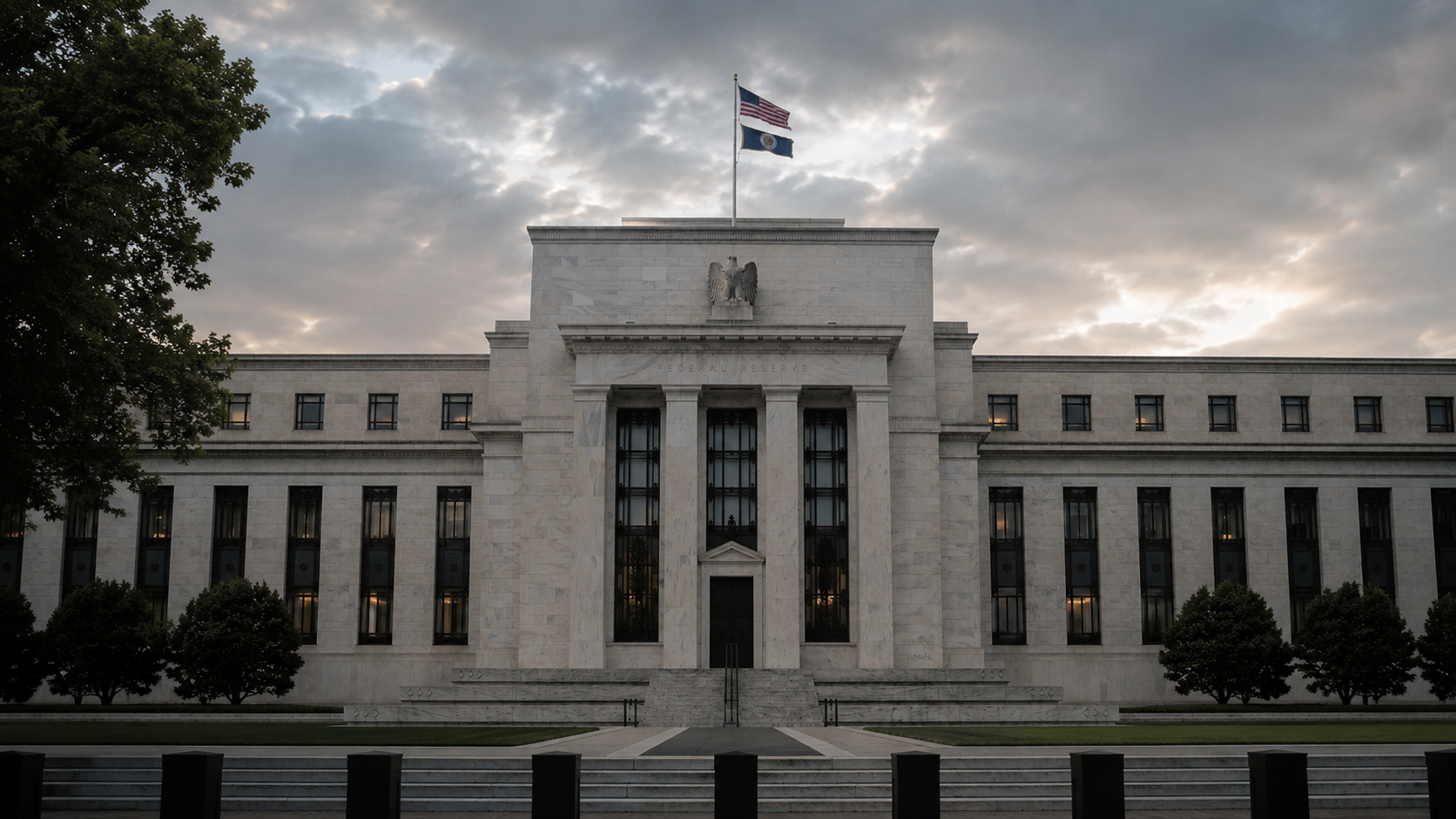
Fed’s Second Rate Cut Signals Shift in Economic Strategy — and Opens New Opportunities for Small Caps

The Federal Reserve lowered interest rates for the second time this year on Wednesday, continuing its effort to stabilize the labor market amid rising unemployment concerns and an ongoing government data blackout.

Policymakers voted to reduce the benchmark federal funds rate by another quarter percentage point, setting a new range between 3.75% and 4% — the lowest level in three years. The move reflects the Fed’s cautious approach to balancing slowing job growth, stubborn inflation, and a murky economic outlook made worse by the shutdown of key government agencies.

For the first time in modern history, the Fed made a rate decision without access to a full month of official employment and inflation data. The lack of reliable government reports has complicated policymakers’ efforts to gauge the true health of the U.S. economy, particularly as layoffs from major employers like Amazon and Target signal that labor market conditions may be weakening.

The central bank began easing policy last month after private-sector data showed hiring had slowed to its weakest pace since 2010. Recent updates from payroll processors have indicated a slight rebound in hiring, though overall employment growth remains tepid. Without consistent data, the Fed is navigating largely in the dark, weighing the need to support jobs while keeping inflation contained.

Inflation and Tariffs Create Conflicting Signals

Inflation has cooled modestly in recent months, according to private data, but underlying price pressures remain. Businesses have managed to absorb higher costs tied to new tariffs rather than pass them directly to consumers, though economists warn that could change if trade tensions persist.

President Trump’s tariff policies, alongside shifting trade dynamics with China, continue to inject volatility into markets. The upcoming meeting between Trump and Chinese President Xi Jinping in South Korea could shape the trajectory of global trade and influence inflation expectations heading into 2026.

Despite these uncertainties, the Fed is signaling that its priority remains preventing a sharp rise in unemployment. The central bank’s rate cuts are designed to lower borrowing costs for businesses and consumers, encourage investment, and keep economic momentum intact as trade and political risks intensify.

In a separate announcement, the Fed confirmed that its three-year effort to reduce the size of its balance sheet will conclude by December 1. The portfolio — which peaked near $9 trillion in 2022 after the pandemic-era stimulus — has been trimmed to roughly $6.6 trillion, a level officials now view as closer to normal.

The move signals confidence that the financial system no longer requires extraordinary liquidity support, even as rate cuts continue.

For investors, the Fed’s latest cut underscores a cautious but proactive stance in navigating a fragile economic environment. Lower interest rates generally benefit equities, particularly small-cap stocks, which tend to be more sensitive to borrowing costs and domestic growth trends.

If the easing cycle continues, small-cap companies could see improved access to capital and renewed investor interest, especially in sectors like industrials, consumer goods, and technology — areas that often rebound first when monetary policy shifts dovish.

Still, with limited visibility into key economic indicators, volatility is likely to remain elevated in the weeks ahead. Market participants will be watching closely for updates on inflation, trade policy, and the labor market once government reporting resumes.