Release – Golden Predator Acquires 20 Percent of Group 11 Technologies

Golden Predator Acquires 20% of Group 11 Technologies

Environmentally-Friendly Solutions and In Place Mining to Extract Precious Metals


Vancouver, BC, September 2nd, 2020: Golden Predator Mining Corp. (TSX-V: GPY) (OTCQB: NTGSF) (the “Company“) announced today that the Company has entered into final Agreements for a 20% ownership positions in Group 11 Technologies Inc., (“Group 11”) a United States-based private company committed to testing and implementing non-invasive in-situ recovery (ISR) of precious metals with the use of environmentally-friendly solutions. Effective August 28th, 2020 Group 11 has finalized all necessary Organizational, Shareholder, and Licensing documentation with its founding partners and will now commence formal operations. Group 11’s initials steps will include acquisition and subsequent testing of gold projects, already identified, that demonstrate specific qualities lending themselves to the Company’s environmentally and economically superior processes. Group 11 is committed to providing commercially viable, sustainable alternatives to conventional mining for the extraction and processing of precious metals.

Group 11 was founded and is owned by enCore Energy Corp. (“enCore”) (TSXV: EU; OTCQB: ENCUF) with 40% of the common stock, EnviroLeach Technologies Inc. (“EnviroLeach”) (CSE : ETI; OTCQB: EVLLF) with 40% of the common stock and Golden Predator Mining Corp. (“Golden Predator”) (TSXV: GPY; OTCQB: NTGSF) with 20% of the common stock. EnCore has contributed $750,000 in initial funding and will provide in-situ extraction expertise, EnviroLeach has entered into a license agreement with Group 11 for the use of its environmentally friendly metal recovery process and will provide chemical and metallurgical expertise, Golden Predator will contribute mobile processing equipment and expertise in utilizing EnviroLeach’s environmentally friendly solution for recovery of gold from sulphide concentrates. Group 11, a private company, will finance all ongoing research and development expenditures for in-situ and secondary recovery applications.

About Group 11 Technologies Inc.

Sustainable metals extraction is a serious challenge for the mining industry which faces mounting concerns over its environmental and carbon footprint, energy consumption, operational safety and especially its impact on water use and water quality while responding to an ever-increasing need for metals in our daily lives. Each Group 11 owner brings a vital skill set to address these challenges and create a unique business opportunity. Group 11 is backed by a first-class staff of scientists and engineers; an extraordinary data set; independent technical validations; strategic relationships; over $20 million in research and development; and commercially proven processes and technologies.

Janet Lee-Sheriff, Chief Executive Office said: “We are extremely proud of the contribution our processing plant’s batch processing unit (SRU™) has contributed to Group 11’s team. With the world’s first on-site test of the EnviroLeach cyanide-free metals recovery process we have demonstrated that their process and our mobile plant can economically recover gold from sulfide concentrates, which is a valuable business opportunity.”

Background on Non-Invasive Extraction Technology

Non-invasive extraction of minerals has been successfully implemented in the mining sector with many innovators and patent holders in the field on the team at enCore, one of the Group 11 partners. These innovators pioneered In-situ Recovery (“ISR”) which has been successfully utilized to recover metals including uranium and copper using liquid solutions other than cyanide. Group 11 is committed to the development and application of ISR extraction for gold and other metals using EnviroLeach’s patented environmentally friendly process along with enCore’s expertise in ISR extraction. This combination of expertise will advance a business model that has potential to disrupt the conventional mining industry.

In-Situ Recovery (meaning ‘in place’) is a non-invasive extraction method that has transformed the uranium industry. In ISR, diluted water-based solutions are circulated underground, dissolving the targeted metals, and returned to surface for further processing and recovery of the target metals. ISR means no open pits or underground tunnels, no tailings or large waste dumps and no discharge of noxious chemical at surface. It therefore has the potential to be a low-impact, low capital cost mining method. When many projects are burdened by remediation and rehabilitation requirements, ISR means substantially reduced mine-closure time and costs compared to conventional practices. In addition, energy requirements, water usage and the environmental footprint of mining projects can be significantly reduced using ISR technology.

About the Golden Predator Process

Golden Predator’s test processing plant, the first of its kind in Yukon, Canada, operated from 2016 -to 2020 providing increased metallurgical and geological understanding of one of the Company’s projects. A closed-circuit water system with no added chemicals due to the free-milling nature of the gold, Golden Predator partnered with EnviroLeach to utilize its patent pending environmentally-friendly cyanide-free solution in its custom-built mobile extraction unit (“SRU”) to process its sulphide concentrates. The cumulative testing resulted in a total calculated recovery of 93.17% of the gold contained in the concentrate. This work lead to the eventual combination of Golden Predator’s SRU™, enCore Energy Corp.’s ISR expertise and EnviroLeach’s technology in partnerships within Group 11 to consider alternate extraction technologies for precious metals.

Group 11 Technologies Inc. (‘Group 11’) is a private US-based company committed to the development and application of environmentally and socially responsible mineral extraction. Its combination of non-invasive extraction technology and environmentally friendly processes to recover gold and other metals provides an alternate solution to conventional open pit and underground mineral extraction. The goal of advancing sustainable extraction considers growing concerns surrounding water use and discharge, carbon footprint, energy consumption and safety while addressing a growing global need for metals in our daily lives.

Golden Predator Mining Corp.

Golden Predator is advancing the past-producing Brewery Creek Mine towards a timely resumption of mining activities, under its Quartz Mining and Water Licenses, in Canada’s Yukon. With established resources grading over 1.0 g/t Gold and a Bankable Feasibility Study underway to evaluate a restart of heap leach operations at the Brewery Creek Mine, 2020 proves to be a pivotal year for the Company. Golden Predator Mining Corp. has spearheaded and successfully applied the EnviroLeach technology to the recovery of gold from sulfide concentrates where cyanide is not feasible or permitted, using its proprietary mobile recovery unit.

For additional information:

Janet Lee-Sheriff
Chief Executive Officer
(604) 260-5029
[email protected]
www.goldenpredator.com

Neither TSX Venture Exchange nor its Regulation Services Provider (as that term is defined in policies of the TSX Venture Exchange) accepts responsibility for the adequacy or accuracy of this release. No stock exchange, securities commission or other regulatory authority has approved or disapproved the information contained herein. This press release contains forward-looking information that involve various risks and uncertainties regarding future events. Such forward-looking information can include without limitation statements express or implied regarding completion of the transactions described herein, the upcoming season at 3 Aces project, and projected grades and gold and silver recoveries from the 2018 and proposed 2019 bulk sample program, Actual results and future events could differ materially from those anticipated in such information. These and all subsequent written and oral forward-looking information are based on estimates and opinions of management on the dates they are made and are expressly qualified in their entirety by this notice. Except as required by law, the Company assumes no obligation to update forward-looking information should circumstances or management’s estimates or opinions change.


Golden Predator Mining (NTGSF) – Updated Technical Report Provides Solid Foundation for Advancing to a Feasibility Study

Tuesday, September 01, 2020

Golden Predator Mining (NTGSF)(GPY:CA)

Updated Technical Report Provides Solid Foundation for Advancing to a Feasibility Study

Golden Predator Mining Corp is a Canada based exploration stage company engaged in the business of acquiring and exploring mineral properties. It owns properties primarily in Yukon, Canada. Some of the company’s projects located in Yukon are the 3 Aces, Sprogge, Reef, Brewery Creek, Marg, Sonora Gulch, Grew Creek, Upper Hyland and others.

Mark Reichman, Senior Research Analyst, Noble Capital Markets, Inc.

Refer to the full report for the price target, fundamental analysis, and rating.

    Updated Brewery Creek technical report. Golden Predator released highlights from a recently completed NI 43-101 technical report for the Brewery Creek mine. In addition to an updated mineral resource estimate, the company disclosed plans to conduct additional drilling in 2020 with the goal of connecting several deposits that will result in an enhanced mine plan to be included in a feasibility study which is expected to be completed by year-end 2020.

    2020 drilling program.  The company will begin a 3,000-meter reverse circulation drilling program in September, along with a 1,000-meter metallurgical core drilling program. While the technical report confirmed the efficacy of combining four deposits (Canadian, Fosters, Golden and Kokanee) into one elongated pit now named “Keg”, drilling will focus on connecting these four with a fifth deposit known as …


This Company Sponsored Research is provided by Noble Capital Markets, Inc., a FINRA and S.E.C. registered broker-dealer (B/D).

*Analyst certification and important disclosures included in the full report. NOTE: investment decisions should not be based upon the content of this research summary.  Proper due diligence is required before making any investment decision. 

Are There Looming Challenges For This Emerging Industry?


This Is What Could Slam the Brakes on EV Growth


According to the International Energy Agency (IEA), sales of electric cars hit a record 2.1 million globally in 2019, increasing the total EVs sold to 7.2 million electric cars. Electric cars, which accounted for 2.6% of global car sales and about 1% of global car stock in 2019, registered a 40% year-on-year increase. And this growth is only projected to continue. BCG’s (Boston Consulting Group) latest global automotive powertrain forecast shows sales of electrified vehicles growing even faster than expected. EV cars are now projected to be one-third of the global car market by 2025 and 51% by 2030, surpassing sales of vehicles powered purely by internal combustion engines (ICEs). If accurate, such growth would result in some 35 million EVs being sold worldwide in 2025 and over 55 million in 2030.

But will the raw materials that makeup EV batteries be a limiting factor on projected growth of the market? The estimated material demand for the batteries of the electric vehicles sold in 2019 was about 19 kilotons (kt) for cobalt, 17 kt for lithium, 22 kt for manganese, and 65 kt for nickel, according to the IEA. In the IEA Sustainable Development Scenario, which incorporates the targets of the EV30@30 Campaign3 to collectively reach a 30% market share for electric vehicles in all modes except two-wheelers by 2030, annual demand for the key materials would be 360 kt of cobalt, 370 kts of lithium, 354 kt of manganese, and 1,850 kts of nickel. Obviously, the demand for the materials used in electric vehicle batteries will depend on changing battery chemistries, nickel cobalt aluminum oxide (NCA), nickel manganese cobalt oxide (NMC), and lithium iron phosphate (LFP) cathodes for lithium-ion (Li-ion) batteries being the most widely used today.

For the next decade, the Li-ion battery is likely to dominate the electric vehicle market, according to the IEA. For the period after 2030, however, a number of potential technologies might be able to push the boundaries beyond the performance limits imposed by current Li-ion battery technology. These include the lithium-metal solid-state battery, lithium-sulfur, sodium-ion, or even lithium-air, which could represent an improvement from Li-ion on indicators such as cost, density, cycle life, and benefits from more widely available materials than Li-ion technologies.

EV batteries use a whole host of materials. Gold and silver are used in the circuit boards, but in minute quantities, and both gold and silver are fully recyclable. Many other parts, such as nickel, steel, plastics, carbon fiber, etc., are also used in ICE vehicles, and as the production of ICEs decline these materials can be switched over to EVs.

The two key materials then become cobalt and lithium. Thankfully, both are not rare. Lithium is the 32nd most common element on the planet, while cobalt can be found in most rocks and is typically a by-product of nickel and copper mining. Cobalt is expensive, with the cost subject to significant fluctuations. The adoption of batteries that use lithium-iron could eliminate a significant need for cobalt, however.

Although not particularly rare, both cobalt and lithium reserves are concentrated in a few countries, according to the Clean Energy Manufacturing Analysis Center (CEMAC). For example, about one-half of the global mined cobalt production comes from the Democratic Republic of Congo, which has a past of political instability. Some 80% of lithium production comes from Australia, Chile, and Argentina. The significant expected demand increase for these materials though could require $30-$45 billion of investment in mining capacity by 2025 to meet the demand. The often long-lead time to develop new mining sources could require such investment sooner rather than later to ensure ample supply of these key materials in the future.

A potential larger issue is more political. CEMAC notes that in addition to controlling major resources in natural graphite and manganese, China controlled nearly one-half global cobalt refining and a similar level of lithium carbonate refinery capacity. Such concentrated control of refining capacity could be a limiting factor in EV growth if political conditions deteriorate between China and other countries. Alternatively, other countries would need to invest in developing and expanding their own refinery capacity.

To end on a positive note, both cobalt and lithium are recyclable. So once a certain level of electric vehicles are on the road, recycling of existing batteries should lessen any of the potential limiting factors.


Sources:

https://www.linklaters.com/en-us/insights/thought-leadership/electric-vehicle-batteries/powering-the-future/sourcing-raw-materials

https://www.forbes.com/sites/woodmackenzie/2019/07/24/can-metals-supply-keep-up-with-electric-vehicle-demand/#5b5393586c9b

https://www.ucsusa.org/resources/comparing-electric-vehicles

https://new.engineering.com/story/what-you-need-to-know-about-batteries-for-electric-vehicles

https://www.mckinsey.com/~/media/mckinsey/industries/metals%20and%20mining/our%20insights/lithium%20and%20cobalt%20a%20tale%20of%20two%20commodities/lithium-and-cobalt-a-tale-of-two-commodities.ashx#:~:text=Raw%20materials%20used%20in%20the,from%203%20percent%20in%202010.

https://www.nrel.gov/docs/fy19osti/73374.pdf

https://www.leadingthecharge.org.nz/do_we_have_enough_rare_earth_metals_for_evs#:~:text=Critical%20earth%20elements%20typically%20found,reused%20over%20and%20over%20repeatedly.

https://www.bcg.com/en-us/publications/2020/drive-electric-cars-to-the-tipping-point


Enjoy Premium Channelchek Content at No Cost


Suggested readings:

U.S. Rare Earth Mining gets Boost from Government

Warren Buffet vs. Elon Musk: Who’s Right?

Virtual Power Plants and Tesla Car Batteries

Grindrod Shipping (GRIN) – Better Than Expected 1H2020 Results. Firmer 2H2020 Outlook.

Monday, August 31, 2020

Grindrod Shipping (GRIN)

Better Than Expected 1H2020 Results. Firmer 2H2020 Outlook.

Grindrod Shipping, originated in South Africa with roots dating back to 1910. The company is based in Singapore, with offices around the world including, London, Durban, Cape Town, Tokyo and Rotterdam. Its primary listing is on Nasdaq and secondary listing on the JSE.
Grindrod Shipping owns and operates a diversified fleet of owned, long-term chartered and joint-venture dry-bulk and liquid-bulk vessels across the globe.

Poe Fratt, Senior Research Analyst, Noble Capital Markets, Inc.

Refer to the full report for the price target, fundamental analysis, and rating.

    Reported adjusted 1H2020 EBITDA of $28.8 million was a sharp improvement over 1H2019 number of $14.7 million and strong dry bulk TCE rate outperformance continued. Adjusting for IFRS 16 adoption, we calculate that adjusted EBITDA was $21.2 million in 1H2020, which was above expectations due to forward cover and the cargo centric focus.

    TCE rate outperformance continued in 1H2020, with Handysize TCE rates $2,067 (56%) above the BHSI index, and Supramax/Ultramax TCE rates $3,444 (60%) above the BSI-58 index. The outperformance versus the indices generated almost $20.0 million of additional TCE revenue, or $7.0 million in Handysize and $12.2 million in Supramax/Ultramax.

    Adjusting 2020 EBITDA to reflect better than expected 1H2020 operating results and firmer dry bulk market. Given the positive variance in 1H2020 and the firmer state of the dry bulk market, we are increasing our 2020 EBITDA to $46.0 million from $39.8 million. There is some visibility into the 2H2020 due to forward cover, but the majority of …


This Company Sponsored Research is provided by Noble Capital Markets, Inc., a FINRA and S.E.C. registered broker-dealer (B/D).

*Analyst certification and important disclosures included in the full report. NOTE: investment decisions should not be based upon the content of this research summary.  Proper due diligence is required before making any investment decision. 

New SEC Disclosure Requirements on Mining Were Overdue.


SEC Updates Old Mining Disclosure Requirements – A Win for Investors and US Mining Companies.


In October 2018, the U.S. Securities and Exchange Commission released new disclosure rules for mining company issuers, including royalty companies. The new disclosure requirements replace the SEC’s existing Industry Guide 7 which had not been updated since 1982. The new rules are intended to provide investors with a more comprehensive understanding of a registrant’s mining properties to help make more informed investment decisions and more closely align the Commission’s disclosure requirements and policies with industry and global practices and standards. Major mining jurisdictions outside the United States, including Canada and Australia, have mining disclosure standards based on the Committee for Mineral Reserves International Reporting Standards (CRIRSCO) that differ in many respects from Industry Guide 7. SEC-registered mining companies must comply with the new rules for their first fiscal year beginning on or after January 1, 2021.


Out with the Old

Until the most recent changes go into effect, current SEC disclosure rules are governed by Regulation S-K and Industry Guide 7. The new rules rescind Industry Guide 7 as of January 1, 2021, and create a new Subpart 1300 of Regulation S-K, which contains the requirements for property disclosures by mining companies beginning January 1, 2021. Industry Guide 7 does not recognize mineral resources (i.e., inferred, indicated, and measured), only probable and proven reserves. Reserve requirements require ore to be economical to extract, requires an assessment of the likelihood of permitting, and economic analysis cannot use a commodity price greater than the three-year trailing average. Disclosure of mineral resources is limited to websites and press releases and are not allowed in SEC filings, including annual and quarterly reports, which places U.S. issuers at a disadvantage given that SEC reports do not contain information that is often reported in other jurisdictions such as Canada. There are other drawbacks as well, such as no requirement to publish technical reports or for a qualified person review of technical disclosures.


In with the New

SEC Chairman Jay Clayton stated that the new rules were intended to modernize the Commission’s mining property disclosure requirements by “improving the quality and reliability of information provided to investors and by harmonizing disclosures with international standards including removing the restriction on disclosure of mineral resource estimates that may have placed U.S. registrants and investors at a disadvantage.”

The new rules require companies to disclose mineral resources, mineral reserves, and material exploration results for their material mining operations in aggregate and for each material mining property, and to include supporting technical report summaries in the filings. The technical report summary must be filed as an exhibit when disclosing mineral resources or mineral reserves for the first time, or when there has been a material change in the mineral resources or mineral reserves from the last technical report summary filed for the property. Akin to Canadian NI 43-101 requirements and consistent with CRIRSCO standards, issuers’ disclosures of exploration results, mineral resources, or mineral reserves must be based on information prepared by an expert or qualified person. The SEC’s new mining disclosure rules provide flexibility in establishing the commodity price used in estimating resources, and inferred resources can be included in an initial assessment’s economic analysis. The technical report summary required to support the determination and disclosure of mineral resources is the “initial assessment.” A technical report required to support the determination and disclosure of mineral reserves in Commission filings may be either preliminary feasibility or a final feasibility study and include economic analysis, including a detailed discounted cash flow analysis.


Take-Away

One of the key differences is the ability to disclose mineral resources, instead of just proven and probable reserves, in SEC filings such as Form 10-K and quarterly reports, which aligns the new disclosure requirements more closely with reporting standards in other major mining jurisdictions. The ability to disclose mineral resources, in addition to proven and probable reserves, is important because it provides investors with a fuller picture and understanding of the company’s properties, enabling them to make more informed investment decisions. It is especially important for junior mining companies, whose assets may be comprised mostly of mineral resources, that need to raise capital to expand and upgrade their resources. It could also help investors to better evaluate the potential of each stage of a mining project. The new disclosure requirements could make the United States a more attractive choice for incorporation and make it easier for mining companies to raise capital in the United States.  


Sources:

SEC Adopts Rules to Modernize Property Disclosures Required for Mining Registrants, Press Release, Securities and Exchange Commission, October 31, 2018

Final Rule: Modernization of Property Disclosures for Mining Registrants, Securities and Exchange Commission, October 31, 2018.

SEC
Overhauls Disclosure Requirements for Mining Companies
, Shearman & Sterling Perspectives, Shearman & Sterling, November 5, 2018.

SEC
Overhauls Mining Property Disclosure Regime
, SEC Update, Hogan Lovells, January 16, 2019.

Understanding
SEC’s New Mining Disclosure Rules
, Dorsey & Whitney LLP, Christopher Doerksen and Kimberley Anderson, February 26, 2019.


Suggested Reading

Are Mining Companies Facing a Shrinking Opportunity Set?

Do Analyst Price Targets Matter?

Metals & Mining Second Quarter 2020 Review and Outlook


Release – Palladium One Reports the First Diamond Drill Hole Results to Test the Murtolampi Zone


Palladium One Intersects 87.2m @ 1.43 g/t Palladium Equivalent (“Pd_Eq”) at the Murtolampi Zone of the Open Pit Läntinen Koillismaa PGE-Cu-Ni Project, Finland

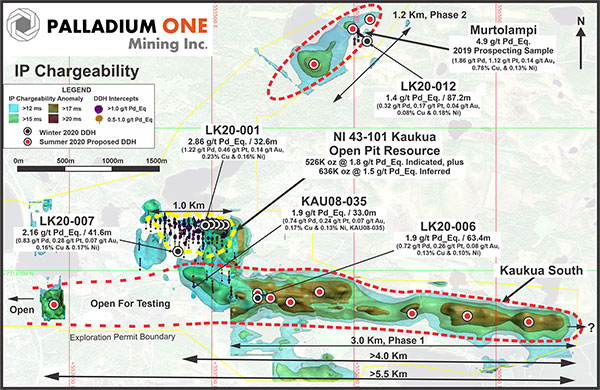
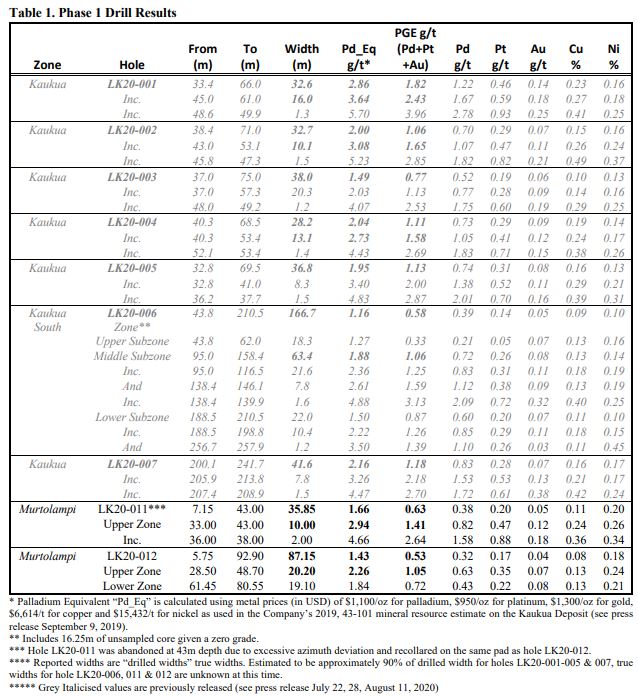
August 25, 2020 – Vancouver, British Columbia – Palladium One Mining Inc. (TSX-V: PDM, FRA: 7N11, OTC: NKORF) (the “Company” or “Palladium One“) is pleased to report the first diamond drill hole results to test the Murtolampi zone, located 2.5 kilometers (“km”) north of the Kaukua Deposit, at the open pit Läntinen Koillismaa (“LK”) PGE-Cu-Ni Project (Figure 1). Starting at 5.8 meters downhole, Hole LK20-012 intersected 87.2m @ 1.43 g/t Pd_Eq* including 20.2 @ 2.26g/t Pd_Eq (Figure 2). Surface sampling by the Company, previously returned 4.9 g/t Pd_Eq (1.86 g/t Pd, 1.12 g/t Pt, 0.14 g/t Au, 0.78% Cu, & 0.13% Ni), see news release August 12th, 2019.

President and CEO, Derrick Weyrauch commented, “Murtolampi is a short distance north of the Kaukua Open Pit Deposit. We have now shown that both Murtolampi and Kaukua South have the potential to significantly add to the existing NI 43-101 open pit resource at Kaukua. Similar to Kaukua South, Murtolampi is associated with a strong Induced Polarization (“IP”) chargeability anomaly that is not fully tested. IP has proven to be an invaluable tool for outlining palladium-rich sulphide mineralization on the LK project, as evidenced by the success of Hole LK20-006 at Kaukua South. The current drill program will continue to test both the Murtolampi and the Kaukua South IP chargeability anomalies discovered earlier this year. We look forward to sharing further drill results with our shareholders in the near term.

Highlights:

  • 87.2m @ 1.43 g/t Pd_Eq, from 5.8m down hole in hole LK20-012, collared on the same drill pad as LK20-011.
    • Total platinum-group elements (“PGE”), (Pd + Pt + Au), 0.53 g/t
      • Including 20.2m @ 2.26 g/t Pd_Eq
        • Total PGE 1.05 g/t,
  • 35.8m @ 1.66 g/t Pd_Eq, from 7.2m down hole in LK20-011, which was abandoned at 43m due to hole deviation.
    • Total PGE 0.63 g/t
      • Including 10.0m @ 2.94 g/t Pd_Eq, from 33.0 m to end of hole.
        • Total PGE 1.41 g/t
  • Hole LK20-012 intersected a zone more than twice as thick as historical drilling at Murtolampi, by the Geologic Survey of Finland (“GTK”) in the 1990’s, demonstrating the potential for significantly more tonnage than previously thought.

The Murtolampi zone hosts a 750 long IP chargeability anomaly (see news release March 10, 2020). Six shallow GTK drill holes, conducted in the 1990s, all intersected mineralization and frequently ended in mineralization, but only tested the very outer edge of the newly discovered chargeability anomaly.


Figure 1. Greater Kaukua Area showing IP chargeability anomalies. Phase 1 drill hole locations showing in (black) and planned drill holes in (red).


Figure 2. Cross section showing hole LK20-012. Holes R368-371 are GTK holes drilled in the 1990’s

QA/QC
The Phase I drilling program was carried out under the supervision of Neil Pettigrew, M.Sc., P. Geo., Vice President of Exploration and a director of the Company.

Drill core samples were split using a rock saw by Company staff, with half retained in the core box and stored indoors in a secure facility, in Taivalkoski, Finland. The drill core samples were transported by courier from the Company’s core handling facility in Taivalkoski, Finland, to ALS Global (“ALS”) laboratory in Outokumpu, Finland. ALS, is an accredited lab and are ISO compliant (ISO 9001:2008, ISO/IEC 17025:2005). PGE analysis was performed using a 30 grams fire assay with an ICP-MS or ICP-AES finish. Multi-element analyses, including copper and nickel were analysed by four acid digestion using 0.25 grams with an ICP-AES finish.

Certified standards, blanks and crushed duplicates are placed in the sample stream at a rate of one QA/QC sample per 10 core samples. Results are analyzed for acceptance at the time of import. All standards associated with the results in this press release were determined to be acceptable within the defined limits of the standard used

Qualified Person
The technical information in this release has been reviewed and verified by Neil Pettigrew, M.Sc., P. Geo., Vice President of Exploration and a director of the Company and the Qualified Person as defined by National Instrument 43-101.

About Palladium One
Palladium One Mining Inc. is a palladium dominant, platinum-group-elements (“PGE”), copper, nickel exploration and development company. Its assets consist of the Läntinen Koillismaa (“LK”) and Kostonjarvi (“KS”) PGE-Cu-Ni projects, located in north-central Finland and the Tyko Ni-Cu-PGE and Disraeli PGE-Ni-Cu properties in Ontario, Canada. All projects are 100% owned and are of a district scale. LK is an advanced project targeting disseminated sulphide along 38 kilometers of favorable basal contact. The KS project is targeting massive sulphide within a 20,000-hectare land package covering a regional scale gravity and magnetic geophysical anomaly. Tyko is a 13,000-hectare project targeting disseminated and massive sulphide in a highly metamorphosed Archean terrain. Disraeli is a 3,100-hectare project targeting PGE-rich disseminated and massive sulphide in a highly productive Proterozoic mid-continent rift.

The Kaukua deposit of the LK project hosts a pit-constrained resource of 635,600 Pd_Eq ounces of Indicated Resources grading 1.80 g/t Pd_Eq* (“palladium equivalent”) contained in 11 million tonnes (@ 0.81g/t Pd, 0.27g/t Pt, 0.09g/t Au, (1.17g/t PGE), 0.15% Cu & 0.09% Ni), and 525,800 Pd_Eq ounces of Inferred Resources grading 1.50 g/t Pd_Eq contained in 11 million tonnes (@ 0.64g/t Pd, 0.20g/t Pt, 0.08g/t Au (0.92g/t PGE), 0.13% Cu, & 0.08% Ni), (see press release September 9, 2019).

*Pd_Eq is calculated using the following metal prices (in USD) of $1,100/oz for Pd, $950/oz for Pt, $1,300/oz for Au, $6,614/t for Cu and $15,432/t for Ni.

ON BEHALF OF THE BOARD
“Derrick Weyrauch”
President & CEO, Director

For further information contact:
Derrick Weyrauch, President & CEO
Email: [email protected]

Neither the TSX Venture Exchange nor its Market Regulator (as that term is defined in the policies of the TSX Venture Exchange) accepts responsibility for the adequacy or accuracy of this release.

This press release is not an offer or a solicitation of an offer of securities for sale in the United States of America. The common shares of Palladium One Mining Inc. have not been and will not be registered under the U.S. Securities Act of 1933, as amended, and may not be offered or sold in the United States absent registration or an applicable exemption from registration.

Information set forth in this press release may contain forward-looking statements. Forward-looking statements are statements that relate to future, not past events. In this context, forward-looking statements often address a company’s expected future business and financial performance, and often contain words such as “anticipate”, “believe”, “plan”, “estimate”, “expect”, and “intend”, statements that an action or event “may”, “might”, “could”, “should”, or “will” be taken or occur, or other similar expressions. By their nature, forward-looking statements involve known and unknown risks, uncertainties and other factors which may cause our actual results, performance or achievements, or other future events, to be materially different from any future results, performance or achievements expressed or implied by such forward-looking statements. Such factors include, among others, risks associated with project development; the need for additional financing; operational risks associated with mining and mineral processing; fluctuations in palladium and other commodity prices; title matters; environmental liability claims and insurance; reliance on key personnel; the absence of dividends; competition; dilution; the volatility of our common share price and volume; and tax consequences to Canadian and U.S. Shareholders. Forward-looking statements are made based on management’s beliefs, estimates and opinions on the date that statements are made and the Company undertakes no obligation to update forward-looking statements if these beliefs, estimates and opinions or other circumstances should change. Investors are cautioned against attributing undue certainty to forward-looking statements.

Release – Cocrystal Pharma Announces Closing of $17.2 Million Bought Deal


Cocrystal Pharma Announces Closing of $17.2 Million Bought Deal Including Partial Exercise of Underwriter’s Option to Purchase Additional Shares


BOTHELL, WA, August 31, 2020 – Cocrystal Pharma, Inc. (NASDAQ: COCP), (“Cocrystal” or the “Company”), a clinical stage biotechnology company discovering and developing novel antiviral therapeutics, announced today the closing of its previously announced underwritten public offering of 16,422,813 shares of common stock of the Company, including the partial exercise by the underwriter of the option to purchase an additional 2,137,098 shares of common stock, at a price to the public of $1.05 per share.

H.C. Wainwright & Co. acted as the sole book-running manager for the offering.

The Company had granted to the underwriter a 30-day option to purchase up to an additional 2,142,857 shares of common stock at the public offering price, less underwriting discounts and commissions, of which the option to purchase an additional 2,137,098 shares of common stock has been exercised. The gross proceeds to Cocrystal, before deducting underwriting discounts and commissions and offering expenses, including the partial exercise of the underwriter’s option to purchase 2,137,098 additional shares of common stock, are approximately $17.2 million. The Company intends to use the net proceeds from this offering for the expansion of our COVID-19 and Influenza treatment development programs and general corporate purposes and working capital.

The shares of common stock were offered by the Company pursuant to a “shelf” registration statement on Form S-3 (File No. 333-237738) originally filed with the Securities and Exchange Commission (the “SEC”) on April 17, 2020, and declared effective by the SEC on May 13, 2020. The offering of the shares of common stock was made only by means of a prospectus, including a prospectus supplement, forming a part of the effective registration statement. A final prospectus supplement and accompanying prospectus relating to the offering have been filed with the SEC and are available on the SEC’s website at https://www.sec.gov/ and may also be obtained by contacting H.C. Wainwright & Co., LLC at 430 Park Avenue, 3rd Floor, New York, NY 10022, by telephone at (646) 975-6996 or e-mail at [email protected].

This press release shall not constitute an offer to sell or a solicitation of an offer to buy these securities, nor shall there be any sale of these securities in any state or other jurisdiction in which such offer, solicitation or sale would be unlawful prior to the registration or qualification under the securities laws of any such state or other jurisdiction.

About Cocrystal Pharma, Inc.

Cocrystal Pharma, Inc. is a clinical stage biotechnology company discovering and developing novel antiviral therapeutics that target the replication process of influenza viruses, hepatitis C viruses, coronaviruses and noroviruses.>

Cautionary Note Regarding Forward-Looking Statements

This press release contains forward-looking statements within the meaning of the Private Securities Litigation Reform Act of 1995, including statements related to our intended use of proceeds and other statements that are not historical fact. We have based these forward-looking statements largely on our current expectations and projections about future events. Some or all of the events anticipated by these forward-looking statements may not occur. Important factors that could cause actual results to differ from those in the forward-looking statements include, but are not limited to, risks arising from our reliance on continuing collaboration with Merck Sharp & Dohme Corp. under the collaboration agreement entered into last year, market and other conditions, any impact from the COVID -19 pandemic and its impact on the economy, the availability of products manufactured by third parties, the future results of preclinical and clinical studies, general risks arising from clinical trials, receipt of regulatory approvals, our ability to find and enter into agreements with suitable collaboration partners, unanticipated litigation and other expenses and factors that affect the capital markets in general and early stage biotechnology companies specifically. Further information on our risk factors is contained in our filings with the SEC, including our Prospectus Supplement dated August 26, 2020, our Annual Report on Form 10-K for the year ended December 31, 2019 and our Quarterly Report on Form 10-Q for the quarter ended June 30, 2020. Any forward-looking statement made by us herein speaks only as of the date on which it is made. Factors or events that could cause our actual results to differ may emerge from time to time, and it is not possible for us to predict all of them. We undertake no obligation to publicly update any forward-looking statement, whether as a result of new information, future developments or otherwise, except as may be required by law.

Investor and Media Contact:

JTC Team, LLC
(833) 475-8247
[email protected]

The Biggest COVID Winners are in the Business of Making Winners


Esports Betting is on a 4,000% Winning Streak


There’s a habit I picked up working on a Wall Street trading desk years ago. I don’t admit this to my friends that are not active in the markets; they wouldn’t understand. But, I think Channelchek users will be able to relate to it. Perhaps you do this yourself: When global news unfolds, my initial reaction is not, “oh my god, that’s horrible,” or even “hey, that’s fantastic.” My first mental response, usually unspoken, asks, “Is this bullish or bearish? Who wins, who loses? How will it impact different business sectors?”  I haven’t worked on a large trading desk for a number of years, but this habit is still ingrained in me — Hurricane. “Who sells lumber?” War in the Mideast. “Will there be an oil disruption?” Lehman goes bust? …well, you get the point.

When the initial talk of the novel coronavirus, social distancing, lockdowns, and working remotely started to become a reality, this instinct was in high alert. Back in March, when Disney decided to close their theme parks, I was speaking with the Noble Capital Markets trading desk and others in the market whom I trust. We were sure who this would be the worst for. Any company related to travel and hospitality was expected to see severe weakness. After this weakness, we saw an eventual opportunity. The conversations then led to discussions determining what public companies this would quickly benefit. We were spot-on thinking credit card companies, tech and communication services, and of course, some pharmacy and biotech names. However, what was never on my radar, yet in hindsight, makes so much sense, is esports and, more precisely, betting on esports (electronic sports).

Sports Betting

In 2018 the Supreme Court ruled that a federal ban on sports betting was unconstitutional. Since then, the market in the United States for sports betting has grown dramatically.  Seventeen states, in addition to Nevada, have now legalized sports betting in various forms. With the growth in this offshoot of two industries (professional sports and gambling) investments in esports and have taken a steep upward trajectory.

Esports Meets Pandemic

As entertainment from more traditional professional sports became unavailable with the suspension and cancellation of regular season play earlier this year, some athletes and spectators pivoted and joined the ranks of the already growing population of esports athletes and audience members. As esports became a higher percentage of the few professional sports competitions being broadcasted with any consistency, esports competitions filled the void for those that enjoy the thrill of human competition. Making it even more inviting is that many casinos closed with concerns over COVID-19.  The potential for many sportsbook operators to grab an increased share of esports gambling from these online sports grew and is still growing.

How Much Growth

Forecasts for the industry suggest that even as traditional sports return (both in-person and on our flat screens), the growth in esports and wagering on it will remain on a strong path upward. According to one report that reviewed betting data across ten bookmakers in the months of March and April of this year, esports betting was shown to have grown by 4,000%. Much of this explosion was captured by two major esports titles, FIFA and NBA2K, but others experienced even higher growth from their lower base.  The study also brought to light those involved.  Half of the core betting audience of esports is represented by high income, full-time professionals between ages 26 and 35. This demographic grew up playing computer and console games. Their interest isn’t unlike someone thirty-years older naturally betting on a boxing match or a bowl game.

The opportunity for long-term growth in the industry is high as gamblers become more aware of esports and its offerings. Additionally, betting opportunities are more plentiful in esports because, for example, a single FIFA match takes 8 to 15 minutes while a football game lasts hours. Additionally, esports is not seasonal — competitions occur year-round with no off-peak periods.

Who Wins in the End

Had I known in March when travel came to a screeching halt, professional sports were halted, and the Las Vegas strip hung “Closed” signs on their doors, what I know now, would I have included esports in my conversations as presumed winners in a pandemic world? That’s hindsight. The best investors look forward. I have been discussing this now with people involved in the markets. It is now on my list of growth industries. The reason is simple, despite its explosive growth from obscurity, the potential for an even greater number of people involved as both players and those wagering is a large multiple from its current state. I certainly wouldn’t bet against it.

Paul Hoffman

Managing Editor, Channelchek


Suggested Reading:

Will the COVID Crisis Permanently Change the
Way We Work?

Virtual Power Plants

Advertising Budgets are Going Where the Eyes Are


Enjoy the Benefits of Premium Channelchek Content at No Cost

Each event in our popular Virtual Road Shows Series has maximum capacity of 100 investors online. To take part, listen to and perhaps get your questions answered, see which virtual investor meeting intrigues you here.

 

Sources:

Rise in Esports Betting

Esports Taking Over Traditional Sports in COVID 19

Research Shows a Growing Interest in Esports Gambling

E-sports betting guide – Best bookmakers to bet on e-sports


1-800-Flowers.com (FLWS) – Long Legs in E-Commerce Trends; Raising Price Target

Friday, August 28, 2020

1-800-Flowers.com (FLWS)

Long Legs in E-Commerce Trends; Raising Price Target

1-800-FLOWERS.COM, Inc. is the leading provider of gourmet and floral gifts for all occasions. For nearly 40 years, 1-800-FLOWERS® has been helping deliver smiles for customers with gifts for every occasion, including fresh flowers, premium, gift-quality fruits, and other gourmet items from Harry & David®, popcorn and specialty treats from The Popcorn Factory®; cookies and baked gifts from Cheryl’s®; premium chocolates and confections from Fannie May®; gift baskets and towers from 1-800-Baskets.com®; premium English muffins and other breakfast treats from Wolferman’s; carved fresh fruit arrangements from FruitBouquets.com; and top quality steaks and chops from Stock Yards®. The Company’s BloomNet® international floral wire service provides a broad range of quality products and value-added services designed to help professional florists grow their businesses profitably.

Michael Kupinski, Director of Research, Noble Capital Markets, Inc.

Refer to the full report for the price target, fundamental analysis, and rating.

    Blows through Q4 estimates.Q4 revenue and cash flow estimates were over achieved based on strong ecommerce trends. Revenues were $417.6 million, nearly 7% better than our $391.4 million estimate. Cash flow, as measured by Adj. EBITDA, was better than expected as well, $32.5 million versus our estimate of $27.3 million.

    Raising fiscal Q1 and full year 2021 estimates. Management provided Q1 guidance that was better than expected, with strong revenue growth of 40% to 45% and break even to slightly positive cash flow, a nice surprise in a typical seasonally unprofitable quarter. We are raising our fiscal 2021 cash flow estimate from …


This Company Sponsored Research is provided by Noble Capital Markets, Inc., a FINRA and S.E.C. registered broker-dealer (B/D).

*Analyst
certification and important disclosures included in the full report. 
NOTE: investment decisions should not be based upon the content of
this research summary.  Proper due diligence is required before
making any investment decision.
 

Hurricane Laura Shut Down Gulf Production with Barely Any Impact on Prices


Barely an Impact on Oil Prices Despite Laura’s Wrath

Hurricane Laura ripped through the Gulf of Mexico this week forcing oil platforms to shut down.  The Category 4 storm caused 84% of the production in the Gulf to go offline after reaching sustained winds of 150 miles per hour.  Laura hit land on Wednesday night in the Lake Charles area, the heart of the domestic refinery business.  Over 45% of total U.S. petroleum refining capacity is located along the Gulf Coast. One would expect oil prices to rise on drop in supply.  Instead, oil price hovered in the $42 to $43 range.  The benign impact on oil prices reflects changing dynamics in the U.S. energy industry.

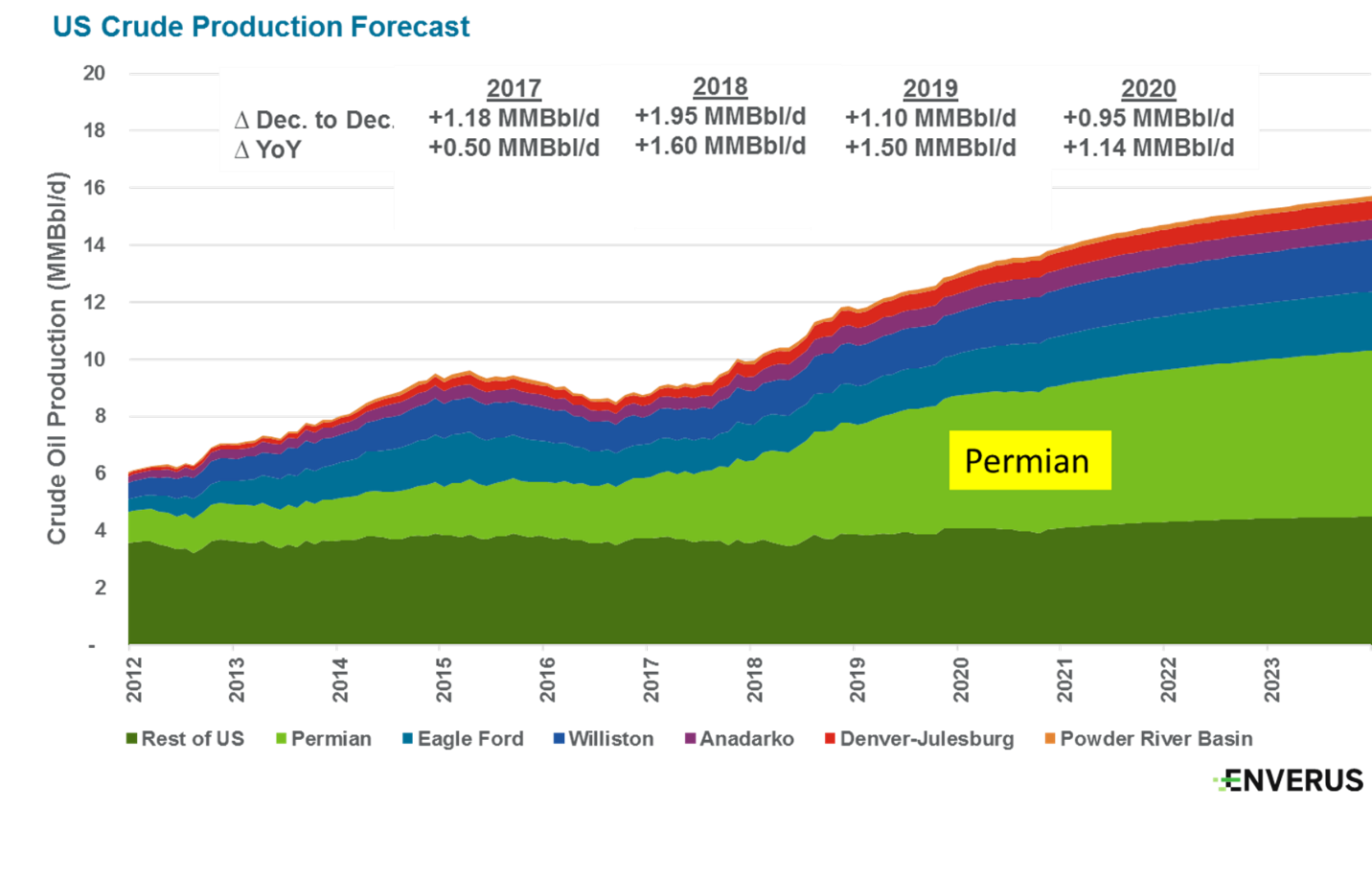
The Gulf is Less Important Due to Permian Basin Oil Production. Twenty years ago, production in the Gulf of Mexico represented almost one-third of domestic production.  The boom in production in shale plays such as the Permian Basin have greatly decreased the country’s reliance on the Gulf of Mexico for oil.  Now, the Gulf of Mexico represents only 17% of U.S. crude oil production.


Oil Inventories Were High. Petroleum product inventories were higher than normal before Hurricane Laura shut down oil refineries.  The EIA reports that U.S. commercial crude oil inventories are about 15% higher than the five-year average for this time of year.  The increase reflects a dramatic decrease in demand since the pandemic. Patrick De Haan, head of petroleum analysis at GasBuddy, estimates that gasoline demand, for example, is down 15% due to the effects of COVID-19.  We are beginning to see a reduction in supply and an increase in demand, but it may take at least a year to work down excess inventory. The temporary drop in production due to Hurricane Laura can easily be met by oil in inventory.

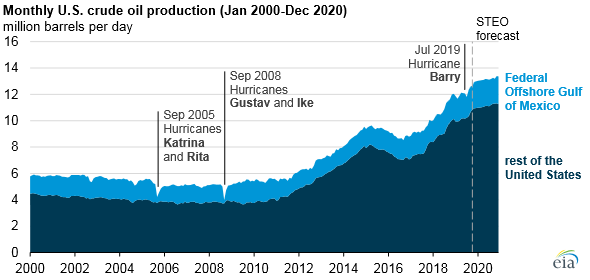
Producers Have Gotten Better at Restoring Production Quickly.  In the past, a major hurricane resulted in a major disruption in production.  The chart below shows the sudden drop off in production during Hurricanes Katrina and Rita in 2005 and Hurricanes Gustav and Ike in 2008.  However, note the limited impact of Hurricane Barry last year.  The smaller reduction in production may reflect the fact that Hurricane Barry was less severe than the earlier hurricanes.  However, it also reflects the fact that hurricane forecasts have improved allowing producers to prepare for the hurricane and return to production sooner.


Refineries Outside the Gulf Were Running Below Capacity.  Because of a drop in oil prices and oil demand following the economic impact of COVID-19, domestic oil production has decreased.  Lower production has meant that domestic refineries are running below capacity.  U.S. refineries were operating at 82% of capacity on August 21, 2020 according to the U.S. Energy Information Administration.  Refineries that are not shut down due to Hurricane Laura should be able to increase production and offset lost production in the Gulf.


Sources:

https://finance.yahoo.com/news/oil-gas-prices-slip-hurricane-115423327.html, Jonathan Garber, Fox Business, August 27, 2020

https://finance.yahoo.com/news/oil-industry-shuts-platforms-rigs-214017121.html, Cathy Bussewitz, Associated Press, August 26, 2020

https://www.marketwatch.com/story/oil-prices-edge-lower-shrugging-off-hurricane-lauras-landfall-2020-08-27, Myra P. Saefong and William Watts, MarketWatch, August 27, 2020

https://www.marketwatch.com/story/hurricane-laura-may-do-little-to-disturb-relative-calm-in-summer-gasoline-prices-2020-08-27, Myra P, Saefong, MarketWatch, August 27, 2020

https://www.wwno.org/post/hurricane-barry-caused-biggest-gulf-oil-drop-more-decade, Travis Lux, WWNO, October 9, 2020

https://www.eia.gov/petroleum/supply/weekly/pdf/highlights.pdf, EIA, August 21, 2020


Suggested Reading

OPEC Forecasts Lower Demand as Output Cuts Taper

Canadian Oil Production Drops To the Lowest Level Since 2016

Unexpected Lower Oil Inventories are a Dent in the Upward Trend


Main image source: The Weather Channel, 11:00 am CST, August 27, 2020

DLH Holdings Corp. (DLHC) – A Significant Renewal

Thursday, August 27, 2020


DLH Holdings Corp. (DLHC)

A Significant Renewal

DLH Holdings Corp is a provider of technology-enabled business process outsourcing and program management solutions in the United States. The company offers services to several government agencies which include the Department of veteran affairs, Department of health and human services, Department of Defense and other government agencies. It operates primarily through prime contracts and also derives its revenue from agencies of the federal government, primarily as a prime contractor but also as a subcontractor to other Federal prime contractors.

Joe Gomes, Senior Research Analyst, Noble Capital Markets, Inc.

Refer to the full report for the price target, fundamental analysis, and rating.

    Head Start Renewal. Yesterday, DLH announced it had been awarded a contract to continue providing national monitoring support services to the Administration for Children and Families’ Office of Head Start. The OHS contract is one of DLH’s Big 3 contracts, along with the two VA contracts. The renewal adds certainty to a major portion of DLH’s revenue base going forward, in our view.

    Details. The contract includes a base period of eight months, with four one-year options, valued at $150 million including the option periods, and it continues DLH’s longstanding relationship with ACF. In 2019, support for Head Start generated …


    Click to get the full report.

This Company Sponsored Research is provided by Noble Capital Markets, Inc., a FINRA and S.E.C. registered broker-dealer (B/D).

*Analyst
certification and important disclosures included in the full report. 
NOTE: investment decisions should not be based upon the content of
this research summary.  Proper due diligence is required before
making any investment decision.
 

Comstock Mining (LODE) – Taking a Methodical Approach Toward Advancing Dayton and Spring Valley

Thursday, August 27, 2020


Comstock Mining (LODE)

Taking a Methodical Approach Toward Advancing Dayton and Spring Valley


Comstock Mining Inc is a mining company with a focus on gold and silver deposits in the Comstock and Silver City mining districts in Nevada. Its operations are divided into two segments, namely mining and real estate. Its mining projects include The Lucerne Resource area, the Dayton Resource area, the Spring Valley exploration target, the Northern Extension, Northern Targets and Occidental areas. The Real Estate segment involves land, real estate rental properties and a hotel, restaurant & bar provided by the Gold Hill Hotel located in Gold Hill, Nevada just south of Virginia City and the Daney Ranch, located just south of Silver City. The majority revenues are generated from the real estate segment.

Mark Reichman, Senior Research Analyst, Noble Capital Markets, Inc.

Refer to the full report for the price target, fundamental analysis, and rating.

    Planned airborne geophysical survey of Dayton and Spring Valley. Geotech Ltd of Aurora, Ontario, Canada will conduct an airborne geophysical survey of the Dayton resource area and Spring Valley exploration targets in mid-September and will provide Comstock with three dimensional interpreted results by mid-October. The results will enhance management’s understanding of the resource expansion potential at Dayton and Spring Valley. Management will finalize targets for an upcoming drill program based on results from the geophysical survey and a detailed structural interpretation of the Dayton resource.

    Advancing to full feasibility study and mine plan. By year-end 2020, Comstock plans to publish a Securities and Exchange Commission (SEC)-compliant S-K 1300 technical report for the Dayton resource area and Spring Valley targets that will support a later preliminary economic assessment. The new technical report is expected to provide a new resource estimate and a phased drilling plan which is likely to …


Click to get the full report

This Company Sponsored Research is provided by Noble Capital Markets, Inc., a FINRA and S.E.C. registered broker-dealer (B/D).

*Analyst
certification and important disclosures included in the full report. 
NOTE: investment decisions should not be based upon the content of
this research summary.  Proper due diligence is required before
making any investment decision.
 

Gevo, Inc. (GEVO) – ATM Offering and Warrant Exercises Add Almost $60 Million

Wednesday, August 26, 2020

Gevo, Inc. (GEVO)

ATM Offering and Warrant Exercises Add Almost $60 Million.

Gevo Inc is a renewable chemicals and biofuels company engaged in the development and commercialization of alternatives to petroleum-based products based on isobutanol produced from renewable feedstocks. Its operating segments are the Gevo segment and the Gevo Development/Agri-Energy segment. By its segments, it is involved in research and development activities related to the future production of isobutanol, including the development of its biocatalysts, the production and sale of biojet fuel, its Retrofit process and the next generation of chemicals and biofuels that will be based on its isobutanol technology. Gevo Development/Agri-Energy is the key revenue generating segment which involves the operation of the Luverne Facility and production of ethanol, isobutanol and related products.

Poe Fratt, Senior Research Analyst, Noble Capital Markets, Inc.

Refer to the full report for the price target, fundamental analysis, and rating.

    Existing ATM program tapped to issue 38.5 million shares at $1.30/share netting $46.1 million. Combined with existing cash of $21.1 million on August 20th per the prospectus, pro forma cash increases to ~$67.2 million, or slightly higher than expected.

    Series A Warrant exercises further boost cash. On August 20th, Series 2020-A Warrants were exercised and 22.97 million shares were issued. Gross proceeds of $13.8 million should move pro forma cash into the $80 million range. Remaining Series 2020-A Warrants to issue …


    Click to get the full report

This Company Sponsored Research is provided by Noble Capital Markets, Inc., a FINRA and S.E.C. registered broker-dealer (B/D).

*Analyst
certification and important disclosures included in the full report. 
NOTE: investment decisions should not be based upon the content of
this research summary.  Proper due diligence is required before
making any investment decision.