Release – RML Nasdaq Trading to Commence Today

Screenshot 2025-06-11 101256

Research News and Market Data on RML

Secondary U.S. listing complements RML’s ASX listing and supports the Company’s U.S. market strategy as it advances the

Horse Heaven Project in Idaho, USA.

HIGHLIGHTS

  • Trading scheduled to commence on the Nasdaq Capital Market on Wednesday, 9 September 2026 (U.S. time) under ticker code RML.
  • There is no capital raising associated with the Nasdaq listing.
  • The Nasdaq listing will enable RML to tap into the world’s largest equity capital markets at a time of strong investment interest in U.S. critical minerals, and trade alongside its U.S.-listed critical metals peers such as neighbouring Perpetua Resources Corp (US$3 billion market cap) and MP Materials Corp (US$10 billion market cap).
  • The Nasdaq listing follows RML’s successful A$20 million institutionally-led placement in April this year, which was corner-stoned by Tribeca Investment Partners and L1 Capital Global Opportunities Master Fund.
  • Additionally, the Nasdaq listing is expected to increase RML’s visibility for White House and U.S. Department of War funding and development incentives, improve the Company’s U.S. capital raising ability, provide M&A currency for any potential

U.S. corporate opportunities, and facilitate U.S. broker research exposure.

  • The U.S. Government is aware of the strategic importance of RML’s Golden Gate and Antimony Ridge assets as a potential source of U.S. domestic tungsten and antimony, given that both projects have been awarded FAST-41 Permitting Status by the White House.
  • To the best of RML’s knowledge, no other company has been awarded two FAST-41 approvals, demonstrating recognition by the U.S. Government of the potential that RML has to help address the American national security and critical mineral supply chain requirements.
  • Elevated geopolitical tension, a U.S. Government push to onshore its critical minerals supply chain, as well as historically high tungsten and precious metal prices, have all contributed to increased interest in Resolution Minerals from U.S. investors looking for exposure to defence, critical and precious metals.

Resolution Minerals Ltd (ASX:RML; Nasdaq:RML) (Resolution or the Company) is pleased to report on its progress towards its Nasdaq listing.

NASDAQ TRADING TO COMMENCE ON TODAY

Resolution is pleased to announce that American Depositary Shares (ADS) representing its ordinary shares will commence trading on the Nasdaq Capital Market (Nasdaq) on Wednesday morning, 9 September 2026 (US time), under the ticker symbol “RML”. Each ADS represents 200 ordinary shares of the Company.

The listing on Nasdaq follows the declaration of effectiveness by the U.S. Securities and Exchange Commission (SEC) of the Company’s registration statement on Form 20-F and formal approval from Nasdaq upon meeting its listing requirements. The Nasdaq listing is a secondary listing and complements the Company’s existing primary listing of ordinary shares on the ASX.

The Company completed the Nasdaq listing without an associated capital raise in the United States. Therefore, initial trading of ADSs may be limited due to the time it takes for existing shareholders to deposit their RML ordinary shares into the ADR program and receive ADSs for trading on Nasdaq.

The Bank of New York Mellon has been appointed depositary, custodian, and registrar for the Company’s American Depositary Receipt program.

A dual-listing on the NASDAQ strengthens Resolution’s emerging status as a potential future American supplier of critical metals for the defense needs of the U.S. and its allies.

Some other critical mineral companies on the NASDAQ / NYSE include MP Materials Corp (MP.NYSE), Perpetua Resources Corp (PPTA.NAS), Almonty Industries Inc (ALM.NAS), USA Rare Earth Inc (USAR.NAS) and Energy Fuels Inc (UUUU.AME).

RML will maintain a primary listing on ASX on which its ordinary shares will continue to trade.

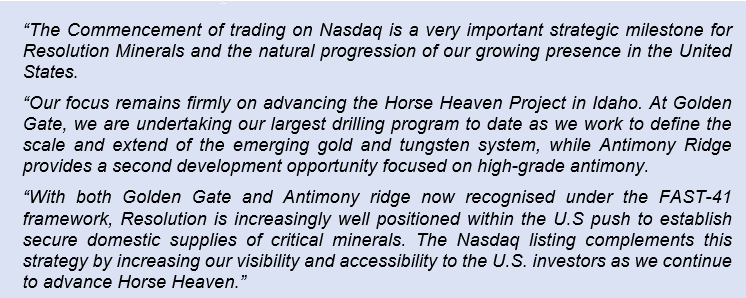
Ari Zaetz, RML’s Managing Director, commented:

Authorised for release by the board of Resolution Minerals Ltd.

For further information, please contact:

Aharon Zaetz Executive Director Resolution Minerals Ltd M: +61 424 743 098

[email protected]

Jane Morgan Investor Relations

Jane Morgan Management M: +61 405 555 618

[email protected]

Power Metallic Mines Inc. (PNPNF) – High-Grade Lion Maiden Resource with Significant Expansion Potential


Wednesday, September 09, 2026

Mark Reichman, Managing Director, Equity Research Analyst, Natural Resources, Noble Capital Markets, Inc.

Refer to the full report for the price target, fundamental analysis, and rating.

Maiden resource establishes Lion as a high-grade polymetallic deposit. Power Metallic’s inaugural maiden resource estimate (MRE) defined approximately 4.75 million tonnes at roughly 3.9% copper equivalent (CuEq), containing approximately 406 million pounds of CuEq, with more than 85% of the resource classified as Indicated. Importantly, mineralization begins at the surface, with approximately 59% of the current tonnage contained within the conceptual open pit resource, and the underground Indicated resource grading 4.71% CuEq.

Strong metallurgy and favorable infrastructure. Locked-cycle testing achieved copper recoveries above 98% while producing concentrates grading more than 25% copper, alongside strong recoveries for palladium, platinum, gold, and silver. The Lion Zone’s near-surface mineralization and proximity to all-season roads and major Hydro-Québec power infrastructure could support a relatively efficient development scenario, potentially beginning with an open pit before transitioning underground. Power Metallic is now preparing for a preliminary economic assessment (PEA), expected to be released in December 2026, that may include integration of the Nisk resource.


Get the Full Report

Equity Research is available at no cost to Registered users of Channelchek. Not a Member? Click ‘Join’ to join the Channelchek Community. There is no cost to register, and we never collect credit card information.

This Research is provided by Noble Capital Markets, Inc., a FINRA and S.E.C. registered broker-dealer (B/D).

*Analyst certification and important disclosures included in the full report. NOTE: investment decisions should not be based upon the content of this research summary. Proper due diligence is required before making any investment decision. 

Aurania Resources (AUIAF) – Drilling is Underway at the Thor’s Valley Gold Project in Iceland


Wednesday, September 09, 2026

Mark Reichman, Managing Director, Equity Research Analyst, Natural Resources, Noble Capital Markets, Inc.

Refer to the full report for the price target, fundamental analysis, and rating.

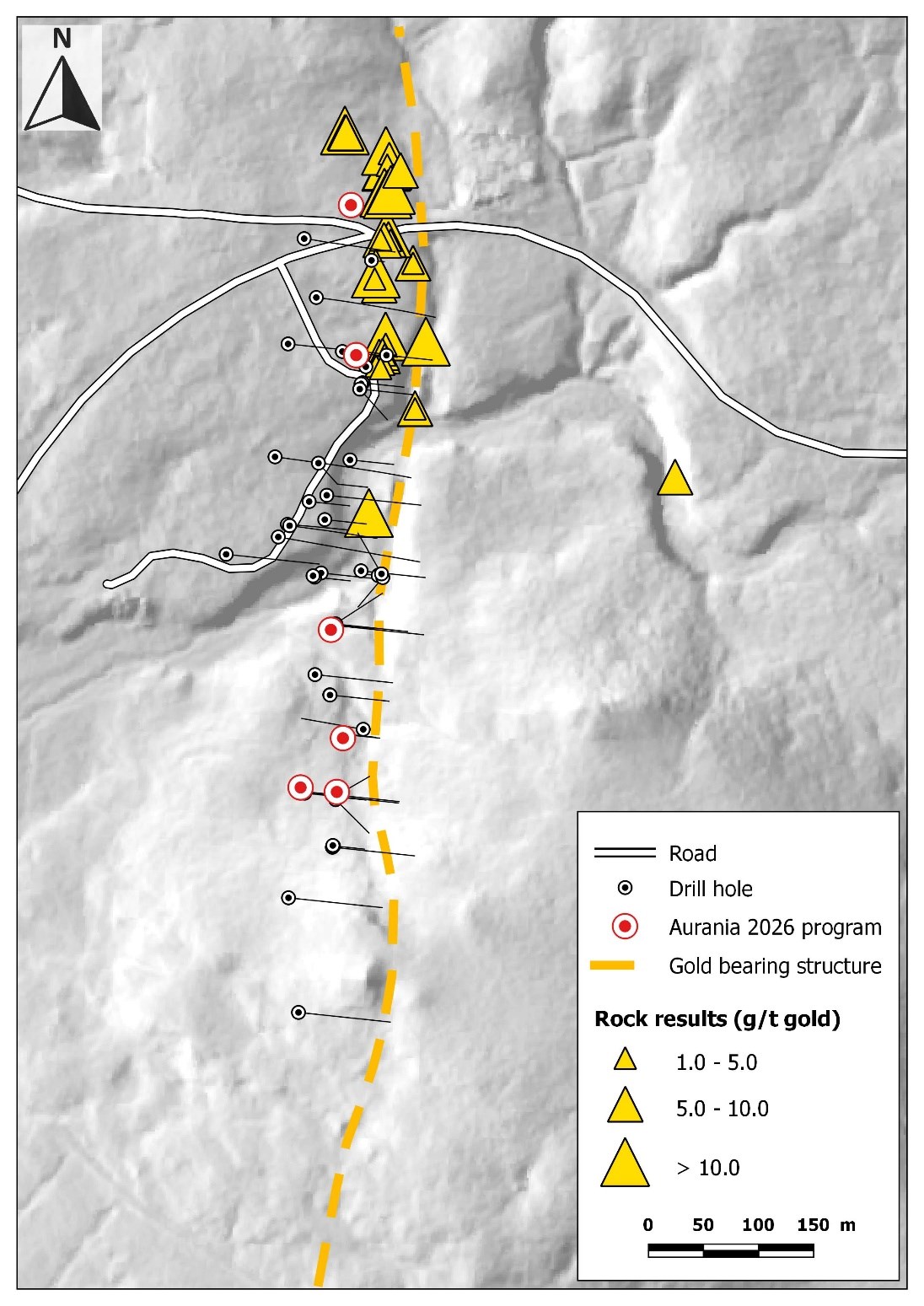
Drilling has commenced at Thor’s Valley. Aurania has commenced a six-hole, approximately 770-meter diamond drilling program at the Thor’s Valley gold project in Iceland. The program is expected to take about one month. Five holes will twin historical holes to validate previously reported high-grade intercepts using modern drilling and standards, while a sixth will test a new target associated with surface rock chip boulders grading up to 102 grams per tonne (g/t) gold.

Thor’s Valley has a history of high-grade gold. Historical mining between 1911 and 1924 identified a productive vein approximately one meter wide and at least one kilometer long, with grades ranging from 11 g/t to 315 g/t gold. More recent exploration has reinforced the project’s high-grade characteristics, with 32 holes drilled in 2005 and 2006 returning results of up to 415.4 g/t gold, and another 11 holes completed in 2020 returning grades of up to 113 g/t gold.


Get the Full Report

Equity Research is available at no cost to Registered users of Channelchek. Not a Member? Click ‘Join’ to join the Channelchek Community. There is no cost to register, and we never collect credit card information.

This Company Sponsored Research is provided by Noble Capital Markets, Inc., a FINRA and S.E.C. registered broker-dealer (B/D).

*Analyst certification and important disclosures included in the full report. NOTE: investment decisions should not be based upon the content of this research summary. Proper due diligence is required before making any investment decision. 

Are We Getting Closer to a Scalable Cure for Type 1 Diabetes?

For more than a century, insulin has transformed type 1 diabetes from an almost invariably fatal disease into a manageable chronic condition. Pumps, continuous glucose monitors and automated insulin delivery systems have made that management increasingly sophisticated.

But none replaces what the disease destroys: the insulin-producing cells of the pancreas.

A growing field of biotechnology companies is now trying to do exactly that.

The emerging strategy, known broadly as islet cell replacement therapy, seeks to restore the body’s ability to produce insulin by replacing the pancreatic islet cells lost to type 1 diabetes. Recent clinical results have provided some of the strongest evidence yet that the fundamental concept works. At the same time, advances in stem-cell manufacturing, immune modulation and gene engineering are beginning to address the obstacles that historically prevented islet transplantation from becoming a broadly available treatment for the type 1 diabetes population.

A merger announced Tuesday between Sernova Biotherapeutics (TSX:SVA) and Seraxis Holdings (private) provides the latest example of how the field is evolving. The companies plan to combine to form BetaNova Biotherapeutics, bringing together stem-cell-derived pancreatic islets, scalable manufacturing, an implantable cell-delivery platform and next-generation approaches with and without immune protection.

The transaction comes amid accelerating development across the industry, including programs from Vertex Pharmaceuticals, Sana Biotechnology, Century Therapeutics, Eledon Pharmaceuticals and NewcelX.

Taken together, the activity raises an increasingly serious question: Is type 1 diabetes moving toward a functional cure that can eventually be manufactured at scale?

The Biology Has Already Shown It Can Work

Type 1 diabetes occurs when the immune system destroys the insulin-producing beta cells contained within pancreatic islets. Without those cells, patients must continuously replace the insulin their bodies can no longer produce.

Replacing the missing insulin-producing cells is therefore an unusually direct therapeutic concept.

Traditional islet transplantation has already demonstrated that transplanted cells can restore insulin production. In 2023, the FDA approved Lantidra, a therapy made from pancreatic islets isolated from deceased donors, for a limited group of adults with type 1 diabetes experiencing recurrent severe hypoglycemia despite intensive management.

In clinical studies supporting Lantidra, 21 of 30 treated patients achieved insulin independence for at least one year, including 10 who remained insulin independent for more than five years.

That was an important validation of the biology.

It was not, however, the scalable solution researchers ultimately want.

Donor-derived islets are constrained by the availability of deceased-donor pancreases. Recipients also generally require chronic immunosuppressive drugs to prevent rejection of the transplanted cells, exposing otherwise healthy patients to potentially serious long-term risks.

Those two limitations — cell supply and immune rejection — now define much of the race in type 1 diabetes cell therapy.

Stem Cells Change the Supply Equation

Stem-cell technology potentially solves the first problem.

Instead of relying on donated organs, companies can begin with stem cells capable of reproducing extensively and then differentiate them into pancreatic islet cells. In principle, that creates a renewable manufacturing source capable of producing standardized, off-the-shelf therapies.

There is now meaningful human evidence that those cells can work.

Vertex Pharmaceuticals’ (NASDAQ: VRTX) Zimislecel, formerly known as VX-880, is currently the most advanced stem-cell-derived islet program in the field. In previously reported Phase 1/2 results, all 12 patients receiving a full dose demonstrated engraftment and glucose-responsive insulin production. Ten of the 12 were no longer using exogenous insulin after one year, while all 12 achieved recommended HbA1c and time-in-range targets and experienced no severe hypoglycemic events after Day 90. The results were published in the New England Journal of Medicine.

Vertex is continuing to enroll and dose patients in its Phase 1/2/3 study in 2026.

The importance of that program extends beyond Vertex itself. It has provided clinical evidence that fully differentiated pancreatic islet cells manufactured from stem cells can restore physiological insulin production in humans.

The catch is that Zimislecel still relies on conventional immunosuppression.

That leaves the industry’s second major problem unresolved.

BetaNova Combines the Pieces

That challenge helps explain the rationale behind the newly announced combination of Sernova and Seraxis.

After the merger closes, expected in November, shareholders of each company are expected to own about half of BetaNova. The company also secured commitments for a $10 million financing intended to advance its initial development programs.

Seraxis brings SR-02, an allogeneic stem-cell-derived pancreatic islet product, together with in-house cGMP manufacturing capabilities designed to produce cells at clinical scale.

Sernova contributes its Cell Pouch Bio-hybrid Organ, an implantable and retrievable device designed to provide an environment where therapeutic cells can engraft, vascularize, survive and function. Sernova has already completed patient treatment and follow-up in a Phase 1/2 study using the device with donor-derived pancreatic islets. According to the company, it met all primary and secondary endpoints.

BetaNova intends to combine those technologies.

SR-02 is expected to enter a Phase 1/2 study in the first quarter of 2027 under an FDA-cleared IND, with initial data anticipated by midyear.

A second program, SR-03, takes the strategy one step further by incorporating gene edits intended to allow the transplanted islets to evade immune destruction. BetaNova expects to submit an IND for SR-03 in the second half of 2027.

In other words, the merger brings several of the pieces required for a scalable therapy under one roof: a renewable cell source, controlled manufacturing, a clinically tested implantation platform and an immune-evasion strategy.

Eledon Attacks the Immune Problem From a Different Direction

Not every company believes the cells themselves need to be invisible to the immune system.

Eledon Pharmaceuticals (NASDAQ: ELDN) is developing tegoprubart, an investigational anti-CD40L antibody designed to modulate a critical pathway involved in immune activation.

Results from an investigator-sponsored study at the University of Chicago have attracted particular attention. Twelve patients with type 1 diabetes received donor-derived pancreatic islet transplants while using a tegoprubart-based, calcineurin inhibitor-free immunosuppression regimen.

As of June 2026, all 12 patients had achieved insulin independence, all had HbA1c levels below 6.5%, and none had experienced severe hypoglycemic episodes following transplantation. The patients had entered the study with histories of recurrent severe hypoglycemia.

That study does not solve the supply problem. The islet cells still come from donors, but it may provide another piece of the scalability puzzle: a more favorable way to protect transplanted cells.

Eledon has since moved toward a registrational pathway. On September 3, the company announced that it had submitted an IND for its first company-sponsored study of tegoprubart in patients with type 1 diabetes undergoing islet transplantation.

That same announcement pointed to a broader ambition. Eledon reaffirmed that it remains on track to initiate LEGACY, a global Phase 3 trial of tegoprubart in kidney transplantation, in the fourth quarter of 2026, following a successful End-of-Phase 2 meeting with the FDA. LEGACY is expected to enroll approximately 600 patients, with a primary endpoint of non-inferiority to tacrolimus at 52 weeks on a composite of biopsy-proven acute rejection, graft loss and death. Eledon has also reported first patients dosed with tegoprubart under compassionate-use protocols in highly sensitized kidney transplant recipients and in islet-transplant recipients with calcineurin-related kidney dysfunction, alongside an investigator-initiated tolerance-induction study at Massachusetts General Hospital.

Taken together, that pipeline suggests Eledon is no longer positioning tegoprubart as a single-indication kidney transplant drug. It is increasingly framed as a platform immunosuppressant intended to compete with calcineurin inhibitors as first-line therapy across kidney and islet transplantation alike.

That clinical progress stands out next to how the private market is pricing an earlier-stage rival chasing the same broad opportunity. LifeMine Therapeutics (private) is developing LIFE-001, a calcineurin activation inhibitor aimed at replacing tacrolimus and cyclosporine across transplantation generally, but has not yet begun the Phase 2 kidney or Phase 1b islet studies that would put it on comparable clinical footing with Eledon.

Yet according to PitchBook, LifeMine’s August Series E, led by Milky Way Investments Group with new investors Bezos Expeditions, Gates Frontier and RA Capital Management, closed at a $700 million post-money valuation, roughly three times Eledon’s public market capitalization of approximately $240 million-$250 million. The comparison is not a clean one: LifeMine’s figure prices preferred shares carrying a 1x participating liquidation preference and weighted-average anti-dilution protection, terms that can support a higher headline valuation than a common-equity holder would assign the same business, so it is not directly comparable to Eledon’s common-stock market cap.

Even so, the gap is notable: a private company with no islet-transplant data of its own has been valued well above a Nasdaq-listed company that already has 12-patient investigator-sponsored islet results, a submitted IND for a company-sponsored islet study, and a global Phase 3 kidney trial about to begin. For investors, that disconnect is one lens for weighing whether Eledon’s public valuation fully reflects its clinical progress.

Readers can find equity research coverage on Eledon’s Channelchek research page.

NewcelX Pairs Stem-Derived Islets With Tegoprubart

NewcelX is developing another approach combining a renewable source of islet cells with Eledon’s immune-modulation strategy.

Its lead diabetes candidate, NCEL-101, is an enriched stem-cell-derived islet product generated using the company’s human pluripotent stem-cell platform. NewcelX describes the platform as capable of scalable expansion and controlled differentiation, with the broader objective of producing off-the-shelf allogeneic cell therapies.

Earlier this year, NewcelX and Eledon established a collaboration to develop NCEL-101 in combination with tegoprubart.

In July, NewcelX announced that it had completed a Type B pre-IND meeting with the FDA and received feedback supporting its proposed development pathway toward a first-in-human trial of the combination.

The strategy is notable because it attempts to combine two approaches that have independently accumulated supportive evidence: stem-cell-derived islets as a renewable source of insulin-producing cells and tegoprubart as an alternative immune-protection strategy.

It is still early. NCEL-101 has not yet produced clinical efficacy data in type 1 diabetes.

But if a stem-cell-derived product can reproduce the insulin independence seen with donor islets while using a more tolerable immune regimen, another major barrier to broader treatment could begin to fall.

Sana Is Trying to Remove Immunosuppression Entirely

Sana Biotechnology (NASDAQ: SANA) is taking a different route: engineer the transplanted cells so the immune system does not recognize them as foreign.

Its hypoimmune, or HIP, platform makes genetic modifications intended to allow transplanted cells to evade immune detection.

The company has already obtained an important early human signal.

In an investigator-sponsored study at Uppsala University Hospital, pancreatic islets modified with Sana’s HIP technology were transplanted into a patient with type 1 diabetes without immunosuppressive therapy.

At 14 months, the cells remained detectable and functional, producing C-peptide — evidence that the transplanted beta cells continued to secrete insulin. Sana reported no identified safety issues, and the follow-up findings were subsequently published in the New England Journal of Medicine.

There is an important distinction: this was a single patient, and the treatment has not yet demonstrated the broad insulin independence seen in larger islet-transplant studies.

But scientifically, the finding matters.

It provides early human evidence that genetically modified islet cells may survive and function for more than a year without systemic immunosuppression.

Sana is now translating that technology into SC451, a hypoimmune-modified, stem-cell-derived pancreatic islet therapy intended to combine an expandable cell source with the immune-evasion properties demonstrated by the earlier donor-derived cells. The company has been progressing toxicology, manufacturing transfer and clinical readiness activities toward a Phase 1/2 study.

If successful, that combination would attack both fundamental barriers simultaneously.

Century Is Designing Immune Evasion Into the Product

Century Therapeutics (NASDAQ: IPSC) is pursuing a similar objective through its iPSC platform.

Its lead diabetes program, CNTY-813, is an iPSC-derived islet replacement therapy incorporating Century’s Allo-Evasion technology, which is designed to help transplanted cells avoid immune rejection without requiring conventional immunosuppression.

At the American Diabetes Association’s 2026 Scientific Sessions, Century reported preclinical results showing durable glucose control for more than eight months in animal models, continued insulin secretion under allogeneic immune pressure and successful manufacturing at clinical scale.

Century completed a pre-IND meeting with the FDA and, as of August, remained on track for an IND submission in the fourth quarter of 2026. Initial clinical data are expected in the second half of 2027.

Like BetaNova’s SR-03 and Sana’s SC451, CNTY-813 represents the emerging second generation of the field: not merely replacing beta cells, but engineering the replacement cells around the immune system that destroyed them in the first place.

The Four Problems a Scalable Cure Has to Solve

Together, these programs show why the phrase “cure for type 1 diabetes” needs qualification.

Researchers increasingly use the term functional cure: restoring sufficient natural insulin production to achieve durable glucose control and potentially eliminate exogenous insulin, even though the underlying predisposition toward autoimmune disease may still exist.

The concept itself now has considerably more evidence behind it than it did only a few years ago.

What remains uncertain is whether it can become scalable.

Cell source. There must be enough high-quality insulin-producing cells to treat patients without relying on scarce donor pancreases.

Engraftment and durability. Those cells need an environment where they can receive a blood supply, sense glucose, and keep functioning for years.

Immune protection. The therapy must address both rejection of foreign cells and the autoimmune biology responsible for type 1 diabetes, ideally without requiring lifelong toxic immunosuppression.

Manufacturing. A commercial therapy ultimately must be reproducible, quality-controlled, and economical at a scale far larger than today’s transplantation programs.

Different companies are solving different portions of the equation.

Vertex has produced perhaps the strongest evidence yet that manufactured stem-cell-derived islets can restore insulin independence, but currently requires immunosuppression. Eledon’s results suggest immune modulation may make transplantation considerably more practical. Sana has shown early human evidence of immune-evasive islets functioning without immunosuppression. Century is building immune protection directly into a scalable iPSC-derived product. NewcelX is pairing stem-derived islets with Eledon’s immune-modulation approach.

And with the creation of BetaNova, Sernova and Seraxis are attempting to combine the cells, manufacturing, implantation environment, and immune strategy within a single company.

A Cure Is Not Here Yet — But the Question Has Changed

There are still substantial risks.

Several of the most ambitious programs remain preclinical or have only limited human data. Cell manufacturing is complex. Gene editing can introduce additional safety considerations. Immune-evasion technologies must demonstrate that modified cells remain safe and controllable over long periods. Devices must overcome issues including vascularization and fibrosis. And any therapy intended for otherwise healthy people living successfully with modern insulin technology will face a very high safety bar.

The field has already produced reminders of those challenges. Vertex discontinued development of its VX-264 encapsulated islet program in 2025 after the device approach failed to produce sufficient C-peptide responses, even though it was generally well tolerated.

That result illustrates how difficult it is to solve all of the biological problems at once.

But the larger trajectory is becoming harder to dismiss.

Donor islets have demonstrated that replacing the missing cells can eliminate insulin dependence. Stem-cell-derived islets have now demonstrated the ability to restore physiological insulin function in humans. Improved immunomodulation has produced insulin independence in a growing transplantation cohort. Immune-engineered islets have also survived in a human patient for more than a year without immunosuppressive drugs.

Meanwhile, multiple companies are preparing to move next-generation, scalable cell products into human trials over the coming year.

The question surrounding islet cell therapy is therefore shifting.

It is no longer simply whether transplanted cells can restore insulin production in type 1 diabetes.

Increasingly, the question is whether biotechnology can combine a renewable cell supply, reliable engraftment, and durable immune protection into a therapy that can be produced safely for thousands and eventually perhaps millions of patients. Today’s formation of BetaNova is another bet that the answer could ultimately be yes.

Independence Realty Trust and Centerspace to Merge in $8.1 Billion Apartment REIT Combination

Independence Realty Trust (NYSE: IRT) and Centerspace (NYSE: CSR) announced Wednesday that they have entered into a definitive all-stock merger agreement that will create a significantly larger middle-market apartment REIT with more than 44,000 units across 17 states.

The combined company is expected to have a pro forma equity market capitalization of approximately $5.0 billion and an enterprise value of approximately $8.1 billion. It will retain the Independence Realty Trust name and continue trading on the New York Stock Exchange under the ticker IRT.

Under the terms of the agreement, Centerspace shareholders will receive 3.800 shares of IRT common stock for each Centerspace share they own. Existing IRT shareholders are expected to own approximately 78% of the combined company, while Centerspace shareholders will own roughly 22%. The transaction is expected to close as early as the end of the fourth quarter of 2026, subject to shareholder approvals, lender consents and other customary closing conditions.

A Broader Geographic Footprint

Strategically, the merger brings together two apartment portfolios with complementary geographic exposure.

Independence Realty Trust has historically focused heavily on Sunbelt markets, while Centerspace adds properties across the Midwest and Mountain West. On a combined basis, approximately 58% of pro forma net operating income is expected to come from Sunbelt markets, 27% from the Midwest and 15% from the Mountain West. The combined portfolio will include 163 multifamily communities and 44,354 apartment units.

That diversification is a key part of the transaction rationale. IRT gains additional exposure to markets that management characterizes as lower-volatility, while Centerspace shareholders gain participation in a larger platform with broader access to capital and a more diversified operating base.

The companies said approximately 80% of pro forma NOI will come from markets with top-quartile projected population growth, giving the combined REIT exposure to regions where housing demand is being supported by migration and employment growth.

Scale, Synergies and FFO Accretion

The financial case for the merger centers on scale.

Management expects approximately $24 million of annualized synergies, with full integration anticipated within 12 months of closing. The transaction is also expected to be approximately 5% accretive to IRT’s 2027 Core FFO per share on a leverage-neutral basis.

The larger portfolio is expected to give IRT more opportunities to spread operating costs across a broader asset base, expand technology initiatives and apply its existing value-add renovation program to additional properties. IRT said its renovation program has historically generated returns on investment of approximately 16%, while other initiatives, including Wi-Fi services and additional property-level revenue programs, could be rolled out across the Centerspace portfolio.

The companies also expect the combination to reduce general and administrative costs relative to the size of the portfolio. Pro forma G&A as a percentage of assets is expected to decline by approximately 24% compared with standalone IRT and 57% compared with standalone Centerspace.

Bigger REITs Can Have Capital-Market Advantages

The transaction also reflects a broader theme across the REIT industry: scale can matter well beyond property operations.

The combined company is expected to have approximately $4.8 billion of public float and increased weighting in major real estate and mid-cap benchmarks, including the MSCI US REIT Index, FTSE NAREIT All Equity REITs Index and S&P MidCap 400 Index. Management expects that larger market capitalization and free float to improve trading liquidity and institutional accessibility.

Recent industry coverage has similarly highlighted the push among multifamily REITs to gain scale as operating, financing and technology costs increase. Larger platforms may be better positioned to spread overhead, access capital markets and compete for institutional investors, while also gaining more flexibility in portfolio management.

That dynamic is particularly relevant for middle-market apartment REITs, where individual portfolios may lack the scale of the largest publicly traded multifamily companies but can still benefit significantly from consolidation.

Leadership and Dividend Policy

IRT’s existing management team will lead the combined company. Scott Schaeffer will remain chairman and CEO, while James Sebra will serve as president and CFO. The board will expand to 11 members, including nine directors from IRT and two from Centerspace, and the company will remain headquartered in Philadelphia.

IRT also said it currently expects to maintain its quarterly dividend of $0.18 per share following completion of the merger. Both companies intend to continue paying regular quarterly dividends through closing, with Centerspace expected to pay a prorated stub dividend during the quarter in which the transaction closes.

Building a Larger Middle-Market Apartment Platform

For investors, the deal is less about entering new lines of business than about creating a larger version of an existing multifamily strategy.

IRT remains anchored in the Sunbelt, but the addition of Centerspace broadens the portfolio into Midwest and Mountain West markets that management believes can provide more stable NOI growth and reduce volatility. At the same time, Centerspace properties gain access to IRT’s larger operating platform, renovation program and capital-markets footprint.

That combination of diversification and scale is what makes the transaction notable.

At more than 44,000 apartment units and approximately $8.1 billion in enterprise value, the merger would create a materially larger middle-market residential REIT at a time when public real estate companies are increasingly looking for size, liquidity and operating efficiencies.

If management can deliver the projected synergies and roughly 5% Core FFO accretion, the transaction could demonstrate why consolidation remains an attractive path for apartment REITs seeking to compete more effectively without adding leverage.

Release – Nutriband Receives USPTO Notice of Publication of Commercial Brand Name Trademarks for Its Abuse Deterrent Fentanyl Patch

Research News and Market Data on NTRB

Tuesday, September 8, 2026 9:00 AM ET


Nutriband has received a Notice of Publication from the United States Patent and Trademark Office (USPTO) for commercial brand name trademarks for its lead product, an abuse deterrent fentanyl transdermal system.

Once allowed, Nutriband plans to submit its commercial worldwide brand name to the FDA and other international regulatory agencies for approval.

ORLANDO, Fla., Sept. 08, 2026 (GLOBE NEWSWIRE) — Nutriband Inc. (NASDAQ:NTRB)(NASDAQ:NTRBW), a company engaged in the development of prescription transdermal pharmaceutical products, today announced that it has received a Notice of Publication from the United States Patent and Trademark Office (USPTO) dated September 2, 2026 for commercial brand name trademarks for its lead product, an abuse deterrent fentanyl transdermal system. Trademarks will be published in the USPTO Trademark Official Gazette. If no objections are filed during the 30-day opposition period, the USPTO is expected to issue a Notice of Allowance.

Nutriband intends to secure full intellectual property rights for its commercial brand names in the United States and internationally. The proposed brand name and product labeling will be submitted to the FDA and other international regulatory agencies for review and approval.

Nutriband’s fentanyl transdermal system is based on its AVERSA₢ abuse deterrent transdermal technology and has the potential to be the world’s first abuse-deterrent patch designed to deter the abuse and misuse and reduce the risk of accidental exposure of transdermal fentanyl.

Nutriband’s abuse deterrent fentanyl transdermal system has the potential to reach peak annual US sales of $80 million to $200 million. While initially concentrating on the US market, the unmet medical need for adequate pain management is a global problem, and the product is in development for all major medical markets worldwide.

Nutriband’s AVERSA₢ abuse-deterrent technology is utilized to incorporate aversive agents into transdermal patches to prevent the abuse, diversion, misuse, and accidental exposure of drugs with abuse potential including opioids and stimulants. The AVERSA₢ abuse deterrent technology is protected by a broad international intellectual property portfolio with patents issued in 46 countries including the United States, Europe, Japan, Korea, Russia, China, Canada, Mexico, and Australia.

Health Advances Aversa Fentanyl market analysis report 2022

About AVERSA₢ Abuse-Deterrent Transdermal Technology

Nutriband’s AVERSA₢ abuse-deterrent transdermal technology incorporates aversive agents into transdermal patches to prevent the abuse, diversion, misuse, and accidental exposure of drugs with abuse potential. The AVERSA₢ abuse-deterrent technology has the potential to improve the safety profile of transdermal drugs susceptible to abuse, such as fentanyl, while making sure that these drugs remain accessible to those patients who really need them. The technology is covered by a broad intellectual property portfolio with patents granted in the United States, Europe, Japan, Korea, Russia, China, Canada, Mexico, and Australia.

About Nutriband, Inc.

We are primarily engaged in the development of a portfolio of transdermal pharmaceutical products. Our lead product under development is an abuse-deterrent fentanyl patch incorporating our AVERSA₢ abuse-deterrent technology. AVERSA₢ technology can be incorporated into any transdermal patch to prevent the abuse, misuse, diversion, and accidental exposure of drugs with abuse potential.

The Company’s website is www.nutriband.com. Any material contained in or derived from the Company’s websites or any other website is not part of this press release.

Forward-Looking Statements

Certain statements contained in this press release, including, without limitation, statements containing the words ‘’believes,” “anticipates,” “expects” and words of similar import, constitute “forward-looking statements” within the meaning of the Private Securities Litigation Reform Act of 1995. Such forward-looking statements involve both known and unknown risks and uncertainties. The Company’s actual results may differ materially from those anticipated in its forward-looking statements as a result of a number of factors, including those including the Company’s ability to develop its proposed abuse-deterrent fentanyl transdermal system and other proposed products, its ability to obtain patent protection for its abuse technology, its ability to obtain the necessary financing to develop products and conduct the necessary clinical testing, its ability to obtain Federal Food and Drug Administration approval to market any product it may develop in the United States and to obtain any other regulatory approval necessary to market any product in other countries, including countries in Europe, its ability to market any product it may develop, its ability to create, sustain, manage or forecast its growth; its ability to attract and retain key personnel; changes in the Company’s business strategy or development plans; competition; business disruptions; adverse publicity and international, national and local general economic and market conditions and risks generally associated with an undercapitalized developing company, as well as the risks contained under “Risk Factors” and “Management’s Discussion and Analysis of Financial Condition and Results of Operations” in the Company’s Form S-1, Forms 10-K’s and Forms 10-Q’s, and the Company’s other filings with the Securities and Exchange Commission. Except as required by applicable law, we undertake no obligation to revise or update any forward-looking statements to reflect any event or circumstance that may arise after the date hereof.

Nutriband is a registered trademark of Nutriband, Inc. AVERSA is a trademark of Nutriband, Inc.

Brand Institute and Drug Safety Institute are registered trademarks of Brand Institute, Inc.

Contact Information:

Nutriband Inc.
Phone: 407-377-6695
Email: [email protected]

SOURCE: Nutriband Inc.

Release – Power Metallic Defines High-Grade Maiden Resource at Lion Averaging ~3.9% CuEq, with >85% Indicated and Significant Expansion Potential

Research News and Market Data on PNPNF

Sep 8, 2026

Lion at a Glance

~406Mlb contained CuEq | ~3.9% CuEq | >85% Indicated | Starts at surface |~59% of tonnes within open-pit resource | >98% Cu recovery | 25%+ Cu concentrate | MRE cut-off April 19| 5 rigs active| Post cut-off deep drilling not included | Assays expected by end of September

TORONTO, Sept. 8, 2026 — Power Metallic Mines Inc. (the “Company” or “Power Metallic”) (TSXV: PNPN) (OTCBB: PNPNF) (Frankfurt: IVV1) is pleased to announce an updated Mineral Resource Estimate (“MRE”) for its Nisk Project (Power Metallic 80% / Critical Elements Lithium Corp. 20%) in the Eeyou Istchee James Bay territory of Québec, including the inaugural mineral resource for the Lion Zone and an updated mineral resource for the Nisk Main deposit. The MRE was prepared by SGS Canada Inc. (“SGS”) in accordance with National Instrument 43-101 – Standards of Disclosure for Mineral Projects (“NI 43-101”) and the CIM Definition Standards for Mineral Resources and Mineral Reserves (2014), has an effective date of June 19, 2026, and incorporates drilling completed to April 19, 2026.

Power Metallic has declared the inaugural Mineral Resource Estimate for the Lion Zone, a high-grade, copper-dominant polymetallic deposit discovered in 2023 at the Nisk property. Over 85% of the initial Lion resource is classified as Indicated, while mineralisation remains open for expansion.

Lion contains 4.145 Mt Indicated at 3.86% CuEq (1.68% Cu, 2.61 g/t Pd, 0.85 g/t Pt, 0.49 g/t Au, 12.21 g/t Ag, 0.10% Ni), and 0.601 Mt Inferred at 4.01% CuEq (1.84% Cu, 2.86 g/t Pd, 0.59 g/t Pt, 0.41 g/t Au, 12.47 g/t Ag, 0.13% Ni).

4.145 Mt LION · INDICATED | 2.703 Mt NISK MAIN · INDICATED

Locked-cycle testing completed by SGS Canada of representative mineralization from Lion has returned copper recoveries above 98% across all composite samples tested, producing concentrates grading over 25% Cu, with high recoveries also reported for gold, palladium, platinum and silver.

The Company is currently assessing proposals from engineering firms to complete a Preliminary Economic Assessment (“PEA”) evaluating the development potential of Lion including the integration of the Nisk resource.

Ongoing resource expansion drilling with 5 active rigs is targeting extensions at depth and along strike with assays from the summer 2026 program expected starting in September 2026.

The updated MRE also restates the existing Nisk nickel-copper resource, which will be assessed alongside Lion as part of the broader PEA development strategy.

Mineral Resource Statement

2026 Lion Deposit Mineral Resource Estimate at a cut-off grade of 0.35% CuEq for the open pit MRE and 0.90% CuEq for the underground MRE, June 19, 2026.

Mining
Method
Resource
Class
TonnesGrade
Ni (%)Cu (%)Co (%)Pt
(g/t)
Pd (g/t)Au
(g/t)
Ag (g/t)NiEq
(%)
CuEq
(%)
Open PitIndicated2,782,0000.081.470.0040.842.350.4211.652.073.45
Inferred100,0000.071.090.0040.431.310.319.631.412.36
UndergroundIndicated1,363,0000.132.100.0070.873.150.6213.352.834.71
Inferred501,0000.141.990.0070.623.170.4313.042.604.34
Mining
Method
Resource
Class
TonnesContained Metal
Ni
(Mlb)
Cu
(Mlb)
Co
(Mlb)
Pt (oz)Pd (oz)Au
(oz)
Ag (oz)NiEq
(Mlb)
CuEq
(Mlb)
Open PitIndicated2,782,0005.0190.040.2276,000210,00037,0001,042,000126.74211.24
Inferred100,0000.162.410.011,0004,0001,00031,0003.125.19
UndergroundIndicated1,363,0003.9863.030.2138,000138,00027,000585,00084.94141.57
Inferred501,0001.5122.020.0810,00051,0007,000210,00028.7747.95
Figure 1 – Lion zone block model overlain 3D inversion of airborne magnetic high - holes marked by Vertical Depth (VD)
Figure 1 – Lion zone block model overlain 3D inversion of airborne magnetic high – holes marked by Vertical Depth (VD)

2026 Nisk Deposit Mineral Resource Estimate at a cut-off grade of 0.30% NiEq for the open pit MRE and 0.80% NiEq for the underground MRE, June 19, 2026.

Mining
Method
Resource
Class
TonnesGrade
Ni (%)Cu (%)Co (%)Pt
(g/t)
Pd
(g/t)
Au
(g/t)
Ag (g/t)NiEq
(%) *
CuEq
(%) *
Open PitIndicated607,0000.600.350.0390.080.490.032.191.011.68
Inferred210,0000.540.220.0350.070.480.032.040.861.44
UndergroundIndicated2,096,0000.960.530.0610.210.910.042.001.652.75
Inferred1,806,0000.980.570.0630.261.050.031.571.732.89
Mining
Method
Resource
Class
TonnesContained Metal
Ni
(Mlb)
Cu
(Mlb)
Co
(Mlb)
Pt (oz)Pd
(oz)
Au
(oz)
Ag (oz)NiEq
(Mlb) *
CuEq
(Mlb) *
Open PitIndicated607,0007.994.660.532,00010,0001,00043,00013.4922.47
Inferred210,0002.501.030.165003,00020014,0003.996.66
UndergroundIndicated2,096,00044.4424.522.8314,00061,0003,000135,00076.13126.89
Inferred1,806,00039.1722.532.5015,00061,0002,00091,00069.06115.09
* Exclusive of Au and Ag
Figure 2 – Nisk zone block model overlain 3D inversion of airborne magnetic high
(1)The effective date of the Nisk Project MRE, including the Nisk and Lion deposits, is June 19, 2026.
(2)Marc-Antoine Laporte, M.Sc., P.Geo. of SGS is responsible for the Nisk and Lion Mineral Resource Estimates and is an independent Qualified Person as defined by NI 43-101.
(3)The classification of the current MRE into Indicated and Inferred mineral resources is consistent with current 2014 CIM Definition Standards – For Mineral Resources and Mineral Reserves.
(4)All figures are rounded to reflect the relative accuracy of the estimate and numbers may not add due to rounding.
(5)The mineral resource is presented undiluted and in situ, constrained by a 3D grade control resource model, and is considered to have reasonable prospects for eventual economic extraction. The mineral resource is exclusive of mined out material.
(6)Mineral resources which are not mineral reserves do not have demonstrated economic viability. An Inferred Mineral Resource has a lower level of confidence than that applying to an Indicated Mineral Resource and must not be converted to a Mineral Reserve. It is reasonably expected that most Inferred Mineral Resources could be upgraded to Indicated Mineral Resources with continued exploration.
(7)The Mineral Resource Estimates for Nisk and Lion are based on a validated surface diamond drill hole database, and 3D resource models constructed in Leapfrog Geo 2026.1.2. Grades for Ni, Cu, Co, Pt, Pd, Ag and Au are estimated for each mineral resource domain using 0.75 m (Nisk) and 1.0 m (Lion) capped composites assigned to that domain. To generate grade within the blocks, the inverse distance squared (ID2) interpolation method was used for all domains.
(8)Based on the location, surface exposure, size, shape, general true thickness, and orientation, it is envisioned that parts of the Nisk and Lion deposits may be mined using open-pit mining methods. In-pit mineral resources are reported at a base case cut-off grade of 0.3% NiEq for Nisk and 0.35% CuEq for Lion. The in-pit resource grade blocks are quantified above the base case cut-off grade, above the constraining pit shell, below topography and overburden and within the constraining mineralized domains (the constraining volumes).
(9)Based on the size, shape, general true thickness, and orientation, it is envisioned that parts of the Lion and Nisk deposits may be mined using underground mining methods. Underground mineral resources are reported at a base case cut-off grade of 0.8% NiEq for Nisk and 0.9% CuEq for Lion. The mineral resource grade blocks are quantified above the base case cut-off grade, below surface/pit surface and within the constraining resource models (considered mineable shapes). Based on the size, shape, general thickness, and orientation of the mineralized structures, it is envisioned that the deposits may be mined using a combination of underground mining methods including sub-level stoping (SLS) and/or cut and fill (CAF) mining.
(10)The in-pit and underground base case cut-off grades consider metal prices of $8.00/lb Ni, $4.80/lb Cu, $15.00/lb Co, $1,400/oz Pt, $1,200/oz Pd, $3,600/oz Au and $38/oz for Ag. Base case cut-off grades consider an open-pit mining cost of $2.80/t, an underground mining cost of $70/t, a processing cost, including treatment and refining and transportation of $30/t mineralized material, and G&A cost of US$4.00/t open pit and $8.50/t underground mineralized material.
(11)The in-pit and underground base case cut-off grades consider metal recoveries, of 70% for Ni, 44% for Cu, 79% for Co, 27% for Pt and 67% for Pd for Nisk (Au and Ag is not considered); 63% for Ni, 98.5% for Cu, 70% for Co, 90% for Pt, 92% for Pd, 84% for Au and 82 % for Ag for Lion.
(12)The estimate of Mineral Resources may be materially affected by environmental, permitting, legal, title, taxation, socio-political, marketing, or other relevant issues.

Terry Lynch, CEO of Power Metallic, commented:
” This inaugural Lion resource confirms what the drilling has been telling us: Lion is a high-grade polymetallic deposit. Approximately 4.75 million tonnes grading close to 4% CuEq has been defined, containing approximately 406 million pounds of CuEq, with more than 85% of the resource already in the Indicated category. Importantly, high-grade mineralisation begins at surface, and the deposit remains open at depth. We believe the quality of Lion has been demonstrated. Now our focus is on demonstrating its scale.

The Federal and Québec governments have put a number of incentive programs in place for critical-minerals projects, and we believe the Company may qualify for several of them. Combining these potential incentives with the high-grade mineralisation from surface and our location next to existing road and major power infrastructure, Lion has the potential to be developed with a relatively modest initial footprint and capital requirement.

From here, the exploration question is how deep Lion goes and where the nickel went. Lion carries the copper and precious metals that come out of a magmatic sulphide system last; the nickel-rich sulphide that comes out first should be somewhere in the system, and we have not found it yet. The summer program has been aimed at the down-dip extension of the shoot, with some holes targeting hundreds of metres below the current resource. Assays on Lion Deep are expected by the end of September”

Joe Campbell, VP Exploration of Power Metallic, added:
“Lion is a textbook fractionated copper- and precious-metal-rich shoot within a magmatic sulphide system. The advantage at Lion over similar deposits of this type is that it begins at surface and is modelled continuously to more than 600 metres vertical depth. The deposit remains open at depth and our priority since the April 19, 2026 cut-off date for drill holes in the MRE has been to test the shoot below 600 metres with deep step-out drilling, following up with borehole EM to delineate more mineralization.”

Lion Zone Geology and Depth Potential

The Lion Zone comprises multiple modelled lenses of copper–PGE–gold–silver–nickel–cobalt sulphide mineralization that together form a continuous, steeply plunging shoot extending from surface to approximately 675 metres down-dip (more than 600 metres vertical depth), the limit of drilling included in the MRE to April 19, 2026. The modelled shoot is approximately 400 metres along strike at its widest and 290 metres at its narrowest, and consists of multiple subparallel lenses, each approximately 2 to 15 metres thick, within a mineralized package up to 50 metres thick that dips at approximately 65° to the north-northwest. The high-grade core of the shoot is dominated by massive to brecciated chalcopyrite and cubanite with pyrrhotite, pentlandite and pyrite. The deepest reported hole intersecting the core of the Lion shoot to date (PML-25-002) intersected 1.95 metres at 7.95% CuEqRec* at approximately 610 metres vertical depth (see news release dated April 30, 2025). The Deposit remains open at depth with subsequent deeper drilling, as illustrated by drill targets PML26-121A, PML-26-125 and PML-26-128A in Figure 1, completed after the cut-off date for the MRE and below the modelled zone intersecting visible copper mineralization (assays pending).

*CuEqRec in the referenced Power Metallic news releases represents CuEq calculated based on the following metal prices (USD): 2,360.15 $/oz Au, 27.98 $/oz Ag, 1,215.00 $/oz Pd, 1000.00 $/oz Pt, 4.00 $/lb Cu, 10.00 $/lb Ni and 22.50 $/lb Co., and a recovery grade of 80% for all commodities, consistent with comparable peers.

Lion is interpreted as a magmatic sulphide system. As the sulphide liquid cools, nickel-rich monosulphide solid solution crystallizes first and the residual liquid becomes progressively enriched in copper, platinum, palladium, gold and silver. This fractionated, copper- and precious-metal-rich liquid is the most mobile phase and migrates furthest away, from the original source; the copper–PGE footwall vein deposits of the Sudbury district are the classic example. Lion’s metal endowment – dominated by copper, palladium, platinum, gold and silver with subordinate nickel and cobalt, and with the highest palladium grades hosted in massive copper sulphide – is consistent with that fractionated end-member. The Company’s working model is that the Lion shoot represents a gravity-driven sulphide accumulation whose down-plunge extent has not yet been tested.

Depth continuity of this order is well documented in analogous camps. In the Sudbury district, the Creighton mine has been developed to approximately 2.4 kilometres below surface; Glencore’s Onaping Depth project has reached ore at approximately 2,600 metres; Nickel Rim South was mined between approximately 1,100 and 1,720 metres; and the copper–PGE footwall veins of the Morrison deposit at Levack were developed between approximately 1,200 and 1,650 metres and remain open at depth. Readers are cautioned that the depth extent and grade of mineralization at these deposits are not necessarily indicative of the mineralization at Lion, which has been drilled to approximately 600 metres vertical depth (see “Cautionary Notes” below).

Power Metallic’s program to test the down-plunge extension of the Lion shoot includes borehole electromagnetic surveys from the deepest holes on the shoot, and deep step-out and wedge drilling from existing collars. Results will be incorporated into future resource updates.

Metallurgy

Metallurgical test work on Lion mineralization has been carried out by SGS at its Quebec City and Lakefield laboratories (see news releases dated January 19, 2026 and May 26, 2026). Two locked-cycle flotation tests have been completed: LCT1, on a blended composite of high-grade and low-grade material representative of run-of-mine feed, and LG2, on a low-grade composite of disseminated mineralization designed to test whether lower-grade material responds to conventional flotation. Both tests produced a single high-grade copper concentrate carrying the platinum, palladium, gold, silver and nickel, with results summarized in Table 4. The LG2 results support the inclusion of lower-grade disseminated material in the Mineral Resource. Mineralogical work indicates that copper occurs as coarse-grained chalcopyrite and cubanite and that most platinum-group minerals occur within or attached to those copper sulphides (see news release dated July 23, 2025). Hydrometallurgical testing of the copper concentrate to evaluate a direct-to-metal processing route is in progress. The metallurgical recoveries applied in the MRE are set out in Note 7 to Table 1.

These metallurgical results are analogous to similar deposits in the Sudbury camp noted above and typical of the high-grade Cuprous zone or Copper zone of these deposits.

Table 4: Lion Zone locked-cycle flotation test results (SGS Canada Inc.)

ElementLCT1 blended
composite –
feed grade
LCT1 –
concentrate
grade
LCT1 –
recovery
(%)
LG2 low-grade
composite –
feed grade
LG2 –
concentrate
grade
LG2 –
recovery
(%)
Recovery
applied in
MRE (%)
Cu3.42 %25.8 %98.90.62 %25.4 %98.398.5 %
Ni0.20 %1.2 %77.10.04 %0.78 %47.763 %
Con/rn/rn/rn/rn/rn/r70 %
Pd5.37 g/t41.4 g/t93.90.97 g/t38.9 g/t89.192 %
Pt2.90 g/t23.4 g/t96.80.22 g/t7.9 g/t84.190 %
Au0.70 g/t4.83 g/t85.00.37 g/t12.7 g/t83.184 %
Ag24.9 g/t159 g/t88.96.26 g/t271 g/t75.982 %
Sources: Company news releases dated January 19, 2026 (LCT1: blended composite of 103 high-grade samples from 15 drill holes and 99 low-grade samples from 10 drill holes, approximately 50/50 by modelled volume) and May 26, 2026 (LG2: low-grade disseminated composite). n/r = not reported. Recoveries are to a single copper concentrate. Test work is preliminary; recoveries used in the MRE are those selected by SGS and set out in Note 7 to Table 1.

Location and Infrastructure

The Nisk Project is in the Eeyou Istchee James Bay territory of Québec, approximately 280 kilometres north-northwest of Chibougamau and 425 kilometres northeast of Matagami. The property is accessed by the Route du Nord, an all-season road managed by the Société de développement de la Baie-James that connects Route 167 at Chibougamau to the paved Billy-Diamond Highway Hydro-Québec’s Albanel substation, on the 735 kV transmission system that carries power from the La Grande complex to southern Québec and accessed by the Route du Norde, is located adjacent to the property approximately 4 km from the Nisk Main deposit and 9.1 km from the Lion Zone. The Nemiscau airport (1,524 metre gravel runway, with scheduled service by Air Creebec) is approximately 30 kilometres west of the property along the Route du Nord, and the Nemiscau camp on the Route du Nord, operated by the Cree Construction and Development Company, provides lodging, food services and fuel. The Cree community of Nemaska, approximately 51 kilometres by road, has a hotel and restaurant, grocery, fuel, a health clinic and other services available to Project staff.

NISK / Lion Property

Regional transportation and energy infrastructure in Eeyou Istchee James Bay continues to be upgraded. The Société de développement de la Baie-James is carrying out a multi-year rehabilitation of the Billy-Diamond Highway, the 2026–2027 Québec budget allocated a further $19.4 million over two years to the maintenance of that highway, and in 2025 the Société du Plan Nord and Nemaska Lithium co-funded a $9.2 million upgrade of the Matagami rail transshipment yard, which serves mining projects in the region. Québec’s 2025–2031 Critical and Strategic Minerals Strategy, released in January 2026, includes a commitment to develop an infrastructure development plan for the Eeyou Istchee James Bay region, and the feasibility studies completed in 2024 under the La Grande Alliance between the Cree Nation Government and the Government of Québec examined a potential rail line from Matagami along the Billy-Diamond Highway and an upgrade of the Route du Nord. Under Québec’s 2025 energy legislation, industrial power allocations of 5 MW or more require ministerial authorization, and the Government of Québec has indicated that critical and strategic minerals projects are a priority for such allocations.

Critical Minerals and Government Incentives

Copper, platinum, palladium, nickel and cobalt are each included on the critical minerals lists of Québec, Canada, the United States and the European Union, and silver is also included on the United States list (Table 6).

Table 6: Nisk Project metals on government critical minerals lists

MetalQuébec (Critical
and Strategic
Minerals list)
Canada (2024
Canadian Critical Minerals List)
United States (Final
2025 List of
Critical Minerals)
European Union
(Critical Raw
Materials Act,
Regulation (EU)
2024/1252)
CopperYes (critical)YesYesYes (strategic)
NickelYes (strategic)YesYesYes (battery grade; strategic)
CobaltYes (strategic)YesYesYes (strategic)
PlatinumYes (platinum group elements; strategic)Yes (platinum group metals)YesYes (platinum group metals)
PalladiumYes (platinum group elements; strategic)Yes (platinum group metals)YesYes (platinum group metals)
SilverNoNoYesNo
Sources: Gouvernement du Québec, list of critical and strategic minerals (updated January 2026); Natural Resources Canada, Canadian Critical Minerals List (June 2024); U.S. Geological Survey, Final 2025 List of Critical Minerals (90 FR 50494, November 7, 2025); Regulation (EU) 2024/1252 of April 11, 2024, Annexes I and II.

Canada’s Clean Technology Manufacturing investment tax credit (“CTM ITC”) provides a refundable tax credit equal to 30% of the capital cost of eligible new machinery and equipment used in the extraction and processing of qualifying critical minerals, including copper, nickel and cobalt, for property that becomes available for use by the end of 2031. Amendments enacted in March 2026 extended eligibility to mine-site extraction and processing property where 50% or more of the expected value of the commercial output is attributable to qualifying materials, subject to certification by an independent engineer or geoscientist. Copper is expected to be the largest contributor to the Project’s anticipated output value, and nickel and cobalt are also qualifying materials; on that basis the Company believes the Project is well positioned to satisfy the eligibility test and is evaluating the application of the credit to a future development of the Project. The principal federal and Québec measures the Company is evaluating are summarized in Table 7.

Table 7: Principal federal and Québec critical-minerals tax credits and incentive programs under evaluation

ProgramJurisdictionWhat it providesKey eligibility and timing
Clean Technology Manufacturing investment tax creditCanadaRefundable credit equal to 30% of the capital cost of eligible new machinery and equipment used to extract and process qualifying critical minerals (copper, nickel and cobalt qualify; platinum, palladium, gold and silver do not)50% or more of expected output value from qualifying materials for mine-site property, certified by an independent engineer or geoscientist; full 30% rate for property available for use by December 31, 2031, reducing to 20% in 2032, 10% in 2033 and 5% in 2034
Critical Mineral Exploration Tax CreditCanada30% tax credit to flow-through share investors on eligible exploration expenses targeting critical minerals, including copper, nickel, cobalt and platinum group metalsFlow-through share agreements entered into on or before March 31, 2027; qualified person certification
Tax credit relating to resourcesQuébecRefundable credit of up to 45% of eligible exploration and mining development expenses attributable to critical and strategic minerals (22.5% for other mineral resources) for corporations that do not operate a mine; 20% and 10% for other corporationsExpenses incurred after March 25, 2025 and paid before January 1, 2030; $100 million of eligible expenses per five-year period
Mining Tax Act measuresQuébecAllowance for the development of critical and strategic minerals; refundable duties credit for losses of 16% of eligible expensesCritical and strategic minerals development expenses incurred after March 25, 2021 (allowance capped at $31.25 million)
Tax holiday for large investment projectsQuébecTen-year income tax and Health Services Fund contribution holiday, capped at a percentage of eligible investmentInvestment of at least $100 million; mining projects mainly (50% or more) related to critical and strategic minerals; applications by December 31, 2029
Fonds pour les minéraux critiques et stratégiquesQuébec$2.5 billion fund administered by Investissement Québec for equity and other financing of critical and strategic minerals projectsAnnounced in the 2026–2027 Québec budget (March 2026)
Canada Critical Minerals AcceleratorCanada$2 billion fund providing equity-like investments, loan guarantees and offtake support through Export Development CanadaLaunched July 2026
First and Last Mile FundCanadaUp to $1.5 billion through 2029–2030 for on-site mine development, transportation and clean-energy infrastructure for critical minerals projectsInvitation-based; funding runs to March 31, 2030
Hydro-Québec industrial power allocationQuébecRate L industrial electricity supply from Hydro-Québec’s low-carbon hydroelectric gridMinisterial authorization required for blocks of 5 MW or more; the Government of Québec has stated that critical and strategic minerals projects are a priority
Sources: Canada Revenue Agency and Department of Finance Canada (Budget 2024, Budget 2025 and Bill C-15, Royal Assent March 26, 2026); Natural Resources Canada; Finances Québec (Budget 2025–2026 and Budget 2026–2027); Revenu Québec; Gouvernement du Québec; Hydro-Québec. Program terms are summarized for convenience only and are subject to the applicable legislation and regulations.

Power Metallic is evaluating the relevance of each of these programs to the Project and believes the Project qualifies for several of them. Eligibility for any program is subject to the applicable legislation, regulations and administrative determinations, and no assurance can be given that the Project will qualify for or receive any tax credit or incentive.

Next Steps

The MRE forms the basis for a Preliminary Economic Assessment (PEA). The PEA will evaluate an initial open pit followed by underground mining at Lion with processing options including the potential incorporation of Nisk Main feed. Additional work is being carried out on improving Nisk metallurgical recovery while preserving an efficient pathway to Lion development. Drilling completed since the MRE data cut-off (five rigs are currently active across the Nisk land package), with results expected from September 2026 onward, will be incorporated into future resource updates and into the PEA to the extent practicable.

A two-year environmental baseline survey program commenced in January 2026, following completion of a desktop study in April 2025. The first field season is being conducted from May to October 2026, with a second planned for summer 2027. To support completion within the planned two-year timeframe, the program has been designed to cover a broader area than is currently expected to be required, including a conservatively defined area for hydrological surveys. Its scope will continue to be reviewed as survey results are received and the project design evolves. The currently defined program is scheduled for completion in 2027 and is progressing in parallel with the technical studies to support preparation of the Environmental and Social Impact Assessment.

A technical report prepared in accordance with NI 43-101 in support of the MRE will be filed under the Company’s profile on SEDAR+ at www.sedarplus.ca within 45 days of the date of this news release.

With the updated Technical Report, Power Metallic will be able to submit the last requirement in its Nasdaq application process. The Company is applying for an American Depositary Receipt (ADR) on Nasdaq. This would enable Power Metallic to trade on Nasdaq via a multiple of its shares to meet the Nasdaq $4 threshold. The Company would expect to advise on its Nasdaq application in October.

6ix Presentation

Power Metallic will be hosting a webinar on Tuesday September 8th, 2026, at 12 noon (Eastern). It will be recorded for those who cannot attend. The link below will provide details how to attend the live event.

https://6ix.com/event/power-metallic-mineral-resource-estimate-presentation

Qualified Persons

Marc-Antoine Laporte, P.Geo., of SGS Canada Inc., is the independent Qualified Person responsible for the MRE, as defined by NI 43-101, and has reviewed and approved the scientific and technical disclosure relating to the MRE in this news release. Joseph Campbell, P.Geo., VP Exploration of Power Metallic, is a Qualified Person as defined by NI 43-101 and has reviewed and approved the other scientific and technical information in this news release.

Cautionary Notes

Mineral Resources that are not Mineral Reserves do not have demonstrated economic viability. The Company has not completed a PEA or any other economic study of the Nisk Project. The mining concepts described in this news release were used solely to establish reasonable prospects for eventual economic extraction for the purpose of reporting Mineral Resources; they do not constitute a mine plan or an economic analysis, and the mining sequence, production rate and mine life of any future operation have not been determined. This news release refers to other mineral deposits and mines, including in the Sudbury and Norilsk–Talnakh districts, solely to illustrate the depths to which magmatic sulphide mineralization has been mined elsewhere. The Company has no interest in those properties, and the mineralization on those properties is not necessarily indicative of the mineralization at the Nisk Project.

About Power Metallic Mines Inc.

Power Metallic is a Canadian exploration company focused on advancing the Nisk Project Area (Nisk–Lion–Tiger)—a high–grade Copper–PGE, Nickel, gold and silver system—toward Canada’s next polymetallic mine.

On 1 February 2021, Power Metallic (then Chilean Metals) secured an option to earn up to 80% of the Nisk project from Critical Elements Lithium Corp. (TSX–V: CRE). Following the June 2025 purchase of 313 adjoining claims (~167 km²) from Li–FT Power, the Company now controls ~330 km² and roughly 50 km of prospective basin margins.

Power Metallic is expanding mineralization at the Nisk and Lion discovery zones, evaluating the Tiger target, and exploring the enlarged land package through successive drill programs. Beyond the Nisk Project Area, Power Metallic indirectly has an interest in significant land packages in British Columbia and Chile, by its 50% share ownership position in Chilean Metals Inc., which were spun out from Power Metallic via a plan of arrangement on February 3, 2025.

It also owns 100% of Power Metallic Arabia which owns 100% interest in the Jabul Baudan exploration license in The Kingdom of Saudi Arabia’s Jabal Said Belt. The property encompasses over 200 square kilometres in an area recognized for its high prospectivity for copper gold and zinc mineralization. The region is known for its massive volcanic sulfide (VMS) deposits, including the world-class Jabal Sayid mine and the promising Umm and Damad deposit.

About SGS Canada Inc.

SGS is the world’s leading testing, inspection and certification company, with a network of over 2,500 laboratories and business facilities across 115 countries and a team of over 100,000 professionals. SGS Geological Services, based in Quebec City, Québec, provides ore body modelling and resource estimation, mine engineering, technical reports under NI 43-101, JORC and S-K 1300, and technical audits and due diligence, drawing on more than 45 years of geostatistical expertise and more than 1,600 consulting projects worldwide. SGS’s Metallurgical Centre of Excellence in Lakefield, Ontario has served the Canadian and global mining industry since 1941 and has completed more than 22,000 projects; together with SGS’s Quebec City laboratory, it carried out the Lion Zone metallurgical test work reported in this news release.

For further information, readers are encouraged to contact:
Power Metallic Mines Inc.
The Canadian Venture Building
82 Richmond St East, Suite 202
Toronto, ON

Neither the TSX Venture Exchange nor its Regulation Services Provider accepts responsibility for the adequacy or accuracy of this release.

Cautionary Note Regarding Forward-Looking Statements

This message contains certain statements that may be deemed “forward-looking statements” concerning the Company within the meaning of applicable securities laws. Forward-looking statements are statements that are not historical facts and are generally, but not always, identified by the words “expects,” “plans,” “anticipates,” “believes,” “intends,” “estimates,” “projects,” “potential,” “indicates,” “opportunity,” “possible” and similar expressions, or that events or conditions “will,” “would,” “may,” “could” or “should” occur. Although the Company believes the expectations expressed in such forward-looking statements are based on reasonable assumptions, such statements are not guarantees of future performance, are subject to risks and uncertainties, and actual results or realities may differ materially from those in the forward-looking statements. Such material risks and uncertainties include, but are not limited to, among others; the timing for producing a PEA and for various drilling plans, including the benefits of drilling to further depth; the ability for inferred mineral resources to be upgraded to indicated mineral resources; the availability and criteria of various government tax credits and incentives for critical minerals and the risks that such incentives change; the ability to raise sufficient capital to fund expanded exploration and development efforts going forward and to conduct drilling and exploration; to maintain its mineral tenures and concessions in good standing; to explore and develop its projects; changes in economic conditions or financial markets; the inherent hazards associates with mineral exploration and mining operations; future prices of copper, nickel and other metals; changes in general economic conditions; accuracy of mineral resource and reserve estimates; the potential for new discoveries; the ability of the Company to obtain the necessary permits and consents required to explore, drill and develop the projects and if accepted, to obtain such licenses and approvals in a timely fashion relative to the Company’s plans and business objectives for the applicable project; the general ability of the Company to monetize its mineral resources; and changes in environmental and other laws or regulations that could have an impact on the Company’s operations, compliance with environmental laws and regulations, dependence on key management personnel and general competition in the mining industry.

Release – Snail Games Announces Global Launch of Honeycomb: The World Beyond Across PC and Console Platforms

Snail, Inc logo

Research News and Market Data on SNAL

September 8, 2026 at 1:05 PM EDT

PDF Version

CULVER CITY, Calif., Sept. 08, 2026 (GLOBE NEWSWIRE) — Snail, Inc. (Nasdaq: SNAL) (“Snail Games” or the “Company”), a leading global independent developer and publisher of interactive digital entertainment, today announced the official launch of Honeycomb: The World Beyond, a science-fiction survival sandbox game developed by Frozen Way Studio and published in partnership with Snail Games USA. Honeycomb: The World Beyond is now available globally on Steam, Epic Games Store, PlayStation 5, and Xbox Series X|S.

Honeycomb: The World Beyond combines survival, exploration, base-building, and scientific experimentation in an original science-fiction universe. A core feature of the title is its bioengineering system, which enables players to experiment with alien flora and fauna through mechanics including grafting and allogamy. Players can analyze samples, develop new life forms, gather resources, and use their discoveries to progress through the game’s survival and exploration systems.

As part of the game’s technology offering on compatible PC hardware, Frozen Way has partnered with NVIDIA to integrate advanced technologies including NVIDIA RTXDI, NVIDIA DLSS 4.5 with Ray Reconstruction, Multi Frame Generation and NVIDIA Reflex. These technologies are designed to enhance visual quality and performance, providing players with optimized experience on supported hardware.

The launch of Honeycomb: The World Beyond adds an original science-fiction property to Snail Games’ publishing portfolio and reflects the Company’s continued focus on identifying, developing, and publishing distinctive interactive entertainment properties across multiple platforms. Through its relationship with Frozen Way Studio, Snail Games is supporting the global commercialization of an original IP while leveraging its publishing infrastructure and established survival genre audience to bring the title to PC and console players worldwide. The Company expects its diversified portfolio and multi-platform approach to remain an important component of its strategy for expanding its presence in the global interactive entertainment market.

Key Features
Honeycomb: The World Beyond offers players:

  • Exploration of Sota7: Discover diverse alien biomes, plants and animals across an expansive world.
  • Bioengineering: Experiment with flora and fauna and develop new life forms.
  • Crossbreeding systems: Use mechanics including grafting and allogamy to create biological hybrids.
  • Base building: Construct and customize a modular base that serves as a shelter and operational hub.
  • Laboratory research: Analyze samples and build laboratory equipment to conduct experiments.
  • Resource discovery: Explore Sota7 in search of resources needed for survival and scientific research.
  • Survival gameplay: Adapt to the challenges of an unfamiliar alien ecosystem.

Play Honeycomb: The World Beyond: Website | Steam | Xbox | PlayStation | Epic Games

Honeycomb: The World Beyond Socials: | X | YouTube | Tiktok | Instagram | Facebook | Discord | Press Kit

Snail Social Media: X | YouTube | TikTok | Instagram | Facebook

Creators interested in covering the game, please reach out to [email protected].

About Frozen Way Games
Frozen Way Games is a group of over 80 cheerful people from Cracow, Poland, with a passion for video games. Gamedev is our lifestyle and philosophy, so there’s nothing better than seeing our creations bring a lot of joy to the community. For more information, please visit: frozenway.games

About Snail Games        
Snail, Inc. (Nasdaq: SNAL) is a leading global independent developer and publisher of interactive digital entertainment for consumers around the world, with a premier portfolio of premium games designed for use on a variety of platforms, including consoles, PCs, and mobile devices. For more information, please visit: https://snail.com/.

Forward-Looking Statements

This press release contains statements that constitute forward-looking statements. Many of the forward-looking statements contained in this press release can be identified by the use of forward-looking words such as “anticipate,” “believe,” “could,” “expect,” “should,” “plan,” “intend,” “may,” “predict,” “continue,” “estimate” and “potential,” or the negative of these terms or other similar expressions. These forward-looking statements include information about possible or assumed future results of Snail Games’ business, financial condition, results of operations, liquidity, plans and objectives. Forward-looking statements appear in a number of places in this press release and include, but are not limited to, statements regarding: the game’s technologies enhancing visual quality and performance and providing players with optimized experience on supported hardware; the Company’s continued focus on identifying, developing, and publishing distinctive interactive entertainment properties across multiple platforms; and the Company’s diversified portfolio and multi-platform approach remaining an important component of its strategy for expanding its presence in the global interactive entertainment market. Further information on risks, uncertainties and other factors that could affect Snail Games’ financial results and business is included in its filings with the Securities and Exchange Commission (the “SEC”) from time to time, including Snail Games’ ability to expand its presence in the global interactive entertainment market and the risk factors set forth in its most recent annual report on Form 10-K and subsequent quarterly reports on Form 10-Q filed, or to be filed, with the SEC. You should not rely on these forward-looking statements, as actual outcomes and results may differ materially from those expressed or implied in the forward-looking statements as a result of such risks and uncertainties. All forward-looking statements in this press release are based on management’s beliefs and assumptions and on information currently available to Snail Games, and Snail Games does not assume any obligation to update the forward-looking statements provided to reflect events that occur or circumstances that exist after the date on which they were made.

Investor Contact:
John Yi and Steven Shinmachi
Gateway Group, Inc.
949-574-3860
[email protected]

Release – V2X to Deliver Tempest Counter-UAS Systems to U.S. Marine Corps

V2X

Research News and Market Data on VVX

September 08, 2026

RESTON, Va., Sept. 8, 2026 /PRNewswire/ — V2X, Inc. (NYSE: VVX) today announced it has been awarded a $19 million indefinite-delivery/indefinite-quantity contract by the U.S. Marine Corps to deliver Tempest counter-Unmanned Aerial System (C-UAS) vehicles, expanding access to a highly mobile capability designed to protect maneuver forces against rapidly evolving unmanned threats.

Under the contract, V2X will provide Tempest vehicles along with maintenance support, software management, spares, ancillary components, training, and other associated engineering services. Designed for speed, mobility, and adaptability, Tempest provides maneuver forces with a rapidly deployable solution capable of detecting, tracking, and defeating unmanned aerial threats while maintaining the flexibility to reposition as mission requirements evolve.

“Unmanned aerial systems are fundamentally changing the modern battlefield, creating an urgent need for counter-UAS solutions that are mobile, effective, and ready to operate in demanding environments,” said Jeremy C. Wensinger, President and Chief Executive Officer of V2X. “Tempest demonstrates what V2X does exceptionally well: respond to an urgent customer need and rapidly take a capability from concept and integration through fielding and sustainment. By bringing together our engineering, technology integration, logistics, and mission expertise, we can move with speed to deliver mission-ready solutions that directly address emerging threats.”

Tempest was developed by V2X as a highly mobile counter-UAS solution capable of operating alongside maneuver forces in austere and contested environments. Its commercially derived architecture enables rapid deployment, sustainment, and adaptability while providing the mobility required to respond to dynamic threats.

The award further strengthens V2X’s growing counter-UAS portfolio and demonstrates the company’s ability to develop, integrate, field, and sustain solutions in response to evolving operational requirements. V2X combines engineering, technology integration, logistics, training, and mission expertise to accelerate capability from concept to the field.

About V2X
V2X builds innovative solutions that integrate physical and digital environments by aligning people, actions, and technology. V2X is embedded in all elements of a critical mission’s lifecycle to enhance readiness, optimize resource management, and boost security. The company provides innovation spanning national security, defense, civilian, and international markets. With a global team of approximately 16,000 professionals, V2X enables mission success by injecting AI and machine learning capabilities to meet today’s toughest challenges across all operational domains.

Investor Contact
Mike Smith, CFA
Vice President, Treasury, Corporate Development and Investor Relations
[email protected] 
719-637-5773

Media Contact
Angelica Spanos Deoudes
Senior Director, Marketings and Communications
[email protected]
571-338-5195

Cision View original content to download multimedia:https://www.prnewswire.com/news-releases/v2x-to-deliver-tempest-counter-uas-systems-to-us-marine-corps-302869057.html

SOURCE V2X, Inc.

Release – Aurania Commences Drill Program at Thor’s Valley Gold Project in Iceland

Aurania Resources Ltd.

Research News and Market Data on AUIAF

September 08, 2026 7:22 AM EDT | Source: Aurania Resources Ltd.

Toronto, Ontario–(Newsfile Corp. – September 8, 2026) – Aurania Resources Ltd. (TSXV: ARU) (OTCQB: AUIAF) (FSE: 20Q) (“Aurania” or the “Company”) is pleased to announce that drilling has commenced at the Thormodsdalur gold project (“Thor’s Valley” or the “Project”) in Iceland. Aurania has engaged a Finland-based drilling contractor – Arctic Drilling Company Oy Ltd – to carry out the program to diamond drill six holes for a total of approximately 770 metres at Thor’s Valley. The program is expected to run for approximately one month and drill core samples will be sent for assaying.

Highlights

  • Drill program underway at the Thor’s Valley epithermal gold project in Iceland
  • Six drill holes planned with five twin holes to re-test historical intercepts under modern drilling and QA/QC practice and one hole to test a new target where numerous high-grade rock-chip boulder samples up to 102 ppm gold (Au) have been mapped at surface
  • A previous operator drilled thirty-two holes totaling 2,431m at Thor’s Valley which returned results up to 415.40 g/t Au[1]
  • In 2020, Iceland Resources ehf drilled eleven drill holes totaling 1,780m with results of up to 113 g/t Au[1]

Dr. Keith Barron, Chairman, President and CEO of Aurania, commented, “The Thor’s Valley project is supported by a history of documented high-grade gold mineralization. Many of the structural targets remain largely untested by modern exploration methods. Amazingly, the drill location is only a 30-minute drive from downtown Reykjavik, the capital of Iceland. We are optimistic that our project could potentially replicate what was done in the 1920’s; namely, produce “direct-shipping” siliceous ore that could be taken to the port by truck and thence sent by freighter to Scandinavia or Canada to be used as smelter flux. This would obviate the need for tailings containments or a mill. The famous Hishikari Gold Mine in Japan has been supplying Sumitomo with copper smelter flux for years. Precious metals are retrieved in the copper refining process. Thor’s Valley is a low-sulphidation epithermal gold-silver system, and of the same type as Hishikari.”

Cannot view this image? Visit: https://images.newsfilecorp.com/files/2477/313334_62d8c9da841cb934_001.jpg

Figure 1. Image of drill rig operating on site at the Thor’s Valley epithermal gold project in Iceland.

To view an enhanced version of this graphic, please visit:
https://images.newsfilecorp.com/files/2477/313334_62d8c9da841cb934_001full.jpg

Cannot view this image? Visit: https://images.newsfilecorp.com/files/2477/313334_62d8c9da841cb934_002.jpg

Figure 2. Location of drill holes for the 2026 program at Thor’s Valley.

To view an enhanced version of this graphic, please visit:
https://images.newsfilecorp.com/files/2477/313334_62d8c9da841cb934_002full.jpg

Project Overview

In April 2026, Aurania entered into a definitive option agreement with St-Georges Eco-Mining Corp (“St-Georges”) (CSE: SX), a Canadian incorporated mineral exploration company and its wholly owned subsidiary Iceland Resources ehf (“IR”), an Icelandic incorporated precious metals exploration company to work collaboratively to define and execute a phased exploration program aimed at advancing the Thor’s Valley gold project, towards initial modern resource definition. The Thor’s Valley project is held by IR and is located approximately 20 kilometres east of Reykjavík, the capital of Iceland.

Thor’s Valley is a historically known gold-bearing, low-sulphidation epithermal system that was initially discovered in 1903 when two Icelandic farm boys picked up pieces of white quartz from a stream, which proved to be gold-bearing. A number of ventures were organized from 1911 to 1924 using German or British capital. Two shafts were sunk and approximately 400 metres of lateral workings performed. As a result of this, the productive vein was estimated to be 1 metre wide and at least 1 kilometre long. Reported grades were 11 g/t to 315 g/t gold[1]. The ore was “direct shipping” and initially sent to Norway and later to Germany for treatment. There are no historic tailings on site. Perhaps significantly, the historical record indicates that the last operator, Arcturus, a German company, failed due to the Weimar hyperinflation rather than ore depletion.

Between 2005 and 2006, the private exploration company Melmi ehf drilled 32 holes totaling 2,431m, which returned results up to 415.40 g/t Au. Melmi ehf was acquired by Iceland Resources in 2020, which completed eleven additional drill holes totaling 1,780m with results of up to 113 g/t Au[1].

[1] Refer to information regarding the Thormodsdalur project on Iceland Resources’ website at www.icelandresources.is/thormodsdalur.

Qualified Persons:

The scientific and technical information contained in this news release has been reviewed and approved by Aurania’s VP Exploration, Mr. Jean-Paul Pallier, MSc. Mr. Pallier is a designated EurGeol by the European Federation of Geologists and a Qualified Person as defined by National Instrument 43-101, Standards of Disclosure for Mineral Projects of the Canadian Securities Administrators.

About Aurania

Aurania is a mineral exploration company engaged in the identification, evaluation, acquisition, and exploration of mineral property interests, with a focus on precious metals and critical energy in Europe and abroad.

Information on Aurania and technical reports are available at www.aurania.com and www.sedarplus.ca , as well as on Facebook at https://www.facebook.com/auranialtd/, Twitter at https://twitter.com/auranialtd, and LinkedIn at https://www.linkedin.com/company/aurania-resources-ltd-.

For further information, please contact:

Carolyn Muir
VP Corporate Development & Investor Relations
Aurania Resources Ltd.
(416) 367-3200
[email protected]

Neither the TSXV nor its Regulation Services Provider (as that term is defined in the policies of the TSXV) accepts responsibility for the adequacy or accuracy of this release.

Forward-Looking Statements

This news release contains forward-looking information as such term is defined in applicable securities laws, which relate to future events or future performance and reflect management’s current expectations and assumptions. The forward-looking information includes: statements regarding the Project, that the drill program at the Project will consist of drill six holes for a total of approximately 770 metres and that the drill program is expected to run for approximately one month and drill core samples will be sent for assaying, that the Company is optimistic that our project could potentially replicate what was done in the 1920’s; namely, produce “direct-shipping” siliceous ore, statements regarding the option agreement with St. Georges and IR and the goals, plans and objectives set out thereunder, , anticipated exploration programs, timing of activities, the potential to advance the Project, Aurania’s objectives, goals or future plans, statements, exploration results, potential mineralization, the tonnage and grade of mineralization which has the potential for economic extraction and processing, the merits and effectiveness of known process and recovery methods, the corporation’s portfolio, treasury, management team and enhanced capital markets profile, the estimation of mineral resources, exploration, timing of the commencement of operations, the commencement of any drill program and estimates of market conditions. Such forward-looking statements reflect management’s current beliefs and are based on assumptions made by and information currently available to Aurania, including the assumption that there will be no material adverse change in metal prices, all necessary consents, licenses, permits and approvals will be obtained, including various local government licenses and the market. Investors are cautioned that these forward-looking statements are neither promises nor guarantees and are subject to risks and uncertainties that may cause future results to differ materially from those expected. Risk factors that could cause actual results to differ materially from the results expressed or implied by the forward-looking information include, among other things: failure to achieve the anticipated results, incorrect assumptions made in the initial evaluation of the Project, failure to identify mineral resources; failure to convert estimated mineral resources to reserves; the inability to complete a feasibility study which recommends a production decision; the preliminary nature of metallurgical test results; the inability to recover and process mineralization using known mining methods; the presence of deleterious mineralization or the inability to process mineralization in an environmentally acceptable manner; commodity prices, supply chain disruptions, restrictions on labour and workplace attendance and local and international travel; a failure to obtain or delays in obtaining the required regulatory licenses, permits, approvals and consents; an inability to access financing as needed; a general economic downturn, a volatile stock price, labour strikes, political unrest, changes in the mining regulatory regime governing Aurania; a failure to comply with environmental regulations; a weakening of market and industry reliance on precious metals and base metals; and those risks set out in the Company’s public documents filed on SEDAR+. Aurania cautions the reader that the above list of risk factors is not exhaustive. Although the Company believes that the assumptions and factors used in preparing the forward-looking information in this news release are reasonable, undue reliance should not be placed on such information, which only applies as of the date of this news release, and no assurance can be given that such events will occur in the disclosed time frames or at all. The Company disclaims any intention or obligation to update or revise any forward-looking information, whether as a result of new information, future events or otherwise, other than as required by law.

info

Source: Aurania Resources Ltd.

Release – Clinical Trial for an Oral Drug to Treat Ebola is Registered in the Pan African Clinical Trials Database and is Ready to Go, As the Largest Ebola Outbreak Continues to Expand in DR Congo

Research News and Market Data on NNVC

Tuesday, 08 September 2026 08:30 AM

SHELTON, CT / ACCESS Newswire / September 8, 2026 / 

The clinical trial is entitled with a descriptive title: “An adaptive, multi-centre Phase IIA/IIB clinical trial of NV-387 oral gummies plus optimised supportive care in adults with Ebola virus disease (Bundibugyo or other orthoebolaviruses): a single-arm safety and dose run-in (Phase IIA) followed by a randomised, controlled, open-label efficacy evaluation with independent blinded-endpoint adjudication (Phase IIB).” Prof. Patrick de Marie Chimusa Katoto is listed as the principal investigator to lead this clinical trial, as previously announced by the Company.

Under the leadership of Professor Katoto, NanoViricides, as the drug sponsor of NV-387 Oral Gummies, has received regulatory approval to begin this Phase II Clinical Trial of NV-387 Oral Gummies as a Treatment for the Current Bundibugyo Ebolavirus and other Ebola viruses, from the local regulatory agency ACOREP in the Democratic Republic of Congo (DRC).

The drug product, NV-387 Oral Gummies was shipped to and has been received at the clinical trial site in Ituru province last week.

Therefore, it is anticipated that the first Ebola patient dosing with NV-387 oral gummies under this clinical trial can be expected to occur within one to two weeks, barring impediments caused by the very ebola disease outbreak that the trial is designed to respond to.

“We now eagerly await the first dosing of Ebola patients with our NV-387 Oral Gummies drug product that is already available in the clinical trial site,” said Anil R. Diwan, PhD, President of the Company, adding, “We, our colleagues, and our partners are hoping that this orally available, unique and revolutionary broad-spectrum antiviral drug succeeds in combatting the Bundibugyo virus for which there is no known treatment or vaccine.”

The current Ebola Virus Disease (EVD) caused by the Bundibogyo ebolavirus (BDBV) is now the largest ever ebola outbreak, as well as the fastest growing ebola outbreak in DRC.

As of September 5, 2026, there have been 6,604 confirmed cases, and 3,175 deaths, in DRC alone, according to the CDC 1. In comparison, as of August 14, 2026, there were reported 4,945 confirmed cases and 2,325 confirmed deaths due to this virus. The crude fatality rate (crude CFR) 2 has further increased to 48% from 46% calculated as of August 14th. This Ebola outbreak is now the fastest growing ebola outbreak in the world. Additionally, it is also possibly the deadliest ebola outbreak. At this rate, the current outbreak is on track to exceed the worst ever ebola zaire outbreak in West Africa in 2014-2016 3. In that outbreak, 28,616 cases and 11,310 deaths were recorded across Guinea, Liberia and Sierra Leone, according to the World Health Organization.

Schools have reopened normally in the Ebola affected regions across DRC, despite the well understood risk of transmission in schools. Teaching and implementing hygienic measures such as use of hand sanitizers and frequent hand washing is expected to minimize risk, enabling the children to have in-class education. The alternative of remote learning is very difficult to implement in resource-poor environments, and risks the children’s education itself. If cases occur, schools would be shut down. The risk is high, particularly because the case fatality rate (CFR) in children is at 60%, much greater than the CFR for adults at sub-50% 4.

Additionally, health care workers (HCW) are at high risk, despite personal protective equipment, because of close contact with the patients. At least 43 HCWs have died from Ebola and at least 160 have contracted the disease 5.

The need for an oral drug to combat this disease is thus obvious. An oral drug to treat patients, to prevent contacts from contracting the disease, and to keep healthcare workers safe, is sorely needed to combat this outbreak. There is a tremendous urgency to validate a drug that works against this ebolavirus in short and decisive clinical trials for minimizing further spread by treating patients and for saving lives. Om Sai CRO, in consultation with renowned scientists in DRC, has designed the Phase II clinical trial with this particular objective.

“We believe NV-387 could be revolutionary in this fight against Ebola, if it is found to be effective,” said Anil R. Diwan, PhD, adding, “It is an oral drug, in contrast to others that are infusions. Thus evaluating if NV-387 treatment works is of paramount importance to combat this and future Ebola and Marburg outbreaks.”

NV-387 is the only orally active agent under consideration for clinical trial as a treatment of Ebola to the best of our knowledge. In an epidemic scenario in resource limited settings such as in DRC, we believe an oral drug is a highly advantageous feature.

An oral drug called obeldesivir, which is related to the known drug remdesivir that previously failed in clinical trials against Ebola Zaire, is being tried in a clinical trial, but only as a preventative measure, and not as a treatment of active infection.

In contrast, in the PARTNERS clinical trial, infusions of antibody cocktails and of remdesivir are being tried. About 300 patients have been enrolled already (across 4 groups) in the PARTNERS trial, according to the WHO 6. This trial will require over 1,000 patients to be treated and may not yield results for several months. A similar large collaborative clinical trial effort in the West Africa 2014-2016 outbreak resulted in US FDA approval of two antibody drugs only specifically for EBOV Zaire, which are not deemed to be useful in the current outbreak without further clinical trials.

Three different vaccines are also expected to enter into clinical trials for efficacy within months, according to the WHO 7.

As of now, there is practically no risk from this Ebola outbreak for the USA, according to the CDC. The US has imposed strict travel restrictions to avoid any possible introduction of the ebola virus into the USA. The CDC is intimately involved in the Ebola response with 150 personnel deployed within DRC for the efforts (ibid #1).

NanoViricides has retained Om Sai Clinical Research Private Limited, India, (Om Sai CRO) as the CRO for this Phase II clinical trial for Ebola in DRC. Om Sai CRO has been instrumental in putting together the team with Prof. Katoto and other renowned experts and with support from the University of Bukavu and in the Ebola-affected region to lead and execute the clinical trial of NV-387 Oral Gummies as a Treatment for Ebola viruses in DRC.

As the Ebola outbreak continues to expand, several limitations on travel are being instated. There are also limitations on availability of resources such as PPE and diagnostic kits, which are compounded by the travel and other restrictions. These on-ground situations have caused delays in our efforts, and we anticipate such delays to continue due to the tenuous outbreak situation.

This Ebola outbreak continues to increase in spread and is now present in at least six provinces in DRC and threatening South Sudan 8. More concerning is the fact that over 80% of new cases are outside of known contact lists, leading to the projection that the extent of the outbreak is at least two times or more larger than the reported confirmed cases. Additionally, Ebola is now found to have spread into displacement camps that host over 4.4 million displaced persons due to internal warfare, adding another high risk population pool with poor drinking water, sanitation and medical resources to further fuel this outbreak, according to the UN New Service.

Treatments under consideration except for NV-387 which is orally available, require infusions. Infusions are difficult to implement and also are not scalable in a large outbreak scenario such as this Ebola virus outbreak if it continues to grow, as has been widely expected.

A clinical trial, called the “PARTNERS” clinical trial, evaluating Remdesivir infusion, an antibody cocktail MBP134 infusion, and MBP134 infusion plus Remdesivir infusion, has started according to WHO with first patient having received infusion of the antibody cocktail on July 2, 2026 9.

“Although this antiviral (Remdesivir) proved to be ineffective at targeting the Zaire Ebolavirus, there remains hope that it could have some benefit against the Bundibugyo virus, particularly if used in combination with MBP-134,” according to an article in Forbes explaining the “PARTNERS” clinical trial by the WHO organized collaboration 10. The article also notes that MBP134 contains two separate antibodies designed to, taken together, recognize multiple Ebola species.

Antibodies are highly specific to a particular strain of the virus and usually are not very effective against variants of the same virus that arise in the field. Viruses also escape antibodies readily by mutations in the field.

The Company notes that NV-387 was previously found to be superior to Remdesivir in a lethal animal model of a viral disease. The Company believes this superiority of NV-387 is reasonably expected to extend to the current novel Bundibugyo ebolavirus strain.

There is no approved Treatment or Vaccine for the new variant of the Bundibugyo Ebolavirus (BDBV) that is causing the current rapidly expanding outbreak of the Ebolavirus Disease (EVD) in DRC. The rare Bundibugyo strain of Ebola virus causing the current outbreak appears to be its new variant, likely freshly introduced from some animal source 11, such as fruit bats.

Clinical trials of an Oxford University designed Bundibugyo-specific vaccine, and a Moderna mRNA-based vaccine have started for determining safety in humans (Phase I) outside DRC, to be followed by efficacy trials in DRC. Further, Ervebo, a vaccine approved for Ebolavirus Zaire, may also enter clinical trials for the protection of uninfected persons from the distinctly different Bundibugyo ebolavirus due to the enormity of the emergency posed by the current outbreak despite reservations regarding a potentially imperfect vaccine 12.

Om Sai is the CRO leading the Company’s Phase II clinical trial of NV-387 Oral Gummies as a Treatment for Mpox in DRC, and the same CRO is also leading the newly approved Ebola clinical trial.

Sufficient quantity of NV-387 Oral Gummies Drug Product for starting the clinical trial against Ebola is already available now at the clinical trial site in Ituri, DRC. This drug product was shipped to DRC for the ensuing Phase II clinical trial of NV-387 for the Treatment of Mpox and also to support the Phase II clinical trial for the Treatment of Ebola.

NV-387 is a broad-spectrum antiviral that mimics the host-side features that the virus requires, and is likely to be effective against Ebola viruses because they use the same host-side feature mimicked by NV-387.

It is highly unlikely that viruses can escape NV-387, because this drug mimics the features on host cells that the viruses continue to require even as they mutate or evolve in the field.

Additionally, NV-387 Oral Gummies is a drug product readily delivered orally. It does not even require swallowing effort or water, because it dissolves in the mouth by itself, simplifying delivery for even sick individuals with swallowing difficulties.

This oral delivery is an important feature that puts NV-387, a broad-spectrum antiviral, as being superior to the other approaches.

“Only safe and effective broad-spectrum antiviral drugs like NV-387 that can effectively tackle most viral infections will enable the world to combat viruses and defend the global population in the war against known and unknown nanoscopic enemies that are viruses,” commented Dr. Diwan, adding, “Today, NV-387 is the only drug in clinical development with such broad-spectrum potential that promises to combat diverse epidemics like Mpox and Ebola, to the best of our knowledge.”

While there is currently minimal risk of Ebola in the USA, the CDC’s mathematical models suggested this Central African outbreak could grow to 10,000 to 20,000 cases and 2,000 to 4,000 deaths within just three months, rivaling the largest outbreak to date in 2014-2016 13. Unfortunately, the outbreak appears to be even more aggressive than the CDC model, with over 2,000 deaths in less than three months, over 4,000 confirmed cases, and over 10,000 estimated total cases 14.

The outbreak which was declared a Public Health Emergency of International Concern (“PHEIC”) by the WHO on May 17, 2026, continues to rapidly expand, outpacing containment efforts. The outbreak arose in a high traffic region bordering the Democratic Republic of Congo (DRC), with travel contacts to Uganda, and South Sudan and with 11 more nations in Africa at risk 15.

NV-387 is a broad-spectrum antiviral that mimics the host-side feature called heparan sulfate proteoglycan (HSPG) that over 90-95% of human pathogenic viruses require for infecting cells. No matter how much the virus changes in the field, it continues to use HSPG, and therefore it cannot escape the drug NV-387. In contrast, Remdesivir is a small molecule inhibitor of the viral RDRP enzyme needed for making copies of the viral genome, and the virus can possibly escape by small number of mutations.

All Ebola viruses utilize HSPG as the attachment receptor prior to gaining entry into the cell. Thereafter, followed by entry into the cell inside endosomes, the ebolavirus surface glycoprotein is substantially degraded, opening up its site for binding to its cognate receptor called NPC1, thereby entering into the cytoplasm where the next steps in its replication begin.

Thus there is a strong rationale that NV-387 could be highly effective against Ebola virus infections, not just Bundibugyo, but also the Sudan and other viruses for which there are no treatments.

NV-387 is available as an oral medication that has excellent stability at room temperature, enabling ease of transport, distribution, and delivery to patient. NV-387 oral gummies dissolve naturally in the mouth and do not require tablet swallowing, which is difficult for children, seniors, and also patients with sore throat.

All previous anti-Ebola efforts have been focused on vaccines and antibodies 16. This has led to approval of therapies that are specific to the Ebolavirus Zaire strain only, albeit with limited effectiveness. This leaves out all other filoviruses of consequence: Sudan, Marburg, and the more rare Bundibugyo with no treatment or vaccine.

In contrast, if NV-387, as a broad-spectrum antiviral, is found to be effective against the Bundibugyo virus, it will likely be effective against all ebolaviruses and possibly all filoviruses; that would be a game changer for pandemic preparedness.

The case fatality rate of ebolaviruses has generally been approximately 50% in recent outbreaks, with improvements in care, including hydration therapy, corticosteroids, and other usual symptomatic treatments. Ebola viruses spread via bodily fluid secretions including fomites/sputum, as well as semen/genital secretions. Ebola virus can remain in survivors even as many as 965 days after the disease without symptoms, and can transmit through bodily secretions, suggesting possible latency. Many recent outbreaks have been ignited as a result of such reawakened-transmitted virus from a survivor. Sexual transmission was documented even as late as 482 days after disease. This persistence and possible latency of ebolavirus in immune-privileged organs (e.g. brain, eyes, gonads, where antibodies are not operative) makes it a uniquely serious threat for global transmission and sustained outbreaks.

At present, BDBV has been consistently demonstrating crude CFR exceeding 46% in DRC. Therefore, BDBV is of great concern as a potential pandemic disease. However, it is believed that ebolaviruses do not transmit via respiratory droplets or aerosols and rather require extensive contact with bodily fluids of an infected person. In addition, within DRC and internationally, certain protective quarantine measures for travel from the outbreak areas have been implemented.

Therefore, currently there is no apparent threat of a global pandemic.

An irony is that because of the high case fatality rate (CFR) approaching 50%, the spread of ebolaviruses remains rather limited. If a variant emerges with a reduced CFR, say in the range of 5-15%, the potential threat of global pandemic from such an outbreak would increase substantially.

With ever-increasing global travel, local outbreaks such as ebola can quickly travel far and wide potentially causing global pandemics, as was the case with COVID-19, if not caught in time. It is not feasible to produce a new vaccine and a new set of antibody drugs to combat every possible virus. Even if vaccines and antibodies are produced, the virus would escape by generating variants, as the world has witnessed during the COVID-19 pandemic.

The US Government is active in ensuring that suspected or confirmed ebolavirus cases do not enter the general population in the USA. To this end, travel from DRC has been restricted, with pre-travel quarantine requirements imposed, and suspect travelers are directed to screening at specific airports and may be further quarantined.

Travelers going to and from Central Africa need to constantly check travel restrictions as well as travel limitations in light of these changing outbreak conditions.

ABOUT NANOVIRICIDES

NanoViricides, Inc. (the “Company”) (www.nanoviricides.com) is a clinical stage company that is creating special purpose nanomaterials for antiviral therapy. The Company’s novel nanoviricide™ class of drug candidates and the nanoviricide™ technology are based on intellectual property, technology and proprietary know-how of TheraCour Pharma, Inc. The Company has a Memorandum of Understanding with TheraCour for the development of drugs based on these technologies for all antiviral infections. The MoU does not include cancer and similar diseases that may have viral origin but require different kinds of treatments.

The Company has obtained broad, exclusive, sub-licensable, field licenses to drugs developed in several licensed fields from TheraCour Pharma, Inc. The Company’s business model is based on licensing technology from TheraCour Pharma Inc. for specific application verticals of specific viruses, as established at its foundation in 2005.

Our lead drug candidate is NV-387, a broad-spectrum antiviral drug that we plan to develop as a treatment of RSV, COVID, Long COVID, Influenza, and other respiratory viral infections, as well as MPOX/Smallpox infections. Our other advanced drug candidate is NV-HHV-1 for the treatment of Shingles. The Company cannot project an exact date for filing an IND for any of its drugs because of dependence on a number of external collaborators and consultants. The Company is currently focused on advancing NV-387 into Phase II human clinical trials.

NV-CoV-2 (API NV-387) is our nanoviricide drug candidate for COVID-19 that does not encapsulate remdesivir. NV-CoV-2-R is our other drug candidate for COVID-19 that is made up of NV-387 with remdesivir encapsulated within its polymeric micelles. The Company believes that since remdesivir is already US FDA approved, our drug candidate encapsulating remdesivir is likely to be an approvable drug, if safety is comparable. Remdesivir is developed by Gilead. The Company has developed both of its own drug candidates NV-CoV-2 and NV-CoV-2-R independently.

The Company is also developing drugs against a number of viral diseases including oral and genital Herpes, viral diseases of the eye including EKC and herpes keratitis, H1N1 swine flu, H5N1 bird flu, seasonal Influenza, HIV, Hepatitis C, Rabies, Dengue fever, and Ebola virus, among others. NanoViricides’ platform technology and programs are based on the TheraCour® nanomedicine technology of TheraCour, which TheraCour licenses from AllExcel. NanoViricides holds a worldwide exclusive perpetual license to this technology for several drugs with specific targeting mechanisms in perpetuity for the treatment of the following human viral diseases: Human Immunodeficiency Virus (HIV/AIDS), Hepatitis B Virus (HBV), Hepatitis C Virus (HCV), Rabies, Herpes Simplex Virus (HSV-1 and HSV-2), Varicella-Zoster Virus (VZV), Influenza and Asian Bird Flu Virus, Dengue viruses, Japanese Encephalitis virus, West Nile Virus, Ebola/Marburg viruses, and certain Coronaviruses. The Company intends to obtain a license for RSV, Poxviruses, and/or Enteroviruses if the initial research is successful. As is customary, the Company must state the risk factor that the path to typical drug development of any pharmaceutical product is extremely lengthy and requires substantial capital. As with any drug development efforts by any company, there can be no assurance at this time that any of the Company’s pharmaceutical candidates would show sufficient effectiveness and safety for human clinical development. Further, there can be no assurance at this time that successful results against coronavirus in our lab will lead to successful clinical trials or a successful pharmaceutical product.

This press release contains forward-looking statements that reflect the Company’s current expectation regarding future events. Actual events could differ materially and substantially from those projected herein and depend on a number of factors. Certain statements in this release, and other written or oral statements made by NanoViricides, Inc. are “forward-looking statements” within the meaning of Section 27A of the Securities Act of 1933 and Section 21E of the Securities Exchange Act of 1934. You should not place undue reliance on forward-looking statements since they involve known and unknown risks, uncertainties and other factors which are, in some cases, beyond the Company’s control and which could, and likely will, materially affect actual results, levels of activity, performance or achievements. The Company assumes no obligation to publicly update or revise these forward-looking statements for any reason, or to update the reasons actual results could differ materially from those anticipated in these forward-looking statements, even if new information becomes available in the future. Important factors that could cause actual results to differ materially from the company’s expectations include, but are not limited to, those factors that are disclosed under the heading “Risk Factors” and elsewhere in documents filed by the company from time to time with the United States Securities and Exchange Commission and other regulatory authorities. Although it is not possible to predict or identify all such factors, they may include the following: demonstration and proof of principle in preclinical trials that a nanoviricide is safe and effective; successful development of our product candidates; our ability to seek and obtain regulatory approvals, including with respect to the indications we are seeking; the successful commercialization of our product candidates; and market acceptance of our products.

The phrases “safety”, “effectiveness” and equivalent phrases as used in this press release refer to research findings including clinical trials as the customary research usage and do not indicate evaluation of safety or effectiveness by the US FDA.

FDA refers to US Food and Drug Administration. IND application refers to “Investigational New Drug” application. cGMP refers to current Good Manufacturing Practices. CMC refers to “Chemistry, Manufacture, and Controls”. CHMP refers to the Committee for Medicinal Products for Human Use, which is the European Medicines Agency’s (EMA) committee responsible for human medicines. API stands for “Active Pharmaceutical Ingredient”. WHO is the World Health Organization. R&D refers to Research and Development.

Contact:
NanoViricides, Inc.
[email protected]

Public Relations Contact:
[email protected]

Source:

1 https://www.cdc.gov/ebola/situation-summary/index.html

2 The Crude CFR is calculated simply by dividing the confirmed deaths by the confirmed number of cases on the same reporting date. It ignores the fact that the deaths are actually occurring in patients that were confirmed infected several days earlier; i.e. the time lag of sickness is not accounted for in the crude CFR. If it is accounted for, the actual fatality rate per confirmed infection (Infected Fatality Rate or IFR) would be much higher than the crude CFR. For example, if one assumes an average time lag of 21 days (Aug 14 to Sept 5), then the IFR on September 5 would be (3,175/4,945 = ) 64%. Not all infections are reported or confirmed by lab tests; however, it is likely that most deaths are counted. This produces a large uncertainty in such CFR and IFR estimates.

3 https://www.telegraph.co.uk/global-health/science-and-disease/ebola-outbreak-doubling-every-20-days-warns-un-chief/

4 https://www.news4jax.com/news/world/2026/09/01/schools-resume-classes-in-congos-ebola-epicenter-despite-concerns-from-parents-and-teachers/ .

5 https://www.ft.com/content/abd30cb8-08f6-4a1a-a92b-f1fcc339ea82?syn-25a6b1a6=1&signupConfirmation=success

6 https://d2233.cms.socastsrm.com/2026/09/02/whos-tedros-says-ebola-response-must-be-scaled-up-to-tackle-congo-outbreak/

7 https://www.yahoo.com/news/science/articles/congo-ebola-outbreak-slows-epicentre-050000953.html

8 https://www.aljazeera.com/news/2026/7/20/ebola-death-toll-in-drc-surges-to-at-least-930-as-outbreak-gathers-pace

https://www.aljazeera.com/news/2026/7/16/ebola-spreading-more-quickly-in-drc-while-uganda-is-close-to-being-virus-free

9 https://www.reuters.com/business/healthcare-pharmaceuticals/trial-bundibugyo-ebola-treatment-starts-drc-who-says-2026-07-02/

10 https://www.forbes.com/sites/omerawan/2026/07/07/new-clinical-trials-offer-hope-in-the-fight-against-ebola-in-the-democratic-republic-of-congo/

11 https://virological.org/t/initial-genomes-from-may-2026-bundibugyo-virus-disease-outbreak-in-the-democratic-republic-of-the-congo-and-uganda/1032

12 https://www.msn.com/en-us/health/general/ebola-cases-top-4-000-in-drc-as-who-urges-ervebo-vaccine-trial/ar-AA29CX9f?ocid=BingNewsSerp .

13 https://www.cdc.gov/media/releases/2026/update-on-ebola-outbreak-in-the-democratic-republic-of-the-congo-and-uganda-6-5-2026.html

14 The WHO and Africa CDC have estimated that the confirmed case number substantially under-represents actual case numbers which could be at least double or even more than confirmed cases. See #5.

15 https://www.forbes.com/sites/maryroeloffs/2026/05/25/african-health-officials-on-ebola-this-is-too-much-live-updates/

16 Substantial work was also performed to develop small chemical potentially broad-spectrum agents. Remdesivir was the only small chemical that entered the PALM clinical trials ca. 2018-2019 but failed to show effectiveness. Small chemicals are readily escaped by viruses often with just single mutations.

SOURCE: NanoViricides
Oil Nears $100 as Middle East Conflict Raises New Risks for Global Energy Supply

Oil prices moved back toward the psychologically important $100-per-barrel level Tuesday as escalating conflict across the Middle East raised fresh concerns about the security of global energy supplies. Brent crude briefly traded near $98 after Iran-aligned Houthi militants in Yemen attacked several energy facilities in Saudi Arabia, forcing temporary operational shutdowns at some sites.

The latest move extends a sharp rise in crude prices this month. Oil is now up more than 8% in September as markets respond to renewed U.S.-Iran hostilities, continued disruption around the Strait of Hormuz, and the growing possibility that additional energy infrastructure across the region could come under pressure.

The Saudi attacks matter not only because of the facilities involved, but because they broaden the geography of the conflict. Saudi Arabia has relied heavily on infrastructure outside the Persian Gulf to move oil while shipping through Hormuz remains constrained. Any sustained threat to facilities or transportation routes on the kingdom’s western side could weaken one of the principal alternatives available to keep crude flowing.

Two Critical Energy Routes Are Under Pressure

The Strait of Hormuz remains the central concern. Historically, roughly one-fifth of global petroleum liquids consumption has passed through the waterway, making it the world’s most important oil transit chokepoint. With traffic through Hormuz sharply reduced during the current conflict, producers have increasingly relied on pipelines and alternative export routes to move crude.

That has elevated the importance of the Red Sea and the Bab el-Mandeb Strait, the narrow passage connecting the Red Sea with the Gulf of Aden. Saudi Arabia’s East-West pipeline allows crude produced in the eastern part of the country to reach the Red Sea port of Yanbu without entering Hormuz, while other regional producers have also increased use of alternate routes.

The risk now is that pressure is building around both systems at once. Hormuz remains constrained, while Houthi attacks and renewed fighting in Yemen raise concerns around Saudi energy infrastructure and Red Sea shipping. The result is a narrower margin for error across one of the world’s most important energy-producing regions.

Why Prices Can Move Quickly

Oil markets do not wait for confirmed supply losses before reacting. Prices often move on the possibility that future supply could be disrupted, particularly when spare export capacity is limited and transportation alternatives are already being stretched.

That is especially true in the Middle East. Pipelines operated by Saudi Arabia and the United Arab Emirates can bypass Hormuz, but their combined capacity represents only a fraction of the oil that normally moves through the strait. Other barrels can be rerouted through the Red Sea or around Africa, but those alternatives typically add cost, distance and shipping time.

As a result, even attacks that do not immediately remove large volumes from the market can create a meaningful geopolitical risk premium. Traders are not only evaluating what has already been lost; they are pricing the possibility that additional production, refining capacity or shipping routes could be affected next.

Could Brent Break Above $100?

With Brent already approaching $100, that threshold is increasingly within reach. Goldman Sachs has suggested that prices could rise materially further if Persian Gulf supply remains below pre-conflict levels or if attacks on shipping and energy infrastructure intensify.

There is precedent for rapid price moves when key transit routes come under pressure. Brent climbed sharply earlier this summer as attacks on vessels and restrictions around Hormuz tightened available supply. Whether crude returns to those levels — or moves beyond them — will depend heavily on the duration of the conflict and whether the latest attacks lead to sustained production or export disruptions.

If Saudi operations normalize quickly and regional tensions ease, some of the geopolitical premium currently embedded in crude prices could reverse. If the conflict broadens, however, the supply outlook becomes considerably more difficult.

The Impact Extends Beyond Energy Markets

A sustained move toward or above $100 oil would have consequences well beyond producers and refiners. Higher crude prices filter through transportation, manufacturing, agriculture and consumer goods, making energy costs an important part of the inflation outlook.

That creates a more complicated backdrop for financial markets. Higher oil prices can benefit producers, drilling companies and other energy-linked businesses, but they can also raise operating costs for transportation-heavy industries and put additional pressure on consumers through gasoline, diesel and freight expenses.

For policymakers and investors, the concern is that an extended energy shock could reinforce inflation at a time when markets remain highly sensitive to interest-rate expectations.

What Investors Should Watch Next

The immediate focus will be on whether the Saudi facilities affected by Tuesday’s attacks return to full operation, but the larger issue is whether the geographic scope of the conflict continues to expand.

The global oil system has so far adapted to reduced traffic through Hormuz by shifting barrels through pipelines and alternative routes. That flexibility has helped prevent a much larger supply shock. But if those backup routes themselves become less reliable, the market’s ability to absorb disruption would weaken.

For investors, the key indicators now are tanker traffic through Hormuz and the Red Sea, the extent of damage to Saudi infrastructure, the pace of operational recovery, and whether attacks move closer to additional production, refining or export assets.

Crude remains available, but the cushion protecting global supply is getting thinner. That is why the move toward $100 oil may matter less as a round-number milestone than as a signal that markets are beginning to price in a broader regional energy-security problem.

EverBank and WaFd Strike $3.9 Billion Reverse Merger to Create $75 Billion Regional Bank

EverBank Financial Corp and WaFd, Inc. (NASDAQ: WAFD) announced a $3.9 billion reverse merger Monday that would create a regional banking company with approximately $75 billion in assets and a substantially larger national footprint.

Under the agreement, privately held EverBank Financial Corp will merge into WaFd, with WaFd remaining the publicly traded holding company. Following completion of the transaction, however, WaFd will adopt the EverBank Financial Corp name and begin trading on the Nasdaq under the new ticker symbol EVBK. EverBank will be treated as the accounting acquirer.

The structure effectively provides EverBank and its private investors with a path back to the public markets while giving WaFd shareholders exposure to a significantly larger banking platform.

EverBank investors, including funds managed by Stone Point Capital, Warburg Pincus, Reverence Capital Partners, Sixth Street and Bayview Asset Management, along with TIAA, are expected to own approximately 59.2% of the combined company. Existing WaFd shareholders would own the remaining 40.8%.

Building Scale Across Markets and Banking Channels

The combination brings together two banks with notably different but complementary footprints.

Jacksonville-based EverBank had approximately $46.7 billion in assets and $37.7 billion in deposits as of June 30, with a business built around nationwide digital banking as well as financial centers in California, Florida and New York. Seattle-based WaFd had approximately $27.6 billion in assets and $21.0 billion in deposits, supported by more than 200 branches across nine western states.

Together, the companies are expected to have roughly $75 billion in assets, $58 billion in loans and $59 billion in deposits, with 254 branches across the country.

That combination gives the enlarged bank something each institution currently has less of on its own: EverBank adds a scalable national digital deposit platform and broader commercial lending capabilities, while WaFd contributes a substantial branch network, established commercial relationships and significant commercial real estate lending expertise.

Both institutions have also been shifting their businesses toward commercial banking and away from a heavier historical reliance on residential and consumer lending. Management expects the combination to provide additional opportunities across commercial lending, SBA lending, wealth management and other fee-generating businesses.

A Significant Earnings Boost for WaFd Shareholders

The financial projections are a major component of the transaction.

The companies expect the merger to increase WaFd’s 2027 earnings per share by approximately 29%, while producing a return on tangible common equity of approximately 15% once anticipated cost synergies are fully realized. Management also expects the tangible book value dilution associated with the deal to be earned back in less than two years.

Those figures could be particularly important for investors evaluating the transaction. Bank mergers frequently offer compelling strategic arguments around scale, deposits and geographic expansion, but ultimately depend on whether anticipated cost savings and revenue opportunities translate into improved shareholder returns.

Here, management is putting forward a relatively aggressive near-term earnings-accretion target alongside the strategic benefits of the combination.

EverBank Leadership Takes the Helm

The post-merger management structure also reflects EverBank’s larger economic ownership of the combined institution.

EverBank CEO Greg Seibly will become chief executive officer of the combined company, while current WaFd CEO Brent Beardall will serve as president. EverBank Chairman Robert Radway will chair the combined company.

The new board will have 13 members, including seven directors representing legacy EverBank and six representing legacy WaFd.

Although WaFd is technically the surviving publicly traded holding company, EverBank’s shareholders will hold the majority of the equity and its leadership will occupy several of the most important positions – characteristics that help explain the transaction’s reverse-merger designation.

Another Sign of Consolidation in Regional Banking

The EverBank-WaFd combination also arrives as scale has become increasingly important for regional banks facing higher technology and compliance costs, intense competition for deposits and continued pressure to diversify revenue.

At roughly $75 billion in assets, the combined institution would move into the upper tier of U.S. regional banks while retaining a footprint well below that of the country’s largest money-center institutions. The merger could provide the organization with greater resources to spread technology and operating costs across a larger asset and deposit base while broadening its geographic and product diversification.

The transaction is expected to close in early 2027, subject to regulatory approvals, approval from WaFd shareholders and other customary closing conditions. It is expected to be tax-free to shareholders of both companies.

For WaFd investors, the focus will now turn to whether the companies can deliver the projected 29% earnings accretion and successfully integrate two banking models that, while complementary, have developed around very different geographic and customer footprints. If management can execute on those targets, the reverse merger could transform WaFd from a primarily western regional bank into a considerably larger national banking franchise.