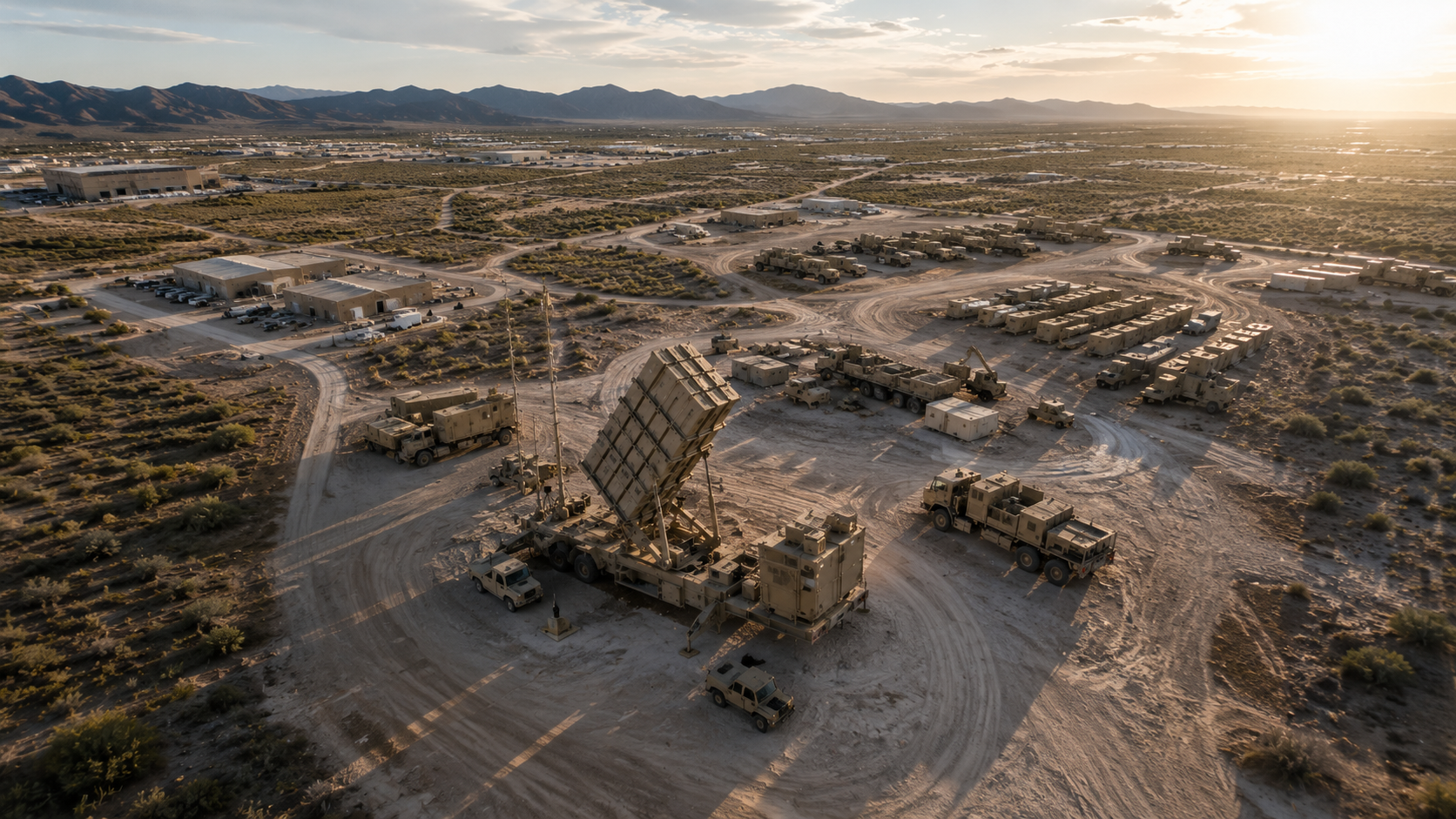
Lockheed Martin introduced a new, lower-cost version of its Patriot interceptor at the Farnborough Airshow on Monday, a move that reflects how fundamentally the economics of air defense have changed under the pressure of real-world conflict. The PAC-3 Adapted Capability Effector, or PAC-3 ACE, is projected to cost less than half the price of the current PAC-3 MSE interceptor, which runs approximately $4 million per missile according to US Army budget documents. Initial production is expected to begin within 36 months, developed and manufactured jointly with US and European industry partners.
The announcement is not just a product launch. It is a direct response to a cost asymmetry problem that the Iran conflict has made impossible to ignore.
The Math That Forced the Decision
Throughout Operation Epic Fury, US forces in the Middle East have burned through finite interceptor stockpiles to counter Iranian drones that cost a fraction of the missiles used to destroy them. A single PAC-3 MSE interceptor costs roughly $4 million. An Iranian Shahed drone costs approximately $35,000. When you are spending more than 100 times the cost of the threat to defeat it, the economics of attrition work against you regardless of how effective the technology is.
That disparity has pushed the Pentagon and its prime contractors to rethink the entire approach to air defense procurement. The Missile Defense Agency launched a Low-Cost Interceptor program in late 2025 with a target price of $750,000 per unit. Lockheed’s PAC-3 ACE, at under $2 million, sits in the middle of the cost spectrum between that target and the current MSE, offering a bridge solution that can enter production faster because it is built on existing PAC-3 guidance technology and is compatible with legacy Patriot systems and the Integrated Battle Command System.
The European Manufacturing Push
Lockheed is not building this missile alone. The company has signaled its intention to develop PAC-3 ACE jointly with European defense partners and has expressed interest in eventually producing an entirely European-sourced variant manufactured on the continent. This follows a July 7 memorandum of understanding with German arms manufacturer Rheinmetall to establish the first European production center for the Army Tactical Missile System.
The pattern is clear: Lockheed is investing in distributed manufacturing capacity across allied nations rather than concentrating production domestically. That approach strengthens the broader defense industrial base, reduces supply chain bottlenecks, and gives NATO members the ability to produce and stockpile interoperable interceptors locally rather than depending entirely on American production during a crisis.
Where Small Cap Defense and Industrial Companies Fit
For investors tracking the defense and industrial sectors below the $2 billion market cap threshold, the shift toward distributed, cost-optimized defense manufacturing creates a meaningful opportunity set. When a prime contractor like Lockheed commits to building cheaper weapons with a broader supplier base across multiple countries, it pulls smaller specialized manufacturers, component suppliers, and defense services companies into the production chain.
Defense services contractors like V2X, which provides mission-critical support across military operations and logistics, and specialized defense technology companies like T3 Defense sit in the exact part of the ecosystem that benefits when defense procurement scales horizontally rather than concentrating vertically through a single prime. Precision component manufacturers like NN Inc., which produces highly engineered parts for defense and industrial applications, are also positioned in the supply chain that affordable, high-volume interceptor production would activate.
The defense industry spent decades optimizing for performance at any cost. The Iran conflict exposed that model’s limitations in real time. What comes next is a manufacturing and procurement shift toward affordability, volume, and distributed production, and the smaller companies with the right capabilities are the ones best positioned to fill the gaps the primes cannot fill alone.