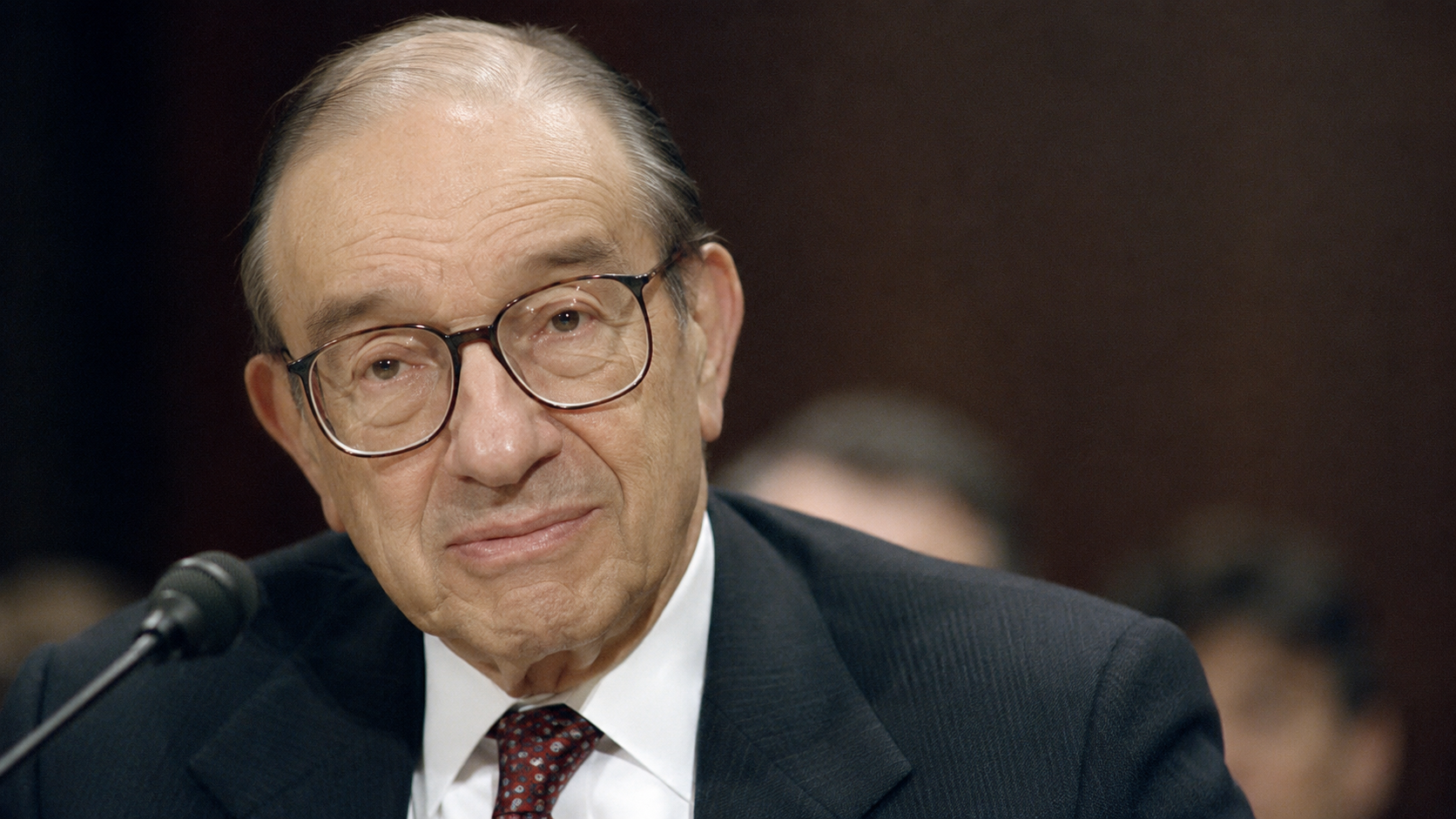
Alan Greenspan, who chaired the Federal Reserve for more than 18 years across four presidential administrations and became the most recognizable central banker in modern history, died Monday at his home in Washington from complications of Parkinson’s disease. He was 100 years old. His death, confirmed by his wife of 29 years, NBC News correspondent Andrea Mitchell, closes the book on a figure whose words and decisions shaped American markets for nearly two decades and whose legacy continues to influence how investors and policymakers think about the role of the Fed today.
Few figures in financial history wielded the kind of market-moving power Greenspan commanded. From his appointment by President Reagan in 1987 through his retirement in 2006, his public remarks were parsed word by word by investors, economists, and lawmakers alike. The deliberate ambiguity of his communication style became so well known it earned its own name — “Fedspeak” — a dialect he later admitted he cultivated intentionally to avoid moving markets before the Fed was ready to act.
The Maestro Years
Greenspan presided over one of the longest economic expansions in US history, a boom stretching from 1991 to 2001, and his tenure coincided with the period economists came to call the “Great Moderation” — a stretch of low inflation, steady growth, and rising markets from the mid-1980s through 2007. He broke with central banking orthodoxy by allowing unemployment to fall to historically low levels without preemptively raising rates, a willingness to “watch and wait” that defined his data-driven approach and helped sustain the expansion of the 1990s.
His most enduring contribution to the financial lexicon came in 1996, when he warned of “irrational exuberance” in asset prices — a phrase that sent immediate shivers through global markets even though the dot-com bubble he alluded to would not burst for another five years. The remark captured the paradox of Greenspan’s influence: a single carefully chosen phrase could move markets around the world, yet his broader policy of accommodation often fueled the very exuberance he cautioned against.
A Complicated Legacy
Greenspan’s reputation, near-mythical at the height of his tenure, was significantly complicated by the events that followed his departure. Critics have pointed to his advocacy for financial sector deregulation and his sustained low-rate policies as contributing factors to the asset bubbles that culminated in the 2007-2009 global financial crisis. In 2008 testimony before lawmakers, Greenspan acknowledged he had mistakenly believed major banks would regulate themselves to protect their own shareholders — a candid admission of a flawed assumption at the heart of the crisis.
As one former senior Fed official observed, the near-deification Greenspan received before the crisis was never fully deserved, and the criticism he absorbed afterward was never fully deserved either. The truth of his legacy sits somewhere in between.
Why It Still Matters for Markets Today
Greenspan’s death arrives at a moment of renewed focus on Federal Reserve independence and communication. New Fed Chair Kevin Warsh, who presided over his first FOMC meeting just last week, has openly advocated for a less communicative, less predictable Fed — a notable departure from the era Greenspan defined, in which markets hung on the chairman’s every utterance. Warsh’s decision to slash the Fed’s post-meeting statement to 130 words and withhold his own dot-plot projection reflects a philosophy that stands in deliberate contrast to the Greenspan model.
For investors, Greenspan’s passing is a reminder of how profoundly central bank leadership shapes market conditions across cycles. The debates that defined his tenure — how much the Fed should intervene, how transparent it should be, how much faith to place in market self-correction — remain unresolved and are once again at the center of monetary policy under new leadership. The Maestro has died, but the questions he raised about the Fed’s proper role have never been more relevant.