
Elon Musk’s artificial intelligence venture, xAI, has secured a massive $10 billion funding round that values the startup at $200 billion, according to reports from CNBC. The raise highlights the continued investor enthusiasm in the artificial intelligence sector, even as questions swirl about tech spending and long-term sustainability.
The new valuation more than doubles the company’s $75 billion mark from just two months earlier, underscoring the accelerating pace of capital flowing into AI. With this milestone, xAI now ranks among the world’s most valuable private technology companies, sitting alongside global heavyweights such as OpenAI, ByteDance, and Musk’s own SpaceX.
Expanding AI Infrastructure
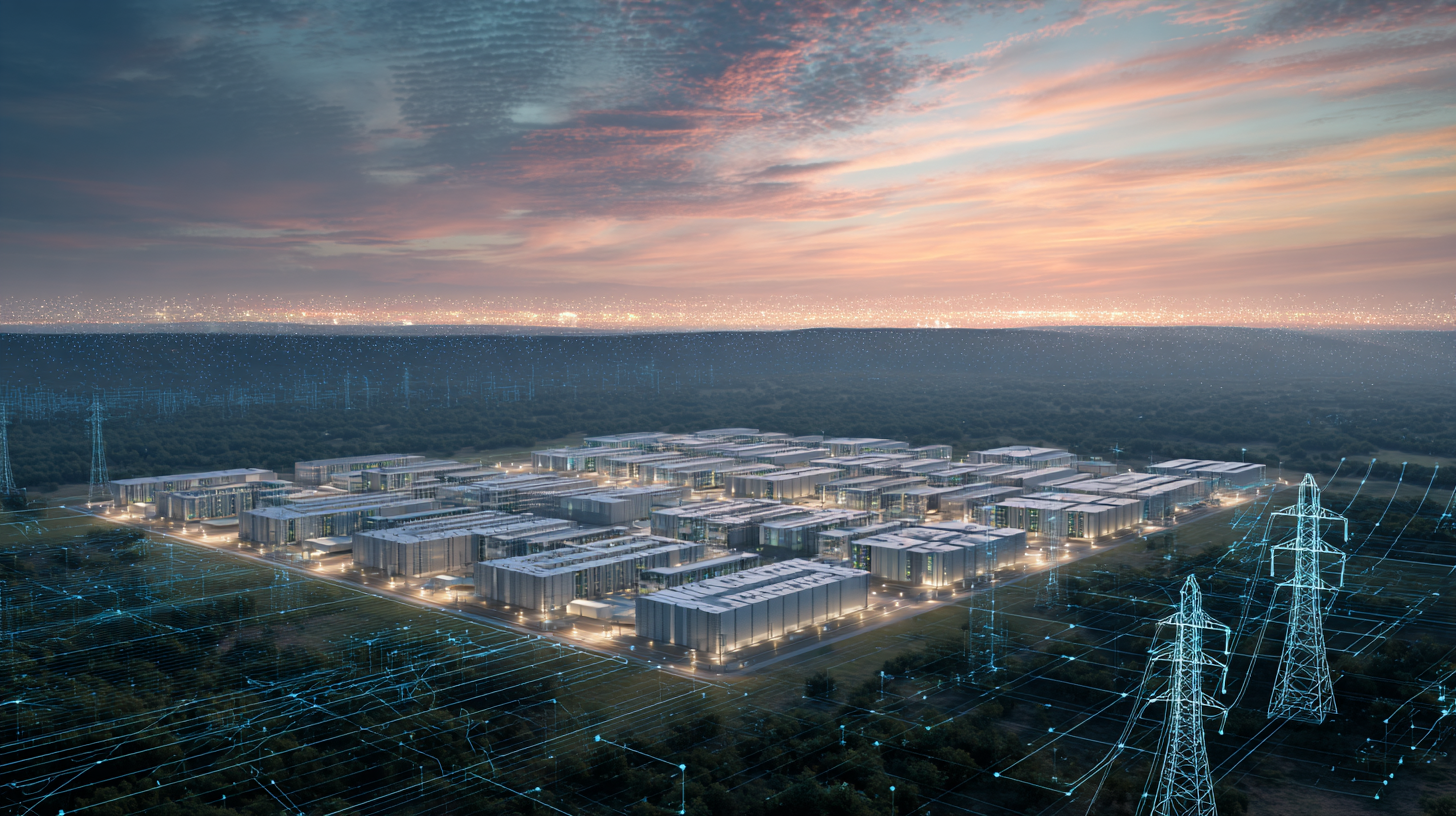
Much of the funding is expected to be deployed toward data centers powered by advanced Nvidia and AMD graphics processors, a crucial component in developing and training next-generation AI systems. Analysts note that GPU-driven clusters are the backbone of today’s AI race, as firms compete to push the boundaries of model performance, scalability, and reliability.
xAI has already made headlines for Colossus, its supercomputer cluster in Memphis, Tennessee, which the company claims is the largest of its kind worldwide. The expansion of this infrastructure signals Musk’s intent to ensure that xAI can rival established leaders like OpenAI and Anthropic in the high-stakes competition to dominate the AI landscape.
The funding round arrives at a time when competitors are also securing significant backing. Earlier this month, Anthropic raised $13 billion at a valuation of $183 billion, while OpenAI is reportedly in talks for a stock sale that could value the company at around $500 billion. ByteDance, meanwhile, is preparing a new employee share buyback program at a valuation of more than $330 billion.
By entering the $200 billion valuation club, xAI not only signals its arrival among elite AI firms but also highlights the fierce battle for both talent and infrastructure. Much of the new capital is expected to go toward recruiting top AI researchers and engineers—an area where costs continue to rise as demand far exceeds supply.
Building Toward the Future
Musk’s AI ambitions go beyond technology alone. xAI acquired the social media platform X (formerly Twitter) earlier this year, giving it a unique advantage in terms of training data and user integration. By combining large-scale data resources with cutting-edge compute infrastructure, xAI is positioning itself as a long-term challenger to the sector’s biggest players.
The latest valuation leap reflects not just investor confidence in xAI, but also broader optimism that AI technologies will remain central to economic and business growth for years to come. With infrastructure rapidly scaling and capital continuing to pour in, xAI’s next steps will be closely watched as it attempts to shape the future of artificial intelligence.
Nvidia, the world’s leading producer of artificial intelligence chips, is facing fresh uncertainty in one of its most important markets after reports that China has instructed domestic technology firms to stop using its products. According to sources familiar with the matter, Beijing’s Cyberspace Administration has urged major players, including TikTok parent company ByteDance and e-commerce giant Alibaba, to halt purchases of Nvidia’s RTX Pro 6000D chips. The processors were designed specifically for China after earlier restrictions limited the sale of more advanced models.
The development marks another escalation in the ongoing technology rivalry between the United States and China. Washington has already imposed limits on the export of advanced semiconductors to China, citing national security concerns. Last month, the Trump administration struck a deal with Nvidia that allowed its H20 server chips to be sold in the country under strict conditions, with a portion of sales revenues redirected to the U.S. government. However, Beijing’s reported response suggests a determination to reduce reliance on American hardware while accelerating investment in domestic alternatives.
Nvidia has long described its business in China as unpredictable, with company leaders acknowledging the volatility of operating amid geopolitical tensions. This latest setback follows news earlier in the week that Chinese regulators have launched an antitrust investigation into Nvidia’s $6.9 billion acquisition of Mellanox, an Israeli data center networking firm. The probe highlights Beijing’s willingness to scrutinize foreign acquisitions and could add further pressure to Nvidia’s strategic plans in the region.
Despite the challenges in China, Nvidia continues to expand globally at an aggressive pace. During a high-profile U.S. state visit to the U.K., the company announced £11 billion ($15 billion) in investment toward British artificial intelligence infrastructure. The move signals Nvidia’s intention to diversify its growth beyond Asia while deepening ties with Europe’s rapidly expanding AI sector. Other major American technology companies, including Microsoft, Google, and Salesforce, have announced similar multibillion-dollar AI commitments in the U.K., reflecting broader industry momentum.
China, however, remains a key focus for the global AI market. The country’s enormous tech ecosystem, vast consumer base, and strong government backing for artificial intelligence research make it one of the most competitive environments in the world. For Nvidia, exclusion from this market could slow growth and open the door for local competitors to capture share. At the same time, U.S. policy continues to shape the availability of high-performance chips abroad, adding layers of complexity for global semiconductor leaders.
The reported ban underscores the shifting dynamics of the U.S.-China tech rivalry and how quickly geopolitical tensions can reshape business strategies. While Nvidia remains dominant in AI chip innovation, its position in China has transformed from a driver of growth to a source of risk. The coming months will determine whether the company can adapt to the changing environment and preserve its competitive edge in the face of growing political and economic headwinds.
TikTok’s uncertain future in the United States has entered a decisive phase, with a handful of powerful investors lining up to buy a stake in the platform as political pressure mounts.
The Chinese-owned app, run by parent company ByteDance, has been at the center of U.S. scrutiny for years over concerns about data security and influence from Beijing. What began with executive orders and court battles during the Trump administration has evolved into a bipartisan push to either ban TikTok or force a sale of its U.S. operations.
Earlier this year, the U.S. Supreme Court upheld the Protecting Americans from Foreign Adversary Controlled Applications Act (PAFACA), also known as the “TikTok ban.” That ruling seemed to seal the app’s fate. On January 19, TikTok briefly shut down U.S. operations before swiftly returning less than 12 hours later, citing new efforts by President Trump to keep the platform alive.
Trump has since extended TikTok’s reprieve multiple times, most recently postponing enforcement of the ban for 75 days while talks continue. His stated goal: to create “TikTok America,” a structure that splits ownership roughly 50-50 between ByteDance and a U.S.-backed consortium of investors. ByteDance would retain just under 20%.
Reports suggest potential buyers include some of the biggest names in tech and finance. Oracle, Silver Lake, and Andreessen Horowitz are among those positioned to oversee operations. Meanwhile, real estate billionaire Frank McCourt has assembled “The People’s Bid for TikTok,” backed by Project Liberty, Guggenheim Securities, and the law firm Kirkland & Ellis. Their pitch emphasizes transparency, privacy, and open-source technology.
Other bids are also emerging. Jesse Tinsley, CEO of Employer.com, announced a $30 billion all-cash offer through an American investor consortium. At the same time, CFRA Research estimates TikTok’s U.S. valuation could climb to as high as $60 billion if a sale moves forward.
TikTok’s fight for survival highlights just how central the platform has become in American life. With more than 150 million U.S. users—many of them young creators and small businesses—the app represents both cultural clout and enormous advertising potential. For Washington, though, it represents a potential national security risk.
The drama has unfolded against a backdrop of shifting political positions. Trump, who initially championed a ban in 2020, reversed course late last year, signaling a willingness to strike a deal that preserves the platform. The Biden administration’s earlier support of legislation against TikTok underscores that this is not simply a partisan issue, but a broader debate about data sovereignty and global tech power.
As negotiations continue, TikTok’s future remains uncertain. Whether it becomes “TikTok America” under new ownership, or faces fresh legal hurdles, will determine if one of the world’s most popular apps can remain a fixture in U.S. digital life. For now, investors, regulators, and millions of users are watching closely as the clock ticks down.
Vimeo (NASDAQ: VMEO) has entered into a definitive agreement to be acquired by Bending Spoons in an all-cash transaction valued at approximately $1.38 billion. Under the terms of the deal, Vimeo shareholders will receive $7.85 per share, a price that reflects a 91% premium over the company’s 60-day volume-weighted average stock price as of September 9, 2025.
The decision to sell follows a comprehensive review of strategic options by Vimeo’s board. The agreement positions Vimeo to accelerate its long-term goals while providing shareholders with immediate and certain value. Once the deal is finalized, Vimeo will become a privately held company, and its stock will no longer be traded on public exchanges.
For Vimeo, the acquisition represents both a fresh chapter and a return to its roots. As a public company, it faced increasing pressure to balance growth initiatives with short-term financial expectations. Transitioning to private ownership under Bending Spoons is expected to provide greater flexibility to invest in innovation across self-serve tools, enterprise services, and streaming solutions. The company is also expected to expand its portfolio of AI-enabled features, reflecting the growing role of artificial intelligence in video production, editing, and distribution.
Bending Spoons, headquartered in Milan, has built a reputation for acquiring and scaling digital platforms with global reach. Its portfolio already includes well-known names such as Evernote, WeTransfer, Brightcove, Meetup, and Remini. By adding Vimeo, the company is signaling a strong commitment to video as a cornerstone of digital business. The firm has stated its intention to make significant investments in Vimeo’s operations, particularly in the U.S. and other priority markets, to enhance performance, reliability, and user experience.
The timing of the deal also reflects the rising strategic importance of video platforms. Businesses, creators, and enterprises increasingly rely on video for communication, marketing, and engagement. With demand for professional-grade video tools surging, Vimeo’s integration into the Bending Spoons ecosystem could help it compete more effectively with rivals while scaling globally.
From an investor standpoint, the acquisition delivers a substantial return at a time when Vimeo’s share price had struggled to reflect its long-term potential. The 91% premium on the stock’s recent trading average underscores the confidence Bending Spoons has in Vimeo’s future growth and the value of its established brand and customer base.
The transaction, unanimously approved by Vimeo’s board, is expected to close in the fourth quarter of 2025, pending shareholder approval and regulatory clearance. In the meantime, Vimeo will continue to meet its reporting obligations but will not host a third-quarter earnings call as it transitions toward private ownership.
By aligning with Bending Spoons, Vimeo is expected to gain the resources and strategic support needed to expand its role in the rapidly evolving video market. As global demand for high-quality, AI-driven video solutions continues to rise, this acquisition positions Vimeo for renewed growth and relevance in a highly competitive digital landscape.
Nebius Group’s stock price skyrocketed this week after the Amsterdam-based artificial intelligence infrastructure firm announced a multi-year partnership with Microsoft worth up to $19.4 billion. The deal highlights the surging demand for GPU-powered cloud computing capacity and underscores the critical role infrastructure providers play in supporting the global AI boom.
Shares of Nebius, which was spun out of Russian internet company Yandex in 2023, surged more than 40% on Tuesday following the announcement. The rally came on top of a 60% spike in extended trading Monday, marking one of the steepest short-term gains for an AI-related stock in 2025. Under the agreement, Nebius will supply Microsoft with graphics processing units (GPUs) and computing power valued at $17.4 billion through 2031. Microsoft may also secure additional capacity, potentially bringing the total value of the contract to $19.4 billion.
The Nebius-Microsoft deal instantly positions the European company as a top-tier supplier of AI cloud infrastructure. GPUs are essential for training and scaling large language models, generative AI platforms, robotics, and other advanced artificial intelligence applications. As enterprises race to deploy AI, demand for this specialized hardware has grown far faster than traditional cloud services. For Microsoft, the agreement ensures Azure customers, OpenAI projects, and its own AI-powered products have the computing resources required to expand.
This partnership also shows that while Nvidia remains the leader in AI chips, competition is opening up. Nebius joins a growing roster of infrastructure providers—including CoreWeave, which saw its shares climb 8% on the news—benefiting from hyperscalers’ urgent need to lock in GPU supply. Investors see this as a sign that AI infrastructure spending could remain strong despite market concerns about inflated valuations.
Analysts note that the deal comes amid broader predictions of enormous long-term spending on AI hardware. Nvidia executives recently forecast that between $3 trillion and $4 trillion will flow into AI infrastructure globally by 2030. At the same time, some experts, including OpenAI CEO Sam Altman, have warned of a possible AI bubble as valuations for startups like Anthropic and OpenAI itself reach record highs. Nebius’s surge reflects the optimism that demand will outweigh bubble risks, at least for infrastructure suppliers.
For Nebius, the Microsoft partnership provides not only revenue security through 2031 but also credibility as a global player in the AI race. By aligning with one of the world’s largest technology companies, Nebius strengthens its position in a market where trust, scale, and performance are paramount.
The stock market response suggests investors believe infrastructure will be one of the most resilient segments of the artificial intelligence economy. While software companies may face volatile valuations, firms that deliver the backbone of AI workloads—GPUs, cloud data centers, and compute resources—are emerging as long-term winners. With its $19 billion deal, Nebius has firmly secured its spot in the spotlight.
Joe Gomes, CFA, Managing Director, Equity Research Analyst, Generalist , Noble Capital Markets, Inc.
Refer to the full report for the price target, fundamental analysis, and rating.
Data. Bit Digital reported its monthly Ethereum (“ETH”) treasury and staking metrics for the month of August 2025. As of August 31, 2025, the Company held approximately 121,252 ETH, including approximately 15,084 ETH and ETH-equivalents held in an externally managed fund, and approximately 5,094 ETH presented on an as-converted basis from LsETH using the Coinbase conversion rate as of 8/31/25. The Company’s total staked ETH was approximately 105,031 as of August 31st.
Yield and Value. Staking operations generated approximately 249 ETH in rewards during August, representing an annualized yield of approximately 2.94%. Based on a closing ETH price of $4,391.91, as of August 31, 2025, the market value of the Company’s ETH holdings was approximately $532.5 million.
Equity Research is available at no cost to Registered users of Channelchek. Not a Member? Click ‘Join’ to join the Channelchek Community. There is no cost to register, and we never collect credit card information.
This Company Sponsored Research is provided by Noble Capital Markets, Inc., a FINRA and S.E.C. registered broker-dealer (B/D).
*Analyst certification and important disclosures included in the full report. NOTE: investment decisions should not be based upon the content of this research summary. Proper due diligence is required before making any investment decision.
Logistics may be one of the most complex and fragmented industries, but San Francisco–based startup Augment is betting its AI teammate can streamline it. The company announced an $85 million Series A funding round this week, led by Redpoint Ventures with participation from 8VC, Shopify Ventures, Autotech Ventures, and others. The raise brings Augment’s total funding to $110 million, remarkable for a company that only came out of stealth five months ago.
At the heart of Augment’s pitch is Augie, its AI productivity platform designed to automate logistics workflows from start to finish. Unlike the patchwork of point solutions that often leave gaps, Augie takes end-to-end ownership of shipments—covering everything from front-office quoting and dispatch to back-office billing and compliance. The platform integrates directly with transportation management systems, shipper portals, and load boards while communicating seamlessly across channels, aiming to reduce the friction that bogs down brokers, shippers, and carriers.
The results so far are drawing attention. Customers report significant productivity gains, with some brokerage reps doubling or even tripling the number of loads managed daily without adding headcount. Shippers are seeing faster billing cycles and tighter adherence to service level agreements, while carriers benefit from quicker payments and fewer service calls. Augment claims Augie has already reduced invoice delays by 40%, shortened billing timelines by as much as eight days, improved gross margins by up to five percent per load, and boosted operational productivity by 30–50%.
That level of impact is what convinced investors to back such a large round so quickly. Co-founder and CEO Harish Abbott said the funds will be used to hire more than 50 engineers and expand its go-to-market teams by year-end, with deeper hiring in 2026. “Logistics runs on millions of decisions under pressure,” Abbott said. “Augie doesn’t just assist—it takes ownership.” His vision is for AI agents like Augie to become standard within 12 to 18 months, handling the majority of repetitive logistics workflows.
For co-founder Justin Hall, the mission is personal. After years in brokerages and fleets, he saw firsthand the waste created by siloed tools and manual processes. “The industry tried hundreds of point solutions that created new problems,” Hall said. “We built Augie as an AI teammate that keeps context and delivers efficiency, stronger margins, and easier work.”
Customers like Armstrong Transport Group, a $1.3 billion brokerage, are already seeing tangible results. Representatives there have gone from managing 10 loads a day to 20 or 30, while morale and customer service scores have improved. “If it gets sent to Augie, it gets done,” said William McManus, an operations specialist at Armstrong.
As freight networks grow more complex, Augment is investing not just in scaling Augie’s coverage but also in building a logistics-native knowledge hub that provides pricing, compliance, and service intelligence across modes. With over $35 billion in freight already managed through its platform, Augment is positioning itself as more than a tool—it wants to be the digital teammate behind the next era of logistics.
OpenAI is expanding its latest secondary share sale, allowing current and former employees to sell up to $10.3 billion worth of stock. The transaction values the artificial intelligence company at $500 billion, reinforcing its position as one of the most highly valued private startups globally. The expanded sale, up from the $6 billion originally targeted, provides employees an opportunity to realize gains without forcing the company into a near-term public listing.
For staff who have held shares for more than two years, the window to participate runs through the end of September, with the transaction expected to close in October. Major institutional investors including SoftBank, Dragoneer Investment Group, Thrive Capital, Abu Dhabi’s MGX, and T. Rowe Price are expected to purchase the shares, according to people familiar with the offering.
The offering follows a sharp rise in OpenAI’s valuation. Earlier in 2025, the company raised capital at a $300 billion valuation. The new $500 billion figure reflects investor confidence in OpenAI’s revenue growth trajectory, driven by enterprise adoption of its AI models and partnerships with major cloud providers.
The $200 billion valuation jump in less than a year highlights both market enthusiasm for AI and the scarcity of opportunities to invest directly in sector leaders. With OpenAI remaining private, secondary sales represent one of the few avenues for institutional investors to gain exposure at scale.
Secondary share sales have become a preferred mechanism for late-stage startups to provide liquidity to employees while avoiding the volatility of public markets. By giving staff the ability to convert equity into cash, companies like OpenAI can retain talent in an increasingly competitive industry.
Other major startups, including SpaceX, Stripe, and Databricks, have employed similar strategies to balance growth with employee satisfaction. For investors, these transactions provide a controlled entry point into companies with high valuations, while founders and leadership avoid the pressure of quarterly earnings scrutiny.
For outside investors, OpenAI’s decision underscores the strength of demand for exposure to artificial intelligence platforms. With public-market alternatives limited to large tech incumbents, institutional capital continues to flow into private leaders despite lofty valuations.
Still, some analysts caution that these valuations hinge on sustained revenue expansion and market share gains in a sector that is evolving rapidly. For now, OpenAI’s positioning at the forefront of generative AI makes it one of the most closely watched private companies in the world.
SKYX’s Marriott Renovation Demonstration Validated the Significant Safety, Simplicity, Time Savings and Cost Savings Provided by SKYX’s Technologies During a Renovation Process
The Marriott Renovation Demo Incorporated SKYX’s Advanced and Smart Plug & Play Technologies, Including Ceiling lighting, Recessed Lights, Down Lights, Wall Lights, EXIT and Emergency Lights, Plug-In LED Backlight Mirrors, Among Others
SKYX Expects Its Technologies to Be Utilized and Included in Additional Marriot Renovations as well as in Additional Hotel Brands
Major Hotel Chains Commonly Require Its Hotels to Conduct a Full Renovation Every 7 Years
MIAMI, Sept. 03, 2025 (GLOBE NEWSWIRE) — SKYX Platforms Corp. (NASDAQ: SKYX) (d/b/a SKYX Technologies) (the “Company” or “SKYX”), a highly disruptive platform technology company with over 100 pending and issued patents globally and over 60 lighting and home décor websites, with a mission to make homes and buildings become safe and smart as the new standard, today announced that it successfully demonstrated its advanced technologies during a renovation at a Marriott SpringHill Suites Hotel owned by the Shaner Group as SKYX continues to grow its market penetration in U.S. and Canada (renovation video demo link included below).
During the Marriott renovation demonstration, SKYX incorporated its advanced and smart plug & play technologies, including ceiling lighting, recessed lights, downlights, wall lights, EXIT, and EMERGENCY lights, plug-in LED backlight mirrors among others.
SKYX’s Marriott renovation demonstration validated the significant safety aspects, time savings, and cost savings provided by SKYX’s technologies during a hotel renovation process. Major hotel chains commonly require its hotels to conduct a full renovation every 7 years. SKYX expects its technologies to be utilized and included in additional Marriott renovations as well as in other hotel brands.
SKYX Technologies’ demonstration at Marriot
Rani Kohen, Founder and Executive Chairman, of SKYX Platforms, said; “We are happy to report that we have successfully demonstrated our technology’s ability to provide significant hotel safety, time savings and cost savings during hotel renovation and buildouts while advancing and accelerating the renovation of hotels. We hope to continue demonstrating our technologies’ abilities in additional projects and remain focused on further scaling our footprint and unlocking long-term value through future recurring revenue opportunities.”
Lance Shaner, Founder of the Shaner Hotel Group, said; “We clearly recognize SKYX’s significant value of time saving, cost saving, and safety as demonstrated during our Marriott SpringHill Suites hotel renovation. As a significant long-term minded SKYX investor, I strongly believe that SKYX’s game-changing advanced and smart platform technologies will make hotels, buildings, and homes advanced, smart, and safe instantly, while saving cost, time, and lives.”
To view SKYX’s Technology Demo at Springs Hill Marriott CLICK HERE
About SKYX Platforms Corp.
As electricity is a standard in every home and building, our mission is to make homes and buildings become safe-advanced and smart as the new standard. SKYX has a series of highly disruptive advanced-safe-smart platform technologies, with over 100 U.S. and global patents and patent pending applications. Additionally, the Company owns over 60 lighting and home decor websites for both retail and commercial segments. Our technologies place an emphasis on high quality and ease of use, while significantly enhancing both safety and lifestyle in homes and buildings. We believe that our products are a necessity in every room in both homes and other buildings in the U.S. and globally. For more information, please visit our website at https://skyplug.com/ or follow us on LinkedIn.
Forward-Looking Statements Certain statements made in this press release are not based on historical facts but are forward-looking statements. These statements can be identified by the use of forward-looking terminology such as “aim,” “anticipate,” “believe,” “can,” “could,” “continue,” “estimate,” “expect,” “evaluate,” “forecast,” “guidance,” “intend,” “likely,” “may,” “might,” “objective,” “ongoing,” “outlook,” “plan,” “potential,” “predict,” “probable,” “project,” “seek,” “should,” “target” “view,” “will,” or “would,” or the negative thereof or other variations thereon or comparable terminology, although not all forward-looking statements contain these words. These statements reflect the Company’s reasonable judgment with respect to future events and are subject to risks, uncertainties and other factors, many of which have outcomes difficult to predict and may be outside our control, that could cause actual results or outcomes to differ materially from those in the forward-looking statements. Such risks and uncertainties include statements relating to the Company’s ability to successfully launch, commercialize, develop additional features and achieve market acceptance of its products and technologies and integrate its products and technologies with third-party platforms or technologies; the Company’s efforts and ability to drive the adoption of its products and technologies as a standard feature, including their use in homes, hotels, offices and cruise ships; the Company’s ability to capture market share; the Company’s estimates of its potential addressable market and demand for its products and technologies; the Company’s ability to raise additional capital to support its operations as needed, which may not be available on acceptable terms or at all; the Company’s ability to continue as a going concern; the Company’s ability to execute on any sales and licensing or other strategic opportunities; the possibility that any of the Company’s products will become National Electrical Code (NEC)-code or otherwise code mandatory in any jurisdiction, or that any of the Company’s current or future products or technologies will be adopted by any state, country, or municipality, within any specific timeframe or at all; risks arising from mergers, acquisitions, joint ventures and other collaborations; the Company’s ability to attract and retain key executives and qualified personnel; guidance provided by management, which may differ from the Company’s actual operating results; the potential impact of unstable market and economic conditions on the Company’s business, financial condition, and stock price; and other risks and uncertainties described in the Company’s filings with the Securities and Exchange Commission, including its periodic reports on Form 10-K and Form 10-Q. There can be no assurance as to any of the foregoing matters. Any forward-looking statement speaks only as of the date of this press release, and the Company undertakes no obligation to update or revise any forward-looking statements, whether as a result of new information, future events or otherwise, except as required by U.S. federal securities laws.
Michael Kupinski, Director of Research, Equity Research Analyst, Digital, Media & Technology , Noble Capital Markets, Inc.
Jacob Mutchler, Research Associate, Noble Capital Markets, Inc.
Refer to the full report for the price target, fundamental analysis, and rating.
Strong Q2 Results. The company reported strong Q2 results. Revenue of $119.9 million, and adj. EBITDA of $20.7 million, both easily surpassed our estimates of $97.0 million and $7.0 million, respectively, as illustrated in Figure #1 Q2 Results. Notably, management attributed the strong quarter to an increase in consumable in-app purchases, which are recognized during the quarter rather than being deferred over the average player life cycle of 28 months.
Key operating metrics. Bookings and monthly paying users (MPU) decreased by 14% and 18%, respectively, compared to the prior year period, but the decrease was expected as the company is focused on the quality of gameplay and not over-monetizing its user base. However, the company is showing signs of returning to growth as both average bookings per paying user (ABPPU) and MPUs increased sequentially from Q1. ABPPU increased from $90 in Q1’25 to $93 in Q2’25, and MPUs increased from 284,000 to 312,000 over the same period.
Equity Research is available at no cost to Registered users of Channelchek. Not a Member? Click ‘Join’ to join the Channelchek Community. There is no cost to register, and we never collect credit card information.
This Company Sponsored Research is provided by Noble Capital Markets, Inc., a FINRA and S.E.C. registered broker-dealer (B/D).
*Analyst certification and important disclosures included in the full report. NOTE: investment decisions should not be based upon the content of this research summary. Proper due diligence is required before making any investment decision.
In a landmark move that underscores its ambition to become a dominant global insurance player, Sompo Holdings, Inc. announced it will acquire Aspen Insurance Holdings Limited for $3.5 billion. The deal, structured as an all-cash transaction at $37.50 per share, represents a 35.6 percent premium to Aspen’s unaffected share price and signals Sompo’s determination to build a diversified property and casualty (P&C) platform with international reach.
Under the agreement, all outstanding Class A ordinary shares of Aspen will be redeemed for cash, while its preference shares will remain outstanding. Once complete, Aspen will be delisted from the New York Stock Exchange. The transaction has already been unanimously approved by both companies’ boards and is expected to close in the first half of 2026, pending regulatory approvals.
For Sompo, the acquisition is more than a geographic expansion. Aspen brings over $4.6 billion in annual gross written premiums and decades of expertise across specialty insurance and reinsurance lines, including cyber risk, credit and political risk, property catastrophe, casualty reinsurance, and management liability. Its Lloyd’s syndicate provides an additional foothold in complex and high-value global markets.
Strategic acquisitions have long been a part of Sompo’s growth plan to build a robust and diversified global P&C platform, and Aspen represents a strong opportunity at the right time in the market cycle.
Beyond underwriting, Aspen also brings an alternative capital advantage. Its Aspen Capital Markets (ACM) platform, which manages more than $2 billion in assets, allows third-party investors to provide capital for reinsurance risk, generating steady management and performance fees. In 2024, 80 percent of ACM’s income came from long-tail, non-catastrophe business, making it a reliable revenue driver. For Sompo, this fee-based income will offer both diversification and a tool to better manage capital volatility.
Aspen has worked in recent years to streamline operations, reduce exposure to volatile risks, and fortify its balance sheet. With a 2024 combined ratio of 87.9 percent and an operating return on equity of 19.4 percent, the company is entering the deal on strong footing.
For Sompo, the transaction aligns with its strategic targets of achieving adjusted ROE of 13 to 15 percent and EPS growth above 12 percent by fiscal year 2026. Management expects the deal to be immediately accretive to earnings and return on equity, while delivering cost and capital synergies across the group.
As global insurance markets face mounting challenges ranging from climate risk to cyber threats, scale, diversification, and access to alternative capital are increasingly vital. With Aspen in its portfolio, Sompo is positioning itself as a global leader capable of underwriting complex risks, supporting brokers and clients, and driving long-term shareholder returns.
FLORHAM PARK, N.J. — Conduent Incorporated (Nasdaq: CNDT), a global technology-driven business solutions and services company, today announced it has successfully completed a refinancing of its existing term loan and revolving credit agreements.
Key Highlights of the Refinancing:
Full Prepayment of the Term Loan
Renewed Revolving Credit Facility
New Performance Letter of Credit Facility
Giles Goodburn, Conduent’s CFO, commented, “Completing this refinancing marks a key milestone in our strategy, further strengthening our financial foundation and positioning Conduent for future growth. This transaction provides the right mix of debt instruments to support our operations and capital allocation strategy.”
Additional details of the refinancing can be found in Conduent’s 8-K which will be filed with the U.S. Securities and Exchange Commission.
About Conduent
Conduent delivers digital business solutions and services spanning the commercial, government and transportation spectrum – creating valuable outcomes for its clients and the millions of people who count on them. The Company leverages cloud computing, artificial intelligence, machine learning, automation and advanced analytics to deliver mission-critical solutions. Through a dedicated global team of approximately 56,000 associates, process expertise and advanced technologies, Conduent’s solutions and services digitally transform its clients’ operations to enhance customer experiences, improve performance, increase efficiencies and reduce costs. Conduent adds momentum to its clients’ missions in many ways including disbursing approximately $85 billion in government payments annually, enabling 2.3 billion customer service interactions annually, empowering millions of employees through HR services every year and processing nearly 13 million tolling transactions every day. Learn more at www.conduent.com.
Conduent is a trademark of Conduent Incorporated in the United States and/or other countries. Other names may be trademarks of their respective owners.
Nvidia is preparing to release its second quarter earnings report, marking the final results of Big Tech’s earnings season. The announcement carries high stakes as the chipmaker navigates new challenges tied to U.S. policy shifts and strained relations with China.
The company previously warned investors that it expects an $8 billion hit to its bottom line for the quarter, primarily due to restrictions on chip sales to China. In April, former President Donald Trump imposed a ban on shipments of Nvidia’s advanced chips into China, citing national security concerns. While the ban was lifted in July, a new requirement mandates that Nvidia pay the U.S. government a 15% fee on sales to the Chinese market. This move has significantly impacted Nvidia’s projected revenue.
Adding further pressure, Trump announced plans to impose a 100% tariff on semiconductor shipments entering the United States unless companies commit to expanding domestic manufacturing. Nvidia, however, is expected to be exempt from this tariff given its existing U.S. operations and ongoing investments.
Despite these hurdles, Nvidia’s stock has continued to perform strongly throughout the year. Shares were up 35% year to date and more than 40% over the past 12 months leading into Wednesday’s report. In July, the company became the first in history to reach a $4 trillion market capitalization, a milestone that underscores its dominance in the artificial intelligence sector.
For the second quarter, Wall Street analysts expect Nvidia to post adjusted earnings per share of $1.01 on revenue of $46.2 billion, according to Bloomberg estimates. This compares with $0.68 in EPS and $30 billion in revenue during the same quarter last year, representing year-over-year growth of nearly 50%. While this growth rate is lower than the triple-digit surges Nvidia reported last year during the height of the AI boom, analysts believe the slowdown could be temporary.
Evercore ISI analyst Mark Lipacis suggested that a leveling out around 50% growth may attract new momentum investors and lead to further valuation expansion. Meanwhile, Nvidia’s data center business, the backbone of its AI strategy, is projected to generate $41.2 billion in sales this quarter, up sharply from $26.2 billion a year ago. Gaming, its second largest division, is expected to contribute $3.8 billion.
Investors will be listening closely to management’s commentary on shipments of Nvidia’s GB200 super chip, the rollout of its Blackwell Ultra processors, and the company’s position in China. Some analysts caution that third quarter guidance could come in below expectations if Nvidia excludes direct revenue from China sales.
At the same time, Nvidia faces political headwinds abroad. The Chinese government has warned local companies to avoid using Nvidia’s products, citing alleged security risks, a claim the company denies. Nvidia has signaled its willingness to cooperate with regulators and is reportedly preparing a new chip design tailored for the Chinese market, though it will need U.S. government approval before any shipments can begin.
As Nvidia heads into its earnings release, the company sits at the center of the global debate over technology, trade, and national security. The results will not only reflect Nvidia’s financial strength but also provide clues about how it intends to balance growth with the mounting pressures of geopolitics.