Alliance Resource Partners (ARLP) – Upcoming FY 2025 Financial Results and 2026 Corporate Guidance


Thursday, January 29, 2026

ARLP is a diversified natural resource company that generates operating and royalty income from coal produced by its mining complexes and royalty income from mineral interests it owns in strategic oil & gas producing regions in the United States, primarily the Permian, Anadarko and Williston basins. ARLP currently produces coal from seven mining complexes its subsidiaries operate in Illinois, Indiana, Kentucky, Maryland and West Virginia. ARLP also operates a coal loading terminal on the Ohio River at Mount Vernon, Indiana. ARLP markets its coal production to major domestic and international utilities and industrial users and is currently the second largest coal producer in the eastern United States. In addition, ARLP is positioning itself as an energy provider for the future by leveraging its core technology and operating competencies to make strategic investments in the fast growing energy and infrastructure transition.

Mark Reichman, Managing Director, Equity Research Analyst, Natural Resources, Noble Capital Markets, Inc.

Hans Baldau, Associate Analyst, Noble Capital Markets, Inc.

Refer to the full report for the price target, fundamental analysis, and rating.

Fourth quarter and full year 2025 financial results. Alliance will report its fourth quarter and full year 2025 financial results before the market opens on Monday, February 2, 2026. Management will host an investor conference call and webcast the same day at 10:00 am ET. Along with the 2025 operational and financial results, we expect ARLP to release its 2026 corporate guidance and outlook.

Noble Estimates. We forecast fourth quarter 2025 revenue, EBITDA, and EPU of $560.1 million, $182.9 million, and $0.57, respectively. Our full year 2025 revenue, EBITDA, and EPU estimates are $2.2 billion, $690.5 million, and $2.33, respectively. Our fourth quarter EPU estimate reflects an expected unrealized and non-cash loss on the marked-to-market value of ARLP’s bitcoin holdings, which has no impact on our EBITDA estimate. We forecast 2026 revenue, EBITDA, and EPU of $2.3 billion, $700.5 million, and $2.65, respectively.


Get the Full Report

Equity Research is available at no cost to Registered users of Channelchek. Not a Member? Click ‘Join’ to join the Channelchek Community. There is no cost to register, and we never collect credit card information.

This Company Sponsored Research is provided by Noble Capital Markets, Inc., a FINRA and S.E.C. registered broker-dealer (B/D).

*Analyst certification and important disclosures included in the full report. NOTE: investment decisions should not be based upon the content of this research summary. Proper due diligence is required before making any investment decision. 

Cardiff Oncology (CRDF) – Phase 2 Data Announced With Management Changes


Wednesday, January 28, 2026

Robert LeBoyer, Senior Vice President, Equity Research Analyst, Biotechnology, Noble Capital Markets, Inc.

Refer to the full report for the price target, fundamental analysis, and rating.

Cardiff Made Two Significant Announcements. New data from the Phase 2 CRDF-004 trial testing onvansertib as a first line treatment for metastatic colorectal cancer was announced as expected. Patients in the high-dose onvansertib group showed a large benefit in overall response rates (ORR) and progression free survival (PFS). Separately, the CEO and CFO have left the company. Board Member Dr. Mani Mohindru was named Interim CEO.

Phase 2 Trial Design. As discussed in our January 5 report, CDRF-004 is a Phase 2 dose-finding trial testing two doses of onvansertib in combination with two standard-of-care (SOC) regimens against the standard of care regimens alone. It enrolled 110 patients with RAS-mutated metastatic colorectal cancer, mCRC. Its primary endpoint is objective response rate (ORR). Secondary endpoints include progression-free survival (PFS), duration of response (DOR) and safety. These endpoints were selected to guide the design of Phase 3.


Get the Full Report

Equity Research is available at no cost to Registered users of Channelchek. Not a Member? Click ‘Join’ to join the Channelchek Community. There is no cost to register, and we never collect credit card information.

This Company Sponsored Research is provided by Noble Capital Markets, Inc., a FINRA and S.E.C. registered broker-dealer (B/D).

*Analyst certification and important disclosures included in the full report. NOTE: investment decisions should not be based upon the content of this research summary. Proper due diligence is required before making any investment decision. 

Kuya Silver (KUYAF) – Letter of Intent to Purchase the Camila Processing Plant; Expansion Planned


Wednesday, January 28, 2026

Mark Reichman, Managing Director, Equity Research Analyst, Natural Resources, Noble Capital Markets, Inc.

Hans Baldau, Associate Analyst, Noble Capital Markets, Inc.

Refer to the full report for the price target, fundamental analysis, and rating.

Processing plant acquisition. Kuya Silver signed a Letter of Intent (LOI) to purchase 100% of SMRL Camila, the company that owns the Camila conventional flotation plant, for US$7.8 million, subject to closing conditions. The Camila plant is currently processing Kuya Silver’s mineralized material to produce silver and other metal concentrates on a toll-milling basis. The plant is located on a key transport corridor between the Bethania mine and Lima, Peru, where concentrate is shipped to port. Execution of a definitive agreement is subject to the completion of legal, financial, environmental, and technical due diligence.

Scalable processing capacity. The Camila plant currently operates at 150 metric tonnes per day with plans to increase production capacity to 300 to 350 tonnes per day, which Kuya Silver expects to undertake after closing the acquisition. The expansion is projected to require an additional capital investment in the range of US$0.7 million to US$1.0 million.


Get the Full Report

Equity Research is available at no cost to Registered users of Channelchek. Not a Member? Click ‘Join’ to join the Channelchek Community. There is no cost to register, and we never collect credit card information.

This Company Sponsored Research is provided by Noble Capital Markets, Inc., a FINRA and S.E.C. registered broker-dealer (B/D).

*Analyst certification and important disclosures included in the full report. NOTE: investment decisions should not be based upon the content of this research summary. Proper due diligence is required before making any investment decision. 

Twin Hospitality (TWNP) – Files Voluntary Chapter 11; Terminating Research Coverage


Wednesday, January 28, 2026

Joe Gomes, CFA, Managing Director, Equity Research Analyst, Generalist , Noble Capital Markets, Inc.

Refer to the full report for the price target, fundamental analysis, and rating.

Chapter 11. Along with parent company FAT Brands, Twin Hospitality commenced voluntary chapter 11 proceedings in the  U.S. Bankruptcy Court for the Southern District of Texas. Twin Hospitality plans to use the filings to deleverage the balance sheet, maximize value for its stakeholders, and support the continued growth of its brands.

Precipitating Factor? It appears the tipping point for Twin Hospitality to file the voluntary chapter 11 was Investor 352 Fund, FAT Brands’ largest bondholder, earlier on Monday announcing it was suing FAT Brands for $109 million and promised Class B Common stock tied to ownership of Twin Peaks, as it was issued by Twin Hospitality. FAT Brands and Twin Hospitality are seeking joint administration of the Chapter 11 cases under the caption “In re FAT Brands Inc., et al.


Get the Full Report

Equity Research is available at no cost to Registered users of Channelchek. Not a Member? Click ‘Join’ to join the Channelchek Community. There is no cost to register, and we never collect credit card information.

This Company Sponsored Research is provided by Noble Capital Markets, Inc., a FINRA and S.E.C. registered broker-dealer (B/D).

*Analyst certification and important disclosures included in the full report. NOTE: investment decisions should not be based upon the content of this research summary. Proper due diligence is required before making any investment decision. 

FAT Brands (FAT) – Files Voluntary Chapter 11; Terminating Research Coverage


Wednesday, January 28, 2026

FAT Brands (NASDAQ: FAT) is a leading global franchising company that strategically acquires, markets, and develops fast casual, quick-service, casual dining, and polished casual dining concepts around the world. The Company currently owns 17 restaurant brands: Round Table Pizza, Fatburger, Marble Slab Creamery, Johnny Rockets, Fazoli’s, Twin Peaks, Great American Cookies, Hot Dog on a Stick, Buffalo’s Cafe & Express, Hurricane Grill & Wings, Pretzelmaker, Elevation Burger, Native Grill & Wings, Yalla Mediterranean and Ponderosa and Bonanza Steakhouses, and franchises and owns over 2,300 units worldwide. For more information on FAT Brands, please visit www.fatbrands.com.

Joe Gomes, CFA, Managing Director, Equity Research Analyst, Generalist , Noble Capital Markets, Inc.

Refer to the full report for the price target, fundamental analysis, and rating.

Chapter 11. Late Monday night, FAT Brands announced it has commenced voluntary chapter 11 proceedings in the U.S. Bankruptcy Court for the Southern District of Texas. The Company plans to use the filings to deleverage the balance sheet, maximize value for its stakeholders, and support continued growth of its brands.

Precipitating Factor? It appears the tipping point for FAT to file the voluntary chapter 11 was Investor 352 Fund, the Company’s largest bondholder, earlier on Monday announcing it was suing FAT Brands for $109 million and promised Class B Common stock tied to ownership of Twin Peaks, as it was issued by Twin Hospitality.


Get the Full Report

Equity Research is available at no cost to Registered users of Channelchek. Not a Member? Click ‘Join’ to join the Channelchek Community. There is no cost to register, and we never collect credit card information.

This Company Sponsored Research is provided by Noble Capital Markets, Inc., a FINRA and S.E.C. registered broker-dealer (B/D).

*Analyst certification and important disclosures included in the full report. NOTE: investment decisions should not be based upon the content of this research summary. Proper due diligence is required before making any investment decision. 

Conduent (CNDT) – New CEO Appointment


Wednesday, January 28, 2026

Patrick McCann, CFA, Research Analyst, Noble Capital Markets, Inc.

Michael Kupinski, Director of Research, Equity Research Analyst, Digital, Media & Technology , Noble Capital Markets, Inc.

Refer to the full report for the price target, fundamental analysis, and rating.

Leadership transition at a natural inflection point. Conduent announced that Harsha V. Agadi has been appointed Chief Executive Officer, succeeding Cliff Skelton, with Margarita Paláu-Hernández named independent Chair of the Board. The change follows a multi-year period of portfolio rationalization, asset divestitures, and balance sheet repair. In our view, the move marks a clear emphasis on operational execution.

A shift toward speed and accountability. We view Agadi’s appointment as a logical next step for the company. His background includes senior operating and leadership roles across large, complex organizations such as Little Caesars, Church’s Chicken, Friendly’s, and Crawford & Company. We expect an early focus on leadership depth, decision velocity, and operational accountability, with an emphasis on accelerating the company’s return to revenue and cash flow growth. In our view, this signals a move from stabilization to performance.


Get the Full Report

Equity Research is available at no cost to Registered users of Channelchek. Not a Member? Click ‘Join’ to join the Channelchek Community. There is no cost to register, and we never collect credit card information.

This Company Sponsored Research is provided by Noble Capital Markets, Inc., a FINRA and S.E.C. registered broker-dealer (B/D).

*Analyst certification and important disclosures included in the full report. NOTE: investment decisions should not be based upon the content of this research summary. Proper due diligence is required before making any investment decision. 

Trump Welcomes Weaker Dollar as Currency Hits Four-Year Low

The U.S. dollar has tumbled to its lowest level since early 2022, and President Trump’s dismissive response to the decline is accelerating a major shift in global currency markets. When reporters asked if he was concerned about the weakening currency, Trump replied, “No, I think it’s great,” sending the greenback into a fresh spiral that has investors reassessing their exposure to American assets.

A Currency in Free Fall

The Bloomberg Dollar Spot Index has plunged nearly 10% since Trump’s inauguration and is on track for its worst monthly performance since April. The decline intensified after Trump’s comments, with the dollar weakening against all major counterparts. Trading volumes hit record levels as market participants rushed to adjust positions in what has become one of the most dramatic currency moves in recent years.

This isn’t just a technical market correction. Trump’s remarks represent a clear policy signal that his administration is comfortable with—or actively seeking—a weaker dollar to boost American manufacturing and export competitiveness. The cabinet appears unified on this approach, with economists noting they’re taking a calculated gamble that currency weakness will help domestic industries without triggering broader instability.

The Great Rotation Accelerates

What makes this dollar decline particularly significant is the context in which it’s occurring. Despite rising government bond yields and expectations that the Federal Reserve will pause rate cuts this week—factors that typically support a currency—the dollar continues falling. This suggests deeper forces at work beyond standard monetary dynamics.

Investors are responding by fleeing to alternatives. Gold has surged to record highs as part of what traders are calling the “debasement trade.” Emerging market funds are receiving record inflows as momentum builds for a rotation away from U.S. assets. Some analysts have dubbed this shift “quiet-quitting” American holdings, as overseas investors gradually reduce their exposure to dollar-denominated investments.

The policy uncertainty driving this exodus is unmistakable. Trump’s erratic decision-making—from threatening to seize Greenland to pressuring the Federal Reserve, implementing deficit-expanding tax cuts, and deepening political polarization—has rattled international confidence in American stability.

The Risks of a Weak Dollar

While a declining currency does make American exports more competitive, the potential dangers are substantial. The United States carries nearly $40 trillion in debt, and currency instability makes it harder to attract buyers for Treasury bonds. As one Goldman Sachs executive noted, with debt levels this high, currency stability probably matters more than export advantages.

The market is pricing in further weakness ahead. Options traders are positioning for additional dollar declines at levels not seen since 2011, suggesting expectations that this trend has room to run.

Trump himself has sent mixed signals, historically praising dollar strength while acknowledging that weakness “makes you a hell of a lot more money.” He even suggested he could manipulate the currency “like a yo-yo,” though he framed such volatility as undesirable while criticizing Asian economies for past devaluation efforts.

What This Means for Investors

The dollar’s decline is reshaping the investment landscape across asset classes. Export-oriented companies stand to benefit from improved competitiveness, while businesses reliant on imports or foreign-denominated debt face headwinds. The key question is whether this weakness remains orderly or spirals into instability.

For now, the Trump administration appears willing to test how far the dollar can fall without triggering a crisis. That calculated risk is playing out in real time, with profound implications for portfolios worldwide.

Fed Holds Rates Steady in Split Decision as Pressure Mounts

The Federal Reserve paused its rate-cutting campaign Wednesday, holding its benchmark interest rate at 3.5% to 3.75% after three consecutive cuts. But the decision was far from unanimous, with two officials breaking ranks in a rare display of division that underscores the difficult position facing the central bank.

Fed Governors Chris Waller and Stephen Miran dissented from the majority, voting instead for an additional quarter-point rate cut. The split is particularly significant given Waller’s status as one of President Trump’s finalists to replace current Fed Chair Jerome Powell, whose term expires in May. Waller has expressed ongoing concerns about weakness in the labor market, suggesting the Fed risks waiting too long to provide additional support.

The disagreement comes as the Fed navigates conflicting economic signals. Officials upgraded their economic assessment to “solid” from “moderate,” pointing to strong GDP growth in recent quarters. They also softened their language on employment risks, removing previous warnings that “downside risks to employment rose in recent months.” The committee now simply states it remains “attentive to the risks to both sides of its dual mandate.”

Yet the underlying data tells a more complicated story. December payroll growth remained weak, though the unemployment rate did improve to 4.4% after ticking up in November. The Fed had cut rates three times last year specifically to cushion soft job numbers, making the current pause a bet that those cuts have already done enough.

Inflation remains the stickier problem. Core Consumer Price Index inflation held at 2.6% in December, unchanged since September. The Fed’s preferred inflation gauge—core Personal Consumption Expenditures—registered 2.8% in November, well above the central bank’s 2% target. That reading was delayed due to lingering effects from last fall’s government shutdown.

These persistent inflation readings complicate any argument for additional rate cuts, even as some officials worry about labor market deterioration. The Fed’s statement emphasized that future decisions will depend on “incoming data, the evolving outlook, and the balance of risks,” keeping all options on the table without providing clear forward guidance.

The rate hold also comes amid unprecedented tensions between the White House and the Fed. Trump has repeatedly called for lower interest rates, and the relationship between the administration and the central bank has deteriorated sharply. Powell revealed earlier this month that the White House has opened a criminal investigation into testimony he gave last summer regarding the Fed’s headquarters renovation—an extraordinary move that raises serious questions about central bank independence.

Trump is expected to name Powell’s replacement soon, adding another layer of uncertainty to an already murky policy outlook. The criminal probe appears designed to undermine Powell’s credibility as his term winds down, representing a level of political interference rarely seen in the Fed’s modern history.

For markets, the split vote and political pressure signal continued uncertainty ahead. The Fed faces no easy path forward: cut rates too aggressively and inflation could accelerate, but wait too long and employment could weaken further. With leadership changes looming and political tensions escalating, investors should prepare for a bumpy road as the central bank tries to navigate these crosscurrents while maintaining its independence.

Are Investors Abandoning Crypto for Hard Assets?

The investment landscape entering 2026 has delivered an unmistakable verdict: when uncertainty strikes, capital flows to tangible assets. While cryptocurrencies continue to struggle with volatility and declining investor confidence, precious metals are shattering records in a historic surge that’s forcing investors to reconsider where true value resides.

In a stunning display of safe-haven demand, gold exploded past $5,100 per ounce in late January 2026, following a 65% gain throughout 2025. Silver achieved an even more extraordinary feat, soaring beyond $117 per ounce after rising over 200% in just 12 months. Platinum surged 121% while palladium rallied to breach $2,000 per ounce. This synchronized rally across all major precious metals represents the most significant wealth preservation movement in modern financial history.

Meanwhile, the cryptocurrency market tells a starkly different story. After finishing 2025 down 6% for Bitcoin and 11% for Ethereum, early 2026 has brought more pain. Bitcoin plunged below $90,000 in mid-January amid global risk-off sentiment, while Ethereum dropped below $3,000. Heavy liquidations continued to plague the market, with over $1 billion wiped out in a single January event as 182,000 traders saw their positions forcibly closed. Bitcoin ETFs recorded persistent outflows, with nearly $500 million exiting in late 2025 as investors lost confidence in digital assets.

The rotation from crypto to hard assets isn’t speculation—it’s quantifiable and accelerating. Gold funds attracted nearly $40 billion in 2025 alone, while gold mining funds soared 114% with $5.4 billion in net inflows during Q3—the largest quarterly move since 2009. Most tellingly, the Bitcoin-to-gold ratio collapsed by 50% throughout 2025 and continues to deteriorate. With gold now around $5,100 and Bitcoin at roughly $90,000, one bitcoin now buys less than 18 ounces of gold—down dramatically from highs where it purchased over 30 ounces.

Four converging forces explain this historic reallocation. The U.S. Dollar Index plummeted 10-11% in 2025, marking its worst performance in over five decades, driving investors urgently toward assets with intrinsic value. Goldman Sachs recently raised its December 2026 gold forecast to $5,400 per ounce. Federal Reserve rate cuts have made non-yielding assets like gold more attractive, while paradoxically failing to boost crypto as advocates predicted. Rising geopolitical tensions including tariff threats, military actions, and global debt fears have amplified safe-haven demand. Perhaps most critically, physical precious metals face real-world production limits—COMEX silver inventories plunged 26% in a single week in January 2026, triggering what analysts call a “run on the vaults” that pushed prices parabolic.

The market has spoken with unprecedented clarity: as gold breaches $5,100, silver soars past $117, and investment banks project gold could reach $6,000 by year-end, the evidence of a historic wealth rotation is irrefutable. When survival is at stake, investors don’t seek innovation—they seek preservation. And preservation, history repeatedly demonstrates, resides in physical assets that have maintained value for millennia, not digital tokens that have existed for barely a decade.

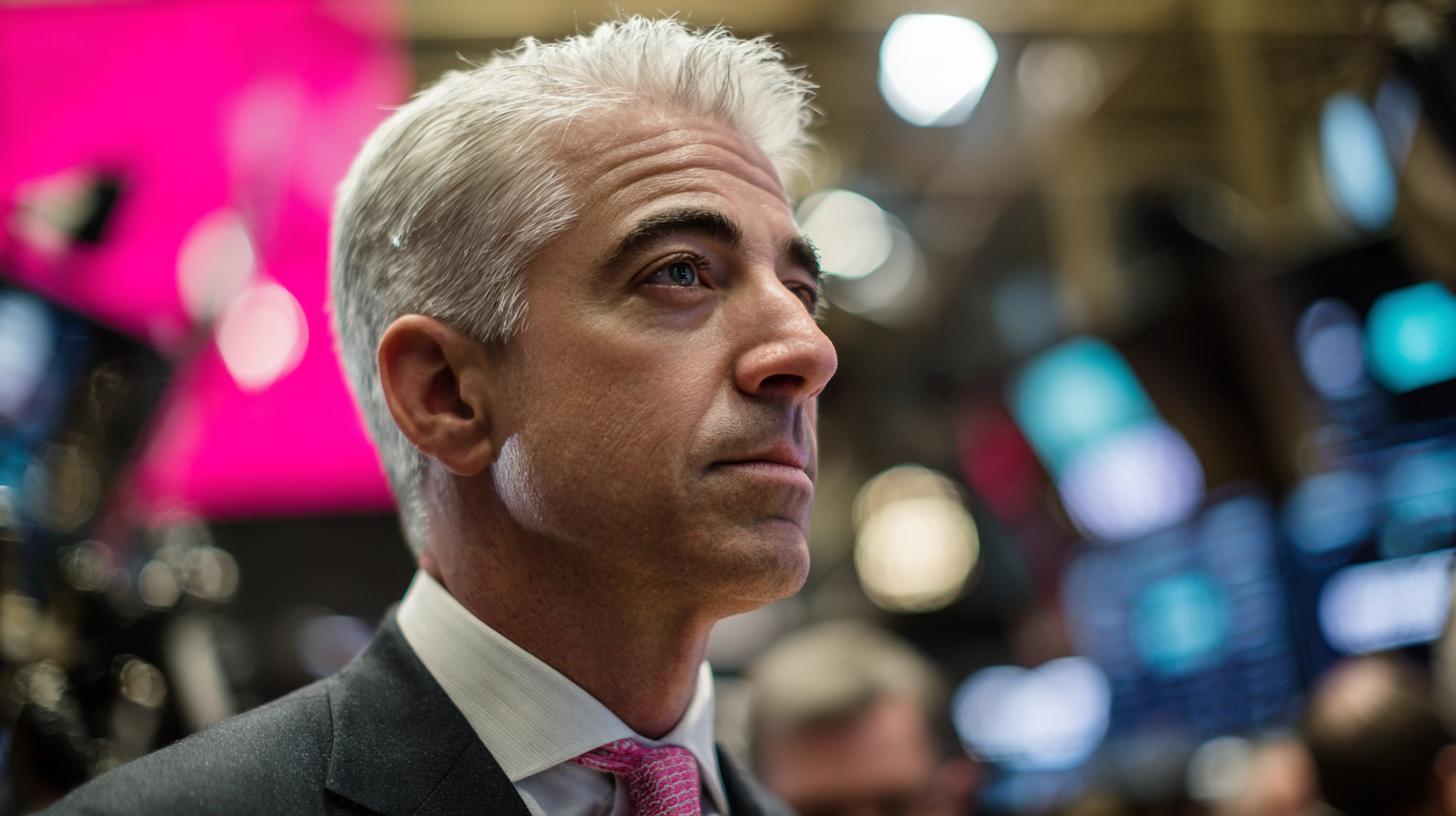
GameStop Shares Jump as Michael Burry Reveals Long-Term Bet on the Stock

GameStop shares moved sharply higher Monday after famed investor Michael Burry disclosed that he has been buying the stock, reigniting investor interest in the once-iconic meme name—but for reasons very different from the speculative frenzy that defined its past.

Burry, best known for predicting and profiting from the U.S. housing market collapse ahead of the 2008 financial crisis, said in a Substack post that he owns GameStop and has been accumulating shares recently. Importantly, he framed the position as a long-term value investment rather than a bet on renewed meme-stock volatility or a short squeeze.

“I am not counting on a short squeeze to realize long-term value,” Burry wrote. “I believe in Ryan [Cohen], I like the setup, the governance, the strategy as I see it.”

The market reacted quickly. GameStop shares surged more than 6% intraday following the disclosure, a reminder that Burry’s moves still carry significant signaling power among investors, even years after his most famous trade.

Unlike the retail-driven rally that propelled GameStop to extraordinary heights in 2021, Burry’s thesis appears rooted in balance sheet strength and capital allocation discipline. He suggested he may be buying the stock at roughly one times tangible book value or net asset value—levels more commonly associated with deep value plays than speculative growth stories.

GameStop’s business fundamentals remain challenged. Physical video game retail continues to decline, and the company’s core operations generate limited growth. However, GameStop has used periods of elevated investor enthusiasm to raise billions of dollars through equity offerings, leaving it with a sizable cash position and minimal debt.

Burry appears to see that cash as the real asset. In his view, CEO Ryan Cohen is extracting maximum value from a structurally weak business while patiently waiting for the opportunity to deploy capital into a higher-quality, cash-generating asset. “Ryan is making lemonade out of lemons,” Burry wrote, acknowledging the underlying weakness of the retail business while praising the strategic flexibility the balance sheet provides.

Cohen’s actions have reinforced that narrative. Just last week, the GameStop CEO disclosed the purchase of 1 million shares with his own personal funds, emphasizing the importance of management alignment with shareholders. Insider buying at that scale often attracts attention from long-term investors seeking conviction signals.

GameStop has also taken unconventional steps, including purchasing bitcoin last year, drawing comparisons to MicroStrategy’s transformation into a leveraged bitcoin proxy. While Burry expressed uncertainty about the cryptocurrency strategy, he conceded that the results so far have been difficult to argue with.

Still, risks remain significant. GameStop lacks a clearly articulated operating turnaround, and capital deployment decisions will be critical. A poorly timed acquisition or speculative investment could quickly erode the company’s cash advantage. Moreover, investor expectations can become distorted when high-profile names enter a trade, increasing volatility regardless of fundamentals.

That said, Burry’s involvement reframes the GameStop story. Rather than a short-term trading vehicle, he is positioning it as a patient, asset-based value play centered on leadership, governance, and optionality. Whether that thesis ultimately pays off will depend less on social media enthusiasm and more on Ryan Cohen’s ability to convert cash into durable earnings power.

For now, the message is clear: when Michael Burry speaks—and buys—markets still listen.

Graham (GHM) – Adds a Third Pillar


Tuesday, January 27, 2026

Graham Corporation designs, manufactures and sells critical equipment for the energy, defense and chemical/petrochemical industries. The Company designs and manufactures custom-engineered ejectors, vacuum pumping systems, surface condensers and vacuum systems. It is a nuclear code accredited fabrication and specialty machining company. It supplies components used inside reactor vessels and outside containment vessels of nuclear power facilities. Its equipment is found in applications, such as metal refining, pulp and paper processing, water heating, refrigeration, desalination, food processing, pharmaceutical, heating, ventilating and air conditioning. For the defense industry, its equipment is used in nuclear propulsion power systems for the United States Navy. The Company’s products are used in a range of industrial process applications in energy markets, including petroleum refining, defense, chemical and petrochemical processing, power generation/alternative energy and other.

Joe Gomes, CFA, Managing Director, Equity Research Analyst, Generalist , Noble Capital Markets, Inc.

Refer to the full report for the price target, fundamental analysis, and rating.

An Acquisition. Graham has acquired FlackTek, a pioneer in advanced mixing and material processing solutions. The acquisition adds advanced materials processing as a third core platform for Graham, alongside Graham Manufacturing, specializing in vacuum & heat transfer, and Barber-Nichols, specializing in turbomachinery. FlackTek adds a proven and defensible product portfolio with a shared customer base and an installed footprint that extends across the full value chain, from upstream to downstream production and quality control.

Details. The purchase price is $35 million, which was paid 85% in cash and 15% using 75,818 GHM shares. There is a potential $25 million in future performance-based cash earnouts over 4 years based upon achieving progressively increasing adjusted EBITDA performance targets. The base purchase price is approximately 12x FlackTek’s projected 2026 adjusted EBITDA. FlackTek generates approximately $30 million in annualized revenue.


Get the Full Report

Equity Research is available at no cost to Registered users of Channelchek. Not a Member? Click ‘Join’ to join the Channelchek Community. There is no cost to register, and we never collect credit card information.

This Company Sponsored Research is provided by Noble Capital Markets, Inc., a FINRA and S.E.C. registered broker-dealer (B/D).

*Analyst certification and important disclosures included in the full report. NOTE: investment decisions should not be based upon the content of this research summary. Proper due diligence is required before making any investment decision.

Rare Earth Stocks Surge as U.S. Government Takes Equity Stake in Strategic Miner

Rare earth stocks rallied sharply on Monday after the Trump administration announced a major equity investment in USA Rare Earth (NASDAQ: USAR), underscoring Washington’s escalating push to secure critical mineral supply chains and reduce reliance on China.

Shares of USA Rare Earth jumped as much as 12% following news that the company will receive $1.6 billion from the U.S. Department of Commerce in exchange for an equity stake. The deal also includes collaboration with the Department of Energy on a $1.3 billion loan package and an additional $277 million in federal funding. Industry peers such as MP Materials, Energy Fuels, and Trilogy Metals also saw early gains, reflecting renewed investor enthusiasm across the sector.

Under the agreement, USA Rare Earth will issue 16.1 million shares of common stock and approximately 17.6 million warrants to the Department of Commerce. The company simultaneously announced a $1.5 billion capital raise, significantly strengthening its balance sheet and accelerating development timelines.

The funding is expected to fast-track USA Rare Earth’s vertically integrated strategy, spanning mining, processing, and magnet manufacturing. Key assets include the company’s magnet plant in Stillwater, Oklahoma, and its Round Top rare earth deposit in West Texas, which is slated to begin commercial production in 2028. Once operational, these facilities could play a crucial role in supplying domestic demand for permanent magnets used in defense systems, electric vehicles, data centers, and advanced manufacturing.

This move fits squarely within a broader government strategy to onshore critical mineral production. China currently dominates global rare earth mining and processing, a strategic vulnerability the U.S. has been actively working to address. In 2025, the Pentagon became MP Materials’ largest shareholder after purchasing $400 million worth of stock. Similar government-backed deals were announced last year with Lithium Americas and Trilogy Metals.

Rare earth elements sit at the center of some of the fastest-growing and most strategically important industries, including artificial intelligence, defense technology, renewable energy, and advanced electronics. As AI data centers proliferate and defense spending increases, demand for these materials is expected to rise sharply over the coming decade.

Strategists argue that direct public-sector involvement materially changes the risk profile for rare earth miners. According to Sprott Asset Management, government participation enhances revenue visibility, mitigates project execution risk, and increases the likelihood that new capacity actually comes online. For investors, this reduces dependence on speculative capital markets and supports higher long-term valuations.

The geopolitical dimension is also intensifying. President Trump recently indicated that a future framework deal with NATO over Greenland could include access to rare earth mineral rights, signaling that resource security is becoming a core component of U.S. foreign and defense policy.

While rare earth stocks remain volatile and capital intensive, the growing alignment between government priorities and private miners provides a powerful tailwind. For small-cap investors, the sector is increasingly less about speculation and more about strategic relevance. As Washington continues to write checks—and take equity stakes—the message is clear: rare earths are now a national priority.

IonQ’s Skywater Deal Signals a New Phase for Quantum Commercialization

IonQ’s announced acquisition of SkyWater Technology marks one of the most consequential strategic moves yet in the early-stage quantum computing industry. In a $1.8 billion cash-and-stock deal, IonQ will acquire the largest exclusively U.S.-based pure-play semiconductor foundry, creating what it calls the world’s first vertically integrated, full-stack quantum platform company.

For investors, this transaction is less about near-term earnings and more about long-term positioning in what could become one of the most critical computing platforms of the next decade.

At its core, the deal gives IonQ something most quantum competitors lack: direct, embedded access to a trusted domestic semiconductor foundry. By bringing SkyWater’s fabrication, packaging, and advanced manufacturing capabilities in-house, IonQ expects to accelerate its roadmap toward fault-tolerant quantum computing—one of the biggest bottlenecks in the sector.

Management believes the integration will pull forward functional testing of its 200,000-qubit quantum processing units (QPUs) to 2028, enabling more than 8,000 ultra-high fidelity logical qubits. Even more ambitious, IonQ expects this to shave up to a year off development timelines for its future 2,000,000-qubit chips. In a field where progress is measured in years, that acceleration matters.

Just as important is the national security angle. SkyWater is a DMEA Category 1 Trusted Foundry, a designation that positions the combined company as a preferred quantum partner for the U.S. government, defense agencies, and allied nations. With its newly launched IonQ Federal division, the company now controls an end-to-end U.S.-based quantum supply chain—from design and prototyping to manufacturing and deployment. That level of security and control could be a decisive advantage as governments race to deploy quantum technologies for cryptography, sensing, and defense applications.

From SkyWater’s perspective, the deal provides scale, capital, and access to next-generation quantum customers while preserving its role as a merchant foundry. SkyWater will continue to serve existing aerospace, defense, and commercial customers and operate as a wholly owned subsidiary. That structure reduces the risk of customer attrition while allowing SkyWater to participate in IonQ’s long-term upside.

Financially, SkyWater shareholders receive a 38% premium to the 30-day average share price, while retaining exposure to IonQ through the stock component. Post-close, SkyWater shareholders will own between 4.4% and 6.7% of the combined company, depending on the collar mechanics.

For IonQ investors, dilution is the tradeoff—but it comes with strategic depth. IonQ already expects 2025 revenue at the high end of its $106–$110 million guidance range, and this deal strengthens its balance sheet flexibility while addressing one of the biggest execution risks in quantum computing: manufacturability at scale.

This acquisition doesn’t eliminate the risks inherent in early-stage quantum technology. Commercial timelines remain long, capital requirements are high, and competition from both startups and tech giants is intense. However, IonQ’s move to vertically integrate—especially within the U.S.—signals confidence that quantum is moving from theoretical promise toward industrial reality.

For small-cap investors looking beyond quarterly noise, IonQ’s SkyWater acquisition may be remembered as a defining inflection point.