Meta Stock Skyrockets in Monumental Rebound From Brutal 2022

After a nightmarish 2022 saw Meta’s stock plunge over 60%, the company orchestrated a jaw-dropping turnaround in 2023 – with shares skyrocketing 178% year-to-date. This staggering rally cements 2023 as the best year ever for Meta’s stock, capping a remarkable validation of CEO Mark Zuckerberg’s intense push around “efficiency” and coast cuts.

The share price resurgence was fueled by Meta leanly rebuilding itself as an advertising titan laser-focused on what drives revenue today. Zuckerberg notably changed his tone in early 2023 – listening to shareholders, communicating more transparently, and realigning his priorities around the core ad business over capital intensive metaverse bets.

It represented a dramatic pivot from the seeming indifference to shareholder concerns that defined much of 2022 as Meta’s stock spiraled. After three straight quarters of declining sales, Zuckerberg admitted economic troubles and stiff competition had severely impacted projections.

2023 became Meta’s “year of efficiency” with sweeping layoffs and disciplined spending helping right the ship. Growth returned as digital advertising rebounded and Meta seized market share back from rivals Snap and Alphabet.

Crucially, Meta rapidly adapted its ad targeting to Apple’s 2021 privacy policy changes which had previously hammered revenue. Investments in artificial intelligence and machine learning helped Meta overcome the loss of certain user data – finding new ways to optimize ads despite disruptive forces.

The company also benefited enormously from booming advertising spend out of China looking to target Meta’s billions of users globally. This diversified another previous over-reliance on western advertisers.

Wall Street firmly rewarded Zuckerberg’s renewed focus and urgency regarding costs and care for the core business. But work remains heading into 2024 amidst lingering industry skepticism.

Meta still predicts an uncertain advertising landscape tied to geopolitical instability and the possibility of global recession. Its family of social apps also face intensifying governmental scrutiny and lawsuits related to mental health and data privacy concerns.

Plus the multi-billion dollar metaverse division continues bleeding substantial losses quarter after quarter – leading some analysts to demand bolder restructuring of that arm. Zuckerberg has trodden delicately here so far though, reluctant to fully abandon his vision.

And peril lies ahead in 2024 as digital behemoth Google plans to join Apple in phasing out certain ad tracking cookies from its dominant mobile ecosystems. This threatens a repeat of the mammoth revenue hit Meta only just recovered from and adapted to regarding Apple’s changes.

The regulatory ground also keeps shifting under the entire social media sector with legislative action repeatedly proposed on issues ranging from antitrust regulation to outright platform bans tied to national security concerns.

Upstart rival TikTok particularly remains an imposing threat having pioneered the culture-dominating short video format now ubiquitous across all social apps. Its popularity with younger demographics continues outpacing Meta’s offerings, forcing more ad dollars out of Meta’s reach as marketing follows shifting generational engagement.

Despite still monumental scale, Meta therefore heads towards 2024 with nervous investors recalling how quickly its business model faltered against the collision of multiple storm fronts in 2022. Its salvation came by sweating assets through job cuts and engineering revenue growth however possible in a battered online ad market.

But Meta likely needs more innovative long-term vision to guarantee sustained dominance as new technological and economic realities reshape its competitive landscape in dynamic ways year after year.

For now, as 2023 wraps historically, Mark Zuckerberg has earned a victory lap after boldly steering his tech empire back from the brink. Though clouds remain on the horizon, Meta proved it still has sharp reflexes and can reinvent itself when forced. The coming decade may demand that agility over and over as digital ways of life advance apace.


Japanese Steel Giant Nippon to Acquire U.S. Steel in $14.9 Billion Mega-Deal

In a tectonic deal poised to reshape the global steel industry, Japan’s largest steel producer, Nippon Steel, has announced a definitive agreement to acquire iconic American steelmaker United States Steel Corp. in an all-cash transaction valued at approximately $14.9 billion.

The blockbuster acquisition represents a 142% premium over U.S. Steel’s share price since August 11th when the struggling American steel icon first announced a strategic review process to explore “all options” for the company. Nippon has already lined up the required financing to fund the transaction, which is predicted to face few antitrust or other regulatory hurdles.

Industry analysts see the merger as hugely beneficial for Nippon as it aggressively pushes towards its goal of 100 million metric tons in global crude steel capacity. Adding U.S. Steel’s substantial production footprint across the resurging American steel market and other regions drastically accelerates Nippon’s global growth trajectory.

The deal also provides Nippon strategic access to growing U.S. steel demand from automakers ramping up manufacturing after resolving recent strikes, as well as the booming renewable energy industry needing steel under incentives in the U.S. Inflation Reduction Act. With U.S. Steel struggling financially in recent quarters despite rosy market dynamics, it became an attractive takeover target this summer.

Nippon leadership emphasized the company’s decades of experience in the U.S. steel market through its existing Standard Steel business gives them confidence of seamlessly integrating American staff and existing unions. Nippon has committed to uphold all of U.S. Steel’s current obligations to employees, unions and collective bargaining agreements.

The brazen takeover reveals the rapid ongoing consolidation within steel markets across the world, as titans like Nippon and ArcelorMittal aggressively expand through mergers and acquisitions. For U.S. Steel, it represents the end of over a century operating as an independent industrial behemoth synonymous with American steel since its 1901 founding by magnates like J.P. Morgan and Andrew Carnegie.

While U.S. Steel searches for a new foreign owner, America’s two next largest steel producers by capacity—Nucor and Cleveland Cliffs—remain fiercely independent. Yet market watchers speculate they may also soon be targeted by hungry international steel conglomerates racing to build market share globally.

Ultimately, the Nippon deal provides a clear path forward for struggling U.S. Steel. But it also continues the trend of foreign takeovers changing the face of American steel with more production capacity and profits accruing abroad. The Biden administration must now scrutinize whether the deal sufficiently safeguards America’s economic and national security interests.

With Nippon expecting the acquisition to close sometime between Q2 and Q3 2024, it launches a new era for the changing U.S. steel industry now overshadowed by growing international forces. Only time will tell whether domestic steelmakers can thrive under new foreign management, or if America’s independent steel era has come to a close.

Biotech Dealmaking Heats Up as Private Capital Charges Back In

A wave of multibillion dollar buyouts has swept the beaten-down biotech sector in recent months, marking a potential turning point for an industry hammered throughout 2022 – 2023.

With valuations of public companies still depressed, flush private investors have stepped up acquisitions of promising drug developers to bolster pipelines for the long-term. And in a bullish sign for the strategic direction of the space, therapeutics targeting high unmet needs and novel modalities remain key areas of focus amid dealmaking.

As macro gloom recedes, the renewed embrace of biotech M&A highlights a pivot back toward the innovation-driven spending required to sustain growth post-pandemic.

BMS Kicks Off Buying Spree With $13.2B Turning Point Deal

Bristol Myers Squibb fired the starting gun on big-ticket biopharma deals in October, announcing a $5.8 billion purchase of Mirati Therapeutics (MRTX). The buyout delivered a 122% premium in order to land Mirati’s promising portfolio of precision cancer medicines.

Market observers viewed the unsolicited, $58 per share bid as a credible benchmark of intrinsic value vigilantly researched by a strategic acquirer. Immediately in the deal aftermath, similar development-stage oncology names rallied sharply as traders priced in new takeout probabilities.

In fact, suitors moved swiftly to capitalize on improved biotech sentiment, with Horizon Therapeutics agreeing to a $26.4 billion around the same time. The transaction marked 2023’s largest healthcare buyout, further reinforcing peak valuations remain attainable for commercial-stage rare disease names.

Scaling Up to Compete in Gene Therapy

Gene therapy remains one especially alluring area for dealmaking despite lofty price tags. These ultra-rare disease medicines come with cure potential that commands premium sales and reimbursement pricing power.

Recognizing the imperative to bulk up gene therapy capabilities, Pfizer ponied up $5.4 billion to reinforce its genetic medicines pipeline through the acquisition of French outfit Vivet Therapeutics. The move added Vivet’s promising gene therapy for Wilson disease, along with manufacturing strengths across multiple delivery mechanisms.

And gene editing pioneer Sangamo Therapeutics is selling off its cell therapy assets to Sanofi for $700 million as it refocuses efforts around in vivo gene insertion. The deal hands Sanofi disruptive cell therapy technology utilizing precisely engineered zinc fingers to correct disease-causing mutations.

Analysts say more buyouts centered on next-gen platforms are likely on the horizon as drug developers vie for leadership in areas forecast to reshape therapeutic spaces.

Take a look at more biotechnology companies by looking at Noble Capital Markets’ Senior Research Analyst Robert LeBoyer’s coverage universe.

Private Capital Eagerly Steps in to Back Innovation

Beyond M&A from strategic acquirers, private equity firms have swooped in to capitalize on depressed biotech valuations. The robust dry powder levels built up during the boom years leave private investors eager to allocate while achieving advantageous cost bases.

Among notable deals, Angel Pond Capital teamed up with life science investor OrbiMed to take gene therapy biotech Generate Biomedicines private for $478 million. The transaction represented a 130% premium to ensure locking up Generate’s base editing technologies believed to be capable of correcting over 75% of known point mutations.

In cybersecurity and enterprise software, sponsor-led take privates had utterly dominated deal flow in 2022. But order books are now once again filling up with biotech buyouts from special purpose acquisition vehicles, highlighting a normalization in deal dynamics after last year’s freeze-out from rate-sensitive private market valuations.

Market Recovery Taking Shape

The fresh upswing in biotech M&A follows a wave of dip buying from some the world’s largest asset managers in shares of industry leaders like Vertex Pharmaceuticals and Regeneron Pharmaceuticals. Warren Buffett’s Berkshire Hathaway has been particularly aggressive stepping in to purchase stakes in key biopharma bluechips.

Meanwhile, the fund-raising backdrop continues improving for earlier stage biotechs as well after deal activity all but shuttered for much of 2023. Multiple debt offerings and venture rounds have successfully priced in recent months, ensuring the all-important continuity of innovation cycling.

With fundamentals stabilizing and access to capital normalizing, the environment for biopharma dealmaking has markedly improved. Expect the momentum to carry through 2024 as drug developers position through M&A for the next, post-pandemic leg higher while private capital readily supports compelling technologies at discounted prices. The long-term health of the biotech ecosystem depends on transactions advancing today’s high-potential assets, and the industry appears to have emerged from its lull ready to strike the necessary deals.

Is a Market Recovery in Sight?

The stock market roared back to life on Thursday after the Federal Reserve laid out an ideal scenario for investors – falling inflation, rate cuts on the horizon, and an economy heading for a soft landing.

The Dow jumped nearly 500 points to top 37,000 for the first time ever, while the S&P 500 closed in on its record high from early 2022. And the interest rate-sensitive Russell 2000 small cap index outperformed larger benchmarks by over 50% as investors pivoted towards beaten-down areas of the market.

According to Noble Capital Markets’ CEO Nico Pronk, “this may be a market recovery happening in front of our eyes. We are seeing all the signs here.” Fed Chair Jerome Powell’s highly anticipated comments on Wednesday took the lid off the market’s concerns over surging rates upending the economy. The central bank’s updated forecasts now call for no more rate hikes in 2023, along with three 0.25% cuts in 2024.

That’s welcomed news for rate-sensitive sectors like real estate and regional banks that have been hammered for most of 2022 on fears of sustained higher borrowing costs. Regional banks popped nearly 5% on Thursday, extending a rally that has seen the group gain over 20% in the past month alone as the path towards rate cuts grows clearer.

The tech-heavy Nasdaq also continues to rebound, now up over 10% since mid-October, while the small cap Russell 2000 has exploded more than 20% over the same stretch. The index had given up all its pandemic-era gains earlier in 2022 amid rate hike jitters, but with a soft landing now in sight, it’s leading the way higher once again.

Pronk believes markets are moving towards a positive direction and showing strong signs of recovery.

Economic Experts Forecasted Markets Breakout

During an economic outlook panel at NobleCon19, experts agreed on a possible resurgence of the markets, particularly in the small-cap space. The consensus was that small-cap investments tend to outperform larger companies during economic recoveries due to their greater potential for growth. The panel expressed optimism for how the Russell 2000 index may surprise investors moving into 2024.

With inflation and rates now clearly on downward trajectories per the Fed, the stars have aligned for financials to break out as risks meaningfully recede. Traders and investors are taking notice, investing money back into the space to play long-awaited catchup to index gains.

Russell 2000 Small Caps Lead the Charge

Another standout area has been small caps, with the domestically-focused Russell 2000 now charging ahead of larger benchmarks since the October lows.

The Fed’s resolute commitment to tamping down inflation has brought U.S. rate hike expectations back in sync with global peers. That’s helped dissipate a major headwind for small caps tied closely to domestic growth.

Add in falling recession odds, and the stage is set for investors to once again embrace the higher growth, higher beta segment of the U.S. market to drive gains from here. The Russell 2000 now trades just 6% away from retaking all-time highs emblematic of the pre-rate hiking frenzy.

Its outsized advance against the more moderate S&P and Dow gains points to conviction building around more speculative areas poised to benefit most from easing financial conditions. Traders now see the elusive soft landing materializing in 2023, with markets firing ahead on hopes a still-resilient economy can avoid buckling under the Fed’s inflation fight.

After a Fed-dominated year where good news was largely shunned amid policy uncertainty, bulls once again have reasons for optimism. The light at the end of the rate hiking tunnel has markets gearing up for a potentially substantial move higher to round out 2023.

El Salvador’s Cryptocurrency Renaissance: Unveiling the Historic Bitcoin Bonds and the Rise of Bitcoin City

In a revolutionary move, El Salvador has solidified its place as a trailblazer in the world of cryptocurrency by announcing the regulatory approval and issuance of Bitcoin bonds, colloquially known as “Volcano Bonds.” Set to launch in the first quarter of 2024, these bonds represent a groundbreaking step towards financing the construction of “Bitcoin City,” a visionary project fueled by thermal energy from a volcano. As El Salvador continues to make waves in the crypto space, this article explores the intricacies of the Volcano Bonds and the broader implications for investors and the country’s economic landscape.

A Visionary Leap into Cryptocurrency

Led by President Nayib Bukele, El Salvador made history in 2021 by declaring Bitcoin as legal currency alongside the US dollar. The objective was to streamline remittances and enhance financial services accessibility for the 70 percent of Salvadorans lacking a traditional bank account. Despite this bold move, a May 2021 poll by the Central American University revealed that 71 percent of respondents believed Bitcoin had not positively impacted their family’s economic situation.

However, undeterred by public sentiment, El Salvador pressed on, guided by a vision that extended beyond mere adoption to the creation of a transformative “Bitcoin City” in the country’s eastern region. This city, powered by thermal energy harnessed from a volcano, aimed to be a beacon of innovation and sustainability.

The Volcano Bonds: Financing the Future

The Volcano Bonds, set to launch in early 2024, are instrumental in turning President Bukele’s vision into reality. Approved by the Digital Assets Commission (CNAD), these bonds represent a financial instrument designed to address sovereign debt obligations while providing the capital needed to construct Bitcoin City. With an allocation of at least $1 billion from the Volcano Bonds earmarked for the project, El Salvador is poised to create a technological marvel that showcases the synergy between cryptocurrency and sustainable development.

Building Bitcoin City: A Green Technological Marvel

Bitcoin City is more than just a construction project; it symbolizes El Salvador’s commitment to sustainable and innovative urban development. The use of thermal energy from a volcano not only underscores the country’s unique geographical advantages but also signals a departure from traditional energy sources, aligning with the global push for green initiatives.

As investors look toward the horizon, the construction of Bitcoin City becomes an intriguing prospect. The success of this project could potentially inspire similar endeavors worldwide, with governments and private entities exploring the integration of cryptocurrency in urban planning and development.

El Salvador’s Growing Bitcoin Holdings

To solidify its commitment to cryptocurrency, the Salvadoran government has steadily increased its Bitcoin holdings. Currently holding 2,381 bitcoins, the government’s latest purchase of 80 bitcoins in July 2022 reflects a strategic approach to accumulating this digital asset. President Bukele further announced a plan to acquire one bitcoin daily starting from November 17, 2022, although the government has not disclosed whether this target has been met.

This concerted effort to amass Bitcoin underscores El Salvador’s belief in the long-term value and potential of cryptocurrency. For investors, it signals a country actively diversifying its portfolio, adding a digital asset to its reserves in a strategic move that aligns with the evolving landscape of global finance.

Take a moment to take a look at Bit Digital (BTBT), a large-scale bitcoin mining business and a sustainability focused generator of digital assets.

Trading on the Bitfinex Securities Platform

The issuance of the Volcano Bonds is set to take place on the Bitfinex Securities Platform, a registered trading site for blockchain-based equities and bonds in El Salvador. This move not only streamlines the trading process but also marks a bridge between traditional financial systems and the burgeoning cryptocurrency landscape. It invites investors to participate in a novel financial instrument backed by the transformative power of blockchain technology.

Beyond Volcano Bonds: El Salvador’s Cryptocurrency Ventures

El Salvador’s foray into cryptocurrency extends beyond the Volcano Bonds. In a recent development, the country launched a $1 billion Bitcoin mining project in collaboration with Luxor Technology and Tether. Dubbed “Volcano Energy,” this initiative aims to establish a 241 MW generation park named in honor of the project, where Bitcoin mining will take center stage.

As El Salvador actively explores the potential of cryptocurrency in diverse sectors, investors keen on embracing the future of finance should keep a close eye on the country’s progressive initiatives. The Volcano Energy project, in particular, demonstrates the integration of Bitcoin mining with traditional energy infrastructure, offering a unique investment avenue for those looking to diversify within the cryptocurrency space.

Conclusion: Investing in El Salvador’s Cryptocurrency Odyssey

El Salvador’s journey into the world of Bitcoin bonds, Bitcoin City, and innovative cryptocurrency projects is not only historic but presents a unique investment landscape. As the Volcano Bonds come to fruition in the first quarter of 2024, investors have an opportunity to be part of a transformative chapter in the country’s economic history.

The success of Bitcoin City and other cryptocurrency initiatives in El Salvador could potentially pave the way for similar endeavors globally. Investors, whether seasoned cryptocurrency enthusiasts or those exploring the space for the first time, should closely monitor the developments in El Salvador. The “Bitcoin City” powered by a volcano is not just a symbol of technological advancement but a beacon for those seeking investment opportunities in the ever-evolving world of cryptocurrency. El Salvador’s cryptocurrency renaissance is unfolding, and investors have a front-row seat to witness the fusion of tradition and innovation in the heart of Central America.

Integra Bets on Ear, Nose, and Throat Growth With $280 Million Acclarent Purchase

Medical device maker Integra LifeSciences announced today it will purchase Acclarent, a leader in ear, nose and throat (ENT) technologies, from Johnson & Johnson’s Ethicon division for $275 million upfront plus future regulatory milestones. The deal values Acclarent at approximately 2.5 times sales, with the company generating $110 million in revenues during 2022.

For Integra, the acquisition provides an opportunity to significantly expand its footprint beyond neurosurgery and establish the company as a major player in the attractive ENT specialty devices segment. The global ENT market is projected to grow at a 5-6% clip annually, adding an estimated $1 billion in addressable market opportunity for Integra.

Acclarent brings to Integra pioneered balloon dilation platforms for treating chronic sinusitis as well as novel treatments for Eustachian tube dilations. Its flagship products are the only FDA-approved stents for maintaining sinus openings after surgery. Acclarent also provides image guidance systems to assist surgeons with minimally invasive procedures.

The company maintains strong brand awareness and deep clinical relationships after rebuilding its commercial presence following a period of declining sales between 2017-2020.

Integra management sees substantial room for additional share gains in ENT given Acclarent’s leadership in balloon dilation and the generally fragmented supplier landscape in ENT today. The global sinus dilation devices market alone is projected to reach $3.5 billion by 2030, providing a sizable growth pipeline for Acclarent’s portfolio.

Strategic and Financial Benefits

The acquisition furthers Integra’s strategy to complement its legacy strength in neurosurgery with scaled positions across faster-growth clinical applications adjacent to its core.

Integra aims to replicate its #1 share in dural repair for neuro procedures by becoming one of few dominant players in ENT. The company believes the combination of its commercial infrastructure and Acclarent’s innovative portfolio can support above-market growth for the foreseeable future.

Financially, Acclarent is being acquired at an attractive upfront valuation of 2.5 times sales. Integra management expects the deal will be immediately accretive to earnings per share after closing.

Acclarent generated gross margins in line with Integra’s overall company average in 2022, providing opportunities for further margin expansion from operating leverage as the business scales.

The transaction also comes at a time when medtech valuations have declined from their pandemic peaks, enabling Integra to obtain Acclarent at what it believes to be an opportunistic price.

Cultural and Portfolio Fit

Integra CEO Jan De Witte highlighted the cultural alignment between both organizations and focus on restoring patient lives as key rationales behind the deal.

De Witte said, “Acclarent’s culture of pioneering technologies aligns with Integra’s legacy of innovation to transform care and restore patients’ lives. We are looking forward to welcoming the Acclarent employees to the Integra team. Together, we can make a profound impact on the future of ENT and neurosurgery.”

Acclarent will operate as part of Integra’s $1.3 billion Codman Specialty Surgical division focused on neurosurgery. Integra sees substantial opportunities for its neurosurgery and ENT sales teams to collaborate on treating certain brain tumors by leveraging skull base surgical approaches.

Integra also gains access to a robust ENT product development pipeline, including next-generation surgical staplers, powered sinus surgery technologies, and potential new indications for Acclarent’s balloon dilation platforms.

Acclarent’s R&D and regulatory expertise will help accelerate Integra’s internal efforts to bring new generations of minimally invasive surgery products to market.

Smooth Post-Close Integration

Integra expects to retain Acclarent’s entire workforce as part of ensuring a smooth organizational transition after the deal closes. The company aims to operate Acclarent as an independent business unit during the near-term while integrating back-office functions.

Manufacturing operations will continue to be outsourced to third parties and Integra anticipates no supply chain disruptions to Acclarent’s product availability.

The transaction is projected to close by the second quarter of 2024, subject to customary antitrust and regulatory clearances globally. Transition services agreements will provide additional support for up to four years following deal closure.

By maintaining continuity of strategy, personnel and manufacturing, Integra hopes to achieve targeted revenue and cost synergies from the integration of Acclarent, while continuing its above-market growth trajectory in the ENT segment. The addition of Acclarent’s portfolio and innovative roadmap makes this transaction an important step forward in Integra’s strategy to complement leadership in neurosurgery with scaled positions in some of medtech’s most attractive and fastest-growing markets.

The SEC’s Clearing Mandate: A Major Shift for the US Treasury Market

The US Securities and Exchange Commission (SEC) has implemented a major shift in the $26 trillion US Treasury market, adopting new regulations aimed at reducing systemic risk by forcing more trades through clearing houses. This overhaul, approved on December 13th, 2023, marks the most significant change to this global benchmark for assets in decades.

The Need for Reform:

In recent years, the Treasury market has experienced periods of volatility and liquidity concerns. The COVID-19 pandemic in 2020 highlighted these vulnerabilities, as liquidity all but evaporated during the initial market panic. This prompted calls for reform, with the SEC identifying the need to increase transparency and reduce counterparty risk.

Central Clearing: The Centerpiece of Reform:

The core of the SEC’s new rules revolves around central clearing. A central clearinghouse acts as the intermediary for every transaction, assuming the role of both buyer and seller. This ensures that trades are completed even if one party defaults, significantly minimizing risk.

The new regulations mandate that a broader range of Treasury transactions now be centrally cleared. This includes cash Treasury transactions as well as repurchase agreements (“repos”), which are short-term loans backed by Treasuries. Additionally, clearing houses must implement stricter risk management practices and maintain separate collateral for their members and their customers.

Phased Implementation:

Recognizing the complexity of implementing such a significant change, the SEC has provided a phased approach. Clearing houses have until March 2025 to comply with the new risk management and asset protection requirements. They will have until December 2025 to begin clearing cash market Treasury transactions and June 2026 for repo transactions. Similarly, members of clearing houses have until December 2025 and June 2026, respectively, to begin clearing these transactions.

Industry Concerns and Potential Impact:

While the SEC’s initiative aims to enhance the safety and stability of the Treasury market, some industry participants have voiced concerns. The primary concern revolves around the potential increase in costs associated with central clearing. Clearing houses charge fees for their services, which could be passed on to market participants. Additionally, the requirement for additional margin, which serves to limit risk, could also lead to higher costs.

Another concern is the potential impact on liquidity. Some critics argue that mandatory clearing could lead to a decrease in liquidity, particularly during times of market stress. This is because central clearing adds another layer of bureaucracy to the transaction process, which could discourage some market participants from trading.

Furthermore, there are concerns about the potential concentration of risk in clearing houses. If a major clearing house were to fail, it could have a devastating impact on the entire financial system. To mitigate this risk, the SEC has implemented stricter capital and risk management requirements for clearing houses.

The Road Ahead:

The implementation of these new regulations will undoubtedly impact the US Treasury market. While the long-term effects remain to be seen, the SEC’s goal is to create a safer and more resilient market for all participants. The phased approach allows for a smoother transition, giving market participants time to adjust to the new requirements.

The success of these reforms will depend on several factors, including the effectiveness of implementation by clearing houses and market participants, the ongoing monitoring and oversight by the SEC, and the overall economic environment. Only time will tell whether these changes will achieve their intended goal of enhancing the stability and efficiency of the US Treasury market.

Additional Considerations:

The SEC’s decision to exempt certain transactions, such as those between broker-dealers and hedge funds, has garnered mixed reactions. Some argue that this creates loopholes and undermines the effectiveness of the reforms. Others contend that it is a necessary concession to address industry concerns and avoid stifling market activity.

The implementation of these new rules will also require close collaboration between the SEC, clearing houses, and market participants. Clear communication and education will be essential to ensuring a smooth transition and maximizing the benefits of these reforms.

Ultimately, the success of these changes will hinge on their ability to strike a delicate balance between enhancing safety and maintaining market efficiency. Only time will tell if this major overhaul of the US Treasury market will ultimately achieve its intended objectives.

Has The Fed Hit a Turning Point?

After two years of aggressive rate hikes to combat inflation, the Federal Reserve is on the cusp of a significant policy shift. This Wednesday’s meeting marks a turning point, with a pause on rate increases and a focus on what lies ahead. While the immediate decision is anticipated, the subtle nuances of the Fed’s statement, economic projections, and Chair Powell’s press conference hold the key to understanding the future trajectory of monetary policy.

A Pause in the Rate Hike Cycle:

The Federal Open Market Committee (FOMC) is virtually certain to hold the benchmark overnight borrowing rate steady at a range of 5.25% to 5.5%. This decision reflects the Fed’s recognition of the recent slowdown in inflation, as evidenced by Tuesday’s Consumer Price Index report showing core inflation at a 4% annual rate. The aggressive rate hikes have had their intended effect, and the Fed is now in a position to assess the impact and determine the next course of action.

Shifting Narrative: From Hiking to Cutting?

While the pause is a significant development, the Fed’s communication will provide further insights into their future plans. Economists anticipate subtle changes in the post-meeting statement, such as dropping the reference to “additional policy firming” and focusing on achieving the 2% inflation target. These changes would signal a shift in the narrative from focusing on rate hikes to considering potential cuts in the future.

The closely watched dot plot, which reflects individual members’ expectations for future interest rates, will also be scrutinized. The removal of the previously indicated rate increase for this year is expected, but the market’s anticipation of rate cuts starting in May 2024 might be perceived as overly aggressive. Most economists believe the Fed will take a more cautious approach, with cuts likely to materialize in the second half of 2024 or later.

Economic Outlook and the Real Rate:

Alongside the policy decision, the Fed will update its projections for economic growth, inflation, and unemployment. While significant changes are not anticipated, these projections will provide valuable information about the current state of the economy and the Fed’s expectations for the future.

The real rate, or the difference between the fed funds rate and inflation, is also a key factor in the Fed’s deliberations. Currently, the real rate stands at 1.8%, significantly above the neutral rate of 0.5%. This high real rate is considered restrictive, meaning it is slowing down economic activity. Chair Powell’s comments will be closely watched for any hints about how the Fed might balance the need to control inflation with the potential for slowing economic growth.

Powell’s Press Conference: Clues for the Future:

The press conference following the meeting will be the most anticipated event of the week. Chair Powell’s remarks will be analyzed for any clues about the Fed’s future plans. While Powell is likely to remain cautious, his comments could provide valuable insights into the Fed’s thinking and their views on the economic outlook.

Markets are eagerly anticipating any indication of a dovish pivot, which could lead to a further surge in equity prices. However, Powell may also address concerns about the recent loosening of financial conditions, emphasizing the Fed’s commitment to achieving their inflation target. Striking a balance between these competing concerns will be a major challenge for Powell and the FOMC.

Looking Ahead: A Cautious Path Forward

The Federal Reserve’s Wednesday meeting marks a significant turning point in their fight against inflation. While the immediate pause in rate hikes is expected, the future trajectory of monetary policy remains uncertain. The Fed will closely monitor the economic data and adjust their policy as needed. The coming months are likely to be characterized by careful consideration and cautious action as the Fed navigates the complex task of balancing inflation control with economic growth.

This article has highlighted the key details of the upcoming Fed meeting and its potential impact on the economy and financial markets. By understanding the nuances of the Fed’s communication and the challenges they face, we can gain a deeper understanding of the future of monetary policy and its implications for businesses, consumers, and investors alike.

AstraZeneca’s $1.1B Investment in Next-Gen Vaccine Innovation via Icosavax

Pharma giant AstraZeneca (AZN) announced Monday that it will purchase clinical-stage biotech Icosavax (ICVX) for up to $1.1 billion to augment its pipeline of vaccines targeting respiratory illnesses. Specifically, AstraZeneca aims to leverage Icosavax’s innovative virus-like particle (VLP) platform to develop a first-in-class combination vaccine against respiratory syncytial virus (RSV) and human metapneumovirus (hMPV).

Icosavax’s novel VLP technology promises stronger efficacy, fewer side effects, and more durable protection than traditional vaccines – a potential game changer. And the biotech’s lead asset IVX-A12 delivered stellar phase 2 results earlier this year, prompting AstraZeneca to make this big bet on the future of infectious disease prevention.

Transformational Vaccine Approach

At the heart of this deal lies Icosavax’s VLP platform that engineers tiny proteins to mimic the structure of viruses and trigger a robust immune response. Think of VLPs as a sneaky way to train the body to fight off viruses without exposing it to any actual viral particles.

And the data so far indicates VLPs induce broader, more durable protection against infection than conventional vaccines. For example, the VLP approach is behind the extremely efficacious human papillomavirus and hepatitis B virus vaccines on the market today.

Icosavax builds on this proven concept with computationally designed VLPs targeting the unique antigens of RSV and hMPV. So AstraZeneca clearly coveted access to this next-generation technology that could change the way we immunize populations against common illness.

Expedited Path for Lead Asset

Central to the deal is Icosavax’s IVX-A12, a combo VLP vaccine to prevent RSV and hMPV, which both cause severe respiratory infection in the elderly and immunocompromised. IVX-A12 demonstrated outstanding immunogenicity – triggering enduring antibody responses – along with a clean safety profile in trials so far.

In fact, the vaccine’s phase 2 results were strong enough for the FDA to award IVX-A12 Fast Track designation. This promises an expedited path to approval given the high unmet need: there are no approved vaccines for older adults against these widespread, often dangerous pathogens.

So AstraZeneca leapfrogs development by 3-4 years via this acquisition rather than advancing an early-stage candidate itself. As part of a big pharma, IVX-A12 now has the resources for rapid phase 3 trials and submission for emergency use authorization potentially next year.

Aligns with Growth Strategy

Importantly, this deal fits squarely with AstraZeneca’s strategy of strengthening its portfolio in areas of high unmet need. As Executive VP Iskra Reic highlighted, adding IVX-A12 distinguishes AstraZeneca’s late-stage pipeline in preventative infectious disease treatments.

While the company already markets FluMist for influenza, a next-gen offering like IVX-A12 that could supplant outdated RSV vaccines or ineffective hMPV options would be a true differentiator. It also complements AstraZeneca’s leading COVID-19 antibody cocktail for immunocompromised patients unable to mount their own response.

Beyond the tech and pipeline boost, Icosavax also brings its experienced team and manufacturing capabilities to scale up production in anticipation of launch.

Investor Implications

Turning to the transaction itself, AstraZeneca’s upfront $15 per share offer in cash reflects a 43% premium to Icosavax’s December 9 close before rumors leaked. Including the $5 per share milestone payment, the total value exceeds $1 billion for a 91% premium.

Of course the back half requires IVX-A12 to gain approval and hit $750 million in sales, so some risk is baked in. But given peak revenue estimates exceeding $2 billion, this seems doable over 5-10 years post-launch.

Investors should watch for completion of the tender offer expected in Q1 2024. Passing majority shareholder approval should be straightforward with such a compelling premium. Then it becomes about execution – advancing IVX-A12 rapidly through late-stage trials.

Ultimately though, AstraZeneca makes a well-timed bet on revolutionary vaccine science that could elevate its infectious disease segment to new heights. And Icosavax investors get to participate in this next chapter via an up to 91% buyout windfall. Once again, merger mania in biopharma looks set to pay off handsomely.

Eagle Bulk Shipping to Merge with Rival to Create Dry Bulk Behemoth

Dry bulk shipping company Eagle Bulk Shipping (EGLE) announced Sunday night that it has agreed to an all-stock merger with sector peer Star Bulk Carriers Corp. (SBLK). The deal will create one of the world’s premiere owners of dry bulk vessels with a combined fleet of 169 ships worth over $2 billion.

Under the terms of the agreement, Eagle shareholders will receive 2.6211 shares of Star Bulk for each Eagle share they currently hold. With Star Bulk shares closing at $19.95 on Monday, December 11, this values Eagle stock at $52.29 per share. Compared to Eagle’s actual close of $46.19 on Monday, this deal premium comes out to 13%.

Powerhouse in Making

The merger brings together two already sizable dry bulk fleets under one umbrella to better compete on costs and provide customers integrated solutions. For example, the combined entity can offer both Capesize vessels ideal for long haul bulk transport as well as Supramax ships designed for flexibility.

With over 150 million deadweight tonnage (DWT), the new entity will rank among the top five largest publicly-traded dry bulk owners globally. Management estimates at least $50 million per year in cost savings through operational synergies, consolidated corporate overhead, and improved purchasing leverage with suppliers.

And the company will maintain an industry-leading balance sheet with net debt of $1.4 billion equaling a reasonable 37% of its $2.1 billion capitalization. The merger therefore sets up the new Star Bulk as a dominant player in dry bulk shipping both in scale and efficiency. Noble Capital Markets Senior Research Analyst Michael Heim states in his latest research report that “the combined market capitalization of $2.1 billion and fleet of 159 ships makes it one of the largest in the world.”

Modern, Eco-Friendly Fleet

Critically, Star Bulk inherits an even more modern and environmentally-friendly fleet from Eagle. The average vessel age will drop to 11 years versus 14 years currently. Eagle’s ships were built at top-tier Asian shipyards known for quality and efficiency.

Just as important, Eagle has been an early and enthusiastic adopter of exhaust gas scrubbers which reduce harmful emissions. In fact, 97% of the combined fleet will now have these scrubbers installed well positioning the company for impending environmental regulations.

Maintaining a modern, eco-friendly fleet is increasingly important to winning business from customers like commodities giants Glencore and Trafigura who value corporate responsibility. So the transaction gives Star Bulk key competitive advantages on this front.

Market Perform on Limited Remaining Upside

With significant strategic rationale behind the merger, the analyst still downgraded Eagle stock to a Market Perform with limited additional upside. Specifically, they dropped their price target to $52 simply reflecting the implicit deal price.

So while the merger appears to make industrial sense and places fair long-term value on Eagle, investors shouldn’t expect much added price appreciation from current levels. Of course, there is a small chance the merger fails to close as anticipated allowing shares to diverge back downward.

But assuming smooth sailing through the expected close in 1H 2024, Eagle shareholders can take comfort in the 13% premium and exciting combined company outlook. This sets up Eagle owners to become owners in the industry’s next dry bulk titan.

Take a moment to take a look at more research on Eagle Bulk Shipping by Noble Capital Markets Analyst Michael Heim.

Endeavor Energy Partners Exploring Potential $30 Billion Sale

Endeavor Energy Partners, the top privately-held oil and gas producer in the prolific Permian Basin of west Texas and New Mexico, is considering a sale that could value the company at an astonishing $25-30 billion, according to a recent Reuters exclusive.

The news comes fresh off the heels of some absolutely massive M&A action among public oil independents, with the $60 billion tie-up between ExxonMobil and Pioneer Natural Resources followed by Chevron announcing the $50+ billion purchase of Hess Corp. Now the private players are looking to capitalize on the consolidation wave by monetizing their substantial acreage as well.

Driving the potential multi-billion dollar valuation is Endeavor’s premier 350,000 net acre position in the coveted Midland sub-basin, the sweet spot of the larger Permian. With oil prices still hovering near $80 per barrel despite recession fears, there remain plenty of companies willing to pay up for high-quality acreage that can drive efficient growth for years to come. And Endeavor’s assets definitely check those boxes.

The Visionary Behind Endeavor’s Rise

Endeavor traces its roots back 45 years when Texas oilman Autry Stephens founded the small independent. The 85-year old Stephens grew the company through shrewd acreage acquisitions and by managing costs tightly with vertically integrated services businesses.

Now with retirement on the horizon, Stephens has apparently decided that the time is right to capitalize on the current market enthusiasm and secure his life’s work’s future by selling Endeavor to one of the large public independents like an Exxon or Chevron. Certainly Stephens’ estate and early investors would realize a tremendous windfall from such a deal.

While Endeavor has reportedly considered offers before, this time the process seems to be progressing firmly with investment bankers at JP Morgan already preparing marketing materials for potential buyers. So while there’s no guarantee that Endeavor finds a buyer or completes a sale, things have moved beyond the tire-kicking stage.

Ripe for the Picking by “Big oil”

As mentioned previously, Endeavor’s footprint in the core of the Permian Basin makes the company a logical target for any number of deep-pocketed suitors from major integrateds to large E&Ps looking to expand their presence.

And most of the likeliest buyers like Exxon, Chevron, and ConocoPhillips have all recently pulled off huge, multi-billion dollar deals to consolidate acreage while still leaving their balance sheets relatively unscathed. Using their equity and maintaining strong investment grade credit ratings remains paramount for the majors.

For example, Chevron structured its takeover of Hess Corp such that the $50 billion price tag amounted to less than half of its current cash position. So the company would have no issues stepping up to buy another large, complementary Permian pure-play.

Of course Exxon is in the same boat having expertly engineered the Pioneer acquisition to be immediately accretive to earnings and cash flow. So whileAbsorbing all of Endeavor’s 350k acres might be a bridge too far for XOM, the supermajor could easily swallow a chunk of the company or join a consortium.

Not to be outdone, ConocoPhillips recently closed its buyout of existing partner Lime Rock’s 50% stake in the Canadian Surmont oil sands project proving its appetite for sizable deals remains healthy. CEO Ryan Lance has also been vocal about wanting to bulk up the company’s Permianpresence over the long term giving it both the strategic rationale and financial means to pursue Endeavor.

Each of these independent E&Ps seem well suited to provide a soft landing for founder Autry Stephens’ life work. Endeavor has quietly built up a world class asset base that now looks poised to fetch an exceptional valuation and secure a new, well-heeled owner. So investors will be following the sales process closely as a potential deal would recalibrate the consolidation environment. Of course, we will have to wait and see what 2024 ultimately has in store for one of the Permian’s great growth stories.

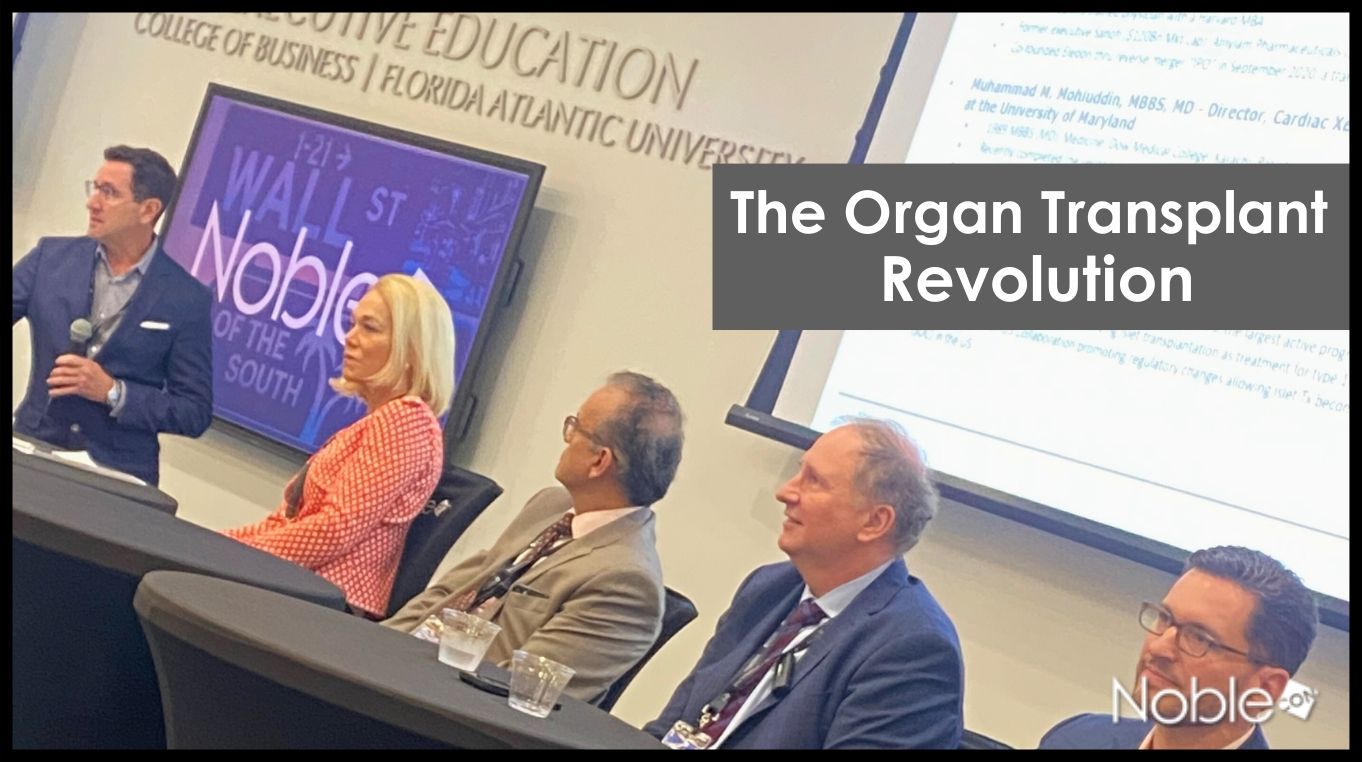
Pushing the Frontiers: Innovation and Investment in Organ Transplantation

The NobleCon19 panel discussion moderated by Nathan Cali, investment banker at Noble Capital Markets, on organ transplantation featured prominent figures in the field, including Dr. Karin Hehenberger, an organ transplant patient and founder of Lyfebulb, Dr. David Alexandre Gros, CEO of Eledon Pharmaceuticals, Dr. Muhammed Mohiuddin, director of the cardiac xenotransplantation program at the University of Maryland, and Dr. Pietr Witoski, surgery director of pancreatic and islet tranplant program at the University of Chicago. The discussion delved into their experiences, challenges in the organ transplant landscape, and revolutionary advancements, especially focusing on the concept of xenotransplantation.

Organ transplantation has come a remarkably long way since the first successful procedures in the 1950s and 60s. Yet there remain significant unmet needs and opportunities to further improve patient outcomes, quality of life, and access to these lifesaving procedures. At a presentation during NobleCon19, a panel of experts explored some of the latest breakthroughs and remaining challenges in areas ranging from immunosuppression to cross-species transplantation.

A Complex Treatment Paradigm

As patient-turned-advocate Dr. Karin Hehenberger related from personal experience, undergoing an organ transplant and living with a graft is filled with difficulties. The trauma of the surgery itself and needing immune-suppressing drugs just to avoid rejection deliver blows to physical health and mental wellbeing. This begins with a harrowing wait for a matching donor organ, continues through post-operative complications like infections, and extends for the rest of one’s life.

The panelists agreed the pressure on patients could be significantly reduced through innovation. More targeted immunosuppressants without harmful side effects would greatly improve quality of life after transplant surgery. Some emerging drug candidates like Eledon Pharmaceuticals Tegoprubart show early signs of progress on this front. There is also a global shortage of donor organs trailing far behind demand; new sources through xenotransplantation or regenerative medicine techniques could help resolve this shortage.

“We need a community where transplanted patients can come together, generate data, and advocate for change,” urged Dr. Hehenberger.

The valuable role of patient communities mirrors the interdisciplinary cooperation needed among the surgeons, specialists, social workers, and other caregivers that make organ transplantation successful. As Dr. Hehhenberger explained, the assessment process for transplant eligibility spans physical health, mental fitness, medication compliance, accessible transportation, and financial support. It is complex care with little margin for error.

An Evolving Market Landscape

Currently, the organ transplant market racks up over $5 billion in value each year and continues expanding at a steady pace. Much of this activity centers specifically around kidney transplants, where surgical innovations and public policy initiatives keep pushing the boundaries. As Dr. DA Gros noted, there are now a quarter million Americans living with a functioning kidney graft – proof of concept for an underappreciated treatment paradigm.

And yet, the surface has barely been scratched in terms of serving potential patients. Over half a million more remain tethered to dialysis as a stand-in for natural kidney function, with 125,000 added to this group annually in the U.S. alone. Dialysis generates its own burdens: decreased workplace productivity, infection risks, lower quality of life. From both humanitarian and financial viewpoints, empowering wider transition from dialysis to transplantation promises tremendous upside.

Experts on the panel targeted improved education around organ transplant options as a key opportunity. Many patients lack full information about the benefits transplant procedures can offer, or they confront social stigmas against this route. Policy revisions to widen access and increase support for lower-income patient communities could have an outsized impact as well.

Meanwhile, the business of organ transplantation continuously evolves. Major pharma companies like Bristol Meyers Squib remain heavily invested, yet a series of smaller players also drive momentum through novel immuno-therapy products. Audience members were encouraged to track firms like Aelix and Tacus for the next wave of clinical updates that will shape standard of care.

Pioneering the Future

Homing in on the future, speakers keyed in on barriers still to be conquered in transplantation medicine. While kidney procedures serve as a beachhead, there is a pressing need to expand reliable methods across more organ types while lengthening graft duration at the same time. This is no small task.

It will require rethinking conventional assumptions for a field that has relied predominantly on broad immune suppression since its inception. Some emerging biotech pipelines target specific T and B cell pathways implicated in chronic organ rejection, attempting to avoid toxicity associated with generalized immunosuppression. Early data hints at improved longevity for liver and heart grafts, but longer studies are still needed.

An even more radical solution highlighted by multiple panelists is the concept of xenotransplantation: introducing organs from other species like pigs into human patients. Recent demonstrations of human-pig heart and skin grafts saw patients survive months post-procedure compared to an anticipated span of days or weeks. The results electrified the transplant community given implications for essentially eliminating organ supply constraints.

That said, experts admit there are hurdles left to address before clinical adoption. Ethical quandaries exist around genetically modifying donor animals and infectious disease transmission risks from one species to another. Questions also persist about which immune pathways necessitate targeting for prolonged graft survival and how to refine the anti-rejection pharmaceutical regimens employed.

Signs point to countries with more flexible regulatory regimes as the likely springboards for refining xenotransplant methods and technology in the shorter-term. Yet the longer-term promise seems resoundingly clear. “If allowed, we will solve the organ shortage problem,” declared surgeon Dr. Peter Witoski when asked about outlook for the field.

A Call to Action

In closing the panel presentation, speakers underscored a sense of guarded optimism balanced with persistent unmet needs in transplantation medicine today. Limitations around donor organ supply and chronic graft failure continue exacting a real human toll, even if raw statistics showcase a steady rise in life-saving procedures overall.

It will take coordinated effort from policy makers, researchers, clinicians, investors and patient advocates to push new discoveries over the finish line – where they can impact the maximum number of lives. Key questions around optimal business models for novel therapeutics, data transparency, and equitable access are unlikely to solve themselves.

Yet the convergence of breakthrough technologies and innovative platforms for generating evidence, educating stakeholders and disseminating insights points toward a sea change for what the future may hold in this vital area of healthcare. The experts and audience members left the discussion around organ transplantation feeling energized to play their respective parts in driving that change.

Watch the webcast from The Organ Transplant presentation at NobleCon19 here

Saga Communications (SGA) – Compelling Total Return Potential

Friday, December 08, 2023

Saga Communications, Inc. is a broadcast company whose business is primarily devoted to acquiring, developing and operating radio stations. Saga currently owns or operates broadcast properties in 27 markets, including 79 FM and 33 AM radio stations. Saga’s strategy is to operate top billing radio stations in mid sized markets, defined as markets ranked (by market revenues) from 20 to 200. Saga’s radio stations employ a myriad of programming formats, including Active Rock, Adult Album Alternative, Adult Contemporary, Country, Classic Country, Classic Hits, Classic Rock, Contemporary Hits Radio, News/Talk, Oldies and Urban Contemporary. In operating its stations, Saga concentrates on the development of strong decentralized local management, which is responsible for the day-to-day operations of the stations in their market area and is compensated based on their financial performance as well as other performance factors that are deemed to effect the long-term ability of the stations to achieve financial objectives. Saga began operations in 1986 and became a publicly traded company in December 1992. The stock trades on NASDAQ under the ticker symbol “SGA”.

Michael Kupinski, Director of Research, Equity Research Analyst, Digital, Media & Technology , Noble Capital Markets, Inc.

Refer to the full report for the price target, fundamental analysis, and rating.

Announces a hefty special dividend. The company announced that it declared a special cash dividend of $2.00 per share to be paid on January 12, 2024 to shareholders on record December 20, 2023. The aggregate amount of the special dividend of $12.5 million will be paid from its sizable cash position. We believe that the announcement reflects the company’s confidence in its favorable fundamental outlook and significantly strong financial position.

Strong balance sheet. As of Sept. 30, the company had $31.2 million in cash and no long term debt. As such, the company has a strong balance sheet that will be maintained following the special dividend payment. This recent dividend announcement follows its Board’s review of the appropriate level of cash to be maintained on its balance sheet, which will reduce cash and short term investments to roughly $25 million. 

Get the Full Report

Equity Research is available at no cost to Registered users of Channelchek. Not a Member? Click ‘Join’ to join the Channelchek Community. There is no cost to register, and we never collect credit card information.

This Company Sponsored Research is provided by Noble Capital Markets, Inc., a FINRA and S.E.C. registered broker-dealer (B/D).

*Analyst certification and important disclosures included in the full report. NOTE: investment decisions should not be based upon the content of this research summary. Proper due diligence is required before making any investment decision.