Alliance Resource Partners (ARLP) – Q4 and FY2025 Financial Results Exceed Expectations


Wednesday, February 04, 2026

ARLP is a diversified natural resource company that generates operating and royalty income from coal produced by its mining complexes and royalty income from mineral interests it owns in strategic oil & gas producing regions in the United States, primarily the Permian, Anadarko and Williston basins. ARLP currently produces coal from seven mining complexes its subsidiaries operate in Illinois, Indiana, Kentucky, Maryland and West Virginia. ARLP also operates a coal loading terminal on the Ohio River at Mount Vernon, Indiana. ARLP markets its coal production to major domestic and international utilities and industrial users and is currently the second largest coal producer in the eastern United States. In addition, ARLP is positioning itself as an energy provider for the future by leveraging its core technology and operating competencies to make strategic investments in the fast growing energy and infrastructure transition.

Mark Reichman, Managing Director, Equity Research Analyst, Natural Resources, Noble Capital Markets, Inc.

Hans Baldau, Associate Analyst, Noble Capital Markets, Inc.

Refer to the full report for the price target, fundamental analysis, and rating.

Fourth quarter and full year 2025 financial results. Alliance reported adjusted fourth quarter revenue, adj. EBITDA and earnings per unit (EPU) of $535.5 million, $191.1 million, and $0.64, respectively, compared to $590.1 million, $124.0 million, and $0.12 during the prior year period. We had forecast revenue, adj. EBITDA and EPU of $560.1 million, $182.9 million, and $0.57, respectively. While the quarter was impacted by lower coal sales, which impacted revenue, operating expenses were lower, and net income on equity method investments exceeded our estimate. Full year 2025 adj. EBITDA and EPU of $698.7 million and $2.40, respectively, were above our estimates of $690.5 million and $2.33, respectively.

Management guidance for 2026. Total coal sales are expected to be in the range of 33.75 million to 35.25 million tons, while the sales price of coal per ton is expected to be in the range of $54.00 to $56.00. Segmented adjusted EBITDA expense per ton sold is expected to be $37.00 to $39.00. ARLP has committed and priced 32.2 million tons of its 2026 sales volume, including 30.5 million tons for the domestic market and 1.7 million tons for the export market.


Get the Full Report

Equity Research is available at no cost to Registered users of Channelchek. Not a Member? Click ‘Join’ to join the Channelchek Community. There is no cost to register, and we never collect credit card information.

This Company Sponsored Research is provided by Noble Capital Markets, Inc., a FINRA and S.E.C. registered broker-dealer (B/D).

*Analyst certification and important disclosures included in the full report. NOTE: investment decisions should not be based upon the content of this research summary. Proper due diligence is required before making any investment decision. 

Sky Harbour Group (SKYH) – $150 Million Bond Pricing


Wednesday, February 04, 2026

Patrick McCann, CFA, Research Analyst, Noble Capital Markets, Inc.

Michael Kupinski, Director of Research, Equity Research Analyst, Digital, Media & Technology , Noble Capital Markets, Inc.

Refer to the full report for the price target, fundamental analysis, and rating.

Pricing announced for upcoming bond issuance. Sky Harbour priced $150 million of Series 2026 private activity tax-exempt bonds at par to yield 6.0%, with a mandatory tender on January 1, 2031, and an expected closing on or about February 12, 2026. The transaction is another example of the company’s tax-advantaged financing toolkit and deepens its access to institutional municipal investors.

Deal upsized on strong investor demand. The transaction was initially marketed at $100 million but was upsized to $150 million after receiving approximately $450 million of orders from 18 institutional investors. In our view, the oversubscription supports growing investor comfort in the asset base, the cash flow ramp, and the repeatable development playbook.


Get the Full Report

Equity Research is available at no cost to Registered users of Channelchek. Not a Member? Click ‘Join’ to join the Channelchek Community. There is no cost to register, and we never collect credit card information.

This Company Sponsored Research is provided by Noble Capital Markets, Inc., a FINRA and S.E.C. registered broker-dealer (B/D).

*Analyst certification and important disclosures included in the full report. NOTE: investment decisions should not be based upon the content of this research summary. Proper due diligence is required before making any investment decision. 

The Beachbody Company (BODI) – Executing Strategic Growth Initiatives


Wednesday, February 04, 2026

Michael Kupinski, Director of Research, Equity Research Analyst, Digital, Media & Technology , Noble Capital Markets, Inc.

Jacob Mutchler, Research Associate, Noble Capital Markets, Inc.

Refer to the full report for the price target, fundamental analysis, and rating.

P90X Generation Next. On February 3, the company launched P90X Generation Next, the first new P90X fitness program in over a decade. Notably, the P90X franchise launched in 2005 and became one of the best-selling home fitness programs of all time, with more than 20 million people worldwide participating. Furthermore, the new exercise program is available on the company’s digital streaming platform BODi, and supported by brand partners and a new line of exercise supplements.

Digital streaming platform. Importantly, P90X Generation Next is available on the company’s digital platform, BODi, with a subscription. Moreover, subscribers can access the full P90X catalog of 145 workouts, including the original P90X, for $9.99/month. Additionally, the company offers a broader BODi membership priced at $19/month or an annual plan for $179/year  that includes 8,000+ workouts, 140+ step-by-step programs, and nutrition plans.


Get the Full Report

Equity Research is available at no cost to Registered users of Channelchek. Not a Member? Click ‘Join’ to join the Channelchek Community. There is no cost to register, and we never collect credit card information.

This Company Sponsored Research is provided by Noble Capital Markets, Inc., a FINRA and S.E.C. registered broker-dealer (B/D).

*Analyst certification and important disclosures included in the full report. NOTE: investment decisions should not be based upon the content of this research summary. Proper due diligence is required before making any investment decision. 

V2X (VVX) – Some Recent News


Wednesday, February 04, 2026

V2X builds innovative solutions that integrate physical and digital environments by aligning people, actions, and technology. V2X is embedded in all elements of a critical mission’s lifecycle to enhance readiness, optimize resource management, and boost security. The company provides innovation spanning national security, defense, civilian, and international markets. With a global team of approximately 16,000 professionals, V2X enables mission success by injecting AI and machine learning capabilities to meet today’s toughest challenges across all operational domains.

Joe Gomes, CFA, Managing Director, Equity Research Analyst, Generalist , Noble Capital Markets, Inc.

Refer to the full report for the price target, fundamental analysis, and rating.

Recent News. There has been a flurry of positive recent news on V2X, from confirmation of the T-6 award to new partnerships with Amazon and Google to an award under the Missile Defense Agency’s (MDA) Scalable Homeland Innovative Enterprise Layered Defense (SHIELD) to support Golden Dome to advancement to Phase II of the U.S. Army’s Flight School Next (FSN) competition. Below, we highlight three of the developments.

T-6 Award. The U.S. Court of Federal Claims denied the protest and upheld the Air Force’s selection of V2X for the $4.3 billion T-6 Contractor Operated and Maintained Base Supply (COMBS) contract. With a period of performance through July 2034, the $4.3 billion award could generate an average of $475 million in annual revenue.


Get the Full Report

Equity Research is available at no cost to Registered users of Channelchek. Not a Member? Click ‘Join’ to join the Channelchek Community. There is no cost to register, and we never collect credit card information.

This Company Sponsored Research is provided by Noble Capital Markets, Inc., a FINRA and S.E.C. registered broker-dealer (B/D).

*Analyst certification and important disclosures included in the full report. NOTE: investment decisions should not be based upon the content of this research summary. Proper due diligence is required before making any investment decision. 

Memory Stocks Surge as AI Boom Creates a New Semiconductor Gold Rush

The artificial intelligence boom has reshaped the global technology landscape, turning companies like Nvidia into market behemoths and pushing cloud giants such as Microsoft and Google to new earnings highs. But while GPUs and AI software platforms dominate headlines, another corner of the semiconductor market is quietly delivering some of the most explosive gains: memory and storage stocks.

As AI data centers multiply around the world, demand for high-performance memory and storage chips has surged to unprecedented levels. These facilities, packed with thousands of servers, rely not only on powerful GPUs from Nvidia and Advanced Micro Devices, but also on vast amounts of DRAM, NAND, and other storage technologies to process and move massive datasets. The result has been a supply crunch years in the making—and eye-popping stock gains for companies positioned to benefit.

Some memory-related stocks have delivered returns that rival even the hottest AI chip names. Sandisk, which began trading in early 2025 following its spin-off from Western Digital, has seen its share price climb more than 1,800%. Micron Technology is up over 360% in the past year, while Western Digital shares have surged nearly 500%. International players are seeing similar momentum, with South Korea’s SK Hynix up roughly 375% and Japan’s Kioxia soaring more than 1,000%.

This surge is the culmination of a “perfect storm” in the memory industry. During the COVID era, demand for PCs, smartphones, and enterprise hardware spiked, leading to heavy investment in memory production. When that demand cooled, the industry entered a deep downturn, with sharp revenue declines in 2023. Micron, for example, saw revenue collapse nearly 50% that year, while Western Digital endured steep sales declines.

Then AI arrived at scale.

As hyperscalers raced to build out AI infrastructure, demand for memory rebounded violently. Western Digital’s revenue jumped 51% in 2025, while Micron posted back-to-back growth years of 62% and 49% in 2024 and 2025, respectively. Micron has leaned so aggressively into the AI opportunity that it has begun winding down its consumer-facing Crucial brand to focus more heavily on enterprise and data center customers, where margins are higher and demand is more consistent.

Industry analysts say the shortage did not fully materialize until late 2025 because manufacturers were initially able to draw down excess inventory left over from the post-COVID slowdown. Once that buffer disappeared, supply simply could not keep pace with accelerating AI-driven demand from companies like Nvidia, Broadcom, and AMD.

With supply tight, memory producers have gained significant pricing power. That scarcity has become the primary catalyst behind soaring profits—and investor enthusiasm. However, the sector’s history serves as a reminder that memory is one of the most cyclical segments of the semiconductor industry. As new manufacturing capacity comes online and supply chains normalize, pricing pressure could eventually ease.

Even so, analysts caution that relief may not come quickly. AI demand continues to grow at a rapid pace, and building new fabrication capacity takes years. Until supply meaningfully catches up, memory and storage companies may continue to enjoy elevated pricing, strong margins, and outsized stock performance—making them an increasingly important, if often overlooked, pillar of the AI trade in today’s stock market.

Walmart Breaks the Trillion-Dollar Barrier

Walmart has officially joined the $1 trillion market-cap club, a milestone once reserved almost exclusively for Big Tech giants. Shares of the world’s largest retailer surged to record highs this week, pushing its valuation past the trillion-dollar mark for the first time in its 60-plus-year history. The move underscores a profound shift in how investors view Walmart—not merely as a defensive, low-margin retailer, but as a technology-enabled consumer platform built for the modern economy.

At the core of Walmart’s rise is its ability to thrive across economic cycles. While inflation and tighter budgets have driven value-conscious consumers toward lower prices, Walmart has simultaneously attracted higher-income shoppers through faster delivery, broader online assortments, and improved digital experiences. That rare ability to gain market share both up and down the income ladder has become one of its most powerful competitive advantages.

The transformation did not happen overnight. After lagging peers in e-commerce during the early 2000s, Walmart spent years rebuilding its digital foundation. Today, its online marketplace spans everything from groceries and household staples to luxury resale items and collectibles. More importantly, Walmart has built a fast-growing ecosystem around its core retail business, including advertising, membership programs, fulfillment services, and data-driven logistics—higher-margin segments that investors increasingly reward with premium valuations.

Technology is now central to Walmart’s strategy. The company has been aggressively deploying artificial intelligence across its operations to improve scheduling, inventory management, pricing, and supply-chain efficiency. Recent partnerships with Alphabet and OpenAI signal an ambition to embed Walmart directly into emerging AI-driven shopping workflows, allowing consumers to browse and purchase products through conversational platforms like ChatGPT and Google’s Gemini. These initiatives have helped reframe Walmart as a serious tech contender rather than a legacy retailer playing catch-up.

Investor confidence has followed. Walmart’s stock is up double digits this year, outperforming the broader market and earning a spot in the Nasdaq 100 Index—an unusual distinction for a consumer staples company. Analysts point to consistent execution, disciplined cost control, and management’s willingness to reinvest savings into price leadership as key drivers of continued momentum.

Still, the trillion-dollar valuation raises questions about how much upside remains. Walmart now trades at more than 40 times forward earnings, near all-time highs, leaving less room for error. Competition is intensifying as Amazon doubles down on speed and logistics, Aldi expands its U.S. footprint, and Target works to revive growth through design-focused merchandising. Execution missteps or slowing consumer demand could test investor patience.

Yet Walmart’s recent decision to raise full-year sales and profit guidance has helped quiet some concerns. Management continues to signal a conservative outlook, a strategy that has historically set the stage for earnings beats. With fourth-quarter results approaching, the market will be watching closely for confirmation that Walmart can sustain growth while justifying its premium multiple.

Ultimately, Walmart’s ascent into the trillion-dollar club reflects a broader reality: scale, data, logistics, and technology now matter as much in retail as they do in software. By combining everyday value with digital innovation, Walmart has rewritten its investment narrative—and in the process, secured its place among the most valuable companies on the planet.

Release – V2X to Deploy Secure, Responsible AI Solutions in Partnership with Google Public Sector

V2X (PRNewsfoto/V2X, Inc.)

Research News and Market Data on VVX

February 03, 2026

RESTON, Va., Feb. 3, 2026 /PRNewswire/ — V2X, Inc. (NYSE: VVX) today announces a key partnership with Google Public Sector to support modernization priorities across the U.S. Government. This partnership will deliver secure, scalable, and accredited artificial intelligence (AI) and cloud solutions to enhance operational speed, mission resilience and modernized digital infrastructure for defense and intelligence agencies in challenging environments.

V2X will deploy Google’s advanced AI technologies, including its generative AI models, within its secure, on-premises, and isolated environments in adherence with all relevant standards. This integration will make these AI tools available across V2X programs while maintaining the highest levels of mission assurance, cybersecurity, and data governance required for national security operations.

Together, V2X and Google Public Sector will accelerate the development and deployment of safe, secure, and trustworthy AI solutions across defense and government environments such as:

  • Multi-modal data analysis: Producing actionable insights in real time by rapidly synthesizing structured and unstructured data.
  • Training and simulation: Enhancing readiness through AI-driven scenario generation, adaptive learning, and performance optimization.
  • Optimized logistics and sustainment: Increasing mission agility and reducing downtime through improved supply chain visibility, predictive maintenance, and resource allocation.
  • Risk detection and resource optimization: Enhancing supply chain resilience and mission continuity via proactive, regular assessments.

“Our partnership with Google Public Sector enhances V2X’s capacity to seamlessly integrate and scale advanced, industry-leading technologies into the core of our customers’ most vital missions” said Jeremy C. Wensinger, President and Chief Executive Officer at V2X. “By leveraging Google’s sophisticated artificial intelligence capabilities with V2X’s extensive expertise in mission integration, we are uniquely positioned to empower federal agencies with accelerated decision-making, enhanced security frameworks, and scalable mission success.”

“Our collaboration with V2X reflects our shared commitment to delivering secure, AI tools into mission-focused capabilities that meet the complex needs of public sector customers,” said Jan Niemiec, Managing Director, National Security – Google Public Sector. “Together, we will enable customers to harness the most advanced AI capabilities within highly secure, isolated environments while upholding the highest standards of security and data governance.”

V2X is partnering with top tier technology providers in the areas of AI and smart readiness to advance the company’s leadership in data-enabled mission solutions across all domains.

Disclaimer

Capabilities described are subject to applicable contractual authorizations and accreditation processes.

About V2X

V2X builds innovative solutions that integrate physical and digital environments by aligning people, actions, and technology. V2X is embedded in all elements of a critical mission’s lifecycle to enhance readiness, optimize resource management, and boost security. The company provides innovation spanning national security, defense, civilian, and international markets. With a global team of approximately 16,000 professionals, V2X enables mission success by injecting AI and machine learning capabilities to meet today’s toughest challenges across all operational domains.

Investor Contact
Mike Smith, CFA
Vice President, Treasury, Corporate Development and Investor Relations
IR@goV2X.com
719-637-5773

Media Contact
Angelica Spanos Deoudes
Director, Corporate Communications
Angelica.Deoudes@goV2X.com
571-338-5195

Cision View original content to download multimedia:https://www.prnewswire.com/news-releases/v2x-to-deploy-secure-responsible-ai-solutions-in-partnership-with-google-public-sector-302677734.html

SOURCE V2X, Inc.

Release – Nicola Mining Provides An Update For Ongoing Exploration At It’s Flagship New Craigmont Copper Project

Research News and Market Data on HUSIF

February 3, 2026

News Releases

VANCOUVER, BC, February 3, 2026 – Nicola Mining Inc. (the “Company” or “Nicola”) (TSX: NIM) (OTCQB: HUSIF) (FSE: HLIA) is pleased to provide an update for the 2025 Exploration Diamond Drilling Program (the “2025 Program”) at its New Craigmont Copper Project (“New Craigmont”), near Merritt, BC.

Exploration Summary

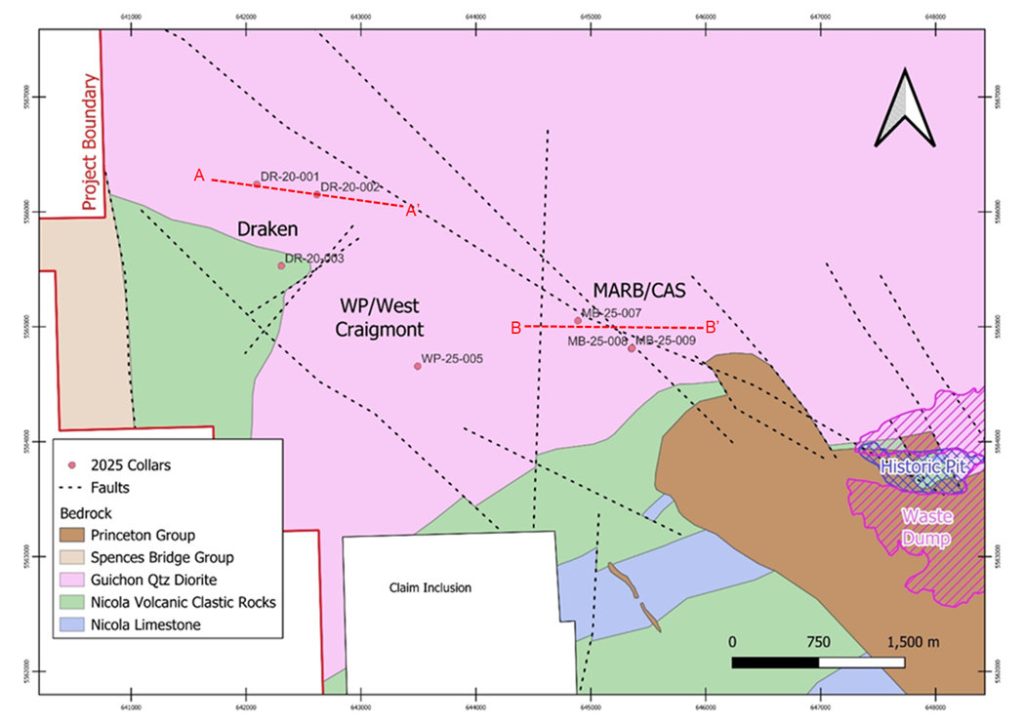
Three targets (Figure 1) were drilled in Nicola’s 2025 program: MARB-CAS, Draken and a new target at WP/West Craigmont identified by ALS Geoanalytics[1]. The purpose of the 2025 Program was to collect geological data for target development for a potential porphyry copper system at New Craigmont.[1]

  • Seven holes totaling 3347m were drilled (Table 1), logged and sampled.
  • Over 2600 samples (including QC samples) were submitted to AGAT Labs for multi-element analysis (results pending). Results from the analyses will be interpreted by Nicola and used for porphyry vectoring.
  • Eleven samples representative of lithology and alteration were selected and sent to Vancouver Petrographic for thin section petrography to help classify rock types and alteration mineral assemblages. This contributes to understanding the geological framework of the property.
  • Over 5000 samples selected from 10 holes drilled since 2016 across the property and analyzed on site with a portable X-Ray fluorescence (pXRF) and short-wave infrared (SWIR). This data is a component of the Company’s exploration target development program designed to identify vectors to a mineralized porphyry centre.

Table 1: 2025 Drill Holes

Figure 1. 2025 Drill Hole Collar Locations

Summary of Findings and Interpretations

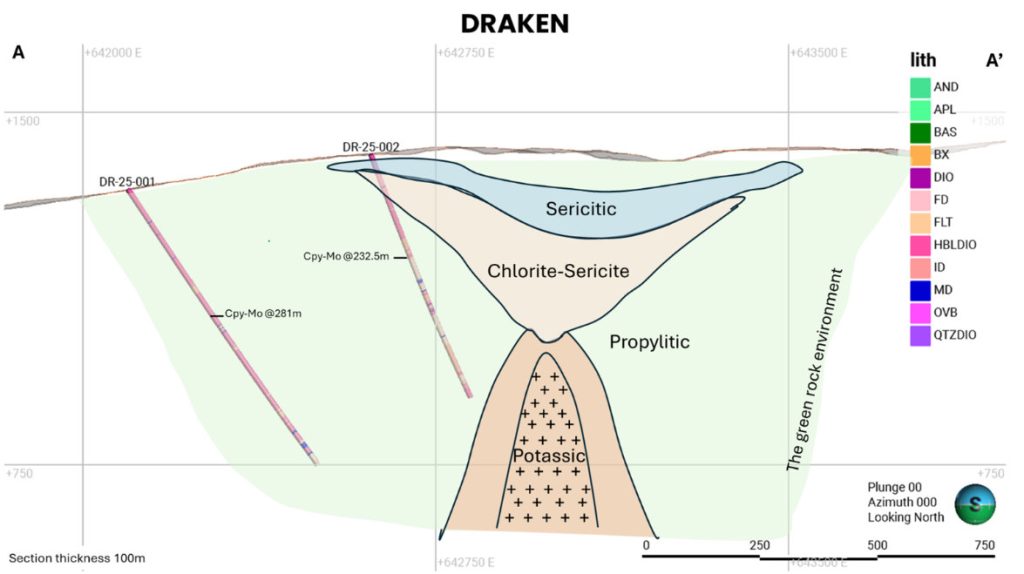
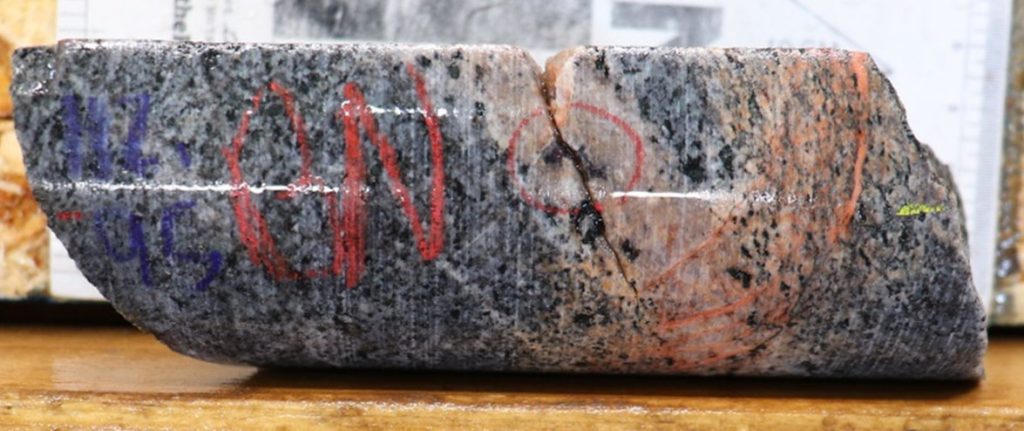
Drill core observations from 2025 support the presence of a porphyry system at Draken (Figure 2). Holes DR-25-001 and DR-25-002 show downhole zonation from pyrite-chalcopyrite to chalcopyrite to chalcopyrite-molybdenite. Outcrop observations are consistent with drill hole observations. The weak mineralization of chalcopyrite with minor bornite and rare molybdenite are associated with classic porphyry alteration assemblages of quartz, epidote, potassium feldspar, chlorite, and sericite. Mineralization is associated with quartz veinlets with varying amounts of potassium feldspar, chlorite, and sericite. Mineralization and alteration are hosted in the Guichon Border Phase diorite. Observations demonstrate the presence of copper and molybdenite in the hydrothermal system and suggest proximity to a porphyry centre. (figures 3 and 4). Nicola’s observations and interpretation of Draken being associated with a porphyry system are consistent with the finding of the UBC MDRU study (see below).

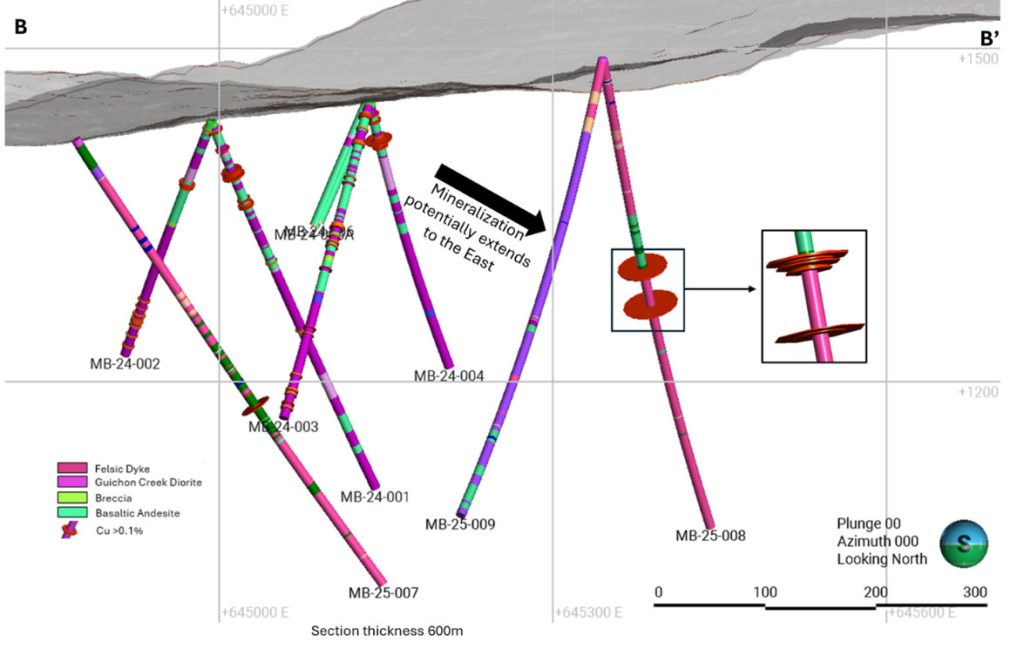
Copper results from MARB are encouraging with MB-25-008 returning 9.5m of 0.39% Cu from 220.5m to 230.0m (Figure 5 and Table 2). This interval consists of a Nicola Group basalt fragmental package with mixed patches of intercalated sandstone, siltstone and fragmental units and a porphyritic andesitic section within. A number of well-preserved quartz-K-feldspar-biotite dykes are enveloped by quartz diorite dykes. Alteration includes pervasive quartz-chlorite with fine-grained biotite. Mineralization consists of disseminated magnetite, trace disseminated pyrite. Fine-grained chalcopyrite, along with pyrite, occurs within quartz stringers with magnetite and chlorite. Nicola geologists interpret the mineralization occurring at MARB to be associated with the skarn at Embayment and CAS. More drilling will be required to demonstrate continuity.

The third target, at WP/West Craigmont (hole (WP-25-007) did not encounter anything visually more indicative of a porphyry system than Draken, leaving Draken as the most promising target on the west side of the property.

Figure 2. Conceptual interpretation of Draken showing 2025 drill holes superimposed on a porphyry system. (See Figure 1 for cross-section location.)

Figure 3. DR-25-001, 111.45m
Bornite ± chalcopyrite ± magnetite assemblages signal hypogene copper mineralization at high temperature.

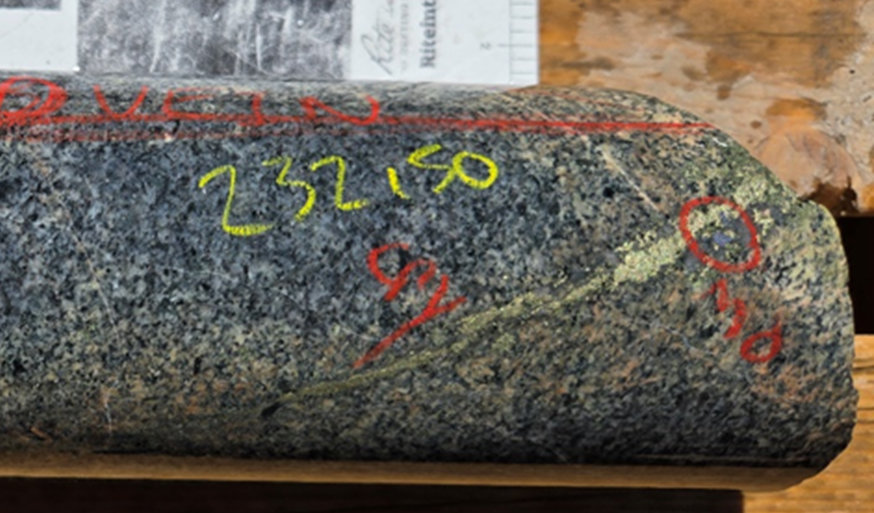
Figure 4. DR-25-002, 232.50m
Molybdenite with chalcopyrite indicates proximity to a porphyry core or thermal centre.

Figure 5. Cross-section of MARB-CAS showing 2024 and 2025 drill holes. (See Figure 1 for cross-section location)

Table 2: 2025 Significant Copper Intercepts

Hole IDFrom (m)To (m)Length (m)Cu (%)
MB-25-008220.52309.50.39
     
 220.5221.250.750.12
 221.25222.61.350.12
 222.62241.40.81
 22422510.51
 22522610.25
 22622710.63
 22722810.10
 22822910.39
 22923010.46

Ongoing UBC MDRU Study

The University of British Columbia’s (UBC) Mineral Deposit Research Unit (MDRU) has been working on province-wide porphyry study, of which the New Craigmont project is a component. One of the objectives is to investigate whether the Craigmont skarn is related to porphyry-type mineralization in the Guichon Creek batholith. Findings suggest Craigmont is a porphyry related skarn deposit tied to magmatism within the Guichon Creek border phase. Another objective is the use epidote trace element chemistry as a porphyry indicator mineral for vectoring. Alteration types and epidote chemistry indicated a nearby porphyry centre and distinguish it from a distal footprint of the Highland Valley porphyry systems. Geochemistry indicated the best prospects for a porphyry centre are West Craigmont (where Draken is located) and deep to the east of the Craigmont mine (where the ZTEM anomaly is located – see drilling plans for 2026 below).

Recommendations for Further Work

  • Continue the ongoing process of building a New Craigmont database with all current and historic exploration data. This is a mandatory before creating a model.
  • Create a 3D geological model for New Craigmont. This is a necessary step to develop more precise target concepts and will be mandatory for resource development.
  • Process, interpret 2025 pXRF and SWIR data (this will be carried out by ALS Geoanalytics) and integrate it into target concepts.
  • Continue to collect pXRF and SWIR data and have it analysed to contribute to more detailed modeling and targeting.
  • Drill a previously identified, but untested target, Jotun, north of the old mine (see below).
  • Continue to develop a target concept for Draken and drill test.

Diamond Drilling Plans for 2026

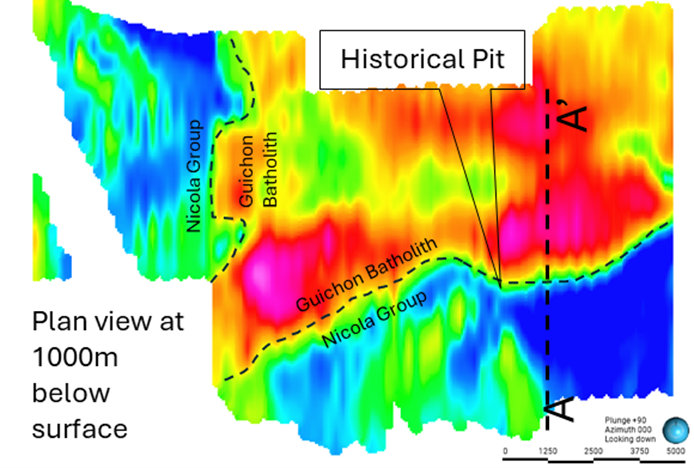
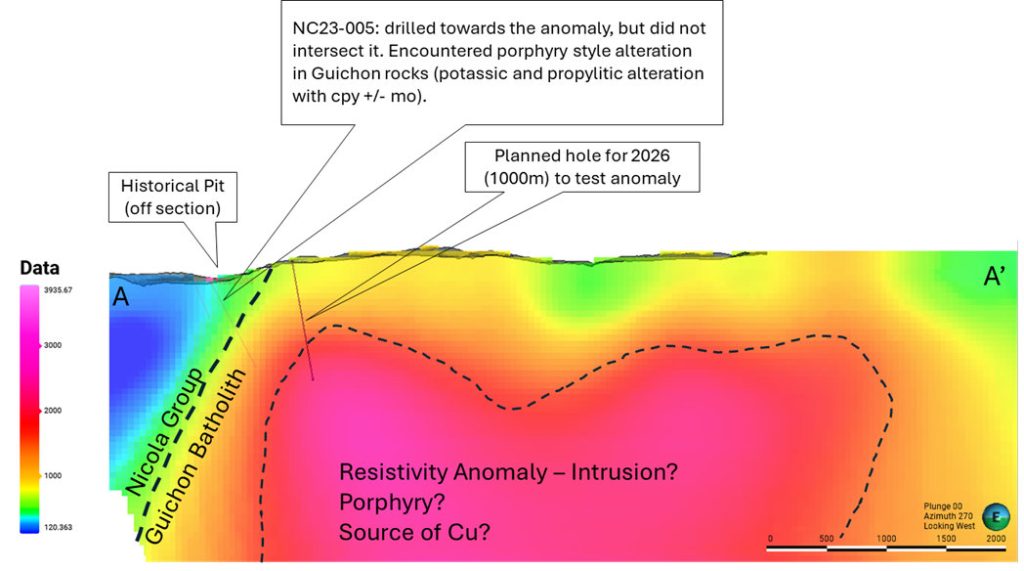
In 2022 a property-wide Z-axis Tipper Electromagnetic (ZTEM) survey[2] was conducted for Nicola by Geotech LTD. Interpretations of the data show a large resistivity anomaly directly north of the historical open pit (Figure 6). Drilling in 2023 (NC23-005 and NC23-006) to the south of the anomaly encountered encouraging porphyry-style alteration[3]. Nicola has termed this the “Jotun” (pronounced Yoten) target. Jotun is an exciting target that could represent the causative intrusion for the high-grade copper skarn that was historically mined at Craigmont. Nicola is planning a long hole for 2026 to test this hypothesis.

Figure 6. Cross section (and plan view) of the Jotun target: untested ZTEM resistivity high.

Quality Assurance and Quality Control (QA/QC)

Nicola maintains tight sample security, and quality assurance and quality control (QA/QC) for all aspects of its exploration program. Geological work, and sample selection and preparation for transport was supervised by Nicola’s Senior Geologist Vicente García (GIT) and VP Exploration Will Whitty (P. Geo.), who were on site the entire program. All NQ and HQ-sized core samples from 2025 were logged, photographed and sampled on site by staff or consulting geologists and geotechnicians. Sample sizes ranged from approximately 0.5m – 2m in length depending on geological features. Core was sawed in half lengthwise, with one half going into poly sample bags and the other half going back into the box to be stored on site. Sample identification tags with unique sample numbers were placed in each bag, and bags were zip-tied closed. There were no markings on the bag or tag identify the location of the sample. The samples were packed into rice bags and shipped to AGAT Laboratories Ltd.’s ISO/IEC 17025:2017 and ISO 9001:2015 accredited lab in Calgary, AB for preparation (crushing and pulverizing) and analyzed for 34 elements by 4 acid digestion with ICP-OES (method code 201-070). Company protocols include the insertion of quality control (QC) samples consisting of Certified Reference Materials (CRMs), blanks and duplicates into the sample stream at a rate of 1 of each control sample for every 20 regular samples.

Qualified Person

The scientific and technical disclosures included in this news release have been reviewed and approved by Will Whitty, P.Geo., who is the Qualified Person as defined by NI 43-101. Mr. Whitty is Vice President, Exploration for the Company.

About Nicola Mining

Nicola Mining Inc. is a junior mining company listed on the TSX-V Exchange and Frankfurt Exchange that maintains a 100% owned mill and tailings facility, located near Merritt, British Columbia. It has signed Mining and Milling Profit Share Agreements with high-grade BC-based gold projects. Nicola’s fully permitted mill can process both gold and silver mill feed via gravity and flotation processes.

The Company owns 100% of the New Craigmont Project, a property that hosts historic high-grade copper mineralization and covers an area of over 10,800 hectares along the southern end of the Guichon Batholith and is adjacent to Highland Valley Copper, Canada’s largest copper mine. The Company also owns 100% of the Treasure Mountain Property, which includes 30 mineral claims and a mineral lease, spanning an area exceeding 2,200 hectares.

On behalf of the Board of Directors

Peter Espig”  
Peter Espig
CEO & Director

For additional information

Contact:  Peter Espig
Phone: (778) 385-1213
Email: info@nicolamining.com
URL: www.nicolamining.com

Neither the TSX Venture Exchange nor its Regulation Services Provider (as that term is defined in the policies of the TSX Venture Exchange) accepts responsibility for the adequacy or accuracy of this release.

Release – Kratos Recently Received Aviation System and Related Warfighter Contract Awards with Total Potential Value of Approximately $65 Million

Research News and Market Data on KTOS

February 3, 2026

PDF VersionContracts Include Awards from the U.S. Department of War and Allied Nations

SAN DIEGO, Feb. 03, 2026 (GLOBE NEWSWIRE) — Kratos Defense & Security Solutions, Inc. (Nasdaq: KTOS), a technology company in Defense, National Security and Global Markets, today announced that Kratos has been awarded contracts valued in total at approximately $65 million to design, develop and deliver simulators and other solutions for warfighter training supporting operations and maintenance of key aircraft and other platforms.

The Kratos-built training systems support a wide variety of knowledge sets across numerous aircraft, including the Army’s CH47F Chinook and UH-60M Blackhawk helicopters, the Airforce’s UH-1 Huey and more. Contracts include awards from the U.S. Department of War as well as allied nations, including purchases of Kratos’ MBRAT simulator, a unique system that enables avionics maintenance training for multiple platforms on a single device, requiring a substantially lower financial investment while achieving training goals and proficiencies.

According to Jose Diaz, SVP of Kratos Training Solutions, “2025 was another growth year for Kratos, particularly in the domain of air-based system platforms. Our customers deeply appreciate our successful delivery of cost-effective solutions that produce highly effective training outcomes. Proven experience incorporating all immersive reality technologies on simulators—from augmented reality to fully virtual—and incorporating Kratos’ advanced Mixed Reality technology enables us to apply the most suitable options to each training challenge.”

In addition to aviation training systems, throughout 2025, the company continued to deliver simulation and training solutions in support of ground combat systems, subsurface naval combat vessels, surface navy combat systems, naval weapon systems and unmanned combat aerial systems to customers.

About Kratos Defense & Security Solutions
Kratos Defense & Security Solutions, Inc. (NASDAQ: KTOS) is a technology, products, system and software company addressing the defense, national security, and commercial markets. Kratos makes true internally funded research, development, capital and other investments, to rapidly develop, produce and field solutions that address our customers’ mission critical needs and requirements. At Kratos, affordability is a technology, and we seek to utilize proven, leading edge approaches and technology, not unproven bleeding edge approaches or technology, with Kratos’ approach designed to reduce cost, schedule and risk, enabling us to be first to market with cost effective solutions. We believe that Kratos is known as an innovative disruptive change agent in the industry, a company that is an expert in designing products and systems up front for successful rapid, large quantity, low-cost future manufacturing which is a value add competitive differentiator for our large traditional prime system integrator partners and also to our government and commercial customers. Kratos intends to pursue program and contract opportunities as the prime or lead contractor when we believe that our probability of win (PWin) is high and any investment required by Kratos is within our capital resource comfort level. We intend to partner and team with a large, traditional system integrator when our assessment of PWin is greater or required investment is beyond Kratos’ comfort level. Kratos’ primary business areas include virtualized ground systems for satellites and space vehicles including software for command & control (C2) and telemetry, tracking and control (TT&C), jet powered unmanned aerial drone systems, advanced vehicles and rocket systems, propulsion systems for drones, missiles, loitering munitions, supersonic systems, space craft and launch systems, C5ISR and microwave electronic products for missile, radar, missile defense, space, satellite, counter UAS, directed energy, communication and other systems, and virtual & augmented reality training systems for the warfighter. For more information, visit www.KratosDefense.com.

Notice Regarding Forward-Looking Statements
Certain statements in this press release may constitute “forward-looking statements” within the meaning of the Private Securities Litigation Reform Act of 1995. These forward-looking statements are made on the basis of the current beliefs, expectations and assumptions of the management of Kratos and are subject to significant risks and uncertainty. Investors are cautioned not to place undue reliance on any such forward-looking statements. All such forward-looking statements speak only as of the date they are made, and Kratos undertakes no obligation to update or revise these statements, whether as a result of new information, future events or otherwise. Although Kratos believes that the expectations reflected in these forward-looking statements are reasonable, these statements involve many risks and uncertainties that may cause actual results to differ materially from what may be expressed or implied in these forward-looking statements. For a further discussion of risks and uncertainties that could cause actual results to differ from those expressed in these forward-looking statements, as well as risks relating to the business of Kratos in general, see the risk disclosures in the Annual Report on Form 10-K of Kratos for the year ended December 29, 2024, and in subsequent reports on Forms 10-Q and 8-K and other filings made with the SEC by Kratos.

Press Contact:
Claire Cantrell
claire.cantrell@kratosdefense.com

Investor Information:
877-934-4687
investor@kratosdefense.com

Primary Logo

Source: Kratos Defense & Security Solutions, Inc.

Elon Musk’s Boldest Bet Yet: How SpaceX Became the Lifeline That Turned xAI Into a $1.25 Trillion Giant

Elon Musk has never been shy about bending corporate structure to his will, but his latest move may be the most audacious of his career. By merging SpaceX with xAI, Musk has created a $1.25 trillion private colossus, instantly making it the most valuable private company in history — and rescuing a cash-hungry AI venture in the process.

The deal folds Musk’s dominant rocket maker, his lossmaking artificial intelligence startup xAI, and the social media platform X into a single vertically integrated entity. Musk framed the merger as a necessary step toward launching data centers into orbit, building factories on the Moon, and ultimately colonizing Mars. Supporters see visionary logic. Critics see financial engineering on a historic scale.

At the heart of the transaction is SpaceX’s balance sheet. The company, now marked up to a $1 trillion valuation, generates roughly $16 billion in annual revenue, driven by its near-monopoly on commercial rocket launches and the rapid expansion of its Starlink satellite broadband business. That steady cash flow and investor confidence gave Musk the leverage to absorb xAI, which reportedly burns around $1 billion per month as it races to build advanced AI models and massive data centers.

Under the terms of the deal, SpaceX will acquire xAI for $250 billion, matching the valuation implied by a recent funding round. xAI shareholders will receive SpaceX stock at roughly a seven-to-one exchange ratio, with the combined entity priced at $527 per share. Investors were briefed on hurried calls, with many reportedly blindsided by both the speed and the scale of the merger.

The strategic rationale is straightforward: AI’s biggest bottlenecks are energy, compute, and data — areas where Musk already has deep assets. SpaceX provides launch capability and satellite infrastructure, Starlink delivers global connectivity, X contributes a vast real-time data stream, and xAI supplies the models. In theory, the combination creates a self-reinforcing ecosystem few competitors can match.

Yet the risks are just as real. xAI’s revenues remain in the low hundreds of millions, far behind rivals like OpenAI, Google, and Anthropic. Folding such a capital-intensive, lossmaking business into SpaceX complicates a planned June IPO, which could raise as much as $50 billion. Existing SpaceX shareholders will be diluted as the company issues new shares to fund the acquisition — a move that has unsettled some long-term investors.

Still, Musk has a long track record of forcing through controversial deals. His 2016 acquisition of SolarCity using Tesla stock faced years of litigation, yet ultimately rewarded shareholders who stayed the course. Many investors believe this is another example of Musk using his control, credibility, and cult-like investor loyalty to move faster than governance norms would typically allow.

The broader market implication is clear: Musk is racing to position his empire at the center of the AI arms race, even if it means rewriting the rules of valuation along the way. Whether this $1.25 trillion gamble proves visionary or reckless will depend on whether xAI can convert ambition into revenue — before investor patience runs out.

Release – MustGrow’s Canola Field Trials Demonstrate Clubroot Disease Suppression; Improved Canola Yield with Healthier Root Systems

Research News and Market Data on MGROF

Feb 3, 2026 | News Releases

MustGrow’s Canola Field Trials Demonstrate Clubroot Disease Suppression; Improved Canola Yield with Heathier Root Systems

  • MustGrow’s mustard-derived organic biocontrol technology TerraMGTM focuses on soil-borne disease and pest suppression, which has been shown to improve soil conditions, crop yields, and healthier root systems;
  • Clubroot is a soil-borne parasitic disease with devastating effects on canola production across the Canadian Prairies with no effective products currently registered for Clubroot suppression;
  • Field trial findings support TerraMGTM’s role as a sustainable product capable of suppressing Clubroot and promoting higher canola yields and root systems under various disease pressures;
  • MustGrow (via NexusBioAg) trialed approx. 100 acres over 2-year field program.

SASKATOON, Saskatchewan, Canada, February 3, 2026 – MustGrow Biologics Corp. (TSXV: MGRO; OTC: MGROF; FRA: 0C0) (the “Company” or “MustGrow“), is pleased to announce completion and results of its 2-year field trial program in the Canadian Prairies on approximately 100 acres of canola production.  Field trial findings have demonstrated MustGrow’s TerraMGTM is a sustainable technology capable of suppressing clubroot parasitic disease (P. brassicae) (“Clubroot”) and promoting higher canola yields and root systems under various disease pressures.

Clubroot is a soil-borne parasitic disease that has had devastating effects on canola production across the Canadian Prairies with no effective products currently available for Clubroot suppression. Canola is Canada’s most valuable field crop, with 2025 production reaching approximately $14 billion (21.8 million tonnes at approximately $650/tonne)(1) and generating billions in annual export revenue.  Without adequate treatment and management solutions, Clubroot continues to create major problems for Canadian canola farmers who need a solution.

TerraMGTM: MustGrow’s Answer to Clubroot

MustGrow is actively working towards registering its organic biocontrol product TerraMGTM through Health Canada’s Pest Management Regulatory Agency.  TerraMGTM combats Clubroot through its mechanism, releasing naturally occurring isothiocyanates from mustard seed meal.  Isothiocyanates are known to possess fungicidal and biocidal activity, suppressing a range of soil-borne pathogens, including Clubroot.

In MustGrow’s 2024 and 2025 field trials, conducted through its wholly-owned Canadian marketing and distribution business NexusBioAg, TerraMGTM-treated plots showed a significant reduction in resting spore concentrations of Clubroot relative to untreated controls. Visual assessments of canola root galls indicated reduced severity and incidence in treated plots. These findings support TerraMGTM’s role as a sustainable biocontrol capable of suppressing Clubroot inoculum and promoting higher canola yields and healthier root systems under various disease pressure.

In 2024, Clubroot spores were more prevalent due to a wetter growing season, and TerraMGTM performed exceptionally well with up to 95% reductions in Clubroot spores.  Disease pressure was consistent throughout the season due to the wetter conditions.  Yield benefits to the grower showed up to a 7 bushel/acre increase (19% increase over Canada’s 36 bushel/acre average production in 2024)(2), translating to a $91/acre increase in value to the farmer (at approximately $13/bushel average commodity price)(3).

In 2025, according to internal data, canola farmers experienced a relatively dry season and correspondingly less Clubroot disease prevalence than the much wetter 2024 season.  Yield increase utilizing TerraMGTM demonstrated a 1-2 bushel/acre increase over the control, which was less impactful than 2024, with less Clubroot infestation in the fields to address.

Detrimental Disease with Limited Options for Farmers

The 15-20 year longevity of Clubroot’s highly resilient resting spores is a key element of Clubroot’s persistence and detrimental impact on canola.  The parasitic disease induces gall formation on roots, disrupting water and nutrient uptake.  Early infection with moderate to high spore loads can lead to 100% loss of canola crop.  Infection at the early seedling stage can later result in wilting, stunting, yellowing and death of canola plants.  In later crop stages, inflection may not necessarily show wilting, stunting or yellowing, but infected plants may ripen prematurely, resulting in shriveled seeds and negatively impacting yield, oil content, and quality.(4)

No effective  products are currently registered for Clubroot suppression in canola.  Current farming practices include extensive sanitation and equipment cleaning, long crop rotations (3-4 years between canola crops), and genetically-modified resistant canola varieties.  While genetic resistance in commercial canola hybrids initially provided strong control, new mutated Clubroot pathotypes are now capable of overcoming resistance.(4)

These methods, while partially effective, are economically and logistically challenging.  A biological, soil-active technology, like MustGrow’s TerraMGTM, capable of reducing resting spore loads could represent a significant breakthrough in sustainable Clubroot management for Canadian farmers.

References:

1) Production of principal field crops, November 2025
2) Production of principal field crops, November 2024
3) Feed Grain – Other Crops – Canola Prices 2024.xlsx
4) Clubroot Disease | Canola Encyclopedia

About MustGrow

MustGrow Biologics Corp. is a fully-integrated provider of innovative biological and regenerative agriculture solutions designed to support sustainable farming. The Company’s proprietary and third-party product lines offer eco-friendly alternatives to restricted or banned synthetic chemicals and fertilizers. In North America, MustGrow offers a portfolio of third-party crop nutrition solutions, including micronutrients, nitrogen stabilizers, biostimulants, adjuvants and foliar products. These products are synergistically distributed alongside MustGrow’s wholly-owned proprietary products and technologies that are derived from mustard and developed into organic biocontrol and biofertility products to help replace banned or restricted synthetic chemicals and fertilizers. Outside of North America, MustGrow is focused on collaborating with agriculture companies, such as Bayer AG in Europe, the Middle East and Africa, to commercialize MustGrow’s wholly-owned proprietary products and technologies. The Company is dedicated to driving shareholder value through the commercialization and expansion of its intellectual property portfolio of approximately 110 patents that are currently issued and pending, and the sales and distribution of its proprietary and third-party product lines through NexusBioAg. MustGrow is a publicly traded company (TSXV-MGRO) and has approximately 62.9 million common shares issued and outstanding and 77.0 million shares fully diluted. For further details, please visit www.mustgrow.ca.

Contact Information

Corey Giasson Director & CEO
Phone: +1-306-668-2652
info@mustgrow.ca

MustGrow Forward-Looking Statements

Certain statements included in this news release constitute “forward-looking statements” which involve known and unknown risks, uncertainties and other factors that may affect the results, performance or achievements of MustGrow.

Generally, forward-looking information can be identified by the use of forward-looking terminology such as “plans”, “expects”, “is expected”, “budget”, “estimates”, “intends”, “anticipates” or “does not anticipate”, or “believes”, or variations of such words and phrases or statements that certain actions, events or results “may”, “could”, “would”, “might”, “occur” or “be achieved”.  Forward-looking statements in this news release, including statements about: the impact and significance of customer performance data and field testing, the increase in value of yields and the costs of such increase in value, if any, and are subject to a number of risks and uncertainties that may cause the actual results of MustGrow to differ materially from those discussed in such forward-looking statements, and even if such actual results are realized or substantially realized, there can be no assurance that they will have the expected consequences to, or effects on, MustGrow. Important factors that could cause MustGrow’s actual results and financial condition to differ materially from those indicated in the forward-looking statements include: those risks described in more detail in MustGrow’s Annual Information Form for the year ended December 31, 2024 and other continuous disclosure documents filed by MustGrow with the applicable securities regulatory authorities which are available on SEDAR+ at www.sedarplus.ca.  Readers are referred to such documents for more detailed information about MustGrow, which is subject to the qualifications, assumptions and notes set forth therein.

Neither the TSXV, nor their Regulation Services Provider (as that term is defined in the policies of the TSXV), nor the OTC Markets has approved the contents of this release or accepts responsibility for the adequacy or accuracy of this release.

© 2026 MustGrow Biologics Corp. All rights reserved.

Bitcoin Stabilizes Near $78,000, but Bearish Momentum Persists

Bitcoin steadied near $78,000 on Monday following a sharp weekend sell-off, but market strategists continue to warn that the recent pause may offer little reassurance to investors expecting a sustained rebound. While prices have stabilized in the short term, sentiment across the crypto market remains fragile, with technical indicators and positioning data suggesting the broader downtrend is still intact.

The world’s largest cryptocurrency fell sharply over the weekend, briefly touching its lowest level since April of last year and extending its losing streak to a fourth consecutive month. Bitcoin is now down more than 12% year to date after a disappointing 2025 that eroded confidence among both retail and institutional investors. Ether has fared even worse, plunging roughly 23% since the start of the year. In aggregate, the crypto market has shed an estimated $1.7 trillion in value, or nearly 40% from its peak last year, according to industry data.

The latest leg lower coincided with a broader risk-off move across global markets. On Friday, President Trump announced his intention to nominate Kevin Warsh as the next chair of the Federal Reserve when Jerome Powell’s term ends in May. Markets largely view Warsh as hawkish, reinforcing expectations that monetary policy could remain restrictive for longer than previously anticipated. That shift weighed on assets sensitive to liquidity conditions, including cryptocurrencies, precious metals, and other speculative investments.

Gold and industrial metals also sold off sharply, underscoring a broader retreat from inflation hedges and high-volatility assets. For crypto markets, which have historically thrived in periods of abundant liquidity, the evolving rate outlook continues to act as a meaningful headwind.

Strategists at 10X Research noted that flow and positioning data indicate investors are not yet prepared to buy the dip. Instead of rotating capital back into risk assets, traders appear focused on deleveraging and unwinding existing positions. That behavior typically reflects caution rather than capitulation and suggests the market may require more time before establishing a durable bottom.

While sentiment and technical indicators are approaching historically oversold levels, analysts caution that such conditions alone are not sufficient to trigger a sustained rally. In the absence of a clear catalyst — such as a shift in Federal Reserve policy or a resurgence in risk appetite — there is little urgency for sidelined capital to re-enter the market. Bitcoin’s next key support level sits near $73,000, an area closely watched by traders if selling pressure resumes.

Not all strategists are uniformly bearish. Fundstrat’s head of digital assets, Sean Farrell, pointed to the mid-$70,000 range as a logical technical support zone, noting that it previously served as both resistance and support during major market inflection points in 2024 and 2025. Farrell suggested that the recent pullback and signs of capitulation could create a more attractive near-term risk-reward setup, though he emphasized that any allocation should remain modest.

For now, Bitcoin’s ability to hold near $78,000 may slow the pace of declines, but it has yet to signal a meaningful trend reversal. Until macro conditions improve or a decisive catalyst emerges, volatility and downside risk remain central features of the crypto landscape.

Release – DLH to Announce Fiscal 2026 First Quarter Financial Results

Research News and Market Data on DLH

February 2, 2026

PDF Version

ATLANTA, Feb. 02, 2026 (GLOBE NEWSWIRE) — DLH Holdings Corp. (NASDAQ: DLHC) (“DLH” or the “Company”), a leading provider of science research and development, systems engineering and integration, and digital transformation and cyber security solutions to federal agencies, will release financial results for the fiscal first quarter ended December 31, 2025 on February 9, 2026 after the market closes. DLH will then host a conference call for the investment community at 10:00 a.m. Eastern Time the following day, February 10, 2026, during which members of senior management will make a brief presentation focused on the financial results and operating trends. A question-and-answer session will follow.

Interested parties may listen to the conference call by dialing 888-347-5290 or 412-317-5256.  Presentation materials will also be posted on the Investor Relations section of the DLH website prior to the commencement of the conference call. A digital recording of the conference call will be available for replay two hours after the completion of the call and can be accessed on the DLH Investor Relations website or by dialing 1-855-669-9658 and entering the conference ID 1284372.

About DLH
DLH (NASDAQ: DLHC) enhances technology, public health, and cyber security readiness missions through science, technology, cyber, and engineering solutions and services. Our experts solve some of the most complex and critical missions faced by customers today, leveraging digital transformation, artificial intelligence, advanced analytics, cloud-based applications, telehealth systems, and more. With over 1,700 employees dedicated to the idea that “Your Mission is Our Passion,” DLH brings a unique combination of technology, innovation, and world-class expertise, to improve lives across the globe. For more information, visit www.DLHcorp.com.

INVESTOR RELATIONS
Contact: Chris Witty
Phone: 646-438-9385
Email: cwitty@darrowir.com