The US and Canada Are in a Trade War. Here Is the One Product Both Sides Are Deliberately Leaving Alone

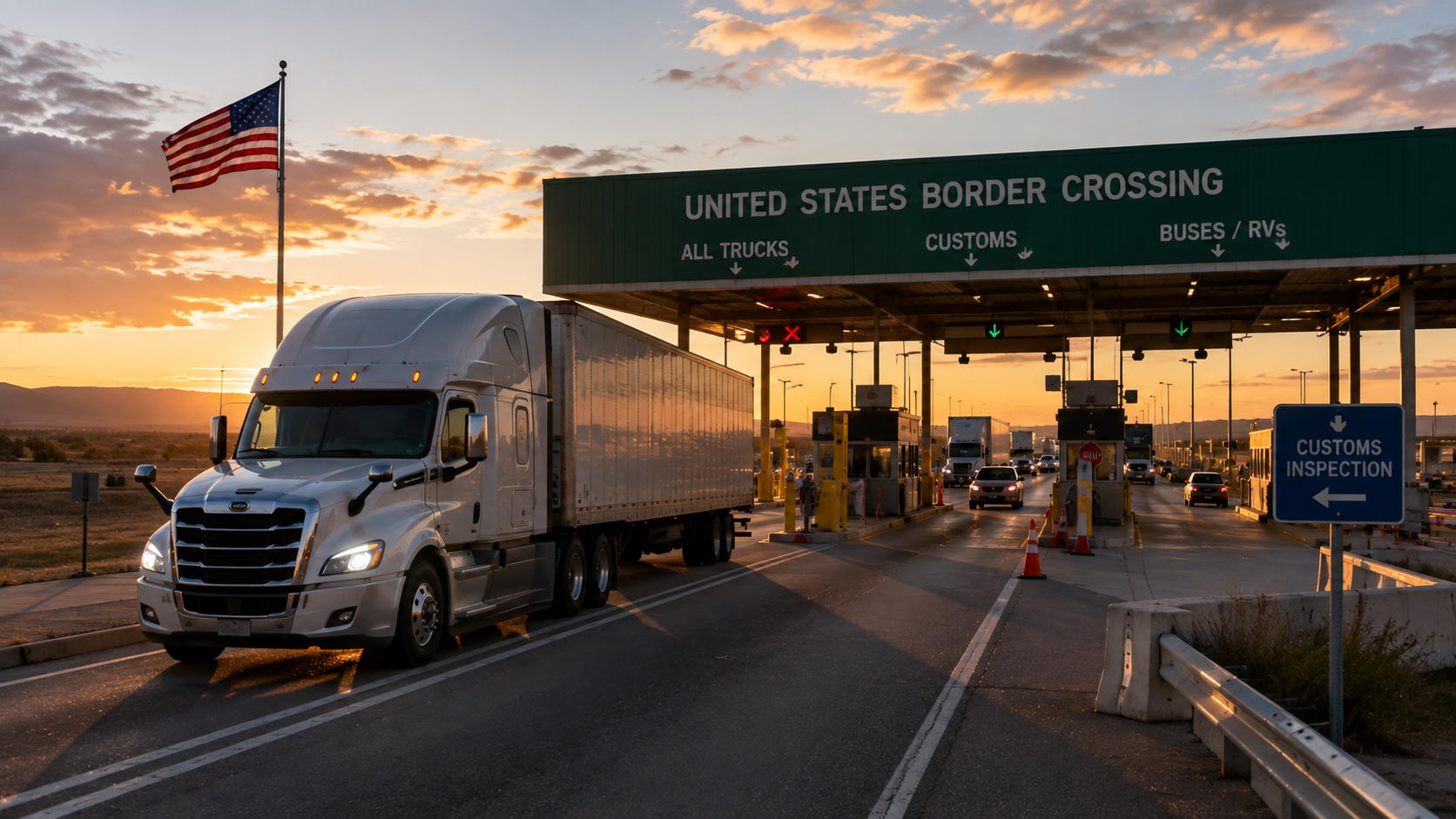
Trade talks between the United States and Canada collapsed over the weekend, prompting Washington to impose 50% tariffs on a wide range of Canadian goods, including furniture, dairy products, electrical equipment, and plywood. Canada’s Finance Department responded Tuesday with its own retaliatory tariffs. Markets, notably, barely flinched. The Dow, S&P 500, and Nasdaq all posted modest gains Tuesday, and the Russell 2000 advanced as well, suggesting investors are treating this escalation as manageable rather than systemically threatening, at least for now.

What makes this dispute genuinely interesting from a market perspective is not what got tariffed, it is what deliberately did not. Crude oil, one of the largest categories of trade flowing between the two countries, was left entirely out of the new 50% tariffs, and neither government appears eager to bring it into the fight.

Why Oil Is the One Line Neither Side Wants to Cross

The scale of that exemption is significant. The United States buys roughly 90% of all Canadian crude exports, worth approximately CA$126 billion of Canada’s CA$140 billion total in 2025, while Canada supplies roughly 63% of all US crude imports. That dependence reflects decades of physical infrastructure investment rather than a relationship either country could quickly unwind. Alberta’s oil sands produce heavy bitumen, and US refiners, particularly across the Midwest and Gulf Coast, spent billions of dollars building capacity specifically configured to process that heavier crude. Meanwhile, America’s own shale boom has made it the world’s largest oil producer, but that production is overwhelmingly light, sweet crude, creating a structural mismatch where the US exports large volumes of its own light oil while importing millions of barrels of heavier Canadian crude every single day.

Canada, for its part, has limited ability to simply redirect that oil elsewhere. The expanded Trans Mountain pipeline gives Alberta producers new access to Pacific coast export markets, but its roughly 890,000 barrel-per-day capacity is dwarfed by the nearly 3.9 million barrels shipped south to the US daily. President Trump acknowledged this interdependence directly in public comments this week, pointing to Canada’s own reliance on US infrastructure to move electricity, oil, and gas between its own provinces, a reference to cross-border pipeline routes like Enbridge’s Line 5, which carries Canadian oil through Wisconsin and Michigan before crossing back into Ontario. That mutual physical dependence is precisely why energy has remained exempt even as tariffs on nearly everything else have escalated sharply.

If oil were eventually pulled into this dispute, the consequences would ripple in multiple directions. US refiners, as the importers of record, would bear the tariff directly and would likely respond by demanding steeper discounts from Canadian producers, while also passing at least some of the higher input costs through to consumers at the pump, directly reversing the gas price relief seen earlier this summer. Canadian producers would face the opposite squeeze, a shrinking pool of buyers willing to pay full price for barrels with nowhere else to go at comparable volume.

For investors tracking the small and microcap space, this dispute carries two distinct layers of exposure. Companies with direct supply chain exposure to the newly tariffed categories, furniture, dairy, electrical components, and building materials like plywood, are facing real, immediate cost pressure right now. Energy-adjacent companies, meanwhile, are watching a very different, still-hypothetical risk: what happens if this trade fight eventually escalates into the one category both governments have so far treated as off-limits. Markets shrugging off Tuesday’s escalation suggests investors currently believe that line will hold. Whether it actually does may prove to be the more consequential question heading into the fall, particularly with the Fed’s Jackson Hole speech still ahead and the Treasury’s bond market intervention already testing how much stress the system can absorb at once.

Middle Markets Brace for Impact as Trump’s Tariff Expansion Rattles Markets

Middle market companies across manufacturing, retail, and technology sectors are scrambling to assess potential impacts after President Trump’s Monday announcement of 25% tariffs on Japanese and South Korean imports, set to take effect August 1st. The move sent shockwaves through equity markets, with major indices posting their worst single-day performance in weeks.

The Dow Jones Industrial Average plummeted over 400 points, closing down 1.21%, while the S&P 500 and Nasdaq Composite shed 0.98% and 1.03% respectively. For middle market investors, the selloff signals deeper concerns about how expanding trade tensions could reshape global supply chains and corporate profitability.

Middle market manufacturers with exposure to Japanese and South Korean suppliers face immediate headwinds. Companies in automotive parts, electronics components, and industrial machinery sectors are particularly vulnerable, as these industries rely heavily on specialized inputs from both countries.

Japan remains a critical supplier of precision machinery and automotive components, while South Korea dominates in semiconductors, displays, and advanced materials. The proposed 25% levy could force companies to either absorb significant cost increases or pass them to consumers, potentially crimping demand.

Trump’s escalation extends beyond Asia, with threatened tariffs ranging from 25% to 40% on imports from South Africa, Malaysia, and other nations. The President’s additional 10% levy on countries aligned with BRICS policies adds another layer of complexity for companies with emerging market exposure.

The timing proves particularly challenging as many middle market firms are still recovering from previous trade disruptions. Companies that invested heavily in supply chain diversification following earlier tariff rounds now face the prospect of further reorganization.

Technology-focused middle market companies face dual pressures from both component cost increases and potential retaliation affecting export opportunities. Manufacturing firms with just-in-time inventory systems may need to accelerate stockpiling, tying up working capital.

Retail-oriented middle market companies importing consumer goods from targeted countries could see margin compression if they cannot pass costs to price-sensitive customers. The uncertainty also complicates inventory planning and pricing strategies heading into the crucial back-to-school and holiday seasons.

Despite the volatility, some middle market investors see potential opportunities emerging. Companies with domestic supply chains or those positioned to benefit from supply chain reshoring could gain competitive advantages. Additionally, firms with strong balance sheets may find acquisition opportunities as smaller competitors struggle with increased costs.

Treasury Secretary Scott Bessent’s indication of potential deals in coming days provides some hope for resolution, though markets remain skeptical given the administration’s aggressive timeline. The focus on 18 major trading partners before expanding to over 100 countries suggests a systematic approach, but also highlights the scope of potential disruption.

With earnings season approaching, middle market companies will face intense scrutiny on guidance and cost management strategies. Thursday’s Delta Air Lines report kicks off what many analysts expect to be a challenging quarter for companies with significant international exposure.

The key question for middle market investors remains whether current valuations adequately reflect the potential for prolonged trade tensions. As markets digest the implications of Trump’s latest tariff expansion, portfolio positioning and risk management become increasingly critical for navigating the uncertain landscape ahead.

Trump Escalates Trade War: 25% Tariffs Hit Japan and South Korea

President Trump dramatically escalated his global trade offensive Monday, announcing 25% tariffs on imports from Japan and South Korea while threatening even higher duties on nations aligning with BRICS policies he deems “anti-American.” The move marks a significant expansion of the administration’s protectionist agenda beyond traditional targets like China.

The President posted formal notification letters to both Asian allies on social media, declaring the tariffs would take effect August 1. The announcement caught markets and diplomatic circles off guard, as both Japan and South Korea have been key U.S. allies for decades and major trading partners in critical technology sectors.

Trump’s tariff strategy appears designed to leverage economic pressure for broader geopolitical objectives. In his letter to Japanese Prime Minister, Trump offered a clear carrot-and-stick approach: “There will be no Tariff if Japan, or companies within your Country, decide to build or manufacture product within the United States.”

The administration promises expedited approvals for companies willing to relocate manufacturing operations to American soil, potentially completing the process “in a matter of weeks” rather than the typical months or years required for major industrial projects.

This represents a significant shift from traditional trade diplomacy, using tariff threats as direct incentives for foreign investment and manufacturing relocation. The approach mirrors tactics used successfully with several other trading partners, where the threat of punitive duties has led to increased American manufacturing commitments.

Perhaps most concerning for global trade stability, Trump explicitly warned both countries that any retaliatory tariffs would be met with equivalent increases in U.S. duties. This tit-for-tat escalation mechanism could quickly spiral into a destructive trade war with America’s closest Pacific allies.

The President cited “long-term, and very persistent” trade deficits as justification for restructuring these relationships. Japan previously faced 24% tariffs in April before a temporary pause, while South Korea had been subject to 25% rates, suggesting the administration views these levels as baseline positions rather than maximum penalties.

The tariff announcements represent just the latest moves in Trump’s comprehensive trade realignment strategy. The administration has been systematically addressing trade relationships across multiple continents, with varying degrees of success and diplomatic tension.

Recent developments elsewhere show the mixed results of this approach. China has seen some easing of tensions, with the U.S. relaxing export restrictions on chip design software and ethane following framework agreements toward a broader trade deal. Vietnam reached accommodation with a 20% tariff rate—substantially lower than the 46% originally threatened—though facing 40% duties on transshipped goods.

The European Union has signaled willingness to accept 10% universal tariffs while seeking sector-specific exemptions, indicating established trading blocs are adapting to the new reality rather than engaging in prolonged resistance.

The targeting of Japan and South Korea creates particular challenges given their roles as critical technology suppliers and security partners. Both nations are integral to global semiconductor supply chains, with South Korean companies like Samsung and SK Hynix playing essential roles in memory chip production, while Japanese firms dominate specialized manufacturing equipment and materials.

The timing appears strategic, occurring as the administration faces domestic pressure to demonstrate progress on trade deficit reduction while maintaining leverage in ongoing negotiations with other partners. The threat of duties reaching as high as 70% on some goods creates enormous uncertainty for businesses planning international supply chain strategies.

Canada’s recent decision to scrap its digital services tax affecting U.S. technology companies demonstrates how the tariff threat environment is reshaping international policy decisions. The White House indicated trade talks with Canada have resumed, targeting a mid-July agreement deadline.

This pattern suggests the administration’s approach of combining immediate tariff threats with longer-term negotiation windows may be yielding results in some cases, even as it strains traditional alliance relationships.

As more notification letters are expected today, global markets are bracing for additional announcements that could further reshape international trade relationships and supply chain strategies worldwide.